


Student Health & Counseling Center
Home » Resources » Student Health & Wellness » Mental Wellness » Eating Disorders
MenuMental Wellness
Eating disorders
The challenges of college life and adding pressure to underlying mental health issues create a “perfect storm” for eating disorders, such as anorexia and bulimia. Realities of college life, increased workload, less structure, and more focus on peers can collide with anxieties, learning issues, or poor self-esteem. A young adult who was able to manage stress and stay afloat during high school with a lot of hard work and support from her parents might now find herself drowning in the complicated world of college.
Eating disorders develop when the need to feel control over a stressful environment is channeled through food restriction, over-exercise, and an unhealthy focus on body weight. These activities are not a lifestyle choice, but a sign of a complex mental health problem. Dieting is the primary risk factor and trigger across all eating disorders.
Managing food intake in college can be difficult, especially when introduced to habits such as midnight pizza runs and all-you-can eat dining halls. Unscheduled, unhealthy eating can cause problems for anyone, but for students struggling with eating issues it can wreak havoc on self-control and self-esteem.
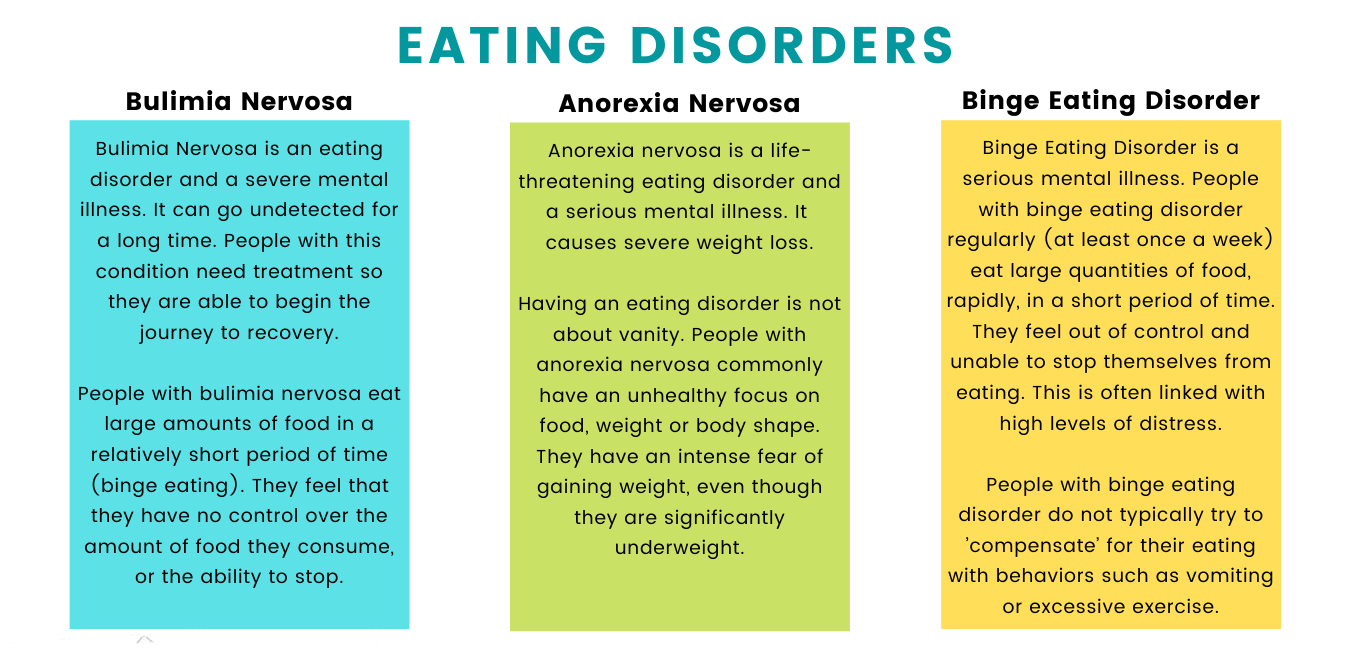
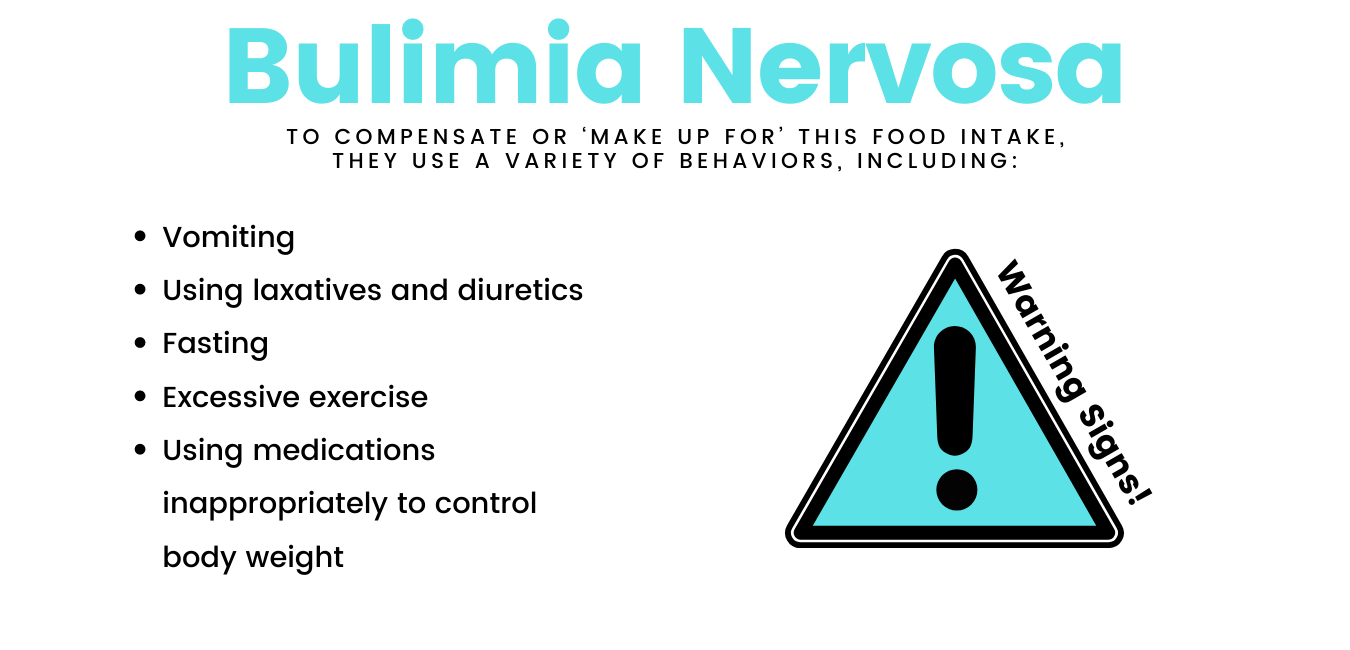
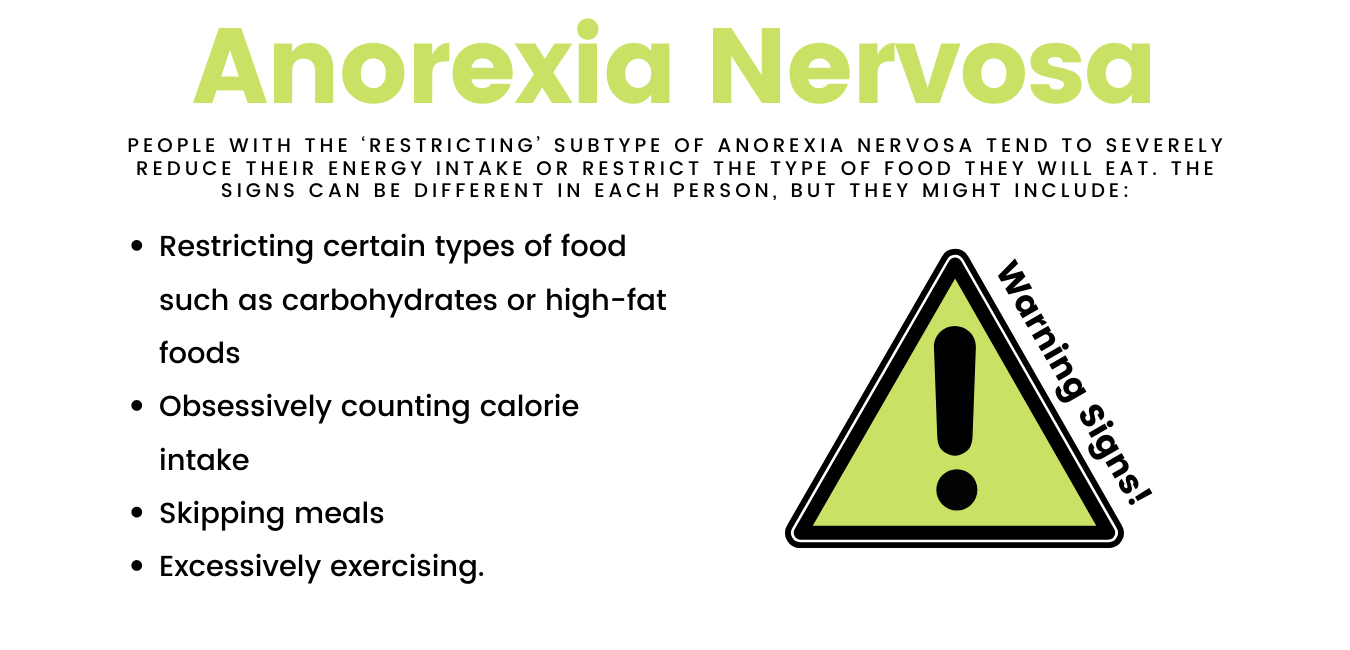
Eating disorders are important to take seriously. 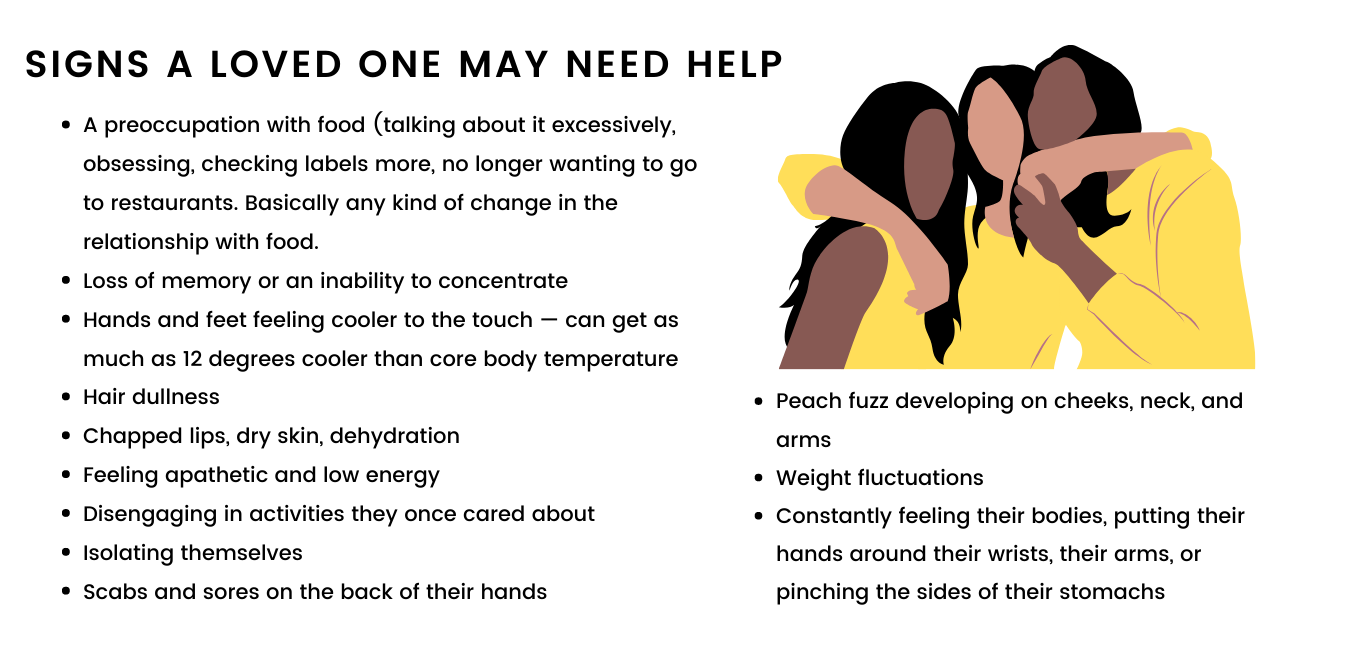
Resources to Help:
- The National Eating Disorders Association (NEDA): supports individuals and families affected by eating disorders.
- Academy for Eating Disorders (AED): provides global access to knowledge, research and best treatment practice for eating disorders.
- National Association of Anorexia Nervosa & Related Disorders (ANAD): alleviate the problems of eating disorders, especially anorexia nervosa and bulimia nervosa.
- Binge Eating Disorder Association (BEDA): committed to helping those who suffer from binge eating disorder conquer their disorder. So, if you or someone you care about lives with binge eating disorder, BEDA can help. If you treat the disorder, BEDA can help.
- Eating Disorders Coalition (EDC): Their mission is to advance the federal recognition of eating disorders as a public health priority.
- Multi-Service Eating Disorder Association (MEDA): prevention and treatment of eating disorders and disordered eating. MEDA serves as a support network and resource for clients, loved ones, clinicians, educators and the general public.
- The National Association for Males with Eating Disorders (N.A.M.E.D.): is to provide support to males with eating disorders, to educate the public on the issue, and to be a resource of information on the subject.
- 70 Resources to Support Eating Disorder Recovery: this resource has 11 sections on the signs and symptoms of eating disorders, treatment and recovery options, and how to help someone with an eating disorder. Additionally, refer to the COVID-19 specific resources and other emergency hotlines.
Articles about Eating Disorders & College