Mount Hood

Veteran Resource Center’s director accepts teaching position with the DoD

Vetertan Center director Colin Haines leaves Western

Sydney Carpenter | News Editor

After three and a half years of serving student veterans attending Western, Veteran Resource Center director Colin Haines has resigned.

The announcement came after Haines accepted a teaching position with the Department of Defense’s Science and Technology Academies Reinforcing Basic Aviation and Space Exploration program. Founded in 1991, the program was tailored to provide 25 hours of military personnel demonstrating science, technology, engineering and math in “real world” scenarios to fifth grade minority students.

“The DoD Starbase program combines everything I strive to be as a professional educator,” said Haines. “(Western), along with its students, faculty and staff, will always hold a place in my heart, but I felt the time was right to progress my career and make an impact on young students who need me the most.”

Haines reported that his time serving students at Western had been impactful ⏤ personally and professionally. He went on to say the student leaders of Peer Advisers for Veteran Education program have always provided student veterans or veteran-dependents with quality information regarding Veteran Affair benefits and academic life on campus.

“The fact that I have such an outstanding student staff who are more than able to help their peers during the period between directors allows me to leave with a bit of (peace) of mind that our student veterans will not be left hanging,” said Haines. 

At this time, Western has hired a new director, and Haines said he has confidence in the hiring authorities’ ability to identify and nurture great talent. To learn more about the new director or learn more about veteran benefits on campus, email sva@mail.wou.edu.

Contact the author at scarpenter18@mail.wou

Thoughts and Gifts Project invites community to grand opening

The Thoughts and Gifts Project welcomes Polk County residents to celebrate the move to their new permanent location 

Sydney Carpenter | News Editor

On Feb. 20, the Thoughts and Gifts Project nonprofit organization will be commemorating their permanent move to 427 Main St. E from 1 to 3 p.m..

Established in 2018 by founder Jean Love, TAGP celebrates the birthdays of underserved youths and qualifying senior citizens by providing $30 worth of gifts, three books and two birthday cards. 

Prior to COVID-19, TAGP would host one large birthday party each month for all participants within their program. Adapting to COVID regulations, the nonprofit does not have large birthday parties, but now does monthly prize drawings with donations from the Dollar Tree in addition to their other gifts.

Love had the idea after listening to a Toys for Tots commercial on the radio during Christmas time.

“It’s great that there’s such an outpour of support for one day, but what about the other 365 days of the year?” explained Love.

When the organization first began providing services to the public, their original location was temporary. 

“We had a partnership with the Polk County Service Club … They allowed us to use their club house free of charge and we were there for three days a week,” said Love, “but we did not have on site storage.”

According to Love, they spent the next few years fundraising until they were able to purchase a storefront in Monmouth during the fall of 2020. 

“We thought about doing a grand opening in October, but at that point you’re getting into November and December where the main focus is Christmas,” Love explained. “We don’t want to compete with anything Christmas because there is too much good that happens then.”

For the event, TAGP is doing a ribbon cutting ceremony in front of the store at 1:30 p.m. in addition to three different game stations.

“They will be quick fast games and after they can win prizes,” said Love.

Participants will also be able to receive some TAGP swag bags that contain various branded items. At this time, food will not be provided due to COVID regulations. People interested in attending the event are required to wear a mask, but no RSVP is required.

“We’re really doing something positive for our community,” said TAGP volunteer Kathy Grudle. “It’s such a wonderful feeling to be able to say this something we’re giving you and because we care about you having a birthday.”

To learn more about qualifications or to donate to The Thoughts and Gifts Project, students can visit their website at thoughtsandgifts.org.

Contact the author at scarpenter18@mail.wou.edu

IFC concludes spring term discussions and moves on to the next school year

The IFC has finalized spring term and are working on next year’s budget

Sydney Carpenter | News Editor

Western’s Incidental Fee Committee has completed their process for establishing fee and budgetary allocations for spring 2021.

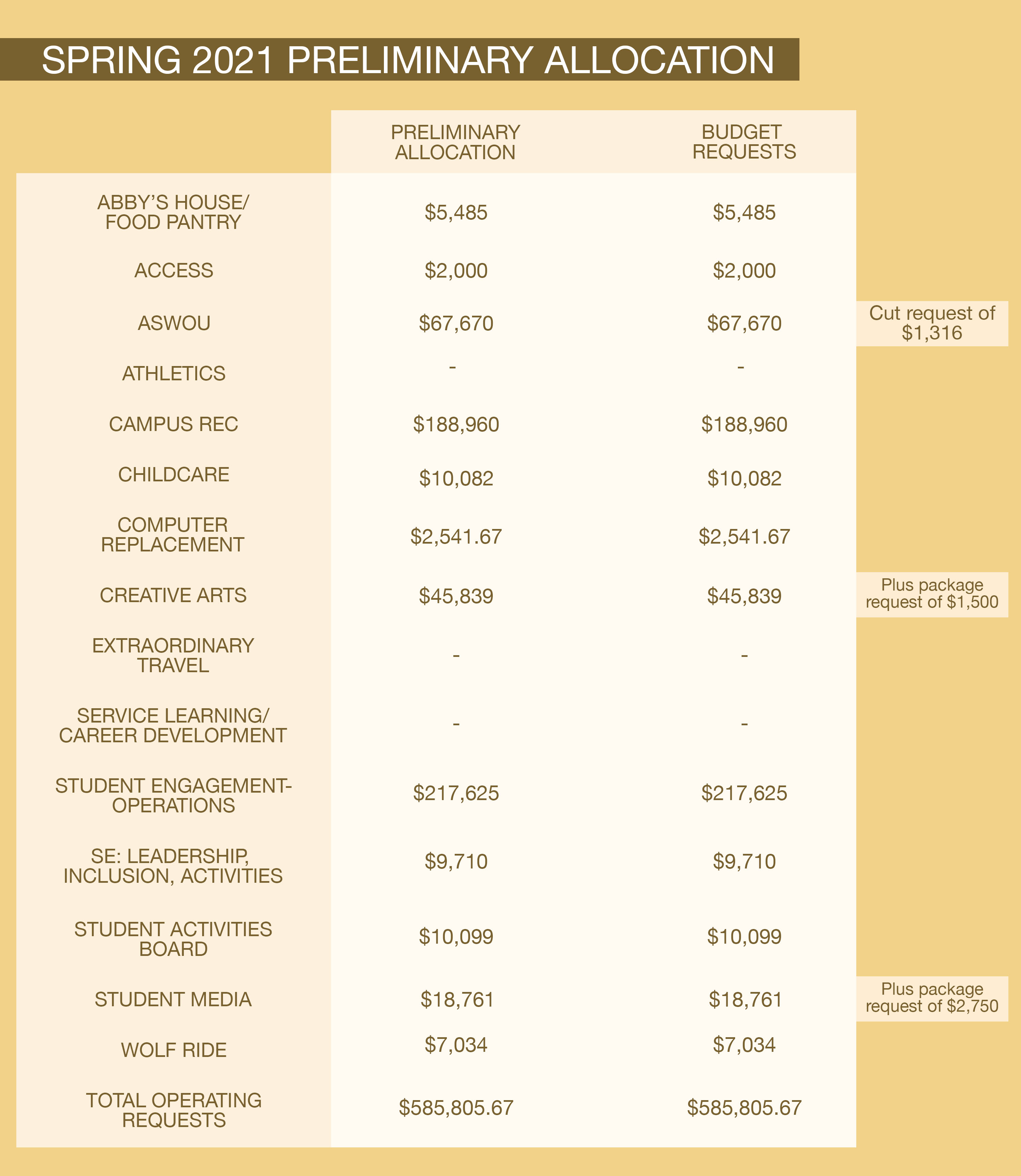
During their Feb. 5 meeting, seven IFC members voted to approve the motion of allocating all budgetary requests from all 15 funded areas while one member abstained. For the money allocation, the committee supplied three areas with additional funding: Student Media received $2,750; the Creative Arts department, $1,500; ASWOU, $81.

For spring term, the committee opted to lower the $150 fee students saw on their bill this term due to lower budgetary requests, according to IFC chair Makana Waikiki. From the meeting transcript, it was revealed by IFC member Quentin Kanta that only one student voted on the fee preference option and voted for a $125 fee to be charged on student billing next term.

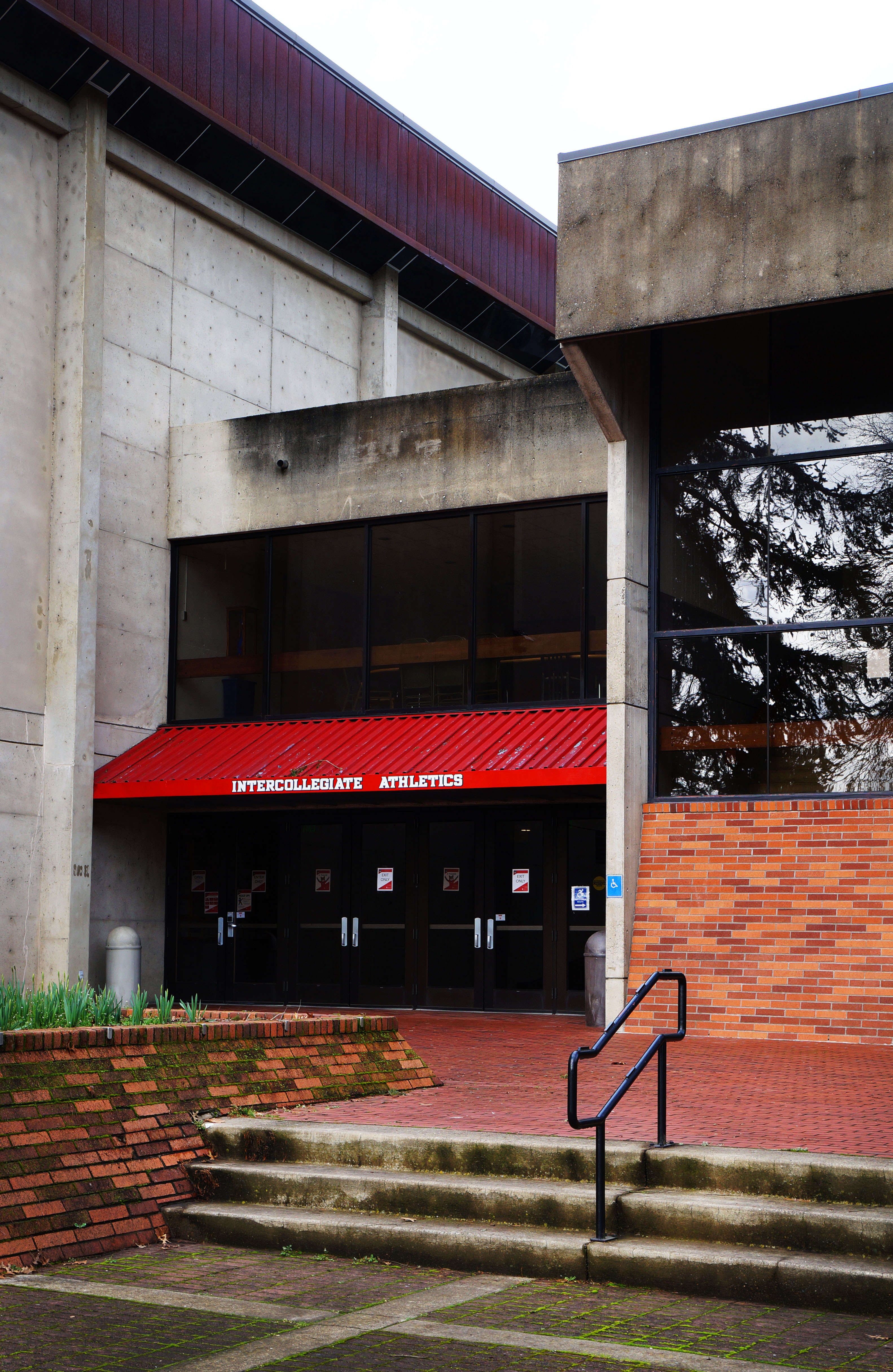
The operating costs for spring term total $585,886.67. Under the current proposed fee, the IFC anticipates collecting $502,750 and supplying the remaining funding using money from their $800,000 worth of reserves. The difference between winter and spring term’s operating budgets is approximately $330,000 less. The difference is due to the athletics department not making any budgetary requests for spring due to sufficient funding from their winter term requests.

The IFC is also working on drafting budgetary allocations and fee proposals for the 2021-2022 academic year. All funded areas have been asked to pitch 10%, 20% and 30% cuts. The reason for this request is due to the uncertainty of enrollment for the upcoming year and the unpredictability of COVID-19.

At this time, only 11 of the 15 areas have proposed their budgets for the upcoming school year. All areas were supposed to finish their proposals on Feb. 12, but the IFC chair cancelled the meeting because of the ice storm, and anticipate resuming proposals on Feb. 19.

For students that are interested in the IFC’s process, the committee holds their meetings via Zoom every Friday starting at 9 a.m. All committee meetings are open to the public and the link to the meeting can be found at their website wou.edu/ifc/. For all other inquiries regarding the IFC, students can email the IFC chair at ifcchair@mail.wou.edu.

Contact the author at scarpenter18@mail.wou.edu

Valentine’s at Valsetz

Campus dining has altered its traditional Valentine’s Day celebrations

Sydney Carpenter | News Editor

During the holidays, Western’s campus bakery is bustling with activity; from baking sweet treats for various functions on campus to filling special orders for students, staff or faculty, the bakery makes frosted smiles for all during the holidays.

Valentine’s at Valsetz Dining Hall in no exception. Students have their pick of cookies, cakes, brownies or specialty desserts. This year however, Valsetz has downsized their celebration as a result of COVID-19.

As an alternative to the big heart cookies with personal messages and special Valentine’s Day grams, Valsetz is packaging half a dozen Otis cookies in three varieties for $3, lemon bars covered in a berry drizzle for $1 and packaging half a dozen vegan and gluten free truffles for $4.50.

“This is where I show the most love to the students,” explained baker Pam Flippo. “I care very much about desserts I put out and I care very much about my baked goods.”

According to Flippo, to ensure student safety during COVID, all deserts will be packaged. For students interested in ordering for Valentine’s Day, email flippop@mail.wou.edu by Feb. 13 to customize any of the desserts being offered.

Contact the author at scarpenter18@mail.wou.edu

A sign of love from the ASL Club

Stop by ASL Club’s Valentine’s Day tabling event

Sydney Carpenter | News Editor

The Werner University Center has permitted clubs to hold small tabling events, which the American Sign Language Club is taking advantage of. In honor of Valentine’s Day, the ASL Club is hosting a pre-Valentine’s Day tabling activity on Feb. 10 from 12 to 3 p.m. to inform students about the club and answer any questions people have in regards to the Deaf community.

“We really wanted to try to do something in person,” said junior ASL/English interpreting major and ASL Club treasurer Shayla Barnes. “We just want to provide a little beacon of friendliness and personal connection in a time where Zoom reigns supreme.”

According to Barnes, the purpose of this event is to connect like minded people interested in developing their knowledge of ASL; Barnes explained all experience levels are welcome to join. For people who are new to ASL and are not completely comfortable with their level of signing, the Office of Disability Services was able to provide interpreters to attend the club meetings in addition to the students that are already in the club.

“I would encourage people to look into ASL for numerous reasons,” said Barnes, “first it’s a wonderful language with a wonderful community around it. Secondly, there’s a huge Deaf population.”

Barnes recalled her own experience learning more about the Deaf community, citing how surprised she was at the amount of famous people associated with ASL.

Additionally, students who attend the tabling can expect club members to offer free Western merchandise.

If a student needs an accommodation to participate in the tabling, contact the ODS at least 72 hours in advance at 503-838-8250 or ods@wou.edu.

Contact the author at scarpenter18@mail.wou.edu

IndyMo celebrates a month of buying from local businesses

IndyMo businesses reward locals with utility bill discounts and in-store coupons

Sydney Carpenter | News Editor

In honor of Valentine’s Day, Monmouth and Independence have come together to dedicate the entire month of February to the purchase of products from local businesses, known as the “Love Local” event. In each town, residents are rewarded with different benefits. 

For Monmouth, all patrons who purchase $20 worth of goods from local retail stores, restaurants, fitness facilities or personal service businesses with a physical storefront will be credited with $10 towards their next utility bill. Participants can earn this $10 credit up to three times per account.

Photo courtesy of Love Local Indy 2021

“(We’re) trying to get some recreational things happening out here,” said Dancing Muse Costume Shop owner and Vice President of the Monmouth Business Association James Martin.

“I have to remind people that there’s fun still. Even if you are stuck in the house because of COVID-19, you can still go to a Zoom meeting and hang out in different costumes.”

Martin explained he intends for his patrons to escape the mundane life activities brought on by COVID.

“I enjoy dressing up and having fun and I want to have other people dress up too,” said Martin. “Drinking a mug of ale with a bunch of friends and singing sea shanties while dressed as a pirate, well there’s nothing better, even if it is through Zoom.”

Photo courtesy of City of Monmouth – Love Local Challenege

For businesses in Independence, patrons who make purchases from any of the 14 participating businesses will receive a scratch it ticket worth $1, $5, $10 or $20 that will go towards their next purchase. 

For more information on the event, contact Suzanne Dufner at 503-838-0722.

Contact the author at scarpenter18@mail.wou.edu

Western prepares for spring sports season

Western athletics is moving forward with plans to begin a socially distanced season of  games

Sydney Carpenter | News Editor

Western’s athletics department has announced the return of spring sports pending any changes from the Great Northwest Athletic Conference.

Spring sports — baseball, softball and track — are expected to be allowed to have games/meets starting next month,” said Western’s President Rex Fuller in a spring term email update sent out on Jan. 21. “We don’t know to what degree spectators will be allowed, but if they are, we encourage you to come out and support your WOU Wolves!”

Western is currently the projected host for GNAC championship games for softball and track and field this coming May, according to the GNAC website.

“We are so excited to host the championships this year,” said softball coach Lonny Sargent. “Being able to go to tournaments all summer and most of the fall is a normal year for us and this year that wasn’t possible.” 

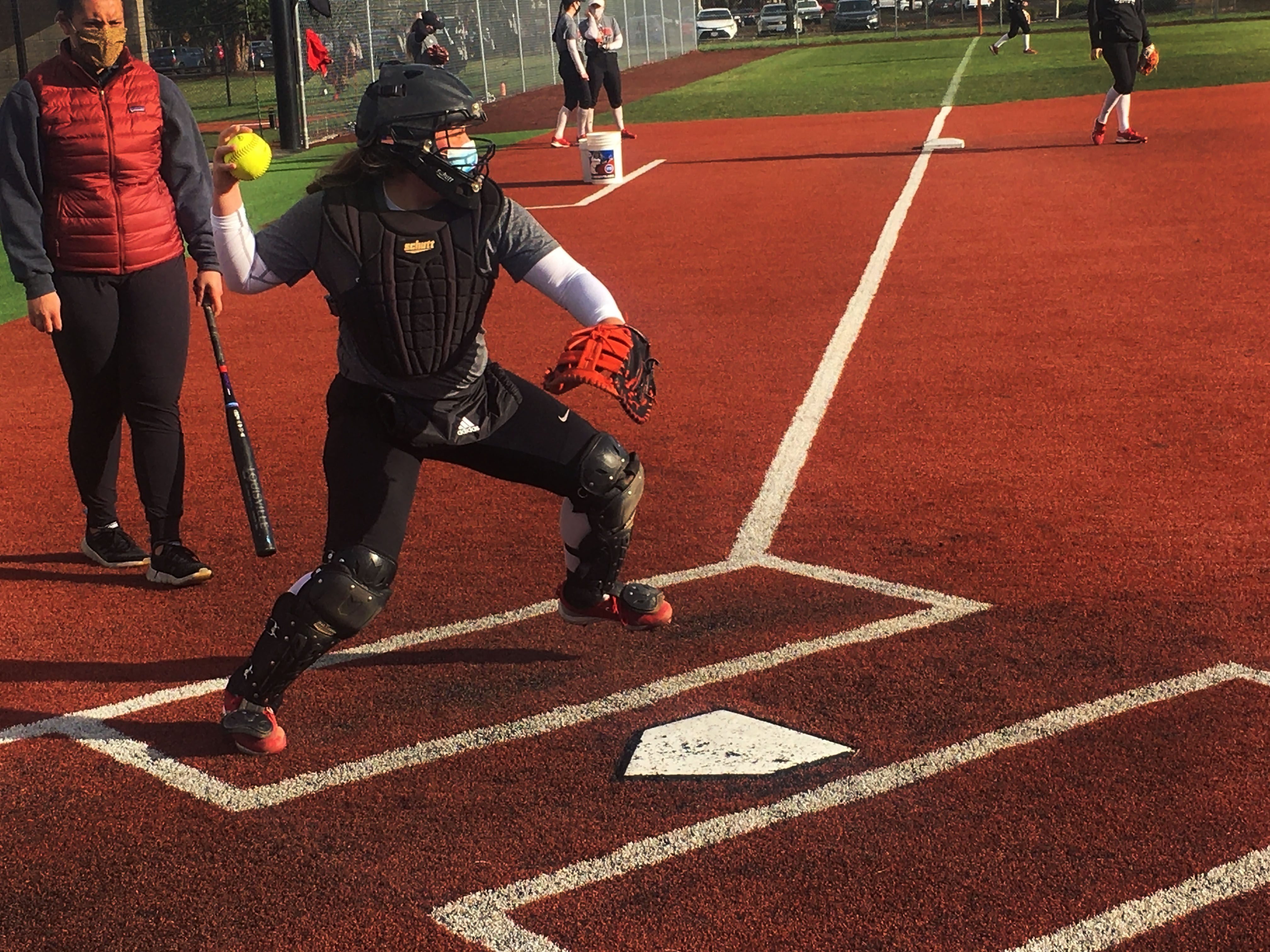
Currently, Western’s athletics department is reflective of Phase Two of the National Collegiate Athletic Association revised three-phase plan — the Core Principles of Resocialization of Collegiate Sport. In Phase Two, groups larger than 50 must have measures of physical distancing and sanitization, restricted staffing, workout areas and facilities must be sanitized and nonessential travel is permitted. In preparation for the conference schedule this year, teams will continue with socially distanced practices and personal scrimmage matches. 

“We haven’t been indoors at all this year due to the strict guidelines,” said Sargent. “Since we are an outdoor sport and can stay socially distant from one another, we have been able to have practices.” 

According to Sargent, player safety is a priority.

“Our players wear their masks, all their equipment bags are at least six feet apart from one another and each player is required to do a health check every morning by 10 a.m. on days they will be on campus,” said Sargent.

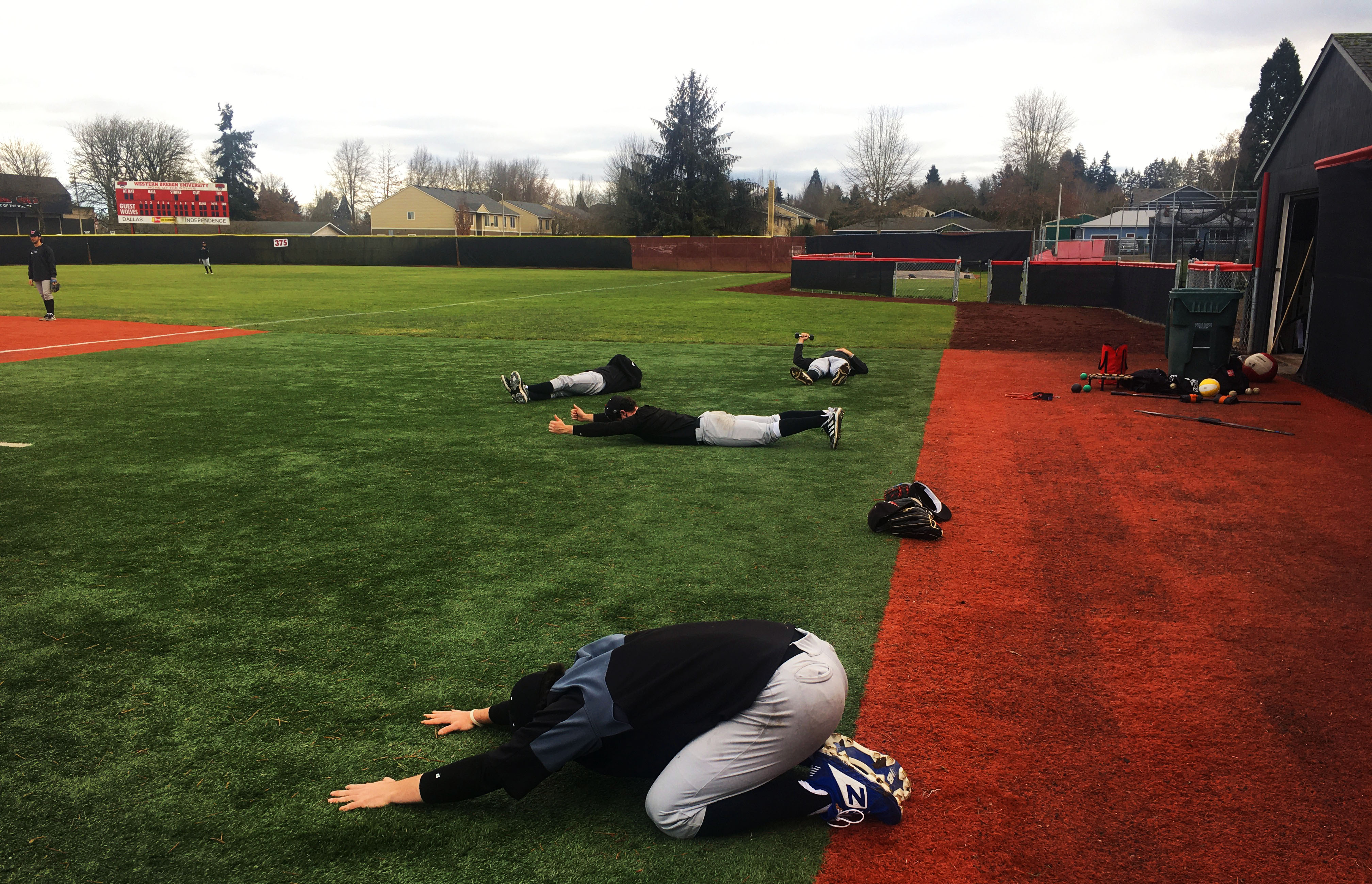
Traditionally, athletic teams practice as an entire group, but the department has broken the players down into smaller groups. Practices will be held at various times throughout the day to ensure maximum social distancing and limited contact. 

“It’s very exciting,” said sophomore undecided major and Western baseball pitcher Matthew Dunaway. “We’ve been working hard in the fall, and hopefully we play this spring.”

According to Dunaway, the team has been participating in more scrimmages this winter in comparison to fall term. Dunaway explained that players had been assigned to arrive at certain times for small team meetings.

Our athletic department has put together a great plan and we’ve been able to follow the protocols to ensure safety,” said baseball coach Kellen Walker. “Our players have done a great job of being flexible with changes to practice times and locations. We’ve obviously had to make adjustments to get our work in, we’ve been creative in making sure our guys are staying as healthy as possible while getting back into shape and ready to compete in the upcoming season.”

Going forward into spring term, the GNAC Senior Management Council will be evaluating whether students will be permitted to gather at upcoming functions.

“We hope to have the fans of Monmouth come out and support us this spring,” said Dunaway.

To learn more about the games, visit wouwolves.com/calendar.

Contact the author at scarpenter18@mail.wou.edu

IFC moving towards final fee decision for next term

IFC announces preliminary budgetary plans for spring 2021

Sydney Carpenter | News Editor

The Incidental Fee Committee has announced preliminary decisions for spring 2021.

In an email announcement sent out on Jan. 21 by IFC Chair Makana Waikiki, the committee provided a spreadsheet of budgetary allocations and two variations of the IFC fee for next term.  During the Jan. 15 meeting, the IFC narrowed down the spring term fee to $115 or $125, to be voted on by students in a survey due Feb. 4. The budget sheet shows that the committee has opted to lower the $150 fee students saw on their bill this term due to lower budgetary requests, explained Waikiki in an open hearing on Jan. 27. 

Under the current proposed fee options, the IFC anticipates collecting either $462,500 or $502,750, depending on the fee option that is chosen. During fall term, the operating expenses from the 15 areas funded by the IFC totaled around $580,000 ⏤ about $400,000 less than last term’s operating budget. For the money allocation, the committee supplied two areas with additional funding: Student Media received $2,750; the Creative Arts department, $1,500.

At this time, the IFC is projected to finalize budgetary evaluations for spring term by Feb. 5. 

For students that are interested in the IFC’s process, the committee holds their meetings via Zoom every Friday starting at 9 a.m. All committee meetings are open to the public and the link to the meeting can be found at their website wou.edu/ifc/. For all other inquiries regarding the IFC, students can email the IFC Chair at ifcchair@mail.wou.edu.

Contact the author at scarpenter18@mail.wou.edu


Western launches new study group app

Western has expanded its online academic support network through an app called CircleIn

Sydney Carpenter | News Editor

Western has announced their new partnership with an established educational support app known as CircleIn.

Founded in 2017 by Chief Executive Officer Gerald Meggett Jr., CircleIn was originally created to address the discrepancies in college graduation statistics for African American males and minorities across the country. However, the app is useful to all students pursuing higher education, according to an article written by Meggett.

Last spring, Western surveyed students about the challenges they are facing in online school.  Following up, Western reached out to CircleIn after original contact had been established in 2019.

“CircleIn automatically connects students with their classmates so they can form study groups, share useful materials and ask questions,” said Dean of Library and Academic Innovation Chelle Batchelor.

The app provides students with study tools to manage their workload, prioritize assignments and keep organized. After students log in to the app, they are provided with four color coded rectangles labeled “overdue,” “upcoming,” “in progress” and “done.”

“To help with motivation, CircleIn is gamified,” said Batchelor, “which means that as students complete various tasks and activities in CircleIn, they can earn points for rewards such as gift cards and scholarships.”

In the app, students can select from 26 major brands to earn rewards for, including Target, Spotify, Taco Bell and Starbucks.

“I already made $10,” said junior education major Elijah Thompson.

Prior to CircleIn, Thompson used to write assignments down as a reminder, and now the app CircleIn rewards the behavior.

“My printer just ran out of ink and now I might be able to afford more,” said Thompson.

In addition to a virtual planner, CircleIn automatically syncs to a student’s schedule to form study groups for all who are in the class. Batchelor stated that Western is currently exploring the idea of adding tutors within the group to provide additional support for online learning. 

Students interested in the CircleIn app can download it on their phones or go to the website circleinapp.com and access the services with no paid membership required.

Contact the author at scarpenter18@mail.wou.edu

West Valley Hospital moves second vaccine distribution site to WOU

Western’s Pacific Room is being used to allocate COVD-19 vaccine during Phase 1A 

Sydney Carpenter | News Editor

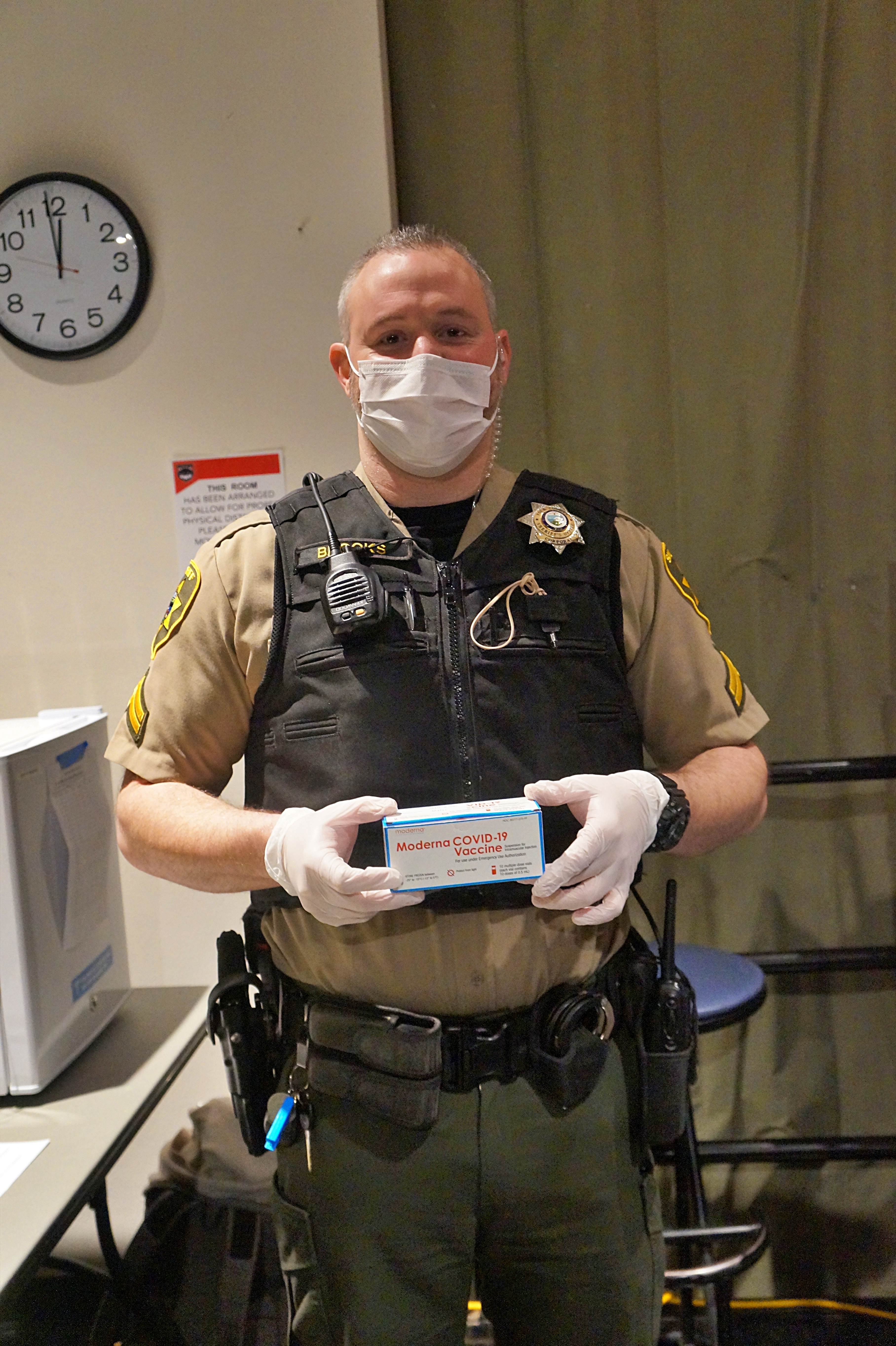
Last week, West Valley Hospital relocated their second distribution site for the COVID-19 vaccine from the Polk County fairgrounds to Western’s campus.

 “We were able to put up our first week there,” said Pathway Program and Community Outreach Administrator Jenny Von Derahe. “We moved here because it’s a central location and the technology is adequate for our needs.”

According to Von Derahe, the clinic was furnished in a day with the help of hospital facility workers, the environmental services team and kitchen staff.

“It feels safer and more comfortable than the fairgrounds,” said Polk County resident Wendy Brockhouse. “It just seemed weird in the big old barns … this just seems more a part of the community and safer.”

At this time Western is not charging West Valley to rent out the Pacific Room. According to Von Derahe, Western is not funding employment for the workers or volunteers of the clinic, however there are discussions of potentially allowing Western students interested in the medical field to volunteer at the clinic. Additionally, the clinic is not administering vaccines to administrators, faculty, staff or students unless they qualify within Phase 1A.

“One positive that’s come out is the collaborations that have taken place,” said Western Alumnus and District 1 Polk County Fire Chief Ben Stange.

Stange explained that Western has worked extensively with the community to facilitate a functional clinic on its campus.

“The Pacific Room would normally be used for this or that … but we (Western) can’t have events so it’s available. So what can we do to help the larger cause,”said Stange.

According to the Oregon Health Authority, Polk County has partially vaccinated 8.5% of its population and fully vaccinated less than 1% of the population. 

“It’s been such a huge deal to our people,” said Stange. “We were transporting positive patients every couple days, and it’s been difficult to see. The opportunity to actually hands on start to fix a problem that we’ve really felt we’ve had zero control over has been nice.”

Stange explained that, just like other health care professionals, their focus is to take care of people during emergency situations.

“There hasn’t been anything really till this moment that we’ve felt like we can do to make a large impact,” said Stange.

At this time, West Valley is charging a $60 administration fee for the vaccine that will be billed to the patient’s insurance. If uninsured, the hospital waives the fee. Due to the unpredictability of vaccine dose delivery, clinics are not open daily. To learn about hours and vaccination qualifications, visit their website at salemhealth.org.

Contact the author at scarpenter18@mail.wou.edu

United States Capitol hosts the 59th Presidential Inauguration

Joe Biden and Kamala Harris are successfully inaugurated into office following the attack on the Capitol

Sydney Carpenter | News Editor

On Jan. 20, President Joe Biden and Vice President Kamala Harris made a peaceful transition to office.

Themed “America United,” the ceremony featured creative talents such as Amanda Gorman, Lady Gaga, Jennifer Lopez and Garth Brooks.

“This inauguration marks a new chapter for the American people — one of healing, of unifying, of coming together, of an America united,” said Presidential Inaugural Committee CEO Dr. Tony Allen in a Jan. 11 press release. “It is time to turn the page on this era of division. The inaugural activities will reflect our shared values and serve as a reminder that we are stronger together than we are apart, just as our motto ‘e pluribus unum’ reminds us — out of many, one.”

Following tradition, Biden made his presidential vows over a Bible that’s been in the Biden family since 1893. In an interview with Late Show host Stephen Colbert, Biden explained the Bible had all the important dates from being sworn into any government office. Veering from tradition, former President Donald Trump did not make an appearance at the ceremony, and had Vice President Mike Pence stand in his place.

“We have worked hard. We left it all — as the athletes would say — we left it all on the field,” said Trump in his farewell address to Joint Base Andrews. “I wish the new administration great luck and success. I think they’ll have success. They have the foundation to do something really spectacular,” said Trump.

The former president concluded the speech, announcing he would return in some capacity, before flying to Florida on Air Force One for the last time.

Contact the author at scarpenter18@mail.wou.edu

WOU finalizes purchasing agreement with Wise Education for new proctoring system

Western expands pilot of new online proctoring system Wise Proctor

Sydney Carpenter | News Editor

Western’s Academic Innovation Department has launched a broader version of the proctoring system Wise Proctor.

In spring 2020, the transition to remote instruction raised concerns about testing integrity. 

“Academic Innovation investigated different remote proctoring solutions and ultimately selected Wise Proctor for a pilot,” said Academic Innovation Director Michael Reis.

After a summer test trial, Western moved forward with a large-scale pilot currently funded by Library & Academic Innovation. Reis explained that the department rearranged savings from temporary operational changes brought on by COVID-19 in order to fund the program. At this time, Western does not require or intend to require professors to use Wise Proctor; but, in departments like biology, some professors have opted to enter the pilot program.

“It can be difficult to ensure academic integrity and fairness in an online system,” said Assistant Professor Gareth Hopkins, “and so this is a way to try to ensure that in my classes.”

According to Hopkins, there had been a desire for a proctoring system by several biology faculty members for classes that are important prerequisites for programs such as medicine, dentistry and nursing. However, some faculty have opted out of using the system.

“My main reason is to ensure equity in my classes,” said Assistant Professor from the Department of Chemistry Dr. Feier Hou. “What if a student does not have a camera on their computer? What if the student has poor internet connections…? What if the student is not comfortable showing their household to the proctor or me?”

Hou had heard from other universities that their proctoring systems had given false positive results to students with learning disabilities for having different eye movements when they work on an exam.

However, Wise Education President Ian Hartley said the company has researched body movement extensively.

“We’ve got a very advanced AI algorithm,” said Hartley. “We’ve trained on hundreds of thousands of photos and scenarios in the real world. It’s detecting all the things that you’d want while eliminating false positives.” 

Hartley assured that the company was built on prioritising student privacy and students are made fully aware they are being filmed by giving their consent while using the program and Wise Proctor is not downloadable software that has access to your computer at all times

For professors who have chosen not to use the new system, some have altered how they give quizzes and exams entirely.

“I realized that the traditional way of testing … may be testing more on students’ ability to take tests or perform under stress, than on their knowledge in chemistry,” explained Hou. “So I made my big exams open-book, and rewrote the exams so that they contain more open questions where students have to explain and show their … understanding of the materials.”

Additionally, Hou acknowledged that some students might see her as a “push-over” and cheat on exams, but she reported a vast majority of her students are not like that.

“I choose to trust my students, and if someone is going to cheat, they will eventually get the consequences later in their lives,” said Hou.

Contact the author at scarpenter18@mail.wou.edu

Ryan Kelly hosts virtual comedy show

Student Activities Board holds online comedy show starring TikTok comedian Ryan Kelly

Sydney Carpenter | News Editor

On Jan. 2, the Student Activity Board announced on Instagram that their first major event for the term would be comedian Ryan Kelly ⏤ known online as Youth Pastor Ryan ⏤ who will perform in a virtual stand-up comedy event featuring interesting life experiences.

Despite his namesake and going to a Christian school for 18 years, Kelly is not actually a youth pastor. In his Twitch trailer, Kelly explains he looks like what people would imagine a youth pastor might look like.

In St. Louis, Illinois, he began doing comedy as an improviser. According to ryankellycomedy.com, he had received training from iO Theater ⏤ formerly known as The ImprovOlympic ⏤ The Second City, The Groundlings Theatre and School and Upright Citizens Brigade Theatre. In college, he was interested in new life experiences and began performing stand-up comedy. According to neon-entertainment.com, he often draws inspiration for his comedy routines through experiences including: surviving a plane crash, being tackled inside the National Security Agency and negotiating deals while being mugged.

“I needed something,” said Kelly when asked why he does comedy. “I needed something to give purpose and joy.”

 His favorite part of comedy is when the whole room laughs. 

“Because laughter is a very binding thing,” explained Kelly. “(I try to) make the bigger guys laugh because when you do that it shows a diffusal and makes people feel like they are safe.”

Kelly explains that this comedic approach brings shyer people out of their comfort zone in a natural way.

“Once everyone’s at peace then being able to hit jokes where people feel comfortable and they all laugh is a beautiful moment. Having a full crowd laugh together, they’ve all become friends and they don’t even know it,” explained Kelly.

To view the virtual comedy show taking place on Jan. 13 at 6 p.m., go to Engage and click the Zoom link located in the event’s advertisement. To learn more about Ryan Kelly, view him on Twitch @youthpastorryan where he posts gameplays, TikTok @youthpastorryan or on YouTube @Youth Pastor Ryan.

Contact the author at scarpenter18@mail.wou.edu

COVID-19 vaccines arrive in Oregon

Oregon enters Phase 1A of vaccine delivery initiative

Sydney Carpenter | News Editor

In late December, select Oregon residents received doses of the Pfizer and Moderna COVID-19 vaccines.

To deliver the vaccine to all Oregonians, the state has implemented a three-phase rollout plan. On Jan. 5, Oregon began Phase 1A of its vaccination schedule. In Phase 1A, the Oregon Health Association lists in its plan: hospital workers and first responders, elderly and those involved in their care, prison doctors, clinics serving high-risk groups, visiting nurses/home health care providers, other health care providers and funeral home workers to be vaccinated first. 

Over 51,000 Oregonians have received the first dose of the Coronavirus vaccine since the beginning of 2021, whereas only nine people have completed the two doses required for full vaccination according to covidvaccine.oregon.gov. Currently, the CDC reports Oregon has delivered over 117,000 doses of Pfizer vaccine and over 121,000 doses of the Moderna vaccine.

Currently Pfizer and Moderna are known to have three major differences, including age restrictions, temperature storage requirements and length of time between each dose. In comparison to Pfizer, the Moderna vaccine can be kept at -4 °F, whereas Pfizer’s must be kept at  -94 °F. Additionally, a person must be at least 18 years old or older to receive the Moderna vaccine and the two doses must be administered 28 days apart in comparison to Pfizer’s 21-day separation, which has an age restriction of 16 years.

On Dec. 22, West Valley Hospital in Dallas received its first shipment of Moderna vaccine according to a press release by Salem Health. 

“For decades, West Valley Hospital has been providing a wide range of quality care to residents of Polk County,” said West Valley Hospital Chief administrative officer and licensed registered nurse Brandon Schmidgall in the press release. “Today we begin offering a new and historic service — the COVID-19 vaccine — first to our health care heroes, but eventually to our small-town community.”

As of Jan. 5, Polk County has vaccinated 1% of an estimated 82,000 residents according to the OHA. Local clinics like Western’s Student Health and Counseling Center have not received COVID vaccines yet; although, on Dec. 22, Oregon added educators to the list. 

 “Teachers have recently been added to Phase 1A and who that all includes will need to be more clearly defined by OHA,” said Polk County Public Health Administrator Jacqui Umstead. “We will work with Western Oregon University, and other local educational institutions to ensure that both staff and students have access to the vaccine, when it is their turn.” 

Contact the author at scarpenter18@mail.wou.edu

Cuts to Western’s departments and programs

President Fuller’s Article 15 Task Force proposes draft of program curtail and Non-Tenure Track reductions

Sydney Carpenter | News Editor

Beginning in 2011, the administration office began seeing lower enrollment rates at Western, resulting in financial challenges in the years following.

In spring 2020, COVID-19 accounted for 70% of the university’s 25% drop in enrollment. This resulted in the university asking the deans to propose two budgets to reduce salaries by 10% and 17% in June. In addition, all Cabinet members were asked to review budgets for FY21 and develop 10% and 17% cuts, based on salary. 

When the task force began reviewing program curtailments, an extensive list of qualitative and quantitative factors were taken into account. 

Additionally, the task force also utilized feedback from original reports from the deans, the recommendations from Western Oregon University’s Federation of Teachers, the recommendations from the Faculty Senate Executive Committee, PowerPoint for panel discussion, feedback from three faculty panel discussions, the report from the faculty Sustainability Task Force and Article 15 of the Collective Bargaining Agreement outlining faculty contracts and rights.

In totality, the task force has proposed the elimination of five majors, two programs, seven minors, one program freeze and one history concentration removal. For non-tenure track faculty, 15 departments have received deductions in full-time equivalents.

All of us are frustrated and shocked, and more importantly we are not okay with it,” said senior earth science major Nicole Niskanen. “Granted, the times we are in are very challenging and it is understood that the university is not exclusive with the sacrifices it is making, because many other schools are in the same position.”

Niskanen explained that a lot of the cuts are impacting first-generation college students that are interested in pursuing degrees in science, technology, engineering and math.

“Western Oregon University is an affordable option for many first-generation college students, along with that, the campus prides itself on diversity and equality,” said Niskanen. “The Earth Science program at Western has a significant number of women and other individuals from diverse backgrounds and populations enrolled in the program including students with disabilities.”

According to Niskanen, eliminating the program strips away the opportunities for some of those underrepresented first-generation college students and deprives those who cannot afford to attend expensive STEM-focused universities.

Under the current program cuts, students will be permitted to complete their major and professors will still teach until students learning in their areas complete their major or minor; the effects of program cuts will impact all incoming students starting in 2021.

“I am writing on behalf of all of the Earth Science students who have completed the program, who are currently trying to finish the program, and those who will complete the program; we don’t want to see any of our professors leave because they have done so much for us by dedicating their time to support us and by selflessly helping prepare each student for whatever career path they take. We want to fight for the program and fight for our educators,” said Niskanen.

Currently, faculty are working to try and save these programs. To advocate for programs or faculty jobs, students can go to the ASWOU site within Engage. From there, students can fill out the Student Concern Report.

UPDATE (DEC. 15TH, 2020 @ 6:52PM)

Western has announced its final program curtailment enacted by Article 15, as well as non-tenure track layoffs outside of Article 15.

Under the article, the university is permitted to make reductions in cases of demonstrable financial need, discipline curtailment or retrenchment. As of now, Western is claiming financial strain due to COVID-19 and long-term decline in enrollment as the cause of enacting Article 15.

Since fall of 2011, Western’s enrollment has decreased over 25% from 6,217 to 4,552 in fall of 2020, as reported in the Article 15 Task Force’s finalized plans. Currently, under the Article 15 program curtailment plans, 14 full time positions will be lost, and a total of 10 majors and minors will be eliminated along with two masters programs. Outside of Article 15, a total of 16 full-time non-tenure tracks are being laid off.

“Quite frankly, our options for achieving a balanced budget are limited,” said President Rex Fuller in a letter to the campus community. “Given that more than 85% of our expenses are salary and benefits. With limited options for tuition increases, declining enrollment, and likely cuts to state funding, we must act decisively to align our budget with our fiscal reality.”

As of now, the impact of the program cuts will not impact students who are currently majoring or minoring in the program. In the letter, Fuller noted how important it is for students impacted by the program cuts to finish their degrees. According to the campus-wide letter, program curtailment will only impact incoming students starting in the 2021 to 2022 school year. Tenure-track and non-tenured positions will not be cut until deans and division heads submit final layoff decisions. The decisions are expected to be an ongoing discussion through the month of January.

Some members of Western’s faculty union — the WOU Federation of Teachers — are asking for program curtailment to be delayed until the new university president comes into office.

“We know that WOU is in some financial difficulties,” said WOUFT Communications Director Scott Beaver. “We just don’t want to rush, do long term solutions without due diligence.”

In an effort to advocate for faculty and departments WOUFT included some alternatives to department layoffs in the finalized plan, including moving Western out of Division II sports, looking for efficiencies in non-instructional office budget cuts and personnel assignments, reduce the number of campus sponsored events and used additional money from the fund balance.

In the final plan, all layoff notices must be given to designated faculty no later than the end of January. Affected tenure-track faculty will receive a one-year layoff notice before their positions end, at the latest by the end of January 2022.

The union at this time remains hopeful that there are departments that can be saved before layoff notices are issued. Beaver said the union is still fighting. 

Contact the author at scarpenter18@mail.wou.edu

Approved IFC fee application makes historic changes for student run committees

ASWOU and WOU administration debate over IFC fee application leads to new Oregon Legislation proposals 

Sydney Carpenter | News Editor

The Associated Students of Western Oregon University and Western administration have concluded their debate over fee application for winter term. 

As a result of the actions of administration, ASWOU is working with Oregon legislators to improve the current Oregon statue that is supposed to protect and guarantee student autonomy over incidental fees.

“Much of the problem is that the law as written now provides the opportunity for an institution to ‘pocket veto’ the student fee through inaction and enough delays,” said Oregon Student Association Executive Director Andrew Rogers in an article written by Oregon Public Broadcasting. 

During the discussions fee revision, ASWOU President NJ Johnson reports delayed action and staling of IFC processes by President Rex Fuller.

“We had sent the fee request on Nov. 25,” said Johnson, “ We needed … for him to respond to the fee request by Dec. 9.”

At the time President Fuller was sent the request, he had no authority to approve the fee in its entirety. However, in an emergency Board of Trustees meeting held on Dec. 8, the committee gave Fuller temporary permission to approve the IFC fee. According to President Johnson, President Fuller was asked to approve the fee by 1 p.m. on Dec. 9, and reports receiving a response around 12:34 p.m that day. Instead of approving the fee Fuller questioned aspects of the proposal.

“He had two weeks to ask questions,” said Johnson, “All of the questions asked were just meant to stall our process so that a potential HECC appeal would have been nullified. We’d be in a position where we have to accept the university’s offer for another stimulus. A stimulus that wouldn’t be able to sufficiently fund the programs that we needed to.”

At that time, ASWOU was in the process of filing a second appeal to the Higher Education Coordinating Commission to have a third party evaluate the administration’s rejection of the IFC fee. 

The first appeal was written in September after the IFC was denied consultation with the Board of Trustees to discuss formatting their fee so that it reflected a campus attending classes 95% online. The appeal was ultimately withdrawn by ASWOU after Fuller stated that the IFC would receive a negotiated million dollar deal on the condition they withdraw their appeal to HECC. ASWOU filed their second appeal later that afternoon on Dec. 9, after their discussion with Fuller.

Following the HECC appeal, Johnson received an email from Fuller saying he would charge the IFC fee.

“For the IFC it seemed that we appealed and there was an attempt to stall us, but we didn’t let it stall us,”  said junior communications major and IFC chair Makana Waikiki. “The president then realized that we were very serious and prepared to move along with the HECC appeal.”

Waikiki explained that it appeared the administration didn’t want ASWOU to make the HECC appeal, so they agreed to charging the IFC fee. Never in Western’s IFC history has a fee established for the year been changed in the middle of that fiscal year. Although a monumental moment for student autonomy, Johnson expressed how disappointed he was that the fee was only accepted after legal action was taken.

“It’s a disappointment that so much effort and time has to go into retaining our rights as students,” said Johnson.

For the upcoming term, regardless of modality and amount of credits being taken, all students will see an flat rate IFC fee of $150 on their bill in comparison to their previous two tier fee system approved back in Apr. 2020. This fee charged students over $200 depending on course load.

In a press release issued on Dec. 16, ASWOU calls for students to participate in the new legislative process taking place within Oregon law. To be involved in the statewide student effort to pass legislation which regulates student fees, contact Oregon Student Association at andrew@orstudents.org to learn how to advocate for student voices.

Contact the author at scarpenter18@mail.wou.edu

Polk County Warming Centers celebrates its third season of service

Warming centers continue to provide temporary sleeping accommodations to Polk County’s homeless population

Sydney Carpenter | News Editor

During the winter months, Oregon temperatures can drop below freezing at night, leaving those without a place to call home exposed to the elements. Starting in 2017, a group of pastors around Polk County identified the growing need for temporary housing within the area.

“A few pastors and I were having a meal at Rock-N-Rogers when a young gentleman walked in   needing a place to stay,” said Pastor Matt Smucker of Praise Assembly Church and co-founder of the Polk County Warming Centers. “We, through the course of the day, realized we don’t have any shelter options in Polk County.”

Determined to help a community in need, Smucker explained that he and Monmouth Christan Church Pastor Sean Bitzer reached out to the Director of the Family and Community Outreach Program, Brent DeMoe, and began drafting a grant proposal to fund the Warming Center in Polk County. According to Smucker, their initial ask was $12,000, but they were pleasantly surprised when they received $25,000.

 “It really allowed us to do so much more that first year,” explained Smucker. “We were able to get a trailer, to get all of the equipment, mattresses and even to start paying our overnight hosts a stipend to oversee the program that night.”

Under their current model, the Warming Center rotates through seven churches in the communities of Dallas and the IndyMo area — each location on call for a two-week period — rather than having a designated facility. According to their website, this was done to avoid overburdening any singular faith community or resource partner. 

The Warming Center season runs from Nov. 1 through March 31, and is active on nights when the temperature is forecast to drop below freezing, housing a maximum of 25 people. This year, Smucker says that they are trying to open up more on nights that are above freezing when weather conditions are particularly wet or stormy. The center welcomes singles, couples, families and people with animals.

“We want to have as low a barrier as possible,” said Smucker. “We want to make sure that everyone is able to be safe and warm on nights that get below freezing, because death from exposure is a real threat.”

According to Smucker, a resident of Polk County passed away from hypothermia on the streets in Independence about four years ago.

To abide by COVID-19 regulations, the Warming Center now takes people’s temperature before admitting them into the church. According to Smucker, the Warming Center has been able to partner with some hotels in Polk County to temporarily house and quarantine anyone running a fever of 100.4 °F, in accordance with the guidelines from the Center for Disease Control and Prevention. Additionally, for community members permitted into the church, all beds are placed 10 feet apart to ensure maximal social distancing.

“We need to still address this emergency need even though we are still dealing with COVID,” said Smucker. “We are trying to put in the best practices of keeping people safe with masks, distancing, cleaning procedures and things like that.”

Smucker says he firmly believes that the Warming Center is an essential service for the community that needs to keep running, but safely. Despite current circumstances, the Warming Center has continued to receive volunteers and could always use more.

“I found out about the Warming Center through Polk County Service Integration,” said new volunteer Ramon Martinez. “I just think that this is an important initiative that’s being done. We’re not in the big city, but the reality is that there are some folks in our community that do need a place to stay.”

Martinez explained that the Warming Center is not only a place to stay, but also a place that helps people get on their feet. The center acts as a resource to help an individual get access to information that improves their overall quality of life. Depending on volunteers, guests also are served snacks and hot meals.

To learn whether the Warming Center is open, check their website www.polkwarming.weebly.com, or their Instagram page @polkwarming. If someone needs transportation to their sites or wants to donate items, call 503-949-4987 to speak with Annie. Currently, they need granola bars, packaged nuts, menstrual care items, Christmas gifts, wool socks and hats, gloves, hand warmers, medicated chapstick, bath and hand towels, disposable drink and plateware, soda, peanut butter and jelly and anything water resistant. 

For volunteer opportunities, contact them via Facebook or Instagram @polkwarming. 

Contact the author at scarpenter18@mail.wou.edu

ASWOU makes a million dollar deal with WOU administration

Administration denies ASWOU the ability to collect IFC fees, instead offering a one million dollar stimulus

Sydney Carpenter | News Editor

Across Oregon, many universities are converting a majority of in-person classes to online due to COVID-19, Western is one of them. On Aug. 18, a group designated as the “reopening committee” voted in favor of Western holding 95% of its classes online. 

Based on the Tuition & Fees for the 2020 to 2021 academic year, student governed fees — such as Incidental Fees — could not be applied on the fall bill. At the time of approval, fee application was dependent on course delivery. If a student does not attend an in-person class on campus, then the fee would not be applied to their bill.

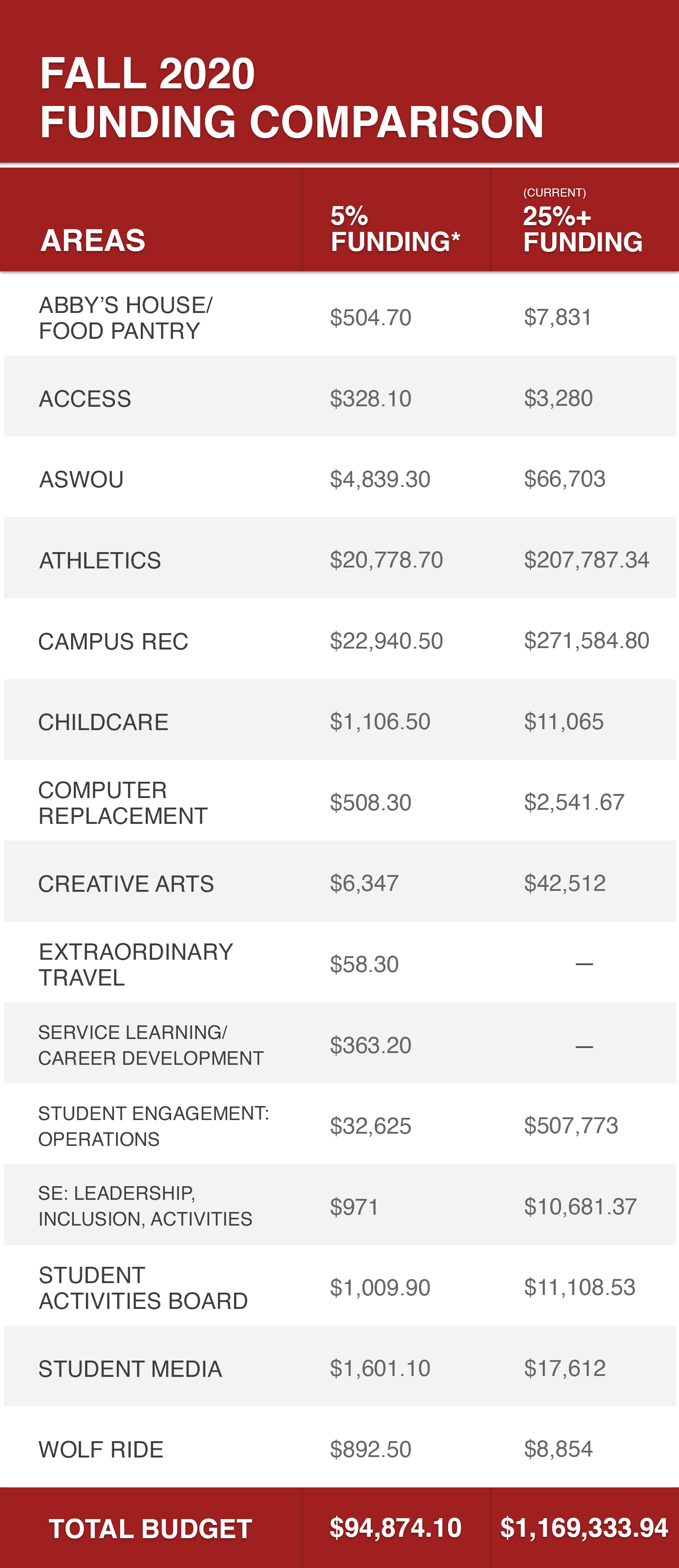
As a result of the online conversion, the Incidental Fee Committee estimated collecting only 5% of their anticipated 1.9 million dollar budget for fall term.

“I was on the committee … designed to reopen campus in a safe way, but I was the only student on that committee,” said senior public policy and administration major and ASWOU President N.J Johnson, “When we were putting together the email announcement…about classes being online I had expressed my concerns.” 

Johnson stated that the email indicated online students wouldn’t be paying a fee. He went on, saying he voiced to the reopening committee that the IFC was not consulted. Johnson said he was outvoted by other members of the reopening committee, resulting in no online students being charged incidental fees.

In the days following the email announcement, the IFC Steering Committee — a group tasked with reviewing and changing IFC bylaws — met on Aug. 31 to take action in response to the reopening committee’s decisions.

“We made two amendments to the bylaws,” said junior communications major and IFC member Makana Waikiki. “One of them was to allow a Special Committee to meet and it also specified who would be a part of the committee.” 

Waikiki voices how the committee felt it important to have more than one student in a room making decisions.

The second amendment gave the IFC control over defining what a fee paying student is. It is considered by the committee to be a historic change.

“We haven’t had the power to define a fee-paying student (until) recently,” said junior philosophy and English double major and IFC Member Nick Denning, “which is absolutely integral in us charging online students.”

After the bylaws were passed by the Steering Committee, the newly formed Special Committee sent out a petition to the student body, asking if they wanted to have a fee applied on the fall bill to fund the 15 programs covered by the IFC. On Sept. 2 the Special Committee convened to discuss applying applying a flat rate fee of $250. During the meeting Denning revealed the petition sent out by the Special Committee received over 300 signatures. Currently Western has 4,164 students registered for classes. 

On the same day of the Special Committee’s first meeting, Johnson reported he was contacted by President  Rex Fuller.

During their discussion , Fuller offered a one million dollar stimulus from the $53 per credit online tech fee approved back in April. According to the Business office the online tech fee is not new. In April when the Board of Trustees were finalizing billing, they took the difference of online tuition  — $228  —  and Oregon residency tuition  — originally $176 before the 4.55% increase in April — increased it by $1 and made it a separate fee for bill transparency.  According to Fuller, the $53 was originally intended for Western’s new Learning Management System called Canvas. However due to COVID-19, Western  entered a contract with Canvas that is funded by the CARES act until the end of 2020.

“Due to the unique situation of Fall 2020 being almost 95% online, I offered to ASWOU a $1M allocation of online course fee revenue to ease the revenue shortfall,” Fuller explained.

After talking with Fuller, Johnson said that he told the Special Committee about the million dollar deal immediately. However, the minutes from the Special Committee’s first gathering discussed applying a temporary flat rate fee of $250, and did not mention the conversation between President Fuller and ASWOU President Johnson. 

Although they were offered a million dollars, Johnson explained the fee application was still requested.

“We had two reasons we wanted to apply a fee,” said Johnson, “The first reason is to have a recognized student government.” 

The second reason Johnson cited for fee application was precedence.

“It’s about having your decision … through (the) proper process as stated in the IFC bylaws. We thought it was important … that those decisions were recognized.” he stated.

On Sept. 23, ASWOU posted a press release claiming the Board of Trustees were asked to meet in September to review the fee being discussed by the Special Committee. However, the Board affirmed they wouldn’t meet till Nov. 18.

“Chair Komp and President Fuller said it wasn’t advisable at the time. Because we have the million dollars from the tech fee that would buy us enough time to solve this problem collaboratively,” recalled Johnson.

In order to work with the Board of Trustees, ASWOU lowered the original $250 fee to $50 because the million dollar offer funded more than 51% of the IFC’s budget. Even so, ASWOU still wanted to establish precedence and the student body government as a legitimate power on campus.

Johnson went on to say that the Board of Trustees still did not want to meet, citing that they felt it would be better to apply a fee in the winter and spring. 

After being denied consultation, on Sept. 14 ASWOU submitted an appeal to the Higher Education Coordinating Commission, requesting a third party to evaluate the administrative rejection process of ASWOU’s request to collect incidental fees. 

Negotiations regarding the million-dollar agreement spanned two days following the Sept. 14 HECC appeal.

On Sept. 16, ASWOU and WOU admin reached an agreement; the three terms of the agreement were not released to the IFC funded area heads until Sept. 17. In the joint email sent by Fuller and Johnson, the three conditions of the agreement were as follows.

First, the University will assess fall term fees based on the course modality of classes offered. For remote/online classes, a technology fee will be assessed while the incidental fee will be assessed on all face-to-face courses. 

Second, the university will provide one million dollars from the tech fee and the remaining funds will be drawn from student reserves. 

Third, ASWOU would drop its appeal to HECC.

ASWOU complied to secure the million-dollar stimulus for the IFC funded areas. After the deal, the IFC received 61% of their projected funds. 

Currently, all areas are being funded 25% or more and the IFC does not intend to apply fees this fall. 

Johnson says that the full IFC will be meeting to discuss what took place this the fall in preparation for winter and spring term. More information will be released when there are developments in the story.

UPDATE (OCT. 28TH, 2020 @ 2:09PM)

For fall term, students did not see an Incidental fee on their billing statements. As a result, IFC was not able to fund the areas it covers until ASWOU President N.J Johnson and Western’s President Rex Fuller made a million dollar deal giving the IFC 52% of their previously anticipated $1.9 million budget. However, the deal was made with the intent to fund the IFC for fall term.

“The online course fee is not designed, as a general proposition, to supplement incidental fees,” said Fuller. “Due to the unique situation of fall 2020 being almost 95% online, I offered to ASWOU a $1M allocation of online course fee revenue to ease the revenue shortfall to support student services funded by incidental fees.”

The IFC met on Oct. 22 to discuss plans going forward. The committee decided to make decisions only for winter term due to the money being unknown so far in the future, feeling it was better to take it term by term, and being able to effectively allocate funds to what best serves students. Currently, all seven IFC area heads are being asked to be prepared to present a 50% budget proposal at their next meeting on Oct. 29.

For the budget proposal, areas are being asked to base 50% funding off of last year’s allocation. In addition to running cost estimation, each department is being asked to present a brief presentation on where the money is going and what has been prioritized in their budgets. The IFC did not give the areas restrictions on what the budget can or can’t be used for.

At this time, President Johnson and President Fuller are revisiting the definition of a fee-paying student — a power the IFC implemented to their amendments in September, but not fully recognized by the Board of Trustees at the time.

All decisions regarding budget proposals and definition of a fee-paying student must be finalized before the first subcommittee meeting for the Board of Trustees, which meets around Nov. 11.

The story will be updated as more information is released.

Contact the author at scarpenter18@mail.wou.edu

Services provided by Valsetz plan to switch online

Valsetz accommodates students opting to stay on campus over the Thanksgiving holiday 

Sydney Carpenter | News Editor

During the holidays, most Western students return home to see family and friends. Under current circumstances with the two-week statewide freeze, many students have chosen to reside on campus through the entirety of Thanksgiving break. In a survey sent out by University Housing as of Sept. 13, nearly 25% of the 536 respondents stated they were staying on campus.

During Thanksgiving break, services like Campus Dining will be closed to allow student and staff workers time to enjoy the holiday festivities. However, like years prior to 2020, Campus Dining Services offered provisionals to those students on campus.

“What we end up doing is we ask students to put in an order,” said Albert Worotikan, Director of Campus Dining. “We can provide them with food (breakfast, lunch and dinner) that will stay (good) for three to four days like milk, sandwiches or frozen pizzas that they can order in advance and pick up before we close on Wednesday at 2 o’clock.”

After Thanksgiving break, Worotikan reported that Valsetz plans to convert its services to entirely online orders for the rest of fall term.

“Because some of the students who are coming back might be traveling around, we want to make sure we don’t spread the virus,” said Worotikan. “We will be adding an additional two weeks because we want to ensure the safety of students and staff.”

During that time, students will not be permitted to sit in the dining halls and are expected to continue wearing their masks and remaining six feet apart.

If students who are staying on campus still haven’t submitted their order for the four-day break, Worotikan said that while the deadline has passed, students can email him at worotikana@mail.wou.edu and ask for an extension. Worotikan explained that he too has children and understands that in times like these, extensions are important and students need understanding and support.

Contact the author at scarpenter18@mail.wou.edu

Western student petitions to change University Housing Guest Policy

Students rally behind petition advocating for a change in resident hall guest visitation policies

Sydney Carpenter | News Editor

On campus, University Housing has adapted to the ongoing challenges presented by COVID-19 by reducing housing capacity, reducing double rooms to singulars, ensuring masks are worn, prohibiting off-campus guests and students from visiting other students if they do not live in the same building.

In response to the current visitation policies, junior English education major Maya Schlosser-Hall created a petition advocating for a change.

“I created the petition because my partner also lives on campus, but in a different building,” said Schlosser-Hall. “The intention of the rule is clear; housing wants to protect their students from possible exposure. I have nothing but respect for housing staff and all the hard work they do. However, I do believe there are other ways of supporting students.”

After creating the petition, Schlosser-Hall received 193 responses. From there, Schlosser-Hall organized a meeting with Tina Fuchs — Dean of Students, Director, University Housing — and Shelly Clark — Associate Director, Residential Education. 


“I was expecting to not be taken seriously,” said Schlosser-Hall. “I started the meeting knowing Kate Brown had submitted a two-week freeze over Oregon due to spikes of COVID-19.”

Much to Schlosser-Hall’s surprise, she reported that both Fuchs and Clark were encouraging and adamant in hearing what she had to say.

According to Schlosser-Hall, University Housing is listening to their residents; discussions regarding the policy had already been in process prior to the petition. Additionally, guest policies will be reflected upon prior to every term, and both Fuchs and Clark are taking the petition into deep consideration.

“One of the solutions (given to me by another student) is to think of guests as a resource for other students on campus. Instead of fully opening guest policies, this suggestion asks students to document one or two people they deem necessary for their mental, physical and academic wellbeing,” explained Schlosser-Hall.

Contact the author at scarpenter18@mail.wou.edu