


Explore a brief history of Western Oregon Universities campus through historical photos!
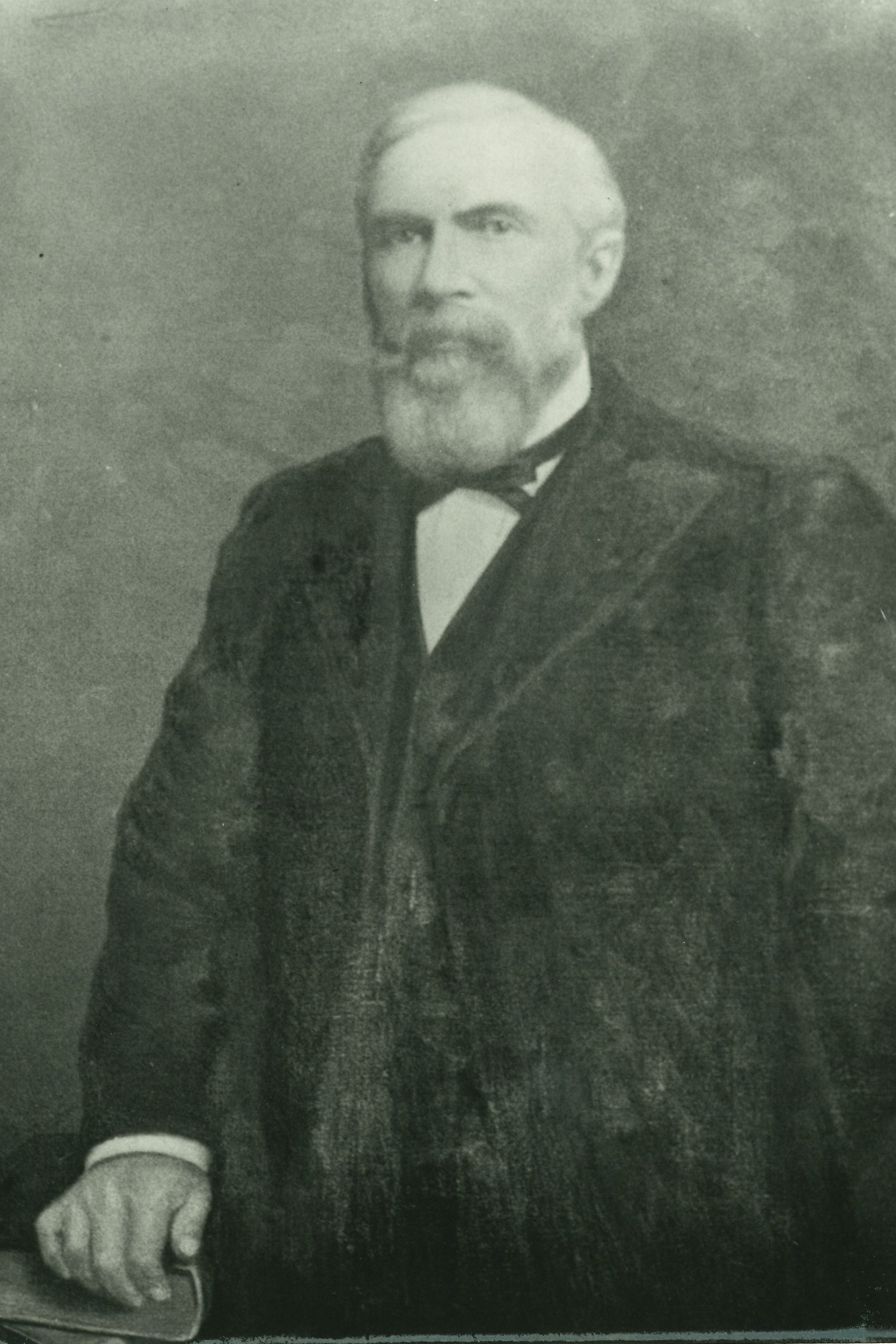
Thomas F. Campbell, president of the school from 1869 to 1882, and one of the illustrious Campbells after whom Campbell Hall was named. The building was not named until the 1930s at the suggestion of the school president, A. Churchill, who felt it would honor both Campbell presidents. Thomas was the father of Lucien Campbell.
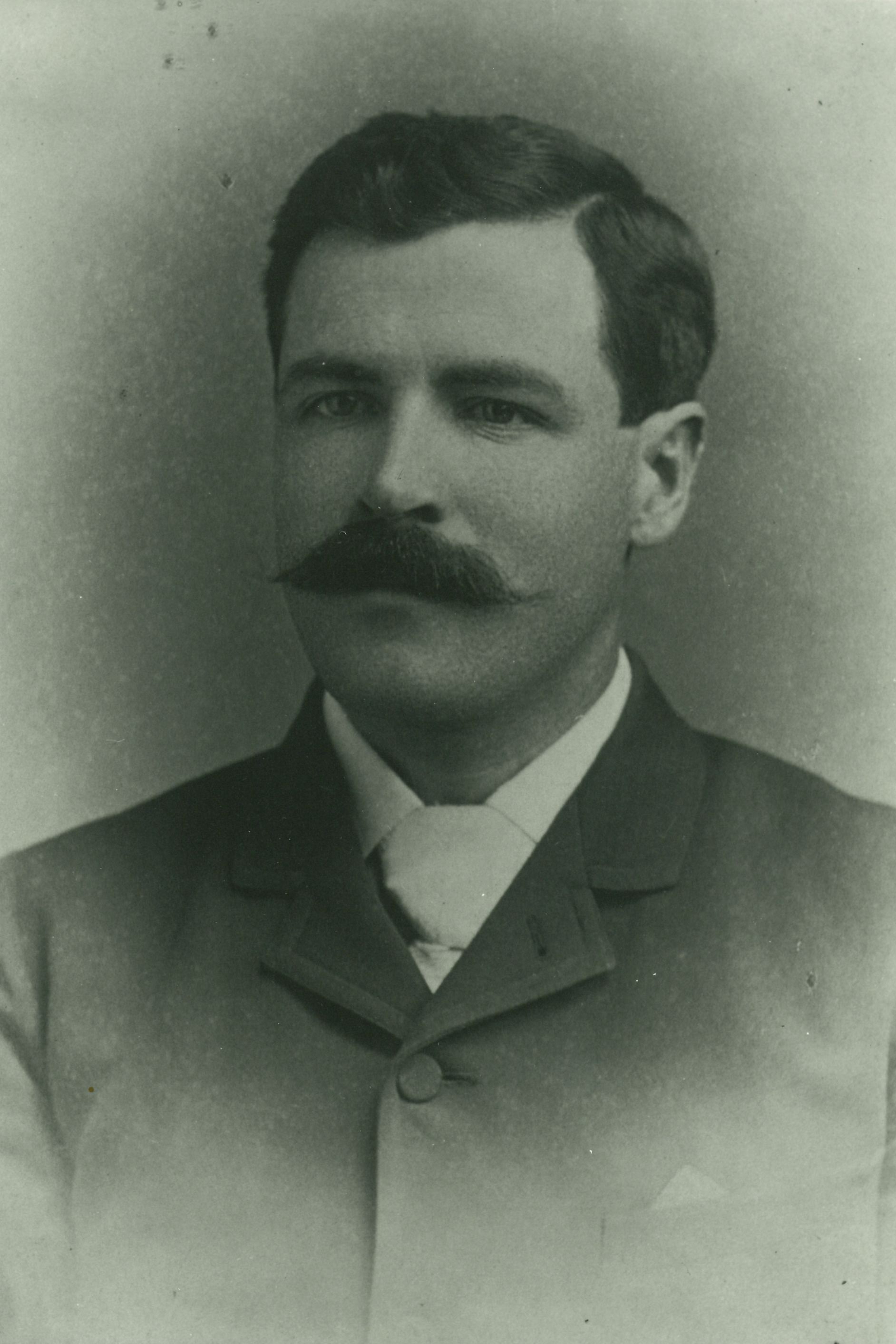
Prince Lucien Campbell, president of the school from 1889 to 1902, and one of the two Campbells that the name Campbell Hall honors. Lucien was the son of Thomas F. Campbell.
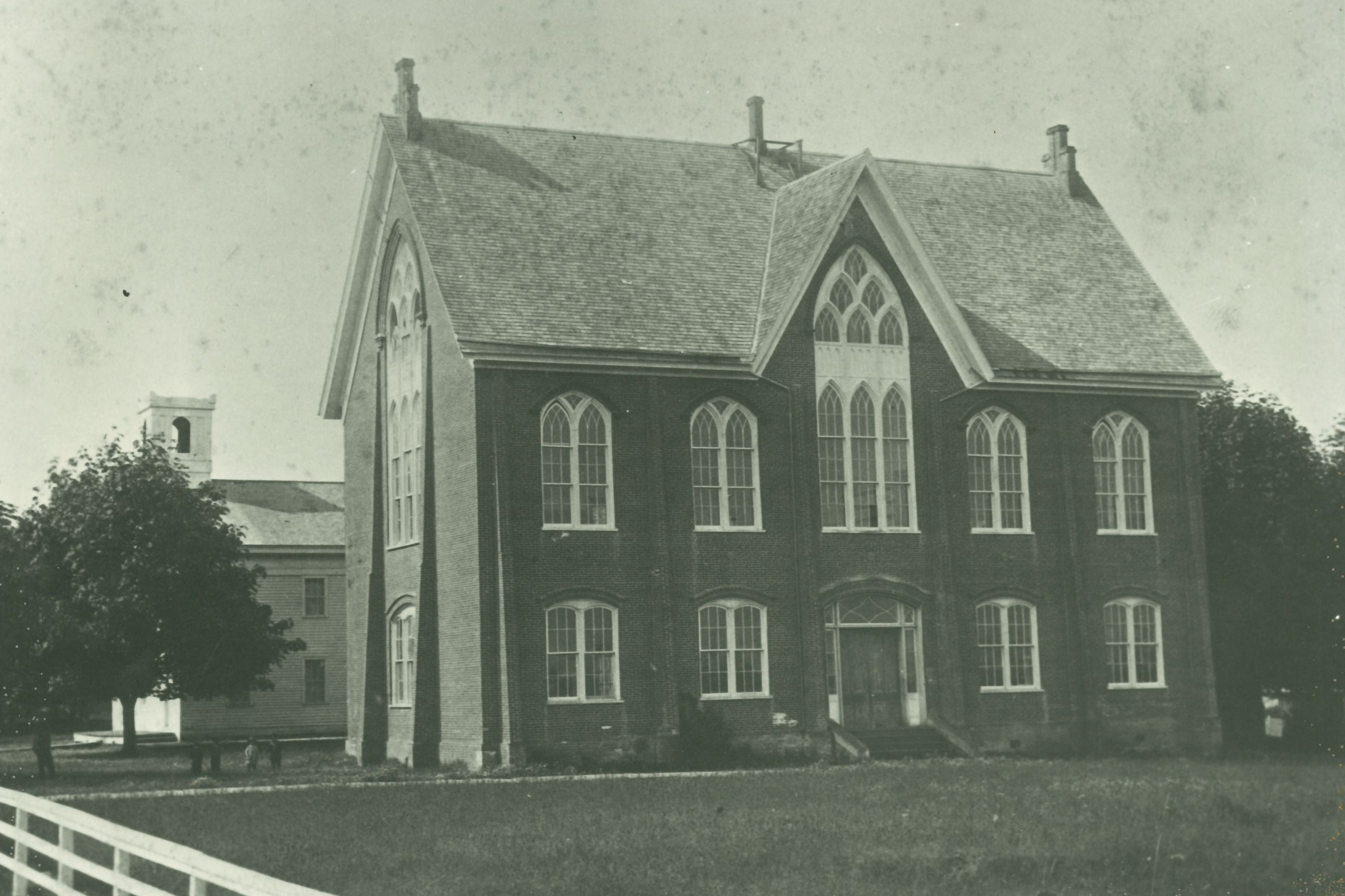
For many years, the only classroom and administration building on campus was Campbell Hall. The building was constructed in four stages. In 1871, the center building was finished, and it remains standing to this day. In 1889, a south wing with a bell tower was added. The bell tower was later destroyed by the 1962 storm. In 1889, a north wing was also added and remains standing. Finally, in 1917, several classrooms were added. This photo shows the building in 1871, made of brick fired on location in Monmouth, which was designed in the Gothic style of architecture. The wooden-frame building to the left is the original Monmouth University building, constructed in 1858, which had a chapel on the second floor.
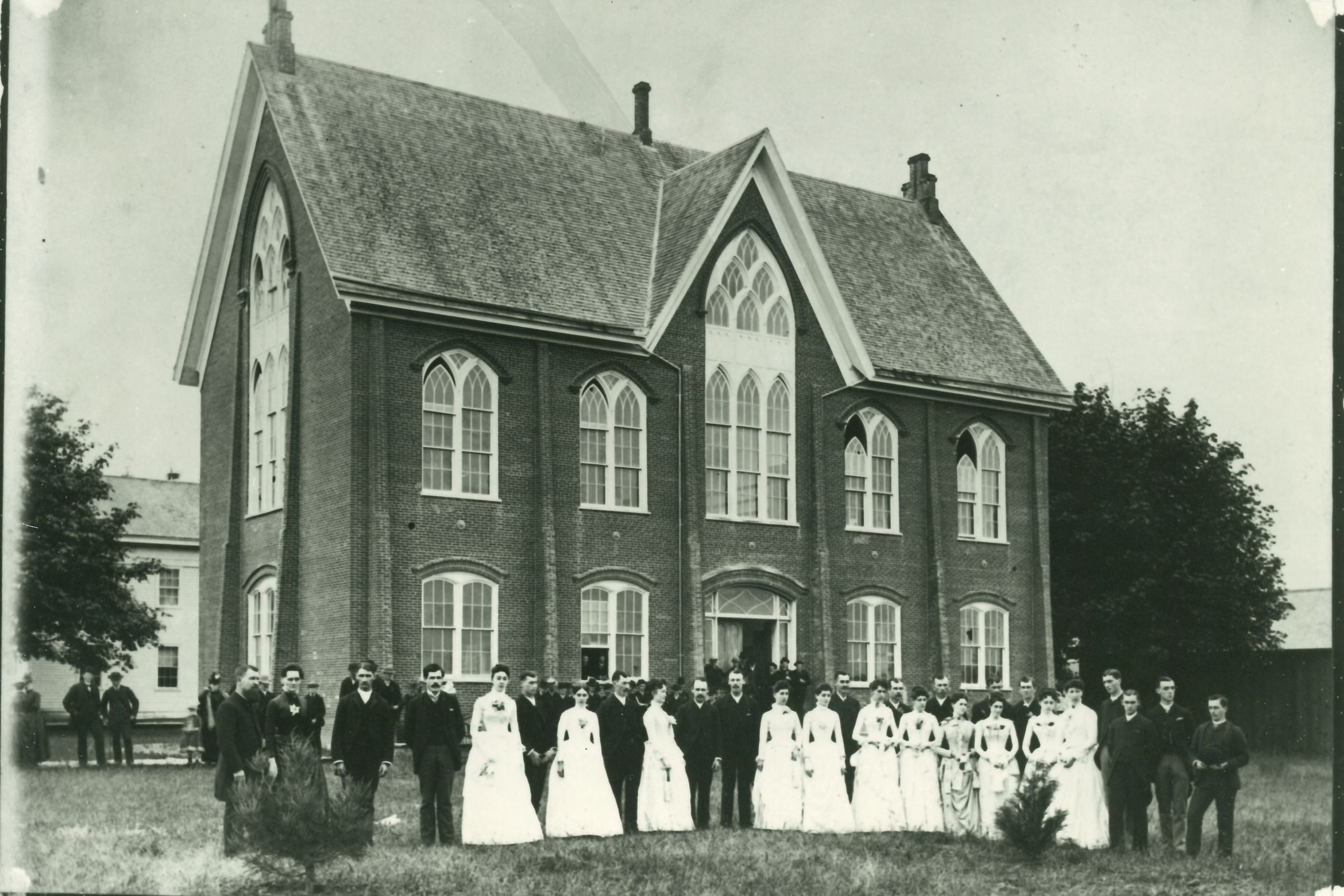
The graduating class of 1888 stands in front of what was then the main building of Campbell Hall. The small tree in the left-hand corner is the famous Sequoia tree, planted in 1887. Since 1967, it has been decorated as a holiday tree with lights. The 1887 planting of fir and maple trees was the beginning of the Grove, which dominated the school’s landscape until the Columbus Day Storm in 1962.
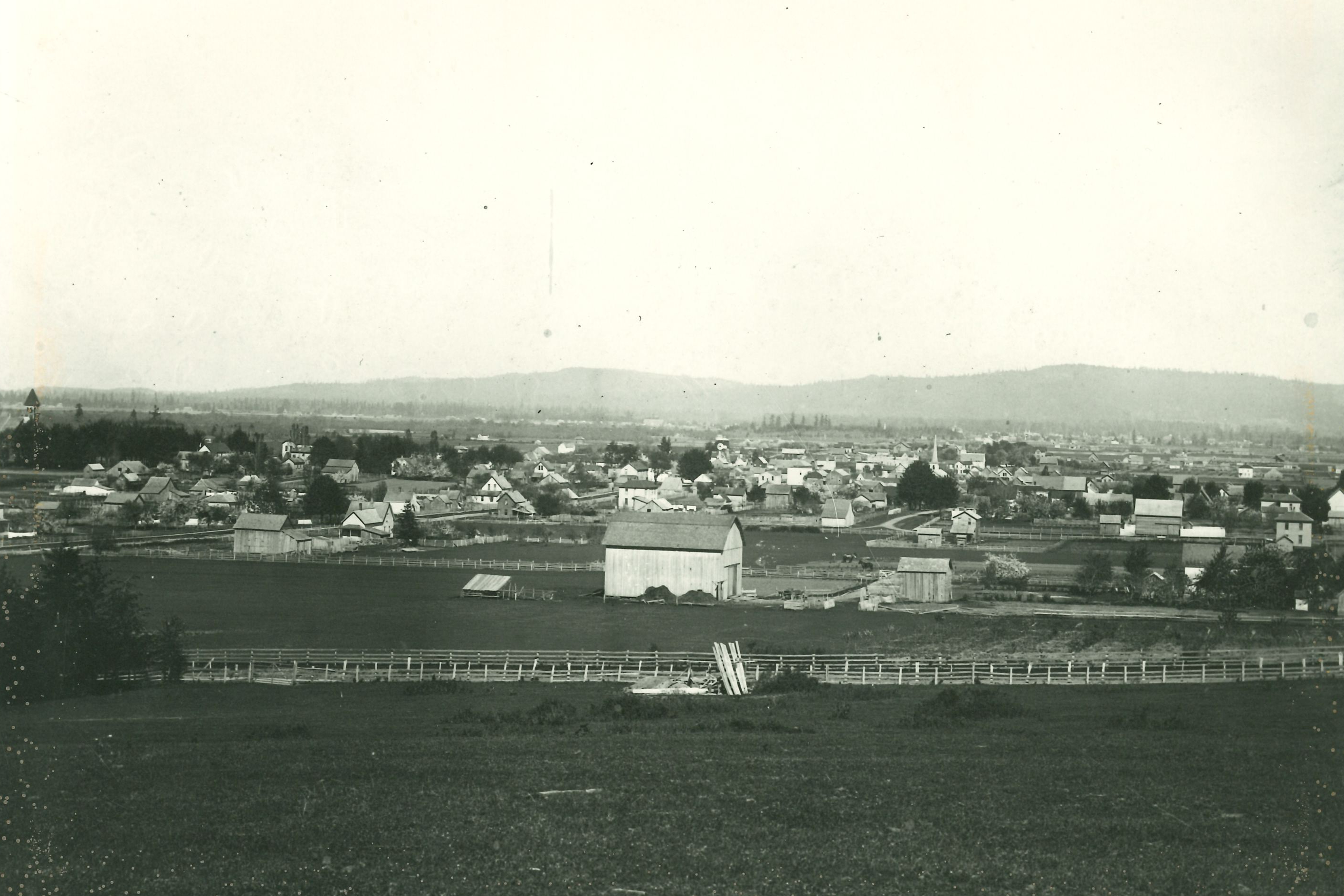
Founded in 1854, Monmouth was incorporated in 1880, and by 1896 had a population of several hundred families. This photo was taken in 1896, looking westward. Note Campbell Hall on the far left, surrounded by the Grove of fir trees.
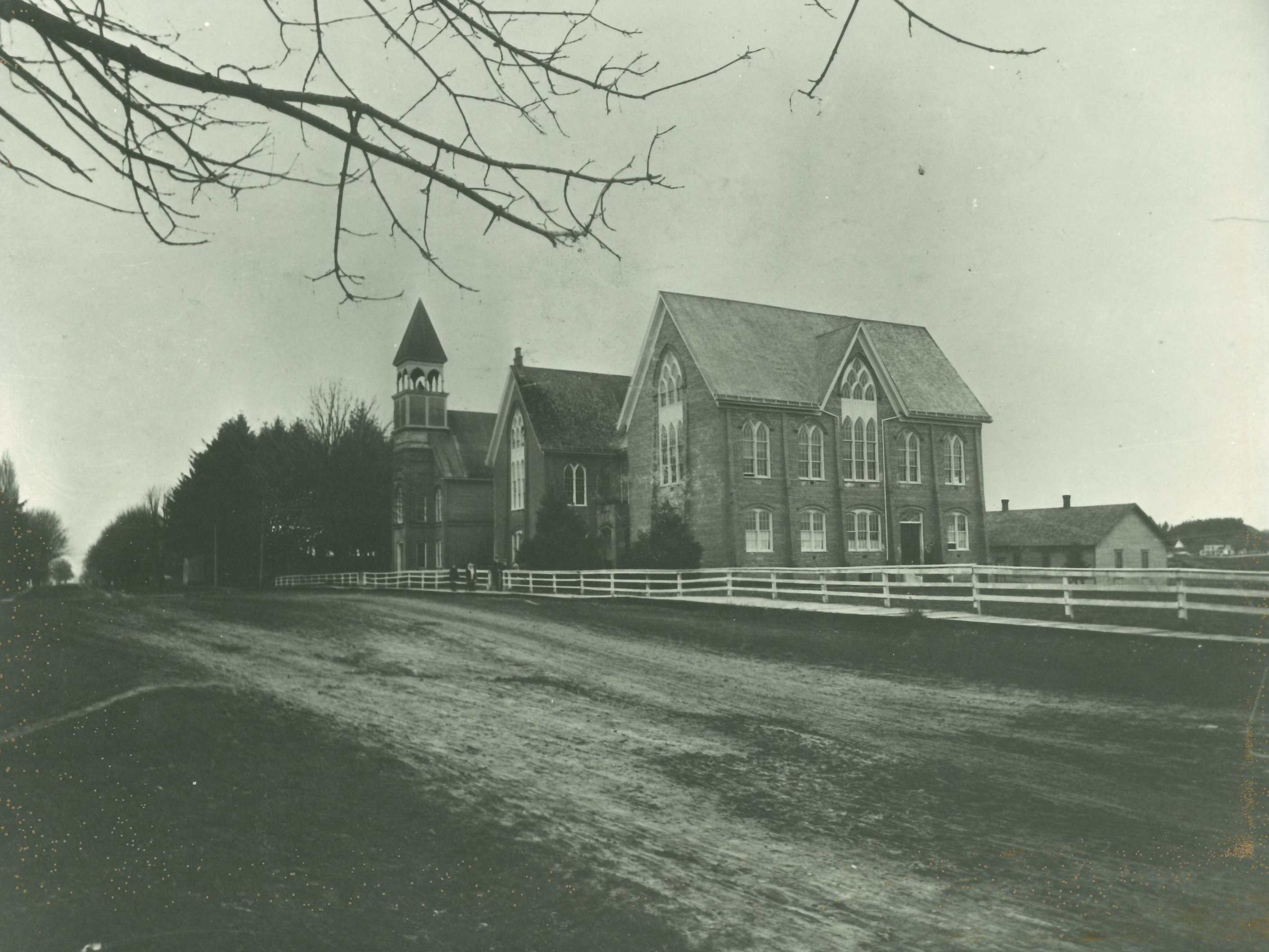
This is a photo of Campbell Hall in the early 1900s. Note the completed bell tower on the south wing and the addition of the north wing. A bell hung in the tower from 1869 to 1924 and was used to call students to classes and to herald certain festive occasions, such as the annual May Day activities. After its removal, it was mounted on a caster framework for many years. In February 1999, Phase II of the Werner University Center expansion and renovation project was completed, which included a new bell tower where the bell now hangs. Monmouth Avenue was still a dirt road, and a boardwalk-type of sidewalk existed in front of Campbell Hall. The fence was placed to keep wandering cattle off the school property. Note the Grove of fir trees in the far left corner of the photo.
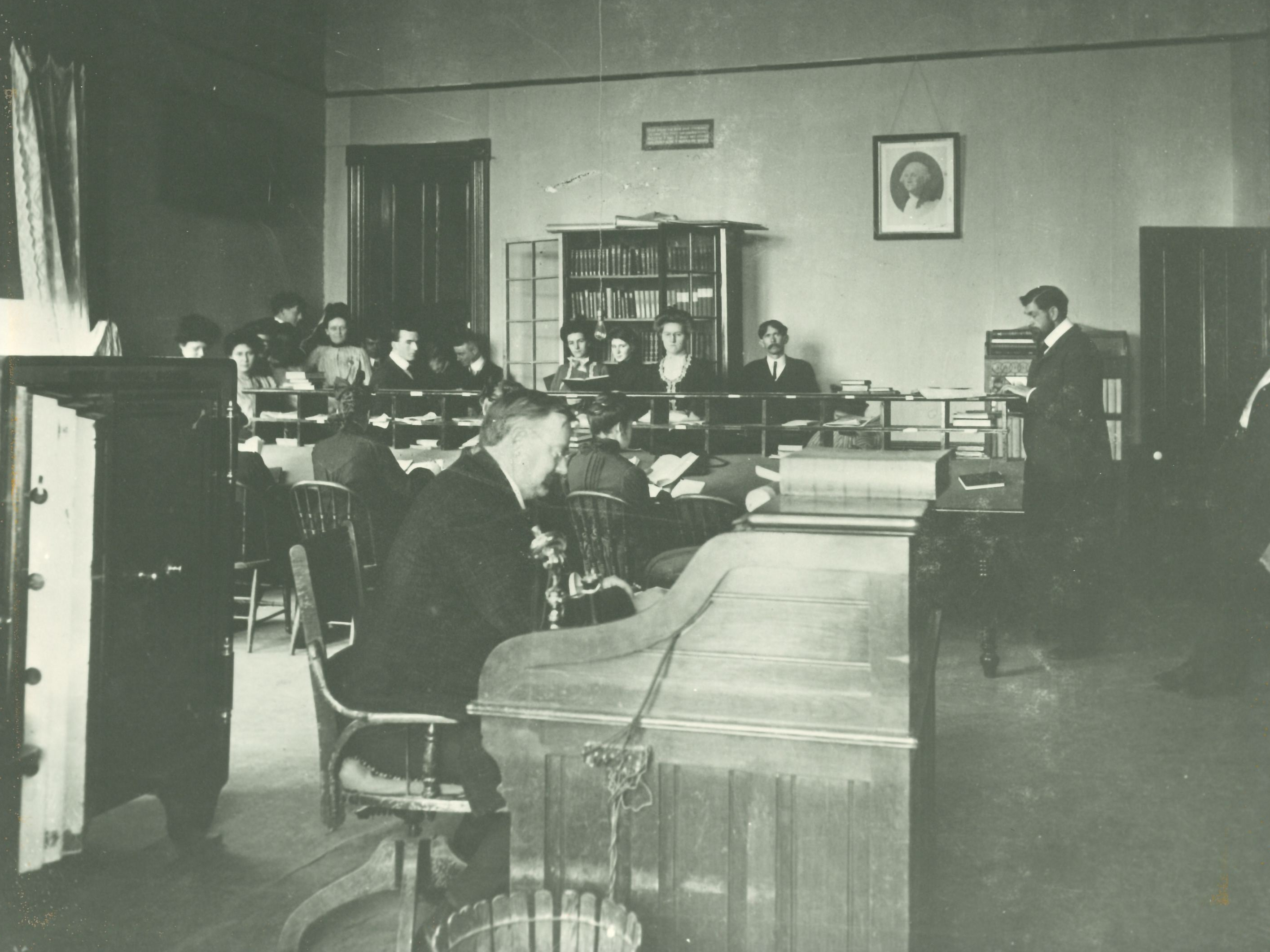
The first library was located in the north wing of Campbell Hall. Librarian J.V.B. Butler is seated at the desk in the foreground. The Library remained in Campbell Hall until 1951, when a separate building was built. It’s now the site of the Academic Programs and Support Center building. The Wayne and Lynn Hamersly Library was dedicated in September 2000 to replace the second library location.
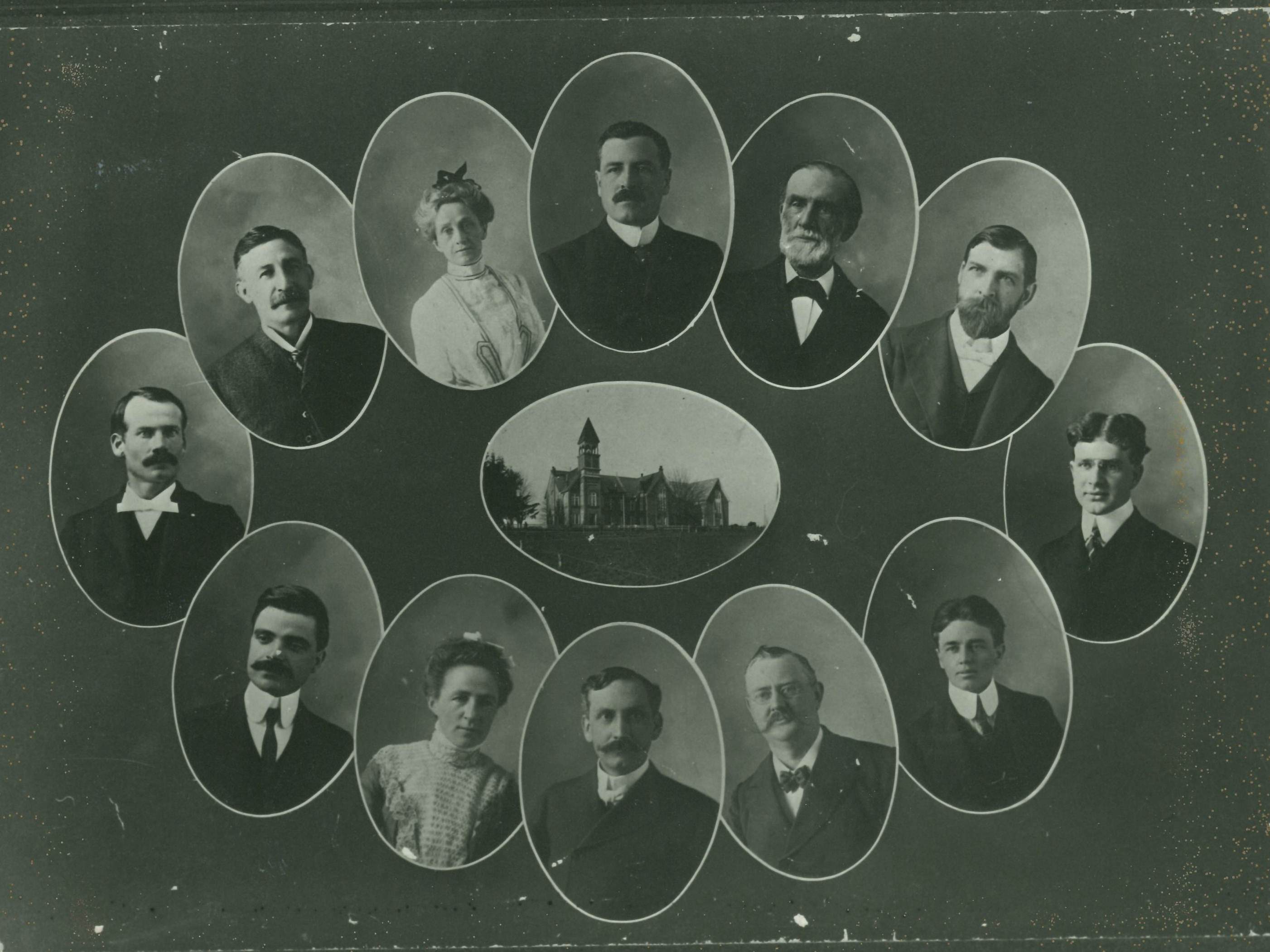
Faculty of 1890 – 1895. Clockwise from top center: President Prince Lucien Campbell, Prof. Buckham, P.O. Powel, F.W. Fellows, G.W. Bishop, J.B.V. Butler, Loretta Smith, R.C. French, Prof. Mulkey, A.F. Campbell, Sarah Tuttle.
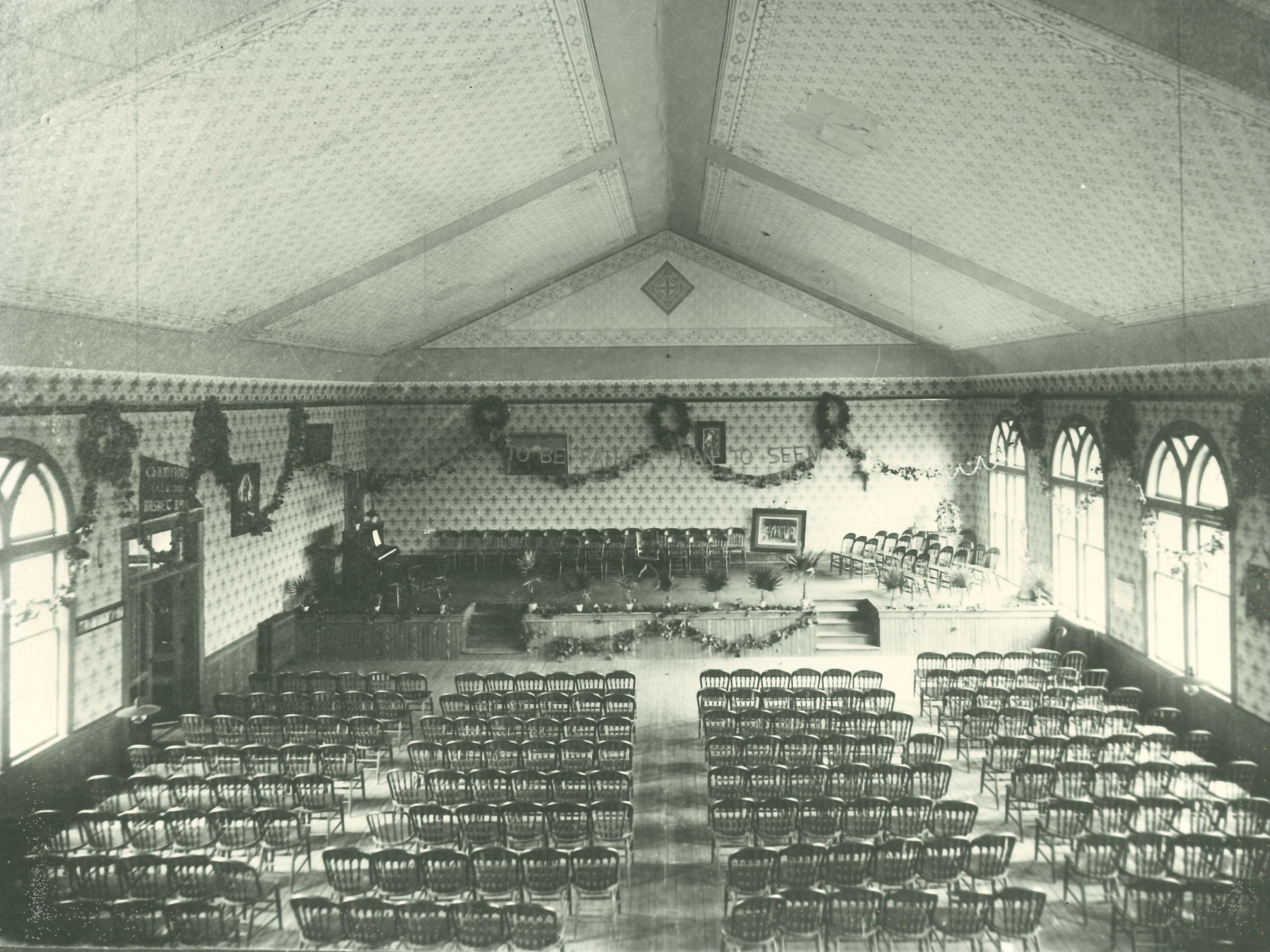
The Auditorium/Chapel on the second floor of Campbell Hall’s south wing. It had a seating capacity of 1000 and was destroyed by the 1962 storm.
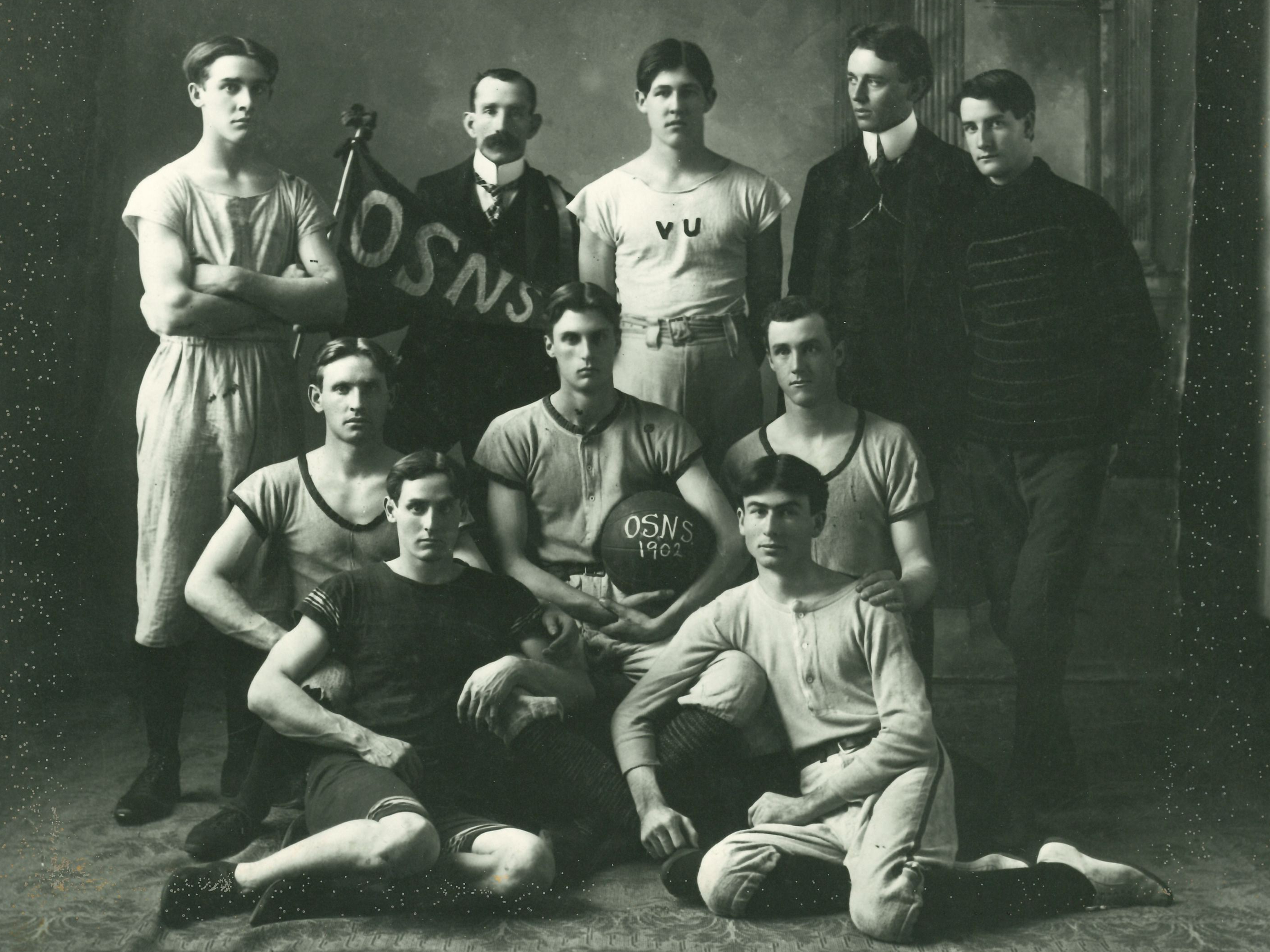
An early basketball team from 1902. The school team was not known as the Wolves until a 1928 editorial suggestion in the school newspaper, the LAMRON (NORMAL spelled backwards). The school had been officially named Oregon Normal School in 1910, hence the newspaper’s wordplay.
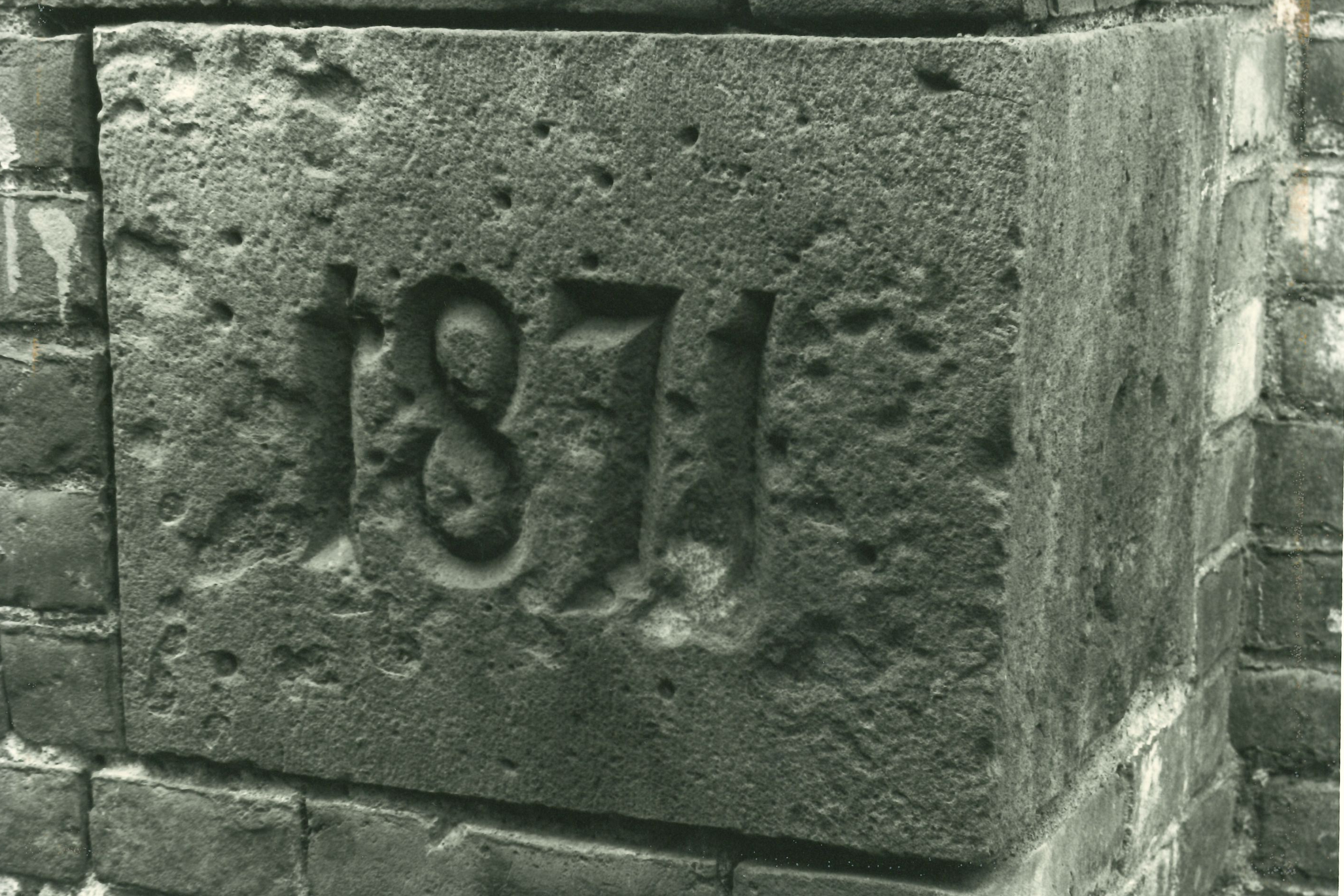
This 1871 cornerstone in Campbell Hall was removed and opened during a “Cornerstone Ceremony” in 1971. Found inside a metal box were a variety of commonplace items from 1871, including several old, decaying newspapers.
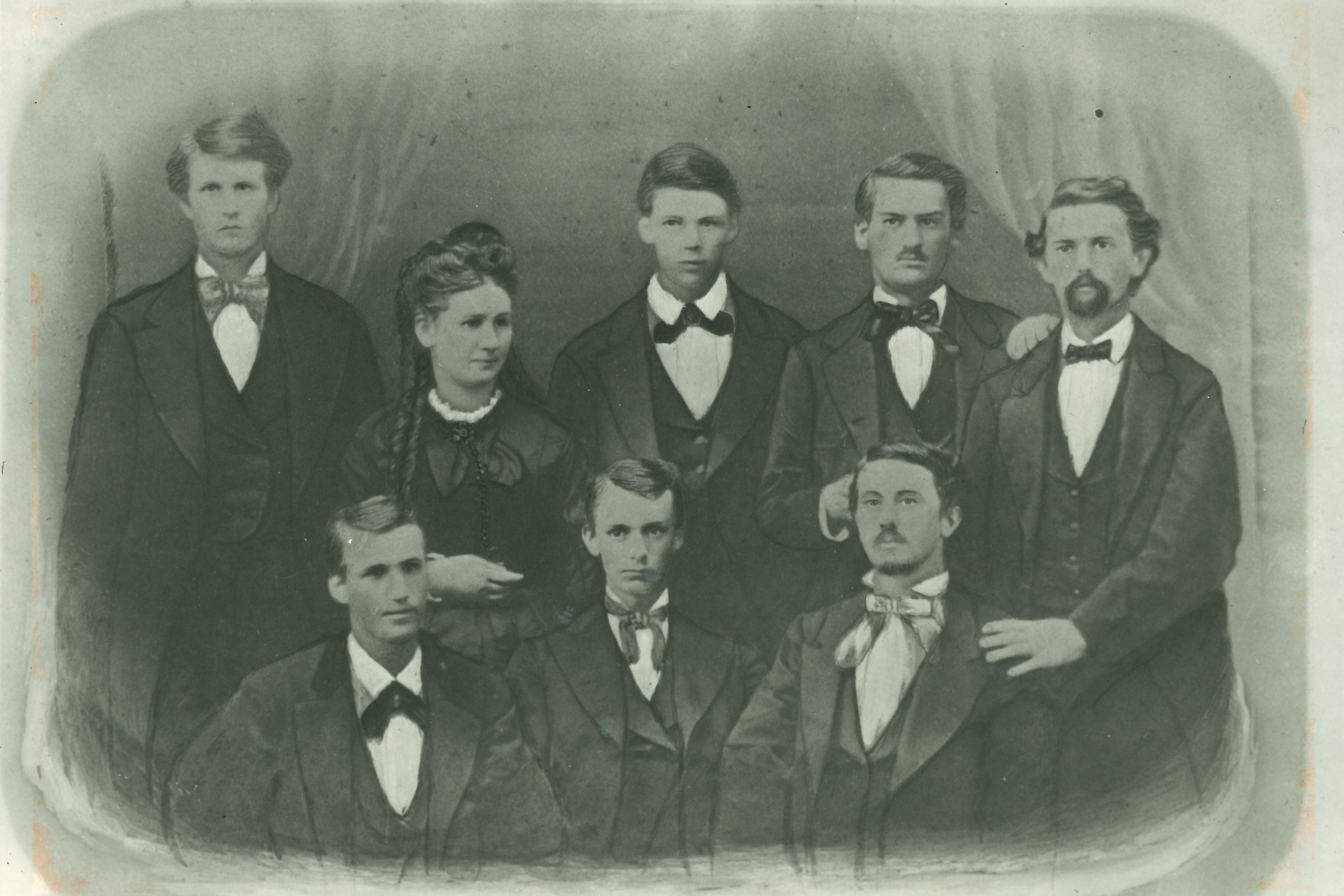
Class of 1876.
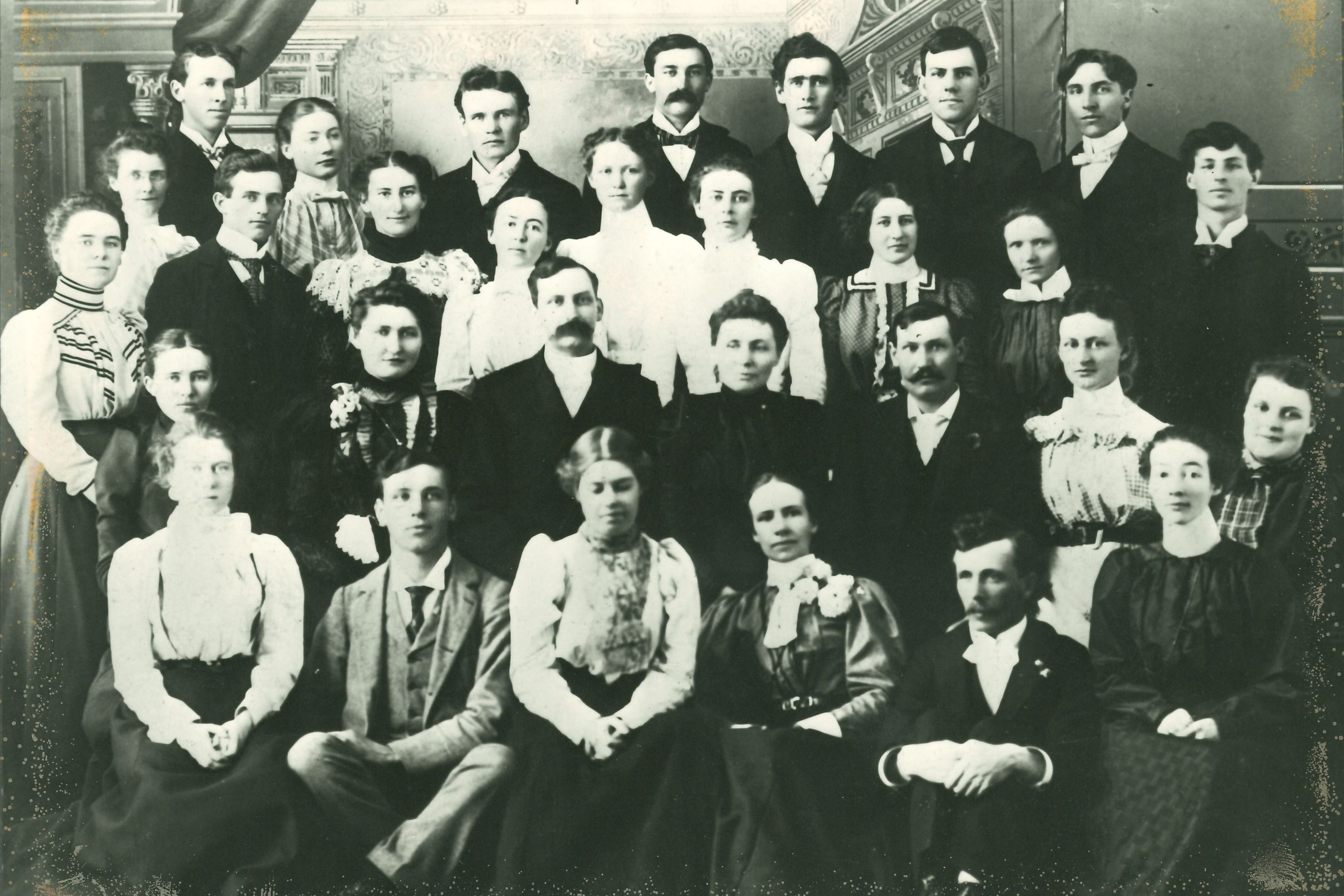
Class of 1899.
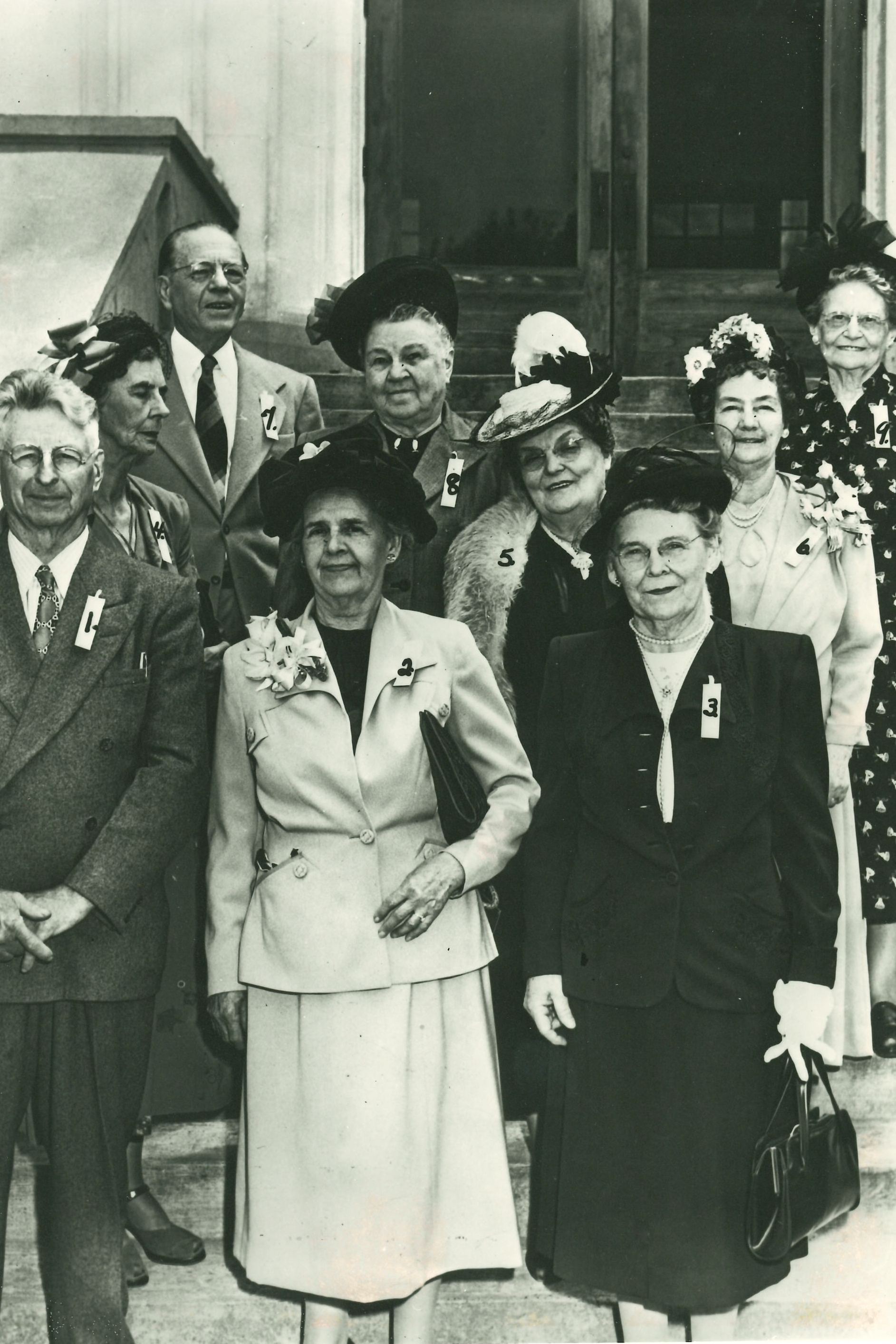
50-year reunion (Golden Jubilee) for the class of 1899.
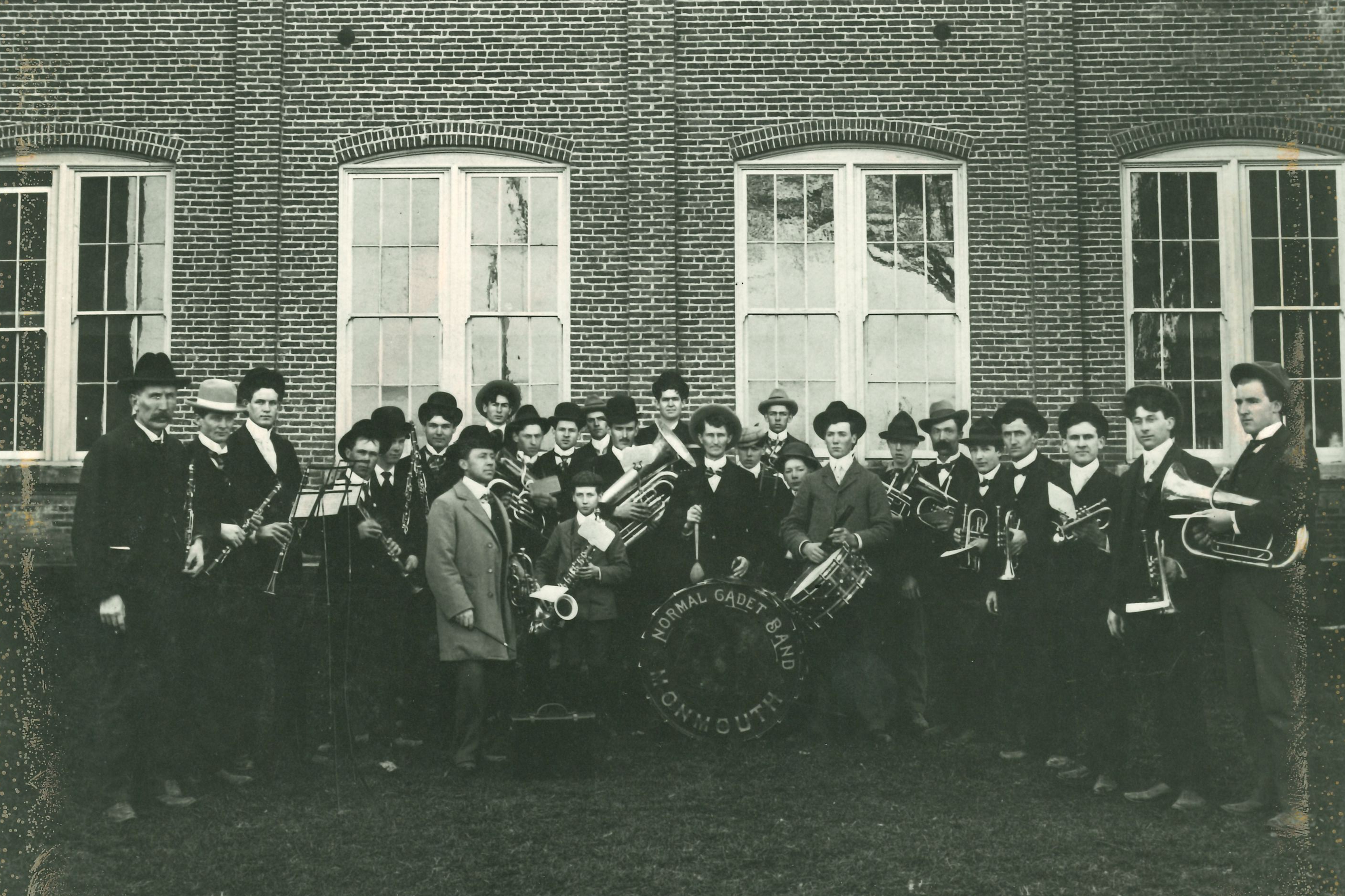
Oregon Normal School Band in front of Campbell Hall in 1901. Music facilities were in this building until 1928.
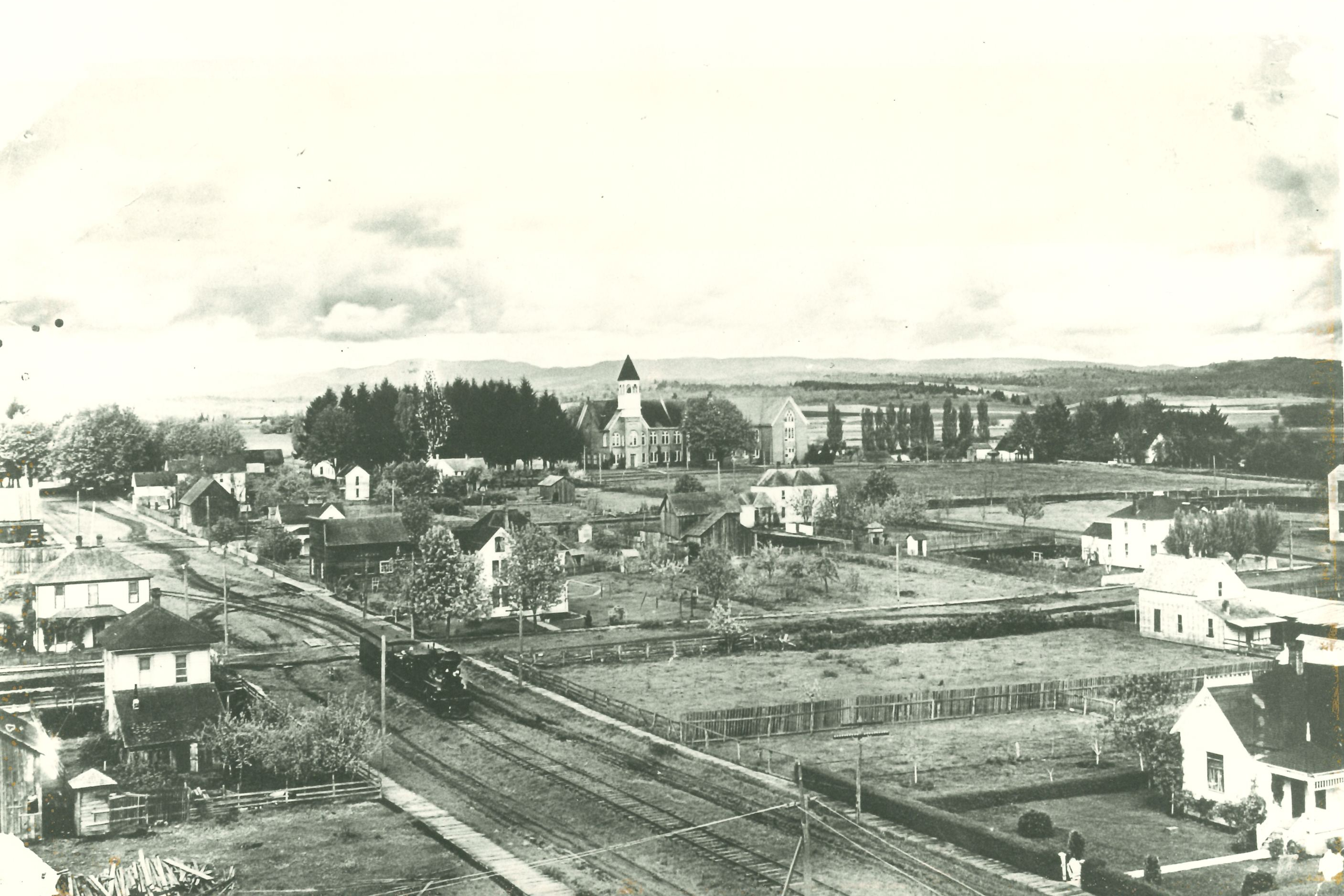
This photo was taken of Monmouth between 1907 and 1914, looking westward. Note Campbell Hall and The Grove. Jackson Street (on the far left) was a dirt road with a planked boardwalk and train tracks running down the center. The Independence and Monmouth railroad, called the shortest train in the world, made six trips a day between Independence and Monmouth for a $0.05 fare. The train operated between 1890 and 1916, and extended its route to Airlie and Dallas in the 1890s. Between 1912 and 1916, a gasoline train, nicknamed the “Peanut Roaster,” operated on the line. With the introduction of the automobile, the train went bankrupt and was sold for scrap metal in 1917.
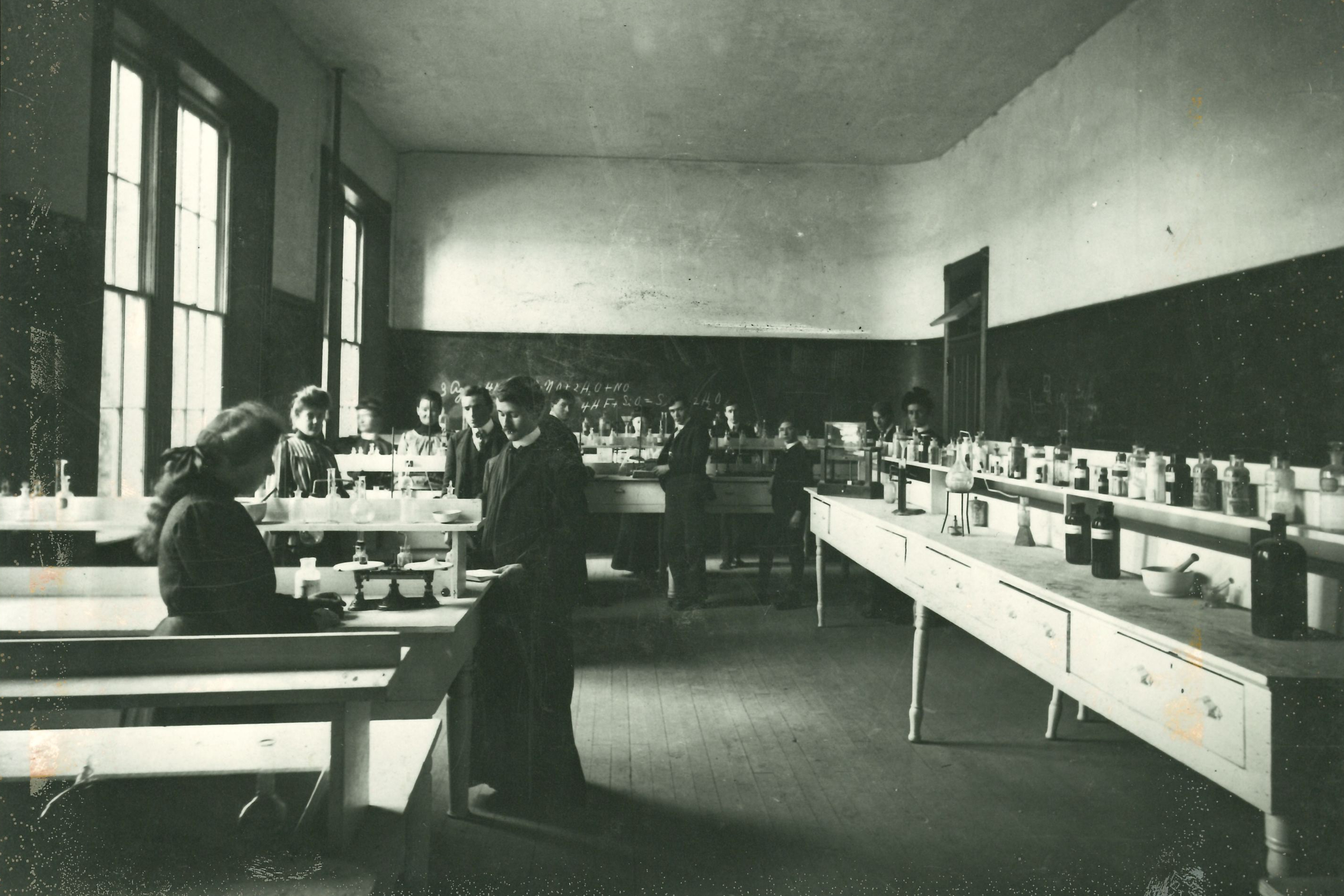
This photo is of the Chemical Laboratory in Campbell Hall. All science classes were taught in Campbell Hall until the Administration Building was built in 1936, when science classes were moved to its second floor.
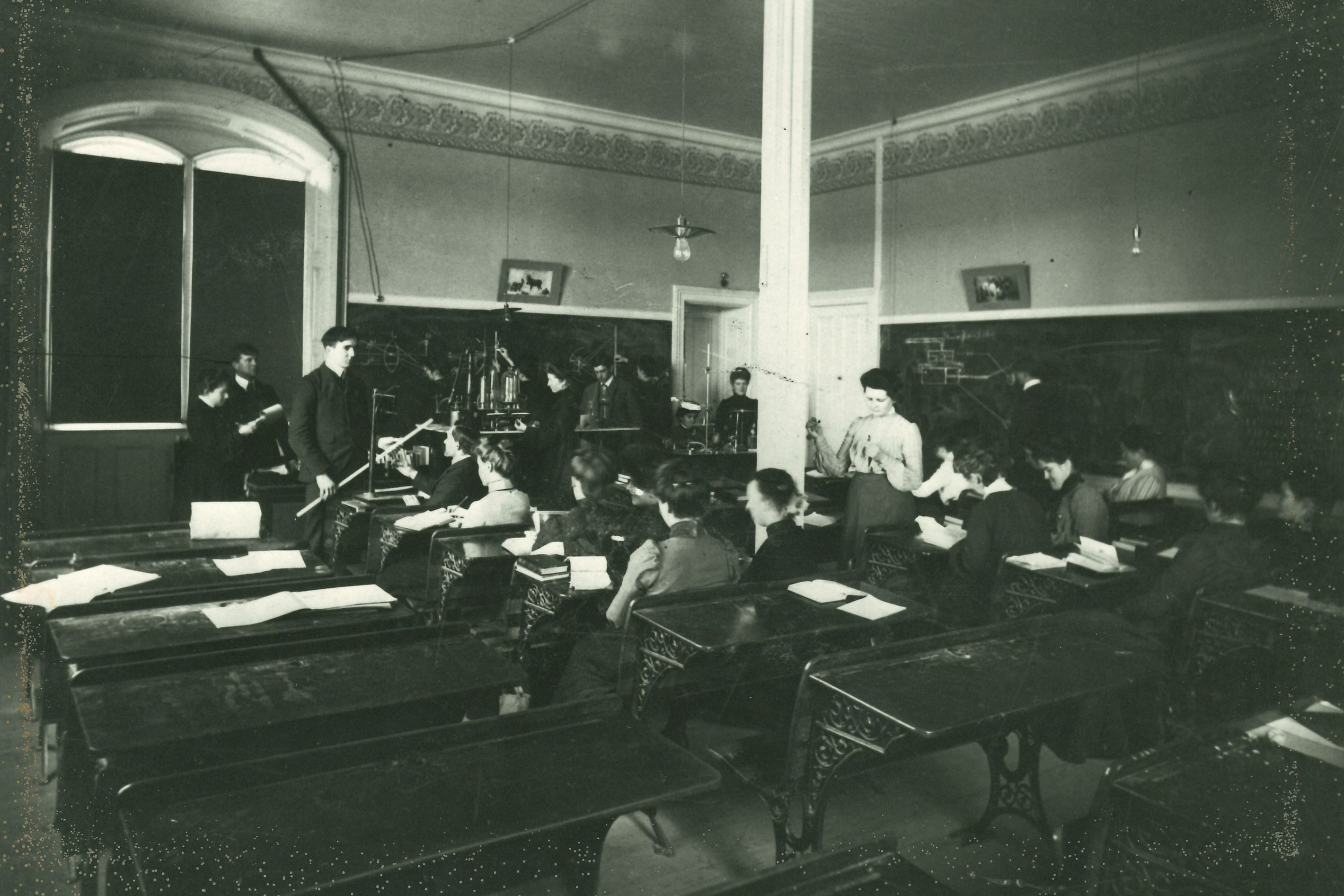
Physics Lab in Campbell Hall.
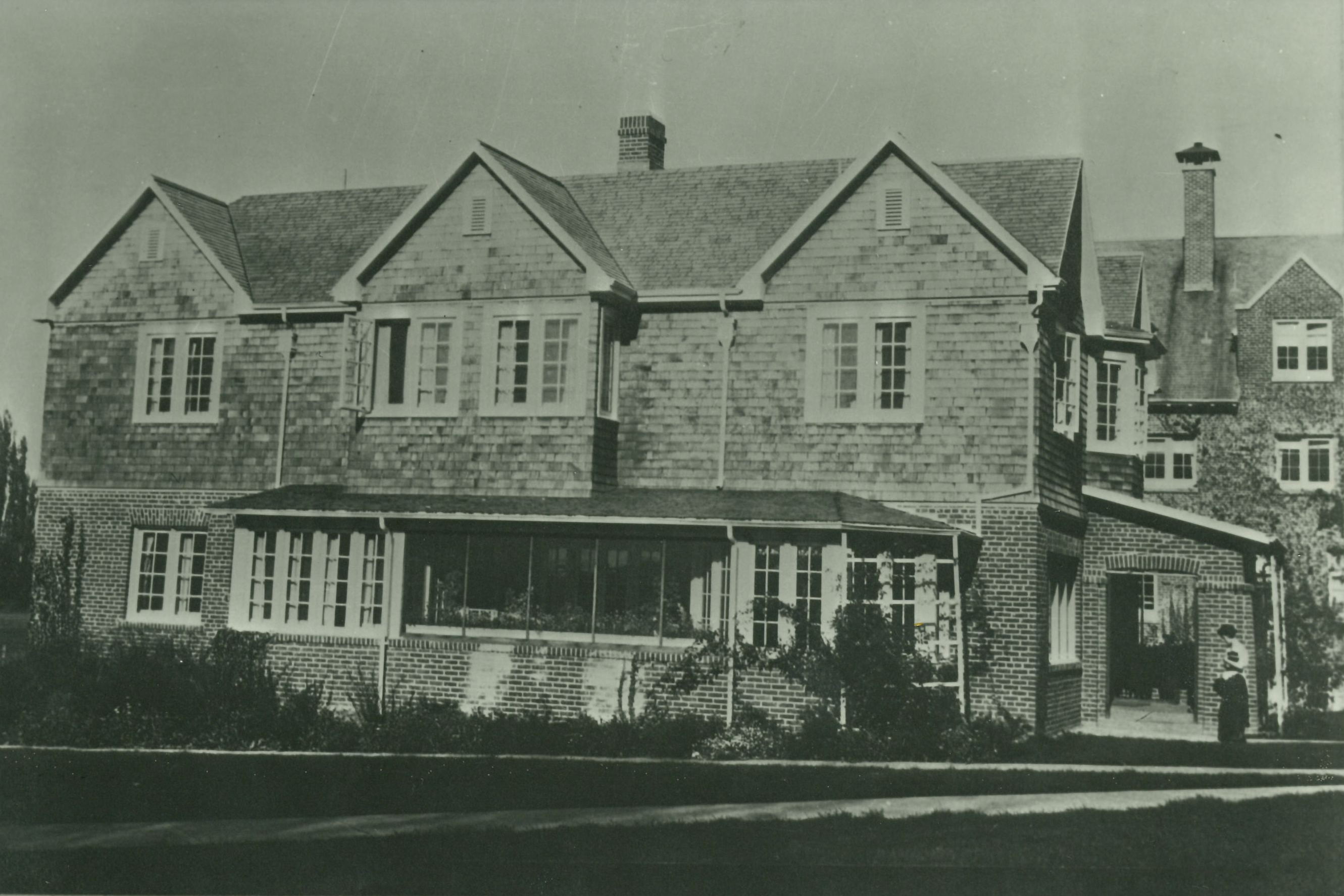
The Senior Cottage Dormitory for women was constructed in 1917 in the same Tudor architectural style as Todd Hall. The house accommodated 26 senior honor women.
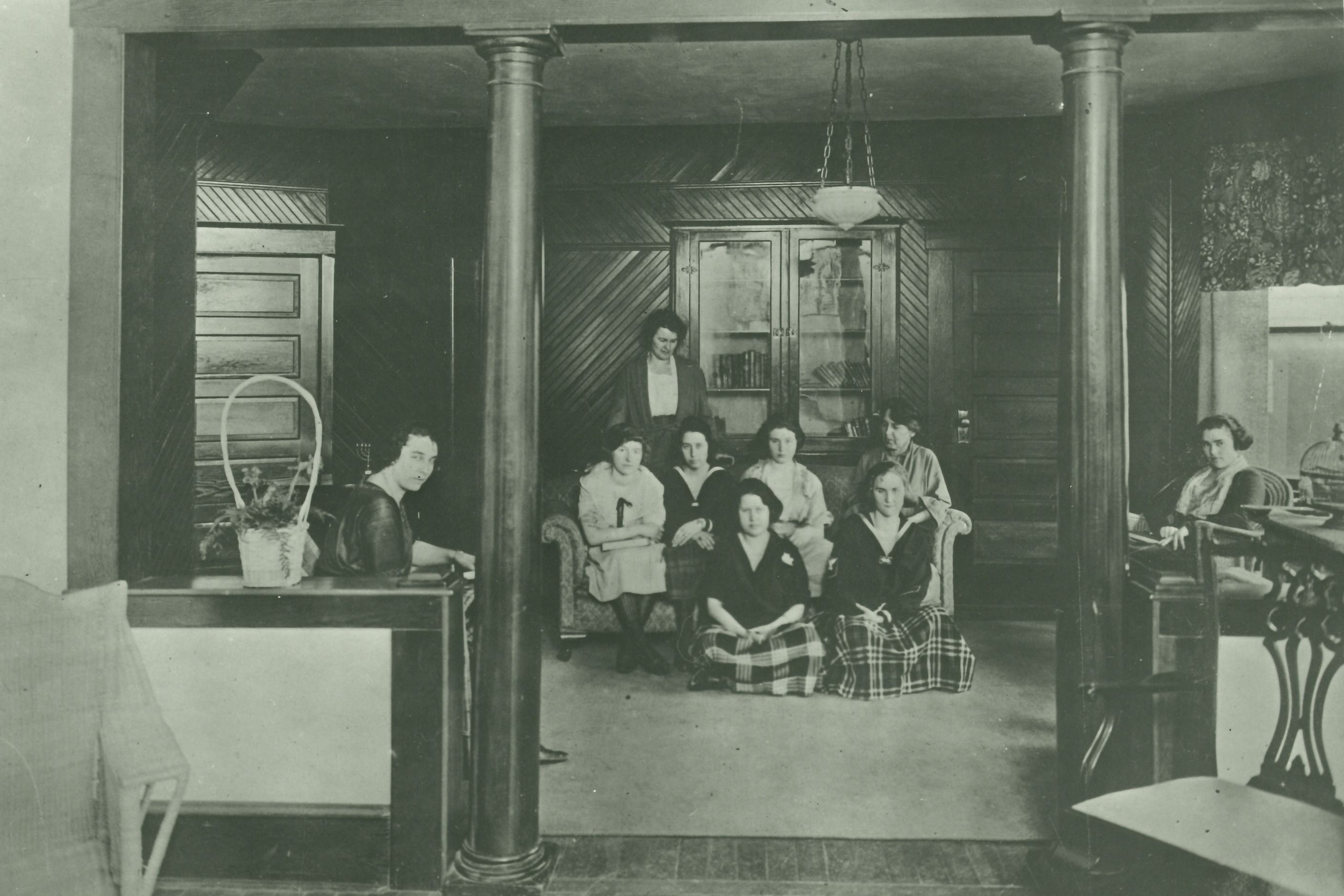
Interior photo of Senior Cottage, dated 1922.
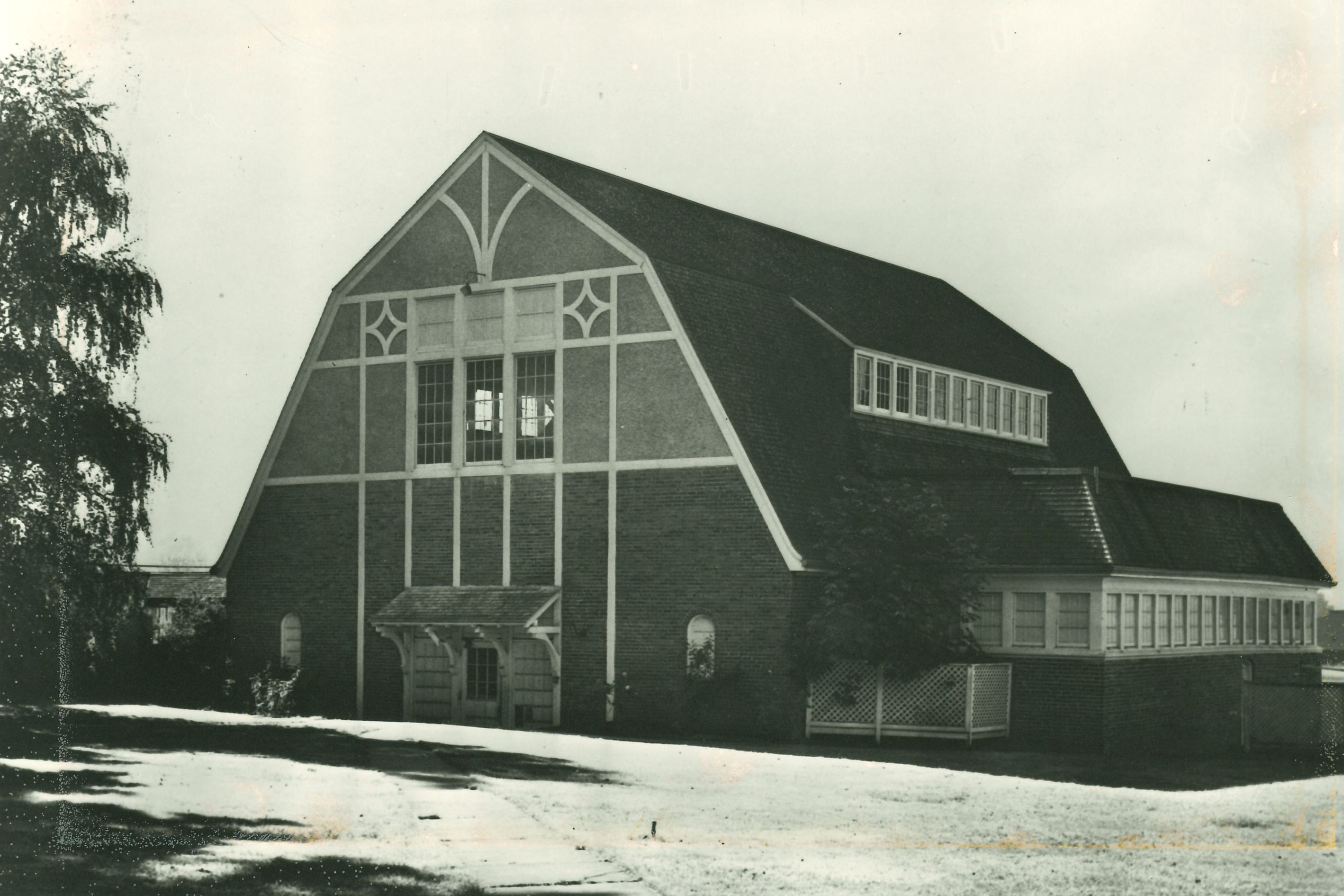
The first gymnasium was built in 1913 and later dedicated in March of 1914 for $9000. In later years, it was referred to as Maple Hall. When the Health and Physical Education Building was completed, Maple Hall became a recreation center for students and was sometimes called the Recreation Center. It now houses facilities and offices for the Dance Program.
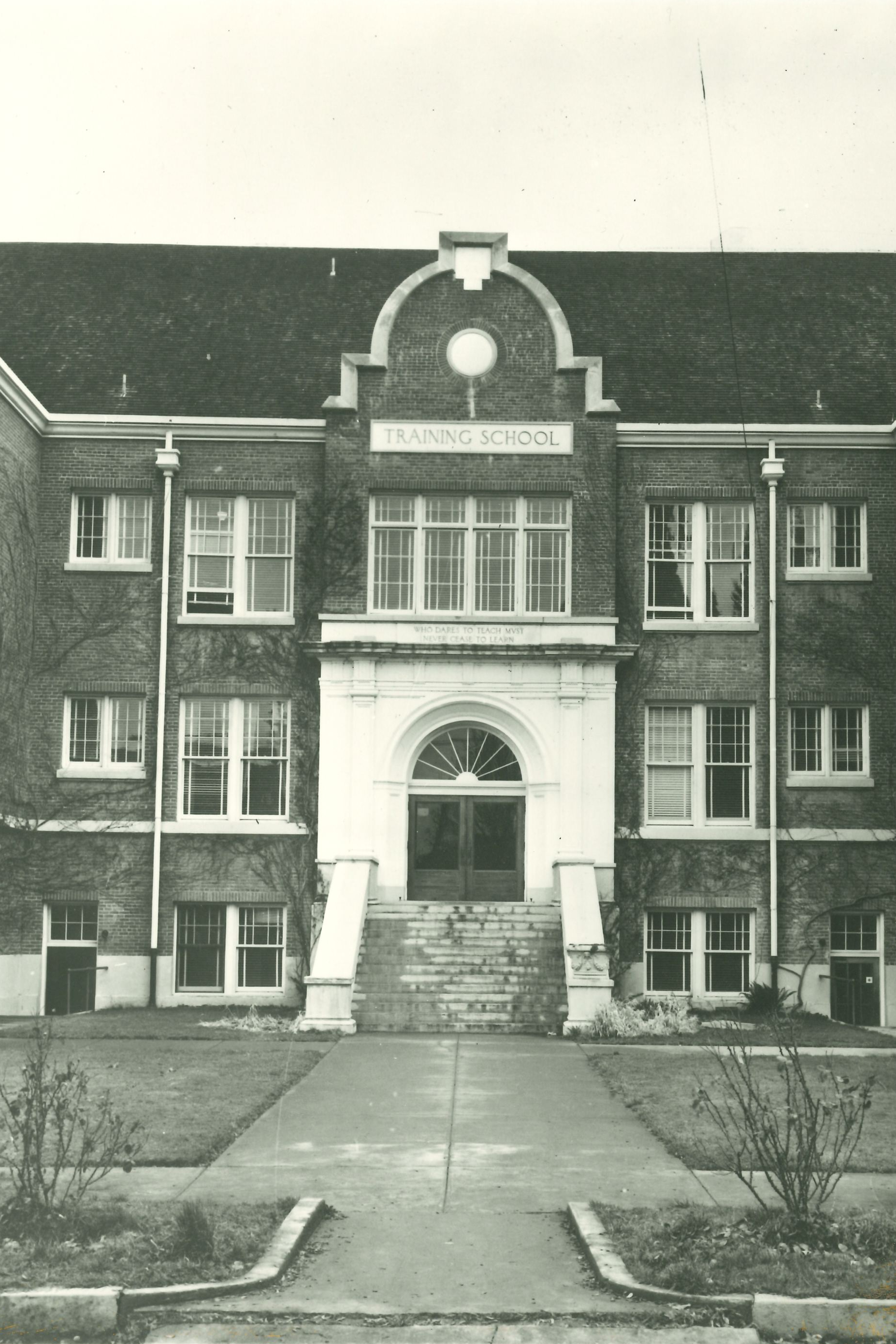
Front entrance to the Training School, as it was first called when it was constructed in 1915. Later, it was referred to as Campus Elementary School until 1986, when it was renamed the Instructional Technology Center.
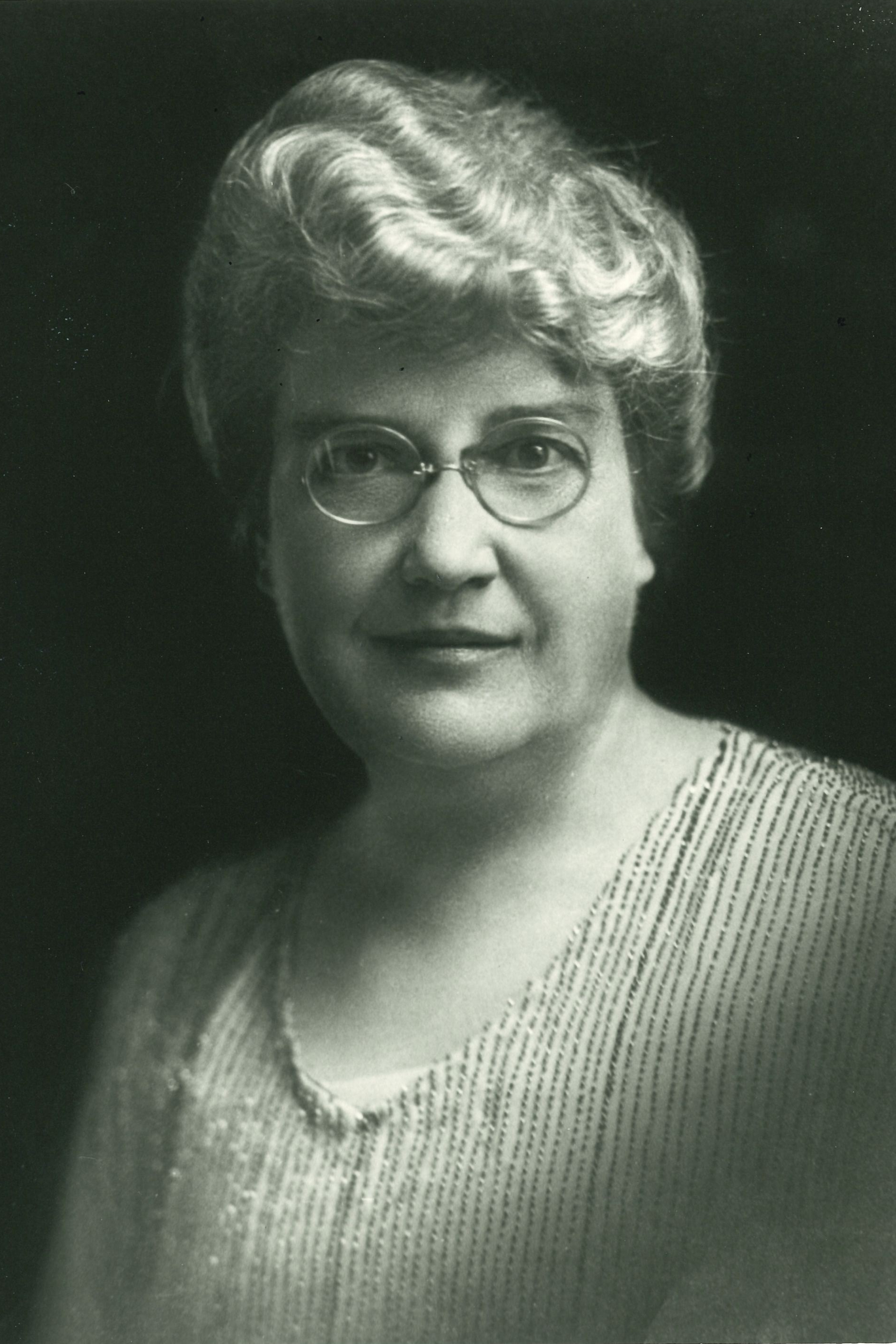
Photo of Jessica Todd, after whom Todd Hall is named. Hired in 1912 to work as a Teaching Critic for the 5th and 6th grades in the Training school, Todd eventually became Dean of Students and Dormitory Matron until her retirement in 1931. All remember her as a formidable woman who stressed “refinement, culture, beautiful manners.”
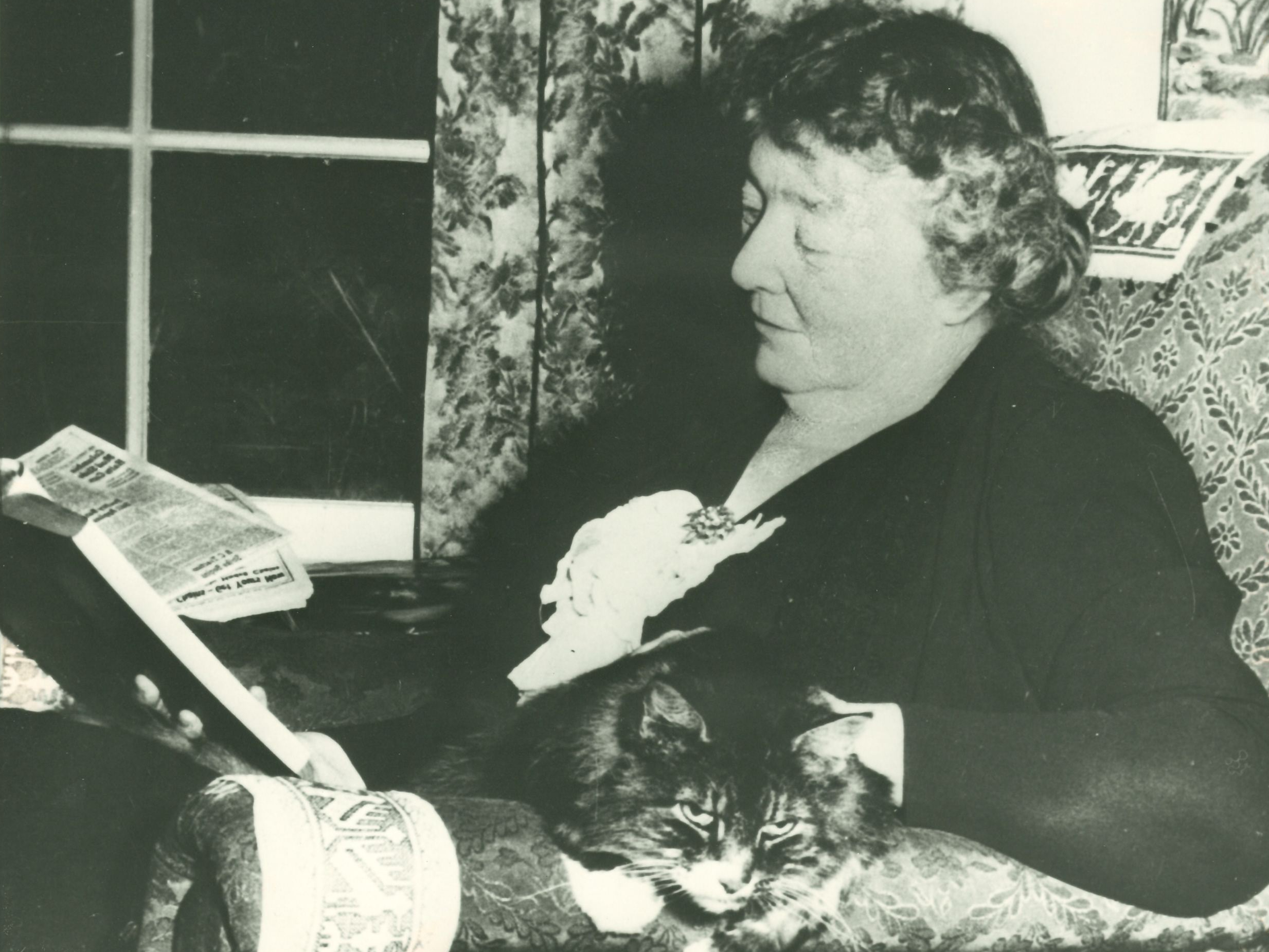
Katherine Arbuthnot was a member of the faculty from 1913 to 1947. Hired as a Critic Teacher in the Training School, she became Head of the Geography Department from the 1920s until her retirement in 1947.
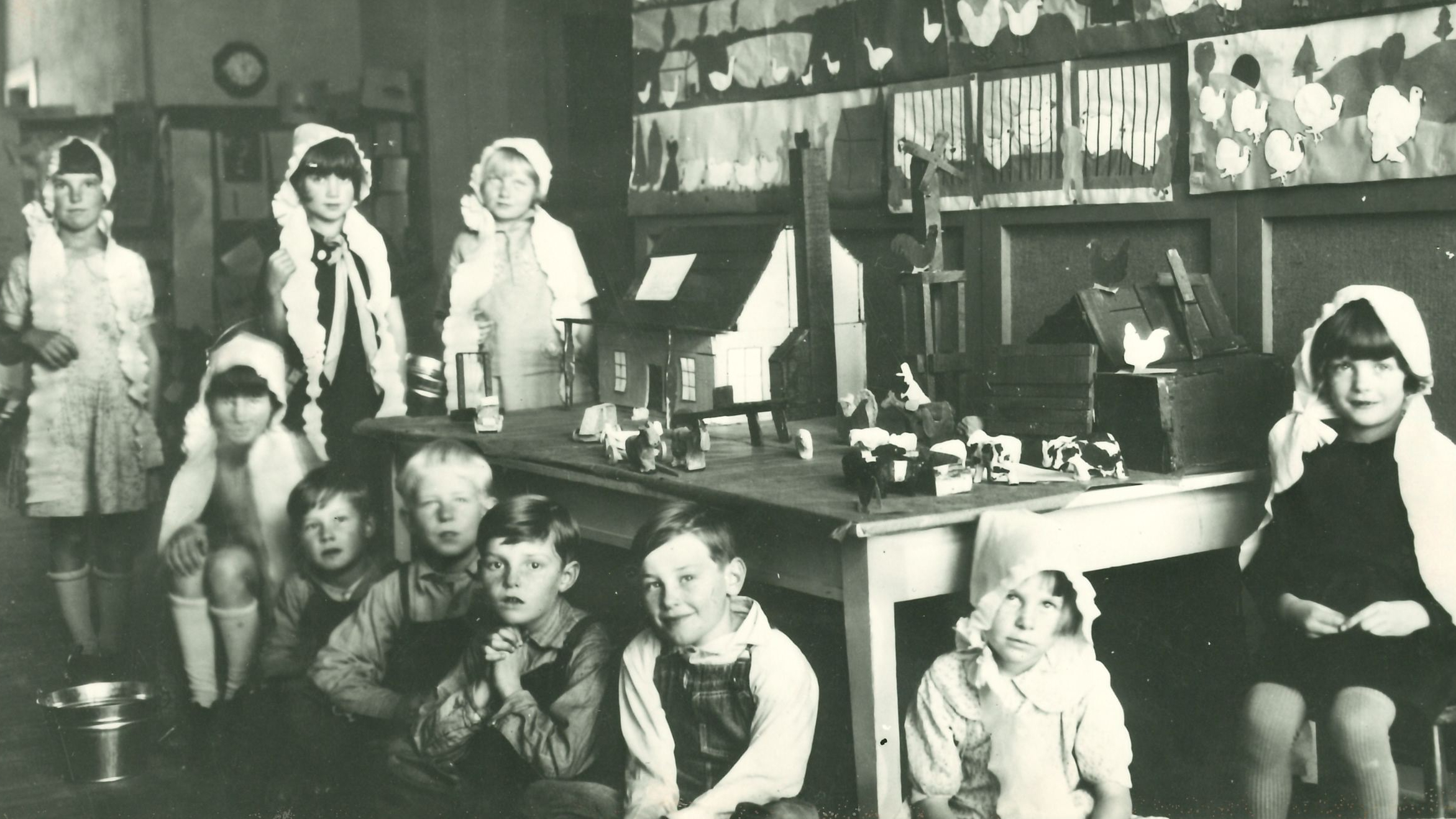
Children’s class in the Training School, probably dated around the 1920s.
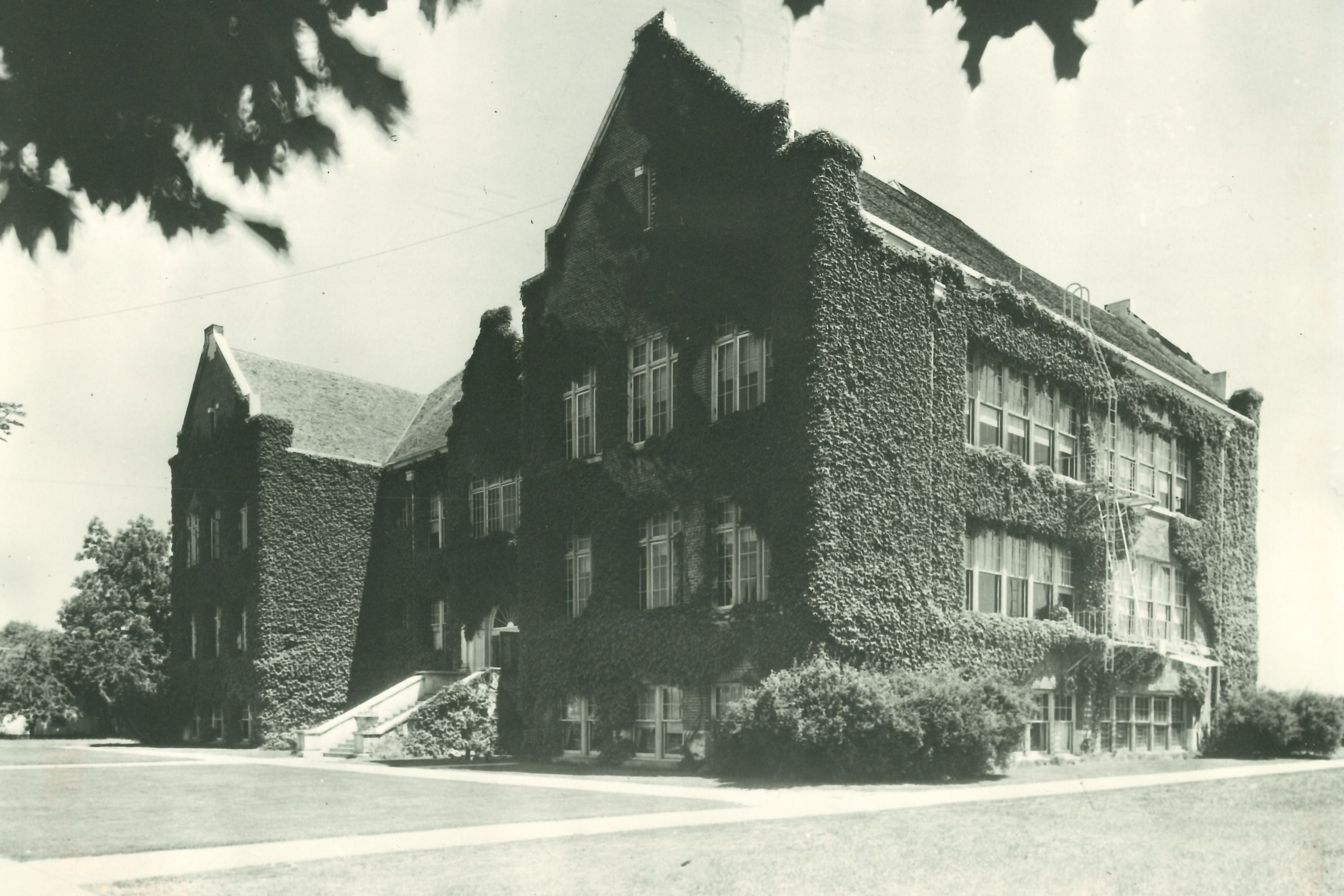
Ivy-covered Training School. The picture is undated, but likely from the 1930s or early 1940s.
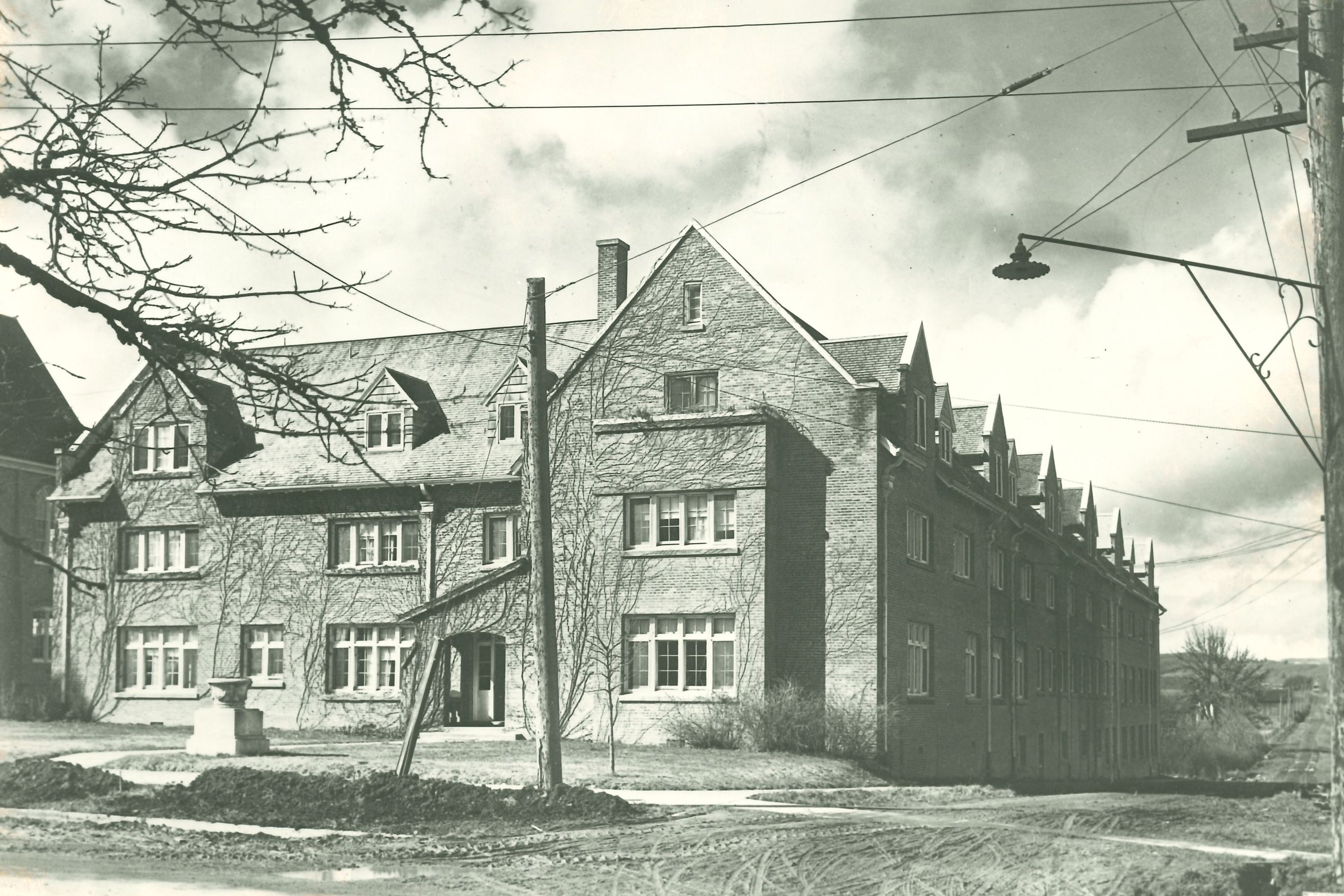
The first dormitory on campus for women was built between 1912 and 1913 (with an addition added in 1921) in the Tudor architectural style. Note that Monmouth Avenue is still a dirt road. The photo was probably taken between 1917 and 1925. For many years, it was just known as the Dormitory and was not officially named Todd Hall until 1931. When it opened in the summer of 1913, it housed 85 female students. By 1923, it had more than doubled to 200 women. The site was previously occupied by the Christian Church, which moved from this site to its present location on South Monmouth Avenue in 1893.
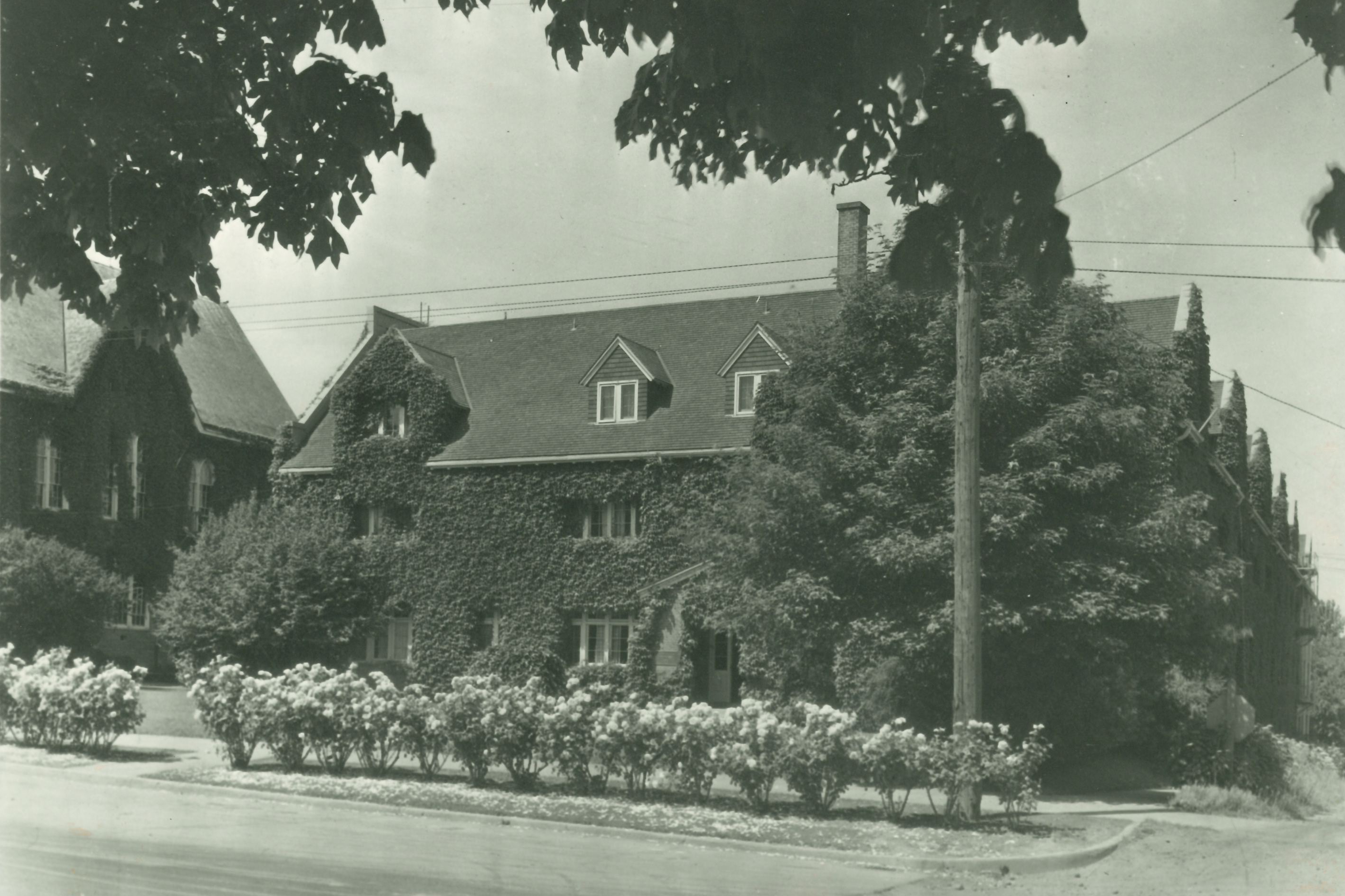
Exterior of Todd Hall in the 1930s or 1940s, covered with ivy.
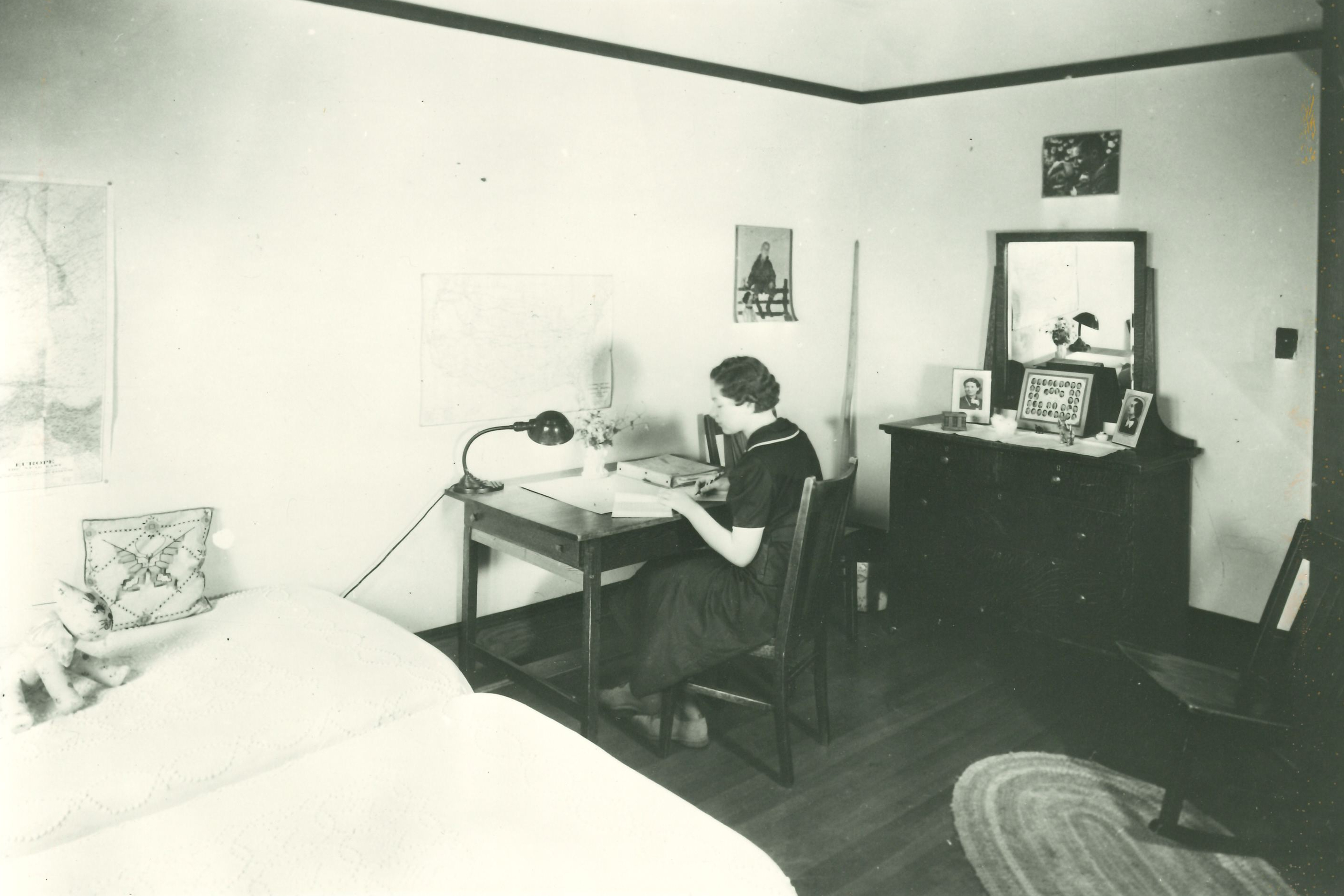
Typical dorm room in Todd Hall Dormitory.
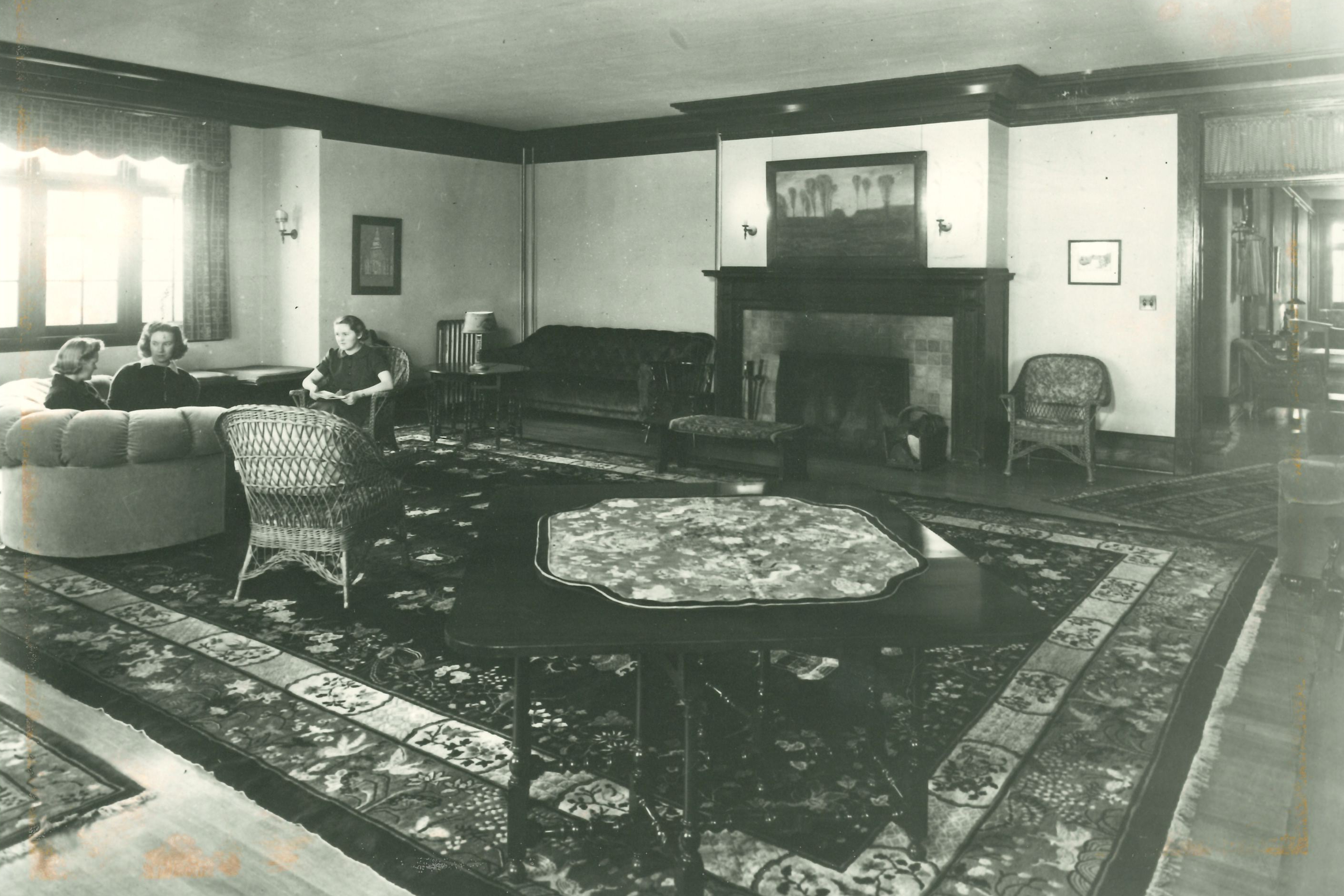
Interior photo of Todd Hall Dormitory showing the Sitting Room. Many furnishings, such as the oriental rug, were purchased by Dean Todd on trips abroad. Souvenirs from trips were often used as placecards at special formal dinners.
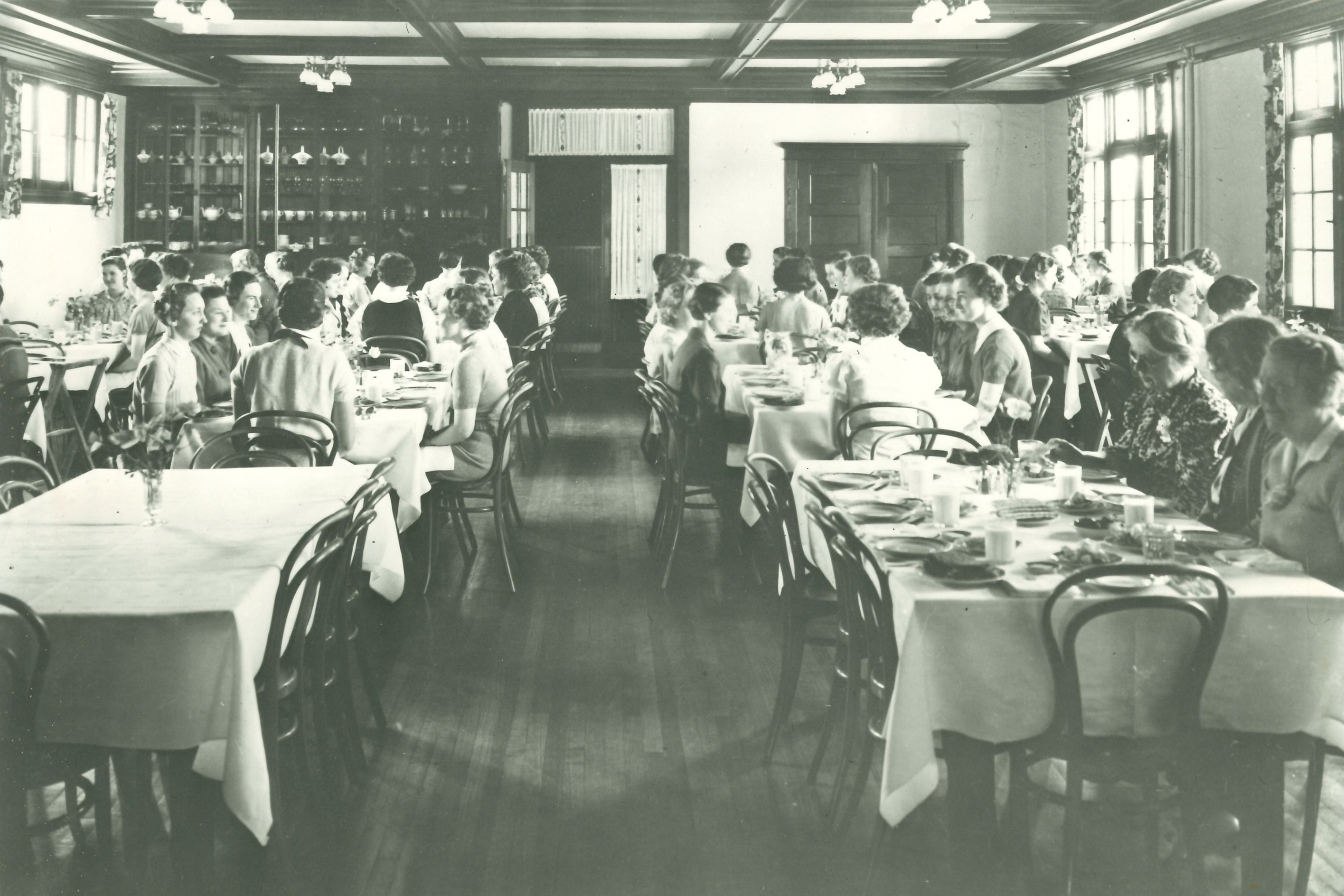
Dining Hall of Todd Dormitory.
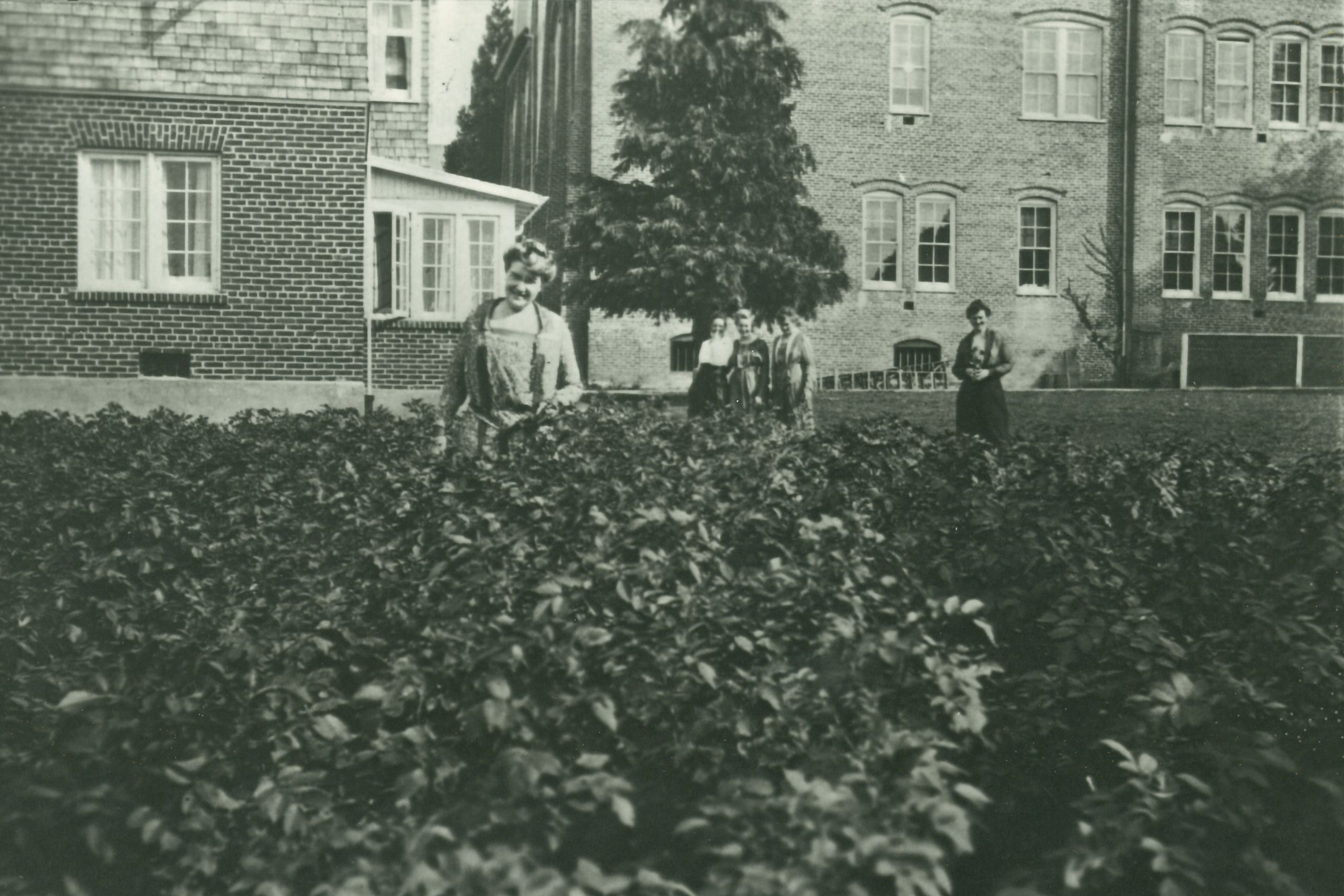
A vegetable garden and potato patch existed to the side of Todd Hall Dormitory during WW1. Jessica Todd is seen visiting the potato patch in the photo.
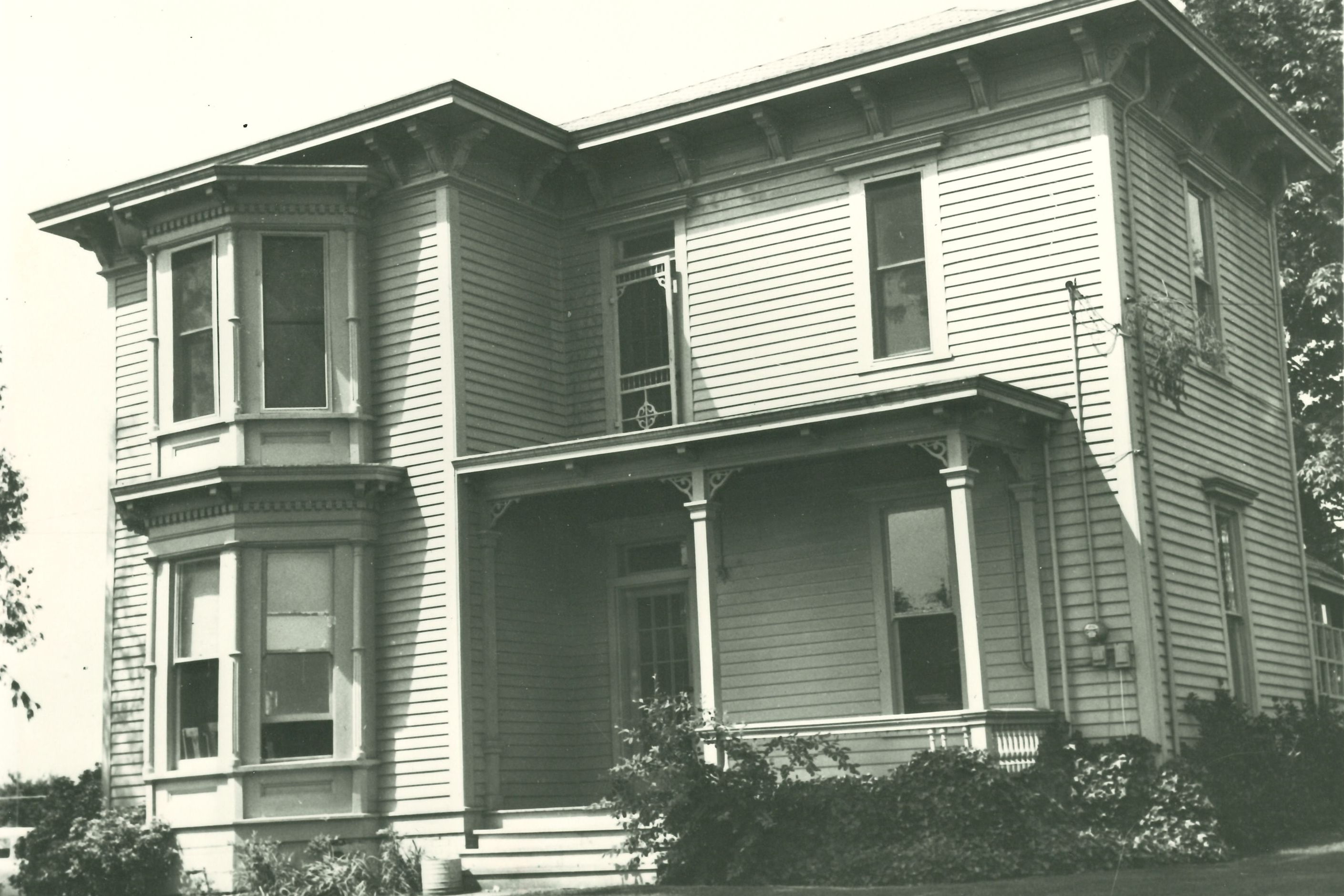
Wolverton House, located where Natural Science currently stands, served as a residence for women between 1921 and 1925. It later became the site of the Music Hall in 1928 and was razed in 1958.
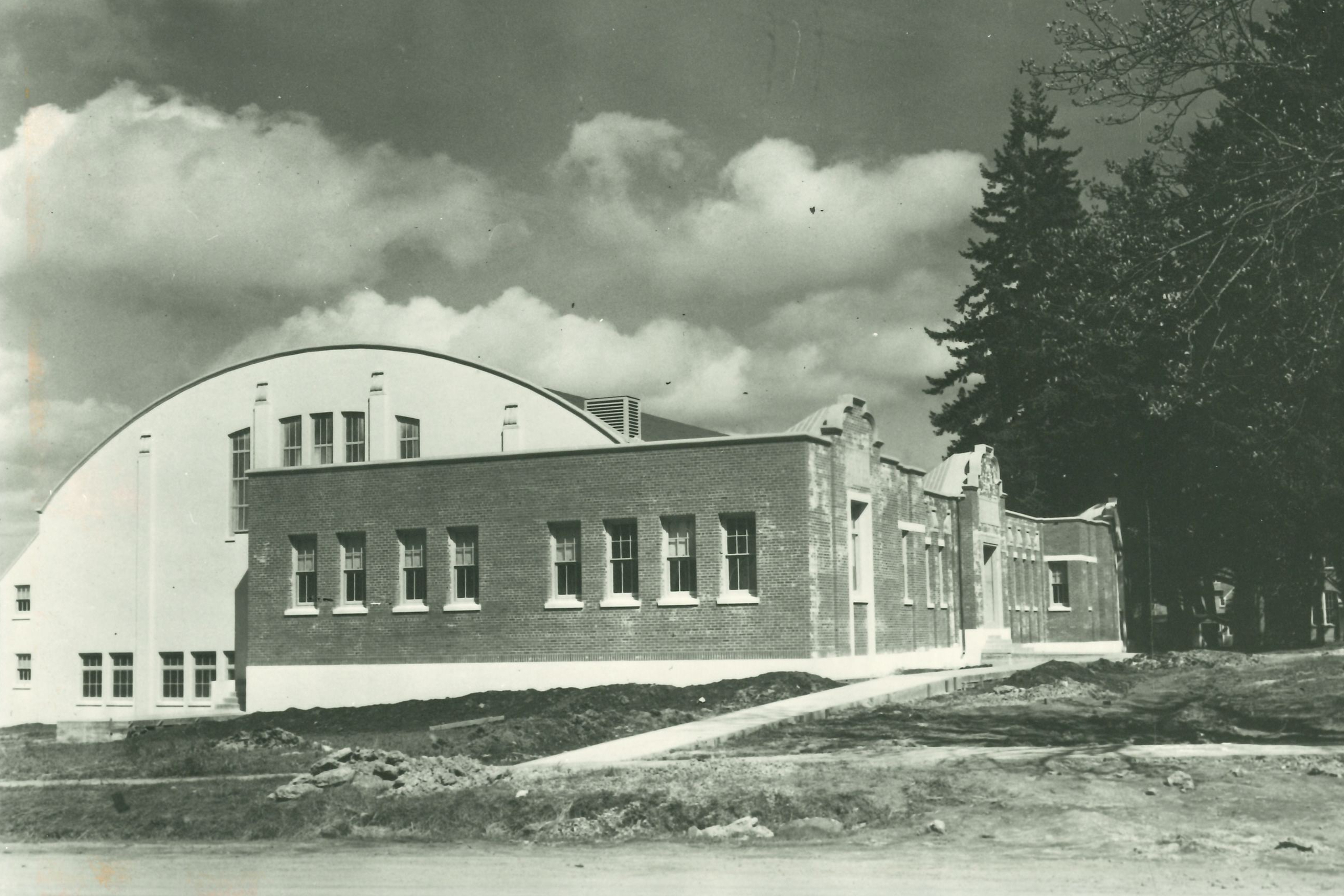
Wolverton Memorial Pool, shown as the arched building, was added in 1951 and named in honor of a pioneer Monmouth family, the Wolvertons. The money for the pool was donated by Grant Wolverton, one of the descendants.
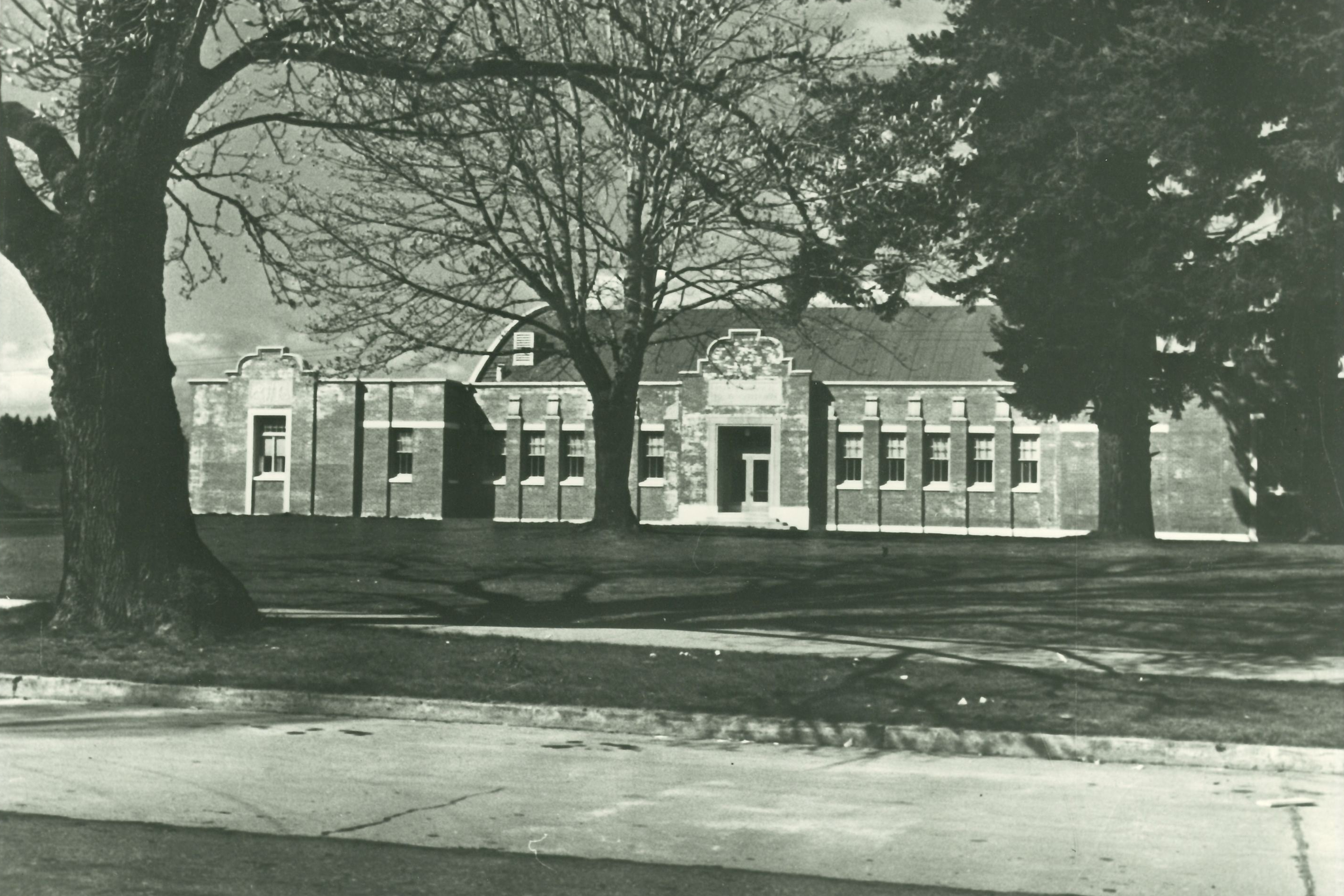
Health and Physical Education Building constructed in 1935 and 1936 for $54,000 and dedicated October 26, 1936.
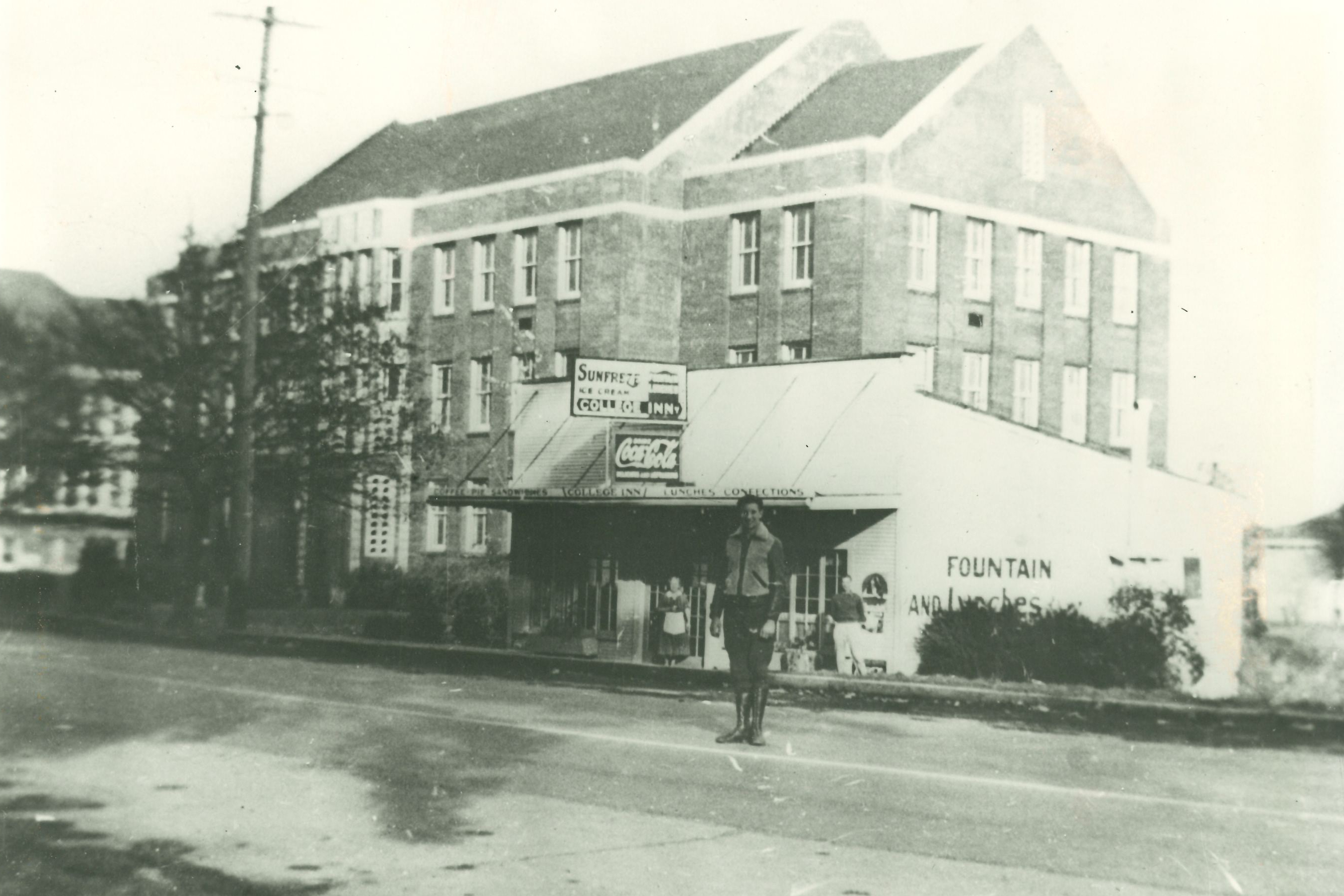
The Administration Building was constructed in 1936 for $100,000. Science classes were moved out of Campbell Hall and into the second floor of the Administration Building. They remained there until the new Natural Sciences Building was built. Note the Wolf Shack Fountain on Monmouth Avenue that existed in the 40s.
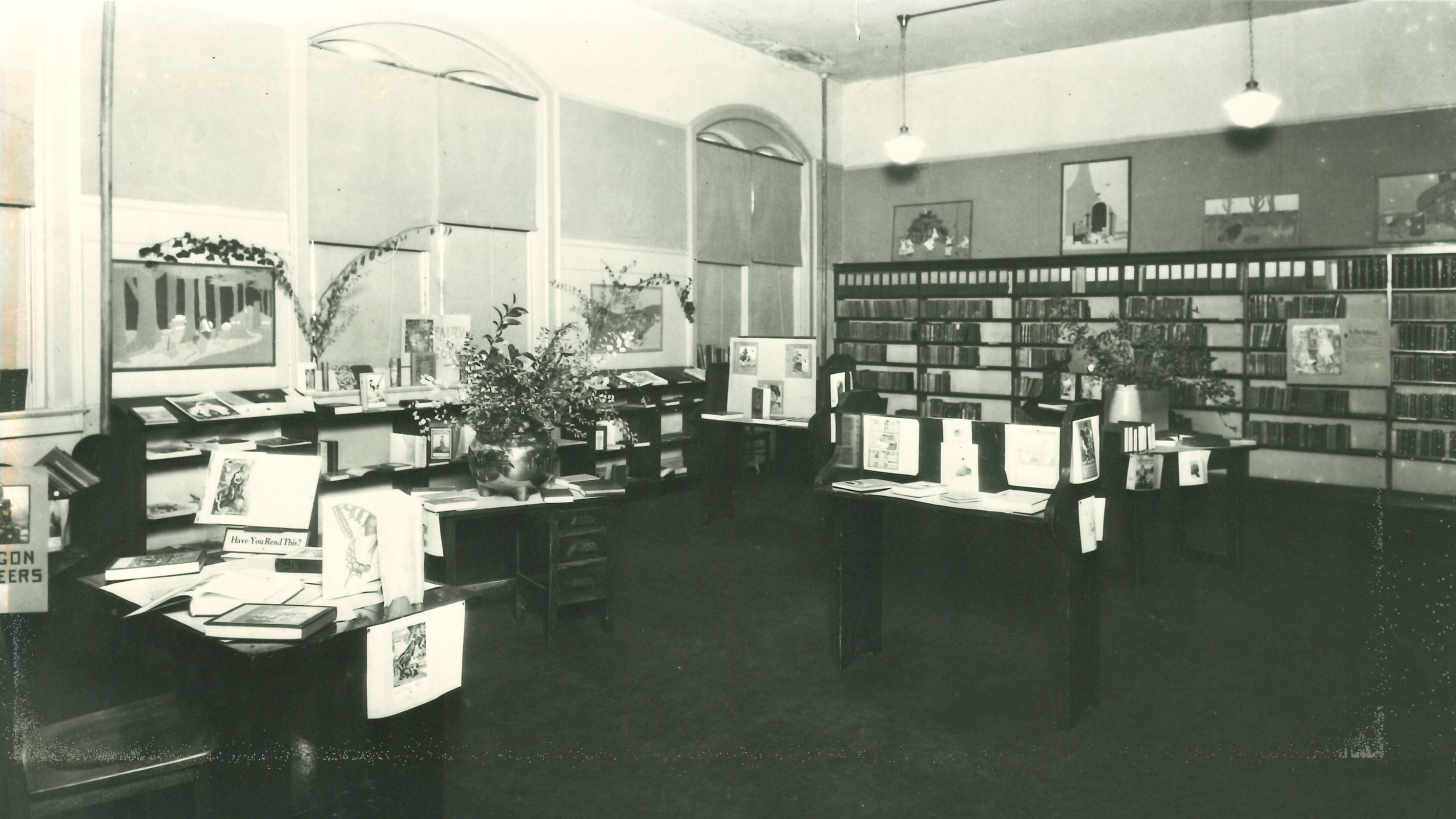
Library in Campbell Hall.
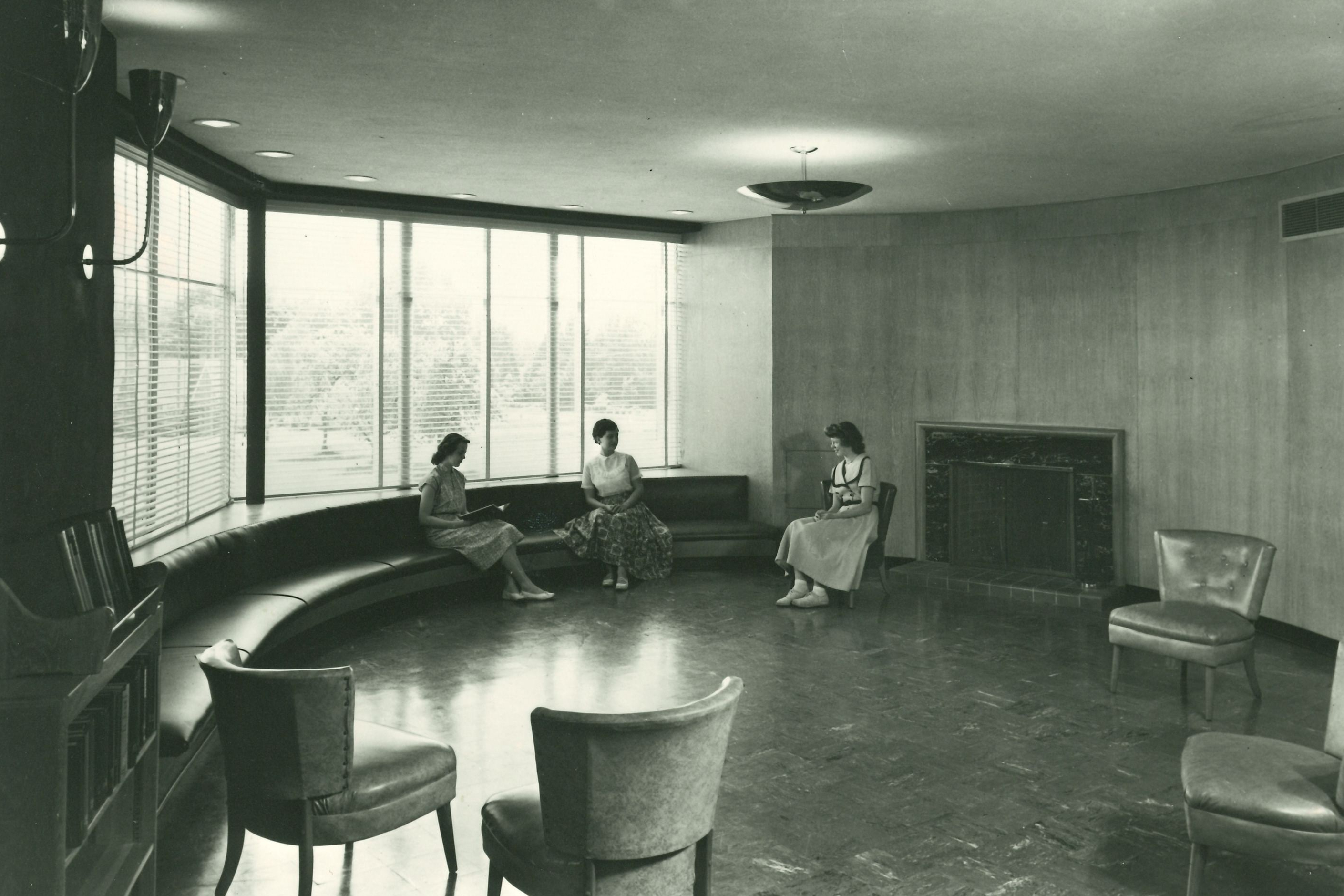
Interior of Library in 1951 shows a lounge area in the east corner of the current Admissions Office.
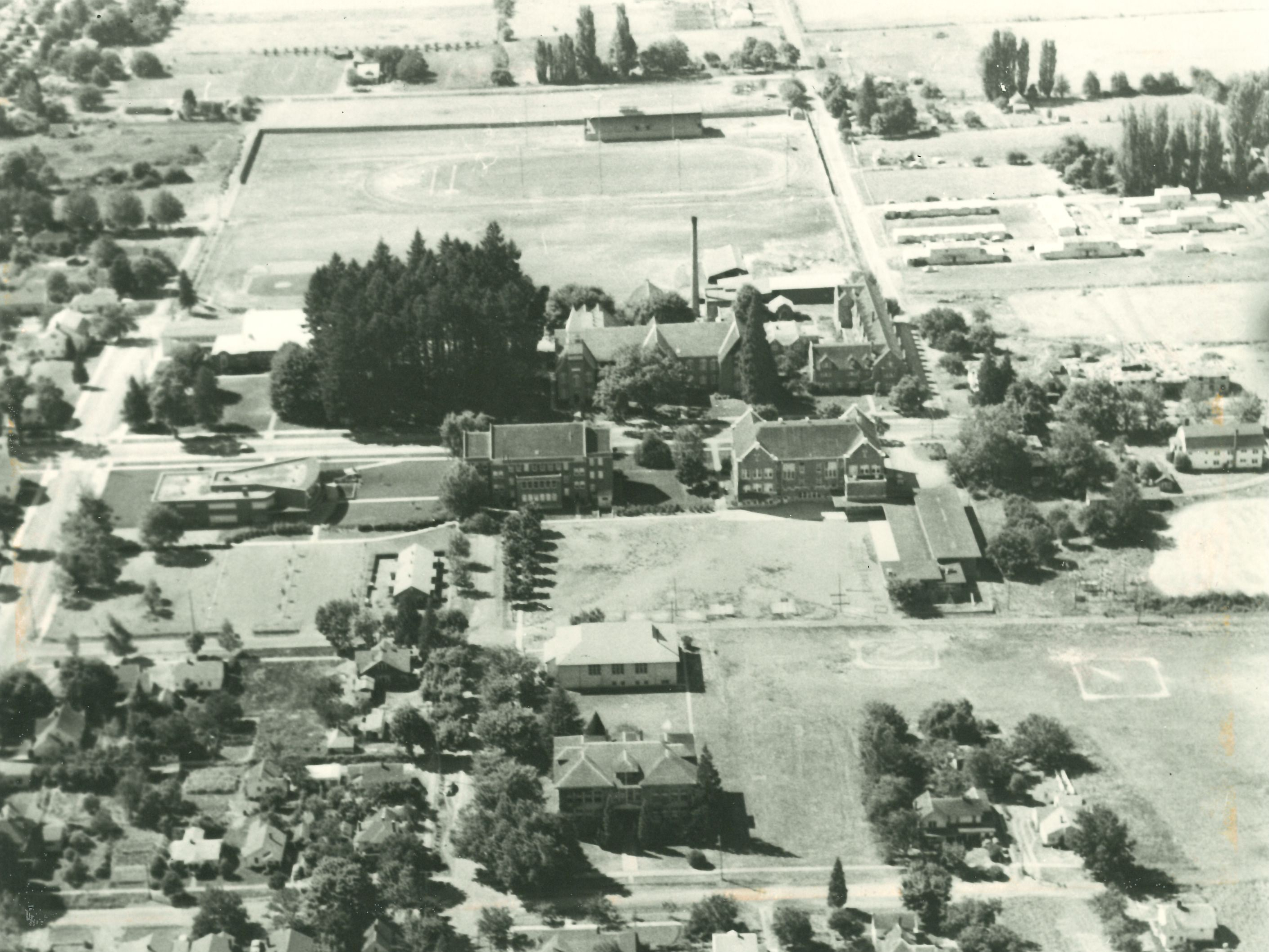
Photo taken in the 1950s showing east-to-west direction. It shows the library, Todd Hall, Training School, Administration Building, Campbell Hall, Maaske Hall, the Grove, the Health and P.E. Building, the football field, and to the right (where the present Grove is) Veterans Village (1947 – 1973). These buildings were moved from Vancouver, WA (where they had shipyard workers) to their location at O.C.E. to provide housing for WWII veterans attending school. In the lower foreground, where the Fine Arts Building stands today, are the former Monmouth High School and Gym.
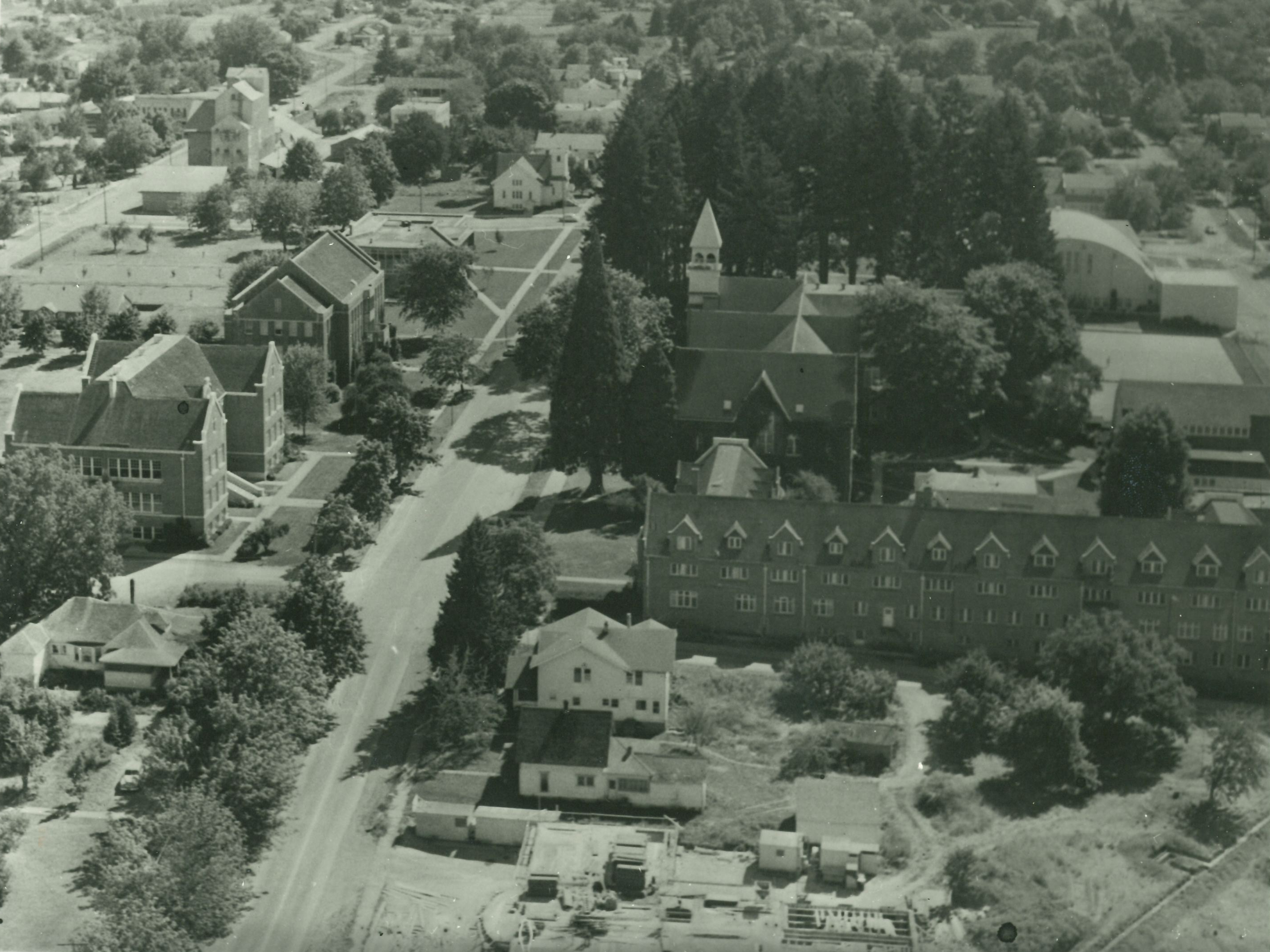
Photo taken in the 1950s, looking south along Monmouth Avenue. On the right side of Monmouth Avenue are Maaske Hall (under construction), Todd Hall, Campbell Hall, the Grove, tennis courts, and the Health and P.E. Building. On the left side of Monmouth Avenue are the Training School, the Administration Building, and the Library.
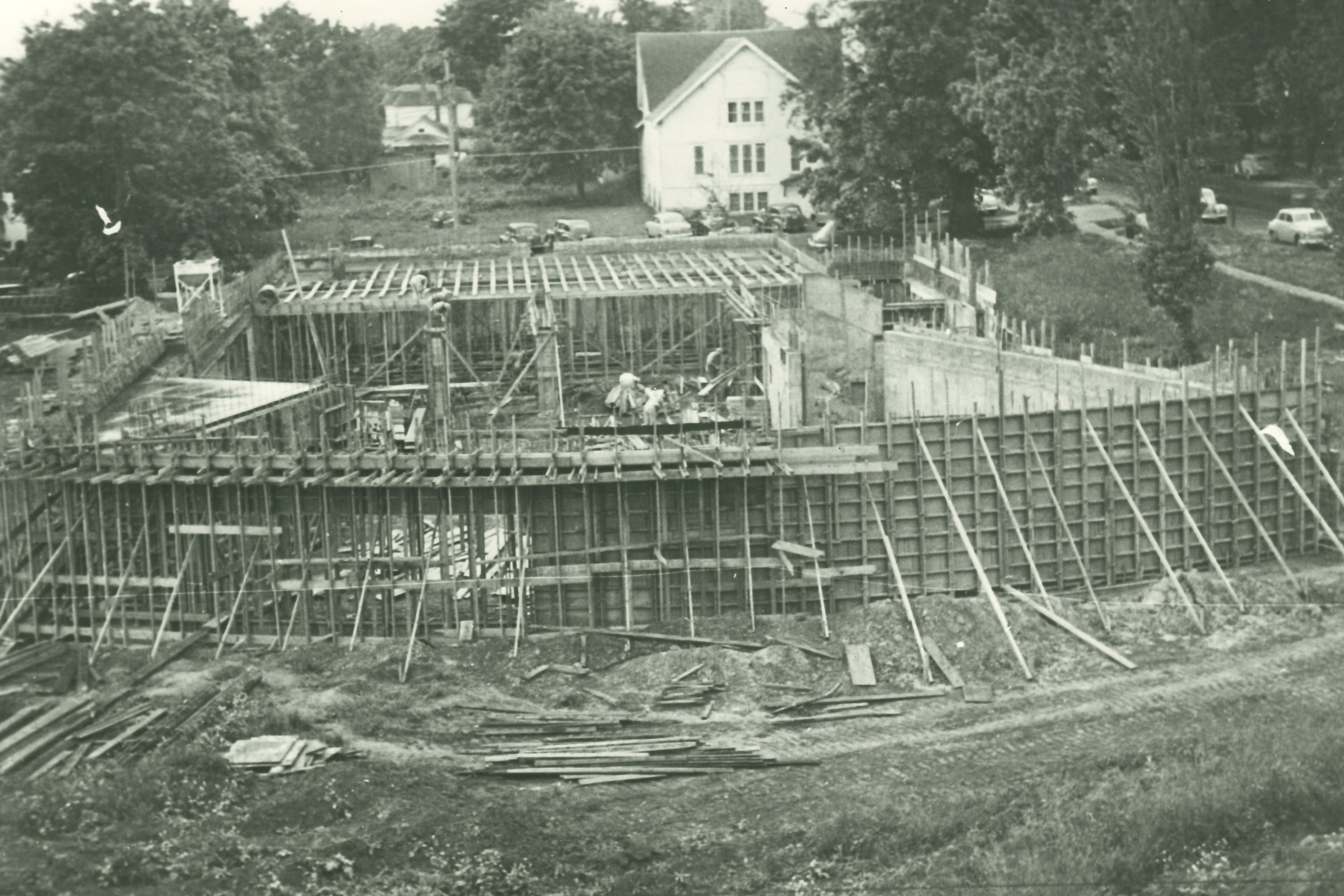
Construction of a separate Library building on the corner of Jackson Street and Monmouth Avenue. The building was dedicated on Oct. 14, 1952.
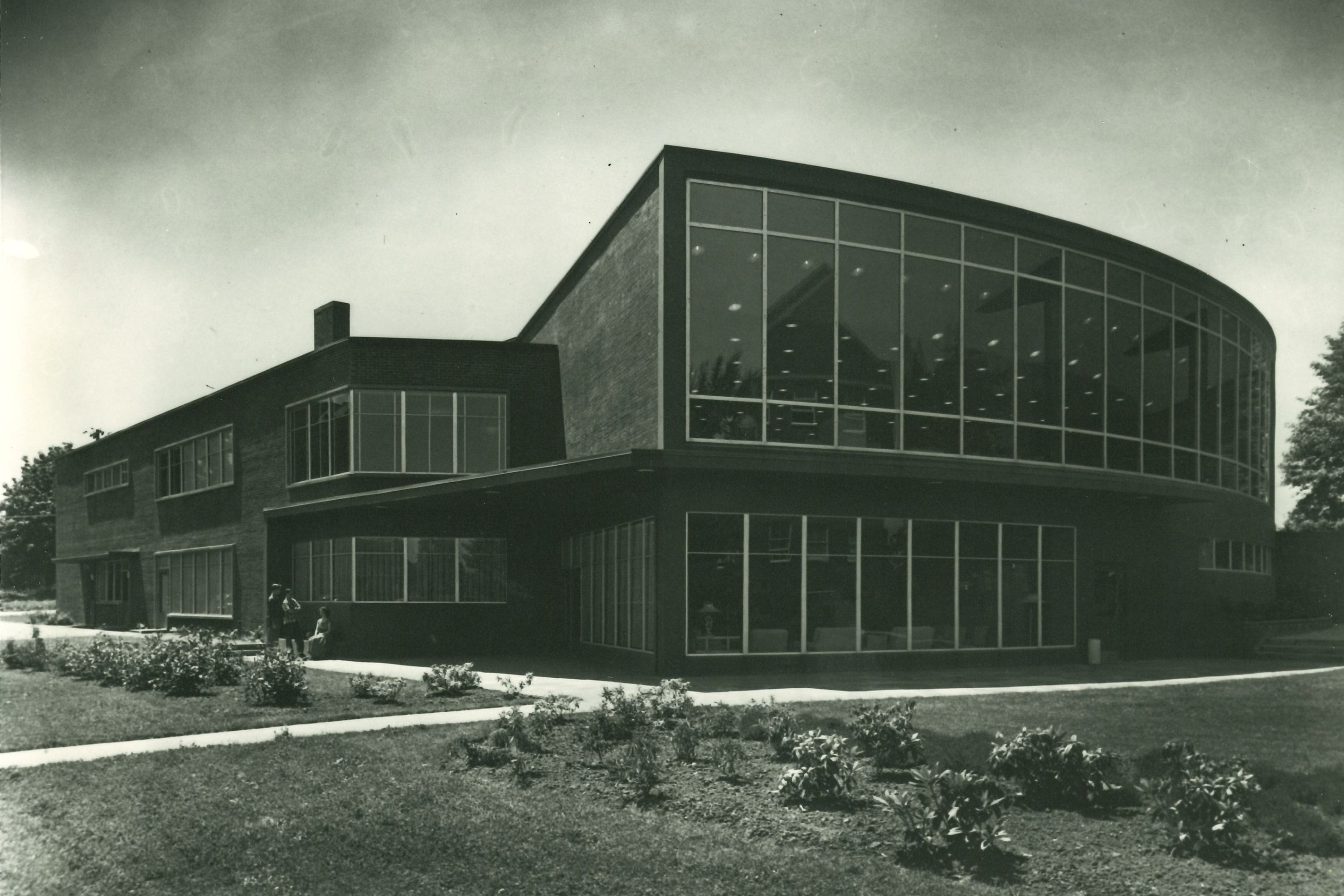
The completed separate Library building that housed over 30,000 books by 1953. Since 2001, the building has housed many academic and student support service departments.
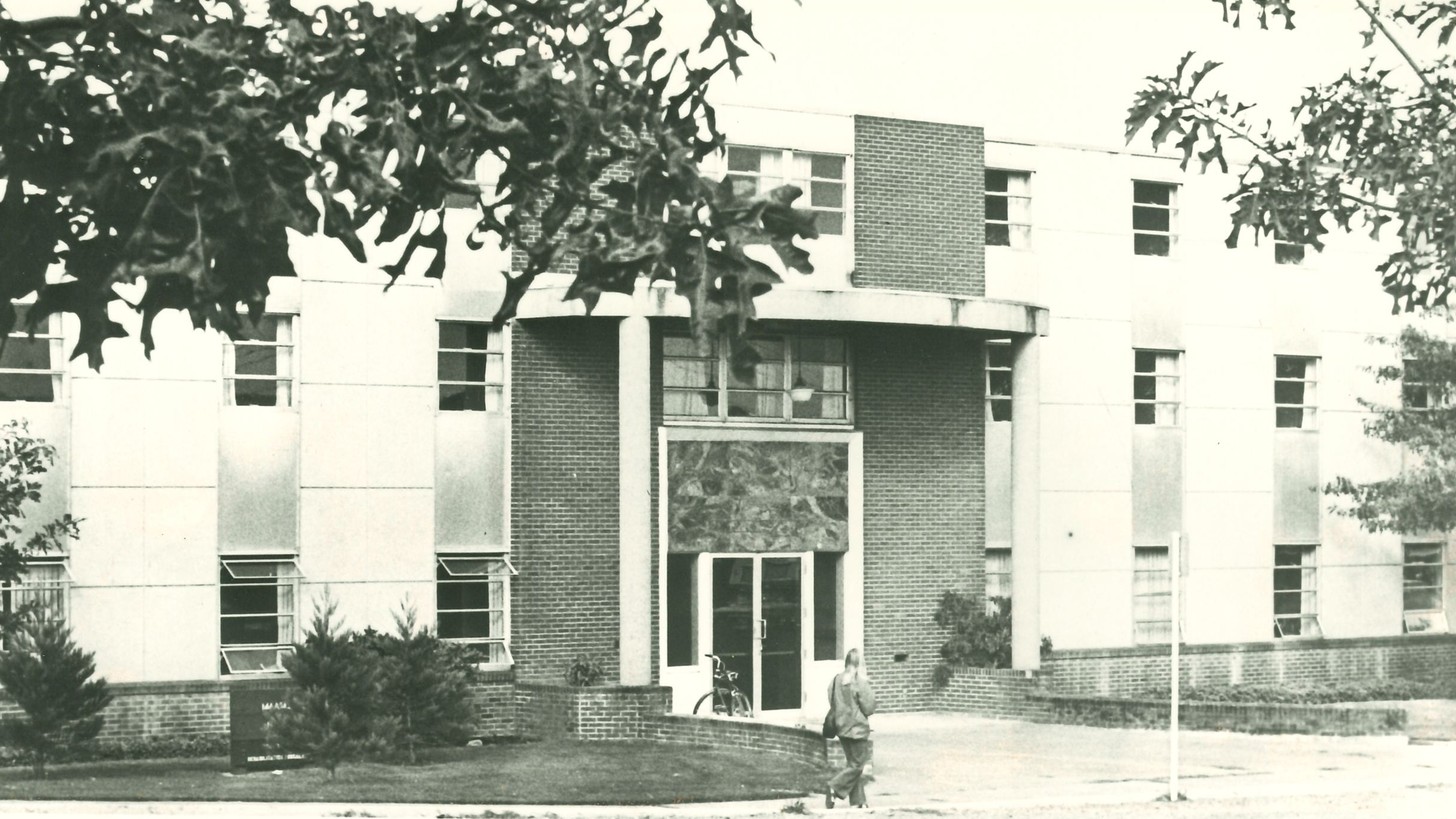
Maaske Hall was constructed in 1955 as the first dormitory for men at a cost of slightly less than $300,000, and had space for 100 men in double rooms. Dedication took place on April 8, 1956. It became the Administrative Center for the Regional Resource Center for the Deaf in 1974. It is now part of the Department of Public Safety Standards and Training Program.
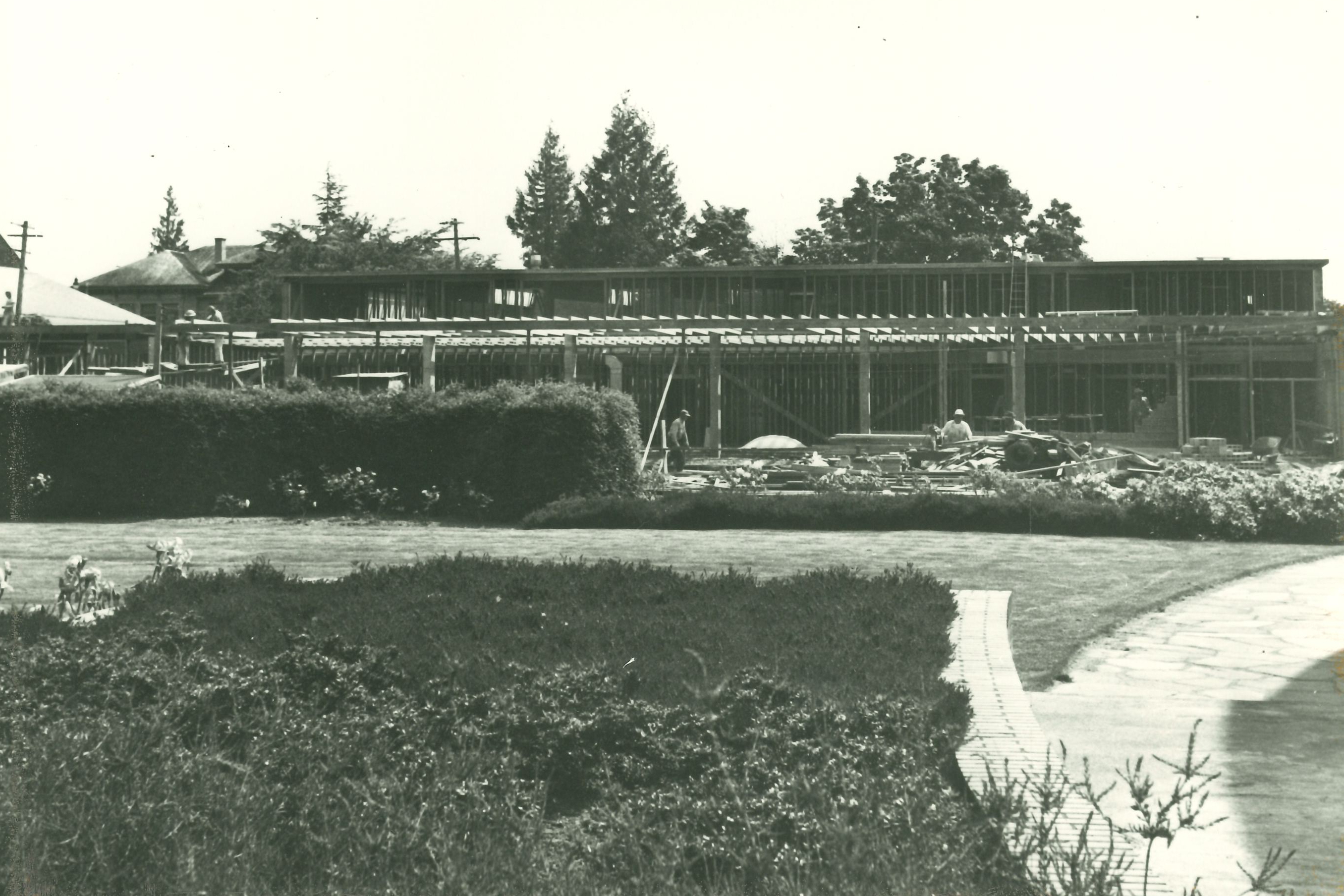
Construction of the new Music Hall in 1958. Dedicated on January 25, 1959.
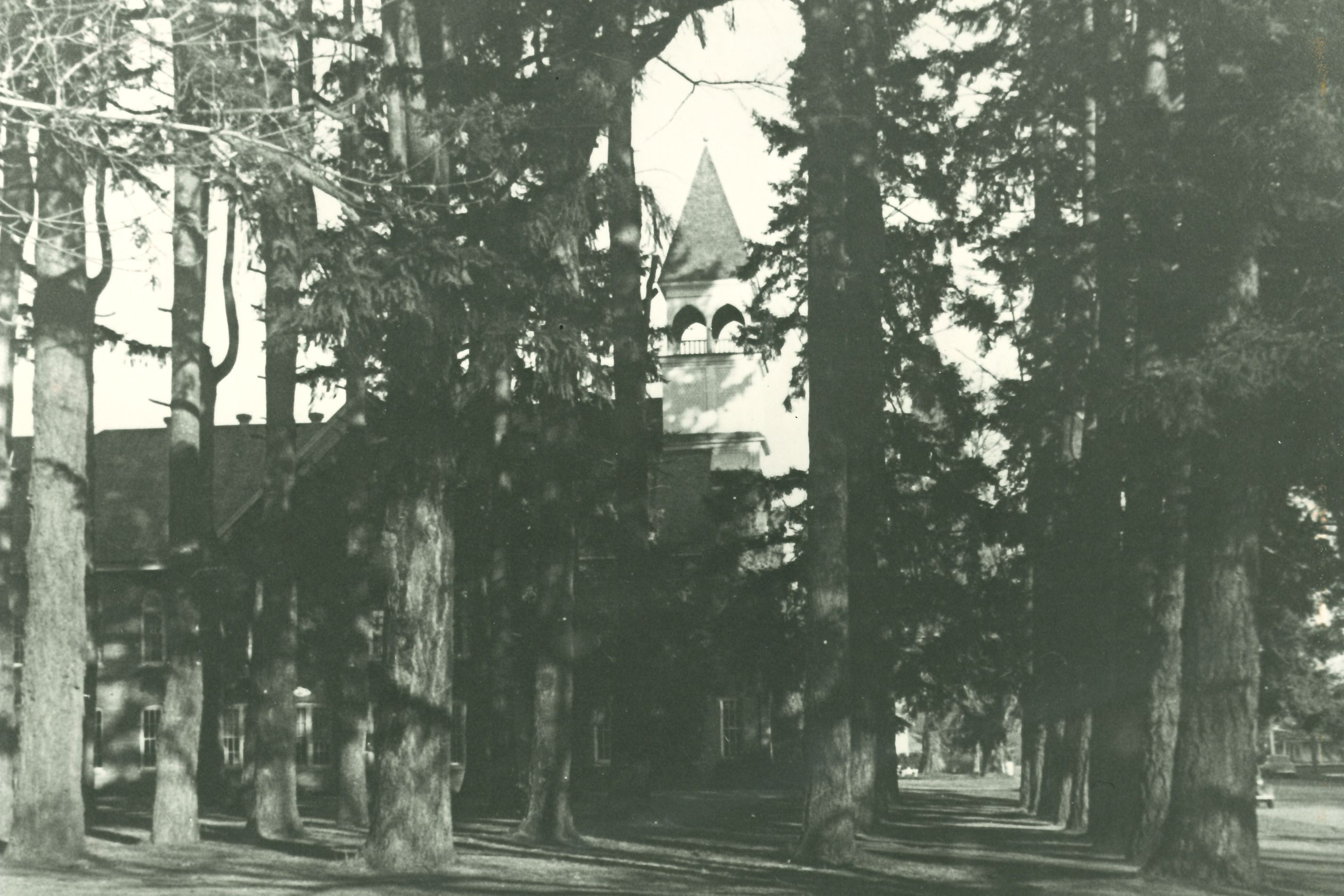
This is a photo of the Grove’s Douglas Fir trees. They were planted in 1887 and remained there until the Columbus Day Storm of 1962 felled most of them. The Humanities and Social Sciences Building stands where the trees once stood. In the background is Campbell Hall along Monmouth Avenue.
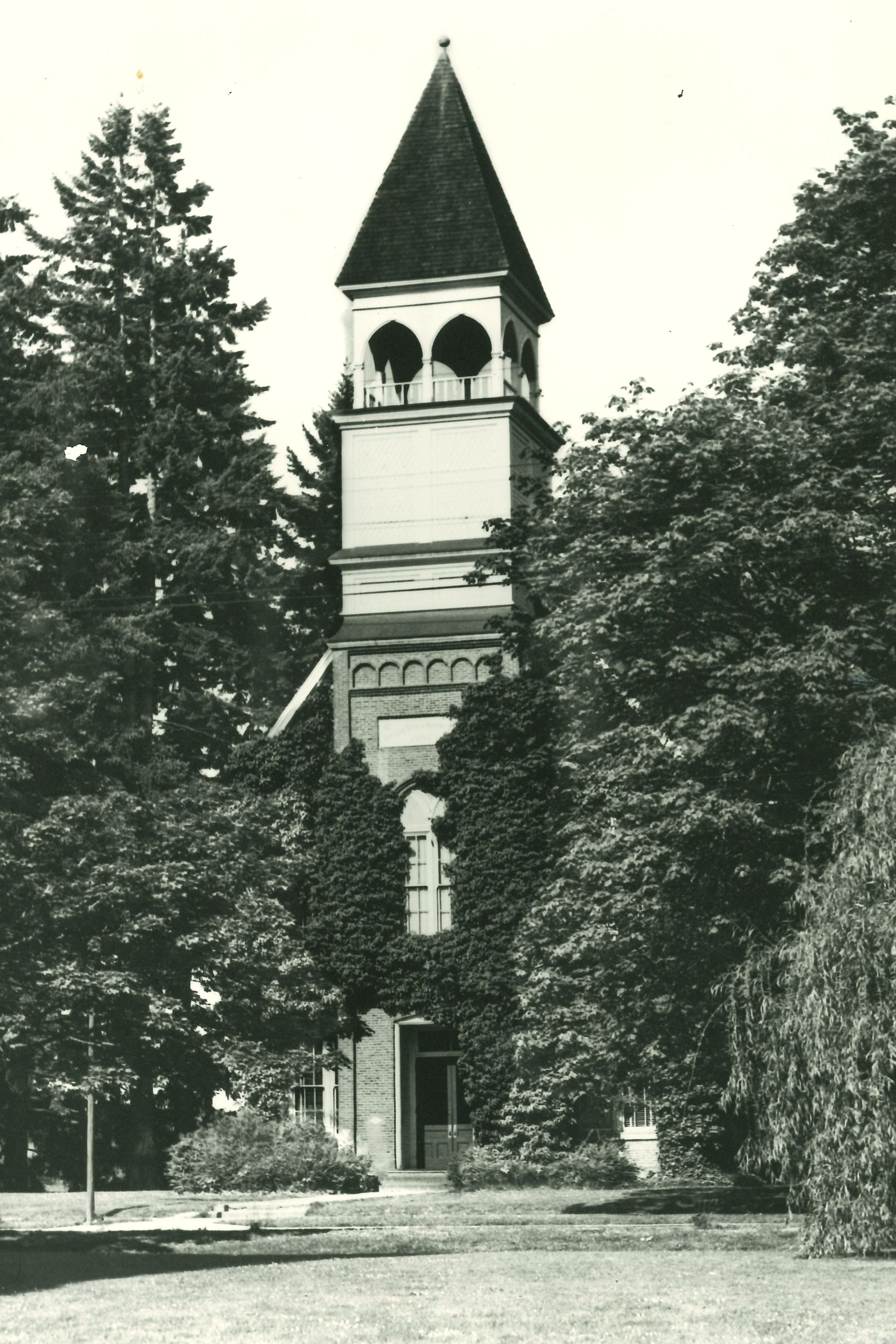
Close-up photo of the bell tower atop the south wing of Campbell Hall. The top portion of the tower was blown over in the Columbus Day Storm of 1962.
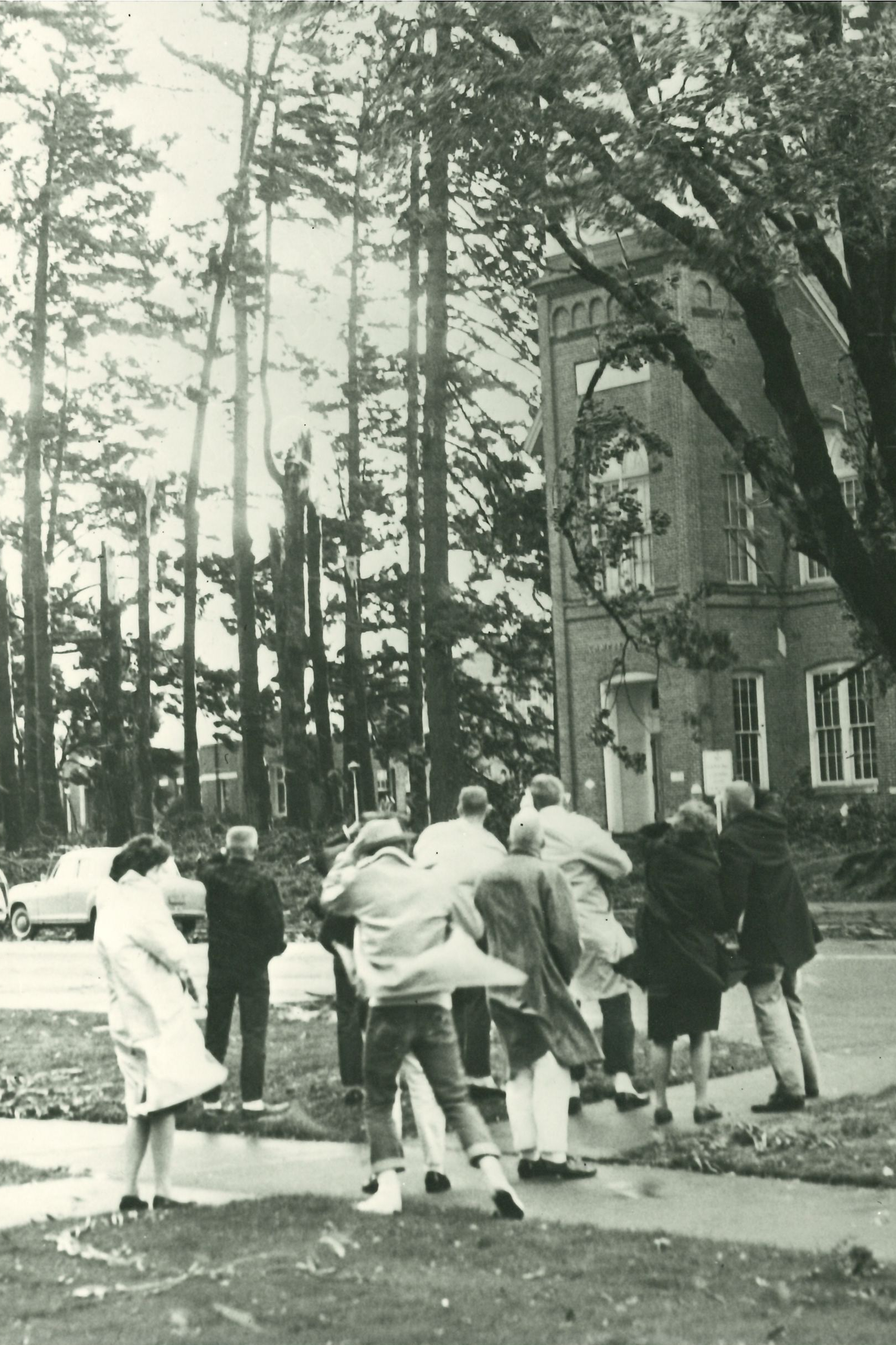
Crowds gather across from Campbell Hall Bell Tower to watch it sway in the 100-mile-an-hour winds.
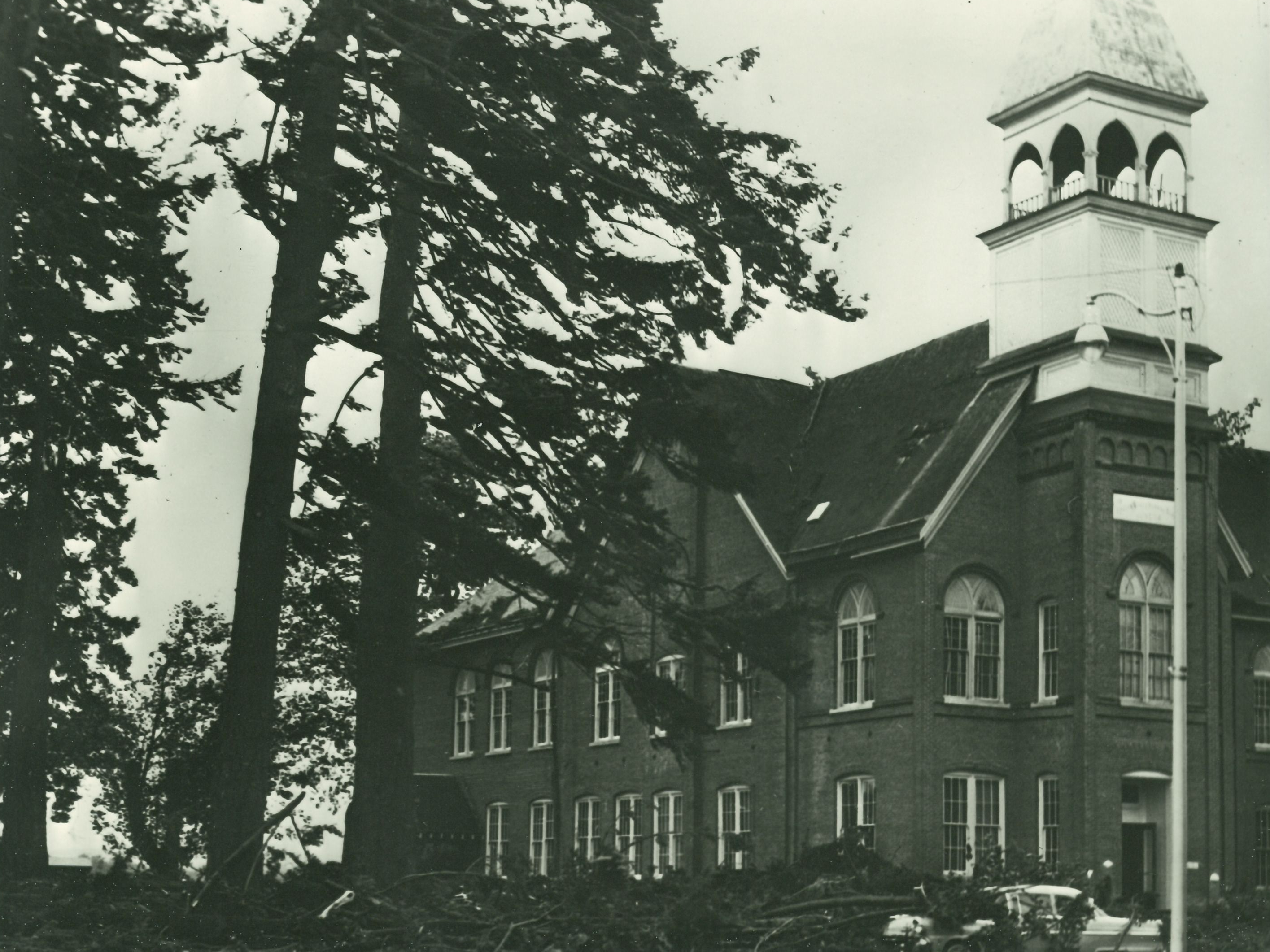
Trees in the Grove fall during the 100-mile-an-hour winds during the Columbus Day Storm, October 12, 1962.
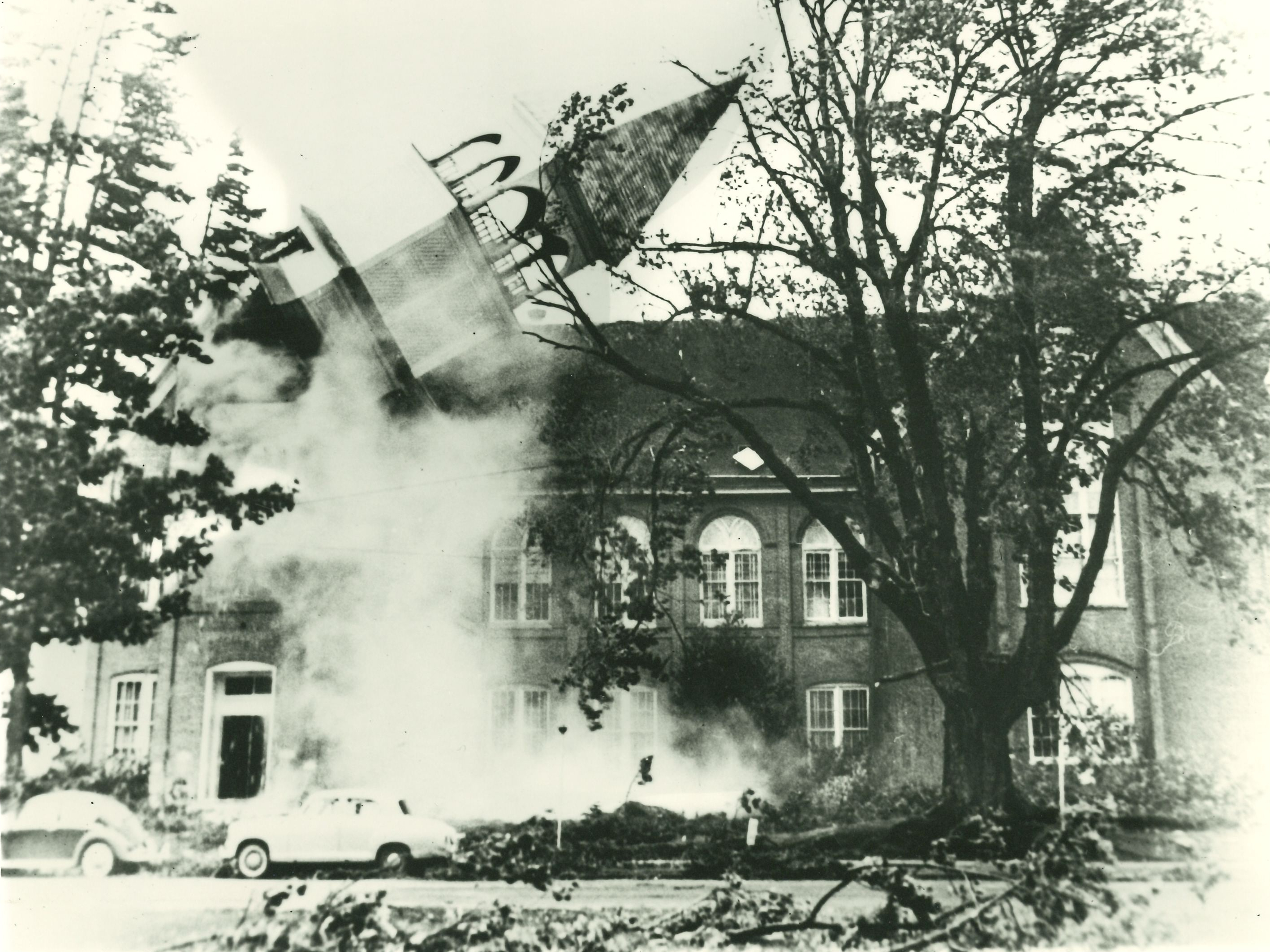
Bell tower comes crashing down during the Columbus Day Storm of 1962. This photo made the front page of the New York Times Newspaper.
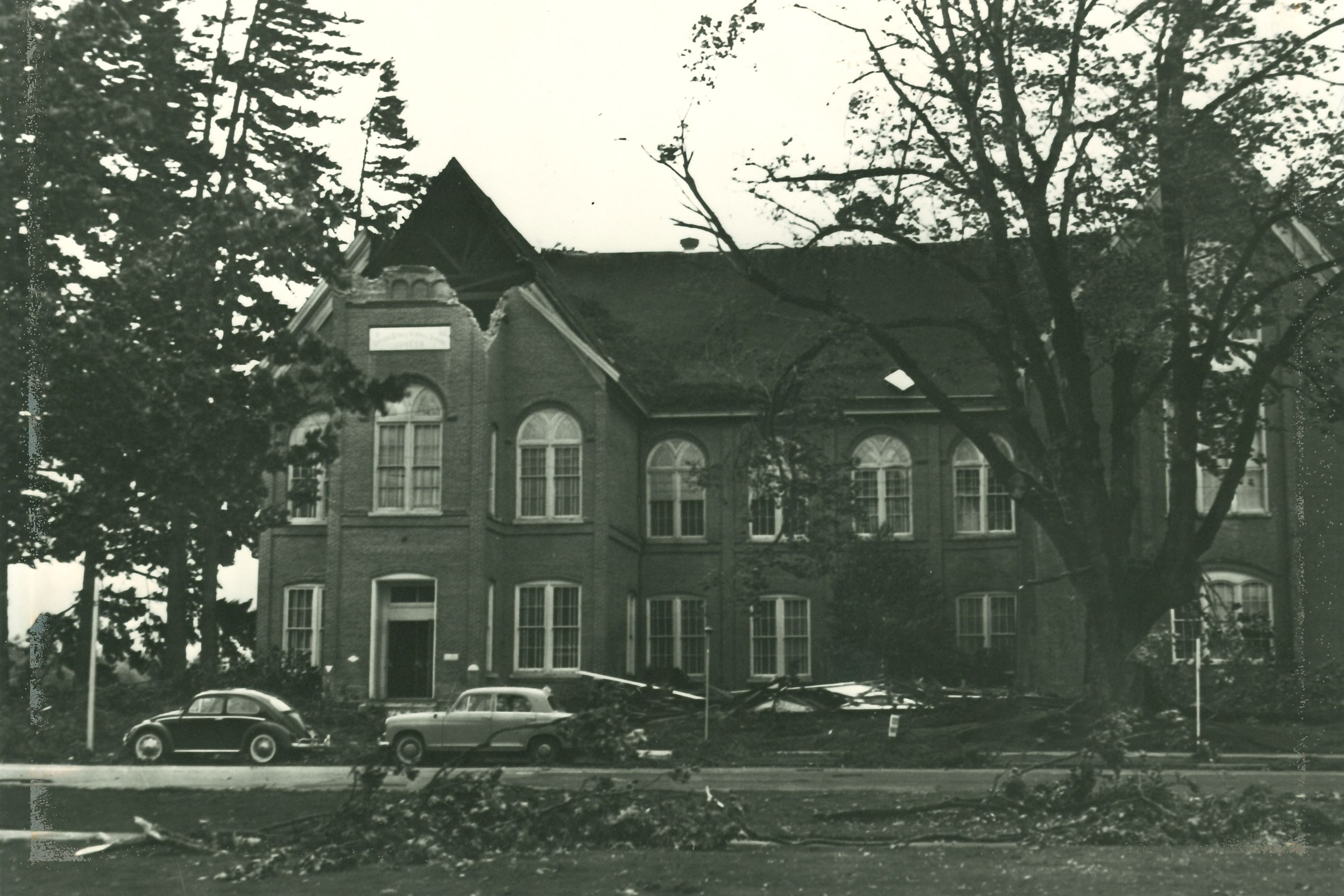
Photo of the gaping hole left by the bell tower and other structural damage done to Campbell Hall caused the south wing to be demolished, and the surrounding Grove of Douglas firs and maples to be razed.
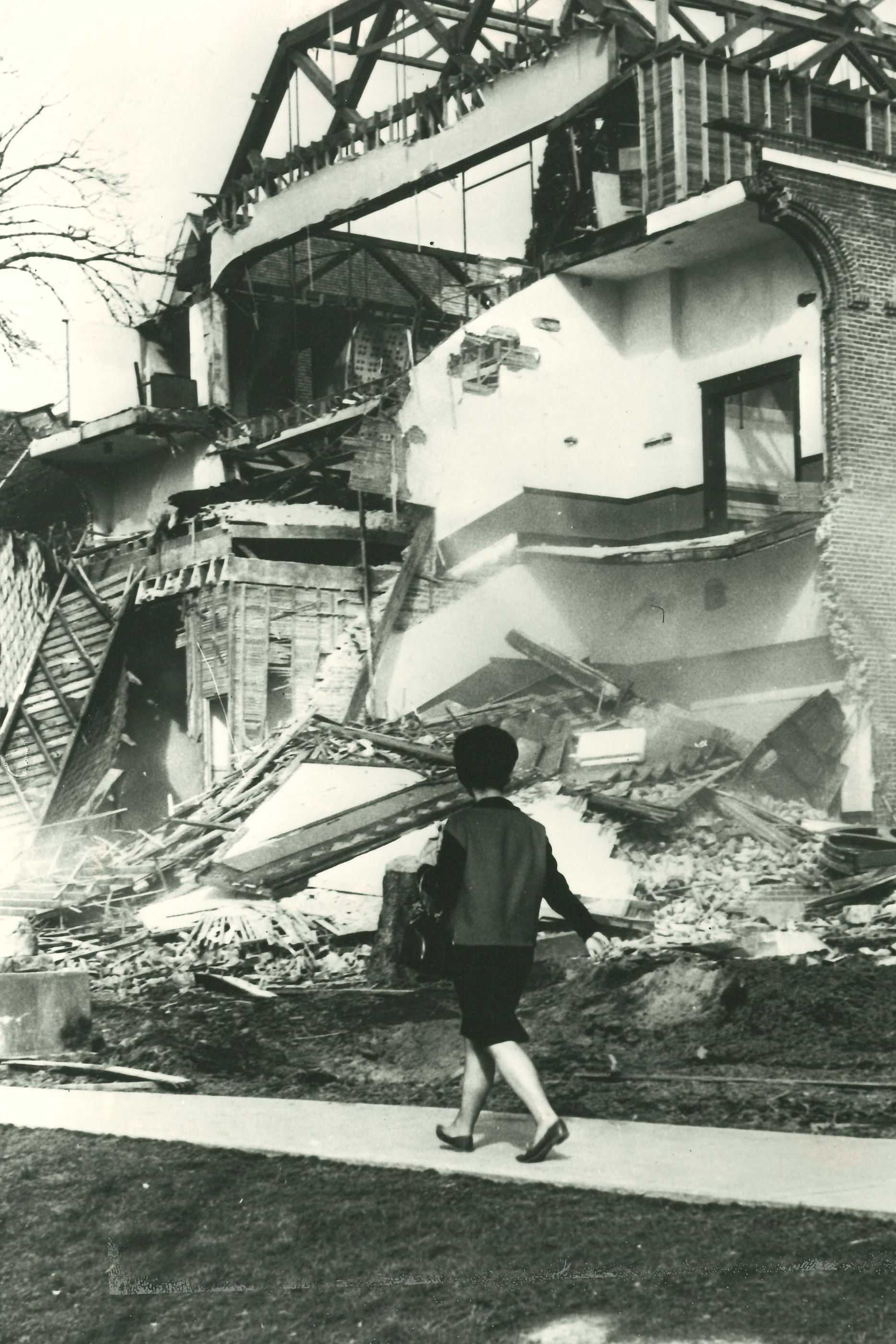
South wing of Campbell Hall being demolished during spring 1963. The Humanities and Social Sciences Building was constructed in the same area.
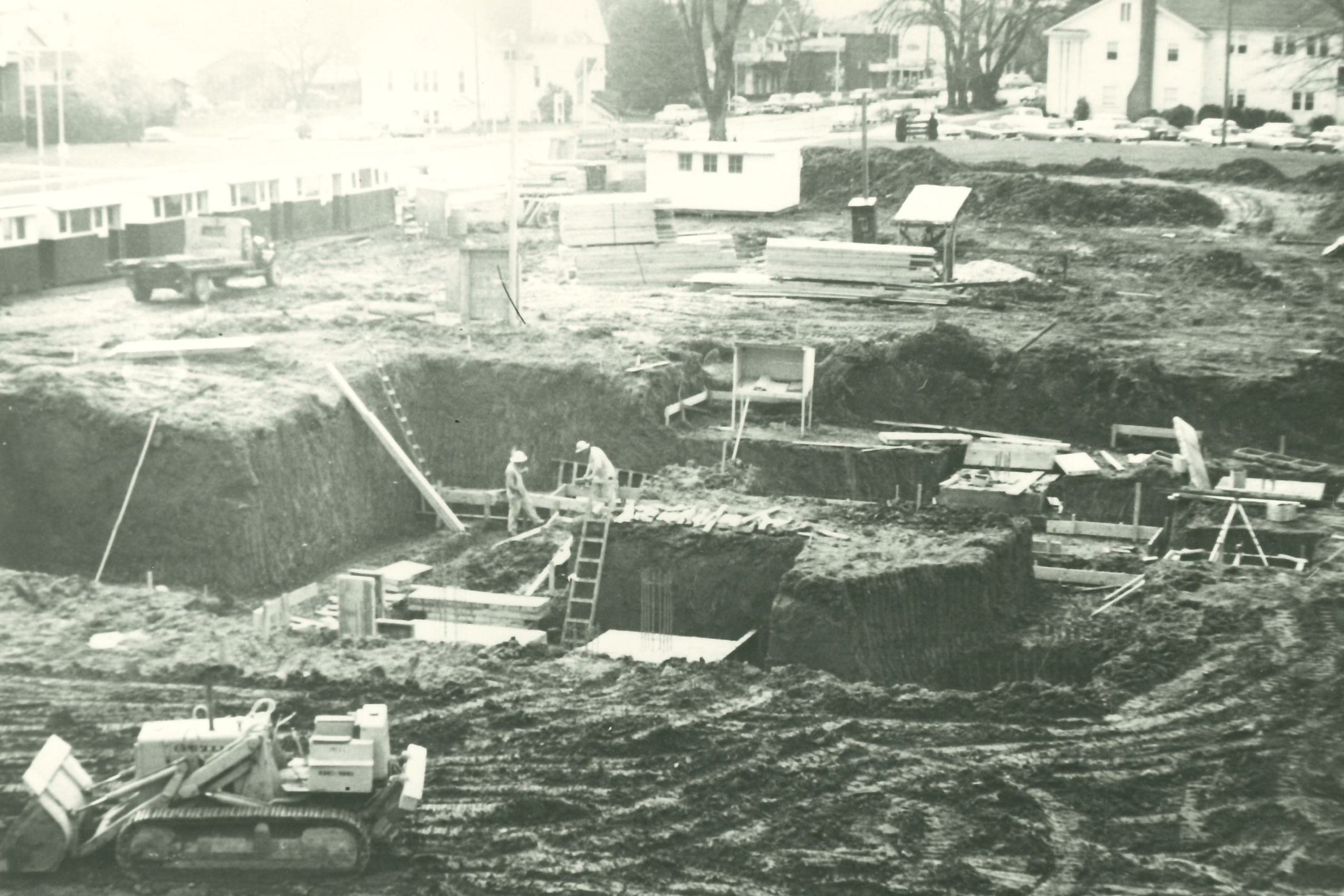
Construction of the Humanities and Social Science Building was done in 1964 in the spot that had previously been occupied by the Grove and Campbell Hall South Wing before the Columbus Day Storm. The new building incorporated Graduation Class Plaques from the old Campbell Hall into its central open stairway. A Carillon tower was placed atop the building to commemorate the bell tower atop Campbell Hall.
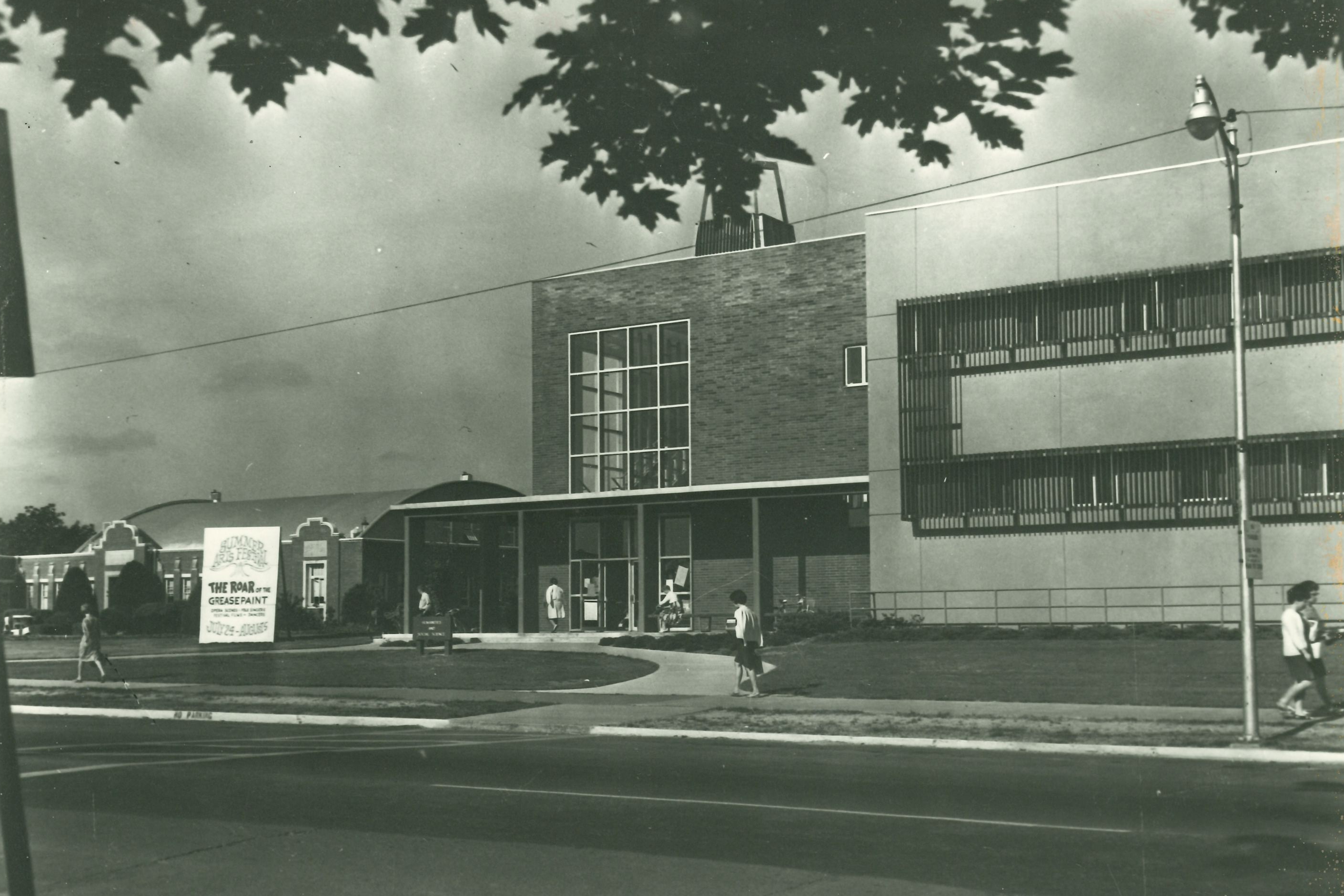
Completed Humanities and Social Science Building.
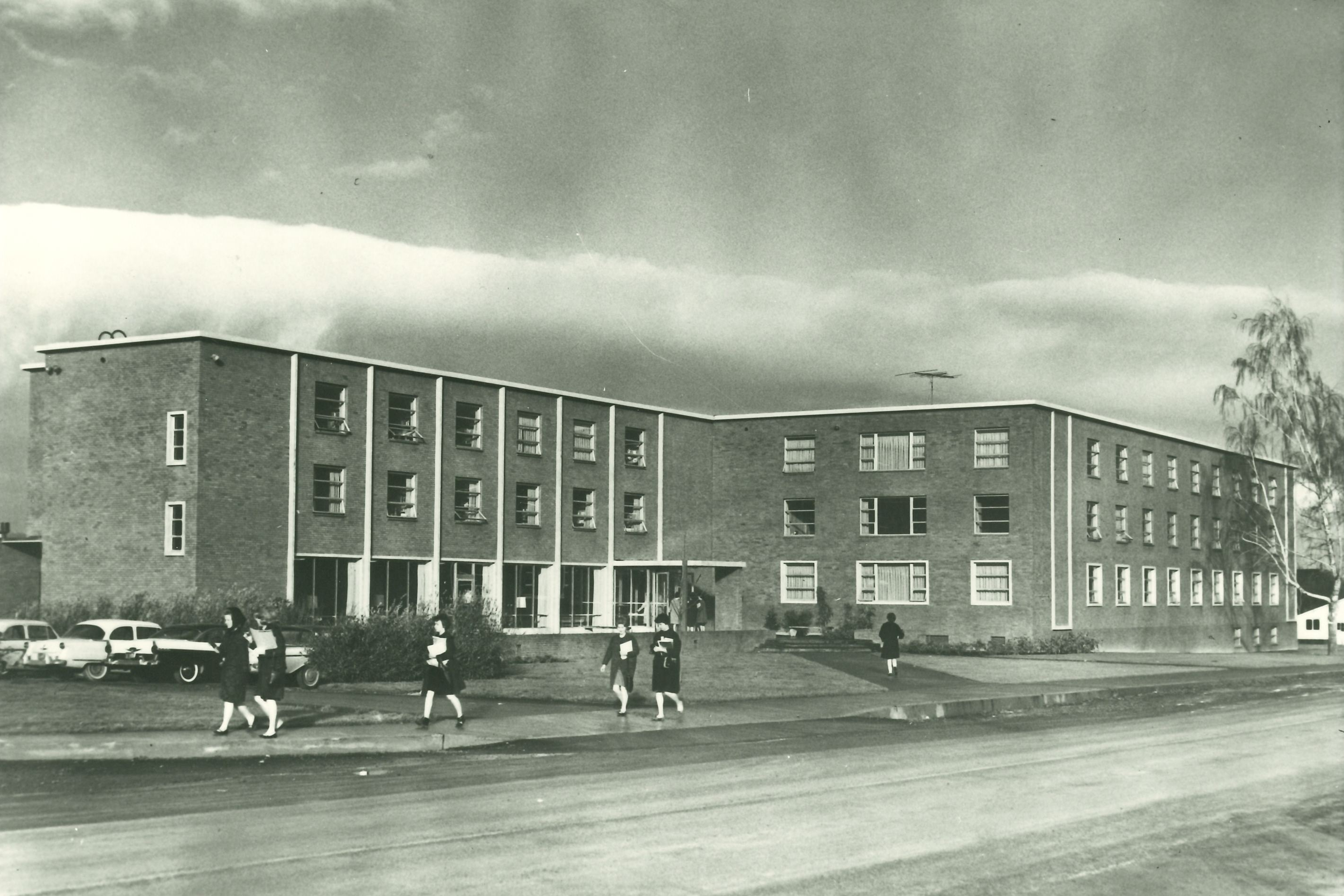
Arbuthnot Hall, a dormitory for women, dedicated January 27, 1963, was named in Katherine Arbuthnot’s honor. It had rooms for 162 women and cost $640,000 to construct. It was later remodeled to provide space for the Oregon Department of Public Safety Standards and Training Program.
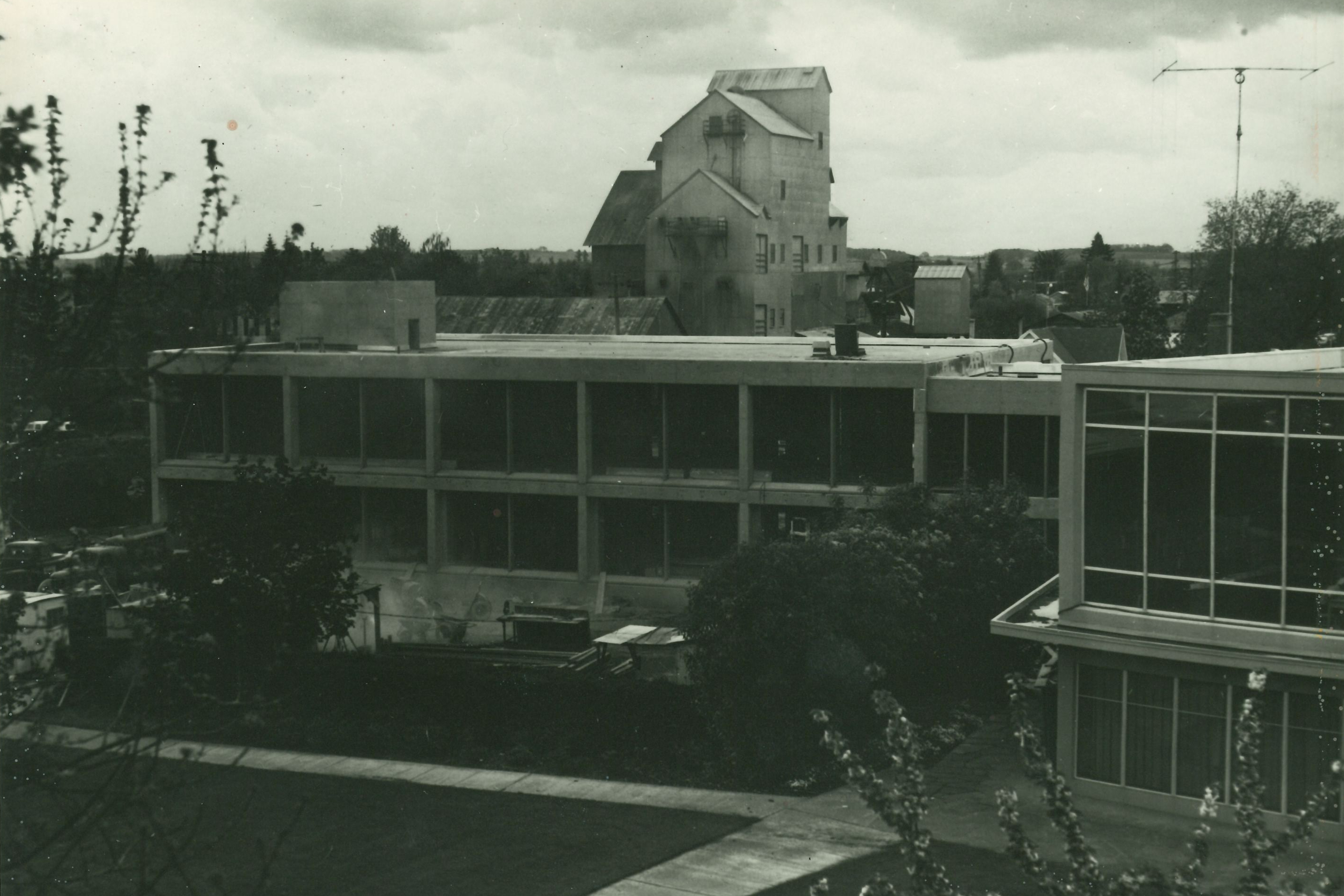
An addition to the Library was added between 1966 and 1968, and dedicated on May 4, 1968. In the background is the Monmouth Cooperative Warehouse, which burned in 1967.
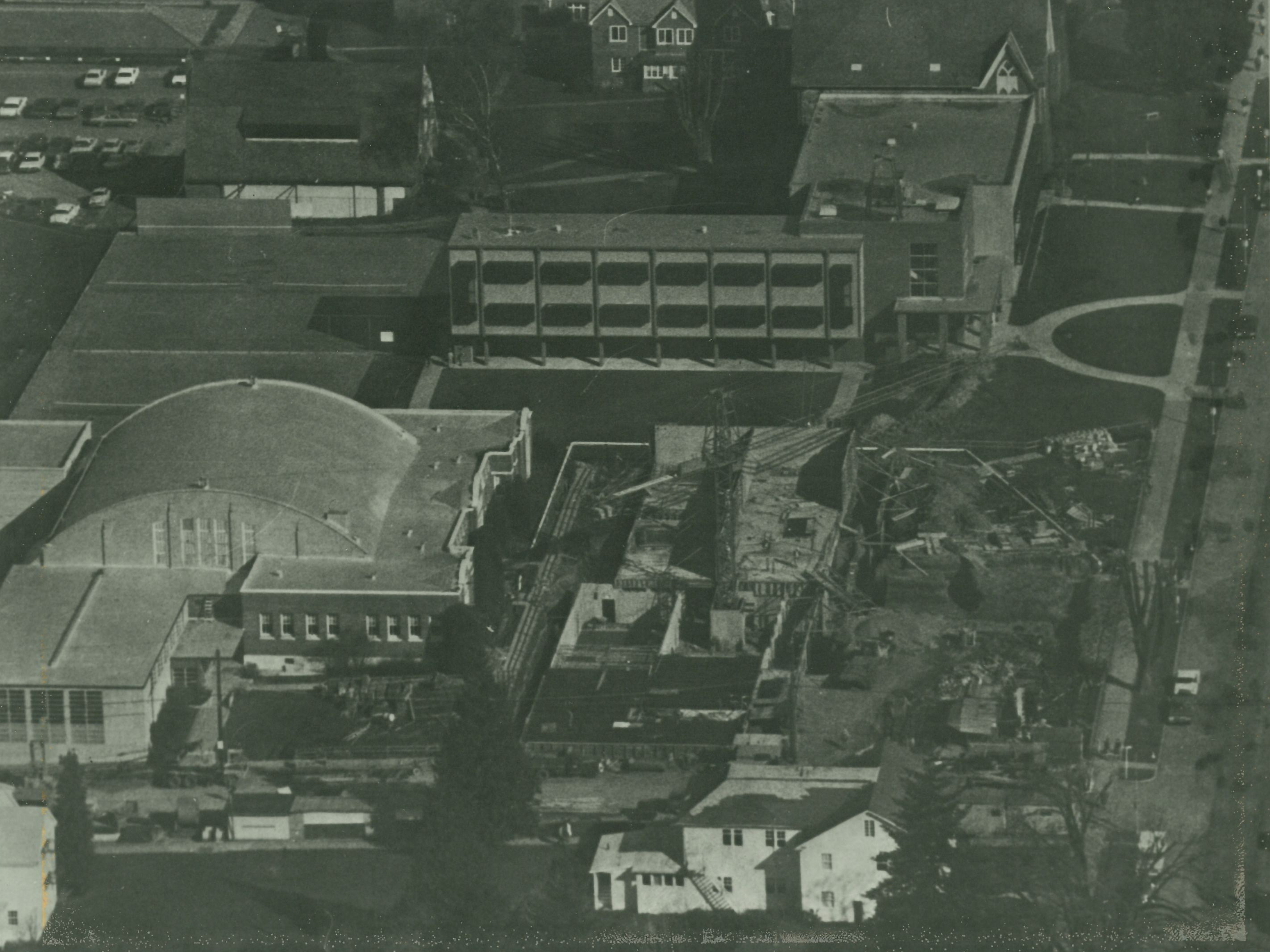
The Natural Science Building was completed in 1969. Previously, science classes had been taught on the second floor of the Administration Building.
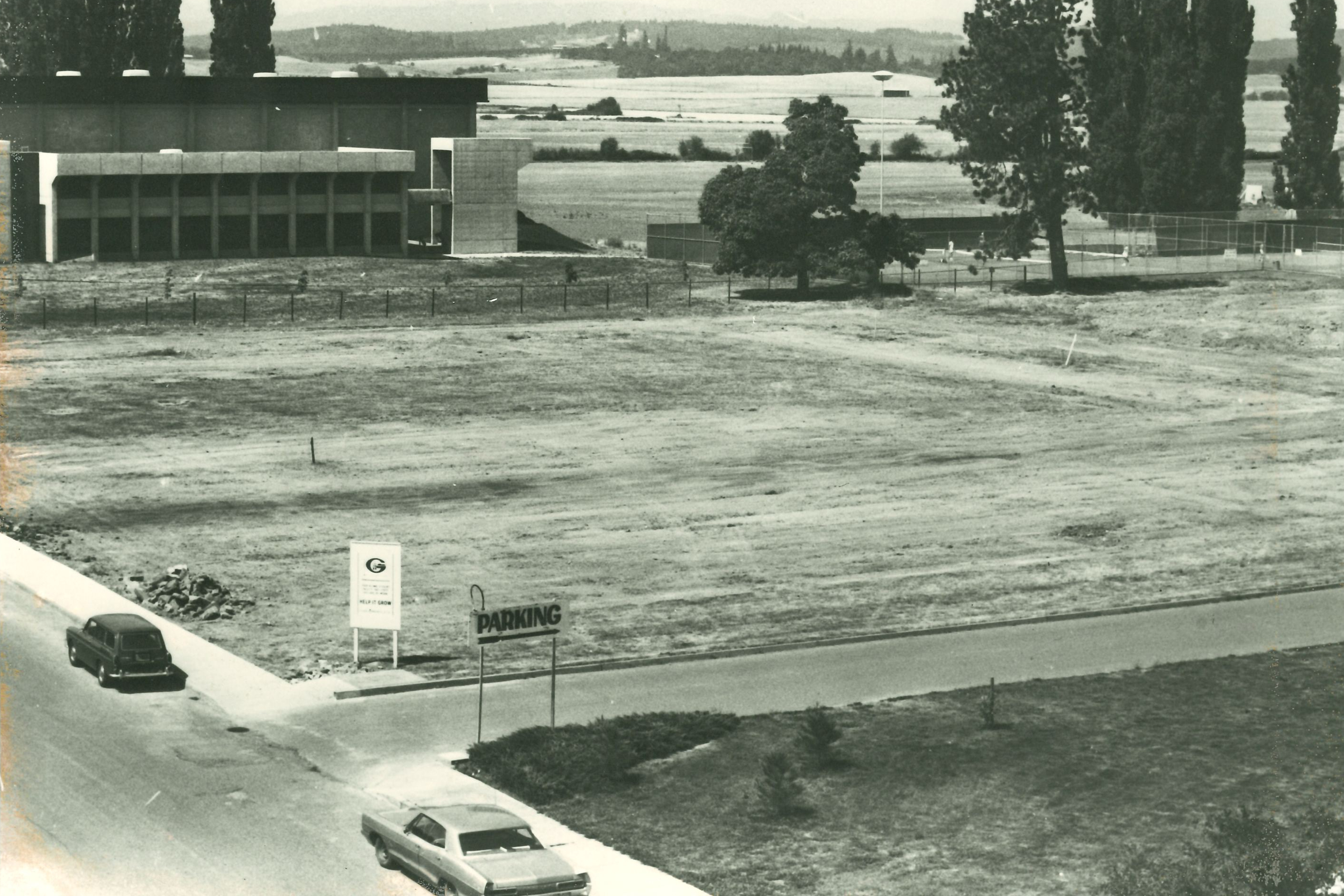
The New Physical Education Building was completed in 1971.