

Mount Hood

Wolves’ track and field get ready for GNAC finals

Hannah Greene  | Sports Editor

This past weekend, Feb. 14-15, the Wolves left homebase to compete at the Boise State Challenge in Boise, Idaho and the Husky Classic in Seattle, Washington. 

The Boise State Challenge showed for a solid competition with first-year Maya Hopwood, who competed on the 60-meter dash — running her second best mark of 7.58 seconds, and got a mark in the 200-meter dash with a time of 25.17, .01 seconds off the school record and now #2 of all time at Western. Another feat from the Boise State Challenge included Bennen Sorah, first-year, who competed in the 800-meter dash, placing 10th and 31st overall with a time of 2:15.00.

At the Husky Classic, Justin Crosswhite, senior, ran a 4:04 in the men’s mile and almost solidified a qualifying position in the Indoor National Field, as well as moved up on the Wolves’ All-Time list to take #2. Kalulusno Ngaida, a junior, had her best triple jump score so far. Jumping a mark of 11.66 which also got her into the finals during this Husky Classic. Another result from the Husky Classic included a junior, Neal Cranston, who ran a time of 1:55.80 in the men’s 800-meter dash.

This next weekend, Feb. 21-22, the Wolves head to Boise Idaho for the GNAC Indoor Championships where they will attempt to break their PR’s, marks and make the podium. Last year saw Gabe Arce-Torres, sophomore , place sixth with a time of 50.19 in the men’s 400-meter dash; Curt Knott, junior, take second place overall in the men’s 800-meter dash with a time of 1:55.06 and Max Carmona, sophomore, with a 1:56.00 — not far from Knott. Fans are able to view results from the GNAC sports website or on the stories of the WOU XCTF on Instagram.


Contact the author at hgreene18@wou.edu

Photos courtesy of Rick Edelman

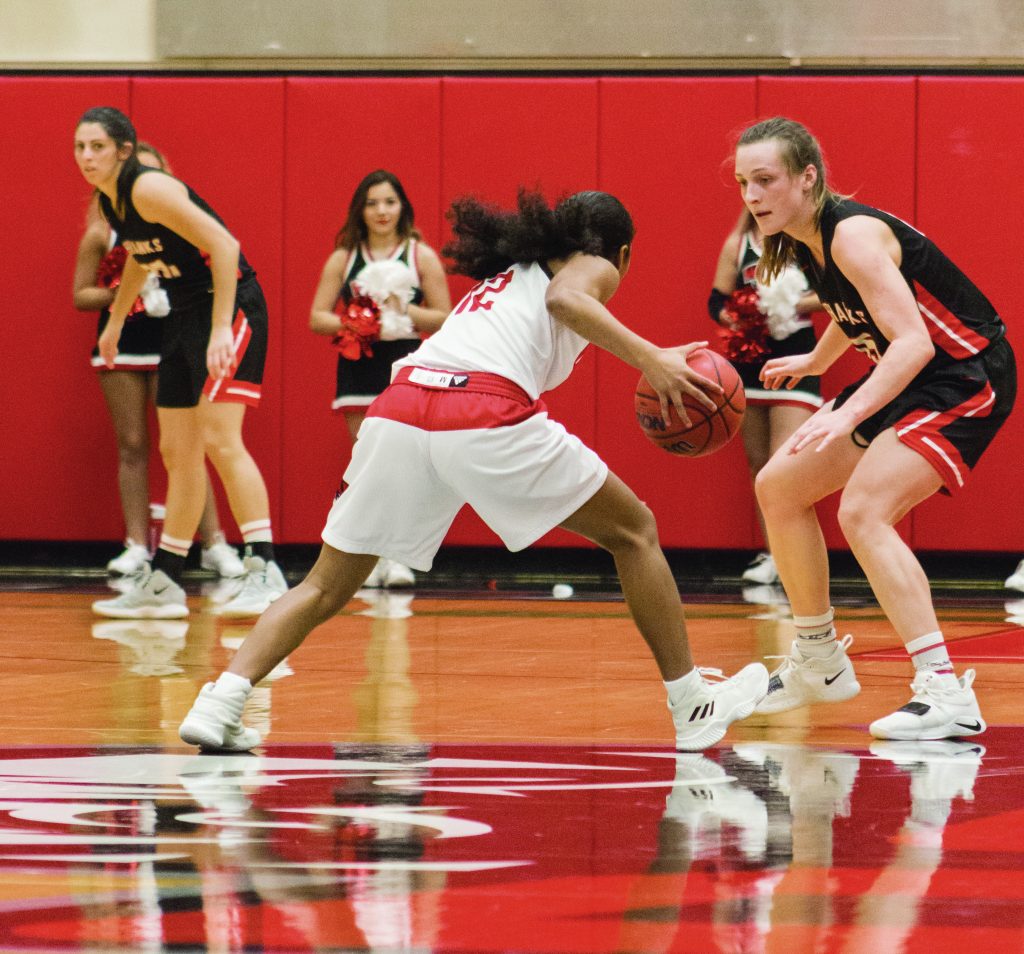
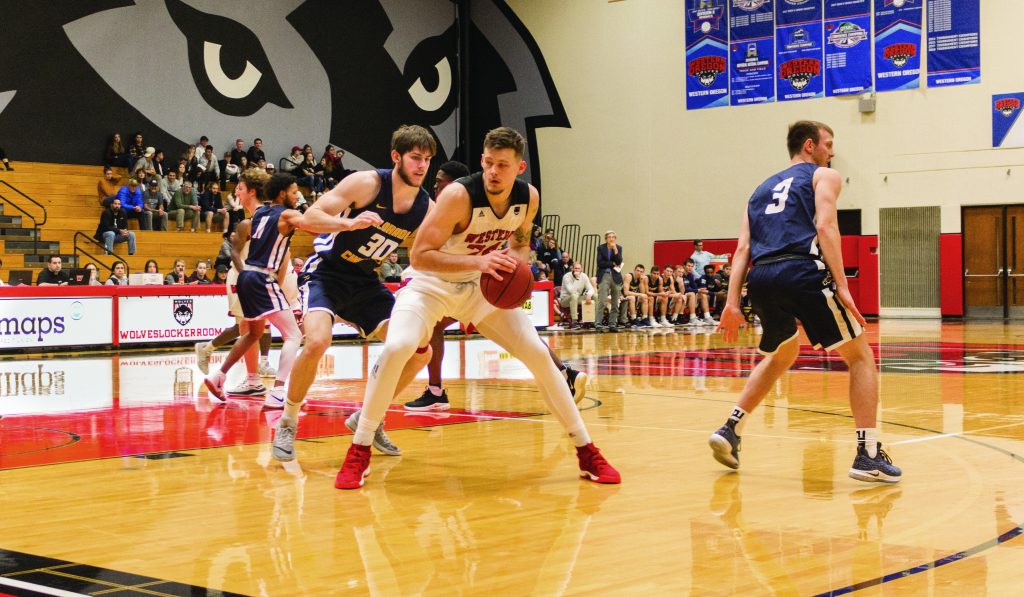
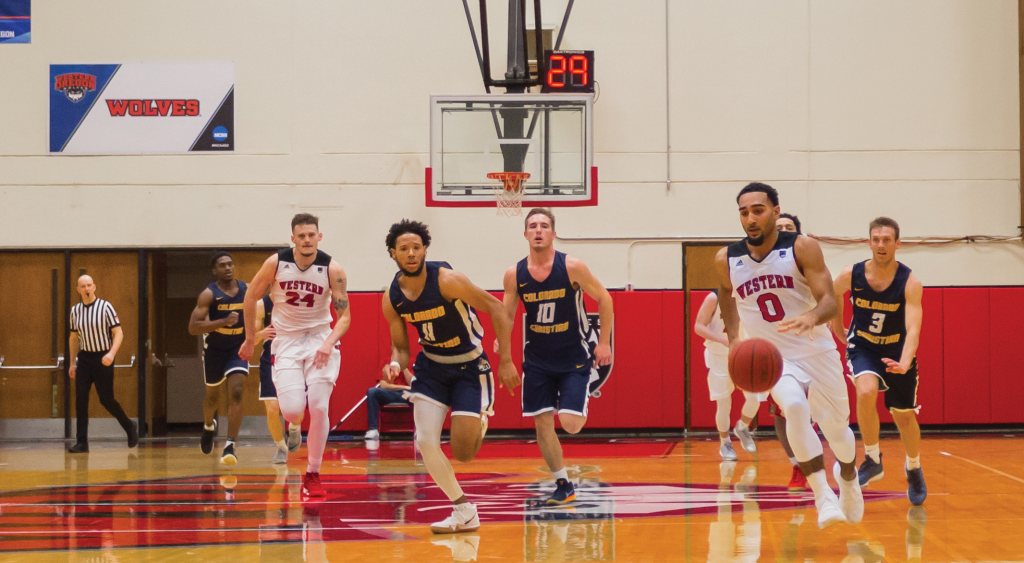
Men’s Basketball win both home games

Hannah Greene  | Sports Editor

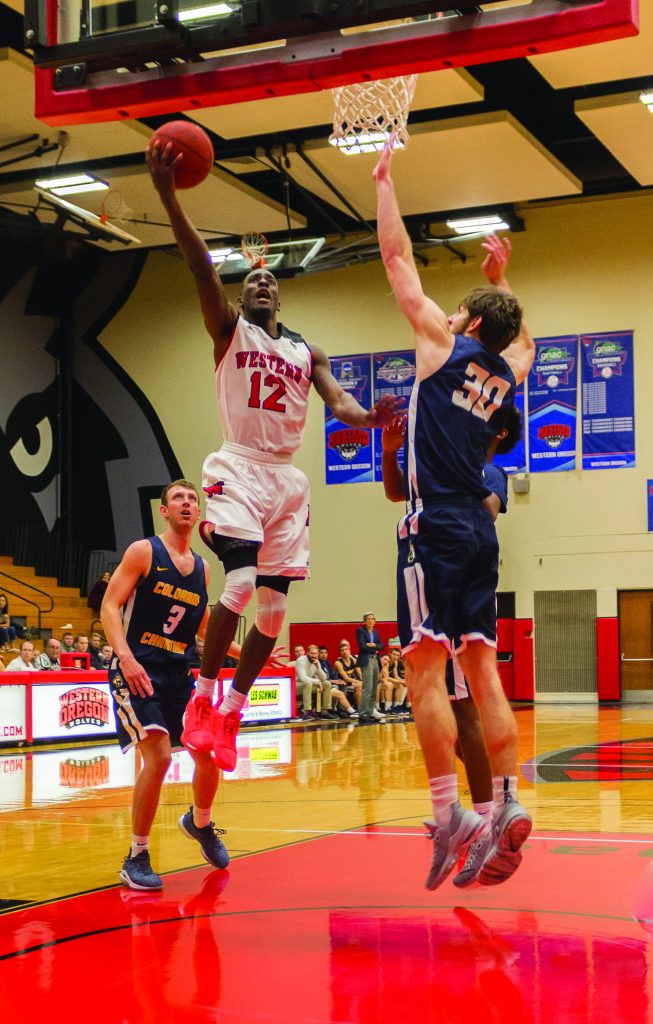
Men’s Basketball brought home some dubs after this last weekend, Feb. 13 and 15, when they played against and beat Western Washington University and Simon Fraser University. 

On Thursday night, the Wolves came out ready for a challenge and the desire to beat the second-place team — the Vikings. Throughout the entirety of the match, the Wolves were able to keep their momentum and their points, never allowing the Vikings to take the lead. While the Wolves’ offense scored, the defense shut the Vikings down, making the team a force to be reckoned with. The fourth quarter buzzer rang off and the Wolves got their first win of the weekend, beating the Vikings 89-72.

During the next game the Wolves came in hot and ready to beat our foreign challenger, Simon Fraser University. The Wolves got an early lead during the second half which propelled their momentum going into the following quarters. Overall, the Wolves shot well and persistently, kept their lead, and never allowed Simon Fraser to come back. The final quarter allowed the Wolves to sail through, making their second win of the weekend a good one — beating Simon Fraser 76-64. 

Up next, Men’s Basketball leaves for Washington to take on the Central Washington Wildcats on Feb. 20.


Contact the author at hgreene18@wou.edu

Men’s Lacrosse lose to Montana Grizzlies

Hannah Greene  | Sports Editor

Winter means Men’s Lacrosse is back and running, ready to get work done. Saturday, Feb. 8, the Wolves hosted the University of Montana Grizzlies, who are nationally ranked in the top-10.

Currently, the Wolves are ranked 25th nationally by all Division II coaches — making for an entertaining game against the Grizzlies. 

Throughout the beginning of the match, the Grizzlies held the majority of the possession and remained ahead of the Wolves. The Grizzlies defense tested the Wolves’ offensive strength and didn’t allow them to gain closer to their score. 

During the second period the Grizzlies stepped ahead, scoring in the first 15 seconds — but the Wolves were able to shove back and bring the score 14-9, Grizzlies ahead, before the period ended.

The Wolves continued to allow multiple shots and offensive attacks by the Grizzlies, but lucked out after the Grizzlies missed multiple chances given to them. 

Towards the end of the game, the Grizzlies held their offensive attack and bombarded the Wolves’ goal, scoring again in the last seven minutes.

Final score, 18-11, left the Wolves with a sour loss and the Grizzlies with a fresh win.

Men’s Lacrosse will have their next home game on March 14, further details will be shared.


Contact the author at hgreene18@wou.edu

Photos by Kay Bruley

Men’s Rugby take another L over the weekend

Hannah Greene  | Sports Editor

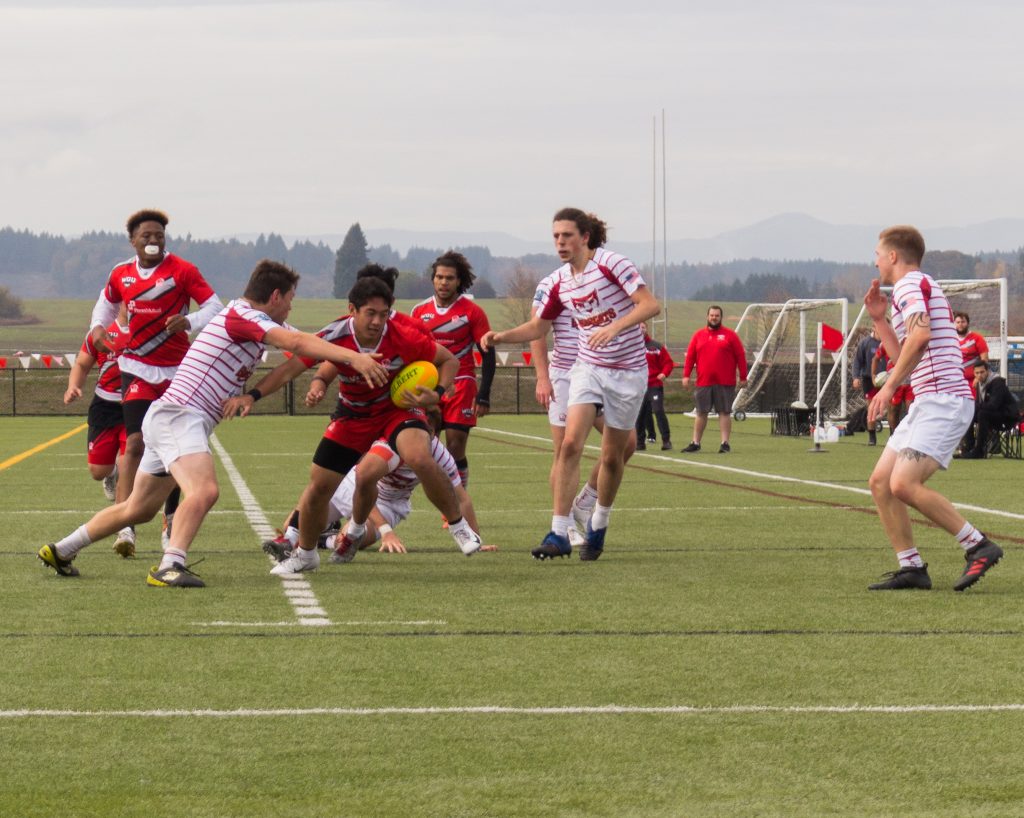
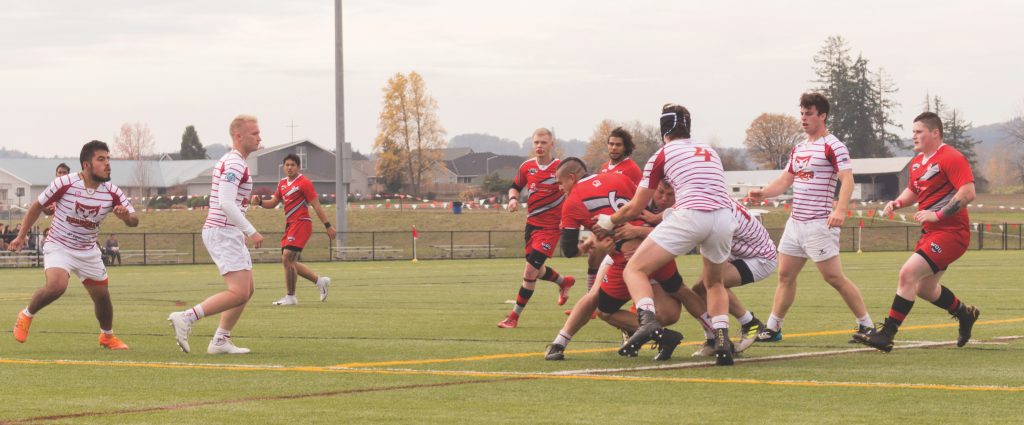
A streak unlike before, Western Men’s Rugby continued the tears as their last home game on Saturday, Feb. 8, brought another loss. 

The Wolves held a home game against Pacific University Boxers, and boxed out the Wolves were. The Wolves’ defense struggled to hold any attack from the Boxers, which allowed for a great deal of scoring by the Boxers. On the other side of the playing field, the Wolves’ offense had no vision and was unable to find any way of scoring — every space was covered by the Boxers defense. Both sides of the ball continued to push, but not hard enough to take hold of the game at any point.

Similar to their last game against Oregon State University on Feb. 1, the Wolves had to borrow more players from the Boxers to be able to continue the game without being down any men.

The Boxers proved to have great ball movement and were able to find another scoring opportunity with only 12 minutes left in the game.

Though there were many great tackles, runs and plays made by the Wolves, winning was out of sight. The final score of the game ended with the Wolves at five points, trailing far behind the Boxers’ 43 points.

This game concluded the Men’s Rugby season of squads of 15 versus 15, and move on to play seven versus seven. Their next home game will not be until April 18, where the Wolves will be holding the League Championships for the seven versus seven teams.


Contact the author at hgreene18@wou.edu

Photos by Kay Bruley

Power couples that win

Hannah Greene  | Sports Editors

Highlighted power couples throughout professional sports, that continue to break barriers and add medals and gold to their closets.


Zac + Julie:

the Ertz Power Squad

NFL Champion for the Eagles + USWNT two-time World Cup Champion.

These two bring elite athlete power couple to an entirely new level.


Megan Rapinoe + Sue Bird:

the Dominators 

One USWNT player, one USAB player, both professionals in Washington, winning medals.


Amanda Nunes + Nina Ansaroff:

the Lionesses that Shred

Two fighters that bring power to the name behind female UFC fighters. 


Contact the author at hgreene18@wou.edu

Wolves’ Softball Hit Home Two Wins

Hannah Greene  | Sports Editor

Last weekend on Saturday, Feb. 8, the Wolves’ softball team held two games against Eastern Oregon University Mountaineers. 

The Wolves were able to hold the Mountees still, and take home a win during both matches. Due to the excellent pitching by sophomore Maddie Mayer and senior Chandler Bishop, the Wolves contained the Mountees and only allowed one run and several hits. 

Wolves showed for an entertaining game, hitting two home runs by two juniors, Tyler Creach and Sydney Bowers. Western was hitting so well that they outhit Eatern almost 7-1; hopefully this preview is a good teller for the upcoming season.

Each inning the Mountees trailed far behind the Wolves, barely able to find a way to score or even get a run in. 

The Wolves took both wins, 9-0 and 5-1. Softball hits the road for their next game on Friday, Feb. 14 to play against Texas A&M – Kingsville. 


Contact the author at hgreene18@wou.edu

Photo by Kay Bruley

Men’s Rugby lose match versus Oregon State University

Hannah Greene  | Sports Editor

This past Saturday, Feb. 1, the Men’s Rugby team held a friendly match against the Oregon State University Beavers — a team they beat during the 2019 season.

The first half, the Wolves were challenged, showing more exhaustion by every passing minute. With only 26 more seconds left, the Beavers persisted on, getting a few more points — Beaver forward juked out multiple Wolves and broke through to finish and score, making the score 21-10 at the start for the second half.

The Wolves showed great power and strength coming onto the field for the final half — dominating on the defensive end and stopping the Beavers attack. However, the Beavers were able to catch the Wolves off guard and score, and made the score 28-10.

As the game continued, more and more Wolves got injured and lost energy. Luckily, the Beavers showed great sportsmanship and sent one of their own to join the Wolves. 

Twenty minutes into the second half, the Wolves finally scored, bringing themselves within six points of the Beavers.

As the clock counted down, it was easy to tell who was going to win this match — the Beavers kept knocking at the Wolves’ door with no fight back from the Wolves.

Beavers were able to walk away with a 47-22 win, a 25-point difference.

The Wolves’ next home game is on Saturday, Feb. 8 versus Pacific University. Go out and support this club team.


Contact the author hgreene18@wou.edu

Photo Courtesy of Emily Prall

Futsal kicks off winter season

Hannah Greene  | Sports Editor

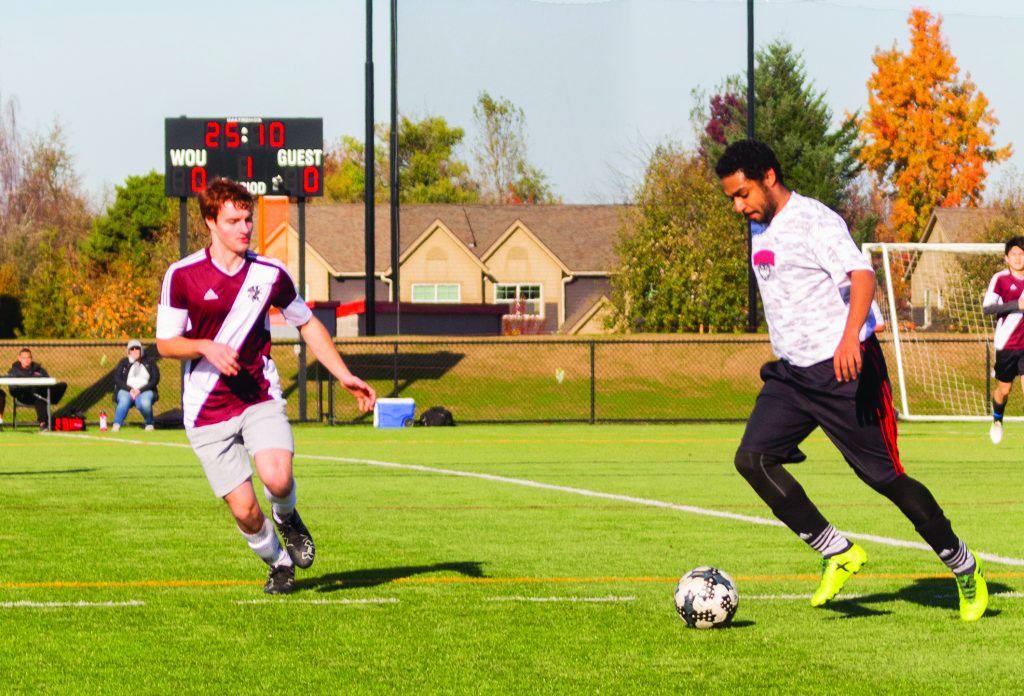
Scoreboard for Futsal Open Sunday League.


Teams Wins Losses Total Standing Points
the Benders 1 3
Black Ninjas 1 3
Sumo 1 3
LFG 1 1 3
Straight Shooters 1 1 3
the Quickies 1 0
UTU Banghz 1 0
And the Funky Bunch 1 0


As of right now, the Benders, Black Ninjas and Sumo take the top three seeds with the highest points. The Benders lead with the most points scored, while the Black Ninjas lead with the least amount of points against. Who’s going to win overall?


Contact the author at hgreene18@wou.edu

Super Bowl LIV makes for a memorable one

Hannah Greene  | Sports Editor

Still a little hurt over the loss of my sweet cheeseheads, I sit down and cheer on the Chiefs. 

Grubbing on Mendi’s Pizza, on Sunday, Feb. 2, in front of a big screen, Super Bowl LIV (54) begins with a heartwarming entry — a young boy carrying a ball from his gridiron all the way to the Dolphins stadium in Miami to pass along the game ball to ref on the actual field. 

Super Bowl LIV marked the NFL’s 100th season, making for a lot of memorable commercials and breaking of the glass ceiling. 

Samantha Gordon, a 15-year-old stud football player, was featured in the 100-Year Game commercial, why you ask? Remember that little girl that was breaking headlines for playing, and beating every defender, in a youth football league? That’s her now, making a change for future generations. Gordon started an “all girls” football league that she hopes will be brought to the high school level — a dream more and more young girls have everyday.

This Super Bowl was also very special, it was the Chiefs second time winning a Super Bowl and their first appearance in 50 years. This game brought the best defense, the 49ers, versus the best offense, the Chiefs, a match made in heaven. That saying, “defense wins championships,” didn’t apply to this win, with Patrick Mahomes setting up teammates throughout the whole game — and becoming the youngest player in NFL history to win a “League MVP” and a Super Bowl Championship, at the age of 24. 

Coach Andy Reid had the most wins (222) by any head coach without a Super Bowl title, until this last Sunday where he ended his Super Bowl drought at the age of 61 — finally capturing that all elusive Lombardi trophy. And shoutout to Shakira and J-Lo for the awesome halftime show, representing the latina community and showcasing the moves and vocals they got.

As most of us may know, the Super Bowl has become one of the most celebrated days of the year, but what most of us may not realize is that sex trafficking is at it highest during this day, according to ESPN and NPR. Florida is ranked third nationally for sex trafficking which caused the Miami-Dade county to make precautions and help to prevent sex trafficking. “It’s a Penalty” is a global campaign using the power of sports to address the issues of human trafficking, where several NFL players have made campaign videos for. Though, during the game there was no recognition towards human sex trafficking, there are many movements and people put on the front lines to help combat this.

The Super Bowl, one day a year that symbolizes our country — and although this is a great day for a lot of people, there are those less fortunate who have to deal with the negative effects of what the sport brings to our country. 


Contact the author at hgreene18@wou.edu

A look at Western’s women’s athletics through the ages

Caity Healy | Managing Editor

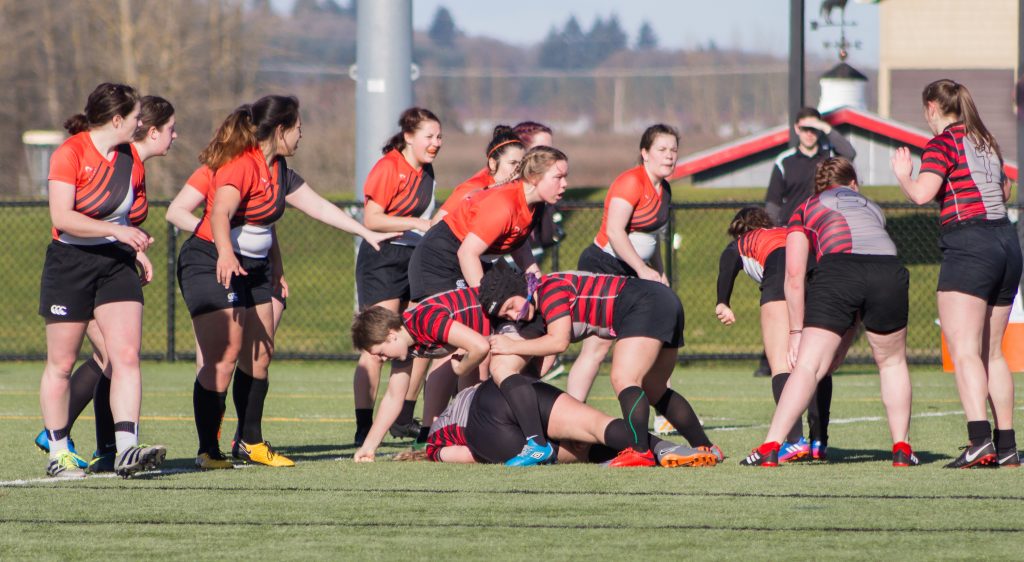
If one were to look at Western’s varsity athletics in 2020, they’d see six sports offered specifically for women. What might not be so easily seen is the history that went into getting to this point. 

While it’s commonplace to now look at schools and see an equal offering of varsity-level athletics for men and women — largely due to Title IX — it wasn’t always this way. While Western Oregon University was going through its many name changes between the 1920s to the 1970s, it was also going through a large change in the way women were provided access to athletics on campus — through the rise and fall of the Women’s Athletic Association.

The first mention of the WAA at Oregon State Normal School came in 1928 through the yearbook, then titled “The Norm.” By this point, some sports existed for women on campus already. In fact, the women’s basketball team dates back to the beginning of the century. But, it was one of the only sports provided on a varsity-level for women. Therefore the WAA was established to, “promote further interest in athletics for women and good sportsmanship.”

With the WAA came more options for women. The athletic offerings varied over the years, but throughout its time on campus, some sports to choose from included baseball, hiking, basketball, soccer, swimming, tennis, volleyball, folk dancing, archery, horseshoes, tumbling, volleyball and more. 

When it first began, any female student was able to participate. But, by 1930, the WAA made some changes to the rules governing the organization: students had to earn 50 points to remain eligible as a member of this association. 

The point system, as explained in the 1930 “The Norm,” rewarded points to women based on which sport they chose to participate in, and based on how frequently they participated. For instance, if one made “class team” for basketball, they’d earn 100 points. If they were “second class” in basketball, they earned 75 points. If one made varsity in tennis, they’d earn 500 points. If they hiked 100 miles on the hiking team, they’d earn 100 points. To remain eligible as a member, women had to earn 50 points; to become eligible for the Women’s Order of the “O” — which was a way to recognize outstanding athletes — they had to earn 250. And finally, if they were to earn 500 points, they would get a sweater.

Mentionings of the WAA changed abruptly in the 1950s, as it turned from Women’s Athletics Association to Women’s Recreation Association. At this point, it seemed they were no longer considered to be school teams, but rather, intramural teams. There also was no longer a point system; according to the 1950 yearbook “The Grove,” “No exceptional skill or talent is required for these activities and all girls are encouraged to participate.” 

From that point on, the mentions of WRA were lessened by the year. While still a part of campus, it moved from being included with athletics to being grouped with clubs and organizations. Through the 1950s and 1960s, women’s varsity athletic teams did exist on campus — the focus, however, tended to lie on men’s athletics.

The last time WRA is explicitly mentioned in the archives is in the year 1970. After that, it became “Women’s Athletics,” and was considered to be on the same level as men’s sports. This, perhaps, coincides with the passing of Title IX in 1972.

No person in the United States shall, on the basis of sex, be excluded from participation in, be denied the benefits of, or be subjected to discrimination under any education program or activity receiving Federal financial assistance,” states Title IX under the U.S. Department of Education. 

While there’s no factual proof that Title IX resulted in the death of WRA, there is certainly a reason to speculate. WAA/WRA existed because women wanted to play sports, but they weren’t given the means to play at the level that their male counterparts were. Through Title IX, there was no need for this organization anymore. Women athletics were legally mandated to be offered at the same level as men’s. 

Though the Women’s Athletic/Recreation Association no longer exists at Western, its legacy lives on through the team sports that the organization once spearheaded on this campus.


Contact the author at chealy16@mail.wou.edu

Photo courtesy of WOU wolves