Mount Hood

WOU’s campus expansion into Salem establishes new degree programs and ease of accessibility

Sage Kiernan-Sherrow | News Editor

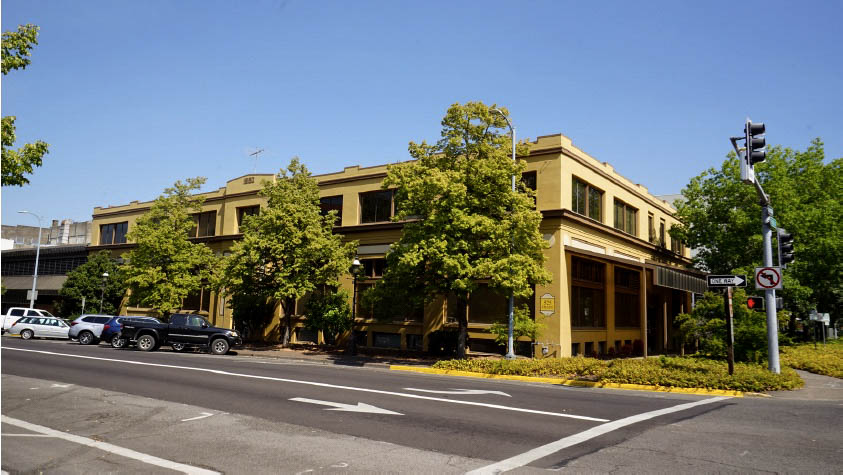
Western Oregon University’s campus has officially expanded into Salem after the WOU Board of Trustees unanimously voted to purchase the historical downtown Vick building on Sept. 11. This $2.735 million decision established Western as the only public university in Oregon with face-to-face instruction in the state capitol and will inaugurate two new degree programs unique to the Salem campus: a M.A in Organizational Leadership and an A.B in Liberal Studies. 

In the FAQ section of the statement issued by President Fuller on Sept. 13, the purpose of Western’s expansion “reflects (Western’s) mission of delivering transformative education and personalized service in our region, including providing convenient and flexible degree programs for working adults where they are.”

WOU:Salem, as the campus is being referred to, is designed to provide accessibility to the numerous amounts of working and commuting students from the Salem area, with many classes strategically being offered during the evening in an attempt to accommodate working students’s busy schedules. 

One such Tuesday evening hybrid class is being taught by Dr. Lars Söderlund, who called it “a thrill and an honor to teach at an institution where it feels that our commuting and non-traditional students can benefit from hybrid-format classes which maximize both time in the classroom and time spent reflecting.” Dr. Söderlund hopes that his Professional Editing class will “be more easily connectable to student’s professional lives.” 

Renovations are still being completed at the Vick building which is set to open in 2020; in the meantime, Western students with Salem-based classes like Dr. Söderlund’s on their fall schedules can expect to continue to receive instruction at the Willamette Education Service District (WESD) Marion Center. Until the Vick building’s official opening, preview photos of the space as well as additional updates can be found on Western’s various social media platforms. 


Contact the author at howlnews@wou.edu

Western welcomes the class of 2023 with annual New Student Week events

Compiled by Sage Kiernan-Sherrow and Caity Healy

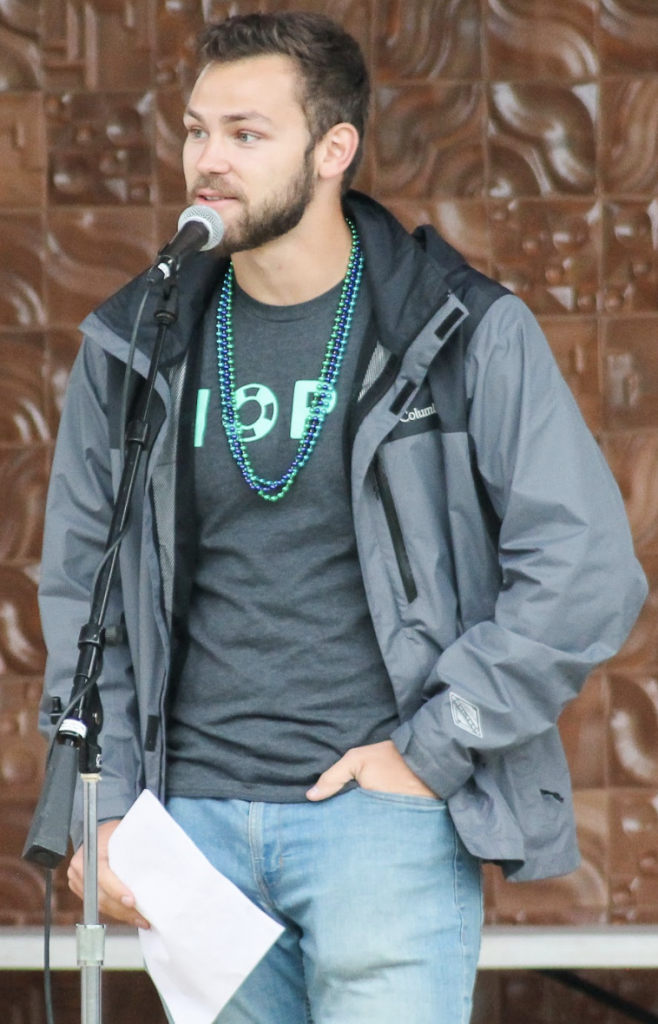
Following move-in day for returning and new students, which occurred on Sunday, Sept. 22, Western began New Student Week, a tradition focused on welcoming students through numerous informational presentations, promotions from student organizations and entertaining events. This week began with this year’s convocation speaker, Monti Washington, inspiring students by detailing how he faced life’s obstacles and ended with new students signing their names in a sidewalk they will likely be strutting along for the next four years.


Welcome to Monmouth & Independence Celebration: On Tuesday, Sept. 24, businesses from all around the Monmouth-Indy area headed to Western to have the opportunity to get to know the new students. With Independence Cinema passing out their old posters, Jack’s Pub grilling up some grub and prizes being won everywhere, no student left empty-handed. 


Student Organizations & Activities Fair: The quickest way to get to know the clubs and organizations on campus, this Wednesday, Sept. 25 event was a hit in The Grove. Students had an opportunity to walk around and see all that Western has to offer outside of classes, while meeting some of the students who potentially have similar interests to them. 

WUC Premiere Night: As the New Student Week website notes, “Werner University Center’s biggest night” occurred on Thursday, Sept. 26. With every room in the building hosting different events, students could go through and get stamps, which they could later trade in for a bingo card to win some prizes. With free photobooths, caricatures, food and merch, students were able to get to know the WUC while having a good time. 

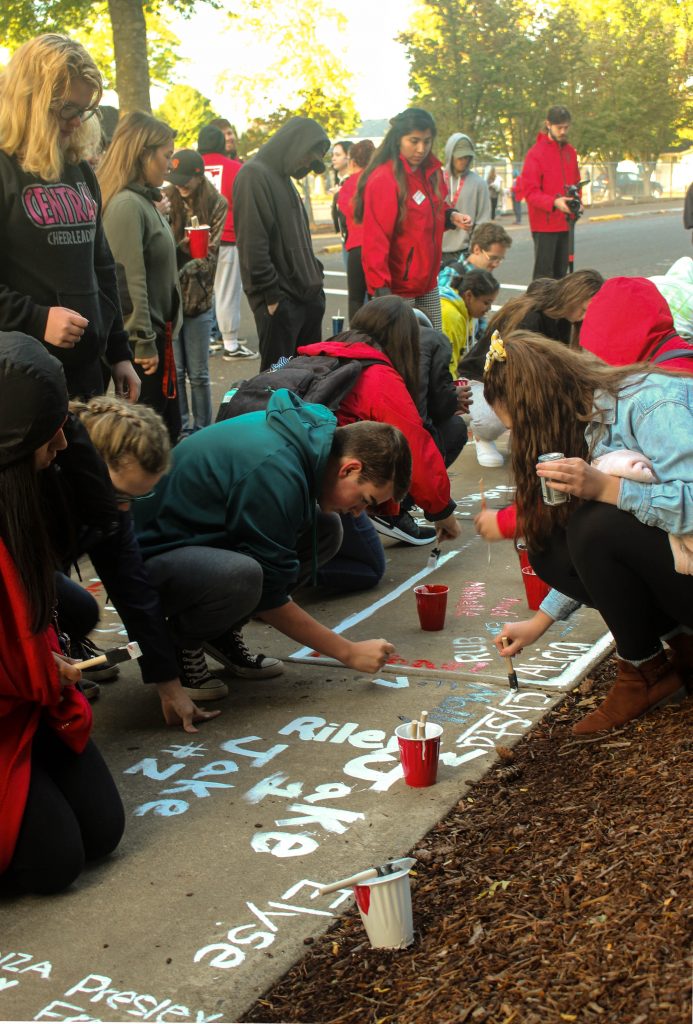
New Student Sunrise Breakfast and the Signing of New Student Week Walk: While the sunrise (and of course, free breakfast) was a new addition as of just last year, it’s already become a favorite for students, as they were able to do it again on Friday, Sept. 27. Afterwards, the sidewalk signing, a tradition that ages back for decades, was an opportunity for these students to literally make their mark on campus. Painting their names in the classic colors of the Wolves, it was a picture-perfect way to celebrate becoming a student at Western.  


Variety Show and Video: Taking to the stage Saturday, Sept. 28, students showcased their various talents in the annual Variety Show. One of Western’s traditional New Student Week events, the Variety Show allows students to display a diverse line up of talents, from dancing to singing a song. At the end of the student performances, PLUS Team showcased a little something of their own. Full of highlights and bloopers from the week, the New Student Week video made its premiere showing before being released to Western’s YouTube channel. 

Contact the authors at howlnews@wou.edu and howlmanagingeditor@wou.edu

Joey Gibson comes to Western’s campus, creates controversy over safety

[fruitful_alert type=”alert-info”]This piece was co-reported on by News Editor Bailey Thompson and Editor-in-Chief Caity Healy..[/fruitful_alert]

Bailey Thompson | News Editor

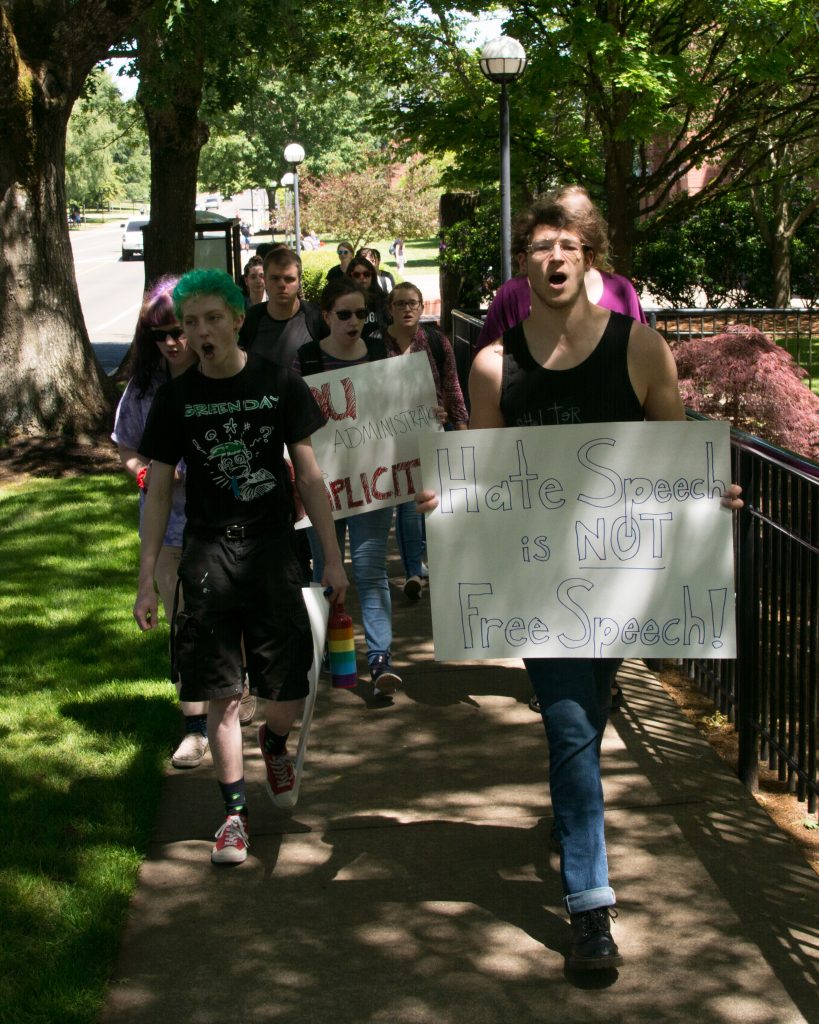
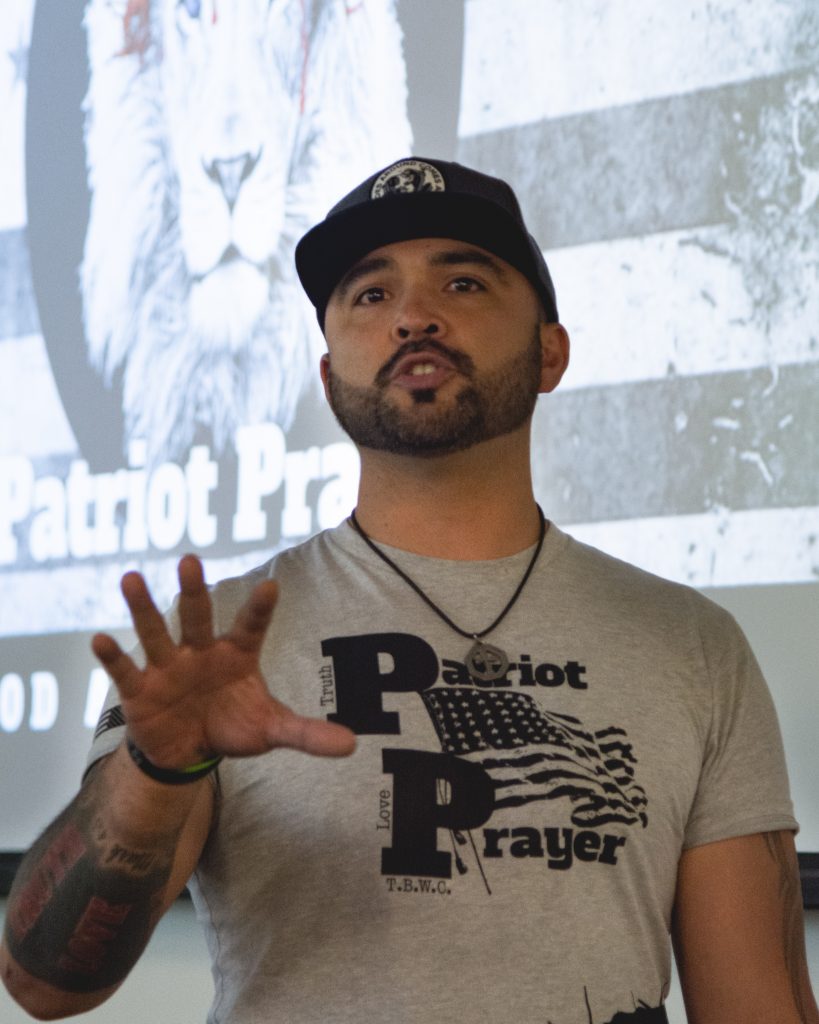
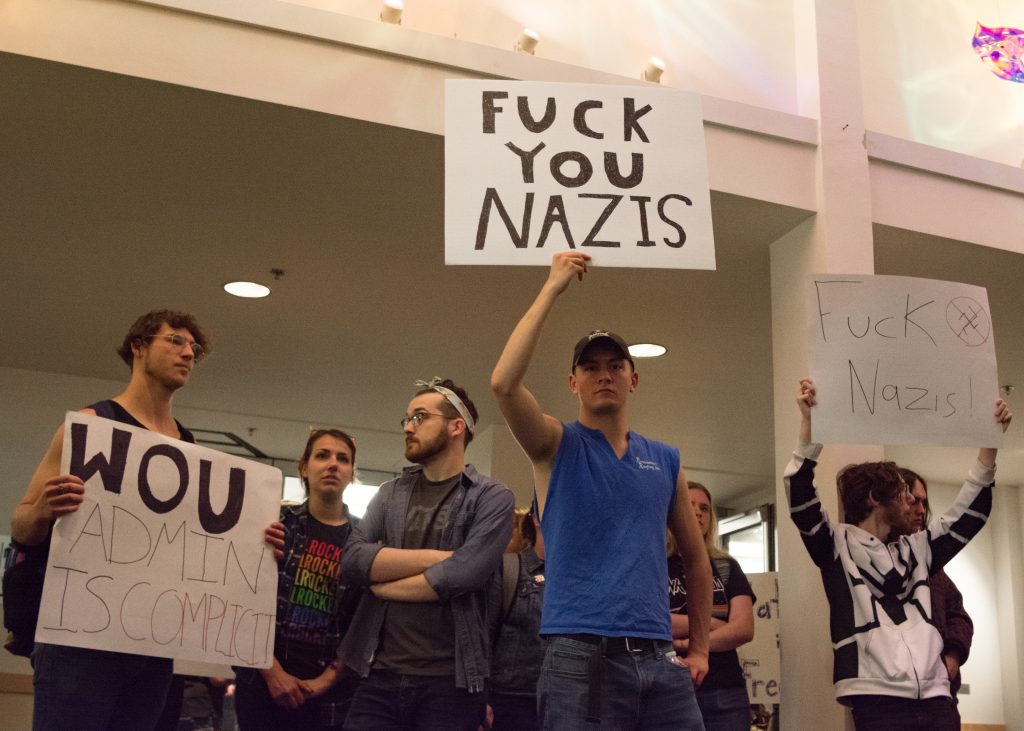
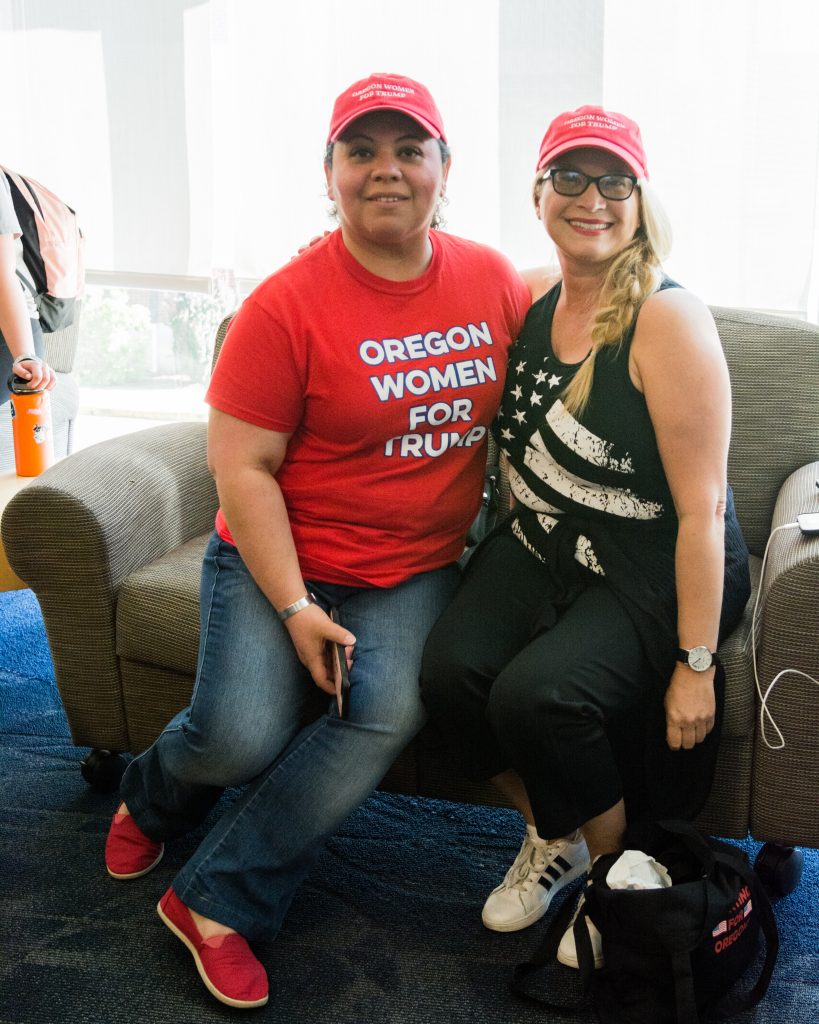
On Tuesday, June 4, the College Republicans hosted conservative activist Joey Gibson in the Willamette Room of the Werner University Center. Although this speech was eventful enough on its own, heated discussion and action surrounding the event happened well before it even took place.

For many students, the first time they were made aware of this event was through the sharing of a tweet and email template posted by Mykenzie Gabriel, a junior education major. The email template that Gabriel shared encouraged Western students to make their voices heard if they disagreed with the fact that Gibson was being brought to Western’s campus. When asked what inspired this action, Gabriel had a clear response.

“When something’s going on that has potential to hurt a chunk of the population, if you know about it then you have a responsibility to speak out against it and show the people who could potentially be impacted that they’re not alone in this,” said Gabriel.

With this post, along with others that were similar, being shared rapidly by Western students and other members of the community, a campus-wide controversy arose — should Gibson be allowed to speak, or should Western’s administration disinvite him due to fear of violence breaking out on campus?

When asked about the motivation to bring Gibson to campus, Dakota Perkins, the president of the College Republicans Club and a sophomore international business major, shared her take on the events leading up to Gibson being invited to speak.

“We had the exec members … do their own separate research and come up with their own conclusion. And a lot of social media does have those neo-Nazi and white supremacist tag on his name, but if you really look at it, those people are actually protesting his events,” said Perkins. “Some of (the sources) do say that they are a part of him, but that just depends on what media outlet you look at, honestly. But everyone did their own research, and we all agreed yes.”

Perkins also shared a bit about the topic Gibson was scheduled to speak about.

“He is speaking on the issue of first amendment, which you know is free speech, and how hard it is. And the pushback we’re receiving from ASWOU and the students just further proves our point,” said Perkins. “I know that they’re saying he’s a bigot or that he’s made racist comments, but there isn’t any proof that he actually has in any audio or any writing.”

In response to the concern that some people had for safety, Perkins stated that Campus Public Safety would be present and that the Monmouth Police Department was aware of the event happening on campus, just in case.

“I know that is a concern. I’ve seen that … If they’re so concerned about their safety that they don’t want to go or don’t feel safe to go, then don’t go. There are other events,” said Perkins. “The way I see it is, would you go down a dark, sketchy alley if you knew something bad was going to happen? Probably not. So, don’t go down the alley. And, if you think something bad is going to happen at the event, then don’t go to the event.”

When Perkins was subsequently asked if she expected anything bad to happen, she responded, “Possibly. Who knows? The way I see it is don’t cause an issue until there is one. So, going into the event worrying about not-so-peaceful protests or an issue like that is unnecessary because we have it figured out.”

Another individual that affirmed Gibson’s right to be on Western’s campus was President Rex Fuller, who released an initial statement to all Western students on May 30 which discussed the need to allow Gibson on campus because of laws regarding free speech. On June 3, President Fuller expanded upon his initial statement by addressing the process that the College Republicans had to go through to approve the event and the safety precautions that were being taken in light of student concerns.

“The campus is running its normal protocol for protection every day. And I think the student body has reached out and asked students to consider attending alternative events,” said President Fuller. “As my letter makes clear … College Republicans invited the speaker, and any student club has the ability to host events so long as the university can assess the overall caliber of those events with regards to use of space and facilities.”

President Fuller also wanted to clarify that the students who had reached out were being heard.

“Many people from campus met and talked regularly about today’s event. We do not take your concerns lightly and are doing our best to manage the situation for all,” said Fuller. “Please note, legally we must reserve space for clubs that request it. Providing a space for free speech does not imply endorsement of that speech.”

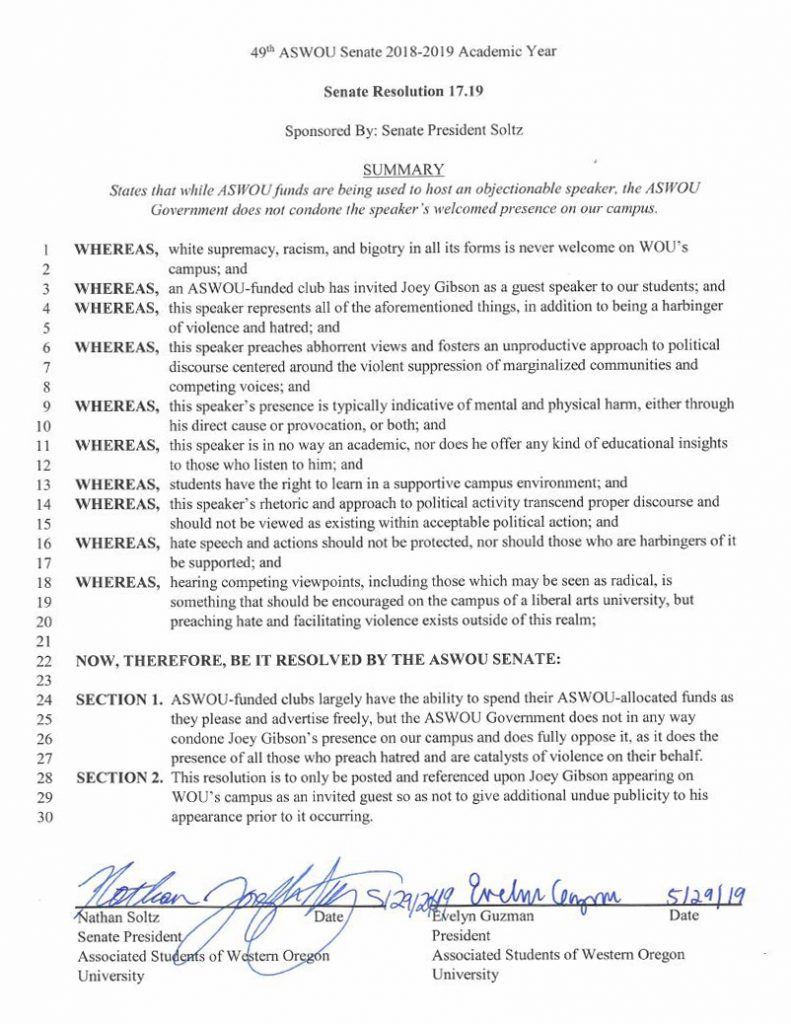
Many students were not content with Fuller’s words, however. One such student was Nathan Soltz, the ASWOU Senate President. After describing how other members of ASWOU had met with President Fuller without changing his mind about the event, Soltz stated his disappointment in President Fuller at not being willing to take certain safety precautions.

“(President Fuller) outright refused to record the event to hold both Joey Gibson and attendees accountable for anything that might happen. Because the Administration refused to do anything to keep our students safe, or even deplore bigotry and violent actions, the branch heads decided that we needed to send out the statement encouraging people to stay away from the WUC,” said Soltz.

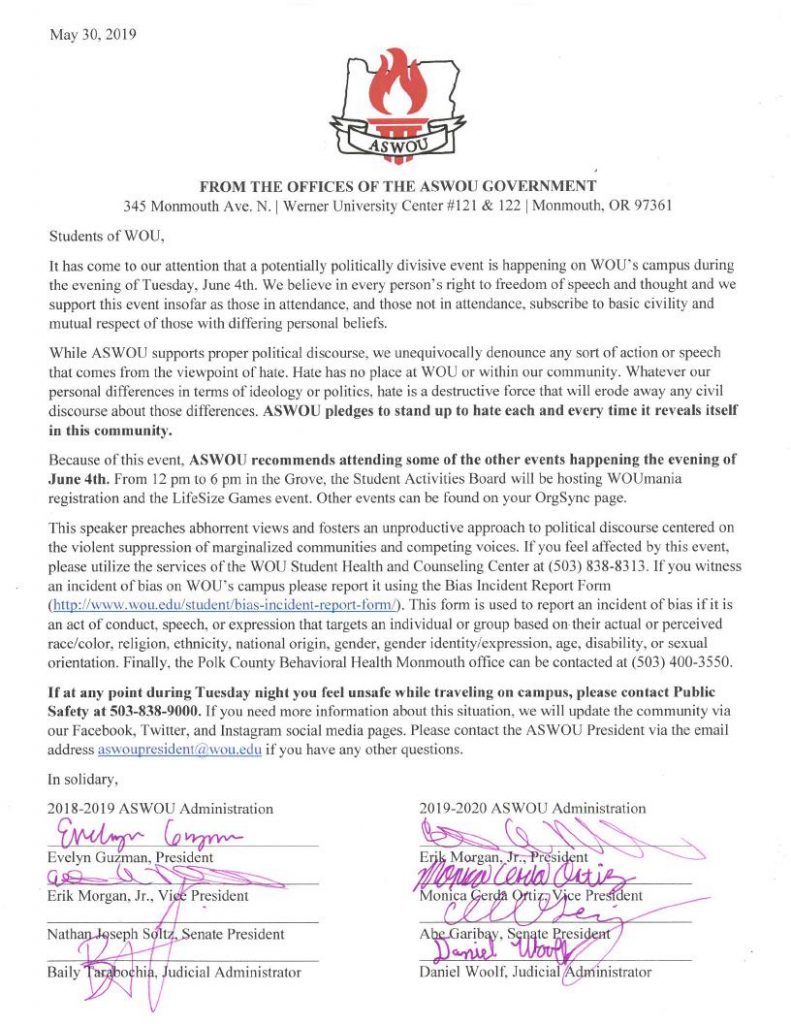
ASWOU sent two all-student emails to the community — on May 31 and June 3 — both of which denounced the presence of Joey Gibson at Western.

“This speaker preaches abhorrent views and fosters an unproductive approach to political discourse centered on the violent suppression of marginalized communities and competing voices,” read their letter sent out in the May 31 ASWOU email.

In response to this, Gibson recorded himself leaving a message for Soltz on his ASWOU answering machine, which he then posted on YouTube.

“I think you need to consider the consequences of lying about a public figure,” said Gibson over the phone in the May 31 YouTube video. “You have to understand that, not only is it morally wrong, legally it’s putting yourself in a bad position … You’re one of those white people running around and calling minorities racist, aren’t you?” In reality, however, Soltz is Hispanic, Asian-American and Jewish.

Soltz, in return, shared what it was like to have received this call.

“I certainly wasn’t expecting to get a call from Joey Gibson, but in hindsight, it shouldn’t have surprised me since he has a history of publicity stunts like this and publicly threatening people who call him out on his actions,” said Soltz. “While Joey Gibson is an awful person, I’m not scared of him.”

Soltz added to this by saying that the thing which was most upsetting to him was the seemingly apathetic response of the administration to the safety of the students.

“It was just more superficial platitudes designed to evade the issue while making it seem like the Administration actually cared … The Administration and the student government should be able to work together on things, most basic among these is keeping students safe and yet, time and time again, the Administration refuses to even do this, so ASWOU is put in a position of having to pick up the slack,” said Soltz. “While I am extremely glad that there were no physical altercations, the fact that this wasn’t just a possibility, but a likelihood and the Administration still did nothing is absolutely reprehensible.”

Soltz shared that, even though the event was allowed to be held in this instance, he has hopes of change being made in the future to ensure student safety.

“While ASWOU has no interest in censoring people with potentially radical views one way or another and will take strong stances on competing with people who preach views we disagree with, the new ASWOU Government will look into amending our Statutes for Chartered Organizations to ensure that clubs do not use student fees and resources to host guests who pose a threat to our students,” said Soltz.

Leading up to the event, students had a number of different ways that they dealt with their stress and frustration: some went to different events on campus, and others protested.

“We’re hosting a Stress Relief Night. There’s going to be coloring, board games, we’ll have a movie playing, music, things like that … It’s now going to be a joint event with the Writing Center because they have a very large space,” said Susannah Doepkin, Stonewall Center Coordinator and one of the Stress Relief Night’s organizers. “We’re really trying to emphasize positivity and a sense of community.”

Another thing that a number of students did on the day of the event was protest outside of the Administration Building and, later, the Willamette Room. Tyler Martin, a sophomore theatre major, shared what inspired him to organize this protest.

“The College Republicans are bringing the leader of a hate group, they’re paying him to come speak at a club-sponsored event on campus, and … someone approved that,” said Martin. “And that is completely unacceptable. It’s totally unacceptable to have a violent activist from any political perspective come and speak in the middle of a college campus because that is an automatic safety concern for students.”

Martin also shared the goals that the protesters had.

“Our three goals are to let admin and the College Republicans know that this is not acceptable — this is not an acceptable use of our tuition money. We want to let the College Republicans know that they are on thin ice, and we want to let the students know that the College Republicans are associating themselves with a known hate group,” said Martin.

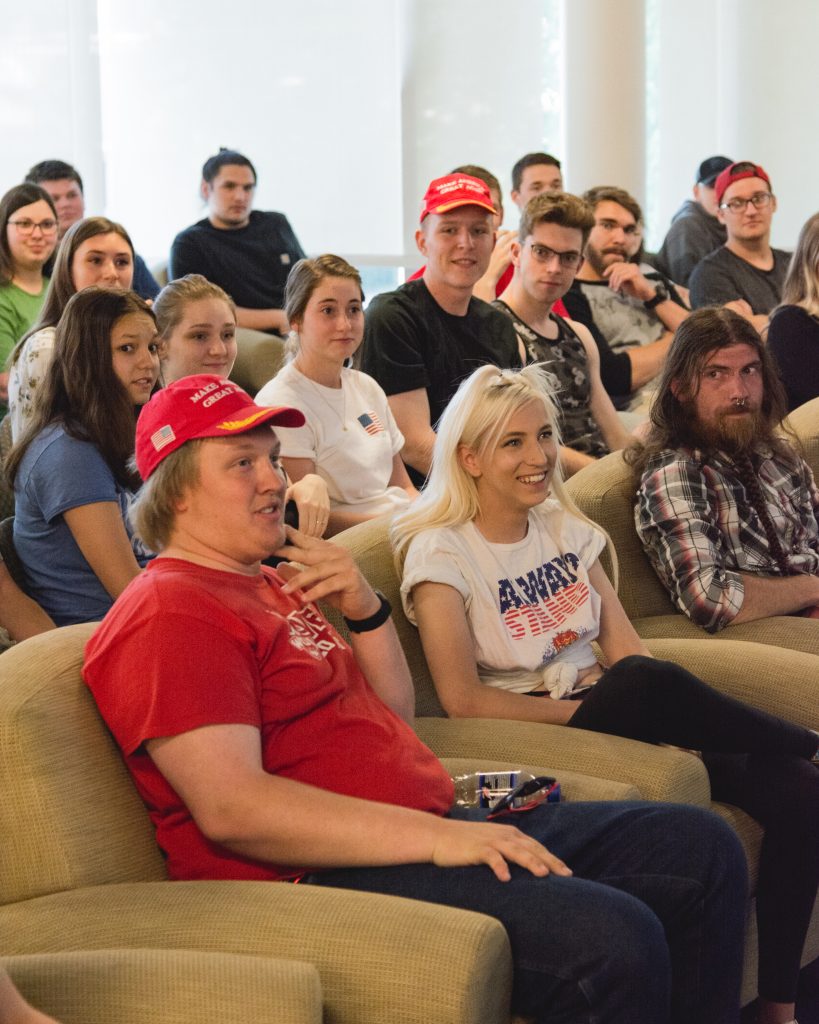
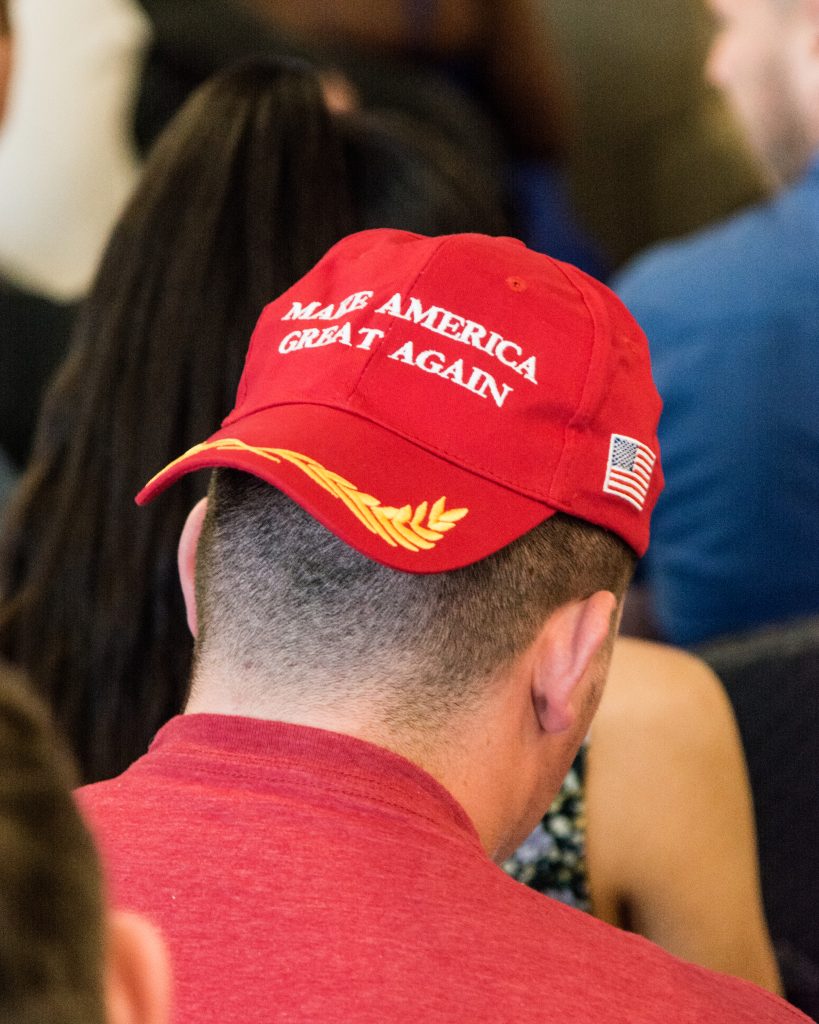
When it came time for Gibson himself to speak, he opened his talk by asking questions of the audience — a packed room with some people there to support, some to protest and others just to watch. Meanwhile, there were also people directly outside the room, protesting or waiting for there to be enough room to come in.

“Is there anybody in this room that’s racist? Don’t be shy. Promise?” said Gibson. When nobody raised their hands, Gibson’s question changed to “Is there anybody in this room that’s been called racist before?” This time, a number of hands went up from the crowd.

“My entire life, I’ve never had a racist bone in my body … I’ve actually been a victim of racism three different times,” said Gibson. He then described a situation where someone beat him up because they mistook him for being black and he did not correct them.

With this established as a reason why he did not believe himself to be racist, Gibson launched into one of his major points: the government is corrupt and cannot be trusted.

“Yes, racism is bad. But it’s being used as a tool to silence you. How many people told you not to come here today and to listen to what I had to say because I’m racist? It should be all of you because they sent an email out to every single one of you,” said Gibson.

Gibson also described the corruption he perceives in the United States government.

“Most of the establishment, 99.9% of them, are corrupt in D.C. They don’t care about you guys,” said Gibson. “They act like they fight on camera, but behind the scenes they go have beers and they laugh about how they’re screwing over the American people.”

Addressing the connections that a number of people make between him and neo-Nazis, Gibson stated that his “freedom first” ideology is what disproves this notion.

“Everything isn’t racist, I promise,” said Gibson. “I’m so much not a Nazi, and I’m so much not a fascist. I’ll tell you why: because I believe in freedom. Did Hitler stand up for free speech ever?”

In reference to an audience question about the type of following that Gibson has, he conceded one point while taking a stand on another.

“What we do have, it’s not a racist following. There’s people who want blood, and they started coming to the rallies specifically because they wanted blood, and that is true. That is very true… I don’t have a bunch of white supremacists because look at what I preach. Look at the color of my skin. The truth is they say that Proud Boys are white supremacists, but half of them are people of color,” said Gibson.

When another audience member asked him his opinion about college students, he declared that many of the issues he saw with the younger generation were the result of too many liberal professors.

“College students are becoming soft, they’re becoming weak, they’re becoming afraid of hearing different opinions — they only hear one side of it — so yeah, I think it’s becoming hard for students to think freely,” said Gibson.

Gibson also addressed a variety of other topics, ranging from his opinion on President Trump to gun control and religion. He concluded his talk with a half an hour of question and answer time with the audience.

To view the initial statement that President Rex Fuller released, as well as the statements that ASWOU released, visit this link.


Contact the author at howlnews@wou.edu

Photos by Paul F. Davis

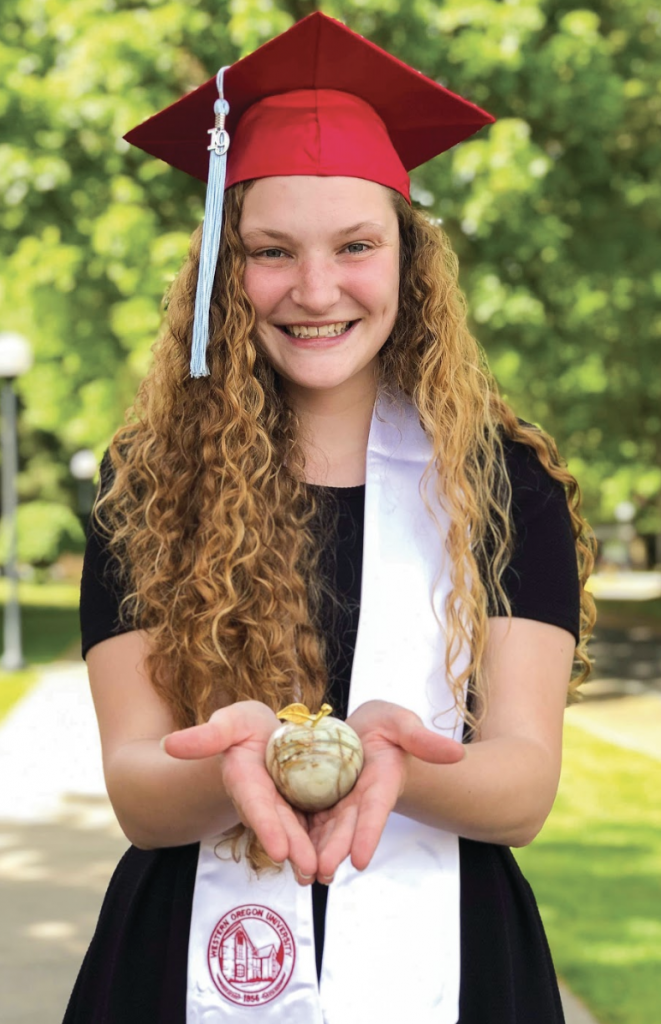
BillyAnn Stemple: Outstanding Graduate 2019

Bailey Thompson | News Editor

Can you tell me a little bit about yourself?

I grew up in Lincoln City, which is on the coast not too far from here. I’ve always known that I wanted to be a teacher, so Western was an easy choice for me because of the ED program. I am going to be a middle school science teacher … I’m super passionate about teaching our adolescents — I think it’s an awesome age. They’re just goofy, and they need all the love in the world. So, I’m excited to just give that to them. And science is just awesome because of the wonder and the ‘Ah-ha’ moments that it gives those kids.

What do you like to do in your free time?

I love visiting my family and my boyfriend … In the summertime and the springtime, I love to barbeque. That’s one of my favorite things to do. Sometimes I watch Netflix.

How do you feel about having been chosen for the Delmer Dewey/Julia McCulloch Smith Award?

Shocked, honored, humbled… I don’t know. I really didn’t expect to win. I knew I was nominated, and I wrote my cover letter and resume just being like ‘What an honor it is to be nominated. I’m so happy for whoever wins.’ But I totally wasn’t thinking it would be me at all. And then, it was. … I feel like I’ve done things that are just enjoyable and fun for me, so it was weird to be recognized for things that just seem like part of my existence and what I would no matter what.

What are some of the ways that you have been involved here at Western?

I started off in hall government as Activities Director … Then I was on the Residence Hall Association for half of my freshman year and all of my sophomore year as a programming coordinator. And then kind of at the same time that I started that position, I got a volunteer position at HART, which stands for Horses Adaptive Riding and Therapy. So, we do work with toddlers all the way through older adults who are experiencing physical or cognitive disabilities, mental health diagnoses, trauma — a variety of reasons why they might come in and ride the horses … And meanwhile, my junior year I got a position in University Housing as the Residential Programming Program Assistant, and that involved planning more social events and fun things for students to do over the weekends. I’ve been an ambassador … I was part of the Faculty Senate Honors Committee… and recently I’ve gotten to be a part of revising the Honors curriculum, which has been a lot of work but also a lot of fun.

Can you tell me a bit about what your experience has been like at Western in general?

My experience at Western has been great. I think they do a really good job of pushing you to try new things that are outside of your comfort zone and opening your mind to the world. I grew up in a pretty small town, so I didn’t have a lot of experiences with the things that I think Western is really good at exposing us to, and so my world just grew because of Western.

What is the thing that you are most proud of during your time at Western?

I think I’m most proud of the relationships I’ve made and the people I’ve surrounded myself with. I feel like after I leave here, I’m just going to have a whole slew of people who are supporting me and cheering for me, and that feels really good. I’ve made connections that drive me to be a more positive person — a person who wants to make positive change in the world — and I definitely think I’m influenced by those people every day.

If you could go back and do one thing differently, what would it be?

There’s lots of things … but I guess I might focus a little harder on classes. I’ve done really well academically, and my grades reflect that, but I might just tell myself to find a little more purpose in the things I’m learning and just hold on to it a little bit more. Now that I’m in the ED program, I’m realizing how applicable a lot of the stuff that they teach us is… and I wish I would have just taken some time to appreciate and absorb that information a little bit more.

What advice do you have for underclassmen at Western?

I would say that you should say yes when the opportunities come around — when someone asks you ‘do you want come to this event on campus?’ or ‘do you want to join this intramural team?’ or ‘do you want to go grab pizza at Yeasty’s?’ — just say yes because those opportunities sometimes lead to really great things and really great relationships. And, had I not said yes to a couple of things, I wouldn’t be here … That’s super cliché, but I think it’s what’s gotten me here.

What are you going to miss most about your time here?

I don’t know. Everything. I guess I’m just going to miss being around all the like-minded, positive people who are here, encouraging everyone to just be themselves and try new things. The world isn’t always like that… but that’s the kind of influence I hope to have on my students in the future. But I’ll definitely miss that culture of acceptance here at Western.

What are your plans for after graduation?

I recently accepted a position at Estacada Middle School teaching science — probably 6th and 7th grade. I’m headed to live in Lake Oswego with my boyfriend, and I’ll be commuting to Estacada for work … it’s about 30 minutes east of Lake Oswego.


Contact the author at howlnews@wou.edu

Photo courtesy of BillyAnn Stemple

Carlos Chairez: Delmer Dewey/Julia McCulloch Smith Award winner 2019

Bailey Thompson | News Editor

Can you tell me a little bit about yourself?

I’m a first-generation student from Hood River, Oregon. I have three older siblings, and I’m the first in my family to graduate … My parents migrated from Culiacán and Jalisco, Mexico. And growing up with Mexican and American culture is like two different worlds colliding all the time … I’m a business major, too, graduating with a concentration of management … and I’ve been working here as a Multicultural Representative Coordinator here since my freshman year.

How do you feel about having been chosen for the Delmer Dewey/Julia McCulloch Smith Award?

Honestly just surprised … I honestly never saw myself as a distinguished leader like that. I always saw myself as someone who wanted to see others go beyond what I feel like I could ever reach. I’ve always had self-esteem issues, and if I know if I can’t do it, I hope others can do it … So even being nominated, I was just surprised … It’s just an honor for me, coming from where I come from, because not many Latinos have gotten this award. I see all these Honors students constantly getting this award … and I started getting the imposter syndrome a little bit. I thought other people deserve it more than I do … but getting this and having it is just amazing. And I hope that it inspires other people that, regardless of where you come from, you can get this award if you put the time and dedication in.

Can you tell me a bit about what your experience has been like at Western in general?

I’ve transformed in so many ways. Looking back, it’s like “I don’t know that person” … I went through a big self-identity crisis and had fallen into depression a little bit, suicidal tendencies and stuff like that, because in my culture — having also come out as LGBTQ and bisexual — where I came from, it was hard to grasp at. I was raised in a Catholic environment … so the topic was never brought up … And, coming here, it seemed kind of taboo to me. Also, when I go back home, hearing constantly in the Latino culture ‘gay’ and ‘fag’ is just in their vocabulary all the time in a derogatory way … So, I would just go to class and fly by them and put on my headphones. Then I would just go home and sleep or watch TV, and that’s it.  And that was freshman year for me … But having this job gave me purpose in a way. And I blossomed up when I started connecting with other people and finding my place here … So, I’m so grateful that Western was so inclusive and so welcoming like that.

What are some of the ways that you have been involved here at Western?

I got the Diversity Commitment Scholarship … Then I became an MCR coordinator, and that’s where my whole leadership journey started. Then I got into PLUS+ Team … I was an interim ambassador, so I helped during the summer doing tours when no one was around. And I was also a part of the Cesar E. Chavez Leadership Conference, so I help with that annually … I was in the Tuition and Fees Advisory Committee this year … and that was really cool because my major is business, but I haven’t gotten that much experience with business, so this was cool, and I loved it … I was in the Multicultural Student Union, and I was on the Student Activities Board for a little while. And my first club that I joined here was the Running Club … I was nominated for Wolf Royalty this year and won that, too.

What is the thing that you are most proud of during your time at Western?

Finding myself — just having the courage to be like, “Hey, I’m bisexual. And I’m proud of it.” Even just saying that, and how easy it is, is an accomplishment for me. Before, I couldn’t even think about it. So, looking back on what I went through, that alone is an accomplishment … I can represent people more, and I can give a voice to something that some people don’t ever think about. So, just empowering students in general to feel comfortable and proud of who they are.

If you could go back and do one thing differently, what would it be?

I should’ve talked to someone sooner … I always felt alone, and I wish that I had reached out. I should’ve gone to the Student Health and Counseling Center or talked to my Peer Mentor. So, that’s my biggest regret is just isolating myself.

What advice do you have for underclassmen at Western?

During New Student Week, a lot of the speakers say to get comfortable with being uncomfortable, and that’s definitely the best advice that I could give … This is where you make mistakes and improve on your deficiencies and weaknesses. Do stuff that you’ve never done before and join stuff that you’ve always wanted to join. And if you don’t like it — okay, let’s move on. Let’s find something that you want to do. Get acclimated and integrated with the university. There are so many opportunities here, and all the staff and administrators want to see you succeed. I think a lot of first-years are just scared to fail, and honestly college is the best time to fail, learn from it, reflect and then try it again.

What are you going to miss most about your time here?

I’m going to miss all of the administrators, staff and faculty here … I know Western isn’t the most extravagant … but the people here make it. And that’s who I’m going to miss the most. I’m going to miss the people who’ve helped me find myself and who’ve empowered me, and … all of my friends, too.

What are your plans for after graduation?

After graduation I’m moving to Beaverton — that’s where my brother is. I went from Hood River, which is a small town, to Monmouth, which is a smaller town, and I want to try the city a little bit. I was very caught up in (deciding) whether to take a gap year or going to get my MBA … and right now I’m being really picky about where I put my time into. So, after this, I’ll be moving, finding a job, figuring out what I want to do. And, after a year, I’m going to get my MBA.

Contact the author at howlnews@wou.edu

Previewing Black and Lavender Graduation

Bailey Thompson | News Editor

Before the graduates of 2019 prepare to walk at Commencement on June 15, some of these students will also get the chance to walk on a smaller stage with their more intimate communities. On June 13, the 9th Annual Lavender Graduation will celebrate the journey of LGBTQ+ graduates at Western. Then, on June 14, the 6th Annual Black Graduation will honor Black and African-American graduates who are preparing to leave Western.

Hosted by Student Engagement in the Pacific Room of the Werner University Center, Lavender Graduation is an event that LGBTQ+ student register for in advance, and they can invite their close friends to come and support them.

“Lavender is important to LGBT history,” explains Western’s Lavender Graduation webpage. “It is a combination of the pink triangle that gay men were forced to wear in concentration camps and the black triangle designating lesbians as political prisoners in Nazi Germany.  The LGBT civil rights movement took these symbols of hatred and combined them to make symbols and color of pride and community.”

At this event, students will also receive rainbow graduation cords and tassel that they can wear to Commencement.

Then, the following day, Black Student Union and Student Engagement will host Black Graduation in the Willamette Room of the WUC.

According to Western’s website, the event “reinforces the bonds of scholarship and extends the sense of community” among Black and African-American graduates. For their graduation regalia, students will be presented with a Kente cloth stole — a symbol from Ghana, which “is a visual representation of history, philosophy, ethics, oral literature, religious beliefs, social values, and political thoughts,” according to the event webpage.

As someone who has a hand in organizing both events, John Wilkins, Coordinator of Leadership & Inclusion for Student Engagement, shared why he believes these events to be an important part of these students’ graduation experience.

“Honoring and recognizing our students’ accomplishment of completing their degrees is important, and taking time to acknowledge their experience is valuable,” said Wilkins. “Our hope in hosting these events is that students feel they are seen, heard, and appreciated. These intimate ceremonies honor heritage and cultural elements that reinforce bonds of community and scholarship.”


Contact the author at howlnews@wou.edu

Academic Excellence Showcase highlights arts and sciences

Bailey Thompson | News Editor

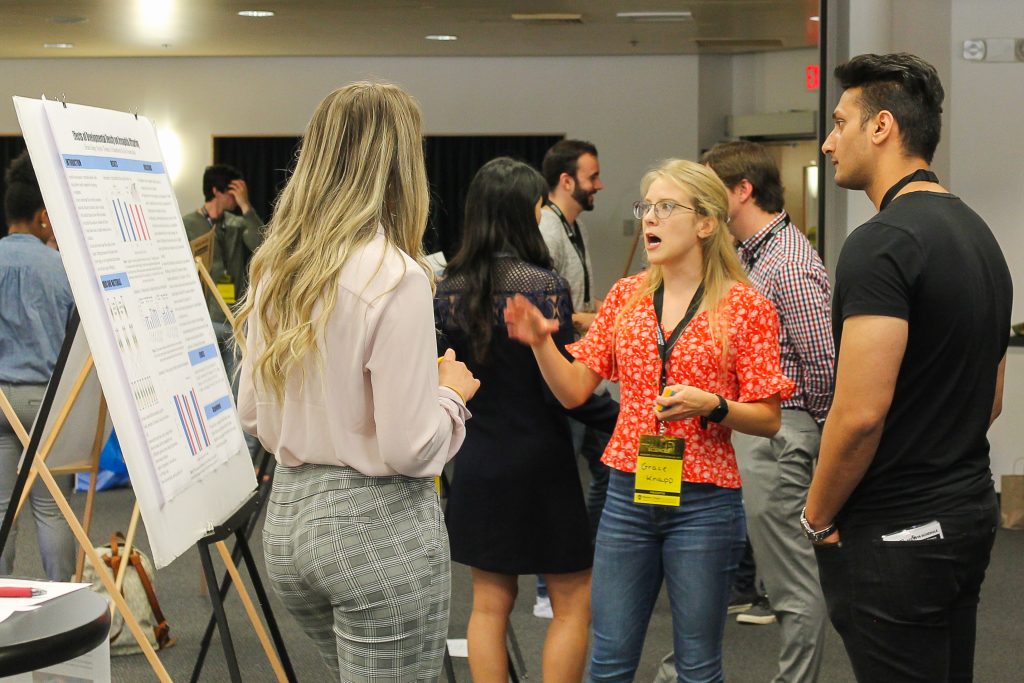
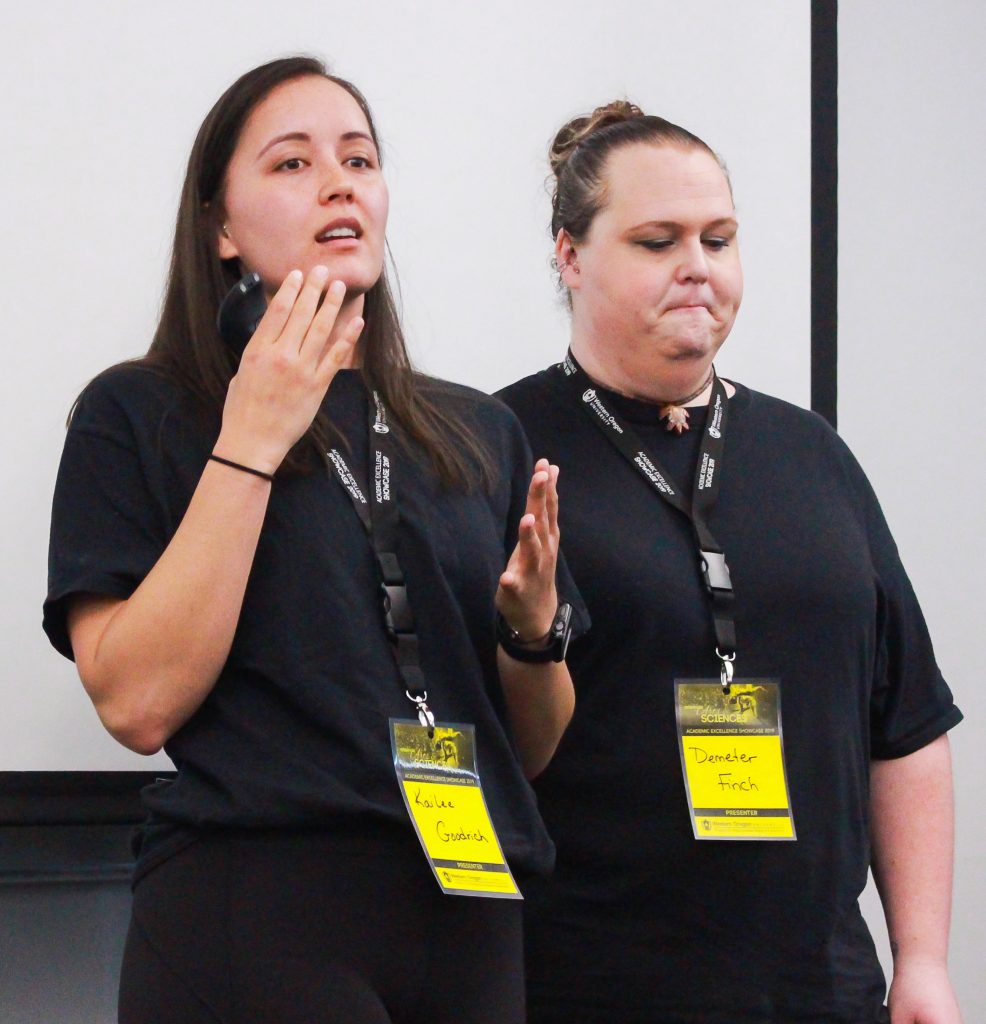
One day a year, Western students and faculty are given the opportunity to showcase the research that they have been doing throughout the year. From dance to biology to computer science and more, students from every program got dressed up and presented in nine different buildings across campus.

To start the morning, before the eight primary sessions of the day began, the Academic Excellence Showcase hosted its third-ever Presidential Plenary, a session that faculty and students from any discipline could participate in. To honor this year’s theme, the presenters all shared their research surrounding a specific topic.

“This year’s theme, Interplay of Arts and Sciences, hopes to encourage the interaction of the arts and sciences via the inspiration of the STEAM program,” read the AES program for the event.

During this featured session, presented discussed conceptions like performance anxiety, multilingualism, optical illusions and more — highlighting the wide range of topics that were possible given the theme.

After this session, an equally wide variety of poster sessions, presentations, performances and award presentations took place between 10:15 a.m. and 8 p.m.

One group of presentations that started off the day was English Studies. First, students presented their project before the crowd, and then they entertained any questions that they had.

Sean Tellvik, a junior English major, shared a bit about his experience presenting on “conlangs,” or constructed languages.

“To be surrounded by peers and faculty from the department encouraged me to push myself to complete my best work and share in the English community’s discourse in a way I never have before,” said Tellvik. “The amazing support of our mentor, Cornelia, and other professors I’ve had classes with left me feeling accomplished and inspired. But the best part about the whole experience by far is getting to see the fascinating scholarship of my peers — people really blew me away with their presentations.”

A different style of presentation that was showcased throughout the day was the poster session, and one that was especially engaging was the environmental awareness session during the afternoon. In this session, students tackled important topics like endangered species, recycling, reusable straws, the impact of plastic, honeybees and more.

Throughout the course of the day, 386 students were scheduled to present at the 2019 Academic Excellence Showcase.


Contact the author at howlnews@wou.edu

Photos by Bailey Thompson

Updates on College Republican Club June 4 event

Update: June 3, 2019

ASWOU’s second statement, released June 3:

Students of WOU,

Since ASWOU’s last letter to you all on May 30, 2019, the situation surrounding Tuesday, June 4th’s controversial event has escalated. Third-party organizations not affiliated with WOU have begun targeting the WOU campus with calls to organize protests to the event. Also, WOU students have been targeted in social media posts from both supporters and protesters of this event.

Because of the aggressive nature of these supporters and protesters, ASWOU has serious concerns for the safety of any and all WOU students who attend either the event or it’s associated protest. As such, it is our recommendation that all WOU students stay away from the Werner University Center on Tuesday, June 4th. We strongly encourage all club meetings. advising meetings, and other events on this day be moved to a different University building, rescheduled, or canceled. While we hope that Tuesday evening’s event maintains an aura of basic civility, we cannot, in good conscience, advocate for any WOU student being in the vicinity of the WUC on Tuesday.

If you feel affected by this event, please utilize the services of the WOU Student Health and Counseling Center at (503) 838-8313. The Polk County Behavioral Health Monmouth office can be contacted at (503) 400-3550.

If at any point during Tuesday night you feel unsafe while traveling on campus, please contact Public Safety at 503-838-8481. If you witness an incident of bias on WOU’s campus please report it using the Bias Incident Report Form (https://wou.edu/student/bias-incident-report-form/). This form is used to report an incident of bias if it is an act of conduct, speech, or expression that targets an individual or group based on their actual or perceived race/color, religion, ethnicity, national origin, gender, gender identity/expression, age, disability, or sexual orientation. Please contact the ASWOU President via the email address aswoupresident@wou.edu if you have any other questions.

In solidarity,

2018-2019 ASWOU Administration   

2019-2020 ASWOU Administration

[fruitful_sep]

A link to President Rex Fuller’s official statement can be found here: President Rex Fuller’s official statement

President Rex Fuller’s Statement:

Dear Campus Community,

As you might know, the College Republicans, a registered student organization on campus, has invited Joey Gibson to speak on campus on June 4.

As an institution of higher education, Western Oregon University supports free speech and open inquiry, which are essential to a comprehensive university experience and for students to form their own viewpoints and perspectives. At WOU, all student clubs and organizations follow an approved protocol for bringing speakers to campus and reserving space, which includes a review of the event and a contract with the proposed speaker. As a public entity, WOU may not deny access to meeting space on the basis of viewpoint.

The University’s obligation to the freedom of speech is animated not only by the First Amendment to the US Constitution, but the even-broader Article I, Section 8 of the Oregon Constitution. It states:

“No law shall be passed restraining the free expression of opinion, or restricting the right to speak, write, or print freely on any subject whatever; but every person shall be responsible for the abuse of this right.”

This clause has been interpreted many times to require tremendous breadth in ensuring and upholding the freedom of expression in Oregon—a role a public university must embrace to remain relevant in our changing times.

Upholding core freedoms—including the freedom of speech—does not mean, however, the University must turn from its values. WOU’s Strategic Plan outlines eight essential values that guide our practices and decisions. The Plan expressly includes: Diversity and Respect: Equity and inclusion; a fundamental basis in human diversity; appreciation for the complexity of the world; strength drawn from our variety of backgrounds, abilities, cultural experiences, identities, knowledge domains and means of expression.

Our values are who we are—we can be a place of diversity and respect, as well as a fierce defender of the freedom of speech and expression at the same time.

Thank you.

Rex Fuller, President

[fruitful_sep]

A link to ASWOU’s statement can be found here:

Instagram: @aswou

Twitter: @ASWOU

ASWOU’s statement can also be found below:


ASWOU’s statement recommends students attend other events happening the evening of June 4. A full listing of events can be found on students’ OrgSync accounts.

Link to College Republican Club’s response to ASWOU statement — statement can be found in comments: @woucr


College Republican Club’s response to ASWOU’s statement:

“Our speaker is multiracial and our event is open to all people regardless of their race, gender, religion, or nation of origin. We encourage all students to challenge the information that is being spoken around campus by seeking out their own information. Search Joey Gibson on YouTube and you will find that he has never said a hateful or racist word. In fact, he preaches often about Unity and having Love in your heart for all people, even those you absolutely disagree with.”

[fruitful_sep]

More updates from The Western Howl regarding this event will be coming soon.

Contact the editor at howleditor@wou.edu

Borderless Stories highlight inspirational migration accounts

Bailey Thompson | News Editor

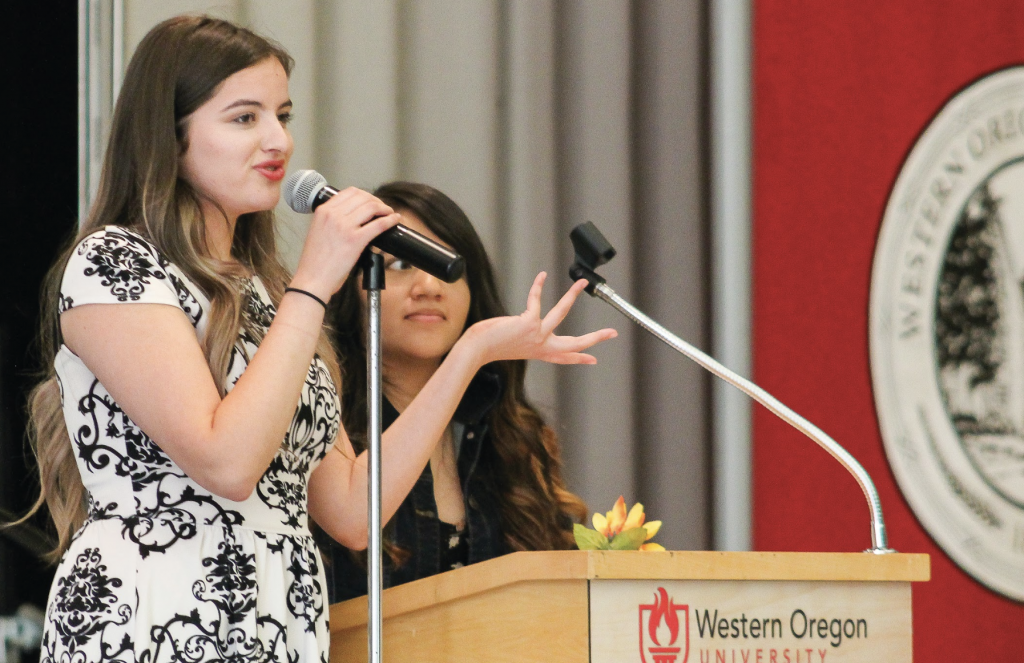
Carrying on a new campus tradition, M.E.Ch.A. and Unidos Club came together and hosted the 2nd Annual Borderless Stories event, an evening designed to share the stories of immigration parents in the Western community and to create a sense of unity among those present. This event was organized for May 20 in the Pacific Room of the Werner University Center.

To start off, the emcees told guests that they could go and serve themselves a free dinner from catering that they could eat and enjoy as they listened to the stories being told. Then, once everyone had gotten the chance to go through the line once, the stories began.

The three speakers for this event shared stories of hope, challenge and perseverance as they journeyed to the United States from Mexico in their youth. While they each had their own motivation that kept them going and unique trials that they encountered along the way, they have all found success and happiness in the United States.

As each speaker shared their story in Spanish, Monica Cerda Ortiz, a junior Spanish Education major and one of the emcees for the event, interpreted their story into English. The other emcee for the event was Xochitl Denisse Carrasco, a junior political science major.

When the first storyteller took the stage, she shared how she first came to the US in 1990 because her husband was already there. And, while she had support in him, she still struggled with things like finding opportunities in an unfamiliar country and adapting to day-to-day differences like those in transportation.

Although it wasn’t easy, she is proud of all that she and her children have accomplished — with three of them having graduated from college.

The second speaker came to the US in 1998 at 19 years old. When his family had tried to come the first time, they were scammed and left with only $3. Then, when he finally was able to come over, he was brought to work on a farm in Hillsboro. While he adapted to this in time, it was challenging for him to be separate from his wife and son who had to stay in Mexico because she didn’t have the necessary paperwork to come with him.

Then, when his son had kidney complications and needed emergency medical treatment, he also experienced the struggle of trying to pay for his medical bills. Because of this, his encouragement to children of immigrants was to get a degree so that they could more easily help their families when they need it.

The final speaker of the event shared how he travelled with his cousin and uncle up through the desert in order to get to the US — a crowded, exhausting trip which involved them getting stopped by soldiers, running out of water and being separated from loved ones. While it was heartbreaking for him to be separated from the only two people he knew there, he eventually made it to his destination and found a job.

After working for seven years in a field, he procured a job in construction — something he is much happier doing. And, much like the second speaker, he urged young people to work hard and, if possible, to continue their education.

To close the event, the emcees shared a letter that President Fuller had written in November of 2016 about Western being a sanctuary campus for all students:

“Western Oregon University is a sanctuary for all of our students and we will remain a place where every student enjoys the sense of belonging to a committed community of students, faculty and staff,” wrote Fuller. He also affirmed that “Western will remain actively engaged in national conversations, including support of national educational associations, regarding DACA and related programs designed to protect students and their pursuit of educational opportunities.”


Contact the author at howlnews@wou.edu

Photo by Bailey Thompson

Identity Theft event structures discussion around identities

Bailey Thompson | News Editor

Although it can be difficult to completely understand how another person feels, one valuable first step is to talk with them. This is something that Triangle Alliance — Western’s LGBTQ+ social club — and Heritage Hall Government orchestrated on May 23 in the Richard Woodcock Education Center.

Their event, Identity Theft, sought to open a conversation with the campus community about the ways that both sexual identities and gender identities can influence a person’s life — and, more specifically, the way that myths about these identities can be harmful to perpetuate.

Six panelists, holding a variety of LGBTQ+ identities, dedicated their time to talk with members of the LGBTQ+ community, as well as their allies, about the unique perspectives that they have gained because of their identities and their other life experiences.

Throughout the course of the panel, a wide range of topics were addressed — from stereotypes about certain identities, to people who are questioning their identities and more.

All in all, the consensus of the group was that these experiences and the discovery of these identities were things that varied from person to person, even if there were a number of common themes running throughout the group.

For instance, when the panelists were asked about when they knew that they identified as something other than heterosexual or cisgender, some of the individuals stated that it was a long process for them to come to this conclusion, some said that they felt confident in their identities from an early age and still more said that they were not sure that the identities that they currently held were the ones they would always identify as.

Related to this, when the panelists discussed their coming out stories, if they had come out to their families at this point in time, their experiences varied, largely depending on how accepting they anticipated their families would be towards them.

The panelists also spent time discussing stereotypes that have impacted them on a day-to-day basis. Among these, panelists shared that it was difficult for them to not fit into the mold that others expected them to — whether this is bisexuals in hetero-passing relationships who feel invalidated in their bisexuality, transgender people who feel the need to dress a certain way in order for people to respect their pronouns or something else along these lines.

On the flip side of this, however, the panelists also shared that there is nothing wrong with enjoying things that may be stereotypical of people in the LGBTQ+ community.

Nearing the end of the panel, when an audience member asked the panel about ways that she can support her sister as someone who has grown up in a religious household, the panelists were clear in their responses: what LGBTQ+ youth need is love and support. While they may not always get the kind of support that they would hope for, having people affirm that they will always care about them can go a long way.

If students at Western would like to attend Triangle Alliance to learn more about this and meet new people, they can visit Triangle Alliance’s Facebook page to determine when they will be meeting during Fall Term.


Contact the author at howlnews@wou.edu

BonnaWOU takes the Grove

Caity Healy | Editor-in-Chief

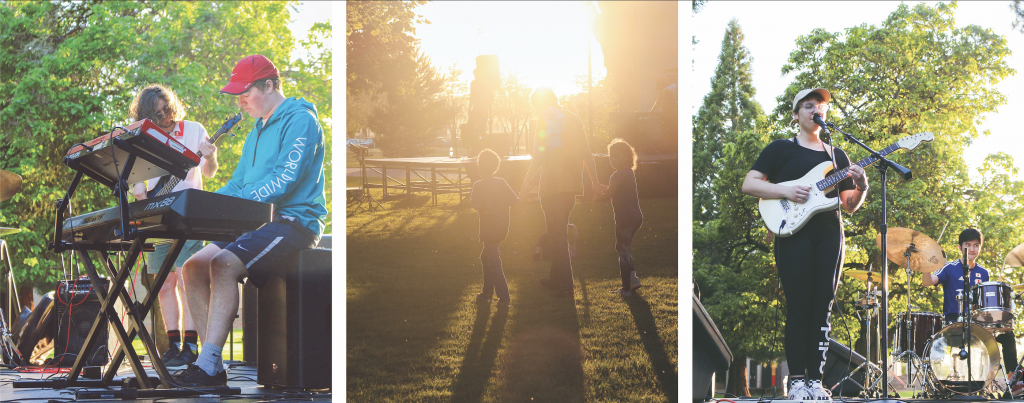
On May 23, the clouds parted as three bands took the stage in the first-ever BonnaWOU festival hosted by SAB. Each band that was involved was local: Jimmy Wolfson, The Ferenjis and Chromatic Colors. Taking place in the Grove from 5 p.m. until about 8 p.m., students and members of the community brought their blankets and made themselves at home on the grass.

Each band performed their set as the sun was shining brightly above the stage that was set up outside. Every band came with their own style, which made it accessible to everyone — there was music that just about everyone could enjoy. All were welcome; some took it as an opportunity to do homework with a show, some just sat and watched and others got up and danced. People came and went all evening as it was a free event, until the music faded that evening with the sunset as a backdrop to a picture-perfect night.


Contact the author at howleditor@wou.edu

Photos by Caity Healy

Dr. Oberst retires from Western after 32 years

Bailey Thompson | News Editor

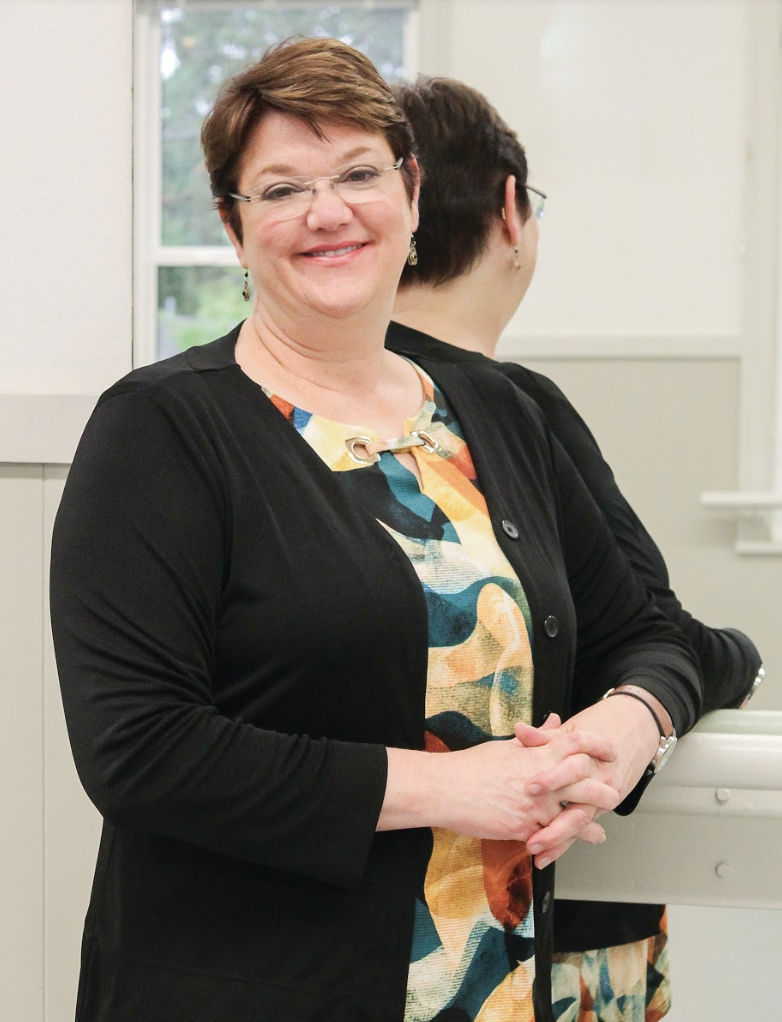
After 32 years at Western, Dr. Sharon Oberst is within her final month as a dance professor and the dance chair for the university. Looking back on those years, Dr. Oberst reflected on how much her position — and the dance department as a whole — have changed over that time period.

“I came in in 1986-7 as a substitute for a dance teacher who was in the hospital… but the lovely division chair at the time liked me and what I was doing and what I brought to the program, and so he created a position for me,” said Oberst. “My job has changed a lot because when I came in there was just the two of us.”

To compare, the dance department now consists of six faculty members, each of which specialize in different styles of dance.

In the time since she has been here, Oberst noted that her position has transitioned from teaching almost every class to being largely administrative and teaching a few specific classes like ballet, which is her specialty. And, moving to the future, Oberst shared an exciting update regarding the future of her position.

“Tim Cowart is going to take my position,” said Oberst. “I’m actually very excited about being able to hand things over to Tim because I think he’s going to bring a lot of fresh energy and fresh ideas… it’s going to be a whole new direction and a whole new direction.”

Cowart currently lives in Pennsylvania and works at Desales University, but he has also taught and choreographed at Western on a couple of occasions — even as recently as two years ago — so he will have some experience as he goes into his new position at Western.

When asked about her feelings about retirement, Oberst had a simple answer:

“I am delighted. I have really loved being here. It’s been a great place to work and there are no bad feelings, but I’m tired … I’ve pretty much been teaching since I was 14 years old. So, I’m ready. But I hope that I’m going out still being enthusiastic and involved.”

When Oberst retires, she would like to do some travelling with her husband and work on some research that she is hoping to publish. She will continue living in Monmouth, both because she enjoys it and because her children live in Oregon as well.

Finally, when asked about what she will miss from her current position, Oberst wasted no time with her answer.

“The students. That’s why I went into this in the first place is that I love to teach, and I love to choreograph on the students. That’s the joy,” said Oberst.

Oberst’s contract at Western ends on June 15 after commencement.


Contact the author at howlnews@wou.edu

Photo by Bailey Thompson

Western hosts its first ever Out of the Darkness Walk

Bailey Thompson | News Editor

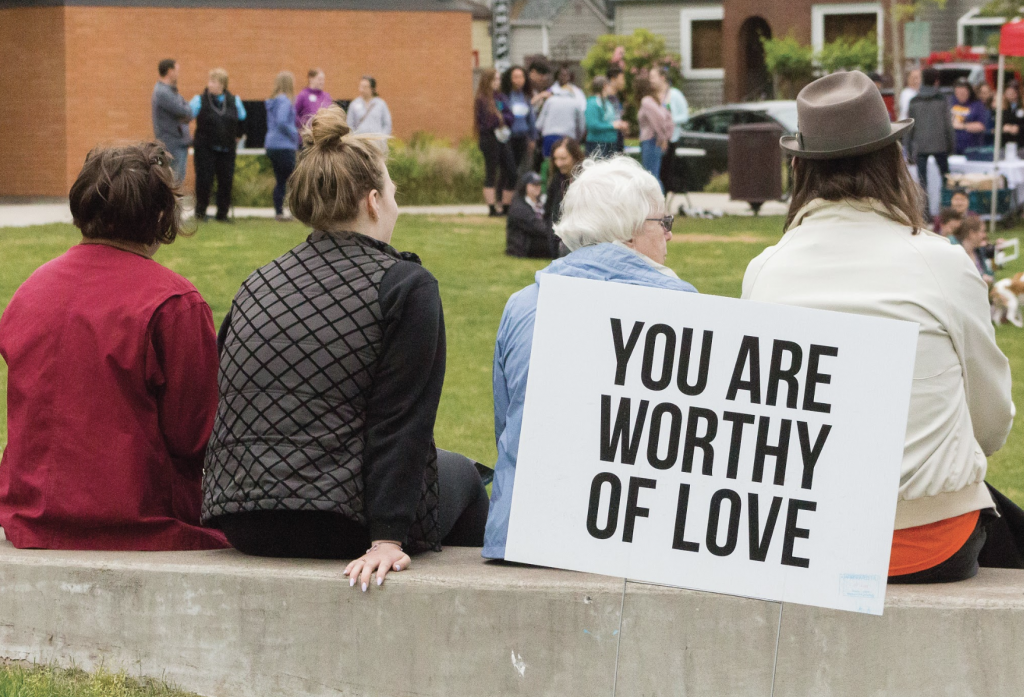
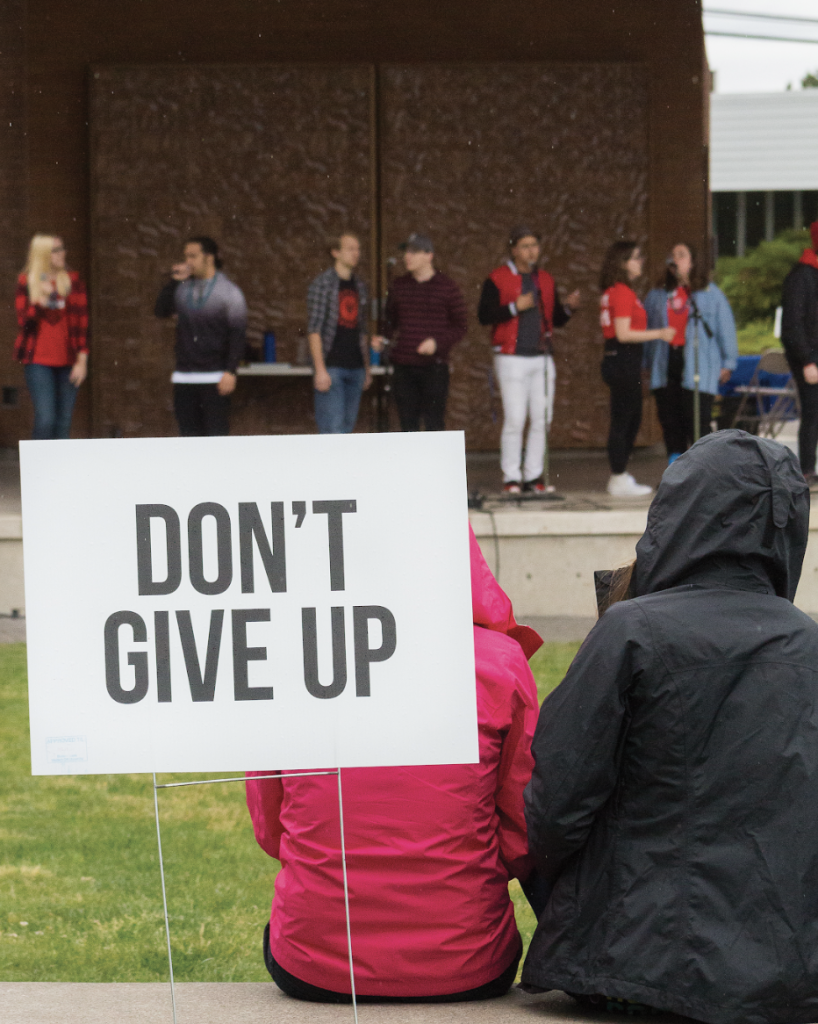
In spite of the rain that threatened to spoil the event, Western’s first Out of the Darkness Walk for suicide prevention was a shining example of what can happen when a group of people come together to support a cause that they believe in.

While Out of the Darkness Walks are not new events in general, this one was special because it was the first one that had ever been hosted in Monmouth. Organized by the WOU Wellness Advocacy Group, spearheaded largely by Tim Glascock and Shaylie Pickrell, this event was held on May 17 at Main Street Park.

When people arrived, a number of booths from Western and other local organizations greeted them, offering both their support and resources to attendees. Amongst these groups were WOU Food Pantry, University Housing, Abby’s House, Student Health and Counseling Center and Lines for Life, which is a crisis call center based in Portland.

Kicking off the event, 15 Miles West — Western’s acapella group — performed a number of hit songs as people mingled, visited booths, got registered and picked up their ceremonial beads.

Next, Ryan Price, Oregon and Idaho Area Director for the American Foundation for Suicide Prevention, introduced the featured speaker for the event, a Western Oregon University alumnus named Cody Welty who has shared his story even on platforms as big as NBC’s Today Show.

“It’s really good to be back in Oregon and in Monmouth,” said Welty, a current doctoral student at University of Arizona researching strategies to prevent youth deaths by suicide. “Those of you who do know me probably do know me because of my experience at WOU, either as a writing tutor, a psychology student or hopefully just a friendly face of someone you saw on or near campus.”

Welty then expressed his hope in sharing his story at this event.

“It’s a story of sadness, it’s a story of hope and most importantly it’s a story of recovery. And it’s a similar story to what many of us who are here today may have experienced,” said Welty.

Welty then discussed the way that his connection to suicide began: he was a normal, even successful, high school student who spent years masking the depression that he felt inside. Being a 4.0 student and a three-sport athlete with a supportive family and good friends, he felt that the external image he put out into the world did not match the reality of his health.

“I thought, ‘I’m a man. I can’t talk about how I feel or share this with anyone.’ And so, I shoved it away,” said Welty. “I took all those concerns and pressures and pushed them down somewhere where I could never talk about it.”

From this point, Welty remembers being in a health class and realizing how many of the symptoms of depression and anxiety were things that he had experienced — but he continued to push it down. Eventually, though, this came to a head, and Welty attempted suicide.

“At that point I think I hit my lowest. I felt that I was so much of a failure that I couldn’t even kill myself,” said Welty.

After recovering in the hospital, Welty shared with his parents that he had a new goal.

“I remember telling my family that I wanted to do my best to make sure that there were no other kids like me who felt that they were alone and couldn’t talk to anyone,” said Welty. “Depression doesn’t look like it’s a photo in a textbook. It doesn’t look the same for everyone. I knew it was time to put a face to an illness that they knew about.”

At this point, Welty started going to middle and high schools, sharing his story with kids. And the message that he conveyed to them was the same as the one that he shared at the walk.

“We are not hopeless, we are not powerless and we are not weak,” said Welty. He also impressed upon people that “we can all check on a friend or a loved one. We can all ask for help when we need it… And we can all do our best to help end suicide.”

After his speech, the crowd went through the traditional bead ceremony where people shared stories of different people in their lives who have either struggled with suicide or who have been lost to suicide — partners, children, siblings, parents, self, friends or service member/first responder. With each category, participants were asked to different colors of beads to signify the different connections that they had to suicide, aiming to build a community of support in the process.

At the close, attendees all marched from the park, through Western’s campus and back to the park.

“The walk is really a great time to come together, connect and share your story,” said Price.


Contact the author at howlnews@wou.edu

Photo by Bailey Thompson and Ashlynn Norton

Multicultural Student Union Hosts 28th Annual Nuestra Fiesta Latina

Bailey Thompson | News Editor

With festivities spanning 13 hours, the 28th Annual Nuestra Fiesta Latina was a day filled with celebration of Latin culture. Hosted by Western’s Multicultural Student Union, this event on May 17 had three main phases: the festival, the dinner and entertainment and the baile.

Overall, the goal of the event was simple.

“We strive to promote diversity and cultural awareness throughout the community and campus of Western Oregon University,” said Julissa Chacon Lopez, a sophomore and the freshman advocate for MSU.

To do so, the organization started their event with a festival in the Werner University Center Plaza. This event, which lasted from 11 a.m. -2 p.m., featured a quartet of musicians from Cuba and the United States called Son de Cuba. As this group played music from a variety of Latin genres, students could also enjoy some churros, get an airbrush tattoo, participate in a jalapeño eating contest and more.

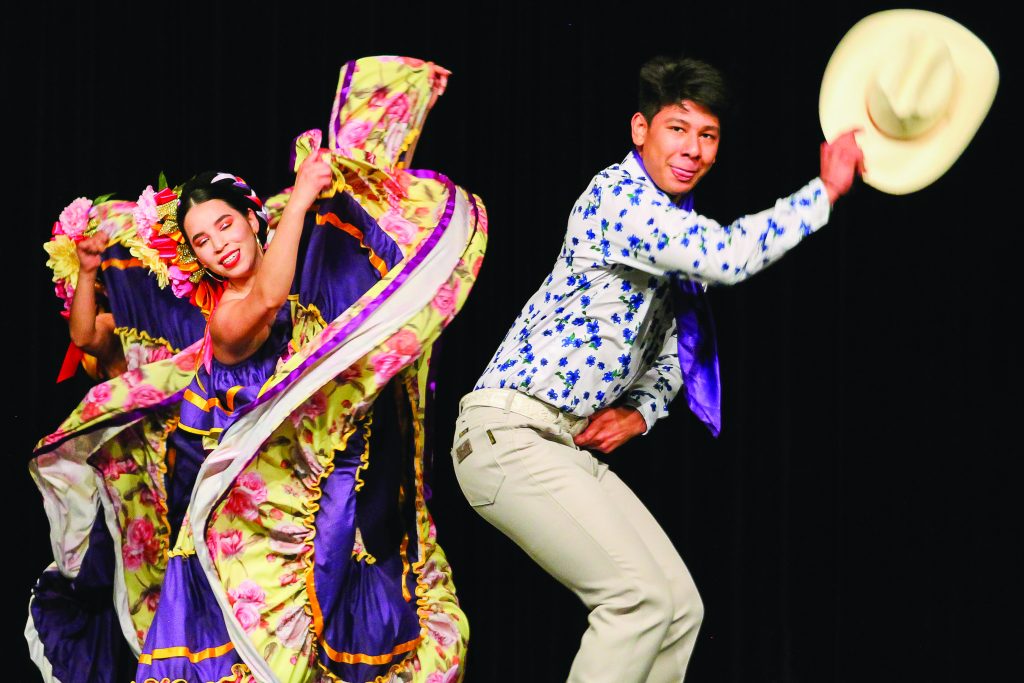
Later in the evening, the party moved into the WUC for the next phase of the event: dinner and entertainment. This portion of Nuestra Fiesta Latina was themed for the Mexican state of Michoacán, a region with over four million people on the west coast of Mexico. To celebrate this area, all of the dancers were from Michoacán, monarch butterfly decorations adorned the room and the dinner that they served was also a specialty of Michoacán.

“We wanted to bring in our own culture from Mexico, and we wanted to bring food and music so people can feel a little bit closer to Mexico,” said Chacon Lopez. “So today we had corundas, which is a Michoacán tradition.” Along with this, guests also had the option of a couple of meats, rice and beans.

As guests began eating, they could enjoy live music from Mariachi Los Palmeros. Then, after they had finished, the Mexico en la Piel Dancers performed a number of routines as attendees continued to enjoy the bounty of food.

In between each of these dances, the two coordinators and emcees — Chacon Lopez and Jasmine Sosa, junior and social membership director for MSU — raffled off a number of piñatas and smaller prizes.

When reflecting on what it took to put this event together, Chacon Lopez recalled the many months of work that had gone into hosting such a large-scale program.

“It took since the beginning of the school year when we got an exec board … we separate the whole group into coordinating different events, and this was Jasmine and my event,” said Chacon Lopez. “So, we’ve been planning this since the middle of January.”

The final phase of the event took place an hour after the dinner had ended. The baile, or dance, was an opportunity for community members to let loose, dance and enjoy the musical tastes of DJ Sonido Kora. Back in the Pacific Room, the baile lasted until 1 a.m., a full 13 hours after the festival had begun. After a long day, Nuestra Fiesta Latina had concluded its festivities, but Chacon Lopez hoped that the impact would extend beyond the day.

“There’s a good amount of diversity on our campus, and a lot of them are Latinos and Hispanics,” said Chacon Lopez. “So, we just like to bring the community together as well as others. And it’s just a beautiful thing.”


Contact the author at howlnews@wou.edu

Photos by Bailey Thompson

International Night: Taking Western around the world in one evening

Caity Healy | Editor-in-Chief

For many students at Western, while Monmouth or the surrounding areas may be where they live, it isn’t necessarily what they’d call their “home.” And for some of these students, “home” is somewhere outside of the U.S. To give these students an opportunity to not only share a piece of their culture, but to give them a way to feel home away from home, Western hosted its 48th Annual International Night on May 10.

Before the festivities could begin, International Club had to put in work to make the event as extravagant as it was.

My team, friends and club officers have helped so much in planning and getting things together for the event,” said Berlyn Buncal, president of International Club. She also added that putting it on took “a lot of work, coordination, communication and trust.”

When the doors opened at 5:30 p.m., the Pacific Room in the Werner University Center began filling with the faces of students, families and staff from all over, ready to experience a night packed with dances, songs and socializing. Welcome to a meal consisting of food from several different countries, the audience grabbed their plates, found a seat and waited for the performances to begin.

For those involved, this night meant a lot to them. It wasn’t only a way for them to show what the club has been doing, but a way to feel connected to the places they call home.

“International Night is a night where I get to learn about different cultures all parts of the world,” said Buncal. “It is an important night to me because we all miss our home, I miss my home. I want to give a chance to all our friends and students a chance to experience home in some sort of way, and we do that with our foods, performances and fashion show.”

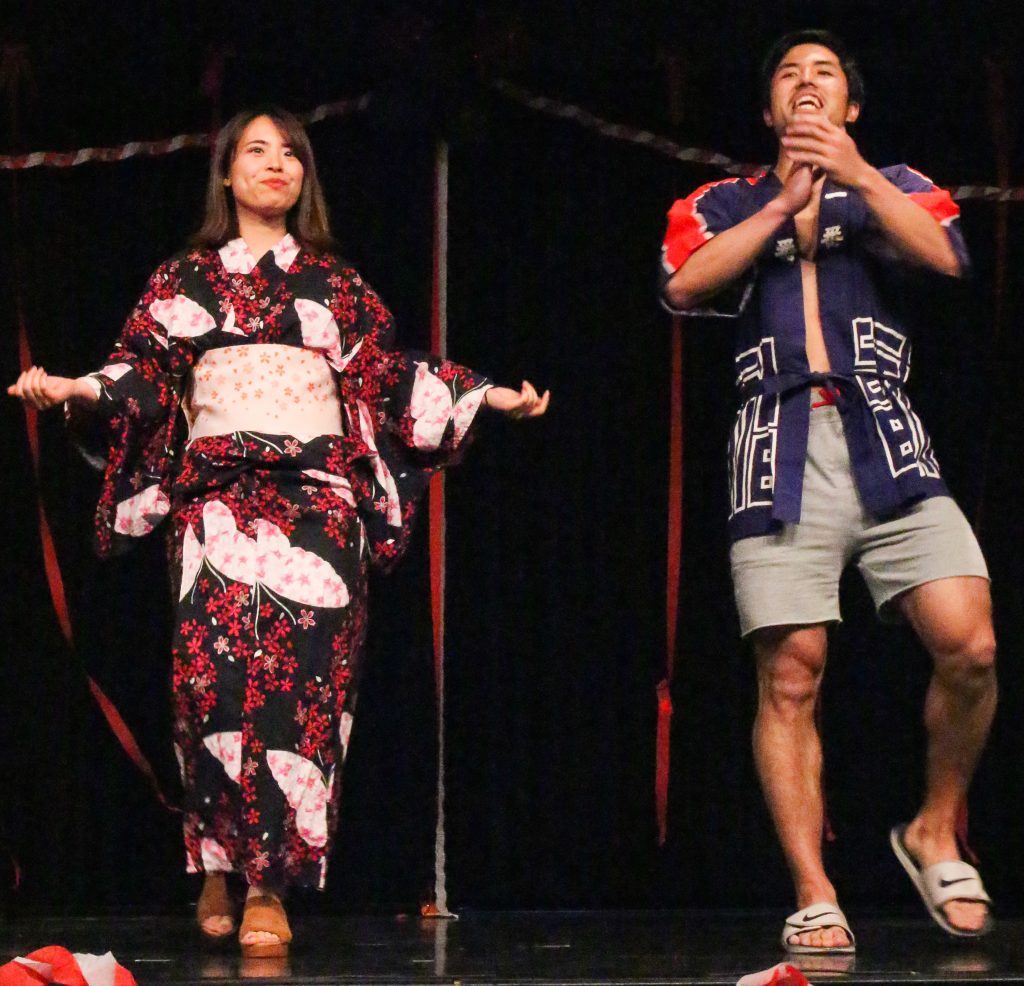
And from there, the show began. The audience was presented a show consisting of 10 different performances. Western’s African Dance class performed a dance called the kpanlogo; student Zeya Gao sang a solo performance of “Can’t Take My Eyes Off of You”; Jay Archer performed a violin piece he titled “Ghibli Songs”; Ruijiaming Yang sang “Can’t Love You Enough,” accompanied by Kenneth Soh on guitar; Hawai’i Club performed a dance to “Lei Ho’oheno”; Binit Shrestha played guitar and sang “Kanchi Nani Blues”; Yilei Zhao sang “Eternal Love”; A group of four girls called Heart Dust performed an upbeat dance to “Kill This Love” by Black Pink; Hermanos Del Valle performed a dance titled “Marinera Norteña; and to finish it off, Fili and Family danced in a performance titled “Samoan Sivas.”

When the performances came to a close, the fashion show commenced. Strutting the stage donning the clothes of several different countries, the performers took to the stage in twos. Showing different examples of what each country’s traditional clothing looks like, including the apparel of Mexico, China, Ethiopia, Germany, Japan and more, the models kept the audience in all smiles.

Finally, as this event fell on Mexico’s Mother’s Day, each mother in the audience was asked to stand. Then, those involved in the event delivered a rose to each standing audience member, a gift from the International Club.

At the end of the night, there was a closeness felt amongst many in the Pacific Room, even if they were strangers only hours ago.

“We get to draw closer as a family because we show so much respect for one another and we can represent that throughout the event and our lives,” explained Buncal.


Contact the author at howleditor@wou.edu

Photos by Caity Healy

Educators walk out for Student Success Act

Bailey Thompson | News Editor

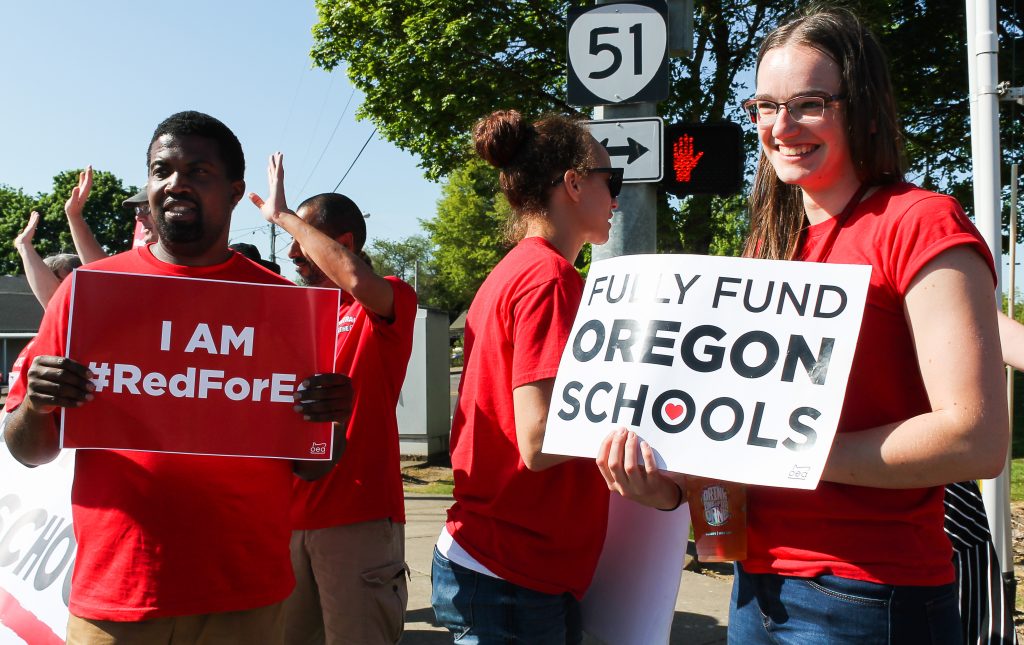
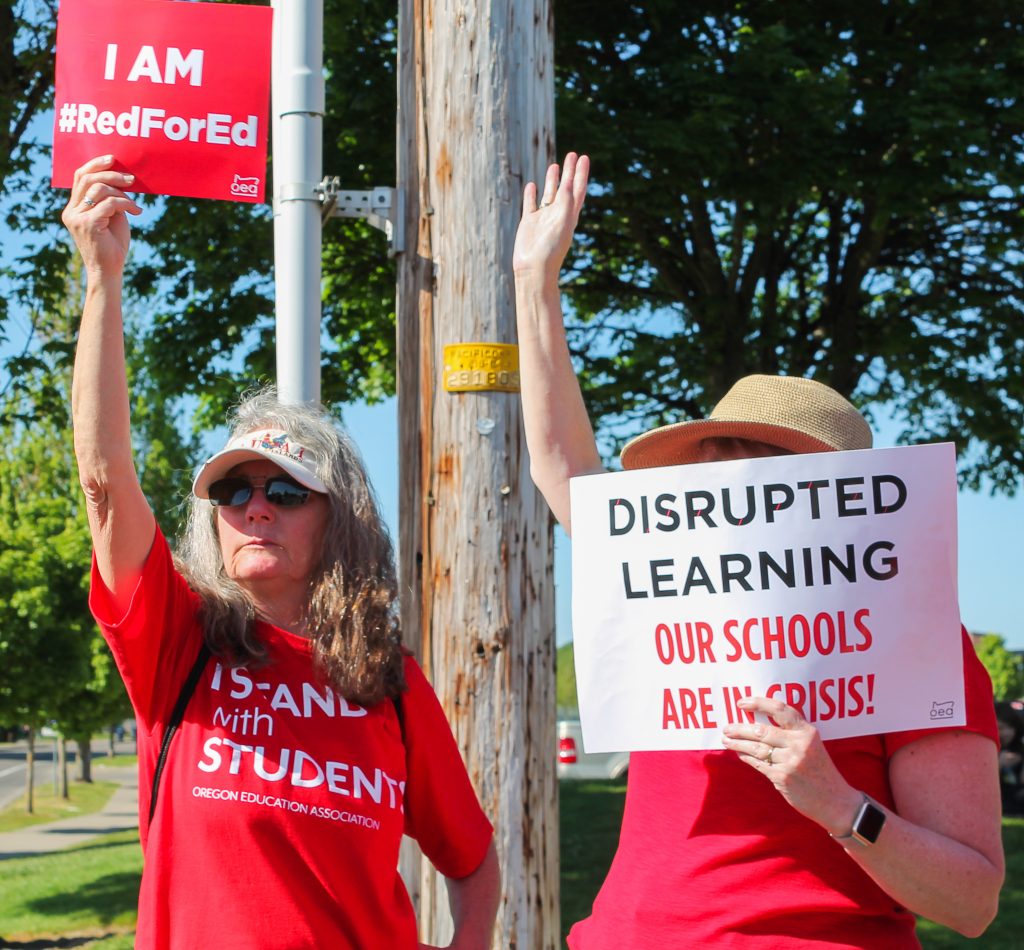
Rising early, joining together and donning red shirts, Oregon educators in Portland, Salem, Eugene, Medford, Bend and Klamath Falls made a statement on May 8, 2019. With thousands of teachers, students and community members going out into their neighborhoods throughout the state, their message was clear: pass the Student Success Act.

“The Student Success Act is a bill that is designed to start making up for the disinvestment in education that began in the early nineties with Measure 5. It would reduce class sizes, it would provide mental health care, it would provide pre-k funding — it would really do a lot to change our schools and to start to get them back to where they belong,” said Ben Gorman, English teacher at Central High School. “It’s not the end of the road … but this is a real excellent start for our students and what they need.”

On the day of the walkout, a large number of Central School District teachers got up early to stand outside CHS, then go to a larger event in Salem and finally come back to CHS at the end of the day. Community members honked continually in support for those holding signs.

As of May 8, this piece of legislation had passed through the Oregon House of Representatives; however, on May 13, it passed through the Oregon Senate, as well.

When speaking about the motivation for this school walk-out, Gorman shared the sentiment that had led many teachers to protest.

“So often teachers are just so exhausted by a very difficult job, and they say to themselves, ‘I need to focus on my own kids, and I can’t focus on politics of how to support my kids,’” said Gorman. “But we’ve gotten to the point where teachers are saying, ‘Enough is enough. I can’t possibly do this.’”

After educators had protested in a similar way on President’s Day without any reaction from the legislature, Central Education Association President and math teacher Laura Waight described the shift that took place.

“The conversation began to transition to ‘how do we get the legislators’ attention?’ And the only way: shut it down,” said Waight. “Shut it down and show them that we’re willing to take an unpaid day to show them how serious we are.”

While some people may be opposed to the Student Success Act for fear of their taxes raising, Gorman shared why this fear is unfounded.

“One of the things you’ll hear is ‘this is going to be a tax increase on the people in our state,’ and that’s just false. In fact, if it passes, this will be a tax cut for your average Oregonian,” said Gorman.

“What the Student Success Act has done, which is historic in Oregon, is to ask corporations that make a million dollars or more in the state of Oregon for a small tax on that money,” added Waight. “The same corporations which were against something like this (with bills in the past) are now for it — Nike, Powell’s, HP, and some other big Oregon companies are now saying, ‘please tax us because we see the result of having underfunded schools.’”

In the end, both Waight and Gorman asserted that support for students is something that should be a universal goal — not something considered partisan — even if you believe it should be done another way, as approximately 25% of teachers in the district do.

“We can’t say that standing on the street corner or going to Salem is going to change anything, but what we do know for sure is that if we continue not to do anything, then nothing will change,” said Waight. “We have to change the game.”

The final step before the Student Success Act is passed is for it to be signed by Governor Brown.


Contact the author at howlnews@wou.edu

Photos by Bailey Thompson

Real Time Class Availability returns

Bailey Thompson | News Editor

While students may not think very much about the way that they find their classes on a daily basis, a significant percentage of Western students became upset when they learned that the Real-Time Class Availability feature had been removed from Western’s Portal.

Noticing this frustration among students, the Dean of the College of Liberal Arts and Sciences, Kathy Cassity, turned to Honors Program Director Gavin Keulks to get a feel for student approval or disapproval for the new system along with why.

“Our registrar’s office works extraordinarily hard to develop or reimagine processes for everyone’s benefit,” said Keulks, acknowledging the effort that went into the new scheduling system.

With that said, however, Keulks also noted that the way students responded to the new system was primarily negative.

“I think their intentions were in the right place with this change, but the regular real-time availability function is beloved by students, well formatted and easy to use, so that made changing it harder than anticipated,” said Keulks.

After sending out a survey at Dean Cassity’s request, 83.3% of students surveyed indicated that they either “strongly disapproved” or “disapproved” of the new system, citing ease of use, speed and layout as their primary reasons for disliking the new system.

With this information in hand, Amy Clark, the University Registrar, shared the news with students via email on April 30 that they would now have both options to choose from.

“The Real-Time Schedule View is back by popular demand,” said Clark.

Having delivered this update, Clark then shared with students some of the benefits that using the new system could have, if they were willing to learn the different format. With the new system, students can use the enhanced search feature to find classes based on location, instructional method, course attribute, title, days of the weeks, start and end times and/or credit hours.

Both of these options are now available for students to use on Western’s website.


Contact the author at howlnews@wou.edu

Celebrating Earth Day

Bailey Thompson | News Editor

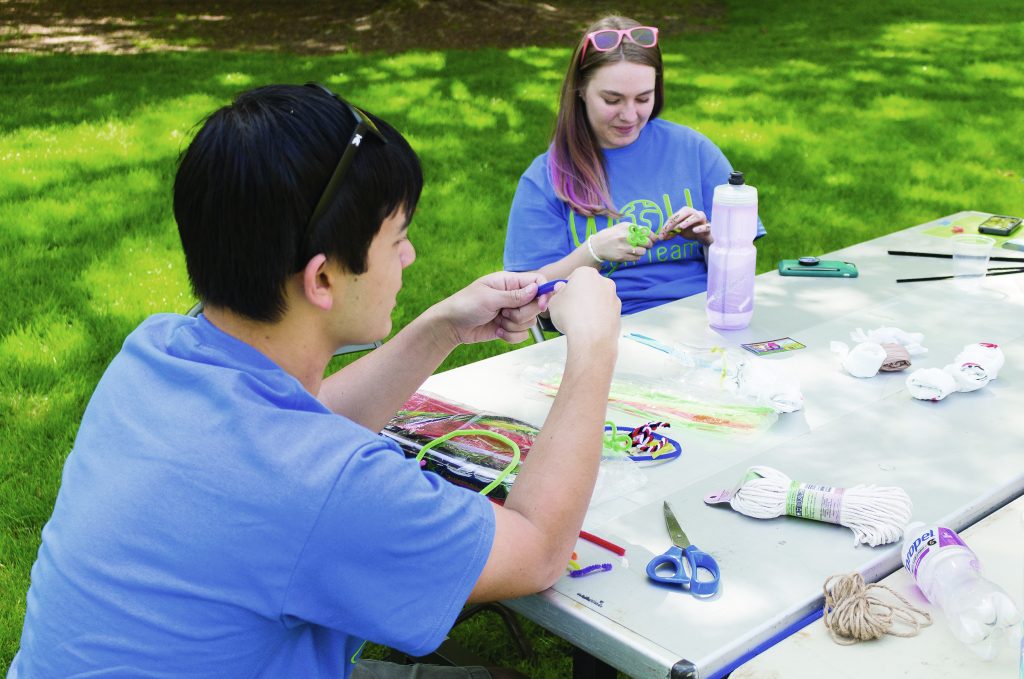
With crowds of people moving from station to station — enjoying the warmth of a sunny Saturday in the Grove — Green Team members and volunteers in blue t-shirts helped explain the many activities that were included in Green Team’s Annual Earth Fair on May 4. Although Earth Day may have passed a couple weeks ago on April 22, the members of Green Team were still eager to share their knowledge and enthusiasm with the Western community at large.

As one of the organizers of the event and Green Team’s Treasurer, Liv Geisler-Wagner shared some of the things that were featured in this year’s Earth Fair event. A few of the just-for-fun elements included tie dye t-shirts, volleyball, food, Sibling Weekend stations, face painting and henna tattoos, but there were also a number of stations with practical crafts that attendees could use in their day-to-day lives as well.

“We have reusable dryer sheets, which are basically just old t-shirt scraps you can make at home,” said Geisler-Wagner. “You put a couple drops of essential oil in a jar with some vinegar, and then we put t-shirt scraps in there. You just throw one in with your laundry when you put it in the dryer — the exact same as a dryer sheet. Then you can reuse them as many times as you want.”

Geisler-Wagner also mentioned a couple of other easy, creative things that students could do with their old household items.

“We also have plastic bag bracelets, which is a good way to reuse your plastics since a lot of plastics, including the bags, can’t be recycled,” said Geisler-Wagner.

In order to test student knowledge on recycling, Green Team also concocted a game which asked students to determine which items from a given set were able to be recycled.

And on another practical note, Green Team also chose to coordinate efforts with the Physical Plant in order to plant flowers on campus — right on the edge of the Grove.

While students who attended the Green Team Earth Fair received a number of specific strategies they could use in the future, Geisler-Wagner shared that there are other simple resources that those who didn’t attend can use to get involved as well.

“Google is your friend,” said Geisler-Wagner. “Most of what we do is Googling ‘sustainable crafts’ or ‘how can I reduce my plastic consumption’ or ‘how can I be greener in a dorm?’”

Students also have a fitting resource in Green Team themselves, and Geisler-Wagner conveyed that there are a number of ways that students can be in contact with them

“Our office is in Heritage. So, if you’re in Heritage and you’d like to stop by, if the door’s open, we’re there,” said Geisler-Wagner. “We have our office hours poster on the door… And if they don’t live in Heritage, they can also email us, and we can let them in if we know they’re coming.”

In addition to this, interested students can also contact Green Team on their social media accounts, and Geisler-Wagner can be reached directly at ogeislerwagner16@wou.edu.


Contact the author at howlnews@wou.edu

Photo by Ashlynn Norton

Changes are coming to the Western Business Office for the 2019-2020 academic year

Bailey Thompson | News Editor

Looking forward to the future of Western, there are some financial changes that will be unavoidable; however, there is a team who is actively dedicated to keeping Western affordable for upcoming generations of Wolves.

For the 2019-2020 academic year in particular, there are a number of significant changes to the Business Office and to tuition rates that will heavily impact the financial opportunities of Western students. Setting the tone, while many of Oregon’s public universities have either reported higher numbers or have not shared their tuition rates for next year yet, Western has committed to an increase of only 2.33% for undergraduate residents, which was decided by the Tuition and Fees Advisory Committee.

Evelyn Guzman, Erik Morgan and Ailyn Angel — student leaders and representatives on TFAC — shared what it was like for them to come to this decision.

“The administration is really great for doing this even before the House Bill (3381) was passed — they’ve listened to student voices, whereas a lot of other universities haven’t,” said Angel, a senior interdisciplinary studies major on the committee. “You never feel like you’re asking a dumb question, and they really allow us to be a part of the decision-making process.”

In addition to this small tuition increase, Western has also shown its commitment to affordability through other things like keeping the cost for room and board flat and keeping the incidental fee increase under 5%.

Another way that Western is making financial changes for the benefit of students relates to the Tuition Promise plan.

“When WOU Promise was initially created, it was an environment when double-digit tuition increases were very common… But since that time, the environment has changed and there is now a very low tuition increase, so it turns out that what they set out in their plan is more expensive than if they were without the plan,” said Dr. Karaman, Vice President for Finance and Administration. “Dr. Fuller always felt that it’s the right thing to do to give the lowest of the available rates. So, this year we just said, ‘let’s go ahead and do it.’”

Dr. Karaman credits Dona Vasas and Camarie Campfield, the Bursar and Budget Manager, as being instrumental to bringing these changes about as well.

A final couple of updates from the Business Office that will impact Western students beginning next academic year are that seniors will no longer have to pay a $50 fee to apply to graduate, and students will also have 30 days beyond when the term starts to pay their bill.

“Students are here for academics. Yes, they need to pay their bill, but let’s make sure that their bill isn’t impacting their academic achievement,” said Vasas.

Although there are a number of things to keep track of, the staff at the Business and Financial Aid Offices is dedicated to serving any students who have questions about how these changes could be impacting them.

“The overall goal is that we want Western to be the most affordable public university in the state of Oregon, and we also want to make sure that students don’t go into debt,” concluded Dr. Karaman.


Contact the author at howlnews@wou.edu

Photo by Ashlynn Norton

Hawai’i Club’s 12th Annual Lūʻau

Bailey Thompson | News Editor

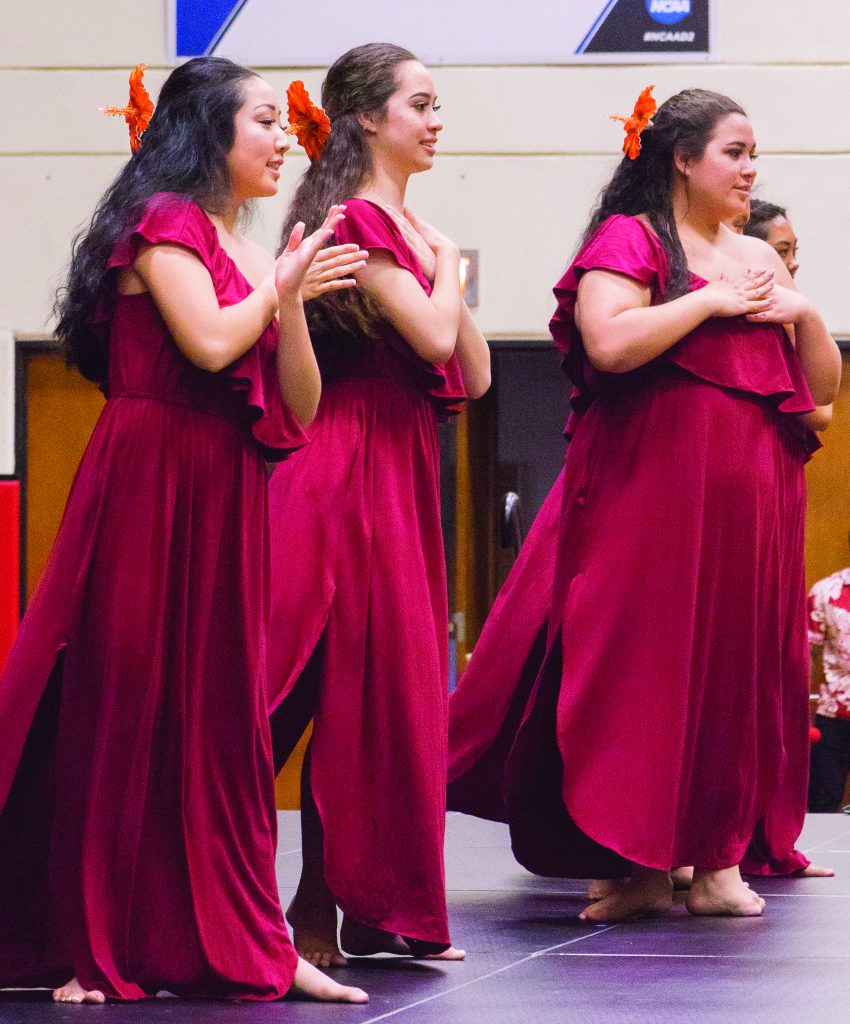
While many students may be consumed with the stress of midterms and other exams, a number of Western’s Hawaiian students took time on May 4 to come together and focus their attention on other important things like home, family and unity. As Hawai’i Club’s 12th Annual Lūʻau, the club’s biggest event of the year, members of the Hawaiian community pulled out all the stops to make sure that everyone had a fun and relaxing evening.

For the first portion of the event, guests were free to settle in, mingle, visit the Hawai’i Club store — a table which sold t-shirts, stickers, Hawaiian foods and more — and go eat a catered meal. For dinner, attendees could choose any variety of kalua pork, chicken, tofu, rice, macaroni salad and pineapple. They could also choose from a couple of different coconut-flavored dessert options.

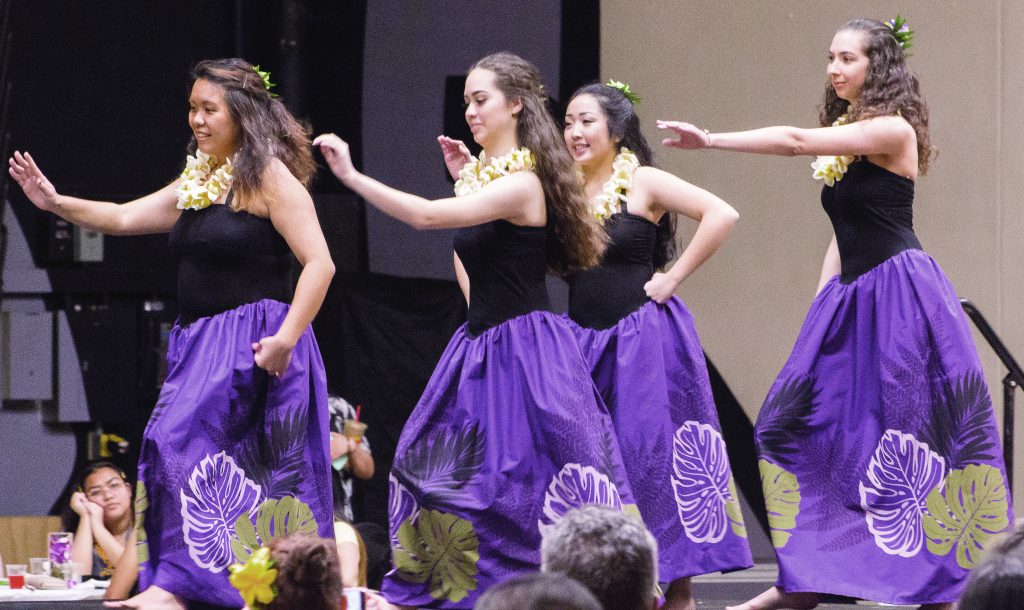
The program began when a Pu shell was blown and a group of dancers walked onto the stage, performing a Hawaiian chant. The Hawai’i Club President, Sophia Grace Kalei Ho’omaikai Kala’i Igarta, started it off, and a number of girls followed along after her.

The theme for the 2019 Lūʻau was ‘Stories of the Pacific.’

“Storytelling and oral traditions are an important aspect of Polynesian culture, and we aim to share our stories here tonight,” said Igarta, a junior at Western.

While each of the numbers highlighted beautiful hula choreography, music, dancers and costumes, they also carried a myriad of underlying meanings that made them more personal and significant for those dancing them. For the show as a whole, though, Igarta shared the inspiration behind the theme.

“Are we honoring and embracing the knowledge of our ancestors? Are we being respectful to ourselves, to our kuhana and to others? Are we taking care of the ʻāina, the land? How are we living our lives?” said Igarta. “It’s an important question with what we see going on in the world right now.”

In between each number, the emcees for the event, Anthony Pablo and Susie Krall, shared the meaning behind each of the choreographed pieces. While some honored various elements of nature — the waves, the mountain tops and even seaweed — there were others that were more specific to one person’s experiences.

For one of the dancers, Tatiana-Marie Whitlow, her solo dance ‘Ka Wailele o Nu’uanu

was dedicated to the memory of a mentor who had passed away. And, to honor that person, she danced to a song that was written by a man who had recently lost his father.

“Look at the waterfall on the left and know that it will always be there” said Krall, translating part of the song’s melody. Krall also emphasized that “It’s really important that we remember our traditions and acknowledge the people who came before us.

On top of the many meaningful dances, Pablo also helped to ensure that the event was engaging for the audience through the use of a couple of games that pull on Hawaiian culture: a cheehoo contest and a pidgin contest.

According to the blog Hawaii Chee, “’Cheehoo!’ is exclaimed when you are celebrating or if something is exciting.” So, while this was something that audience members did on their own throughout the performances to mark their enthusiasm, it was also something that a couple of audience members volunteered to compete in.

Later in the evening, Pablo also led participants in a contest where volunteers read a statement of Hawaiian pidgin to the best of their ability. In both of these games, participants were able to celebrate Hawaiian culture while simultaneously letting loose and having fun with loved ones.

To rouse the crowd in a final number, Hawai’i Club had arranged for a traditional dance that brought everyone together.

“As our program comes to a close, we’d like to welcome Tava’e Sina Sofa to the stage… and share with us the Taualuga. It’s a very special dance in Samoan culture which is often given to the chief’s daughter,” said Krall. “She is given the honor to represent the village through dance. She represents the dignity and honor of her village, and it is often performed as the grand finale of celebrations or other social functions.”

During this performance, a young woman danced alone, brought to the floor by a chaperone, as members of the crowd cheered and brought money forward to throw at the girl’s feet as she danced.

Finally, the club ended their celebration by singing Hawai’i Aloha — a Hawaiian anthem — as a group, standing, holding hands and swaying to the music they created with only their voices.


Contact the author at howlnews@wou.edu

Photos by Ashlynn Norton