


Mount Hood

New music releases

Chrys Weedon | Entertainment Editor

October 5:

Photo courtesy of mollyburch.bandcamp.com

  • Molly Burch: First Flower
    Over a year since her first album, “Please Be Mine,” Molly Burch will be releasing her sophomore album. “First Flower” is said to comment on the artist’s struggle with anxiety and broken friendships.

Photo courtesy of twentyonepilots.com

  • Twenty One Pilots: Trench
    After a year long hiatus, TOP has been alluding to the release of their fifth album since July when they released two singles. This will be their first album in the three years since “Blurryface.”

Photo courtesy of tokyopoliceclub.com

  • Tokyo Police Club: TPC
    “Hercules,” a track on the album, is available for listening now. This new track listens like a light, summer jam that will surely carry them on a wave of nostalgia through the fall.

October 12:

Photo courtesy of youngthegiant.com

  • Young the Giant: Mirror Master
    An album about shattering stereotypes and blazing our own trails, this will be the fourth studio album from this band, and is sure to satisfy Young the Giant’s fanbase.

Photo courtesy of tomodell.com

  • Tom Odell: Jubilee Road
    This album was recorded by Odell while living on a quiet street in East London, and promises to be his most honest album. The catchy piano melodies and passionate performances of his previous album “Long Way Down” are promised to return in this new project.

October 26:

Photo courtesy of robyn.com

  • Robyn: Honey
    Robyn is returning with her first studio album since “Body Talk” in 2010. This new album boasts a new emotional transparency and softness that contrasts with the party songs featured on her last album.

November 9:

Photo courtesy of universalmusic.com

  • Jeff Goldblum: The Capitol Studios Sessions
    That’s right, Jeff Goldblum is releasing an album. An accomplished jazz pianist, Goldblum’s debut album stars The Mildred Snitzer Orchestra (and Jeff on the piano) playing at the Capitol’s Studio A and B, which they turned into a dinner club to capture the music in front of a live audience.

Photo courtesy of muse.com

  • Muse: Simulation Theory
    “Simulation Theory” is a science-fiction themed conceptual album inspired by 1980s pop culture. In their eighth studio album, Muse blends nostalgia with contemporary themes to create something unlike they’ve ever done before.

November 16:

Photo courtesy of mumfordandsons.com

  • Mumford and Sons: Delta
    “Delta” promises a journey back into Mumford and Sons acoustic roots, but also ushers in innovation. This album also incorporates genres such as jazz, electronica, and rap.

November 30:

Photo courtesy of the1975.com

  • The 1975: A Brief Inquiry Into Online Relationships

Two years after their last album, The 1975 returns with their third LP. The cover and tracklist have already been released, and if the song titles tell us anything, it’s that this album will be done in the band’s classic, indie-pop style.


Contact the author at howlentertainment@wou.edu
Ensuring diversity in the arts

Chrys Weedon | Entertainment Editor

Often, liberal arts colleges and universities are privileged environments; when it comes to the creative atmosphere they foster, they can promote critical discussions on important topics, and allow traditionally underrepresented voices to be heard and appreciated. Continuing this trend can be quite difficult as our generation transitions into the “real world” — a world in which white, male, cisgender voices are often still held up as the standard.

Americansforthearts.org states on their website, “We must all hold ourselves accountable, because acknowledging and challenging our inequities and working in partnership is how we will make change happen.” Holding ourselves accountable can start by analysing the kinds of art we ingest. People should go through the music they have on their phone or computer. How many straight white males’ music is downloaded? The same should be considered with literature and art collections. What types of perspectives dominate?

“I believe students need to see people like them doing the things that they want to do,” commented art professor Paula Booth in regards to the way diversity can be reflected through this creative outlet. Representation through this medium is a way to help all students feel included, and to give a voice to the underrepresented.

Booth goes on to add that “people need to understand that art is not just something that was made by white men a couple hundred years ago, which is often what we’re taught.” To get a deeper comprehension of this concept, students can benefit from being mindful about what they choose to expose themselves to, especially when it goes against what they might have been taught growing up.

“When we’re exposed to other people’s cultures… we become more compassionate, we have greater empathy, we express our curiosity,” stated Catherine Ndungo-Case, the founder of the Cheza Nami organization. According to chezanami.org, the goal of this organization is to “promote cultural education and diversity awareness.”

Of course, being perfect is not the goal here. Rather, the goal in ensuring diversity in the arts is to become more well-rounded individuals and to give a platform to the underrepresented. This can be achieved by looking at the literature, the art, the theater, and the visual content absorbed by most on a daily basis — by making an effort to surround ourselves with perspectives that aren’t our default.


Contact the author at howlentertainment@wou.edu

Photo courtesy of Paul F. Davis

A look at “Inside Black Mirror”

Chrys Weedon | Entertainment Editor

Darkly satirical and terrifying, the cult show “Black Mirror” is peeling back a new layer in the form of a book that will be released on Nov. 10. “Inside Black Mirror” will dive into the minds of creator Charlie Brooker and executive producer Annabel Jones to give us an oral history of the show. Fans of this British science-fiction series will be able to follow the show from inception to execution and rise to global hit. Also featured in detail will be the inspirations behind every season. Various directors and other creators are interviewed in-depth about their creative process. Key actors will discuss their experiences bringing the show to life. Behind the scenes stories that have never been told before will also be included; all this content will be supplemented with photographs exclusive to this book.

Netflix bought the rights to “Black Mirror” in the fall of 2015, and recently renewed the series. Season five is already under production, rumored to be released in late 2018. “Inside Black Mirror” will be a nice companion to the show and is sure to be a hit among fans of its eerie symbolism and cultural critiques. Anyone who needs a fix of contemporary, technological fiction should keep their eyes out for when “Inside Black Mirror” hits the shelves.


Contact the author at howlentertainment@wou.edu

Photo courtesy of Netflix

Review: “Reversing Roe”

Chrys Weedon | Entertainment Editor

Netflix’s documentary “Reversing Roe,” released on Sept.12, follows the transformation of abortion legislature in America, which has been a consistently controversial topic in this country in recent history. Narrated by prominent figureheads on both sides of the divide, this documentary takes us through the history of abortion, from the illegal, backroom abortions of the 1960s to the ever-increasing restrictiveness on abortion legislation today.

According to the Netflix website, “Reversing Roe” is “essential viewing to understand how the country got here.” However, there does not seem to be much information contained in this documentary that isn’t common knowledge to anyone who already holds an opinion on this subject. New information is severely lacking, making this documentary more of a refresher course on the abortion debate in America.

Netflix also advertises “Reversing Roe” as a documentary that allows both sides of the debate to be heard: this does seem to be true. Of the individuals highlighted, 18 professionals are pro-choice and 18 are pro-life — so from a purely metric standpoint, everyone is given an equal voice. However, it is important to mention that there is a slight bias. It does seem that this documentary leans more pro-choice, mostly because there is more focus on the pro-choice professionals and their arguments against restricting a woman’s right to choose.

Despite an apparent pro-choice bias and overview of already-available information on the abortion debate, “Reversing Roe” is worth a watch simply because it emphasizes the fact that America is at a very fragile point in its history. Pro-life groups have been steadily chipping away at Roe v. Wade since its ruling in 1973, ensuring that over 300 abortion restrictions have been passed since 2010. Seven states have only one clinic that provides abortion services.

I would suggest watching this documentary if you are interested in learning about the abortion debate in the U.S., or just as a refresher if you haven’t been following politics these past few years. But keep in mind, there is a slight bias involved.

Contact the author at cweedon16@wou.edu.

Photo courtesy of: Netflix.com

Review: “Marvel’s Spider-Man”

Keith Mathew | Freelancer

With the popularity of Disney’s Marvel Cinematic Universe, “Marvel’s Spider-Man,” released Sept. 17, decides to go a different route. This new action-adventure game starts years after the masked hero acquired his powers — so no Uncle Ben trauma to go through for the tenth time.

The opening cinematic tells the player right away that Peter Parker has been in the hero business for years and is now a veteran.  There is a high energy tutorial which shows the basic abilities without leaving out any moves that may be needed. This is especially helpful because this game leans heavily on combo attacks to build up the focus bar, a resource used for instant takedowns or to heal during a fight.

Combat in this game is very fluid; dodging attacks is natural. However, learning the timing of the dodge takes some time to get accustomed to.  A combination of melee and ranged attacks in the form of gadgets sets the foundation of fighting enemies along. Additional skills picked up later in the game augment combat to make a personal style.

What is great about “Marvel’s Spider-Man” is the characterizations. Peter Parker is the awkwardly sarcastic and caring college graduate outside his Spidey-suit, but when he starts his crime fighting, he becomes the well-known quippy web-slinger we all know.  One liners and hilarious character interactions are abundant. Aunt May and MJ Watson both make appearances. In the customization of suits and abilities department, “Spider-Man” has succeeded. Unlike similar games, “Marvel’s Spider-Man” has separated abilities obtained from different suits and the suits themselves.  These suits can be purchased using different varieties of tokens found in the game, or can be awarded through the completion of tasks or collection of items.

Tokens come in six different varieties and can be obtained through the collection of backpacks or pictures, the clearing of a base, challenge or crime.  Tokens are also used in upgrades and passive abilities. The customization of a Spidey-suit consists of the look, the suit power and the passive abilities.  Once the suit and suit power are purchased, the suit power can be applied to any suit. This game gives what gamers want on that level of personalization.

With so much that is good about “Marvel’s Spider-Man,” there are also elements that could have been done better.  Knowing that the tokens collected throughout the game are helpful for powers and upgrades, I didn’t enjoy the vast amount of items to collect and complete.  The game makes me feel it is padding the runtime by having so many collectables.

Further into the game, enemies become large hordes and the dispatching of them becomes tedious. The gadgets are powerful but have limited ammo. Thus, after all the ammo is gone it’s all punching and dodging from there.

For those who like Easter eggs or references, this game is chock full of them.  Each suit is a reference to a different iteration of Spider-Man in comics, previous games or movies.  Suits include the Iron Spider from “The Avengers: Infinity Wars,” Spider-Man 2099 and others. Additionally, Pride flags can be found scattered throughout the city and one theatre’s signage can be seen with a proposal.

Despite the critiques, I think “Marvel’s Spider-Man” is a well-rounded game with great elements.  I would score this game an 8/10.

Contact the author at kmathew14@wou.edu

Photo courtesy of Insomniac.games

Awarding student artwork

Zoë Strickland | Editor-in-Chief

Every spring term, the Cannon Gallery of Art uses their Juried Student Art Exhibition to show off what Western students have to offer. This year marks the 50th anniversary of the exhibition, which displays sculptures, paintings and prints as well as graphic design pieces.

“I believe over 200 pieces were entered, and about 85 were selected,” said senior education studies major Katie Dillard. “We were allowed to submit up to six pieces each, and I entered six paintings that I felt best displayed my artistic ability. Five of my six pieces were chosen by the juror to be displayed in the student show.”

This year’s juror was Michael Hernandez, owner of the High Street Gallery and The Bruin Co. in Salem, Oregon. In addition to the jurying of accepted works, select departments on campus also have the ability to hand out awards to individual works. Amongst these awards are the Woodcock Education Center Purchase Award, WOU Bookstore Award and Art Faculty Award, among others.

“Before the exhibit opened, representatives from Werner University Center, the Richard Woodcock Education Center and the City of Monmouth come and choose a piece or pieces for purchase awards, meaning that they buy a work from the artist to add to their permanent collections,” explained Paula Booth, assistant professor of art and Cannon Gallery of Art director. “Others, such as the Dean of Liberal Arts and Sciences, the WOU Bookstore staff and the art department faculty choose artworks to be given awards for excellence. As well, the juror of the exhibit gives awards.”

For some students, many of the submitted pieces were ones done for class.

“A lot of my artwork was created in class, so I had little control over the subject/objects being painted,” said Dillard. “However, I always try to find the beauty in the shadows, colors and form of even the most ordinary of objects. If there was any conjoining message or theme between my pieces, it would be about capturing beauty.”

One of Dillard’s pieces, an oil painting titled “One step towards change,” won the WOU Bookstore Award.

“I explore many different mediums and each message (and) theme is different,” said senior art major Bethany Coma. “I have focuses in printmaking, painting and sculpture … I want my audience to be as excited when they see my work as I was creating it.”

Two of Coma’s featured pieces won awards — “Astro-Kitty,” an intaglio etching of an astronaut cat won a Werner University Center Honorable Mention and the Woodcock Education Center Purchase Award and “Drowning,” a trace transfer monotype, won an Art Faculty Recognition Award.

“My favorite thing being included in the show is the opportunity to be able to show the public what I’ve been working on,” said Coma. “It’s such a great feeling to be a part of such a great art program and that they do this for the students every year.”

While the exhibit is rewarding for those who get to share their artwork, Dillard also mentioned how seeing the exhibit making process itself was rewarding: “The gallery director and staff did a phenomenal job of helping frame, arrange and hang the artwork so the pieces complimented each other. I had the opportunity to observe the process as I am taking a gallery exhibition class this term, and hadn’t realized the dedication and work it took to put together a successful show.”

Capping off the exhibitions for the academic year, this exhibit will be up in the Cannon Gallery of Art in Campbell Hall until June 13.


Contact the author at journaleditor@wou.edu

Photo by Zoë Strickland

Composed by one, played by many

Zoe Strickland, Editor-in-Chief

Many years of music study and a working knowledge of three instruments led up to music composition major Jessica McCutchen’s senior music recital. McCutchen, who plays piano, violin and flute, has spent the last four years honing her composition and music playing abilities.

The pieces performed during the recital span McCutchen’s time at Western from “Reflections,” the solo piano performance that McCutchen first composed in 2013 and revised in 2014, to “Antumbra,” written in 2018 — the newest solo piece from McCutchen.

Of the eight pieces performed during her June 1 recital, McCutchen’s favorites are “Antumbra” and “The Marionette.” The latter was performed with McCutchen and Dr. Carlos Velez on flute, and music major Emily Delziel on piano.

“‘Antumbra’ is a piece about transition and seeing where life takes me,” said McCutchen, who also performed the piece at the “Elegant Evening of Piano Music” event on May 2. “It’s a solo piano piece, so it’s me and the piano telling a story. It’s about leaving this place I’ve made a home and leaving people I love to go off and chase my dreams.”

“‘The Marionette’ was written out of frustration due to the lack of technical challenge in pieces I was playing in ensemble classes,” McCutchen said. “Instead of festering over something I had no control over, I went home and wrote. Getting to perform it with my flute/composition professor, Dr. Velez made it more special.”

While the recital both began and ended with a McCutchen as a solo pianist, that’s far from what was displayed in the duration of the evening. The bulk of the recital consisted of compositions that were also played by numerous students throughout the music program. For some pieces, like “A Life to Remember,” “Dawn” and “Derailing Circus,” McCutchen was among those playing. However, pieces like “Procrastination Waltz” and “Knock Knock Go Away,” were solely played by her peers.

“Hearing my compositions being played by others is the strangest feeling,” said McCutchen. “It’s like someone saying your thoughts, which can be beautiful or it can be heartbreaking. I invest so much time and effort composing a piece. I make sure what I write has a purpose. When I give it to a performer, it’s like I am giving them a part of myself to share with the world. Hearing someone else articulate your thoughts and your emotions is overwhelming and beautiful. It’s sharing who I am through other people.”

As for what’s next for the graduating musician, she plans to continue her education: “I plan on getting my masters and doctorate. I really love school.”


Contact the author at journaleditor@wou.edu

Photo by: Zoë Strickland

Western takes a trip to the primal

Zoë Strickland | Editor-in-Chief

Vampires, film and dance collide in “Why Cross Chaos,” the newest theatre production put on by Western’s theatre and dance department. The show will open on May 30.

The devised play, which is guest directed by Portland-based director and choreographer Jessica Wallenfels, takes place on three planes: the ‘real world’ in 2027, where immigration has been made illegal and people are trying to resist oppressive forces that keep them in refugee camps; the primal, where characters go to escape the real world; and the in-between, where characters drift between the real world and the primal. The primal world is where Les Vampires, a vampire gang, come in they’re thieves and murderers who are portrayed in the play as masked dancers, most often performing the Apache dance. Apache, a dance similar to a waltz, involves hair pulling and slapping and serves as a visual representation of the aggressive 2027 world.  

In our production, almost everything is a dance,” said Wallenfels. “There are choreographed, unison-style dances and there are scenes with very few words, where the interactions between the characters are danced.”

Though the play is based on the 1915 serial series “Les Vampires,” directed by Louis Feuillade, the formation of “Why Cross Chaos” was a collaborative effort between Wallenfels and the cast. The collaboration began at auditions, where auditionees had to watch an episode of the series and come back with an original response to what they had watched. After the 12-person cast was chosen, small groups of people were assigned different parts of the series to watch and report back on.

“(Wallenfels) gave us the frame of gut-hits and questions,” said A.J. Saddler, senior BFA in acting major, who plays Maz, one of the characters tasked with tracking the gang. “So, if there’s something that really got your attention in the episode or something that hit your gut or questions about certain plots … or questions about how we might be able to utilize elements of the movie into our play, even though we don’t know the plot or anything. We would make lists.”

From there, they would decide what parts to pick out and highlight in the production.

What makes ‘Why Cross Chaos’ unique to me is that it is a piece entirely made out of collaboration,” said junior theatre major Phoebe Thompson, who plays Delphine. “And with that, it is a very absurd piece that has a lot of factors to it.  It’s one of those shows that will impact everybody individually.”

“I love that it reflects every single person who’s worked on it, from the actors, to the assistant directors and dramaturg, to our assistant choreographer and designers,” noted Wallenfels. “There are pieces of text that one actor brought to an audition, which show up spoken by another actor in a completely different context in the show. Overall ‘Why Cross Chaos’ has a voracious, go-for-broke spirit that is kinetic and visceral. It is ridiculous at many points but came from a very serious question: How can I make impact in a world so full of chaos?”

In addition to being a take on “Les Vampires,” the play also comments on social issues, like gender representation and stereotypes.

“We didn’t go in saying ‘hey, we want to comment on America’ … As we went on, we ended up getting into more and more conversations about, for example, Irma Vep in the movie not really falling into the stereotype of women that they may have based back in 1915 or now,” said Saddler. “We ended up getting into this conversation about gender and gender norms and ‘how could we break that, how could we not portray typically masculine, typically feminine’ … through the writing process I think it was a conscious decision to be able to comment on society.”

The play works against these social norms by having Vep portrayed by multiple cast members, as well as including relationship subplots with people of any gender.

“Why Cross Chaos” is a multi-layered play that uses bits of comedy to lure viewers into the horrific world originally created by Feuillade.

“I think that this is a very somewhat different take or approach to theater that (Western) has taken in the past few years … it may not be a typical play that you may see at Western, but I think that if you jump in and go along with us, you’ll be pleasantly surprised,” commented Saddler.

“Why Cross Chaos” is playing in Rice Auditorium from May 30 to June 2. Tickets are available at the box office. Those who are looking for more information can contact the box office at 503-838-8462.


Contact the author at journaleditor@wou.edu

Photo by: Paul F. Davis


Review: “Tracyanne & Danny”

Zoë Strickland | Editor-in-Chief

“Tracyanne & Danny” is the perfect album for a calm summer’s day. The songs are dreamy, carefree and border on sounding old fashioned. Though listening to the entire album at once may make listener’s eyes heavy, the duo has a select number of tracks that pick up the beat. While the album is good, I don’t think I’ll be listening to it in its entirety again. Rather, I’ll add a few songs to my listening library and move on.

“Tracyanne & Danny” is the first album from Camera Obscura frontwoman Tracyanne Campbell and Crybaby’s Danny Coughlan. The duo presents a sound that listeners of each individual artist’s other work would expect; Campbell’s unique vocals join with Coughlan’s overall calm musical stylings to create a beautifully retro-sounding array of tunes.

Though most of the album has a more relaxed sound to it, tracks like “Alabama” and “Cellophane Girl” bring up the tempo.

“O’Keefe” is my personal favorite song on the record. A duet with the slow percussion, piano and harmonica make the track sound bittersweet — like it should play during a break-up scene of a foreign romantic film.

While Tracyanne & Danny is a collaborative project, Campbell and Coughlan work as separate entities — individual songs are primarily sung by one artist or the other, with the opposite adding in backing vocals. By doing this, the artists give each other space on the album to embrace their own sounds. For Campbell, this means songs like “Alabama,” which could be something straight from Camera Obscura’s discography. For Coughlan, this means his slower, dreamy, acoustic sounds, like those found in “Deep in the Night.”

“Tracyanne & Danny” is the perfect album for fans of Campbell and Coughlan’s other musical ventures, or for people who enjoy She & Him and Elizabeth & the Catapult.


Contact the author at journaleditor@wou.edu

Photo courtesy of: www.tracyanneanddanny.com

Review: “Solo: A Star Wars Story”

Simson Garcia | Sports Editor

“Solo: A Star Wars Story,” is its own movie. Yes, it follows along with the linear plot of, and connects to, the larger Star Wars universe — something us fanatics love. But the characters — new and old-droids — Wookies and warp speeds into the next galaxy make it original and a worthwhile ticket.

I had expectations — don’t we all, when it comes to Star Wars — that were mostly met. Alden Ehrenreich, who acts as Han Solo, was someone I honestly didn’t care for when I watched the trailer. However, I set my expectations low prior to my viewing and the only thing I looked forward to was how he would portray his version of Solo. His embodiment was exceptional. I’m glad I wasn’t too much of a fan of the warm charisma that Harrison Ford invested in Solo and, although that performance won’t ever be matched, Ehrenreich holds his own quite well.

Donald Glover is the exception and best actor in this movie. As Lando Calrissian, captain of the Millenium Falcon, Glover exceeds Billy Dee Williams’s past performances of Calrissian. This is unfortunate because Williams was the original who personified Lando, but Glover did such a phenomenal job mirroring Williams’s acting — and eventually bringing his own flavor — that I’ll give him the benefit. One thing I looked forward to was the chemistry between Glover and Ehrenreich. This didn’t match the chemistry between Ford and Williams exactly, but the pair clicked.

Of course, these two on screen would not be if not for their quarrels over the Millenium Falcon, like in past films, and I’m so satisfied they got into the backstory of their constant negotiations over the beloved light-speedster.

And let’s not forget about Chewbacca and Solo’s relationship. Kudos to the filmmakers for including so many highlight moments in their relationship. It was awkward when they first met in a mud-filled jail confine, but that’s the beauty of their pairing — something die-hard fans have always loved about the franchise.

I’ve always loved Star Wars films, but the major thing that annoyed me was the constant unnecessary CGI makeover that was dominant in the prequels of the last decade. Everybody prefers sock-puppet-Yoda over the computerized version and so I’m thankful “Solo” retained the classic looks of weird looking creatures and droids.

I will continue to love Star Wars movies like “Solo” as long as they keep reinventing. “Solo” gives a new look while still maintaining the old-fashioned Star Wars we know and love.


Contact the author at journalsports@wou.edu

Photo courtesy of: starwars.com


Review: “Deadpool 2”

Stephanie Blair | Copy Editor

Let me start by saying that I liked the last Deadpool film — I really did — but I felt immediately upon seeing it that it didn’t have the potential to be a good series. I also knew that Marvel would make it one anyway and so, over two years later, here we are. I went into this film with low expectations and they were met exactly.

I could spend a lot of time complaining about how mediocre this film is, even though I can already feel my friends’s angry tweets being typed out as I write this. So, instead of going on at length, I’m going to quickly run through my biggest problems with the film and then we can move on to the enjoyable bits. Here we go.

The first 20 minutes or so of setup were insufferable. The title sequence was funny as I realized what they were referencing, but quickly became overdone. The plot, overall, was simple, dumb and was almost asking for a cop out ending — which it then gave. Any instance of visual humor, rather than a funny line, was ruined by characters in the scene heckling the moment. The biggest laughs in the showing I attended went to gags that were simply call backs to the biggest laughs of the first movie.

To be honest though, it’s still fun. It’s the same brand of humor, with slightly different twists. The new characters aren’t very fleshed out, but I want them to be. The soundtrack is excellent, making it a tradition of the Deadpool films, now. Simply put, it’s not as good as the first film — but if you liked the first one, you’ll like the second.

There’s nothing groundbreaking here, like there — arguably — was in the last film. There just isn’t. But if you like light body horror, penis jokes and ‘80s tunes, you’re in for a good time.


Contact the author at journalcopy@wou.edu

Photo courtesy of: www.foxmovies.com

Review: “Electric Light”

Zoë Strickland | Editor-in-Chief

It’s been three years since singer-songwriter James Bay released his debut album, and I’ve been anticipating his second since I finished listening to the first. “Electric Light” is good, but it’s nothing special. In his second album, Bay seems like he’s trying to reinvent his sound, but does so in such a miniscule way that the changes just seem like slightly overproduced missteps. While the album almost succeeds in showing a different side to the artist’s music, an overall lack of continuity is its downfall.

When it comes to music, I love a good connecting storyline — and Bay’s sophomore release seemed like it was going to deliver. “Electric Light,” in a way similar to “Camp” by Childish Gambino, uses interludes of dialogue to introduce the listener to the story that the album is trying to tell.

The first track, aptly named “Intro,” consists of nearly a minute of dialogue between Bay and a woman who’s playing the role of his significant other. The conversation comes back halfway through the album with “Interlude,” another minute-long track. While this framework acts as the set-up for a musical story, the album itself fails to follow through. I was expecting the last track to sum up the record in a similar conversational way, but it ended on a bittersweet musical note that housed Kodaline-levels of sadness. Though the attempted storyline seemed like it was aiming for somewhere great, it failed to get there.

The first single released and fourth tune on the album, “Wild Love,” is destined to be one of the songs of the summer. “Wild Love” relies heavily on autotune, nearly to the point of sounding like Bleachers. However, the majority of the song remains low-energy and squanders the pop potential it appears to be aiming for. It isn’t until the track is almost over that the sound drops into a danceable beat.

Bay’s debut album, “Chaos and the Calm,” was released in 2015 and was a solid record his powerful vocals and intensely romantic lyrics resulted in three Grammy nominations. While “Electric Light” still houses the same strong sound that was displayed in “Chaos,” the at-times-overproduced quality of the songs took away from how much I enjoyed the album as a whole.

While I dislike Bay’s overall sound reinvention, I do have to commend him on the powerhouse that is “Stand Up.” The song begins with layered vocals, but quickly turns into a softer, choral interlude, eventually building up to a climax of boisterous percussion and violin, ultimately winding down to a calm finish that borders on lackluster.

“Just for Tonight” is the song that’s most reminiscent of the artist’s previous releases; the tune feels like it’s reaching into Bay’s singer-songwriter roots, but ultimately winds up relying too heavily on choral voices.

Though I’ll probably stick to listening to his first album, it seems like “Electric Light” is Bay’s way of coming into his own sound. The album plays more with autotune, voice layering and different genres. However, the failed continuity of the record makes it seem like Bay was throwing pasta at a wall and hoping it would stick if the organization was better, I think the reinvention would have been more successful.


Contact the author at journaleditor@wou.edu

Photo courtesy of: republicrecords.com

Dedication illuminated through dance

Caity Healy | Lifestyle Editor

One by one, the audience shuffled to their seats and waited in anticipation for the art they’d soon witness. After some time, the lights slowly dimmed to full darkness. With a hush that consumed the room and the sweeping of a curtain, it was time for the show to begin.

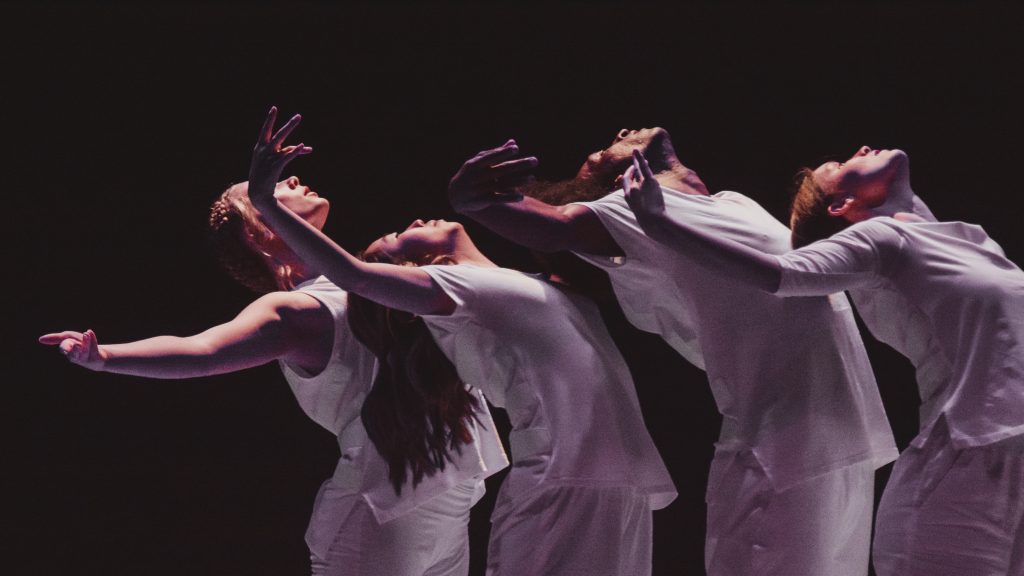
The 2018 Spring Dance Concert took place from May 10-12 in Rice Auditorium. Showcasing the work and dedication that went into 10 different performances, audience members showed up and supported the art that their friends, family and peers had worked to perfect.

The show displayed the work of students, alumni, and the Rainbow Dance Theatre, as all worked together to put on the two and a half hour production.

From the eyes of a viewer, what was seen was nothing short of phenomenal. Opening with a performance titled “Last Light,” choreographed by senior Andrew De La Paz, audiences saw animalistic forces charging after the dying light presented by soloist senior Alaina Meyer. Ultimately, the piece showed that no matter how hard the force attempted to steal the light from her, she would not surrender.

This piece set the scene for the rest of the concert; from then on, audiences were able to see more dark material, with visuals that would send shivers down one’s spine and had perfectly chosen music to match.

These dance performances didn’t shy from tackling controversial topics, such as the stereotypes surrounding different races brought to light in “One,” choreographed by senior Tunya Dhevaphalin.

“Each piece told a story,” explained dancer sophomore Noah Nieves Driver. “Whether it be one of determination, grief, or just for pure entertainment … (each was) full of everyone’s heart and soul.”

Art was exhibited within each performance; the set designs, the lighting that flawlessly reflected the mood of the piece, the film used in choreographer Kristie Lauren’s “Chalk, Chalkboards, and Classroom Covens,” and even the painting produced on the spot by Professor Gregory Poulin in “Men Dancing: the Painter,” choreographed by dance professor Darryl Thomas in collaboration with the dancers — all left the audience in awe.

Behind the curtain, what made the production of this art possible can be seen.

“A lot of preparation went into the Spring Dance Concert,” said dancer sophomore Maria Krueger. “We put five months worth of rehearsal time in, with practices twice a week for two hours each practice.”

Krueger was a part of two performances: “Last Light” and “False Hologram.” She added that, on top of the work she and the rest of the crew put into the pieces, there were also “two previews during that time, where the dance facility overlooked the dances and helped students perfect their pieces.”

With numerous dancers involved, choreographers, costume designers, lighting designers and more, the hours on top of hours and immense passion put into the production was evident.

Following the final piece, “The Garden of Earthly Delights,” choreographed by Valerie Bergman and professor Darryl Thomas, both a part of the Rainbow Dance Theatre, the show came to a close. As the faces of each performer made their way to center stage to take a final bow, much of the audience gave a standing ovation to show their respect and admiration towards everyone involved.

Driver noted that as he was taking his bow, he felt “sadness that the run is over … and happiness to finally have free time again.”

“It felt amazing to perform these pieces, to show off five months of hard work,” added Krueger.

As the lights brightened the room and the audience made their way down the rows and out of the auditorium, those involved in the show were greeted with the smiling faces of all of their supporters, waiting to congratulate them on the work they had done.

Contact the author at chealy16@wou.edu

Photos by: Paul F. Davis

Music from the heartstrings

Zoë Strickland | Editor-in-Chief

Emmaly Basaraba was three-years-old when she discovered that she wanted to learn how to play the violin; “I remember going to the living room and on TV there was a man playing violin and I was like ‘I want to do that.’” Five years later, her parents offered to get her lessons. On May 3, the Bachelor of Music major walked on to the Smith Hall stage to perform her junior music recital.

The recital, titled “Ain’t Misbehavin’” after one of the songs that Basaraba performed, featured jazz music from the ‘20s and ‘30s.

Music students Noah Adams and Justin Kayler accompanied Basaraba on the drums and bass, respectively. Her brother, Wyatt Basaraba, played both the guitar and tenor banjo. Between songs, Basaraba pointed out that certain selections — namely, “Georgia on My Mind” and “Ain’t Misbehavin’” — were chosen because of her association between the songs and her late music teacher, Gene Hall.

She chose the title of her show because of how it represented the era of music she was focusing on in the set, as well as her memory of Hall playing it; “I felt it captured the essence of the time period that I was going for — jazz music from the ‘20s and ‘30s …  I have a lot of fond memories of Gene playing it with his granddaughter, because she would sing it while he would play it. I thought it just captured the essence of the era.”

A Polk County local, Basaraba was raised in Dallas, where she and her brother were homeschooled.

Music is more than just a degree or a pastime for the violinist. Rather, it’s part of her identity.

“Music is kind of the central part of who I am as a person … I love doing a lot of different things for fun but music is my escape,” she said. “Whether it’s listening to or playing music, it’s what I do to feel whole and to express myself.”

For Basaraba, this love of music comes from Hall. The instructor taught both her and her brother music from the time she was eight until he passed away when she was sixteen.

“It’s hard to find a starting point. He was my teacher, but he was a lot more than that. He was kind of a grandpa figure to me,” she said. “Not only was I learning how to play music from him … but he would be interested in what was going on in our lives … he was the person who really impacted me and kind of instilled music into my soul … it’s Gene’s fault that music is what I live and breathe.”

“When I’m performing especially, that’s where I feel the most open with my music. I’ve been performing for a long time … I don’t really get stage fright,” Basaraba’s love of performing stems, in part, from Hall as well — he would invite her and her brother to play gigs with him.

“I really feed off of being in front of a crowd and showing them what I’ve got,” Basaraba noted.

Hall is one of the the biggest musical inspirations in Basabara’s life. In addition to him, she also finds inspiration from her current music teacher: “Christopher Woitach — he’s really inspired me too,” she said. “Then there’s like greats like Stephane Grappelli and Joe Venuti.”

When she isn’t playing music, Basaraba works on campus at the Wolfstore, watches “The Office” and looks after her two guinea pigs — Wilbur and Orville. But music remains her primary passion.

“Music is my hobby and the thing I study and the thing I love to do,” Basaraba said. “It’s hard to think of other things I love as much as music — both listening and playing.”

The recital ended with “Five Foot Two” by Ray Henderson. As the lights came up, Basaraba’s brother got up and gave his sister a hug.

It’s clear that Basaraba’s own experience as a music student has made a lasting impact.

“My dream would be to have a private studio to teach out of. I love teaching private lessons, I have a few students right now,” she commented. “To be honest, I don’t have a set plan of what I want to do, but I’m very open to whatever comes my way. I’m excited for what the future has.”

Contact the author at journaleditor@wou.edu

Photo by: Paul F. Davis

Review: “Can’t Wake Up”

Zoë Strickland | Editor-in-Chief

Alejandro Rose-Garcia, also known as Shakey Graves, announced his fifth album with a warning: that fans should prepare to sell their suspenders. While Graves set out to release “Can’t Wake Up” as a departure from his previous albums, the record houses the same down-home feel that can be found in his earlier work, with a touch more gloom and a little less fingerpicking.

I was introduced to Graves’s music through an episode of NPR’s Tiny Desk Concerts. The concert emphasized the sort of music that the artist is famous for — a combination of folk and blues, with a touch of rock n’ roll rolled in — the same kind of music that he’s trying to take a departure from in “Can’t Wake Up.”

In “Can’t Wake Up,” Graves has set up a world of mystery, reminiscence and surreal situations. His lyrics are self-analyzing, dark and dreamy, while the music itself is somewhat psychedelic and layered these things work together to create an audio representation of the world depicted on the cover of the record.

Though the album’s core still houses the warm vocals and strands of guitar-heavy backing that punctuates his previous four albums, Graves has shifted his sound to being more pop- and rock-heavy. Rather than embracing a low-budget, found-on-the-street sound, “Can’t Wake Up” is noticeably different when it comes to production. Each track has a larger and more robust presence.

“Counting Sheep” is possibly the catchiest song on the record. It was one of the first singles released and provides a dose of shock regarding what the album will be like. The track marries the sound that Graves is pushing away from with the one he’s embracing. Rather than focusing on a solo voice, the song employs the use of Graves’s own different pitch backing vocals to fully immerse listeners in the hazy world that’s being created. I challenge you not to sing it at the top of your lungs.

The album then shifts into the ultimate summer dance anthem; “Kids These Days” is an indie-sounding bop that spends time reminiscing about the feeling of indestructible youth.

Though many of the tracks are powerhouse anthems, “Climb on the Cross,” “Neighbor” and “Mansion Door” show a slower side of the album; while the starting tracks are bellowing, the slower songs work to combat some of the more high-energy pieces and bring both the album and the listener back into the the dreamscape.

Though Graves billed “Can’t Wake Up” as a great departure from his earlier music, the album still feels like Shakey Graves it still feels like the warm country-folk songs that he’s been playing since his first album. Simply put, “Can’t Wake Up” is a great album. Though die-hard fans of Graves’s older work may be discouraged, this album is worth the listen. It embraces a lot of what’s currently being done in popular music, but the record retains a sense of originality.

Contact the author at journaleditor@wou.edu

Photo by: shakeygraves.bandcamp.com

Campus pianists take the stage

Zoë Strickland | Editor-in-Chief

The sound of music filled Smith Hall as music students and professors alike played through piano performances. On May 2, “An Elegant Evening of Piano Music” was held as part of the 2017-2018 Smith Concert Series.

The two-hour event consisted of pianists playing the compositions of Chopin, Rachmaninoff and Debussy, among others. Professors Diane Baxter and Jackie Morelli opened the evening by performing “Celebration” by Rollin. The duo played two other songs throughout the night; “Fantasy Op. 5 ‘Larmes’” by Rachmaninoff was also played in the first half of the night, while “Jubilation” by Vandall opened the show after intermission.

Junior music major Levi Polasek played two songs in the latter half of the evening. The first performed was a short, lively piece by Kapustin, titled “Prelude Op. 53 No. 17” and the second was “Nocturne Op. 27 No. 2” by Chopin.

“The great part about performing is audience reaction, which honors both the performer and the composer,” said Polasek. “My favorites are the beautiful and timeless piano compositions from Liszt, Beethoven, Prokofiev and Chopin.”

Senior Bachelor of Music major Jessica McCutchen enjoys performances like these because of the moment after she reaches the end of a song; “There’s this moment of silence afterwards before people clap, and it’s when you exhale all the air you’ve been building up the entire time you’ve been playing — it’s the most relaxing moment.”

Also included in the setlist were performances by Leo McLean, a sophomore from Sprague High School in Salem, Oregon and Li Jing, a visiting scholar from Guangxi Arts University in China. McLean performed Chopin’s “G minor Ballade Op. 23” while Jing played Liszt’s “Harmonies du Soir.”

The evening of piano music ended with the only composition of the night, “Antumbra,” which was composed and played by McCutchen.

“(Antumbra) came from a place of transition in my life … I went through this huge writing block and I couldn’t write any music for two months, anything substantial,” said McCutchen. “So I went back to my old approach of writing music, which is just sitting down at the piano and playing until I figure out what I like … it’s not an effective use of time, but it really changed how I write music now. It got me back on track.”

“Antumbra” will be making an appearance at McCutchen’s senior recital on June 1.

Other student performers for the night included seniors Xia Yun and Xudong Yang, first year masters students Julia Harrington and Yuzhou Huang and second year masters student Lingyu Zhu.

The next performances hosted by the music program include the joint junior recital of Cole Johnston, Jacob Marsh and Keagan Wall on May 9, and the junior recital of Adam Hyland on May 17. Both events are at 7:30 p.m.

Contact the author at journaleditor@wou.edu.

Photo by: Zoë Strickland

Review: “KOD”

Simson Garcia | Sports Editor

J. Cole’s “KOD” arrived on April 20 and, while he’s progressed and improved as an artist, his new project regressed towards the end.

While varying styles of instrumentals are constructed, ranging from newly stylized modern trap beats to old-school hip-hop influences, Cole’s narrative is what keeps “KOD” afloat. “KOD,” or “Kill Our Addiction,” is based around Cole learning to cope with some of the problems his current generation is also dealing with. For instance, in the album’s trailer, Cole revealed part of how the album developed, “If I turn on the TV right now, it’s not going to be long before an advertisement pops up that says ‘are you feeling down? Have you been having lonely thoughts?’”

Cole tries to grasp the listener consciously. He touches on multiple addictions his generation has been afflicted by and how they might cope with each: technology, drugs, sex and alcohol. But the messages are deeper and, at times, have a double meaning. Cole engages the listener to closely analyze the problems they may also have faced.

For example, “ATM” is a track about the obsession of money and the American dream, and how the dream consumes people. In the refrain he repeats, “Count it up, count it up, count it up, count it,” then responds sarcastically with “Can’t take it when you die, but you can’t live without it.”

“Photograph,” too, deals with obsession as it’s about a boy’s strong interest toward a girl’s social media account — though he’s never met her in reality.

While I get the many interplaying themes, and completely appreciate the diversity KOD strings together, because hip-hop truly needs an army of poets to talk about different issues they’re simply outnumbered by the invaders of trap music at KOD’s core is the current generation’s endless addiction to things. Technology is one “Photograph” spoken of as well as drug addiction that’s layered throughout several tracks.

But “KOD” struggles to hold together until the very end. Cole is so invested in topics related to addiction and unwillingness to heal, it’s not something you can re-listen to, and nod your head until the end. Upon finishing, I found it to be a sad case of an endless cycle of our society’s problem with addiction, especially with drugs and alcohol. It’s only right since Cole displays through the songs what he’s undergoing and how hard it is to overcome. I understand that aspect. But it’s not together because there’s an unfulfilling resolution to “KOD,” which could be due to Cole supposedly crafting the album in short time.

Just as important, the instrumentals became too melancholic for my liking. Even though I dig jazz samples and classic hip-hop rhythms, the beats encoded with the messages didn’t keep me vibing. “KOD” is listenable, attention grabbing through the first seven tracks, but towards the end kept me questioning and hopeless.

Only two tracks I can say are completely catching me by the ear and will get more than a few replays.

The piano sounds from “The Cutoff” are reminiscent of Jay-Z’s “Dead Presidents,” an all-time favorite of mine. In the song, he talks about friends he’s cutoff and the stages they went through until their relationship eventually split, something I’ve come to face with recently.

Second, “ATM” has this message and tempo I was hoping the latter half of “KOD” would include more of. As I mentioned earlier, the lyrics are about the sad affair we have with money, but Cole’s beat and flow carries the song. Even though he states things like “without it I’m miserable,” he comes in with a force vocally. I love how he’ll say something like “I’m stacking this paper, it’s sort of habitual,” but while doing, there’s a sense that he’s basically insisting to be conscious about the idea of money, as he states with “proceed with caution, I heard if you chase it only results in, a hole in your heart.”      

I’ve only listened to “KOD” two times over. While a step up from his previous release, “4 Your Eyez Only,” “KOD” was a complete miss when compared to his penultimate “2014 Forest Hills Drive” album, but, like Cole says in “The Cutoff,” time will only tell who is on his side, or “KOD”’s side.

Contact the author at journalsports@wou.edu

Photo by: dreamville.com

Take a break from midterms

Zoë Strickland | Editor-in-Chief

As it gets to be the middle of term, it’s important to hit the books and study for midterms. However it’s also important to take some time and explore all of Western has to offer. Here are some events on and off campus that can provide you with a reprieve from studying.

The Wooden Shoe Tulip Festival has been extended by one week rather than closing on April 30 as planned, the festival’s last day is now slated for May 6. For those who want to get out of the Monmouth-Independence area, the festival can provide a break from studying. In addition to roaming the tulips, festival-goers can pick up food and purchase their own flowers. For people who choose to go specifically on the weekends, they can also take advantage of hot air balloon rides and a craft marketplace. Admission for the festival is $5 per person or $20 per full car.

There are a myriad of different on-campus music events happening this week. All of the events are free for Western students and offer a wide variety of tunes to listen to. On Wednesday, May 2 at 7:30 p.m., the music department is holding a showcase of current piano students and their work. The following day on May 3, junior Emmaly Basabara will be performing her junior violin recital. The event begins at 7:30 p.m. Rounding out the week of music events is a Friday night performance by the Salem String Quartet. The show is on May 4 at 7:30 p.m. as well. For those who are interested in seeing the string quartet, prices vary: $8 general admission, $5 for students and senior citizens, or free with a Western student ID.

From May 10 to May 12 Western’s dance department will be hosting the 10th annual Spring Dance Concert. The concert will feature numbers choreographed by students, faculty and Rainbow Dance Theatre. Tickets are $8 for students with a Western ID, $10 for senior citizens and $14 for general admission. Those who are interested in attending the dance concert can purchase tickets at the box office in Rice Auditorium.

Contact the author at journaleditor@wou.edu

Photo by: Elissa Sorenson

Review: “Mercury 13”

Zoë Strickland | Editor-in-Chief

Are women fit for space travel? NASA in 1961 thought the answer was a resounding no. One of Netflix’s newest documentaries, “Mercury 13,” explores the fight that resulted from this opinion. “Mercury 13” is informative and vital for documenting the path to gender equality, specifically in regards to women in the STEM field. However, its slow start and tendency to repeat points made it difficult for me to fully engross myself in the film.

“Mercury 13” sheds a light on the stories of 13 of the 25 women who took part in secret testing that would determine if they were fit to be sent into space. The testing, administered by William Lovelace the creator of the male astronaut test for NASA was conducted primarily because of Lovelace’s curiosity, rather than because of NASA’s interest.

The documentary is focused on the 13 women who passed the testing and were technically eligible for spaceflight. Though some of the women performed better than others, it was found that some even had better scores than their male counterparts. However, the unsanctioned tests were a wash because of Lovelace’s inability to convince NASA that women were fit for space.

In addition to tracking the test-related plight of women trying to achieve space travel, “Mercury 13” also outlines the governmental backlash that the testing resulted in.

The documentary starts off dreadfully slow. Though it hits every mark in regards to exposition, it takes 20 minutes to really get into the main parts of what actually led to the spaceflight testing.

“Mercury 13” isn’t trying to uncover the great mystery of why women weren’t allowed to be sent up to space it was purely because of the sexism perpetuated by the government, male astronauts and societal beliefs.

While the documentary makes a good point of including source content from interviews with the Mercury 13 from the time of the trial including a reporter asking one of them about how she was going to find the time to be an astronaut as well as a mother at times it felt like the same points were being made in monotony. Because of this, this documentary felt like something I would watch in a classroom rather than on my own time.

That being said, the film was overall enjoyable. The more recent interviews conducted with some of the women show a level of tenacity that everyone should aspire to. The women are vivacious and determined to better the landscape of gender equality in STEM fields. Their discourse regarding the events they were involved in livens up the documentary tenfold.

Undoubtedly, my favorite part of “Mercury 13” was its ability to maintain a sense of unity between all of the female pilots involved. In addition to having interview clips from most of the surviving women included, the documentary also includes interviews with women who were affected by the efforts of the Mercury 13, like Eileen Collins, the first female pilot of a space shuttle. This not only emphasized the scope of women affected, but it also grounded the efforts in a more tangible way. It’s clear that, while the Mercury 13 women were unable to achieve spaceflight, they’re still invested in future women who want to be sent to space.

As someone who’s interested in both space and gender issues, I liked this documentary. “Mercury 13” took two things I love learning about and discussed the crossroads between them. However, I wouldn’t recommend it to people who are hesitant to watch documentaries, or who have little to no interest in the subject matter. It’s slow to start, and admittedly took some trying to get through.

Contact the author at journaleditor@wou.edu

Photo by: nasa.gov

Exhibit explores how numbers relate to nature

Kevin Reed | Staff Writer

“Art is really for oneself and fine art doesn’t really have one finite message that one’s trying to get across,” said Jennifer Bracy, a professor of visual communications design at Western. “It’s often much more about questions and maybe there’s some kind of an answer or a message within, but it’s less important.” Bracy has been teaching at Western for eight years and recently released a new fine art exhibit called “Forces of Nature,” on display in Hamersly Library on the second floor.

In the past Bracy has mainly worked as a freelance graphic designer.

“I work often with small startups or non-profit organizations that need help with a campaign … or something of that nature,” said Bracy. However, she explained that this display is a new exploration for her: “There’s a specific message and specific audience that has to be communicated in graphic design … It’s much more open to interpretation.”

Though she has done art displays and shows before, this “Forces of Nature” explores new mediums and techniques utilizing ink and printmaking to create contrasting colors, shapes and forms to make each piece beautiful and have its own personality.

“I named it ‘Forces of Nature’ because a lot of the themes that I have explored in my art, and some of my personal design projects, really came out in this body of work … the infinite wisdom of nature. What we can learn from it as humans, how we have to respect it … the tensions between the us and the environment and the things we do to it.”

Her main focus of many of the pieces in the display was the beauty that is in nature. Bracy drew inspiration from natural phenomena like the honeycomb and the geodesic dome to showcase the random perfection nature can achieve at times.

“The bee hive is so efficient and it represents this strong, stable and efficient community of bees and humans can really borrow from that,” she noted.

In “Number Series,” a specific grouping of pieces, Bracy breaks down the nature of numbers one through ten and what meaning and significance each number has around the world.

“What I love finding out is that in a lot of these human constructs with language that, inherent in them, there’s a lot of nature with a lot of those origins of numbers,” said Bracy.

Each and every day people see numbers or use numbers but nobody ever thinks about the technical side of it all or asks questions about where they come from or what they mean to other people all the way across the globe.

“I had to do a lot of research,” said Bracy. What she found was a whole new meaning for the symbols we use across the world.

Another series Bracy released in the gallery, “Color Moods”  is purely experimentation art: “It’s a series of purely abstract, meaning they were really just experimental. I was just getting a handle on this new medium. It represents the first experiments I did with monotype printing … It’s called monotype because you can only do it once,” explained Bracy. “You can never recreate it … I think it kinda has a vitality that no matter how hard I try I cannot get back too. Because it was just experimenting and now anything I try is trying to hard.”

It’s a fantastic moment for any artist when an experiment comes out perfect. No matter how much effort you put in you can never recreate that first success. However, the short-lived origins of the art is what make it so spectacular and unique. Bracy found the perfect way to display the importance of experimentation in art and how sometimes it’s important to try something on a whim.

“The Forces of Nature” is, as the name implies, centered on the features of nature that we as humans could respect and learn from. There are so many little phenomena brought to light within the art and, like Bracy says, “It’s often much more about questions” and nobody really will interpret the art in the same way.  

Contact the author at kreed17@wou.edu

Photo by: Paul F. Davis