

Mount Hood

Cuts to Western’s departments and programs

President Fuller’s Article 15 Task Force proposes draft of program curtail and Non-Tenure Track reductions

Sydney Carpenter | News Editor

Beginning in 2011, the administration office began seeing lower enrollment rates at Western, resulting in financial challenges in the years following.

In spring 2020, COVID-19 accounted for 70% of the university’s 25% drop in enrollment. This resulted in the university asking the deans to propose two budgets to reduce salaries by 10% and 17% in June. In addition, all Cabinet members were asked to review budgets for FY21 and develop 10% and 17% cuts, based on salary. 

When the task force began reviewing program curtailments, an extensive list of qualitative and quantitative factors were taken into account. 

Additionally, the task force also utilized feedback from original reports from the deans, the recommendations from Western Oregon University’s Federation of Teachers, the recommendations from the Faculty Senate Executive Committee, PowerPoint for panel discussion, feedback from three faculty panel discussions, the report from the faculty Sustainability Task Force and Article 15 of the Collective Bargaining Agreement outlining faculty contracts and rights.

In totality, the task force has proposed the elimination of five majors, two programs, seven minors, one program freeze and one history concentration removal. For non-tenure track faculty, 15 departments have received deductions in full-time equivalents.

All of us are frustrated and shocked, and more importantly we are not okay with it,” said senior earth science major Nicole Niskanen. “Granted, the times we are in are very challenging and it is understood that the university is not exclusive with the sacrifices it is making, because many other schools are in the same position.”

Niskanen explained that a lot of the cuts are impacting first-generation college students that are interested in pursuing degrees in science, technology, engineering and math.

“Western Oregon University is an affordable option for many first-generation college students, along with that, the campus prides itself on diversity and equality,” said Niskanen. “The Earth Science program at Western has a significant number of women and other individuals from diverse backgrounds and populations enrolled in the program including students with disabilities.”

According to Niskanen, eliminating the program strips away the opportunities for some of those underrepresented first-generation college students and deprives those who cannot afford to attend expensive STEM-focused universities.

Under the current program cuts, students will be permitted to complete their major and professors will still teach until students learning in their areas complete their major or minor; the effects of program cuts will impact all incoming students starting in 2021.

“I am writing on behalf of all of the Earth Science students who have completed the program, who are currently trying to finish the program, and those who will complete the program; we don’t want to see any of our professors leave because they have done so much for us by dedicating their time to support us and by selflessly helping prepare each student for whatever career path they take. We want to fight for the program and fight for our educators,” said Niskanen.

Currently, faculty are working to try and save these programs. To advocate for programs or faculty jobs, students can go to the ASWOU site within Engage. From there, students can fill out the Student Concern Report.

UPDATE (DEC. 15TH, 2020 @ 6:52PM)

Western has announced its final program curtailment enacted by Article 15, as well as non-tenure track layoffs outside of Article 15.

Under the article, the university is permitted to make reductions in cases of demonstrable financial need, discipline curtailment or retrenchment. As of now, Western is claiming financial strain due to COVID-19 and long-term decline in enrollment as the cause of enacting Article 15.

Since fall of 2011, Western’s enrollment has decreased over 25% from 6,217 to 4,552 in fall of 2020, as reported in the Article 15 Task Force’s finalized plans. Currently, under the Article 15 program curtailment plans, 14 full time positions will be lost, and a total of 10 majors and minors will be eliminated along with two masters programs. Outside of Article 15, a total of 16 full-time non-tenure tracks are being laid off.

“Quite frankly, our options for achieving a balanced budget are limited,” said President Rex Fuller in a letter to the campus community. “Given that more than 85% of our expenses are salary and benefits. With limited options for tuition increases, declining enrollment, and likely cuts to state funding, we must act decisively to align our budget with our fiscal reality.”

As of now, the impact of the program cuts will not impact students who are currently majoring or minoring in the program. In the letter, Fuller noted how important it is for students impacted by the program cuts to finish their degrees. According to the campus-wide letter, program curtailment will only impact incoming students starting in the 2021 to 2022 school year. Tenure-track and non-tenured positions will not be cut until deans and division heads submit final layoff decisions. The decisions are expected to be an ongoing discussion through the month of January.

Some members of Western’s faculty union — the WOU Federation of Teachers — are asking for program curtailment to be delayed until the new university president comes into office.

“We know that WOU is in some financial difficulties,” said WOUFT Communications Director Scott Beaver. “We just don’t want to rush, do long term solutions without due diligence.”

In an effort to advocate for faculty and departments WOUFT included some alternatives to department layoffs in the finalized plan, including moving Western out of Division II sports, looking for efficiencies in non-instructional office budget cuts and personnel assignments, reduce the number of campus sponsored events and used additional money from the fund balance.

In the final plan, all layoff notices must be given to designated faculty no later than the end of January. Affected tenure-track faculty will receive a one-year layoff notice before their positions end, at the latest by the end of January 2022.

The union at this time remains hopeful that there are departments that can be saved before layoff notices are issued. Beaver said the union is still fighting. 

Contact the author at scarpenter18@mail.wou.edu
Approved IFC fee application makes historic changes for student run committees

ASWOU and WOU administration debate over IFC fee application leads to new Oregon Legislation proposals 

Sydney Carpenter | News Editor

The Associated Students of Western Oregon University and Western administration have concluded their debate over fee application for winter term. 

As a result of the actions of administration, ASWOU is working with Oregon legislators to improve the current Oregon statue that is supposed to protect and guarantee student autonomy over incidental fees.

“Much of the problem is that the law as written now provides the opportunity for an institution to ‘pocket veto’ the student fee through inaction and enough delays,” said Oregon Student Association Executive Director Andrew Rogers in an article written by Oregon Public Broadcasting. 

During the discussions fee revision, ASWOU President NJ Johnson reports delayed action and staling of IFC processes by President Rex Fuller.

“We had sent the fee request on Nov. 25,” said Johnson, “ We needed … for him to respond to the fee request by Dec. 9.”

At the time President Fuller was sent the request, he had no authority to approve the fee in its entirety. However, in an emergency Board of Trustees meeting held on Dec. 8, the committee gave Fuller temporary permission to approve the IFC fee. According to President Johnson, President Fuller was asked to approve the fee by 1 p.m. on Dec. 9, and reports receiving a response around 12:34 p.m that day. Instead of approving the fee Fuller questioned aspects of the proposal.

“He had two weeks to ask questions,” said Johnson, “All of the questions asked were just meant to stall our process so that a potential HECC appeal would have been nullified. We’d be in a position where we have to accept the university’s offer for another stimulus. A stimulus that wouldn’t be able to sufficiently fund the programs that we needed to.”

At that time, ASWOU was in the process of filing a second appeal to the Higher Education Coordinating Commission to have a third party evaluate the administration’s rejection of the IFC fee. 

The first appeal was written in September after the IFC was denied consultation with the Board of Trustees to discuss formatting their fee so that it reflected a campus attending classes 95% online. The appeal was ultimately withdrawn by ASWOU after Fuller stated that the IFC would receive a negotiated million dollar deal on the condition they withdraw their appeal to HECC. ASWOU filed their second appeal later that afternoon on Dec. 9, after their discussion with Fuller.

Following the HECC appeal, Johnson received an email from Fuller saying he would charge the IFC fee.

“For the IFC it seemed that we appealed and there was an attempt to stall us, but we didn’t let it stall us,”  said junior communications major and IFC chair Makana Waikiki. “The president then realized that we were very serious and prepared to move along with the HECC appeal.”

Waikiki explained that it appeared the administration didn’t want ASWOU to make the HECC appeal, so they agreed to charging the IFC fee. Never in Western’s IFC history has a fee established for the year been changed in the middle of that fiscal year. Although a monumental moment for student autonomy, Johnson expressed how disappointed he was that the fee was only accepted after legal action was taken.

“It’s a disappointment that so much effort and time has to go into retaining our rights as students,” said Johnson.

For the upcoming term, regardless of modality and amount of credits being taken, all students will see an flat rate IFC fee of $150 on their bill in comparison to their previous two tier fee system approved back in Apr. 2020. This fee charged students over $200 depending on course load.

In a press release issued on Dec. 16, ASWOU calls for students to participate in the new legislative process taking place within Oregon law. To be involved in the statewide student effort to pass legislation which regulates student fees, contact Oregon Student Association at andrew@orstudents.org to learn how to advocate for student voices.

Contact the author at scarpenter18@mail.wou.edu

Student reactions to the dorm guest policy petition

Western students react to a petition in favor for changing the dorm guest policy

Stephanie Moschella | Digital Media Manager

How many students voted: 68

Students in favor for changing the dorm guest policy: 41 (60%)

Students against changing the dorm guest policy: 27 (40%)


Highlighted student responses: 

     Name: Kendra Acker

     Year: First-year

     Major: Education

“Or at least guests from other halls, because there’s nowhere to hangout with friends from other halls except outside, especially when it’s raining and gloomy out. Or now with the freeze, we can’t even meet and hang in Valsetz. Idk *woman with black hair shrugging emoji*”


     Name: Erich Muehe

     Year: Senior 

     Major: Political Science

“I voted in support of the petition because I know it would be good for other students as they would be struggling in this time. I currently live off campus but I know many people that would benefit from this change.” 


     Name: Robby Scharf

     Year: Sophomore

     Major: Education 

“Considering the depopulation of the dorms that has already happened, and is going to continue to happen until the end of the term and possibly last in some considerable fashion into winter term, the danger of widespread community transmission of Covid-19 continues to decrease with time. The people living in the dorms currently are the least likely to spend considerable time in other communities and bring Covid-19 to campus, as those who live anywhere near WOU are considerably more likely to just live at home or elsewhere off campus. The ethics of the no-guest policy are becoming more and more ambiguous, in my view, daily.”

Letter to the Editor

Jennifer King outlines her “Concerns for the President” in light of SCHH staffing cuts

Guest contributor Jennifer King

October 29, 2020

Dear WOU Administration and Campus Community,

It is with utmost concern that I relieve my conscience prior to my departure from this institution regarding the lack of access to adequate medical and mental health care. 

I am well aware of what the pandemic has done to funding for this university and decisions that have been made to cut staffing were not easy nor taken lightly. That said, I cannot understand the decision to cancel student health fees for the majority of students (many still residing in rural Monmouth) resulting in elimination of services and provider layoffs leaving the health center able to provide the absolute minimum in care during a global health pandemic of which is wreaking havoc on our country both by the disease itself as well as the decline in overall mental health and well-being. 

Other universities, including OSU, have not opted to remove the fee as full services are still offered and utilized via telehealth and in-person visits.

I know that administration is overwhelmed with a budgetary crisis and important decisions concerning the future and even the longevity of WOU, but please consider this information from a medical professional. The ramifications of continuing to remove the nominal student health fee and how that affects access to affordable, local and quality women’s health, mental health, and general health care as well as capability for COVID-19 testing within our community are significant.

We are professionals with expertise in treatment, prevention and planning and were not consulted or asked for input in regards to protecting and providing for the physical and mental health needs of the student population. Rather, decisions were made by administrators with no medical knowledge or expertise in healthcare, and we have been told what we will do and how we will do it.

With the cuts, we will be left with one male practitioner who has specialized in mental health for the past 20 years.

Not to his discredit, but he recognizes his need for frequent consultation from his medical director (me) and former colleague regarding women’s health and acute care in office procedures and diagnoses unrelated to his area of expertise.

He was previously using continuing education to become more current in these areas, but there will be no funding nor time off for this either.

In addition, he is a front-line worker, considered by self-report to be high risk should he contract COVID, leaving him with undue anxiety not only concerning his own health, but leaving the clinic unstaffed should he become ill or simply need a break from the constant burden of working in this field. He has already had to self-isolate for 10 days due to possible COVID symptoms leaving no medical provider in the office.

In addition, leaving one highly specialized provider to perform all health visits is a liability to him and to the institution, and his voiced concerns (emails earlier in the term) of this have seemingly gone unheard by his superiors.

We also see a number of female students requesting a female provider for general sexual health and wellbeing screenings, contraceptive services, personal concerns, post sexual assault as well as cultural considerations that preclude them from seeing a male medical provider.

We are in a limited access rural health community with few options for our students to receive health services without a personal vehicle.

Furthermore, we see a number of uninsured, financially constrained students, DACA included, who repeatedly use and benefit from having access to unlimited, on campus medical and counseling appointments and who otherwise would have no access to any affordable health care.

I understand that perhaps the consideration to withhold health fees was somehow seen as beneficial and benevolent to our students from an overarching mindset that we are saving them money.

That is not the case in most instances as being told they now must pay the fee (most do not even realize they pay this) to access services after financial aid and scholarships have paid their tuition and fees seemingly makes them think and/or feel it is “out of their pocket” now.

Just as President Fuller volunteered to decrease his salary significantly as mentioned in the Town Hall, I would have been willing to discuss my own salary, hours, as well as benefits to continue to offer students the option to have some access to a female medical provider. 

If you polled the students, and perhaps you should, ask them about how they have been put at ease and cared for by a diverse group of medical professionals during their most vulnerable times.

Ask them if they mind being automatically assessed the health fee for unlimited access to all medical and mental health services by a cohesive team of professionals of different backgrounds and expertise.

Ask them if they would like easy and timely access to care should they experience a medical or mental health crisis or need something simple like a COVID test or prompt treatment for a sexually transmitted infection, fall from a bicycle, emergency contraception, or other unforeseen traumatic event.

Students have consistently stated in surveys that the SHCC was one of the most valuable services on campus. Someone should have asked their thoughts prior to the decision to dismantle our team of dedicated health care providers, and the fee-paying students should be informed of the now severely limited and inadequate access to care.

This has not been communicated to the student body which is grossly inappropriate.

My concerns are not of my position being terminated, but of the greater good and concern for public health, our student and campus community’s access to comprehensive care, and the absolute need of having a medical voice on this campus during a pandemic.


With Utmost Concern,

Jennifer King, MSN, FNP-BC

Medical Services Director

Western Oregon Student Health and Counseling Center


Opinion: WOU students are treated like a joke

WOUmemes is more informative than WOUnews 

Stephanie Moschella | Digital Media Manager

It has been said many times before and needs to be said again: WOUnews is just a PR team that endorses the university. They have a couple of grown a-s adults sitting behind their computer and phone screens telling students how to wash their hands, when they should be informing them about what is actually happening on campus.

Rex Fuller leaving in a crisis, confirmed COVID-19 cases on campus, money being used to shut student run organizations up, upwards to a $1,000 added hidden fee, almost getting rid of the food pantry which feeds whole a-s families and WOUnews has said nothing about it. The only thing students do not have to pay for is the anxiety and depression that they will be too poor to get help for once WOU is finished draining students pockets. They siphon young impressionable students and their s—-y income to pay for their Netflix accounts and Amazon Prime. 

WOUnews is the official Instagram account for the university, but despite idiotically claiming this handle, they do not seem to post a lot of news. One glance at their mediocre feed displays the sheer lack of decency towards the students of Western, as they have posted nothing in regards to IFC, increased tuition, or the godforsaken online course fee. They do not respond to comments from eloquently spoken students expressing their concern and only reply to ones that blindly praise the school (most of them from parents). WOUnews forcibly bird feeds its students with posts about how campus looks during the fall and to bring “your own frisbee (and) try out the WOU disc golf course” all while ignoring the devastated students weeping in its corridors.

WOUmemes on the other hand, should have love letters pouring into their DMs as this is where students actually gather information about what is happening on campus. News about the COVID cases did not emerge until they openly and gallantly posted about it. They always respond to students who comment on their posts with questions — reaffirming and agreeing with their beliefs as well as consoling them in times of need — all while providing a spark of joy in unprecedented times. This student-run Instagram account, which only started a few months ago, has garnered more attraction and respect amongst students than the university’s legitimate account. 

Of course, The Western Howl has its own personal beef with WOUnews, as prior articles by Stephanie Blair stirred up controversy regarding the topic. But I am not talking about previous arguments or petty rivalry the school created to have its way, what I am saying is that this is not the first time this has happened. There has been a first, second and third, yet the school chooses to not do anything about it, to sit complacent and watch the students tick away the days left before they get to leave. A factory of students that is essential to it continuing; yet they act like we are all disposable, expendable, unnecessary.

WOUnews is not providing adequate information to their students. Students desperately need it during these uncertain times because they are already anxious about their livelihood due to COVID. WOUmemes is the one supplying more actual information that students care about whilst maintaining a humorous ease amongst students in comparison to the inadequacy of WOUnews. Right now, anxiety and depression in students are at an all-time high and WOUnews is not fulfilling its purpose at satiating the nerves of young students who have never encountered a worldwide pandemic. 

Anyways, go follow @wou_memes on Instagram.

Contact the author at smoschella20@mail.wou.edu

All departments on campus experience employment reductions

Reductions to student and faculty employment have occurred all over campus

Sydney Carpenter | News Editor

Last April, Oregon’s unemployment numbers skyrocketed from 4% to 14.7% and has since settled to 7.9% as of September, according to deptofnumbers.com

Western has also experienced a spike in unemployment; all departments at Western have had jobs permanently removed, and each funded area has been temporarily limited to the amount of students they are able to hire.

In January 2020, Western’s Board of Trustees discussed potentially removing faculty jobs from campus due to steady decline in revenue.

“It was exacerbated by COVID-19,” said Public Service Librarian Janeanne Rockwell-Kincanon.

Many departments on campus — such as Student Recreation, the Child Development Center and the Hamersly Library — have all experienced employment reductions, totaling approximately 68 unfilled positions with a majority coming from Campus Recreation.

“It’s nowhere near where we would like it to be,” said Assistant Director of Campus Recreation Andy Main, “but one thing I think is important that we’re proud of is that just about every single employee that we were hoping to bring back for this fall we’ve gotten them their hours back or are trying get them back.”

Additionally, due to budget cuts and limited employment for social distancing purposes, the Hamersly Library and Student Recreation have cut their operating hours by more than 66%, while the Child Development Center has reduced the amount of child intake by 50%.


“Because we are operating under an emergency child care license, it requires us to have small stable groups,” said director Tammy Gardner. “We are doing three groups of 10 students. Each group has an assigned teacher and the groups are not allowed to cross paths.”

Currently, the Child Development Center is also receiving partial funding from an Oregon grant called Preschool Promise, Gardner explained. Under the Preschool Promise, it fully pays for 18 students to attend. Qualifying students have to be under 200% of the Federal poverty level and the families who submitted applications were selected by a third party source called the Parenting Hub of Polk and Marion County.

All departments on campus are hopeful that the coming year will provide better funding and increase employment opportunities. The story will be updated as more information is provided. 

Correction: In the story above, it was implied that reduced student hires was the cause of limited hours of operation at Hamersly Library. However, this is not the case; student hire reduction was not the cause of limited hours, but the safety of staff and faculty due to social distancing guidelines.

Contact the author at howlnews@mail.wou.edu

Western modifies traditional spirit week events

Western organizations prepare for socially distanced spirit week

Sydney Carpenter | News Editor

During non-pandemic years, there is usually a spirit week in October that is dedicated to Western’s homecoming football game. Throughout the week, students could participate in various activities such as the carnival, Paint the Town Red, the powerpuff game, a bonfire and Paint The Wolf. Due to COVID-19, some of these in-person events have been cut this year to ensure student safety.

Adapting to the current situation, Student Engagement and the Student Activities Board have planned various online programs and a few in-person activities that abide by social distancing guidelines in an effort to keep the tradition of spirit week.

Paint the Wolf: For this outdoor activity, students will participate in repainting the weathered WOU logo located on Church street. 

Pop Culture Trivia Night: During this online event, students will be quizzed on various pop culture topics present in our society. The winner will receive free spirit gear.

Wolf Royalty Voting: Homecoming Court and Wolf Royalty are traditions at Western. Each year, two first-years, sophomores, juniors and six graduating seniors are nominated to Homecoming Court. Two of the graduating seniors are then nominated to Wolf Royalty.

Movie Night: If this outdoor activity is approved, SAB plans on announcing Western Royalty as well as putting on a movie for students.

WOU School Spirit Compilation: This activity is done over the week; students upload photos or videos to Instagram, tagging @student_engage to show ‘what Western means to them’. The winner receives free Western merchandise.

Downtown Scavenger Hunt: For this in-person event, students will be given a list and asked to find all the items in downtown Monmouth; the winners get free Western swag.

For in person events, SAB and Student Engagement are not requiring students to sign up. When people arrive at the events, they will be asked to sign their name at a table for contact tracing purposes if an outbreak occurs at Western. Additionally, senior biology major and SAB director Kayley Arpaia confirmed that there will never be more than 100 students at the in-person events, but students are still required to stay six feet apart and wear masks. 

Contact the author at howlnews@mail.wou.edu

2020 Spirit Week Court profiles

A look at 2020’s Spirit Week Court, announcement of Wolf Royalty to come

Cora McClain | Editor-In-Chief

These six seniors have been nominated by their peers, student organizations, and WOU departments as Wolf Royalty nominees. They are outstanding student leaders who exemplify the values of Western. 

With their committee interviews completed and the student body having casted their votes for two nominees on Sunday, Oct. 19, final scoring to determine who will be crowned Wolf Royalty will be completed by the end of the week. The Student Activities Board has yet to determine a date to virtually announce Wolf Royalty, but will provide more information on Instagram @wousab.


Connor Park

Pronouns: He/Him

Hometown: Albuquerque, NM

Major: Biology/Physical Science

Zodiac: Pisces

Favorite WOU Memory: “Genetically modifying bacteria with Dr. Snyder” “Genetically modifying E Coli bacteria in Dr. Snyders lab”

Where do you see yourself in 10 years?: Living on an Alaskan homestead, “I see myself with a degree living somewhere where it snows.”

Social Media: @yogurtofagbon

Who is your favorite musician?: Damon Albarn

Favorite food/restaurant: Butter Chicken or Pierogis with sour cream

If you could have dinner with anyone you admire, living or dead, who would it be?: Mike Tyson “so we could talk about me investing in his ranch”

What is your most embarrassing moment?: “Getting banned from Chuck E. Cheese when I was 2”

Ultimate travel destination: “I want to travel to Poland to eat delicious food and look at Castles”


Carlos Fonseca Jr

Pronouns: He/Him

Hometown: Klamath Falls, OR

Major: Exercise Science

Zodiac: Cancer

Favorite WOU Memory: “Every year has been fantastic, but my second year as an RA over in Heritage was an absolute blast. I was blessed with an amazing staff and the best residents you could ask for. #2ndGunnForLife”

Where do you see yourself in 10 years?: “I see myself working in student affairs, hopefully as a Residence Director.”

Social Media: @cfonseca_jr

Who is your favorite musician?: Jon Bellion

Favorite food/restaurant: Mexican food, “shoutout to Casa Burrito”

If you could have dinner with anyone you admire, living or dead, who would it be?: My grandfather

Ultimate travel destination: “Guanajuato, Mexico. I would love to see where my family comes from and get a chance to immerse myself in my Mexican culture!”


NJ Johnson

Pronouns: He/Him

Hometown: Scappoose, OR

Major: Public Policy & Administration

Zodiac: Taurus

Favorite WOU Memory: “Having the distinguished honor of serving the student body as ASWOU President.”

Where do you see yourself in 10 years?: “Working as a local government administrator for an Oregon municipality”

Social Media: @iamthenj

Who is your favorite musician?: Barenaked Ladies

Favorite food/restaurant:  Seafood Alfredo at Olive Garden

If you could have dinner with anyone you admire, living or dead, who would it be?: Tom Brady

What is your most embarrassing moment?: “Attending a class I wasn’t supposed to be in for 30 minutes in my first day at WOU.”

Ultimate travel destination: “Right now, I’m most looking forward to the opportunity to go to Cancun, Mexico with my family. It was intended to be a collective graduation reward but our trip was canceled this last summer due to the pandemic. The trip is on the books again for June 2021.”


Keyonna Jones

Pronouns: She/Her

Hometown: Lynnwood, WA

Major: Business with a focus in accounting, Communication minor

Zodiac: Taurus

Favorite WOU Memory: “Being on the women’s basketball team”

Where do you see yourself in 10 years?: “I see myself married and with a couple of kids. Owning my own personal financing firm.”

Social Media: @Balla4ever13

Who is your favorite musician?: Ella Mai

Favorite food: Mac and Cheese

If you could have dinner with anyone you admire, living or dead, who would it be?: Dwayne Wade

Ultimate travel destination: “I think my number one place is Miami, Florida. I would go to the beach and lay out in the sun all day. I would just walk everywhere and enjoy the scenery”


Christopher Linares-Espinoza

Pronouns: He/Him

Hometown: Portland, OR

Major: Organizational Leadership

Zodiac: Cancer

Favorite WOU Memory: Drag Show

Where do you see yourself in 10 years?: “In 10 years I see myself giving back to the community I was raised in by making it safer through education and after school programs. I also see myself helping the community my parents grew up in to make sure that the children of the future have what they need to succeed.”

Social Media: @chris_linaress

Who is your favorite musician?: Kendrick Lamar

Favorite food/restaurant:  Urban Deli

If you could have dinner with anyone you admire, living or dead, who would it be?: Donald Glover (Childish Gambino)

What is your most embarrassing moment?: “Week 8 of my freshman year I took my first and last 8am class. I was tired from pulling an all-nighter so I fell asleep in class and woke up with drool on my notebook”

Ultimate travel destination: “If I were to travel right now I would go visit my family in Mexico to see how they’re doing and enjoy their company”


Brandon Parsons

Pronouns: He/Him

Hometown: Gresham, OR

Major: History

Zodiac: Aquarius

Favorite WOU Memory: “Campus Residency, and the connections I’ve made with hallmates, roommates, and RAs”

Where do you see yourself in 10 years?: “Being a dad, perhaps.”

Social Media: @brparsons_

Who is your favorite musician?: Big Sean

Favorite food/restaurant: Wing Stop

If you could have dinner with anyone you admire, living or dead, who would it be?: “Brett Parsons, my twin brother.”

What is your most embarrassing moment?: “My everyday social awkwardness.”

Ultimate travel destination: “The beach is a classic family vacation spot. Or Odell Lake, OR with my dad. Just spend time together enjoying the outdoors, and quality time.”

Contact the author at howleditor@wou.edu

Western Athletics partially returns for fall term

Western Athletics reflects Phase One of the National Collegiate Athletic Association’s Core Principles of Resocialization of Collegiate Sport

Sydney Carpenter | News Editor

During spring 2020, the National Collegiate Athletic Association President Mark Emmert and the Board of Governors suspended spring, fall and winter NCAA championships, citing the decision to be centered around the impracticality of hosting the events during COVID-19. Over the summer, the NCAA released a revised three-phase plan called Core Principles of Resocialization of Collegiate Sport that provided schools with guidelines to follow as they generate their own plan for the upcoming terms. 

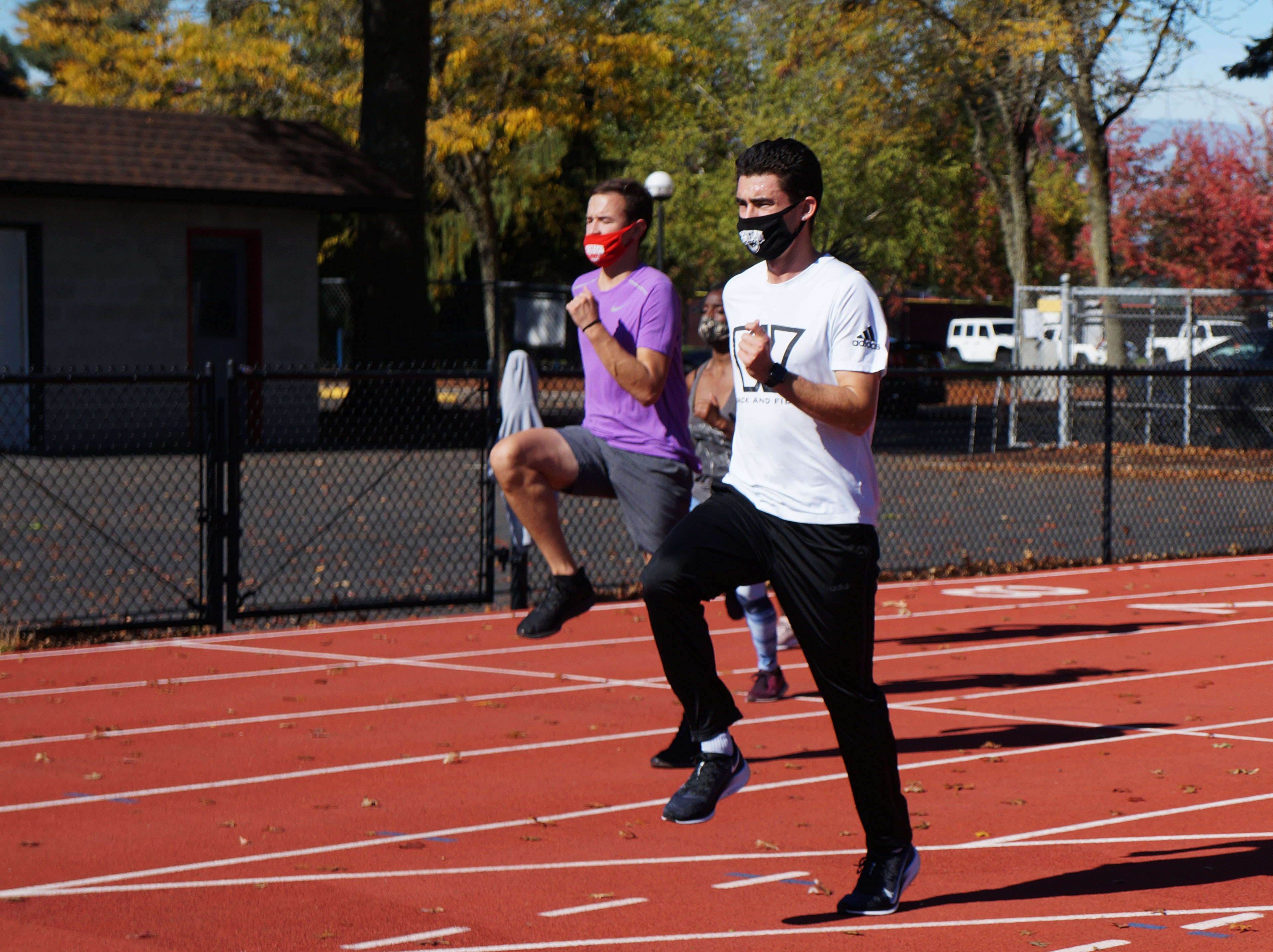
Currently, Western’s Athletic department is reflective of Phase One: nonessential travel defunded,  groups larger than 10 must have measures of physical distancing and sanitization, restricted staffing and workout areas or facilities must be sanitized.

For the student athletes who decided to return to Western this term, the Athletics department required and offered Polymerase Chain Reaction testing through the Corvallis Clinic. The Athletics department is not currently using any of the IFC funding they’ve received this term for testing. All funding from IFC this fall term have gone towards new equipment and cleaning.Testing funds came from students’ personal medical coverage or Athletics secondary insurance if a player is not covered.

After being tested and receiving COVID education.

“If a student didn’t feel comfortable with training in this environment, then they were able to opt out,” said Interim Executive Director of Intercollegiate Athletics Randi Lydum. “We want people to feel comfortable.”

The students who opted out of fall term are still receiving their scholarships, Lydum explained.

“If a student is fearful of contracting COVID and passing it to someone else, then they are given a waiver to keep their partial scholarship from athletic aid. It’s really up to the student and what they feel comfortable with. If they opt out, they are not allowed to use the facilities because we want them to be safe.”

The students who have opted to participate claim that the department takes the current pandemic seriously.

“We were delayed to come on campus,” said junior business major and shooting guard for the Women’s Basketball Team Rachel Rogers. “This is our first week back in the weight room. Everything is different. It’s distance and masks all the time. It’s kinda funny because we’re all sweaty and breathing hard through these masks, inside and outside. No one really lets us lax on that; if you pull it down someone is telling you to put it back up.”

As of now, Western is not hosting normal practices; each team conditions its players and schedules small group sessions at various times throughout the day.

“It looks different than it would look pre-COVID,” Lydum reported. “There’d be 100 football players out there doing drills, but we just can’t do that right now. So in a football team we might divide the condition time up by offense and defense and various positions in offense and defense. We might have all of our first-year freshmen split up into groups. It’s really just being creative and finding the best groups that are safe.”

Outside of practices, Western is not participating in games this year, aside from personal socially distanced scrimmage matches. Looking towards the future, athletics hope to regain a sense of normalcy by January 2021.

“The NCAA cancelled all the fall championships so right now we’re looking towards January for starting Basketball competitions and indoor track,” Lydum said. “If the state allows that then we’ll do it, if they don’t then we won’t.”

If students experience symptoms of COVID later in the term, they are being asked to self quarantine, and if further symptoms develop, they will be tested. As more information is released the story will be updated.

Contact the author at howlnews@mail.wou.edu