Mount Hood

Positivity emerges in the wake of the COVID-19

Sage Kiernan-Sherrow |  News Editor

In times of crisis, people are often bombarded with news of negativity. As COVID-19 spreads throughout the nation, darker aspects of our country become more apparent. However, while         

focusing on the issues caused or heightened by the virus are important, it’s also crucial that individuals recognize the positive reactions that people have made for the global good during this time-period. 

As Mr. Rogers of “Mister Rogers’ Neighborhood” once said, “look for the helpers. You will always find people who are helping.” Celebrities and CEOs alike have been using their wealth to both fund the fight against COVID-19 and help people in need. According to an article by Billboard, Elton John, who has been on the forefront of the movement combating AIDS, is now dedicating an emergency fund to the COVID-19 pandemic. 

John is quoted as saying, “Distributing medicines, testing and preventative treatment is not as simple as it was a few weeks ago, so our new COVID-19 emergency fund will help frontline partners to prepare for, and respond to, the pandemic and its effects on HIV prevention and care for the most marginalized communities.” 

Hundreds of other celebrities have taken a similar standpoint, even going so far to hold free concerts and events during quarantine for entertainment and fundraising purposes.

The environment has also been positively impacted by the reduction in human waste. According to onetreeplanted.org, air quality has significantly improved in lockdown areas; carbon emissions have reduced by 25% in China as of March 17 — a fact that can be observed through NASA’s satellite imaging. In many parts of the world, animals who frequented areas in the past are returning after long hiatuses due to human impact. 

At home, people are reconnecting with loved ones and helping their communities. In Australia, community members have created online forums to answer their neighbor’s questions and concerns and offer assistance during social distancing. 

Respondents shared advice for grocery shopping on the cheap, as well as broader ideas for ways to pitch in like checking in on elderly neighbours, or creating WhatsApp groups to keep in touch with people on their street,” according to The Guardian.

Peter T. Coleman, a psychology professor at Columbia University, suggests in an article published by Politico that COVID-19 may lead to political depolarization. 

Coleman stated, “COVID-19 is presenting us with a formidable enemy that will not distinguish between reds and blues, and might provide us with fusion-like energy and a singularity of purpose to help us reset and regroup.” 

It is an ideal that is challenged by many, but nonetheless echoes the World Health Organization’s Director-General Tedros Adhanom Ghebreysus’s testimony at a news conference where he said, “please quarantine politicizing COVID. The unity of (America) will be very important to defeat this dangerous virus.”


Contact the author at howlnews@wou.edu

Illustration by Rachel Hetzel

Opinion: Mental health days should be an option

Howl Editorial Board

Picture this: a student has work until 9 p.m.; an 8 a.m. class to attend the next day — with a class right after and another at 2 p.m.; five assignments due in a couple of days; is currently running on four hours of sleep and is most definitely in need of a break to give themself time to breathe. Yet, the idea of taking a day off from classes brings them more stress, since one of those classes is big on attendance and this particular student doesn’t have a doctor’s note to excuse themself from being absent.

As college students, we are constantly balancing many different things at a time rigorous school-work, part-time or full-time jobs, maintaining personal relationships and taking care of ourselves. This gets extremely overwhelming, yet students don’t have much of a chance to take time for themselves during the term. That’s when we should have the option to take a mental health day, whether that’s for relaxing and taking a break from overstimulation, or using it to catch up with schoolwork. 

However, Western’s policy indicates that a student must have a doctor’s note to excuse themselves; this is implying that mental health is not a good enough “excuse” to miss school, and can force students to feel the need to attend class when they are not at their best. This is infantilizing, as we are grown adults who can decide for ourselves if a day off is needed to better our well-being. Furthermore, this assumes that everyone has access to a doctor at their beck and call, which isn’t always true — not to mention, a bit unrealistic. Everyone struggles in different areas, and a mental health day is an escape that’s needed occasionally in our day-to-day lives.

The fact that a student could risk their grade dropping severely is an additional stress that’s unneeded, but can affect a student’s mental health even further. If a class has someone drowning in schoolwork, that student should be able to take a day in order to one, catch up with all of the damn assignments, and two, better themselves fully, without getting “permission” from a doctor to do so. 

The problem with it being unexcused without this piece of paper is that some classes don’t allow more than two unexcused absences; this contributes to the stigma of students putting their classes above all else, including their jobs, social lives and overall health. As students, we live with the stress of juggling dozens of responsibilities at once, and we don’t need the added stress of our grades dropping due to attendance while we are trying to get well. Even if we’ve reached out to get homework on the days that we’ve missed, if we have still done the readings, gone to those study groups or sought out tutoring — at the end of the day, all you amount to is how well your brain or body is functioning, right? 

Students should feel comforted knowing they have the option to willingly take a day off without their grade suffering. If the university allowed students to have at least one mental health day, they can come back feeling rejuvenated and ready to come back stronger. Most of us are paying money to be here; most of us see a future with us holding a diploma; we understand that it’s up to us how we get there and we don’t need educators or administrators policing that process.


How to pack your bag effectively

Rylie Horrall  | Lifestyle Editor

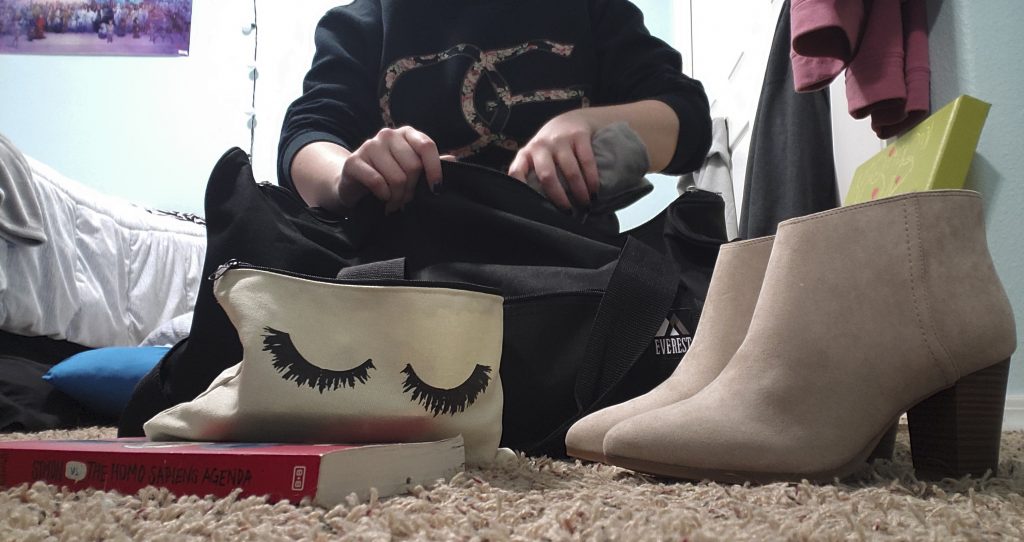
With a vacation just around the corner, many students might be going home for a brief time or traveling with friends. What’s probably one of the worst things about prepping for a trip? Having to pack. It can be very easy to forget important things while packing, such as chargers, enough clothes or various toiletries. To help with the potential madness that comes with planning a trip, here are some tips to help make packing a breeze.

  • Make a checklist of everything being brought — this will be helpful with initial thinking and for the trip back, to make sure nothing is left behind. Write down how many articles of clothing will be needed for the duration of the trip, with maybe a few extras in case of an emergency. In regards to essentials, keeping a tab on each item will reduce the chance of forgetting them. Not to mention, it’s so satisfying to cross things off of a list.
  • Roll clothes up, don’t fold them; it takes up less space, so there’s room for more clothes or other items in general. Thicker clothes, like jeans and hoodies, should be layered towards the bottom since thinner fabrics for t-shirts and such will be easier to fit into smaller spots and crevices.
  • Bring only one other pair of shoes. While it’s nice to have options, shoes can take up a large chunk of space in a bag, so it isn’t always necessary to bring multiple. Those boots may look cute with that skirt, but the booties are smaller and can work just as well. If those boots are absolutely necessary, save some space by stuffing other clothes inside of them.
  • Place all electronic related devices — like chargers, handhelds or styluses — into their own bag, or into a separate pocket from the bag or suitcase. Not only does it keep these organized and in a memorable spot, but it prevents anything from getting lost among outfits and miscellaneous commodities.
  • Following the trend from the previous point, do the same with toiletries and bathroom related items. Having that expensive bottle of face wash open up and spill all over a laptop or favorite sweater is a loss in multiple ways. However, if it’s in a compact bag with other like objects, it’ll keep that mess from spreading. Moreover, tape bottles of lotion and cleansers closed to further prevent that kind of mishap.
  • Finally, set aside enough time to fully pack — nothing increases stress more than packing at 11 p.m. the night before leaving and worrying about forgetting something. Try packing up the things that won’t be needed for a few days, so then only the last items have to be placed into the luggage.


Contact the author at rhorrall17@wou.edu

Photo by Rylie Horrall

Breakup recovery made easier

Rylie Horrall  | Lifestyle Editor

Breakups are something that can happen at any time, and, generally, don’t feel great for at least one person. It might be fine for a person who initiates the breakup, but a person on the receiving end may feel different about the situation.

An important thing to keep in mind is that a person doesn’t have to go through a breakup alone; talking to someone trusted about how it felt or feels can help with the healing process. As someone who likes to bottle up their feelings and keep to themselves to avoid ‘hindering’ my friends and family’s lives, I understand how easy it is to take that route instead of talking it out. Nevertheless, that potentially isn’t the greatest mentality to have; it’s vital to remember that loved ones are willing to support and show that a person isn’t alone. In addition, everyone has their own way of healing, so if talking doesn’t help, don’t feel pressured to do so.

Post-breakup, an individual will probably find they have more free time than before, and this time can be utilized to their advantage. Leisure time is an opportunity to try something new — pick up a new hobby or cross something off that bucket list. Some activities one could undertake are learning a new language, going hiking, taking art lessons or starting to journal, whether that’s bullet journaling or writing down thoughts every day. During this time, prioritizing self-care is pertinent. 

I’m someone that tends to listen to music that fits my mood — albeit, it’s unintentional, but it’ll emphasize my mood as well. This is probably something that a person may do whilst going through a breakup and, honestly, embrace it. Make a killer playlist of the best breakup songs to jam out to and share it, like we did at The Western Howl — check page four of this issue. In addition, make one full of empowering bops and favorites that don’t wear out; this could help boost the mentality of being newly independent and awesome.

Last point is a big one: don’t text the ex. It’s probably been pondered, but I know I’m not the only one saying not to do it. It could very well just reopen some wounds that an individual has worked hard to close up, and it isn’t worth the pain or energy to deal with. Also, if they text first, don’t respond to them — same premise. Having space during this time is essential, but maybe, one day, a friendship could be possible with their ex. 

As a final closing statement, know that there is no appropriate amount of time to get over a breakup; for some it could be a short amount of time, and for others it can take longer periods. Each person should do what’s best for them.


Contact the author at rhorrall17@wou.edu

Photo by Rylie Horrall

This week in completely made up horoscopes

[fruitful_tabs type=”accordion” width=”100%” fit=”false”]

[fruitful_tab title=”Aries 3/21-4/19″] Aries season is nigh… [/fruitful_tab]

[fruitful_tab title=”Taurus 4/20-5/20″] This star has dipped, stay tuned after spring break, sayonara [/fruitful_tab]

[fruitful_tab title=”Gemini 5/21-6/20″] Your poor achy breaky heart [/fruitful_tab]

[fruitful_tab title=”Cancer 6/21-7/22″]I just wish other people had some. — Sean [/fruitful_tab]

[fruitful_tab title=”Leo 7/23-8/22″] Knock knock… hello??… [/fruitful_tab]

[fruitful_tab title=”Virgo 8/23-9/22″] Pick up your freakin feet. The floor’s not gonna vacuum itself.  [/fruitful_tab]

[fruitful_tab title=”Libra 9/23-10/22″] Help [/fruitful_tab]

[fruitful_tab title=”Scorpio 10/23-11/21″] The stars are saying that you should go through with it…just shave your head, now is the time. Also, you love red flags. [/fruitful_tab]

[fruitful_tab title=”Sagittarius 11/22-12/21″] My horoscope was hacked so bada-bing bada-boom here we are. [/fruitful_tab]

[fruitful_tab title=”Capricorn 12/22-1/19″] GRITTY IS GONNA COME AND GET YOU. EAT ¿ITS? RICE? [/fruitful_tab]

[fruitful_tab title=”Aquarius 1/20-2/18″] Schedule in some relaxation time. Ooh! I have time in between ‘daily breakdown number 9: shower cry’ and ‘3 hour cram session’! [/fruitful_tab]

[fruitful_tab title=”Pisces 2/19-3/20″] Please excuse me while I continue to cry about last week’s episode of “Grey’s Anatomy” because I’m virtually the last person to still watch that show.  [/fruitful_tab]

[/fruitful_tabs]


Cannon Gallery provides “An Artful Life…” exhibit to celebrate the life of Alfred Maurice

Never Retallack  | Entertainment Editor

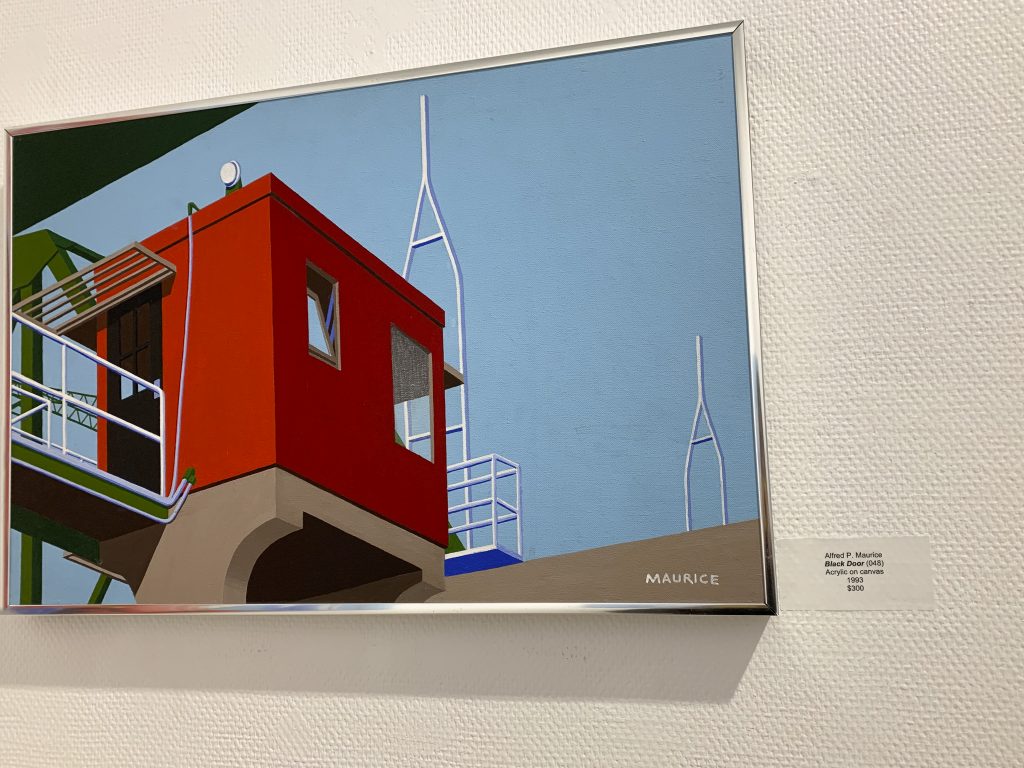
The Cannon Gallery opened a new art exhibit on Feb. 28, “An Artful Life: Celebrating the Life of Creator, Teacher, and Collector Alfred Maurice.” It is one of the seven exhibits open to commemorate Maurice’s life and the work that he did. 

The gallery contains pieces from his time in Chicago; most of them are abstract architectural paintings that are bright and eye-catching — all of which are from the years 1979 to 1989, and any proceedings benefit the Maurice Prize.

Maurice was a passionate artist and has been known to say, “To me, art isn’t anything precious or special. It’s a way of expressing oneself, on par with writing or talking.”

The gallery at Campbell Hall is bold, and the layout of the stark white walls with vibrant and unique buildings are enticing.

The majority of the artwork is made with acrylic on canvas, with only three other pieces created with graphite on paper. One of which called, “Self Portrait with Painting,” features Maurice smiling proudly, representing the pure joy he had when it came to making art.

The artwork is simple yet unique; I highly recommend anyone interested in art — whether or not they have much background knowledge — to go and take a look.

The gallery will be open until March 20 in Campbell Hall from 8 a.m. to 5 p.m.


Contact the author at howlentertainment@wou.edu

Photos by Never Retallack

Western Howl’s favorite breakup songs

Western Collective

“My Dick” — Mickey Avalon

“Take a Bow” — Rihanna

“Missing You” — John Waite

“Bleeding Love” — Leona Lewis

“You should be sad” — Halsey

“The Good Side” — Troye Sivan 

“Die for Me” — Post Malone 

“Bad at Love” — Halsey 

“Cry Me a River” — Justin Timberlake

“He Wasn’t” — Avril Lavigne

“All I Ask” — Adele 

“Dancing on My Own” — Calum Scott 

“So Sick” — Neyo

“i miss the old u” — blackbear

“Figures – A Reprise” — Jessie Reyez ft. Daniel Caesar 

“Irreplaceable” — Beyoncé

“Gives You Hell” — The All-American Rejects

“Not Over You” — Gavin DeGraw


Magical review of “Onward”

Sean Martinez  | Copy Editor

Amidst all the classic sequels and live-action adaptations, Pixar once again delivers original content with its newest film, “Onward.” 

The story tells the tale of two brothers, Ian and Barley Lightfoot, as they attempt to bring their father back to life for just one day. They try to use a wizard staff, along with a gem, to resurrect him, but something goes wrong, resulting in their father having just a pair of legs. The rest of the film is a fun, adventurous and emotional quest to see their father one more time. 

Ian, played by Tom Holland, has just turned 16 years old and has no memory of his father, who died before he was born, and wishes he had the chance to meet him. His older brother, Barley, played by Chris Pratt, is obsessed with the fascinating history of magic that was once prevalent in their world. Both of their strengths and weaknesses became factors that pushed the story onward at a well-balanced pace.

To director Dan Scanlon, “Onward” was more than just a movie — it also reflected his personal story. His father died when he was young, and the ultimate question that spurred this fantastical film was, “What would it be like to spend one more day with him?” 

Scanlon did a great job of blending the magical world with the modern world. Everything in this film was creative, not just the characters and storyline, but the animations as well. There was not one wasted scene — all the little things mattered and tied into the bigger picture. There was also a good balance with fun, brother-bonding scenes and impactful tear-jerking moments. And as always, Pixar provided the audience with an abundance of easter eggs to crack. 

Overall Review: It may be too soon to dub “Onward” as one of Pixar’s top 10 movies, but I thoroughly enjoyed it. I didn’t find myself resisting at any point in the film, the story was easy to follow. Needless to say, “Onward” is the perfect family film to watch this spring. It’s very moving and inspirational. 


Contact the author at howlcopyeditor@wou.edu

Photo courtesy of pixar.com

Campus Voices

Cora McClain  | Editor-in-Chief

Yasmine Saleem, First-year Chemistry major ; Soccer, because of the physical competitiveness and I just like kicking things.


Em Preuss, Junior ASL/English Interpreting major ; Color Guard, because I’m a member of Color Guard. It’s fancy, but also very physical and it just looks cool. We use flags and rifles and we dance.


Trenton Viloria, First-year Kinesiology major ; Football, because of the action and the different concepts that come with it, offensive concepts and passing plays makes the game exciting.


Contact the author at howleditor@wou.edu

Photos by Cora McClain

Track and field start outdoor season on the right foot

Hannah Greene  | Sports Editor

As the Division II Indoor Track and Field Championships approaches, the Wolves got an early start to their outdoor season. Two meets were held last weekend, March 6 to 7, at Willamette University and Linfield College.

Both meets met the expectations of the Wolves with multiple runners making the top 10 across several events. To start, Sawyer Heckard, a senior, ran a new personal best in the Men’s 10k with a time of 32:20.83 — placing ninth overall at Linfield. Another feat included Dominic Giordano, a senior, who won the Men’s 3k steeplechase with a time of 9:28.49, followed by senior Hunter Mosman with a time of 9:37.94.

In the Men’s Shot Put, the Wolves were able to take first and second, as well as fifth through seventh — Nick Sieber, a senior, led the pack with a throw of 47-5 feet. 

The Men’s 800 placed well and consisted of mainly Western Oregon runners as Trey Reed, a junior, and Bryce Mefford, a first year, took first and second place with times of 2:00.59 and 2:01.90.

First-year, Jillian Greene stole the Women’s 800 and 1500 meter runs with times of 2:22.71 and 4:54.92. Another robber of two races included Bethanie Altamirano, a sophomore, who ran a time of 27.20 in the Women’s 200 meter race and a 59.89 in the Women’s 400 meter race — not far behind Altamirano was senior Grayson Burke with a time of 1:00.57.

The Wolves have officially sparked the match and outdoor season has begun. 

Next up, March 13 through 14, four Wolves head to Birmingham, Alabama, for the NCAA DII Indoor Championships where senior Derek Holdsworth, senior Max Carmona, sophomore Gabe Arce-Torres and senior Justin Crosswhite will compete in the men’s distance medley relay.


Contact the author at hgreene18@wou.edu

Westerns Administration issues additional statements on COVID-19, Valsetz Dining Hall remains open after passing inspections.

Sage Kiernan-Sherrow  | News Editor

Multiple universities throughout the nation in high-populated areas are closing their doors for the remainder of the term and switching to online classes to counter COVID-19. As of March 10, Oregon has 14 cases of COVID-19 — or the coronavirus as it is more widely known — and no deaths. However, that’s a drastic change from just a month ago when experts suggested that Oregon would remain unaffected, and allegedly, Western faculty have been tasked with planning up to two weeks of online classes for spring term should the outbreak worsen after spring break. 

President Rex Fuller and the Director of the Student Health and Counseling Center, Beth Scroggins, have both taken it upon themselves to re-address the issue and the campus as a whole. Scroggins’ email, sent campus-wide on March 4, suggests that students who suspect they have symptoms similar to COVID-19 should not risk entering a public facility and instead call local health departments first. A campus-wide email sent by President Fuller on March 9 stated that Western is following the advice of health authorities and remaining open. 

“WOU is operating normally until further notice, and we will provide additional information as conditions warrant. We have increased cleaning of common spaces such as classrooms, computer labs and residence halls,” Fuller said. 

Students may have noticed that one of the campus spaces that has changed to accommodate these precautions is Valsetz Dining Hall. 

Albert Worotikan, the Director of Campus Dining, said that Valsetz is responsible for serving approximately 1,500 students a day and, that after a meeting with Housing last Monday, March 2, he “doesn’t take this lightly.”

“If someone is sick and we’re not prepared for it, we’re going to pay for it,” said Worotikan.

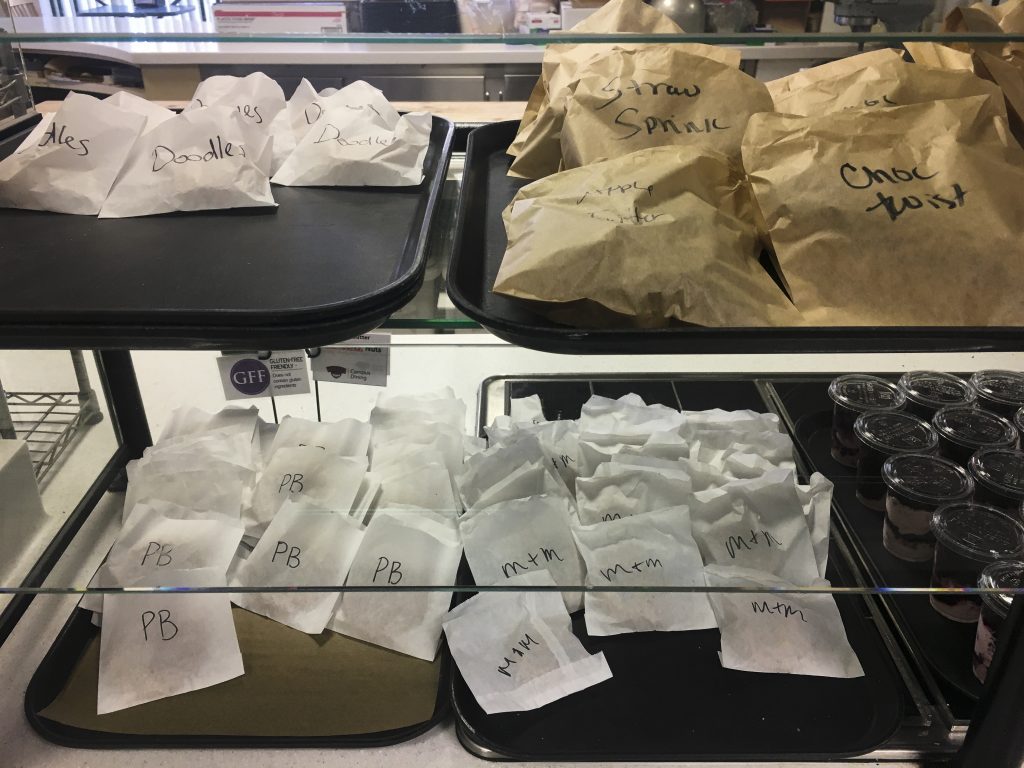
Some of the necessary precautions taken include moving the salad bar and breakfast area behind the line, so that students now have to be served instead of serving themselves — even for utensils. Fruits and baked goods are now wrapped, and sanitizer stations are readily available throughout the establishment.  

“We found those areas most concerning as areas that could be cross-contaminated,” said Worotikan.

Despite this, Worotikan said that he has seen a significant decline in student use of the dining hall. He wants students to understand that “we have the safest place for students to come and eat.”

In fact, a health inspector allegedly came to Western and reported that they were taking excellent precautions. 

Worotikan said that he has observed a rising level of student anxiety, with students even going so far as to take pictures of the sanitizing stations. But, Worotikan suggested, “this is human nature,” and added that he “would rather see students act like that than reacting if there were an outbreak and blaming us.”

Regardless, as President Fuller reminded campus on March 2, “WOU is an inclusive community with members from all over the world, and we have members who travel all over the world. With this in mind, please remember that the risk of coronavirus is not connected with race, ethnicity or nationality.”


Contact the author at howlnews@wou.edu

Photo by Sage Kiernan-Sherrow

Western’s 2020 Giving Day almost triples their donation from four years ago

Sage Kiernan-Sherrow  | News Editor

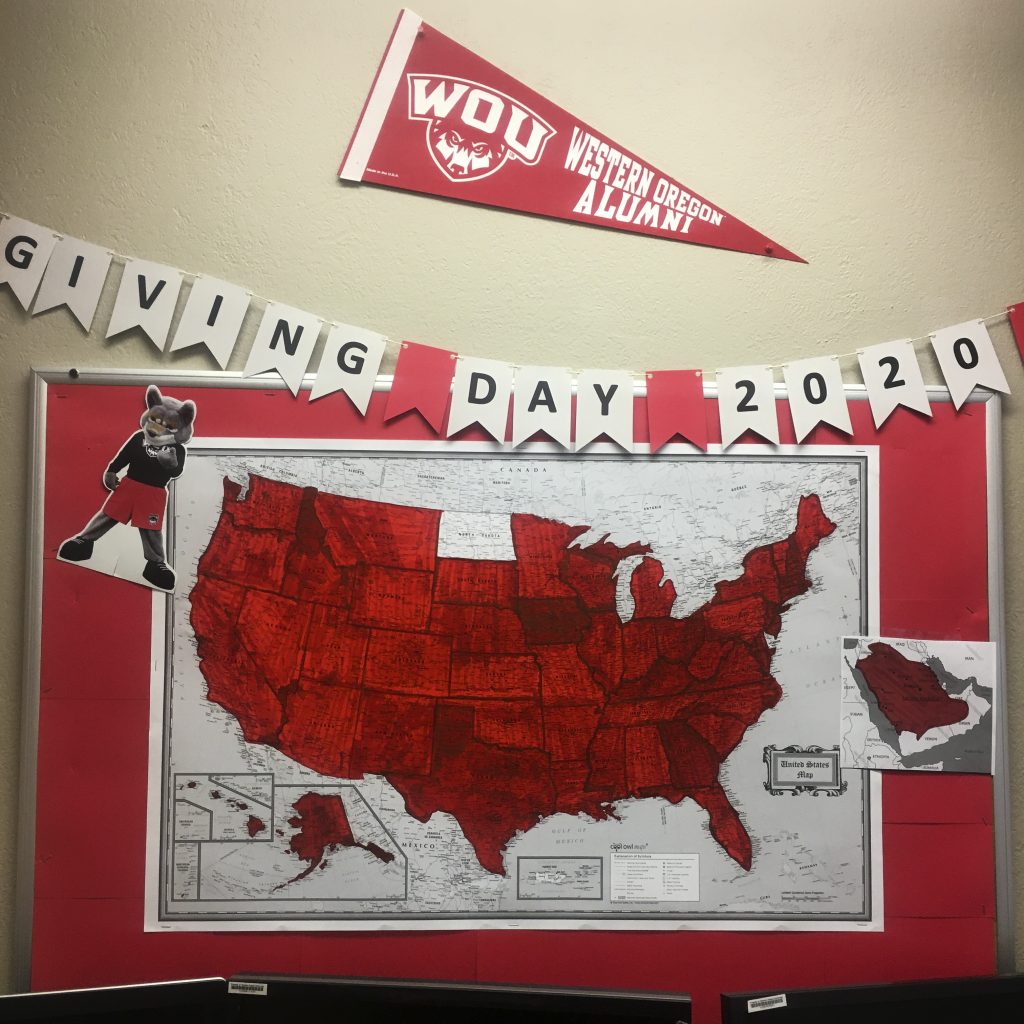
After four consecutive years, Western raised approximately record-breaking $140,000 in donations during WOU Giving Day on March 4, breaking their previous record and surpassing their goal of $100,000 . WOU Giving Day was started by Emily Swart, who works as the Coordinator of Annual Giving for the WOU Foundation, after realizing that other universities were beginning to shift towards having their fundraising events in the spring. 

“I just thought ‘let’s give it a shot,’’ said Swart, who later boasted that, “we’ve grown into our success. I know other universities have attempted it, but we’ve done the best.”

Four years ago, Swart and her team of call-center operators and data analysts raised $28,000 in one day. Now, that amount has almost tripled.

The majority of constituents are alumni, but friends of the university and current and former employees also played a major role in meeting Swart’s goal of $100,000. Swart called the operation “bold” and “truly one of the most wonderful days that (she) had on campus.”

The money raised during WOU Giving Day is allocated towards specific programs or scholarships that the donor values. Much of the money will be going to programs that are facing significant cuts due to low enrollment. 

According to Swart, programs which received some of the highest donations include Soccer, the Stonewall Center, the Veterans Services Center, Choir and Softball. There were three new scholarships created, including one for a non-traditional student, but constituents also donated to already existing scholarships like the student success scholarship and the LGBTQIA+ scholarship, which had a match. One unexpected donation was from the class of 1970, who are in the process of creating a scholarship in the form of a class gift, which will be endowed.

Swart and her team also set a goal of gaining a donor from every single state; they succeeded in reaching every state except for Delaware and North Dakota, and even got a donor from Saudi Arabia. 

Swart said this turnout is proof that, “we as a campus are so close and have such strong relationships with one another that we were able to use our connections. That challenge was so special to me because it was a really good example of what this campus can do when we come together.”

She concluded by stating, “to see where it originally started to where it is now, and to know that every single dollar we raise benefits Western Oregon University students, it’s really something special.”


Contact the author at howlnews@wou.edu

Photo by Sage Kiernan-Sherrow

This week in completely made up horoscopes

[fruitful_tabs type=”accordion” width=”100%” fit=”false”]

[fruitful_tab title=”Aries 3/21-4/19″] Prepare… [/fruitful_tab]

[fruitful_tab title=”Taurus 4/20-5/20″] ‘Tis almost your time… watch out gemini [/fruitful_tab]

[fruitful_tab title=”Gemini 5/21-6/20″] No one can trust Taurus rn. [/fruitful_tab]

[fruitful_tab title=”Cancer 6/21-7/22″] When you cry, you sound like the opening beat of Roddy Ricch’s “The Box.” Basically, stop. [/fruitful_tab]

[fruitful_tab title=”Leo 7/23-8/22″] Why is chickadee crossroads…? [/fruitful_tab]

[fruitful_tab title=”Virgo 8/23-9/22″] Lemme celebrate my half birthday in peace. [/fruitful_tab]

[fruitful_tab title=”Libra 9/23-10/22″] f–k i forgot to do this [/fruitful_tab]

[fruitful_tab title=”Scorpio 10/23-11/21″] It’s easy to forget how good banana bread is, try to remember. [/fruitful_tab]

[fruitful_tab title=”Sagittarius 11/22-12/21″] Read page 9. [/fruitful_tab]

[fruitful_tab title=”Capricorn 12/22-1/19″] First it was us v. Sagittarius. Now it’s Taurus v. Gemini. This should be entertaining. [/fruitful_tab]

[fruitful_tab title=”Aquarius 1/20-2/18″] Don’t cry, craft! [/fruitful_tab]

[fruitful_tab title=”Pisces 2/19-3/20″] It’s ok if your life is currently a dumpster fire because at least it’s gonna start raining for the next two weeks straight !  [/fruitful_tab]

[/fruitful_tabs]

Opinion: Designed for connection — a Deaf lens

Dr. Kara Gournaris  | Guest Contributor

I started working at Western Oregon University on Jan. 1, 2010. I still remember the first time I walked through the doors of the old College of Education (COE) building. The yellowish color of the walls caused me to squint my eyes as I walked through the halls. I walked up the stairs and made my way to my new office, room number 222. 

I opened the door on this new chapter of my journey, but everything inside the office walls showed signs of their age, not new at all. The blinds on the windows hung loosely, and the pull strings didn’t work anymore.  Half of the metal blinds were bent and I had to tie them back with a hairband I fished out of my bag. When I opened the window to let fresh air in, the breeze would send the blinds banging against my window, a visual distraction that caught my eye every time they moved. Right in the middle of my office, there was a huge stain that looked as if it had been there for many years and my only option was to buy a rug to cover up the space. 

As a Deaf person, my sense of sight is keenly developed, and everywhere I looked caused my eyes to twitch a little.  Banging blinds, half falling off my window.  A hidden spot beneath a neutral colored rug. Yellow walls that surrounded me on all sides as I worked. My colleagues all faced the same eye sores, though they were all hearing, and I often wondered if those visual markers had the same impact on them as they did on me. 

My office was in the middle of a very narrow hallway and as students or other colleagues walked past my office and stopped to say hello, I remember having to constantly shift where we were standing because using American Sign Language in that hall blocked people from walking by. We would get a few sentences into our conversation, have to pause and move to the side, and then just as we got started again, someone else would need to pass. Not only were the hallways inaccessible for those of us trying to have conversations in ASL, they also were hard spaces for people to navigate when using a wheelchair, pushing a cart or moving furniture or other large items.  

The old COE building did not have a space for ASL and interpreting students to hang out before or after classes, which meant that if students wanted to practice their ASL skills, they had to go to the library or some other space that was more accessible. This was a huge missed opportunity for incidental learning to occur because moving to another space meant being away from the four Deaf instructors who were working here at the time. Rather than students milling about and learning to use ASL by engaging with the Deaf instructors and one another, students often resorted to using spoken English in the halls because as people tried to pass them in narrow spaces, they eventually just gave up and stopped using ASL. 

As our Deaf faculty walked those same halls, we felt heavy-hearted that students who were learning ASL just hours before in our classrooms, were now passing by us in the hallways using spoken English without signing at all. The Deaf faculty often lamented feeling left out a majority of the time because our language was often relegated to use only in classrooms or inside of our office walls. 

Some days, students would ask to have class outside because it was sunny and warm and those were always the best days because other teachers and classes would often be out there and we could all join together in the common use of our beautiful language.

In 2016, my entire experience at Western shifted. Richard Woodcock donated money that went toward funding a new education building. This new building is called the Richard Woodcock Education Center (RWEC), and it was purposefully designed with the use of visual American Sign Language in mind. The design committee was familiar with Gallaudet University’s “Deaf-friendly” design, and they wanted to create a space at Western that was designed for Deaf, Hard of Hearing and DeafBlind people, and anyone else who uses ASL.

By making the hallways wider, conversations in ASL are no longer paused every time someone passes by in the hallway and the building is more accessible for people in wheelchairs or those who use other mobility devices. There was so much careful thought and attention given to this open design, and each detail has made an impact on our community.

In 2016, we went from four Deaf faculty members to nine and we were allowed to choose which hallway we wanted our offices to be located in; that officially began our coveted “ASL Hallway.” 

Now, when I walk through the lobby on my way to the classroom or my office, I see students hanging out, chatting in ASL, studying for an exam, resting or working on a project together.  As I pass by, students greet me in ASL, and as they smile and catch me up on the latest news, I feel grateful for the chance to work with such amazing humans. I keep walking and I see other students walking in a line of five, all joking in ASL and laughing hysterically.  As I turn the corner, a student on her motorized scooter with her service dog passes by and smiles and says hello on her way to class. 

Just as I am about to enter the room, I see a DeafBlind faculty member walking with several students, and showing them the wooden art display on the wall that she uses as a tactile marker to orient herself to where she is in the building. Just down the hall, there are students who are making use of the little nooks that have curtains that draw closed so they can film a last minute homework assignment and upload it to their GoReact account. In the next nook over, there is a Deaf student using the Video Phone to call and order Yeasty Beasty for lunch.  Everywhere I look, there are examples of my language, my culture and beautiful people who embrace what it means to be part of the Deaf Community.  

Just like in the old education building, there are sunny days that prompt students to beg to have class outside. Through the windows in the classroom, I can see one of my colleagues teaching her class on the RWEC patio, enjoying the fresh air and smiling as students pass by and wave hello.  I look around at the faces staring back at me and nod my head in agreement. 

These college-aged students quickly become like little kids again, excited to head outside for a great adventure. As we walk by the other ASL class and my colleague, we all smile and wave, and I stop and count my blessings for this new space. RWEC has become a home for many of us, and it has made us more than just a community — it has made us a family.  


Easy-to-do at home nail art

Rylie Horrall  | Lifestyle Editor

Painting my nails has always been a fun activity for me to do; I think it’s relaxing and gives me an opportunity to explore my creativity. Generally, the most common thing that I do is just paint them a solid color and maybe use two alternating different shades. However, there are times that I want to do something more, but don’t want to spend money to get them done. Here’s a few DIY nail art styles that I do that others can feel free to try.

Note: I recommend throwing a clear coat on top of all the final looks to smooth them out.

Ombré

Be forewarned, nail polish remover is going to be needed to clean up the final look. Pick at least two different colors of nail polish — to go more drastic, use colors that aren’t similar in shade and/or hue. Take a square makeup sponge and paint the thicker end with both of the colors. The two colors don’t need to touch, but make sure there’s a plentiful amount on the sponge. Dab the makeup sponge onto the nail, adjusting the placement slightly to emphasize the ombré and get the colors to mix. Repeat this — adding a bit more nail polish each time — until it’s as pigmented as desired. 

Multi-toned

I’m going to suggest using two colors, but feel free to use more. For the base color that will go on the entire nail, I would recommend using something lighter, because it’ll be easier to put a darker tone on top of it. Depending on the brand, shade, etc., it could take a couple of coats. Let the first color dry completely. Using the second color, try to draw a straight line of nail polish horizontally across the nail. Using nail tape, scotch tape or drawing lightly with a pencil can help keep the line straight and clean. If tape was used, wait until the second color is dry before removing it. This can also be done vertically or diagonally, depending on preference. Try layering it up as well or swapping colors for different fingernails.

Small flowers

Multiple colors can be used for this one, so don’t be afraid to go crazy or just stick with something simple. Firstly, just paint the nails a base color of some sort. Next, take the next color that’s going to be used for the flowers and dab some of it onto a sandwich bag. Dip the end of a bobby pin into the polish and place a dot onto the dried nail. Repeat this process, placing dots close together to create a five petaled flower. Let it dry, then take another color — preferably something lighter, such as white or a pastel — and dab some of it on the sandwich bag as well. Repeat the step with the bobby pin, but only use it to dot the center of the flower.


Contact the author at rhorrall17@wou.edu

Photos by Rylie Horrall

Trading out books for bills

Rylie Horrall  | Lifestyle Editor

After finals are all finished, many students may be excited because of two things: one, spring break is around the corner, and two, they can get rid of their textbooks. Most classes on campus have textbooks that require students to pay potentially large sums of money for them. If, once the term is over, that textbook no longer has a purpose, there’s a few things that can be done.

The WolfStore, located in the Werner University Center, will generally buy back books during the last two to three weeks of the term. While some books won’t be bought back, it’s a chance for someone to get a little bit of their money back. If the textbook is in ‘high demand,’ meaning if the book will be utilized during the following term, it can be worth more. Currently, students can sell their books until March 20.

There’s also the alternative of selling textbooks on Amazon using their buyback/trade-in program. Like the WolfStore, selling won’t always work — depending on the condition or whether the book qualifies for the trade-in. If a student chooses this route, their money would only be available as an Amazon gift card. On the other hand, there are a few used bookstores and thrift stores in the IndyMo area that could be interested in purchasing used textbooks.

Many students take the route of just selling their used books to their friends, should their friends need them for next term. A person may not make money this way, if they choose not to charge somebody that’s interested, but the one who’s receiving the book could be saving a lot of money, especially if the textbook is expensive.


Contact the author at rhorrall17@wou.edu

Photo by Rylie Horrall

Tips to follow for raising your credit score

Rylie Horrall  | Lifestyle Editor

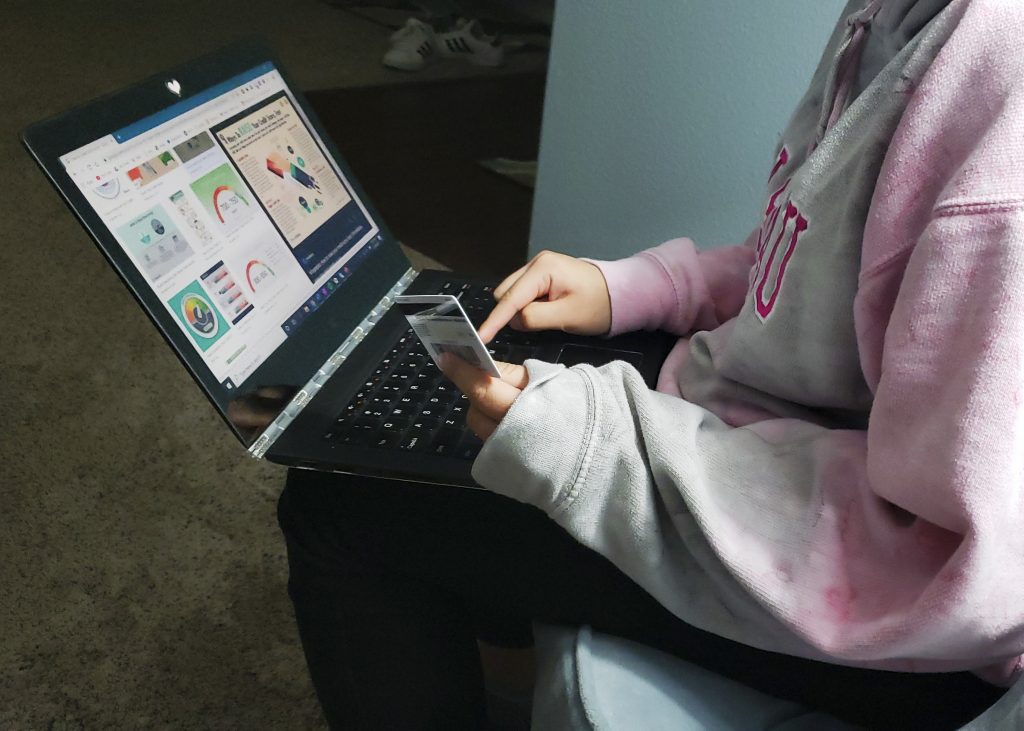
For those who aren’t sure what a credit score really is, it’s something that “reflects credit payment patterns over time,” according to experian.com. It’s an important financial consideration in someone’s life, as it is the deciding factor in multiple scenarios — such as taking out loans or getting additional credit cards later in life. A credit score is found using an algorithm on a person’s credit report, and it takes into account certain factors like account types, how long an account has been open and payment history. Because a good credit score is highly sought after and makes the user look responsible, it’s important to know how to raise it.

One of the simplest things to do is to pay bills when they are due. That repayment history can be used to predict how someone will take care of future settlements. This applies to credit cards, student loans, phone bills, rent, utilities and so on. By missing payments or getting charged a late fee, a negative mark can appear on an individual’s credit score for around seven years. However, according to experian.com, a negative mark’s prominence declines over time as newer payments are more relevant.

Specifically with credit cards, keeping a low balance is vital for a credit utilization ratio. A credit utilization ratio is calculated on the amount incurred on a credit card divided by the total credit limit across all credit cards owned, not just the one that is used. By keeping the ratio below 30%, it shows that the user isn’t maxing out credit cards every single month. It’s also an indicator of how well money and credit is being managed. Furthermore, if a credit card is no longer being used, don’t close it — if it isn’t costing any fees, it can increase the ratio since there is more total credit.

Checking credit reports is another key factor in maintaining good credit scores. If there’s an inaccuracy on a report, it can have drastic negative impacts if it goes unchecked. It could decide if someone can take out a loan or not, or even affect their lending terms and interest rates. According to myfico.com, contacting the credit bureau and organization that sends the credit bureau information can help fix the problem that’s been noticed.


Contact the author at rhorrall17@wou.edu

Photo by Rylie Horrall

Locations in the pacific northwest to travel to for Spring Break

Rylie Horrall  | Lifestyle Editor

The end of the term is just a stone’s throw away, which means that it’s almost time for Spring Break. Western’s Spring Break is happening towards the end of March, which could likely mean that the weather won’t be ideal for bikinis on the beach — for those who haven’t been to the Oregon coast, it’s pretty cold 90% of the time. On that note, Spring Break doesn’t have to solely consist of a trip to the beach. Around the Pacific Northwest, there are quite a few options for people to partake in.

The Columbia River Gorge is a beautiful, green spot here in Oregon that’s great for sightseeing and hikes. Spring is when the wildflowers in the Gorge begin to bloom, which “happens to overlap with peak waterfall season,” as stated on oregonlive.com. There’s a multitude of hikes available to choose from — perfect for nature lovers or those that want to photograph some beautiful scenery.

There are a couple of choices available for those that are thinking of going whale watching. According to oregonstateparks.com, this year’s Spring Whale Watching will last from the 21 of March to the 29 and is an opportunity to watch as the gray whales migrate to Alaska. There’s a map on their website filled with the many destinations that people can travel to in order to see them. There’s also the San Juan Islands, located in Washington, which is home to a few pods of orca whales year-round. While it is also possible to see other species around the islands — such as humpback whales, porpoise and sea lions — their website, visitsanjuans.com, claims that “this is the best place in the world to see (orcas) in the wild.”

Olympic National Park, located in Washington, gives visitors a variety of things to do during their Spring Break. There’s various options for hikes and chances to see diverse wildlife, many campgrounds to stay in and numerous options for different water-related activities. 

Hopping from city to city is another way to spend Spring Break. If someone has never been to Portland, take them for a day trip or stay somewhere for a couple of days to go sightseeing. Favorite play or band in concert happening in Seattle? Take a road trip with roommates and check it out. Feeling the need to go on a shopping spree in Vancouver, WA? Grab some best buds and take to the road.


Contact the author at rhorrall17@wou.edu

Theater department welcomes Western to “Urinetown” with winter production

Never Retallack  | Entertainment Editor

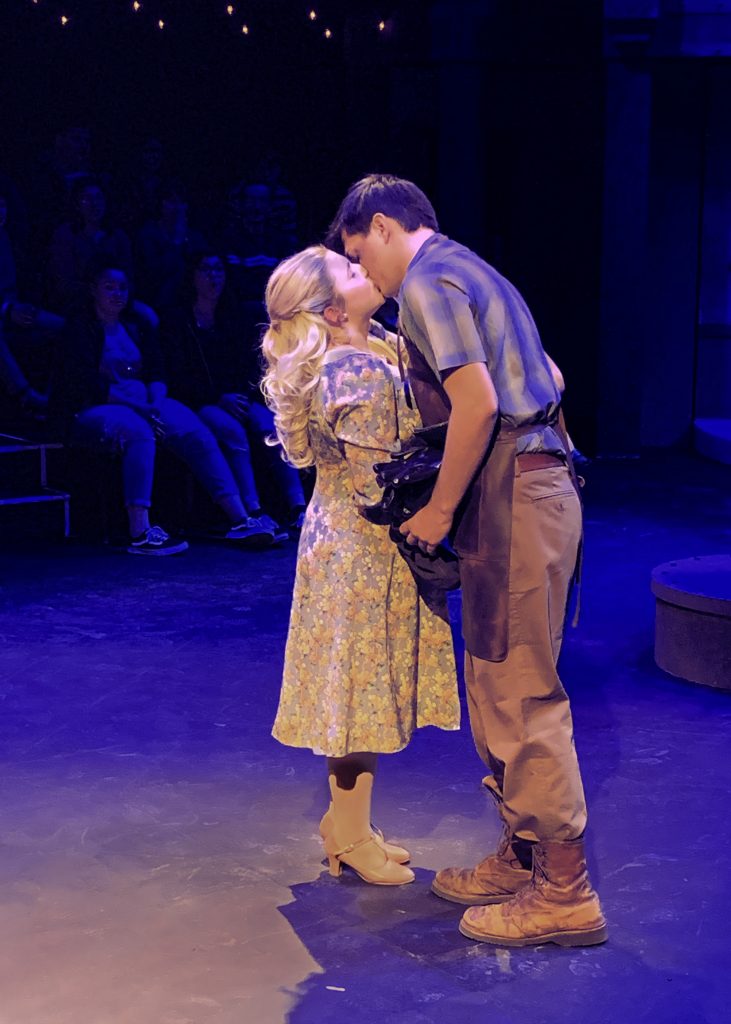
“Urinetown,” — a satirical musical, opened at Western on Feb. 28 with Michael Phillips as the director. The play was entertaining and interactive, and the opening act had about two minutes of uninterrupted silence while the actors laid on the ground, “asleep.” This made many audience members giggle nervously as the silence drew out. Laughter was a key element of the show. 

The story covers a drab town in the mid 1900s where a water shortage has led an evil man, Cladwell, to start Urine Good Company which now charges the poor pay-per-use public bathrooms. If anyone disobeys these rules, they face the threat of being sent to the mysterious and dreaded Urinetown.

This outlandish tale is packed with humor, love, violence and catchy songs. It was also full of jokes that tease elements of theater; Little Sally— a poor young girl— has conversations with Officer Lockstock where he explains how they’re covering basic elements in the first act so as not to overwhelm the audience. It mocks the “rules” that are typically followed in plays in a way that had the audience bursting into laughter.

The Western students who acted in the play did a phenomenal job, from the larger roles such as Hope Cladwell and Bobby Strong, all the way to the peppy assistant of Cladwell. The dedication and effort to the roles was apparent, and with the thorough costumes as well — everyone was able to shine in their own ways.

The live band was a great addition to the play, adding “necessary” drama to each scene, when someone made a surprise entrance, the other actors would gasp dramatically or exclaim “What?!” and the music would peak. At certain sad moments, the music would remain happy and upbeat, which Little Sally would comment on, earning more chuckles.

All the actors sang wonderfully, or sang as their characters were supposed to, which ended up being hilarious, and the dances were also well done. Overall, Western’s theater department delivered a hilarious and clever rendition of “Urinetown.”

Those who are interested in seeing the show themselves, can watch more performances Mar. 4-8 with the box office opening at 6 p.m. and the show starting at 7:30 p.m. Tickets are free for students with ID.


Contact the author at howlentertainment@wou.edu

Photos by Never Retallack

The West Of Us show camaraderie in Smith Hall

Sean Martinez  | Copy Editor

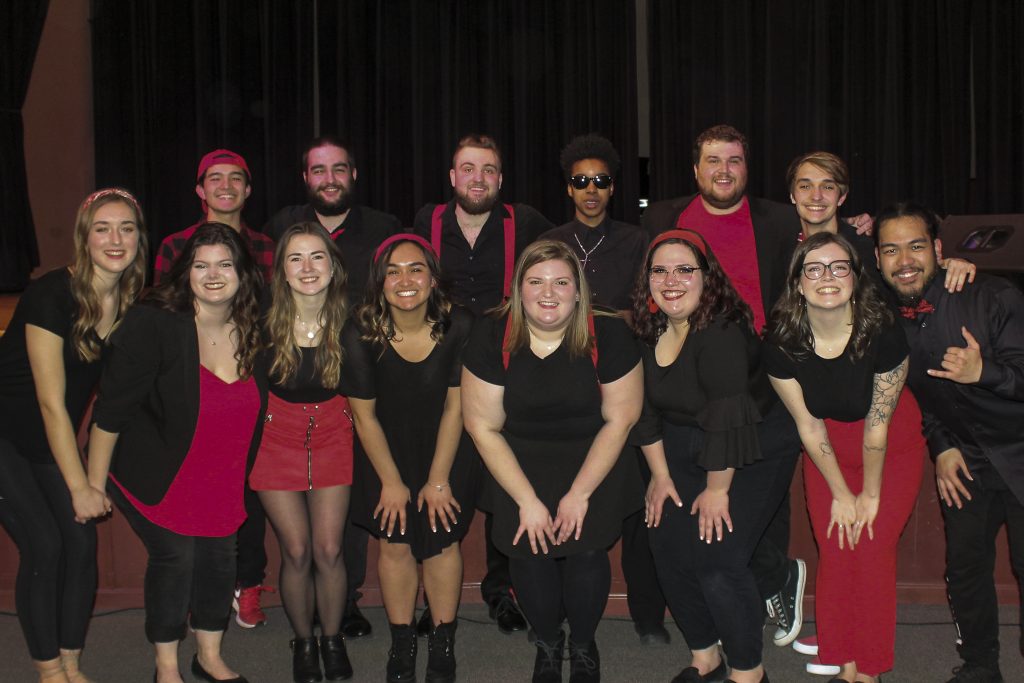
On Feb. 26, The West Of Us held their Winter Term Acapella Concert in Smith Hall, proving once again that instruments are not needed to make music. When the lights dimmed and the pitch pipe sounded off, The West Of Us kept the audience engaged as everyone listened to some well-known songs with unique twists. 

One of the performances that really resonated with the audience was the duet with “Build Me Up Buttercup.” My personal favorite was their unique take on Charlie Puth’s “Attention.” It was really cool to hear how each performer complemented each others’ voices. This was the first acapella concert I attended, and they did not disappoint. 

Acapella at Western has undergone numerous changes; it wasn’t until 2018 when the acapella group became gender inclusive and took on a new name, The West Of Us. 

The West Of Us strives to give audiences a great performance, but on top of that, co-presidents Olivia Martin and Austin Stewart are looking to recruit more students into the fold, students who will stick around long enough to bring the acapella group to new heights. 

“This year, we’re just trying to leave a good impression on everyone so that they want to stay, they want to learn music and they still want to sing acapella,” Stewart said. 

Olivia Martin added, “It’s kind of like leaving a legacy behind and ensuring that acapella is still going to be here for the years after we’re gone.” 

For Martin and Stewart, acapella is more than just making music with their mouths and entertaining crowds: the camaraderie is what keeps them coming back each year. Stewart talked about his experience coming to Western from Hawaii. Miles away from home, he decided to open up to new opportunities, which is when he was introduced to acapella. Ever since he joined, he’s considered The West Of Us a second family. 

Martin also went on to add, “It’s like a magnet that brings really compatible people together, and you just have the best time with them.”

Similar to team sports, Martin explained that acapella relies heavily on teamwork. “Everyone seems to be working on the same wavelength in order to collectively get better as a group,” Martin said. “It doesn’t ever feel like somebody’s trying to raise themselves up by lowering others. We either all go up or we don’t move at all.”

The West Of Us also aim to build a sense of community at Western. In recent years, they have performed for Western events such as the Cesar Chavez Conference, the Late-Night Breakfast, the Out of the Darkness Walk and their biggest performance, Acaparka — held at the Main Street Park at the amphitheater in spring. 

“We bundle all of our songs together … and then we perform a really large setlist for everybody,” Stewart said.

Be on the lookout for updates regarding the date and time for Acaparka.


Contact the author at howlcopyeditor@wou.edu

Photo courtesy of Lisa Martin