Mount Hood

What happened on campus during break?

Sage Kiernan-Sherrow  | News Editor

Date: 12/14/2019

Time: 9 p.m.

Location: Lot J near the Stadium

Incident: Public Safety discovered a marjuana violation


Date: 12/20/2019

Time: 11:15 p.m.

Location: Lot J near the Stadium

Incident: Public Safety responded to a report of two subjects arguing in the parking lot.


Date: 12/21/2019

Time: 8:40 a.m.

Location: 1777 Taylor Street, Eugene, Oregon

Incident: Public Safety responded to a report of a theft of WOU property off campus in Eugene.


Date: 12/30/2019

Time: 9:19 a.m.

Location: The Administration Building

Incident: Public Safety responded to a medical assist 


Contact the author at howlnews@wou.edu

Four out of five Oregon representatives approved President Trump’s impeachment

Sage Kiernan-Sherrow  | News Editor

Although most of Western’s students probably know by now that the House of Representatives voted to impeach President Trump on Dec. 18 for abuse of power and obstruction of congress, some may be wondering how Oregon’s representatives contributed to that decision, as well as how students may be affected going forward. 

Oregon currently has five representatives in the House: Representatives Suzanne Bonamici, Greg Walden, Earl Blumenauer, Peter DeFazio and Kurt Schrader, respectively. Of those five, four are alligned with the Democratic Party and one is alligned with the Republican Party. During voting, all four Democratic representatives voted for both articles of impeachment, while Republican Representative Walden, voted against. Their votes combined with the remainder of the House, resulted in 230 votes for impeachment regarding the article for abuse of power, 197 against, and four abstaining from voting; for the article referrng to obstruction of congress, 229 members voted for impeachment, 198 voted against, and four abstained. 

While the majority voted for President Trump’s impeachment, the margin was narrow, and now the Senate must hold a trial to convict the president in order to remove him from office. Oregon Senators Ron Wyden and Jeff Merkley are both registered Democrats, but the Senate’s 100 members are still overwhelmingly Republican, and according to The New York Times, at least 20 Republican votes would have to sway in order to gain the two-thirds majority required to officially remove President Trump from office. And while President Trump may have made history as only the third president to be impeached by the House of Representatives, no president has ever been impeached by the Senate — although Nixon stepped down beforehand. 

While President Trump awaits trial, he has continued to be active on Twitter and also authorized an airstrike, killing Iranian Maj. Gen. Qassem Soleimani and igniting fears of war. Students might be particularly worried because of misinformation revolving around the draft and its link to FAFSA. However, FAFSA only provides a way to register for the draft if one hasn’t already done so after they turned 18; the draft is not currently active.

Despite the misunderstanding, it is an indicator that while the country is waiting for the Senate to begin the trial, questions about the impeachment process have sparked people to become more politically aware — particularly young people. Students at Western and across the nation will have a major role to play in the upcoming 2020 election; whether President Trump is removed from office or not, the country is watching.


Updated on Jan. 16, 2020


Contact the author at howlnews@wou.edu

War and Peace

Sage Kiernan-Sherrow  | News Editor

To commemmorate the 75 anniversary of the end of World War II, twenty-six Oregon communities — including Independence — have plans to plant seeds salvaged from the trees that survived the Hiroshima bombing on August 6, 1945. Called “peace trees,” the Ginkgo seeds are a poignant symbol contrasting growing national fears — and the subsequent memes  — of a potential “WWIII,” triggered by President Trump’s authorization of a military strike in Iran on January 3. 

In Independence, the seeds are to be planted in the Inspiration Garden at Mount Fir Park. Run by the Master Gardeners, the Inspiration Gardens boast medinal plants, fruits and vegetables, a rose garden, and a book box for admirers to peruse — all nearby Ash Creek and the creatures therin. Portions of the garden also serve as a research facility for Oregon State University; wanderers can observe the fruits and vegetables grown but are asked not to pick them, as they are used for educational purposes.

The idea to plant a peace tree in the Inspiration Gardens came from the collaborative efforts of the Oregon Department of Forestry, Oregon Community Trees, and the Founder of One Sunny Day Initiative — Hideko Tamura-Snider. A Japanese native, Snider founded OSDI to “educate the public about the consequences of the use of nuclear weapons and plants seeds of peace, hope and reconciliation among people of the world, through educational presentations and cultural exchange programs,” according to their website. 

The hopes presented in OSDI’s statement and the purpose of the trees is a study in irony, as tensions rise following Iran pulling out of the 2015 nuclear trade deal on January 5 — previously abandoned by President Trump in 2018 — stating that they will no longer abide by the restrictions reflected by the deal. 

The Ginkgo tree that the seeds are collected from rests in the Shukkien Garden in Hiroshima, “where many people came asking for water and shade after the Atomic bombing,” according to a youtube video titled “Introduction video Green Legacy Hiroshima.” And, despite recent political occurances, the goals of the volunteers of that project remain the same, as Green Legacy Hiroshima Initiativie Co-founder and Coordinator states, “we want to pass (the tree’s) message to future generations. We hope to deliver this love from all of us to you.”


Contact the author at howlnews@wou.edu

Introducing the new Aquarium Science program

Sage Kiernan-Sherrow  | News Editor

The first of its kind in the state, Western has collaborated with Oregon Coast Community College to design an Aquarium Science program focused on combining foundations in biology and business and applying them in the field. A career-directed degree, Western’s Head of the Biology Department, Michael Baltzley, recognized the need for a program that would offer students real-world experience before entering the field. 

“When I went into biology … I didn’t know where that career was going to take me … you need specific training and volunteer hours for many positions, which provides little income and is impractical. As such, this degree would have been very attractive to me,” Baltzley commented. 

Baltzley partnered with OCCC’s Aquarium Science Coordinator, Larry Bowles, to create the joint program, the foundations of which were already operative at OCCC as both two-year and four-year degrees with certification, both “well-respected programs with advisors all over the country that helped design the programs,” according to Baltzley. 

At Western, the Aquarium Science degree requires students to take their first three years of biology and business courses at Western, before applying to transfer to OCCC for their final year of in-class training in preparation for the workforce. 

“The problem with an Associates degree is that you run into a ceiling when you are trying to get promoted,” Baltzley said; through Western’s Aquarium Science program, “there are more opportunities for advancement.” 

While the program was officially approved by Western’s Board of Trustees on Nov. 20, it has yet to be approved by the Provost Council which is set discuss approval during their meeting on Jan. 6. Upon approval, the final decision will be made by the Higher Education Coordinating Committee sometime in February. The program itself, however, will not appear in the catalog until next fall. Baltzley suggested that students interested in the program should contact biology professors and their advisors to begin modifying their schedules for the Aquarium Science degree in order to get a head-start. He also says that he welcomes student input on the program in the meantime. 


Contact the author at howlnews@wou.edu

City Manager hesitant to call homelessness an issue in Monmouth

Sage Kiernan-Sherrow  | News Editor

An ongoing issue in Monmouth’s neighboring city of Salem, aspects of homelessness are beginning to become apparent here, as well, with several instances of homeless and transient camping observed in the Monmouth-Independence area. 

According to an article published by the Polk County Itemizer-Observer on Dec. 2, language has been changed to the exclusion ordinance in order to discourage both vandalism to city property, as well as homeless camps from setting up. Despite this, the ordinance changes are not explicitly anti-camping, and according to Monmouth’s interim City Manager, Chad Olsen, the city has no plans to design anti-homeless protocols. 

“I’ve seen instances, but I wouldn’t categorize homelessness as an issue in Monmouth,” said Olsen, citing a few occasions where people camped on city property and one where a transient person was travelling through town. 

“Typically, you would see more of an issue in terms of homeless or transient populations in the county seat, because we just don’t have the services here to provide for those groups,” Olsen stated.

Despite Olsen not anticipating homelessness becoming an issue, a warming center has opened in Monmouth, and the council is currently looking at creating a group with a set of bylaws eligible to become part of the Mid-Willamette Valley Homeless Alliance. The group would make a request to Housing and Urban Development — which allocates funds across the state for eligible groups — and is looking to become an independent organization, according to Olsen.

Olsen also assures that homelessness is on the City Council’s radar as a potential issue and that there are currently discussions being had about what strategies to utilize in the future.


Contact the author at howlnews@wou.edu

Western’s 52nd annual Holiday Tree Lighting lit up the night

Sage Kiernan-Sherrow  | News Editor

Despite the rainy atmosphere present on December 6, students gathered together for Western’s 52nd annual holiday tree lighting, lining both sides of Monmouth Avenue with anticipation. Some stood with hands wrapped around the free drinks offered by Student Engagement, huddling with fellow students to escape the cold while waiting for the parade to start. 

Beginning at 6 p.m., the parade was led by Western’s American Sign Language Club, later followed by the sirens of the Monmouth Police Department not to be outdone by Western’s own marching band. During the procession, both the Director and Associate Director of Student Engagement, Patrick Moser and Megan Habermann, respectively, opted to tell holiday-themed jokes before the crowning moment of the parade — Santa’s arrival. 

Afterwards, Western’s president, Rex Fuller, addressed the crowd, calling for students to “treat each other and ourselves with care and compassion” during this season of giving. Then, he invited everyone to participate in the countdown whereupon, finally, the famous giant sequoia that sits next to Todd Hall — which, prior to the event, had been strung up with lights — was lit, indicating that the parade celebrations were over, but the holiday season was only beginning. 

Students looking for further celebrations congregated at the Gentle House for snacks and wine, while others headed into the Werner University Center to meet with Santa and get into the holiday spirit. 


Contact the author at howlnews@wou.edu

Through student demand, new support groups have developed

Sage Kiernan-Sherrow  | News Editor

Though many are still in the process of being formulated, students seeking community on campus now have the ability to participate in one of Western’s various new support groups. The support groups were created based on student initiative and are run by fellow students with a faculty supervisor — usually a professional from the Student Health and Counseling Center. The following are just a few examples of what is currently being offered.


The Building Resilience in College Workshop Series:


This 10-week workshop series beginning in winter term is open to all students and does not require consistent attendance. It focuses on building life skills while balancing all of the responsibilities required as a college student. Each week focuses around a specific topic ranging from how to be a critical thinker to maintaining healthy friendships and relationships. In addition to this workshop, there will be a separate four-week course on healthy relationships during winter term, run by Megan Miller, a mental health counselor at Western who hopes to “increase student’s communication in relationships and allow a deeper understanding of what they wish to gain in a relationship … through personal reflection, discussion and group activities.” Dates and times for both events are to be determined.


The Men of Color Support Group:


Run by Miguel Gonzales, a mental health counselor at the SHCC, the Men of Color Support Group was created with the intention to “discuss cultural barriers, successes, discrimation, empowerment, acculturation, and … other topics that group members are interested in discussing,” said Gonzales. It is designed for men of color to receive peer support while being able to discuss both personal experiences and overarching issues. The winter term meeting time is to be determined, so students interested in joining can look for a future email from Gonzales.


The Autism Spectrum Disorder (ASD) Support Group:


Focusing on “psychoeducation surrounding autism, shared and common experiences people with autism face as well as skill building and coping skills to manage thoughts, emotions, and behaviors,” as reported by mental health counselor, Katie Endersby, the ASD Support Group is open to all — no diagnosis required. Any student interested in learning about the autism spectrum can join, but meeting times are currently to be determined. 


It is particularly important to note that groups may not run all year. To find groups operating during the current term, visit the Student Health and Counseling webpage. Additionally, some groups require an intake appointment with a counselor through the Student Health and Counseling Center before approval. However, there are many groups that do not have this prerequisite and any student with an idea for creating a group can reach out to the Student Health and Counseling center by calling 503-838-8313.


Contact the author at howlnews@wou.edu

An Accessible Pedestrian Signal has been implemented after conversations about accessibility for Monmouth’s DeafBlind community were sparked.

Sage Kiernan-Sherrow  |  News Editor

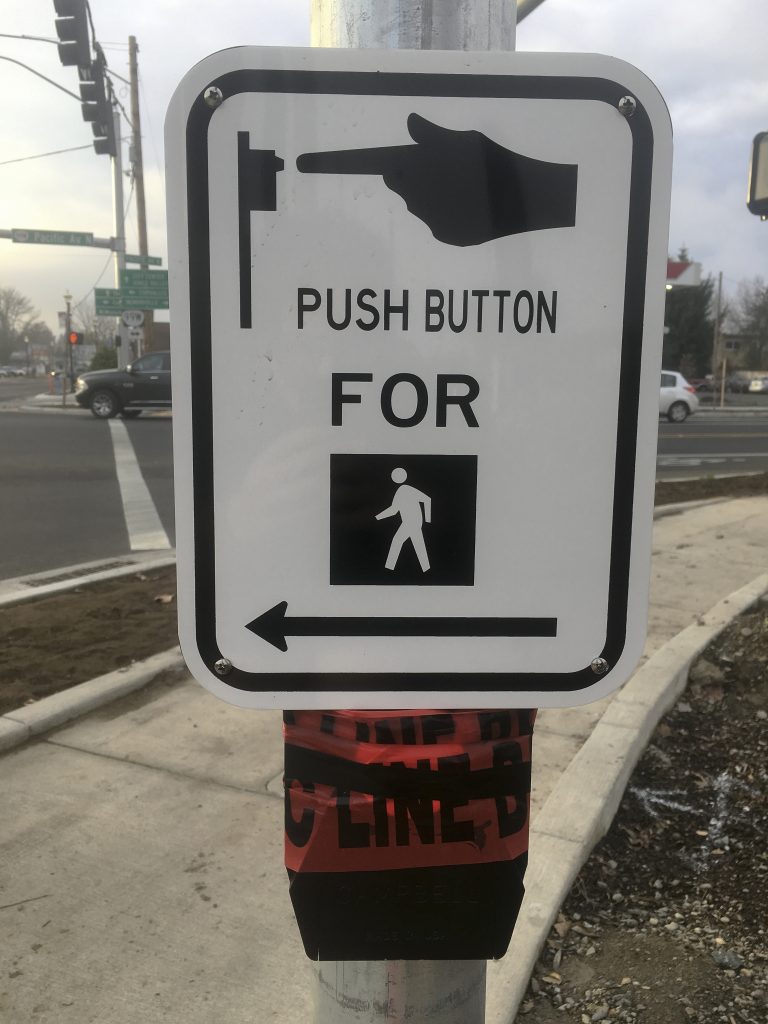
As the DeafBlind population increases within Monmouth, discussion about accessibility has increased, and small changes have been implemented to promote that accessibility. One such change is the addition of Accessible Pedestrian Signals (APS) at the intersection of Main Street and Highway 99, which was made possible through the advocating of several parties, including Jelica Nuccio. 

Jelica Nuccio is a DeafBlind individual who moved to Monmouth a year ago from Seattle, Washington, bringing her business “Tactile Communications” with her. Tactile Communications focuses on, “providing education to individuals that are DeafBlind as far as adaptive skills and reading in Braille. 

“For many people, if they’ve grown up visual, then when they become DeafBlind, they need to incorporate touch-based strategies to get information. So, we do a lot of training…” Nuccio said, likening the training to learning how to drive a car. 

Training also includes learning how and when to cross the road safely — now made easier through the APS system.

Nuccio credited Amy Parker, the coordinator of the Orientation and Mobility program at Portland State University, with garnering support from the City Council and the Department of Transportation to implement the APS system.   

“It became much more complex than originally anticipated,” Nuccio stated.

Despite this beneficial addition, there are still more ways to improve accessibility in the community. Nuccio mentioned adding additional APS systems along Main Street, more stop signs to increase driver awareness, bumps on the road serving as tactile markers, English and Braille combined menus and mats in front of doorways acting as signifiers as improvements that could be made. 

“We’re hoping that with more visibility, that will create more awareness, and that will create a more unified front and we can actually start making some of these significant changes, but they haven’t happened yet,” said Nuccio. 

Despite the need for improvements, Nuccio relayed feeling welcomed in Monmouth, saying that “there’s a different kind of patience here … people are just very welcoming, and they’re immediately talking about what they can do to change the community and make it more accessible.” 

She said that she moved from Seattle to Monmouth after visiting Monmouth for work-related purposes where she was surprised to enter a restaurant and have a waitress immediately begin communicating with her in protactile. 

“I immediately felt so comfortable and comforted in knowing that people understood that I communicate through touch,” Nuccio said.

For students interested in learning about DeafBlind culture and protactile communication, Nuccio recommended they take Professor CM Hall’s class in Winter Term and Nuccio’s own class taught in Spring Term, which is entirely taught in protactile. 

“Protactile is not the same as hearing a language or seeing a language — there’s no book on it. You can’t write a book on how something feels or how to communicate tactilely, so it would be very difficult to explain even in a video. So, all of the instructions has to be done in person,” Nuccio said.

For those seeking a creative, immersive experience, a PT play will be held on Dec. 14.

“In protactile theater everything is communicated by touch, so you don’t see anything or hear anything — this is a brand new thing that has just occured in our community and it’s blossoming,” said Nuccio.

Those interested can RSVP at TcPTPlays@gmail.com.

To conclude, Nuccio stated, “I’m just as human as everyone else, I just have different means of communication. But different, doesn’t mean separate. We can all communicate with each other.”

For more information on who Jelica Nuccio is and what she does, visit https://www.tactilecommunications.org/.


Contact the author at howlnews@wou.edu

Photo by Sage Kiernan-Sherrow

After months of preparation, Western launched several new program options in 2019.

Sage Kiernan-Sherrow  |  News Editor

This year, many new majors and minors — as well as degree options — have been added to Western’s official catalog, and future additional options are underway. Three additions in particular have opened up new pathways for student success: a master’s in Organizational Leadership, an Applied Baccalaureate in Liberal Sciences and the new major of English Studies. The following will offer descriptions about each program and detail the benefits related to obtaining a degree through these new options. 


M.A. in Organizational Leadership


As an interdisciplinary program unaffiliated with any one academic department featuring instructors from a variety of related fields, obtaining a master’s in Organizational Leadership would benefit “anyone who wants to enhance their leadership skills and be prepared to effectively lead in any type of setting,” as stated by psychology professor David Foster. Continuing, he said that the program “is designed to help people build the behavior, cognitive and social competence necessary to be an effective leader,” developing qualities sought after by human resources.

After first developing the organizational leadership minor with fellow professors Nick Baccus, of communication studies and Paul Disney of business, the three collaborated to design the master’s degree program which co-adhered with President Rex Fuller’s plan to “expand WOU’s graduate offerings by developing programs that would be appealing for people living in Salem,” said Foster. While taking courses based at the WOU:Salem campus targeted towards working adults, students have the ability to gain Operational Leadership and Executive Leadership certificates, furthering their workforce qualifications. 

“(Businesses) need programs like ours to help their people develop the competencies they need to be effective leaders,” said Foster. For more information about this program, students can follow the link to the graduate program’s page through Western’s webpage. 


Applied Baccalaureate in Liberal Sciences


Also offered at Western’s Salem campus, the Applied Baccalaureate in Liberal Sciences degree was created to provide further education to adults who have already acquired an Associate of Applied Science degree. It’s designed to give working adults the advantages of a four-year degree without them having to repeat coursework, letting them build upon their previous education. Students will “complete foundations courses, dive into the arts, humanities, social and natural sciences, explore interests, and tie it all together in small seminars with fellow students,” stated a video published by wouTV titled “WOU:Salem: What’s Next.” The video also describes the program as essentially an “upside-down degree,”  giving students who have already mastered specific trades the ability to take broader educational classes. 


English Studies Major 


Nine years in the making, the English studies major features a core of linguistics, literature and writing classes and offers students a way to virtually design their own program, while limiting the amount of credits needed to graduate. 

“We saw a pattern … that the average English major was graduating with 211 credits. That’s a lot … we were really creating barriers for our students” stated Katherine Schmidt, an English professor and the director of the Writing Center at Western. 

The English Studies program is now made of mostly classes counting as upper division credits and has gotten rid of the two-year language requirement consisting of 24 credits. The program also boasts a common core curriculum of 41 credits, allowing for students to take more electives specific to their interests. 

“Instead of being a mile wide and an inch deep, we’re encouraging students to go a mile deep and an inch wide … to do what (they) love and to spend most of (their) time doing that,” said Schmidt, providing an example of a student writing historical fiction taking history classes relevant to their craft. Although, of course, students still have to justify the course’s complementary connection to the program. 

In the future, the program is planning on reinstating a publishing class, and providing a Professional Writing Certificate, which will launch next year. The Professional Writing Certificate is 20 credits and is targeted towards “people who already have their degrees,” stated Schmidt. 

“Students have shown a desire to specialize in professional writing and we want to give that opportunity to them,” said Schmidt, citing the full grant-writing class offered Winter Term as evidence. 

Classes for the certificate will be based at WOU:Salem, and is “complementary to an Organizational Leadership degree,” said Schmidt.


Contact the author at howlnews@wou.edu

Multiple new changes made to Western’s various technology outlets, a focus on security cited as cause.

Sage Kiernan-Sherrow  |  News Editor 

Recently, students have received multiple emails regarding changes to Western’s technology including student access to their portals, Adobe Creative Cloud and an upgrade to Windows 10 for all campus computers. Many of these changes have been initiated to reduce threats to security. Director of University Computing Solutions, Bill Kernan, said, “current news talks about election hacking, corporate attacks, and data breaches … It’s so easy to fall into the trap that is being set … Having another layer of protection that uses something the hacker can’t access is paramount.” 

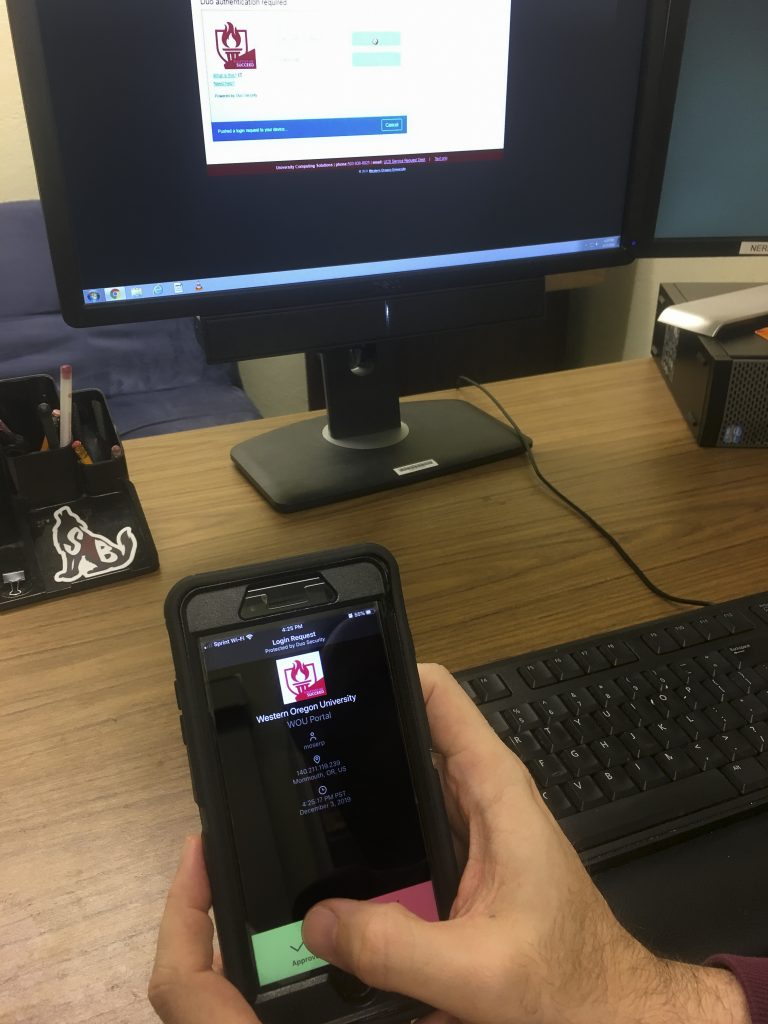
To increase security, Western is installing the Duo program, which will act as a two-step verification process that works by sending push notifications to one’s smartphone asking for authorization. By accepting the notification, students are able to access their information; if they are not the ones attempting to gain access, they simply have to press “deny.” For students, Duo launches in February, and Kernan assures that it “doesn’t require any additional passwords … the only information Duo stores is username and the phone number associated with that username, so that authentication can work correctly.”

Similarly, Adobe has changed their login system “in attempts to protect their assets from abuse,” according to Kernan. Many individuals and departments across campus rely on Adobe for their jobs. Now, “users that use Adobe products will log in with their username@wou.edu which will redirect (them) to WOU’s portal,” stated Kernan. 

Switching to Windows 10 also benefits the university from a security perspective. According to Kernan, Windows 10 provides enhanced security through its operating system and access to improved software and apps, while also being mobile friendly. 

Kernan also said that students have the ability to learn about additional security procedures through the Information Security Training Tool that automatically notifies students through portal when there is a new lesson available. The lessons are three to five minutes long every two weeks, making “information easier to attain,” stated Kernan. 

“The training will include topics like SPAM, phishing, encryption, etc…” and, “ is totally responsive, so everyone can view it easily on phones, tablets or laptops” Kernan concluded.


Contact the author at howlnews@wou.edu

Photo by Sage Kiernan-Sherrow

Western to participate in Congress to Campus program this February, two students will act as ambassadors

Sage Kiernan-Sherrow  |  News Editor

On Tuesday, Nov. 10, assistant professor of politics, policy and administration, Earlene Camarillo, sent a campus-wide email advertising an opportunity for students to act as Western’s ambassadors during the Congress to Campus event set to occur from Feb. 11–13. 

According to Camarillo, President Rex Fuller and Provost Rob Winningham later collaborated with Dr. Mary Pettenger after discovering the program, stating that it “sounds like a great opportunity for Western, especially in today’s climate of strong partisanship.”

Congress to Campus is an existing government program which provides an “opportunity to interact with former Members of Congress through a program designed to attract young people to public service” and addresses “concerns about the lack of civic literacy among America’s young people and declining participation in politics,” according to its official website at stennis.gov.

Camarillo expanded on the idea of civil literacy, stating that it is “the idea that we engage with one another in conversation,” and that, in a democracy, “theoretically, everyone should feel comfortable expressing their opinions.” The Congress to Campus program supports this by sending one Republican and one Democrat representative to “promote the idea that you have to speak with one another,” said Camarillo.

Camarillo mentioned the media’s role in misinforming the public and framing the government as overly bipartisan, saying that “there is a lack of clarity on how our system actually works,” and citing the statistic that “only 30% of people can name the three branches of our government.”

Throughout the program’s duration on campus, there will be two events held on Feb. 12 that are open to the general student population. One is set to occur at 2 p.m. and will be an alumni panel dedicated to addressing the topic of public service, and the other is set for 7 p.m. and will be a public forum where students and faculty can ask questions of the president and former Congressmen. 

Camarillo hopes that this event will promote interest in public service careers and stated, “we really want to encourage people across all disciplines,” to apply and attend the panels, stressing that the information being presented will be “important regardless of what career you’re going into.” 


Contact the author at howlnews@wou.edu

HIVAlliance partners with Abby’s House to combat misinformation about HIV and treatment.

Sage Kiernan-Sherrow  |  News Editor

HIV has a long history of stigmatization throughout the nation. Partnering with Abby’s House on campus, HIVAlliance came to Western Wednesday, Nov. 20, “to discuss the current status of HIV in Oregon, how HIV is spread and not spread, and ways to prevent HIV, including PrEP,” according to Keith Mathews, a Western Alumni and current PrEP Coordinator for the Northern Region of Oregon.

According to HIVAlliance’s website, hivalliance.org, PrEP stands for Pre-Exposure Prophylaxis, “a medication taken daily that can be used to reduce the likelihood of HIV infection by preventing the virus from taking hold and spreading throughout the body,” which, “can reduce the risk of sexually acquired HIV by more than 90% and can reduce the risk of HIV among people who inject drugs by more than 70%.” 

HIVAlliance helps to educate the public about PrEP, as well as helping PrEP users navigate insurance, providers and financial support services. Additionally, HIVAlliance operates under a harm reduction philosophy which “seeks to empower individuals, remove barriers to accessing the support that they need, and offer pragmatic approaches to risk reduction in a non-judgmental/non-coercive way, that is compassionate and accepting of any positive change,” according to hivalliance.org.

Prior to the presentation, Mathews reached out to Abby’s House himself, saying that, “I knew their missions overlapped with our mission at HIVAlliance to educate about HIV and prevention. In my four years at WOU I heard very little about HIV apart from a few events highlighting awareness so I thought it would be a wonderful opportunity to start that conversation at WOU.”

He added that, “despite the perception of lessened stigma around HIV, there is still a lot of misinformation around HIV which continues the stigma to this day.  The best way to receive correct information is to find medically accurate and correct information on HIV and talk to people, especially sexual partners, about HIV status and testing.”

Currently, there are various organizations which offer STI and HIV testing, including Western’s  own Student Health and Counseling Center. Polk County Public Health, Marion County Health and Human Services, HIVAlliance and Planned Parenthood all offer testing within the community.

For more information, visit hivalliance.org


Contact the author at howlnews@wou.edu

After an unparalleled 2018 haul, Western’s Toy Drive hopes to maintain that momentum for the 2019 season

Sage Kiernan-Sherrow  |  News Editor

Following a record-breaking year in donations, the annual WOU Toy Drive is once again setting up collection boxes for the Christmas season. 

The campus drive has been operating for the past seven years, and developed “organically” after a foster student named Matthew Burley asked why there wasn’t a holiday program for foster-care and underprivileged students, said Jackson Stalley, a library technician at Western and coordinator for the toy drive. 

After finding campus partners, the drive has “become a part of WOU’s holiday culture,” said Stalley, “it became so popular and successful because of the generosity of our campus … people rely on us.”

Western’s Toy Drive operates separately from the Student Veterans of America’s Toys for Tots, and is the primary donor of holiday gifts to local organizations such as the Sable House, DHS and the Liberty House in Salem — organizations that provide services to those in the foster care system and to families experiencing domestic violence, as well. 

The first year that they delivered the toys, one of the organizations had about eight presents prior, Stalley recalled. Every year, “it’s stunning how happy (people) are to receive the gifts,” Stalley said.

This year, Stalley hopes to “keep the momentum” from the previous year, and wants to remind students and community members that they’re “more than just toys and gifts.” For some, “the idea that some stranger out there cared was a reminder to be hopeful,” said Stalley. 

Students and faculty wanting to donate have until Dec. 9 to do so and can find more information as well as a wishlist through Stalley’s email sent out on Nov. 12 or by contacting him directly at stalleyj@wou.edu.


Contact the author at howlnews@wou.edu

After news of low enrollment, the Student Health and Counseling Center struggles to meet the growing needs of students, sparking conversation about stigma and human connection.

Sage Kiernan-Sherrow | News Editor

According to the 2018 Marion-Polk Community Health Profile, depression ranks as the most common chronic condition experienced in our community, and approximately 1 in 10 adolescents reported having attempted suicide in the last year. 

At Western, appointments to the Student Health and Counseling Center are booked until finals week. Director of the Student Health and Counseling Center, Beth Scroggins, said, “we are aware that it is an issue, we are aware that there are students who are just now getting an intake done and it’s going to be January before they will get to be seen.”

In Monmouth, students have few options for mental health services and their coverage depends entirely on insurance. Their student fees cover the cost of mental health services on campus, but therein lies the problem: “Everything that runs (the Student Health and Counseling Center) is only provided through student fees … funding keeps going down because of lowered enrollment, but demand for services goes up,” reported Scroggins. 

However, Scroggins divulged that she is “glad we have this problem and not the other problem — that students won’t come in.” She revealed that this year in particular, she has seen a rise in students accessing services and thinks that some of “the stigma has diminished.”

“We are looking at how we can accommodate more and what that is going to look like,” she said, but as of now they’re still in the planning stages.

Despite that, Scroggins assured that the Student Health and Counseling Center will “always have crisis services available,” and emphasized the various new support groups on campus that have been created from student need and initiative. She also expressed admiration for the amount of “faculty, staff, students, and community members (who) do a great job of referring students to us,” and wanted to stress the importance of community involvement. 

Of the optional survey that students can complete after their visit to the counseling center, Scroggins asserted that she always reads “every single one of those,” and that they’ve “already made some changes to student services based on those, so (she) takes student feedback very seriously.”

And while she believes that stigma has reduced, “people are a lot more comfortable talking about depression, anxiety, self-care … when we start talking about PTSD, trauma, sexual assault, abuse, psychosis … people don’t know how to respond to that because lack of information or knowledge,” she said.

“People worry so much about saying the wrong thing … that they say nothing. Say something,” Scroggins urged.

As a community, we need to be “comfortable with hearing things that are uncomfortable,” and remember that, “people don’t have to be experts to be a support system,” Scroggins said. She followed up with that, sometimes, all it takes is noticing the differences in a person’s behavior or listening to someone and directing them towards help to make a difference. 

Regarding the student suicide that was reported in an email sent out on Nov. 6 by Western’s vice president of Student Affairs, Gary Dukes, Scroggins stated, “when there is a student death, it does affect everybody … I think that mental health is an issue for everybody; even if they aren’t directly experiencing it themselves, someone they know is.” Scroggins reminded all students to “give themselves grace,” count their support systems, engage in self-care and set healthy boundaries. 

“Things will be okay, and even when they’re not, they will be,” Scroggins concluded.


Contact the author at howlnews@wou.edu

Health and Counseling Center 

(503) 838-8396

Psychiatric Crisis Center

1 (888) 232-7192

During the 2019 Oregon Special Election, Polk County passed a levy that would extend funding for educational programs

Sage Kiernan-Sherrow | News Editor

Approximately 30% of 959 eligible voters participated in Oregon’s Special Election — an election not part of the regular schedule — which took place on Nov. 5, according to oregonvotes.gov. Overall, there were nine state-wide measures to vote upon, and all aside from one passed. The measures primarily focused on education, environmental, and economic issues. 

In Polk County, community members were voting on a measure that would determine if the Falls City School District would renew a five-year levy that would otherwise terminate in June of 2020. According to the Polk County website, this levy would “continue funding for a music program, sports programs, extracurricular activities and FACES, or the Family Academics Community Enrichment for Success program.” Out of 297 votes collected for this particular measure, 180 were in support, and the measure passed.


Contact the author at howlnews@wou.edu

Western alumni, Lisa Lowell, has become a prolific writer and teacher after achieving her masters. Here is her story.

Sage Kiernan-Sherrow | News Editor

Lisa Lowell has always been a writer. As a local Oregonian born into a family of artists who “don’t do competition,” Lowell said that writing became her niche. However, as a high school student, Lowell admitted that she “wasn’t a very good writer,” or rather, she held contempt for any type of writing which stifled her creative process. 

After being asked to follow a prompt for a class assignment — and failing miserably, preferring to add in her own flair of fantasy and magic — her teacher submitted her work to various scholarships unbeknownst to her. She received a scholarship to Brigham Young University, but ended up losing it as she wanted to pursue a career in teaching history rather than English, later being named the VFW Teacher of the Year in 2011. 

However, after realizing that “you can’t (become) a history teacher as a woman because they also want them to be a coach,” Lowell opted into getting a masters degree in English as a second language from Western Oregon University. 

Lowell called Western “very cooperative” in helping her basically design her own degree. Throughout this time, Lowell continued her writing, but after graduating in 2006, her husband went through a terrible accident, resulting in Lowell putting her art temporarily on hold. 

But after six years of contacting different publishers, she ultimately published three books in “The Wise Ones” series, and her fourth is set to come out in March of 2020. 

“The Wise Ones” is a fantasy series with each novel focusing on one or two stand-alone characters within the overall universe. It starts with the dragons — the keepers of the magic — going into hibernation, during which 16 Wise Ones are chosen to contain it. Lowell compared her writing to that of C.S. Lewis’ “Chronicles of Narnia” series, in that it is “not full of smut and violence,” and “there is a higher-being” central to the plot, although the series is not “overtly Christian.” 

“Each Wise One has their own adventures focused around how they find and come into their magic,” Lowell said, “people think that it’s YA, but the characters are adults strictly controlled by their morals, or they can’t control their magic,” Lowell said.

For example, one of her characters takes the magic when he becomes 25, freezing him in time while his wife and children age in front of him. The moral issue central to the plot is him attempting to remain faithful to his wife despite prophecies of another woman being important to fostering his magic. 

Lowell’s work can be found on her website, magicintheland.com, which also includes a blog dedicated to informing not only readers about the world she has created, but also writers who might want to travel the same path as her. Her blog features book trailers, as well as videos about writing tips and the publishing process. She will also be attending the Dallas High School  Holiday Bazaar on Dec. 7, where she can be found selling her books. 

In regards to writing, she said that she enjoys it because “it’s a different kind of teaching,” and offered this advice to fellow writers: “if you’re not creating, entropy happens, and you’re going to fall apart.”


Contact the author at howlnews@wou.edu

Photo courtesy of  Lisa Lowell

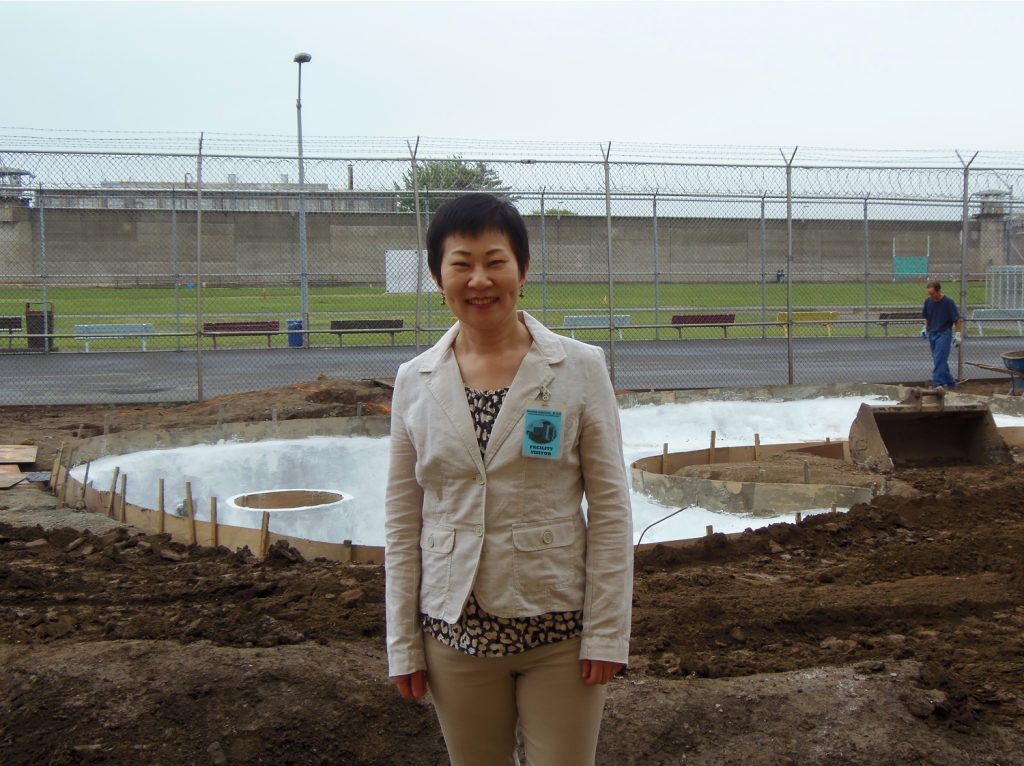
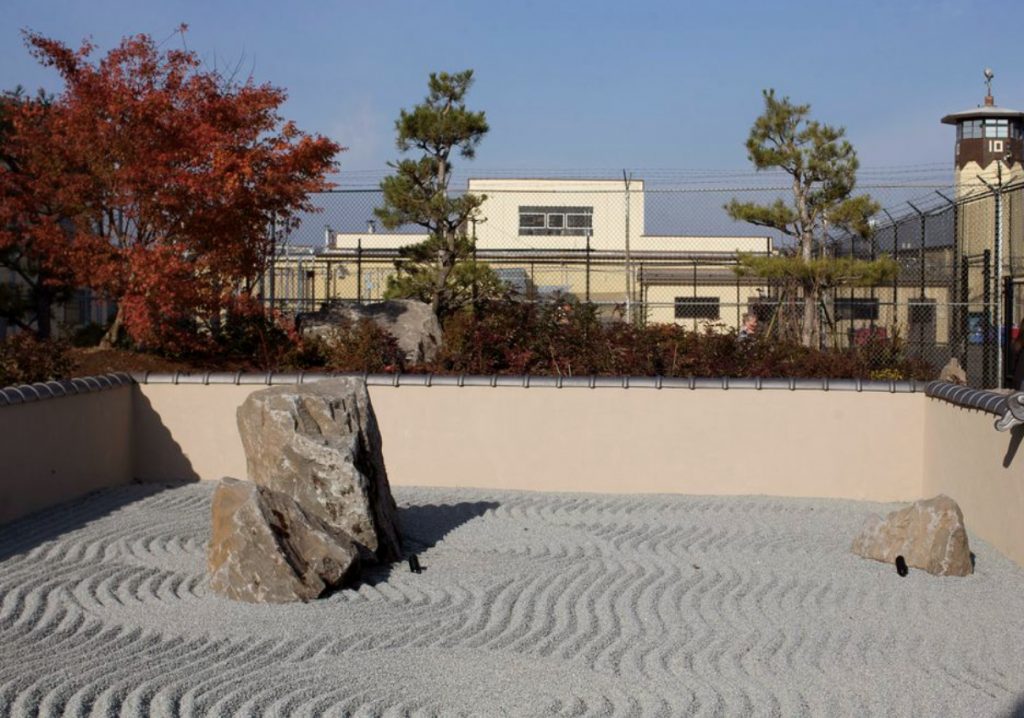
Based on the theory of transformative justice, a Japanese Healing Garden has been established in the Oregon State Penitentiary.

Sage Kiernan-Sherrow | News Editor

“Punishment doesn’t work … we need to find an alternative way to rehabilitate offenders,” said criminal justice professor, Miyuki Arimoto, during her talk, “Transformative Justice: Diminishing Boundaries through the Healing Garden Project at the Oregon State Penitentiary,” held on Nov. 13. The Healing Garden Project began five years ago as a grassroots effort combined with an inmate-led initiative centered around the idea of a “koi pond” being indoctrinated into the prison environment. 

“Prison is a boring, monotonous place,” stated Arimoto, “(the inmates) thought that nature might help to reduce altercations.”

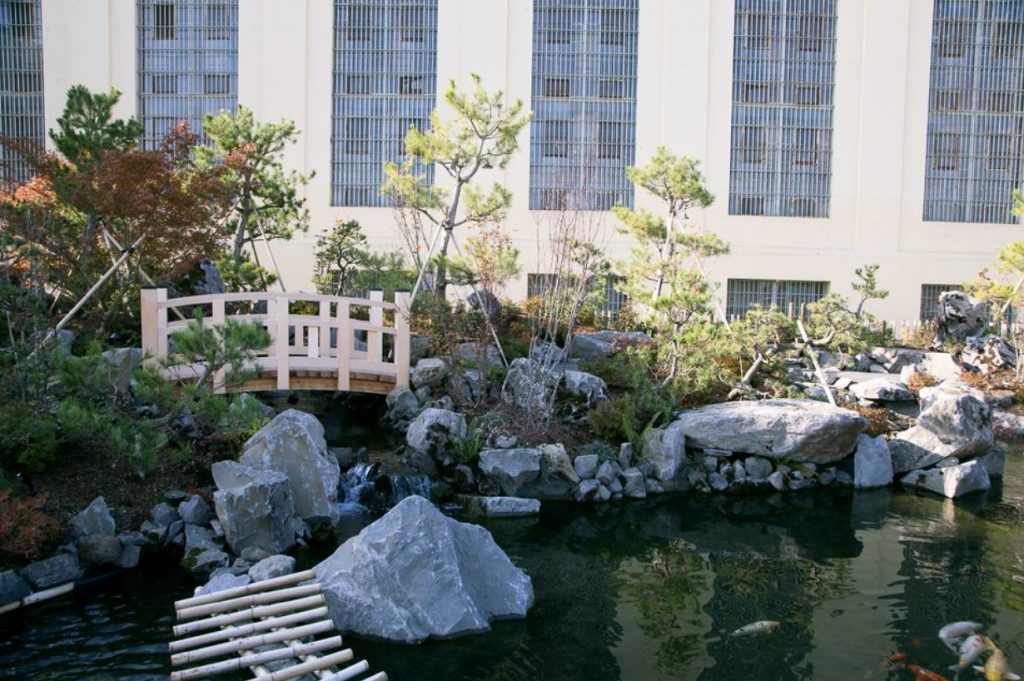
Over time, the idea of creating a fully functional Japanese-style garden was formed. Inmates wrote grants and the project developed collective advocacy, resulting in approximately $500,000 being raised. Renowned Japanese garden designer, Hoichi Kurisu, donated his design and equipment to the project. He even advocated for inmate involvement in construction, saying that “this is (part of) the necessary process of healing,” according to Arimoto. 

Amassing a total of 13,000 square feet, the garden is only the second in the nation to exist within prison walls — the first being in Maryland — and 180 inmates spent over 12,000 hours developing it.

In a video shown during the presentation, an inmate named Johnny Cofer stated, “there was so much more at stake than just building something aesthetic; there was potential for building a space that could make a really impactful difference on the lives of people that live here … I can remember that the best times in my life were spent out in nature … this place … will be transformative.”

Professor Arimoto recalled a similar testimony, where one inmate she described as “macho” broke down after thanking her and telling her that he could not stop touching the trees and smelling the earth, after not having been able to for the past 40 years. 

“Past research suggests that exposure to nature improves certain conditions such as depression, anxiety and Alzheimers … the recovery process becomes faster,” Arimoto recounted.

Arimoto is a member of a team conducting an impact study on the effects of the healing garden on inmates and staff. Using both qualitative and quantitative research over the course of two years, Arimoto hopes to analyze not only psychological effects but also the effects of a transformative justice system. Arimoto defines transformative justice as an expansion to traditional restorative justice, which “recognizes the potential for human growth … and provides (inmates) with an opportunity to make amends.”

“They are paying back society by transforming themselves for the better,” said Arimoto.

However, Arimoto also admits that there have been some criticisms about the project, citing complaints about using the money for a garden rather than using it to help transition inmates back into society and fears of violence within the garden. 

Arimoto combated these fears, saying the garden will help “to create nice neighbors instead of angry neighbors,” and will assure that inmates must go through a strict screening process to be able to utilize the garden. 

“Without trying, we won’t know if it works or not,” stated Arimoto. “It might not be the solution, but it might help to reduce recidivism.” 


Contact the author at howlnews@wou.edu

Photos courtesy of Professor Miyuki Arimoto

Western hosts a free speech discussion for open communication between students and the administration regarding last year’s controversial speaker, Joey Gibson

Compiled by Alyssa Loftis | Freelancer  &  Sage Kiernan-Sherrow | News Editor

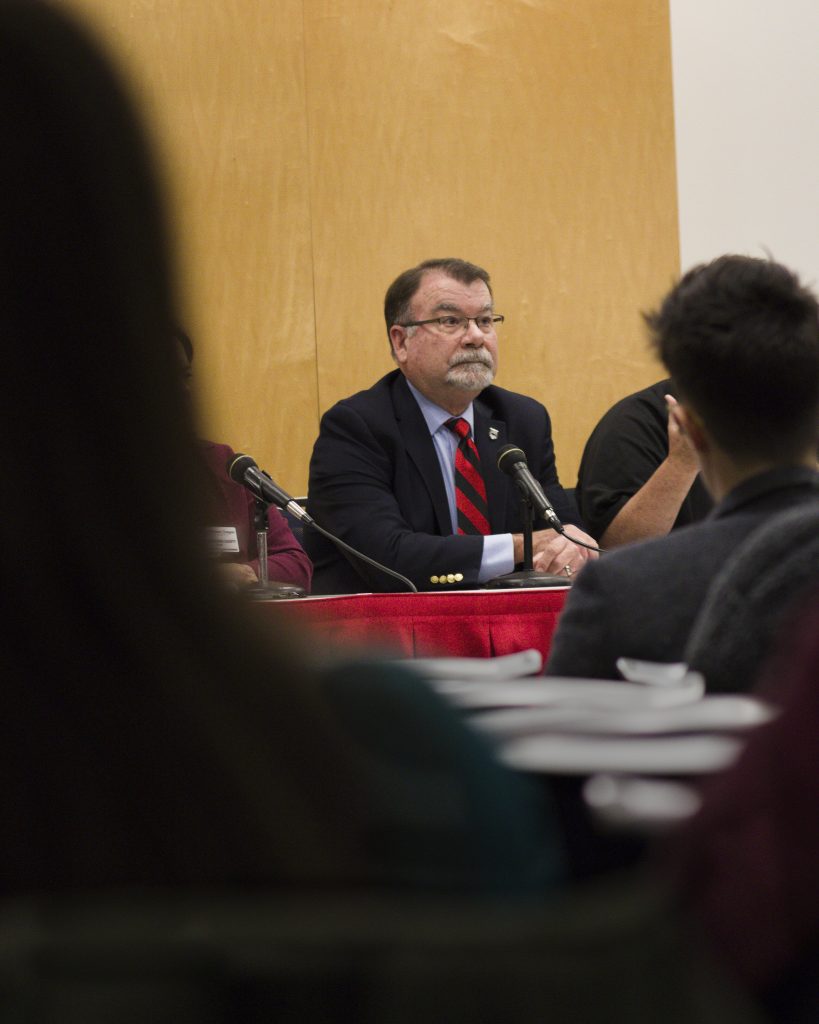
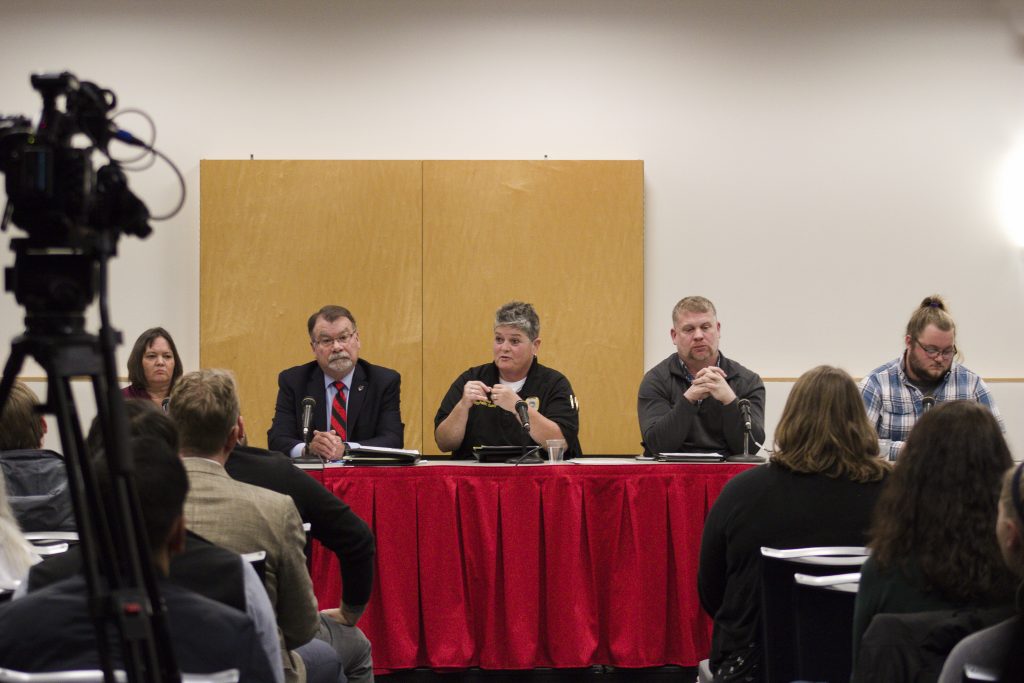
“Hate speech is not free speech,” assured Western Oregon University’s President Rex Fuller, during the Nov. 7 event titled “Free Speech on Campus: Controversial Speakers, University Preparedness and Legal Considerations.”  Following a brief statement from President Fuller, ASWOU’s current President, Erik Morgan Jr., and Ryan Hagemann, Western’s Vice Chancellor of the Legal Counsel, allowed the audience to voice their questions and concerns. Most of the questions and concerns were regarding the controversy that stemmed from the College Republican Club inviting Patriot Prayer leader, Joey Gibson to campus last June, which was approved by the administration, despite student retaliation.

Much of the retaliation was due to concerns over safety. At the time of the presentation held on June 4, Gibson — who calls himself a “conservative activist” — had multiple court cases filed against him for inciting violence. Additionally, Gibson’s ideology clashes with Western’s student government values as portrayed through ASWOU’s statement released before the event. What’s more, students were told about the event on May 30, giving students little time to process and causing polarizing tensions to rise quickly. 

This was addressed during the free speech discussion, when one student asked: “you mentioned over and over that you had those weeks in advance of knowledge. You know that something like this is coming, and you know that there are going to be students that don’t feel welcomed … what is the administration going to do specifically to present a much stronger stance rather than just sending out a letter that sort of has these platitudes about how we value diversity (and) ensure that there is a fail safe resource available for students?”

On the day of the event, some professors urged their students to “stay at home,” in fear of violence ensuing. As anticipated, protests against the event — and against the administration who allowed it — occurred shortly thereafter, although they remained nonviolent. 

Director of Public Safety Rebecca Chiles defined her role here at Western, in addition to shedding light on the decisions and planning that goes into preparing for emergencies. Regarding future events like the one featuring Gibson, Chiles said, “we move forward with safety being our number one priority … always. The safety of our folks on campus is going to come first.” She later added that, “we need people to attend those things; first aid, CPR … get certified … that’s the best way to move forward, with all of us collaboratively to be a disaster-resilient university.”

For information regarding the June 4 event, refer to the previous article on wou.edu/westernhowl.


Contact the authors at aloftis18@wou.edu and howlnews@wou.edu

Photos by Mikayla Bruley

Western hosts first speaker for the FEM-in-STEM series, representing women and underrepresented groups in STEM education

Sage Kiernan-Sherrow | News Editor

“The skills that I’ve learned in getting a degree in chemistry have really helped me know how to break down problems into smaller pieces,” said Valerie Rippey, representing the first speaker for Western’s FEM in STEM series on Monday, November 4. Currently, Rippey is a Product Manager in an interior design company, where she uses her skills of organization and persistence — which she gained through her STEM education — to succeed and inspire future generations of STEM graduates.

In 2017, Breeann Flesch, an associate professor of computer sciences at Western, organized a lunch with students, faculty and staff who were all in the sciences. The purpose of that lunch, said Leanne Merrill, an assistant professor of math at Western, “was to just start a conversation and create a community.” The meeting led to an interest in having an organization which supports women in STEM majors at Western, and after obtaining a WOU Foundation grant for that specific purpose, the FEM in STEM speaker series was established. 

According to Western’s website, “FEM in STEM works on the Western Oregon University campus to connect and support female, non-binary, and other underrepresented and ally students in STEM fields. Our focus is on education, support, and community connection to tangible STEM role models who have a variety of careers and career paths.” 

“I think a lot of students at WOU are interested in Med school or grad school, but then there’s some who just want a bachelors degree and don’t necessarily want to continue on in academia,” said Merrill, regarding the importance of Rippey’s representation as someone who did not necessarily continue on in their field of study. 

However, the importance of FEM in STEM connections go beyond portraying the impact of STEM fields on career choices; Merrill affirms that, “women (and femmes) seeing other women in positions of power, leadership, and success is really useful,” and “gives people tangible role models.” This is important because while, “a lot of progress has been made … the fact is that there is still a gap in achievement at the post-grad level and beyond,” said Merrill, referring to the fact that more than 50% of Biology majors are women but don’t progress throughout their career as an example. 

Currently, the FEM in STEM series is set to host a minimum of one speaker per term, but there have been “discussions about having panels … and tentative plans for a peer-mentoring system and bigger-name speakers” in the future, according to Merrill, who also wanted to stress that these events are geared toward a general audience. 

“We are particularly excited to see male colleagues and male student allies at these events … part of changing the culture is teaching people to be better allies,” said Merrill, who concluded by saying “everyone can benefit from this.”


Contact the author at howlnews@wou.edu

Photo by Sage Kiernan-Sherrow

Monmouth Senior Center hosts first ever community Thanksgiving open to Western students unable to go home for the holidays

Sage Kiernan-Sherrow | News Editor

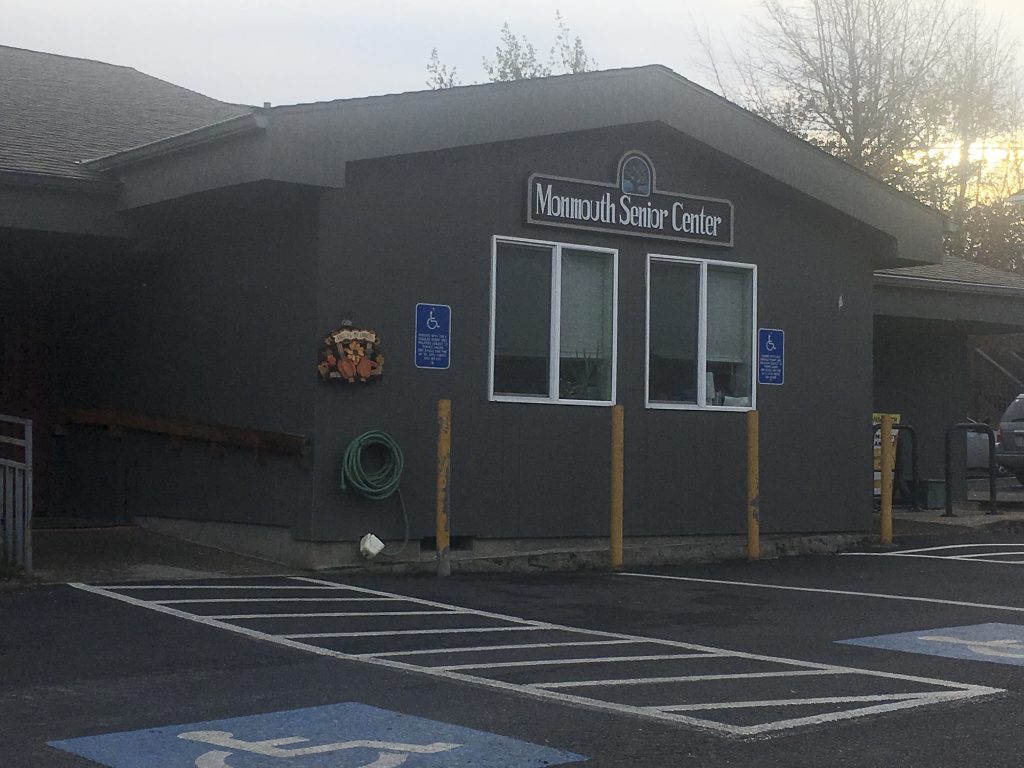
For students unable to go home for the Thanksgiving holiday, or for those struggling with food insecurity in the community — the Monmouth-Independence Rotary Club is hosting a free Thanksgiving dinner at 1 p.m. in the Monmouth Senior Center on Nov. 28. The Monmouth Senior Center is located at 180 Warren St S.

Dubbed “Here for the Holidays,” the meal is a brand new service which, “started last spring when a local artist, Pam Sierra Wence” contacted Dr. Robert Troyer, an associate professor of linguistics and the Director of International Student Academic Support here at Western. Wence wanted “to see if there was any way to set up some kind of program for students who are here … and can’t go home to their families,” added Dr. Troyer.

While the original plan was designed to partner students up with community members, “the logistics of that were just … really difficult,” said Troyer, and thusly both he and Wence recruited Laurel Sharmer’s involvement in the project. Sharmer, who is the president of the Monmouth-Independence Rotary Club, applied for a grant to offset the costs of the event and, after receiving one, made the dinner entirely free to the community. 

All students have to do is confirm their interest in the event by filling out a form on the Academic Student Support website by Thursday, Nov. 21. This gives the Rotary Club an approximation on attendance in order to ensure that enough food is available.

For students who will be missing a feeling of community during the holidays, Troyer calls the event, “one of those rare things that is just simple and good.”


Contact the author at howlnews@wou.edu

Photo by Sage Kiernan-Sherrow