Mount Hood

Humor: Personality quiz — which Western building are you?

Caity Healy | Editor-in-Chief

1. By some miracle, you have a ton of free time on a weekday. What do you do with it?

  1. Nuzzle up by the fire, maybe read a book about human rights.
  2. Work on a project I’ve been putting off. It’s fine if I make a mess, it’ll be cleaned up.
  3. Hit up someone I haven’t talked to in a bit, see how they’re doing.
  4. See if my friends need any help with their work.


2. Nobody’s perfect. How would you describe your biggest flaw?

  1. Hard to say. In some cases, I struggle to open myself up. Other times, I’m too transparent.
  2. I can be too focused on my past. I’ve had to rebuild myself multiple times, it’s hard to let that history go.
  3. I keep forcing people out of my life. I let them in for short periods, but at the end of the day, I can’t keep them around.
  4. I don’t really know who I am. There are so many parts to me, I struggle to really explain myself.


3. Sure, you’re not perfect. But you’re pretty great. How would you describe your best trait?

  1. I care about people. I strive to make the world a better place, where everyone has equal rights.
  2. I inspire people to express themselves honestly. And people can depend on me to be there.
  3. I’m not sure, but I must be doing something right. People care about me a lot. Like, a LOT.
  4. I provide support to my friends whenever I can, in whatever way that I can.


4. You’re having a movie night with your friends, what kind of movie are you watching?

  1. Something really inspiring that will definitely make me cry.
  2. A documentary of some sort — some history, or maybe an artistic biography.
  3. A supernatural thriller. I love horror.
  4. Something about best friends who have each others’ backs.


5. One of these songs comes on the radio during a road trip. Which one has you belting the lyrics out?

  1. “Formation” by Beyonce. Makes you feel powerful af.
  2. “Skyscraper” by Demi Lovato. You might not have Demi’s range, you’re gonna try.
  3. “Ghostbusters” by Ray Parker Jr. We love a good soundtrack.
  4. “Fix You” by Coldplay. Sometimes you just have to cry a little bit.


Mostly A’s:

You’re the RWEC! You’re super comforting, and beautiful inside and out. You consider everyone and inclusivity is a goal of yours. However, you have a really hard time letting people in. Some days, you shut people out completely.


Mostly B’s:

You’re Campbell Hall! You’ve been around forever and people can depend on you. You’re definitely a work of art, but you’re also definitely a lot of work. Yes, you have a lot of history. But people can only help build you up so many times.


Mostly C’s:

You’re Todd Hall! People really care for you. Some care a little too much. There’s a lot of ghosts in your past — it’s important that you don’t let these ghosts stop people from feeling welcome in your life.


Mostly D’s:

You’re the APSC! Look, you’re confusing. There are a lot of levels to you. So many that often people can have a hard time navigating through them. You’re there to support people, and that’s great! But if they can’t even find their way in, it’s pointless.


Contact the author at howleditor@wou.edu

Opinion: Accurate captions should be a right, not a privilege

Caity Healy | Editor-in-Chief

The other day, I came across a video about a 14-year-old gamer name Danik Soudakoff. Soudakoff is Deaf, and she is working to make Overwatch a more accessible game by creating signs for specific aspects of the game. For the first part of the video, I really enjoyed it. She was signing, but for those who don’t know ASL, there were captions. About half way through the video, though, her teacher began speaking. There were no captions. So, essentially, the video was only captioned at the benefit of the hearing, not for the Deaf. Or, in other words, a video about Deaf accessibility wasn’t even accessible for Deaf viewers — it wasn’t even accessible for Soudakoff, the subject of the video.

It should be noted that at the point of the video where there was English but no captions, an interpreter was (slightly) present. However, it’s important to understand the concept of décalage time, which essentially means the lag time between what is said, and what is interpreted. Every interpreter has a different décalage time based on the way they process meaning. In this video, what the English-speaker was saying did not correlate with what the interpreter was signing at that exact moment, due to that interpreter’s décalage time. So, once again, the video was not accessible. And, not only that, but due to the unclear interpretation, the viewer was receiving different information all together.

The issue at hand here is larger than this single ESPN video: closed-captioning is seen as an option or a convenience for hearing people, when in reality, it’s a way for Deaf people to have a fraction of the same accessibility that hearing people have.

Let’s paint a picture — you just sat down with a snack on your couch to catch up on your show. You start it, and over the sound of you chewing your chips, you realize you can’t hear the TV. You turn on captions. All better — you can eat, watch, and read captions all at the same time now. Sure, the captions aren’t always accurate, and sometimes specific sentences aren’t captioned at all. But it sure does help as an aid. Isn’t it great that captions are readily available to benefit hearing people?

Let’s paint another picture  — a Deaf person just sat down to catch up on their favorite show. Unfortunately, it isn’t available in ASL, so turning on captions will have to suffice. So, that’s what they do. Now, they’re jumping from watching the screen, to reading the captions, and tying that information together. If it’s their only option, it will work. But for whatever reason, the captions just disappeared for a few seconds. Then, it reappeared for a millisecond. What did it say? Was all of the information there? A curse word is spoken in English. The captions decide to censor it — wouldn’t want to taint anyone’s vocabulary. A word is whispered in English and is pretty clearly understood. The captions just leave it as “PERSON WHISPERS.” A word is spoken in English. The captions omit the word entirely. And don’t even get me started on the automatic captioning that YouTube features. Might as well have none at all at that point. Yes, this “equal access” is great, right?

As they are now, captions stand to benefit hearing people, and are rarely a tool for the Deaf. This needs to change. Independence Cinema hosts some open-captioning nights, and that’s a great step in the right direction. But other theater’s should be doing this, and they should be doing it often. As a hearing person, I know that it wouldn’t bother me at all to sit down at a movie and have captions. And, knowing that it could benefit an entire other community makes it all the more worth it. Because as of right now, if a Deaf person wants to see a film and missed one of their open-caption nights, they either have to wear specific glasses that have captioning, or have no captions at all. Don’t get me wrong — I know a lot of Deaf people who are grateful for that technology. But, I also know a lot of Deaf people who are embarrassed to have to use it. Would it really be that hard to have additional open-caption nights?

An argument that I hear on occasion comes from people at sport bars. They’ll say, “I don’t want captions — it’ll interfere with the game.” First of all, there’s no way that you can even hear the commentators in the game clearly over the clinking of glasses, the chatter around the bar and the occasional “EVEN I COULD PLAY BETTER THAN THAT!” or “WHERE’S THE REF?!” from an enthusiastic sports fan. Second, the captions are not going to interfere with your game. I promise, you’ll still be able to see the action if there is a tiny bit of text at the top. And, third, stop being so selfish for a second and consider the fact that there are other people in the bar who want the same access that you have. The whole world isn’t about you, Sports Guy.

Yes, there are steps in the right direction right now. More and more videos are being captioned than ever before. But, entirely accurate captions on every single video is what we should be striving for. Because until that happens, captions are still only a benefit for those that can hear.


Contact the author at chealy16@wou.edu

Photo by Paul F. Davis

How to make gluten-free vegan protein smoothie popsicles

Morgan Taylor | Freelancer

This simple sweet treat is sure to be the perfect snack for after a workout, or just to cool down. All you need is a blender, some popsicle molds, which can be purchased at your local grocery store or Amazon, and freezer to whip up these delicious popsicles. While they are full of protein, they are also gluten-free and vegan. You can’t go wrong with this refreshing treat.


STRAWBERRY PROTEIN PACKED POPSICLES

Prep Time: 15 minutes

Freezer Time: At least 5 hours

Servings: 10 Popsicles

Ingredients:

3 cups of frozen strawberries

1 banana

1 1/2 cups of almond milk

3/4 cup of juice of your choosing (I used strawberry apple)

2 scoops of Vanilla Orgain Protein Powder (or any other vegan/gluten-free brand)

½ pound of fresh strawberries

Instructions:

Add frozen strawberries, banana, and the almond milk to the blender.

Blend until frozen strawberries are chopped up.

Add protein powder and juice.

Blend until smooth.

Slice fresh strawberries and line the inside of the popsicle molds.

Pour in protein smoothie and place in freezer.

Freeze for at least five hours.

Enjoy.


Contact the author at mrtaylor14@wou.edu

Photo by Rebecca Meyers

The value of clothing, the pros of thrifting

Karlene Curtin | Staff Writer

Oregon is home to some of the finest thrift stores in the U.S. and has some of the best clothing finds that are far  cheaper than corporate clothing stores. By thrift shopping, one is encouraging recycling thus creating a cleaner environment.

Planet Aid, a website that encourages different ways of recycling says, “Nearly 100% of clothing is recyclable.” The clothing that is thrown away goes into landfills otherwise known as textile waste.

Harmony, a website that gives information about different waste solution says, “The U.S. EPA estimates that textile waste occupies nearly 5% of all landfill space. While the EPA estimates that the textile recycling industry recycles approximately 3.8 billion pounds of post-consumer textile waste (PCTW) each year, this only accounts for approximately 15% of all PCTW, leaving 85% in our landfills.”

Also according to Harmony, the average American throws away 70 pounds of clothing annually and textiles take approximately 25 to 50 years to biodegrade. These numbers add up per person, and landfills are now overflowing with clothing that could have been donated to thrift stores — perhaps, the problem could have been prevented by buying secondhand in the first place. By secondhand shopping, or maybe giving clothing away to family and friends, it encourages recycling and also saves money in the long run. When one donates to thrift stores, they are preventing clothing from going into landfills; by shopping at one, it is also likely to save a consumer at least 50% of what they’d usually spend on clothing.

There are many Thrift Stores in the area, such as  Fashion Sense & Home Store and Robins Roost Resale Store which are both located in Independence. By thrift shopping, I have not only saved money but have found different approaches to my style — I love finding old band t-shirts and other vintage clothing. My style becomes more one of a kind without breaking the bank. It is worth donating and checking out local thrift stores to not only save money but the environmental as well.

Contact author at kcurtin14@wou.edu

Photo by Ashlynn Norton

Tattoos found on campus

Rebecca Meyers | Lifestyle Editor

Natalie Dean: I chose this tattoo because my cat, Penny, is nearly 14 years old and I know I won’t have her forever, so having a piece of her means a lot. I got rosemary sprigs for my grandmother, Rosemary, as well as my May birth flowers (Hawthorns). I also got sunflowers because I grow them in the summer — I wanted things that brings me joy.

Photo by Rebecca Meyers

[fruitful_sep]

Lucia Breeden: My sister and I wanted sister tattoos, but we eventually thought it’d be great to involve our mom. So after a long time convincing her that’d it’s be fun, she agreed. Mine says “little sister,” my sister’s is “big sister” and my mom’s is “mama.”

Photo by Ashlynn Norton

[fruitful_sep]

Madison Gaylin: For my sunflower, it was inspired by my grandma singing “You are my sunshine” song to me growing up. For other one, I found the quote in my junior year of high school and it’s just stuck with me and made me have a constant reminder – if I’m not trying my hardest how am I going to know what I can handle?

Photo by Rebecca Meyers

Transitioning to Monmouth from a big city

Suzana Carroll | Freelancer

The move from a big city to Monmouth is definitely a culture shock — there is not a Starbucks on every corner, no mall a short drive away, and there definitely is not as large of a variety of food. So, coming from a big city can be very difficult. I had severe homesickness and craved being home with a lot to do around me, but I had to stick with Monmouth and do my own searching for things that made me feel close to home and kept me occupied. Have no fear; Monmouth has pieces of the big city life in its small city surroundings.

You can score adorable boutique finds at The Find on Main Street, a small business that opened in 2013 and is dedicated to bringing Monmouth cute fashion as well as home decorations, such as hanging signs and candles. When you are shopped out, you can hop over to Java Crew for a good latte, tea, or any way you like caffeine. While Java Crew might not have the big city bustle, it is the perfect place to dive into your new book, or catch up on some old homework you have been procrastinating.

Big cities have a lot of food choices, while Monmouth’s choices are a little limited. However, it is not impossible to find good eats around town. There is a Subway and Papa Murphy’s that taste the same as they do at home, Koyotes, a local, quick, affordable Mexican restaurant, and even a Hawaiian food cart, Lonney’s Lunch Wagon. The different food variation really helps with being able to try different foods like one would in a city setting without having to go far for them.

Night life in a city is one of the perks of being in a big town, but Monmouth has a night life of its own, as well. Of course, there’s the Main Street Pub & Eatery on Thursday nights, and while it is not a big city bar, there are always people you know, a fun time, and a safe environment. For those that are not partiers, but want to enjoy a cocktail, Crush Wine Bar on Main Street is the perfect atmosphere to enjoy a quality cocktail.

With summer coming up, the thought of spending the vacation in a small town can seem underwhelming to big city people, but fortunately we have some events to keep boredom away. Main Street Park and Riverview Park host regular concerts, and Independence also has movie nights in the park during the summer.

While Monmouth is not a big city, and it definitely is hard to adjust from a big city life, there are slivers of a large city within Monmouth’s walls, which does make it a lot easier to adjust.


Contact the author at scarroll15@wou.edu

Photo by Ashlynn Norton

Letter to the Editor

To The Western Howl Editor,

“Establishing lasting peace is the work of education; all politics can do is keep us out of war.” –Maria Montessori

The Early Childhood Studies program faculty is compelled to express our concern regarding the June 4 speaker at the event being held on campus. Our Early Childhood Studies major mission statement highlights how our work is guided by fundamental commitments to educational equity, inclusion, social justice, reflective practice and the development of diverse learners in the field.  We are compelled to communicate our grave concerns for the safety of the diverse and inclusive Western Oregon University community of students, faculty and staff. We consider the invited speaker’s rhetoric to be a heartbeat away from hate.

We recommend our students avoid this event for their personal safety.  We ask that others in the Western faculty community join us in expressing dissent. We must speak out against any speech or inciting actions that threaten the safety and security of our community members.  If we truly are a university community that values inclusion and diversity, we must not quietly acquiesce to any speaker or group espousing hatred, violence or fear under the guise of free speech.

“No one is born hating another person because of the color of his skin, or his background, or his religion. People must learn to hate, and if they can learn to hate, they can be taught to love, for love comes more naturally to the human heart than its opposite.” Nelson Mandela,Long Walk to Freedom”


Sincerely,

Early Childhood Studies Faculty

Andrea Emerson, Maria Laine, Linda Craven, Natalie Danner, Cindy Ryan, Erika Lanning

“What Were You Wearing?” exhibit redone

Chrys Weedon | Entertainment Editor

Communications 436, a class titled Gender Power and Cultural Production, is described in the course catalog as a class to “examine the interplay between feminisms, queer theory and cultural production, focusing on how power manifests in ways that contribute to and constrain communication around gender and sexuality.”

As a final project, the class is recreating an exhibit titled “What Were You Wearing?” Originally created in 2013, the goal of the exhibit is to raise awareness about sexual assault and victim-blaming.

The event involves a room full of displayed outfits that show what sexual assault survivors were wearing at the time they were assaulted. A press release written by the class explained that the project’s goal is “to remind viewers that it doesn’t matter what you wear, sexual violence can happen. It also aims to call attention to the fact that no matter what you were wearing, you did not ask for it or deserve it.”

Sexual assault is a big problem in the United States. According to the press release, one in three women and one in five men have experienced sexual assault at some point in their lives. As reported by the National Sexual Assault Resource Center, eight out of 10 assaults are committed by someone the survivor knows.

Dr. Dana Schowalter teaches this Gender Power and Cultural Production class.

“We’ve done this event in the past here at Western Oregon University, and it has traditionally made a huge impact on everyone that has witnessed the displays. My students putting this project together have agreed that sexual assault and victim blaming needs to be directly addressed,” commented Dr. Schowalter in the press release, “and they are looking forward to getting a chance to bring awareness to the public. It is not easy talking about this subject matter, but we feel it is very necessary.”

The “What Were You Wearing” exhibit will take place on June 5, 2019 from 9 a.m. to 3 p.m. in the Willamette room in the Werner University Center. For more information about this event, contact Jess Elder at 502-801-2900 or Never Retallack at 971-712-9712.


Contact the author at howlentertainment@wou.edu

Extraterrestrial excitement in Oregon with UFOfest

Chrys Weedon | Entertainment Editor

Thursday, May 16 ushered in the 20th Annual UFOfest in McMinnville, Oregon. According to ufofest.com, a UFO fever set into the small town of McMinnville in 1950 when a family spotted a flying saucer over their farm. This sighting made national news. 50 years later in 1999, the very first UFO festival reignited the fever of 70 years ago. The festival is the second most popular UFO event, aside from the UFO festival that takes place in Roswell, New Mexico, according to the UFOfest website.

Hosted by the company McMenamins, who owns various hotels, pubs and breweries, the festival took place May 16 through 18. This year’s UFOfest featured free-to-all activities such as vendors, live music, a 5k Alien Abduction Dash fun run and a pet costume ball. The festival also featured a lineup of experts and speakers in the McMenamins hotel that required the purchase of a day or weekend pass to attend.

Guest experts included Bob Lazar, a former physicist employed at Area 51; Joanne Clarkson, a hypnotherapist and tarot reader; George Knapp, a journalist and author; Commander David Fravor, who was a witness to a 2004 UFO sighting titled the “Tic Tac incident” and many other speakers.

Bands played at various locations around the festival, including the band Kirby Swatosh & The Moon Rock Patrol. The pet costume contest drew a large crowd who cheered on a goldfish decorated as a UFO — they won first place. Volunteers from Zero Waste McMinnville were posted at stations around the event, helping attendees sort their waste into different bins for compost, recyclables and garbage.

The main event occured Saturday afternoon at 3:30 p.m. Floats and marching bands paraded through downtown McMinnville, drawing audiences that lined the sidewalks four to five people deep. Lively music and intricately decorated floats representing local groups and businesses entertained bystanders for nearly two hours, and even sporadic rain showers didn’t damper their spirits.

The McMinnville UFOfest once again proved to be a lively event that brought together many different people to celebrate counterculture, conspiracy and a unique tradition that is classic to the Pacific Northwest.


Contact the author at howlentertainment@wou.edu

Photos by Chrys Weedon

Students show their hard work through song

Chrys Weedon | Entertainment Editor

Every term, students from the music department have the opportunity to perform pieces they have been working on. On Thursday, May 23 at 11 a.m., the last student recital of the year took place in Smith Music Hall.

In a relatively short program, 10 students put their hard work on display to an audience of their peers, teachers and families. This recital provided one last chance this school year to perform in this setting. The performances were a mixture of piano, voice, guitar and one cello.

Julia Fruit performed “Prelude XII: Minstrels” by Claude Debussy on piano; Tristin Thomas played “Ben’s Song” by Richert on cello while accompanied by Jackie Morelly on piano; Songzi Li sang “Through the Night” by Korean musician IU while Kenneth Soh played the piano; and Virtue Velour and Nikita Williams gave a rendition of “Broken” by Seether joined by Trevor Fischer on guitar.

Velour explained why he chose to perform this song.

“As a classical musician who’s also a big fan of rock and metal, the song is really accessible for a concert format … I just knew that I wanted to do a duet with (Williams), because she has a great voice and I trust her musical instincts,” Velour said.

There were also two performers who played pieces of their own creation. Alex Lancaster played his song “The Night Forest” on piano, a complex piece rich with storytelling. Stacy Henle played guitar and sang “Neskowin Parade,” a song about a small town celebrating the Fourth of July, which she co-wrote with A. Lancaster.

Clocking in at less than an hour, this recital was one of the shortest this year, but contained just as much talent as any other student showcase. Velour explained what he learned from the experience: “Doing a duet is a really good opportunity to learn how to work with your peers. Trevor’s also a great guitarist … so he was fun to work with as well.”


Contact the author at howlentertainment@wou.edu

Photo by Ashlynn Norton

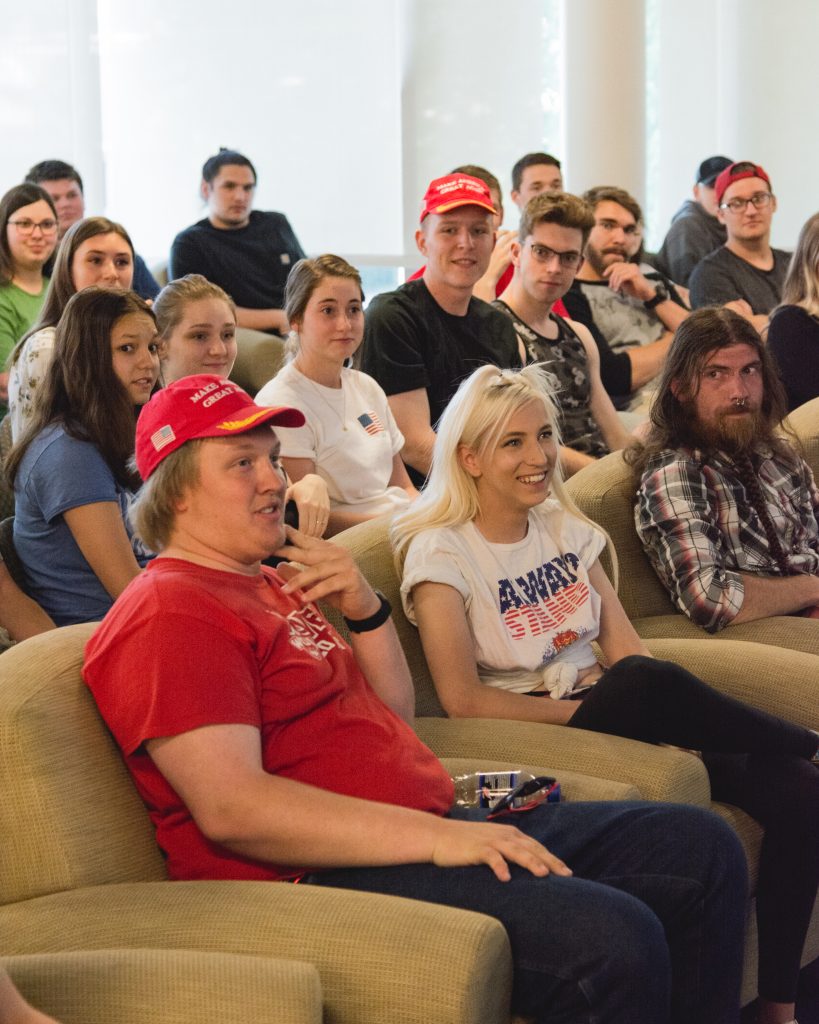
Updates on College Republican Club June 4 event

Update: June 3, 2019

ASWOU’s second statement, released June 3:

Students of WOU,

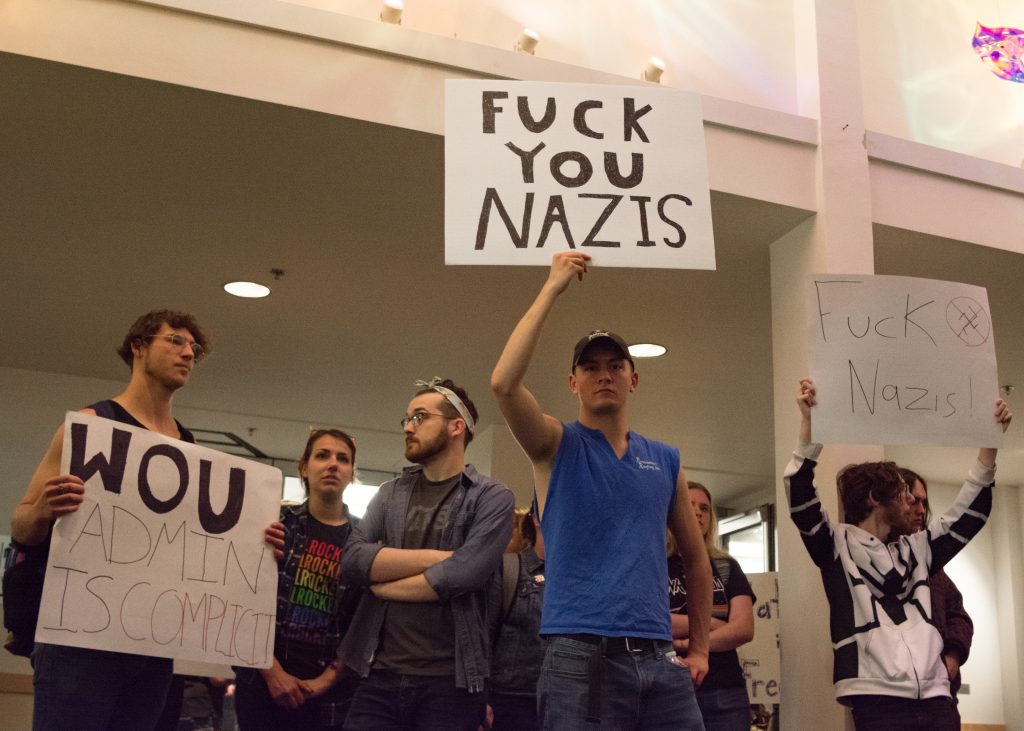
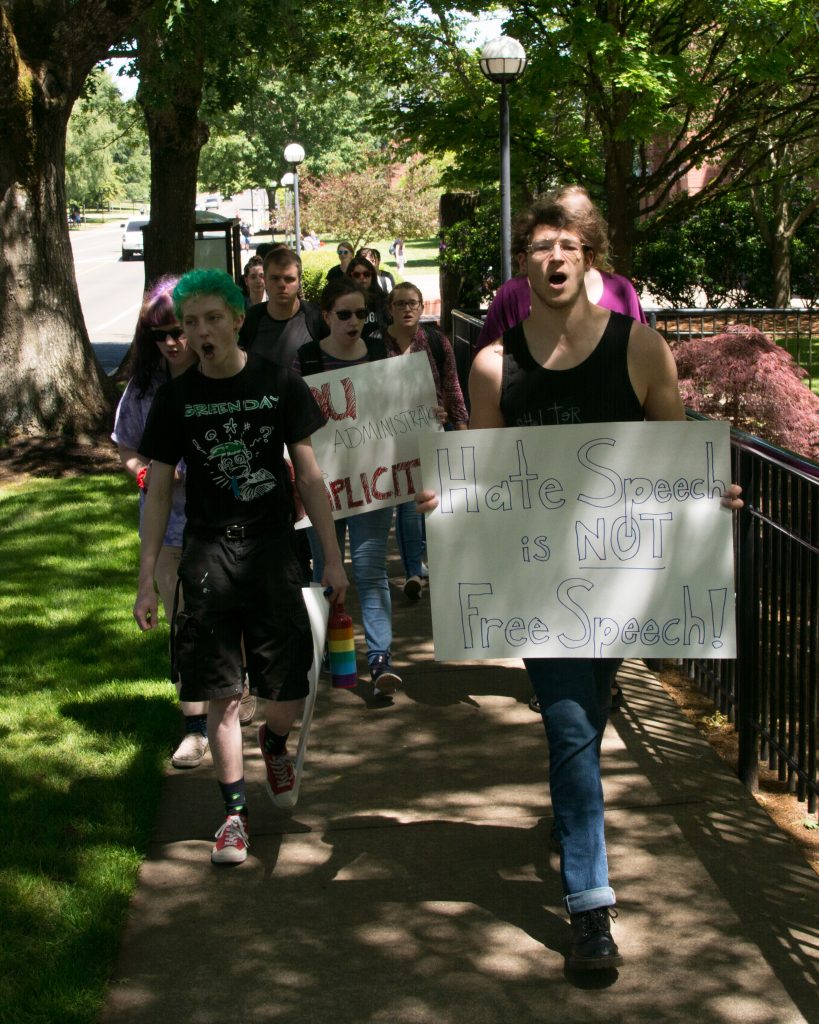
Since ASWOU’s last letter to you all on May 30, 2019, the situation surrounding Tuesday, June 4th’s controversial event has escalated. Third-party organizations not affiliated with WOU have begun targeting the WOU campus with calls to organize protests to the event. Also, WOU students have been targeted in social media posts from both supporters and protesters of this event.

Because of the aggressive nature of these supporters and protesters, ASWOU has serious concerns for the safety of any and all WOU students who attend either the event or it’s associated protest. As such, it is our recommendation that all WOU students stay away from the Werner University Center on Tuesday, June 4th. We strongly encourage all club meetings. advising meetings, and other events on this day be moved to a different University building, rescheduled, or canceled. While we hope that Tuesday evening’s event maintains an aura of basic civility, we cannot, in good conscience, advocate for any WOU student being in the vicinity of the WUC on Tuesday.

If you feel affected by this event, please utilize the services of the WOU Student Health and Counseling Center at (503) 838-8313. The Polk County Behavioral Health Monmouth office can be contacted at (503) 400-3550.

If at any point during Tuesday night you feel unsafe while traveling on campus, please contact Public Safety at 503-838-8481. If you witness an incident of bias on WOU’s campus please report it using the Bias Incident Report Form (https://wou.edu/student/bias-incident-report-form/). This form is used to report an incident of bias if it is an act of conduct, speech, or expression that targets an individual or group based on their actual or perceived race/color, religion, ethnicity, national origin, gender, gender identity/expression, age, disability, or sexual orientation. Please contact the ASWOU President via the email address aswoupresident@wou.edu if you have any other questions.

In solidarity,

2018-2019 ASWOU Administration   

2019-2020 ASWOU Administration

[fruitful_sep]

A link to President Rex Fuller’s official statement can be found here: President Rex Fuller’s official statement

President Rex Fuller’s Statement:

Dear Campus Community,

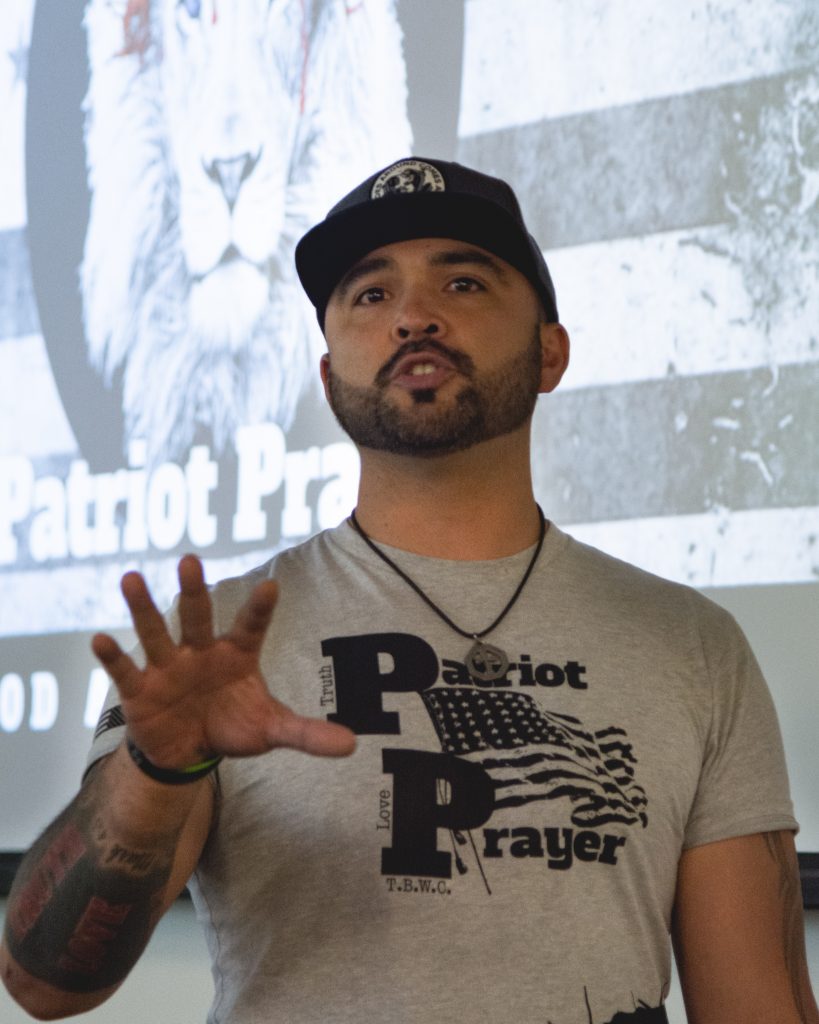
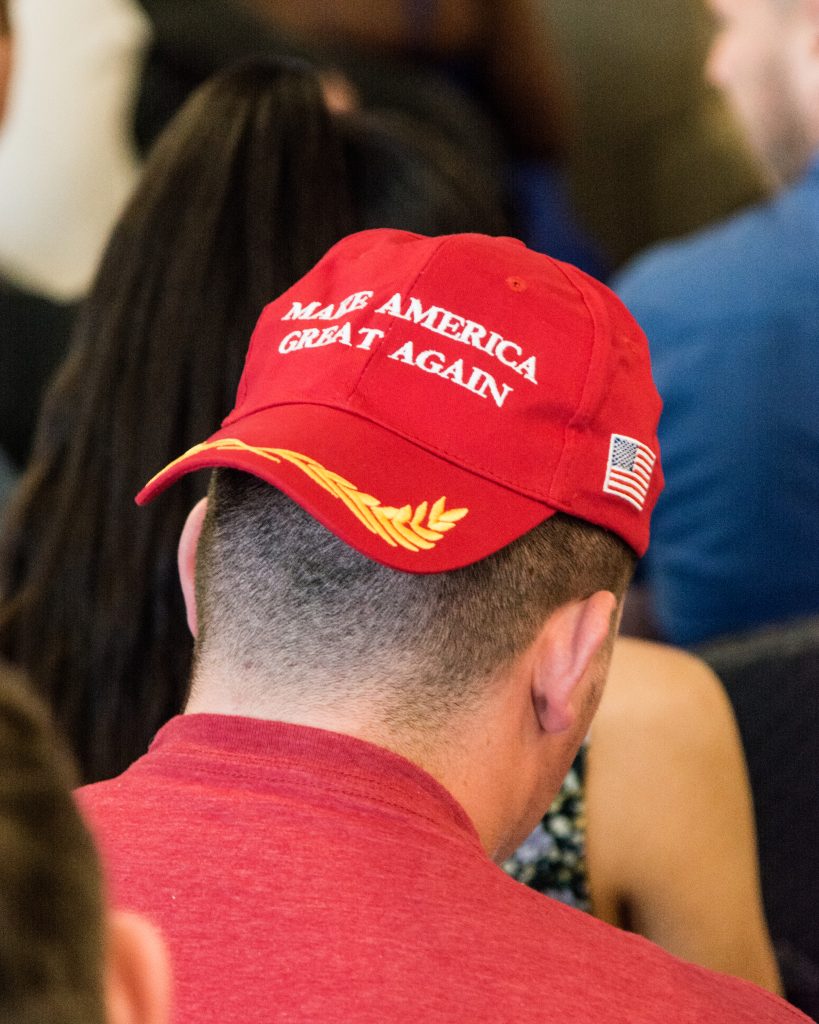
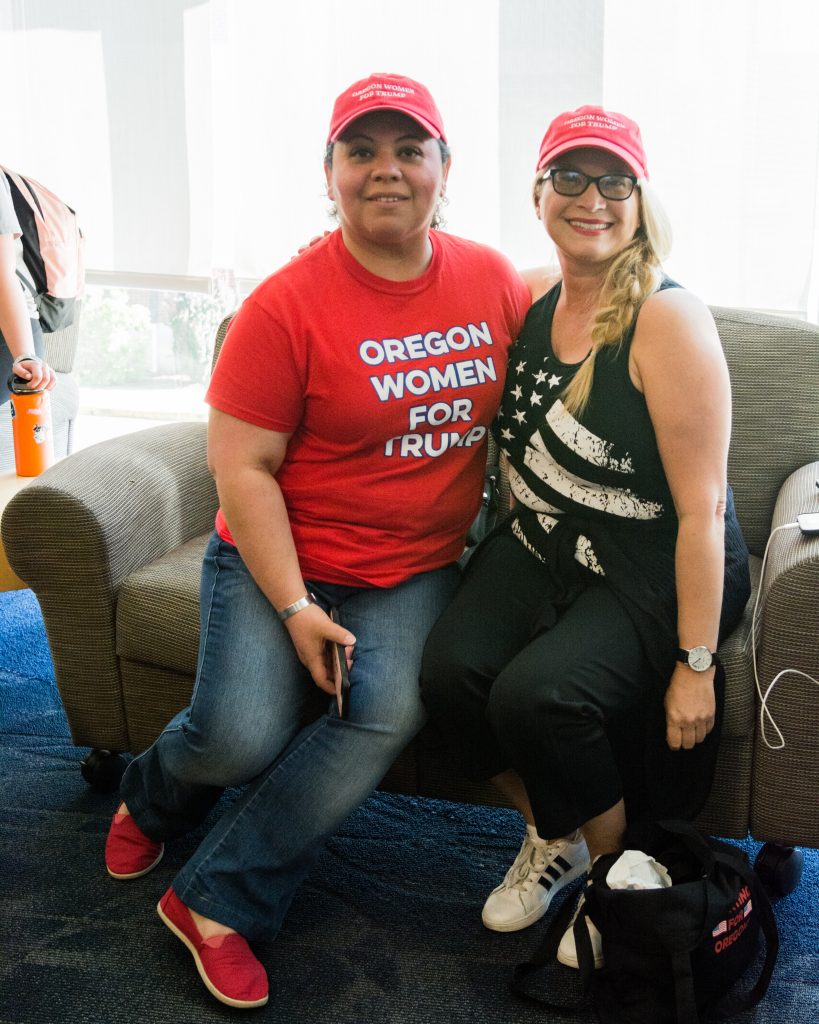
As you might know, the College Republicans, a registered student organization on campus, has invited Joey Gibson to speak on campus on June 4.

As an institution of higher education, Western Oregon University supports free speech and open inquiry, which are essential to a comprehensive university experience and for students to form their own viewpoints and perspectives. At WOU, all student clubs and organizations follow an approved protocol for bringing speakers to campus and reserving space, which includes a review of the event and a contract with the proposed speaker. As a public entity, WOU may not deny access to meeting space on the basis of viewpoint.

The University’s obligation to the freedom of speech is animated not only by the First Amendment to the US Constitution, but the even-broader Article I, Section 8 of the Oregon Constitution. It states:

“No law shall be passed restraining the free expression of opinion, or restricting the right to speak, write, or print freely on any subject whatever; but every person shall be responsible for the abuse of this right.”

This clause has been interpreted many times to require tremendous breadth in ensuring and upholding the freedom of expression in Oregon—a role a public university must embrace to remain relevant in our changing times.

Upholding core freedoms—including the freedom of speech—does not mean, however, the University must turn from its values. WOU’s Strategic Plan outlines eight essential values that guide our practices and decisions. The Plan expressly includes: Diversity and Respect: Equity and inclusion; a fundamental basis in human diversity; appreciation for the complexity of the world; strength drawn from our variety of backgrounds, abilities, cultural experiences, identities, knowledge domains and means of expression.

Our values are who we are—we can be a place of diversity and respect, as well as a fierce defender of the freedom of speech and expression at the same time.

Thank you.

Rex Fuller, President

[fruitful_sep]

A link to ASWOU’s statement can be found here:

Instagram: @aswou

Twitter: @ASWOU

ASWOU’s statement can also be found below:


ASWOU’s statement recommends students attend other events happening the evening of June 4. A full listing of events can be found on students’ OrgSync accounts.

Link to College Republican Club’s response to ASWOU statement — statement can be found in comments: @woucr


College Republican Club’s response to ASWOU’s statement:

“Our speaker is multiracial and our event is open to all people regardless of their race, gender, religion, or nation of origin. We encourage all students to challenge the information that is being spoken around campus by seeking out their own information. Search Joey Gibson on YouTube and you will find that he has never said a hateful or racist word. In fact, he preaches often about Unity and having Love in your heart for all people, even those you absolutely disagree with.”

[fruitful_sep]

More updates from The Western Howl regarding this event will be coming soon.

Contact the editor at howleditor@wou.edu

Western Rugby All-Stars reigned victorious

Caity Healy | Editor-in-Chief

On the weekend of May 25-27, three Western Oregon Rugby All-Stars headed to Houston, Texas to battle it out and see which regional team would come out on top. A week prior to this game, the men were already aware that seniors Alex Treat and Joey Caver would be two of the All-Stars. However, another surprise arose just days before they were set to travel to Houston: senior Matt Cornish, who originally tried out, was invited to join.

Although he didn’t make the team initially, upon review, they decided he would be an asset to the team. So, he accepted. Cornish, Treat and Caver were ready for what was to come. But, they weren’t the only representation Western had. Their head coach, Sean Pomeroy, was invited to help coach for their Pacific Coast All-Star team. All four faces of Western headed out to Houston.

Streamed live, friends and families were able to watch the game from the comfort of their homes. Taking place at Aveva Stadium, which is the home of the Major League Rugby’s Houston SaberCats, fans were able to keep up with the action as the boys headed to the pitch.

The first match that the Pacific Coast Grizzlies played in saw the Grizzlies taking on South. At half, the game was tied 7-7. But ultimately, Pacific Coast came out on top, 29-7.

The second game that the Grizzlies played in had them matched up against Mid-South. Once again, the Pacific Coast team proved themselves winners, shutting out Mid-South completely, 36-0.

The temperature was heating up along with the competition as the Grizzlies took on the North East Rhinos next. The Rhinos couldn’t hold their own against the Grizzlies, and in the end, Pacific Coast came out victorious, 39-7.

Up next, the Grizzlies had to face the Lonestar team — whoever came out on top here would be sent to the Championship. The game was close; at half, the score was all tied up at 0-0. But, the Grizzlies pulled through, shutting out another team, 17-0. This meant that they’d be a finalist in the Championship, where they’d be paired against the Rhinos once again.

Last year, the All-Star Championship saw the Grizzlies versus the Rhinos. For the second year in a row, the two teams took the pitch. From the start, the game was neck and neck. At half, the Rhinos had the upperhand, sitting at 10-7. However, the Grizzlies weren’t ready to give up. They managed to hold the Rhinos to that same score until the end, bringing the final score to 40-10 — the Grizzlies were victorious.

The Pacific Coast All-Stars are the 2019 NSCRO National All-Star Tournament Champions; Treat, Caver and Cornish, along with Coach Sean, were able to come back to Monmouth knowing they made their hometown proud.


Contact the author at howleditor@wou.edu

Photo courtesy of Malina Foley

Q&A: Lacrosse’s Jonathan Williams named MCLA 3rd Team All-American

Caity Healy | Editor-in-Chief

This year, first-year lacrosse player Jonathan Williams, an exercise science major, was named 3rd Team All American under the MCLA. This is the first time since 2015 that a player has achieved an All-American ranking; a feat that Williams was able to accomplish in just his first year on the team, and first year in college. I was able to sit down with him to discuss what the season looked like for him.


When did you start playing lacrosse, and why?

My freshman year of high school. My brother started playing his freshman year, and he’s three years older than me. He started playing because his friend recruited him because we didn’t have that many players on the team. I was still playing baseball at the time, in middle school, but I went to a few games and watched him play, and I was always really interested in it. My freshman year I was like, ‘yeah this is what I want to do,’ instead of baseball.


How do you feel that the season has gone for you?

I think it went pretty solid. I think there’s some improvements that need to be made, but I think we’re right on the edge of being an upper-level team. When the season started, we were playing in California against top-ten teams. We played two games over the weekend, and I had five goals … I was thinking, ‘Okay. Two or three goals a game — doesn’t sound that bad first season.’ And then, I got into league play and it was five, six, the occasional seven (goals). So I thought, ‘If this is how the rest of the season goes I’ll be feeling pretty good.’


How did you find out you were chosen for the All-American team?

I woke up to a text at like 9 a.m. … from Coach Dan It was actually just a screenshot of my name on the list. I was still just waking up … so I had to go back and look at it a few times to make sure it was real.


What was your reaction when you realized that it was real?

I was pretty excited. Not as excited as I was expected to be, I guess. The third team part sound weird to me … but it was still really cool to realize that of everybody in the nation I was in the top percentage of them.


What does the future of WOU Lax look like?

We had a really strong freshman class this year … we’re getting I think six or seven more freshman this year … so we have a lot of young guys and really good talent. We just need to get them all together and on the same page and I think we’ll be pretty solid for the next few years.


Contact the author at howleditor@wou.edu

Photo by Caity Healy

“The Motown Throwdown” follow-up

Caity Healy | Editor-in-Chief

On April 26, 2017, The Western Journal published a story titled “The Motown Throwdown,” written by our then Sports Editor, Burke De Boer. The story delved into the tradition that occurred each Spring at Western, then called Oregon College of Education, called the TKB Smoker. Hosted by the self-titled group Tappa Kegga Beer, the TKB Smoker was an annual, student-run boxing tournament that existed throughout the ‘70s. It ended for unknown reasons. But before the tradition could die out, it left one boxer famous for his tenacity in the ring: Lee Reed.

On May 7, I received a phone call from a man named Dave Clarke. He told me that he actually knew Lee Reed — and he had a lot of stories to share with me. So, he was kind enough to tell me all the memories he could recall of Reed, as a fighter and as a friend.

Clarke first heard of Reed through his brother, Robert. Robert attended Western Oregon State College in 1979, and when he came home, he told Clarke all about something called the TKB Smoker.

“He told me about a really “kick ass” guy he’d seen fight in the campus smoker — a guy named Lee Reed. Robert told me that he’d seen Lee knockout a couple of guys in less than a minute,” Clarke said. “My brother also told me that Lee taught a Taekwondo class on campus.”

From then on, Clarke wanted to become a martial arts sensation. He came to Western in 1981, and noticed a flyer posted near Barnum Hall advertising a class taught by Reed. So, he went to the Taekwondo class and met Reed first-hand.

“Class was very difficult, and Lee was demanding but always fair and interested … I just about worshipped him at the time,” Clarke said. “I didn’t get to know Lee better until I was in class for a few months.”

As Clarke began getting to meet Lee outside of his classes, he noted that Lee was a bit of a partier. Lee would host get-togethers at his apartment, where he’d cook for everyone. Clarke recalls the memory of one party.

“One day I was standing in Lee’s kitchen … he asked me to hold still for a second, so I did. He kicked off the flip-flop sandals he usually wore and did a perfect spinning wheel kick to my face. I could feel the bottom of his foot skim the top of my nose. This was in a space that was probably four feet wide — amazing,” Clarke recalled. “After that, he put his sandals back on and smiled at me. He said, ‘I just wanted to see if I could still kick a person as tall as you in the face.’”

When Clarke hosted parties, he felt lucky if he was able to find a few spare moments with Lee to get to know him better. It would be at one of these parties that he really began to understand Lee.

“He told me he was an orphan in Korea, and that he had to learn to fight to survive. He said … the other students would always want to fight him because of his mixed heritage.”

However Lee reached the point he was at now, Clarke only had kind words to share about him.

“Lee was always attentive to me, never once looked down on me , Clarke explained. “I sparred with Lee a few times. One time a backfist I threw touched Lee’s cheek. He paused and said, ‘That’s one of the best backfists I’ve ever seen — you should throw more of those.’”

Unfortunately. Clarke didn’t have any other information about why the TKB Smoker did come to an end, nor information on where Lee ended up. However, he knows that his memories of Lee will not fade.

“He remains in my memory as the most physically talented individual I’ve ever known,” Clarke concluded. “He was a great instructor, and I’ll always be glad to have known him.”


Contact the author at howleditor@wou.edu

Photos courtesy of WOU Archives

BillyAnn Stemple: Outstanding Graduate 2019

Bailey Thompson | News Editor

Can you tell me a little bit about yourself?

I grew up in Lincoln City, which is on the coast not too far from here. I’ve always known that I wanted to be a teacher, so Western was an easy choice for me because of the ED program. I am going to be a middle school science teacher … I’m super passionate about teaching our adolescents — I think it’s an awesome age. They’re just goofy, and they need all the love in the world. So, I’m excited to just give that to them. And science is just awesome because of the wonder and the ‘Ah-ha’ moments that it gives those kids.

What do you like to do in your free time?

I love visiting my family and my boyfriend … In the summertime and the springtime, I love to barbeque. That’s one of my favorite things to do. Sometimes I watch Netflix.

How do you feel about having been chosen for the Delmer Dewey/Julia McCulloch Smith Award?

Shocked, honored, humbled… I don’t know. I really didn’t expect to win. I knew I was nominated, and I wrote my cover letter and resume just being like ‘What an honor it is to be nominated. I’m so happy for whoever wins.’ But I totally wasn’t thinking it would be me at all. And then, it was. … I feel like I’ve done things that are just enjoyable and fun for me, so it was weird to be recognized for things that just seem like part of my existence and what I would no matter what.

What are some of the ways that you have been involved here at Western?

I started off in hall government as Activities Director … Then I was on the Residence Hall Association for half of my freshman year and all of my sophomore year as a programming coordinator. And then kind of at the same time that I started that position, I got a volunteer position at HART, which stands for Horses Adaptive Riding and Therapy. So, we do work with toddlers all the way through older adults who are experiencing physical or cognitive disabilities, mental health diagnoses, trauma — a variety of reasons why they might come in and ride the horses … And meanwhile, my junior year I got a position in University Housing as the Residential Programming Program Assistant, and that involved planning more social events and fun things for students to do over the weekends. I’ve been an ambassador … I was part of the Faculty Senate Honors Committee… and recently I’ve gotten to be a part of revising the Honors curriculum, which has been a lot of work but also a lot of fun.

Can you tell me a bit about what your experience has been like at Western in general?

My experience at Western has been great. I think they do a really good job of pushing you to try new things that are outside of your comfort zone and opening your mind to the world. I grew up in a pretty small town, so I didn’t have a lot of experiences with the things that I think Western is really good at exposing us to, and so my world just grew because of Western.

What is the thing that you are most proud of during your time at Western?

I think I’m most proud of the relationships I’ve made and the people I’ve surrounded myself with. I feel like after I leave here, I’m just going to have a whole slew of people who are supporting me and cheering for me, and that feels really good. I’ve made connections that drive me to be a more positive person — a person who wants to make positive change in the world — and I definitely think I’m influenced by those people every day.

If you could go back and do one thing differently, what would it be?

There’s lots of things … but I guess I might focus a little harder on classes. I’ve done really well academically, and my grades reflect that, but I might just tell myself to find a little more purpose in the things I’m learning and just hold on to it a little bit more. Now that I’m in the ED program, I’m realizing how applicable a lot of the stuff that they teach us is… and I wish I would have just taken some time to appreciate and absorb that information a little bit more.

What advice do you have for underclassmen at Western?

I would say that you should say yes when the opportunities come around — when someone asks you ‘do you want come to this event on campus?’ or ‘do you want to join this intramural team?’ or ‘do you want to go grab pizza at Yeasty’s?’ — just say yes because those opportunities sometimes lead to really great things and really great relationships. And, had I not said yes to a couple of things, I wouldn’t be here … That’s super cliché, but I think it’s what’s gotten me here.

What are you going to miss most about your time here?

I don’t know. Everything. I guess I’m just going to miss being around all the like-minded, positive people who are here, encouraging everyone to just be themselves and try new things. The world isn’t always like that… but that’s the kind of influence I hope to have on my students in the future. But I’ll definitely miss that culture of acceptance here at Western.

What are your plans for after graduation?

I recently accepted a position at Estacada Middle School teaching science — probably 6th and 7th grade. I’m headed to live in Lake Oswego with my boyfriend, and I’ll be commuting to Estacada for work … it’s about 30 minutes east of Lake Oswego.


Contact the author at howlnews@wou.edu

Photo courtesy of BillyAnn Stemple

Borderless Stories highlight inspirational migration accounts

Bailey Thompson | News Editor

Carrying on a new campus tradition, M.E.Ch.A. and Unidos Club came together and hosted the 2nd Annual Borderless Stories event, an evening designed to share the stories of immigration parents in the Western community and to create a sense of unity among those present. This event was organized for May 20 in the Pacific Room of the Werner University Center.

To start off, the emcees told guests that they could go and serve themselves a free dinner from catering that they could eat and enjoy as they listened to the stories being told. Then, once everyone had gotten the chance to go through the line once, the stories began.

The three speakers for this event shared stories of hope, challenge and perseverance as they journeyed to the United States from Mexico in their youth. While they each had their own motivation that kept them going and unique trials that they encountered along the way, they have all found success and happiness in the United States.

As each speaker shared their story in Spanish, Monica Cerda Ortiz, a junior Spanish Education major and one of the emcees for the event, interpreted their story into English. The other emcee for the event was Xochitl Denisse Carrasco, a junior political science major.

When the first storyteller took the stage, she shared how she first came to the US in 1990 because her husband was already there. And, while she had support in him, she still struggled with things like finding opportunities in an unfamiliar country and adapting to day-to-day differences like those in transportation.

Although it wasn’t easy, she is proud of all that she and her children have accomplished — with three of them having graduated from college.

The second speaker came to the US in 1998 at 19 years old. When his family had tried to come the first time, they were scammed and left with only $3. Then, when he finally was able to come over, he was brought to work on a farm in Hillsboro. While he adapted to this in time, it was challenging for him to be separate from his wife and son who had to stay in Mexico because she didn’t have the necessary paperwork to come with him.

Then, when his son had kidney complications and needed emergency medical treatment, he also experienced the struggle of trying to pay for his medical bills. Because of this, his encouragement to children of immigrants was to get a degree so that they could more easily help their families when they need it.

The final speaker of the event shared how he travelled with his cousin and uncle up through the desert in order to get to the US — a crowded, exhausting trip which involved them getting stopped by soldiers, running out of water and being separated from loved ones. While it was heartbreaking for him to be separated from the only two people he knew there, he eventually made it to his destination and found a job.

After working for seven years in a field, he procured a job in construction — something he is much happier doing. And, much like the second speaker, he urged young people to work hard and, if possible, to continue their education.

To close the event, the emcees shared a letter that President Fuller had written in November of 2016 about Western being a sanctuary campus for all students:

“Western Oregon University is a sanctuary for all of our students and we will remain a place where every student enjoys the sense of belonging to a committed community of students, faculty and staff,” wrote Fuller. He also affirmed that “Western will remain actively engaged in national conversations, including support of national educational associations, regarding DACA and related programs designed to protect students and their pursuit of educational opportunities.”


Contact the author at howlnews@wou.edu

Photo by Bailey Thompson

Identity Theft event structures discussion around identities

Bailey Thompson | News Editor

Although it can be difficult to completely understand how another person feels, one valuable first step is to talk with them. This is something that Triangle Alliance — Western’s LGBTQ+ social club — and Heritage Hall Government orchestrated on May 23 in the Richard Woodcock Education Center.

Their event, Identity Theft, sought to open a conversation with the campus community about the ways that both sexual identities and gender identities can influence a person’s life — and, more specifically, the way that myths about these identities can be harmful to perpetuate.

Six panelists, holding a variety of LGBTQ+ identities, dedicated their time to talk with members of the LGBTQ+ community, as well as their allies, about the unique perspectives that they have gained because of their identities and their other life experiences.

Throughout the course of the panel, a wide range of topics were addressed — from stereotypes about certain identities, to people who are questioning their identities and more.

All in all, the consensus of the group was that these experiences and the discovery of these identities were things that varied from person to person, even if there were a number of common themes running throughout the group.

For instance, when the panelists were asked about when they knew that they identified as something other than heterosexual or cisgender, some of the individuals stated that it was a long process for them to come to this conclusion, some said that they felt confident in their identities from an early age and still more said that they were not sure that the identities that they currently held were the ones they would always identify as.

Related to this, when the panelists discussed their coming out stories, if they had come out to their families at this point in time, their experiences varied, largely depending on how accepting they anticipated their families would be towards them.

The panelists also spent time discussing stereotypes that have impacted them on a day-to-day basis. Among these, panelists shared that it was difficult for them to not fit into the mold that others expected them to — whether this is bisexuals in hetero-passing relationships who feel invalidated in their bisexuality, transgender people who feel the need to dress a certain way in order for people to respect their pronouns or something else along these lines.

On the flip side of this, however, the panelists also shared that there is nothing wrong with enjoying things that may be stereotypical of people in the LGBTQ+ community.

Nearing the end of the panel, when an audience member asked the panel about ways that she can support her sister as someone who has grown up in a religious household, the panelists were clear in their responses: what LGBTQ+ youth need is love and support. While they may not always get the kind of support that they would hope for, having people affirm that they will always care about them can go a long way.

If students at Western would like to attend Triangle Alliance to learn more about this and meet new people, they can visit Triangle Alliance’s Facebook page to determine when they will be meeting during Fall Term.


Contact the author at howlnews@wou.edu

BonnaWOU takes the Grove

Caity Healy | Editor-in-Chief

On May 23, the clouds parted as three bands took the stage in the first-ever BonnaWOU festival hosted by SAB. Each band that was involved was local: Jimmy Wolfson, The Ferenjis and Chromatic Colors. Taking place in the Grove from 5 p.m. until about 8 p.m., students and members of the community brought their blankets and made themselves at home on the grass.

Each band performed their set as the sun was shining brightly above the stage that was set up outside. Every band came with their own style, which made it accessible to everyone — there was music that just about everyone could enjoy. All were welcome; some took it as an opportunity to do homework with a show, some just sat and watched and others got up and danced. People came and went all evening as it was a free event, until the music faded that evening with the sunset as a backdrop to a picture-perfect night.


Contact the author at howleditor@wou.edu

Photos by Caity Healy

Opinion: The pros of taking a gap year after graduation

Rebecca Meyers | Lifestyle Editor

Europe has a few things we might consider foreign — driving on the other side of the road, calling chips “crisps,” and having (somewhat) open borders. Another difference between many European countries and the United States is that it’s very common to take a gap year, after graduating either high school or college. Gap years generally serve as a breather period between school and more school, or school and full time work.

Despite what others may think, it doesn’t hinder motivation to return to school or pursue a career according to gooverseas.com, and it’s a way for young people to take full advantage of the transition period in their lives in a positive way.

With all the pros to taking a gap year, I find it unfortunate that they are not more encouraged or considered normal in the States as well. Yet, it’s not hard to figure out why: the United States places such high regard on hard work ⏤ which isn’t necessarily a bad thing ⏤ that taking personal time, let alone a full year or semester, is often viewed as lazy or unambitious. It’s not uncommon to hear college students express guilt over something as simple as getting a full night’s sleep. And then, once they graduate with a mountain of debt, it feels like the most imperative thing is to start working it off as quickly as possible.

It can be really hard to loosen the intensity of this mentality, especially after working hard for four or more years towards specific goals. However, a lot of young adults could likely benefit for taking a gap year rather than jumping straight into a consuming time commitment such as a full time job. It would likely not be beneficial financially, which unfortunately is a significant barrier to some, but could be both physically and mentally restorative. Even those that have part time jobs or internships during a gap year typically have more time than they previously did, and likely will ever again, to recover from a hard few years of living off of caffeine, minimal sleep and monthly test anxiety.

Another reason gap years are an important part of some societies, and should be in the United States as well, is that it may be the only time until a person retires that they have the time and energy to have the experiences they’ve always wanted to, such as devoting time to a hobby or traveling the world. Generally, people expect to have the time to do these things when they retire. To wait that long, however, would mean a person would lose the energy they have now. There’s also the fact that no one is guaranteed retirement ⏤ the fact of life is that, unfortunately, not everyone makes it to old age, meaning some would never have the chance to have these experiences. That’s not even accounting for potential disasters like economic crises or a drastically different planet that would rob people of these opportunities.

Not everyone has the means to take a gap year after graduation. However, other countries have proven that it’s not such a weird societal norm. Of course, other systems can’t be directly transferred; it doesn’t exactly work. However, we can still take note of what has and hasn’t worked and take into consideration what could be beneficial to us as well.


Contact the author at rmeyers17@wou.edu

Photos by Ashlynn Norton

Why pets are great companions

Karlene Curtin | Staff Writer

When I first met Clover, a short hair tabby cat, it was love at first meow. Taking him home for the first time was exciting and also nerve-wracking. Adopting a cat is a lot of work, much more than what people often anticipate. There’s litter box training, grooming, feeding, vet bills and then trying to teach kitty the rules of the home.

After a year with Clover my stress levels have lowered significantly. He has become a major part of my life. He knew when I was having a rough day or if I was not feeling myself and would bring me one of his toys in hopes that it would make me happier. Then, he’d sit next to me and let me pet him.

Bringing Clover home has impacted how I deal with stress significantly. Playing with him, petting him or simply watching his sassy antics brought me joy. Many other college students, like myself, deal with stress and have expressed their furry companion being major stress reliever in their lives.

Jaclyn Spani, an education major and soon to be graduate from Western Oregon, discussed how her cat, Scout, has helped her cope with stress while attending college.

Upon asking why she wanted to get a cat in the first place, her answer was clear.

“I’ve always had a cat in my life,” Spani explained. “I found Scout because one of my dad’s friends was just going to give her up to the Humane Society since he couldn’t take Scout with him. So I took her instead.”

She also added that she wanted to get a cat because, “they’re also just so smart but independent. I knew I wouldn’t have the time that caring for a dog requires, even though they’re great, so a cat was the perfect way to go.” Since having her cat, Spani explained that it has helped her significantly when it comes to coping with stress.

“My cat has been so helpful when dealing with the stress of college. Even just knowing that she’s at home waiting for me can turn days around,” said Spani. “She is so sensitive to what I need and is always around when I’m not feeling well, (or when I’m feeling) stressed or have headaches. She’ll come up and lay on the bed with me and just purr to try and help me feel better. Knowing that there’s something at home waiting for you to play and love is so relaxing.”

Although adopting a pet is a lot of work, it can be worth it when coming home to a perfect companion.

According to the American Institute of Stress, just about any type of pet has been proven to increase their human companion’s health. Caring for an animal can act as a buffer to social isolation and other stressors that negatively impact mental health. Fortunately, this fact allows mental health professionals to certify pets as Emotional Support Animals that can overcome some housing barriers students face. College isn’t easy, but a furry (or scaly, or feathery) friend can make it a little easier.


Contact author at kcurtin14@wou.edu

Photo by Ashlynn Norton