

Division of Deaf Studies & Professional Studies
Home » Interpreting Studies Resources and FAQs
Skip NavigationInterpreting Studies Resources and FAQs
Resources
- First Years/Traditional
- Transfer Students
- Students With Experience From Previous Language Concentration Programs
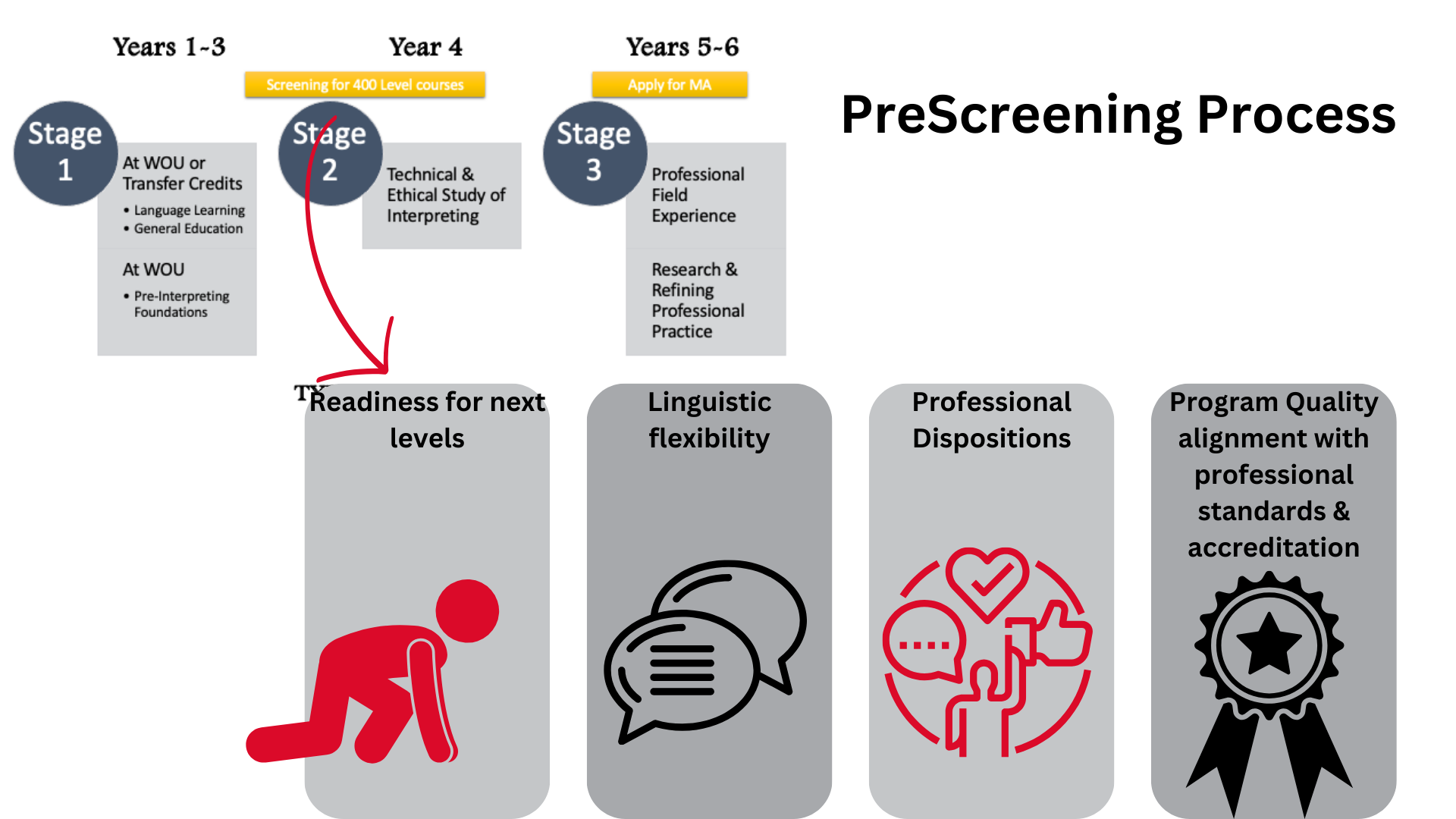
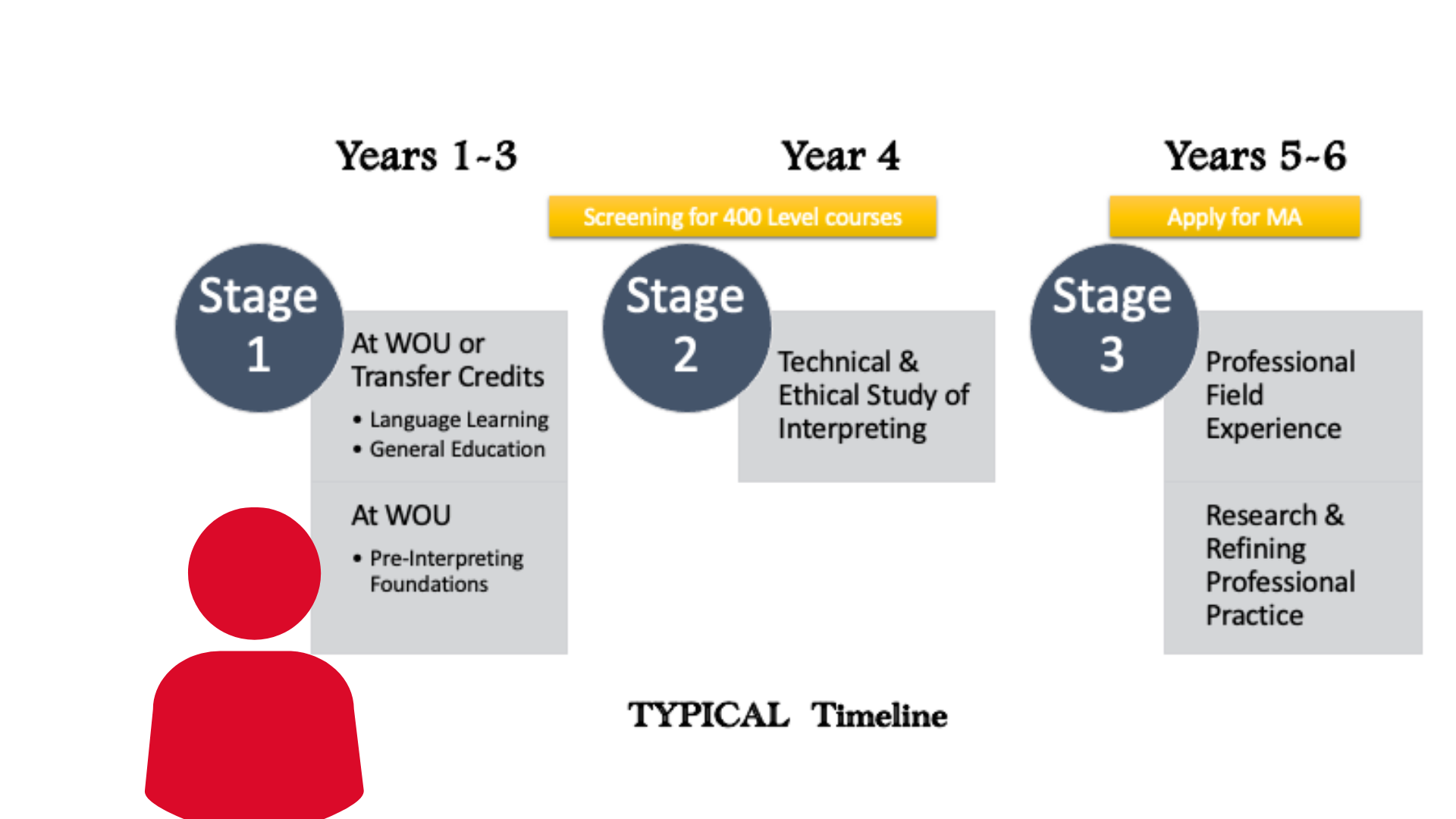
Students who come to WOU as freshman, will spend 5-6 years completing their Bachelors to Master’s pathway. Most students who start here as freshmen, start in the 2nd year of their 2nd language study. Here is a link to the advising guide.
A good number of our students are transfer students from community college or an associate level interpreter preparation program. If you are a transfer student with a transfer degree already conferred you will not likely need to take any additional general education courses, you will just nee to focus on your major and language concentration. If you have some college credits but not yet a degree conferred, you will likely need to take general education courses along with your major and language concentration coursework. The timeline for completion of your bachelor’s degree and readiness for the master’s program will vary depending upon your individual circumstances.
Students sometimes come to interpreting with various backgrounds or as a second career. This may mean you already have a Bachelor’s degree. We have a plan for you, too. Now if you are new to learning your second language, then you will need to invest time and attention to the development of that language prior to pursuing the interpreting coursework. Once you have sufficient mastery (3 years at the college level at least), you can begin to take the interpreting coursework and complete a 2nd bachelors degree. You will not need to retake any general education or minor coursework.
FAQs
What are you looking for from applicants?
1. Linguistic Fluency in English & ASL (or other working language):
Language Fluency Levels (see more information here)
- Level 1: Able to satisfy routine travel needs and minimum courtesy requirements
- Level 2: Able to satisfy routine social demands and limited work requirements
- Level 3: Able to use language with sufficient structural accuracy and vocabulary to participate effectively in most formal and informal conversations with known signers/speakers pertaining to practical, social, and professional needs
- **Minimum Standard for Acceptance** Level 3.5: Able to fluently use language with sufficient structural accuracy and vocabulary to participate effectively in most formal and informal conversations with known and some unknown signers/speakers pertaining to practical, social, and professional needs
- Level 4: Able to use the language fluently and accurately on all levels pertaining to professional needs with known and unknown language users
- Level 5: Language proficiency equivalent to that of a sophisticated native language user
2. Professional Competence – criteria based on the Entry to Practice Competencies found here.
3. Human Relations Competencies: This cluster of interpersonal competencies fosters effective communication and productive collaboration with colleagues, consumers, and employers
- Competency 2.1: Demonstrate collegiality by showing respect and courtesy to colleagues, consumers and employers, and taking responsibility for one’s work.
- Competency 2.5: Collaborate with participants and team members in a manner that reflects appropriate cultural norms and professional standards during all phases of assignments and implement changes where appropriate and feasible.
4. Service to the Community
As interpreters we serve members of multiple communities, thus commitment to serving others is an important aspect of professional development.
How will my application be evaluated?
Your application will be evaluated by the application screening committee composed of the Interpreting Studies faculty as well as some language specific faculty and occasionally members of the larger community. The actual makeup of the committee varies from year to year based on availability. However, your application is reviewed by a minimum of 3 evaluators.
Your application is reviewed in phases. If you “pass” a given phase, your application is reviewed for the next phase. Phases include:
- Phase I: GPA & Completeness of Application
- Phase II: Professional Language Assessment
- Phase III: Academic Language Assessment
- Phase IV: Recommendation Letters
- Phase V: Evaluator Recommendation
What is the difference between “Professional” and “Academic” language being assessed?
Interpreters are required to have more sophisticated language than the average population. Additionally, interpreters must have range and flexibility within their language competence. Interpreters find themselves in all circumstances and need command of the full range of linguistic options. Professional refers to language that would be representative of language used in the workplace, business meetings, etc. Academic language is language used in academic writing demonstrating sophistication of vocabulary, grammar, and content.
What will the “Evaluator’s Recommendation” be based on?
This score will be based on an overall impression of the applicant’s linguistic and professional competence. Additionally, evaluators consider the whether the candidate is:
- Not prepared and unlikely to be successful in the program or as an interpreter.
- Prepared and likely to experience success in the program and as an interpreter.
- Well prepared and well on the way to experiencing success in the program and as an interpreter.
When and how will I be notified about my application status (accepted, not accepted)?
You will be notified via email whether you were accepted into the program or not. If you are accepted into the program, you will also receive additional information regarding Orientation to the Program processes. Your acceptance will be conditional based on your successful completion of the remaining prerequisite courses prior to the start of the Fall term.