Mount Hood

West Valley Hospital moves second vaccine distribution site to WOU

Western’s Pacific Room is being used to allocate COVD-19 vaccine during Phase 1A 

Sydney Carpenter | News Editor

Last week, West Valley Hospital relocated their second distribution site for the COVID-19 vaccine from the Polk County fairgrounds to Western’s campus.

 “We were able to put up our first week there,” said Pathway Program and Community Outreach Administrator Jenny Von Derahe. “We moved here because it’s a central location and the technology is adequate for our needs.”

According to Von Derahe, the clinic was furnished in a day with the help of hospital facility workers, the environmental services team and kitchen staff.

“It feels safer and more comfortable than the fairgrounds,” said Polk County resident Wendy Brockhouse. “It just seemed weird in the big old barns … this just seems more a part of the community and safer.”

At this time Western is not charging West Valley to rent out the Pacific Room. According to Von Derahe, Western is not funding employment for the workers or volunteers of the clinic, however there are discussions of potentially allowing Western students interested in the medical field to volunteer at the clinic. Additionally, the clinic is not administering vaccines to administrators, faculty, staff or students unless they qualify within Phase 1A.

“One positive that’s come out is the collaborations that have taken place,” said Western Alumnus and District 1 Polk County Fire Chief Ben Stange.

Stange explained that Western has worked extensively with the community to facilitate a functional clinic on its campus.

“The Pacific Room would normally be used for this or that … but we (Western) can’t have events so it’s available. So what can we do to help the larger cause,”said Stange.

According to the Oregon Health Authority, Polk County has partially vaccinated 8.5% of its population and fully vaccinated less than 1% of the population. 

“It’s been such a huge deal to our people,” said Stange. “We were transporting positive patients every couple days, and it’s been difficult to see. The opportunity to actually hands on start to fix a problem that we’ve really felt we’ve had zero control over has been nice.”

Stange explained that, just like other health care professionals, their focus is to take care of people during emergency situations.

“There hasn’t been anything really till this moment that we’ve felt like we can do to make a large impact,” said Stange.

At this time, West Valley is charging a $60 administration fee for the vaccine that will be billed to the patient’s insurance. If uninsured, the hospital waives the fee. Due to the unpredictability of vaccine dose delivery, clinics are not open daily. To learn about hours and vaccination qualifications, visit their website at salemhealth.org.

Contact the author at scarpenter18@mail.wou.edu

United States Capitol hosts the 59th Presidential Inauguration

Joe Biden and Kamala Harris are successfully inaugurated into office following the attack on the Capitol

Sydney Carpenter | News Editor

On Jan. 20, President Joe Biden and Vice President Kamala Harris made a peaceful transition to office.

Themed “America United,” the ceremony featured creative talents such as Amanda Gorman, Lady Gaga, Jennifer Lopez and Garth Brooks.

“This inauguration marks a new chapter for the American people — one of healing, of unifying, of coming together, of an America united,” said Presidential Inaugural Committee CEO Dr. Tony Allen in a Jan. 11 press release. “It is time to turn the page on this era of division. The inaugural activities will reflect our shared values and serve as a reminder that we are stronger together than we are apart, just as our motto ‘e pluribus unum’ reminds us — out of many, one.”

Following tradition, Biden made his presidential vows over a Bible that’s been in the Biden family since 1893. In an interview with Late Show host Stephen Colbert, Biden explained the Bible had all the important dates from being sworn into any government office. Veering from tradition, former President Donald Trump did not make an appearance at the ceremony, and had Vice President Mike Pence stand in his place.

“We have worked hard. We left it all — as the athletes would say — we left it all on the field,” said Trump in his farewell address to Joint Base Andrews. “I wish the new administration great luck and success. I think they’ll have success. They have the foundation to do something really spectacular,” said Trump.

The former president concluded the speech, announcing he would return in some capacity, before flying to Florida on Air Force One for the last time.

Contact the author at scarpenter18@mail.wou.edu

‌Meet new people at WOU by joining a club

Look into these clubs and organizations at Western

Natalie‌ ‌Dean‌ ‌|‌ ‌Entertainment‌ ‌Editor‌ ‌

These clubs and organizations at Western can help winter term pass by with the help of new friends, building fond memories and getting involved in campus life. There are a ton of selections out there that have taken safety precautions and are holding virtual meetings over Zoom. Even if meetings aren’t in person, there’s still the chance to meet new people with similar interests. Get involved with a handful of these clubs: 

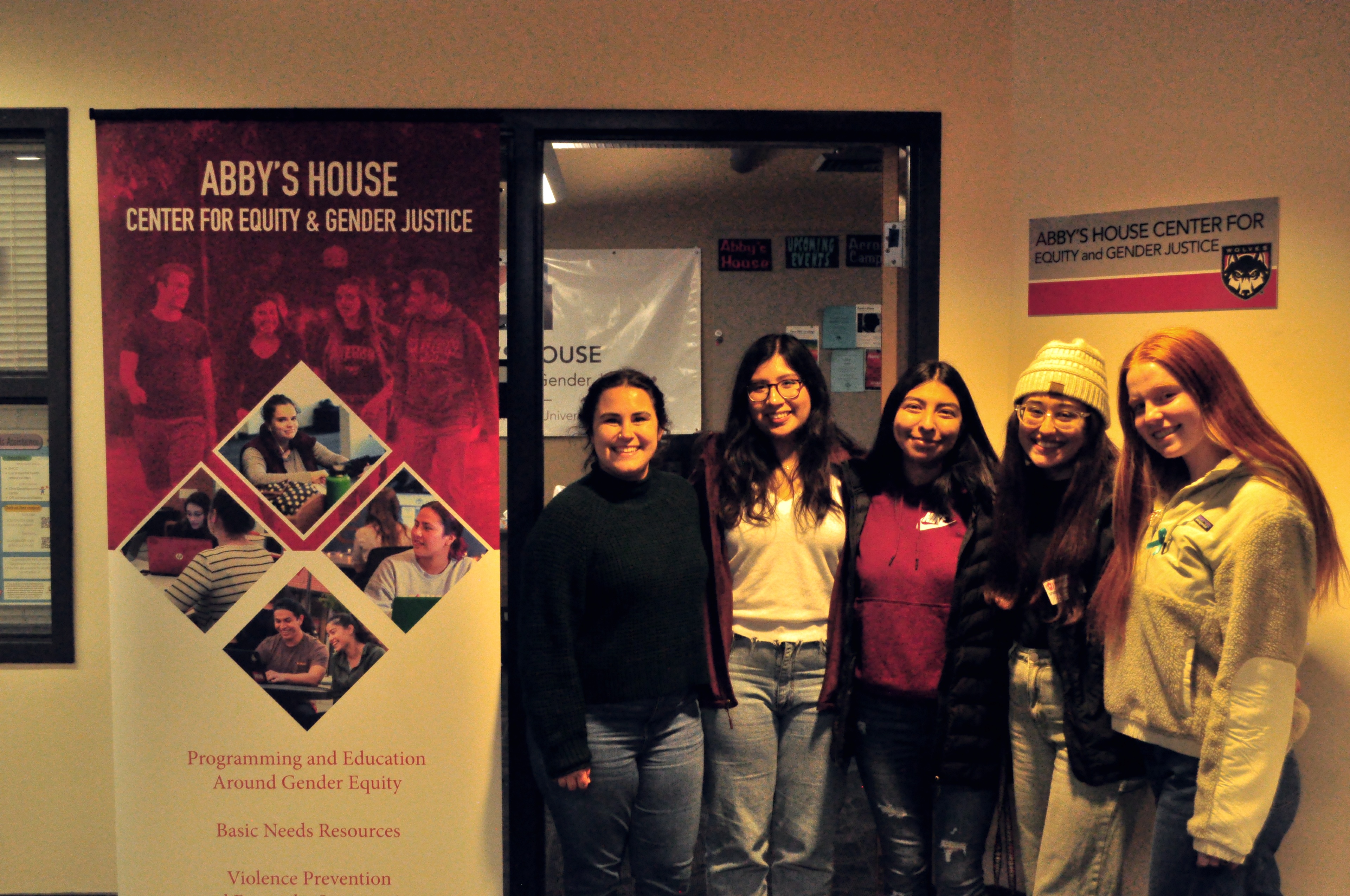
  • Abby’s House: Their hours have been recently updated as of Jan. 6; advocates can be reached by email, and staff and hours of operation can be found at their website, wou.edu/abbyshouse. Don’t forget to check out their Facebook, “Abby’s House at WOU.”
  • American Sign Language: Winter term club meetings will be held twice a month. As announced on their Facebook and Instagram, there will be a study event on Wednesday, Jan. 27, from 6 to 7 p.m. Look out for their newsletter ⏤ which has the Zoom link ⏤ their Instagram @wouasl or their Facebook, “WOU ASL Club.”
  • Black Student Union: For this term, meetings are held at 6 p.m. on Wednesdays over Zoom. The link can be found in their Instagram bio, @woubsu.
  • Cru: They have club meetings on Mondays at 7 p.m. at the Praise Assembly in Monmouth, and have Bible study at 7:45 p.m. at Munson House on Wednesdays. 
  • Mecha: They’re having bi-weekly meetings on Tuesdays from 5 to 6 p.m.; updates, information and the Zoom link are all on their Instagram, @mechadewou.
  • Triangle Alliance: With weekly meetings on Mondays at 6 p.m., folks can find Zoom links and current information on their Instagram @wou_ta or join their group on Facebook at “WOU Triangle Alliance.”
  • Unidos: They’re holding bi-weekly meetings, and have a newsletter that is regularly released. Meetings are held on Mondays at 5 p.m. over Zoom, and the link can be found on their Instagram page @unidoswou. Their Facebook page also has more information and can be searched under “Unidos Club At WOU.” 

Contact the author at ndean17@wou.edu

WOU finalizes purchasing agreement with Wise Education for new proctoring system

Western expands pilot of new online proctoring system Wise Proctor

Sydney Carpenter | News Editor

Western’s Academic Innovation Department has launched a broader version of the proctoring system Wise Proctor.

In spring 2020, the transition to remote instruction raised concerns about testing integrity. 

“Academic Innovation investigated different remote proctoring solutions and ultimately selected Wise Proctor for a pilot,” said Academic Innovation Director Michael Reis.

After a summer test trial, Western moved forward with a large-scale pilot currently funded by Library & Academic Innovation. Reis explained that the department rearranged savings from temporary operational changes brought on by COVID-19 in order to fund the program. At this time, Western does not require or intend to require professors to use Wise Proctor; but, in departments like biology, some professors have opted to enter the pilot program.

“It can be difficult to ensure academic integrity and fairness in an online system,” said Assistant Professor Gareth Hopkins, “and so this is a way to try to ensure that in my classes.”

According to Hopkins, there had been a desire for a proctoring system by several biology faculty members for classes that are important prerequisites for programs such as medicine, dentistry and nursing. However, some faculty have opted out of using the system.

“My main reason is to ensure equity in my classes,” said Assistant Professor from the Department of Chemistry Dr. Feier Hou. “What if a student does not have a camera on their computer? What if the student has poor internet connections…? What if the student is not comfortable showing their household to the proctor or me?”

Hou had heard from other universities that their proctoring systems had given false positive results to students with learning disabilities for having different eye movements when they work on an exam.

However, Wise Education President Ian Hartley said the company has researched body movement extensively.

“We’ve got a very advanced AI algorithm,” said Hartley. “We’ve trained on hundreds of thousands of photos and scenarios in the real world. It’s detecting all the things that you’d want while eliminating false positives.” 

Hartley assured that the company was built on prioritising student privacy and students are made fully aware they are being filmed by giving their consent while using the program and Wise Proctor is not downloadable software that has access to your computer at all times

For professors who have chosen not to use the new system, some have altered how they give quizzes and exams entirely.

“I realized that the traditional way of testing … may be testing more on students’ ability to take tests or perform under stress, than on their knowledge in chemistry,” explained Hou. “So I made my big exams open-book, and rewrote the exams so that they contain more open questions where students have to explain and show their … understanding of the materials.”

Additionally, Hou acknowledged that some students might see her as a “push-over” and cheat on exams, but she reported a vast majority of her students are not like that.

“I choose to trust my students, and if someone is going to cheat, they will eventually get the consequences later in their lives,” said Hou.

Contact the author at scarpenter18@mail.wou.edu

Ryan Kelly hosts virtual comedy show

Student Activities Board holds online comedy show starring TikTok comedian Ryan Kelly

Sydney Carpenter | News Editor

On Jan. 2, the Student Activity Board announced on Instagram that their first major event for the term would be comedian Ryan Kelly ⏤ known online as Youth Pastor Ryan ⏤ who will perform in a virtual stand-up comedy event featuring interesting life experiences.

Despite his namesake and going to a Christian school for 18 years, Kelly is not actually a youth pastor. In his Twitch trailer, Kelly explains he looks like what people would imagine a youth pastor might look like.

In St. Louis, Illinois, he began doing comedy as an improviser. According to ryankellycomedy.com, he had received training from iO Theater ⏤ formerly known as The ImprovOlympic ⏤ The Second City, The Groundlings Theatre and School and Upright Citizens Brigade Theatre. In college, he was interested in new life experiences and began performing stand-up comedy. According to neon-entertainment.com, he often draws inspiration for his comedy routines through experiences including: surviving a plane crash, being tackled inside the National Security Agency and negotiating deals while being mugged.

“I needed something,” said Kelly when asked why he does comedy. “I needed something to give purpose and joy.”

 His favorite part of comedy is when the whole room laughs. 

“Because laughter is a very binding thing,” explained Kelly. “(I try to) make the bigger guys laugh because when you do that it shows a diffusal and makes people feel like they are safe.”

Kelly explains that this comedic approach brings shyer people out of their comfort zone in a natural way.

“Once everyone’s at peace then being able to hit jokes where people feel comfortable and they all laugh is a beautiful moment. Having a full crowd laugh together, they’ve all become friends and they don’t even know it,” explained Kelly.

To view the virtual comedy show taking place on Jan. 13 at 6 p.m., go to Engage and click the Zoom link located in the event’s advertisement. To learn more about Ryan Kelly, view him on Twitch @youthpastorryan where he posts gameplays, TikTok @youthpastorryan or on YouTube @Youth Pastor Ryan.

Contact the author at scarpenter18@mail.wou.edu

Cuts to Western’s departments and programs

President Fuller’s Article 15 Task Force proposes draft of program curtail and Non-Tenure Track reductions

Sydney Carpenter | News Editor

Beginning in 2011, the administration office began seeing lower enrollment rates at Western, resulting in financial challenges in the years following.

In spring 2020, COVID-19 accounted for 70% of the university’s 25% drop in enrollment. This resulted in the university asking the deans to propose two budgets to reduce salaries by 10% and 17% in June. In addition, all Cabinet members were asked to review budgets for FY21 and develop 10% and 17% cuts, based on salary. 

When the task force began reviewing program curtailments, an extensive list of qualitative and quantitative factors were taken into account. 

Additionally, the task force also utilized feedback from original reports from the deans, the recommendations from Western Oregon University’s Federation of Teachers, the recommendations from the Faculty Senate Executive Committee, PowerPoint for panel discussion, feedback from three faculty panel discussions, the report from the faculty Sustainability Task Force and Article 15 of the Collective Bargaining Agreement outlining faculty contracts and rights.

In totality, the task force has proposed the elimination of five majors, two programs, seven minors, one program freeze and one history concentration removal. For non-tenure track faculty, 15 departments have received deductions in full-time equivalents.

All of us are frustrated and shocked, and more importantly we are not okay with it,” said senior earth science major Nicole Niskanen. “Granted, the times we are in are very challenging and it is understood that the university is not exclusive with the sacrifices it is making, because many other schools are in the same position.”

Niskanen explained that a lot of the cuts are impacting first-generation college students that are interested in pursuing degrees in science, technology, engineering and math.

“Western Oregon University is an affordable option for many first-generation college students, along with that, the campus prides itself on diversity and equality,” said Niskanen. “The Earth Science program at Western has a significant number of women and other individuals from diverse backgrounds and populations enrolled in the program including students with disabilities.”

According to Niskanen, eliminating the program strips away the opportunities for some of those underrepresented first-generation college students and deprives those who cannot afford to attend expensive STEM-focused universities.

Under the current program cuts, students will be permitted to complete their major and professors will still teach until students learning in their areas complete their major or minor; the effects of program cuts will impact all incoming students starting in 2021.

“I am writing on behalf of all of the Earth Science students who have completed the program, who are currently trying to finish the program, and those who will complete the program; we don’t want to see any of our professors leave because they have done so much for us by dedicating their time to support us and by selflessly helping prepare each student for whatever career path they take. We want to fight for the program and fight for our educators,” said Niskanen.

Currently, faculty are working to try and save these programs. To advocate for programs or faculty jobs, students can go to the ASWOU site within Engage. From there, students can fill out the Student Concern Report.

UPDATE (DEC. 15TH, 2020 @ 6:52PM)

Western has announced its final program curtailment enacted by Article 15, as well as non-tenure track layoffs outside of Article 15.

Under the article, the university is permitted to make reductions in cases of demonstrable financial need, discipline curtailment or retrenchment. As of now, Western is claiming financial strain due to COVID-19 and long-term decline in enrollment as the cause of enacting Article 15.

Since fall of 2011, Western’s enrollment has decreased over 25% from 6,217 to 4,552 in fall of 2020, as reported in the Article 15 Task Force’s finalized plans. Currently, under the Article 15 program curtailment plans, 14 full time positions will be lost, and a total of 10 majors and minors will be eliminated along with two masters programs. Outside of Article 15, a total of 16 full-time non-tenure tracks are being laid off.

“Quite frankly, our options for achieving a balanced budget are limited,” said President Rex Fuller in a letter to the campus community. “Given that more than 85% of our expenses are salary and benefits. With limited options for tuition increases, declining enrollment, and likely cuts to state funding, we must act decisively to align our budget with our fiscal reality.”

As of now, the impact of the program cuts will not impact students who are currently majoring or minoring in the program. In the letter, Fuller noted how important it is for students impacted by the program cuts to finish their degrees. According to the campus-wide letter, program curtailment will only impact incoming students starting in the 2021 to 2022 school year. Tenure-track and non-tenured positions will not be cut until deans and division heads submit final layoff decisions. The decisions are expected to be an ongoing discussion through the month of January.

Some members of Western’s faculty union — the WOU Federation of Teachers — are asking for program curtailment to be delayed until the new university president comes into office.

“We know that WOU is in some financial difficulties,” said WOUFT Communications Director Scott Beaver. “We just don’t want to rush, do long term solutions without due diligence.”

In an effort to advocate for faculty and departments WOUFT included some alternatives to department layoffs in the finalized plan, including moving Western out of Division II sports, looking for efficiencies in non-instructional office budget cuts and personnel assignments, reduce the number of campus sponsored events and used additional money from the fund balance.

In the final plan, all layoff notices must be given to designated faculty no later than the end of January. Affected tenure-track faculty will receive a one-year layoff notice before their positions end, at the latest by the end of January 2022.

The union at this time remains hopeful that there are departments that can be saved before layoff notices are issued. Beaver said the union is still fighting. 

Contact the author at scarpenter18@mail.wou.edu

Men’s rugby competes virtually in rugby competition

Men’s rugby participates in COVID-19 friendly competition

Sydney Carpenter | News Editor

Due to current COVID-19 restrictions, club sport organizations like men’s rugby are not able to function under normal pretenses.

However, the rugby team found a creative alternative to normal game play: a virtual competition against other rugby teams. 

In order to compete in the virtual “season,” men’s rugby earned points by performing various challenges in workouts and training. 

“We competed in competitions against other teams to see whose times were better, who had a better push up per minute, who had a better sit up per minute and it was just basically a statewide competition,” said freshman physical education major and men’s rugby flanker Sangato Letisi. 

In addition to the physical aspect of the competition, the virtual showdown awarded teams points for self promotion as well as community service. During the event, the rugby team reached out to Western’s Food Pantry after viewing their own promotional video, and asked if the team could make another one.

“It wasn’t part of any specific task,” said senior exercise science major and men’s rugby lock Spike Ripley. “It was just we as a team decided to be more active in the community. We are actually trying to change how Western Oregon’s rugby team is looked at. This is a positive way (to) be active and participate in the community.” 

Since the rugby team published their video, the Pantry has received over $1,225 in donations, been shared 108 times (including by the USA Rugby National Team), viewed nearly 9,000 times and has reached over 20,000 people.

“My entire family … (was) asking me how they could help the Food Pantry,” said Letisi. “I told them food and money helps the Food Pantry and they said they would go donate real soon.”

In addition to helping our community, the team reported winning prizes from specific tasks they won during the competition.

“My favorite part, and I think the team’s favorite part, was winning new uniforms,” said Ripley. “We won the uniforms after giving the best answer for how we were able to stay in contact with rugby despite … COVID.”

Letisi added that winning anything during this season was motivational.

“We can’t have an actual season right now, but winning something gives us something to compete for.”

In totality, the team placed second of the 90 teams qualified to compete. Going forward, the team hopes to regain a sense of normalcy and play a real game of rugby after a vaccine is released.

Contact the author at scarpenter18@mail.wou.edu

WOU food pantry continues to provide services despite COVID

Western’s Food Pantry remains open despite the year’s circumstances

Sydney Carpenter | News Editor

At Western, there have been university-wide layoffs, budget cuts and projected program reductions. The Board of Trustees have coined the term “right sizing” for the university. Due to COVID-19, the “adjustment” has been amplified.

Despite the financial circumstances the university is facing, the Western Food Pantry has remained available to community members.

Back in March, when COVID was first documented in Polk County, grocery stores in Monmouth and Independence were cleared of sanitization products, personal hygiene goods and produce. Dissimilarly, Western’s Food Pantry shelves were filled with products for the community.

According to senior applied math major and student coordinator of the Food Pantry Josh Salsbury, the Food Pantry’s “source” — Marion Polk Food Share — donated enough food to roll over into fall term after Oregon’s Joint Special Committee on Coronavirus passed their fourth policy proposal. This proposal was designed to fund food banks. 

At the time of the food bank donation, students had mostly vacated campus; however, Food Pantry services are not exclusive to students. The Pantry welcomes all who are in need regardless if they live in Polk County or aren’t associated with Western, Salsbury explained. 

After Oregon released its COVID safety guidelines, Salsbury reported that the Food Pantry hastily adapted its services to abide by Oregon law.

“It was a really difficult transition,” said Salsbury. “To illustrate that, during winter term of last year, the Food Pantry had 30 weekly volunteers keeping it open and helping with our services. Due to COVID guidelines and because we weren’t really sure what COVID was going to look like because of how scattered the information was, we went from having 30 volunteers to having maybe four or five.”

In addition to reduced volunteers, it took two attempts to establish an effective COVID-compatible food acquisition system.

“At the start of COVID, the system we had at the time was very rushed because we were trying to make sure we had a COVID-compliant system,” said Salsbury. “We had prearranged bags or food boxes. We had three different options of bags to still accommodate the choice.”

Salsbury explained that the Food Pantry didn’t like the first system because of the fewer options a customer had when they chose from prearranged bags.

Around the beginning of summer, the Food Pantry switched to their final and current system that Salsbury referred to as the “restaurant style” system. When customers currently go to the pantry, instead of the pre-COVID “grocery style” system, they order food off a menu and a worker packs the requested food, rather than allowing the customer to peruse the shelves. This ensures social distancing and limits the amount of people touching the food.

Despite these unusual circumstances, customers have reported the Pantry is maintaining quality service during this time.

“The transition from normal to COVID was pretty smooth,” said community member Shannon Howard. “They did a really good job; I was impressed. They stayed open when I thought they would close.”

Howard reported that although the Food Pantry is receiving only 50% of its funding and reducing staff, he still has access to all the food he needs.

“(It’s a) real big help for me, especially the fresh milk, eggs and cheese,” said Howard.

Howard also commented that prior to COVID, the pantry was actually prepared, citing that the pantry provided sanitizer.

Going forward, the Food Pantry hopes to continue to provide for their community and destigmatize using the pantry. For information on Food Pantry hours and how you can donate, visit https://wou.edu/foodpantry/.

Contact the author at scarpenter18@mail.wou.edu


The IFC makes preliminary funding decisions

The IFC faces threats of funding withdrawal and being denied consultations for applying a fee

Sydney Carpenter | News Editor

Over the course of several months, Western administration and the Incidental Fee Committee have been in debate over the IFC’s Incidental Fee.

For winter term, it was discussed in the committee’s Oct. 29 meeting that President Rex Fuller would potentially be supplying another $1 million stimulus from the online tech fee — similar to funding supplied in fall term. IFC members briefly discussed applying a flat rate fee of $25 in comparison to their current fee system: students with one to five credits pay $265, and students with more than six credits pay $395.

In their Nov. 5 meeting, the committee announced that President Fuller changed his $1 million offer to $415,000 on the condition that the committee does not attempt to make any mid-year fee modifications and maintains their two-tier system approved back in spring 2020. 

In an email sent to ASWOU President NJ Johnson, President Fuller projected IFC expenses totaling $900,000 due to winter term being less expensive. Fuller cited that remaining funding for winter term would come from the $100,000 carryover from fall term, $85,000 from the current IFC fee and $300,000 from the $1.3 million in IFC reserves.

Despite Fuller’s conditions, the IFC has opted to carry out its normal governing processes — an extensive list — protected by OR statute 352.105.

“(There are) serious problems making our committee rely on online fee,” said junior philosophy English double major and IFC member Nick Denning in the fourth meeting transcripts. “No control over the amount of money we receive, administration is doing that all on their own and they decide what to charge and where money goes. All of a sudden we are reliant on online tech fees. (We) cannot criticize it because (our funding) will go away.”

Following their own timeline and deciding to not rely on Fuller, the IFC approved all preliminary budget proposals in their fifth meeting held on Nov. 12. Although the IFC requested areas to present budget proposal reflecting 50% funding, areas such as Student Media received an additional $1,500 to meet their needs, so they would not need to pull money from their reserves; Campus Recreation was given an additional $5,000 to increase workers to full time; Creative Arts received an additional $1,000 for student employment; ASWOU’s budget was given an additional $4,452 to allow Office Coordinator to be 1.0 FTE; Athletics requested funds for both winter and spring term in preparation for plane ticket purchases if travel is allowed.

After approving budget proposals, the committee discussed potential fee prices; in their deliberation, the IFC agreed to two possible fee scenarios. The first scenario involves all students, regardless of whether they are taking an online class, paying a flat rate fee of $150 and around $360,000 would be taken from reserves if the committee is not able to convince the Board of Trustees to lower the online tech fee. In the second scenario, if the IFC can bring down the price on the online tech fee, then all students, regardless of whether they are taking an online class, would pay a flat rate fee of $175 and around $250,000 would be taken from reserves.

Additionally, newly elected IFC Chair Makana Waikiki announced that although she attempted to request a Dec. 16 emergency meeting with the Board of Trustees, Chair Betty Komp did not reply to Waikiki. Instead, Komp only replied to ASWOU President Johnson, saying that she couldn’t endorse an emergency meeting.

At this time, due to the unwillingness of the Board of Trustees to meet with the IFC and President Fuller’s plans to withdraw funding if IFC continues its process, the committee intends to submit an appeal to the Higher Education Coordinating Commission to have the IFC’s situation discussed at their Dec. 10 boarding meeting. Until then, the IFC is continuing to the next phase of their fee establishment process: open hearings being held via Zoom on Nov. 19 from 9 a.m. to 11 a.m., and Nov. 20 from 10 a.m. to 12 p.m. During these hearings, members of the community can voice their concerns on fees or advocate for more funding in various areas. To participate in the hearings, visit https://wou.edu/ifc/.

As more information is released, the story will be updated.

Contact the author at scarpenter18@mail.wou.edu

Western modifies traditional spirit week events

Western organizations prepare for socially distanced spirit week

Sydney Carpenter | News Editor

During non-pandemic years, there is usually a spirit week in October that is dedicated to Western’s homecoming football game. Throughout the week, students could participate in various activities such as the carnival, Paint the Town Red, the powerpuff game, a bonfire and Paint The Wolf. Due to COVID-19, some of these in-person events have been cut this year to ensure student safety.

Adapting to the current situation, Student Engagement and the Student Activities Board have planned various online programs and a few in-person activities that abide by social distancing guidelines in an effort to keep the tradition of spirit week.

Paint the Wolf: For this outdoor activity, students will participate in repainting the weathered WOU logo located on Church street. 

Pop Culture Trivia Night: During this online event, students will be quizzed on various pop culture topics present in our society. The winner will receive free spirit gear.

Wolf Royalty Voting: Homecoming Court and Wolf Royalty are traditions at Western. Each year, two first-years, sophomores, juniors and six graduating seniors are nominated to Homecoming Court. Two of the graduating seniors are then nominated to Wolf Royalty.

Movie Night: If this outdoor activity is approved, SAB plans on announcing Western Royalty as well as putting on a movie for students.

WOU School Spirit Compilation: This activity is done over the week; students upload photos or videos to Instagram, tagging @student_engage to show ‘what Western means to them’. The winner receives free Western merchandise.

Downtown Scavenger Hunt: For this in-person event, students will be given a list and asked to find all the items in downtown Monmouth; the winners get free Western swag.

For in person events, SAB and Student Engagement are not requiring students to sign up. When people arrive at the events, they will be asked to sign their name at a table for contact tracing purposes if an outbreak occurs at Western. Additionally, senior biology major and SAB director Kayley Arpaia confirmed that there will never be more than 100 students at the in-person events, but students are still required to stay six feet apart and wear masks. 

Contact the author at howlnews@mail.wou.edu