
Mount Hood

31st annual MSU powwow

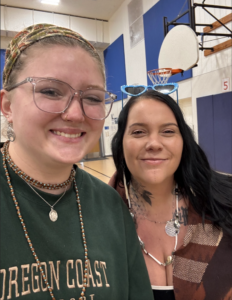
Members of Western’s MSU and NICC executive members pose with powwow MC, Anthony Quenelle. | Photo courtesy of WOU Native Indigenous Culture Club

April 22, 2026 | Jaylin Emond-Hardin | Entertainment Editor

In Native American cultures across the country, powwows are times of gathering, celebration and culture. The powwow put on by members of the Multicultural Student Union and Native Indigenous Culture Club executive boards brought this to campus for the 31st time in Western’s history. 

Planning for the powwow began in August of last year, when members of the MSU and NICC executive boards met every Monday to discuss the logistics that went into planning. By December, the powwow committee was formed and continued these weekly meetings to ensure that all the parts were coming together. 

This year, the powwow was spearheaded by Cheydon Herkshan, the events director of MSU and president of NICC. A senior and a member of the Confederated Tribes of Warm Springs, this event held special meaning for Herkshan.

“This is just such a beautiful event to be able to host, as a Native person,” she said. “Being in an institution that has a 2% population of Indigenous students is a little disheartening sometimes, so it’s amazing that I’m able to plan an event like this.” As of Fall term 2024, Western’s enrollment of American Indian and Alaskan Native students was at 1.3%.

The day before the powwow, members of MSU and NICC, as well as other volunteers, marked areas for vendors and drum groups, set up concessions and prepared the Wolves Athletic Center for the event. 

The day of, vendors arrived at 9 a.m. to set up their tables, with Whipman Ed Goodell and Master of Ceremonies Anthony Quenelle arriving shortly after. This was Goodell’s third year as Whipman at Western, though it is a role he has been in at various institutions for many years.

“My wife introduced me to a man who she grew up with … he was one of the members of the Portland Indian community and he was the Whipman prior to me,” Goodell said. “Growing up, he was one of the Elders, and then at some point, he decided he was getting old enough that he wanted to pass it on, and I was the one he chose to train, teach, mentor and show what it was that needed to be done.”

Traditionally, Whipmen were appointed to encourage dancers to get up and dance, as well as help maintain proper etiquette among dancers and spectators during a powwow. While the title of Whipman is ceremonial today, it was the Whipman’s or whip bearer’s job to make sure dancers danced for every song they were obligated to dance to by tradition.

“I do whatever I’m asked to do, but that means taking care of a lot of ceremony,” Goodell explained. “I’m here to kind of help and make sure it’s taken care of in a good way.” He then recounted a story when a man named Robert Van Pelt was trying to organize a powwow at the school he was attending, and was confused about the role of Whipman.

“They said, ‘Ed, he is the custodian of our ceremonies. He doesn’t necessarily perform the ceremonies himself, but he is the one who takes care of them. He is the one who makes sure that we take care of them.’”

“What’s the best thing for me is being able to be here for situations like this, where the young people are carrying on what we do. What we do as a community, as a people, to be able to develop,” Goodell added. “Just being able to watch our community grow, grow up and mature, have the younger ones caring and showing that they are paying attention to what the elders say and do, and how it’s supposed to go.”

Along with the roles of MC and Whipman, powwows traditionally have a host drum. This year, the intertribal group Turquoise Pride was honored with that responsibility, providing the central heartbeat that guided the dancers and brought the arena to life.

“We originally didn’t have a host drum,” Herkshan said. “We had reached out to three different groups, and nobody had responded to us. But eventually, everything got figured out, and it was a good success.” Other drum groups were also invited to perform, with two additional groups joining; together, the three groups shared the songs throughout the event. Turquoise Pride, however, was in charge of leading songs for the Grand Entry, Flag Song, Retreat Song and any honor and prayer songs. 

Doors opened at noon, with the first Grand Entry beginning at 1 p.m. Intertribal, round and exhibition dances followed, and a dinner break began at 5 p.m. During the break, Indian tacos were served, and a performance by Fuego Nativo de Las Américas energized participants, showcasing vibrant traditional dance and music before the evening’s events resumed. The second Grand Entry began at 7 p.m., marking the start of the evening’s next session, with a dance lineup that mirrored the first half.

“I want to give a really big shout-out to my Native Indigenous Culture Club. They helped extremely well. Every single one of them was a part of our powwow committee,” Herkshan said. “I would also like to shout out the Multicultural Student Union. Everybody on the (executive) team helped out tremendously.”


Contact the author at howlentertainment@wou.edu
 

Red flag, red flag

April 22, 2026 | Belen Ponce Leal | Lifestyle Editor

We as humans are very social creatures; having a significant other can provide a lot of benefits. Being in a committed relationship, according to Northwestern Medicine, can lower the production of the stress-inducing hormone called cortisol. There have also been reports of living a longer life and having a greater sense of purpose when being with someone who can be described as a “better half.” As someone who is happily married, I can confirm that being in a healthy relationship is pretty awesome. 

However, not every relationship is meant to last, especially if the person isn’t a good partner. A lot of the time, we end up stuck in relationships that we think are healthy, but in reality can be extremely toxic. No one wants to be in a relationship with someone who isn’t going to treat them properly, so I thought I would provide the biggest red flags I’ve seen in many relationships, both my own and those of some close friends of mine, that eventually went sour. 

As a preface, I’m not a relationship guru. These are just some things that I think people should be aware of if they are unhappy with their partners. 

Overly controlling behavior Possession over someone isn’t inherently a bad thing. After all, I am a little possessive of my husband and vice versa. Jealousy is one thing — control is another. Relationships should be a place where one feels free with the other, not feel chained to them. 

Controlling behavior from a partner can be a red flag, as it shows that they not only feel the need to be in control, but also want to control those who are closest to them. Some examples of overly controlling behavior would be forcing a partner to wear certain clothes, always being the center of attention, never accepting blame for situations they caused and consistently lying to their partner. I think a situation where this trait comes out a lot is whenever someone wants to go out, whether it be to a party or some sort of function, the partner gets jealous and tries to prevent the other from going. 

There is nothing wrong with going out with friends, but if one finds themselves wanting to avoid going out to “keep the peace,” that’s a big red flag, especially if they go out as much as they want. Now, if a partner wants to be controlling to the point where they want full control of the bank accounts and credit cards, that isn’t even a red flag — it’s a blaring alarm. Not only is it stripping someone’s ability to manage their finances, but it’s also a trap meant to keep the person tied to their partner. No one should ever feel trapped in a relationship. 

Narcissistic habits — Someone who is a narcissist or has the behavior of one has an extensive interest and admiration for themselves, likely believing that the world revolves around them. This often means they’re not able to recognize the needs and opinions of others. They may dismiss them or even overlook them, as they view their own interests or issues as more important. 

A good example is a lack of empathy, tied to invalidating their partner’s concerns and issues. At times, they may even make fun of their significant other when they’re visibly upset. It’s also important to be aware of gaslighting and manipulation. The narcissist can make their partner feel like everything is their fault, twisting their words to make them feel guilty over things that aren’t an issue. They’re also very egotistical, wanting constant compliments and what feels like worship from their partners. 

Narcissistic behavior can appear very differently. Oftentimes, those who are in relationships with people who have this sort of behavior don’t remember their partners being like this at the start. They were attentive, sweet, considerate and all the things that made someone want to be with them. That can lead to another red flag: love bombing. 

Love bombing — At the beginning of a relationship, there is something that most people refer to as the honeymoon phase. It’s when the relationship is exciting and new, people are getting to know each other and they learn about each other’s pet peeves and interests. 

However, love bombing is different. Love bombing is done with the intent of luring someone into a false sense of security. It could look similar to the honeymoon phase as it involves one person showering the other with attention, praise and even gifts in order to get their partner to be interested in them. They’ll say things like “we’re meant to be” and “no one else could be my partner other than you.”

However, instead of actually being in love with someone, narcissistic people love the idea of having control over someone. They try to make their partner dependent on them so that they are less likely to leave. Love bombing is done as a method of manipulation, not an act of love. 

Lack of communication One of the most important parts of maintaining a healthy relationship with someone is to speak up whenever something is wrong. As the honeymoon phase ends and disagreements happen, in order to move forward with the relationship, there has to be clear communication between the two. This involves being honest and open with each other, which may not come easily for people depending on their backgrounds. What’s worse is when someone is finally able to tell their partner what the problem is and they react poorly or brush it off. 

It’s one thing if putting off an issue happens a few times, but if a significant other is unwilling to change and learn how to communicate with their partner better, that’s a major red flag. Not only is it showing poor emotional intelligence to not be able to recognize that a person’s feelings are hurt, but it’s a lack of respect for the person to not want to be better for them. 

My biggest advice for anyone who is in a relationship and is not sure if they’re happy is this: don’t tolerate mistreatment. Don’t make excuses for people who continue to hurt the person that they are supposed to spend the rest of their life with. As American poet Maya Angelou once said, “When someone shows you who they are, believe them the first time.” 


Contact the author at howllifestyle@wou.edu 

Steph Littlebird spotlight

The author poses with Steph Littlebird
after a guest speaker presentation. | Photo by Jaylin Emond-Hardin

April 22, 2026 | Jaylin Emond-Hardin | Entertainment Editor

Growing up as a Native kid, I didn’t have many books that were for me. As a tiny tot, I had one called “Thirteen Moons on Turtle’s Back,” which told the story of the 13 moon cycles of the year on the back of Turtle Island. By the time I got into chapter books, there were more, but not by much — “Indian in the Cupboard,” “The Birchbark House” and “The Absolutely True Diary of a Part-Time Indian” were titles I was more than familiar with. 

But now, Native authors are becoming a greater part of the author demographics, and with that, so are their stories. 

Among these authors is Steph Littlebird, a Kalapuya and Chinook artist, who recently published “You Are the Land.” Released Feb. 24, 2026, “You Are the Land” is Littlebird’s first published children’s book, though she has illustrated for other works before. These books include “My Powerful Hair,” “Body Beautiful” and “Fierce Aunties,” all celebrations of the power of indigenous people and their cultures. Littlebird also did the illustrations for the book “The Summer of the Bone Horses,” a chapter book written by Virginia Driving Hawke Sneve.

It’s not just children’s book illustrations, however, that Littlebird pours her love into. As an enrolled member of the Confederated Tribes of the Grand Ronde community, she curated the exhibit “This IS Kalapuyan Land,” which opened in 2019 at the Five Oaks Museum  and in 2023 at the Pittock Mansion, both in Portland. 

In the exhibit, Littlebird annotated panels from the museum’s previous exhibit on the Kalapuyan peoples, curated modern Native artwork into the exhibit and added historical pieces from David Lewis, who has a doctorate in anthropology and is a preeminent scholar on the tribes of Western Oregon. 

In her spare time, Littlebird creates art for her Instagram, @artnerdforever, most of which is protest art and aims to bring awareness to the movements that she supports. She especially focuses on reinterpreting vintage imagery, often reworking historically problematic depictions with a modern, critical perspective. Among these are her interpretations of the Land O’Lakes Native woman, Pocahontas and Tiger Lily from “Peter Pan,” along with Land Back themes and other works that reflect her perspectives on contemporary political issues.

Recently, Littlebird announced her collaboration with author Karina Iceberg on the book “Free to Fly,” a multigenerational story that pushes and reminds readers to look towards the future with hope, even with the knowledge of the pain the past brings us. 

“Free to Fly” is set to release in June this year, while “You Are the Land,” “Summer of the Bone Horse,” “Body Beautiful,” “Fierce Aunties” and “My Powerful Hair” are available in bookstores and online.


Contact the author at howlentertainment@wou.edu

Oregon Democrats take a stand

A photo of a February protest at the
Oregon Capitol fighting for immigrant
rights. | Photo from @lusyouth on Instagram

April 22, 2026 | Abbi Duhart | News Editor

On April 9, Oregon Gov. Tina Kotek signed eight bills surrounding the protection of Oregon residents in regard to immigration status and other related matters. These bills were brought into motion by Kotek and other Democratic representatives following the high surge of immigration arrests in 2025 and early 2026. 

Kotek, along with others, emphasized these bills are urgently needed in order to protect Oregon residents, with representatives saying they want to fight for a safe state that advocates for all. Kotek further explained the bills fight back against federal immigration actions such as the deployment of the National Guard to Portland and federal agents launching operations in the Willamette Valley with directions to reach a quota of at least 80 people detained, often doing so without warrants and while wearing face-obscuring masks.

In February, Democratic representatives introduced a series of bills during the short legislative session, naming them the Immigrant Justice Package. Advocates and students rallied outside the Oregon Capitol in support, carrying signs reading things such as “protect Oregon immigrants” and leading chants.

“While weak leaders in D.C. use cruelty to feign strength and disregard both our constitutional rights and basic human decency, we had an obligation to use our power to stand with immigrant communities to strengthen civil rights and to prove that when we say we represent every single Oregonian, we mean it and we deliver,” said Rep. Will Chotzen.

The first of the bills, House Bill 4079, says that school district boards must have policies in place outlining how they will respond if a federal immigration agent enters school property or a school campus. Additionally, Senate Bill 1538 bans discrimination in education based on immigration or citizenship status.

House Bill 4111 bans the use of immigration status as evidence in civil cases and adds immigration status to existing anti-profiling laws in Oregon.

House Bill 4114 gives Oregon residents the right to sue federal law enforcement agents for violating constitutional rights by entering property without a warrant.

House Bill 4138 requires all enforcement agents to clearly identify themselves without the use of masks or face coverings unless medically permitted.

Senate Bill 1570 requires hospitals to outline policies and procedures for how they will respond to law enforcement authorities arriving.

Senate Bill 1587 bans public organizations from selling personal information to a data broker unless they guarantee it will not be used to enforce federal immigration laws.

Finally, Senate Bill 1594 directs the Office of Immigrant and Refugee Advancement to form policies to protect residents from federal immigration enforcement.

Outside of these eight bills, Kotek additionally signed House Bill 4123 March 31, which prevents landlords from releasing information surrounding the immigration status of their former tenants, applicants and current tenants without written consent or a court order. This bill takes effect June 5.

Kotek pushed back against federal forces, saying, “To those in Washington, D.C. who think they can bully Oregon into abandoning our values and abandoning our neighbors, you got it wrong. Oregon is not staying quiet and we are not backing down.”


Contact the author at howlnews@wou.edu

HSI Summit Week

A photo of the HSI Summit student panel. | Photo from @westernoregonuniversity on Instagram

April 22, 2026 | Abbi Duhart | News Editor

Starting April 13, Western hosted its fifth annual HSI Summit week. As a Hispanic Serving Institution, Western’s undergraduate student population consists of 27% identifying as Hispanic or Latino, and the goal of the summit is to bring together the university and community to discuss what it means to be an HSI. Specifically, this year’s summit’s purpose was to highlight how data informs, aligns and advances commitment to serving the student population.

Marla Franco, who has a doctorate in higher education leadership, was chosen as the keynote speaker for this year’s summit. She has worked at public universities in California and Arizona for 25 years, and her work consists of creating greater success in pursuing degrees for underrepresented and minority communities. The assistant director of the HSI Initiatives, Cristian Mendez Garcia, said, “We are pleased to have Dra. Franco share her expertise with our broader community. This work is important and having an open dialogue on how data informed decisions can help all of our students is crucial in higher education.” 

On Monday, Claudia Ortiz Gajardo and Vanessa Petroj led an event entitled Code Switching in Hamersly Library, where they discussed the connection of language, culture and identity within Hispanic and multilingual communities. In regard to this event, Ortiz Gajardo said, “It was exciting to see the enthusiasm from the audience, which fostered a deeper connection among the campus community through reflection on the role of code-switching within our diverse identities.”

Tabling in the Werner University Center, where students could grab limited-edition HSI shirts, occurred Tuesday. Late January, students voted on which of three T-shirt design options, all designed by students, they liked the best. The winning design was chosen to represent Western’s HSI status.

On Wednesday, students could attend Loteria in the WUC, where they could win prizes such as T-shirts, candy and keychains. 

Thursday, Dr. Ricardo Pelegrin Taboada partnered with the Writing and Research Center on campus to present “Ethnic Studies in the Library: Preserve Your Family Story,” an event allowing students to celebrate their heritage and identity through storytelling. Students who attended wrote three words that best described their identity and put them on a community board to be showcased.

Finally, the highlight of the week occurred Friday, during which Franco spoke about how HSIs can better serve their students, along with a student panel who talked about their personal experiences. Students, faculty and representatives from other schools all attended this event. Students on the panel expressed their gratitude for all who came to support them and the importance this event provided for being heard as students of color. Sophomore Alexia Sifuentes, one of the student speakers, explained her experience, talking a lot about how “supportive it was to come to Western, specifically for me growing up in a predominantly white city. I think I never really felt like I could fully express myself and my culture, and coming over here, it was a very big culture shock to see so many people like me at school. Just how many resources there are for us.” She added, “Being first generation, it’s really hard to navigate college and not having someone to ask. It’s just really great having advisers here who understand that struggle and advocate for you as well.”

When asked about what she perceived the purpose of the event being, Sifuentes said, “The purpose of the event is just to really spread awareness for what we have as far as resources and support, especially with the political climate we are in and how much hatred there is towards people of color and just the talk of getting rid of a lot of support services that really are catered to people of color. That insecurity really is prevalent. This event just helped emphasize the need we have and all the programs here like TRIO and SEP are here for a reason and they truly support a lot of students.”

Additionally, Ortiz Gajardo explained, “Reflecting on these experiences, it is important to value the Summit as a space that ensures the Hispanic/Latine community at WOU is seen, valued, and supported. By recognizing challenges and celebrating the contributions of our students and staff, we foster a sense of belonging and representation in meaningful, lasting ways.”


Contact the author at howlnews@wou.edu

Cat in a box

April 15, 2026 | Belen Ponce Leal | Lifestyle Editor

As a proud mother of two cats, Freddy and Khalessi, I’ve noticed that my babies have enjoyed boxes more than the very expensive toys that my husband and I have bought. In particular, since we’re moving, they have loved throwing themselves into giant cardboard boxes. The bigger it is, the better and harder it is to get them out of it. 

As someone who has had cats throughout her life, I know that my babies aren’t unique. All of the cats that I’ve had in my life have enjoyed being in a box, whether it be to hide from us or take a very long nap inside of it. Recently, though, I’ve found myself wondering what it is exactly that makes the perfect killing machine so weak to enclosed cardboard pieces.

One of the reasons that cats enjoy being inside boxes is the safety that it provides them. Alison Gerken, a veterinary behaviorist at the San Francisco Society for the Prevention of Cruelty to Animals, explains that in the wild, with predators lurking around, cats naturally have an instinct to find a “safe den.” They often choose an enclosed environment that doesn’t allow anything to sneak up on them from behind. It gives the cats a sense of safety and stress relief to let them be in a place where they can be hidden. Cats sadly don’t have a conflict resolution ability as we humans do, so when they’re upset, they like to hide from their problems — very relatable, honestly. 

Cats love to be in warmer environments. According to a study conducted by the National Research Council, cats prefer to be in temperatures of 86-97 degrees Fahrenheit. Most homes aren’t kept that warm, so our feline friends find small, enclosed spaces that will trap their body heat. Cardboard, in particular, is great at trapping heat, like a little mini insulator. The small space can force a cat to curl up into a ball, which in turn also helps preserve heat for them. I have noticed that cats love to huddle underneath the blankets on my bed or curl up next to the heater, especially during the colder months. 

As most know, cats are incredibly curious creatures. So, whenever something new appears in front of them, their instinct is to scope it out. They want to investigate what it is that has been brought, as well as the purpose of the new item in question. I remember the day I bought my cat one of those big cat trees that have scratchers and little cubbies they can hide in. He was more excited about the box than the darn cat tree, though he does use it a lot more than he used to. 

The texture of cardboard boxes is also perfect for cats to scratch and bite, which makes them great toys. Fun fact: cats love to scent-mark boxes by chewing on the sides or flaps of it. When marking it, cats use pheromones to mark it as their own little palace. 

Overall, my babies have every right to find their way into the many boxes that I currently have overloaded within my apartment. If they are able to find joy, warmth and safety in something so simple, I can only view cats as an admirable companion that doesn’t need much to be satisfied. I suppose it saves me money on having to buy them toys and pet beds. 


Contact the author at howllifestyle@wou.edu

Red Bull drink review

A photo showing a stack of redbull cans of various flavors | Photo from @jcsswansea on
Instagram

April 15, 2026 | Belen Ponce Leal | Lifestyle Editor

Despite the article I’ve written in the past talking about the dangers of caffeine, I have enjoyed various forms of caffeinated drinks throughout my life. Particularly in the last few months, I have tried a good amount of the various flavored Red Bulls. I have since formed an opinion, or more accurately, an obsession with the flavor that these canned drinks contain. So, here is a ranked list of my favorite Red Bull flavors. 

Fifth place — Up first is the orange can with the flavor of strawberry apricot. It’s the first of the flavored Red Bulls that I tried back when I was a teenager, so there’s a bit of a nostalgic flair that I get when I drink it. The flavor itself starts out as a sweet strawberry with the hint of apricot being mostly an aftertaste. It’s not a bad combination at all, but out of the six flavors, it’s at the bottom. 

Fourth place — I had no idea what to expect for the spring edition flavor Red Bull was coming out with. The name on it is cherry sakura and as a lover of that specific tree type, yetI had no idea what it was going to taste like. As someone who loves cherries, I don’t think that this drink necessarily tastes like the fruit it’s based on. However, I do enjoy the drink. It kind of reminds me of what tea tastes like, except it’s carbonated. It’s a fruit-flavored drink with hints of strong tea-like accents. 

Third place — The Winter Edition Red Bull that came out roughly in late October last year was one that had me in a chokehold for the entire season. The flavoring is fuji apple with ginger. To me, the ginger wasn’t really that strong, but even so, it was a good combination in my opinion. I thought the drink mostly tasted like apples, so I would call it “apple juice” to my coworkers. However, my lovely husband thought that the ginger was way stronger than I thought it was and scoffed at me when drinking it in his presence. Everyone’s taste buds are different, so drink whatever tastes good.  

Second place — I love the color pink, and I love it even more when drinks associated with it taste good. The white peach-flavored Red Bull tastes so good, it single-handedly caused me to drink multiple times a day — which I’ve stopped doing because it’s super bad for a person’s health. Similar to the fuji apple one, it’s an energy drink that reminds me of juice. I think that if someone wants a sweet drink with caffeine, this is an amazing choice. 

First place — My top Red Bull flavor that I’ve been obsessed with since even before I moved to Monmouth for school is the juneberry flavor. This mystical drink in blue is the perfect combination of sweet and sour flavor in a drink that I’ve ever tasted. No juice or soda has come close to the harmony of this amazing drink. Full disclosure, I have never had juneberries before. Even without the prerequisite of trying the fruit that this flavor is based on, this Red Bull is my favorite by a landslide. 

While developing an obsession for energy drinks isn’t good for a person, if anyone ever wants to try one of the flavored Red Bulls seen in a gas station case, I recommend any of the ones on this list. In particular, I recommend the juneberry one. It is the best. 


Contact the author at howllifestyle@wou.edu

Disney conspiracies

April 15, 2026 | Abbi Duhart | News Editor

Are “Frozen” and “Tarzan” secretly connected? Is there an invisible dome around the Disney parks? Is Walt Disney secretly buried somewhere in Disneyland? Many Disney fans have a lot of insane conspiracy theories, and while many of them are proven to be false or may be way too crazy to be true, they’re fun to think about nonetheless. In this article, I’m going to talk about some of my favorite Disney conspiracy theories.

The first theory is that the parents depicted at the beginning of “Tarzan” are actually Anna and Elsa’s parents in “Frozen,” making Tarzan their little brother. Fans speculate that Anna and Elsa’s parents didn’t actually die in their shipwreck and instead washed up on the coast of Africa, where they had another baby boy before being killed by the leopard in “Tarzan.” While I love this theory, there are a couple of different reasons why this probably isn’t true. “Frozen” is meant to take place in the early 1830s and “Tarzan” is meant to take place in the 1880s, meaning that the timelines don’t align. Additionally, the parents in each of the movies don’t share the same physical traits. While the father’s eyes are the same color, his face shape in each movie is vastly different, and in “Frozen,” he has the strawberry blonde hair that Anna has, while in “Tarzan,” he has brown hair. The mother also has a very different face shape and hair color, and her eyes are even different colors in both movies.

A similar theory is that the movie “Aladdin” actually takes place in a post-apocalyptic future. Throughout the movie, the genie makes many 90s references, such as celebrity impressions of people like Arnold Schwarzenegger. Except, the genie also mentions that he’s been stuck in the lamp for 10,000 years, meaning the movie takes place 10,000 years after 1990. In this futuristic world, humanity essentially reverts back to its old ways.

A “Frozen” theory that I find very interesting is that the trolls turned Hans evil. Before Anna goes to see the trolls with Kristoff, Hans is still depicted as a gentleman who loves Anna, and fans don’t start to see his villainous side until after. The theory is that the trolls wanted Anna to be with Kristoff, and after learning about her engagement to Hans, decided to use their magic to turn Hans evil. 

Disney park-specific theories include some believing that nobody can die at a Disney park. With any sort of medical emergency or death in the park, workers prioritize getting the person out of the park as soon as possible so that Disney receives no bad publicity. There are also rumors that there are hidden Mickeys throughout the Disney parks, and this theory has been proven to be true. One of the more outlandish theories here is that there is an invisible dome around the parks to stop bad weather from getting in.

Finally, my all-time favorite Disney fan theory is that Walt Disney’s frozen head is being kept in a cryogenic storage until future technology makes it possible for him to be reincarnated. Branches of this theory include either Walt Disney’s head being frozen versus his whole body, and some fans believe that his head is stored under the “Pirates of the Caribbean” ride in Disneyland. Fans believe that Disney created the movie “Frozen” and Disney on Ice so that when people searched for Walt Disney’s frozen head, these two things would come up instead.

Disney movies already have so many connections within them, and thinking about and discussing additional conspiracy theories can be a lot of fun for anyone who’s a Disney fan.


Contact the author at howlnews@wou.edu

Keeping up with the Targaryens

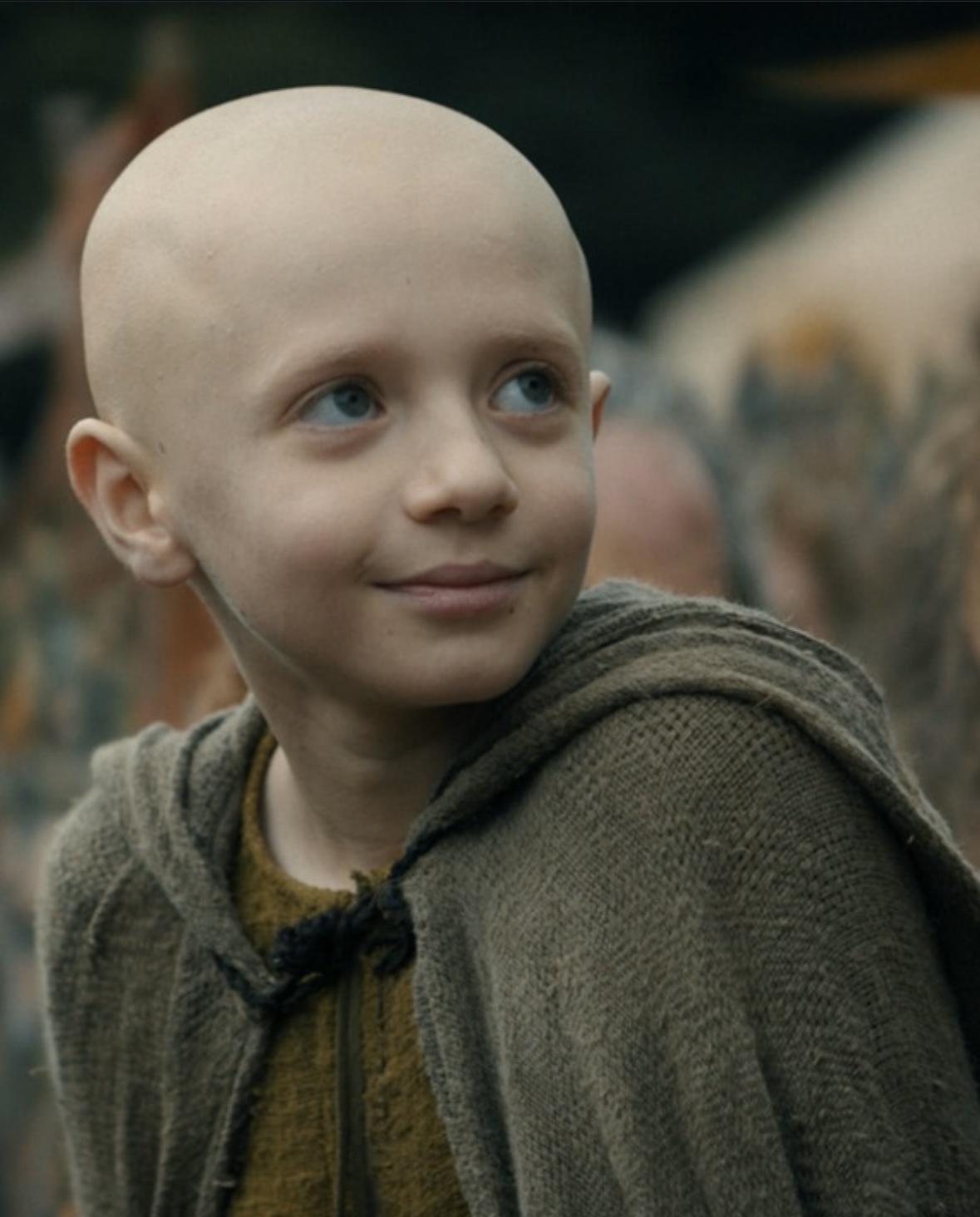
A still of Dexter Sol Ansell as Egg in “A Knight of the Seven Kingdoms.” | Photo from @gameofthones on Instagram

April 15, 2026 | Jaylin Emond-Hardin | Entertainment Editor

I’ve been thinking about the “Game of Thrones” universe a lot lately. “A Knight of the Seven Kingdoms” was released in February of this year, I recently finished “A Game of Thrones” for the first time and I’m rewatching “House of the Dragon” in preparation for Season 3’s release this June. Maybe “I’ve been thinking” is an understatement. 

Either way, the shows have been on my mind a lot as I’ve consumed them in the last few months, and with them being on my mind, there are a lot of considerations I’ve looked at. After all, the shows are all connected in some way or another, aside from being in the same universe. I fear that is the most obvious, but there are more connections beyond that, with the same Houses and same family names stirring up trouble in Westeros. 

Honestly, one of my favorite connections appears in Season 3 of “A Game of Thrones.” In “And Now His Watch Has Ended,” Joffrey Baratheon gives Margaery Tyrell a tour of the Red Keep. As they pass through the Great Sept of Baelor, he casually recounts Rhaenyra Targaryen’s fate — killed and eaten by Aegon II’s dragon in front of her son.

Rhaenyra Targaryen is the main character of “House of the Dragon,” and the show follows her fight against Aegon II, her half-brother, to claim the Iron Throne. 

This isn’t the only Targaryen from another series mentioned in the episode, however. Baratheon also tells Tyrell about Aerion Targaryen, also known as Aerion Brightflame, and how he drank wildfire because he thought himself to be a dragon.

Aerion Targaryen is a minor character in “A Knight of the Seven Kingdoms,” and is bested in a Trial of Seven by Ser Duncan the Tall. While Season 2 does not release until 2027, fans will likely not see him again. If “A Knight of the Seven Kingdoms” adheres to its source material, Aerion Targaryen does not reappear. He departs for Dorne while Ser Duncan and Egg travel to other parts of Westeros.

Speaking of Ser Duncan, the hedge knight is mentioned twice across the show, once in Season 1 and the second time in Season 4. Both are brief, but they truly show his place as a legend in Westeros. In Season 1’s “Lord Snow,” Old Nan offers to tell Bran Stark a story about Ser Duncan, who she says was Stark’s favorite. 

In Season 4, the allusion to Ser Duncan is much more explicit. Again, it is Baratheon who speaks of the character, using the hedge knight’s long list of deeds in the Book of Brothers to mock his father-uncle, Jaime Lannister. Ser Duncan’s 14-page-long list that Baratheon mentions in the show alludes to the greatness that the character eventually achieves.

A third character from “The Knight of the Seven Kingdoms”  is also name-dropped, but it’s in the Season 5 episode “The Gift,” when Maester Aemon shouts out “Egg” on his deathbed. In a previous season, the Maester had revealed that he was a Targaryen, which means that the “Egg” he is calling to is Aegon V, and the second main character of “A Knight of the Seven Kingdoms.”

Out of the four characters mentioned, three are Targaryens — Egg, Aerion and Rhaenyra — which is kind of the point. It begins to become obvious how the entire “Game of Thrones” universe quietly orbits that one family.

Even when the story pretends to be about sprawling politics, rival houses or the fate of the realm, it keeps snapping back to the same gravitational center: the Targaryens. Their bloodline, their dragons, their internal conflicts — those are the forces that shape history again and again. Egg represents the unlikely, almost hopeful side of that legacy; Aerion Targaryen shows its instability and cruelty; Rhaenyra Targaryen embodies how personal ambition can escalate into civil war. Three very different people, in the same dynasty, with the same underlying volatility.

That’s what makes the world feel less like a broad ensemble and more like a long, multi-generational tragedy. The rise and fall of kingdoms, the wars, the prophecies — they’re not random, they’re consequences. And more often than not, they trace back to one family’s ability to conquer a continent and their inability to hold onto it peacefully.

So when multiple Targaryens keep popping up in even casual references, it’s not coincidence — it’s the story revealing what it’s really about.

But even the beginning of “House of the Dragon” references Daenerys Targaryen, who is arguably the main character of “A Game of Thrones” — the show — and “A Song of Ice and Fire” — the book series.

“It is now the ninth year of King Viserys I Targaryen’s reign. 172 years before the death of the Mad King, Aerys, and the birth of his daughter, Princess Daenerys Targaryen,” it reads, before words fade out until it just reads “172 years before Daenerys Targaryen.”

When I first saw this while watching “House of the Dragon,” I got chills, because it sets Daenerys Targaryen as the marker for every point in Westerosi History. 

If I were to equate the Targaryens to a modern famous family, they would be the Kardashians. They’re rich, they make questionable decisions, yet somehow people still love them in spite of the horrible things they do. 

Heck, even I love the Targaryens and defend them, even when they do bad things. 

Daenerys Targaryen burns down King’s Landing because Cersei Lannister killed her best friend? That’s a completely valid crashout. 

Aemond Targaryen wants revenge on his nephews because they gave him a pig dressed up as a dragon and cut out his eye? I’d want revenge, too. 

At a certain point, it stops being surprising and just becomes the rule: if something goes wrong in Westeros, a Targaryen probably lit the match. Whether it’s revenge, ambition, grief or just pure delusion, their choices ripple outward until entire kingdoms feel the consequences. 

And maybe that’s why they’re so hard to look away from. They’re not just rulers or legends — they’re deeply flawed people with far too much power, making very human decisions on an inhuman scale. So as much as the world of “Game of Thrones” pretends to be about everyone, it keeps circling back to them. 

The dragons may be gone or reborn, the throne may change hands, but the story remains the same: sooner or later, it’s always about the Targaryens.


Contact the author at howlentertainment@wou.edu

Miyamoto’s illumination

A phot of “The Super Mario Galaxy Movie” poster | Photo from @supermariomovie

pril 15, 2026 | Belen Ponce Leal | Lifestyle Editor


Content warning: this article contains minor spoilers for “The Super Mario Galaxy Movie” 


On April 1, “The Super Mario Galaxy Movie” was released in theaters, and I was lucky enough to be able to see it on its debut. The movie by Nintendo is based on the game of a similar title, Super Mario Galaxy, and is a sequel to the first movie, “The Super Mario Bros. Movie.” The film was highly anticipated by fans as Super Mario Galaxy 1 and 2 are extremely beloved in the fanbase and are often viewed as some of the top ten Mario games ever produced by Nintendo. 

After the movie’s release, many have expressed their opinion of it, ranging from it being good, bad, peak, terrible and even claiming it’s political. I wanted to give my own take on the movie as both a Mario fan and someone who played the Galaxy games. 

I am in no way a movie critic or high-brow Mario superfan. I’m just a girl who wanted to see a movie based on one of the games I played the most growing up. That being said, though, my rating is definitely not a 10/10. 

The game, Super Mario Galaxy, was praised for its ability to provide stunning visuals of outer space, and I’m happy to report that the movie was very similar to the game in that sense. The stars and galaxies were absolutely stunning to view on the big screen. The biggest strength the movie had was its animation. It’s incredibly smooth and well done, the fight scenes in the movie being particularly impressive. The movie’s main villain, Bowser Jr., has an incredibly powerful paintbrush that can create living drawings out of thin air as well as engulf him in the paint to give him a crazy amount of strength. 

The strongest parts of the movie for me were any scenes that had Yoshi in them, as well as the relationship between Bowser and his son. Yoshi, as a character, was an incredibly entertaining character to watch on screen. He is not only a very resourceful creature, but he’s funny and really stands out on the character roster as a loyal companion who also likes to mess around with his buddies. 

Bowser Jr.’s motivation throughout the entire movie revolves around getting his imprisoned father out of the clutches of the Mario brothers, as well as creating a planet for both of them, something that Bowser promised his son when he was growing up. Their bond is incredibly heartwarming to watch. Even if Bowser is a bad guy, there is no doubt that he is a great father. 

The biggest change of the movie from the game is that some of the character backgrounds have changed drastically, specifically Rosalina’s and Peach’s. While I won’t dig into these changes to avoid major spoilers, my main complaint is that I feel like they really rushed the character development of most of the characters, but in particular, Princess Peach. 

In this movie, she finally discovers where she comes from and who her family is. However, the journey of her getting there doesn’t feel particularly satisfying. There isn’t a lot of meaningful, emotional turmoil, and what little there is feels extremely rushed. I thought the way that they revealed Peach’s past was a clever way to do it, but it just didn’t feel like it was something she fought for. Her backstory just seemed to be handed to her  — quite literally — without any sort of depth given to her character. 

Overall, I feel like the movie wasn’t as terrible as some have been saying online. I personally enjoyed it a lot and had fun watching it. I would rate it a 7/10. I would watch it again, it was really funny. 

Contact the author at howllifestyle@wou.edu

My Leisure Time review

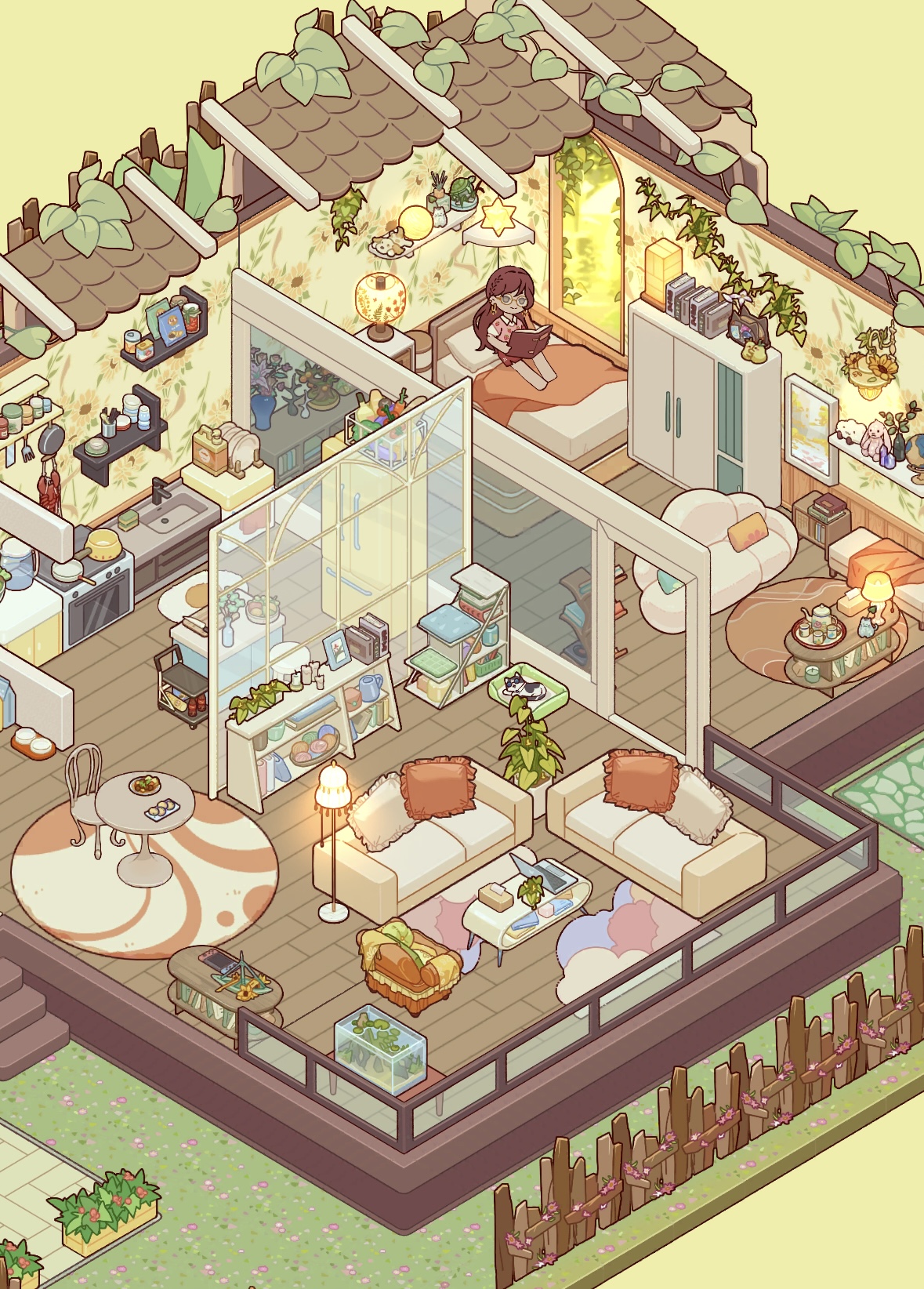
A screenshot of the author’s home on My Leisure Time. | Photo by Jaylin Emond-Hardin

April 15 2026 | Jaylin Emond-Hardin | Entertainment Editor

I’ve never loved a mobile game as much as I love My Leisure Time. Usually, I’ll download a game after seeing it in an ad, play it for a couple of days, then get bored and it will sit on my phone until it’s automatically offloaded to save storage. 

Yet, this one has stuck with me. I don’t know why it has, but every chance I get, I’m not on social media, I’m on the game.

The game follows a newcomer to Yo-Yo Town who gradually helps residents grow their businesses, including a diner, a coffee shop and a salon, among other shops. As they do this, they also unlock furniture, housing layouts, clothing and pets. It’s low-key and focused on development as the end goal, rather than puzzles or level-based gameplay. 

It’s slow and cozy, like a lazy Sunday morning with extra-sweet coffee. Even the graphics — a simplistic chibi, anime style — aid in this feeling.

It’s as if Animal Crossing were made two-dimensional and all the villagers were human. That’s the closest comparison I honestly have. 

The game also has a variety of themed events where players can design furniture and clothing. Currently, the themes are Cosmo Tales and Starlight Garden — based on Mongolian traditional culture and Vincent van Gogh’s paintings, respectively. The events take a lot of grinding to earn the materials to craft the furniture, but the pieces are so unique that it’s worth it.

Honestly, I never thought I’d say that about a mobile game, but it’s one that needs that description. 

My favorite part of the game is helping out the residents of Yo-Yo Town with their shops. The tasks are the only mini-game-style part of the game. At the coffee shop, players merge coffee beans, sugar and bottles of milk to make craft coffees. In the salon, 20 scissors are gifted every two hours and players must cut through pieces of fabric to collect hair dryers, combs and makeup brushes to unlock hairstyles. And at the diner, vegetables are planted, and other goods are ordered, so players can combine them into dishes to sell and earn trileaf coins, an in-game currency.

But the mini-games are low-stakes and slow-paced, keeping that cozy, lazy weekend feeling, and players don’t even have to interact with these parts of the game. 

I know sometimes those games that are in ads don’t show accurate gameplay, but this is one game where the ads were accurate and everything that was advertised is in the game. And maybe that’s why it’s stuck with me this time.

After all, I keep taking breaks from writing this article to play the game. 

10/10.


Contact the author at howlentertainment@wou.edu

Artemis II mission

A photo taken by the astronauts aboard Artemis II. | Photo from @nytimes on Instagram

April 15, 2026 | Abbi Duhart | News Editor

In the Artemis II mission, the Orion space capsule was launched into space April 1. This 10-day mission took four astronauts further from Earth than any human has ever been. 

The original launch of the capsule was delayed due to technical difficulties with the flight termination system and the battery for the launch abort system. These crucial elements allow the rocket to be destroyed if it goes off course and pulls the capsule away from danger to protect the astronauts aboard in case of an issue. 

Observers watched Orion launch with a 10-minute countdown outside the Kennedy Space Center. Jeremy Hansen, the mission specialist, said, “We are going for all humanity.”

The Artemis II crew included American astronauts Reid Wiseman, Victor Glover and Christina Koch, as well as Canadian astronaut Hansen.

Not only did the rocket reach the farthest distance away from Earth, but it also reached a milestone in the twin rocket boosters being able to separate from the rocket after helping it reach a speed of 10,000 miles per hour.

After the initial launch, there was a short comms issue between the astronauts and the ground crew, meaning they were out of contact until it was fixed.

The crew also lost connection for around 40 minutes when Orion reached a point behind the moon, but this loss was expected and planned for. Additionally, the crew witnessed a total solar eclipse during their mission and saw several small craters on the far side of the moon.

Many were most worried about the landing of Orion, because this is when the heat shield has the potential to burn up and, in turn, burn the ship and astronauts with it. The heat shield is one of the most crucial parts of the rocket because it protects the crew from extreme heat when entering Earth’s atmosphere. Artemis I’s heat shield was visibly damaged after its landing, creating more worry for the landing of Artemis II. Jared Isaacman, the NASA administrator, said that there was extensive testing of the heat shield and they felt comfortable that “we can undertake this mission with lots of margin to spare.” In the end, the crew landed safely in the Pacific Ocean the evening of April 10 as planned. 

Orion did not land on the moon in the Artemis II mission, but instead set the stage for a future launch to send humans to the moon for the first time since the Apollo 17 launch in 1972.

The mission was to test how well Orion would work launching into space and to see what changes need to be made to send future astronauts to the moon. Orion’s mission in doing this included manually flying through the Earth’s orbit to practice steering the rocket and checking the rocket’s life support, propulsion, power and navigation systems.

Amit Kshatriya, the NASA associate administrator, said, “I think the path to the surface is open now. This was an incredible test of an incredible machine.”

Building off of Orion’s mission, Artemis III is planned for 2027 to test Orion again and Artemis IV is planned to launch in 2028, where they will attempt to land on the moon.


Contact the author at howlnews@wou.edu

Condor conservation

A photo of a California Condor. | Photo from @webnectarphoto on Instagram

April 15, 2026 | Abbi Duhart | News Editor

The week of April 6, seven California condor chicks were hatched in the Oregon Zoo’s Jonsson conservation center. 

The Jonsson Center is located in Clackamas County and has enough space to hold 90 condors, including 16 breeding pairs. The conservation center is 52 acres and is isolated away from human contact to prepare the condors to be reintroduced into the wild.

Since late January, the condors there have been laying eggs and, in turn, laying the groundwork for the species’ recovery from being critically endangered. Additionally, more eggs are expected to hatch soon.

After the condors lay their eggs in the conservation center, the eggs are moved to an incubator to stay safe until they are ready to hatch. After this, the baby chicks will stay with their parents until they are around 18 months old, then moved to a pre-release pen. Here, they will be acclimated to a wild habitat before being released into the wild in California or Arizona.

Young condors being raised in pre-release pens are prepared for release into the wild by receiving aversion training, such as learning not to land on power lines, and will learn how to socialize with adult mentor condors.

California condors are one of the original animals listed as part of the 1973 Endangered Species Act, and are currently still listed as an endangered species. According to the Oregon Zoo, there were only 22 California condors left in the wild in 1989. The zoo has been working to increase their population, and now there are around 600 California condors, with about 370 flying free in the wild.

The Oregon Zoo hopes that, in helping the species recover in California and Arizona, the condors will naturally expand their populations back to Oregon for the first time in more than a century.

California condors play a vital role in ecosystems because they recycle nutrients and dispose of dead animals. Condors are scavenger birds that eat dead animals, which can collect bacteria and transmit disease, meaning they are crucial in preventing disease outbreaks.

Condors are endangered because their food sources and habitats are both increasingly contaminated. The biggest danger to them is lead poisoning, as their prey is often shot with lead bullets; when condors eat animals with lead in them, the lead can enter their bloodstream and become fatal.

To combat this, the Oregon Zoo launched the Lead-Free Hunting Education Program in 2015, where they work with hunters, ranchers and wildlife agencies to encourage the use of lead-free alternatives such as copper ammunition. This change protects all scavenging wildlife, not just California condors, but, as long as lead is commonly being used, condors can’t reproduce fast enough to remain stable.

Despite this, the Oregon Zoo is optimistic about the California condor population as it slowly increases. Nicole LaGreco, the overseer of condor recovery efforts at the zoo, said, “Things are looking great for the season so far. All seven chicks are eating and sleeping well in their nests. They’re tiny now, but they’re already growing quickly and learning from their parents.”

Those who are interested in learning more about California condors can see the exhibit located in the Great Northwest area at the Oregon Zoo.


Contact the author at howlnews@wou.edu


Missing woman

A photo of Maria Kilmer. | Photo from @pigeon.news on Instagram

April 15, 2026 | Abbi Duhart | News Editor

March 28 at approximately 9 p.m., 28-year-old Maria Linda Jade Kilmer went missing. She was last seen on Highway 22 near milepost 15, where her car ran out of gas and she had to pull over to the side of the road.

According to the passenger in her car, she was traveling from Lyons to Salem, and when she ran out of gas, she left her car to board a motorcycle with an unidentified driver to get help.

Kilmer left behind all of her belongings in her car, including her keys, purse, license and phone. Carmen Bitzer, her mother, mentioned that Kilmer leaving behind her phone and purse was extremely out of character. Additionally, Kilmer left behind her glasses and medications, even though multiple family members explained that she wouldn’t be able to see without her glasses.

Her stepmother, Amber Brecht, said that she was on her way to help Kilmer after receiving a text from her saying she was stuck. Kilmer additionally dropped a pin so Brecht could find her location, but once Brecht got there, Kilmer was gone.

Brecht additionally said that after Kilmer’s disappearance, she received several text messages from unknown numbers claiming to be Kilmer.

Many of Kilmer’s family members emphasized that it doesn’t make sense she would leave her car knowing family was on the way to help her. Kilmer’s sister mentioned, “My sister is not the kind of person to just leave somebody on the side of the road, and I don’t think she would have just gotten into a stranger’s car.”

By Sunday, Kilmer’s sister urged that she knew something must have been very wrong for Kilmer not to return, explaining that they live in the same apartment complex in Independence and would check in with each other daily, always telling each other where they were going.

Both Kilmer’s mother and sister declined to mention the name of the passenger who was in the car with Kilmer because police instructed them to avoid disclosing this information.

Kilmer is a woman of indigenous heritage, and her mother works within a group that helps to raise awareness for missing and murdered indigenous women. In regard to this, her mother said that she never thought she would have to use this to help find her own daughter.

“She always calls,” said Bitzer. “She knows my number by heart, so not having her phone is not going to deter her from calling her mom.” 

The morning of April 3, Oregon police released information about the case, saying that Kilmer was found and was unharmed. Ultimately, she was located after reaching out to a family member, confirming her identity. Investigators are still looking into why Kilmer went missing, but, as of now, there is no evidence of any crime. Police have refrained from releasing any other information regarding this case.


Contact the author at howlnews@wou.edu

Write Place

A photo of Ellen Waterston. | Photo from @orculturaltrust on Instagram

April 15, 2026 | Abbi Duhart | News Editor

Thursday, April 30 at 4 p.m., Ellen Waterston, an Oregon poet and environmental activist, will be discussing her work in the Werner University Center Willamette Room. This event will be hosted by Write Place and Waterston will be introduced by Western President Jesse Peters.

Waterston has produced many works and was selected as the Oregon poet laureate for the second year in a row.

She is the author of several books — many surrounding the theme of Oregon’s high deserts — including “Walking the High Desert: Encounters with Rural America along the Oregon Desert Trail” and “We Could Die Doing This: Dispatches on Ageing from Oregon’s Outback.” Additionally, she has an essay collection entitled “Where the Crooked River Rises,” a memoir, “Then There Was No Mountain” and five poetry collections, the most recent being “As Far as I Can Anthem.”

Since 2000, Waterston founded and manages the Writing Ranch based in Bend, Oregon, where she conducts several writing workshops for both established and emerging writers every year and hosts the Waterston Desert Writing Prize. Her workshops often focus on the unique landscapes and cultures of central and southern Oregon.

Writers who have attended Waterston’s workshops have spoken out about her gift for leadership, her humor and her ability to inspire writers beyond their limits to generate original, unique material.

“Nothing compares to gathering and bonding with a group of writers, the heady experience of feeling you are with your people, your tribe, and together are supporting one another’s writing process and goals,” Waterston said.

Waterston has received numerous awards for her work, such as a WILLA Literary Award in both nonfiction and poetry and the Obsidian Prize in poetry. She has also had many of her poems and essays appear in various journals and anthologies.

Demonstrating how the high desert is often her muse, an excerpt from “Walking the High Desert: Encounters with Rural America along the Oregon Desert Trail” reads, “The enduring fascination of the high desert, and the reason its survival as a wild place is within reach, may well lie in the fact that this vast open can’t quite be named.” 

Writing Down the Baja is another annual writing workshop that Waterston hosts, taking place in Todos Santos, Mexico, at the only desert in the world surrounded by two seas. This workshop includes a week of writing that explores the “intersection of poetry and prose, fiction and nonfiction” and encourages “experimentation with language, format and genre.”

Write Place also hosts the Loie Bunse Prize for Nature Writing at Western, for which the winners for this year were just announced. Malia Vican won first place with her personal narrative “Winter at Home” and Sadie Latimer won second place with her poem “McDowell Creek Falls County Park.”

Write Place is dedicated to supporting the relationship between humans and the natural world through literary and artistic works, and believes that the natural world is under threat with humans having an obligation to help. The first step to this recovery is an awareness and appreciation for something that exists. Abby Phillips Metzger from the board of directors explained, “Pay attention to how you feel. You begin to hear the land and learn its scars. Pay attention, and things beneath you become visible.”

Write Place concurs with N. Scott Normaday, who said, “If you believe in the power of words, you can bring about physical changes in the universe.”


Contact the author at howlnews@wou.edu

Estudiantes protestan en Salem

28 de enero del 2026 | Hannah Field | Jefa de Editacion

El lunes 19 de enero — Día de Martin Luther King Jr. — cientos de personas acudieron al
Capitolio Estatal de Oregón, donde un grupo de estudiantes de Western se unió a las
protestas.
La manifestación se realizó para mostrar solidaridad con la comunidad inmigrante, así
como para protestar contra el Servicio de Inmigración y Control de Aduanas de Estados
Unidos y la administración Trump. Exigiendo una reforma migratoria, los manifestantes
también se inspiraron en gran medida en la misión de Martin Luther King Jr. de establecer
la igualdad y la resistencia pacífica.
Los participantes y organizadores del evento discutieron la situación política actual de
Estados Unidos, señalando que los estudiantes y las familias experimentan mucho temor
debido a las medidas represivas contra la inmigración.
La policía de Salem reportó alrededor de 400 asistentes a la manifestación. Un incidente
relacionado con el uso ilegal de gas pimienta resultó en la detención de un hombre, pero
aún no se han revelado nombres ni más detalles.
Uno de los aproximadamente 20 contramanifestantes, Thomas Allen, de 36 años, estuvo
presente en la manifestación de forma similar a su controvertida aparición en Western el 3
de diciembre de 2025, blandiendo un micrófono, una cámara y artículos a favor de Trump.
Al final del semestre de otoño, Allen apareció en el campus mientras transmitía en vivo en
múltiples plataformas y fue grabado usando insultos raciales y amenazando a los
estudiantes con que serían deportados por ICE.
El estudiante de Western, Jacob Prater, dijo, “Quería asistir para demostrar que la unión
nos da fuerza y para impulsar una mayor resistencia a nivel estatal contra ICE en Oregón.
Superamos ampliamente en número a los contramanifestantes y somos la mayoría.”

Uno de los objetivos de la manifestación es impulsar un paquete de medidas para los
derechos de los inmigrantes. Las familias afectadas por las medidas migratorias recibirían
mayores protecciones y apoyo financiero.
La manifestación se produjo tras el aumento de la presencia de ICE, así como del aumento
de la tensión en todo el país tras los tiroteos de Alex Pretti y Renee Good. En Albany,
María Trinidad Loya Medina, una madre, fue secuestrada el 10 de enero por ICE en el
estacionamiento de Big Five después de ir de compras, dejando a su hijo pequeño en el
auto. Su GoFundMe indicó que agentes federales rompieron la ventanilla del conductor
para “agarrarla.” No tenía antecedentes penales y fue llevada al Centro de Procesamiento
de ICE del Noroeste en Tacoma, Washington. Según fuentes cercanas a la familia, podría
ser liberada el próximo mes.
Contacta al autor en howleditorinchief@wou.edu

Día de Dar

21 de enero del 2026 | Abbi Duhart | Editora de noticias

El Día de Dar — que suele celebrarse el martes después del Día de Acción de Gracias —
es un gran evento de recaudación de fondos que dura 24 horas, aunque muchas
universidades organizan su propio Día de la Solidaridad en invierno o primavera. Este año,
el Día de Dar de Western se celebrará el primer martes de abril, el 7 de abril. La fecha se
ha pospuesto porque, en años anteriores, se celebraba durante la novena semana del
trimestre de invierno, cuando muchos estudiantes y personal estaban demasiado ocupados
para participar.
El Día de Dar de Western es una jornada de financiación colectiva en la que los clubes,
organizaciones, equipos y departamentos participantes de Western piden a personas de
toda la universidad y de otros lugares que donen fondos a la universidad y a sus
organizaciones.
Cualquier club u organización de Western puede participar y recaudar fondos. Quienes lo
deseen pueden llenar un formulario de Google enviado por Dave Beasley a través de un
correo electrónico dirigido a todos los estudiantes. Una vez completado, tendrán su propia
página web en el sitio web del Día de Dar de Western, con fotos y una descripción de su
organización, además de un botón para que los donantes puedan donar.
Como novedad de este año, las organizaciones y clubes participantes deberán elegir al
menos dos “influencers” — en esencia, representantes — para asistir a una capacitación.
Los influencers designados también recibirán un enlace especial que podrán compartir con
quien deseen. El enlace los dirigirá directamente al sitio web de su organización. Los
influencers pueden usarlo para contactar a posibles donantes por mensaje de texto, correo
electrónico, redes sociales y otros medios. La Fundación WOU — organizadora del evento
— espera que los influencers sean los más activos el Día de Dar para recaudar fondos.

Se espera que la capacitación a la que asistirán los influencers dure entre 30 y 45 minutos,
y se ofrecerán seis sesiones diferentes para adaptarse a la disponibilidad. Cada sesión será
la misma, por lo que los influencers podrán elegir la que mejor se adapte a su horario. La
capacitación explicará cómo solicitar donaciones y se compartirán ejemplos de guiones,
así como posibles ideas para publicar en redes sociales. El sitio web también ofrece
numerosas funciones en línea que los influencers conocerán. Los que asistan a la
capacitación recibirán una camiseta gratis.
Este año, los clubes y organizaciones participantes también deberán realizar un video corto
para publicar en su página web y compartirlo con los donantes. La Fundación observó que,
en años anteriores, los grupos más involucrados recaudaban más fondos, por lo que un
objetivo principal este año es lograr que los grupos participen más activamente. Este video
debe durar entre 30 y 45 segundos y explicar de forma creativa por qué los donantes
deberían donar a esa organización. Un objetivo importante del video también es incluir a la
mayor cantidad posible de personas de la organización.
“Todos quieren ver a su nieto, nieta, sobrina o sobrino en el video, ¿verdad?” explicó Dave
Beasley, director de desarrollo, donaciones anuales y patrocinios. Los familiares y amigos
pueden estar más dispuestos a donar a una organización si ven a una persona conocida en
el video, incluso si solo se trata de un plano general de todos al final. También habrá una
capacitación opcional para influencers con consejos y trucos para crear un video.
Cualquier persona puede ser donante, y las donaciones pueden ser de cualquier cantidad.
“Agradecemos cada donación que recibimos,” añadió Beasley. Sin embargo, la intención
del donante es fundamental — lo que significa que el donante decide adónde quiere
destinar su dinero. Si realiza una donación general al club u organización, los miembros
pueden usar los fondos de la manera que les resulte más beneficiosa. Si el donante
especifica para qué desea que se utilicen los fondos, la organización debe acatar esta
política. Por ejemplo, si se realizó una donación a un club para una beca que ofrece, los
fondos deberán utilizarse para la beca.
Este año, el método de donación se optimizó específicamente para dispositivos móviles.
En la parte inferior del sitio web, habrá un botón rojo de donación donde los donantes
podrán completar su información y realizar una donación. En años anteriores, la única
forma de pago era con tarjeta de crédito, pero este año, los donantes pueden usar tarjetas
de crédito, transferencias ACH, Apple Pay, Google Pay y Cash App. Además, los donantes
ahora tienen la opción de realizar donaciones recurrentes con tarjeta de crédito. También
pueden emitir cheques y enviarlos por correo.
En años anteriores, la Fundación WOU tenía una meta en dólares para el Día de Dar, pero
este año tienen una meta de donantes, lo que significa que quieren conseguir la mayor
cantidad posible. Beasley explicó, “Lo que realmente buscamos con el Día de Donaciones
es atraer nuevos donantes a la universidad, ya sean exalumnos, padres que acaban de llegar
a la universidad, personas que recién conocen la universidad, nuevos socios o cualquier
otra circunstancia.” Además, enviarán cartas a donantes anteriores para anunciar el Día de
Donaciones nuevamente.

La Fundación también está trabajando en “la gran donación” este año. En otras palabras,
están trabajando con donantes más grandes — aquellos que donan miles — para asegurar
compromisos de grandes sumas de dinero que se donarán a la universidad sí Western
recibe 500 donantes. Cualquier cantidad de donación cuenta como donante para poder
recibir esa “gran donación.” Se espera que este desafío también ayude a clubes y
organizaciones a anunciarse ante los donantes — si donan a la organización, también
ayudan a la universidad a lograr esta considerable contribución.
Este año, el servicio comunitario también se incorporará al Día de Dar. La Fundación
WOU y todos los participantes comprenden que el Día de Dar exige mucho de la
comunidad y esperan poder contribuir de esta manera. Destacarán los proyectos de
servicio en los que han participado a lo largo del año y ofrecerán servicios ese mismo día,
como una campaña de donación de sangre en el Centro Universitario Werner y un campo
de minigolf en la biblioteca. El campo de golf será construido por los miembros, y para
jugar habrá algún requisito, como publicar una publicación en redes sociales sobre el Día
de Dar.
Habrá un premio para el estudiante que recaude más dinero, así como un premio para el
estudiante que reciba más donantes.
Beasley añadió que entiende que puede ser difícil pedir dinero a la gente, pero que hay que
intentar no preocuparse, ya que es una buena oportunidad para recaudar fondos para una
buena causa. “La gente se preocupa por ti. Quieren apoyar lo que haces. Y todas esas
pueden ser grandes motivaciones para donar, pero la gente dona porque alguien se lo
pide.”
Contacta al autor en howlnews@wou.edu

Destination Western’s final stop

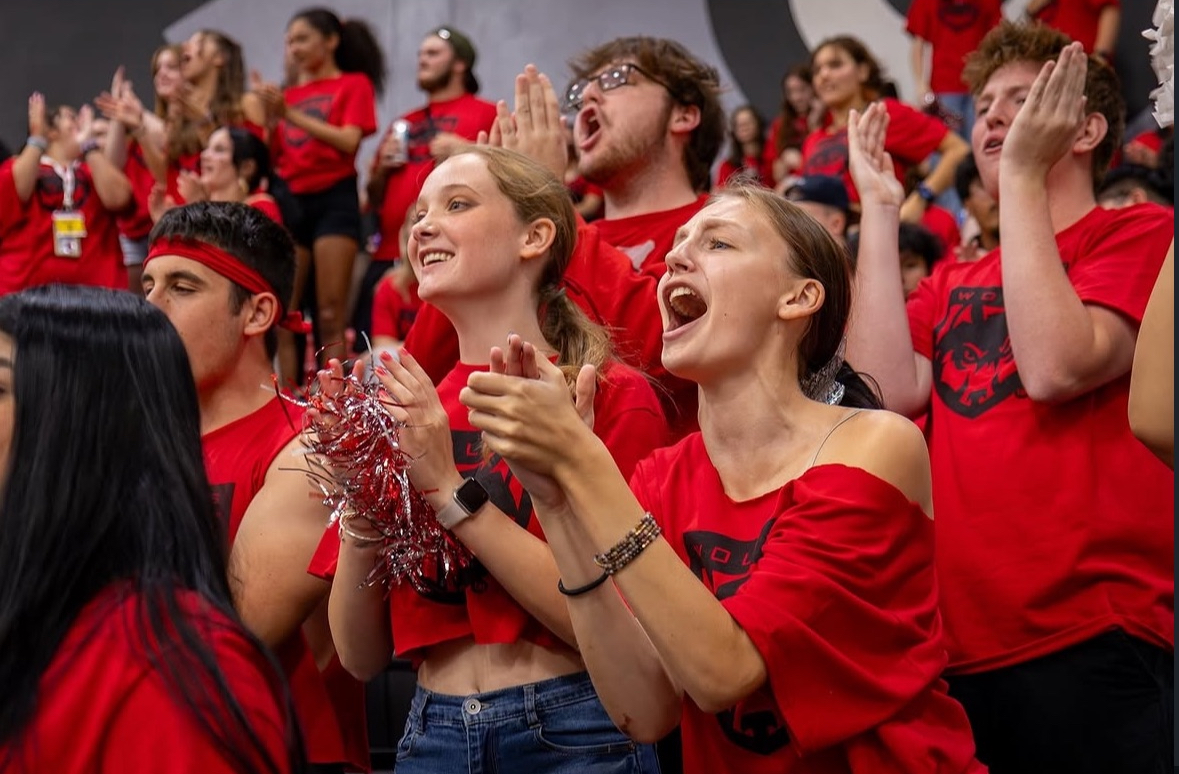
A photo of 2024 Destination Western students at a volleyball game cheering. | Photo from @wou.orientation on Instagram

April 15, 2026 | Hannah Field | Editor-in-Chief & Kiera Roedel | Copy Editor

Western’s vice president, Tina Fuchs, sent an email March 27 that announced the difficult decision was made to pause Destination Western due to the ongoing budget crisis. Fuchs reported that the program ceasing will save Western approximately $300,000 and announced that the Director of New Student and Family Programs position would remain empty. Furthermore, it was announced that admitted students orientation work would be passed over to Student Engagement, and that Malissa Larson, the associate vice president and dean of students, would provide leadership to the remaining New Student and Family Programs team. The email also stated that Destination Western could be revisited if funds were to become available and that Western remains dedicated to supporting students and minimizing disruption.

Students involved with DW, either as part of a cohort or an employed student, have reported significant personal growth because of the program, alongside forged meaningful connections while transitioning into PACK Welcome Week and university life, the purpose of the program. In a student letter to the university, Mari Lemus-Sanchez wrote: “This program has taught me who I am, helped me grow as a person, and most importantly, taught me to love this university and made it feel like a home away from home. Without this program, I would not be here—I would have 1000% transferred.”

Since the announcement, many students have reacted with general shock, surprise and disappointment, considering the impact of the annual program. Additional complaints have arisen that the program was cut too suddenly, considering DW peer advisers and lead positions had been filled prior to the announcement, and that the New Student and Family Programs team was given minimal notice and was not consulted about the decision. Due to this, the NSFP team had planned a meeting with the incoming DW hirees — scheduled for Monday, March 31 — but it did not occur before the email was sent Friday, March 27. 

“We did not get to tell them at all. Monday comes around, we go to the meeting, and they’re like, ‘So, the meeting is about the email.’ And we told them, ‘You deserve the respect of us telling you in person. We didn’t get the chance, I’m so sorry,’” said junior and Student Coordinator Mari Lemus-Sanchez.

Peer advisers within DW, like Lemus-Sanchez, are responsible for caring for their cohorts and easing their transition into college, as well as soothing parents, minimizing homesickness and introducing students to campus. Lemus-Sanchez noted 15 or more students per cohort, many of whom require emotional support in some capacity to establish their confidence and comfort level on campus.

According to Fuchs, the evaluation of budget and necessary programs had resurfaced strongly in October of 2025, with the finance crisis snowballing through Winter term until Western’s administrators had to make an abrupt call to suspend something to preserve funding, with the decision finalized in early March. 

Destination Western was originally funded by a 2021 state grant called Strong Start, which provided Oregon’s public universities with funds to address pandemic-related learning disruptions. After Strong Start funding concluded, DW transitioned to being funded by Western’s general fund, putting an additional load on the university’s budget.

“It came down to, we have nowhere else to go, we (had) to eliminate a program,” said Fuchs. “It seemed to be the natural choice to choose DW, also because DW supports 18 percent of our incoming class, while all of our other programs support a substantial number of all of our students throughout the year. That’s how we came to that conclusion, and I need you to know it was not easy.”

One anonymous source indicated that the decision would heavily impact first-generation students who benefit from the support offered in DW, as well as called for concern regarding how 80% of the university’s annual budget goes to personnel, yet a student-centric program of such magnitude is dismantled.

Another contentious point is how the decision affects pay for students employed for DW, which can be put toward tuition and cover common expenses.

“The community is disappointed with the paycheck, that taking 50 percent out of our funds, but I think we’re more disappointed and mourning the idea of this program not existing anymore,” said junior Belinda Galindo, who was looking forward to working for DW in the fall. “That’s the bigger picture: the program itself. And making sure that we support new students and families and make them feel seen. We loved our job. We loved doing what we did.”

Before, during and after the decision was made, students, especially those related to NSFP, report feeling the lack of conversation regarding the choice.

“I just want to make sure that, you know, our opinion is getting seen and we are being heard, but it almost feels like it’s getting swept under the rug, and it’s being quick to be moved on from,” said Galinda. “Incoming students and their families are worth investing in … We’re grateful for the program and the people who were a part of it, and my hope is that this program continues. It’s a big part of Western and it feels wrong to take it away.”

Fuchs and Larson emphasized that they understood students’ desire for involvement and transparency, but that there was no alternative to cutting the program. Additionally, no positions were lost and nobody was let go in the removal of the director position. Administration also clarified that they knew students had been hired following the recruitment and interview process before DW was cut.

“I needed to make a decision to make a reduction in our budget that was going to impact the fewest number of students on our campus,” said Fuchs. “And this was the area that was the most flexible for us in being able to do that, and I don’t know that student input at that point for students would have even been helpful. I think it would have been painful. And, either way, I feel like it’s been emotional and painful. Again, I want to convey that this was not easy.”

In an article posted last year, Western had stated: “Destination Western remains an essential program for new students at Western, nurturing connections and a sense of belonging as they begin their academic journeys.”

“We took this very seriously, and we’re going to do everything we can to compensate for as much as we can with what we offered in DW by building a robust orientation program during Welcome Week,” Fuchs said. “I recognize that we are taking away something that is so incredibly meaningful to students, and we can still create meaningful opportunities for students in other ways … it’s not just taking away a program and somehow not providing the support. The support will be there, I guarantee it.”

Larson stated: “Somebody brought to our attention that it feels like we’re choosing money over students, and I think my response to that is … I’ve worked here 17 years … We want Western to still be here. I want to retire from Western. And so that is what we’re focusing on, this wasn’t not choosing and prioritizing our students — it was choosing and prioritizing our students so we can sustain as an institution.” Larson also emphasized that any feelings students may have, be them grief, frustration or disappointment, are valid.

First-year student Joaquin Yoos commented, “The administration kind of taking the point of view like, ‘Hey, we didn’t really tell anyone because we didn’t want more people to get hurt.’ I feel like that’s the opposite — it kind of hurts more people.” Yoos was preparing to begin his second year at Western as part of Destination Western, and reported excitement at the prospect, citing the program as amazing and important. He added, “The way it’s being handled, from a student perspective, what students see, it’s not being handled well.”

“Students should have a voice and should be able to use that voice when a decision is made,” stated Lemus-Sanchez.

“I feel like this is a program that is so worthy of being funded,” said Galinda. “The impact it has, like I said — it does wonders.”


Contact the authors at howleditorinchief@wou.edu and howlcopyeditor@wou.edu


The Northwest Passage

Written by: Hannah Field | Editor-in-Chief

“The Northwest Passage” is Western’s student-run literary and art magazine right on campus, composed of submitted works from students, faculty and alumni of the school. Each magazine showcases various different creations, such as traditional art, digital art, photography, poetry, short stories, lyrics and other art forms.

Founded in 1941, “The Northwest Passage” has been supporting student artists ever since. The first issue of the 2024–25 school year, being the Fall issue, is expected to be released Dec. 4, prior to winter break.

Recently appointed to the position, Editor-in-Chief Anna Gillock has been working diligently to promote and create “The Northwest Passage” for the 2024–2025 school year. “(One of my priorities) not only as the (Editor-in-Chief) but as a student and an artist is to support the creativity of my peers in the most accessible way possible,” said Gillock. “This is all very new to me, but I feel confident in the support I am given by the staff here at (Western) and I hope that I can give myself enough breathing room to really put myself into this publication for the short time I am in charge of it.”

On top of that, Gillock has been prioritizing accessibility and understanding this year with “The Northwest Passage.” “For instance, I have ADHD, and knowing that many of my peers are the same way, I use my knowledge of graphic design to visually emphasize the most important bits of content in a way that I feel is easy to process,” said Gillock. “With so much information being thrown at us as students, I want to try and provide content that is not overwhelming to look at. It’s a specific example, but that is just my personal mission as (Editor-in-Chief).”

Submissions may be emailed to northwestpassage@wou.edu and no more than five pieces per person are published in a singular issue. It is asked that personal names are left off of the submissions so that the editorial board, which votes on which pieces appear in the magazine, remains unbiased. Pieces can be submitted with a title; if a title is not provided, they are regarded as “Untitled.” All written work must be less than 1,500 words and must be submitted either as a PDF or a document. The Editor-in-Chief reserves the right to alter submissions but will not publish any edited work without the creator’s permission.

Gillock placed a lot of importance in the art specifically as to why she claimed the position at “The Northwest Passage.” “I have been writing and creating art since I was first able to hold a pencil,” explained Gillock. “Even before I was hired on to be the EIC, supporting my fellow artists has always been a passion of mine, and I am really grateful for this opportunity to do so.”

Contact the author at howleditorinchief@mail.wou.edu