Mount Hood

How to manage stress after midterms

Rebecca Meyers | Lifestyle editor

After midterms, students are often in need of both physical and mental de-stressing. It’s a struggle that comes around every term, but luckily there are plenty of ways to help shake the post-testing stress.

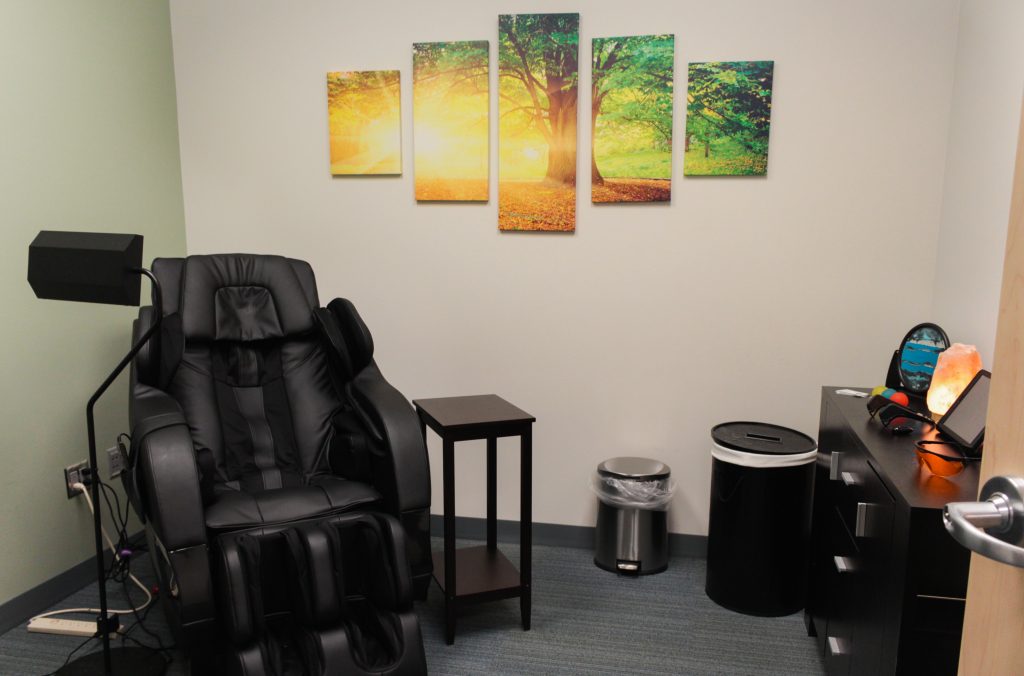
One of the most accessible options is right here on Western’s campus. The Rest and Relaxation room, located in the Student Health and Counseling Center, is designed to help students manage their stress at any point in the term. The room can be reserved in half-hour time slots at wou.edu/health, making it easy to slip into busy schedules. The room features a massage chair — the main attraction — a full-spectrum therapy light, a meditation spot and a few technological items to help students monitor their stress levels.  

For the more introverted, or for the most exhausted, sometimes the best option is simply to follow “Parks and Recreation” character Tom Haverford’s advice: “treat yo’ self.”

This might not necessarily be in the sense of spending money on material things, but instead by staying in, putting on a favorite movie or show and eating a favorite snack.

For the more structure-oriented, it might help to do the opposite. Taking some time to get reorganized updating a planner, getting back on a sleep schedule and planning some healthy meals can help students feel more relaxed by being more prepared for the second half, and usually the most stressful part, of the term.

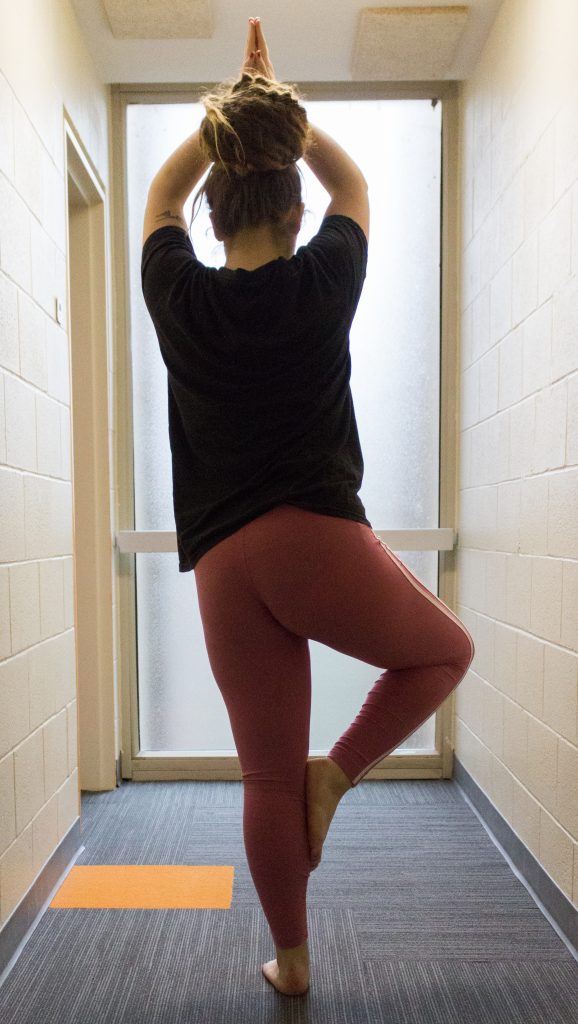
Sometimes, however, the best way to unwind from school is to ease mental usage and focus on the physical, either with workouts or distance from the source of stress. One of the upsides of Monmouth being a small town is that it’s surrounded by popular hiking spots. According to Harvard Health, studies support the idea that just being out in nature can relieve a certain amount of stress. On top of that, any type of exercise can help lift a person’s mood, even if it’s minimal.

In the end, everyone’s different and what works for some might not work for others. Learning which stress-relieving activity is the most effective through trial and error is, for many, an integral part of the college experience.


Contact the author at howllifestyle@wou.edu

Photo courtesy of Rebecca Meyers

A review of Chen’s Family Dish in Salem

Rebecca Meyers | Lifestyle Editor

Among the many dining options in Salem, on 2138 Lancaster Dr NE #139 sits Chen’s Family Dish, a Chinese restaurant that now has multiple locations in Oregon. Some may have visited the Dallas location, but the Salem location is unique in that it also has a bar. Never having visited either, I decided to try out the new Lancaster location to get a feel for the restaurant.

Though the outside might be underwhelming, the interior feels much more like a refined restaurant. Because I went during lunch hours, it was fairly empty, which allowed me to fully take in the environment. The restaurant has a sophisticated ambiance, with soft lighting, understated decor and calming music playing in the background. The staff was also very friendly and helpful, informing us of the different menu and substitution options.

The menu features some Chinese classics such as sweet and sour chicken, egg flower soup and lo mein. I ordered the Mandarin chicken from the lunch menu, which turned out to be a great choice. Eight dollars got me a large portion of chicken, the soup of the day and a side of fried rice and crab puffs. I knew instantly I was going to need a to-go box, but I still finished most of the dish.

In my opinion, there was a perfect sauce-to-chicken ratio that made it very enjoyable. My friend who went with me was eager to try the egg flower soup, a favorite of hers, and it lived up to her expectations judging by the empty bowl at the end of our meal.

Chen’s family dish is an excellent addition to Salem’s restaurant options. I would highly recommend this restaurant for those looking to go out somewhere that feels somewhat classy but is still reasonably priced and has great food.


Contact the author at howllifestyle@wou.edu

Photo courtesy of Rebecca Meyers

Tips for first tattoos

Rebecca Meyers | Lifestyle Editor

According to quora.com, about 29 percent of Americans have at least one tattoo, though most don’t stop at just one. It’s becoming increasingly more common to see people with tattoos, especially on college campuses. Though the decision of whether or not to get inked is ultimately up to each individual, there are some things everyone should consider before making it final.


Pain levels When considering a tattoo, the question that inevitably comes up is “will it hurt?” or, more accurately, “how much will it hurt?” Some go looking for specific answers to that question, understandably wanting to know exactly what to expect. However, the truth is that pain levels are slightly different for everyone, and there are many factors that affect how painful a tattoo will be. Sometimes, like in my case, this leads to lots of stress leading up to getting inked. There are, however, some factors that can give a general idea of of how uncomfortable a tattoo will be, such as placement and size of the tattoo.

Timing Some first-timers don’t realize that timing is an important thing to consider when scheduling a tattoo. Tattoo care involves things like keeping the area dry, away from potential infections and out of direct sunlight. Therefore, getting a tattoo right before a vacation to somewhere warm and sunny might not be the best choice. Though exact conditions can’t always be predicted I got my first tattoo in October and did not expect to have to shield it from the hot sun having an idea will keep the tattoo on the track to healing.

Quality and price Tattoos are one of the best examples of the phrase “you get what you pay for.” While some might find it tempting to have an unexperienced artist friend buy a kit off of eBay Inc. and have them do the tattoo, a safe and quality one is usually much more expensive. If a professional artist costs more, it’s usually because they are more experienced and are very skilled at their trade. Going to a professional usually means a percentage of the price has to be paid up front at the time of the appointment, and the rest is paid in cash afterwards. Also, it won’t save much money in the long run if it has to get covered up or removed, or becomes infected due to not being done properly and requires medical attention.


Contact the author at howllifestyle@wou.edu

Photo courtesy of Ashlynn Norton

Students give advice on preparing for midterms

Rebecca Meyers | Lifestyle editor

Armed with caffeine and study guides, students of Western are starting to take on their first midterms of 2019. If anyone made new year’s resolutions to study more, they will be tested starting this week.

In order to help everyone breeze through their midterms, or maybe just survive them with minimal panic involved, some of Western’s students offered their advice.

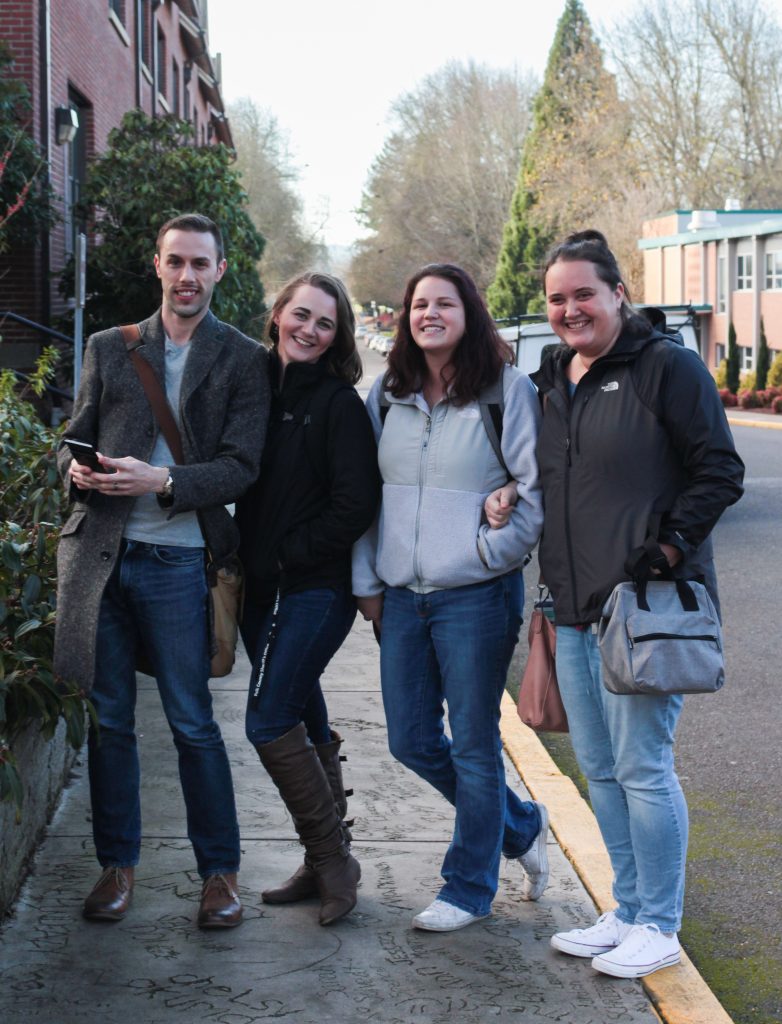
Grad student group Tanya Stanley, Mackenzie Gallo, Sara Chavez and Jonathan West-Gray had an abundance of tips from years of experience.

Chavez: “Don’t panic. Get organized, set up a schedule.”

Stanley: “It may seem obvious, but sleep. And eat. It’s important.”

Gallo: “Use the rentable study rooms in the library.”

West-Gray: “Use a planner; space out your studying.”

Keith Macadangdang, a business major: “Persevere! Power through, even when all you want to do is watch Netflix.” Macadangdang, who is minoring in dance, has five finals this term.

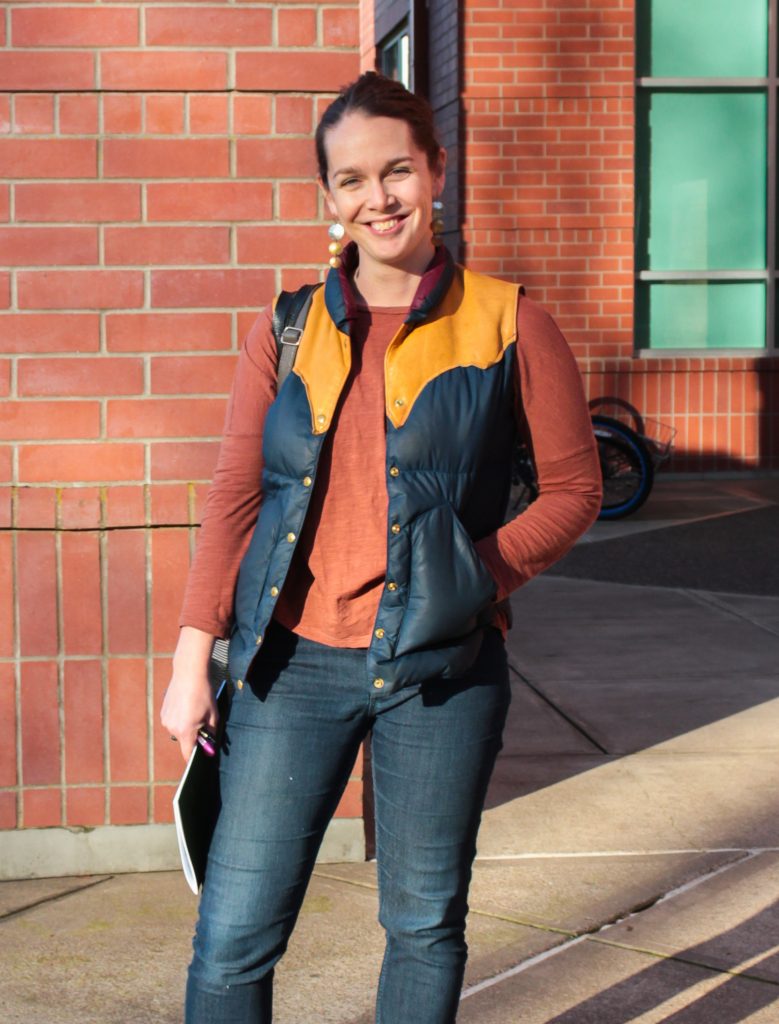
Rebecca Chadd, a Western alumna: “Actually write out the practice essay questions on the study guide. Don’t just read over the questions and assume you know it all. Writing it out will help you find gaps in what you know and make you more confident.” Chadd graduated with a double major in dance and Spanish, and is still active in Western’s community.


Contact the author at howllifestyle@wou.edu

Photo courtesy of Rebecca Meyers

An interview with one of Western’s YouTubers

Rebecca Meyers | Lifestyle editor

Western on Instagram is full of posts of school spirit, friendships and everyday life in Monmouth. It’s also where to find first-year Melinda Ortega, who goes by Mel on social media.

On @makeupbyymel_ and @hennasbymel, Ortega showcases her makeup and henna skills in short tutorial clips and photos. Ortega also has a YouTube channel where she vlogs. In a time where social media is so saturated with people making content, I was curious to hear about the process from a Western student.

Talking with Ortega, I learned that she is from a small town in California.

“Most people don’t know where it is,” she explained with a laugh, saying she usually had to explain its relativity to Los Angeles. She got to Western through her sport, soccer, and is deciding between being an education or a communications major.

Her content, however, is something she’s more sure about.

“I’m less comfortable talking at a camera,” she explained in relation to the style and presentation of her content. This is largely why her makeup tutorials are shorter and posted on Instagram rather than YouTube.

For Ortega, her activity on social media began just for fun during her senior year of high school. She drew inspiration from famous YouTubers like James Charles and PatrickStarr. However, as she developed her filming and editing skills, she said she began to think, “maybe this can go somewhere.”

For now, her following is small.

“(The comments) are mostly my friends and family encouraging me right now,” she told me. However, she’s preparing for the opportunity to grow her brand and her presence on social media. So far, one success she’s had is that some lash brands have asked her to promote them. She’s also slowly developing her filming and editing skills.

“At first it took me three hours to edit a one minute video,” she revealed.

However, if she does gain more of a following, she knows the internet trolls will inevitably come as well. That doesn’t mean she intends to slow down, though: “I’m curious and nervous to see what the mean comments say.”

To any others who are considering starting their own channel, Ortega advised, “Just do it! They always say to just do you, so that’s what I try to do and what my advice is.”


Contact the author at howllifestyle@wou.edu

Photo courtesy of Melinda Ortega

How to start a new club

Rebecca Meyers | Lifestyle editor

Western is home to a wide variety of clubs and organizations, from Unidos to the Communication club to the Triangle Alliance. There’s something for just about everyone. However, there’s always room for growth, especially when there are so many topics and interests to cover. For those considering adding to Western’s collection, here’s the basic steps needed to create a new student organization.


Step One: One of the first things a club needs, aside from its founder, is an adviser. Advisers aren’t students but are often professors in topics related to the club. Before moving onto the next step, the club will also have to recruit a minimum of five student members.

Step Two: The founder(s) can start the registration process on OrgSync through Portal, where other students can join the club. The application requires a name for the organization and a categorization of the club — Greek, academic, student government, etc. It also has a place for the founders to give a brief description, a website, and keywords to help other students find the club based on their interests. The organization will also need some way for others to contact, such as their own email address and someone to be in charge of said address.
Step Three: All the organization will then need before becoming official is a meeting time and place, as well as a president and any other positions needed by the club.

Step Four: The organization will also require someone to write a constitution outlining the guidelines and a mission statement to inform potential members of the organization’s purpose.


The process may be long and difficult, but worth it in the long run to help more students find a group they find interest and belonging in.


Contact the author at howllifestyle@wou.edu

Photo courtesy of Ashlynn Norton

Clubs from Western’s history

Rebecca Meyers | Lifestyle editor

Today, Western has grown to around 5,000 students, and with the population the number of clubs has grown. We have a number of clubs that are more recent additions, but some, like some of the fraternities and the Black Student Union, have been around for a few decades. Others have come and gone.  In the 1940’s, Western had many clubs that have since died on campus.

International Relations Club: Before Model United Nations — and not too long after the real United Nations was formed — there was the International Relations club. At first it may not seem so long ago, until reading the yearbooks that stated a “tour of Hawaii” speech was given 1948, before Hawaii even joined the United States.

Archery Club: An all girls club, the archery organization advertised in a yearbook from the 1940s as the embodiment of Robin Hood and Sherwood Forest. The team practiced in an indoor shooting range in the basement of Campbell Hall, or in an open field near campus. They also competed in the National Archery Tournament.

The Campfire Girls: Another all girls organization from 1940, the Campfire Girls sponsored a number of school events and guest speakers — including a monthly Charm School. In one case, the guest speaker was a Native American woman from another school who talked about the meaning behind certain Native crafts and traditions.

Wolf Knights: A men’s service organization that lasted from the 1930s through the 1970’s, the Wolf Knights volunteered as the “official welcoming” and student advisors to Western’s campus.

La Danza Club: Meeting twice weekly in the 1950s, La Danza was a club that encouraged enthusiasm for creative dance.

Forensics: Created in the 1960s and lasting through the 1970s, the co-ed Forensics club went to annual competitions to test their public speaking skills and brought home a number of trophies and awards.


Contact the author at howllifestyle@wou.edu

Jubilee’s just desserts

Rebecca Meyers | Lifestyle editor

There’s a new place in town — specifically, in downtown Independence. The previously empty corner store on Monmouth Street is now Jubilee, a dessert bar that also serves coffee, wine, mimosas and beers. The shop, under the same owner as Salem’s Sugar Sugar, is noticeable by its simple lit window sign.

In my opinion, Jubilee has a lot of pros. For one, it’s very open inside and a lot of effort clearly went into the appearance and feel of the shop. It’s a cute place with a laid-back atmosphere, which perfectly fit the lazy afternoon when I went.

The menu is clearly laid out and categorized by sparkling drinks, coffee and tea and desserts. The desserts, consisting mostly of baked goods such as cupcakes and tartlets, are the main attraction so far. While not all of their options are gluten free, they still have a number of them on their display, such as the chocolate cake. I tried one of my favorite combinations with their dark chocolate caramel filled tartlet, which was rich but very enjoyable. I also sampled their butterscotch crumble cupcake, which was a little sweeter but had a good balance between the sweetness and the more bitter chocolate crumble; I almost wished I’d gotten that instead.

The making of Jubilee is still in progress, however, a detail to consider when visiting. Their hours may be inconsistent, but they are currently open most days from 9 a.m. to 9 p.m. They are also still working on honing their recipe for the ice cream jubilee, a kind of homemade ice cream that they plan to have as a main selling point on their dessert menu.

The only main downside to Jubilee is the lack of foods other than dessert. The drinks menu is ideal for a brunch, but as of now the food options are limited to sweets without any breakfast foods. However, the business is still new and it will be interesting to see if they decide to expand the menu. It will also be interesting to see if what they choose to do with the back room, which is currently only used for reservations for private parties.

Overall, I enjoyed my visit to Jubilee and will likely return in the future, both for a butterscotch crumble cupcake and to see if there are any changes.


Contact the author at howllifestyle@wou.edu

Photo courtesy of Ashlynn Norton

Interview: Auditing classes for personal growth

Rebecca Meyers | Lifestyle editor

If there’s anything nearly all students can relate to, it’s the stress of class requirements, grades and graduation. This is often related to the further stress of thinking about where graduation will then take us, and our entrance into the real world.

Some students, however, have already been into the real world and have found that it still leads back to Western. In most cases, these nontraditional students are also aiming for a degree of some kind. This is not the case for student Paul McNeil, who is taking classes purely for the purpose of continuing his education. As this is an experience I can’t relate to, I asked for an interview to get a different perspective.

With a backpack full of textbooks, McNeil, despite the age difference to most students, seems to fit in with the college kids lounging in the Werner University Center — maybe because he has been attending college classes for years, and not just at Western. He continued studying long after earning a degree in physics, a major he picked because, according to McNeil, “it challenged me the most.”

“I could drop into any department (at Western) and find something interesting to study,” McNeil said in regards to the contrast in his classes. Though his physics degree took him through careers in technology and engineering, he now takes courses such as Economic Geography and Transnational Migration. He was drawn to these classes by the desire to learn about “how the world is set up financially,” he mentioned, and how this affects global inequality and society.

McNeil audits the classes, meaning he doesn’t have to worry about a grade — although, as he points out, the instructor is still free to call on him and ask for contribution to the discussion, and so the familiar mantra of “make sure you do the reading” is echoed in this situation.

As a senior citizen, McNeil also gets to audit classes for free with permission of the professor. This is a point he emphasized, as it is a little known fact that others might be able to take advantage of. He revealed there are other additional benefits of auditing classes.

“My initial thought…was that getting a student card would allow me access to the university’s library database,” he said, appreciating the extensiveness of Hamersly Library and noting that not every library has such range.

Overall, the conversation, for me, turned out to be a much needed reminder that studying for a degree is important, but continuing education for personal self growth is as well. Before parting, McNeil commented that students these days have a wealth of information at their fingertips, and that it can be beneficial to explore all options: “Students shouldn’t feel so pressured to choose …there is so much information to explore, and finding the right thing can take some time.”


Contact the author at howllifestyle@mail.wou.edu

The perspective of a first generation college student

Rebecca Meyers | Lifestyle editor

Western has a wide diversity of students from different kinds of backgrounds. Some come from a family of college graduates, while others are the first generation to take on the challenge. While the college experience can sometimes be boiled down in pop culture as a universal experience, the reality is that these experiences can be as diverse as the people.

For first generation college students like Madison Gaylin, a junior education major, there are some similarities and some differences between students who came from college-educated families. One similarity, in her case, is that she had high hopes from a young age.

“I decided when I was little that I wanted to be a teacher,” Gaylin said. “Everyone said it would be hard work and there wouldn’t be much money in it, but I was set on it.”

Gaylin has some other members of her family that attended college, but not in her immediate family. She attended a community college where she got her AA, then transferred to Western. The transfer took her away from home, the small town of Clatskanie east of Astoria, for the first time.

For many students, even though college and their career path was ultimately a choice that they should be deciding, there was always an unspoken pressure to get a degree. This is especially true when one or both parents have a degree. For Gaylin, there wasn’t pressure so much as a hope or an expectation.

“I think it always came down to me wanting to go (to college),” she said when asked about the pressure many students feel from their families. “If I hadn’t, there might have been some disappointment — but not anger.”

She also said this internal, rather than external, motivation helped keep her focus when things got rough and she considered dropping out.

“I just had to keep telling myself to keep going,” Gaylin added.

Along with many other students at Western, Gaylin is now on her way to a career in education. While her experience isn’t shared by everyone, she can relate to those who have worked long and hard to achieve a lifelong dream as a first-generation college student.


Contact the author at howllifestyle@wou.edu

Photo courtesy of Rebecca Meyers

What to look for in a new roommate

Rebecca Meyers | Lifestyle editor

For most people, part of the college experience is finding and living with a roommate. Sometimes it’s a friend or acquaintance, but other times students have to wade through their options of strangers to find one they’re comfortable living with. In these cases, there are specific things to look for when considering living with someone. While not all roommates end up best friends forever, a living situation should be more than just tolerable. When looked for, these things can help turn a potential nightmare roommate story into a friendship one.


  1. Communication:  Being a good communicator is a good sign that someone will make a good roommate in all stages of the search. This kind of person can be depended on to communicate when they decide to sign the lease, what they expect from their roommates and what will work best in their living situation. This may seem intimidating at times, but being straightforward will help resolve issues before they grow and start to become disruptive.
  2. Socialization levels: Everyone is slightly different when it comes to how and how much they socialize at home. Some like throwing ragers regularly with as many people as possible while others prefer to keep their homes relatively quiet and secluded. Neither is better or worse, but people on opposite ends of the spectrum are unlikely to agree on how open their home should be.
  3. Real life experience: Every so often, there is an encounter with someone unadjusted to living on their own. This may not be a dealbreaker for everyone, but it should be considered for those who might get annoyed by someone who doesn’t know how to cook for themselves or do household chores.
  4. Responsibility: Some students may look to their classmates when searching for a roommate. The opportunity that comes with this is to observe how organized or responsible they are with their schoolwork and decide whether this is a good indicator of what kind of roommate they will be. If their homework is consistently late, it may be a good idea to first make sure they won’t do the same with their rent.
  5. Independence: In an ideal world, roommates would always end up good friends that enjoy spending time together. However, some people just need someone to help pay the bills. During the initial search, clarifying the amount of involvement desired in each others’ lives can help eliminate future conflicts or misunderstandings. Also, while it’s good to be able to depend on roommates when in need, dependence at a certain degree can cause tensions.
  6. Pet peeves: One of the challenges of finding a roommate can be that everyone comes from different backgrounds, lifestyles and habits. As a result, something that might seem minor to one person can be extremely irritating to another. Cleanliness, whether lack of it or obsession with it, is the most common example of this that can lead to roommates falling out. Discussing pet peeves and lifestyle preferences before hand can save the trouble of roommate drama.
  7. Timeline: For students, it’s usually fairly easy to determine how long they’ll be needing to stay in one place based on how long they have until they graduate, or if they plan to stay in Monmouth after doing so. Sometimes, however, people need to leave or find a new place in the middle of the school year, when it’s hardest to find someone to replace them. Some graduate in a term other than spring, or take terms off and need to move. This can sometimes create a revolving door of roommates that only need temporary homes and can create anxiety from the inconsistency of having someone to help pay rent.


Contact the author at howllifestyle@mail.wou.edu

Photo courtesy of Ashlynn Norton

The benefits of learning another language

Rebecca Meyers | Lifestyle editor

It’s not uncommon for a certain number of language classes to be a requirement for graduation, both in high school and in college. It’s also not uncommon to hear people say “Yeah, I took a few years of Spanish a while ago but I don’t really remember much except ‘¿dónde está el baño?’”.

Like any other subject, a foreign language can be easy to dismiss from one’s mind if it’s not an area of interest. I hear phrases like the one above often when I tell people I am studying Spanish, and I can’t say I blame them as I have expressed similar attitudes towards subjects I was less interested in. It can seem like just another graduation requirement that won’t turn out to be useful.

However, there are actually many benefits to learning another language, especially when studied further past just a few terms. I believe this not only due to my own experience, but also thanks to some research on the subject I have done as my interest in foreign languages grew.

One of the more obvious benefits is the fact that being proficient in a foreign language can open more opportunities in the future. The world is now a very interconnected place, and being someone who can help further those connections looks good on nearly any resume.

My own job is just a part time, temporary position in food service that pays my rent and is not in my long term career goals. However, I have already found myself faced with the opportunity to communicate with speakers of other languages. I have been able to use my Spanish outside the classroom for once, and also gotten to know some Deaf customers that left me wishing I had taken advantage of Western’s many ASL classes.

Research shows that learning another language helps stimulate cognitive functions, such as finding patterns. Studies such as the ones cited in an article on BBC.com titled “The amazing benefits of being bilingual” show that being bilingual can help exercise “mental muscles”. This is especially true for those who started learning a second language from a young age, but it’s never too late to start trying to become bilingual. These kinds of skills can help with academic performance as well, another plus.

On top of that, learning a second (or third, or fourth) language almost always comes with the added benefit of immersion into another culture. A language is rarely just conjugations and sentence structure; it’s also an origin, a history and a connection to different places.

At Western, there are many opportunities to learn or brush up on Spanish, German, French and American Sign Language. For more information on classes, visit wou.edu/humanities/modern-languages.


Contact the author at howllifestyle@wou.edu

Photo courtesy of Ashlynn Norton

Great places to eat in Salem

Rebecca Meyers | Lifestyle editor

One of the upsides of living near Western is the proximity to cities like Salem that offer an abundance of options for going out. However, this can also mean an overwhelming amount of options when faced with making a decision of where to go. To simplify this problem, I’ve compiled a list of hidden gems to consider when going out in the state’s capitol, both for dinner or for breakfast/brunch.


Gamboretti’s

Located near Salem’s riverfront, this Italian restaurant is a great place for people in the mood for Italian cuisine at a reasonable price. The warm ambiance, variety of dishes and delicious food are all reasons to try out this location.

Location: 325 High St SE.

Bo and Vine

Located in downtown Salem, Bo and Vine Burger Bar is a place for a different type of dinner, but still a unique and delicious one. Their menu, while simply split mainly into burgers, greens and shakes, still provides a classy atmosphere.

Location: 176 Liberty St NE

Best Little Roadhouse

More than a restaurant, this fun location also offers mini golf. A more casual location, their menu offers classics like chicken tenders, steaks and nachos.

Location: 1145 Commercial St SE
Annette’s Westgate Cafe

Offering all day breakfast, Annette’s is a great place for brunch or breakfast. They also offer a salad bar, burgers, and sandwiches as well as beer, wine and cocktails.

Location: 1311 Edgewater St

Word of Mouth

A small local bistro that serves breakfast and sandwiches, this location is a great place for a relaxing brunch. According to their website, hours may be shortening soon due to availability and business on the staff and owners, so visitors should check their website, wordofsalem.com, for updates.

Location: 140 17th St NE


Contact the author at howllifestyle@wou.edu

Simplifying resolutions

Rebecca Meyers | Lifestyle editor

It’s officially 2019, and while some still have to adapt to not writing dates that end in ‘2018’, some of us are also trying to make other changes to our lives. While some don’t do resolutions, others set high expectations for themselves, and meanwhile others aren’t so sure either if they should participate in setting resolutions or question if they can be successful.

For the people who are in a state of undeciding, a good place to start is by setting the simple and easily attainable goals first and then deciding whether to work up to bigger things. These simple resolutions can be related to any aspect of life that could use improving.

Many people start with resolutions that have to do with health. While starting a new diet or a new rigorous workout regime might not be for everyone, there are smaller changes that can be made that will still improve overall health and wellness.

For example, one resolution can be merely drinking more water and staying hydrated or walking somewhere that’s usually a two minute drive if possible.

Some people resolve to make drastic changes to their diet to be more healthy, but those who might be intimidated by such changes can start with smaller ones, such as replacing one unhealthy snack with a healthier one but otherwise staying the same.

Other lifestyle-related changes that can be made can be things that are more relevant to academic or social life. Old habits may die hard, such as putting off work until the last minute, but resolving, for example, to read at least one chapter or write one paragraph everyday can help build a less stressful routine when the due date arrives.

If the hope is to create more meaningful connections or to strengthen existing ones, a good resolution might be something like deciding to explore the school’s club options or to take more initiative in starting conversations rather than waiting on others.

As usual, jokes can be expected about the New Year’s resolutions lasting only until the end of January. However, surviving the first month can be made more simple by starting small. Resolutions aren’t for everyone, but even small steps can bring positive change.


Contact the author at howllifestyle@wou.edu

Photo courtesy of Ashlynn Norton

Pet preparedness

Rebecca Meyers | Lifestyle editor

As students continue their adjustment to life as an adult, many are drawn to the idea of having a pet. Cats and dogs especially are popular choices, and it’s obvious why: animals can be a good source of comfort and friendship, especially when feeling stressed out. Most animal lovers have or want some kind of pet for this reason. While adopting a pet can bring a lot of positivity to our lives, it’s also important for both the sake of the owner and the animal that the owner fully understands all the responsibilities to consider that come with it.

First off, pets can quickly become expensive, especially for those who are already on a budget. The costs don’t stop at the adoption fee; they will require being able to constantly purchase food, and in the case of a cat, litter. 

Then, there’s also the supplies that come with it and any medical bills the animal might require. Puppies and kittens are popular to adopt, but may require medical care during and after getting fixed. Many places will do this free of charge, but the process is not always without complications that may need to be resolved. A friend of mine explained to me once that her cat had ripped her stitches after getting fixed and had to get her belly restitched.

There’s also always the chance that sudden medical issues can pop up that can be very expensive to treat. Obviously, it would be inhumane to allow a pet with a critical medical issue to go untreated, so it’s important to take this into consideration before adopting, especially if the animal is going to be allowed outdoors unsupervised regularly.

On top of this, other factors to consider include the time and effort commitments. Some animals are much lower maintenance than others, but this sometimes can lead people to be overconfident in their ability to properly care for an animal. Budgeted time commitment for any animal should also include making sure the owner is fully informed. For example, I recently heard someone wondering if they should declaw their cat. Declawing, which is often considered a quick fix for scratching cats, actually involves removing much more than the nail, including tendons and bone. Humanesociety.org notes that in humans, it would be comparable to cutting off a finger at the knuckle and that the cruelty of the process has gotten it banned in some countries.

Many people who have owned a pet will attest that they have a positive effect on their daily lives. However, this only emphasizes the fact that a successful pet adoption goes smoothest when the owner is fully prepared to do so. It doesn’t take much effort to decide whether investing in a pet is the right choice.


Contact the author at howllifestyle@wou.edu

Photo courtesy of Ashlynn Norton

The best nearby Christmas tree farms

Rebecca Meyers | Lifestyle editor

The calendar has officially flipped to December, meaning that many people can agree that it’s time for the holidays to start happening. For those Western students who will be remaining in Oregon for the holidays, luckily, there is an abundance of you-cut Christmas tree farms nearby perfect for getting into a festive mood.


Bigfoot Christmas Tree Farm

Located in Dallas, Bigfoot Christmas Trees is a small yet festive place to find the perfect tree. Their selection includes the usual variety of trees, which include Nordman firs, Douglas firs, Noble firs and Grand firs. They sell wreaths as well, and the experience includes a cozy fire pit sitting area.

Location: 12120 Clow Corner, Dallas

Hours: 10 a.m.-4:30 p.m. weekdays and 9 a.m.-4:30 p.m. Saturdays and Sundays.


Vollstedt Farms

This Albany farm is another great place to find a variety of different trees. Their wagon rides take visitors to the tree-filled fields, and then returns them to a warm greenhouse where visitors can enjoy hot chocolate, cider, cookies and some Christmas decorations for sale

Location: 451 NW Quarry Rd, Albany

Hours: 12 p.m.-5 p.m. Wednesday through Friday and 9 a.m.-5 p.m. Saturdays and Sundays.


Palmer’s Christmas Trees

This family farm in Salem was voted the Statesman Journal’s Best Christmas Tree Farm for both 2016 and 2018. It boasts a wide range of tree types, including the usual four, Norway Spruces, Turkish firs and more.

Location: 4716 Poinsettia St NE, Salem

Hours: 10 a.m.-5 p.m. daily.


Santiam Canyon Christmas Trees

A small family farm near Stayton, Santiam Canyon Christmas Trees is full of holiday cheer such as a gift shop, free treats, wagon rides and photo opportunities. Visitors can pick from the four traditional types of trees here as well.

Location: 17300 N Santiam Highway, Stayton

Hours: 10 a.m.-4 p.m. Friday through Sunday.


Contact the author at howllifestyle@wou.edu

Season of giving

Rebecca Meyers | Lifestyle Editor

The holidays have arrived, and many people have started thinking about what to get for their family and friends. However, this time of year is also a great time to consider springing for things for strangers in need. Drives and donation sites, such as those listed below, are an easy way to make the holidays nicer for everyone.

Western’s food pantry, location on campus across from Heritage Hall, is always accepting donations. They accept not only food, but hygiene products as well. They also accept perishable foods as well as shelf-stable ones, restricted only against homemade or unlabeled foods.

The Independence Police Department will also be having their own donation drive, accepting both shelf-stable foods and monetary donations. This drive has already begun and will go through Dec. 14.

Some Bi Mart locations will be having winter clothing drives throughout the winter. They will be collecting clothes for cold weather throughout the season with dates varying for each.

A number of locations in Salem will also be accepting non-perishable food donations throughout the season. Multiple Fred Meyers will be taking donations up until Dec. 24. Additionally, the Salem Saturday Market will also take donations on Dec. 13 and 14, also of shelf-stable foods.


Contact the author at howllifestyle@wou.edu

Acing the application

Rebecca Meyers | Lifestyle editor

The last few weeks of fall term bring many things, from finals and stress to holidays and festivities. It also brings applications for financial aid and, in the case of some upperclassmen, to graduate programs.

Whether applying at Western again or elsewhere, the process can be stressful and sometimes intimidating. However, there are a few tips that might help make a difference in both confidence in the application and the quality of the applications themselves.

The first place to start is to check the deadlines. This may seem obvious, but it can affect how the challenge is tackled. If the deadline is far off, this gives time to hone and perfect any written requirements to be submitted. If the deadline is near and there’s some uncertainty as to whether this particular program is the right one, it may help provide motivation to apply anyway just in case it does turn out to be a strong contender. Also, regardless of the results, the sooner they are returned the sooner the idea of one’s options becomes clearer.

Next, it’s a good idea to make some kind of checklist of everything that has to be turned in. Some applications may require specific test scores, letters of recommendation or personal essays. These can take some time to put together, which is why the first step will help to prioritize which need to be done first. Some schools have later deadlines, but may require more time consuming materials.

For those who don’t have their heart set on specific schools or programs, it can also be a good idea to try and narrow down the list of applications. While it’s good to have options, having too many can become overwhelming and applying to too many that are just for backup can take time and focus away from the first choice applications. It can also become costly, as many applications can only be submitted with a fee.

It’s also never a bad idea to consult advisers or others who have also gone through the process. Experience from others can be just as valuable as personal research. In the end, a combination of both perspectives will take a great deal out of the stress and uncertainty of applying for that dream program.


Contact the author at howlifestyle@wou.edu