


Mount Hood

Understanding and treating an unhealthy relationship with porn

Paul F. Davis | Managing Editor

When looking at the numbers, it’s clear that people like porn… a lot. According to the American Addiction Centers, more than 184 thousand dollars are spent every minute on porn. With our society’s ease of access, this spending is not going to stop ー it’s probably only going to increase.

Not only is it easy to access porn, but it is also more affordable and anonymous than ever before. Back when our parents were our age, the main means for purchasing porn was through some adult shop or by asking the person behind the mini-market counter for a Playboy. Now, any 11 year old with an unfiltered access to the internet can go online and find porn they could never even think to look up with one search of Pornhub.

It’s not that 11 year olds are the only people using porn. In reality, a large number of people are consuming porn. The American Psychological Association’s “Handbook of Sexuality and Psychology” states that between 50 percent to 99 percent of men and 30 percent to 86 percent of women have used porn in their lifetime. For many people, it can be a safe place to explore sexual fantasies alone or with a sexual partner in a new, interesting way. But for some, statistically men, porn usage can take a person down a dark, lonely path.

In an article titled “Is Internet Pornography Causing Sexual Dysfunctions? A Review with Clinical Reports” authored by Brian Clark and associates from 2016 in the Journal of Behavioral Sciences, men are reporting a sharp rise in erectile dysfunction, delayed ejaculation, decreased sexual satisfaction and diminished libido during partnered sex that cannot be explained by traditional causes. Although a direct line of causation has not been made to porn usage, a strong correlation has been documented.

In 1999, 5 percent of sexually active men, ages 18 to 59 had erectile dysfunction. By 2011 that same statistic had shot up to 28 percent according to the same article by Brian Clark. A major change in men’s sexual lives in that time was access to easy, anonymous and cheap porn.

What’s important to know is that it’s not anyone’s fault if they are having these problems. This is what porn does to your mind. Due to the huge dopamine dump that is associated with porn use, the brain fundamentally changes at the neuronal level which was found in the study “Brain Structure and Functional Connectivity Associated With Pornography Consumption”, and change is associated with tainted sexuality, increases secrecy, makes for less intimacy and increases the likelihood of depression. But the brain is plastic, it can change.

This problem doesn’t just affect the one addicted. It affects partners, too. Imagine a situation where you’re about to have sex with your partner, and they just can’t seem to get aroused.  For many, their thoughts then go straight to “they must think I’m not enough” and that stays with them, that hurts them.

This story isn’t just anecdotal. Sex researchers Destin Stewart, Ph.D. and Dawn Szymanski, Ph.D found in their 2012 study that “(female partners) experienced lower self-esteem, poorer relationship quality and lower sexual satisfaction” while in this position.

For those that think they may have a problem, the important thing to know is that it can be controlled, and help is available. Although there isn’t a scientifically proven way to treat an unhealthy relationship with porn, one way to start is by being honest and kind with yourself and accept that the problem exists and it can be controlled. Then, look for accountability; for those that have a sexual partner, be open with them about what’s going on so they won’t beat themselves up over something that they can’t control, and so they can help.

For those that don’t have a partner, support can be found from where the problem likely came from: the internet. There is an app called Fortify which provides support groups and that will help you create goals for yourself, monitor habits and congratulate you when porn use is reduced.

For those looking for resources that are on campus, Abby’s House is an option which is in the Werner University Center, Room 106. They can be contacted via email at abbyshouse@wou.edu, called at 503-838-821 or reached in person from 8 a.m. to 5 p.m. Also, the Student Health and Counseling Center always takes on new students; they can be reached at 503-838-8000 or in person from 8 a.m. to 5 p.m.

So, be kind with yourself, know that recovery is possible and know that if you have an unhealthy relationship with porn you deserve more from your sexuality than a computer screen.


Contact the author at pfdavis14@wou.edu

Photo courtesy of Ashlynn Norton

How to be efficient at group projects

Rebecca Meyers | Lifestyle Editor

Every term, students across campus have to tackle what’s considered one of the biggest challenges of college: group projects. Often worth a significant number of points, group projects can be incredibly frustrating for a number of reasons. However, as they are often inevitable, the skills to finishing them in an effective manner are important to learn.

One of the biggest challenges can be communication, or lack thereof. Not knowing when someone intends to finish their part, if they need any help or not or if they are even still in the class — yes, it has happened before — can make the project much more stressful than it needs to be. Unfortunately, we can’t control anyone’s communication except our own. Making a conscious effort to clear up any misunderstanding at the very least ensures that there will be a reduced chance of a mixup.

Sometimes, that mixup will occur anyway, which brings us to our next point. Another big source of stress is when other group members don’t seem to pull their weight. No one wants their grade to suffer, but no one wants to be unsure of how much work they really have to put into it. I have witnessed many people stress over whether or not to work on an unfinished portion of a project that wasn’t assigned to them. Fortunately, many professors are fully aware that this sometimes happens. Making a plan to talk to the professor instead of continuously trying to contact an unresponsive group member makes it easier to focus on your assigned part of the project and leave behind a lot of stress.

Less common, but still prevalent, is the occasional tendency of leadership styles or ideas to clash in divisive ways. These are those “pick your battles” instances that are often raised: is it worth fighting someone else’s idea if you think it won’t get as good of a grade? This dilemma surfaces every so often, and there’s no easy answer to it. The organization of the group is something to consider, however. If there’s enough solid leadership within the group that whatever topic that’s chosen can be made to work, it might be worth it just to roll with the group.

Many people dread having to face group work every term. Sometimes we get lucky and the members work well together, but other times we have to make the best of the situation.


Contact the author at howllifestyle@wou.edu

Wizard World Portland brings together pop-culture lovers at the Oregon Convention Center

Chrys Weedon | Entertainment Editor

Wizard World Comic Con’s 2019 celebrity guest list included the likes of Jason Momoa, known for “Game of Thrones” and “Aquaman”, Melissa Benoist, star of “Supergirl”, and many others. The Comic Con was held on the weekend of Feb. 22-24 in the Oregon Convention Center.

Wizard World is a comic convention that provides fans and cosplayers an opportunity to socialize and meet their favorite superhero and sci-fi celebrities. The convention also allows artists and other vendors a chance to increase their visibility within the community.

The Convention Center was teeming with cosplayers and vendors on Feb. 22, the first night of the convention. Many characters made appearances in many different iterations thanks to dedicated fans that took the time to create their own costumes. Among the characters present were Jack Sparrow, Professor Snape and Mad-Eye Moody, Mermaid Man and Barnacle Boy and many others. Even Darth Vader was there — wearing a kilt, riding a unicycle, and playing the bagpipes.

While attendees milled about the ballroom waiting to meet and greet with different celebrities, there were many vendors to keep them company. Typical t-shirt and collectible booths that attend every street fair and convention were there, but there was also a plethora of artist booths present. Most any movie or show imaginable was represented: there was fan art, comic books (both originals and collectibles) and most everything else.

“I actually do comic conventions and fandom conventions once every two or three weeks, like, all year round,” commented Misty Figs, an artist at the convention. Figs makes stickers, pins and online art through mistyfigsgiftshop.com.

“I get to meet a lot of the people that I interact with online, that buy my art or give me ideas for art. So getting to put a face to a twitter or instagram username is really cool, and I’ve met a lot of artists that way as well,” said Figs.

Aside from art vendors, there were also sections with computers for gaming and a virtual reality booth in which volunteers could try a VR game. Several tattoo booths were in attendance, one of which was called “Ink Bus”: that was a old bus turned studio. Another booth was born out of a partnership between Wizard World and Transition Project, a Portland-based company, to put comic books and other reading materials into the hands of people transitioning out of homelessness.

The Wizard World convention brought together many people from different walks of life that were able to bond over a similar love of movies and art. It has not yet been revealed if the convention will return in 2020.


Contact the author at howlentertainment@wou.edu

Photo courtesy of Chrys Weedon

Accomplished pianist Paul Roberts visits Smith Hall

Chrys Weedon | Entertainment Editor

Paul Roberts can be described as many different things: a writer, lecturer, teacher and pianist. Piano expert Bryce Morrison wrote that “Paul Roberts is an exceptional musician, a fine and deeply sensitive pianist, teacher and an author of the greatest distinction.” Morrison added that “his books on Debussy and Ravel are quite simply the most outstanding and perceptive I have read.”

Roberts has regularly performed in Portland since 1999, according to his website paulrobertspiano.com. Roberts is the artistic director for the international piano summer school, Music at Chateau d’Aix, in France, and also teaches at the Guildhall School of Music & Drama in London. Roberts has written three books and is in the process of writing a fourth.

On Feb. 20, Paul Roberts came to perform in Smith Music Hall. In a performance of two acts, Roberts played selections by Debussy, Liszt and Albeniz.

The first half of the performance consisted of pieces composed by Debussy, an Impressionist composer from the late nineteenth century. The second act consisted of compositions from Liszt and Albeniz. Liszt is a composer from the Romantic era; Albeniz, the post-Romantic era.

Before each section, Roberts explained the individual pieces he was going to play, so the concert was a mixture of lecture and actual performance. On Portland Piano International’s website, portlandpiano.org, founding artistic director Harold Gray wrote that Roberts’s “public lectures immerse the listeners in a magical world of images and ideas … his communicative abilities, whether as performer, writer or teacher, are without equal.”

Roberts’s playing style is passionate and highly expressive. His’ clear enthusiasm for his work brings to mind the concept of “a calling.” Roberts plays with his entire body and moves along with the pieces he plays. He paints a clear picture with his musicality and captivated the audience with his lecture of the history behind each piece.


Contact the author at howlentertainment@wou.edu

Photo courtesy Ashlynn Norton

Club Sports know how to win

Lake Larsen | Sports Editor

Western’s Club Sports department has been continually expanding with new team after new team in the past two years. One thing that these teams seem to have in common — winning. This tradition was proved true again as the Wolves club sports took to their respective fields on Feb. 23 and 24.

One of the teams competing was the brand new Men’s Basketball Club. Just weeks after being introduced as a member of the club sports family, the team took to the court in a multi-game tournament at the University of Portland. With three teams listed to play, the men knew their games would be anything but easy.

Just as the basketball team took to the court in Portland, the year-old Women’s Soccer Club took to the pitch in Corvallis. The tournament was a two-day event, spanning the weekend. Just a year ago, the Wolves took part in this tournament for their first-ever game.

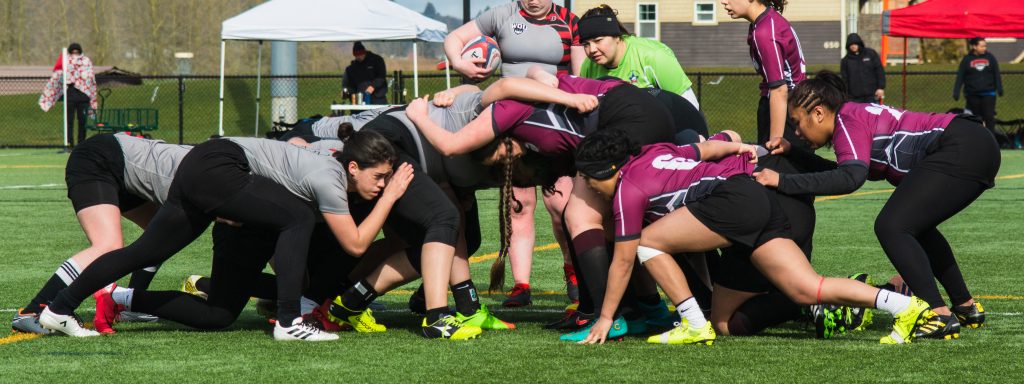
The last of the competing teams was the Women’s Rugby Club on their home turf in Monmouth. The Women’s team has only played a handful of games due to scheduling problems. Despite these difficulties, the Wolves were still ready to play.

Scores began to ring in from all across Oregon, and most scores followed a familiar trend — Western wins.

The day started off with a disappointing loss from Women’s Rugby, falling to the University of Puget Sound on Feb. 23. But the sorrows quickly shifted as the basketball scores were posted.

Despite being only a few weeks old, Men’s Basketball had beaten the University of Oregon, Portland State University and the hosting University of Portland. This undefeated record caused the Wolves to be named the tournament champions — an amazing feet for a team that was only an idea a few months ago.

The final games of the weekend were to be played on the soccer pitch. The first day of the Oregon State University tournament was huge for the women, as they took on both the first University of Oregon team as well as the hosting Beavers. With a relentless offense, the Wolves blew past both teams to post a 2-0 record on day one. The following day, the Wolves took on the second Oregon and Oregon State squads. Again, the Wolves topped the hosting Beavers, but fell at the hands of the Ducks. After a strong showing, the Wolves finished third overall in the tournament.

With two of the three teams competing being founded during or after the previous school year, Western’s club sports are a new force to be reckoned with.

To become a member of a club sports team, visit IMLeagues.com/wou/clubsports.


Contact the author at howlsports@wou.edu

Photo courtesy of Paul F. Davis

Men’s Basketball smothers the Wildcats

Lake Larsen | Sports Editor

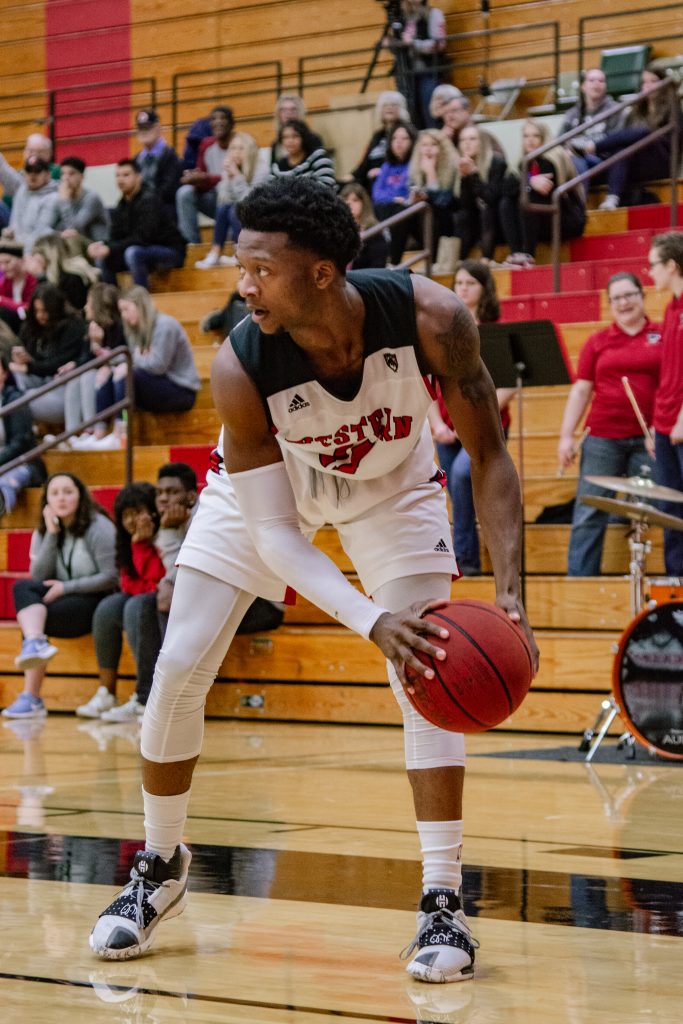
For the final time in the 2018-19 season, the Wolves took their home-court on Feb. 23. Having beaten Central Washington University early in the season on Jan. 24, Western knew their final match was a must-win to finish their home-season off right.

After a senior night presentation for the departing members of the team, the Wolves started to take it to the Wildcats. Within minutes of tipoff, the Wolves sank a couple of baskets to jump out to a slim four-point lead. This minimal lead proved to withstand the precision shooting of Central Washington as the Wolves clung to it. By midway through the half, Western was able to build off of their lead, pushing it to seven.

The Wildcats were nipping at the heels of the Wolves throughout the final minutes of the first half. However, every comeback attempt by Central Washington was met with a barrage of shots by the Wolves. Western’s lead was extended to a double-digit margin with only a handful of minutes left. But a relentless final push by the Wildcats shrank that lead to four by halftime.

The Wildcats were able to carry the momentum they built in the closing seconds of the first half to the second. The once mighty double-digit Western lead had been diminished to a single point. This minuscule lead was soon eliminated as Central Washington took their first lead of the game.

Less than 10 minutes remained on the clock as the score stood deadlocked at 51 each. After a good free throw and a breakaway dunk, the Wolves were back on top. And this time, the Wolves wouldn’t surrender their lead. Every shot by the Wolves pushed their lead higher and higher. The Wildcats had no answer for this deadly finale by Western.

The Wolves had taken a tied game, and 10 minutes later had beaten the Wildcats by a huge 15 point margin. Smiles could be seen across the Western side as the Wolves had blown away Central Washington 77-62.

The Wolves finish their season with two more matches against Western Washington and Simon Fraser before heading to the GNAC Tournament.


Contact the author at howlsports@wou.edu

Photo courtesy of Paul F. Davis

Women’s basketball falls to Yellowjackets

Lake Larsen | Sports Editor

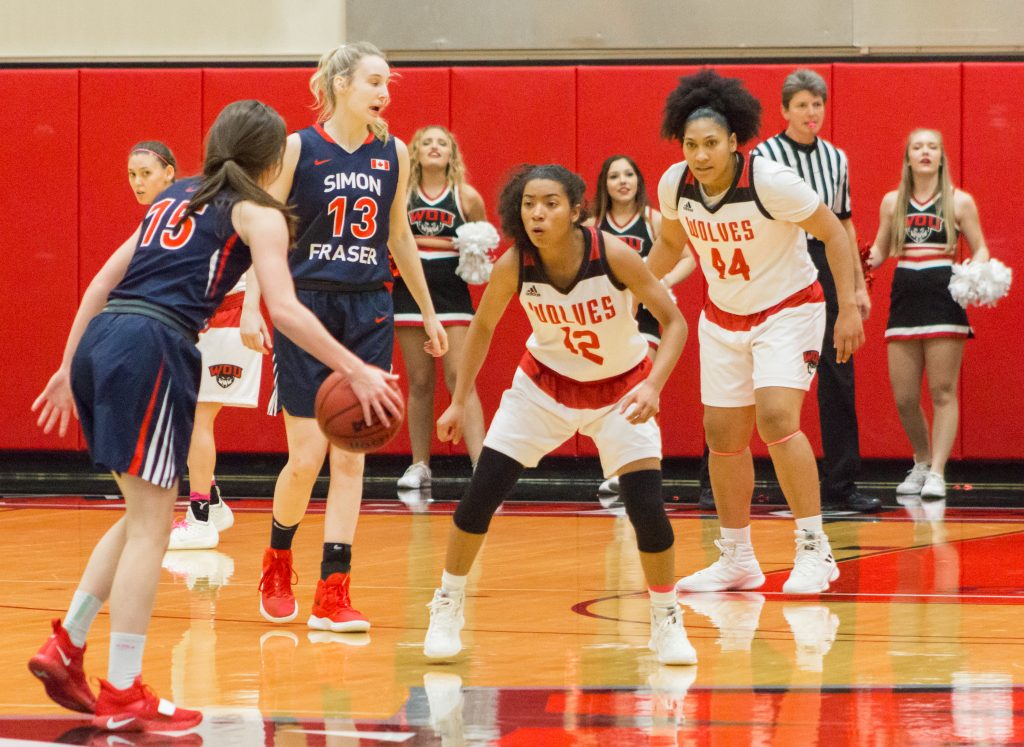
Nearly a month after their last meeting, the Wolves took the court again against Montana State Billings on Feb. 21. With a disappointingly long five-game losing streak hanging above the team, Western was in desperate need to end the spell. Sitting third from last in the GNAC standings, the Wolves were ready to attempt to pick up a much needed win.

The first quarter looked promising for the Wolves, as they quickly jumped out to the lead over the Yellowjackets. Efficient passing helped push the Wolves to a growing lead as the quarter’s time passed.

Montana State Billings was able to post a short run of their own to narrow Western’s lead, but the Wolves were relentless with the rebounds to help extend their lead to nine as the first quarter closed.

With the momentum still swinging their way, the Wolves offense came out even stronger in the second quarter. Western quickly scored a pair of baskets to push their lead to more than double that of the Yellowjackets. The Wolves edge seemed to hover in the low teens as the clock ticked to only a minute left before the half. However, cracks began to form as a pair of missed three-pointers from the Wolves let the Yellowjackets to narrow the gap to five.

The pendulum of momentum started to slip away from the Monmouth women in the third quarter. The Wolves’ lead began to follow a trend of one step forward, two steps back as their five-point lead jumped to seven, only to be cut to three just moments later. The Yellowjackets eroded what was once a double-digit Western lead. By the end horn of the third, the Wolves were down by one.

The fourth quarter was shaping up to be an all out brawl as the Yellowjackets and Wolves traded baskets. The opening minutes of the final quarter seemed to be anyone’s game, but this slugfest ended as the Wolves seemed to buckle under the pressure. Two missed layups and a missed jumper from the Wolves let the Yellowjackets grab a lead they wouldn’t let go.

The final minutes of the game were a disaster for the Wolves as the Yellowjackets sealed Western’s fate. It took the Wolves over a quarter to grow a double digit lead — Montana State Billings was able to do so in just three minutes. By the final whistle, the Wolves’ losing streak pushed to another high, falling 80-70.


Contact the author at howlsports@wou.edu

Photo courtesy of Ashlynn Norton

RWEC unveils multilingual signage

Bailey Thompson | News Editor

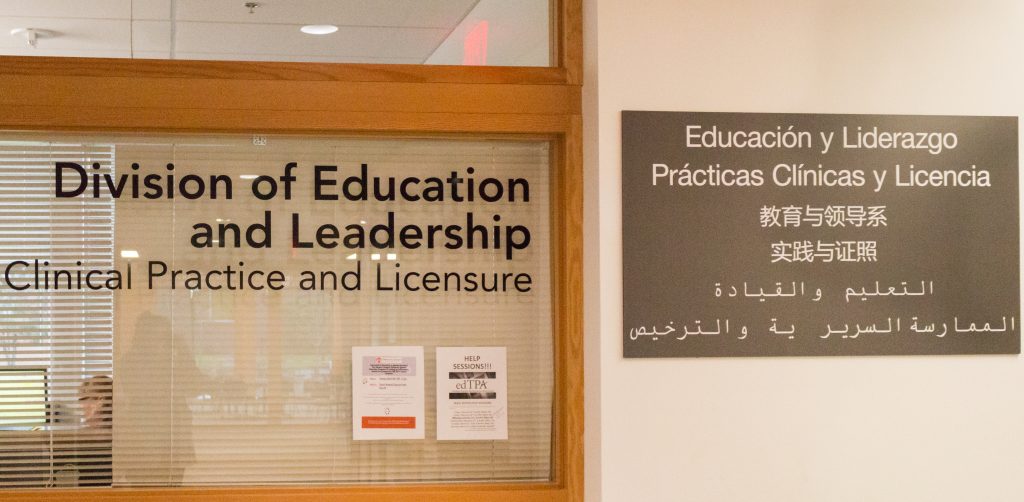
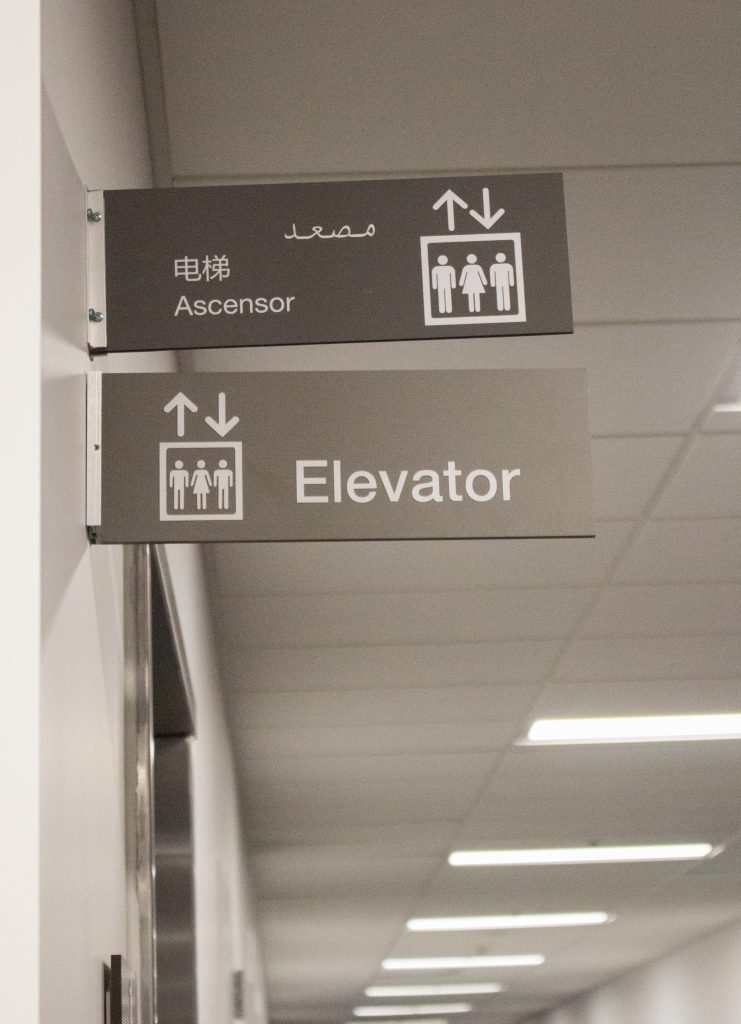
After a great deal of planning and hard work, the Richard Woodcock Education Center unveiled several multilingual signs on Feb. 14. All of the signs for elevators, lactation rooms and restrooms were replaced with new signage, along with the glass windows outside each department office in the building.

The idea for these signs was one that a number of people shared, but it was largely spearheaded by Dr. Rob Troyer, linguistics professor and the director of the Office of International Student Academic Support, and Dr. Mark Girod, Dean of the College of Education.

In talking with Dr. Troyer about how this project came about, he reflected on an honors linguistics class that he taught last year titled “Language in Place”. He explained how he was able to use the class as an opportunity to reach out to people on campus about the idea, and it was also how he learned that Dr. Girod had already been thinking the same thing he was.

“It was really fortuitous that I had this class at the same time,” said Troyer. “I think that us inviting Mark to class and having (a) discussion motivated him to be a little more proactive about getting it done.”
With both parties on the same page, Troyer stated that it wasn’t hard for Dr. Girod to put the plan in action, being the dean of the college.

“That’s one good thing about a small institution is when someone has an idea, and other people think it’s a good idea, it’s pretty easy to make it happen,” said Troyer.

When asked about the value he saw in having multilingual signage around campus, Troyer shared that there are two primary reasons to value these signs.

“One reason is access, and to me that’s the secondary reason. If people are using English as their second language, it may be really helpful for them to have their native language, so they can find their way around and know what things are,” said Troyer.

He also shared what he believes to be the most important reason: “It’s really symbolic … it represents — from the authority’s perspective — the valuing of other languages and an inclusion of multilingualism.”

With the multilingual signs that were put up in RWEC, Troyer shared that, while it was impractical to list every language that is spoken at Western, their goal was to include a number of the most widely spoken languages: Spanish, Chinese, Arabic, and some of the signs have ASL icons as well.

While Spanish has by far the largest group of speakers on campus, Troyer shared that these other languages also have a significant representation in the community.

“Out of 215 international students, currently about 60 percent are from China. And even though there are different languages in China, they use the same written language. So, anybody from China is going to be able to read written Chinese, whether they speak Mandarin or Cantonese or a different Chinese language,” said Troyer. He continued by stating that “about 20 percent of our international students are from Saudi Arabia.”

In reflecting on how he hopes that having more multilingual signage will make a difference at Western, Dr. Troyer had modest expectations.

“I don’t expect it to make a huge impact. It’s a subtle impact, and it’s a subtle reinforcement for the university’s mission for inclusion and multilingualism and globalization,” said Troyer. “It’s a way to make the face of the university match the goals that we have.”

Moving forward, Troyer shared that he has hopes of finding many other ways to incorporate multilingual signage at Western. He also has one other plan actively in the works: to have multilingual signage at the 2019 commencement in June. In addition, he intends to conduct research about the way that this new signage in RWEC is being perceived by different cultural groups around campus.


Contact the author at howlnews@wou.edu

Photo courtesy of Caity Healy

WOU Students for Life hosts guest lecturer

Bailey Thompson | News Editor

WOU Students for Life Club welcomed Jim Schultz, a pastor and Ph.D. candidate, to speak on Feb. 22 before a group of community members, opening a scientific and philosophical conversation about abortion on Western’s campus.

Addressing a number of pro-life arguments and offering a time for questions, Schultz shared a presentation titled “Making the Case for Life on Hostile Turf” that was designed to equip individuals to engage in civil discourse at a time when a number of people are quick to dismiss pro-life arguments.

Before beginning any sort of conversation about the legality and morality of abortion, however, Schultz emphasized that it is important that people on either side of the debate have a full understanding of the science of the unborn and the process of having an abortion.

“When the abortion issue gets brought up, pro-choice people don’t usually want to talk about ‘what is the unborn’ and ‘what happens to the unborn during an abortion’ as much as they want to talk about privacy, women’s equality, reproductive rights, reproductive health,” said Schultz. “Those are the euphemistic terms used to take us off the scent of … what happens to the unborn during an abortion. We are saying that that is the primary issue and those other issues, although important in themselves, can’t rise to the level where it makes it okay to kill an innocent person.”

Schultz also emphasized the belief that, ultimately, the majority of arguments that are made in favor of abortion are grounded in the belief that a fetus is not a human person. Using what he referred to as the “trot out the toddler” test, Schultz shared that arguments such as “anti-choicers want to force poor women to bring another child into the world” and “abortion allows women freedom to pursue careers” would not seem logical if it was being offered as justification for killing a two-year-old. As he described it, very few people would morally support the killing of a child just because they are living in poverty or interfering with their mother’s career opportunities.

From this point, Schultz said that it is necessary for a pro-life individual to provide evidence for the personhood of the unborn. To this end, Schultz presented a number of quotes from leading, secular embryology textbooks that affirmed this notion.

“The development of a human begins with fertilization, a process by which the spermatozoon from the male and the oocyte from the female unite to give rise to a new organism, the zygote,” wrote T.W. Sadler in “Langman’s Medical Embryology”, one of the works cited by Schultz.

Schultz also offered a number of quotes of those who practice abortion, conceding that abortion intentionally kills living human beings.

“I think we have deluded ourselves into believing that people don’t know that abortion is killing,” stated former Planned Parenthood president Faye Wattleton in a MS Magazine article titled “Speaking Frankly”.

If these things can be established, then Schultz concluded that “there is no essential difference between the embryo you once were and the adult you are today that justifies killing you at that earlier stage of development. Differences of size, level of development, environment and degree of dependency are not good reasons for saying you could be killed then but not now.”

However, Schultz repeatedly emphasized one thing: there is never a good reason not to be loving and gracious to people when you talk with them about abortion. Whether someone has had an abortion or holds a strong contrary opinion, it is better to approach the situation in a way that is loving people, not judging them.

If students would like to learn more about the WOU Students for Life, they can contact the club’s president, Gemma Cowan, at gcowan15@wou.edu.


Contact the author at howlnews@wou.edu

Photo courtesy of Ashlynn Norton

The Nat Turner project brings three mini-exhibits to the Cannon Gallery

Chrys Weedon | Entertainment Editor

Nat Turner was a Black man that led the 1831 Southampton County slave rebellion — the only large-scale slave rebellion in American history. It is after him that the Nat Turner Project is named, a project whose goal is to give a voice to artists of traditionally marginalized groups.

The two members of the Nat Turner Project are Melanie Stevens and maximiliano. They state their mission statement as follows: “NTP allows artists of color to go beyond the usual initial expositions inherent in presenting art borne of marginalized perspectives to a dominant culture; allowing artists of color freedom to create or express their own language within and without the parameters of racial commodification or designation.”

The project has recently introduced three new mini-exhibits into the Cannon Gallery of Art in Campbell Hall. Artists Carla Javier-Brea, Holland Andrews and Alejandra Arias Sevilla are on display in the gallery, which opened on Feb. 20.

“I think each of the artists, all of whom I’ve been long time admirers of, are using print and illustration in these really beautiful, soft, and intimate ways.  Each of them, of course, is very different,” said Stevens. “However, I think the that the way Alejandra Arias Sevilla’s work combines the formalities of print and language with social engagement pairs nicely against the rhythmic flow of Holland Andrews’ thoughtful studies of space and body. And Carla Javier-Brea creates these amazing characters that whisper of worlds past and future; memories long gone but lingering on.”

Javier-Brea was born in Berkeley, California to a Dominican family. Her passion for the Dominican Republic’s history and mythology heavily influenced the pieces hanging in the exhibit. “Criaturas que Nacen del Viento” is a series of drawings that are, according to the artist, “executed entirely in graphite, as a form of meditation… a representation of childhood, natural curiosity, and an embrace of the parts of our heritage that modern day colonialism still looks to erase.”

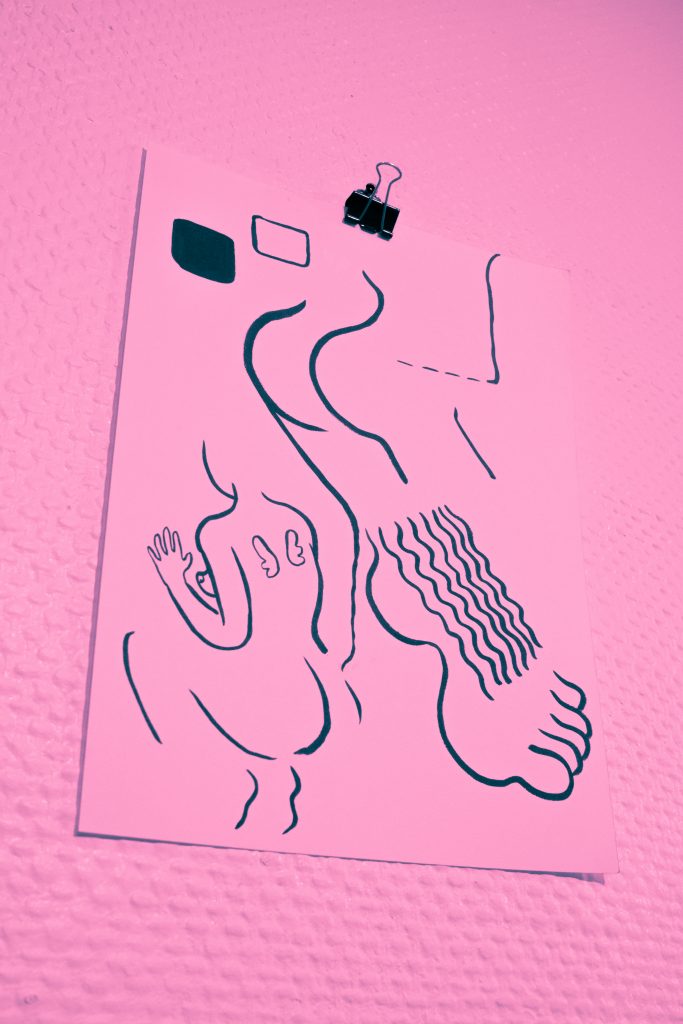
Holland Andrews is a self-taught artist based in Portland, OR, whose exhibit “Low Synth Bass” focuses on representations of the human body and ponders on the nuances of being seen. Andrews’s illustrations are simultaneously minimal and emotional.

The exhibit’s program writes: “frequently highlighting themes surrounding visibility, vulnerability, and identity, Andrews chooses to create a world in which subversion of the status quo is seen for its elegance and power.”

Alejandra Arias Sevilla is a Mexican artist who is also based in Portland, OR. Her work “los susurros de mi ser” focuses on: “the limbo and duality of two opposing identities.” Sevilla’s pieces are done in letterpress and consist of stories and poems in both her native Spanish and in English, touching on the reality of code-switching and hiding parts of her identity in order to assimilate. The intricacy of Sevilla’s work reflects the experience of intersection of two cultures and two identities.

“Garima Thakur gave us this amazing opportunity, and we have been fans and following the work of Carla, Alejandra, and Holland … and love to be able to exhibit it and pay them,” commented maximiliano.


Contact the author at howlentertainment@wou.edu

Photo courtesy of Paul F. Davis

This week in completely made up horoscopes

[fruitful_tabs type=”accordion” width=”100%” fit=”false”]

[fruitful_tab title=”Aries 3/21-4/19″] Everyone else may be cold, but you’re the smart one staying warm because you still haven’t put your Christmas sweaters away yet. [/fruitful_tab]

[fruitful_tab title=”Taurus 4/20-5/20″] Sorry the stars abandoned you for so long. We thought you’d be okay on your own, but I guess not. [/fruitful_tab]

[fruitful_tab title=”Gemini 5/21-6/20″] The stars predict that you will come across a large sum of money this week. Like 50 or 60 cents or something. [/fruitful_tab]

[fruitful_tab title=”Cancer 6/21-7/22″] What did you do without me? Telling you what to expect from your life every week? Maybe that’s what I was telling you… [/fruitful_tab]

[fruitful_tab title=”Leo 7/23-8/22″] The Kool-Aid Man has some beef with chicken strips. [/fruitful_tab]

[fruitful_tab title=”Virgo 8/23-9/22″] Ok if we don’t get at least one more snow day this term the stars will literally throw a fit. Not cool, weather. Not cool. [/fruitful_tab]

[fruitful_tab title=”Libra 9/23-10/22″] Sorry, the stars are closed today due to snow. [/fruitful_tab]

[fruitful_tab title=”Scorpio 10/23-11/21″] Burn it down, Scorpio. BURN IT DOWN. [/fruitful_tab]

[fruitful_tab title=”Sagittarius 11/22-12/21″] You can sleep when you’re dead, Sagittarius. Deal with it. [/fruitful_tab]

[fruitful_tab title=”Capricorn 12/22-1/19″] SNOW! AHHHHHH!!11!!1! [/fruitful_tab]

[fruitful_tab title=”Aquarius 1/20-2/18″] I’m sorry, the stars are currently too busy to deal with your problems… please leave your message after the beep. [/fruitful_tab]

[fruitful_tab title=”Pisces 2/19-3/20″] A bean walks into a room. It’s actually a cat. Interesting. Don’t judge a word by its letterS, Y’ALL. [/fruitful_tab]

[/fruitful_tabs]

Is Jar Jar Binks Secretly a Sith Lord?

Rachel Hetzel | Designer

Jar-Jar Binks is one of the most hated characters of not only the Star Wars franchise, but of the movie industry in general. It’s understandable; he’s a failed attempt at a comic relief character clueless, cowardly, idiotic and impossibly lucky. Or is he? Because, as Obi Wan Kenobi taught us in “A New Hope”, “In my experience, there is no thing as luck.” So perhaps it’s not luck. If not, the only logical explanation is that Jar-Jar is a member of the Sith.

There are many theories surrounding the enigma that is Jar-Jar Binks. The most agreed upon theory, started by Reddit user Lumparoo in 2016, is that Jar-Jar is a powerful Force-user conspiring with Darth Sidious. In addition to this, some believe he either trained, or was supposed to become Supreme Leader Snoke, or that he is a reincarnation of Darth Plagueis.

There are a lot of things to take into consideration when discussing this theory. One of the main problems concerns the Rule of Two there can only be two Sith at a time, a Master and an Apprentice. The Rule of Two was put in place by Darth Bane, and it ensures that only the strongest Sith survive. The apprentice will eventually attempt to kill the master, and then train their own apprentice.

According to this rule, if Jar-Jar was a Sith along with Sidious, then Darth Maul, Darth Tyrannus and Darth Vader should have never existed. Sith, of course, operate on lies and deceit, and this rule has been broken before… so it’s possible Jar-Jar could be a “secret” Sith.

Darth Plagueis was devoted to discovering the power to cheat death and create life he also wanted to put an end to the Rule of Two. Sidious, however, killed him in his sleep before he could discover this secret… or did he? Darth Plagueis could have been successful, and learned  how to harness the power of the midichlorians to manipulate life, and somehow attached his life-force to the weak minded, easily corruptible, Jar-Jar Binks. Sith expect their apprentices to kill them, so by not revealing his success, Plagueis could have resurrected himself after Sidious’s inevitable betrayal.

Many fans were expecting “The Force Awakens” to reveal Jar-Jar as Supreme Leader Snoke. Obviously, that was not the case. Jar-Jar could have trained him, though. The book trilogy “Aftermath” goes over events that took place between “The Return of the Jedi” and “The Force Awakens”. In these books, Jar-Jar meets a “disfigured orphan” whose “scar tissue runs up from his jaw, over the hole that used to be his ear, and to the scalp.” Sounds familiar, doesn’t it?

So, let’s get into the most agreed upon part of the theory: Jar-Jar and Sidious were conspiring together. For a bumbling fool, Jar-Jar had way too many major plot influences. He is the reason Senator Palpatine rose to power in the senate, and later gained the emergency powers that allowed him to destroy democracy and bring the Galactic Empire to life. The two are practically inseparable throughout the prequels Jar-Jar is constantly at his side, convincing others to give him more power.

It’s also important to note how Jar-Jar uses hand movements and can be seen mouthing words during key conversations with characters, much like Jedi do when using their mind tricks. Now, why else would Sidious keep such an embarrassment around? I mean, come on they’re even from the same planet, Naboo, and considering the size of the Star Wars universe, that can’t be a coincidence. Perhaps Jar-Jar was the Phantom Menace the whole time?

Jar-Jar can also frequently be seen using the Force during combat. Reddit user Lumpawarroo has done some thorough analysis of Jar-Jar’s fighting style. It’s very similar to Zui Quan, a style used by Shaolin Monks which is what Jedi are based on. Throughout the prequels, Jar-Jar performs several Force jumps, including a perfect 20-foot twisting somersault a type of stunt only Force-users are ever seen doing. He takes down a battle droid tank by himself, and multiple droids with a blaster tangled around his ankle.

If that’s not enough evidence for you, George Lucas, creator of the Star Wars franchise, and several actors have pretty much confirmed that there is more to Jar-Jar than what was revealed. Lucas wanted the prequels to mirror themes of the trilogy.

In the documentary “The People vs. George Lucas”, Lucas explains his inspiration for Yoda, saying, “Yoda really comes from a tradition in mythological storytelling fairy tales of the hero finding a little creature on the side of the road who seems very insignificant … but who turns out to be the master.”

I, along with many others, believe that Jar-Jar was supposed to be Yoda’s equal opposite, and that Yoda was supposed to fight Jar-Jar in “Attack of the Clones” instead of Count Dooku. Count Dooku was a hastily-written, last-minute character thrown into the plot to replace Jar-Jar.It’s widely believed that Lucas worried that revealing Jar-Jar as the main villain was too risky, because of the backlash and hate from fans. Lucas was even quoted saying “Jar-Jar is the key to all of this.”

Ahmed Best, the actor who portrayed Jar-Jar, confirmed the theory on Twitter and during an interview. Addressing the Darth Jar-Jar theory, Best tweeted “I will say this, it feels really good when the hidden meaning behind work is seen.”

During an interview with Jamie Stangroom, Best said “…there’s a lot about it that’s true … Because of the backlash, and rightfully so, Lucasfilm backed off from Jar-Jar a lot.”

Best also confirmed the existence of a deleted scene where Palpatine confides in Jar-Jar his plans to “wreak havoc,” saying that it “would really give great credibility to the Darth Jar-Jar theory.”

In 2017 The Star Wars Show live streamed a Star Wars celebration, during which Liam Neeson, who played Qui-Gon Jinn, also confirmed the Darth Jar-Jar theory, saying “(Jar-Jar) did go to the Dark Side.”

As Yoda once said, “fear leads to anger, anger leads to hate, hate leads to suffering”. Suffer no longer, don’t let your hate of Jar-Jar cloud your judgement. Use your feelings, and accept the truth of Darth Jar-Jar.

Contact the author at rhetzel18@wou.edu

Illustrations by Rachel Hetzel

Stay ahead with apps that help with studying

Rebecca Meyers | Lifestyle editor

Advances in technology have made it so that students have to have at least some degree of technological competence. Grades, research and, often, even studying is done largely online. Though this opens up many opportunities as the web is world wide, it can also mean the sheer amount of information and sources can be overwhelming, and keeping track of everything can be time consuming.

Fortunately, the need for some organization when it comes to studying has been recognized by those that engineer apps. Whether the need is a digital schedule to keep everything straight, an organized way to study material, or help with research, there’s an app for that.


Timetable (Android) or Class Timetable (iOS): These two are online time management systems that can be synced to various devices, making it easier to keep deadlines organized.

myHomework planner (Android and iOS): As is suggested in the name, this app is like an online planner that helps keep schoolwork straight.

StudyBlue (Android and iOS): This app lets students make their own flashcards and quiz themselves before tests.

GoConqr (Android and iOS): Another useful study tool, this app has various layouts for studying, such as flashcards and concept maps.

Easybib (Android and iOS): This app creates citations for research. It can do various formats, such as MLA, APA and Chicago. However, it’s not always completely accurate, so additional help from the Writing Center can also be beneficial.

Office Lens (Android and iOS): This app takes pictures of schedules and notes and turns them into online formats such as documents that can be downloaded and shared.

LinkedIn Learning (Android and iOS): This extension of LinkedIn has instructional video courses for studying subjects such as software and business.


Contact the author at howllifestyle@wou.edu

Photo courtesy of Ashlynn Norton

Questions you should ask your adviser

Rebecca Meyers | Lifestyle Editor

Advisers are one of the many resources students have access to at Western. Their goal is to help students on their path to graduation, as well as help them approach life after graduation. However, sometimes knowing the right questions to ask can be tricky, especially for newer students.

In my personal experience, meetings go best when there’s specific topics to discuss, rather than just hoping the adviser will have the exact answers needed without any context. Here are some questions to consider that can help an adviser meeting run more smoothly and be more successful overall.


“How do I use DegreeWorks?”

It may not seem like the first question to ask as DegreeWorks is fully accessible on a student Portal account. However, as many quickly discover, there are layers to DegreeWorks that can quickly become a long and confusing list. It’s important to understand it, as it’s the best way to check on the status of graduation requirements.


“Is there anything I should get out of the way?” or, “How do I prioritize?”

Sometimes, when students are particularly unlucky, two classes required for graduation are offered at the same time on the same days, making it impossible to take both. This can make students on edge about getting all their requirements done. Advisers can help show students how to determine which classes will most likely be offered again soon, which won’t be and which classes can possibly be replaced with others if necessary compared to the ones that are absolutely required.


“What other requirements do I need to know about?”

Some majors have requirements beyond just the core classes. Education majors, for example, need to arrange for certain tests to be taken, and others require experience outside one of Western’s classrooms. Asking questions like this early on will help avoid reaching the last term before graduation only to find out there’s a requirement missing.


“What opportunities should I look out for?”

There are a variety of different opportunities that can be easily found on campus, such as career fairs or coffee talks with recruiters, but sometimes it’s hard to find ones specific to our majors. Advisers often know of either starting points or specific opportunities, such as internships or other certifications at Western, and asking them for help can be faster than searching alone.


Contact the author at howllifestyle@wou.edu

How to tell the difference between real and fake Honor societies

Rebecca Meyers | Lifestyle Editor

It’s not uncommon for students to receive emails every so often from organizations calling themselves honor societies. They advertise that their members get exclusive opportunities, such as scholarships, connections to potential employers as well as a status that will be a helpful addition to a resume. They also often say that all this can be yours — as long as a membership is purchased.

However, as noted by the fact that “scams” is one of the first things that pops up alongside internet searches for a number of these societies, not all of these organizations are necessarily legitimate. While they may in fact give out memberships, whether they truly deliver on what is promised is what should be considered before committing.

The Association of College Honor Societies, or ACHS, is an organization that evaluates the credibility of various groups claiming to be legitimate honor societies. According to the website, there are a number of red flags that will often indicate whether an organization is legitimate.  

One of these things to consider is the minimum requirement for academic performance. According to the ACHS, a 3.0 grade point average is considered low for most credible honor societies. Most legitimate ones will look for the upper 35 percent grade point average for undergraduates, which is closer to 3.2 or 3.3. Vague entry requirements are generally not a good sign.

Another thing to consider is that scam organizations differ from real ones when it comes to presence and activity on actual college campuses. If it can be found on campus, or if a specific chapter can be located, it’s more likely to be legitimate.

According to the ACHS, other factors to think about involve the official status of the organization. If it is for-profit rather than non-profit, that alone is considered a warning sign. Also, the website should clearly state the criteria for membership, contain a listing of bylaws and a national headquarters and staff easily located on the site.

An invitation to join an honor society can seem at first like a good opportunity, but doing some research beforehand can save money in the long run. A credible honor society can provide certain opportunities, and sorting them out from the rest can be well worth the time it takes.

Contact the author at howllifestyle@wou.edu

Photo courtesy of achsnatl.org

The pros and cons of taking classes online

Rebecca Meyers | Lifestyle Editor

Many students, at some point in their college career, are faced with the question of whether to take a class online. Some prefer them while others try to avoid them at all cost. Western offers a number of online classes every term, and there are both pros and cons to taking them. While there is a variance in price differences for online classes, this article will focus mostly on the experience of taking an online course.


Pros:

One of the biggest advantages to taking an online class is the flexible schedule. Taking a class online instead of in class allows for students to work around work or social lives. For those that value being able to work on their own time, online classes can be a good fit.

Another upside is that the only item needed is often a computer. Rather than the usual supplies, such as notebooks and textbooks, most online classes usually require only internet access. Some may require purchasing access to a computer program or a textbook, but for the most part online classes provide a lighter load.


Cons:

One of the main downsides to online classes is that there’s usually no face-time with the instructor or classmates. This can make discussions seem a little more tedious, as online forums don’t have quite the same power to generate ideas due to the fact that, more often than not, if a discussion is required, it’s usually only required to respond to a few people in the class rather than reading everyone’s ideas.

The other main disadvantage is that due to the lack of work time usually spent in class, there’s often more homework attached to online classes. The heavier workload can put more stress on students who chose to take them in order to have more work hours or other classes available to them, which ends up taking up a lot of time and energy between the two. This also means that students have to be responsible for creating a schedule and sticking to it, which can be difficult for some students.

There are a number of factors to consider when weighing online classes with in class courses. Online classes aren’t for everyone, and it’s up to each individual to decide whether they’re worth it.


Contact the author at howllifestyle@mail.wou.edu

Photo courtesy of Ashlynn Norton

How the Percent for Art program altered Western’s campus

Chrys Weedon | Entertainment Editor

If a stranger were to stroll through Western Oregon University’s campus, they would stumble across many different art pieces of many different mediums: sculptures, tapestries, paintings and more. Oregon’s Percent for Art program is the biggest reason Western’s campus is brimming with art.

Discussions about the program began in Oregon in the year 1975, and by 1977 something that only existed in Marion and Polk counties was extended to a statewide project. The Percent for Art program dictates that when a public construction project is under way, no less than one percent of the project’s funds must be put aside “for the acquisition of public-facing artwork in all state building construction plans with budgets over $100,000,” according to oregonartscommission.org.

The Oregon Arts Commission states that the Percent for Art program places “high quality, accessible, and mostly visible” art where the public can enjoy it. The OAC’s collection now contains more than 2,400 art pieces that represent over 800 artists.


Art for public buildings is collected in one of two ways: existing art pieces are purchased from an artist or gallery, or a site-specific piece is commissioned from an artist. Commissions can be chosen through proposals submitted by artists through either an open call or exclusive invitation. Art pieces are then chosen by a selection committee.

Mike Elliot, the associate director of Facilities Services at Western, outlined the process of choosing an artist.

“It requires setting up a committee to help (with) defining the most appropriate type of art design based on: 1. size of the project, 2. budget of the project (and) 3. appropriate type of art based on the building program and is it new or existing construction.”

A pre-project information checklist for Percent for Art selections, provided by Elliot, states that the selection must consist of one to two representatives of the department where the artwork will be displayed (for example, housing or athletics), one student, one project manager from facilities, a project architect and one landscape architect.

These committees discuss potential art pieces, styles and themes the most appropriate for each building.

“There is a pool of prequalified artists that proposals can be solicited from,” added Elliot. The process for selecting an art piece takes “typically, about 1 year,” according to Elliot.

Elliot also provided forms in which instructions for maintenance of the art piece can be outlined by the artist. These guidelines include sections where the artist can detail handling instructions and “physical qualities for which (Western) should strive in order to maintain the artist’s intent.”

An example of the Percent for Art program is the current renovation of Natural Sciences. According to Western’s website, the renovation budget for the building is six million dollars. Therefore, $67,000 of that budget will go toward buying the art itself, through the Percent for Art program. Originally, $79,000 was set aside, but $7,900 was paid to the Oregon Arts Commission for an administration fee, minus $2,000 for an artists stipend, and minus another $2,100 as contingency.

The Percent for Art program has made a significant impact on Western’s campus, with its newest installation being the flower sculpture in front of the Richard Woodcock Education Center. What installation will the program bring next?


Contact the author at howlentertainment@wou.edu

Photo courtesy of Ashlynn Norton

“You” and Ted Bundy: Analyzing how society ignores problematic content

Sean Martinez | Freelancer

On Sept. 9, 2018, Netflix introduced the world to a new style of thriller and suspense with a show called “You”. The main character, Joe Goldberg, falls in love with a woman named Beck and makes it his mission to become her boyfriend. But in doing so, he follows her, sees her friends as obstacles and obsesses over her.

While the show captivates its audience, it also sheds light on the social issue of stalking. The show tackles this subject by telling the story through Joe’s perspective, allowing viewers to understand his actions; this has sparked some controversy because it’s easy for people to use this as justification for his actions. The bigger issue, though, is people romanticizing Joe’s character.

Following the show’s success, posts on social media comment on the physical attractiveness of Penn Badgley, the actor who plays Joe. One tweet from @MalikaPlays read, “kidnap me pls,” to which Badgley, under the twitter handle @PennBadgley responded, “No thx.”

However, the issue does not stop with “You”; it continues with an upcoming movie on Ted Bundy’s life: “Extremely Wicked, Shockingly Evil, and Vile. Scheduled to be released sometime in 2019, the movie trailer highlights the fact that Bundy was a conventionally attractive man, using his charm and charisma to sway people away from the belief he was a serial killer. Zac Efron being casted as Ted Bundy has many people split on the decision.

Humanities and English major, junior Never Retallack, believes that casting Efron as Bundy is “… pushing that charismatic factor a little too far.” She goes on to explain that this choice is “… taking away who Ted Bundy really was (because) it’s Zac Efron playing him.”

On the other end of the spectrum, Jasmine Morrow, a junior English major, thinks casting Efron is “more realistic than anybody else because of how attractive he is and he has a charming side.” With Morrow’s perspective, in order for the movie to capture the accuracy of Bundy, it makes sense to cast someone as idolized as Efron.

Regardless of the controversy, it is possible that Efron will attract many people to this movie. The more people who watch it, the better odds are that people will receive the message. We are entering a new era of television where serious issues are presented on entertainment platforms. Shows like “You” and Netflix’s Jan. 24 release centered around Bundy titled “Conversations with a Killer: The Ted Bundy Tapes” attempt to illuminate, enlighten, and educate audiences on the scope of these topics. But the controversy surrounding them and the tendency for some to warp the stories and misunderstand their messages can lead to the glorification of problematic and malicious people.


Contact the author at martinezs17@wou.edu

Photo courtesy of mylifetime.com

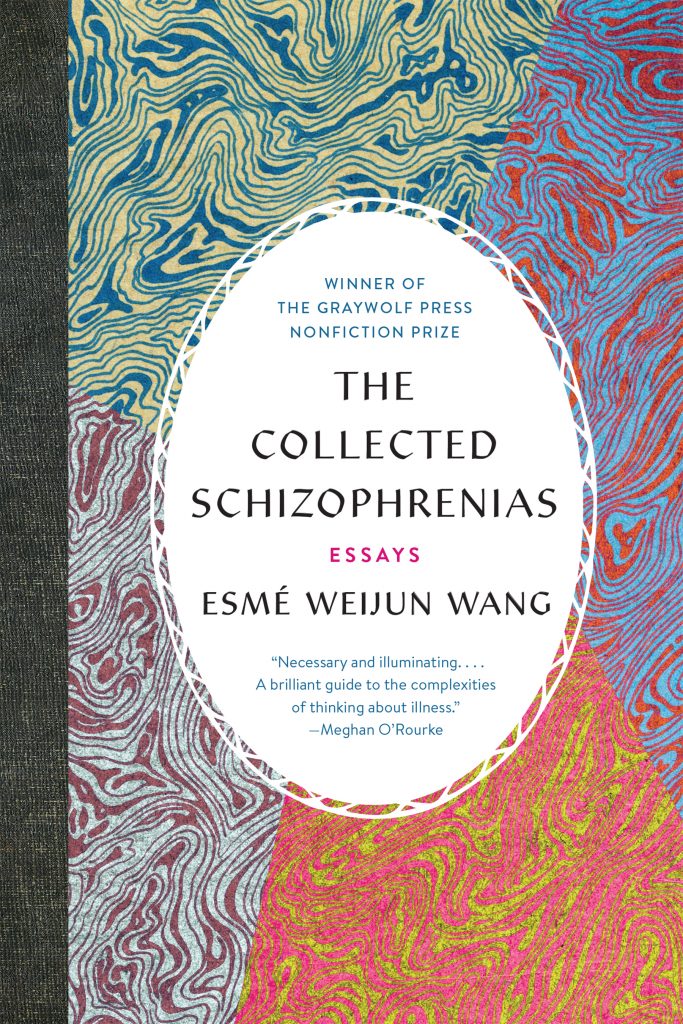
Review: Esmé Weijun Wang’s “The Collected Schizophrenias”

Chrys Weedon | Entertainment Editor

Esmé Weijun Wang has attended the prestigious institutions of Harvard University and Stanford University, and has an MFA from the University of Michigan. Wang is the winner of the 2016 Graywolf Press Nonfiction Prize, a published novelist and an experienced fashion blogger and editor. Wang also has schizoaffective disorder, bipolar type.

In her book “The Collected Schizophrenias,” Wang includes 13 essays concerning her life and what it’s like to live with schizoaffective disorder, bipolar type and late-stage lyme disease. The book starts with the essay “Diagnosis,” wherein Wang describes the science, and controversy, behind her diagnosis and related disorders such as bipolar disorder and schizophrenia.

Wang emphasized the importance of her diagnosis, even though some others with mental illness believe that diagnoses can be stigmatizing: “…I’ve always found comfort in preexisting conditions. I like to know that I’m not pioneering an inexplicable condition.”

In another essay, “High Functioning,” Wang discusses with brutal honesty the sensitivity she has about “appearing” ill. “I’m uncomfortable because I don’t want to be lumped in with the screaming man on the bus, or the woman who claims that she’s the reincarnation of God,” Wang wrote. The author wrote about how she often overcompensates with her fashion choices, so she can seem more high-functioning than she often feels.

Other essays cover topics including her choice to not have kids, how her psychosis has affected her life and higher education’s tendency to reject mental illness. Wang writes the fine line between accepting her mental illness as a large part of her life and being frightened of deteriorating and losing control of her life.

Wang’s writing is both relatable and informative — so little is known about schizophrenia and schizoaffective disorder, and misconceptions about the disorders run rampant. Wang’s transparency and eloquent writing style was truly a breath of fresh air for me, a person who also identifies as mentally ill.

“The Collected Schizophrenias” is a courageous and important piece of literature that looks at the complexity of mental illness through an intersectional lens. Wang’s most recent work describes what mental illness is like and reminds readers that a life with mental illness is worth living.

Overall rating: I would strongly recommend this book.


Contact the author at howlentertainment@wou.edu

Photo courtesy of graywolfpress.org