Mount Hood

Happy birthday, Western

Written by: Hannah Field | Editor-in-Chief

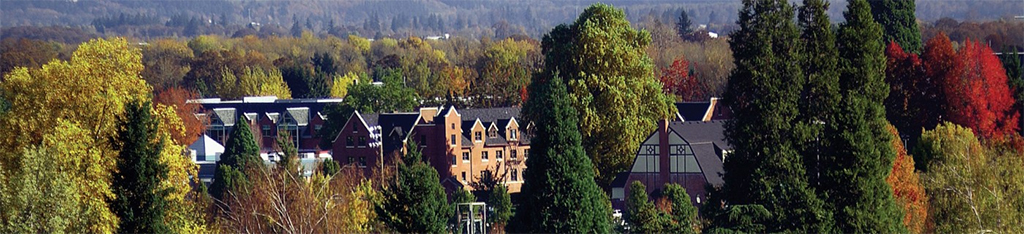
Jan. 18, 1856 — 169 long years ago — Western was founded by 11 Disciples of Christ, originally titled Monmouth University. They were hoping to create a united community in their religion, which did, in its own way over time, become a tight-knit intermingling of students, professors and others, although without the faith originally in mind. Instead, the Western community honors their devotion to academic excellence and the Western way — a tailored educational experience, boasting small class sizes, caring professional staff, educational resources and a safe, walkable campus. Or, in Western’s words, “(commitment) to changing lives, strengthening communities and transforming our world.”

Western is the oldest public university in the state of Oregon, as well as an NCAA Division II institution, harboring a diverse population of students from underrepresented groups, veterans and especially first generation college students, notably recognized by the college.

Thanks to settlers who donated land and money, as well as financial support from local government members, Western came to fruition amongst a trying time in the 1850s, when customs and traditions were clashing with new age movements. Western, despite its religious founding, became an established center for training teachers for public and private schools, becoming Oregon State Normal School in 1882. It closed for a year after lack of funds and reopened as Oregon Normal School — hence the former “Lamron” title of “The Western Howl” paper. If unsure, read it backwards — not a very “normal” concept.

To add on to the normal trend: Western’s athletic teams, prior to 1928, were known as “The Normals.” Yeah, really regular.

Western adopted multiple other names over time: Christian College (1865-82); Oregon State Normal School (1882-1909); Oregon Normal School (1911-39); Oregon College of Education (1931-81); Western Oregon State College (1981-1997); and lastly, the current title, from 1997 to the present.

Throughout the last 169 years, Western hosted some significant and unforgettable events — as well as stories. In 1962, American Communist Party Secretary Gus Hall delivered a controversial speech at the Oregon College of Education, inciting an uproar. The event was later dubbed the “Gus Hall Affair.”

Previously, Hall had spent years running away from the IRS, after having been convicted of fraud and forgery in an election and had even been imprisoned after attempts to overthrow the American government, posted bail, fled to Mexico City and then was re-imprisoned. And, then, 11 years later, someone invited Gus Hall to speak at Western — nice move.

In less exciting, but still important, history, the 123-foot Sequoia tree in the middle of campus used for the annual holiday tree lighting was planted by the class of 1887. 

Columbus Day, Oct. 12, 1962, Campbell Hall lost its iconic tower structure in a massive storm overtaking Oregon, the crash photographed by student Wes Luchau. The storm, titled the Columbus Day Storm, has been tied directly to Luchau’s photo, even after more than 50 years.

Many of the buildings on campus are named after graduates of Western that went on to make notable accomplishments or titles, such as John H. Ackerman, former president of Oregon Normal School. He helped to secure adequate and stable funding for the school. In 2010, Ackerman Hall was named in his honor, incorporating housing and classrooms in an energy-efficient building.

Todd Hall was named after former Dean of Students Jessica Todd. The building was erected in 1912, closely followed by The Cottage in 1917. Todd, having retired in 1931 and passing away in 1944, was fondly remembered by the college community, but also regarded as being a stern, protective and respected woman.

Here comes the interesting part — it’s been told that Todd’s ghost still roams Western’s campus, looking over the students and the dormitories, as she once had so diligently. Possibly a myth, but in order to discover the truth, one might have to ask around or take a visit to one of Western’s oldest buildings.

In more recent news, Western was picked as the focus for the Amazon Prime Video television show, “The College Tour,” in 2024. And — not to bring myself into one of Western’s most accomplished moments — I was featured in B-roll for the episode, partaking in maybe the most awkward conversation I’ve ever had in American Sign Language. They had me sign a waiver and gave me a sticker, which might be worth the embarrassment. I only have myself to blame, after all.

Speaking of American Sign Language, the ASL program, as well as the Education program, continue to be vital to Western. After all, it was the Oregon College of Education, finding its footing by training teachers all those years ago — 169 is nothing to scoff at.

Despite its many name changes, “normalcy,” previous scandals — looking at you, Gus Hall — and potential ghosts, Western has become a beloved part of many students, professors and others’ lives, showcasing a gorgeous campus, with compassionate staff, enticing classes and endless opportunities. If there’s any time to be grateful, it makes sense to celebrate on Western’s birthday Jan. 18, potentially by toasting to Campbell’s lost tower or mourning the loss of the former publishing name “The Lamron” — I admit, it’s a lot funnier than “The Western Howl.”

Contact the author at howleditorinchief@wou.edu

Western’s food pantry

Written by: Sadie Latimer | News Editor

Western’s food pantry is located in room 165 of the Welcome Center. It is open Tuesdays 11 a.m. – 3 p.m. for Western students and faculty only. It is open to the public 9 a.m. – 1 p.m. Wednesdays and 2 – 6 p.m. Thursdays. Abby’s House — Western’s center for equity and gender justice — is the parent organization of the food pantry.

Everyone is welcome to utilize the food pantry on the allotted days, even including non-residents of Monmouth. There is also no maximum or minimum amount of income an individual needs to have to be a customer. Everything in the food pantry is free to all customers. 

Also located in room 165 of the Welcome Center is the Stitch Closet. The Stitch Closet provides clothes for individuals, free of charge. It has the same hours as the food pantry for the convenience of users. Like the food pantry, the Stitch Closet is also a part of Abby’s House. The concept for the Stitch Closet was imagined in 2020 and came to fruition fall 2021. 

Tarly Sineo, a first-year at Western majoring in psychology, started volunteering at the food pantry and the Stitch Closet as soon as it opened for the 2024-25 school year. “I took multiple steps to ensure that I got to volunteer the first day it was available to me,” said Sineo. 

Student volunteers are integral in ensuring the organization runs smoothly. “(I make) sure that the floors are clear, everything’s stocked correctly, clothing racks are clear and we’re using the right hangers. Just general maintenance,” said Sineo.

Sineo is passionate about helping students and members of the community and making sure they have the resources they need. “It means a lot to me. Pretty early (in the term) I figured that I’d probably be bored and have a lot of hours just kind of sitting around my room … So I figured I’d kill two birds with one stone; busy myself, and make the community a bit better for the people around me.” 

Food pantries are an important part of many communities, and it is especially beneficial for students. Western’s food pantry is helping to battle food insecurity among students, with college campuses statistically having more people who struggle.

“It’s a really valuable asset,” said Sineo. “Some (meal plans) don’t get to three meals a day on all of the weekdays.” The food pantry also helps anyone who is hosting community events — such as a Thanksgiving gathering or a residence hall event — get the materials and resources they need. 

Western’s food pantry put together turkey baskets for community members. The baskets have uncooked turkey or ham, stuffing, mashed potatoes, gravy, corn, cranberry sauce and the ingredients to make green bean casserole. 

“It’s a program for people who might not have the money to get a full turkey or the circumstances to be able to get a bunch of different Thanksgiving food for their family,” said Sineo.

Much of the food that Western’s food pantry offers is provided by a Salem food bank — Marion Polk Food Share. The rest of the food supply is a collection of donations from people in the community. 

The food pantry follows a client-choice model of shopping. Customers can choose their items instead of receiving a preselected bag of groceries. This ensures that people will use everything they take, instead of wasting the things they either don’t like or can’t eat due to allergies. 

There is no limit to the number of times people can shop at the food pantry. They can take as much food as they need as long as they are courteous of other customers who also need to use the food pantry. Once customers have finished shopping, they weigh their food and anonymously fill out a checkout survey. The personal information of shoppers is never collected. 

Individuals can support the food pantry and the Stitch Closet by volunteering or giving donations. They accept donations of food, clothes, hygiene products, pet food and school supplies. Donations are collected in a box in front of the food pantry. Individuals can also donate money to the food pantry through Abby’s House. 

For food donations, homemade goods and meals from restaurants will not be accepted. Store-bought foods should have a visible expiration date and nutrition label. It should be in the original packaging with any lids and seals still intact. 

For clothing donations, the Stitch Closet will not accept anything that shows offensive words or visuals, or clothes that are damaged or dirty. 

If donors are unsure if an item will be accepted, they can take it to a student volunteer who will inspect it. 

For students who would like to volunteer, there is a volunteer interest form linked in the food pantry’s Instagram — @woufoodpantry.  

Contact the author at howlnews@mail.wou.edu

Military appreciation football game recap

Written by: Quincy Bentley | Sports Editor

The Western Oregon Wolves hosted the Angelo State Rams on a special night of football under the banner of military appreciation. The game began with both teams testing each other’s defenses and finding early success in the kicking game. Western and Angelo State each managed to drive into field goal range, but both teams fell short of the end zone. Kickers from each side capitalized, and the first quarter ended with a 3-3 tie.
The action-packed second quarter began with Angelo State making its first major statement of the night. They scored the game’s first touchdown within the first two minutes of the quarter, taking a 10-3 lead. Before Western could regroup, Angelo struck again, finding the end zone less than three minutes later. The Rams’ quick two-touchdown burst put the Wolves in a 17-3 hole, but the Wolves refused to back down. Western responded with a deep ball from quarterback Michael Gibson to Damon Hickok that shifted the momentum toward the offense. Shortly after, a clutch reception by Kade Hustler allowed the Wolves to secure a crucial first down, pushing them to the doorstep of the end zone. However, a fumble at the 5-yard line gave Angelo State possession, squashing Western’s hopes for a touchdown on that drive. Fortunately, the Wolves’ defense stepped up when it mattered most, forcing Angelo State into a field goal attempt.
Andrew Simpson’s electric kick return set Western up at the 25-yard line, sparking another drive. A series of clutch plays brought the Wolves within 10 yards of the goal line, but they couldn’t punch it in. Western settled for a field goal from Keaton Emmett, narrowing the score to 17-6.
Just when it seemed like Angelo State was going to take over the game, Western’s special teams delivered a game-changing play. A blocked field goal, courtesy of an impressive effort by Cody Hall, was recovered in the end zone for a Wolves touchdown. Emmett added the extra point with a kick, and Western clapped back to make the score 17-13.
Western’s defense continued to dominate, stopping Angelo’s kick return at the 15-yard line and applying pressure. A stand-out play from the defense was when Daron Ulrich Jr. forced an incomplete pass on a potential Angelo touchdown. Although the Wolves were able to regain possession with about 30 seconds left in the half, time ran out before they could add any more points to the board.
At halftime, the Wolves trailed 17-13, but the momentum was finally on their side.
Angelo State came out of the locker room with renewed energy, scoring a touchdown early and adding the extra point to start the third quarter, extending their lead to 24-13. Western’s offense worked hard to respond, with Damon Hickok making key plays to inch closer toward the end zone. While the Wolves couldn’t capitalize with a touchdown, they managed to add a field goal, trimming the score to 24-16.
However, Angelo State’s offense was on a roll. They answered with another touchdown and extra point, building a 31-16 lead. Despite the deficit, Western’s defense continued to fight, with Joseph Northcutt delivering a sack to stop an Angelo drive. The Wolves’ efforts kept the score steady at 31-16 heading into the final quarter.
The fourth quarter opened with a bang as Aaron Woodard delivered a monster hit that set the tone for a physical finish. Both teams dug in, with defenses dominating and possessions going back and forth. Western managed to produce some highlight-reel moments, such as Andrew Simpson’s kick return that left defenders stuck in the turf, and an acrobatic catch from Kade Hustler that kept the Wolves’ hopes alive.
Unfortunately, despite their best efforts, the Wolves’ offense couldn’t find the spark needed to close the gap. Angelo State’s defense held tight, stopping the Wolves’ final pushes. Both teams traded stops as the clock ticked down, and the game ended with Angelo State securing a hard-fought 38-16 victory.
The 2024 season has sadly come to an end, but the Wolves showed significant improvement compared to last year. This season, Western finished with an overall record of 6-5, and 6-3 in conference play — a notable leap from the previous season’s 3-8 overall record and 2-6 league performance. It was inspiring to see Western’s dedicated fans, players, and staff come together to support the team through these hard-fought games. Their passion and commitment have built tremendous anticipation for the upcoming season.

Contact the author at howlsports@mail.wou.edu

Trap

Written by: Jaylin Emond-Hardin | Entertainment Editor

Content warning: this article contains spoilers and mentions of violence and suicide

M. Night Shyamalan’s most recent theatrical release, “Trap,” has hit the streaming service Max. The movie follows Cooper Abbott, played by Josh Hartnett, as he and his daughter attend a Lady Raven concert, where it is revealed they are at the center of a dark and sinister plot.

The Federal Bureau of Investigation — FBI — has set up agents, SWAT team members and police officers throughout and around the concert venue and are set on one task: to find the serial killer nicknamed “The Butcher.”

Viewers come to find out that Abbott is who they are searching for and throughout the film, he constantly outsmarts and outmaneuvers the FBI agents and their profiler, Dr. Josephine Grant. 

One of the most pivotal scenes in the movie is when Lady Raven, played by Shyamalan’s daughter Saleka, is trapped in the Abbotts’ bathroom and reveals to the family that their patriarch is The Butcher. She then uses an Instagram livestream to urge her followers to find and free Abbott’s next victim. When chosen as his newest victim, Lady Raven manages to outsmart and escape him, even while Abbott continues to stay one step ahead of the FBI.

At the climax of the film, Abbott returns home, planning on staging a murder-suicide after figuring out it was his wife, Rachel, who had reported him to the police in the first place. What he doesn’t know is that Rachel has gotten ahold of his bag and drugs him using his supplies. When the FBI and SWAT team arrive, Cooper is already hallucinating, seeing the specter of his mother. He is ultimately taken into custody, but the movie concludes with him using the spoke of a bike wheel to unlock his cuffs. 

The film is a true thriller, keeping viewers on the edge of their seats. Shyamalan is best known for his plot twists, like in his movie “The Sixth Sense,” and heavily utilizes them in “Trap.” 

The film is also based on the true story of Operation Flagship.

In 1985, the US Marshals Service sent invitations to 3,000 fugitives — with over 5,000 outstanding warrants between them all — in Washington, D.C., under the guise that they had won tickets to a Washington Redskins football game. That day, 101 fugitives attended and were arrested on the spot. “Trap” follows that sting operation, with the concert being used to find and arrest The Butcher. 

While the movie’s plot is well-written and easy to follow, it is also extremely anxiety-inducing. Hartnett’s portrayal of a level-headed killer is convincing to the point where viewers will feel as if they are caught in the trap with Cooper Abbott. 

My recommendation: if one has a history of post-traumatic stress disorder or may be sensitive to violence, do not watch this film. While the film itself is well done, Hartnett’s chilling portrayal of Abbott may be triggering. Viewer discretion is advised. 

10/10.

Contact the author at howlentertainment@mail.wou.edu

Why you should try “Grey’s Anatomy”

Written by: Hannah Field | Editor-in-Chief

Content warning: this article contains spoilers and discusses fictitious violence

Season 20 of “Grey’s Anatomy” was released to Netflix June 29, 2024, featuring ten episodes on top of its already prominent 430, spanning from 2005 to the present. Since premiering, “Grey’s Anatomy” has been nominated for 39 Emmys, won a Golden Globe Award for Best Drama Series and a People’s Choice Award for Favorite TV Drama, inspired two spin-off shows and hit an all-time audience record of 37.88 million viewers for episode 16 of season two.
The show has gone on so long that most of the main cast has moved on, their characters being killed or written off, with even protagonist Ellen Pompeo — Meredith Grey — stepping back in the latest seasons.

Most credit the success of “Grey’s Anatomy” to Shonda Rhimes, founder of the production company Shondaland and creator of “Grey’s Anatomy.” Rhimes has become well known for her tendency to kill off characters in the most tragic ways possible, with more than nine notable recurring character deaths overall. In 2015, Rhimes left “Grey’s Anatomy,” but the calamity persists in her absence.

Meredith Grey survived not just a plane crash, a shooting, a physical assault, a bomb, drowning and COVID-19, but also managed to scrape by after a miscarriage, the death of her husband, multiple deaths of her friends, losing her parents and even going to jail in season 16 for — easy guess — insurance fraud.

The show has always incorporated real-world issues, mixing them with fictitious characters and applying a level of relatability for viewers to connect to. Characters struggle with infertility, lack of insurance, love triangles, affairs, religion, relationships, family, cancer and more. “Grey’s Anatomy” takes those issues to an extreme level, allowing for an eventful watch in any episode, and often mixes humor in with how the characters interact and work together.

Most iconic are the original five interns of Seattle Grace Hospital, Meredith Grey, Cristina Yang, Alex Karev, Izzie Stephens and George O’Malley, starting strong in season one until, one by one, the team falls apart through loss, separation and other work opportunities. Most viewers refer to the first few seasons of “Grey’s Anatomy” as the best, having great rewatchability and incredible banter.

Although this might be the case for many viewers, the later seasons add more flexibility and characters and the budget increases over time, allowing for incredible set design, new actors and new plots — meaning more riveting turmoil for “Grey’s Anatomy’s” most loveable characters.

At the end of the day, “Grey’s Anatomy” is an ideal show to watch when coping with something difficult — why? Because Meredith Grey will always be having a worse day.

Contact the author at howleditorinchief@mail.wou.edu

KWOU

Written by: Hannah Field | Editor-in-Chief

According to KWOU’s website, “KWOU is a student-run online radio station and has been the sound of (Western) since our humble beginnings in a closet at the Werner University Center in 2010.” Since then, KWOU has moved to Terry House, next to Public Campus Safety, to continue to “blast tunes” and grow their music library. At Terry House, KWOU has a “PAWDCAST” studio available for rent with professional broadcast equipment and soundproofing. Up to four people at once may use the studio.

KWOU has a radio station available for listening and is open for music recommendations. “The station exists to provide Western students, staff and faculty a chance to share their music and perspectives with the world online 24/7, 365,” said the KWOU website.

Molly Martinka, sophomore at Western, is station manager of KWOU for the 2024–2025 academic school year. “I do all of the behind the scenes work when you come in to use the podcast studio, I’m the one you’ll be communicating with in terms of reserving the studio and making sure that you’re all set up to record (for the PAWDCAST studio).”

On top of that, Martinka manages the scheduling if students are interested in DJing. She also oversees KWOU as a whole, making sure that anyone coming in to use equipment or get involved understands the rules so the whole process runs smoothly.

Martinka herself is in the music scene and devoted to KWOU’s mission. “I’m a singer-songwriter,” said Martinka. “I’ve just always loved music. I’ve grown up making it into a career for myself and I think radio is a big part of that, but there’s such a lack of radio right now. It’s very social media and streaming platform based, and I really think that student freedom of speech is very important.”

KWOU has an Instagram account as well as an email for contact — kwou@mail.wou.edu — as a means of getting connected and involved.

“I think there’s this idea that (KWOU) is an exclusive thing that you have to be a part of already, and that’s not the case at all,” said Martinka. “Any student can join, and any student can reach out and reserve the studio or become a DJ, or even if they just wanted to get involved and learn a little bit more about KWOU and Terry House.”

“We’re always looking for show hosts, music junkies, marketing-minded individuals, outcasts and anyone who can help make our station and our community a stronger, more connected one,” said the KWOU website.

Contact the author at howleditorinchief@mail.wou.edu

Western falls short

Written by: Quincy Bentley | Sports Editor

Following an eventful homecoming week, Western students and fans were eager for the highlight of the weekend, the homecoming football game. The Western Wolves took on Texas A&M Kingsville in a high-stakes, much-anticipated match. With both teams entering with strong records — Wolves at 5-0 in conference play and Kingsmen at 3-2 — this game was set to be an exciting showdown that would test each team’s grit and endurance.
Jordan McCarty started the game off with a 6-yard run into the end zone, while freshman kicker Keaton Emmett finished it off with an extra point, adding a total of seven points to the scoreboard for the Wolves. It wasn’t long until the opposing offense responded though, as the Kingsmen followed up with a touchdown and extra point of their own.
Going into the second quarter, the score was tied at 7-7. Both teams were getting stops on the defensive end, but Andrew Simpson’s impressive interception midway through the quarter shifted momentum in the Wolves’ favor. Things were looking great for Western, as they continued to gain yards and attention from fans, but unfortunately, they weren’t able to capitalize off of Simpson’s play. The possessions continued to go back and forth, but the Kingsmen were able to score seven points right before halftime, making the score 7-14 in Texas A&M’s favor going into the half.
In an intense third quarter, the Wolves faced an uphill battle as their opponents widened the gap with a touchdown and extra point. This set the score to 7-21. However, a strong run from redshirt sophomore Jermaine Land revived the Wolves’ offense, putting them in position for a much-needed touchdown. Soon after, the Wolves struck, with a crucial touchdown pass and a successful kick to narrow the Kingsmen’s lead to just seven points. Their defense held strong, stopping the opposing offense and leaving the Wolves trailing 14-21 as they headed into the final quarter.
The fourth quarter started with a bang as the Wolves pulled off an impressive series of plays. A well-placed throw found senior wide receiver Damon Hickok, who made an acrobatic catch for a massive gain. Another pass to Hickok set the Wolves within 20 yards of the end zone. The next play, redshirt sophomore Kainoa Sayre had a strategic run, placing them only three yards from tying the game. Despite their efforts, a costly fumble on third down turned the possession over. Yet shortly after, the Wolves’ defense kept the dream alive, capped off by an outstanding interception from redshirt junior Daron Ulrich Jr. However, they couldn’t convert on their final chances, even after blocking a critical punt. Ultimately, Texas A&M ran out the clock, leaving the Wolves just shy of a comeback.
The Wolves — 5-3 overall, 5-1 Lone Star Conference — have a chance to redeem themselves next week as they travel to take on Midwestern State in Wichita Falls, Texas.

Contact the author at howlsports@mail.wou.edu

Stephanie Juanillo exhibition

Written by: Hannah Field | Editor-in-Chief

Stephanie Juanillo’s art display, “Entre Colores: Un Homenaje a la Vida y la Muerte (Between Colors: An Homage to Life and Death),” will be displayed in the Cannon Gallery in Campbell Hall until the end of October.

Featuring various acrylic paintings on canvas as well as an ofrenda — an altar in homage to Juanillo’s abuelito Berna, with candles, marigold flowers and a beautiful painting — the display puts on an equally powerful and beautiful message, honoring family and loved ones who have passed.

According to the Western calendar page, “Stephanie Juanilo’s exhibition … is a personal, bold and colorful exploration of the coexistence of grief and joy and how they both permeate the topics most important to her, such as migration, community, family, loss, distance and intergenerational healing.”

Juanillo, being a first-generation immigrant, utilizes “bold colors, patterns and textures (inspired by) Mexican iconography, Latinx music, past memories, people and nostalgia. The act of creating — whether it be painting, printmaking, collage or installation — serves as a way for Stephanie to stay connected to her Mexican roots.”

Juanillo’s Instagram, @color.obsessed, explores Juanillo’s relationship with art and projects current and past. One post features a painting on display in Cannon Gallery, with Juanillo captioning it: “Flowers have a deep cultural and emotional meaning in the immigrant community, I wanted to honor that as much as possible. This is dedicated to the physical and spiritual connection that many of us experience through nature. What a special way to stay connected to our native homes, family and traditions.”

Another post, featuring a collage piece centering around Juanillo’s abuelito Berna, states, “I wanted to emphasize and capture his joy for life. When I was in Mexico visiting my family, I was always greeted by him with a smile that eventually turned into laughter and then a warm hug. He showed me his plants and took pride in his love. Leaving Michoacán was really hard, but I carry the image of his warm smile and loving spirit in my memory always.”

In the center of the room, facing Berna’s ofrenda and the accompanying installation, a plaque with a typed letter from Stephanie Janillo read: 

“When my father left his home country, he kissed the earth and cried. Days turned into months, months into years, our new life in the U.S. began. Any and every object, song, smell, food that reminded my parents of home filled our house. Distance and borders, both physical and metaphorical, were met with an abundance of my mami’s cooking passed on from her mother, grandmother and great-grandmother, soothing our neverending nostalgic void. Our garden, so meticulously cared for by my dad, became a refuge, a beautiful love for flowers and plants. I don’t know when the grief stops, the grief of not watching your parents grow old, of missing out on family celebrations and milestones. The grief of a friend or family member you were not able to say goodbye to and hug for the very last time. I don’t think it ever really stops or goes away because it is an extension of the love we still hold for a person, place and moment in time. So as each November approaches and we get closer to (Dia de los Muertos), I take the time to sit with these feelings. Marigolds decorate our altars and homes, a guide to help the spirit of those who have passed find their way back home. The souls of our loved ones return in the form of a monarch butterfly. Photographs and favorite foods of the dead adorn the ofrendas. Stories are shared, (life that was lived and is yet to live is celebrated and cries and laughter synchronize. I’m reminded that) to love and to be loved is a gift and one of the greatest honors we get to experience as humans. I’m reminded of the value, power and resilience of keeping traditions alive.

So I ask you, if you had to leave your home today, if you had to leave your family, friends and everything you’ve ever known and loved, what would help you stay connected? What memories would you preserve? What pictures would you decorate your new home with? How would you (spend your last week with those you love? What would you leave unsaid? What would become a) physical representation of your grief and longing? How would your definition of home change?

May this show be a love letter to my family and all of the immigrants who are forced to leave their homeland. Their story and their sacrifice are always with me and woven into every piece I make. (May this show be an invitation for you to love more intentionally, to celebrate life and sit) with whatever grief you are currently experiencing.”

Contact the author at howleditorinchief@mail.wou.edu.

Western’s community garden

Written by: Sadie Latimer | News Editor

Located on campus near Rice Auditorium, behind the in-progress new Student Success Center building, a community garden grows despite being surrounded by construction. Currently, it is being taken care of solely by Western alumnus Rick Tingle. The garden consists of several compost piles, strawberries, potatoes, raspberries, squash and many other fruits and vegetables. It also is home to a satellite dish, which is in the process of being dismantled. 

Although the garden is in a fenced-off area, Tingle planted raspberries along the fence specifically for students to graze. “It used to be that people knew the garden was here only by coming down this trail and they would come by and pick the raspberries,” he said. Eventually, he wants the fence to be covered with additional plants, such as blueberries and cherry tomatoes. 

“Every one of these plants I started on my balcony… I got to know every one of these plants, and I’ve watered them by hand every morning since late winter and early spring,” Tingle said. 

His hard work in the garden was coming to fruition, with cucumbers, tomatoes and Japanese eggplant being harvested.

Tingle graduated in the spring of 2024 from Western with a Master of Science in Criminal Justice: Justice Studies. “Before that, here at (Western), I got my bachelor’s of anthropology and psychology and all of those things just dance. They interact,” he said. Before graduating with his master’s degree, Tingle wrote a research paper about how community gardens could help solve food inequity problems on college campuses — part of the reason why Tingle remains at Western, although no longer a student.

“I don’t mind being one of those invisible people doing the hard work in the garden. I just want the results of the hard work to be visible and effective,” Tingle wrote in a document. He is working toward the goal of “providing healthy foods for hungry people” at Western. 

Tingle has been in the community garden every single day for two years. Even when the heat rose to 100 degrees during the summer, he was still planting, watering and keeping up his composting project. 

Last autumn, Tingle began working with Western’s food pantry. Every Tuesday, the food pantry has supplied him with food that they would have otherwise had to throw away. Tingle is given a wide variety of expired or rotten food, such as potatoes, rice, bread and even cupcakes, before adding it to the different compost piles within the garden.

“The strawberries weren’t doing anything. Maybe the soil hadn’t been replenished. And then I got maybe 150 pounds of potatoes,” said Tingle — he ended up crushing the potatoes and mixing them in with the soil. In turn, the strawberries started growing with full force, with a sea of red potatoes growing in between the strawberry plants. 

On sunny days, Tingle covers the compost piles with cardboard to make sure that the compost-eating creatures stay up top. “I’ve trimmed, I’ve pulled all the weeds and I keep it watered along the fence. I use those weeds with the compost,” Tingle said. He also mixes unexpected things like popcorn kernels into the compost. “This is what’s fun to me. It’s like an experimental compost.” Since he expects there to be much more food thrown out because of the start of the school year, Tingle has considered making another row and starting a new composting project altogether.

Ideally, the garden will become a place where students can work, enjoy their hobbies and make connections with other students. In the community garden, students can learn about gardening and composting and also have a space to feel comfortable and partake in Tingle’s “experimental composting.” 

“From my research, one of the key points was that students need to feel comfortable in the garden space and their needs should be considered while planning the layout of the garden,” wrote Tingle. “Students need to interact in an enjoyable, creative atmosphere.” 

“I want to let people know that there is a garden here and that it has been in transition, but we could use help right now beautifying it,” Tingle said. Success has been evident in Tingle taking care of the garden by himself, but he needs help making it accessible and appealing to all students. Any student can volunteer, whether it’s picking weeds, planting, general maintenance or painting the planter boxes.

“The last class that I did was a sustainability class because all of my research, all my findings, for my paper…  I learned about permaculture. And one thing about permaculture is design. It’s a creative design, there’s an aspect that you have to make. The garden needs to be more than just planting and eating vegetables,” said Tingle.

Volunteers could also help make a website for the community garden. “Together we can begin to network and consider methods of a working garden website where people can communicate where help might be needed. The website may also be developed so that students might be able to check for real-time status updates of their plants in the garden,” he wrote. 

If students are interested in helping out in any way or have any questions or suggestions, email Rick Tingle at rtingle18@mail.wou.edu.

Contact the author at howlnews@mail.wou.edu

Hoop & Howl

Written by: Quincy Bentley | Sports Editor

Western men’s and women’s basketball programs shared the stage for the Hoop & Howl event Oct. 11. The night started with player and coach introductions, with the crowd raving in response. Notably, senior guards Bella Pedrojetti and Jason Gallant received favorable ovations from the audience as they walked onto the court to their selected songs. 

Fans were able to watch and even join in on some of the events on Friday night. The men’s and women’s basketball teams competed in a series of events — skills challenges, a three-point challenge and a dunk contest. 

During the skills challenges, players from each team were instructed to choose two individuals from the stands to help them take home the win. The fans that were chosen were happy to be picked and also spread a competitive spirit throughout the gym. They started by making a layup, a free throw and one three-pointer. From there, they began dribbling around a series of cones and then had to finish with another three-pointer to solidify the victory. 

After the skills challenges finished, Wolfie, Western’s school mascot, decided to get in on the action. Two fans from the audience were chosen to race Wolfie to halfcourt and back and, let’s just say, Western’s spirit animal took a big tumble. To wrap up the first sequence of events, the winners ended up leaving with more than just a smile on their faces — they were given an exclusive Hoop & Howl shirt for their performances and willingness to step up. 

The second half of events involved a three-point shootout. The men’s team was on one side of the court while the women’s team was on the other. The players were given five shots on five different spots around the three-point line, with one of these spots being a money ball rack. Each made shot counted as one point, but the money ball rack was especially important because the shots made at that spot counted as two points. 

On the women’s side, freshman guard Brianna Badonie got off to a hot start, scoring 15 points in the first round. Shortly after, senior guard Bella Pedrojetti responded with 15 points, forcing Badonie and Pedrojetti to compete in a tiebreaker. Both players chose two spots on the court to shoot from and attempted five shots from each. It was a close battle, but Pedrojetti took home the win after making six out of her ten total shots. On the men’s side, junior guard Carson Frinke scored 17 points,  allowing little room for any of his teammates to combat. Freshman Mario Williams Jr. put up a fight, but nobody was able to reach Frinke’s score, declaring him the winner.

The dunk contest, the most anticipated event of the evening, included contestants junior forward Anjay Cortez, junior guard Makaio Mims, sophomore guard Makaio Morphy and sophomore forward Hawthorn LaPierre. Although there were four competitors, one was able to shine above the others. In round one, the six-foot-eight-inch forward, Cortez, threw down a 360 alley-oop dunk from his teammate Gallant. This received a total of 49 points out of 50, making it a tough score to beat. Morphy and LaPierre showed off their impressive jumping ability in round one, but Mims threw down a reverse dunk that allowed him to surpass the two sophomores. The final two contestants boiled down to Mims and Cortez. Mims received a score of 45.8 after stuffing in a 360 off the backboard alley-oop that left the crowd in shock. Surprisingly though, his score was not enough to match what Cortez brought to the table. For his final dunk, Cortez performed an under-the-legs dunk that was so impressive it led to a perfect score of 50 from the judges. After a great showing from the contestants, the high-flying forward Cortez took home the dunk contest title. 

Lastly, the winner of the men’s three-point contest battled against the winner of the women’s three-point contest to showcase the better shooter. Carson Frinke and Bella Pedrojetti are both sharpshooters from long range, but only one of them could come out on top that night. The same rules applied — five shots at five spots with a money ball rack — and the two shooters proceeded to go at it. Frinke was on fire, only missing three out of his first ten shots. In contrast, Pedrojetti started slow but began to heat up around her second spot, and from there she didn’t slow down. Despite finishing with a score of 18, Frinke came up short and Pedrojetti’s insane performance of 20 points led her to victory.

When Alex Saindon, the assistant coach for men’s basketball, was asked about his thoughts on the event, he stated, “I think it was a great experience. Hoop & Howl is an important tradition here at Western, and I’m excited to see it grow from here … go Wolves.” 

Overall, Hoop & Howl was a great way to generate more fans to come out and support both the men’s and women’s teams as they start their seasons.

Contact the author at howlsports@wou.edu