


April 15, 2026 | Jaylin Emond-Hardin | Entertainment Editor
I’ve been thinking about the “Game of Thrones” universe a lot lately. “A Knight of the Seven Kingdoms” was released in February of this year, I recently finished “A Game of Thrones” for the first time and I’m rewatching “House of the Dragon” in preparation for Season 3’s release this June. Maybe “I’ve been thinking” is an understatement.
Either way, the shows have been on my mind a lot as I’ve consumed them in the last few months, and with them being on my mind, there are a lot of considerations I’ve looked at. After all, the shows are all connected in some way or another, aside from being in the same universe. I fear that is the most obvious, but there are more connections beyond that, with the same Houses and same family names stirring up trouble in Westeros.
Honestly, one of my favorite connections appears in Season 3 of “A Game of Thrones.” In “And Now His Watch Has Ended,” Joffrey Baratheon gives Margaery Tyrell a tour of the Red Keep. As they pass through the Great Sept of Baelor, he casually recounts Rhaenyra Targaryen’s fate — killed and eaten by Aegon II’s dragon in front of her son.
Rhaenyra Targaryen is the main character of “House of the Dragon,” and the show follows her fight against Aegon II, her half-brother, to claim the Iron Throne.
This isn’t the only Targaryen from another series mentioned in the episode, however. Baratheon also tells Tyrell about Aerion Targaryen, also known as Aerion Brightflame, and how he drank wildfire because he thought himself to be a dragon.
Aerion Targaryen is a minor character in “A Knight of the Seven Kingdoms,” and is bested in a Trial of Seven by Ser Duncan the Tall. While Season 2 does not release until 2027, fans will likely not see him again. If “A Knight of the Seven Kingdoms” adheres to its source material, Aerion Targaryen does not reappear. He departs for Dorne while Ser Duncan and Egg travel to other parts of Westeros.
Speaking of Ser Duncan, the hedge knight is mentioned twice across the show, once in Season 1 and the second time in Season 4. Both are brief, but they truly show his place as a legend in Westeros. In Season 1’s “Lord Snow,” Old Nan offers to tell Bran Stark a story about Ser Duncan, who she says was Stark’s favorite.
In Season 4, the allusion to Ser Duncan is much more explicit. Again, it is Baratheon who speaks of the character, using the hedge knight’s long list of deeds in the Book of Brothers to mock his father-uncle, Jaime Lannister. Ser Duncan’s 14-page-long list that Baratheon mentions in the show alludes to the greatness that the character eventually achieves.
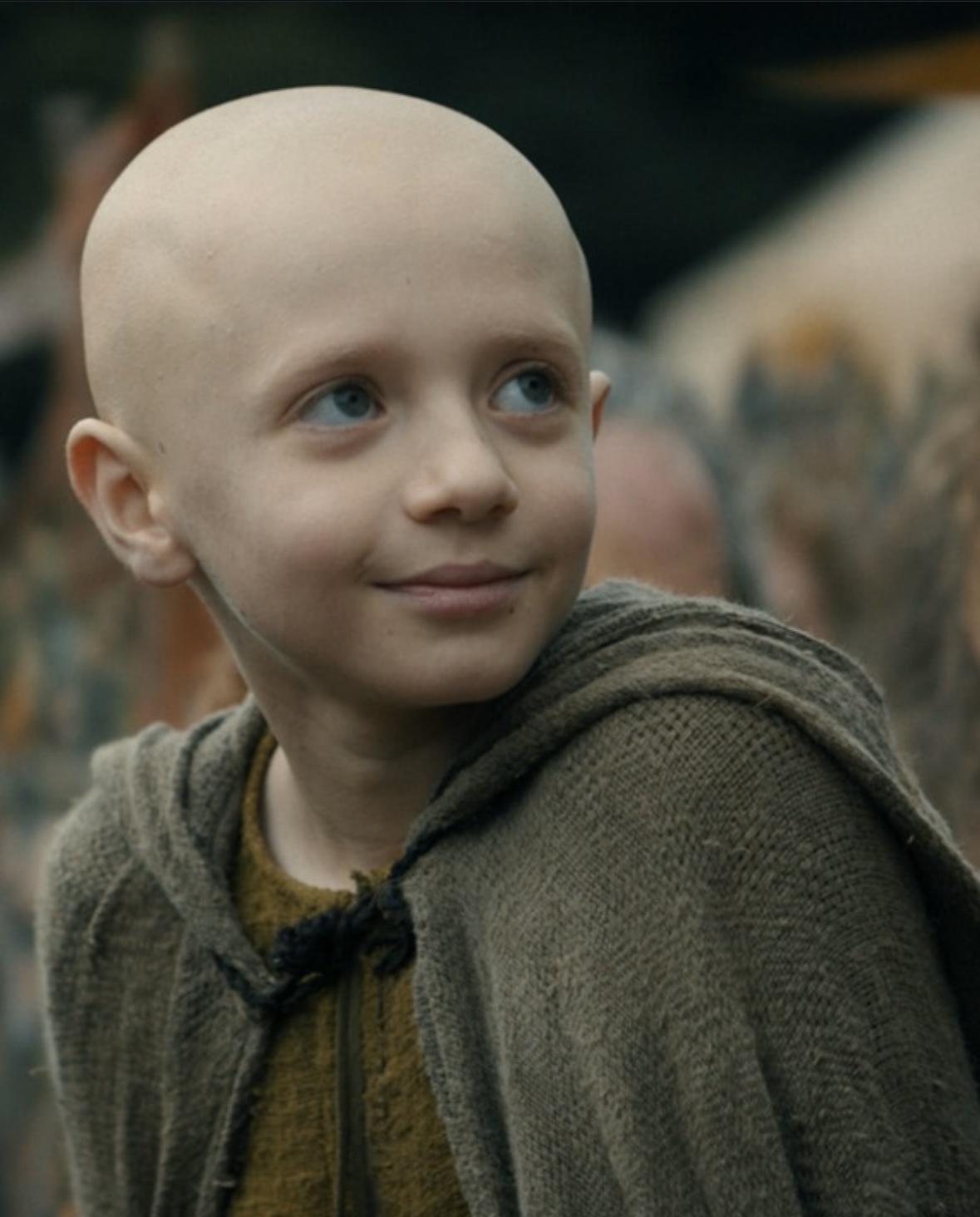
A third character from “The Knight of the Seven Kingdoms” is also name-dropped, but it’s in the Season 5 episode “The Gift,” when Maester Aemon shouts out “Egg” on his deathbed. In a previous season, the Maester had revealed that he was a Targaryen, which means that the “Egg” he is calling to is Aegon V, and the second main character of “A Knight of the Seven Kingdoms.”
Out of the four characters mentioned, three are Targaryens — Egg, Aerion and Rhaenyra — which is kind of the point. It begins to become obvious how the entire “Game of Thrones” universe quietly orbits that one family.
Even when the story pretends to be about sprawling politics, rival houses or the fate of the realm, it keeps snapping back to the same gravitational center: the Targaryens. Their bloodline, their dragons, their internal conflicts — those are the forces that shape history again and again. Egg represents the unlikely, almost hopeful side of that legacy; Aerion Targaryen shows its instability and cruelty; Rhaenyra Targaryen embodies how personal ambition can escalate into civil war. Three very different people, in the same dynasty, with the same underlying volatility.
That’s what makes the world feel less like a broad ensemble and more like a long, multi-generational tragedy. The rise and fall of kingdoms, the wars, the prophecies — they’re not random, they’re consequences. And more often than not, they trace back to one family’s ability to conquer a continent and their inability to hold onto it peacefully.
So when multiple Targaryens keep popping up in even casual references, it’s not coincidence — it’s the story revealing what it’s really about.
But even the beginning of “House of the Dragon” references Daenerys Targaryen, who is arguably the main character of “A Game of Thrones” — the show — and “A Song of Ice and Fire” — the book series.
“It is now the ninth year of King Viserys I Targaryen’s reign. 172 years before the death of the Mad King, Aerys, and the birth of his daughter, Princess Daenerys Targaryen,” it reads, before words fade out until it just reads “172 years before Daenerys Targaryen.”
When I first saw this while watching “House of the Dragon,” I got chills, because it sets Daenerys Targaryen as the marker for every point in Westerosi History.
If I were to equate the Targaryens to a modern famous family, they would be the Kardashians. They’re rich, they make questionable decisions, yet somehow people still love them in spite of the horrible things they do.
Heck, even I love the Targaryens and defend them, even when they do bad things.
Daenerys Targaryen burns down King’s Landing because Cersei Lannister killed her best friend? That’s a completely valid crashout.
Aemond Targaryen wants revenge on his nephews because they gave him a pig dressed up as a dragon and cut out his eye? I’d want revenge, too.
At a certain point, it stops being surprising and just becomes the rule: if something goes wrong in Westeros, a Targaryen probably lit the match. Whether it’s revenge, ambition, grief or just pure delusion, their choices ripple outward until entire kingdoms feel the consequences.
And maybe that’s why they’re so hard to look away from. They’re not just rulers or legends — they’re deeply flawed people with far too much power, making very human decisions on an inhuman scale. So as much as the world of “Game of Thrones” pretends to be about everyone, it keeps circling back to them.
The dragons may be gone or reborn, the throne may change hands, but the story remains the same: sooner or later, it’s always about the Targaryens.
Contact the author at howlentertainment@wou.edu