Mount Hood

Weather advisory

February 5, 2025

Written by: Hannah Field | Editor-in-Chief

The Willamette Valley is facing weather advisory warnings, with snow on the forecast mid-week between Feb. 1 and Feb. 8. The area, yet to see any heavy snow closer to Monmouth, is possibly expecting an inch overnight — the start to a potentially wet and icy February.

The National Weather Service states that roadways are expected to grow slick and hazardous, especially bridges and overpasses. It is recommended to keep an emergency kit in vehicles, commonly including a flashlight, batteries, blankets, shovel, water, non-perishable food, tire chains and any other necessary tools to stay safe if stranded. The National Weather Service advises individuals to “walk with care” as sidewalks and other walkways are likely to be icy and slick.

Over 480,000 injuries related to winter driving are recorded per year, as well as 6,000 weather-related driving fatalities. Drivers should slow down during hazardous weather and proceed with utmost caution — assume that all roads are perilous. Ice can accumulate on trees and power lines, something which drivers should be aware of when behind the wheel. It is recommended to never touch a downed power line — instead, dial 911.

If possible, do not drive during hazardous outside conditions.

If driving is unavoidable, consider sharing driving plans with others. Inform them of intended travel routes as well as estimated arrival time.

Be sure to fill up on gas and keep other tools on hand, such as jumper cables, a windshield scraper, warm clothing, outdoor gloves and portable phone chargers. Having a prepared vehicle helps prevent disaster.

If stranded, it is encouraged to stay calm. Do not leave the vehicle, nor endanger oneself by walking on icy conditions. Turn flashers on to indicate that assistance is needed.

Snow plows, while uncommon in the Willamette Valley, need ample room to move, and close proximity should be avoided.

Snowfall has already landed in Western Oregon, cascading over Oregon’s rocky coastline and closing schools across the coast range. Chain requirements are in place for segments of the coastline highway. Snow continues to be in the forecast for the area.

The Portland metro area is facing rain/snow mixtures on the mid-week forecast. Solid snow or snowstorms are unexpected to occur — instead, precipitation will likely be slush. Slush may refreeze overnight throughout the week, so even without further snowfall, conditions may continue to be hazardous. Portland civilians have been told to warrant extra time for their morning commutes.

Contact the author at howleditorinchief@mail.wou.edu

Social media presence and how it can affect the future

Tips for making social media pages professional

Sarah Austin | Lifestyle Editor

We live in a time where social media is used by almost everyone for anything from communicating with friends or family, storing photos, promoting businesses, to much more. When applying to a new school, program or job, it is important to check one’s social media presence beforehand. 

Students have experienced employment rejection based on posts they may have forgotten about or did not think about when uploading. People may be unaware that prospective employers check our pages, and they do it for many reasons such as gauging personality, professionalism, if a resume matches and so on. Here are some tips for cleaning up social media that can help protect oneself in the future.

  • Go through old posts and status updates searching for any unprofessional things such as derogatory comments, confidential information from a prior job, drama and inappropriate photos.
  • Photos holding alcohol, partying or otherwise inappropriate activity should be archived.
  • Make accounts private in settings, and on Facebook, choose “Friends” for activity, or “Just me” for posts that would be best kept personal.
  • Double check resumes and what is listed on social media for any inconsistencies on dates, volunteer work or jobs.
  • Deactivate or delete old profiles that are no longer in use. This will give a clean search and also keep emails free of spam.
  • Google oneself to see what potential employers will see.
  • Check personal following lists on all accounts, removing any controversial or inappropriate pages.

      This does not mean a person has to censor their life and have no control over their accounts. It is a word of caution to be aware of what is being put on the internet and who may see it. A rule of thumb is if it would be uncomfortable to show a supervisor, do not post it. 

      Contact the author at lifestyleeditor@thewesternhowl.com

      Investing in interships

      Written by: Sierra Porter | Staff Writer

      Internships come in a variety of different formats. Regardless of whether it’s on-campus or off, full internship or micro-internship, paid or for class credit, the benefits of an internship are endless. An internship is a short-term opportunity in specific departments, organizations or businesses that allow students to gain experience they may not acquire in a normal classroom setting. 

      Here at Western, almost every single department has internship opportunities for students to take advantage of: including business, arts, science, education and so much more. 

      The best place to begin if one is interested in an internship is the Center for Professional Pathways page under internships for students. CPP provides students with information and links to resources within their internship program — allowing students to explore the many options Western offers. 

      Western’s site encourages students to take internships as, “Internships can truly enhance students’ education and overall college experience by expanding skill sets, connecting with others and exposure to real-world situations. It is no longer a question of whether or not a student should do an internship during their college careers, but rather how many and where.” 

      Experience comes in all shapes and sizes, and the website offers options for on-campus as well as off-campus internships — working with the community to provide different opportunities for students. Additionally, the site discusses the variety of micro-internships, which are typically short-term and project-based, offering students a new way to gain experience and test their passion in their desired field. No internship opportunity is too big or too small — one just needs to find the internship that is right for them. 

      The CPP website not only provides a link to search for one’s desired internship, but it also provides steps on preparing for that particular search. These steps include knowing onerself, knowing where one wants to work, getting ready to search and starting to search. All of these steps have information, tips and links provided with them, bringing ease to each one. 

      Job searching may be overwhelming, so along with that, they provide an internship search checklist and full guide, allowing the student to break up their search into manageable steps. 

      Why should one intern? Most students, educators and business entrepreneurs receive immense benefits from internships. Completing an internship not only gives a student valuable experience that they can put on their resume, but it also allows them to explore their true passions, interests and who they are as individuals overall. This experience is most often valuable to employers, as nine out of 10 employers say they search for students with internship experience. Not only are they looking for these students, but according to the National Association of Colleges and Employers, “Just over 70% of employers end up offering their interns full-time jobs. Almost 80% of students accept these offers.” 

      Still not sure about taking on an internship? Learn about one of Western’s very own art interns, Tati Ala, fourth-year Communications Major who is utilizing the internship programs here on campus. Ala is currently an art gallery intern with the Art Exhibition Crew and also had an internship with Planned Parenthood of the Columbia Willamette previously this year. 

      Ala expressed many things she loved about her experience including, “…how hands-on I get to be with the Art Exhibitions. I was directly involved with planning and setting up the Aloha From Maui exhibit that was set up in April, and as someone who was raised in Hawai’i, I was so happy to be able to be there and see what I could do to respect home and make sure it was given its due diligence.” 

      “Honestly, I’ve learned a lot about myself and how I work and what I would want to go into. With my PPCW internship, I was rotational, so I’d work with different departments and I was able to learn about specific jobs and skill sets that I couldn’t see myself going into, especially along the lines of running numbers and data,” said Ala. 

      Ala says if one can take on an internship they most definitely should. “I think it’s hard to feel like you’re in college and you’re aiming for this one type of job — but especially as someone who is a first-generation college student, I don’t have a lot of access to connections and people who are working in fields I want to go into, so it’s hard to feel secure in what I’m studying. Which is where internships are helpful.” 

      She recommends internships to all students as they are “…a great way to explore paths you didn’t think you would’ve taken, but also to test out what you want from your own future. It’s a really great way to be able to catch a glimpse of what you want for yourself, and take the time to see how you can apply that into your own lives and jobs, not to mention having more experience on a resume,” Ala said. 

      Ala offers some advice for those who choose to take the leap and participate in any internship. “Use Handshake. It’s a lot more helpful and there are so many places that are looking for college students. Keep an eye out for remote positions if you are able to.” 

      Many students juggle many things from other jobs or classes so if one is stressed about this Ala says, “Take advantage of CPP and all their resources, talk to advisors and professors if you can. CPP runs internships every year from winter to spring term, applications open in the fall — keep an eye out and reach out to any professors to see if they know anything as well.” 

      Any internship can provide students, teachers and employers with tremendous opportunities and great experiences. Invest in oneself, invest in an internship.   

      Contact the author at howlstaffwriter@wou.edu

      Sleep tips that will benefit ones life greatly

      Written by: Sierra Porter | Staff Writer

      In the United States alone, 50 million people suffer from sleep disorders, while more than 100 million report getting an inadequate amount of sleep. The recommended amount of sleep for adults is 7-9 hours, which can seem virtually impossible for many of us. 

      One may not realize it, but lack of sleep or an inconsistent sleep schedule, can lead to a variety of health risks. It can have daily effects such as trouble with concentration, mood changes, irritability, weight gain and lack of motivation. Long-term sleep deprivation can also lead to being at a higher risk of more serious health issues. This includes an increased risk of heart disease, anxiety, depression and a much higher likelihood of injury — such as car accidents. 

      So what can one do to get a full night’s rest? Here are some helpful sleep tips:

      Disconnect from electronic devices and give oneself 30 minutes of relaxation — Studies have shown that being on one’s phone or other devices before bed suppresses the production of melatonin, the hormone that assists with sleep. Getting into this routine of a clear mind before bed will slowly help build back one’s melatonin. 

      Invest in blackout curtains or a sleep mask — It seems obvious that, for most people, it needs to be dark to fall asleep, but there’s more to it than just that. The brain’s response to darkness is to produce more melatonin, encouraging the body to sleep. This can help one take naps as well — bonus tip, naps should never be longer than 20 minutes. 

      Physical activity — Physical activity has tremendous health benefits overall, but another plus to physical activity is that it is known to improve sleep. This can be anything from going on a short walk, doing some sit-ups or even cranking out a few house chores. After 15 to 20 minutes, the heart rate slows, core temperature starts to fall and one may experience muscle fatigue: which all help facilitate sleepiness. 

      Avoid eating before bed — The last tip on how to improve one’s sleep is to avoid eating in the last few hours before one’s slumber. It has been found that eating before bed contributes to poor sleep quality through gastrointestinal discomfort, heartburn and reflux. Eating food also encourages the release of insulin, a hormone that helps turn food into energy. This means that if one eats before bed, one’s body will produce insulin which will tell the brain to stay awake. Additionally, food doesn’t burn as effectively when the body is asleep and is therefore stored as fat leading to weight gain. Take those snacks out of the nightstand and get a good night’s rest. 

      Try these tips and sweet dreams. 

      Contact the author at howlstaffwriter@wou.edu

      Wicked writing ideas for this October

      Eight frightful writing prompts to ignite the imagination

      Sarah Austin | Lifestyle Editor

      During the stressors of fall term, it can be rewarding to sit down and write something creative. Celebrate this Halloween season by crafting up a chilling short story. Listed below are eight spooky ideas to help ignite the imagination. Take the prompts below and morph them into any horrific desire.

      • Todd Hall — previously a women’s dorm — is rumored to be haunted and feed on the fear of men. Halloween night a group of men walk by the three story brick building. They hear/see…. 
      • After talking to someone on “Tinder,” they say something disturbing and get blocked. The next morning they are reported missing and there are flyers around the city.
      • While sweeping the living room, a dark stain is noticed near the carpet. After lifting to investigate, a hidden door is discovered.
      • It’s the day after Halloween. Nobody shows up to the 8 a.m. lecture besides the professor and one person. Campus is empty….
      • During an all-nighter at the Hamersly Library, a strange sound is heard. It repeats every five minutes….
      • While at a pumpkin patch, three close friends decide to enter a corn maze and ignore the closed sign across its entrance. After twenty minutes of wandering, they realize one friend is missing…. 
      • Using “Bumble BFF” a friend-date is made. After meeting and having dinner together, they offer a ride home. Instead of home, they pull into….
      • The main character is driving to the coast when they pull off onto a dirt trail, in hopes of a short cut. It seems to work until they see a tree fall on the road behind them, trapping them in. Forward is the only way to go on this unknown and unmarked trail, and the sun sets in two hours.

      For a chance to be featured in Student Media’s art and literary magazine, “The Northwest Passage,” submit stories via email to northwestpassage@mail.wou.edu.

      Happy haunting, writers.

      Contact the author at lifestyleeditor@thewesternhowl.com

      Four tips on combating homesickness in college

      A student’s guide to managing feeling homesick while living away from home

      Mirella Barrera-Betancourt | Staff Writer

      While COVID-19 continues on its rampage around the world with the recent emergence of the delta variant, college students have held out and moved back to campus for in person classes. Although most welcome the change, many first-year students have taken the biggest hit. Following the events of virtual classes in 2020 and 2021, more college students than ever are having to endure a stressful change in schedule and routine. Here are four tips on managing homesickness while away at college.

      Connect with family and friends back home. A good way to combat feelings of homesickness is to find ways to stay in touch with family members. An easy way to do so is by taking advantage of today’s technology and video chatting with friends and family. Seeing a familiar face in the midst of unfamiliarity has proven to be cathartic in more than one way. For those who live closer to home, setting up a time to meet up with family in person is also as effective.

      Establish a routine and familiarise oneself with the new surroundings. College students can spend up to nine months at a time on their college campus, sometimes more. It is important that students learn to establish a set routine that makes their temporary living situation feel more like home. Walk around campus and become familiar with scenery and surroundings. Explore the town that will be called home for the next few years, such as grocery stores, restaurants and retail stores.

      Get involved in campus activities by joining clubs, community organizations and volunteering. Everyone wants to be welcomed and feel a sense of belonging. Getting a job or joining clubs or other student organizations is a great way to combat feelings of homesickness. It keeps the mind occupied while also providing comfort and security. Western is home to more than 60 clubs and organizations, so students are sure to find something that reflects personal passions.

      Take advantage of campus resources. Many first-year or transfer students do not take advantage of the resources their university provides. Western is proud to have their WOU Ambassadors, which work with the Admissions Office on campus to provide campus tours, help with preview days as well as other various on campus activities. Sometimes feelings of homesickness can be brought on by stress. When classes or workload gets tough, or if one is in need of a much needed emotional or psychological break, the Student Health and Counseling Center is open for virtual and in person appointments from 8 a.m. – 5 p.m. to provide counseling. Western is also home to the PLUS team — students who welcome first-year students during orientation, New Student Week and registration. The PLUS team is there to serve any students in need of guidance, and are always willing to help make college a happy and healthy experience.

      Contact the author at staffwriter@thewesternhowl.com

      How to save space in the dorms

      Storage saving tricks for any living space

      Sarah Austin | Lifestyle Editor

      For many, a dorm is not just a place to sleep, but a place to study, snack, socialize, get ready and relax before the next assignment is due or class starts. Having a clean living space is essential to maintaining comfort. According to Harvard Business Review, the state of one’s physical environment can significantly influence the decision making process. Also, having a cluttered space can negatively affect stress and anxiety levels as well as the ability to focus, eating choices and sleeping patterns. Here are some tricks to declutter and organize a living area.

      Lots of out of season clothes? One trick to hiding winter clothes that aren’t in use is to store them in a bean bag shell, thick couch cushions or decorative pillows. Fill the bag with all sweaters, long sleeve tops and even snow gear for a dual purpose chair. This works for the opposite as well, to place summer clothes during the winter months. 

      Another common clutter area for students is a desk or vanity. Makeup and bathroom products can often end up in these areas — especially if there is a shared bathroom with limited space. Try getting a plastic organizer shelf for miscellaneous items such as nail clippers, files, tweezers, hair ties and so on to save time and space while getting ready. These are typically inexpensive and can even be found at a dollar store. 

      Sometimes, dressers and hutches do not fit everything that needs to be stored. A simple and quick hack is to roll clothes instead of folding. First take the item and fold it in half, then fold the sleeve or armpit if applicable to make a straight line down the side of the item. After this, roll from the top tightly all the way down and place in your drawer. Not only does this make more items fit, but also displays more pieces to avoid unfolding when looking for clothes. This tip also works really well for traveling and packing a suitcase.

      Scarves can also take up a lot of space; grab a hanger and tie each across the bar of it. Depending on the size of the scarf, one hanger can store from three to ten.

      Contact the author at lifestyleeditor@thewesternhowl.com

      Take the hassle out of moving with these hacks

      Simplify the moving process with these seven handy tips

      Allison Vanderzanden | Lifestyle Editor

      For many college students, summertime means moving season — which can be a highly stressful time, especially if moving during finals week. Though moving certainly takes a lot of effort, there are plenty of tips and tricks to make the process that much easier. Follow these packing, unpacking and moving hacks that will keep moving day running smoothly. 

      Before moving, get rid of stuff: From clothes, to furniture, to unused food, getting rid of unneeded items means less stuff to pack. Donate or throw out unwanted things before starting to pack, or hold a garage sale. 

      Pack an essentials bag or box: Group items needed from day one — things like medication, chargers, trash bags, box knives, toilet paper, hand soap and paper towels — altogether in one container so that day one at the new place is easier. Keep this separate and easy to access so that it doesn’t get lost among all the other boxes. 

      Color code boxes: Use stickers or colored tape to label which room each box belongs in. This is especially useful if using plastic containers that cannot be written on like cardboard can. Hang up cheat sheets with each color and room name all over the house so that movers know where to take the containers. 

      Keep boxes light but full: Use up every inch of boxes and totes for less total boxes, but be sure they’re not so heavy that someone can’t carry them. Pack heavy items like books, large dishes and tools in smaller boxes, or utilize a suitcase with wheels so that the items don’t have to be carried. 

      Pack clothes with trash bags: Keep clothes on their hangers and simply slide a plastic trash bag over about a dozen clothing items at a time to make transportation quick and simple. 

      Use items around the house as packing material: Save money on packing material by being resourceful; use soft items such as newspapers, towels, wash cloths, linens and clothes to protect breakable items. 

      Prioritize what to unpack first: Many people will find bedding, bathroom items and kitchenware to be the most imperative things to unpack, though everyone is different. Determine what needs to be unpacked first, make a to do list and stick to it. 

      Contact the author at avanderzanden19@mail.wou.edu

      These tips prove it is easy being green

      Ways to be more earth friendly this Earth Day

      Allison Vanderzanden | Lifestyle Editor

      This Earth Day, let’s all take some time to consider what impact we are having on our environment and how we can ensure its protection for future generations. Though changing small things in one’s daily routine may seem meager, they certainly can add up. Try out a few of these tips for a more eco-friendly lifestyle, even if it’s just in the spirit of Earth Day; it may become clear that a more environmentally conscious lifestyle is more attainable than once thought. 

      Use less plastic — from straws, to utensils and coffee cups, to grocery bags, to water bottles, single use plastics permeate all areas of our lives. Go for reusable products instead; invest in bamboo or metal straws, tote and produce bags, reusable water bottles and travel mugs. When ordering takeout, ask for no plastic cutlery. Skip to-go cups from coffee shops and simply make a pot at home. 

      When it comes to food, the meat industry causes a massive detriment to the environment, driving deforestation, decreasing biodiversity and accounting for nearly almost 15% of the world’s greenhouse gas emissions according to the United Nations’ Food and Agriculture Organization. If going vegetarian or vegan is daunting, try participating in Meatless Mondays, or cook up one vegan recipe per week. Pasta dishes, tacos and rice based recipes can all be easy dinners to make without animal products in them. Shop local, such as at farmers markets, for an extra tasty and even more environmentally conscious meal. 

      As for food waste, start a compost pile. Toss leftover foods into a five- or ten-gallon compost bin instead of a trash bin. Even if there’s no backyard, indoor plants could still benefit from some nutrient rich soil. Depending on what method of composting is chosen — either aerobic, anaerobic or vermicomposting — results can be finished in as little as two weeks. 

      At home, there are a number of eco-friendly strategies that can be implemented. Take shorter showers, even if it’s only by a couple of minutes, to conserve water. Do laundry only when necessary using cold water, and turn down the heat on the dryer while using reusable dryer balls instead of dryer sheets — or simply hang dry clothes. Also unplug appliances and electronics when no one is going to be using them for a while. 

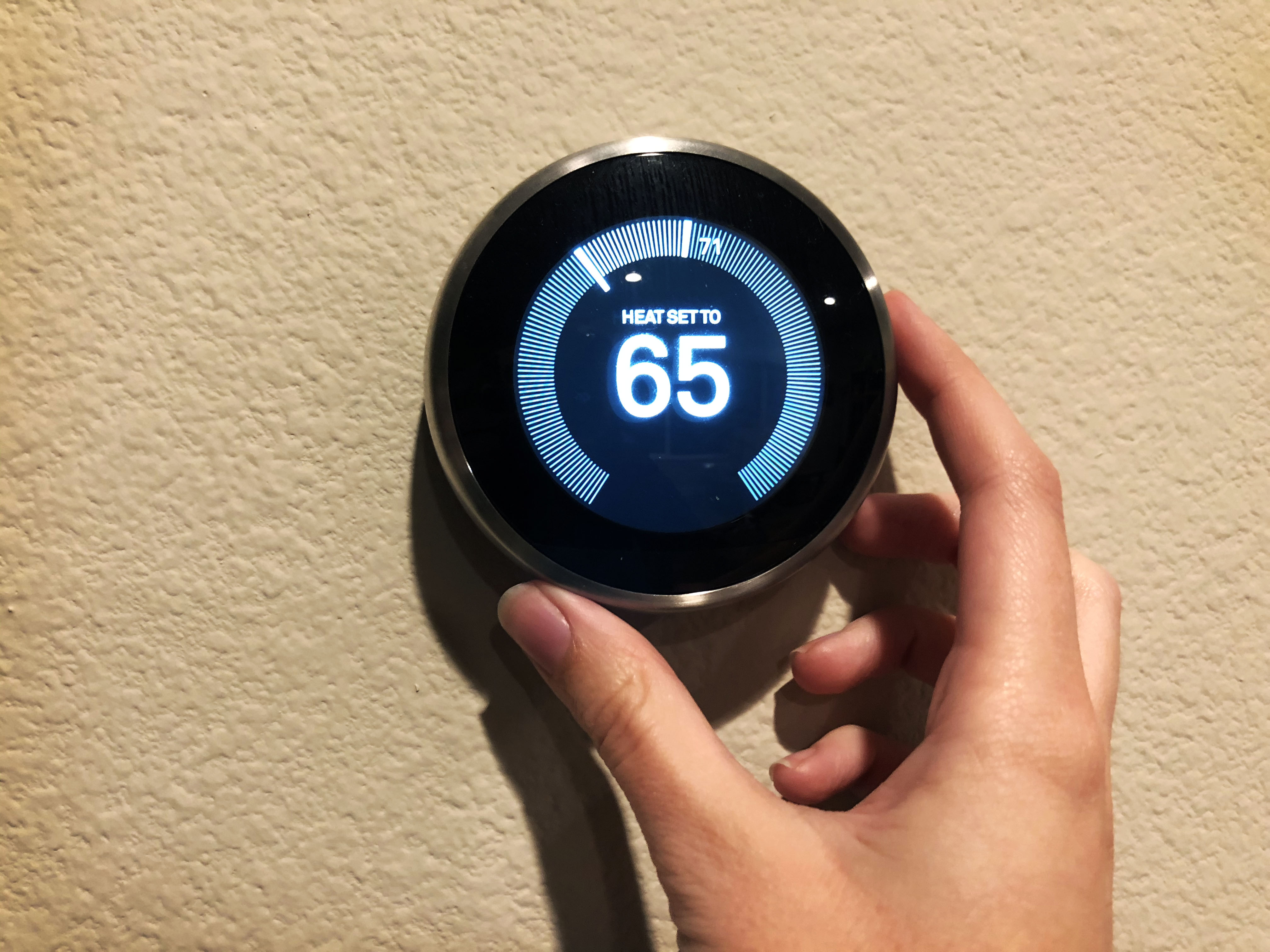
      As the days warm up, adjust the thermostat just a couple degrees warmer, instead relying on fans and open windows as much as possible. If the house gets too hot inside, try drawing window shades and turning on ceiling fans in a counterclockwise direction to pull the heat upwards. At night, turn the thermostat off or program it to only come on at exceptionally low or high temperatures. 

      One of many great things about living in a digital age is that it can cut out reliance on paper significantly. Look for e-book versions of textbooks — which can also be the cheaper option in some cases. If bills or checks are received in a paper form, see if paperless service can be opted into. As for online shopping, be sure to choose stores that ship packages sustainably, in minimal packaging and with little plastic or plastic-free materials. 

      For many, driving is the easiest way to get around, but for those who live in town, it is possible to bike or walk to some locations. Experiment on one sunny day with only walking to local errands, or try getting the hang of public transit. Carpooling with coworkers and friends can also curb greenhouse gas emissions, but continue to be mindful of COVID-19 health guidelines.  

      As individuals, the best thing we can do for the environment is to keep our carbon footprint in check. A carbon footprint is a measurement of our personal greenhouse gas production. Many of the provided tips will help reduce our carbon footprints, even if it’s only slightly. A carbon footprint calculator can be found at conservation.org, along with even more tips for decreasing personal impact.

      Contact the author at avanderzanden19@mail.wou.edu

      Get enthusiastic about recycling plastic

      A simple guide to recycling the seven kinds of plastic 

      Allison Vanderzanden | Lifestyle Editor

      Not all plastics are created equal, and which material they are made of determines whether and how they can be recycled. Learn more about the seven types of plastic — identified by the number inside a triangle of arrows on the bottom or back of products — and become a plastic recycling pro.

      No. 1 PET or PETE: Commonly found in food containers such as bottles and jars, polyethylene terephthalate is recyclable with curbside recycling services. Avoid reusing such containers as the plastic is known to absorb bacteria.

      No. 2 HDPE: High-density polyethylene is used to make cleaning product bottles, milk jugs and shampoo bottles, to name a few. Their sturdiness allows them to be reused, or they can be easily recycled curbside.

      No. 3 PVC: A more flexible plastic, polyvinyl chloride is commonly found in household materials like piping and window siding, along with toys, cooking oil containers and food wrapping. PVC generally cannot be recycled, so avoid using it, or reuse it with caution as it contains toxins that should not be consumed.

      No. 4 LDPE: Low-density polyethylene is the stuff plastic grocery bags, bread bags and six pack rings are made of. They tend to only be recyclable at certain drop off locations, such as a local store, but LDPE bags can also be reused for a while.

      No. 5 PP: Straws, medicine containers, bottle caps, single-use cutlery and some food containers and bottles such as yogurt cups are made of polypropylene. Contact local recycling services to see if they accept no. 5 plastic in curbside bins.

      No. 6 PS: More commonly known as Styrofoam, polystyrene is the plastic that makes up single-use food containers, takeout drinking cups and packing insulation. Many recycling services will not accept no. 6 plastics, so avoid using them when possible.

      No. 7 Other: This category encapsulates any plastic not labeled above, including nylon, acrylic and combinations of different plastics. Their use should be avoided since it can be unclear what exactly is in them, and they usually are not accepted through curbside recycling services.

      Contact the author at avanderzanden19@mail.wou.edu