Mount Hood

Western develops and introduces a sustainability major

Bailey Thompson | News Editor

With the start of the 2018-19 school year, a new major has come to Western.

Sustainability is an issue that geography professor Dr. Mark Van Steeter has been passionate about for a number of years, and his dream of having it as a major at Western has finally become a reality.

“I knew it was something that would be great for students,” said Van Steeter. “For their ability to understand the interconnections in the world and get employment and have hope about the future instead of dread.”

He shared that he committed to developing the major after meeting with President Rex Fuller three years ago.

“I said ‘Okay. I’ll do it.’ And one of my qualities and weaknesses is when I say I’ll do something, I actually do it. So, I made that commitment to the students, to the president and to myself. And so, I just started working on it,” said Van Steeter.

With the final design, students are able to choose one of two concentration areas within the sustainability major: environment or business.

The reason for this, as Van Steeter explained, is that “it can’t just be the environmentalists complaining; it needs to be corporations and businesses that are working for sustainability.”

In the core of the major, students will take classes in “business, economics, geography, political science, communications, philosophy (and) biology,” said Van Steeter. “We’re trying to put those things together, so they mesh and give people the ability to see reality and therefore do something positive, effectively.”

When asked about the importance of prioritizing sustainability both on Western’s campus and in the United Stated, Van Steeter said “by definition, if something is not sustainable it will cease to exist. And given current pressures on ecosystems and on society, we are starting to reap the dark outcomes of not acting sustainably. If we don’t integrate sustainable thinking into our practices and continue down the path we’re on, the world…is not going to be a place of great opportunity and freedom.”

If students are interested in learning more about the new sustainability major, they can find information on the university’s web page, or they can reach out to Van Steeter at vanstem@.wou.edu. They can also talk to his colleagues in the Geography and Sustainability Department — Dr. Mike McGlade, Dr. Shaun Huston, and Dr. Sriram Khé.


Contact the author at howlnews@wou.edu

Oktoberfest put on by Western German Club

Bailey Thompson | News Editor

In the courtyard of the Werner University Center on Oct. 10, popular German music blasted through speakers and the smell of German food wafted through the air: the members of German Club had prepared a feast for the whole Western community.

“What we’ve got here is bratwurst — one of the most German things there is — and we’ve got some… curry sauce, which is like a German version of ketchup. Then we have German-style sauerkraut and potato salad… and we’ve got some German Apple Cakes,” said German Club President and sophomore German major Alyssa Jackson.

The only thing missing from this traditional Oktoberfest meal is beer, but the club doesn’t serve alcohol since their event is hosted on a college campus.

When asked about the significance of Oktoberfest to the club, Jackson said that “it’s fun, there’s lot of good food and it’s nice to just share the German culture.”

Although the event is exciting for the club members and those in the Western community, Jackson shared that the club also has another reason for selling Oktoberfest meals.

“All the proceeds are going to the German Club scholarship, which is $1,000 that gets awarded to one student,” said Jackson. And, when asked about how the scholarship recipient was chosen, she shared that “it goes off of what German means to you and why you’re studying it. Obviously, we want to put it with someone who has a connection to German rather than just someone who wants money.”

One thing that many students may not know is that Oktoberfest is a long-standing tradition on Western’s campus.

“I started here 37 years ago, and we’ve done it ever since,” said German professor Dr. Hoobler.

Reflecting on the way that the festivity occurs in Germany, Hoobler added that “October gets rainy, and so (in Germany) they do Oktoberfest in September.”

Hoobler concluded by saying that “what you see (here) is really what they do. It’s the end of the harvest festival, and they serve us this and it’s a chance for us to get together. Germans are very social — it’s all about the community — and so really all over Germany we’ll have Oktoberfest.”

Contact the author at howlnews@wou.edu

Photo courtesy of Paul F. Davis

Jacob Joliff band performs as a Smith’s Fine Art Series event

Jamari Gilbert | Freelancer

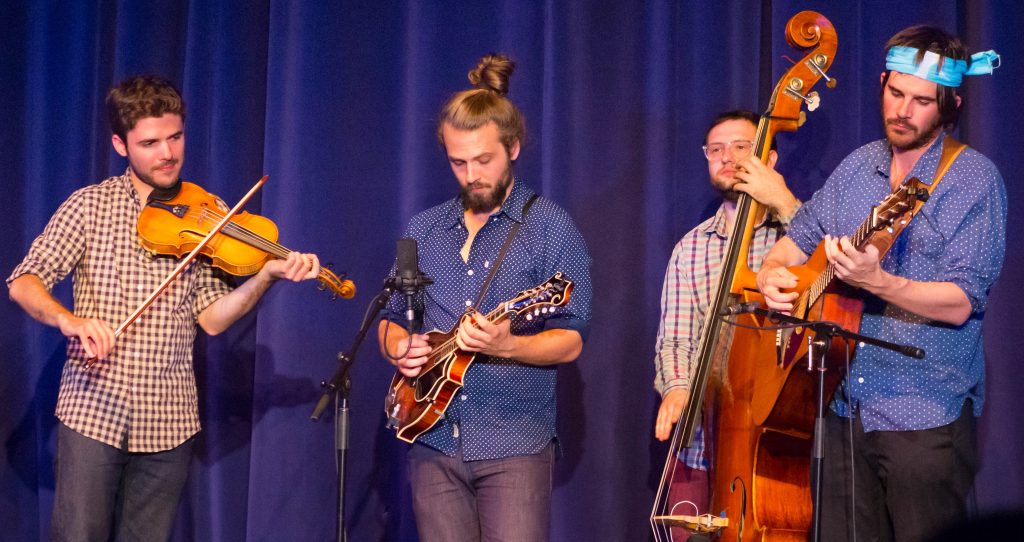
On Oct. 12, Jacob Joliff and his band came together and put on a concert for Western students. This concert was part of The Smith’s Fine Art Series, a collection that showcases many talents and performances here at Western. The artists perform from Oct. 5 through June 8 of 2019, with two events in January 2019, one event in April, and the final performance in June. This event was held in Rice Auditorium.

The Jacob Jolliff Band is a Bluegrass ensemble that is comprised of four key members: Jacob Joliff, the singer and Mandolin player, Alex Hargreaves the fiddle player, Jeff Picker on the bass, and Stash Wyslouch, their guitarist. With their cooperation, the band put on a unique and entertaining performance.

Bluegrass is a style of country music, but with jazz and gospel influences. No banjos were used during this concert, although that’s what some people may think of when bluegrass is mentioned. Most of the songs focused on being instrumental but a few had some lyrics spread throughout to spice things up every now and again. The music was unique and complex, but can be defined as a fusion of jazz and country.

The excitement the Joliff band had to play in front the audience was palpable. The passion and hard work that went into each song could be felt as they were performed on stage. Before the artists started the next song, the pride on their faces was obvious when the audience exploded into a round of applause and whistled.

Watching how they all shared the space and the microphone, easily stepping out of the way when it was time for one of the other members play their heart out during their songs was arguably the best part of the performance. The Jacob Jolliff Band performed very well and the enthusiasm for the music they performed only made the experience better.

The Joliff band is worth a listen by anyone who is a fan of jazz or country, and by anyone who is looking for music that is full of spirit and energy. If students find themselves free and wanting to try something new, events from the Smith Fine Arts Series provide fun opportunities on campus. The series offers some truly unique experiences.


Contact the author at jgilbert16@mail.wou.edu

Photo courtesy of Ashlynn Norton

Local artists Harold and Sue Mason exhibit their work in Campbell Hall

Chrys Weedon | Entertainment Editor

Locals artists Sue and Harold Mason are featured in a month-long exhibit in Western’s own Cannon Art Gallery, which opened on Sept. 26 and will remain open until Oct. 26. The exhibit is titled “Creative Partnership” and is located in the heart of Campbell hall.

When asked about the mission statement of the Cannon Art gallery, director Paula Booth replied that her goal was “to expose our students to a lot of different types of art and a lot of different types of artists… You know, things that they might not always think about.”

Booth said that the gallery is usually booked a year in advance, sometimes two years. The gallery has shown both national and international artists, and holds around six exhibits per year. Harold and Sue approached Booth a couple of years ago with the desire to show an exhibit together, and Booth scheduled them into the gallery rotation.

Harold and Sue have been creative partners for the last 56 years. They started making art in the San Francisco Bay area and became involved in the arts community there. Throughout their careers they have moved and travelled extensively, making art everywhere they go.

“We have a tendency to move someplace instead of going there and staying for weeks at a time” said Harold. Sue and Harold became more involved with the Native cultures of the American Southwest when they moved to the area and befriended the local Native community there, and the influence these communities had on their art is palpable.

The pair moved to Oregon about 15 years ago.

“We knew we wanted to live near a campus, and so we ended up just a block and a half from (Western),” commented Sue. Both Sue and Harold have taken art classes at Western, so they are familiar with the campus and well known by the faculty members in the department. “We’re both delighted to have a show here. We love the university. So when the opportunity came up, we were quite pleased,” said Sue.

On Oct. 3, the 700 square foot art gallery was glowing with bright show lights, and community members and students circulated around the ceramic sculptures and landscape paintings. During the reception, the Mason’s answered questions and connected with community members and students alike.

Harold’s art covered three of the gallery’s walls. Most were untitled.

“Harold didn’t want to label all of his work and Sue didn’t label all of hers either. So it’s kind of more of an impression of their work,” said Booth.

Harold’s art was a collection of watercolor paintings, sketches, and mixed media pieces. Many paintings were landscape scenes that exhibited exquisite detail. Colors in this paintings were soft and the scenes contemplative.

When asked if he had a favorite piece, Harold replied, “If you say one’s a favorite, it puts the other ones down, so I never have a favorite; they’re all favorites. Or else they wouldn’t be up there on the wall.”

Sue’s art consists of porcelain and stoneware works, relief prints, silkscreen prints and fetish pots. Fetish pots, according to the gallery description, “use materials of the natural world — clay, bone, hides, feathers, shells, etc. to show respect for nature and the world we live in.”

Sue’s stoneware sculptures and vases are very domestic and intricately designed; the pieces could be contemplated for a significant amount of time and new details would continue to be found.

“My aim is to inject joy, lightness and humor into each piece I make,” quotes Sue’s artist statement.

Her art is largely inspired by native cultures. Several sculptures are inspired by the Dio De Los Muertos celebrations in Mexican culture.

“I’ve always loved folk art, and just the way the art represents the (native) cultures,” Sue commented.

When asked what “creative partnership” meant to them, Sue summed up her relationship with Harold, “We’ve always been best of friends, as well as best of lovers, so best of both worlds.” Harold and Sue have always been a partnership, and support each other in all of their artistic endeavors. Each artist’s style is distinctive, yet complementary. Visitors to the exhibit can truly see the complexity of the artistic life Harold and Sue have built together. The pair’s devotion to living an artistic life and supporting each other is truly enviable. The couple is still actively making art. Sue sculpts and Harold is active with his painting and has added writing into his repertoire.


Contact the author at howlentertainment@wou.edu

Photo courtesy of Ashlynn Norton

SWANK allows Western students to stream movies for free

Chrys Weedon | Entertainment Editor

This fall, on-campus residents will have access to a free movie streaming service. The company providing the service is called SWANK. Western has branded this service “ResLife Cinema.”

The Housing and Dining Committee decided not to renew their contract with MINET two years ago, and thus left Western with limited entertainment options. After a lengthy search for replacements, the committee chose SWANK.

Aside from offering a wide selection of shows and movies, SWANK places a strong emphasis on educational programming. Ryan Jennings, an analyst programmer for computing services, performed the setup for this new service.

“Our Resident Assistants (RAs) can now request and select nearly any film they wish to build a program around, for free,” said Jennings. SWANK provides discussion guides along with films to help staff start dialogues around important topics, such as identity, mental health, sexual violence and more. Residents can also take part in monthly polls which provide feedback about what kind of content they would like to see.

Madeleine Hannah, senior humanities major and a resident of Ackerman hall, commented that, “I think it’s really beneficial…not everybody has Netflix or Hulu, or ways to nicely stream things, so it’s good to have access to that.”

Sabrina Smith, junior ASL/English interpreting major, brought up another point.

“I think it’s cool because when me and my roommates want to have movie nights we can just put it on instead of using people’s Netflix, because most of them share with their families and parents and they’re like, ‘oh we can’t actually watch this, cause my parents might see it.’”

Western organizations can also create their own channels and upload content to the site. “Since the product is new to us we have yet to explore this option,” Jennings commented, “however it might be a nice to upload a replay of latest (Western) sporting event, or allow residents to develop their own custom content to share with others.”

All on-campus residents have access to this resource, and there is no account set-up required. ResLife Cinema can be accessed through the WOU portal. The link is located under the “My Programs” tab, and is titled “ResLife Cinema (SWANK).”


Contact the author at howlentertainment@wou.edu

Photo courtesy of Ashlynn Norton

Volunteering with local art organizations can help emerging artists

Chrys Weedon | Entertainment Editor

The art profession is notorious for being one of the most competitive communities in the world. It can be difficult to get involved, especially since rural areas, such as Monmouth, have less access to art education compared to urban areas, according to the U.S. Department of Education. But there are resources near the Monmouth area that are helping to support student involvement in the arts.

The Salem Art Association offers many opportunities for emerging artists. They offer workshops on marketing yourself and connecting with established artists. Professor Paula Booth, Director of the Cannon Art Gallery, is along-time volunteer at the Salem Art Association. For artists struggling to get their art into the public eye, Booth says “they need to be spending not just the time making art… but (they) also need to be working on marketing (themselves) all the time.” Professor Booth says that about 50 percent of an emerging artist’s time should be spent marketing themselves.

The Salem Art Association provides volunteer opportunities in their galleries, teaching positions, and a residence program. The Association also holds an arts festival every year in the summer, and the volunteer opportunities there are endless.

When asked on the importance of getting involved, Booth said, “If you want to be in a certain field you have to go out and meet the people who are doing what you want to do.” Volunteering is a great way to meet people and to connect with the organizations that match your interests. To see a more comprehensive list of opportunities for involvement, visit salemart.org.

Salem also offers an art walk, held the last Friday of every month. Artists hold regular meetings every Thursday at 5 p.m. at the Prism Gallery, which is located in the Reed Opera House in downtown Salem. The Salem Art Walk includes a group theme show, also held at the Prism Gallery. Anyone can inquire about being involved in the group shows. Each month a different taphouse or bar hosts the After Party, at which committee members and artists can be found. To find out more information, visit salemartwalk.com.

In the end, volunteering can also lead to work. Booth recalled her own journey with volunteering, noting “I was just volunteering when I was interested…took on more responsibility as a volunteer…then I was able to eventually get a job.”

Connecting with organizations and artists in the surrounding community seems imperative for emerging artists. When it comes to on-campus opportunities, the theater department and the arts department are always offering different opportunities depending on the time of year — that’s why it’s important for students to get in contact with their professors about volunteering.


Contact the author at howlentertainment@wou.edu

Interview with the Student Health and Counseling Center

Rebecca Meyers | Lifestyle editor

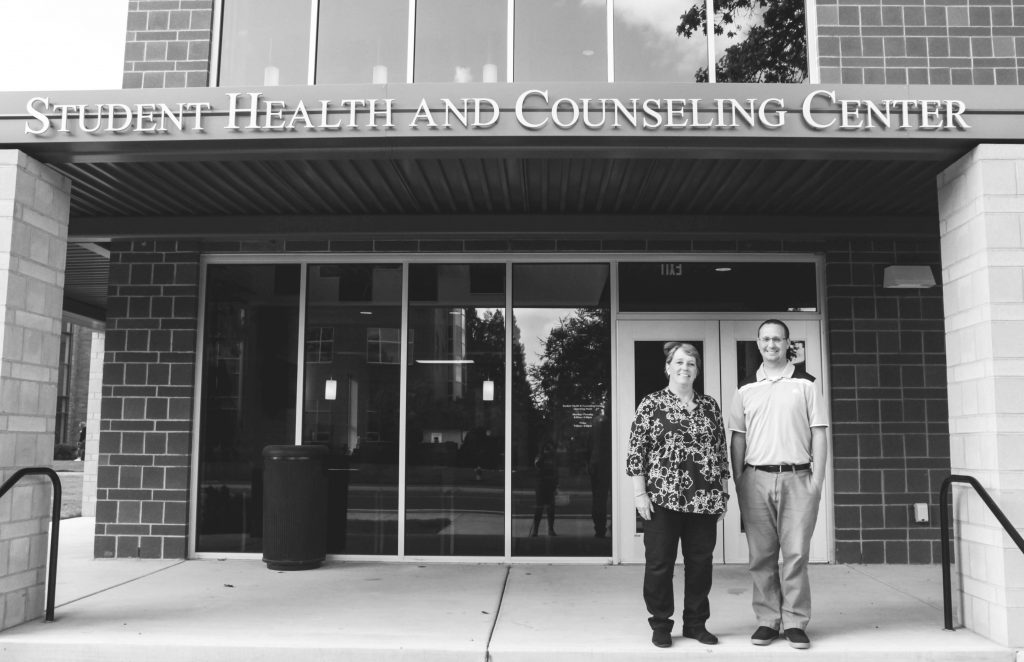
Students have many helpful resources on campus for a variety of needs. One such resource is the newly opened Student Health and Counseling Center. The center offers certain health services free to students taking at least six credits. These services include counseling and mental health assistance. To get an idea of student health patterns from the perspective of a staff member, I sat down with Assistant Director of Wellness Education Craig Wimmer and Wellness Educator Pam Medzegian of the SHCC about the most common causes of student visits and what we can learn from these experiences.

In response to the question of advice the SHCC wants students to know, the answer is first and foremost that students should not hesitate or feel embarassed to make an appointment or come in. The staff is there to help solve problems and help educate about preventative care. Wimmer also notes that students should make an effort to be health conscious even when healthy.

“If we’re talking about traditional students, they’re in a pretty good place in their lives in terms of their overall health. They’re not thinking about chronic long term things. So I think this is a point in their lives where they start to learn why these things are important.” said Wimmer.

I asked whether there was any advice they had that for students that might be helpful in saving them a trip to the clinic. Instead, I got somewhat different, but more helpful advice.

“It’s not necessary to wait until you have a problem; until you’re sick or you’re having a mental health crisis,” he told me. Wimmer and Medzegian’s focus at the SHCC is preventative health, meaning they’re there to help students avoid having preventable health issues.  They explain that it’s better to visit for something minor and avoid having a bigger problem surface later, even if it just means stopping by to pick up a free cold kit.

Students can also make appointments for 30 minutes in the new R&R room, which includes a massage chair, space to meditate, a range of music or sounds to choose from and a full spectrum light to help clients with Seasonal Affective Disorder. Staff like these two also have outreach events such as ones that involve alcohol education and, most recently, free flu immunizations on campus.

“In general, I think society tends to treat mental health better, and that gives us access to students needing support,” Wimmer said in response to the number of counseling clients, which has a seen a sharp upturn this year. The good news is that this means many students are taking full advantage of the resources available to them and are taking the time to invest in mental health.

College is a time of learning to take care of oneself and direct their own lives. This includes taking time to invest in self-care and health, both physical and mental. When flu season hits, or anxiety starts to kick in, the SHCC staff is there to help see students through the challenge.


Contact the author at howllifestyle@wou.edu

Photo courtesy of Rebecca Meyers

Cheesecake recipe

Rebecca Meyers | Lifestyle editor

Making a nice meal instead of going out usually comes with the satisfaction of having put a lot of effort into the result as well as the comfortable, familiar atmosphere. But why stop at dinner? There are plenty of dessert recipes to accompany a nice night in either alone or with guests. For those who really want to impress said guests, or just enjoy trying something new, this recipe offers a unique option for a homemade dessert. On top of that, it’s surprisingly simple.


HOMEMADE CHEESECAKE

Start to finish: 1 hour

Servings: One standard pie pan

Crust:

1 ½ crushed graham crackers

¼ cup confectioners sugar

5 tablespoons + 1 teaspoon butter, melted

⅛ tablespoon salt

Filling:

2 cups cream cheese

2 eggs

⅔ cup sugar

1 teaspoon vanilla extract


Preheat oven to 350 degrees. In a bowl, mix together the crust ingredients. Using the crust mixture, take the pie and and spread the mixture on the bottom and sides evenly.

Make the filling by mixing the cream cheese (at room temperature) with the sugar until smooth. Add the eggs and vanilla and mix until smooth again. Pour the filling into the pie pan on top of the crust.

Place the cheesecake in the oven and bake for about 30 minutes. Remove and let sit. The filling may not look fully settled at first. After letting sit, refrigerate until it’s ready to serve.

Serve plain or with desired toppings.

(Recipe from kingarthurflour.com)


Contact the author at howllifestyle@mail.wou.edu

Photo courtesy of Rebecca Meyers

Where to get student discounts

Rebecca Meyers | Lifestyle editor

It’s a well known fact that college can be expensive. Many students face the challenge of being financially conscious and responsible, but that doesn’t mean it’s impossible to treat themselves every so often. Fortunately, the rest of the world has become aware of the modern student’s situation and have created student discounts to take full advantage of, both online and in the real world.

Many well-known websites and commonly used apps offer student discounts. Amazon Prime, which includes two day shipping on a vast number of items as well as a streaming service, offers a unique experience for students. For most users, they can expect a one month free trial and then a charge $99.99 yearly. For students, however, there is instead a six month free trial and then a yearly charge of $49.99. The Amazon Prime membership is useful for students who wish to rent textbooks to save some money, as the website offers textbook rentals that arrive in only a few days.

Spotify, a popular site and app for streaming music, now offers a combined discount on Spotify Premium and Hulu. Students have the exclusive opportunity to pay only 99 cents for the first three months and then only $4.99 after that.

Most discounts that can be found in the real world allow for students to enjoy their recreational time. For example, Cinema 8 in Independence offers discounts for both matinee and evening showings. Students wishing to see a matinee pay only $7.50 and only $9 for an evening showing.

AMF Firebird Lanes in Salem doesn’t have a daily discount, but does have College Night. This means that on Thursdays students get unlimited bowling for only seven dollars as well as other discounts on the menu.

College life can be rough on the wallet. It’s not uncommon to find students worrying about current or future finances. However, discounts are reminders that it’s still possible to enjoy life as a student without breaking the bank.

Contact the author at howllifestyle@mail.wou.edu

Low time commitment extracurricular activities

Rebecca Meyers | Lifestyle editor

Being a student in itself is very time consuming for most, but many college students are also forced to juggle assignments, work and social life, as well as some other commitments like extracurriculars. Working students know the struggle of trying to piece together a schedule that stills allows basic necessities like eating and sleeping.

While certain extracurriculars and school involvement activities look tempting, it can be hard to find a slot in the calendar to fit them in when life is constantly busy. For the student dedicated to both academic and financial success, here are some extracurricular activities that won’t make too big of a dent in that already limited time supply.


Intramural Sports

Those who have seen recent articles of the sports section may already know some about intramural sports. Essentially, they are more casual teams than the club sports, and anyone can join. More information can be found at Western’s website.


Peer Tutoring

For students with a 3.0 GPA or higher, there’s the option to become a peer tutor and help other students understand their course material. According to Western’s website, tutors can typically expect two to six hours of tutoring appointments to be booked per week. An upside to becoming a peer tutor is that students have the option of volunteering or being in a paid position. For more information, go to wou.edu/advising/tutoring.


Conversation Partners

This is one of the least time consuming activities that will also help another Western student. By signing up for conversation partners, you agree to meet with a foreign exchange student once a week for a minimum of an hour. All that’s required is having a casual conversation with the other student, as this will help improve their conversational English skills. Conversation partnering is ideal for students who like schedule flexibility and are interested in learning about other cultures. If interested, contact the program managers at cp@mail.wou.edu


SAB activities

Western’s Student Activities Board regularly organizes events for students to enjoy. For those who are interested in casual, fun activities to get into the school spirit, it’s easy to find a calendar of events on Western’s website or on the bulletin boards in the WUC. These have the benefit of not being mandatory and easy to work around a schedule.


Contact the author at howllifestyle@mail.wou.edu

Wolves’ scoreboard

Lake Larsen | Sports Editor

Date Sport Opponent Score

Varsity

10/6 Football @ Texas A&M Kingsville W 13-7
Women’s Soccer vs. Simon Fraser University L 1-3
Volleyball vs. Western Washington University L 0-3
Cross Country Conference Crossover @ Lewis University Men place 9th
10/9 Women’s Soccer vs. Saint Martin’s University W 1-0

Club Sports

10/6 Men’s Soccer vs. Willamette University L 0-7
Lacrosse vs. University of Portland W 7-5
Lacrosse vs. Humboldt State University W 6-2
Lacrosse vs. Montana State University L 3-10
10/7 Men’s Rugby vs. Central Oregon Community College L 15-19
Men’s Soccer @ Central Oregon Community College W 5-2
Lacrosse vs. University of Montana L 2-9

Wolves’s Men’s Rugby lose close match against COCC Bobcats

Lake Larsen | Sports Editor

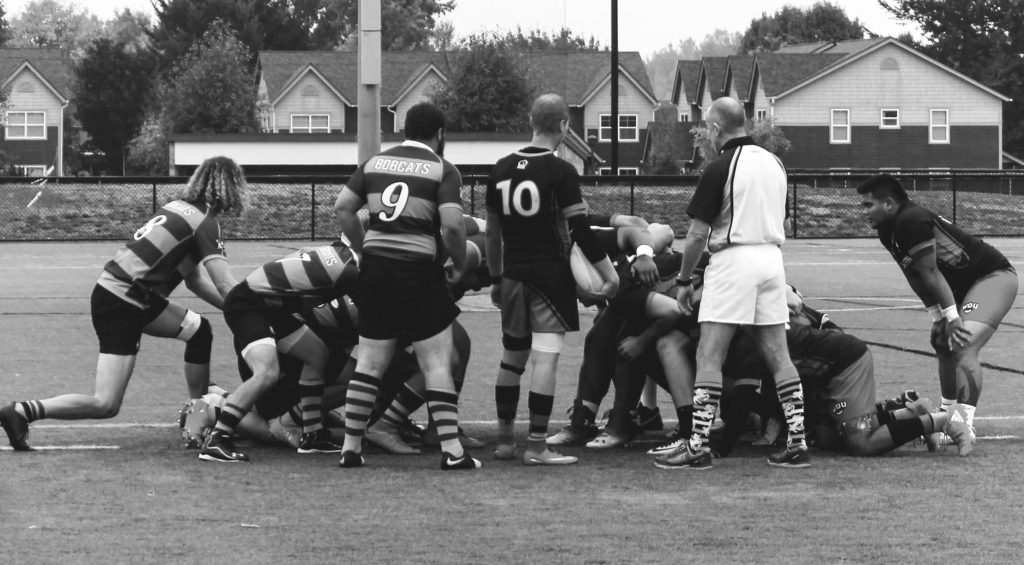
Clouds covered the sky and rain began to fall as Western Men’s Rugby took the field to battle against the Central Oregon Community College Bobcats. A week prior, Western Rugby took on Oregon State University and pulled off an upset beating them 31-29. Hoping to continue their season in the winning column, the Wolves matched up against the Bobcats.

The first 20 minutes saw offensive domination by the Wolves with the ball only crossing back over midfield once. However, despite the offensive pressure, Western was only able to score one try, missing the conversion.

Shortly after their try the Wolves’ defense fell back on their heels. The Bobcats scored and were able to complete their conversion to take a 7-5 lead with close to 15 minutes left on the clock in the half. After a few defensive stops by Western, the Bobcats once against found themselves on the board with another try. After missing the conversion the Wolves were down 12-5 going into the half.

Western needed to make some adjustments at halftime in order to stall the offensive momentum of the Bobcats.

“We made some substitutions because some guys were a little fatigued,” said senior criminal justice major Chris Davis. “But overall it was more so just getting back to the basics… settling back down and getting back to what we do well: running our offense.”

Shortly after the half Western started to battle back, bringing the score to 10-12. However both defenses were relentless as no points were scored either way for the majority of the second half.

As the clock came down to just a few minutes left, the Wolves pulled ahead 15-12. Unfortunately for Western, this lead was short lived as the Bobcats scored a try and conversion to retake the lead. With just a few minutes on the clock Western was unable to recover the lead, finishing the game 15-19 with the Bobcats on top.

Despite the loss, Western still kept their heads high.

“It was encouraging because this team was the conference champion last year and we matched up pretty well,” said Davis. “I think that going forward for the rest of the season, only a two point loss to a really good team like this can be pretty encouraging”


Contact the author at howlsports@wou.edu

Photo courtesy of Ashlynn Norton

Opinion: From the Sports Desk

Lake Larsen | Sports Editor

The football program has been a part of Western Oregon University since 1923. However, the end might be in sight.

Western belongs to the Great Northwest Athletic Conference and competes at the NCAA DII level for football. Along with Western there are four other schools: Central Washington, Simon Fraser, Azusa Pacific and Humboldt State that complete the conference.

As of July 17, Humboldt State announced that the 2018 season will mark the final season for football at their school. Due to this loss in the conference, I believe that the GNAC might be seeing its final days, leading to an eventual death of Western football.

After losing Humboldt State, the GNAC will only have four members. For a comparison, the average NCAA DI conference hosts about 12 teams, meaning the GNAC size is far below average. Due to this, Western is forced to play every team in the conference twice in order to field a full season of games.

With Humboldt State no longer on the schedule, Western will be forced to travel approximately 1,000 miles at the closest to play another opponent. This is due to NCAA DII football being very sparse on the western half of the United States with only five teams west of Colorado. The added travel will lead to student athletes being away from classes for a longer period of time as well as an increased cost — something that Western Oregon, per the fiscal year 2019 working budget, already budgets $85,630 for.

If Western wants to continue to field a football program, the answer might lie in moving up a competition level to NCAA FCS (DI-AA). The FCS level hosts far more teams much closer for Western to travel to. However, in order to join, Western would have to pass a multitude of obstacles, something that the school would need to investigate if they wanted to keep a program.

Regardless of which route Western wants to take in regards to a football program, action needs to be taken. The GNAC is already a tiny conference in comparison to the rest of collegiate football conferences and with the loss of Humboldt State, Western’s options are dwindling. Traveling hundreds of miles for games will only increase the budget making the funding side of the program increasingly more difficult. If the school doesn’t act soon, I believe there will no longer be a team to watch.


Contact the author at howlsports@wou.edu

Western Women’s Soccer secedes to Simon Fraser Clan

Lake Larsen | Sports Editor

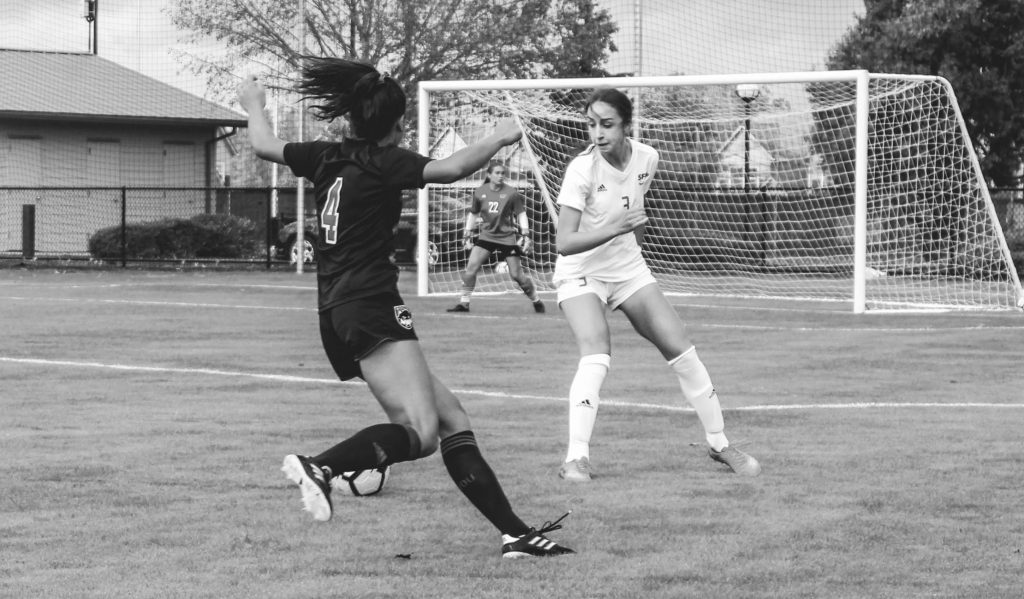
Saturday, Oct. 6, the Wolves looked to turn their season around and climb the rankings within the GNAC with their match against the Simon Fraser Clan. After losing two in a row to top ranked opponents in conference play, the Wolves had a lot of work ahead of them. If Western was able to pull off a win against Simon Fraser, they stood a chance to move up in the rankings within the conference. But the Clan had other plans.

It was a tight game for the entire first half. The Clan’s defense got the better of Western’s offense, holding them to only two shots and no points.

Western’s defense didn’t stand as tall as they gave up eight shots. However, due to effective goalkeeping by junior criminal justice major Alex Qualls, the Wolves kept the game scoreless going into the second half.

The second half did not go the way the Wolves had hoped as they gave up two unanswered points to the Clan. Western started to mount a comeback by scoring a goal to bring the game within one. The goal came off the foot of first-year communications major Hannah Cabral with the assist coming from sophomore early education major Alyssa Tomasini. Cabral’s goal marked the first of her collegiate career and the assist was Tomasini’s third of the season.

The Wolves’s comeback came to a screeching halt when the Clan scored their third goal off the foot of a Western defender. This would be the final point of the game as Western’s offense stood no match for the Clan defense. The Wolves finished the game in a 1-3 loss.


Contact the author at howlsports@wou.edu

Photo courtesy of Ashlynn Norton

Western hosts a candidate forum

Bailey Thompson | News Editor

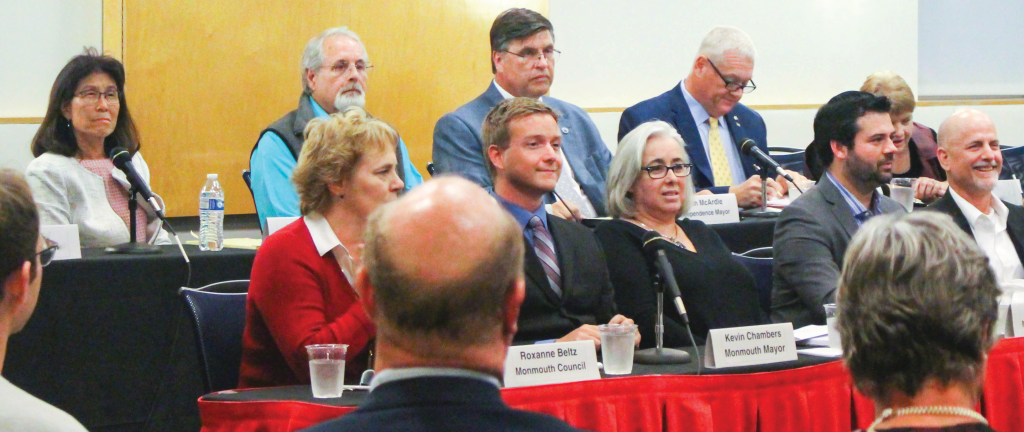
13 candidates — two for representative, four for mayor, and seven for city council — gathered together on the evening of Oct. 5 to discuss key issues that were concerning to the citizens of Monmouth and Independence, as well as students of Western Oregon University.

A partnership between Western and the Monmouth-Independence Chamber of Commerce and Visitors Center, the forum gave candidates the opportunity to hear from their community about the subjects that matter to them.

Of those in attendance, Representative Paul Evans (D) and Selma Pierce (R) are running for the House District 20 seat; Cec Koontz and Kevin Chambers for mayor of Monmouth; John McArdle and Jack Waddell for mayor of Independence; Stephan Howard, Chris Lopez, Roxanne Beltz, Steve Milligan and Jon Carey for Monmouth city council; and Shannon Cockayne and Marilyn Morton for Independence city council.

Dr. Mark Henkels, professor of political science, mediated this forum, which centered largely around infrastructure, relations between Monmouth and Independence, reducing debt and community growth.

The questions that were asked of the House District 20 candidates mostly focused on their positions on certain house measures, but there was also some dissension about negative campaigning and the relationship between opposing political parties.

“In the last seven weeks, somewhere between $350,000 and $550,000 has been spent by my opponent and her supporters on billboards, TV and mailers calling me everything but a nice person,” said Representative Evans about Pierce.

Pierce, on the other hand, declared that “I am not involved with any of those negative ads. I am busy being the best candidate that I can be… if you look at my Facebook page or my web page, there is nothing other than about myself or about policy.”

For the Monmouth candidates, there was one debated issue that may be surprising to anyone who isn’t familiar with local politics: the maintenance of sidewalks.

Although the current Monmouth ordinance states that homeowners are responsible for maintaining the sidewalk in front of their own homes, a task Beltz said can often cost “upwards of four and five thousand dollars,” there are several of the candidates who would be eager to rescind that ordinance.

“This is more than just about sidewalks — this is about ADA accessibility issues, this is about the safety of our town and this comes down to the place we want to call home,” said Lopez.

One other issue which became important in the forum was the debt associated with MINET, Monmouth and Independence’s public utility provider.

“All things come to an end, as will the MINET debt… we are on the right track, and I would like to see us get all the way there,” said Lopez.

$Current Monmouth mayor, Steve Milligan, stated that “it was one of the smartest things that we did. It may have had its risks…but it’s reaped rewards for all of us…we are MINET and we’re paying for our investment.” Because of MINET, Milligan also said that “the university can thrive, and research and invest in all our futures.”

Other questions regarding the prosperity of Monmouth and Independence caused the mayoral candidates to assert competing visions for the future of both towns.

“There’s been multiple projects that have just put our city in a lot of debt — millions of dollars of debt,” said Jack Waddell about Independence. “I just feel as if what we need to do is stop the bleeding and figure out what we can do to increase our chances of success with the new projects that are already underway.”

Contrasting this reaction, current Independence mayor John McArdle upheld that “We’ve done a bunch to help our economy. We’ve invested in infrastructure…and MINET is also part of what makes Independence a wonderful place.”

Moving to the Monmouth candidates, when asked about involvement with students, Koontz said, “I work in the school district, so students are a huge part of my life. And the students here at Western are also a huge part of my current volunteer time… my whole goal in doing that is to improve the lives of our students and to improve their success.”

Her opponent had a slightly different perspective on the issue.

“I’m involved with a church plant here on campus called Resonate,” said Chambers. “I get to talk with soon-to-be-graduates about how hard it is after you graduate… I’m still young, so I can relate to the issues we face.”

If they have registered to vote, students can make their voices heard by voting for the candidates of their choice on Nov. 6.


Contact the author at howlnews@wou.edu

Photo courtesy of Ashlynn Norton

Wolves encourage their peers to vote in upcoming election

Bailey Thompson | News Editor

With elections coming up on Nov. 6, Western students have a limited window left where they can register to vote. The voter registration deadline for the state of Oregon is Oct. 16, meaning that students will need to act quickly if they want their voices heard in local government.

A few of the ways that students can register include being automatically registered at the DMV, filling out the registration form online, mailing a voter registration card and going to a local election office to fill the form out in person.

Oregon’s official voter registration website is https://sos.oregon.gov/voting. On this site, students can register to vote, view candidate information, find materials about the current election and, beginning Oct. 12, access the voters’ pamphlet.

If Western students would like on-campus assistance with their registration, the ASWOU executive staff will be tabling in the WUC until the deadline in order to answer questions they might have.

“If 50 percent of young folks (in Oregon) were to register, it would be the largest voting group to date,” said Oregon Students of Color Coalition Organizer Manuel Mejia Gonzalez, who has been helping ASWOU with their tabling.

“In 2016, we registered 49,000 students…They were all people from 15 different campuses here in the state.” said Gonzalez.

ASWOU Director of Equity Natalie Dean then affirmed how significant individual votes can be when it comes to the outcome of an election.

“100 votes can swing an election easily. The numbers don’t lie,” Dean said.

Finally, Dean empathized with students who may be hesitant to vote, but she encouraged them to look out for the support that it available to them.

“I understand why people are less inclined to want to go out and vote because, if you don’t know the process, it’s daunting,” Dean said. But she also hoped students would find it easier if they knew that their student government was willing to stand by them in saying “It’s not that bad. We can help you.”


Important Dates

Oct. 10-12, 2018 Voters Pamphlets delivered

Oct. 16, 2018 Voter registration deadline

Oct. 17-22, 2018 Ballots mailed

Nov. 6, 2018 Election Day


Contact the author at howlnews@wou.edu

Opinion: #WhyIDidntReport brings important conversation to light following Kavanaugh confirmation

Caity Healy | Editor-in-Chief

“‘How did you get home?’ ‘I don’t remember.’ ‘How’d you get there?’ ‘I don’t remember.’ ‘Where is the place?’ ‘I don’t remember.’ ‘How many years ago was it?’ ‘I don’t know.’”

These words were said on Oct. 2 by President Donald Trump, the supposed face of our nation, as he had the audacity to mock Dr. Christine Blasey Ford’s testimony given on Sept. 27. His remarks were met with a roaring crowd, applause and laughter.

Upon hearing his take on the situation, and the reaction of the crowd, I was disgusted — and I wasn’t alone in that. Even Brian Kilmeade of Fox News’s “Fox & Friends” stated, “Last night, he chose to blow it.”

On Oct. 6, following a rather short FBI investigation, Brett Kavanaugh was confirmed onto the Supreme Court. Kavanaugh, accused of sexual assault by Ford, was confirmed into a position that throughout history has had immense power over the laws and policies of the country. Someone who has been accused of sexual assault now has a say over what laws our country will follow.

This is a prime example of why people choose not to share their stories. An argument that several choose to use against Ford is, ‘why did you wait 36 years?’ Why she chose to wait is entirely her decision, one that she does not have to justify, and should not be used against her. But put yourself in her shoes: if your assaulter was about to confirmed into a position of high power, wouldn’t you want to speak up then too?

Why don’t people report their stories? Because when they do, they are mocked by the highest executive position in the country. Because when they do, they become hated by much of the country and even receive death threats. Because when they do, their accuser is still confirmed into the highest judicial position in the country.

In 2016, during Trump’s campaign, according to CNN, “at least 15 women accused Trump of misbehavior ranging from sexual harassment and sexual assault to lewd behavior around women.” Trump himself admitted that he has assaulted women, stating in 2005 that “…you can do anything … Grab them by the p****. You can do anything.”

Why don’t people report their stories? Because when they do, their accuser, despite their admittance to assault and despite the many who made allegations against them, still become the elected president of the United States.

Amidst the controversy surrounding the Kavanaugh allegation, many took to social media to use their voice under the hashtag, “#WhyIDidntReport.” Sharing stories that many struggle to ever make public, victims of sexual assault explained the reasons that they decided not to come forward. What that reason is differs for many, whether it be not having proof, feeling as if nobody would care or believe them, the fact that they were intoxicated when it happened, or for some, being convinced by others that it was not sexual assault. Whatever the reason, whether or not someone chooses to report is their own decision. If they decide to wait years, and then come forward, that is their decision as well. If they decide to never report it, that is their choice.

Recently, I reached out to a friend of mine who wished to remain anonymous, who has been a victim of two occurrences of sexual assault. She reported one, and chose not to report the other.

“I was confused — It was the guy I liked at the time, but it was obviously something I didn’t want. I didn’t know how to express (what happened). I blamed myself because he didn’t talk to me after that… I was more focused on if he still liked me or not,” stated anonymous source. This case happened in 2014, four years ago. Until recently, she had chosen not to tell anyone aside from close friends.

I didn’t even want to tell my counselor or therapist. I went through multiple (professionals),” the anonymous source said. “I really wanted to deny that it happened for some f****** reason. I just didn’t want to tell anybody.”

In early 2018, the anonymous source was assaulted again. This time, she decided that she wanted to report it.

“I reported him. But even then I called (to check on the case) twice a week for a whole month and I was always being redirected. I still haven’t heard from them yet. I kind of just… gave up. I felt like the sheriff department did not give a f***, they didn’t know what to do with that information. I still haven’t gotten justice,” the anonymous source commented.

This is just another example of why some choose not to report. It’s ultimately their choice. However, my anonymous source wanted to make it clear that while she didn’t feel like she received justice in her case, she wants people to know that they “shouldn’t be afraid to speak up. Whatever you’re stowing away inside or carrying, for me, telling someone really helps. I don’t feel that much trauma from the (case) that happened most recently because I talked about it several hours after it happened. But I feel like, whatever I’m carrying from the previous one, it’s full of shame and guilt and even if I (reported) I still have to carry around the four years I have not spoken about it.”

Know that for anyone who wants someone to talk to, or just wants someone to believe them, there are resources here on campus. Abby’s House, located in Room 106 of the WUC, is a center where anyone can go and share their story where they will be believed. They can also be contacted through phone at 503-838-8219.


Contact the author at chealy16@wou.edu

Brett Kavanaugh confirmed to the Supreme Court

Bailey Thompson | News Editor

The American people were subjected to months of controversy when President Donald Trump, on July 9, chose Brett Kavanaugh as his nominee for Supreme Court Justice.

Kavanaugh has been involved in the political realm for a number of years. According to Business Insider, his presence at key events in political history effectively earned him the nickname “the Forrest Gump of Republican Politics.”

In his younger years, Kavanaugh held positions as law clerk to Justice Anthony Kennedy and as associate counsel on the team who investigated former President Bill Clinton’s affair with Monica Lewinsky. After that, he worked as assistant, staff secretary and senior associate counsel to former President George W. Bush.

Since 2006, Kavanaugh has served on the DC Circuit Court of Appeals.

Although his political background was the motivating factor for his nomination, alleged elements of Kavanaugh’s past have shocked and horrified much of the American public.

Dr. Christine Blasey Ford, Deborah Ramirez, and Julie Swetnick have each come forward with sexual assault allegations against Kavanaugh since his nomination.

On Sept. 27, Ford testified at a hearing, stating she was “100 percent” certain that Kavanaugh was the man who had attacked her 36 years prior.

Ford’s testimony inspired an FBI investigation, postponing the senate’s confirmation vote until further knowledge had been obtained.

The hearing also incited an outcry of sentiments online — with conflicting hashtags such as #StopKavanaugh, #ConfirmKavanaugh and #Ibelievesurvivors highlighted the passion of those on both sides of the issue.

Concluding the investigation, the FBI reported they did not find any evidence to corroborate the allegations against Kavanaugh. So, on Oct. 6, the Senate voted 50-48 to confirm him to the Supreme Court, establishing what is anticipated to be a conservative majority for many years to come.

The outcome of this vote will prove significant to Western students for a couple of different reasons. First, the addition of Kavanaugh to the Supreme Court suggests that the interpretation of highly-contested laws will have a more conservative influence in the future. On top of that, the way that these hearings addressed individuals who brought forward sexual assault allegations may spur a national conversation about the way that the justice system treats survivors.

Ultimately, the controversy of the decision stemmed from one foundational question: who has the onus of proof in such a situation? Should Kavanaugh have needed to prove his innocence, or was it up to Ford to verify his guilt?

Although legal proceedings have traditionally operated under the presumption of innocence, defined by Oxford English Dictionary as “the fundamental principle and legal requirement that a defendant must be presumed innocent, and treated as such, until proven guilty,” it can be difficult to provide convicting evidence for many sexual assault cases, particularly when time has elapsed since the event.

“There’s inappropriate questions to ask someone about gender/race violence and one of them is ‘why did you wait so long?’” said Director of Abby’s House Aislinn Addington. “It’s so much more complicated than that.”

Speaking on the ways that Kavanaugh’s confirmation will affect Western students, she said that, “there’s a lot of weight surrounding this appointment, and so then that’s on the shoulders of survivors in a way that it shouldn’t be.”

“Start with supporting each other,” Addington said when asked how students can help survivors in their community. “Come to Abby’s House. We have peer advocates who are trained to help and listen… And that’s a great place to start.”

For those who would like to connect with Abby’s House for support, they can be reached at (503) 838-8219 or visit them in lower level of the WUC. Students can also reach the Student Health and Counseling Center at (503) 838-8313 or Sable House in Dallas at (503) 623-6703.


Contact the author at howlnews@wou.edu

The reality of gym dress-codes

Caity Healy | Editor-in-Chief

Recently, I went back to the Health and Wellness Center for the first time since summer had ended. I was incredibly happy that it was finally open and I was excited to get back into a fitness routine, so I dressed in my favorite, most comfortable workout tank top — one that I had worn to this same location numerous times.

Mid-workout, I noticed an employee staring at me across the gym. I didn’t really think anything of it. However, at the end of my workout when I was stretching, he approached me and told me that what I was wearing was against dress-code.

At first, I was taken aback; I was wearing a tank top, leggings, and close-toed shoes, all of which seem normal for a gym. However, he then explained that my tank top specifically was against code as it means I could spread sweat more easily, and potentially spread disease.

Let me make myself clear, I am in full support of keeping students healthy and preventing the spread of disease. In this case, though, I felt as if this was something aimed more towards stopping students from dressing a certain way than towards stopping the spread of disease. Not once in my time here have I been told I’m breaking dress code while wearing a T-shirt but being sweaty. I have been to the gym multiple times with my boyfriend as he literally drips sweat from his clothing, and not one employee has even stared at him. Why me? It’s as if they only care about preventing a hypothetical spread of disease than doing something about the actual people drenched in sweat all around me.

On another note, aren’t you supposed to sweat at the gym? Isn’t that the point of the sanitizer and towels? When it comes down to it, if you sweat, at the place meant to get you sweaty, just clean it up.  

I’m not the only student who has been bothered by this new policy enforcement. Junior ASL/English Interpreting major Kaitlyn Allen was dress-coded for wearing a wide-strap tank top. In her opinion, this new code simply “is not reasonable. It will cause people to wear something they are really not comfortable working out in or it may potentially discourage people from going to the gym on campus.”

Overall, I’m not enraged at the employees or the policies of the Health and Wellness Center for dress-coding me. I appreciate that they are trying to keep their facilities as clean and disease-free as possible. My only request is that if you are going to dress-code me for wearing something that exposes more skin that could potentially get sweaty, then please just dress-code the ones who are also coated in sweat. Just keep it fair. Otherwise, I end up feeling singled out and awkward when I’m approached and stopped mid-workout to get a lecture from an employee, when in reality, there are other people they probably should be focusing more heavily on.


Contact the author at chealy16@wou.edu

Photo courtesy of Paul F. Davis