Mount Hood

How to start a new club

Rebecca Meyers | Lifestyle editor

Western is home to a wide variety of clubs and organizations, from Unidos to the Communication club to the Triangle Alliance. There’s something for just about everyone. However, there’s always room for growth, especially when there are so many topics and interests to cover. For those considering adding to Western’s collection, here’s the basic steps needed to create a new student organization.


Step One: One of the first things a club needs, aside from its founder, is an adviser. Advisers aren’t students but are often professors in topics related to the club. Before moving onto the next step, the club will also have to recruit a minimum of five student members.

Step Two: The founder(s) can start the registration process on OrgSync through Portal, where other students can join the club. The application requires a name for the organization and a categorization of the club — Greek, academic, student government, etc. It also has a place for the founders to give a brief description, a website, and keywords to help other students find the club based on their interests. The organization will also need some way for others to contact, such as their own email address and someone to be in charge of said address.
Step Three: All the organization will then need before becoming official is a meeting time and place, as well as a president and any other positions needed by the club.

Step Four: The organization will also require someone to write a constitution outlining the guidelines and a mission statement to inform potential members of the organization’s purpose.


The process may be long and difficult, but worth it in the long run to help more students find a group they find interest and belonging in.


Contact the author at howllifestyle@wou.edu

Photo courtesy of Ashlynn Norton

Clubs from Western’s history

Rebecca Meyers | Lifestyle editor

Today, Western has grown to around 5,000 students, and with the population the number of clubs has grown. We have a number of clubs that are more recent additions, but some, like some of the fraternities and the Black Student Union, have been around for a few decades. Others have come and gone.  In the 1940’s, Western had many clubs that have since died on campus.

International Relations Club: Before Model United Nations — and not too long after the real United Nations was formed — there was the International Relations club. At first it may not seem so long ago, until reading the yearbooks that stated a “tour of Hawaii” speech was given 1948, before Hawaii even joined the United States.

Archery Club: An all girls club, the archery organization advertised in a yearbook from the 1940s as the embodiment of Robin Hood and Sherwood Forest. The team practiced in an indoor shooting range in the basement of Campbell Hall, or in an open field near campus. They also competed in the National Archery Tournament.

The Campfire Girls: Another all girls organization from 1940, the Campfire Girls sponsored a number of school events and guest speakers — including a monthly Charm School. In one case, the guest speaker was a Native American woman from another school who talked about the meaning behind certain Native crafts and traditions.

Wolf Knights: A men’s service organization that lasted from the 1930s through the 1970’s, the Wolf Knights volunteered as the “official welcoming” and student advisors to Western’s campus.

La Danza Club: Meeting twice weekly in the 1950s, La Danza was a club that encouraged enthusiasm for creative dance.

Forensics: Created in the 1960s and lasting through the 1970s, the co-ed Forensics club went to annual competitions to test their public speaking skills and brought home a number of trophies and awards.


Contact the author at howllifestyle@wou.edu

Civil rights film series on campus

Chrys Weedon | Entertainment Editor

Civil Rights Film Schedule:
Jan.30 Eyes on the Prize (Continued episodes)
Feb. 6 Freedom Riders (Famous bus trips across the South in support of desegregation)
Feb.13 The Black Panthers (A documentary on the Panthers and their demise)
Feb. 20 A Good Day to Die (The story of Dennis Banks and the American Indian Movement)
Feb. 27 Incident at Oglala (The Leonard Peltier story of injustice on the Pine Ridge Reservation)
Mar. 6 American Outrage (The struggle of Western Shoshone women for tribal rights)
Mar. 13 The People Speak (Howard Zinn and friends provide a critical, social movement based history of the  U.S.)

The three months that make up winter term hold within them many significant dates: the anniversary of the women’s march (Jan. 20, 2018), Martin Luther King Jr. day (Jan. 21) and Black History Month (February), to name a few.

Winter Term also offers a class that focuses on film from the civil rights movement. For six years, Dr. Dean Braa has been teaching Sociology 407.

“I invented it, sort of. Years ago (the sociology department) had a discussion and we discovered that a lot of students, most students, didn’t know anything about the civil rights movement,” commented Dr. Braa. “Not many students have that opportunity, and we have looked at US history books … and most of the US history books I use, even around here, say little or nothing about civil rights.”

The film series is open to everyone, no matter if they are registered for the class or not. Participants watch 12 films across the term, including the documentary series “Eyes on the Prize” and documentaries following the Native American civil rights movement.

“We try to make it fun, I tell people ‘bring popcorn, bring snacks, bring your dinner if you want to,’” said Dr. Braa.

In the 50 years since Dr. Martin Luther King Jr’s death and the 37 years since the end of the Black Panther Party, civil rights film has been replayed in educational settings across the country. But why is rewatching this film so important?

“Well (the class) raises consciousness about social movements, it raises consciousness about racism and how terrible it is … this racism wasn’t just in the south,” explained Dr. Braa. Watching films from and about the civil rights movement is not only educational, but can teach about present-day movements as well. Dr. Braa discussed, “(injustice) is still going on now. We haven’t fixed it … (the film series) serves to show a connection; we gotta keep this movement going.”

Film and other art that was born out of the civil rights movement can show how successful social change happens.

“You want people to understand, positive change doesn’t usually come from within government, it comes from outside,” said Dr. Braa. Film from this specific period of American history shows that change usually happens when the status quo is upset.

“Social movements that kind of threaten government or put government under duress, that’s where positive change comes from,” remarked Dr. Braa.

A film is shown every Wednesday night from 5:30 to 8:00 p.m. in the Health and Wellness Center in room 203. All are welcome to attend.

“What we hope you’ll take from this: to see (America’s) past but apply it to the present and see we still need to make some big changes,” concluded Dr. Braa.


Contact the author at howlentertaiment@wou.edu

Photo courtesy of Ashlynn Norton

Dodie Clark’s “Human” EP review

Chrys Weedon | Entertainment Editor

Back in 2007, Dodie Clark started started posting her original songs — and covers — onto her Youtube channel, doddleoddle.

Since the its birth, Clark’s main channel and second channel, called doddlevloggle, have blown up, becoming a staple on Youtube. Hailing from Essex, England, Clark writes and performs on a variety of instruments, including ukulele, guitar and piano. On her first channel, Clark has over 1.7 million subscribers and has surpassed 200 million views; her second channel has seen similar success, with more than 900,000 subscribers and 100 million views, according to socialblade.com. Clark also has a VEVO channel, dodieVEVO.

Clark has released three EPs over the years, including “Intertwined” and “You.” Her most recent EP, released on Jan 18, is titled “Human,” and like her other EPs, was self-released. The title track to the album was released in September as a single and a teaser for her new project.

“Human” includes seven songs, most of which are studio-recorded versions of acoustic songs that Clark has posted on her Youtube channel previously.

The EP has a newly recorded version of Clark’s song “She,” which is arguably her most well-known song. “She” tell the story of Clark’s infatuation with a female friend and her struggle with accepting her sexuality.

This very personal collection of songs analyzes complex emotions and themes such as falling back in love after being hurt, losing friendships and the crushing pressure and guilt that often comes with internet fame. Clark’s intense vulnerability and her superb writing ability have only gotten better with age. When an audience gets to witness one of their favorite artists grow and mature through their music, the bond between them grows stronger.

The stringed instruments layered into the background and the vocal harmonies add a new depth to Clark’s songs. Clark has managed to keep the simplicity in her music that attracted her fanbase in the beginning, but she has also incorporated a new complexity that keeps her EP fresh.

Overall rating: I would recommend this album.


Contact the author at howlentertainment@wou.edu

Photo courtesy of dodie.co


Art on campus: “Soliloquy”

Chrys Weedon | Entertainment Editor

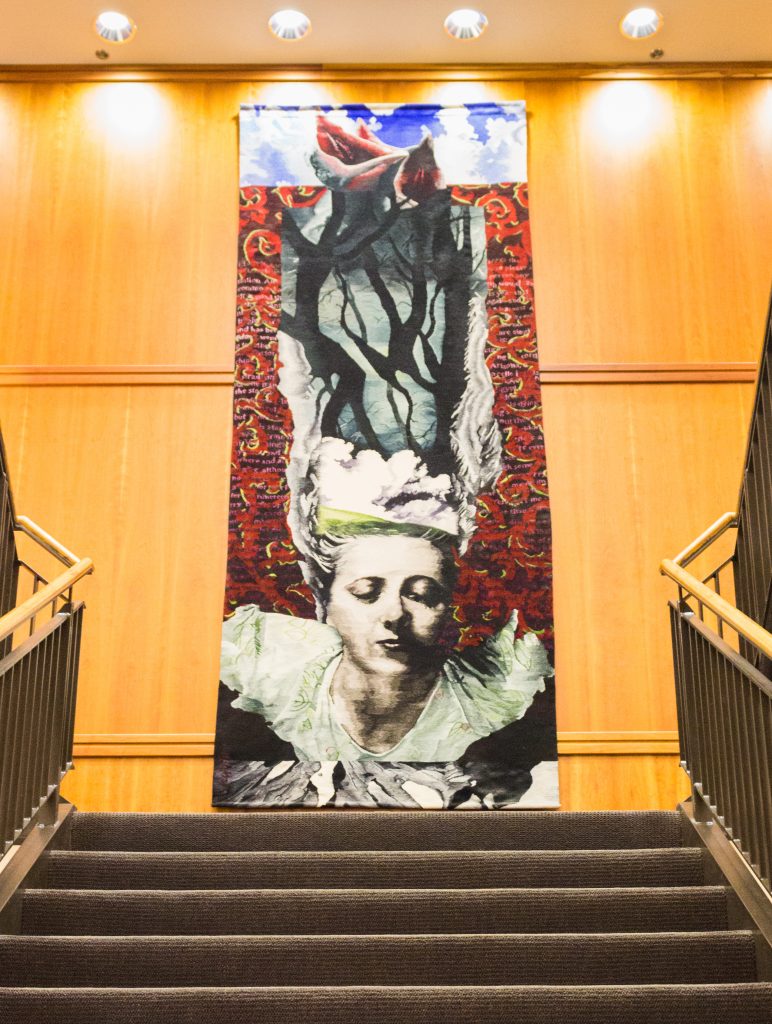
In the first stairwell of Hamersly Library hangs an intricate tapestry that many students may not give a second glance. “Soliloquy” by Shelley Socolofsky has been living in the library since it opened its doors. The art piece was commissioned specifically for the library as a part of the Percent for Art program.

The Oregon Arts Commission started the Percent for Art program in 1975, when it applied only to Marion and Polk counties. The program legislates that any building with a budget of $100,000 or more must set aside one percent or more of their budget for public artwork. In 1977, the legislation took effect in all Oregon counties.

Shelley Socolofsky is currently based in Portland, Oregon. According to her website, shelleysocolofsky.com, “informed by long histories of textile production with its orientation to pattern and decoration, her work explores the material, conceptual and poetic nuances of ‘craft’ through a hybrid practice incorporating both digital technology and analogue hand processes.”

“Soliloquy” is a tapestry in Gobelin Tapestry style, a technique born from Les Manufactures des Gobelins in Paris and Uzes, France, where Socolofsky completed an apprenticeship. According to Hamersly Library’s website, Gobelins is a tapestry style that was developed during the middle ages in Europe from cloth making traditions developed over centuries.

“Part of why I like it so much is that it’s huge, and it represents so much work,” said Paula Booth, an art professor and director of the Cannon Gallery of Art in Campbell Hall, “I also find that it looks totally different when you’re standing at a distance.”

The tapestry features a woman whose head opens into a cloudscape. Flowing upward, clouds turn into tree branches and finally the top of the tapestry sits baby birds, mouths agape. The pieces represents the hunger for new knowledge, open-minded thinking and the search for new ideas. Woven behind the image of the woman are excerpts from an Anne Sexton poem; the words are very subtle and visible only at a semi-close distance. The tapestry captures the mission statement and vision of a library — the pursuit of knowledge and exposure to new ideas.


Contact the author at howlentertainment@wou.edu

Photo courtesy of Ashlynn Norton

A look inside intramurals: Female participation

Mikaela Wong | Freelancer

Intramural sports have become a well known opportunity for students to take part in organized sports without the need to commit to the high-levels of competition that student-athletes do. It’s a common way to meet friends, get some physical activity in or just take a break from studies.

From Fall Term of 2017 to Fall Term of 2018, the three most popular intramural sports at Western were volleyball, basketball, and flag football per IMleagues.com/wou. According to the participation by class, first-years and seniors were the most active students to sign up for IMleagues. However, the biggest disproportion of participation was the female vs. male statistics. Out of 1429 participants in the 2017-2018 school year, 975 (68.2%) of them were male and only 454 (31.8%) of them were female.

While some may argue that this lack of participation from females is due to lack of opportunities, Western offers equal opportunity to males and females. Basketball, for example, offers a women’s, men’s, and co-ed league. Also, the co-ed league offers some different rules such as female players getting awarded more points per basket.

When asked about this rule difference, senior exercise science major Tori Cambra weighed in.

“The fact that girls get more points per shot makes it more fun for us because everyone wants us to score. And the men’s ball is heavier than the women’s ball anyway, so it evens it out,” said Cambra.

Another potential cause for the disproportion may just be that some women enjoy playing pick-up games at the Health and Wellness Center more rather than joining intramurals.

“I like playing for fun and I feel like a lot of people’s mindset is to be competitive … I wish there were more teams who just wanted to have a good time, or at least made that clear in their team name when we want to sign up,” said junior communications major Mia Medina.

On the reverse side, there are girls who play multiple intramural sports per season and love it. Emily McMillian, a junior education major, is one of those girls. When asked why she thought the female participation within Intramural sports was so different, she offered her personal insight.

“I think girls do a lot of things in groups and it’s either everyone does it or no one does,” said McMillian. “But if you have the mindset of just wanting to have fun and put yourself out there, you’ll make a lot of new friends who love doing the things you do. No one is going to force you to do anything in college, so if it’s up to you to make that jump and just do it.”

Compared to some national averages, Western does an above average job at getting females to join and play, per researchgate.net. However, there is always room for improvement and Western’s Intramural Department is looking for suggestions to help grow the options for all athletes.

“We are always open to suggestions on how to improve IMs and how to get more IM participants. In fact, most of of the changes we have made are a direct result of participant feedback,” said Assistant Director of Intramural and Club Sports Andy Main. “To make such suggestions, simply contact me at: maina@wou.edu

To join or start a team, visit IMleagues.com/wou.


Contact the author at mwong16@mail.wou.edu

Photo courtesy of Ashlynn Norton

Club sport statistical breakdown

Lake Larsen | Sports Editor

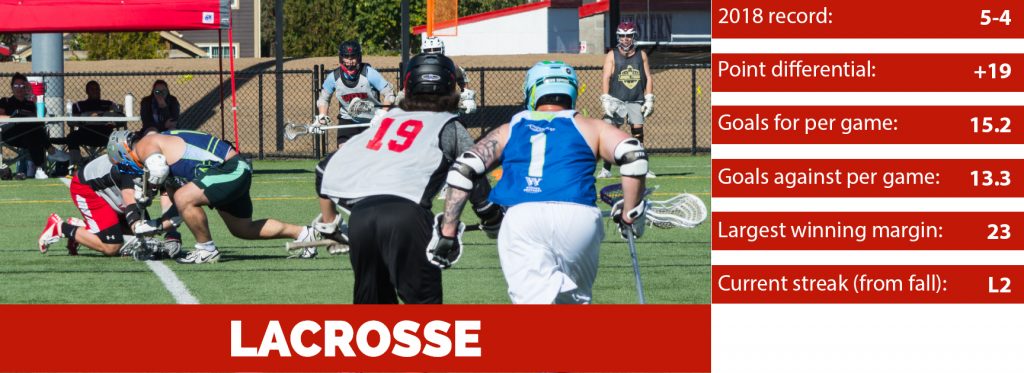
In the previous season, Western’s lacrosse team missed the conference playoffs by a razor-thin tie-breaking vote. However, the team only graduated two seniors while they brought in a slew of first-year players for the upcoming season. This new youth in the program have a chance to set a foundation for success over the next few seasons. The Wolves take the field for the first time on Feb. 9 against UC Davis at a neutral site in Ashland.

Photo courtesy of Paul F. Davis


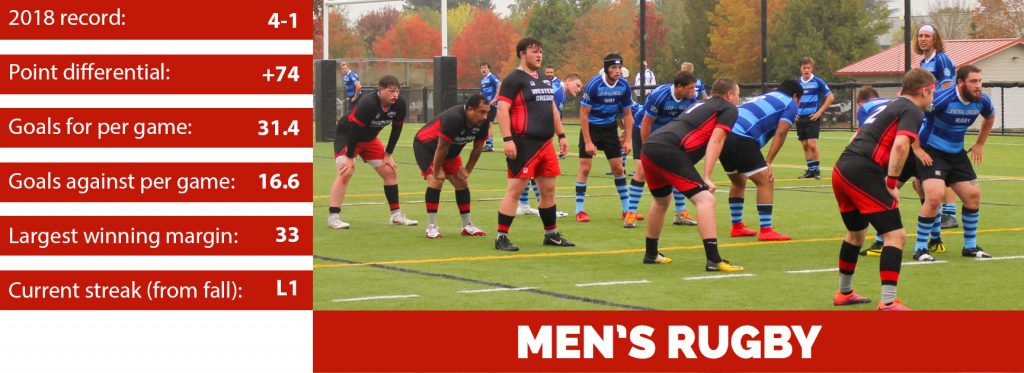
The 2018-19 season for the Men’s rugby program has been a historic year for the club. During the fall season, the Wolves were unstoppable after rebounding from a narrow loss on Oct. 7 against reigning conference champions Central Oregon Community College. While there is still a lot of rugby left to play, the Wolves have already obtained a bid to the Challenge Cup for the regional championships after being chosen to host the tournament. The Wolves hope to right the path on Feb. 2 after losing their first match in over a month on Jan. 26 against Oregon State

Photo courtesy of Ashlynn Norton


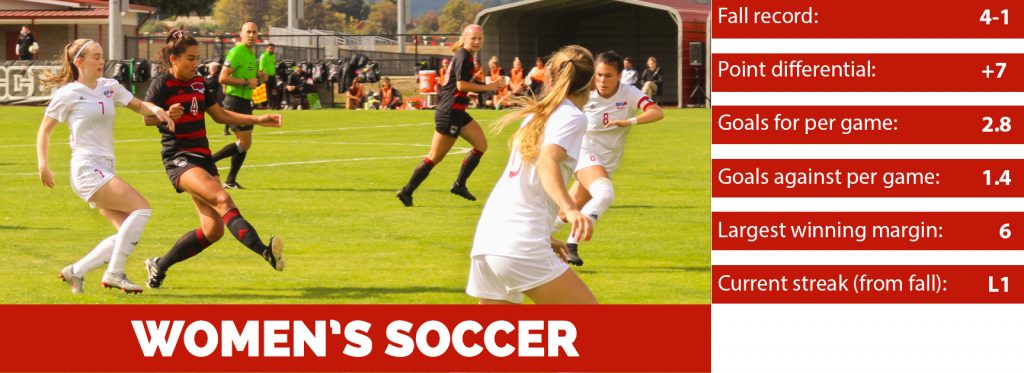
After being a club for barely one year, the women’s soccer club has already shown they’re not too young to dominate. The club was started during the middle of the 2017-2018 school year and only played a handful of matches before the end of the season. However, during the fall of 2018, the Wolves showed they meant business. Western dominated their opponents in every game, earning them an undefeated record as well as a small school championship win before losing in the overall championship game. The Wolves first spring match is set for Feb. 9 against Portland State University.

Photo courtesy of Ashlynn Norton


Contact the author at howlsports@wou.edu

Men’s Basketball falls to Northwest Nazarene

Lake Larsen | Sports Editor

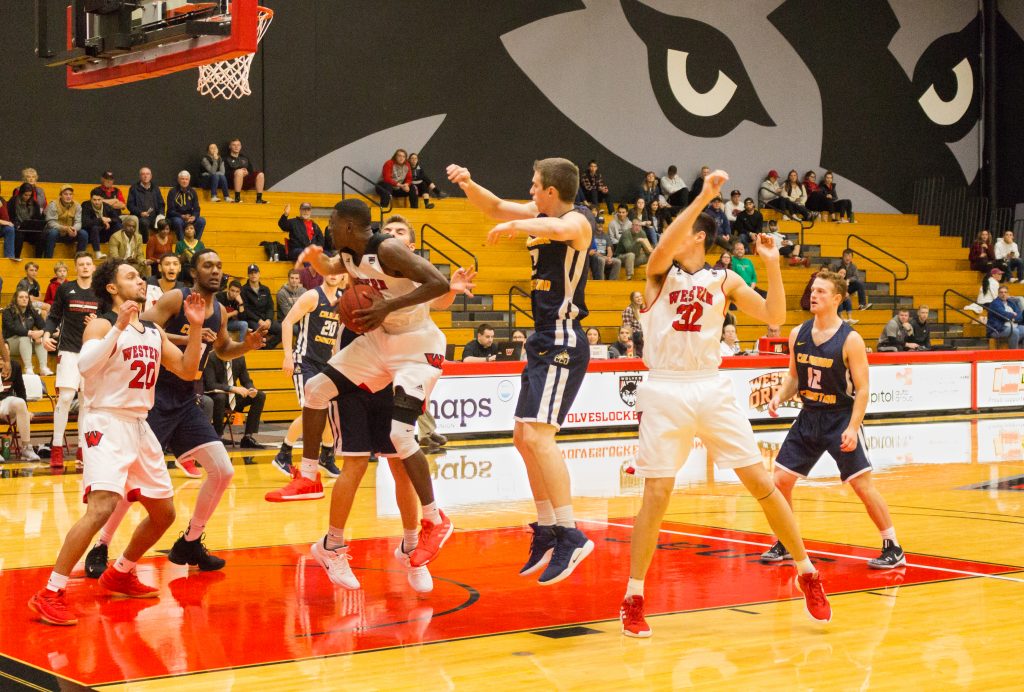
After a huge win over Central Washington on Jan. 24, the Wolves continued their road stint against Northwest Nazarene University. The Nighthawks sat just above the Wolves in the GNAC standings at second place. With a chance to move ahead in the conference, the Wolves took to the court on Jan. 26.

In the opening minutes of the first half, the Wolves pulled ahead of the Nighthawks. However, this lead was short lived. What was once a multiple possession lead was quickly erased as Northwest Nazarene shot ahead. As the minutes ticked away on the first half, Western fell deeper and deeper into a hole with seemingly no way to fight back. At the half, the Wolves were down by 14.

In the opening minutes of the second half, the Wolves again fell victim to precise shooting and suffocating defense. The Wolves looked outmatched and out-classed as the Nighthawks put the pedal down and began to run away with the game. Finally, with the final half reaching the midpoint, the Wolves fought their way to a single-digit deficit. Unfortunately, this seemed to only be a minor speed bump to the Nighthawks as they quickly shot back ahead.

In the waning minutes of the match, Western again had brought the game to only being a few points down, but the match was all but over. Western hadn’t seen the lead beyond the opening minutes of the first half and as a result lost 70-78. The Wolves remain at third in the conference and still have chance at a postseason.


Contact the author at howlsports@wou.edu

Photo courtesy of Ashlynn Norton

Women’s basketball won’t go down without a fight

Lake Larsen | Sports Editor

Coming off of a loss to Concordia, Western’s women’s basketball found themself in a familiar place — desperately in need of a win. After losing on Jan. 22, the Wolves sat just below .500 on the season. Their away match in Billings, Montana on Jan. 26 was a must win if Western wanted to pull their season’s record to even.

During the first quarter, the Wolves looked out matched. The Yellowjackets were relentless and deadly accurate in their shooting. Western’s offense seemed to keep gasping for air with a shot scored every few possessions, but Montana State Billings kept the pressure on. The Wolves found themselves buried in a double-digit hole at the end of the first quarter.

The gap between the teams was narrowed slightly by the Wolves midway through the second. Bringing the lead to only single digits highlighted that the Wolves would not just roll over to Montana State Billings. By the end of the first half, Western trailed by nine.

The glimmer of hope that Western had before the half was quickly squashed minutes into the second half. Throughout the third quarter, the Yellowjackets nailed shot after shot. By the beginning of the final quarter the Wolves found themselves down by 20.

Entering the forth quarter, the game was all but over. Montana State Billings clung to an over 20 point lead. However, the Wolves weren’t done competing. Although the game was all but lost, Western kept pushing. With less than seven minutes in the game the Wolves outscored Montana 23-10 to bring the score to 65-53 when the final whistle was blown.


Contact the author at howlsports@wou.edu

Photo courtesy of Ashlynn Norton

Men stand up to toxic behavior

Bailey Thompson | News Editor

In her New York Times article, Maya Salam defines toxic masculinity as “what can come of teaching boys that they can’t express emotion openly; that they have to be ‘tough all the time’; that anything other than that makes them ‘feminine’ or weak.”

Aiming to discuss this concept with the Western community, Abby’s House and Omega Delta Phi joined together on Jan. 24, seeking to start a conversation.

Leading the two-hour discussion, Aislinn Addington, director of Abby’s House, and Tim Glascock, director of the WOU CASA and Campus Suicide Prevention programs, shared the vision they had for the conversation.

“It’s about exploring what it means for all of our campus men to play a positive role in preventing sexual assault, dating violence and stalking,” said Addington. “It’s about what that means for our whole campus community.”

Glascock then communicated that people can start by simply listening to the experiences of those around them.

“We want to recognize that everyone has a story to tell, and we’re here to hear those stories and to connect with one another,” said Glascock.

Individuals then shared stories of how toxic masculinity has impacted their lives. And, while each person had their own unique story, there were some ideas that could be tracked throughout many: toxic masculinity is often used as a defense, intersectionality can contribute to the different masculinities seen in various communities and identifying harmful gender stereotypes is necessary before people are able to combat them.

After the discussion I spoke with Keith Mathew, a senior community health education major and Abby’s House advocate, who shared his perspective that toxic masculinity is not a problem exclusive to heterosexual men.

“It is apparent in all kinds of relationships, and the example I shared about another man who was messaging me for romantic reasons had such a narrow definition of masculinity,” said Mathew. “I think it’s important to show that gay men — we’re not all perfect. We’re not the perfect woke community. We still have our issues that we’re figuring out.”

Additionally, Erik Morgan, senior philosophy major and ASWOU Vice President encouraged men to realize that there are others out there who looking to engage in these conversations.

“Men helping other men overcome toxic masculinity — that’s one of the most important drivers,” said Morgan. “It just can’t be any single person. It has to be an entire movement: not just one, but the many.”

If students would like to learn more about toxic masculinity or contribute to the conversation, they can contact Addington at addingtona@wou.edu or Glascock at glascockt@wou.edu.


Contact the author at howlnews@wou.edu

Photo courtesy of Bailey Thompson

Christopher Coleman speaks on living life to the fullest

 Bailey Thompson | News Editor

A sold-out event: fried chicken dinners, award-winning essays and a keynote speaker. On Jan. 23, the Pacific Room of the Werner University Center was filled to the brim for the Martin Luther King Jr. Celebration Dinner. This event, which was sponsored by the University Diversity Committee, benefited the WOU Food Pantry.

After dinner, the top essayist in the Martin Luther King Jr. Student Essay Competition, Natalie Gomez, read her essay “I Don’t Give up on the First Try” before the crowd.

Gomez’s essay challenged those present to be strong and to stand up for the same values that Dr. King sought to protect while he was alive.

“Modern man suffers from a kind of poverty of the spirit which stands in glaring contrast to a scientific and technological abundance; We’ve learned to fly the air like birds, we’ve learned to swim the seas like fish, and yet we haven’t learned to walk the Earth as brothers and sisters,” said Dr. King in a speech on Feb. 27, 1967.

“Society has come so far in science and technology; however, my mother and I cannot walk down the street without sideways glares or stares for using our Spanish,” read Gomez. “Something was made very clear to me, not for my own doing, that I was brown. Labeled like a crayon. I wasn’t the only one.”

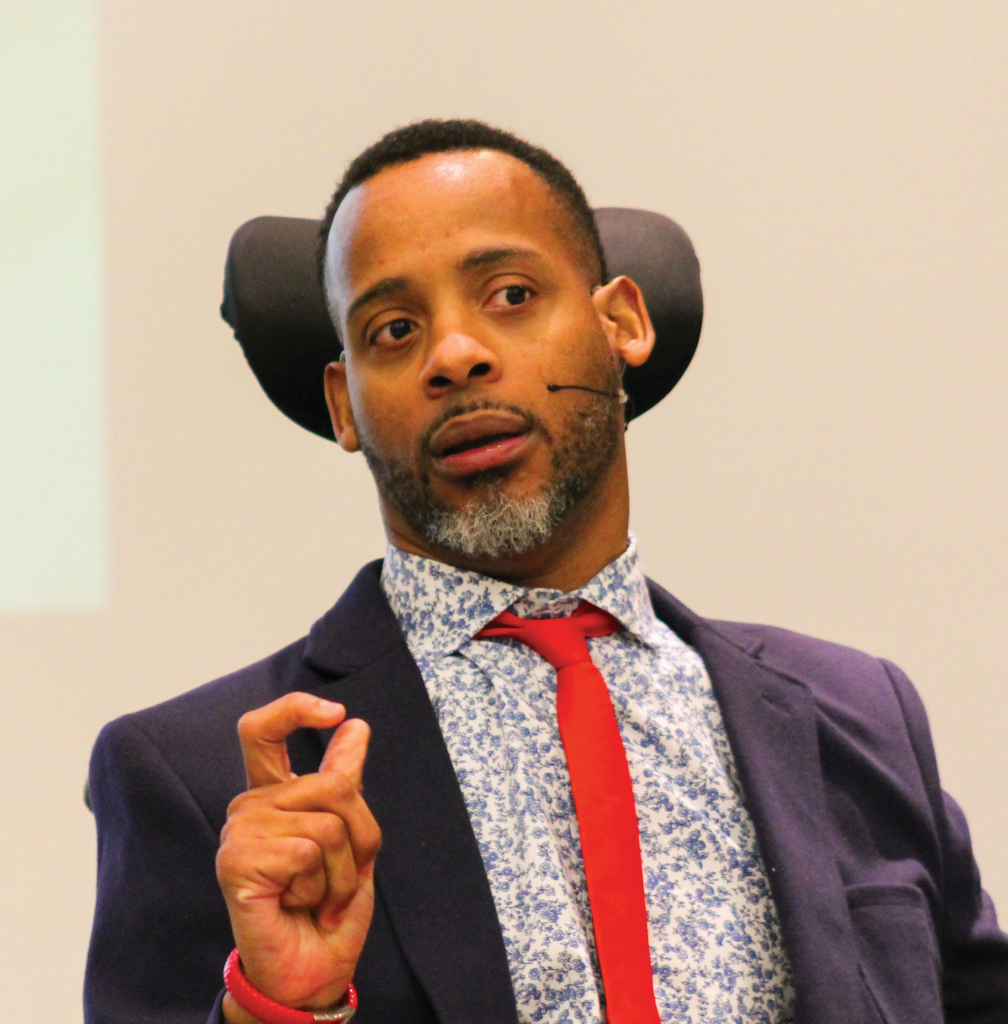
After sharing her story, the final element of the event was the keynote speech by Christopher Coleman — a man with a story of triumphing over life’s circumstances.

Shortly after birth, Coleman was brought back from being declared dead, and his parents were told that he would live in a severely confined manner with what they thought were both physical and mental disabilities. 45 years later, he has become the first person in his large family to graduate from college, and he works as a life coach, keynote speaker and author.

In his speech, Coleman emphasized that, even though there are obstacles that some people have to face, it is vital for them to not let it define who they are.

We cannot conduct ourselves as second-class citizens,” said Coleman. “We cannot let our circumstances dictate our character … to rise above expectations, we must embrace who we are.”

With this mindset, Coleman explained how it can be dangerous to see ourselves as unequal to others because this can lead to either pride or low self-esteem.

“Equality is understanding there is no one in the universe more important than we are and no one in the universe is less important than we are,” said Coleman.

Anyone who is interested in learning more about Coleman’s life story can find additional information at christophercoleman.net.


Contact the author at howlnews@wou.edu

Photo courtesy of Bailey Thompson

Western community rallies against hate

Bailey Thompson | News Editor

Back in November, an instance of hate speech graffiti was found in the Monmouth community which consisted of swastikas and the words “Proud Boys” and “MAGA.”

The following day, organizations at Western began releasing statements that renounced the behavior and promised action.

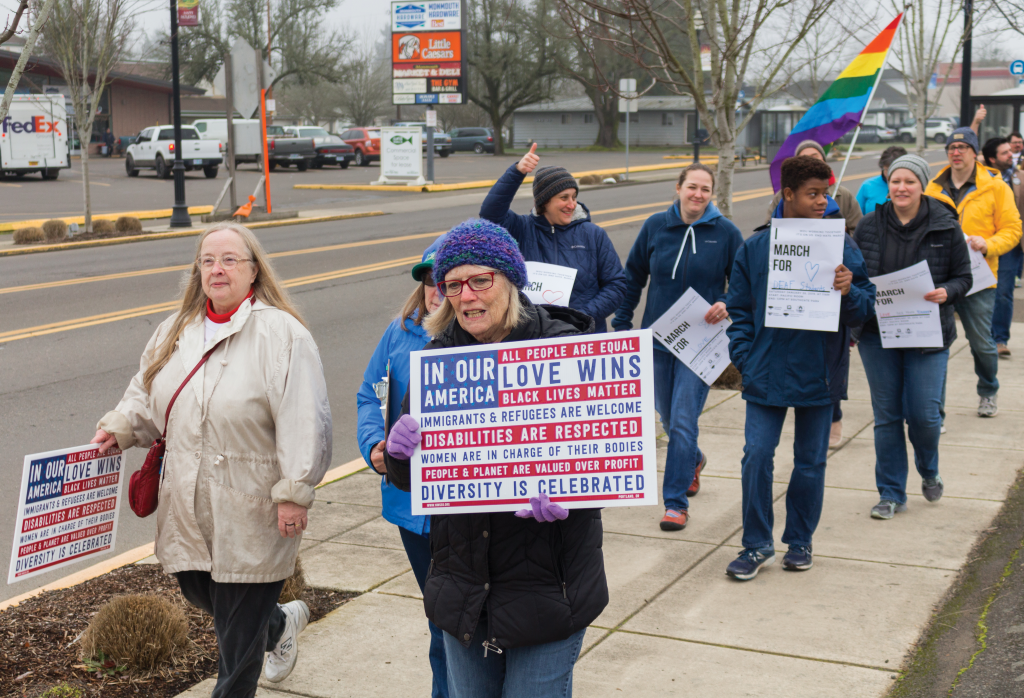
“We had two students — Logan Jackson and ZZ Braatz — suggested that we do a march in response to this. So, we started planning late November or early December, and it was a three-step process,” said Kelsey Murray, Ackerman Hall Resident Director and one of the march’s organizers. “The first part was that we put up ‘End Hate’ signs that link to the bias-motivated incident response form, we did tabling for a week where we advertised the campaign as well as the march and then the third part was the march.”

Leading up to the march, a committee was formed, and they tabled to spread awareness in the community for the upcoming event.

On the morning of the march, Jan. 26, members of the Monmouth and Western community came together to listen to speakers as they made signs.

“The graffiti placed here is not only a manifestation of a larger act, but an escalation of hate that must be conquered,” said Monmouth City Councilor Christopher Lopez. “To oppose bad things in this world, we must not only feel the good and embrace it, but act upon it. This togetherness, love, caring, openness, kindness and understanding only has power when it is paired with action.”

Building off of this idea, Linda Williams read sentiments in a letter from Representative Paul Evans about how vital it is for people to combat hate that they see around them.

“Something has happened in our nation, state and community. Somehow, we have drifted into treacherous waters,” wrote Evans. “We have tolerated a downward spiral in our basic civility and…respect. We have allowed the fragile fabric of our union to unravel.”

Moving forward, though, Evans also offered a message of hope.

“Hate has no place in America, in Oregon or in our community…we are one — together against bigotry, intolerance and racism. Together we can defeat hatred through compassion and empathy,” said Evans.

The final speaker before the march was Nathan Soltz, ASWOU Senate President, who shared his perspective on the act of hate.

“I thought it was really difficult to put into words what my visceral reaction was because, as a Jew, when these events happen I feel compelled to remember the hatred that the generations before me faced,” said Soltz. And while…gross ignorance isn’t really as noticeable today, the bigotry persists. And it can be seen really obviously in the graffiti, but it can also be a lot more subtle.”

Soltz then explain how this bigotry can take a number of forms.

“It can take the form of someone crossing the street when they see a person of color walking towards them on the sidewalk,” or “an unqualified man telling a qualified woman how to do her job … someone thinking that someone with a disability is somehow less important … not recognizing that someone’s gender is what they say it is, not what you think it is,” said Soltz.

Rounding out his remarks, Soltz shared how disappointed he was that the Monmouth Police didn’t acknowledge this incident of graffiti to be “threatening.”

“I hate that we have to actually have a march against hate — that we have to stand up and say that being a Nazi is bad, because apparently today that’s no longer a given,” said Soltz.

At this point, the marchers practiced their chants and were ready to head out. The whole group marched through town and all the way to the site of the graffiti near Southgate Park, where city officials had agreed to let participants write countering messages in chalk on the sidewalk.

“I’m sure that the incident of vandalism really made them feel isolated, and I hope that the community feels a little less alone,” said Murray at the end of the march. “And I hope that the people who attended the march feel more empowered to be the active bystander and to stand up to hate that they witness. Especially in our current political climate, I hope that they feel that they can make a difference.”


Contact the author at howlnews@wou.edu

Photo courtesy of Ashlynn Norton

This week in completely made up horoscopes

[fruitful_tabs type=”accordion” width=”100%” fit=”false”]

[fruitful_tab title=”Aries 3/21-4/19″] The stars are having a brain fart. Maybe you should make up your own horoscope this week Aries. [/fruitful_tab]

[fruitful_tab title=”Taurus 4/20-5/20″] Hahaha what an amazing and relatable comic. It was probably made by someone super cool. Stop reading this and go admire it. [/fruitful_tab]

[fruitful_tab title=”Gemini 5/21-6/20″] You know what time of year it is, GIRL SCOUT COOKIE SZN! Where them Thin Mints at?! [/fruitful_tab]

[fruitful_tab title=”Cancer 6/21-7/22″] Studying… Netflix… studying… Yep, Netflix. [/fruitful_tab]

[fruitful_tab title=”Leo 7/23-8/22″] Grab a chair and stand on it. Versatile. [/fruitful_tab]

[fruitful_tab title=”Virgo 8/23-9/22″] The stars noticed as you walked past the people tabling in the WUC, immediately pulled out your phone and pretended you were reading something very important just to avoid any eye contact/act like you didn’t even notice the people staring directly at you, waiting for your attention. [/fruitful_tab]

[fruitful_tab title=”Libra 9/23-10/22″] The stars see midterms in your future, Libra. Aren’t we insightful? [/fruitful_tab]

[fruitful_tab title=”Scorpio 10/23-11/21″] If you disappear into the forest, your student loans won’t be able to follow you. It’s science. [/fruitful_tab]

[fruitful_tab title=”Sagittarius 11/22-12/21″] Sometimes people are just exhausting, Sagittarius. Good luck out there. [/fruitful_tab]

[fruitful_tab title=”Capricorn 12/22-1/19″] Remember that movie “Surf’s Up 2” with all those penguin surfers? Me neither. [/fruitful_tab]

[fruitful_tab title=”Aquarius 1/20-2/18″]

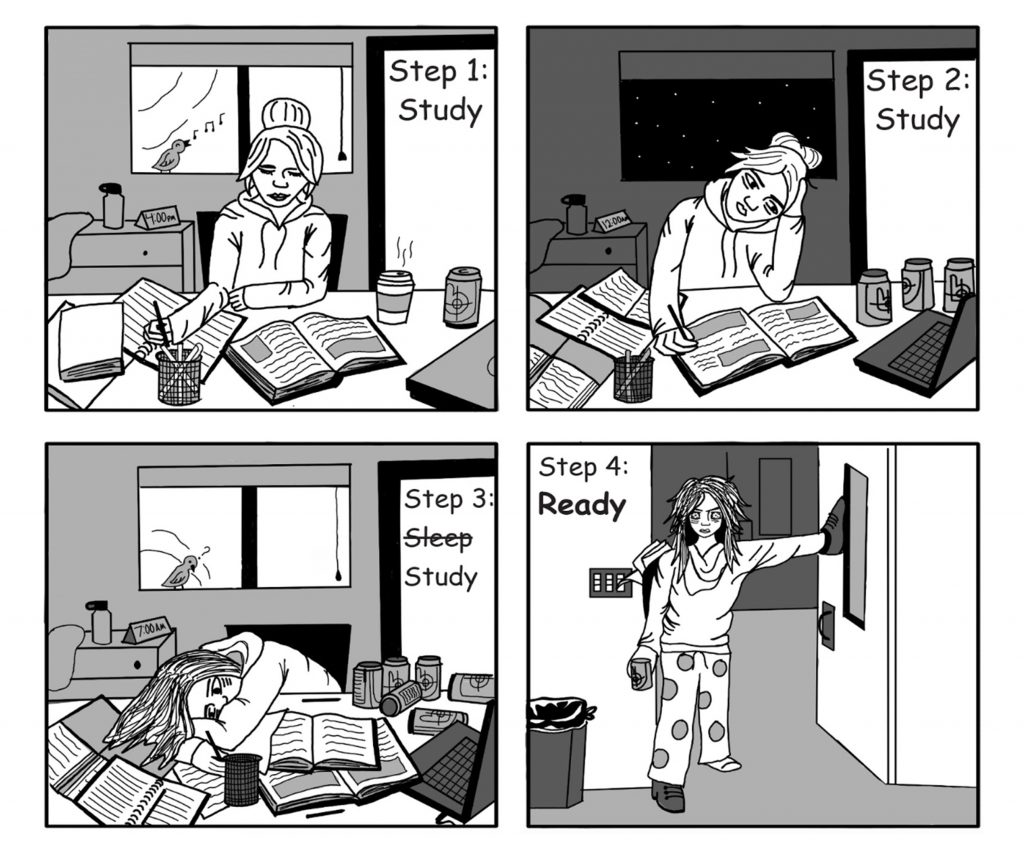
The stars know how you’re getting through midterms: with a healthy amount of sleep…actually it’s more like 13 cans of pure caffeine that keeps you up for three days straight with zero crash and all the insomnia.

The stars are #notsponsored by Bang [/fruitful_tab]

[fruitful_tab title=”Pisces 2/19-3/20″] I have a big old question for you, Pisces… Why does my foot look like this? [/fruitful_tab]

[/fruitful_tabs]


Opinion: Western student’s thoughts on why Western is struggling with enrollment.

Paul F. Davis丨Managing Editor

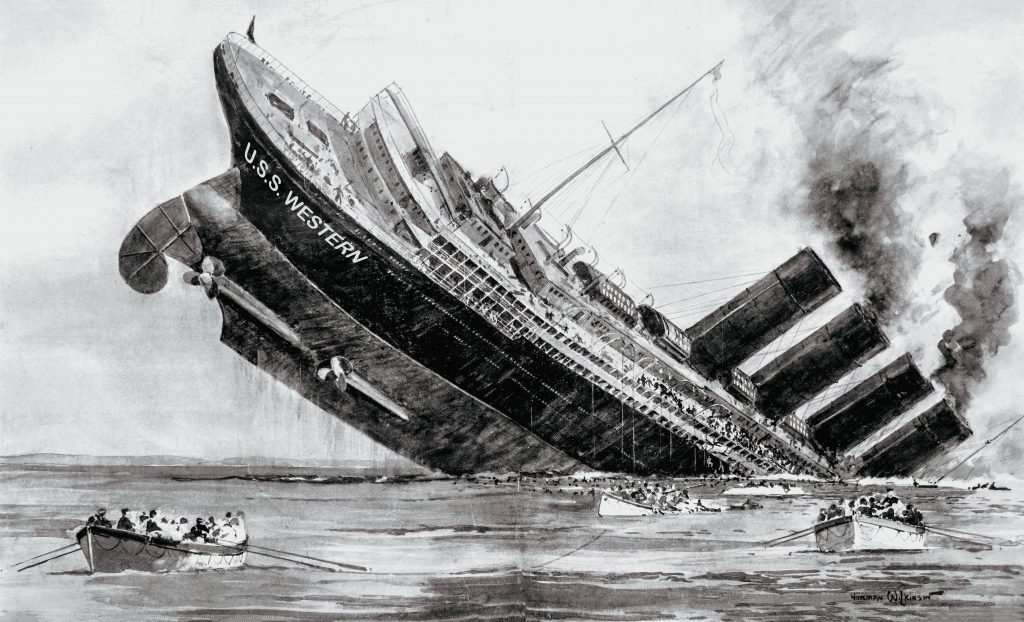
It’s no secret that Western Oregon has recently struggled with maintaining and gaining new students. Doing a little bit of research on Western’s website any person can stumble upon data that says it all: since fall of 2010, Western has lost more than one thousand students. In total, Western has lost 17 percent of peak enrollment even though the state of Oregon’s total number of students in undergrad programs have trended upwards in the same period according to Oregon’s Higher Education Coordinating Commission.

But what is even more concerning is that Western’s graduation rate has trended down as well from 46.5 percent to 39 percent. For some perspective, the state average is 63.2 percent. So not only is Western not getting as many students, but they are also not getting as many students through college with a degree. This statistic naturally raises the question — why is this happening?

At first glance the biggest factor which seems to have crippled Western’s attendance is the Oregon Promise, the biggest drop in attendance corresponded with its passing, which is “a state grant that helps cover tuition at any Oregon community college for recent high school graduates and GED test graduate,” according to the Oregon Higher Education Coordinating Commission. But since The Oregon Promise’s creation its promise has continually weakened to the point that it would be more accurately called the Oregon Support Promise.

Another secret that everyone knows but no one talks about is that Monmouth is more boring than your grandmother’s figurine convention by big city standards. Monmouth lacks the food and leisure options a university in a larger town would have. So majority of first-years go home over the weekend because there is so little to do. Because of this, they don’t spend time making friends with the people that surround them that are essential to creating connection to the university.

In addition to the lack of connection, there is a lack of gainful employment, something that is absolutely necessary for a majority of students to take care of the minimum costs associated with existing and attending college full time. So often students have to export their work outside of Polk county, which requires a student to drive at least 20 minutes — but often further — to get to Salem, Keizer, Corvallis or even further which not only decreases the students overall take home money, but it also takes up precious free time.

But Western isn’t just an innocent victim, it has institutional wide shortcomings that clearly need to change. The classes are not monitored for quality in an effective way. Yes, the institution asks students to review professors at the end of the term, but it is so easy to neglect the reviews. Make it so each student has to review professors before students can sign up for next term’s classes if you really want to get the full picture.

Professors also have no peers reviewing their classes for student participation and quality of instruction. Because of this there are times where it is completely okay for a professor to arrive to class with nothing but a voice and few notes to jot down on the board. Tenure and Head of Department titles aside, challenge your professors to do more than just repeat a presentation that they made seven years ago. Challenge them to be more; challenge them to be better because the university needs it.

This was not written to say Western is doomed — this was written out of love for the institution and the amazing experiences a person can have while attending school here. That’s why I want Western, faculty and students both, to actually hear these problems in the hope that we together can find a solution. Because at the rate Western is losing students, if changes aren’t made then there may not be enough students to pay to turn the lights on.


Contact the author at pfdavis14@wou.edu

Photo courtesy of London Illustrated News

Jubilee’s just desserts

Rebecca Meyers | Lifestyle editor

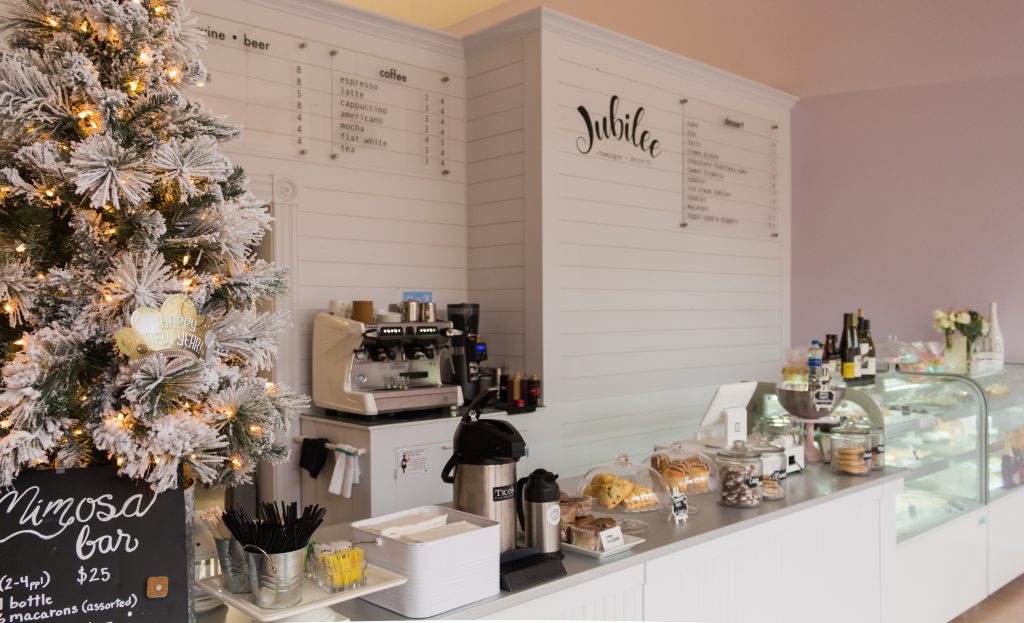
There’s a new place in town — specifically, in downtown Independence. The previously empty corner store on Monmouth Street is now Jubilee, a dessert bar that also serves coffee, wine, mimosas and beers. The shop, under the same owner as Salem’s Sugar Sugar, is noticeable by its simple lit window sign.

In my opinion, Jubilee has a lot of pros. For one, it’s very open inside and a lot of effort clearly went into the appearance and feel of the shop. It’s a cute place with a laid-back atmosphere, which perfectly fit the lazy afternoon when I went.

The menu is clearly laid out and categorized by sparkling drinks, coffee and tea and desserts. The desserts, consisting mostly of baked goods such as cupcakes and tartlets, are the main attraction so far. While not all of their options are gluten free, they still have a number of them on their display, such as the chocolate cake. I tried one of my favorite combinations with their dark chocolate caramel filled tartlet, which was rich but very enjoyable. I also sampled their butterscotch crumble cupcake, which was a little sweeter but had a good balance between the sweetness and the more bitter chocolate crumble; I almost wished I’d gotten that instead.

The making of Jubilee is still in progress, however, a detail to consider when visiting. Their hours may be inconsistent, but they are currently open most days from 9 a.m. to 9 p.m. They are also still working on honing their recipe for the ice cream jubilee, a kind of homemade ice cream that they plan to have as a main selling point on their dessert menu.

The only main downside to Jubilee is the lack of foods other than dessert. The drinks menu is ideal for a brunch, but as of now the food options are limited to sweets without any breakfast foods. However, the business is still new and it will be interesting to see if they decide to expand the menu. It will also be interesting to see if what they choose to do with the back room, which is currently only used for reservations for private parties.

Overall, I enjoyed my visit to Jubilee and will likely return in the future, both for a butterscotch crumble cupcake and to see if there are any changes.


Contact the author at howllifestyle@wou.edu

Photo courtesy of Ashlynn Norton

Interview: Auditing classes for personal growth

Rebecca Meyers | Lifestyle editor

If there’s anything nearly all students can relate to, it’s the stress of class requirements, grades and graduation. This is often related to the further stress of thinking about where graduation will then take us, and our entrance into the real world.

Some students, however, have already been into the real world and have found that it still leads back to Western. In most cases, these nontraditional students are also aiming for a degree of some kind. This is not the case for student Paul McNeil, who is taking classes purely for the purpose of continuing his education. As this is an experience I can’t relate to, I asked for an interview to get a different perspective.

With a backpack full of textbooks, McNeil, despite the age difference to most students, seems to fit in with the college kids lounging in the Werner University Center — maybe because he has been attending college classes for years, and not just at Western. He continued studying long after earning a degree in physics, a major he picked because, according to McNeil, “it challenged me the most.”

“I could drop into any department (at Western) and find something interesting to study,” McNeil said in regards to the contrast in his classes. Though his physics degree took him through careers in technology and engineering, he now takes courses such as Economic Geography and Transnational Migration. He was drawn to these classes by the desire to learn about “how the world is set up financially,” he mentioned, and how this affects global inequality and society.

McNeil audits the classes, meaning he doesn’t have to worry about a grade — although, as he points out, the instructor is still free to call on him and ask for contribution to the discussion, and so the familiar mantra of “make sure you do the reading” is echoed in this situation.

As a senior citizen, McNeil also gets to audit classes for free with permission of the professor. This is a point he emphasized, as it is a little known fact that others might be able to take advantage of. He revealed there are other additional benefits of auditing classes.

“My initial thought…was that getting a student card would allow me access to the university’s library database,” he said, appreciating the extensiveness of Hamersly Library and noting that not every library has such range.

Overall, the conversation, for me, turned out to be a much needed reminder that studying for a degree is important, but continuing education for personal self growth is as well. Before parting, McNeil commented that students these days have a wealth of information at their fingertips, and that it can be beneficial to explore all options: “Students shouldn’t feel so pressured to choose …there is so much information to explore, and finding the right thing can take some time.”


Contact the author at howllifestyle@mail.wou.edu

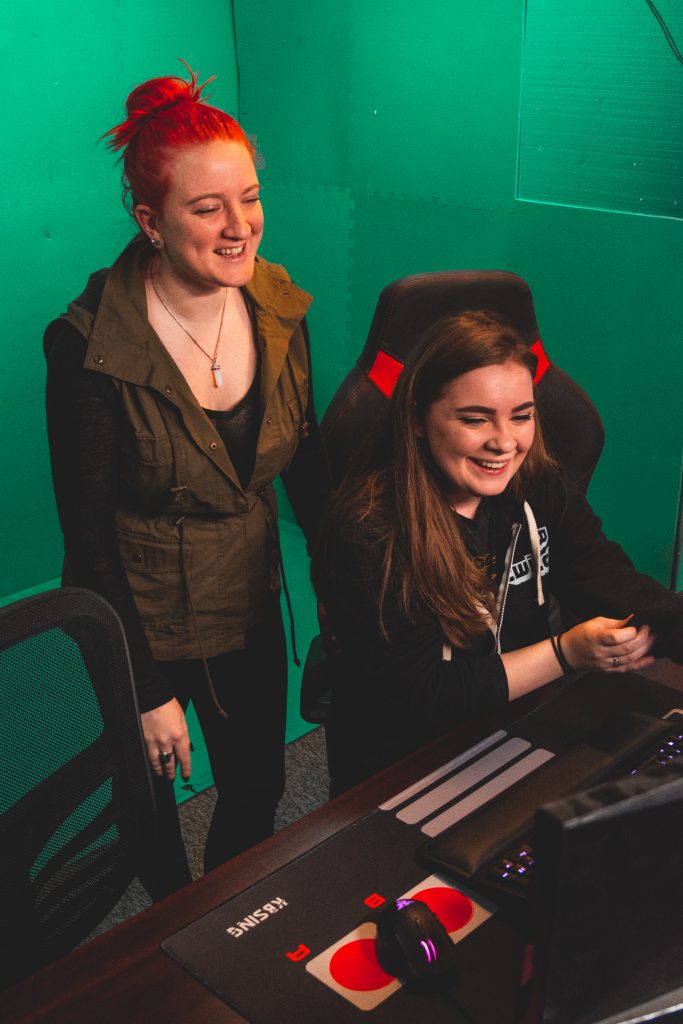
Youtube channel Girls Play features WOU alumnae

Chrys Weedon | Entertainment Editor

According to the 2016 census, Monmouth’s population is about 10,000 people. The Girls Play Youtube channel’s subscriber count currently sits at about 246,000, which is 24 times more people than the population of Monmouth.

Girls Play is a channel that has been building a following for six years. The group also has a considerable following on Twitch, a streaming channel where viewers can interact live with streamers. Many women have joined and left the channel over the years, but the current team is about 10 people. One of the original members, Larson, was working at Target and attending Western when the channel was born.

“One of my friends realized ‘hey, there’s no girls in this platform, and especially a group. How cool would it be if we could get a group of girls in this niche that’s starting to grow and see what we could do with it?’” said Larson.

The channel started in a bedroom, and in the beginning it was just a hobby. Larson commented that for the first four years, she was only recreationally making videos while also working and going to school. But as their following grew, it became a full time job.

“I’ve only been full time two-years with this,” Larson commented, “it was very hard. Even though we look big and professional now, it’s still a struggle and I don’t think a lot of people ever realize that the struggle at the beginning is real.”

Natalie Doerfler, a junior theater major at Western, joined the channel about a year ago.

“Now people are recognizing Youtube and Twitch as actual jobs and you get paid to do them,” Doerfler said.

Although maintaining the channel takes a lot of work, Natalie enjoys being able to do something she loves.

“It’s become about just hanging out with friends on a Youtube channel and on Twitch, and just being able to play video games,” commented Doerfler.

The Girls Play channel has videos on a diverse group of video games.

“We’re… variety, which was originally why we liked the idea of the girl group,” said Larson, “because you have so many different personalities, whereas a lot of channels especially are very solo focused.”

Specific challenges come along with being a group of women online in a Youtube genre that is dominated by men.

“There are gonna be the men who come into chat and talk about how much makeup you’re wearing and how distracting it is,” said Doerfler, “and then you’ll have another guy come into maybe a different stream where you’re wearing a little bit less makeup and they’ll judge you for how little makeup you’re wearing.” But, in the end, the girls say that the community they’ve built is worth everything.

“We are completely relying on the community to keep (the channel) going,” Larson said.

Doerfler said the most important thing about the channel to her was to engage with other women within the gaming community.

“I think it’s important to show men that, hey, this is happening and it’s okay for you to enjoy this as well,” said Doerfler. “I just want people to see that women are having fun with video games just as much as men.”


Contact the author at howlentertainment@wou.edu

Video courtesy of Chrys Weedon

Photo courtesy of Paul F. Davis