Mount Hood

Western to participate in Congress to Campus program this February, two students will act as ambassadors

Sage Kiernan-Sherrow  |  News Editor

On Tuesday, Nov. 10, assistant professor of politics, policy and administration, Earlene Camarillo, sent a campus-wide email advertising an opportunity for students to act as Western’s ambassadors during the Congress to Campus event set to occur from Feb. 11–13. 

According to Camarillo, President Rex Fuller and Provost Rob Winningham later collaborated with Dr. Mary Pettenger after discovering the program, stating that it “sounds like a great opportunity for Western, especially in today’s climate of strong partisanship.”

Congress to Campus is an existing government program which provides an “opportunity to interact with former Members of Congress through a program designed to attract young people to public service” and addresses “concerns about the lack of civic literacy among America’s young people and declining participation in politics,” according to its official website at stennis.gov.

Camarillo expanded on the idea of civil literacy, stating that it is “the idea that we engage with one another in conversation,” and that, in a democracy, “theoretically, everyone should feel comfortable expressing their opinions.” The Congress to Campus program supports this by sending one Republican and one Democrat representative to “promote the idea that you have to speak with one another,” said Camarillo.

Camarillo mentioned the media’s role in misinforming the public and framing the government as overly bipartisan, saying that “there is a lack of clarity on how our system actually works,” and citing the statistic that “only 30% of people can name the three branches of our government.”

Throughout the program’s duration on campus, there will be two events held on Feb. 12 that are open to the general student population. One is set to occur at 2 p.m. and will be an alumni panel dedicated to addressing the topic of public service, and the other is set for 7 p.m. and will be a public forum where students and faculty can ask questions of the president and former Congressmen. 

Camarillo hopes that this event will promote interest in public service careers and stated, “we really want to encourage people across all disciplines,” to apply and attend the panels, stressing that the information being presented will be “important regardless of what career you’re going into.” 


Contact the author at howlnews@wou.edu

HIVAlliance partners with Abby’s House to combat misinformation about HIV and treatment.

Sage Kiernan-Sherrow  |  News Editor

HIV has a long history of stigmatization throughout the nation. Partnering with Abby’s House on campus, HIVAlliance came to Western Wednesday, Nov. 20, “to discuss the current status of HIV in Oregon, how HIV is spread and not spread, and ways to prevent HIV, including PrEP,” according to Keith Mathews, a Western Alumni and current PrEP Coordinator for the Northern Region of Oregon.

According to HIVAlliance’s website, hivalliance.org, PrEP stands for Pre-Exposure Prophylaxis, “a medication taken daily that can be used to reduce the likelihood of HIV infection by preventing the virus from taking hold and spreading throughout the body,” which, “can reduce the risk of sexually acquired HIV by more than 90% and can reduce the risk of HIV among people who inject drugs by more than 70%.” 

HIVAlliance helps to educate the public about PrEP, as well as helping PrEP users navigate insurance, providers and financial support services. Additionally, HIVAlliance operates under a harm reduction philosophy which “seeks to empower individuals, remove barriers to accessing the support that they need, and offer pragmatic approaches to risk reduction in a non-judgmental/non-coercive way, that is compassionate and accepting of any positive change,” according to hivalliance.org.

Prior to the presentation, Mathews reached out to Abby’s House himself, saying that, “I knew their missions overlapped with our mission at HIVAlliance to educate about HIV and prevention. In my four years at WOU I heard very little about HIV apart from a few events highlighting awareness so I thought it would be a wonderful opportunity to start that conversation at WOU.”

He added that, “despite the perception of lessened stigma around HIV, there is still a lot of misinformation around HIV which continues the stigma to this day.  The best way to receive correct information is to find medically accurate and correct information on HIV and talk to people, especially sexual partners, about HIV status and testing.”

Currently, there are various organizations which offer STI and HIV testing, including Western’s  own Student Health and Counseling Center. Polk County Public Health, Marion County Health and Human Services, HIVAlliance and Planned Parenthood all offer testing within the community.

For more information, visit hivalliance.org


Contact the author at howlnews@wou.edu

After an unparalleled 2018 haul, Western’s Toy Drive hopes to maintain that momentum for the 2019 season

Sage Kiernan-Sherrow  |  News Editor

Following a record-breaking year in donations, the annual WOU Toy Drive is once again setting up collection boxes for the Christmas season. 

The campus drive has been operating for the past seven years, and developed “organically” after a foster student named Matthew Burley asked why there wasn’t a holiday program for foster-care and underprivileged students, said Jackson Stalley, a library technician at Western and coordinator for the toy drive. 

After finding campus partners, the drive has “become a part of WOU’s holiday culture,” said Stalley, “it became so popular and successful because of the generosity of our campus … people rely on us.”

Western’s Toy Drive operates separately from the Student Veterans of America’s Toys for Tots, and is the primary donor of holiday gifts to local organizations such as the Sable House, DHS and the Liberty House in Salem — organizations that provide services to those in the foster care system and to families experiencing domestic violence, as well. 

The first year that they delivered the toys, one of the organizations had about eight presents prior, Stalley recalled. Every year, “it’s stunning how happy (people) are to receive the gifts,” Stalley said.

This year, Stalley hopes to “keep the momentum” from the previous year, and wants to remind students and community members that they’re “more than just toys and gifts.” For some, “the idea that some stranger out there cared was a reminder to be hopeful,” said Stalley. 

Students and faculty wanting to donate have until Dec. 9 to do so and can find more information as well as a wishlist through Stalley’s email sent out on Nov. 12 or by contacting him directly at stalleyj@wou.edu.


Contact the author at howlnews@wou.edu

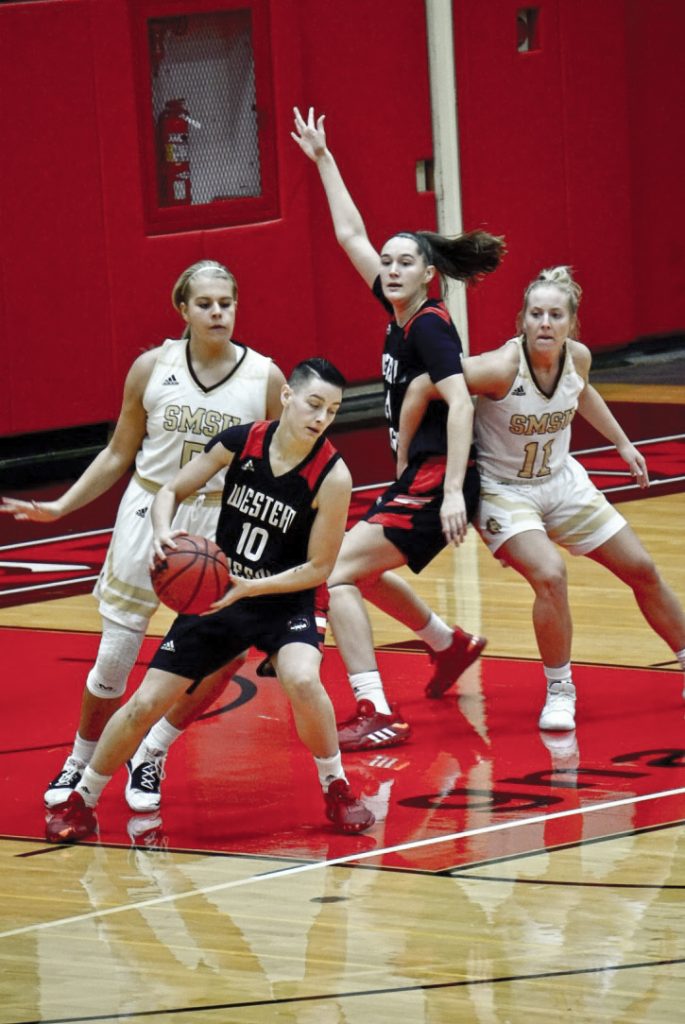
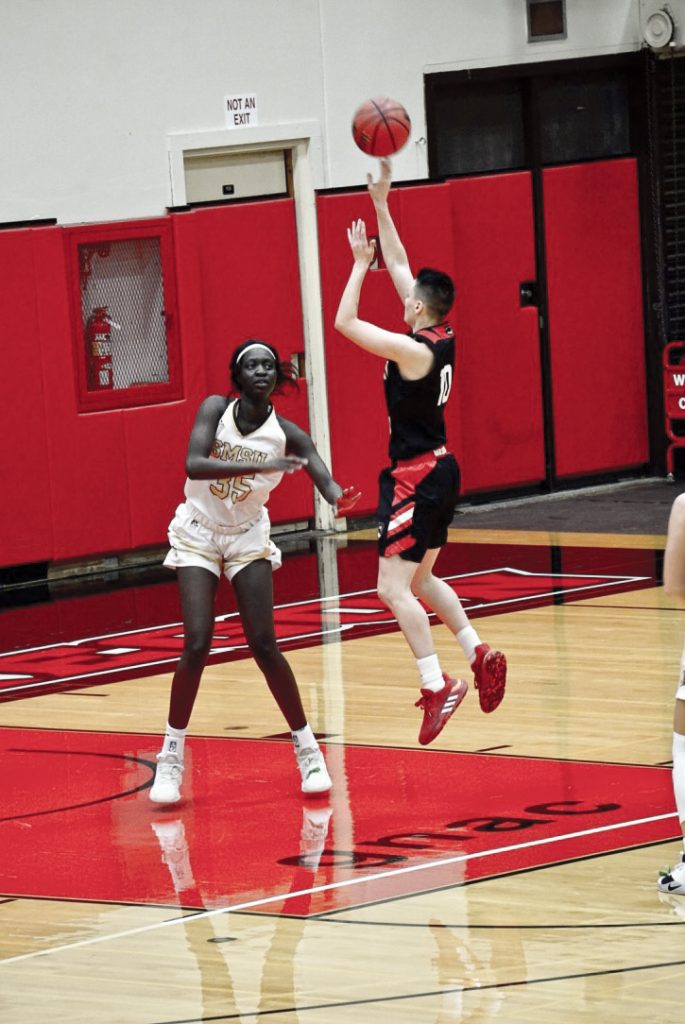
Dig a little deeper, Women’s Volleyball take home win to conclude their season

Hannah Greene  |  Sports Editor

Last week, Nov. 19 and 21, the Women’s Volleyball team played in their final games of the season. 

The Wolves started by playing against Concordia University — a team that beat them previously in season on Sept. 17.

Western’s only offense depended on their hitting, their percentage one of the best this season. During the first set, the Wolves gained a lead but fell shortly after, and the Cavaliers took the lead and carried it throughout the rest of that set.

Although the Wolves lost, there were multiple pivoting points throughout the match that gave the Cavaliers a run for their money.

The second set saw the Wolves hold the Cavaliers — until the Cavaliers broke out and scored 8 of the 10 points. Western had a hard time scoring due to Concordia’s strong defensive wall that continued to challenge the Wolves throughout the game.

Highlight player for the Wolves was Sianna DeCarli, a junior outside hitter, who had 11 kills — an attack by a player that is not returned by the receiving opponent, which leads directly to a point — the only Wolf that night to get more than four kills.

The second game was a sweet sendoff for the Wolves’ only senior player, Allyson Crisp.

Western took on Montana State University Billings on Nov. 21 for the Wolves’ senior game, and final game of their 2019 season.

Not only did this game end the Wolves’s season with a win, it sent their senior player, Crisp, to the Western Oregon record books.

The first set the Yellowjackets took the win, but not without the Wolves making a great comeback. The second set was a pepper of a match, with the Yellowjackets gaining and then falling to, to end with the Wolves ahead and their first set win.

The rest of the game saw the Wolves winning to have the Yellowjackets follow with a win — but in the end the Wolves dug dipper and pulled through to bring home their fifth win of the season.

An overall rough season for this Women’s Volleyball team that challenged and tested them every game — but a wonderful finish to leave the Wolves howling.


Contact the author at hgreene18@wou.edu

Opinion: In response to “It’s beginning to look a lot like Thanksgiving”

Caity Healy  |  Managing Editor

I’d like to preface this by saying, yes, I am listening to Christmas music as I write this. But also, I’m looking at the Thanksgiving decorations up around my house, too. Because holiday mixing is a thing, folks. With that, let’s jump into this response.

In Issue 7, my editor-in-chief published an opinion piece titled “It’s beginning to look a lot like Thanksgiving,” where she asserted that we should not jump straight from Halloween to Christmas, bypassing Thanksgiving. Let me say, the author is a wonderful and kind person, and I have the utmost respect for her and her opinions. That said — sorry Cora, I’ve got to disagree. Well, kind of.

Look, I love Thanksgiving. When I think of the holiday, I remember my childhood; I remember the tradition of my dad putting Christmas lights up on Thanksgiving morning so that it would be ready by the time guests arrived for dinner. I remember Christmas music playing through the house as the aroma of my mom’s cooking flooded our home. I remember getting up early to turn on the Macy’s Thanksgiving Day Parade, watching with twinkling eyes as Santa waved to the crowd in his float.

Thanksgiving is what you make it. To my family, it was never a day completely separate from Christmas. My childhood memories of the two holidays blur together — and I love that. I love the warmth of celebrating both holidays at once; I love letting spirits ring for as long as possible.

Aside from my anecdotal experience, studies show that putting holiday decorations up early can actually make people happier. Psychoanalyst Steve McKeown told Unilad that “In a world full of stress and anxiety, people like to associate two things that make them happy and Christmas decorations evoke those strong feelings of childhood.” 

Now, I do have some issues with this — it’s not always the feeling of childhood that people love, and the holiday isn’t always Christmas — but he gets the point. People often associate this time of year with happy memories or feelings, so let them. His statement has been confirmed by other scientists, such as psychologist Deborah Serani.

Overall, I get what Cora’s piece was saying. I just think it should be tweaked a little. My opinion is simply let people celebrate what makes them happy. If you prefer going all out for Thanksgiving, do it. If you prefer treating Thanksgiving as a pregame to the holidays, you do you. In a time when there’s limited opportunities to take time and do what actually makes you happy, I think we should let people take advantage of this opportunity. Let people celebrate holidays in a way that truly makes them happy.


Contact the author at chealy16@wou.edu

Opinion: The right time to die

Rachel Hetzel  |  Designer

One of the crucial aspects of science and technology is to extend the human lifespan. Being born in the 1800s meant one could expect to live to a maximum of about 40 years. In the U.S. today, the average lifespan is 90 years and rising. According to the National Institute of Aging, our lifespans are increasing by about three months every year. 

Now, living longer may sound great to most people — and don’t get me wrong, I’m glad this is being researched and developed — but I think we need to consider the changes in quality of life, and what this means for elderly generations. 

According to the National Council on Aging, 80% of the elderly have at least one age-related disease, and 77% have two or more. Some of the most common ones are Alzheimer’s, arthritis, cancer, dementia, depression and heart disease. Age is the main risk factor for many of these diseases; the older we grow, the higher our chances are of developing one or more of these problems. 

So what I’m getting at here is that maybe we shouldn’t be focusing on living longer. Personally, I’d like to die before I’m 80 — I want to die naturally, with my mind and memories intact.

My great grandma suffered from alzhemiers, dementia and other illnesses. We would visit her once a week over the course of several years. Eventually, she stopped remembering the last time we had been over. She would ask how deceased family members were doing, and wouldn’t really know or remember who we were. We would write her letters so she would have something to read and remember us by, but she would need someone else read them to her. I’m very thankful that I got to know my great grandma, but seeing her decline as she aged made me realize that I don’t want to have my life end in that state.

There comes a point when we need to decide if keeping someone alive is more cruel than helpful. And if it is cruel, that person needs to have options available to help them get out. Death with Dignity is an option for those who are terminally ill. It allows the patient to request  medication that will safely, and humanely kill them. Currently, the Death with Dignity law states that one must be terminally ill, and expected to die within six months in order to request the medication. I think this should be changed to also be available to people who are 80 or older. Suicide is alarmingly common amoungst seniors. According to the American Association for Marriage and Family Therapy, seniors make up 12% of our population, and 18% of suicides: which does not account for silent suicides, like starvation and overdose. 

Now, obviously not all seniors are miserable. Some have loving families, and live happily to the end of their lives. But for those who don’t, there needs to be an option. We should start focusing on improving the quality of life rather than length of life. Society views death as a negative thing or something to be avoided. But reality has shown us that there is indeed a right time for it, and perhaps we should try to embrace that rather than fight it.


Contact the author at rhetzel18@wou.edu

Campus Voices

Rylie Horrall | Lifestyle Editor


Derian Hallberg (Major: ASL Studies, junior)

I’m thankful for how much progress I’ve made emotionally, mentally and physically. I grew a lot since my first year; I was a completely different person from today and never thought I’d get this far. So I’m thankful I was able to do that.


Darby Olsen (Major: ASL/English Interpreting, sophomore)

I am very thankful for my amazing family. Without their support, I would not be here at Western pursuing my degree and following my dreams.


Nick Denning (Major: English/Philosophy, sophomore)

I’m thankful for the foggy mornings because they’re very beautiful. I’m thankful for living in a place where there are so many nice people around, so you can have people to walk in those foggy mornings with you. Also that the term is almost over.


Josh Pautler (Major: English Studies/Writing, sophomore)

I am thankful for supportive parents, lovely classmates, and lit classes. 


Claire Graves (Major: Undecided/Exploratory, sophomore)

I am thankful for my mom, and for having such supportive friends that help me get through such hard stuff and build me up. I’m also thankful for french fries.


Carrie Thompkins (Major: ASL/English Interpreting, sophomore) 

I’m thankful for my friends’ and family’s support through all the rough times. I am also thankful for being able to have a roof over my head and food while maintaining my education.


Contact the author at rhorrall17@mail.wou.edu

Photos by Rylie Horrall

New Thai food truck joins food annex — Sav’s Thai Kitchen

Rylie Horrall  |  Lifestyle Editor

Sav’s Thai Kitchen is the latest addition to the growing food annex in Monmouth. Located at 152 Main St W, the new food truck has only been open since Nov. 9. It is owned and operated by Savannah Randolph, who initially started out with a Thai food blog and no kitchen.
Randolph originally worked in a pharmacy, but has always had a desire to have her own food truck or a small café. Recently, a possibility arose for her to open the food truck, and she seized the opportunity.
“I found out that my job was closing the company at the end of the year, and it was my wake up call to either try and start my business or just apply for another pharmacy job,” Randolph said. “So, I decided to take a chance with the food truck.”
She chose to open in Monmouth because she had just moved to the area but was disappointed that there were no Thai restaurants nearby. Randolph also loved the feel of the food annex, which solidified her decision to open here.
The decision to serve Thai food stemmed from Randolph’s time in Thailand as a child; she lived there for four years, and began cooking and perfecting her own Thai recipes since then.
“I really wanted to show people what authentic Thai food was like,” she said.
Currently, the menu at Sav’s Thai Kitchen does not rotate, but Randolph intends to once the truck has been open for a longer period of time. The plan is to keep the menu simple and change it every couple of days or so with new daily items. By doing this, Randolph believes that customers will then get a chance to try different kinds of dishes.
For first-time customers, Randolph recommends the Khao Man Gai, which is Thai marinated chicken over garlic ginger infused rice served with chicken broth soup and a special homemade sauce.

“(You) just can’t go wrong with it and you won’t see it at any other Thai restaurant nearby. In Thailand there were specific street food stalls that only sold this one dish,” Randolph added, due to the fact that the dish was so good.
The signature dish at the food truck is the fried rice, which can be bought regular or spicy ⏤ Khao Pad Gai or Khao Pad Krapow, respectfully. The Khao Pad Gai is jasmine rice with chicken, Chinese broccoli, onion and egg, while the Khao Pad Krapow is jasmine rice with chicken, chopped green beans, Thai basil, onion and chilies. Randolph recommends adding a side of Nam Pla Prik — fish sauce with chili peppers — because it adds to the dish.
Currently, Sav’s Thai Kitchen is open on Saturdays and Sundays from 11 a.m.–3 p.m., or until the truck is sold out. Starting in January, the food truck’s hours will be changed and will most likely be open Tues–Sat.
Sav’s Thai Kitchen can be found on Facebook and Instagram at the handle @savsthai, along with their website savsthaikitchen.com.


Contact the author at rhorrall17@wou.edu

A sick care package to prevent illness during winter

Rylie Horrall  |  Lifestyle Editor

Winter is coming, and the weather isn’t the only cold thing that comes with it. When the temperatures drop, sickness season picks up, so here’s a sick care package to make for yourself, or as a gift for someone else, in case of illness.


  1. The easiest thing to throw in is a few cough drops, if not a small bag. You can toss in one brand, or mix it up with a variety of flavors from fruity to minty. 
  2. To solve any congestion issues, add in some anti-congestion or cold/flu medicine. Usually allergy medicine can work as well, but it entirely depends on how your body reacts to it. Either way, at least one of those options is best to have in there.
  3. Tissues are another must-have, as most illnesses include a runny nose in their symptoms. A little travel package works and doesn’t take up much space, however feel free to use a whole box of tissues if there’s enough room.
  4. Vitamins help to boost your immune system, so oranges would be a good inclusion based on the amount of vitamins in the fruit. Plus, if the sickness is hard on the stomach, the citrus fruit isn’t too acidic that it will upset an already distressed stomach. If fruit isn’t your forte, a can of soup for later is a good substitution. Orange bell peppers are also an acceptable substitution for a source of vitamin C.
  5. Finally, put in a beverage of your choice, whether it’s juice, packages of tea, Sprite or just plain water. Hot tea will feel nice for a sore throat, but juice works just as well for those who aren’t fans of tea. For those wanting something fizzy to help with an upset stomach, Sprite ⏤ or 7Up, Sierra Mist, pick your poison ⏤ aids in fixing an upset stomach.


Contact the author at rhorrall17@mail.wou.edu

Photos by Rylie Horrall

Try these inexpensive thrift stores nearby Monmouth

Rylie Horrall  |  Lifestyle Editor

For many college students, money can be a burden that weighs heavy on minds. Because of this, finding cheap options for household items and clothes is a welcome relief. For me, it feels rewarding to find thrift stores that sell these items at a reasonable price, and luckily there’s a few options near Western.

Help and Hope to Others, more commonly known as H2O, is located in Dallas at 451 SE Maple Street. It’s a secondhand non-profit thrift store that accepts donations from the surrounding community. It then sells everything they receive at much lower and affordable prices, and their stock is constantly changing based on what is donated.

Their mission statement expresses that they wish to help those in need, and the store itself has a few ways of helping the community. For example, they have food boxes available for families in need to pick up, and also have a Helping Hand program to provide household items that struggling families and individuals are looking for; both are programs that volunteers can help with. H2O is open from Mon–Sat from 9 a.m.–5 p.m.

In Independence, there’s a thrift store located at 150 C St called Fashion Sense. It was initially open in Monmouth for about a year back in 2016, but moved into a larger space in Independence in 2017. In addition to clothes, Fashion Sense also buys back various furniture and home decor. They try to buy items from customers as much as they can, but due to the limited amount of space, try to pick out items that will sell the quickest. In addition, clothes that are being sold can be brought in bags and don’t have to be on hangers, but all commodities brought in should be cleaned and washed.

Everything that’s sold in the shop is at a low price point, and can be shipped once bought or held in store until it can be picked up. Fashion Sense is open from 12–6 p.m. on Monday and from 11 a.m.–6 p.m. on Tues–Sat. 

Robin’s Roost is a store located at 283 S 2nd St in Independence, but, according to their most recent post on Facebook, have begun closing their doors after nine years. They still remain open on Thursday and Friday from 11 a.m.–6 p.m., and on Saturday from 11 a.m.–5 p.m. to clear out inventory. Offers can still be made on their remaining stock; if one of their signs is out on the corners of the street, then they are still open.


Contact the author at rhorrall17@wou.edu

Student actors performed with passion in the production of “It’s a Wonderful Life”

Never Retallack  |  Entertainment Editor

Directed by one of Western’s theater faculty members, Professor Kent Neely, comes “It’s a Wonderful Life: A Live Radio Play.” This classic Christmas tale is based on a short story called, “The Greatest Gift” by Philip Van Doren Stern published in 1943. Later on, it became a film, and then adapted into a play — Western’s performance is based off Joe Landry’s adaptation of the screenplay.

Landry’s adaptation is a radio show reading, where the actors on stage are acting like they are actors for a radio. This brought some much needed comedy into the somewhat sad play, with silly ads for dandruff and dirty car windows sung to the tune of classic Christmas carols.

Emily Hedges, an interdisciplinary studies senior at Western said, “I’ve seen the play before, but never as a radio show; it made it a very unique and interesting performance.”

Watching the student actors perform, I was pleasantly surprised with their quality and dedication throughout the performance.

With only ten actors, and one accompianist, it was an intimate cast with each actor playing more than one role. This is where the talent of the cast shone through; certain actors would speak in a heavy Irish accent one minute, then a tough east coast accent within the next breath, never missing a beat.

An interesting aspect of this production was also the use of a live sound effects board containing many objects for two cast members to create realistic noises without technology. The objects included a belt, marbles, a wooden box, a whistle and so many more. Like dropping objects into a box during a scene where they were collecting money.

The two cast members who managed the sound board, Trina Schwabauer and Sara Wright, had other roles as well, juggling the sound effects and their characters. This added another element of interest for viewers, since there were no props for the story of “It’s a Wonderful Life: A Live Radio Play,” they were on a set, but not interacting with anything — staying stagnant in front of their microphones. 

Overall rating: the actors in this production did a great job, jumping around from character to character, all with interesting facial expressions and compelling dialogue. It was an all around enjoyable performance.


Cast List

Jake Laurents ……… Matthew Ramage

Sally Applewhite ……… Lea Sheldone

Betty Smith ……… Selena Moreno

Lana Sherwood ……… Citlalli Castaneda

Freddie Filmore ……… Jacob Fritts

Harry “Jazzbo” Heywood ……… William Evans

Homer Duncan ……… Steven Cummings

Opal Ferguson ……… Sara Wright

Sharon Cook ……… Trina Schwabauer

Patricia Dowd ……… Lexie Warner

Accompianist ……… Devin Desmond


Contact the author at howlentertainment@wou.edu

Photo by Mikayla Bruley

Review of the unsettling film “The Lighthouse”

Never Retallack  |  Entertainment Editor

There are films that require more than one viewing — and then there are films like “The Lighthouse.” Those like the latter require at least 10 viewings to fully grasp what happened on screen. 

The drama-horror movie directed by Robert Eggers — the same man who brought the fan-favorite “The VVitch” (2015) to life — stars only two cast members: Willem Dafoe as Thomas and Robert Pattinson as Ephraim.

“The Lighthouse” was unique as soon as it started — switching from widescreen trailers to old-fashioned fullscreen, the entire film was in black and white. This set the dark and somber tone of the film before meeting the characters.  With just two men on an isolated island, maintaining the lighthouse becomes a lot more challenging as strange events chip away at their sanity.

The movie is set in the 1890s on a mysterious island in New England. Thomas is the “wickie” or lighthouse keeper, and when Ephraim arrives to do grunt work on the island, he becomes Ephraim’s cruel boss.

Without spoiling too much of the plot, there are several odd elements to this movie that viewers should know about: obscene amounts of masturbation, lots of tentacles, sirens and violence against seagulls.

Throughout the entire two and a half hours of the film, I felt a general discomfort and unease in my stomach, struggling to watch or fathom what I was watching.

A challenging element of the movie was the thick sailor accent that Dafoe spoke with, making most of what he said unintelligible. It would be beneficial to rewatch the film but with subtitles provided; there was so much symbolic imagery — I can’t imagine what I missed in the dialogue.

The film only gets more complicated when the audience doesn’t know who to trust — both Thomas and Ephraim tell completely different tales, and with no clear clarification, it becomes hard to know what is reality in this twisted nightmare.

Between endless amounts of drinking, constant yelling and general distrust, the relationship between Dafoe and Pattinson’s acting was captivating and disturbing. 

Overall Rating: I think the film alludes to a much bigger picture that I could not grasp, but I highly recommend this movie to anyone looking for something unique and challenging for the brain.


Contact the author at howlentertainment@wou.edu

Senior send-off for Wolves football, brings home a sad loss

Hannah Greene | Sports Editor

Football came to an unfortunate end last Saturday, Nov. 16 when the Western Oregon University Wolves fell to the Eastern New Mexico University Greyhounds — a game for the seniors, but an outcome to leave them wishing for more.

Opportunities were endless, but completion wasn’t matching up. The Wolves’ defense continued to carry the team on their backs, which forced the Greyhounds to punt on multiple fourth downs. 

The Wolves’ offense couldn’t find a way to stay connected and maintain their possession or capitalize on scoring moments. The Wolves’ special teams had a difficult time making smart decisions during play, making the defense spend more time on the field.

Though the Wolves had a difficult time finishing, they created many great plays that kept the fans on their edge of their seats. No. 23, sophomore Omari Land, made two chunk runs to get the Wolves into a great position to score. The Wolves were in the redzone on fourth down and went for it, but quarterback, Ty Currie, of the senior class, got sacked for a turnover on downs.

Before the half ended, Western had the ball — it snapped back by Jacob Pruitt to Currie, who threw an ill-advised pass into triple coverage (three opposing players covering one teammate) which resulted in an interception by the Greyhounds.

The half ended with ENMU in the lead, 28-7.

The second half started with the Wolves getting a quick score and their defense held the Greyhounds to a three and out — three plays and a punt.

Western had the ball again with 11 yards to go on fourth down, but failed to convert and the possession went to ENWU. 

Eastern’s triple offense posed as a large threat for Western’s defense to stop.

The third quarter ended with a solid run by No. 3, junior Curtis Anderson.

During the fourth and final quarter, action and suspense filled every second. A one-yard run by number seven, senior Nico Jackson, made the score 35-20, with the Greyhounds still in the lead with 11:40 left.

Western’s defense continued to make harmful plays against the Greyhounds to keep them from scoring. Number 32, Nate Proctor of the senior class, sacked the Greyhound quarterback for a significant loss in yards and resulted in 4th down. ENMU wasn’t able to score.

The Wolves continued to push forward and not give up, but failed another conversion, giving the Greyhounds possession with seven minutes left in the game.

Western’s defense held up a barrier and didn’t allow for an attack from Eastern New Mexico. With the Wolves’ offense back on the pitch, a touchdown was on the horizon.

A dart was thrown by Currie in the endzone, which was caught by No. 11, sophomore Thomas Wright, to complete a touchdown. The Wolves were now within eight of the Greyhounds.

The Wolves attempted to take an onside kick with No. 96, Andrew Gross, a junior, slamming the ball into the side of a Greyhound players helmet — but the Greyhounds gained possession over Western. 

The game concluded with a 35-27 score, Greyhounds won. 

Western left the gridiron with their heads down and their season done. It was a great game from the first minute to the last, but not quite the send-out the seniors had hoped for.

Congrats to the seniors — Braelan Evans, Tyler Reid, Nico Jackson, Ty Currie, Joey Roos, Derek Parnell, Nate Proctor, Aaron Turner, Joseph Gonzales, Anthony Kennison, Court Hammond and Tyrell Cummings— for an overall great 7-4 season.


Contact the author at hgreene18@wou.edu

Photos by Hannah Greene

Somebody call 9-1-1, Men’s Basketball is on fire with third win in a row

Hannah Greene | Sports Editor

Win, win, win — Western’s Men’s Basketball team is on fire, having won their first three games. 

From Nov. 15 to Nov. 16, the team held a four-game tournament consisting of the Concordia Cavaliers, the Hawaii Hilo Vulcans, the Warner Pacific Knights and the Western Oregon Wolves.

On Friday, Nov. 15, the Wolves took on the Knights during their second exhibition game of the season. The Wolves opened the game to a quick lead after the Knights took the first points. Western continued to score and got a seven point lead — never falling behind the rest of the game. 

Multiple three-pointers were made, a crucial tactic for the game. The first half concluded with the Wolves ahead, 40-25, a 15 point lead.

Western held their momentum throughout the rest of the game to bring home their first tournament win over Warner Pacific University, 85-68.

Western saw their second game, and the first regular season game, against the University of Hawaii Hilo, a team that made the Wolves earn every point. 

The play was a consistent battle back and forth — Vulcans ahead, Wolves ahead — keeping the players, coaches, fans and spectators eager and unsure of who was going to take the “dub.”

The first half ended with a tie, 31-31.

No. 25 of the Wolves, Darius Lubom, got the scoring started during the second half but turned it over to the Vulcans after a shooting foul. The Vulcans took advantage of this and converted the three point play. 

The play stepped up and the Vulcans took the lead after more three-pointers were made, 44-42.

Western wasn’t done; No. 2, Jaylyn Richardson, made for an acrobatic layup to narrow UHH’s lead by three.

Towards the end of the game, multiple timeouts were called, the energy intensified and the Wolves and Vulcans tried everything to finish the game ahead. With three minutes left in the game, No. 15 of the Wolves, Zach Baugher, broke the tie with a finished three-pointer.

Vulcans were in possession of the ball when Wolves guard, Lubom, stole the ball. The scoring continued to be both sided.

With 35 seconds left on the clock, No. 34 of the Wolves, John Morrill-Keeler, made a huge block to benefit the Wolves.

Only seconds remained on the clock as the Wolves attempted to run out the time — and the Wolves took home their third win in a row, 74-69. It was a tough battle, winning by only five points, but a win nonetheless.

The Men’s Basketball next home game is Dec. 14 at 3 p.m. against Corban University for their third and final exhibition match.


Contact the author at hgreene18@wou.edu

Photos by Hannah Greene

Salt and pepper battle leads to Wolves’ Volleyball loss

Hannah Greene | Sports Editor

Women’s Volleyball hosted the Northwest Nazarene Nighthawks and Central Washington Wildcats on Nov. 14 and 16.

In the first match of the weekend, the Wolves were put to the test by the Nighthawks. During the first set, the Wolves stayed behind, but kept fighting back, only being a few points behind. 

The second set was not the same; the Wolves allowed for a quick lead by the Nighthawks until Wolves’ defensive specialist, Sarah Crowell, stepped up to dish out some well placed serves — catching the Nighthawks off guard — and racked up some points consecutively.

There were many well-executed plays made by the Wolves throughout the match including one by middle blocker, Makenzie York, who barely tipped the ball over the net to score for the Wolves.

This wasn’t enough — the end of that set had the Nighthawks up 25-19.

The Wolves started the final set, determining the tempo by scoring first, but this didn’t last long. The Nighthawks quickly returned, but the Wolves remained enthused.

NNU took the lead again with multiple unanswered points from the Wolves due to the strong defense the Nighthawks continued to put up. Western kept the pressure high, with many hard balls over, but none were powerful enough to beat the Nighthawk’s blocks.

The Wolves began to gain some momentum, but with not enough time left in the game to recover and catch up. The final set came to a close and the Nighthawks took home the win 3-0.

Western Oregon returned on Saturday with a hunger and desire to beat the Wildcats and bring home a win. 

The games started and the Wolves were blazing, winning the first two sets and dictated the energy and play of the game. During the third set, the Wildcats woke up and brought the energy higher, challenging the Wolves. The battle was back and forth with a lot of great plays by the Wildcats and not enough by the Wolves to match them. 

The game went into a fifth match, which hadn’t occured between these two teams since 2016.

Unfortunately, the fifth and final match was not in the paws of the Wolves, leaving the “dub” in the fangs of the Wildcats. 

The Wolves now have a 4-21 record with only one win at home. Women’s Volleyball have two more games, their last of the season, on Tuesday, Nov. 19 at 7 p.m. and Thursday, Nov. 21 at 7 p.m. — come and support your Wolves’ Volleyball for their final matches of the season.


Contact the author at hgreene18@wou.edu

Photos by Mikayla Bruley

After news of low enrollment, the Student Health and Counseling Center struggles to meet the growing needs of students, sparking conversation about stigma and human connection.

Sage Kiernan-Sherrow | News Editor

According to the 2018 Marion-Polk Community Health Profile, depression ranks as the most common chronic condition experienced in our community, and approximately 1 in 10 adolescents reported having attempted suicide in the last year. 

At Western, appointments to the Student Health and Counseling Center are booked until finals week. Director of the Student Health and Counseling Center, Beth Scroggins, said, “we are aware that it is an issue, we are aware that there are students who are just now getting an intake done and it’s going to be January before they will get to be seen.”

In Monmouth, students have few options for mental health services and their coverage depends entirely on insurance. Their student fees cover the cost of mental health services on campus, but therein lies the problem: “Everything that runs (the Student Health and Counseling Center) is only provided through student fees … funding keeps going down because of lowered enrollment, but demand for services goes up,” reported Scroggins. 

However, Scroggins divulged that she is “glad we have this problem and not the other problem — that students won’t come in.” She revealed that this year in particular, she has seen a rise in students accessing services and thinks that some of “the stigma has diminished.”

“We are looking at how we can accommodate more and what that is going to look like,” she said, but as of now they’re still in the planning stages.

Despite that, Scroggins assured that the Student Health and Counseling Center will “always have crisis services available,” and emphasized the various new support groups on campus that have been created from student need and initiative. She also expressed admiration for the amount of “faculty, staff, students, and community members (who) do a great job of referring students to us,” and wanted to stress the importance of community involvement. 

Of the optional survey that students can complete after their visit to the counseling center, Scroggins asserted that she always reads “every single one of those,” and that they’ve “already made some changes to student services based on those, so (she) takes student feedback very seriously.”

And while she believes that stigma has reduced, “people are a lot more comfortable talking about depression, anxiety, self-care … when we start talking about PTSD, trauma, sexual assault, abuse, psychosis … people don’t know how to respond to that because lack of information or knowledge,” she said.

“People worry so much about saying the wrong thing … that they say nothing. Say something,” Scroggins urged.

As a community, we need to be “comfortable with hearing things that are uncomfortable,” and remember that, “people don’t have to be experts to be a support system,” Scroggins said. She followed up with that, sometimes, all it takes is noticing the differences in a person’s behavior or listening to someone and directing them towards help to make a difference. 

Regarding the student suicide that was reported in an email sent out on Nov. 6 by Western’s vice president of Student Affairs, Gary Dukes, Scroggins stated, “when there is a student death, it does affect everybody … I think that mental health is an issue for everybody; even if they aren’t directly experiencing it themselves, someone they know is.” Scroggins reminded all students to “give themselves grace,” count their support systems, engage in self-care and set healthy boundaries. 

“Things will be okay, and even when they’re not, they will be,” Scroggins concluded.


Contact the author at howlnews@wou.edu

Health and Counseling Center 

(503) 838-8396

Psychiatric Crisis Center

1 (888) 232-7192

During the 2019 Oregon Special Election, Polk County passed a levy that would extend funding for educational programs

Sage Kiernan-Sherrow | News Editor

Approximately 30% of 959 eligible voters participated in Oregon’s Special Election — an election not part of the regular schedule — which took place on Nov. 5, according to oregonvotes.gov. Overall, there were nine state-wide measures to vote upon, and all aside from one passed. The measures primarily focused on education, environmental, and economic issues. 

In Polk County, community members were voting on a measure that would determine if the Falls City School District would renew a five-year levy that would otherwise terminate in June of 2020. According to the Polk County website, this levy would “continue funding for a music program, sports programs, extracurricular activities and FACES, or the Family Academics Community Enrichment for Success program.” Out of 297 votes collected for this particular measure, 180 were in support, and the measure passed.


Contact the author at howlnews@wou.edu

Based on the theory of transformative justice, a Japanese Healing Garden has been established in the Oregon State Penitentiary.

Sage Kiernan-Sherrow | News Editor

“Punishment doesn’t work … we need to find an alternative way to rehabilitate offenders,” said criminal justice professor, Miyuki Arimoto, during her talk, “Transformative Justice: Diminishing Boundaries through the Healing Garden Project at the Oregon State Penitentiary,” held on Nov. 13. The Healing Garden Project began five years ago as a grassroots effort combined with an inmate-led initiative centered around the idea of a “koi pond” being indoctrinated into the prison environment. 

“Prison is a boring, monotonous place,” stated Arimoto, “(the inmates) thought that nature might help to reduce altercations.”

Over time, the idea of creating a fully functional Japanese-style garden was formed. Inmates wrote grants and the project developed collective advocacy, resulting in approximately $500,000 being raised. Renowned Japanese garden designer, Hoichi Kurisu, donated his design and equipment to the project. He even advocated for inmate involvement in construction, saying that “this is (part of) the necessary process of healing,” according to Arimoto. 

Amassing a total of 13,000 square feet, the garden is only the second in the nation to exist within prison walls — the first being in Maryland — and 180 inmates spent over 12,000 hours developing it.

In a video shown during the presentation, an inmate named Johnny Cofer stated, “there was so much more at stake than just building something aesthetic; there was potential for building a space that could make a really impactful difference on the lives of people that live here … I can remember that the best times in my life were spent out in nature … this place … will be transformative.”

Professor Arimoto recalled a similar testimony, where one inmate she described as “macho” broke down after thanking her and telling her that he could not stop touching the trees and smelling the earth, after not having been able to for the past 40 years. 

“Past research suggests that exposure to nature improves certain conditions such as depression, anxiety and Alzheimers … the recovery process becomes faster,” Arimoto recounted.

Arimoto is a member of a team conducting an impact study on the effects of the healing garden on inmates and staff. Using both qualitative and quantitative research over the course of two years, Arimoto hopes to analyze not only psychological effects but also the effects of a transformative justice system. Arimoto defines transformative justice as an expansion to traditional restorative justice, which “recognizes the potential for human growth … and provides (inmates) with an opportunity to make amends.”

“They are paying back society by transforming themselves for the better,” said Arimoto.

However, Arimoto also admits that there have been some criticisms about the project, citing complaints about using the money for a garden rather than using it to help transition inmates back into society and fears of violence within the garden. 

Arimoto combated these fears, saying the garden will help “to create nice neighbors instead of angry neighbors,” and will assure that inmates must go through a strict screening process to be able to utilize the garden. 

“Without trying, we won’t know if it works or not,” stated Arimoto. “It might not be the solution, but it might help to reduce recidivism.” 


Contact the author at howlnews@wou.edu

Photos courtesy of Professor Miyuki Arimoto

Western alumni, Lisa Lowell, has become a prolific writer and teacher after achieving her masters. Here is her story.

Sage Kiernan-Sherrow | News Editor

Lisa Lowell has always been a writer. As a local Oregonian born into a family of artists who “don’t do competition,” Lowell said that writing became her niche. However, as a high school student, Lowell admitted that she “wasn’t a very good writer,” or rather, she held contempt for any type of writing which stifled her creative process. 

After being asked to follow a prompt for a class assignment — and failing miserably, preferring to add in her own flair of fantasy and magic — her teacher submitted her work to various scholarships unbeknownst to her. She received a scholarship to Brigham Young University, but ended up losing it as she wanted to pursue a career in teaching history rather than English, later being named the VFW Teacher of the Year in 2011. 

However, after realizing that “you can’t (become) a history teacher as a woman because they also want them to be a coach,” Lowell opted into getting a masters degree in English as a second language from Western Oregon University. 

Lowell called Western “very cooperative” in helping her basically design her own degree. Throughout this time, Lowell continued her writing, but after graduating in 2006, her husband went through a terrible accident, resulting in Lowell putting her art temporarily on hold. 

But after six years of contacting different publishers, she ultimately published three books in “The Wise Ones” series, and her fourth is set to come out in March of 2020. 

“The Wise Ones” is a fantasy series with each novel focusing on one or two stand-alone characters within the overall universe. It starts with the dragons — the keepers of the magic — going into hibernation, during which 16 Wise Ones are chosen to contain it. Lowell compared her writing to that of C.S. Lewis’ “Chronicles of Narnia” series, in that it is “not full of smut and violence,” and “there is a higher-being” central to the plot, although the series is not “overtly Christian.” 

“Each Wise One has their own adventures focused around how they find and come into their magic,” Lowell said, “people think that it’s YA, but the characters are adults strictly controlled by their morals, or they can’t control their magic,” Lowell said.

For example, one of her characters takes the magic when he becomes 25, freezing him in time while his wife and children age in front of him. The moral issue central to the plot is him attempting to remain faithful to his wife despite prophecies of another woman being important to fostering his magic. 

Lowell’s work can be found on her website, magicintheland.com, which also includes a blog dedicated to informing not only readers about the world she has created, but also writers who might want to travel the same path as her. Her blog features book trailers, as well as videos about writing tips and the publishing process. She will also be attending the Dallas High School  Holiday Bazaar on Dec. 7, where she can be found selling her books. 

In regards to writing, she said that she enjoys it because “it’s a different kind of teaching,” and offered this advice to fellow writers: “if you’re not creating, entropy happens, and you’re going to fall apart.”


Contact the author at howlnews@wou.edu

Photo courtesy of  Lisa Lowell

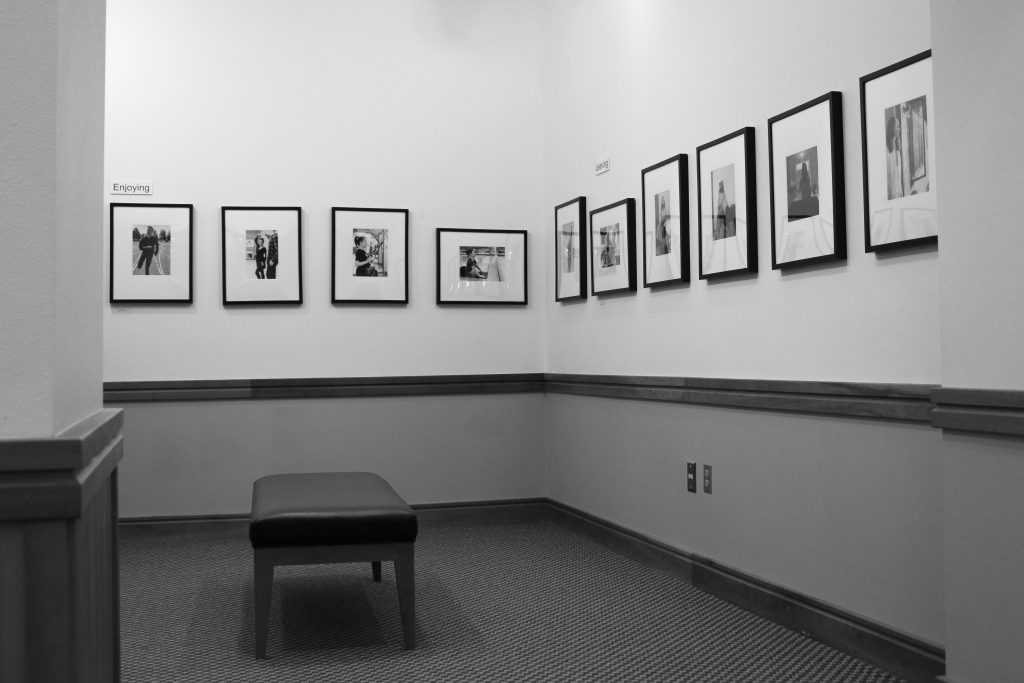
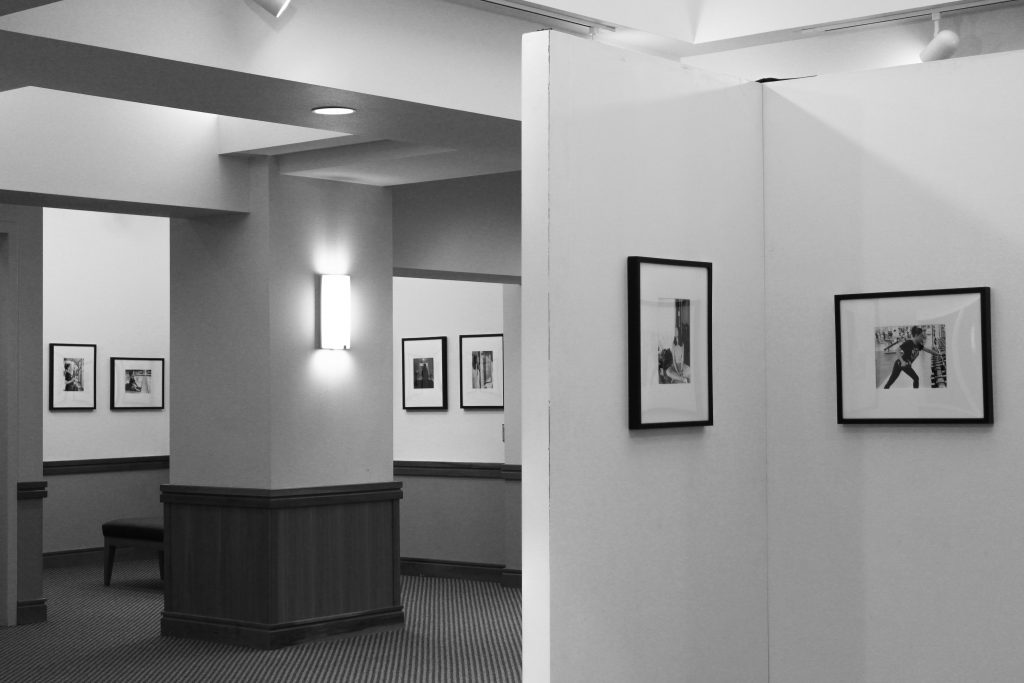
Cannon Gallery — a platform for stunning faculty work

Never Retallack  | Entertainment Editor

Cannon Gallery — Western’s very own art exhibit within Campbell Hall, opened its biennial production of faculty art on Nov. 13. The exhibition will be open until Dec. 13 and holds works from the following: Jen Bracy, Clay Dunklin, Jodie Garrison, Mary Harden, Rebecca McCannell, Peter Hoffecker Mejia, Sung Eun Park, Gregory Poulin, Daniel Tankersley, Diane Tarter, Garima Thakur and Jen Vaughn. 

The only art faculty member not showcasing in the exhibition is Paula Booth, who happens to be the gallery conductor; she and her team of interns and students displayed all the faculty’s pieces into a fluid gallery.

There was a very eclectic collection of art that faculty had submitted; these pieces were whatever the professors were working on since the last biennial showcase. Each professor used a different medium; Poulin used oil on canvas, Thakur created a video, Tarter used collage on blackboard and it goes on and on, with each faculty member showing their different specialties.

The flow of the gallery was interesting. Walking in, viewers made two circles around the perimeter before going through the middle.  Booth and her team strategically placed Thakur’s modern video next to Poulin’s classic still-life oil paintings. The stark contrast between pieces was pleasant as a viewer — the way each transitioned to a different faculty’s art was never predictable.

I am no art expert, and some of the pieces left me contemplating what their true meaning was, such as Park’s mixed media work — simple, yet complex. Dunklin’s piece, “Play On,” was a video that reminded me of a more positive episode of “Black Mirror,” featuring trippy visuals and quirky messages on the screen. A couple pieces that did stand out to me in their message were Bracy’s mixed media on wood pieces called, “Packing Heat” and “En Mass(e),” which show horrifying statistics of gun violence within the United States. 

Talking to Professor Rebecca McCannell about her three pieces, “Illumination,” “Chaos” and “Vertigo,” I was surprised to learn about the complexity of her artwork. Her method was that of reductive screen printing, a tedious process that requires precision when attempting to add colors to a piece layer by layer. McCannell went as far as changing the craft of screen printing to better suit her project. 

“I developed this method where I paint a piece of clear plexiglass with red paint, and then any area I want light to shine through I have to scrape away with a palette knife or exacto blade,” explained McCannell. 

McCannell’s pieces were based on photographs that she took underneath the Eiffel Tower which is a unique perspective — less glamour of the overall appearance, but rather the inner workings. 

This gallery was interesting to walk through; whether an art connoisseur or not, this exhibition showcases stunning art by Western’s faculty, and definitely deserves recognition and praise. 


Contact the author at howlentertainment@wou.edu

Photo by Mikayla Bruley