


April 15 2026 | Jaylin Emond-Hardin | Entertainment Editor
I’ve never loved a mobile game as much as I love My Leisure Time. Usually, I’ll download a game after seeing it in an ad, play it for a couple of days, then get bored and it will sit on my phone until it’s automatically offloaded to save storage.
Yet, this one has stuck with me. I don’t know why it has, but every chance I get, I’m not on social media, I’m on the game.
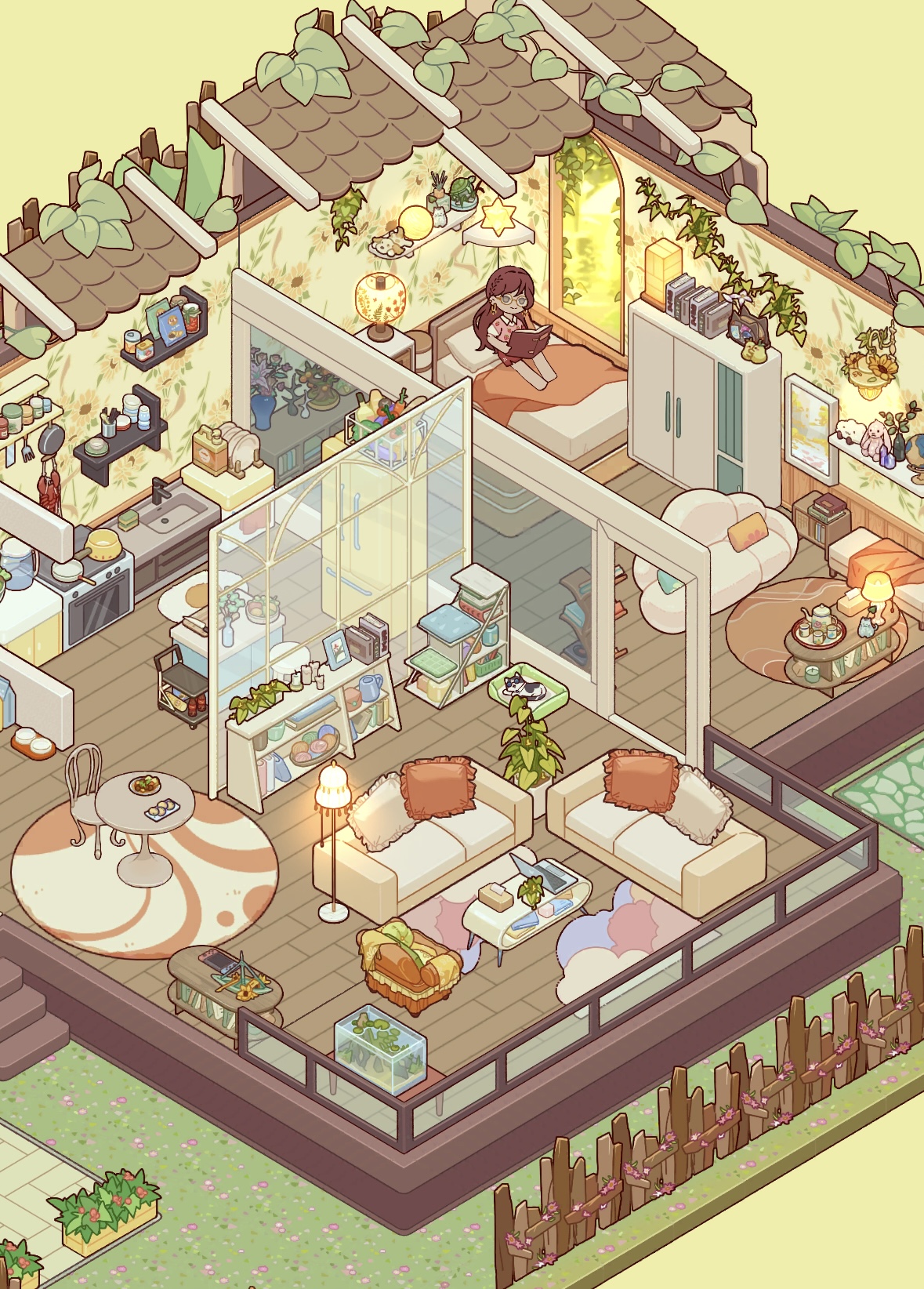
The game follows a newcomer to Yo-Yo Town who gradually helps residents grow their businesses, including a diner, a coffee shop and a salon, among other shops. As they do this, they also unlock furniture, housing layouts, clothing and pets. It’s low-key and focused on development as the end goal, rather than puzzles or level-based gameplay.
It’s slow and cozy, like a lazy Sunday morning with extra-sweet coffee. Even the graphics — a simplistic chibi, anime style — aid in this feeling.
It’s as if Animal Crossing were made two-dimensional and all the villagers were human. That’s the closest comparison I honestly have.
The game also has a variety of themed events where players can design furniture and clothing. Currently, the themes are Cosmo Tales and Starlight Garden — based on Mongolian traditional culture and Vincent van Gogh’s paintings, respectively. The events take a lot of grinding to earn the materials to craft the furniture, but the pieces are so unique that it’s worth it.
Honestly, I never thought I’d say that about a mobile game, but it’s one that needs that description.
My favorite part of the game is helping out the residents of Yo-Yo Town with their shops. The tasks are the only mini-game-style part of the game. At the coffee shop, players merge coffee beans, sugar and bottles of milk to make craft coffees. In the salon, 20 scissors are gifted every two hours and players must cut through pieces of fabric to collect hair dryers, combs and makeup brushes to unlock hairstyles. And at the diner, vegetables are planted, and other goods are ordered, so players can combine them into dishes to sell and earn trileaf coins, an in-game currency.
But the mini-games are low-stakes and slow-paced, keeping that cozy, lazy weekend feeling, and players don’t even have to interact with these parts of the game.
I know sometimes those games that are in ads don’t show accurate gameplay, but this is one game where the ads were accurate and everything that was advertised is in the game. And maybe that’s why it’s stuck with me this time.
After all, I keep taking breaks from writing this article to play the game.
10/10.
Contact the author at howlentertainment@wou.edu