


Feb. 4, 2026 | Hannah Field | Editor-in-Chief
Content warning: this article discusses spoilers for the “Warrior Cats” franchise and fictional violence
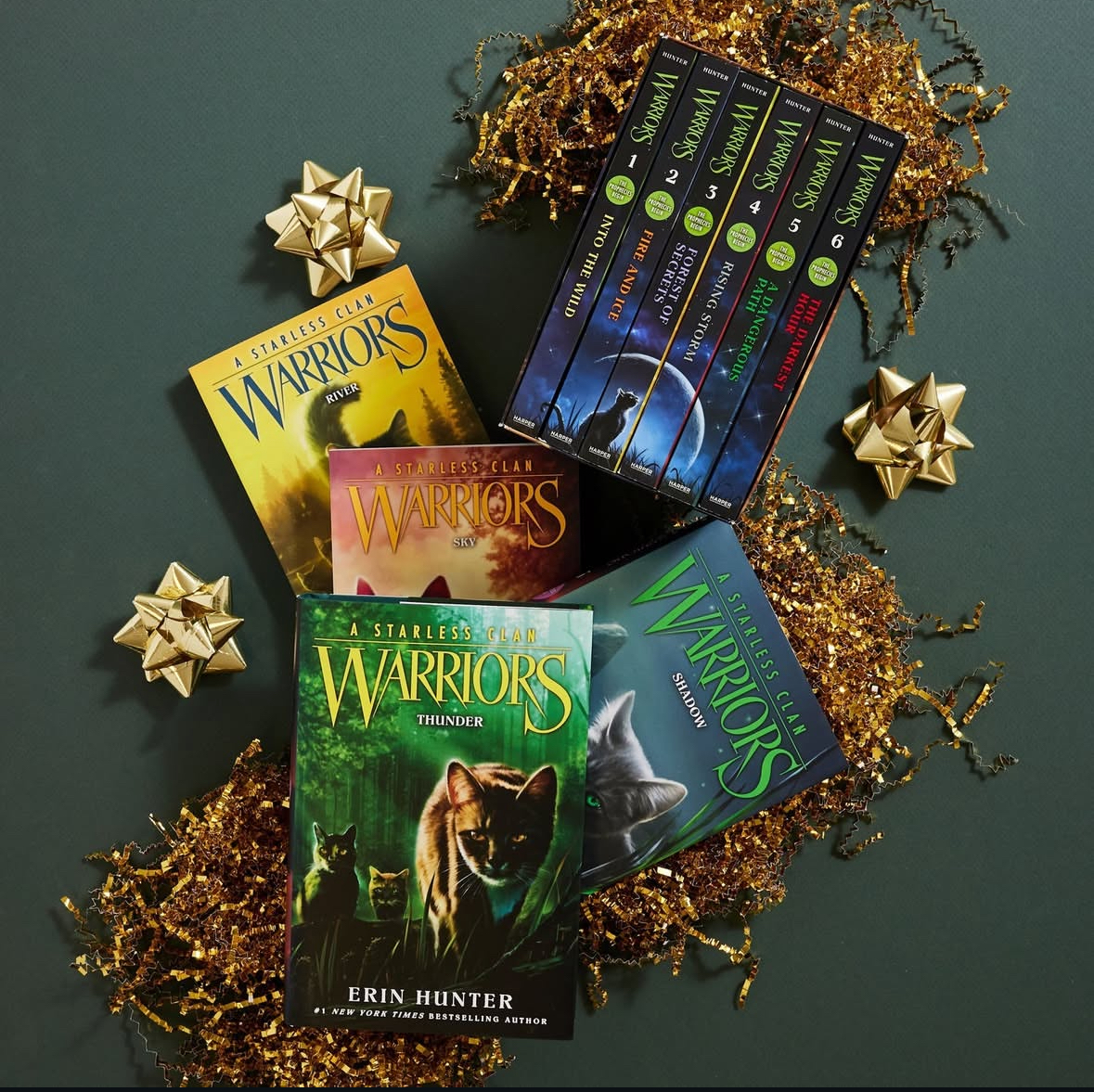
“Warrior Cats” is a massively popular children’s book series of more than 50 books discussing cat clans in the wild. That’s the simplest way to put it. If I were to be asked further, I’d have to answer with caution as to not give away too much information about myself.
Just kidding. I’m going to say a lot of things about “Warrior Cats,” and way too much about my childhood.
The series is like any other (just trust me here). Imagine a young male protagonist — handsome, adventurous, but lonely. He longs for connection, for others, and, one day, he finds them: the community he’s been waiting for. But there’s something brewing underneath it all — a child sees a member of the community kill an ally in cold blood, and tells only the main character. The protagonist must not only defeat him and reveal his charismatic ruse, but also protect the lives of his friends when in danger, all while falling in love and engaging in epic combat scenes.
And then … that villain gets nine lives, has his organs ripped out in one go by a strange weakling that shows up with dog teeth around its neck, and then the protagonist kills that person and becomes the king? Yeah, okay, not really that normal of a story.
I’ll name some other plotlines: forbidden romance, secret kids, twisted villains and cat murderers. Leaders who go crazy. Atheist cats that don’t believe in cat heaven. Prophecies that bless cats and tell the future. Prophecies that give cats powers. All the cats from cat hell and cat heaven go to war. All legit “Warrior Cats” plots.
“Warrior Cats” mastered the writing triangle: to have an ongoing series, it needs characters that are different, characters that share proximity and outside forces. Unfortunately, when writing creatively, I often think about “Warrior Cats” and how well it pulled together groups and kept a plot moving.
Uniquely, it gave its leaders nine lives, switched protagonists and always sought to add, never to take away. The series never got smaller. In fact, the clans only got bigger, and the plots only got more ambitious. Erin Hunter wove innate flaws into the clans — like supreme leadership and cat religion, of course — added some weird cat culture that can’t be questioned and made a ton of money off of the series.
There was something so intoxicating about two individuals divided by clan, separated by the gods, falling in love in secret while knowing either of their lives could be cut short at any moment by the wild dangers of the woods. Hearts are broken, cats are betrayed, cats die senselessly and without justice.
It’s unbelievable what a collection of middle-aged women can make someone feel. I still feel that way, picking up new Sarah J. Maas and Donna Tartt.
“Warrior Cats” took normal tropes and turned them on their heads. It took gruesome deaths — which we love in media, like, hello, “The Walking Dead” and “Grey’s Anatomy” — and somehow marketed them for children? Love affairs, cat birth scenes, kitten death? I’m not sure how the Erin Hunter clan (the multiple authors under one pseudonym) did it. But children love animals, and animals love murder, I guess.
My point is that “Warrior Cats” somehow, in some way, took adult topics and fed them to a young audience, which pretty pointedly wound me up the way that I am: obsessing over character development and demise, constantly writing and staying chronically online. I encountered “Warrior Cats” when I was around 10 years old on the internet, and, wow, did it really take a toll.
I will say: “Warrior Cats” is marketed to, and read by, young children, when I believe it should be for an older range, purely because the content and scenes can be very graphic. While I was never running around the playground on my hands and knees, I was thinking about mature topics through the lens of fictional cats, and that did make for an interesting experience overall.
Some important context that I’m extremely reluctant to share and have now printed forever and published online: I was obsessed — I mean, really obsessed — with “Warrior Cats.” For far too long. The exact age I really won’t disclose — that would just be self-sabotage — but I was in high school when I stopped indulging in the franchise.
To be more honest, I met the owner of a popular Roblox “Warrior Cats” roleplay game and we became fast friends at a young age. I spent every day, for multiple years, on this game. I made friends — some of whom I still talk to now — from that game. I’m flying to officiate a wedding this summer for two people who met on that game — yes, really. The game got so popular online that we had to hop on a Zoom call with the Erin Hunter brand team to become an official “Warrior Cats” game, or else we’d be copyrighted.
It spurred me to write fanfiction after fanfiction (no, they’ll never see the light of day, and no, I don’t want to talk about it) to build my skills. Now, look at me: writing for money. I think I owe it to Erin Hunter.
Honestly, I’d still read the books now, but I would never have the courage to walk around with them. They were enjoyable, easy reads and only a little bit infuriating, like any decent story. Objectively, “Warrior Cats” was so unlike any other books I read as a kid that it stands out like a sore thumb, unforgettable and a little painful at times to recall.
It’s also important to add that nobody I know from that game is a furry. Not that I’d care. But, still.
Contact the author at howleditorinchief@wou.edu