


Mount Hood

Portland Cascade

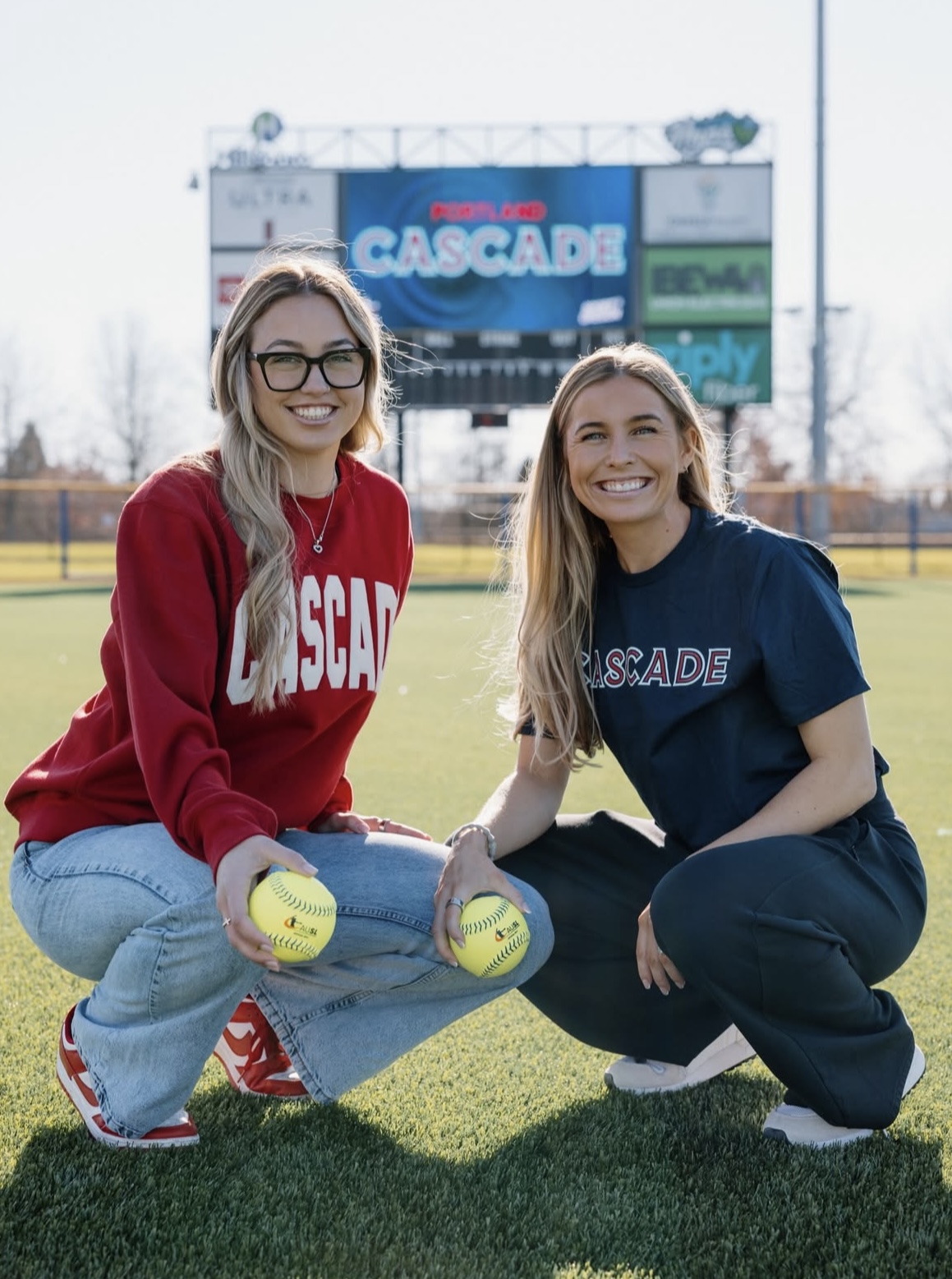
Sam Landry and Sis Bates pose in Hillsboro Ballpark, the Portland Cascade’s home stadium. | Photo from @sportoregon on Instagram

Jan. 28 2026 | Jaylin Emond-Hardin | Entertainment Editor

On Jan. 13, it was announced that Portland will be home to one of the six teams from the Athletes Unlimited Softball League, or AUSL. 

Portland is already a prolific city when it comes to women’s professional sports. The Portland Thorns, which play in the National Women’s Soccer League, have been a big name in the state since 2012, with notable players from Team USA rounding out their roster. In September 2025, Portland Thorns owner RAJ Sports, led by the brother-sister duo of Alex Bhathal and Lisa Bhathal Merage, also bought the rights to a WNBA expansion team, the Portland Fire, which will begin its inaugural season in May this year. Portland even has The Sports Bra, a sports bar dedicated to showcasing women’s collegiate and professional sports. The AUSL Portland Cascade is the newest team to join this lineup.

In 2024, the AUSL began its first season with four teams playing round robin-style games on its touring season. Each team was named for its captain, typically the pitcher or catcher, and was packed with the best names of collegiate softball. During the season, the AUSL picked up traction, and it was soon announced that the league would have its inaugural season in 2025, with the four teams being renamed to the Volts, the Bandits, the Blaze and the Talons. This inaugural season also meant a partnership with the MLB, with the league investing in the AUSL to help establish it as a sustainable organization. 

Late 2025 meant that two expansion teams were announced, along with the league moving to become city-based rather than touring-based. The Oklahoma City Spark was the first team to establish its headquarters in the aforementioned city, known as the home of the College Softball World Series. The other five teams had to wait until 2026 to announce their home cities.

The Portland Cascade will play at Hillsboro Ballpark, which is the home of the Minor League Baseball Hillsboro Hops. Hillsboro Ballpark is currently under construction, which came after the MLB changed ballpark standards for minor league teams in 2021, forcing the team to build a new venue altogether. However, the ballpark will be completed in time for the Hops and the Cascade to begin their 2026 seasons in April and June, respectively. The stadium is 229,000 square feet and can hold up to 6,000 fans for games and 7,000 for concerts, costing Hops ownership, the state of Oregon and the city of Hillsboro a combined $150 million. 

The Cascade boasts a strong lineup, including standouts Sam Landry, fresh from the University of Oklahoma, and Sis Bates, a former University of Washington player. Both received multiple All-American awards during their collegiate careers, while Landry boasts an NCAA National Championship with Oklahoma, and Bates brings multiple defensive player of the year titles, including the AUSL’s defensive MVP award in her rookie season. Both Landry and Bates played for the Volts in the 2025 season.

The storied Tairia Flowers was announced as the Cascade’s head coach. During her time with Team USA softball, Flowers won gold at the Athens Olympics, silver at the Beijing Olympics and gold in the 2002 and 2006 Softball World Championships. In her coaching career for Team USA, Flowers has played multiple roles, including head coach, assistant coach and selection committee member. 

The Cascade will play the season opener in Durham, North Carolina June 9 against the Carolina Blaze, and their home opener June 18 against the Oklahoma City Spark.


Contact the author at howlentertainment@wou.edu

Brainstorming for WNBA success

Written by: Liberty Miller | Lifestyle Editor

In the past year alone, an exponential increase has been observed in media attention for women’s collegiate basketball, prompted by athletes such as Caitlyn Clark and Angel Reese. The nature of Division One college sports ensures that major sports will always have a sizable fanbase, funding and resources at the program’s disposal. 

The situation for the majority of National Collegiate Athletic Association student-athletes has traditionally been to play for four to five years, either retire from the sport or attempt to pursue professional play, either in the U.S. or overseas. While many athletes have accomplished this feat, major discrepancies have been noticed in funding and fanbase potential for women’s professional sports, particularly basketball. 

One factor that many people may overlook is the dedication being contributed, not towards basketball but towards volleyball. In the past two to three years, the U.S. has launched three new professional volleyball leagues — the Pro Volleyball Federation, Athletes Unlimited Volleyball and League One Volleyball, which will begin its inaugural season in January 2025. 

In terms of promotion and social media, the Pro Volleyball Federation has made the most progress in establishing professional volleyball leagues in the U.S. Similar to this year’s WNBA draft, all three volleyball leagues have brought in Olympic veterans, freshly minted star collegiate drafts and a lot of fresh talent to their rosters.

While I believe the WNBA has had similar strategic attempts to garner support for the league, they have notably had to rely on the NBA to garner funding and have become somewhat encompassed in negative and lackluster media attention throughout the years. 

A disproportionate amount of the negative public opinion surrounding women’s basketball, unsurprisingly, stems from sexist ideology and a lack of support for women’s sports in general. Hateful discourse includes the facts that the WNBA is consistently underfunded, relying on the men’s league funds to survive, and claims of unexciting gameplay and WNBA vets that “overstay their welcome.” The reasons behind the WNBA struggling to stay afloat are numerous, which makes it a complex and potentially difficult subject to discuss. 

A multifaceted approach must be taken in order to make sustained progress for the WNBA. The recent boom in popularity due to high-profile newcomers may not be enough to simply “fix” the issues the WNBA has been facing for the last 28 or so years. 

Female athletes are well used to the misogynistic rhetoric that discredits accomplishments and athletic ability — but that doesn’t mean we can place all of the blame on that rhetoric. There are things that must be done and changed by the association, public relations, event managers and even the players themselves to secure the future of the WNBA. 

The first thing that I believe must be done is lowering the rim of the women’s net to nine feet. The rim is currently set at 10 feet, the same height as the men’s rim for the NBA. This is a highly controversial idea and was met with a lot of pushback when pitched by Shaquille O’Neal. 

When asked about it, WNBA player, Diana Tuarasi, even stated that they “…might as well put us in skirts and back in the kitchen.” The idea, admittedly, would make any elite athlete feel somewhat inferior, especially when constantly compared to their male counterparts. 

In my opinion, that feeling of inferiority is rooted in ego. As a volleyball player of 11 years, women’s nets have always been lower, and yes, it is irritating — but we need to recognize that we aren’t “making the game easier” by lowering the rim. We are actually creating a game situation that is proportionately fair for physical capabilities. Think of it this way: women have to put in twice the amount of effort and training in order to match their capabilities with male counterparts. So, setting the same standard, perhaps a 10-foot rim, and expecting the same type of athleticism from men and women would put women at an extreme disadvantage. That’s not to say women aren’t capable or that they cannot put in the work. It means that establishing the playing field as equitable, rather than equal, will allow women to showcase their athleticism more. Lowering the rim would allow for WNBA athletes to make explosive, more dynamic plays and to dunk as well. 

There are many arguments against lowering the rim, with an author from ESPN calling it a “quick fix” and attributing the hateful rhetoric solely to “years of social conditioning.” Many would argue that the WNBA would get the same amount of hate if they did lower the rims. That may be true — but currently, we are limiting the amount of plays that female basketball players can make. 

An example of how countless shows of athleticism are lost can be seen in the 37 dunks made in the entirety of WNBA history, 26 of which were made by Britney Griner. Additionally, it’s not just the athleticism that the public is missing out on. The lack of exciting gameplay creates a lack of media attention, even more negative public opinion and a lack of support, which, guess what? It means that 50% of the WNBA is owned by the NBA, which has to bail them out of bankruptcy every season. The fact that the NBA financially supports the WNBA is then just another piece of bait for misogynistic haters to grab onto. 

Speaking of what teams can do in the WNBA to gain public support — once again, they could invest in more strategic movies for exciting gameplay. The NBA has famously publicized many feuds throughout the years, making the games not just another scoreboard but a story to be told. 

When I talked to Jen Spicher, the CEO for the Pro Volleyball Federation, she told me that the people wanted a story to be told for the game. What I’ve learned throughout the years is that viewers want inspiration, drama and pure passion turned into athleticism when they watch a game. This is the reason Caitlyn Clark and Angel Reese have gained so much attention last year during the NCAA championships. 

As a female athlete, I have always been an intense and competitive player and have had coaches who prefer for female athletes to be controlled, calm and somewhat docile. Angel Reese is an example of what the media and public can do to a woman who isn’t complicit in toning herself down to seem more womanly on the court, and in my opinion, we need about 20 more of her. 

I’m not advocating for fights or conflict for media bait, but coaches need to recruit and promote players who tell their stories and who hone in on that passion and make it evident throughout the game. The game doesn’t exist without the players, and the players control the narrative, pace of the game and how they want to tell their story. 

It is the coach’s job to recruit and coach the game in the best way possible, but it is the team manager, public relations specialists and social media creators for the WNBA who are responsible for telling the stories of these athletes and making marketing decisions that showcase the most fierce, competitive and show-stopping parts of the WNBA that the majority of the public has yet to witness. 

I, like many others, believe that the WNBA has limitless potential to become great, as well as financially independent. By allowing female athletes to make more plays by lowering the rim, raising the quality of the PR and social media outreach and realizing that the means to profit is demanding positive public attention from great plays and storytelling, the WNBA could eventually become an independent entity.

Contact the author at howllifestyle@wou.edu

Social media representation of female athletes

Written by: Daelynn Aerni | Freelancer, Cameron Wright | Freelancer

Has one ever used sports as a method of escapism to follow one’s dreams or passions?

That is why so many people watch sports: as an escape from the stresses of everyday life and enjoy skillful athleticism from people who represent them. While many are able to watch

their favorite players in sports and relate to those athletes, a lot of people are unable to see

themselves represented in sports, especially women. 

Some of the bigger issues in women’s sports that so many athletes face are the negative social media impacts and the significantly lower viewership rates. Social media continuously misrepresents female athletes, focusing mainly on the image athletes should portray instead of covering the athleticism and skill these women constantly demonstrate.

It wasn’t until the 1900 Olympics that 22 women were allowed to compete alongside

men in the games, however they were still not able to compete in the more physical sports like

shotput because women were still viewed as “fragile and gentle.” 

The Women’s National Basketball Association wasn’t created until June 1997, when the National Basketball Association Board of Governors approved the idea of a women’s professional league. After fighting for their place at the table in the world of sports, female athletes are still berated with criticisms of not only their athletic performance, but of their representations of femininity through the platform of social media. 

As the women’s movement so famously started in the mid 1800s, there has been little progress in women’s sports compared to the men’s associations. Celebrating their 28th season in 2024, the WNBA still does not have nearly the amount of media coverage compared to the NBA. In 2019, women’s sports coverage was 5.1 percent of all sports coverage on TV and 5.4 percent of all sports coverage online.

This statistic is not just indicative of the WNBA but of all women’s sports. How are younger generations supposed to find escapism and identity in the sports they love if half of the world’s population is not covered by the media in the first place?

With limited media coverage as well as false narratives being placed into public opinion, potential business partners, teams and coaches, female athletes have to take matters into their own hands by amplifying their sports how they see fit. 

Sports tend to see a low number of women in leadership roles, therefore, athletes in women’s leagues do not get to see the same level of representation at the executive level as male athletes  do — leading to a gross oversight in ignoring inequities and injustices. In the end, female athletes are typically their own best advocates because male-dominated leadership frequently ignores their achievements.

This is significant to how women’s sports have become more popular because, instead of relying on unreliable media to share the importance of women’s sports, women have taken it into their own hands to make women’s sports more known and accessible to watch nationally. 

For example, with the work and spotlight being put on younger athletes like Caitlin Clark, Angel Reese, JuJu Watkins and Paige Bueckers, the game with this generation will translate from the NCAA to the WNBA. Another example is the recent addition to NBA All-Star weekend with the three-point shooting contest between Sabrina Ionescu and Steph Curry, which helps in promoting female athletes and their sports to huge audiences who love the same sport, just with male athletes. 

For instance, the average NBA game on TNT averages around 1.5-2 million viewers, compared to the 3-point contest, which has around 5.4 million viewers. If the media can showcase how amazing these women are in their skill and competition, more people will be inclined to tune into the broadcasting of the sport.

The media creates boxes for female athletes to fit into, whether they like it or not. These

boxes could include the sexualization of the female athlete or creating narratives of aggressive

behaviors. 

A prime example of this is the Angel Reese and Caitlin Clark controversy from the 2023 NCAA championship. Throughout the game, Reese and Clark showcase their extreme skill and competitiveness with not only their basketball skills, but their sportsmanship as well.

Both players were seen making gestures and giving a bit of trash talk to each other, which

is a normal, competitive quality in the world of sports. However, after Reese made a

gesture to her ring finger during the fourth quarter, representing how she would soon win the

championship ring in the tournament, the media became outraged. 

Reese was depicted as an aggressive, unsportsmanlike player who was “classless” and an “idiot.” Reese came out with a statement at a press conference after the game, highlighting the difference between her sportsmanship and Clark’s. 

In a CNN interview, Reese stated, “All year, I was critiqued for who I was. I don’t fit the narrative. I don’t fit the box that y’all want me to be in. I’m too hood. I’m too ghetto. Y’all told me that all year. But when other people do it, y’all don’t say nothing.” 

As we saw in real-time, Reese was immediately labeled and put into boxes because of one

gesture, despite other players doing the same thing. The media tends to pin female athletes against each other and weaponize them.

So many efforts are being made to change the narrative about women’s contribution to

the sports world, including inspiring the change to hire more women’s college and WNBA

coaches across the nation. By increasing the number of women in the sports world and giving more women decision-making positions, they will be able to gain more power over their

platform and be able to represent themselves how they want to be represented, not how the

media caters to the male gaze.

This is why we would like to reach out to the Western community to bring light to the challenges that women in sports face daily. By addressing younger audiences, we hope to break this cycle of sexism and misrepresentation in women’s sports.

Contact the authors at daerni22@mail.wou.edu and cwright23@mail.wou.edu