Mount Hood

Cozy for the winter

A still from Studio Ghibli’s film “My Neighbor Totoro.” | Photo from @ghibliusa on Instagram

Jan. 28, 2026 | Jaylin Emond-Hardin | Entertainment Editor

It’s late winter. The excitement for the holidays has come and gone, and there’s limited sunshine to keep the doom and gloom away. My favorite thing to do to shake the frost? Watch some of the coziest movies out there with a blanket and a mug of tea.


“Pride and Prejudice” — Based on the Jane Austen novel of the same name, “Pride and Prejudice” follows Lizzie Bennet and her sister Jane in the English countryside during the Regency era. With a piano-led score and warm ambience, “Pride and Prejudice” perfectly encapsulates longing, restraint and a slow-burning romance, while also bringing to mind a warm summer or spring day. “Pride and Prejudice” is streaming on Apple TV and Prime Video for $3.99.

“My Neighbor Totoro” One of Hayao Miyazaki’s most popular films, “My Neighbor Totoro” follows Satsuki and Mei when they move to the countryside while their mother is in the hospital. As they explore their new home, they discover forest spirits, including the fluffy, cat-like Totoro. This movie is cozy because there’s no big villain; it’s just two sisters exploring their home and enjoying the small moments. The film is slow-paced, and nothing is rushed, with sunlit fields and dust floating in the air. Nature becomes a soft place to rest, and the magical creatures are gentle forest spirits — especially Totoro, who is more like a giant stuffed animal. “My Neighbor Totoro” is streaming on HBO Max, along with other Studio Ghibli movies.

“The Lord of the Rings” Adapted from J.R.R. Tolkien’s trilogy, “The Lord of the Rings” follows Frodo Baggins as he sets off to destroy the One Ring. The films are drenched in a palette of antique light — soft golds, mossy greens and pale silvery-blues — with a sweeping soundtrack by Howard Shore, filled with string instruments and haunting vocals. The films themselves are about how even the smallest person can change the world and focus on the small in the wake of the huge. After all, Samwise Gamgee says it best in “The Return of the King”: “Do you remember the Shire, Mr. Frodo? It’ll be spring soon, and the orchards will be in blossom. And the birds will be nesting in the hazel thicket. And they’ll be sowing the summer barley in the lower fields. And they’ll be eating the first of the strawberries with cream. Do you remember the taste of strawberries?” All three movies in “The Lord of the Rings” trilogy — both theatrical and extended editions — are streaming on HBO Max and Prime Video.

“Hook” A modern retelling of “Peter Pan,” this film answers the question “What if Peter Pan grew up?” The whole movie feels like a fairytale, wrapped in pure ‘90s and childhood nostalgia. With Robin Williams as Peter Pan, Dustin Hoffman as Captain Hook and Julia Roberts as Tinkerbell, “Hook” is full of familiar faces. The design is storybook-soft with glowing pixie dust, flying pirate ships and colorful sets, creating the feeling of stepping into a stage play. Besides, at its core, “Hook” isn’t just about fighting pirates and magic. It’s about believing in oneself, rediscovering the sense of childhood wonder and reconnecting with those closest. “Hook” is streaming on Apple TV and Prime Video for $3.99.


Contact the author at howlentertainment@wou.edu

Portland Cascade

Sam Landry and Sis Bates pose in Hillsboro Ballpark, the Portland Cascade’s home stadium. | Photo from @sportoregon on Instagram

Jan. 28 2026 | Jaylin Emond-Hardin | Entertainment Editor

On Jan. 13, it was announced that Portland will be home to one of the six teams from the Athletes Unlimited Softball League, or AUSL. 

Portland is already a prolific city when it comes to women’s professional sports. The Portland Thorns, which play in the National Women’s Soccer League, have been a big name in the state since 2012, with notable players from Team USA rounding out their roster. In September 2025, Portland Thorns owner RAJ Sports, led by the brother-sister duo of Alex Bhathal and Lisa Bhathal Merage, also bought the rights to a WNBA expansion team, the Portland Fire, which will begin its inaugural season in May this year. Portland even has The Sports Bra, a sports bar dedicated to showcasing women’s collegiate and professional sports. The AUSL Portland Cascade is the newest team to join this lineup.

In 2024, the AUSL began its first season with four teams playing round robin-style games on its touring season. Each team was named for its captain, typically the pitcher or catcher, and was packed with the best names of collegiate softball. During the season, the AUSL picked up traction, and it was soon announced that the league would have its inaugural season in 2025, with the four teams being renamed to the Volts, the Bandits, the Blaze and the Talons. This inaugural season also meant a partnership with the MLB, with the league investing in the AUSL to help establish it as a sustainable organization. 

Late 2025 meant that two expansion teams were announced, along with the league moving to become city-based rather than touring-based. The Oklahoma City Spark was the first team to establish its headquarters in the aforementioned city, known as the home of the College Softball World Series. The other five teams had to wait until 2026 to announce their home cities.

The Portland Cascade will play at Hillsboro Ballpark, which is the home of the Minor League Baseball Hillsboro Hops. Hillsboro Ballpark is currently under construction, which came after the MLB changed ballpark standards for minor league teams in 2021, forcing the team to build a new venue altogether. However, the ballpark will be completed in time for the Hops and the Cascade to begin their 2026 seasons in April and June, respectively. The stadium is 229,000 square feet and can hold up to 6,000 fans for games and 7,000 for concerts, costing Hops ownership, the state of Oregon and the city of Hillsboro a combined $150 million. 

The Cascade boasts a strong lineup, including standouts Sam Landry, fresh from the University of Oklahoma, and Sis Bates, a former University of Washington player. Both received multiple All-American awards during their collegiate careers, while Landry boasts an NCAA National Championship with Oklahoma, and Bates brings multiple defensive player of the year titles, including the AUSL’s defensive MVP award in her rookie season. Both Landry and Bates played for the Volts in the 2025 season.

The storied Tairia Flowers was announced as the Cascade’s head coach. During her time with Team USA softball, Flowers won gold at the Athens Olympics, silver at the Beijing Olympics and gold in the 2002 and 2006 Softball World Championships. In her coaching career for Team USA, Flowers has played multiple roles, including head coach, assistant coach and selection committee member. 

The Cascade will play the season opener in Durham, North Carolina June 9 against the Carolina Blaze, and their home opener June 18 against the Oklahoma City Spark.


Contact the author at howlentertainment@wou.edu

‘Is that your phone?’ The ‘dumbphone’ trend, explained

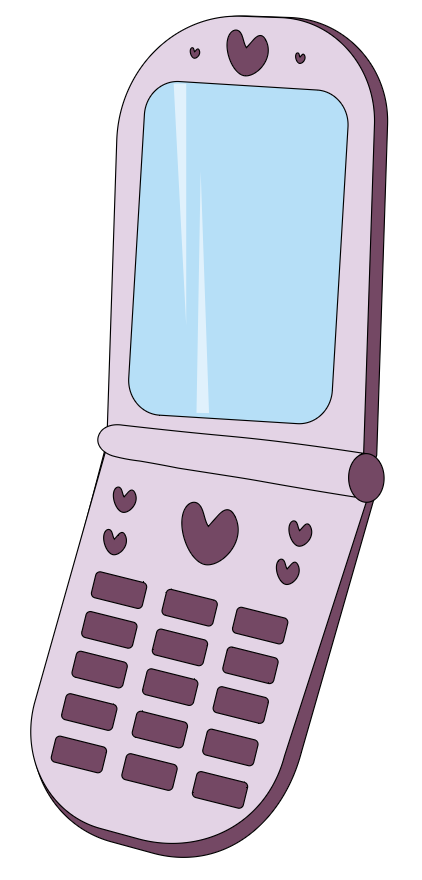
Graphic of flip phone | Graphic made by Addison Watts

Nov 5 2025 |  Kiera Roedel | Copy Editor

Stop me if this sounds familiar: it’s late at night and there are assignments that need to get done, but it’s impossible to put down the smartphone. This type of situation is all too common for college students, prompting questions about social media addiction and the need to do a “digital detox.” While some people simply set screen-time limits on their phones and stay mindful of the time they spend scrolling, a growing number — including myself — have taken the next step: going back to a time before smartphones.

The “dumbphone” trend has been gaining prevalence online over the past couple of years, mostly due to its nostalgic or aesthetic value. But dumbphones, defined as cell phones without easy access to an app store or modern web-based apps, have legitimate utility as a means to get off social media and spend more time living in the real world.

I’ve spent over a year using a flip phone as my main device. It has access to the following functions: calling, texting, a two-megapixel — yes, two — camera, an MP3 player and some basic utilities like a calculator and calendar. It also has a simple web browser that’s too slow and outdated to even load the front page of Reddit. And that’s literally it. No Instagram, no TikTok, no DoorDash, no Google Maps, no Spotify and no way to download or access any of those services. The vast reduction in available apps and connectivity is definitely an adjustment.

Regardless, there are some notable advantages to using a dumbphone. For one, it’s apparent immediately upon switching just how much time people spend on their phones. In the time between classes, in the library, at meals — it feels like nobody even bothers to look up. Recapturing those lost minutes declutters my brain and is very refreshing.

Second is the nostalgic or aesthetic value that I mentioned. I won’t lie — I didn’t initially switch to a flip phone because I felt the need to digitally detox. It was because I felt nostalgia for the time when “cell phone” meant a weird plastic trinket that people could fiddle with in bizarre ways to expose extra screens and keyboards. Using a flip phone nowadays allows me to recapture a little bit of that feeling. 

A third benefit is the cost. In a time when a new iPhone or top-of-the-line Samsung can easily run over $800, being able to pick up a flip phone from a department store for under $50 is a breath of fresh air. Mine cost $19.99 from Tracfone, and I’m still using it a year and a half later. That’s just an objectively good deal.

Not everything is sunshine and rainbows in the dumbphone world. For one thing, missing out on things that people have come to consider basic utilities, like Google Maps, really stings. It can be seen as another part of the package — learning to navigate alone  or by paper map is, in a sense, just another part of the digital detox. And some app-based services have alternatives, like the fact that anyone can call a phone number to get an Uber, no app required. 

I haven’t totally gotten rid of my smartphone. I still use it for things like my D&D character sheet and for when I need to take a picture that isn’t insufferably — yet aesthetically — grainy. But the opportunity to leave that toxic glass brick in a drawer where it belongs the majority of the time is a truly eye-opening experience.


Contact the author at howlcopyeditor@wou.edu

Spooky treats

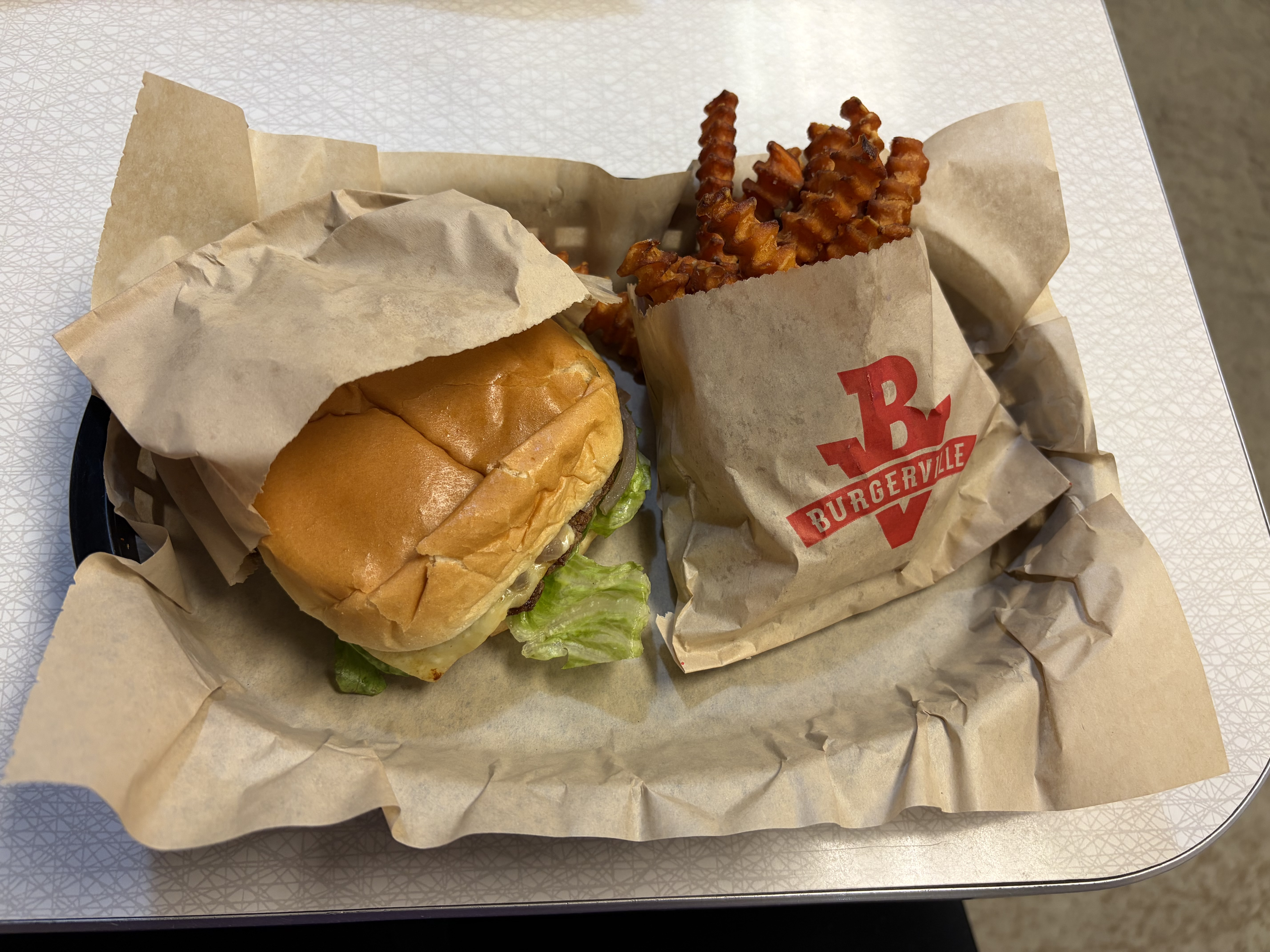
A photo of Burgerville’s Vampire Slayer Cheeseburger and sweet potato fries. | Photo by Belen Ponce Leal

Oct 29 2025 | Belen Ponce Leal | Lifestyle Editor

It’s always interesting to see what kind of menus companies can come up with for a spooky season. Whether it be dyed foods designed to look like pumpkins, sweet ice cream treats with candy bits in them or some locally sourced ingredients used creatively, there is no end to the trend. I thought it would be interesting to discover what kind of spooky-themed foods to try out before the end of the month.  

Burger King is well known for their advertising of their special limited-time menus. Right now, they have what they call the “monster menu.” The main staple of the menu is the  Jack-O’-Lantern Whopper. It is a version of their famous Whopper burger with a “naturally colored orange bun” with black sesame seeds. While it does have a festive appearance, it has been described by many as tasting basically the same as a regular Whopper burger. Some other items they are selling are Vampire Nuggets, Mummy Mozzarella Fries, the Franken-Candy Sundae and, at certain locations, a trick-or-treat basket. 

At the moment, McDonald’s might not have much of a Halloween menu as they are currently focused on their Monopoly-themed one, but the Boo Buckets have returned once again. During October, McDonald’s will give out Happy Meals in what is called a Boo Bucket. They are plastic containers that can double as trick-or-treat buckets. The classic designs have returned, which are the ghost, pumpkin and goblin. However, there are two new additions to the roster this year, which are a black cat and a zombie bucket. 

IHOP has come out with some delicious pancake flavors for the season. Obviously, the pumpkin spice pancakes have returned, with the option to make them a short or full stack. They have been described as tasting very good, soft and buttery. The item that I find the most interesting and most delicious is the coffee cake pancakes. Made with cinnamon streusel, cinnamon spread layering and cream cheese icing, these coffee cake pancakes have a delicious crumbly texture. 

Burgerville is known throughout Monmouth for being a great place to eat, as it prides itself on locally sourcing its ingredients. All their food is fresh and delicious throughout the year.

Their seasonal menu is composed of their pumpkin shake, apple crumble sundae, harvest cider iced tea, sweet potato fries and, their star of the menu, the Vampire Slayer Cheeseburger. This burger, along with all of their others, has a pasture-raised natural beef patty. The cheese on the burger is called Face Rock Vampire Slayer Cheddar, which is cheddar with a strong dose of garlic in it. That, combined with arugula, which is a leafy green vegetable with a sort of peppery, nutty flavor, makes the burger a fantastic mix of various flavors. 

Every restaurant has a different strength, whether it be in design or flavor. I love how every year Burger King can come up with a menu that looks amazing, and even though it doesn’t taste very different, it is at least aesthetically pleasing. I also enjoy how Burgerville can come up with some amazing combinations of flavors in their burger while still being naturally sourced. While not all seasonal food is created equal, it is always endearing to see what companies can come up with to create delicious and good-looking cuisine. 


Contact the author at howllifestyle@wou.edu

The haunting history

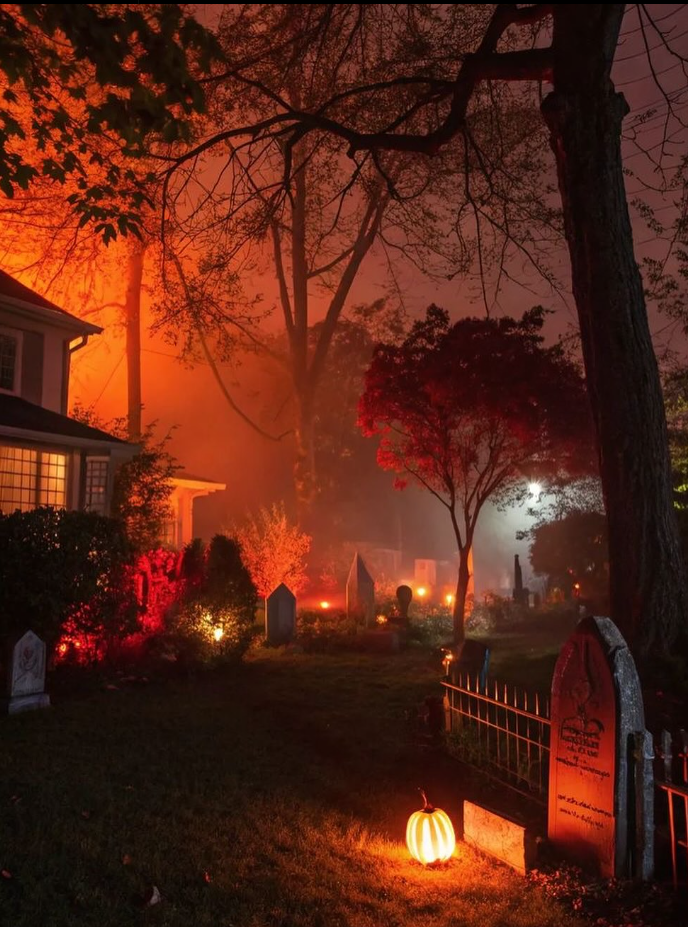
A photo of Halloween yard decorations. | Photo from @halloweenperfection on Instagram

Oct 29, 2025 |  Belen Ponce Leal | Lifestyle Editor

Halloween is known throughout the United States as the spookiest time of the year; the time when children go door-to-door wearing costumes that range from cute to scary, candy is given out and scares are plotted throughout the night. Despite its popularity, many don’t know the origins of this holiday that has developed and changed throughout the centuries. 

The origins of Halloween can be traced back to the ancient Celtic festival of Samhain, which is still celebrated today by Pagans. Over 2,000 years ago, the Celts and the druids celebrated the new year Nov. 1. Samhain, which translates to “summer’s end” in Gaelic, marked the end of the harvest, meaning winter was about to begin. Winter was seen as a time of death, where the veil between the living and the dead thins to allow supernatural forces to wander the earth. The people would gather to burn crops and offer animals as sacrifices to the Celtic deities. Additionally, those who were thinking of their lost loved ones would use candles and bonfires to guide them to the afterlife. 

Others would wear costumes to scare the bad spirits and demons away. However, some believed that doing this would allow them to be able to tell each other’s future. The Celtic priests believed that due to the presence of otherworldly beings on the earth, their predictions would hold more weight. After the festival was over, they would take flames from the bonfires and light their own hearths with them. It was believed that the fire would protect them from the incoming winter. 

In the eighth century, Pope Gregory III proclaimed Nov. 1 “All Saints’ Day,” which honors not only the saints, but also the martyrs. Then, in the year 1000, the church made Nov. 2 “All Souls’ Day,” a day that honors the dead. It is believed that the church did this to replace the Celtic festival with a Christian-sanctioned holiday. 

It incorporated some of the traditions of Samhain, like big bonfires, celebrations and dressing up in costumes as beings like devils, saints and angels. The night before, which was originally Samhain, began to be called “All-Hallows Eve.” 

When people began immigrating to the US, which at the time was the 13 colonies, All-Hallows Eve began to change. As the customs of European ethnic groups and Native Americans clashed, “Halloween” began to emerge. 

The first celebrations of the tradition were known as “play parties,” which were events held to celebrate the harvest. Neighbors shared stories of the dead and would try to tell each other’s fortunes.

Trick-or-treating is based on European traditions where Americans began dressing up in costumes and going door-to-door to ask for food or money, which eventually became the trick-or-treating recognized today. 

Jack-o’-lanterns come from a tradition in Ireland that came over with Irish immigrants. It is said that there was a man known as “Stingy Jack,” who would trap the devil multiple times throughout his life, keeping him captive until he promised Jack he wouldn’t go to hell. However, when the time came for Jack’s death, he found out that he wasn’t allowed to go to heaven either, so he was doomed to wander the earth forever. The devil supposedly gave Jack a burning lump of coal in a hollowed-out turnip to be his makeshift lantern. 

Therefore, the locals began carving spooky faces into their own vegetables to frighten away the spirits from their homes. When immigrants moved to the U.S., the Irish brought the tradition with them. Since pumpkins are native to North America, they decided to switch from turnips to pumpkins; thus, the Jack-o’-laturns that are known today were born. 

While Halloween isn’t the same as Samhain in the traditional sense, the holiday still carries that same spirit expressed by the druids and the Celts. It celebrates the time in the year where the leaves change color, the harvest comes in for the final time and everyone does their best to deal with mischievous spirits, whether it be a ghost, a demon or a roommate who wants to scare someone into a heart attack. 


Contact the author at howllifestyle@wou.edu

Let’s get physical

April 2, 2025

Written by: Isabelle Jones | Lifestyle Editor

Let’s get physical; cardiovascular health refers to the health of the heart and blood vessels. Its system circulates blood, oxygen and nutrients through the body. It’s important to maintain good cardiovascular health in order to prevent disease later in life. It also helps to improve energy levels and overall well-being. With our generation taking health and exercise seriously, it may feel like we have forgotten the importance of cardio while prioritizing strength training. 

There are many benefits of cardiovascular health, with the biggest being that it prevents heart disease and stroke. Unfortunately, heart disease is the leading cause of death worldwide, but it’s completely preventable with a healthy lifestyle. Focusing on cardiovascular health maintains a strong heart and clear arteries, which reduces the risk of heart attacks, strokes and hypertension. With preventing heart disease comes keeping one’s cholesterol and blood pressure in check. Plaque tends to build up in one’s arteries when they live a sedentary lifestyle. Taking a proactive approach to cardiovascular health can add years to one’s life. A second benefit is that it can boost energy and stamina. When a healthy heart is able to pump blood more efficiently, the muscles and organs get more oxygen and nutrients. When someone gets more oxygen and nutrients, they will feel more alert, active and energized throughout the day. 

When one focuses on their cardiovascular health, there are other personal benefits, such as enhanced brain function, increased quality of life and improved sleep. Working on our cardiovascular health reduces inflammation and stress on the heart, which in turn can lower the risk of certain illnesses, such as dementia and Alzheimer’s disease. With the improvement of one’s quality of life, those who tend to their cardiovascular health can reduce their anxiety and possibly alleviate some of the symptoms associated with depression. With regard to improving our sleep quality, poor cardiovascular health can directly lead to sleep disorders, such as sleep apnea and insomnia. Improving one’s cardiovascular health works to regulate sleep cycles and improve feelings of restfulness. 

As some may want to improve their cardiovascular health, it’s crucial to understand the detrimental effects of poor cardiovascular health. Ignoring this portion of our health can lead to serious, life altering consequences. When one is neglectful, it can lead to an increased risk of stroke, chronic fatigue, low energy levels, poor mental health, increased stress, blood clots and the possible risk of permanent disability. All of this can result in a weakened immune system and a shorter life expectancy. 

Understanding the impacts cardiovascular health has on our lives, there are many workouts that help to improve one’s cardiovascular health. Cardio exercises are also known as aerobic exercises, which help to strengthen one’s heart, improve circulation and boost overall endurance. Here’s a list of some of the most flexible and popular exercises one could try. 

Walking — This is typically seen as the first step in cardiovascular disease prevention. This low-impact, beginner friendly exercise helps to reduce stress and improve circulation. 

Jogging or running — This is what comes to mind when someone hears the word “cardio.” It is easily adjustable between participating outdoors or on the treadmill. Along with walking, these exercises improve one’s lung function, heart rate and endurance levels. 

Cycling — Strengthening leg muscles, this low-impact exercise is great for joint health. 

Swimming — This exercise works the whole body while also being easy on one’s joints. It is ideal for all fitness levels and is a great way to beat the heat in the coming months.

Dancing — This exercise is a fun and engaging way to get one’s heart pumping. It improves coordination and flexibility which can be done alone or in a group. 

High intensity interval training — This last workout consists of short bursts of intense exercise followed by rest. This means that one would burn more calories in less time, boosting metabolism.

Cardiovascular health is not just about avoiding disease — it’s about living one’s best life. A strong heart leads to more energy, better brain function, improved mood and a longer, healthier future. Taking small steps today can make a huge difference in one’s heart’s health over time.

Contact the author at howllifestyle@wou.edu

Coastal health benefits

April 2, 2025

Written by: Isabelle Jones | Lifestyle Editor

About an hour away from Western is the Oregon coast. Its scenic beauty is a natural sanctuary that offers powerful benefits for the mind, body and soul. The combination of fresh air, ocean waves and natural surroundings can enhance one’s well-being, reduce stress and promote a healthier lifestyle. 

The coast provides many benefits, but boosting mental health is among the most important. Where the water meets land promotes mindfulness, which helps people disconnect from their responsibilities and daily pressures. Its rhythmic waves have a calming effect on the brain, reducing anxiety and stress. Spending time at the coast fosters a deeper connection to nature and encourages environmental awareness. As the protections on our natural environments are not as strong as they once were, it’s important to take time to enjoy the simpler things in life, and the coastal environment is reminiscent of a simpler yet fulfilling life. The open horizon and vast ocean give a sense of freedom and perspective, making problems seem more manageable. 

Another benefit of the coast is the improvement of physical health. Compared to walking on solid ground, walking or jogging on sand improves balance, strength and endurance due to the uneven terrain. Breathing in the salty air can clear the lungs, as it acts as a sort of natural decongestant, making it especially beneficial for those with asthma or other respiratory conditions. The coast also has activities like hiking and beach sports, making exercise feel more enjoyable rather than like a chore. 

Immune and health benefits are a third benefit of the coast. The ocean breeze contains negatively charged ions, which improve oxygen absorption, boosting one’s mood. Studies suggest that people who live near the coast report higher levels of life satisfaction and lower levels of stress. The coast is typically exposed to more sunlight, and sun exposure helps the body produce vitamin D, which is essential for strong bones, immune health and mood regulation. It also increases serotonin levels — a neurotransmitter that enhances mood and promotes feelings of happiness. Although the seawater is quite cold, it contains minerals like magnesium and iodine — promoting skin healing and circulation. 

Lastly, fresh seafood is especially important for one’s health. Seafood is packed with essential nutrients that support overall health, making it one of the healthiest choices available. Its lean protein keeps one fuller for longer and reduces cravings. It also promotes heart health by reducing the risk of heart disease. With seafood being rich in omega-3s — DHA and EPA — it improves memory, focus and cognitive function. This in turn can reduce the risk of some neurodegenerative diseases. For those who workout, omega-3s speed up muscle recovery after exercise. These nutrient powerhouses support brain health, heart function, immunity, skin and one’s overall well-being. 

Visiting the coast provides a natural escape that nurtures both the body and mind. In a world dominated by screens and schedules, the beach offers a digital detox and a chance to further one’s peace in a natural setting. Breathe in the salty air, let the waves wash away the stress and embrace the healing power of the ocean. 

Contact the author at howllifestyle@wou.edu

Inner peace in politics

February 26, 2025

Written by: Isabelle Jones | Lifestyle Editor

Politics can be hard to escape, and it’s been especially hard to find peace with what’s been happening lately in the world, whether it’s the latest elected official, new executive order, the ongoing ideological battles resulting in increasing polarization or the spread of misinformation. Politics have always been heated, but the most recent election has brought out the extremes. While it is important to stay informed, it’s also crucial to protect one’s mental and emotional peace. Here are some practical strategies to help navigate the chaotic world of politics without sacrificing one’s well-being. 

Limit media consumption — Many things may feel out of control with the fast changes of this nation, but one thing we have control over is the amount of political news consumed. The media thrives on sensationalism. Constant exposure to negative headlines or partisan commentary can contribute to stress and anxiety, resulting in nihilism. Countering these negative impacts by setting a designated amount of time each day for political news can be beneficial. This could be looking at what’s going on during breakfast or after work, instead of doom scrolling throughout the day. 

Another way is to be intentional about where one gets their news. Always choose reputable, balanced sources of information that focus on facts rather than emotion-driven content. Some news networks that are mostly unbiased include @realtalkingfish on Instagram, The Guardian, Associated Press, NPR and the Wall Street Journal.  

Set boundaries with social media — Platforms like X (formerly known as Twitter), Facebook and Instagram often fuel polarizing political discourse. Political debates, heated arguments and the spread of misinformation can quickly turn “for you” pages into battlefields. While social media can be a powerful tool for staying informed, it can also become a toxic environment if not managed well. 

One can take control by actively seeking out posts and discussions that promote healthy perspectives and unfollowing topics/accounts that trigger stress or anger. It is also important to know when to step back from platforms that no longer benefit one’s mental health. There’s nothing wrong with taking a digital detox every once in a while. Disconnecting from the online world helps to reset and refocus on different aspects of one’s life. 

Engage in politics in moderation — While it’s important to be informed on what’s going on in the world, excessive engagement in politics can drain one’s energy. It’s extremely easy to fall down the rabbit hole of endless debates, commentary and updates. While it’s good to participate in democracy, it’s also okay to take a break from the constant political conversation. One should focus on meaningful conversations with others who respect differing opinions, and avoid conversations when they become toxic. Remember that one is allowed to step back and save energy for moments that matter most. 

Prioritize self-care — With all of politics’ unpredictability and polarization, they can take a toll on one’s mental and emotional health. Self-care is an effective way to combat stress. One should take time for activities that bring joy and relaxation — reading a book, going for a walk, practicing yoga or spending time with friends and family. Exercise is also important for managing stress. Physical activity helps by releasing endorphins, which are the body’s natural form of stress relief. Also, when one is feeling overwhelmed by political events, one should consider practicing mindfulness and meditation to center oneself and become grounded. 

Practice emotional detachment — This is one of the most effective ways to protect one’s peace. This doesn’t mean abandoning one’s values or disengaging from important causes. Instead, it prioritizes learning how to emotionally distance oneself from the turbulence of politics. It’s easy to feel personally affected by political decisions, especially when the stakes are high regarding the continued rights of specific minority groups. It’s also important to recognize which factors are beyond one’s control. Try adopting a mindset that accepts uncertainty and focuses on what one can control, such as how one reacts to political events. If a political event triggers anger or frustration, take a moment to acknowledge those feelings and decide the next step to take. This could simply be letting those feelings go, or taking a specific action. 

Surround oneself with supportive people — One’s social circle can play a huge role in emotional well-being. Surround oneself with people who uplift and support instead of those who constantly push their political opinions or engage in unproductive discussions. Healthy relationships are built on mutual respect. Nurturing friendships with people who value peace and personal boundaries can make the difference when trying to protect one’s sanity. If political discussion happens in group settings that make one uncomfortable, it’s okay to respectfully steer the conversation in a different direction or excuse oneself from the conversation altogether. 

Find balance with perspective — It’s easy to lose sight of the bigger picture when lost in the political noise. In the heat of the moment, political events can feel like life-and-death, but it’s important to maintain perspective. Take time to reflect on what’s truly important in one’s life — relationships, health, personal growth and emotional well-being. Although politics influence the world around us, they don’t have to define one’s happiness. 

Engage in constructive conversations — When discussing politics with others, try to engage in constructive, respectful conversations rather than arguments. Try to avoid getting drawn into heated debates where emotions take control. One doesn’t have to agree with everyone, but it’s important to be able to be satisfied and proud of one’s actions and words. If one is ashamed at the end of the day, maybe it’s time to understand where one needs to change. If a discussion starts to get too intense, it’s okay to politely disengage. Protecting one’s peace sometimes means stepping away from situations that threaten emotional stability. 

Politics in the United States can be overwhelming, but one doesn’t have to let them take a toll on their mental and emotional health. At the end of the day, it’s important to remember that love is more powerful than hate, to stick to one’s values and to understand that some relationships are not as simple as a difference in ideas. 

Contact the author at howllifestyle@wou.edu

Swoon-worthy romances

February 12, 2025

Written by: Jaylin Emond-Hardin | Entertainment Editor

“Chestnut Springs” series by Elsie Silver — A five-book romance series, Silver’s books follow the Eaton family in their small town of Chestnut Springs, British Columbia. Whether looking for a cowboy, hockey or single-dad romance, this series has it all. If one is looking for a steamy romance with plenty of swoon-worthy moments, this series is geared in the right direction. If one is looking for more cowboy romance, check out Silver’s other series, “Rose Hill” and “Gold Rush Ranch.”

“This is How You Lose the Time War” by Amar El-Mohtar and Max Gladstone — All it took was one correspondence for two agents on opposite sides of a war to form an unlikely bond. One correspondence turned to many, transforming from taunting to flirting, then love. “This is How You Lose the Time War” is a sapphic novel that explores what it means to be soldiers on opposite sides of a war, and what will happen when that love brings them to choose each other over their empires. If one is looking for more sapphic romance, check out “The Priory of the Orange Tree” by Samantha Shannon. 

“Pride and Prejudice” by Jane Austen — A classic enemies-to-lovers story, Austen’s novel has been remade into different screen adaptations that leave readers and viewers wishing they were Elizabeth Bennet. Travel back in time to the Regency Era, where balls and stolen glances across the room were all the rage, and heroines would swoon into a hero’s arms at a moment’s notice. If one is looking for more regency romance with dark-haired love interests, also check out the “Bridgerton” book series by Julia Quinn. 

“Better Than the Movies” by Lynn Painter — A teen rom-com about rom-coms, “Better Than the Movies” is a young adult novel that will leave readers blushing. A constant daydreamer, Liz Buxbaum fell for Michael a long time ago, and now that he’s back in town, she will stop at nothing to get him to notice her. With the help of her next-door neighbor, Wes, she’s convinced Michael will notice her in time to ask her to prom, but Liz finds herself drawn more and more to Wes and their scheming goes on. Its sequel “Nothing Like the Movies” was recently released, continuing Liz and Wes’ story. 

“Outlander” series by Diana Gabaldon — A romance series set in the Highlands, British nurse Claire Randall is transported to 18th century Scotland, where she meets and falls in love with warrior Jamie Fraser. With nine of the ten planned books published and a series streaming on Apple TV, there is sure to be plenty of Jamie Fraser to go around. For more Scottish highlands romance, also check out “Rebellion” by Nora Roberts. 

Contact the author at howlentertainment@wou.edu

Dorm decorating

February 5, 2025

Written by: Isabelle Jones | Lifestyle Editor

Making one’s own space is extremely important in college. This chapter in life is full of excitement, new friends and new experiences. Although it’s easy to settle for bare walls, only sticking with the provided furniture, decorating one’s room has a significant impact on their mental well-being, self-expression and overall college experience. Here are a few reasons why decorating is important. 

The dorm room is one of the few places where students can fully express themselves. Personal touches like family and friend photos, favorite posters or other mementos to remind one of where one comes from can help anyone feeling homesick. At the end of a busy day, a student’s dorm room becomes a sanctuary for relaxation and recharging their social battery. Soft bedding, throw pillows and lighting work to create that relaxing environment. For students looking to choose a style, here is a list of popular themes: minimalism, boho chic, 70s style and much more. Personal expression and decoration don’t have to fit into a single label.

When making new friends, one will end up hanging out in their rooms. A decorated room can be a great conversation starter, or for when new roommates move in. Having a well-decorated space can feel more welcoming to guests. 

Stress is a normal part of the college experience, but that doesn’t mean it should follow one into their room. Creating a personal and colorful space is a powerful influence to one’s mental health. According to Mental Health America, “Happy, bright colors can increase your mental activity and leave you feeling rejuvenated and energized.” An aesthetically pleasing environment improves one’s mental health and can even make one feel more productive. 

Even though a dorm room is small, there is plenty of space to make it one’s own. It’s a fun and creative way to express oneself. So, grab those fairy lights, fluffy blankets and meaningful decor — the room is waiting.

Tips to decorate on a budget:

Bring in the greenery 

Plants have several benefits that directly affect its owners. Plants are therapeutic, improving one’s mental health, helping one to recover from illness faster and contributing to a good flow within a feng shui lifestyle. Some popular bedroom plants are lucky bamboo, succulents, snake plants and Pothos. 

Thrift shop

Thrift shopping has great options to find affordable decoration items that fit one’s style. Lamps, vases, frames and baskets are among the most unique decor that won’t break the bank.

Think multifunctional

Furniture that serves more than one purpose is extremely helpful for any student. One should look for under-bed storage with drawers and ottomans. 

Understand what’s allowed in the dorm

As one gets creative with decorating, it’s important to understand what is allowed — and, more importantly, not allowed — within the dorms. Candles, halogen lamps, vacuums and toaster ovens are among the most popular items that are prohibited in the dorms. Any student needing a refresher should look at the “FIRE and LIFE SAFETY” and “The Guide to Residential Living 24-25” on Western’s housing page. Some safe alternatives for the most popular prohibited item — candles — are diffuser sticks, essential oil diffusers and Scentsy warmers. 

Use peel-and-stick items

Students have likely heard this a million times already, but Command strips are our best friends when one wants to hang up any art and hooks without causing damage to walls. 

Contact the author at howllifestyle@wou.edu

“The Howl” staff picks

February 5, 2025

Written by: Jaylin Emond-Hardin | Entertainment Editor

Looking for a new show to binge or a new artist to fill the homework hours? The staff of “The Western Howl” has all avenues covered — and then some. 

Shows and movies:

“Attack on Titan” — Sophie Taylor, designer

One of the highest-rated animes of all time, Taylor’s choice of “Attack on Titan” is a show that “is breathtaking and was crafted to perfection. Twists and turns that no one sees coming will leave you jaw-dropped, looking at your own reflection on the black screen.” 

The show follows protagonist Eren Yeager as he joins the elite Survey Corps and faces off against Titans — gigantic, humanoid creatures that feed on humans — and is currently streaming on Apple TV+ and Crunchyroll.

“River Monsters” — Sophia Pierce, designer

“After 9 seasons, the show has sadly been discontinued since Jeremy Wade, the show’s star, has caught essentially all our waters have to offer,” Pierce said. 

Following Jeremy Wade as searches for exotic fishes, both big and small, the show goes across the globe and explores the cultures and stories of the people who have seen these creatures. 

“When a Stranger Calls” — Quincy Bentley, sports editor

Bentley’s love for horror shows in his pick, calling it a horror movie without the gore. “Though it was made in 1979, the suspense remains timeless. The utter intensity of the film kept me on the edge of my seat for the full 97 minutes,” he said. “(It’s) definitely worth the watch.”

The film follows high school student Jill Johnson who is terrorized by a killer during an evening of babysitting. She receives repeated calls asking her, “Have you checked the children lately?”

Books:

“Jurassic Park” by Michael Criton — Isabelle Jones, lifestyle editor

Jones is a self-professed lover of all things “Jurassic Park,” and her pick had her captivated by the relationship between man and dinosaurs — and its destructive nature. “For those waiting for Jurassic World Rebirth, take some time and learn about the origins of the franchise in this vicious adventure,” she said. 

The first in a duology, “Jurassic Park” explores the concept of cloning dinosaur DNA and its consequences. Much of the plot is similar to the movie, though of course creative liberties were taken during its filming. 

“The Invisible Life of Addie LaRue” by V.E. Schwab — Hannah Field, editor-in-chief

“My favorite book of all time. Addie LaRue is cursed to live forever and be known by nobody — until somebody remembers her and, against all odds, they vow to rewrite their past and future as one. V.E. Schwab writes with magnetic prose in this standalone novel, capturing the human experience in such a captivating story,” Field says. 

“The Book Thief” by Markus Zusak — Addie Floyd, head designer

Perhaps one of the greatest books of our time, Floyd’s choice is one that she says broke her heart to pieces. “(It’s) definitely a life-changing book. I finished this book when I was in class my senior year of high school,” she says. “Worst idea ever. I should have known better. After all, it is narrated by death.”

Music:

“Preacher’s Daughter” by Ethel Cain — Ruth Simonsen, digital media manager

At Terry House, there’s one rule: in Ruth’s music we trust, and her choice of Ethel Cain’s album is the best example of why this is. “This album strikes home for anyone with religious trauma, as it follows the daughter of a preacher through her life, brutal death and afterlife,” she says. “Listen to this album during the quiet hours of the evening, preferably with a candle burning and noise-canceling headphones.”

“the sugar machine” by slenderbodies — Kiera Roedel, copy editor

Aside from being our copy editor, Roedel is also phenomenal at writing deep-dive album reviews, so this is familiar territory for her. 

“A falsetto-laden dream-pop record about yearning for days gone by and wishing for love and tranquility. Soft guitars, synthesizers and unusual percussion lines make it a peaceful yet engaging listen,” she says. “It doesn’t hurt that almost every song has an earworm chorus.”

“Imaginary Appalachia” by Colter Wall — Jaylin Emond-Hardin, entertainment editor

My personal pick, Wall’s debut album is reminiscent of the days of Johnny Cash, Willie Nelson and Loretta Lynn. With soulful lyrics that dredge up images of the American South, this album is sure to make one yearn for the days of open ranges, cowboys and whiskey so strong it would knock the fuzz off a peach. 

Podcasts:

“The Magnus Archives” — Sadie Latimer, news editor

A horror anthology podcast, “The Magnus Archives” progresses as Jonathan Sims archives a collection of statements dealing with the paranormal. Each episode varies between 20 and 40 minutes and is sure to keep listeners riveted. 

“This podcast is long, but so worth it. Throughout the 200 episodes, it delves into the supernatural world and what it really means to be human,” Latimer says. 

“Old Gods of Appalachia” — Jaylin Emond-Hardin, entertainment editor

Another horror anthology podcast, “Old Gods of Appalachia” narrates the sordid and violent events surrounding the town of Barlo, Kentucky and its paranormal origins. 

With a backing soundtrack that throws listeners into the moment, this is a podcast that is truly terrifying. 

“Ologies” — Ruth Simonsen, digital media manager

This podcast is filled with interviews from experts in basically every field — “If it has an ‘-ology,’ it has an episode,” Simonsen says. 

With more than 130 episodes, the podcast explores the truly wild and niche fields, including basket weaving, called canistrumology. 

Contact the author at howlentertainment@wou.edu

Winter term clubs

Written by: Isabelle Jones | Lifestyle Editor

Looking for ways to get involved outside of classes? Western provides a plethora of clubs that can entice any type of student. Whether it’s furthering knowledge within a degree, getting to know other people in the community or creating change, Western has so much to offer — come out and join a club.

WOU ASL Club (Instagram @wouasl)

An organization for the Deaf, Deaf+, Hard of Hearing and Hearing students at Western.

Aspiring Teachers Association (Instagram @wou.ata)

Supporting future educators from step one.

Associated Students of Western Oregon University (Instagram @aswou)

Advocators for students’ rights to the Western administration as well as the state of Oregon and the nation.

Board Game Club (Instagram @wou.board.game.club)

Bring games and find new friends.

Business And Economics Club (Instagram @woubeclub)

A space for students to have discussions, speakers, workshops and networking opportunities for the business and economics fields. 

Creative Writers’ Guild (Presence https://wou.presence.io/organization/creative-writers-guild)

A place where all creative writers of any writing medium are welcome to write and share their work with the guild. 

Criminal Justice Club (Instagram @wou.cjclub)

This organization discusses the justice system events and issues.

CRU (Instagram @cruatwou)

“We’re real people dealing with the real problems of living out a real faith in the real world.”

Exercise Science Club

Exercise science students get to connect with different community members in order to provide members with unique opportunities, networking, recreational activities and insight into potential future professions. 

Meetings on the third Tuesday of every month in the Richard Woodcock Education Center, room 208.

Fiber Arts Club (Instagram @wou.fiberartsclub)

This is a club open to anyone, be it someone who has been crocheting or knitting for years or a complete beginner interested in learning a new craft. 

Filipino American Association at Western Oregon University (Instagram @faa.wou)

Encouraging and promoting the culture of the Philippines among Filipinos and other students who want to learn about the customs and culture of the country.

Gerontological Society of America Student Chapter (https://www.geron.org/)

This campus chapter focuses on sharing gerontological knowledge, expertise and interest. A welcoming space for all students interested in gerontology to participate in social events, networking and service learning. 

Kappa Delta Chi Sorority Inc. (Instagram @kdchibetadelta)

A sisterhood based on serving the community, upholding the values of unity, honesty, integrity and leadership, while also prioritizing academics, service and sisterhood.

KWOU Radio (Instagram @kwoustudios)

Student-run online radio station who are blasting away tunes, growing a music library and adding to the broadcast equipment supply.

Math Club (Instagram @woumathclub)

Open to anyone; come participate in Estimathon and Pi Day.

MECHA (Instagram @mechadewou)

A group focusing on community, support, activism and advocacy.

Model United Nations (Instagram @wou_mun)

An organization participating in a simulation of the United Nations where students act as delegates and work together to solve global issues.

Monmouth Student Nurses Association (Instagram @monmouthstudentnurses)

Students practicing diversity and inclusion through community outreach projects and volunteerism. 

Native/Indigenous Culture Club (Instagram @wounativeclub)

Advocating for connections and friendships among the students at WOU who identify under the umbrella term of Native/Indigenous and corresponding supporters within a purely respectful space.

Natural Science Club (Instagram @wou_natural_science_club)

Providing hands-on, real-world activities beyond the lecture and lab, offering social and academic networks for students. 

Omega Delta Phi Fraternity Inc. (Instagram @wou_knights)

A brotherhood dedicated to the needs and concerns of the community, which promotes the traditional values of unity, honesty, integrity and leadership. 

Pre-Med Club (Instagram @woupremedclub)

Striving to be a safe space for any interested in pre-health and provide valuable connections and resources.

Pre-Nursing Club

A resource for students interested in the nursing field through virtual and in-person events. 

Public Health Club (Instagram @wou.publichealthclub)

Provides a place for students interested in community health education and public health. Opportunities in networking, leadership, service learning and pre-professional training are available. Meetings are held Mondays bi-weekly from 12 – 1 p.m.

Resonate Church (Instagram @resonatemonmouth)

Come make lasting friendships and discover the purpose that one was made for. 

Spanish Club (Instagram @wou_spanishclub)

A vibrant community where those come together to explore the language and Hispanic culture through a multitude of activities in a diverse, respectful and inclusive environment.

The Northwest Passage (Instagram @wounp)

The Passage has been in publication in one form or another for 80 years, supporting the creative arts every step of the way. 

Unidos Club (Instagram @unidoswou)

Building community and creating a safe and supportive environment to help empower students to bravely fight social justice issues.

Western Oregon Swing Dance Club (Instagram @wouswingdance)

Concentrating on West Coast Swing and Single-Time Swing. No experience required.

Western Oregon University Fellowship (Instagram @wou_fellowship)

Creating diverse communities where students are safe to seek answers to spiritual and faith-based questions or concerns in life.

WOU Digital Games Club

Created for the purpose of maintaining a safe space for Western students to enjoy video games, and to foster such a community at Western. Meetings are 4 – 7 p.m. on Thursdays in the ITC, room 303.

WOU Student Veterans of America (Instagram @wousva)

Dedicated to fostering a sense of belonging, camaraderie and empowerment among student veterans, active-duty service members and their families within our university community.

Thespians Club (Insta @wouthespiansclub)

The Thespians Club here at Western provides, supports and advocates for educational, social and performance opportunities.

If interested in finding out more about Western affiliated clubs, check out their Involve pages at https://wou.presence.io/

Contact the author at howllifestyle@wou.edu

TRIO

Written by: Hannah Field | Editor-in-Chief

The new Student Success Center, upon entry, showcases a large, well-lit lobby, with new floors to boot and even a fireplace accompanied by comfortable seating. Looking ahead, a soft purple doorway boasts a front desk with a friendly face. Around the corner, the room opens up into an illuminated lobby for TRIO — a program that only grows the longer it exists at Western.

TRIO, sometimes referred to as SEP — Student Enrichment Program — is a nationwide program. According to oregontrio.com, the Oregon TRIO Association, otherwise known as OTA, was founded in the year 2000. Three primary initiatives would sprout: an annual professional development conference for TRIO professionals, an annual student leadership conference and a framework for Oregon to send advocates per year to Washington D.C. to pledge for funding for TRIO and spread its programs across the country.

In July of 2021, OTA received a $1 million grant from the state of Oregon to support marginalized students receiving higher education, also assisting with a full-time executive director position within OTA. Their mission: “Growing and supporting Oregon TRIO programs, staff and students … ​TRIO programs assist students with career exploration, college admissions, college preparation, financial aid, scholarships and college retention and graduation.”

Historically, the term TRIO was coined to honor the three main programs: Upward Bound, Talent Search Program and Student Support Services. “By 1998, the TRIO programs had become a vital pipeline to opportunity, serving traditional students, displaced workers and veterans,” said the TRIO history place. Eventually, the three programs would triple — becoming nine different educational assistance programs. Today, OTA serves more than 11,000 students.

At Western, TRIO boasts a well-equipped and established team to support students in many ways: director, Christopher Solario; assistant director, Adrian Trujillo; educational advisor, Alicia Monrroy; educational advisor, Andres Hernandez-Galvan; first generation coordinator and educational advisor, Dana Nunez-Silva; educational advisor, Hayden Campos; educational advisor, Logan Bransfield; educational advisor, Brianna Jones; and Sharon Price, TRIO student enrichment program office coordinator.

Director Christopher Solario has been involved with TRIO since 2000, but has been a leader in the program since 2012. The program itself has been at Western for more than 35 years. “I loved it as a student and I really enjoy it as the director,” said Solario.

Solario oversees TRIO and SEP. Occasionally, he works with students, regarding them as his favorite part of the job. “Seeing (first-year students) as kind of wide-eyed, kind of nervous, not knowing where they’re at — and then four to five years later, seeing them walk across the stage, graduating. It’s exciting to see their growth … just seeing how much they’ve grown as a person, as a human and as a citizen. It’s wonderful.”

Educational advisors assist students in the TRIO and SEP program by helping them with virtually whatever they might need — class registration, reaching out to professors, finding resources or even just needing someone to talk to. These sessions act as one-on-one advising.

According to the SEP page on Western’s website, services include academic advising, partnering with Destination Western, communicating with other departments on campus, support advising, individualized instruction, student-focused seminars, admission to cultural-enrichment activities, access to textbooks, MacBooks and other resources and organized social programs to invoke a sense of community and unite students.

“Even if we don’t know the right answer right away, we will work to get you the answer. We will connect you to the right resources,” said Dana Nunez-Silva, who began with SEP three years ago. “If you don’t even know where to start, your TRIO advisor is a great place to start.”

The main feature that students are aware of is the educational advisors. Each student admitted into the TRIO program at Western receives an educational advisor, with full-time advisors having a caseload of approximately 70 students.

“It’s really great that you (can) have this rapport with a staff on campus that you hopefully feel comfortable to talk to or ask questions,” said Nunez-Silva. “A social support that hopefully empowers you to take initiative of your academic journey, because I think coming in, especially as a first-gen student, it’s scary.”

“Our advisors care about our students,” said assistant director, Adrian Trujillo. “We try to do our best to make sure that when they leave the office, they’re in a better space than they originally came into, or at least have a better understanding of their path towards their graduation. That’s the end game for a lot of students, making sure they reach graduation.”

Most of TRIO is comprised of first-generation students, with the bundle of offices, workspaces and seating generally titled the “First-Gen Center.” Here, members of TRIO are invited to study, collaborate and enjoy a space catered to their needs, although anyone is welcome and does not need to be a part of the program in order to occupy the area.

Outside the wall of windows in the main area, a small body of water, titled the “retention pond” sits; nearby, the lending library offers donated textbooks to be borrowed. Even a care cupboard, courtesy of Abby’s House, is available to provide snacks and other possible necessities.

“We really wanted to have a space for our students who identify as first generation to come in and hang out,” said Trujillo. 

With all new amenities, the Student Success Center is an adequate community resource for the growing program — lending itself to nearly 400 students across campus.

“I think that we’re all just very thankful to be in this new space. And we’re all very excited to see how this community is going to flourish in this new space, because it’s a beautiful, beautiful building,” said Nunez-Silva. “We’re very lucky to be here.”

TRIO was founded on the concept of accessibility, community and advocating for students who may need it. In light of that, educational advisors pledge to consider their advisees and support them with their needs.

With that goal in mind, the program at Western has established free first-year seminars for students in SEP.

“The overall theme for (the classes) is helping students who are within our program have a better understanding of how to navigate higher education, give them the tools and skills that they need,” said Trujillo, occasional teacher of said classes. The lessons are meant to shine a light on things students may not be aware of, such as credit scores or navigating their identity as being first generation, low-income or having a disability.

In Solario’s words, first-year seminars are to prepare students for college as a whole — “What does it take to be a college student? What’s the difference? What’s the expectations from a professor? How do you approach classes? How do you study? How do you balance your time?”

Time management is something TRIO places a lot of emphasis on, not only covering it in class but also through “TRIO talks” — workshops — that take place throughout the term. Occasionally, prizes or gifts are offered with workshop attendance, but the goal is to walk away more informed than before. The schedule for events is found on SEP’s social media, SEP student weekly emails and can easily be found in the First-Generation Center.

Some of these workshops focus on financial literacy or FAFSA completion, with financial aid being a large problem for many TRIO students.

TRIO Teacher Prep Student Support Services is also an opportunity for education majors at Western to receive support and resources. Eligibility depends on being first generation and meeting financial requirements. Through this, students may receive academic advising, mentoring and tutoring, teacher licensure exam workshops, financial literacy development, FAFSA and scholarship help, student success seminars and workshops and career development services. The program is overseen by Director Sheree Solario and encompasses a small staff, including a bilingual Spanish-English educational advisor, to better provide for student teachers.

Nearly half of Western’s student population is first generation, plenty of whom are not involved with TRIO despite their eligibility.

Misconceptions about TRIO include the concept of being first generation. “Neither parent graduated with a bachelor’s degree. They can have parents that attended school, but as long as they didn’t graduate with a bachelor’s degree, you’re still considered first gen,” said Trujillo. “I like to say, you can have an aunt, an uncle or a dog that gets a bachelor’s degree — that still makes you a first-generation student.”

Secondly, TRIO is not a remedial program. “I would say that the biggest thing I would want people to know is that this is a program that actually works when it’s utilized the way it’s meant to. As a student, you have got to also put in the work,” said Nunez-Silva. TRIO paves a pathway to success, and, according to Solario, has high expectations for involved students.

Nunez-Silva’s office sits closest to the front desk as the first generation coordinator. Her position goes beyond TRIO, tying in with Student Support Services and the Tri-Alpha Honor Society, a new organization looped into Western’s ever-growing community. Nunez-Silva will coordinate with the Tri-Alpha Honor Society to further elevate hardworking first-generation students.

Formal requirements for Tri-Alpha include having at least a 3.2 GPA, 45 credits completed and being a first-generation student. Eventually, positions at Western for Tri-Alpha will be established, such as a president position, which will include more coordination with Nunez-Silva and the community. Members of Tri-Alpha, however, have a minimal time commitment.

Eligible students who do not receive invitations to Tri-Alpha may reach out to Nunez-Silva if interested.

One important feat of TRIO is First-Generation Week, a celebration of students’ achievements over the course of multiple presentations, events and activities.

“There’s (about) three advisors here that were TRIO students at Western, so I think that just goes to show there’s definitely that ‘TRIO magic’ that people talk about — that they feel supported, not just supported enough to go through college, but supported enough to come back and give back to campus,” said Nunez-Silva. “I think that also extends to Western culture … There’s a lot of alumni that are here working now to give back, and so I think that, in general, the fact that this program has been here for 30 plus years says a lot about how dedicated the program is to continue serving.”

Trujillo has his own goal in mind: to help students flourish beyond expectations. “To help people get to a spot where they surpass me in a way — I think that’s how I view leadership … it’s really cheesy, but TRIO works.”

The Student Success Center is open until 7 p.m. each day, with TRIO hoping to eventually keep an advisor there till closing so students may be able to have drop-in appointments or receive help.

Students may apply for TRIO even after their first year at Western, but may be waitlisted. Solario hopes to expand the number of students which TRIO can assist, which is very likely considering TRIO’s expansion — not just a new building, but new positions, opportunities and events.

To get involved or apply, research TRIO at wou.edu/sep/.

Contact the author at howleditorinchief@mail.wou.edu.

Book buying alternatives

Written by: Jaylin Emond-Hardin | Entertainment Editor

We can all admit it — Barnes and Noble is a pretty great store, and buying books from Amazon is more than convenient. While there is nothing wrong with buying from these sources, more and more people have begun to search for much more ethical ways to purchase books. Often, major booksellers promote overconsumption or support authors, viewpoints and movements that do not align with the book buyer’s ideology. That being said, here are three of the best alternatives.

Libraries/Libby — This is perhaps the best alternative, as it doesn’t require any money to sign up for and use, instead just a valid form of identification and proof of address. By signing up for a library card, one immediately receives access to all titles within the library system. For example, the Chemeketa Cooperative Regional Library Service serves Polk, Yamhill and Marion Counties. Library cardholders receive access to 18 libraries across each county, which include Monmouth, Independence and Dallas libraries. Western students aren’t even required to show proof of address, they just need to indicate that they are college students by showing their Western ID or proof of enrollment. With the library card comes access to Libby, an online library with audio and e-books. The only drawback to these services is the often long waitlist for books, though the zero cost might make the wait worth it. 

Secondhand and indie bookstores — Secondhand and indie bookstores are another great alternative, especially if one prefers to own whichever book one is reading. Secondhand bookstores typically use a buy, sell, trade method to get the books they sell, where they buy books from people looking to sell or they trade books of the same value — most stores have a staff member dedicated to this method. When these places do sell new books, they are often purchased from the publisher, so it is a much more ethical approach to buying new books. Indie bookstores operate similarly and run independently. Both kinds of stores often feature independent authors as well, often spotlighting local authors. 

Other online bookstores — If online bookstores are what one is looking for, then there are plenty of alternatives to shopping on Amazon. Websites like thriftbooks.com, bookshop.org and libro.fm are some of the most popular and do not just sell thrifted and independent books, but also support local bookstores and literacy programs across the country. On these sites, customers can purchase books and audiobooks, while also selecting which partnered bookstore they wish to support. The books will come through the mail and the bookstores will still be supported.

Contact the author at howlentertainment@wou.edu

My Western experience

Written by: Taylor Duff | Lifestyle Editor

Western was founded in 1856 as Monmouth University, making it one of Oregon’s oldest public institutions. The school has a long history and a strong dedication to education dating back over 160 years, with Western Oregon State College being renamed in 1939, leading to Western’s formal establishment as a university in 1989. This rich tradition instills pride in the community, and I’ve always felt that as a student here. My experience at Western is probably similar to many others — the campus is smaller and only a few blocks long, yet it’s easy to become lost in the halls and classes, especially in the first few weeks. I’ve had my share of disorientation trying to identify buildings on campus or figuring out which direction to walk when I’m in a new area of the school. But, in other ways, the size has been a great thing as everything is nearby, leaving a comforting feeling from being in a location that’s easy to explore once you get the hang of it. 

What stands out the most from my experience at Western is the sense of community. The classrooms are small enough to build relationships with your teachers and fellow students, but large enough to provide a variety of ideas, viewpoints and interests. Compared to the big lecture halls I had seen in movies or heard about at other universities, Western’s classes felt much more personal and approachable. They were small enough that I felt at ease stepping in, knowing that I could have discussions with my professors and peers. It was simple to pick up a conversation with students, and I truly felt like I was a part of something more than simply a classroom, but part of a community.

Western’s dedication to diversity and inclusion contributed significantly to my sense of belonging. Western is extremely diverse, reflecting a broad variety of cultural, ethnic and socioeconomic origins. Western actively promotes diversity through a range of services, including community centers, multicultural student clubs and activities that encourage inclusiveness on campus. I felt Western was the right school for me, not simply because of its history or location, but because of its real commitment to accepting and giving respect to everyone.

I had a special connection to the university long before I became a student. I grew up witnessing my mom graduate from Western when I was 12 or 13, and the campus and buildings have always seemed like home. The familiarity of Western’s streets, the charm of Monmouth and the inviting attitude all helped me feel connected as a student. Coming back to Western as a college student meant more than simply continuing my education, it felt like coming full circle. When I reflect on my time at Western, I am extremely proud of the route I’ve chosen. From the first day on campus, I felt encouraged and advised, whether through academic advice or just knowing I could bring up concerns to my instructors. There was always a helping hand when I needed it, and I felt it throughout my journey. I’m happy that I got to experience Western for all it is and meet many other students on the way. 

My involvement with “The Western Howl,” the university’s student-run newspaper, was one experience that truly impacted my time at Western. I met other students who worked with me at the paper and it changed my college experience for the better. Initially, I came to Western to pursue a bachelor’s degree in English, but after being involved with the Howl and continuing my love of writing and collaboration, I changed my major to communications. The transition seemed natural, and looking back, it was one of the greatest changes I’ve ever made. Being part of the Howl allowed me to express myself in ways I had not before considered. Writing for the newspaper allowed me to not only show my talents but also to express myself on issues that were important to me and the campus community. It wasn’t just about producing articles, it was about the process, creativity and working with other students. The work I made with the Howl formed my interest in communications and helped me determine my professional goals in ways that no textbook or lecture could.

What distinguishes Western from other schools is its dedication to assisting students in discovering their interests and directing them to programs and opportunities that match their passions. Western provides a diverse range of academic programs and resources to fulfill the requirements of all students. Every department, whether you study education, arts, sciences or communications, fosters a culture of inclusion. The instructors are friendly and truly concerned about their student’s progress. The tools offered from student clubs to internships form an unforgettable network of support. 

I’m very grateful for the time I spent at Western. The experiences, friendships and mentorships have shaped me both as a student and as a person. Without the help of my classmates, teachers and most importantly the people I met at the Howl, I’m not sure where I’d be in my educational journey or my career ambitions now. The university, its tight-knit community and its range of viewpoints all combined make my experience at Western extremely memorable. As graduation approaches, it’s bittersweet to know that I’ll be leaving a place that has seemed like home for so many years. I will take the lessons, friends and sense of belonging wherever I go.

Contact the author at howllifestyle@mail.wou.edu

Maui Melts student mural

Written by: Jaylin Emond-Hardin | Entertainment Editor

When the Alley Activation Project for the alleyway between the updated City Hall and the new Maui Melts location wrapped up, Western student McKenna Brinkman was tasked with painting a mural on the bare wall that hadn’t been touched by the project.

The project, funded by a grant from the AARP, aims to understand how the pedestrian alleyway can best serve the community. In two phases, the project seeks to incorporate peaceful, calming elements, while also providing an inclusive space and is part of the larger 2042 Downtown Improvement Plan. The 2042 Downtown Improvement Plan is what will guide city policy and planning over the next 20 years. 

Brinkman, who goes by “Mick,” started the mural in October, after Maui Melts owners Graham and Ruthie had seen her chalk art in The Sippery, where she has worked since the spring of this year. 

“One thing I’ve enjoyed about the job is getting to do all the art for the chalkboards,” Brinkman said. “A couple of my regulars (have) been coming in every day since they own and have been working on the new Maui Melts next door. We’ve gotten to know each other through conversations while I make their soy lattes.”

The mural — a painting of an enlarged longhorn beetle, which is native to Oregon — sits on a grey background on the east exterior wall of Maui Melts, facing Monmouth City Hall. 

“Graham and Ruthie were extremely encouraging the whole way through the month-long process,” she said. “I think (a) cool experience I had while doing this mural was talking (with) locals who would ask about it.”

Brinkman has always enjoyed art, something she says was natural to her as a child. When she came to Western as a first-year, she started as a biology major, but after taking a drawing class, she switched her major to art and never looked back. “I’ve enjoyed every single art class I have taken in my time here,” she said. “There has yet to be a moment where I have felt burnt out with art.

“I love how this has further bonded me with the Monmouth community. I am happy to leave my mark, literally, on Motown.”

Contact the author at howlentertainment@wou.edu

Declining literacy in America

Written by: Jaylin Emond-Hardin | Entertainment Editor

All over the nation, schools have seen a decline in literacy rates among students, but Oregon has seen the steadiest decline since the COVID-19 pandemic. School closures and remote learning due to the pandemic made learning to read much more difficult for students, especially among disadvantaged youth.

In a 2023 study done among students in the Beaverton School District, 61% of third graders and 54% of seventh graders were found to be below proficient in reading. Nationwide only 46% of students were found to be proficient in reading.

Neurological research from more than 20 years ago about the proper way to teach children to read has garnered more attention recently, but the study suggests schools’ failure to teach reading using scientifically backed methods is a key factor for low test scores. 

This year’s scores on the only achievement test to represent a sample of students from every state also showed dismal results: only one of every three eighth-graders was proficient in reading. However, there have been plenty of issues found within Oregon’s reading curriculum that might be at fault for these low test scores.

“There isn’t a single reason for declining literacy rates but rather many factors contributing to it,” said Western education professor Tiffany K. Smith. “The assessments that are used to determine students’ levels of literacy are simply snapshots. They often do not reflect students’ actual literacy abilities. For example, they are timed (for consistency) and often students need more processing time. Sometimes students blow through the assessment just to get it over with. Sometimes students don’t understand directions or the questions and it can’t be further explained by the test administrator.”  

For one, the state’s standards have not been revised since 2019, meaning the standards are based on pre-pandemic learning. Secondly, the Common Core Standards, which were adopted by 41 states and four territories in 2010, focus mostly on what students need to know to be prepared for college. 

According to the Bureau of Labor Statistics, as of October 2023, only 61.4% of recent graduates were enrolled either part-time or full-time at a two-year or four-year university. Yet schools in Oregon continue to push the Common Core Standards in classrooms and schools. 

Even worse, Common Core Standards don’t follow the curriculum that teachers are supposed to use in their classrooms, government-appointed education experts do, and in Oregon, every one of the 197 school districts is given the ability to adopt their own core curriculum.

The Oregon Department of Education — ODE — has a list of approved curricula for school districts to adopt for teaching reading and writing. Districts who wish to deviate from this list must ensure that they choose a curriculum that includes the teaching of phonics and phonemic awareness, but face no penalty if they deviate from the ODE list and are not required to tell the state they have done so.

Many parents point the blame at the 2001 No Child Left Behind Act, or NCLB, which placed consequences on schools based on students’ standardized testing scores. A study that followed a 1998-1999 kindergarten class through completion of high school found that the enactment of NCLB and the Every Student Succeeds Act that followed it have had an impact on children’s socioemotional outcomes. 

The study, which was finally published in 2017, found that the NCLB had a negative impact on students’ test-taking anxiety, which has only worsened recently. 

However, there is both good and bad news for the state of student literacy. In an executive report — The State of the American Student: Fall 2024 — published by Arizona State University’s Teachers College, statistics and a path forward were found, which teachers and school districts could follow to improve student literacy. 

The good news is that students and teachers are showing signs of recovery from the COVID-19 pandemic. According to a 30-state survey, students have regained about a third of their pandemic-era learning losses and a quarter of their reading. School districts are pushing for more tutoring, high-quality curricula and extended learning times, in an effort for them to become more permanent in learning. 

The bad news is that recovery is slow and uneven among students of different backgrounds and school districts. While there has been an upward trend in the recovery that students have experienced, they are not even halfway to a full academic recovery. For students with little time left in the K-12 system, this slow rate of academic recovery is bad news. But even the so-called “COVID Babies” are entering kindergarten less prepared for grade-level learning than pre-pandemic students. 

Additionally, eight out of ten teachers say they find teaching overwhelming and have complained about inadequate support in the classroom. Lack of funding for districts and chronic absenteeism — defined as students missing at least 10% of school days — has also worsened these problems. 

One of the most important factors emerging from the pandemic was parents being unprepared to become educators for their children. Parents of students with disabilities found it difficult to provide their children with the proper services, and disadvantaged students often lacked the proper technology to be able to access online learning. 

Some states are searching for solutions to combat declining literacy and teacher fatigue. In Salem, Massachusetts, one middle school reduced absenteeism and increased achievement by making school more engaging and fun with more field trips, hands-on learning opportunities and personalized instruction. One student said, “It’s actually making me excited to go to 

school. It’s just like a happier version of school.”

The State of the American Student: Fall 2024 recommends prioritizing relationships between teachers and students, having a partnership with parents that is central to the education system and ensuring that the best strategies reach the children who need them. The report also suggests school districts get involved with policymakers and advocates to help hold institutions accountable for meeting their obligations to all students — especially those who are most vulnerable. 

“We are still seeing the effects of COVID and long-term stress and trauma on students and their families,” Smith said. “This prolonged stress and trauma has research-based effects on literacy rates.”

The first goal for teachers and school administrators is to reengage students and parents in learning. From there, they will have the ability to gain more post-pandemic academic recovery, especially in the areas of mathematics and literacy. 

Contact the author at howlentertainment@wou.edu

Fall sports calendar

Written by: Jaylin Emond-Hardin | Entertainment Editor

Thursday, Oct. 10

12 p.m. — Men’s Soccer vs. Simon Fraser University B.C.

2:30 p.m. — Women’s Soccer vs. Montana State University Billings

Friday, Oct. 11

8 – 10 p.m. — Men’s and Women’s Basketball, Hoops and Howl

Saturday, Oct. 12

10 a.m. — Women’s Soccer vs. Seattle Pacific University

1 p.m. — Men’s Rugby vs. Oregon State University

1:05 p.m. — Football vs. Eastern New Mexico University

Thursday, Oct. 24

12 p.m. — Men’s Soccer vs. Northwest Nazarene University

7 p.m. — Volleyball vs. the University of Alaska Anchorage

Saturday, Oct. 26

All Day — Women’s+ Rugby, tournament

10 a.m. — Men’s Soccer vs. Montana State University Billings

1 p.m. — Men’s Rugby vs. Washington State University

1:05 p.m. — Football vs. Texas A&M University, Kingsville

7 p.m. — Volleyball vs. the University of Alaska Fairbanks

Sunday, Oct. 27

6 p.m. — Women’s Soccer Club vs. Oregon State University

Thursday, Oct. 31

12 p.m. — Men’s Soccer vs. Saint Martin’s University

2:30 p.m. — Women’s Soccer vs. Western Washington University

Saturday, Nov. 2

10 a.m. — Women’s Soccer vs. Simon Fraser University B.C.

Sunday, Nov. 3

All Day — Cross Country, Stumptown Youth XC Championship

Thursday, Nov. 7

1 p.m. — Women’s Soccer vs. Central Washington University

7 p.m. — Volleyball vs. Saint Martin’s University

Contact the author at howlentertainment@wou.edu

Western’s spring dance concert

Written by: Claire Phillips | Entertainment Editor

On May 9, 10 and 11, Western hosted its Spring Dance Concert in Rice Auditorium. Each choreographer, costume designer, lighting designer, professor and dancer brought their all to the concert.

The show opened with a lively number, titled “Not a Tango,” choreographed by Les Watanabe, a professor of dance at Western. The dance was composed of four dancers: two wearing red dresses and two wearing black suits, preening for attention. The dynamics and expressions of each character made the audience laugh throughout the show.

Tim Cowart, the department head of Western’s Department of Theatre and Dance choreographed a meaningful piece, titled “Slump.” The dance engaged the audience right out of the gate with a projector screen depicting the busy, loud streets of a big city. One could observe the pressure of society weighing down on each dancer through their intricate mannerisms. Each was trying to make themselves stand out from the crowd; a futile attempt.

“Hold on…,” choreographed by graduating senior Alia Takashima, was a spiritual, grounding piece memorializing community and friendship. The dance featured incredible formations such as using the dancers’ arms to look like tree branches in their green and brown costumes and holding each other up in lifts.

A “Hunger Games” themed piece, titled “MEMENTO MORI,” choreographed by Charlotte Hreha, was captivating and intense. The iconic whistle that sounded before the music even kicked in gave the audience a hint as to what was to come. The music also utilized the line “enjoy the show” from the arena in “The Ballad of Songbirds and Snakes.” An ear-piercing scream at the end of the performance left everyone speechless.

“Wabash 64130,” choreographed by Winston Dynamite Brown, was a nostalgic performance based on Brown’s mother, siblings and hometown, Kansas City. The dancers lined up and posed for a “family photo” partway through the dance, illustrating each family member and their unique personalities.

After the intermission, “Melt,” choreographed by Valerie Bergman and Darryl Thomas, immersed the audience in an ever-shifting night sky, then an ocean and finally, a forest. A featured dancer donned a pair of pointe shoes, weaving between the other dancers. The choreographers stated that the dance was an “…urgent cry to protect our climate and an homage to the beauty and wonder of our natural habitat.”

As a tribute to their grandmother, Manda Oliver choreographed “Annee des Marguerites,” which translates to “Year of the Daisies.” The dance utilized flower props as a symbol of healing, along with beautiful green and purple costumes. Every dancer lifted each other up and made sure nobody was left behind.

“CYCLICAL,” choreographed by senior Madison Malveaux, began with no music, only the carefully composed rhythm of stomping feet. The piece had the perfect combination of chaos and order and conveyed how the two interacted with each other. 

Before the last dance, it was revealed that Cynthia Gutierrez-Garner, a beloved dance professor, will be leaving Western after 14 years. “Las Caras Lindas” featured eight dancers in bright, traditional dresses sitting around a table. Gutierrez-Garner said, “Thank you for sitting at the table of my pedagogy.” It’s safe to say that Gutierrez-Garner left her mark on all of Western.

Every single dance was unique and stood out from one another. The crowd could never guess what was coming next and was entertained for the full two hours of the show. Thank you, Western Department of Theatre and Dance, for your incredible effort and continuous talent.

10/10.

Contact the author at howlentertainment@wou.edu

Men’s lacrosse team resurrected

Written by: Liberty Miller | Lifestyle Editor

Western is home to nine intramural club sports teams that compete in organized intercollegiate competitions. While these sports generally perform well, they are not sanctioned by Western’s athletic administration, which often results in a lack of funding, recruiting and little to no recognition. 

In terms of public exposure, the men’s and women’s lacrosse teams alike have had a fair amount of success, but many club sports teams face challenges with recruitment that leave them with limited options for competition. While the Western lacrosse team has historically been a powerhouse program, their lack of players resulted in a forfeit of conference play last year. 

The team was even featured in an article written by Andrew Golden for the Lacrosse All-Stars, a media outlet and brand for the sport. The article, titled “What Happened to Western Oregon Lacrosse,” stated that, “About ten years ago, a school with under 4,000 students in a non-traditional area won their conference six straight times and still holds the record for most conference championships. That school is the Western Oregon Men’s Lacrosse program.” Golden observed that the last posted roster on the website was in 2022, so while the team did not appear to play in 2023, there is a chance they will come back the following year. His article proved to be true, and with a fresh coach and majority freshmen roster, they are rebuilding the program from the ground up. 

This grassroots operation of revitalizing the team’s former glory was not in vain — first-year Coach Wyatt Livengood actively recruited the vast majority of the team, and the newly minted group recently finished an undefeated season within their division of the Men’s Collegiate Lacrosse Association. 

Jack Livengood was a regular player during the season, and when asked about their absence from the MCLA last year and subsequent success during the 2024 conference, he stated, “Last season we didn’t have enough players to field the team, so we didn’t have a season. This year we barely had any players. We had 11 players, there’s 10 on the field, so that’s one sub. Always running around, that’s a lot of hard work. It kind of brought our team together, and we had the mentality that we just have to work together.”

Chris Skelton was a benchmark player for the team this season after his hiatus during the canceled 2023 season. Skelton described why he chose to return to the sport, saying, “I just saw a bunch of dogs out here and I thought, this will be fun. That’s all I saw. We’ve got a bunch of young kids, our team is mainly freshmen and we have no seniors this year, we just had a lot of potential and a lot of commitment — basically, a lot of energy out here. That was kind of what brought me back out here, it was a whole new team, mindset and coach, and it’s been so much fun this year.”

Will Panagakis, a freshman on the team, discussed his experience with facing competition within the club Lacrosse conference. “It’s kind of like, when you step up to the plate, you’ll realize that we’re in the big leagues and I gotta step up. When you step on the field, I don’t know how to explain it — it’s like a wake-up call really, because everyone is so much bigger than you’re expecting.”

When asked about the recruiting prospects for their following season, Skelton said, “We’re expecting a low amount of guys come in, but we’ve been searching up schools, going and watching their games this past week and a couple weeks ago, we’ve been talking to some of the (high school) seniors, and we’ve got a good amount of interest and kids actually want to come to Western next year, so that’d be fun to see what they actually do.” 

Panagakis added, “We were undefeated in the league, so if we get a couple more people we should be pretty good next year. In our league, we play Gonzaga, Central Washington, Puget Sound, Humboldt (Cal Poly Humboldt) and Pacific Lutheran University. Mostly California and Washington teams, but in the spring we’ll play the Ducks (University of Oregon) and the Beavers (Oregon State University).”

Caden Lampert implored students interested in club sports to test the waters: “If you want to go out and be active, just come out and try it. It doesn’t hurt to say you’re not going to but at least come out and see what it’s all about, because you may love club sports and you may want to keep playing it,” Lampert said. 

Panagakis encourages Western students to attend club lacrosse competitions: “If you want to attend a game, I’ve brought a couple of people and they said it was one of the coolest sports they’ve ever come and watched. You don’t understand it when you’re watching it, and that’s the best part — there’s a whole bunch of stuff going on at all times. Lacrosse is something that’s happening at all times, and that is why I like it so much. If you want to come to a game, they’re so entertaining and you should definitely come,” said Panagakis.

Skelton also had a message concerning the lack of coverage for club sports and what students can do to make a change. “Show up and show out, basically just that. I mean, rugby’s playing, swimming’s competing, soccer’s playing, lacrosse is playing, everyone should just show up and have fun and support your team. You all go to Western, so just support everybody.”


Contact the author at howllifestyle@wou.edu