

Mount Hood

First-gen student athletes

A photo of Michael Jordan on the basketball court. | Photo from @6manzone on Instagram

Nov. 5 2025 | Isaac Garcia | Sports Editor

This week is National First-Generation Week, meant to celebrate the accomplishments of students who did not have a parent graduate from a four-year institution. First-Gen Week is a celebration of the Higher Education Act that was signed into law Nov. 8, 1965, by President Lyndon B. Johnson. Fun fact — the act was introduced in the House by Edith Green, who grew up in Salem and represented Oregon’s 3rd Congressional District. The Senate version of the bill also has ties to Oregon by way of Oregon senator Wayne Morse introducing it. The act aimed “to strengthen the educational resources of our colleges and universities and to provide financial assistance for students in post-secondary and higher education,” establishing the Pell Grant and helping to fund first-gen support programs like TRIO, which has been shown to be successful in increasing student retention and is available at Western. 

Western’s student population is roughly 50% first gen. This past summer, the university became a member of the FirstGen Forward Network, a program for universities showing commitment towards first-generation students fostering collaboration between the member universities in how to best support first-gen students. Specific outreach for first-generation students is important because studies show that these students often graduate at lower rates than their non-first-gen peers, due to feelings of isolation, lack of belonging and a multitude of other factors. However, the gap is smaller once first-gen students have programs that they can attend and feel seen and heard. 

When it comes to first-gen student athletes, the community they often enjoy as a part of their teams bodes well for retention, but this does not mean that there aren’t still challenges, especially at smaller schools. Starting college is a heavy adjustment period for all students and for athletes, who have to balance the changes along with significant time commitments to their sport. It can be difficult, especially with the previously mentioned challenges that arise with being first-gen. According to a January 2024 journal article from Issues in Intercollegiate Athletics written by Adam R. Cocco from the University of Louisville and Alan Grosbach from the National Association of Intercollegiate Athletics, there is a correlation between financial aid offered and student retention rate. While the journal is mainly focused on NAIA programs, one could see how this might put NCAA Division II and Division III schools at a disadvantage in retaining athletes, especially among first-gen students. Per NCAA regulations, Division II universities are only allowed to give partial athletic scholarships, and in Division III, there are no athletic scholarships, as opposed to Division I where full athletic scholarships are given out. The journal reports that for every 10% decrease in cost of attendance, there was a 9% increase in student retention among first-gen college athletes at the NAIA level.

So how do colleges around the country help support and celebrate first-gen students and athletes? One example is the University of Texas San Antonio, which, starting this season, began putting first-gen patches on the uniforms of players who are first-generation college students. As mentioned earlier, Western has been among the best in the nation at supporting first-generation college students with programs like the Student Enrichment Program, Teacher Preparation Student Support Services, Multicultural Student Services and Programs and TRIO. The school also recently added the Student Success Center to campus, which includes a space for first-generation students. 

There have been many great athletes who were first-generation students themselves. The most famous, perhaps, is Michael Jordan, who was a first-generation student athlete at the University of North Carolina from 1981-84 before being drafted third overall to the Chicago Bulls in 1984, going on to become one of the most well-known athletes ever. His teammate Scottie Pippen was at the University of Central Arkansas, an NAIA school, from 1983-87. He started his career without any sort of athletic scholarship, joining the university as a walk-on and equipment manager before emerging as a star on the team after space opened up. In the popular Netflix series released in 2020 about the Chicago Bulls dynasty of the 90s — titled “The Last Dance” — Pippen spoke about how players with scholarships at Central Arkansas lost them due to academic issues and how he was adamant with his coaches about becoming a scholarship player. After receiving a scholarship, Pippen would go on to earn NAIA All-American Honors twice, making a name for himself among NBA general managers. In 1987, he was selected fifth overall in the NBA draft by the Seattle SuperSonics, who then traded him to the Chicago Bulls, where he won six NBA Finals trophies with the team alongside Michael Jordan. Pippen would also go on to become a member of the 1992 USA Olympic “Dream Team,” considered by many to be the greatest semblance of talent in the history of basketball with Pippen and Jordan combining with the likes of Charles Barkley, Patrick Ewing, Magic Johnson, Larry Bird, Clyde Drexler and many other legends, rolling to an Olympic gold medal with their closest game still being a 32 point win against Croatia. 

In 2016, NFL receiver Randall Cobb became the first in his family to graduate from college, going back to school during his NFL career, where he was a Pro Bowler and one of the favorite receiver targets for future Hall of Fame quarterback Aaron Rodgers. In the days leading up to his commencement, Cobb said, “I think that achievement is going to be bigger than any success I could have on the field because on that day I will have set a standard for my family and anyone that comes after me.”  

The stories of Jordan, Pippen and Cobb serve as encouragement and reminders for any current or future first-generation college students that they belong and can rise to the pinnacle of success, whether that be in sports or another profession. For more information on how to be supported as a first-generation student at Western, go to wou.edu/firstgen and make sure to stop by some of the many events being held for First-Gen Week by TRIO. To find the event schedule and receive more details about the events, check out the First-Gen Week article from last week’s issue by News Editor Abbi Duhart or go to @woutpsss on Instagram to find daily schedules of the events for the remainder of the week.


Contact the author at howlsports@mail.wou.edu
Semana de primera generación

29 de octubre del 2025 | Abbi Duhart | Editora de Noticias

Ser estudiante de primera generación significa que ninguno de los padres o tutores del estudiante se graduó con una licenciatura. Si los padres obtuvieron un título de asociado o comenzaron sus estudios universitarios pero no los terminaron, el estudiante aún se considera de primera generación. Ser estudiante de primera generación implica una gran oportunidad para alcanzar el éxito, pero también significa que puede que no cuente con la misma orientación sobre el proceso de admisión universitaria que los estudiantes que no son de primera generación, lo que hace que la transición sea mucho más confusa e intimidante. Por estas razones, los estudiantes de primera generación a menudo se sienten vulnerables o experimentan el síndrome del impostor debido a las diferentes barreras que enfrentan. 

Para apoyar a los estudiantes de primera generación, TRIO organiza diversos eventos durante la Semana de la Primera Generación, que comienza el 3 de noviembre. TRIO es un programa nacional financiado por el gobierno federal, implementado para asesorar y ayudar a estudiantes de primera generación, de bajos ingresos o que reciben adaptaciones a través de los Servicios de Acceso para Personas con Discapacidad. Los estudiantes que participan en TRIO cuentan con un asesor específico que los ayuda con orientación académica, profesional y sobre su especialización, la búsqueda de recursos, la búsqueda de empleo y mucho más. 

La Semana de Estudiantes de Primera Generación se celebra en Western como alternativa al Día de Estudiantes de Primera Generación, una celebración nacional que tiene lugar el 8 de noviembre. Dado que este año el 8 de noviembre cae en sábado, TRIO creó la Semana de Estudiantes de Primera Generación para que los estudiantes puedan celebrar la semana previa al Día de Estudiantes de Primera Generación. Cada día de la Semana de Estudiantes

de Primera Generación se ofrecen diferentes actividades que ayudan a los estudiantes a conectar con los diversos recursos del campus. 

Cada día de la Semana de la Primera Generación tiene una temática diferente. El lunes 3 de noviembre, el tema central serán las necesidades básicas. La jornada comenzará con una recepción en el salón TRIO del Centro de Éxito Estudiantil, de 10 a.m. a 1 p.m. El objetivo principal es presentar las actividades que se realizarán durante la semana, pero los estudiantes también podrán disfrutar de juegos y refrigerios. Después, de 1 a 3 p.m., los estudiantes podrán dirigirse al Centro Universitario Werner para aprender sobre la preparación de comidas. Esta actividad puede resultar especialmente difícil para los estudiantes en términos de presupuesto, por lo que este evento les ayudará a aprender a preparar comidas de forma activa, eficiente y económica. De 2 a 4:30 p.m., habrá una sesión informativa para que los estudiantes conversen con personal del programa SNAP en el Centro Universitario Werner. SNAP es un programa federal de asistencia nutricional que proporciona a los estudiantes una cantidad de dinero cada mes para comprar alimentos. En el mismo lugar, de 2 a 4 p.m., se ofrecerán visitas guiadas al Banco de Alimentos y al Ropero Solidario. Ambos son recursos útiles en el campus que los estudiantes quizás desconozcan, y estas visitas guiadas pueden mostrarles dónde se encuentran y cómo funcionan. 

El martes, el tema central será la salud mental. Para empezar, habrá presentaciones de 11 a.m. a 12 p.m. en la Sala Santiam del Centro Universitario Werner. Consejeros del Centro de Salud y Asesoramiento del campus ofrecerán charlas sobre la importancia de la salud mental. Más tarde, de 1 a 2 p.m., se realizará una caminata por el campus, con salida desde el salón TRIO. Los estudiantes participarán en una conversación guiada donde podrán hacerse preguntas y hablar sobre la vida. De 2 a 4 p.m., podrán regresar al salón TRIO para disfrutar de un breve descanso con actividades artísticas y manualidades, y participar en un torneo de “Mario Kart.” 

El miércoles, el tema central será la comunidad. Los estudiantes podrán asistir a una feria para estudiantes de primera generación universitaria que se llevará a cabo en el Salón 101 del Centro Educativo Richard Woodcock, de 10 a.m. a 3 p.m. Allí podrán conectar con otros estudiantes, personal administrativo, profesores, recursos y departamentos del campus. Cada departamento tendrá su propia mesa informativa. Los estudiantes que asistan recibirán una tarjeta de bingo para marcar cada mesa que visiten, con la posibilidad de ganar un premio. También habrá comida gratis en este evento. De 4 a 5 p.m., en el Centro de Éxito Estudiantil, sala 203, se llevará a cabo un taller con el Departamento de Éxito y Asesoramiento Estudiantil. Esto girará en torno al tema del establecimiento de objetivos profesionales. 

El tema del jueves es “camina en la dirección correcta,” comenzando con una feria de Trayectorias Profesionales y de Carrera que tendrá lugar de 11 a.m. a 2 p.m. en el segundo piso del Centro de Éxito Estudiantil. Los estudiantes podrán establecer contactos con reclutadores de diversas organizaciones y empresas, así como con exalumnos. Estos

profesionales les brindarán consejos sobre cómo conseguir empleo en la trayectoria profesional que elijan. De 3 a 5 p.m., se llevará a cabo un panel con exalumnos del programa TRIO y de primera generación en la Sala Willamette del WUC. Los estudiantes podrán conversar con ellos y obtener información de alguien con una trayectoria similar sobre cómo llegar a la carrera que desean seguir. 

El tema del viernes es la celebración. Se realizará una ceremonia de inducción de Tri-Alpha en la Sala Willamette de 9:30 a 11:30 a.m. Esta ceremonia corresponde a la Sociedad de Honor Alpha Alpha Alpha, una sociedad de honor para estudiantes de primera generación. Los estudiantes pueden asistir para celebrar y apoyar a los nuevos miembros de Tri-Alpha. De 12 a 3 p.m. en el salón TRIO se celebrará el Día Nacional de los Estudiantes de Primera Generación. Habrá diferentes estaciones de juego y actividades para los estudiantes, además de pastel para disfrutar. Los estudiantes que asistan a cualquier evento durante la semana participarán en un sorteo de premios el viernes. Andres Hernandez, coordinador para estudiantes de primera generación, explica que todos — no solo los estudiantes de primera generación — pueden beneficiarse al asistir a estos eventos. Si bien los recursos están diseñados para ayudar más a los estudiantes de primera generación, todos los estudiantes pueden aprender cómo brindarles el mejor apoyo, ya que a menudo provienen de entornos diferentes y enfrentan diversas barreras. En definitiva, los estudiantes pueden asistir a cualquier evento durante la semana para conocer recursos útiles, tener la oportunidad de ganar premios y quizás incluso conocer gente nueva. 

Contacta al autor en howlnews@mail.wou.edu


First gen week

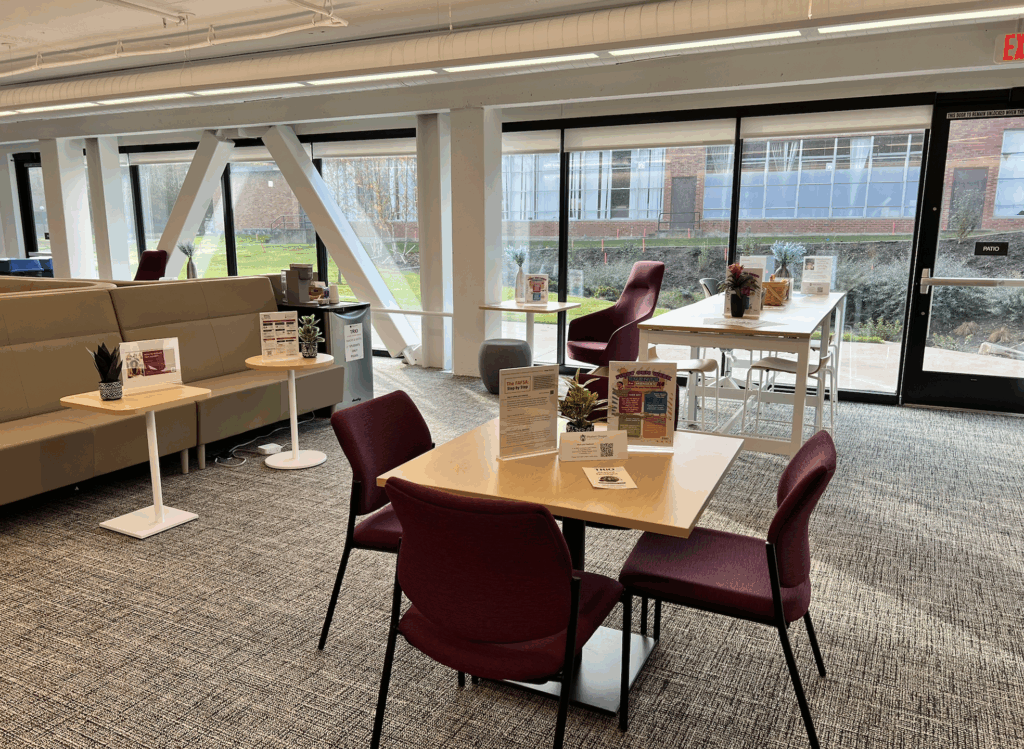
A photo of the Trio lounge. | Photo by Abbi Duhart

Oct 29 2025 | Abbi Duhart | News Editor

Being first-generation means that neither of the student’s parents or guardians graduated with a four-year degree. If someone’s parents earned an associate degree or started at a four-year college but didn’t finish, the student is still considered first-gen. Identifying as first-gen means that a student has an amazing opportunity to achieve and succeed, yet they may not have the same guidance about the process of enrolling in college that non-first-gen students have, making the transition much more confusing and scary. For these reasons, first-gen students can often feel vulnerable or face imposter syndrome because they encounter different barriers.

To support first-gen students, TRIO is putting on various events during First-Generation Week, starting Nov. 3. TRIO is a federally funded nationwide program implemented to advise and assist students who are first-gen, low-income or receive accommodations through Disability Access Services. Students part of TRIO have a specific advisor who helps them with academic, career and major advising, finding resources, finding a job and more. 

First-Generation Week happens at Western as a replacement for First-Generation Day, which is a national celebration on Nov. 8. Because Nov. 8 is a Saturday this year, TRIO created First-Generation Week so students can celebrate the week leading up to First-Generation Day. Every day during First-Generation Week has different events that help students connect with the diverse resources around campus. 

Each day of events during First-Generation Week has a different theme. Monday, Nov. 3, is all about basic needs. The day will start with a kick-off happening in the TRIO lounge at the Student Success Center from 10 a.m. to 1 p.m. This is primarily to outline the events happening throughout the week, but students can also come for some fun games and snacks. Next, students can head over to the Werner University Center from 1 to 3 p.m. to learn about meal prepping. Meal prepping can be especially hard for students in terms of budgeting, so this event can help them learn how to actively and efficiently meal prep at a lower cost. 2 to 4:30 p.m., there is a drop-in for students to chat with SNAP workers in the Werner University Center. SNAP is a federal nutrition assistance program that gives students a certain amount of money each month to purchase groceries. In the same location, there are Food Pantry and Stitch Closet tours happening from 2 to 4 p.m. These are both helpful resources on campus that students may not know about, and these guided tours can show students where they are and how they work.

Tuesday’s theme is mental health. Starting off, there are presentations happening from 11 a.m. to 12 p.m. in the Santiam Room in the Werner University Center. Counselors from the Health and Counseling Center on campus will be giving presentations about the importance of mental health. Later, there will be a trail walk starting in the TRIO lounge from 1 to 2 p.m. Students will join a walk around campus and participate in a mediated conversation where they ask each other questions and just talk about life. From 2 to 4 p.m., students can head back to the TRIO lounge to participate in a mini brain break where they can do some arts and crafts and join a “Mario Kart” tournament. 

Wednesday’s theme is community. Students can attend a first-gen fair happening in Richard Woodcock Education Center Room 101 from 10 a.m. to 3 p.m. Here, they can connect with fellow students, staff, faculty, resources and departments around campus. Each department will have a table. Students who go will receive a bingo card to mark off each table they attend, with a possibility of winning a prize. There will also be free food at this event. At 4 to 5 p.m. in the Student Success Center, Room 203, a workshop with Student Success and Advising will take place. This will surround the theme of professional goal setting.

Thursday’s theme is “step in the right direction,” beginning with a Career and Professional Pathways fair happening from 11 a.m. to 2 p.m. on the second floor of the Student Success Center. Students can go to network with recruiters from various organizations and jobs, as well as with alumni. These professionals will be giving students advice on how to land jobs in their chosen career path. From 3 to 5 p.m., there will be a TRIO and first-gen alumni panel in the Willamette Room in the WUC. Students can talk with them and get an understanding from someone of a similar background on how to get to the career they’re in. 

Friday’s theme is celebration. A Tri-Alpha induction ceremony will be happening in the Willamette Room from 9:30 to 11:30 a.m. This is for the Alpha Alpha Alpha Honor Society, an honor society for first-gen students. Students can come to celebrate and support inductees as they join Tri-Alpha. 12 to 3 p.m. in the TRIO lounge, there will be a First-Generation Day celebration to celebrate National First-Generation Day. There will be different stations and games for students as well as cake to enjoy. Students who attend any event throughout the week will be entered in a raffle for prizes on Friday.

Andres Hernandez, the first-gen coordinator, explains that everyone — not just first-gen students — can benefit from attending these events. While the resources are catered to help first-gen students more, all students can learn how to best support first-gen students who often come from different backgrounds and face different barriers. If anything, students can attend any event throughout the week to learn about helpful resources, potentially win some prizes and maybe even meet some new friends.


Contact the author at howlnews@mail.wou.edu

TRIO

Written by: Hannah Field | Editor-in-Chief

The new Student Success Center, upon entry, showcases a large, well-lit lobby, with new floors to boot and even a fireplace accompanied by comfortable seating. Looking ahead, a soft purple doorway boasts a front desk with a friendly face. Around the corner, the room opens up into an illuminated lobby for TRIO — a program that only grows the longer it exists at Western.

TRIO, sometimes referred to as SEP — Student Enrichment Program — is a nationwide program. According to oregontrio.com, the Oregon TRIO Association, otherwise known as OTA, was founded in the year 2000. Three primary initiatives would sprout: an annual professional development conference for TRIO professionals, an annual student leadership conference and a framework for Oregon to send advocates per year to Washington D.C. to pledge for funding for TRIO and spread its programs across the country.

In July of 2021, OTA received a $1 million grant from the state of Oregon to support marginalized students receiving higher education, also assisting with a full-time executive director position within OTA. Their mission: “Growing and supporting Oregon TRIO programs, staff and students … ​TRIO programs assist students with career exploration, college admissions, college preparation, financial aid, scholarships and college retention and graduation.”

Historically, the term TRIO was coined to honor the three main programs: Upward Bound, Talent Search Program and Student Support Services. “By 1998, the TRIO programs had become a vital pipeline to opportunity, serving traditional students, displaced workers and veterans,” said the TRIO history place. Eventually, the three programs would triple — becoming nine different educational assistance programs. Today, OTA serves more than 11,000 students.

At Western, TRIO boasts a well-equipped and established team to support students in many ways: director, Christopher Solario; assistant director, Adrian Trujillo; educational advisor, Alicia Monrroy; educational advisor, Andres Hernandez-Galvan; first generation coordinator and educational advisor, Dana Nunez-Silva; educational advisor, Hayden Campos; educational advisor, Logan Bransfield; educational advisor, Brianna Jones; and Sharon Price, TRIO student enrichment program office coordinator.

Director Christopher Solario has been involved with TRIO since 2000, but has been a leader in the program since 2012. The program itself has been at Western for more than 35 years. “I loved it as a student and I really enjoy it as the director,” said Solario.

Solario oversees TRIO and SEP. Occasionally, he works with students, regarding them as his favorite part of the job. “Seeing (first-year students) as kind of wide-eyed, kind of nervous, not knowing where they’re at — and then four to five years later, seeing them walk across the stage, graduating. It’s exciting to see their growth … just seeing how much they’ve grown as a person, as a human and as a citizen. It’s wonderful.”

Educational advisors assist students in the TRIO and SEP program by helping them with virtually whatever they might need — class registration, reaching out to professors, finding resources or even just needing someone to talk to. These sessions act as one-on-one advising.

According to the SEP page on Western’s website, services include academic advising, partnering with Destination Western, communicating with other departments on campus, support advising, individualized instruction, student-focused seminars, admission to cultural-enrichment activities, access to textbooks, MacBooks and other resources and organized social programs to invoke a sense of community and unite students.

“Even if we don’t know the right answer right away, we will work to get you the answer. We will connect you to the right resources,” said Dana Nunez-Silva, who began with SEP three years ago. “If you don’t even know where to start, your TRIO advisor is a great place to start.”

The main feature that students are aware of is the educational advisors. Each student admitted into the TRIO program at Western receives an educational advisor, with full-time advisors having a caseload of approximately 70 students.

“It’s really great that you (can) have this rapport with a staff on campus that you hopefully feel comfortable to talk to or ask questions,” said Nunez-Silva. “A social support that hopefully empowers you to take initiative of your academic journey, because I think coming in, especially as a first-gen student, it’s scary.”

“Our advisors care about our students,” said assistant director, Adrian Trujillo. “We try to do our best to make sure that when they leave the office, they’re in a better space than they originally came into, or at least have a better understanding of their path towards their graduation. That’s the end game for a lot of students, making sure they reach graduation.”

Most of TRIO is comprised of first-generation students, with the bundle of offices, workspaces and seating generally titled the “First-Gen Center.” Here, members of TRIO are invited to study, collaborate and enjoy a space catered to their needs, although anyone is welcome and does not need to be a part of the program in order to occupy the area.

Outside the wall of windows in the main area, a small body of water, titled the “retention pond” sits; nearby, the lending library offers donated textbooks to be borrowed. Even a care cupboard, courtesy of Abby’s House, is available to provide snacks and other possible necessities.

“We really wanted to have a space for our students who identify as first generation to come in and hang out,” said Trujillo. 

With all new amenities, the Student Success Center is an adequate community resource for the growing program — lending itself to nearly 400 students across campus.

“I think that we’re all just very thankful to be in this new space. And we’re all very excited to see how this community is going to flourish in this new space, because it’s a beautiful, beautiful building,” said Nunez-Silva. “We’re very lucky to be here.”

TRIO was founded on the concept of accessibility, community and advocating for students who may need it. In light of that, educational advisors pledge to consider their advisees and support them with their needs.

With that goal in mind, the program at Western has established free first-year seminars for students in SEP.

“The overall theme for (the classes) is helping students who are within our program have a better understanding of how to navigate higher education, give them the tools and skills that they need,” said Trujillo, occasional teacher of said classes. The lessons are meant to shine a light on things students may not be aware of, such as credit scores or navigating their identity as being first generation, low-income or having a disability.

In Solario’s words, first-year seminars are to prepare students for college as a whole — “What does it take to be a college student? What’s the difference? What’s the expectations from a professor? How do you approach classes? How do you study? How do you balance your time?”

Time management is something TRIO places a lot of emphasis on, not only covering it in class but also through “TRIO talks” — workshops — that take place throughout the term. Occasionally, prizes or gifts are offered with workshop attendance, but the goal is to walk away more informed than before. The schedule for events is found on SEP’s social media, SEP student weekly emails and can easily be found in the First-Generation Center.

Some of these workshops focus on financial literacy or FAFSA completion, with financial aid being a large problem for many TRIO students.

TRIO Teacher Prep Student Support Services is also an opportunity for education majors at Western to receive support and resources. Eligibility depends on being first generation and meeting financial requirements. Through this, students may receive academic advising, mentoring and tutoring, teacher licensure exam workshops, financial literacy development, FAFSA and scholarship help, student success seminars and workshops and career development services. The program is overseen by Director Sheree Solario and encompasses a small staff, including a bilingual Spanish-English educational advisor, to better provide for student teachers.

Nearly half of Western’s student population is first generation, plenty of whom are not involved with TRIO despite their eligibility.

Misconceptions about TRIO include the concept of being first generation. “Neither parent graduated with a bachelor’s degree. They can have parents that attended school, but as long as they didn’t graduate with a bachelor’s degree, you’re still considered first gen,” said Trujillo. “I like to say, you can have an aunt, an uncle or a dog that gets a bachelor’s degree — that still makes you a first-generation student.”

Secondly, TRIO is not a remedial program. “I would say that the biggest thing I would want people to know is that this is a program that actually works when it’s utilized the way it’s meant to. As a student, you have got to also put in the work,” said Nunez-Silva. TRIO paves a pathway to success, and, according to Solario, has high expectations for involved students.

Nunez-Silva’s office sits closest to the front desk as the first generation coordinator. Her position goes beyond TRIO, tying in with Student Support Services and the Tri-Alpha Honor Society, a new organization looped into Western’s ever-growing community. Nunez-Silva will coordinate with the Tri-Alpha Honor Society to further elevate hardworking first-generation students.

Formal requirements for Tri-Alpha include having at least a 3.2 GPA, 45 credits completed and being a first-generation student. Eventually, positions at Western for Tri-Alpha will be established, such as a president position, which will include more coordination with Nunez-Silva and the community. Members of Tri-Alpha, however, have a minimal time commitment.

Eligible students who do not receive invitations to Tri-Alpha may reach out to Nunez-Silva if interested.

One important feat of TRIO is First-Generation Week, a celebration of students’ achievements over the course of multiple presentations, events and activities.

“There’s (about) three advisors here that were TRIO students at Western, so I think that just goes to show there’s definitely that ‘TRIO magic’ that people talk about — that they feel supported, not just supported enough to go through college, but supported enough to come back and give back to campus,” said Nunez-Silva. “I think that also extends to Western culture … There’s a lot of alumni that are here working now to give back, and so I think that, in general, the fact that this program has been here for 30 plus years says a lot about how dedicated the program is to continue serving.”

Trujillo has his own goal in mind: to help students flourish beyond expectations. “To help people get to a spot where they surpass me in a way — I think that’s how I view leadership … it’s really cheesy, but TRIO works.”

The Student Success Center is open until 7 p.m. each day, with TRIO hoping to eventually keep an advisor there till closing so students may be able to have drop-in appointments or receive help.

Students may apply for TRIO even after their first year at Western, but may be waitlisted. Solario hopes to expand the number of students which TRIO can assist, which is very likely considering TRIO’s expansion — not just a new building, but new positions, opportunities and events.

To get involved or apply, research TRIO at wou.edu/sep/.

Contact the author at howleditorinchief@mail.wou.edu.

Student Success Center

Written by: Sadie Latimer | News Editor

The beginning of Winter term was marked by the opening of the Student Success Center — SSC. Construction of the building started August 2023, and it was finally open to the public Jan. 6th, 2025. 

The new building was built on the foundation of the previous Education building, which was the primary place for education students before the Richard Woodcock Education Center opened in 2016. 

The SSC is located on Monmouth Avenue next to Hamersly Library. It has the charm of Western’s brick buildings, but with a modern twist. A balcony furnished with tables and chairs overlooks the central street on campus. 

The SSC is now home to many preexisting programs, including the Math Center, Student Success and Advising general tutoring, Center for Professional Pathways, Multicultural Student Services and Programs, Student Enrichment Program, Disability Access Services and more.

“This Student Success Center will be a key building as we continue to support our students, including many first generation and historically underserved students,” President Jesse Peters said in a July 2023 press release. “Creating a building that will champion our students’ needs all in one space is instrumental to our university’s mission.”

Brianna Jones, an educational adviser now located in the SSC, advises students with documented disabilities as well as low income and first-generation students. 

“We help with registration for classes, academic projectors, financial literacy and financial aid assistance … and a little bit of everything,” Jones said.

Before the SSC, Jones worked in the Student Advising Center on Church Street. “It’s nice to have a space that’s ours, has more open space and has the opportunity to give students a place to hang out, study and have a place of their own.”

A first-generation student center is on the first floor of the SSC. “It’s a lounge area,” Jones said. “That’s a place where they can go to use the computer lab … and then it has a little patio where they can see a little pond. We call it the retention pond.” The first-generation area will also eventually have a TV to play movies for students.

Dana Nunez-Silva is Western’s first gen coordinator. The first-generation area is “specifically for our TRIO and first-gen students, but anybody is welcome,” Nunez-Silva said. “It’s a space to build community more intentionally than the space that we were able to have before.”

The SSC has an open concept, which helps with connecting every program in the building. The large windows let in natural light that makes the building feel more homely. 

“I’m very excited about having this new space,” Nunez-Silva said. “I really like how it facilitates connection and community a lot more than the space we had previously … Students should visit the new building because it is, in my opinion, unlike any other building on campus.” 

Although the building is not fully furnished yet, it is still open to students who want to study, meet with advisers and tutors or socialize with other students.

Jan. 8, a FAFSA completion workshop was held in the SCC. In the future, the building will be the hotspot for workshops and other events. Nunez-Silva has plans to create “accountability hours” in the SSC, which will be a designated time and place for students to do their work. 

“Something I want to do in collaboration with the tutoring center is the accountability hours,” Nunez-Silva said. “It’s essentially (a set) time to be held accountable by your peers. Think about it as a quiet community that comes in all at one time to do homework.”

The new building will also eventually host meetings for the Tri-Alpha Honor Society. Nunez-Silva also hopes to host peer mentoring in the future, and also possibly designated first-generation peer mentoring. 

This new building is a breath of fresh air for students and staff alike. “It’s something new and different,” Nunez-Silva said. 

The SSC is the home-base for any resources students might need, from tutoring and advising to studying and socializing. “It’s meant to be a one-stop shop for students that don’t know where to start,” Nunez-Silva said. All students have a variety of needs, and it is difficult to know how to go about getting those needs fulfilled. The SSC has many of the resources available to students, all in one place. 

“Take advantage of this space,” Nunez-Silva said. “Take advantage of the resources and the advisers.” The advisers, tutors and other staff all share the same goal of supporting students and helping them reach their full potential. 

Contact the author at howlnews@mail.wou.edu

ASWOU elections

Written by: Hannah Field | News Editor

The Associated Students of Western are expecting to elect President Brenda Rocio Martinez, Vice President Fernando Robles and Judicial Administrator Morgan Pemberton into office for the 2024-2025 academic school year. The trio is running as a team and remains unopposed.

Expected incoming president, Rocio Martinez, described herself as a proud first-generation Latina student at Western. “I am running for ASWOU President to represent and support all students who want their voices heard. My candidacy is driven by my understanding of the unique challenges and aspirations of being the first in my family to pursue higher education,” she wrote on Presence, the website permitting for the ASWOU election.

“I am committed to using my and others’ perspectives to advocate for crucial changes that support our diverse student populations, ensuring that all voices are heard and valued.”

Rocio Martinez explained her initiatives to be primarily focused on bridging connections between students and higher-ups in attempts to “enrich the university experience.” Simultaneously, Rocio Martinez pledges to expand relationships, resources and support for everyone.

Robles, running for Vice President, left a statement as well: “I’m running for vice president because I would want to make an impact on campus.”

Judicial Administrator candidate Pemberton stated, “I’m running for judicial office because I care deeply about our campus community and making sure everyone’s voice is heard… One thing you should know about me is that I’m all about diversity and inclusion. I truly believe that embracing our differences makes our community stronger and more vibrant.”

Pemberton also promoted creating a collective judicial system that properly reflects the campus’s values and promotes fairness and equality in the community.

ASWOU opened elections March 8 and cannot conclude until 10 percent of the student body has voted — allowing for enough student voices to be heard so that the results can be deemed fair.

All other open positions allow for write-in candidates, meaning that anyone may be named to potentially fill the position. The write-in positions include the following: Senate President; three openings on the Incidental Fee Committee; 11 openings for ASWOU Senate: Senate Candidates; and three openings for the ASWOU Judicial Board: Judicial Candidates.
As of May 29, voting is still ongoing. To vote, students must list their V number and certify that they are Western students and will abide by the election results.


Contact the author at howlnews@mail.wou.edu

Thoughts and Gifts Project invites community to grand opening

The Thoughts and Gifts Project welcomes Polk County residents to celebrate the move to their new permanent location 

Sydney Carpenter | News Editor

On Feb. 20, the Thoughts and Gifts Project nonprofit organization will be commemorating their permanent move to 427 Main St. E from 1 to 3 p.m..

Established in 2018 by founder Jean Love, TAGP celebrates the birthdays of underserved youths and qualifying senior citizens by providing $30 worth of gifts, three books and two birthday cards. 

Prior to COVID-19, TAGP would host one large birthday party each month for all participants within their program. Adapting to COVID regulations, the nonprofit does not have large birthday parties, but now does monthly prize drawings with donations from the Dollar Tree in addition to their other gifts.

Love had the idea after listening to a Toys for Tots commercial on the radio during Christmas time.

“It’s great that there’s such an outpour of support for one day, but what about the other 365 days of the year?” explained Love.

When the organization first began providing services to the public, their original location was temporary. 

“We had a partnership with the Polk County Service Club … They allowed us to use their club house free of charge and we were there for three days a week,” said Love, “but we did not have on site storage.”

According to Love, they spent the next few years fundraising until they were able to purchase a storefront in Monmouth during the fall of 2020. 

“We thought about doing a grand opening in October, but at that point you’re getting into November and December where the main focus is Christmas,” Love explained. “We don’t want to compete with anything Christmas because there is too much good that happens then.”

For the event, TAGP is doing a ribbon cutting ceremony in front of the store at 1:30 p.m. in addition to three different game stations.

“They will be quick fast games and after they can win prizes,” said Love.

Participants will also be able to receive some TAGP swag bags that contain various branded items. At this time, food will not be provided due to COVID regulations. People interested in attending the event are required to wear a mask, but no RSVP is required.

“We’re really doing something positive for our community,” said TAGP volunteer Kathy Grudle. “It’s such a wonderful feeling to be able to say this something we’re giving you and because we care about you having a birthday.”

To learn more about qualifications or to donate to The Thoughts and Gifts Project, students can visit their website at thoughtsandgifts.org.

Contact the author at scarpenter18@mail.wou.edu