

Mount Hood

Declining literacy in America

Written by: Jaylin Emond-Hardin | Entertainment Editor

All over the nation, schools have seen a decline in literacy rates among students, but Oregon has seen the steadiest decline since the COVID-19 pandemic. School closures and remote learning due to the pandemic made learning to read much more difficult for students, especially among disadvantaged youth.

In a 2023 study done among students in the Beaverton School District, 61% of third graders and 54% of seventh graders were found to be below proficient in reading. Nationwide only 46% of students were found to be proficient in reading.

Neurological research from more than 20 years ago about the proper way to teach children to read has garnered more attention recently, but the study suggests schools’ failure to teach reading using scientifically backed methods is a key factor for low test scores. 

This year’s scores on the only achievement test to represent a sample of students from every state also showed dismal results: only one of every three eighth-graders was proficient in reading. However, there have been plenty of issues found within Oregon’s reading curriculum that might be at fault for these low test scores.

“There isn’t a single reason for declining literacy rates but rather many factors contributing to it,” said Western education professor Tiffany K. Smith. “The assessments that are used to determine students’ levels of literacy are simply snapshots. They often do not reflect students’ actual literacy abilities. For example, they are timed (for consistency) and often students need more processing time. Sometimes students blow through the assessment just to get it over with. Sometimes students don’t understand directions or the questions and it can’t be further explained by the test administrator.”  

For one, the state’s standards have not been revised since 2019, meaning the standards are based on pre-pandemic learning. Secondly, the Common Core Standards, which were adopted by 41 states and four territories in 2010, focus mostly on what students need to know to be prepared for college. 

According to the Bureau of Labor Statistics, as of October 2023, only 61.4% of recent graduates were enrolled either part-time or full-time at a two-year or four-year university. Yet schools in Oregon continue to push the Common Core Standards in classrooms and schools. 

Even worse, Common Core Standards don’t follow the curriculum that teachers are supposed to use in their classrooms, government-appointed education experts do, and in Oregon, every one of the 197 school districts is given the ability to adopt their own core curriculum.

The Oregon Department of Education — ODE — has a list of approved curricula for school districts to adopt for teaching reading and writing. Districts who wish to deviate from this list must ensure that they choose a curriculum that includes the teaching of phonics and phonemic awareness, but face no penalty if they deviate from the ODE list and are not required to tell the state they have done so.

Many parents point the blame at the 2001 No Child Left Behind Act, or NCLB, which placed consequences on schools based on students’ standardized testing scores. A study that followed a 1998-1999 kindergarten class through completion of high school found that the enactment of NCLB and the Every Student Succeeds Act that followed it have had an impact on children’s socioemotional outcomes. 

The study, which was finally published in 2017, found that the NCLB had a negative impact on students’ test-taking anxiety, which has only worsened recently. 

However, there is both good and bad news for the state of student literacy. In an executive report — The State of the American Student: Fall 2024 — published by Arizona State University’s Teachers College, statistics and a path forward were found, which teachers and school districts could follow to improve student literacy. 

The good news is that students and teachers are showing signs of recovery from the COVID-19 pandemic. According to a 30-state survey, students have regained about a third of their pandemic-era learning losses and a quarter of their reading. School districts are pushing for more tutoring, high-quality curricula and extended learning times, in an effort for them to become more permanent in learning. 

The bad news is that recovery is slow and uneven among students of different backgrounds and school districts. While there has been an upward trend in the recovery that students have experienced, they are not even halfway to a full academic recovery. For students with little time left in the K-12 system, this slow rate of academic recovery is bad news. But even the so-called “COVID Babies” are entering kindergarten less prepared for grade-level learning than pre-pandemic students. 

Additionally, eight out of ten teachers say they find teaching overwhelming and have complained about inadequate support in the classroom. Lack of funding for districts and chronic absenteeism — defined as students missing at least 10% of school days — has also worsened these problems. 

One of the most important factors emerging from the pandemic was parents being unprepared to become educators for their children. Parents of students with disabilities found it difficult to provide their children with the proper services, and disadvantaged students often lacked the proper technology to be able to access online learning. 

Some states are searching for solutions to combat declining literacy and teacher fatigue. In Salem, Massachusetts, one middle school reduced absenteeism and increased achievement by making school more engaging and fun with more field trips, hands-on learning opportunities and personalized instruction. One student said, “It’s actually making me excited to go to 

school. It’s just like a happier version of school.”

The State of the American Student: Fall 2024 recommends prioritizing relationships between teachers and students, having a partnership with parents that is central to the education system and ensuring that the best strategies reach the children who need them. The report also suggests school districts get involved with policymakers and advocates to help hold institutions accountable for meeting their obligations to all students — especially those who are most vulnerable. 

“We are still seeing the effects of COVID and long-term stress and trauma on students and their families,” Smith said. “This prolonged stress and trauma has research-based effects on literacy rates.”

The first goal for teachers and school administrators is to reengage students and parents in learning. From there, they will have the ability to gain more post-pandemic academic recovery, especially in the areas of mathematics and literacy. 

Contact the author at howlentertainment@wou.edu

Empathy in education

Written by: Sierra Porter | Staff Writer

As individuals, there are many elements that affect our daily lives and further influence us as human beings. One element that every human has succumbed to in life is consistent trials and tribulations. As a society, we believe that education and schooling should help us learn and move away from these challenges, including those we face outside of these institutions. For some, this creates a disconnect between school life and home life — believing that a solution in one will fix the other. What our education system is currently missing, that will help this disconnect, is empathy. 

Empathy is the ability to understand and share the feelings of another. This is not just having pity or sorrow for others as sympathy does, but rather, one truly puts oneself in the other’s shoes, viewing things from their perspective. For one to have a truly valuable education with others, it must also involve some form of empathetic learning. 

Those with particularly consistent negative aspects in their home life, especially young students, face things like changing family dynamics. These include financial issues, sibling bullying, history of neglect or maltreatment and more, and are more likely to have struggles in school — leading to a greater chance of dropping out. 

For many, it’s nearly impossible to disassociate the troubles they face at home away from their school life. It’s up to us, as individuals, to learn and encourage empathy — making everyone’s school environment as positive a place as can be. 

Educators who use an empathetic approach to teaching and addressing classroom issues create an inclusive and open environment for students — encouraging them to build safe relationships with their teachers and peers. Empathetic learning and teaching also promote a positive learning environment where students feel valued and proud of their abilities. 

Creating a safe and comfortable environment for students will allow them to enjoy school more, thus motivating them to stick with their education and make overall better decisions in life. Teachers lead by example, so if one is leading with an empathetic mindset, then that will create a community of compassion and a generation of caring students. 

As a student, one can also promote empathy by showing compassion and kindness to their peers and teachers. You never truly know what is going on in others’ lives, so try to put yourself in their shoes. Showing care for your teacher and their life in or outside the classroom can show them how much their work is appreciated, encouraging them to continue teaching. Being empathetic with your peers will help you understand each other better, creating stronger bonds and deeper relationships, again, further creating a community of positive and caring people. 

Empathy in education is not just the responsibility of teachers and students, but institutions as a whole can also promote an empathetic environment and learning. Many schools explicitly promote empathetic learning through social-emotional learning, or SEL, programs or character education. 

Specific classes aren’t the only thing institutions can do to promote empathetic education. As an institution are they empathetic about their tuition? Empathetic about the types of classes they offer? Empathetic about deadlines and requirements for applying students? Empathic about those that need extra assistance, like disability accommodations? There are so many different ways to promote empathic learning and create an empathic environment as an institution — thus universities and schools all over should be looking at what their students need. 

Empathy in education will encourage a new generation of compassionate, caring and bonded individuals who will take their empathetic learning and apply it to the world. Empathy in education tells us that life is difficult, but you are not alone. 

Contact the author at howlstaffwriter@wou.edu

The death of creative writing

Written by: Gretchen Sims | Editor in Chief

Writing for fun is something that many of us have dabbled in sometime in our lives; though, for most, this hobby may have died off early on. However, as someone who entered college with a love of the written form of the English language, I have had the unique experience of watching the suffocation of creativity — while even my love and passion were slowly drained. 

While school itself can be draining, a unique phenomenon to higher education is the smothering of the creative spark. Many students leave college burnt out and reject the creative practices they once engaged fervently in.

I have not seen more stifling of creativity than in creative writing classes. One would think that this is where a student’s passion for writing would be encouraged or nurtured, but this could not be further from the truth.

I hate to say this, but it is an honest observation: professors, while they are the experts, think too highly of themselves and their work. They neglect the fact that each student will have their own style and writing process. Creative writing should be just that, but many professors force students to conform to their specific style of writing — glazing over the fact that, perhaps, their style is not the only one. 

Each student brings their own context and unique experiences into a writing class. This affects the way they tackle the project and, more importantly, shapes their writing. Professors also have their context and experiences, however, going to grad school does not automatically make their context more important. 

I have not been in a creative writing class where the professor encourages students, through their actions, to be creative with their writing — all assignments, if you want to do well, have to be written in the style and method that the professor, while often unstated, desires.

This is enough to kill even the most passionate student’s love of writing. When professors cram students into boxes, they become mindless robots, typing away on lifeless pages: this is a phenomenon I have seen far too often. 

This is not something unique to the Western writing department. Anywhere art is taught, creativity tends to be stippled out of students. By placing a grade — level of worth — onto a creative piece, the student gets a measure of “how good” they are. This can lead students, who do not conform to the professor’s idealistic standard of said art form, to become disheartened and lose passion for that which they once loved. 

Contact the author at howleditorinchief@wou.edu

Netflix policy change causes chaos

Written by: Sierra Porter | Staff Writer

Netflix is an American subscription streaming service that was created in 1997 by founders Reed Hastings and Marc Randolph. By 2007, they launched their streaming service to compete with Blockbuster which implemented several different family plans. Recently, Netflix has been cracking down on their single household and password sharing policies — making it an absolute nightmare for travelers, large families and especially college students.

The cheapest plan is the standard plan with ads which allows for two devices to watch TV shows and movies for $6.99. 

The standard plan is ad-free, full HD, allows for access among three devices and has the option to add an extra member– for an additional cost of 7.99 a month. The premium plan is also ad-free but offers ultra HD, is accessible on four devices and has the option to add two extra members for $7.99 each. 

The new ability to add members at an extra cost has encouraged Netflix to crack down on password sharing outside of a single household. This means that if one attempts to log in to their Netflix account outside of the designated household, it will log out all other members; regardless of if it is still within the device limit. This policy seems to be a desperate money grab, as it forces members to either buy more expensive plans or pay additional costs. 

Why is this a game-changer for so many? For many students, the full college experience includes living in the dorms, but that also means all funds usually go towards those expenses. Tremendous amounts of students report being forced off their family plans during the months they are on campus — either forced to live without the streaming services or ponying up the extra cost to be an additional member. 

Avid travelers also face this issue from time to time as they lose the ability to log into Netflix in the many places they stay while traveling. Again, one will have to log out the rest of the family in the household and deal with the wrath of streaming rights rage, ball up the extra fees or drop Netflix overall. 

This policy change has been a pain for many and up to 62% of password borrowers said they would rather stop using the streaming service in total than purchase their own account. Netflix’s attempt to force watchers to buy their services, especially the more expensive services, has thus far not been as successful as they hoped. Immediately after these changes, Netflix lost almost 1.2 million subscribers — their biggest loss in over a decade. 

Many are canceling their subscriptions and switching to other streaming services, and we can’t blame them. 

Contact the author at howlstaffwriter@wou.edu

Art at Western

Art exhibits open for viewing this October at Western

Camille Lenning | Entertainment Editor              

Western’s galleries are open again after an 18 month hiatus, and pieces in galleries such as the Student Gallery in the ITC, the Cannon Gallery of Art and the second floor gallery in Hamersly Library are open for public viewing during normal building hours, 8 a.m. – 5 p.m. until Oct. 29. 

The Annual Juried Student Art and Design Exhibition returns in its 53rd iteration to the newly remodeled ITC, featuring the talented students who entered in last year’s online exhibit. 

Senior nontraditional transfer student Melody Barrett has two collage pieces in the student gallery, “Frida Rides Again” and “Ladies in Waiting.” A dedicated artist, Barrett has also sold a print of her piece “Ladies in Waiting” to the City of Monmouth Arts Committee. 

“I believe art is an expression of the artist, what we see and feel, experience and imagine,” Barrett said. “That is why I love using a wide range of mediums including collage, acrylic painting, soft pastels and mixed media, because each one allows my thoughts, feelings and ideas to come through in very different ways.” To see her other work, check out Barrett’s website at www.melodybarrett.com.

Graduate student Genvieve Hardin has two pieces in the gallery, sculptures “D20” and “Be Not Afraid.” Hardin is in the Master of the Arts in Teaching program, and has expressed her excitement for having her work in the ITC gallery.

“My art is a way to connect with others and express myself. It is wonderful to have my art on display; I always wonder what people see and feel when they view my work!” Hardin said.  

Senior zoology and art and design double major Tobin Roark has three pieces on display.

“’Liquescent Shift’ was a tribute to my gramma opening up and freeing herself from the grief of her husband passing,” Roark said of their art. “’Burning at the Stake’ was commentary on the demonizing of sexuality and women linking burning witches at the (stake) with pole dancers. And lastly ‘Touch of Menace’ … was commentary on how appearances can be deceiving and corruption and greed.”

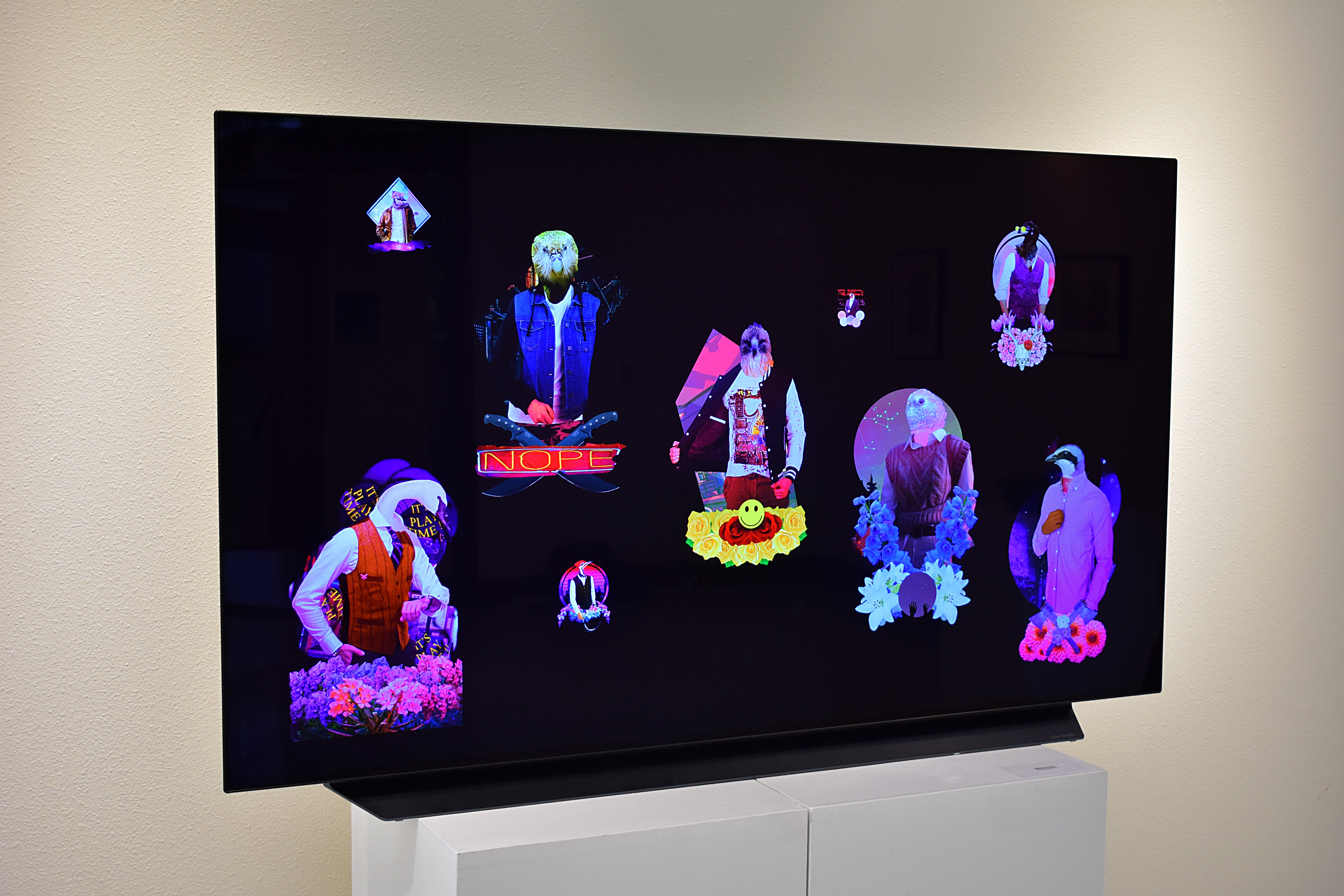
Senior art major McKenna Suarez displayed her digital pieces “Photoshop Series” in the exhibit. Her art was the only digital entry. 

“These pieces to me mean a lot, as they help to represent or show what Social Anxiety is like to me, and the ‘tricks’ I use to help me talk to people or interact in public,” Suarez said. “Similar to the phrase ‘Just think of them in their underwear!’ when you ask someone for tips on public speaking. I just imagine everyone with a bird head with a cool aesthetic background.”

Senior art major David Tomasiewicz has one piece displayed in the gallery, “MotoDrop #3.” Different from the peers he shares the gallery with, Tomasiewicz’s preferred medium is animation or film. 

“I see art as a tool and means to create the animated fantasies that exist in my collective dreamscape,” Tomasiewicz said, “a way to invite people to peer into the landscapes existing within my conscious.” 

Also included in the exhibit are students Marilyn Bergsma, with “If Wishes Were Horses Beggars Would Ride” and Mitchel Garson, with “Image of Guitar,” “Insomnia,” “Why,” “Untitled” and “Unfortunate Futures.” 

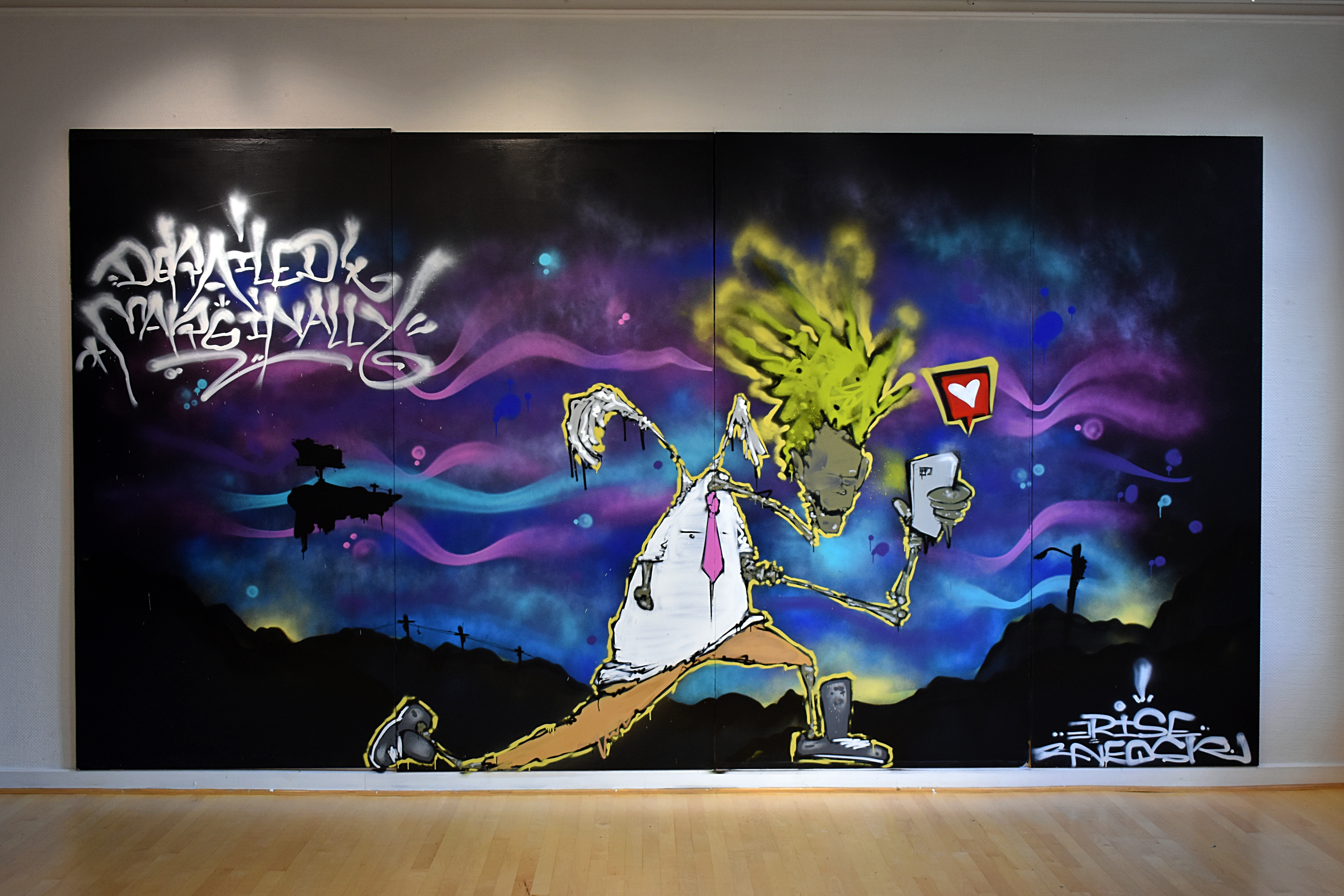
Venturing outside of the student exhibits, Eric Tautkus, an aerosol and graffiti artist, has unveiled his newest art installation, “Derailed Marginally” in the Cannon Gallery of Art in Campbell Hall. This new work is a colorful, immersive piece spanning an impressive 50 feet — split between two walls. Smaller paintings by Tautkus are on display as well. When the exhibit closes on Oct. 29, two-foot square sections of Tautkus’ work will be sold to help fund the student gallery in the ITC. 

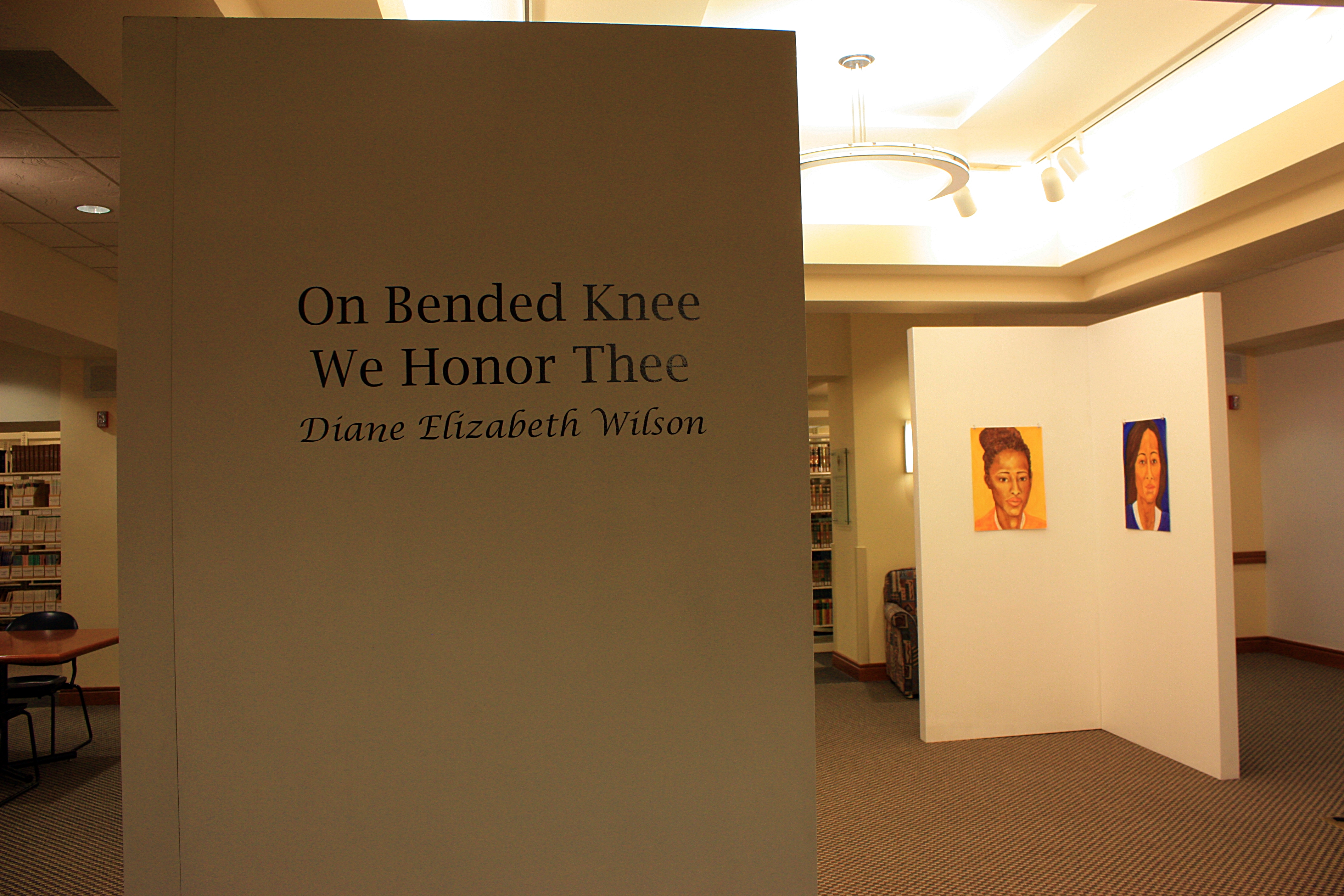
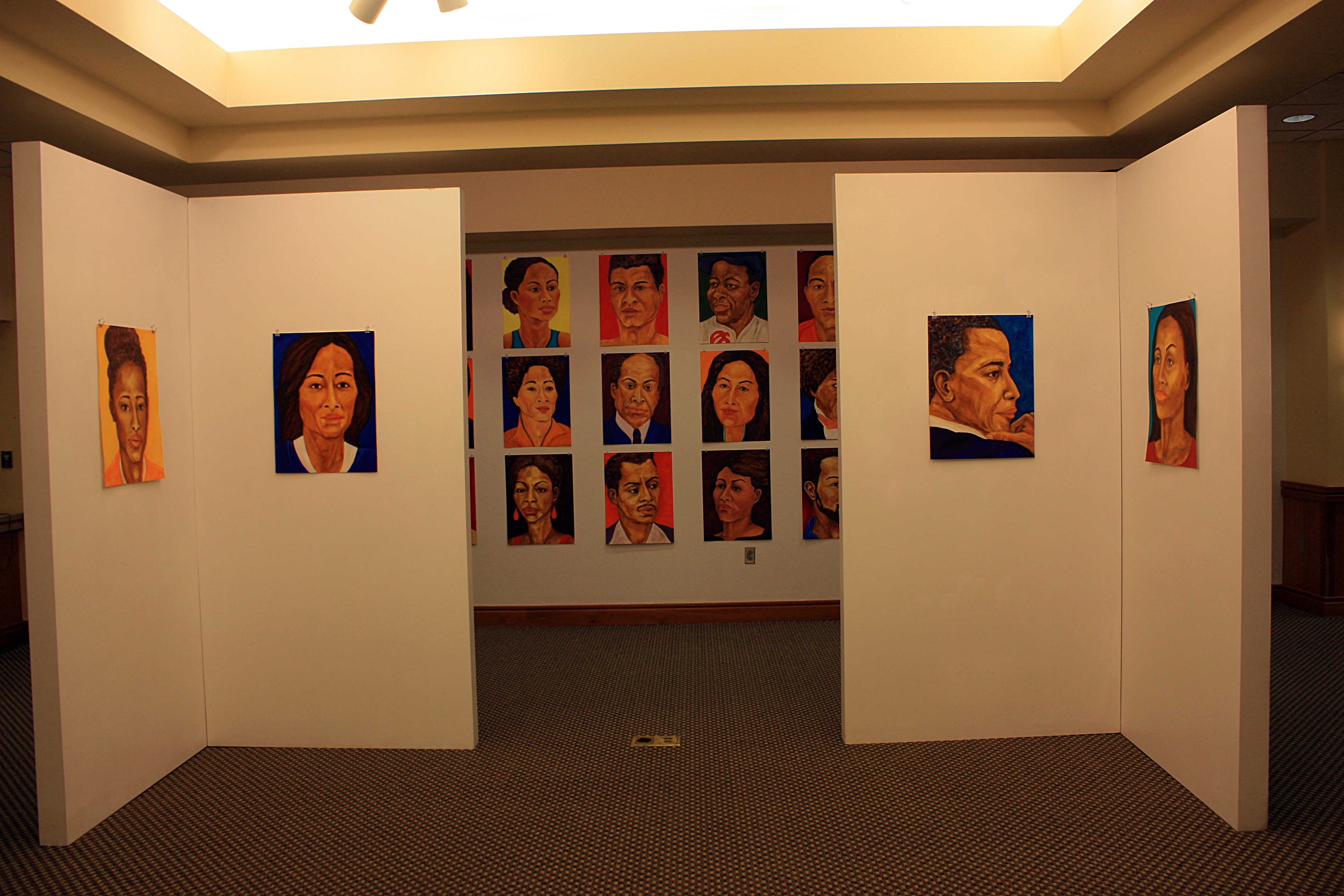
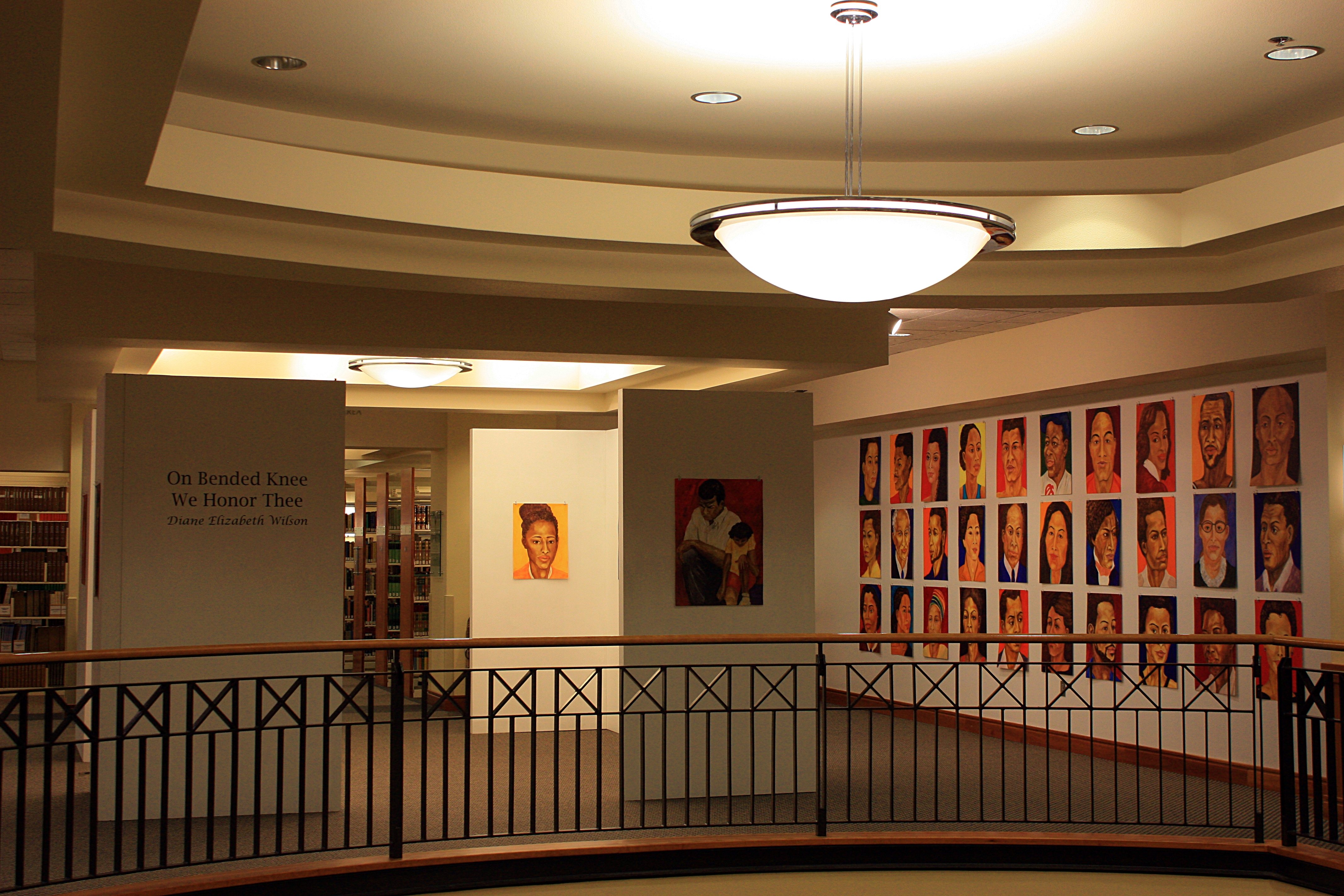
Additionally, in the second floor gallery of Hamersly Library, local artist Diane Elizabeth Wilson debuted her exhibit titled “On Bended Knee, We Honor Thee,” in reference to the symbolic act of kneeling in protest for civil rights. The exhibit features 60 oil painted portraits of civil rights leaders and activists that have made an impact on society. 

Contact the author at entertainmenteditor@thewesternhowl.com

Campus voices: Jazz Orchestra

Western’s jazz orchestra members answer, “How does it feel to be practicing inside again?” 

Camille Lenning | Entertainment Editor

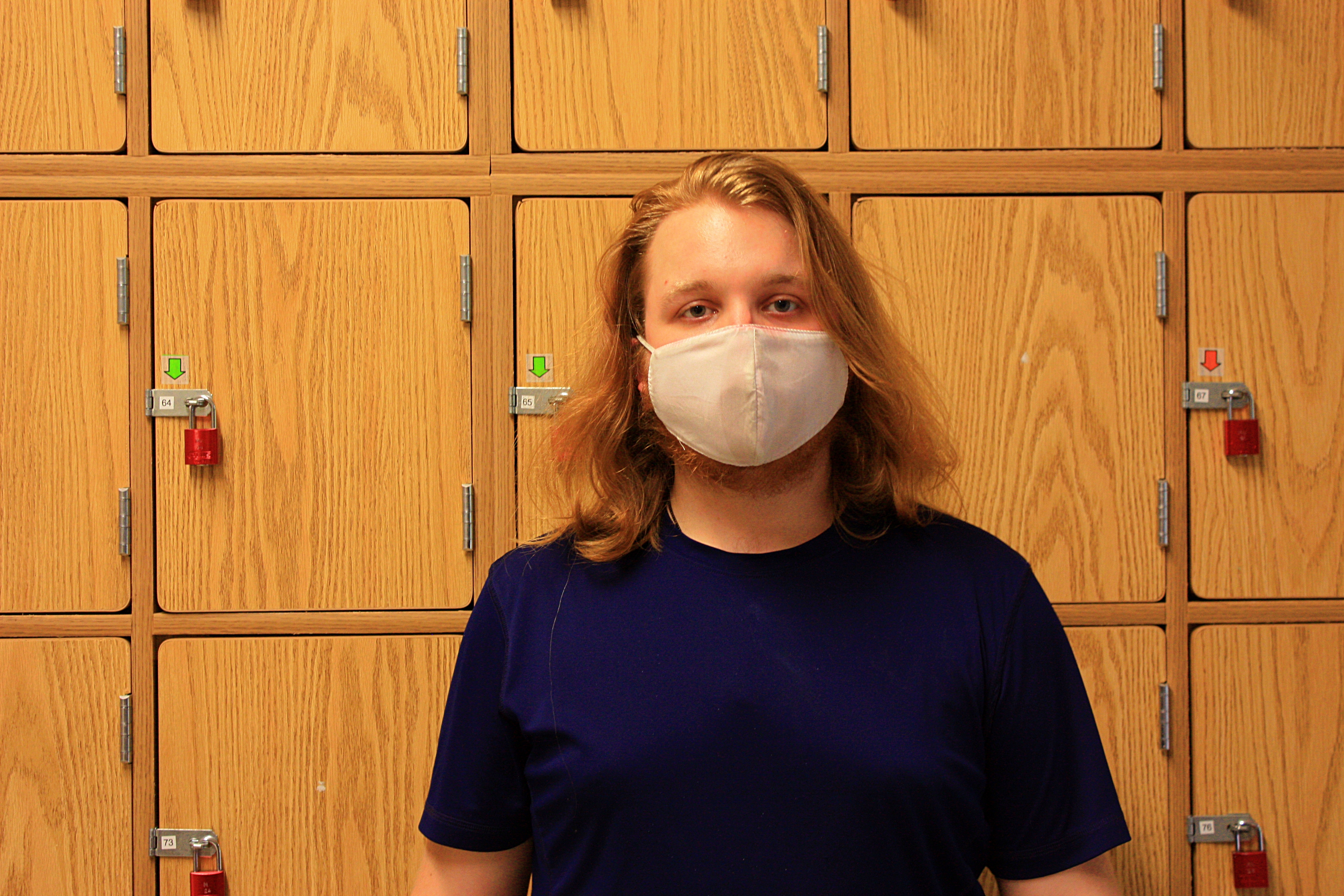
Noah Adams, senior audio production major, drumset

“I would say it’s very nice … it makes it a lot nicer, a lot more inviting for me to be here for a while if I’m practicing.”

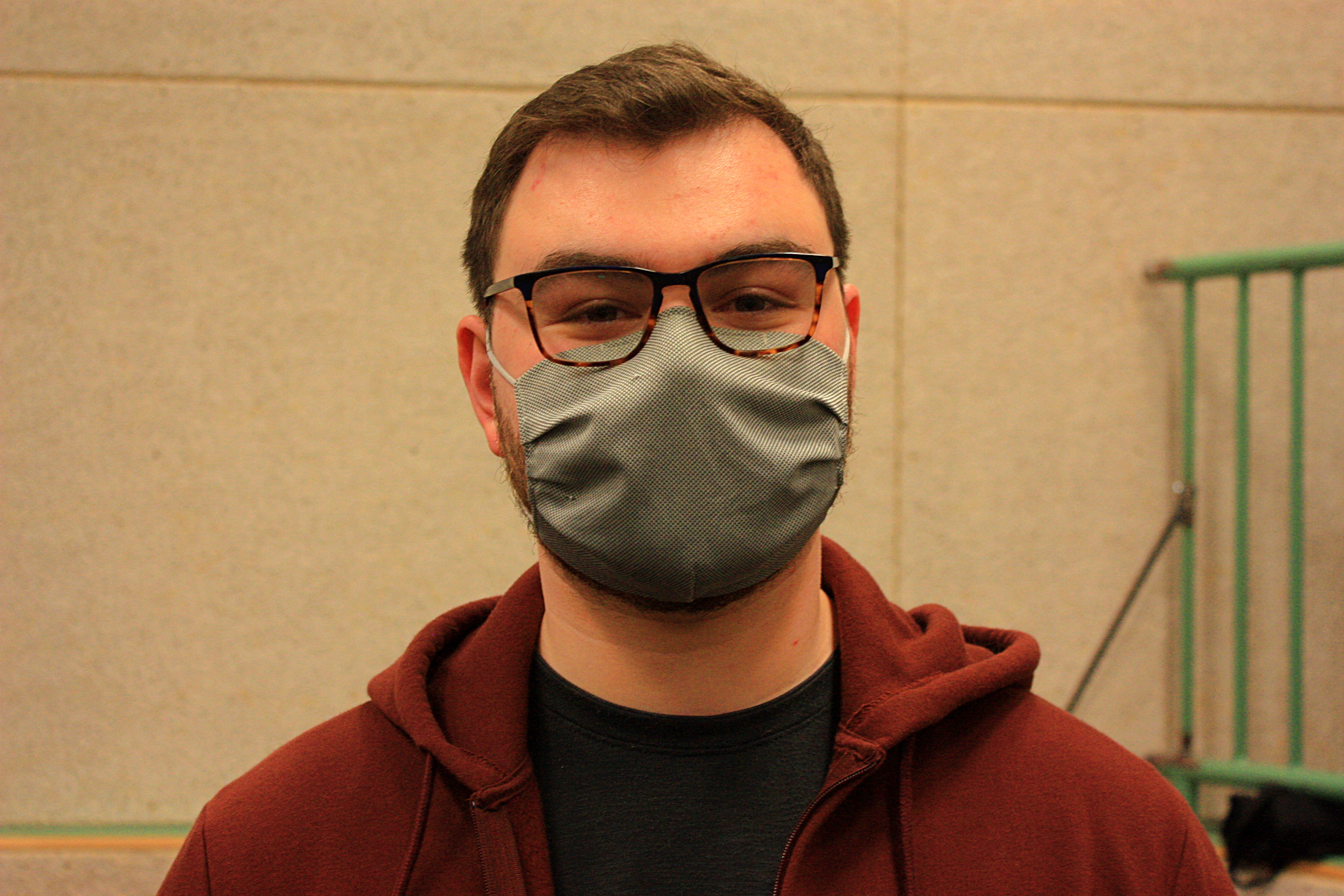
Nathan Richardson, junior jazz studies major, saxophone

“It’s been great. I actually wasn’t here last year; at the school I was at before it was completely online so we didn’t play together at all, so just being able to play in general with other people has been amazing.”

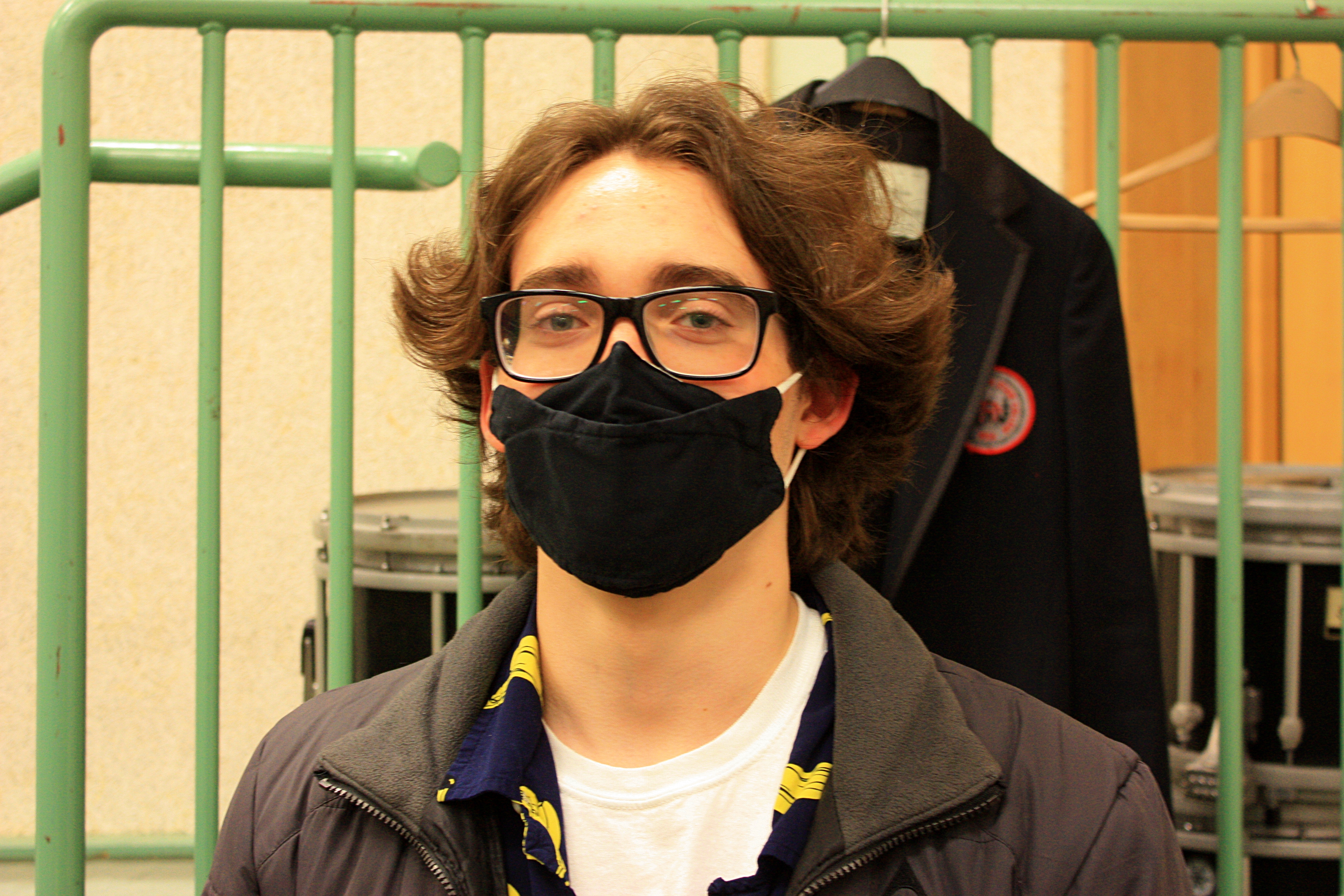
William Murphree, first-year music education major, saxophone

“I think it feels great personally because there are a lot of challenges that come with playing outside … especially when it’s colder, things like intonation, it’s harder to hear other people in the ensemble, it’s harder to blend with people and hear, like, the different intricacies of the pieces that you’re playing, and also it’s just like cold out, so your hands get cold.”

Essence Githens, sophomore music education major, trombone 

“It’s a lot better. Playing outside has its benefits, like being louder and like building up your lungs honestly. But playing inside, I think you really just connect more with the music and it’s easier to hear who’s playing, who’s playing what and blending a lot more. So, I enjoy it.” 

Sorin Santos, first-year music education major, trombone

“It’s very exciting, it changes the way how, like, the ensemble feels because outside it feels like you’re playing out into nothing, almost. But when you’re inside you can hear everybody better and you feel more a part of an ensemble when you’re playing inside and together.” 

Lucas Devon, junior music education major, trumpet

“It feels really nice … I don’t know, like playing outside is fine, but when it gets super cold it’s just like you can really feel it and it just makes everything so miserable, so being inside is super great.”

Contact the author at entertainmenteditor@thewesternhowl.com

Press Release: BIPOC students call on WOU Board of Trustees to meet student needs

Black, Indigenous and Students of Color at Western explain their all encompassing proposal to the WOU Board of Trustees

Makana Waikiki | ASWOU IFC Chair

For Immediate Release

April 3, 2021

Proposal from Black, Indigenous and Students of Color at Western Oregon University Calls on the WOU Board of Trustees and WOU Administration to Meet Student Needs

Monmouth, OR — Black, Indigenous and students of color at Western Oregon University released a comprehensive proposal to the WOU Board of Trustees which they will present at the April 21, 2021 Board Meeting, bringing attention to student needs through funding and re-evaluation of needs that WOU and it’s administration have failed to provide for students, staff, faculty and the community.

The proposal is separated into two categories of student needs at WOU; fiscal and re-evaluation. Over the past several years, students at WOU have shared their frustration due to lack of support through resources from the administration. Students of color continue to be some of the most impacted student groups on this campus and have been advocating for a center on campus that brings them together, that it is a safe space and one that promotes and celebrates the diversity and richness of their cultures. The first fiscal demand is to fund the Freedom Center, a space created by BIPOC students for BIPOC students at WOU. This space will provide study rooms, technology, and a place where students of color can go for support, resources, and most importantly a safe environment on this campus.

Our proposal also addresses the serious need for a post-secondary education at WOU that is affordable, accessible and provides students the resources they need to succeed. The Incidental Fee is an important revenue source that funds vital services, programs, resources, like the food pantry, and employment opportunities for students and staff. These services and programs need to be funded however, it is tied to enrollment and with the decrease in enrollment rates that we continue to witness it leaves areas that provide essential services and resources underfunded. We are asking the Board of Trustees to subsidize the cuts the Incidental Fee Committee (IFC) had to make this year (~$203,000) so that all IFC funded areas that benefit students will be fully funded going into the next academic year.

Through the Incidental Fee Committee’s open hearings, student athletes voiced their concerns that they are in need for new uniforms and gear. There needs to be investments to support the student athletes on our campus that help recruit new students to our campus. We are asking for $122,000 to be allocated to the Student Athletes for their uniforms and gear. This allocation would double each sports’ budget as they are severely underfunded.

This past year we have witnessed increased attacks directed towards communities of color and how this has affected the mental and physical well-being of the students of color on our campus. This university wants to pride itself in its core values of diversity and respect stating that “equity and inclusion are a fundamental basis in human diversity” and yet students of color are the ones demanding and working towards creating the Freedom Center. Students should not be the only group of people on our campus that want to create a safe and welcoming environment; this should be a mission we all strive working towards. The Board can take action to help address this issue by funding a Director of Equity and Inclusion. Funding for this position would be for 2 years and would be hired by a committee of BIPOC students, faculty and staff. This position would address instances of systemic racial and social injustice, support students, staff, and faculty of color in achieving their goals at WOU.

The Board of Trustees must also re-evaluate how faculty and staff are hired. There is a lack of BIPOC representation in the administration, faculty and staff positions. President Fuller must prepare a plan to set a new policy to hire faculty and staff positions, and a plan that includes representation from no less than one BIPOC student, no less than one BIPOC faculty member, and no less than one BIPOC staff member, by the next Board of Trustees meeting. Additionally, the Board of Trustees must reconsider our plan around campus reopening for fall term at their next Board of Trustees meeting, with a dedicated agenda item with 30 minutes of public comment on the matter. The board must also collaborate with ASWOU to hold a series of public forums next Fall 2021, in which students, faculty and staff will be able to provide feedback on the following topics: Campus Public Safety, faculty racism in the classroom, Student Health & Counseling Center, institute first year cultural competency and systematic racism class for all WOU students to take their first year, instituting cultural curriculum into all classes offered for Undergraduate and Graduate degrees in consultation with the Director of Equity and Inclusion, and COVID-19 Response.

This comprehensive proposal from BIPOC students at WOU addresses major concerns WOU students have expressed for years and we urge the Board of Trustees to take action by approving our budget asks and re-evaluation recommendations. It will take all of us — students, faculty, staff, the administration and the Board of Trustees to save our university and restore the level of trust, transparency, accountability, inclusivity and most importantly our sense of community.

For more information, contact ASWOU IFC Chair, Makana Waikiki, at mwaikiki18@mail.wou.edu.


Addendum

April 11th, 2021

“We as a community have put our trust in people and systems that don’t deserve it. We are putting ourselves at risk everyday we get up and try to get an education here at WOU. With the increase of hate crimes, the lack of resources for marginalized communities, and increase in the price and difficulty of higher education, we need the Board of Trustees to prioritize our needs. The students of WOU are bringing this proposal forward, of our fiscal and re-evaluation needs that WOU and it’s administration have failed to provide for their students, staff, faculty, and community. It is time for change.”

— Makana Waikiki (she/they) Student Leader and Student Rights Advocate

Honoring the experiences of BIPOC students across Oregon universities

This Instagram page holds Oregon universities accountable, one post at a time

Natalie‌ ‌Dean‌ ‌|‌ ‌Entertainment‌ ‌Editor‌ ‌ ‌

Though the college experience can be an exciting time for many students, there are inherent stressful experiences that disproportionately affect Black, Indigenous and People of Color students, and their ability to feel safe on campuses. 

One student at Western Oregon University saw the need for a space where BIPOC students can voice their experiences with racism and harassment, so they created the Instagram account @bipocatoregonuniversities. Students from Western Oregon University, University of Oregon and Oregon State University can submit their stories through Google Forms to be posted anonymously on Instagram. 

The creator of this page first saw a need for a safe space over the summer of 2020. They felt compelled to make the account after being profiled for a second time during winter term of 2021, when trying to buy food at the Valsetz Dining Hall. 

They recounted this experience, “To people it may not be a huge deal, but for me when the simplest task of getting food is met with bias and assumptions based upon how I look, it can be difficult to feel welcome in a place you pay thousands of dollars a term to attend. … The purpose of this page is to make sure that universities do not have any room to think they can silence students of color’s voices by creating policies and forms that statistically deter students rather than helping them get the help and resources they need.”

Since the page started on March 1, students across universities have reached out to safely share their experiences, with the creator of the account saying, “So far this experience has been nothing short of phenomenally amazing. I have received overwhelming support from students around the state, as well as faculty, department heads, staff, and employees. I have encountered a particular post that was extremely ignorant and simply uneducated. I made sure to make an example out of what this page was not created to publicize. This page is for students of color, this is a time for particularly white students, staff and faculty to acknowledge and truly listen to what students on this campus have endured.”

Additionally, “There are always ways for universities to grow and provide support for BIPOC students, such as hiring students of color for student work and leadership positions, a well-funded diversity center and additional supervisors, advisors and counselors of color.

There are many ways white students and staff can uplift BIPOC students, such as by “understand(ing) why our country, and why our world is the way it is. If you see something that is wrong, don’t just stand there and let it happen. Speak up, and just do the right thing. It’s okay to make good trouble.”

Students deserve to feel safe and represented on their campuses, and Instagram pages such as @bipocatoregonuniversities provide a space for students to be heard until the colleges decide to take further measures to address racism at their own schools.

Contact the author at ndean17@wou.edu