


Mount Hood

Giving Day

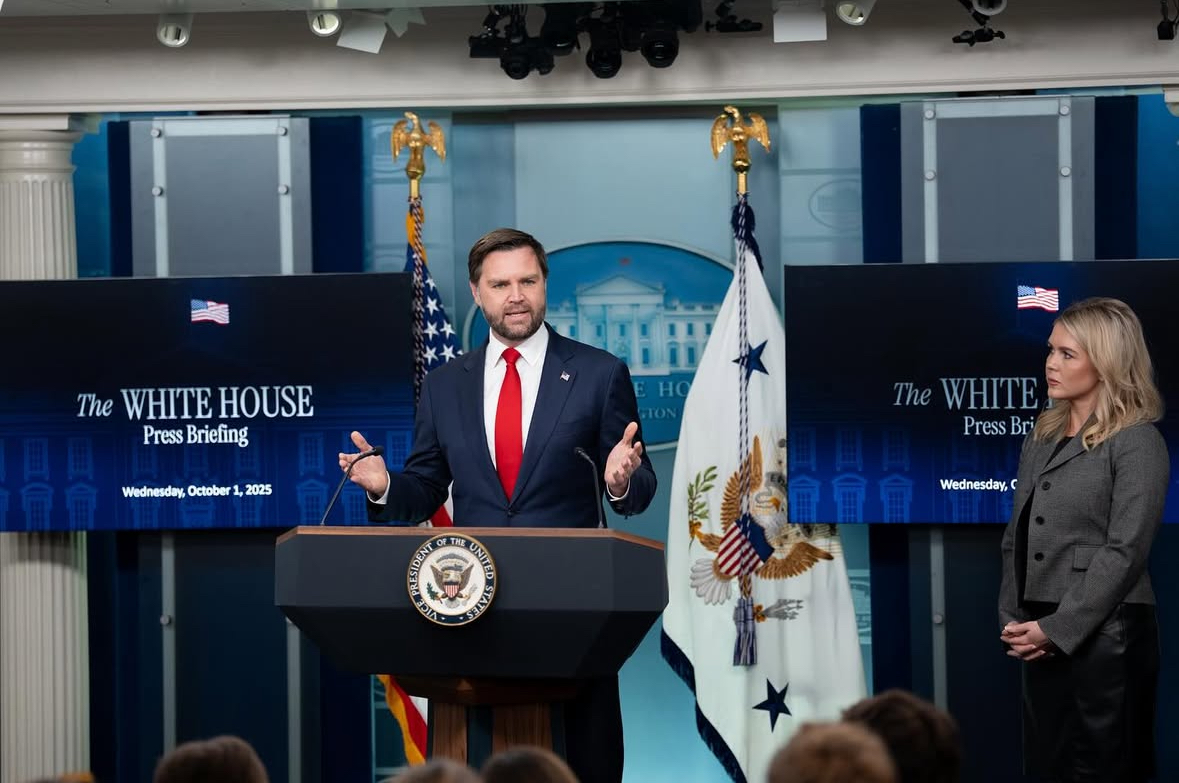
A photo of Western’s 2026 Giving Day logo. | Photo courtesy of Dave Beasley

Jan. 21 2026 | Abbi Duhart | News Editor

Giving Day — most often taking place the Tuesday after Thanksgiving — is a large 24-hour fundraising event, though many universities do their own Giving Day in the winter or spring. Western’s Giving Day this year will take place the first Tuesday of April, April 7. The date has been moved later than usual this year because in previous years it took place during week nine of Winter term, a time when many students and staff were too busy to participate.

Western’s Giving Day is a crowdfunding day where participating clubs, organizations, teams and departments at Western ask people across the university and beyond to give funds to the university and its organizations.

Any club or organization at Western can choose to participate and raise funds. Those that want to can fill out a Google Form sent in an all-student email from Dave Beasley. Once they do, they will get their own webpage on Western’s Giving Day website that features photos and a description of their organization with a button for donors to donate. 

New this year, participating organizations and clubs will have to pick at least two “influencers” — essentially representatives — to attend a training. The designated influencers will also receive a special link specifically for them that they can share to whomever they want. The link will go straight to the website for their organization. Influencers can use this link to send to potential donors through means of text, email, social media and others. The hope from WOU Foundation — the organizers of the event — is that influencers will be those who are most active on Giving Day to raise funds.

The training that influencers will attend is expected to last about 30-45 minutes, and six different training sessions will be offered to account for different availability. Each session will be the same, so influencers can choose to attend the one that fits best with their schedule. The training will consist of how to go about asking people to donate, and example scripts will be shared, as well as potential ideas for posting on social media. There are also many online features through the website that influencers will be made aware of. Those who attend the training will receive a free T-shirt.

This year, participating clubs and organizations will also be required to make a short video to post on their webpage and provide to donors. The Foundation found that in previous years, groups that were more involved raised more funds, so a large goal this year is to get groups to participate more actively. This video should be 30-45 seconds and should explain why donors should give to that organization in a creative way. A big goal for the video is also to include as many different people from the organization as possible. 

“Everybody wants to see their grandson or granddaughter or their niece or their nephew in the video, right?” explained Dave Beasley, director of development, annual giving & sponsorships. Family members and friends may be more likely to donate to an organization if they see a person they know in the video, even if it’s just a wide shot of everyone at the end. There will also be an optional training for influencers to attend on tips and tricks for making a video.

Anyone can be a donor, and donations can consist of any amount. “We’re grateful for every single gift we get,” Beasley added. However, donor intent rules all — meaning the donor picks where they want their money to go. If they make a general donation to the club or organization, the members can use the funds in whatever way that helps them. If the donor specifies what they want the funds to be used for, the organization has to follow that. For example, if a donation was made to a club for a club scholarship they offer, the funds would have to be used for the scholarship. 

The way in which donations are made was optimized specifically for mobile devices this year. At the bottom of the website, there will be a red gift button where donors can fill out their information and make a gift. In previous years, the only way to pay was through credit card, but this year, donors can use credit cards, ACH transfers, Apple Pay, Google Pay and Cash App. Additionally, donors have the option now to do recurring gifts with a credit card. Donors can also still write checks and send them through the mail.

In past years, WOU Foundation had a dollar goal for Giving Day, but this year, they have a donor goal, meaning they want to get as many donors as possible. Beasley explained, “What we’re really trying to do with Giving Day is to bring new donors to the university, whether that’s alums, whether that’s people who are new parents to the university, or newly aware of the university, or newly in partnership with us or whatever it is.” Additionally, they will send out letters to previous donors to advertise for Giving Day again.

The Foundation is also working on “the big gift” this year. In other words, they are working with larger donors — those that donate thousands — to secure commitments of large sums of money that will be donated to the university if Western receives 500 donors. Any amount of donation counts as a donor in order to work toward receiving that “big gift.” The hope is that the challenge will also help clubs and organizations advertise to donors — if they donate to the organization, they also help the university work toward this sizable contribution.

Community service will also be added to Giving Day this year. WOU Foundation and everyone who participates understands that Giving Day is asking a lot from the community, and they hope that they can give back in this way. They will be highlighting service projects they’ve participated in throughout the year and will have services happening day-of, such as a blood drive in the Werner University Center and a mini-golf course in the library. The golf course will be built by members, and to play there will be some sort of requirement, such as making a post on social media about Giving Day.

There will be a prize for the student who raises the most money, as well as a prize for the student who receives the most donors.

Beasley added that he understands it can be hard to ask people for money, but to try not to worry about it because it’s a good opportunity to raise funds for a good cause. “People do care about you. They do want to support what you’re doing. And those can all be great motivations to give, but people give because somebody asks them to.”

Contact the author at howlnews@wou.edu
The bridge to student success

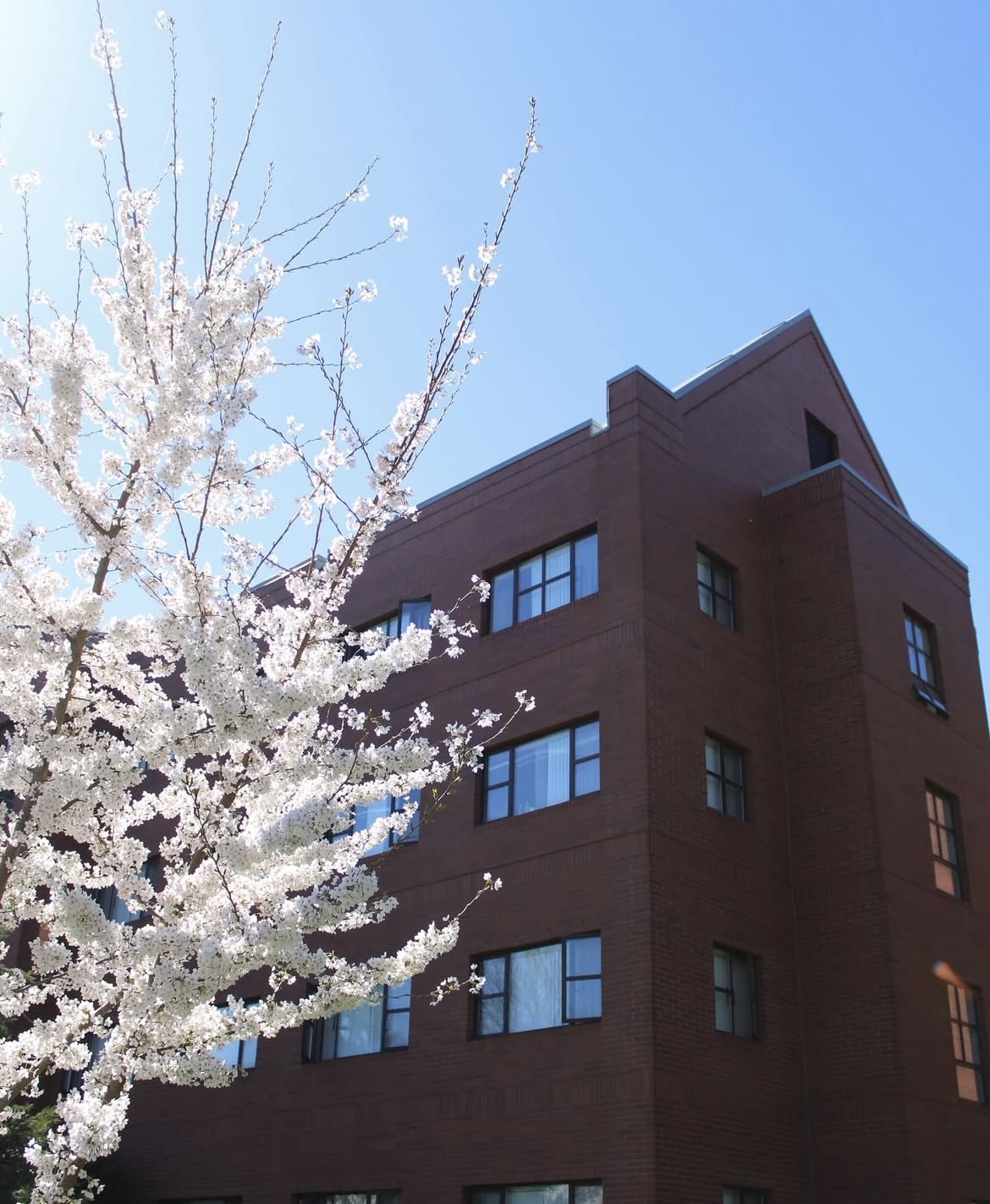
A photo of a cherry blossom tree at Western. | Photo from @woustudents on instagram

Jan. 21 2026 | Abbi Duhart | News Editor

Last Fall term, I ran into an issue with a professor that others may relate to regarding an overwhelming lack of support for students. During week 10 of the term, my friend experienced an unforeseen health circumstance out of the blue that left her with difficulties in completing an assignment. Her circumstance was extreme enough that it seemed it qualified for an extension, and being that she turned in everything else throughout the term on time, she asked the professor for one. The assignment was due on a Friday and she asked for a two-day extension, making it due on Sunday. This appeared to be very reasonable considering what she was going through, yet, the response she received from the professor was that they would not give her an extension, and instead she would have to take an incomplete grade for the class. 

Upon hearing this, I felt very frustrated both by the response my friend received and the professor. I had also taken classes from this professor and ran into several issues with them such as unfair grading and unclear instruction. In this situation though, neither of us really knew what to do or who to reach out to for help. In a last ditch effort, I decided to reach out to a faculty member that I trust to seek advice on the situation. On my friend’s behalf, this faculty member got in touch with the Student Affairs Office, the campus resource that would have been the appropriate choice for the situation, seeking help to advocate for the student. The response given from Malissa Larson — the dean of students — said that the student would have to go through the Academic Affairs Office’s academic complaint process, a form used to report issues surrounding things like grades, assignments and syllabi. The submission would allow for the division chair to schedule a meeting with the student to discuss the concern and facilitate a solution. 


Based on definitions, Academic Affairs deals with instances relating to how a class is structured or how a professor teaches, and Student Affairs should be the place to go for support in personal issues. Yet, in practice, the structure in place leaves gaps in which students are left with no personal advocate and indirect support avenues. Academic Affairs only provides them with the option of submitting a complaint — something that could take time and wouldn’t do anything for the current situation — and, in our case, Student Affairs simply referred us to Academic Affairs. Instead of working together to foster student success, these two crucial campus departments are skirting past the necessity of direct lines of communication for student support. We then realized this explains the root of the issue: there is no good resource to help students with conflicts surrounding short-term crisis circumstances like ours.

Additionally, a quick review of the professional duties of a dean of students indicates someone who connects student needs with university administration, most often in times of crises and emergency support, and ultimately strives for student development and success. Under further specificities, responsibilities for a dean of students also include providing support during crises and emergencies, both medical and personal, as well as advocating for students by working with faculty and staff to meet student needs. This description fits exactly what was needed in our situation. We needed someone who could support the student through their crisis by examining the student’s needs and communicating that with the professor and/or university administration. 

Dean Larson responded to the crisis by deferring my friend to the academic complaint process. Post-submission of the form, Larson said that students are encouraged to connect with the college dean, followed by the provost. She concluded her message by saying, “While I appreciate that someone in Student Affairs used to be an advocate for this type of issue in the past, many systems at WOU have changed. When it comes down to faculty concerns like this one, there is little Student Affairs can do.” 

While Larson presented going to the provost as an option, it’s unclear what help the provost and college dean would provide or how long it would take; additionally, it seems nonsensical to reach out to the provost over a professor-student conflict. Furthermore, it appears that there’s a missing role that could have provided support that no longer exists.

After hearing this response, we decided to do a bit of research. Looking at Western’s mission statement, one of the core values of the mission statement, entitled “Fostering Accessibility,”
states that Western works to “ensure inclusivity and eliminate barriers in our physical, social, and learning environments. We are dedicated to continuous improvement so that every member of our community can engage, contribute, and succeed.” This acutely pointed to the fact that academic success, no matter the circumstances, is one of Western’s biggest goals. 

It is unfair to students who go through these things that they lack direct and immediate access to support systems when their academics are impacted by personal crises.

After this experience, I feel that instead of continually seeking to eliminate barriers, Western is building barriers. As students continue to go through difficult situations when they arise and live this same version of events that leave them feeling defeated and angry, I only hope that the university once again utilizes Student Affairs, a crucial resource, in the way it is designed for: a place for students to go in times of crisis when they need urgent support. Ultimately, I hope that Western will once again grasp the great need for a resource that bridges the gap between academics and student success.


Contact the author at howlnews@wou.edu
 

Todd Hall

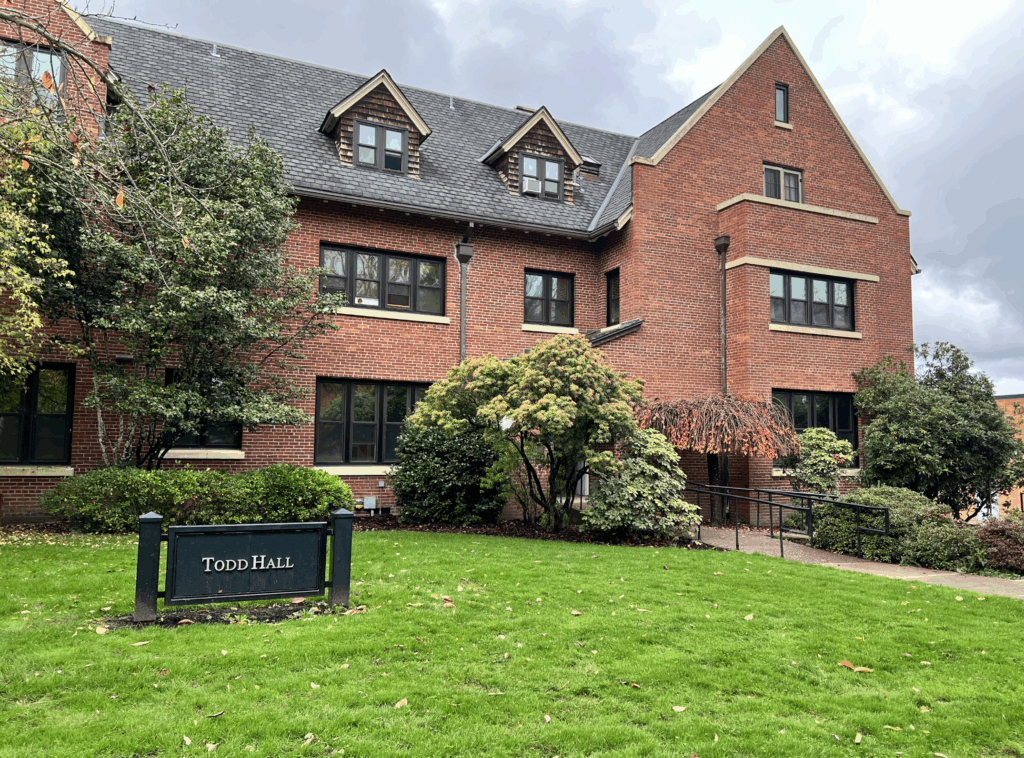
A photo of Todd Hall | Photo by Abbi Duhart

Nov. 19 2025 | Abbi Duhart | News Editor

Todd Hall was built in 1912 and was originally 10,800 square feet, costing about $50,000 — equivalent to $1.65 million today — to build. With its steep roof, small glass windows, red brick detailing and chimney, the building was constructed in a Tudor style, common for the time period. The original purpose of Todd Hall was to house students on campus, with students starting to move in in 1913.
In 1921, additional dorm rooms were added to the building along with a second dining room, and later in the same year renovations took place to add the West Wing, the Music Room and the Arcade. The kitchen and dining room were moved to the new Student Center in 1960 and the space was transformed to only encompass dorm rooms, a living room and two study rooms. This remodel cost about $31,000. The building started housing the Teaching Research Division in the 1970s, until it eventually became the Todd Hall we know with classrooms, offices and PsychPAC.
Todd Hall received its namesake from Jessica Todd, the first dean of women and the first director of dormitories at Western. She was born in 1869 in Beaver Falls, Pennsylvania, and moved to Monmouth in 1912 when she became the supervisor of critic teachers for Monmouth Training School. When Todd moved to Monmouth and started working at Western, she recognized a need for a dormitory on campus and helped petition to the state for funds to build a women’s dorm, ultimately leading to the construction of Todd Hall.
In 1926, she received an honorary baccalaureate in recognition for her exceptional work on campus. When she eventually retired in 1931, the Oregon State Board of Education unanimously agreed to name the dormitory she directed after her, thus creating Todd Hall.
Jessica Todd was a strong advocate for women living on campus, but was known for her very strict nature. Her dormitory was strictly an all-girls dorm, and she was often reported to push her teachings of how to be a “proper woman” onto the girls living in her dormitory. She would promptly lock the dormitory doors right at curfew and make her residents say goodbye to their dates right before she did so. For these reasons, the girls in her residence would often be known to sneak boys in through the basement — which was then the laundry room.
Jessica Todd eventually died in 1944, but it is speculated that her spirit may live on. Rumors have spread around campus that her ghost still lives in Todd Hall to this day, and students often report strange occurrences like hearing footsteps or seeing lights flicker. Most of her ghost sightings originate from the bathroom because it was the room that used to be her living space. It’s also theorized that her ghost targets men specifically because her building was an all-girls dormitory and she doesn’t like men inside.
Whether these speculations are true or not, Jessica Todd was one of the big reasons women were able to have a place to live on campus, and paved the way for the historic and unique Todd Hall known today.

Contact the author at howlnews@mail.wou.edu

Push for in-person

A photo of a student study group in the Hamersly library. Pictured left to right: Kalyn Gambill (junior), Preet Dhaliwal (senior) and Richard Loos (junior). | Photo by Hannah Field

Nov. 19 2025 | Hannah Field | Editor-in-Chief

Starting Jan. 5, 2026, all staff members will be required to work on campus five days a week due to a request by Western president, Jesse Peters. The request excludes faculty, meaning professors, but includes all other full-time employees at Western, such as janitorial staff, advisers, counselors, administrators and others.

Any part-time staff member may review their hours with their supervisor, who will then, on a case-by-case basis, determine the best course of action for the staff member. No further information was disclosed regarding the new rule and the effects of the changes are yet to be seen until Winter term begins.

According to Western spokesperson Maureen Brakke, faculty are encouraged to be on campus and communicate with the community as much as possible. With that in mind, the university is aware of additional responsibilities connected to teaching, scholarship and service, leading to greater flexibility for faculty hours. Many professors on campus are long-distance, either via commute or purely teaching online. While the potential of that changing seems unlikely, Western in the new year will be pushing toward in-person classes more than ever before.

“This decision comes in light of WOU’s strong tradition of in-person classroom instruction, with many faculty and students expressing a preference for enhanced face-to-face learning experiences,” said Brakke.

With in-person classes as one of the main priorities of Western at this time, President Peters also requested that the Academic Affairs Division assess undergraduate courses and determine which should be offered as hybrid or fully online options. Considering previous statements from Western, it’s likely that fewer online courses will be available.

Those changes, however, have no announced timeline. The faculty will complete an audit of online and hybrid classes by the end of Winter term, which will then offer more information to the school about maintaining or altering those as online options.

With that information being gathered at the end of March, it’s unlikely that any major changes will take place in the Spring term of 2026 following the week-long break.

“Nothing will be changing immediately,” said Brakke. 


Contact the author at howleditorinchief@mail.wou.edu


Shutdown guide

A photo of Vice President JD Vance taking questions regarding the government shutdown at a press briefing. | Photo from @whitehouse and @vp on Instagram

Oct 29 2025 | Hannah Field | Editor-in-Chief

On Oct. 1, the United States government ceased its operations and entered a shutdown, following Congress’ failure to pass the bills necessary to fund those operations. Republicans and Democrats failed to agree on how the money would be used throughout the government, resulting in the shutdown, limiting governmental operations across the country and endangering certain benefits for millions of Americans.

For the most part, students remain unaffected by the shutdown. Western students can continue to attend class and participate in their typical activities, but there may be some instances where students are impacted.

It is expected that thousands of Oregonians will lose their food stamp benefits, known as SNAP, after Oct. 31 due to the stalled funding. While most receiving benefits are not college students, the students who do receive food stamps will lose their access alongside an estimated 41 million Americans.

Western students who have compromised food aid due to the shutdown are encouraged to connect with resources on campus, such as Abby’s House and the Food Pantry, to avoid further food insecurity. Food banks are expected to be heavily utilized following Nov. 1, meaning resources may be limited across the country.

Another way students may be impacted is through travel. Demand for air traffic controllers has been high since well before the government shutdown, but now many are not coming to work, despite being considered essential workers — all of whom are expected to work without pay during government shutdowns. Due to the lack of staffing, many flights are experiencing cancellations or delays, namely at major U.S. airports such as Newark, Phoenix, Nashville, Dallas, Denver, Las Vegas and Burbank, and likely more as the shutdown progresses. Security lines through checkpoints at airports may be longer than normal as well.

Thankfully for students, funding for FAFSA, student loans and Pell Grants has not been suspended. Federal grants awarded to schools will continue, but new grants may face delays. Students across the country may be let go from work-study jobs depending on funding.

While many things are still up in the air regarding the government’s funding, one thing is certain: the longer the shutdown, the more it will affect. Millions of Americans on SNAP will continue without benefits, essential workers will keep working for free and travelers will face further roadblocks. 


Contact the author at howleditorinchief@mail.wou.edu

Hoaxes

February 5, 2025

Written by: Hannah Field | Editor-in-Chief

Content warning: this article discusses violence

America, in the last few weeks, has been swept by bomb threats — hoaxes that close schools down, reroute police attention and cause panic for thousands.

Late into the evening Jan. 29, Albany Options School received an email informing them of a bomb. On Jan. 30, the school’s staff discovered the email and informed the local police department, leading to a thorough sweep of the school premises, as well as its neighboring elementary school, Sunrise Elementary. Officials from Greater Albany Public Schools deemed nothing suspicious, and allowed for a typical school day.

Albany Police Department, as well as the school district, assured the public that an investigation is underway aiming to identify where the threat came from. They posted online Jan. 30, “We saw a lot of incorrect information on social media about the emailed bomb threat to Greater Albany Public Schools this morning. The situation was fluid, found to be a spoof email attack (per the FBI) and GAPS notified families from the two schools as soon as they had correct and pertinent information … We take all threats seriously and work together with our partners to ensure the safety of all students and staff.”

Reflected in news across the country, bomb threats are making headlines. Notably, a Utah elementary school — Timpanogos Elementary School — was recently investigated due to an unclear threat made right after school was dismissed for the day Monday, Feb. 3. The Provo Police Department swept the school using K9 units, finding nothing suspicious, but have continued to investigate.

Allen County Schools, out of Scottsville, Kentucky, declared Saturday, Feb. 1, that a threat was made against Allen County-Scottsville High School, eventually stated to be non-credible after a thorough sweep of the premises and surrounding area utilizing K9 units.

At approximately 5 p.m. Monday, Feb. 3, a CVS Pharmacy in Sylva, North Carolina, was cleared after a bomb threat was alleged. The neighboring Burger King was evacuated as well as the CVS. Traffic was rerouted to avoid the area as investigators cleared the scene — another hoax.

Authorities in Myrtle Beach, South Carolina, arrested 35-year-old Christopher Newman in connection to a bomb threat that was called into Myrtle Beach International Airport. The bomb threat caused panic across the airport, deplaning multiple aircrafts after pilots were contacted. Newman is being held without bond.

According to America’s Cyber Defense Agency, “The primary reason for employing bomb threats when no explosive device is present is to disrupt, distract and harass.”

Facilities receiving bomb threats are encouraged to stay on the phone for as long as possible, write down exact wording and fill out a bomb threat checklist offered by the cyber defense agency. If not called in but received digitally, it is recommended to leave the message open on the device, take a screenshot, copy the message and title and note the date and time. If written, handle the note as little as possible. Note the date, time and location of the threat and keep the written threat in a secure spot so police may investigate it as naturally as possible.

Most bomb threats — nearly 90% — are expected to be hoaxes. Despite the fact, all threats are to be treated as if real, so as to prevent injury.

All bomb threats should be reported to law enforcement agencies.

A 17-year-old student of Beekman Charter School in Bastrop, Louisiana, was arrested in late January after multiple bomb threats were made over email against the educational facility. All Morehouse Parish schools closed Monday, Feb. 3, and Tuesday, Feb. 4 regarding the incidents.

Mayor of Bastrop, Betty Alford-Olive, stated, “As Mayor, I am asking all citizens to be vigilant of your surroundings and if you see something suspicious, please call 911. Please stay safe.”

Investigations are still underway.

The United States Naval Academy in Annapolis, Maryland, closed after multiple bomb threats were made toward the North Severn Complex. All affected areas were cleared and no threat was located, with the lockdown lifted Jan. 31. 

Nov. 2024, during the election, faced multiple Russian-sourced bomb threats to polling places in multiple states, such as Georgia, Michigan, Arizona, Wisconsin and Pennsylvania. The FBI claimed that none of the threats seemed legitimate and declared the investigation to be at the top of their priority list. At least two polling spots in the state of Georgia were evacuated but opened again after 30 minutes. The Russian embassy in Washington protested allegations of Russian interference — labeling them “malicious slander.”

Overall, more than two dozen threats against polling stations were made.

Contact the author at howleditorinchief@mail.wou.edu

ASWOU

February 5, 2025

Written by: Sadie Latimer | News Editor

The Associated Students of Western — ASWOU — is Western’s official student government. It is run by students, for students. 

ASWOU is extremely active on campus, representing students’ interests and needs, overseeing clubs, putting together programs on campus and ensuring that students have their voices heard. 

ASWOU President Brenda Rocio Martinezis a fourth-year student at Western, double majoring in communications and public policy and administration. 

“My role is (mainly) representing students in general and having their best interest in mind,” Rocio Martinez said. As a student herself, Rocio Martinez is always looking for ways to support her peers. “We always like to put our ear to the ground and see (what students want and need.)”

ASWOU not only supports individual students but student clubs as well. Joining a club is how Rocio Martinez first got involved on campus, followed by her becoming a justice in the judicial branch of ASWOU. After that, she was ASWOU’s director of PR, then, finally, the president. 

Rocio Martinez knows the importance of getting involved through clubs on campus, so she strives to make sure the clubs have the resources, training and support they need. One of her goals is to allow the clubs to collaborate and connect with each other. 

“I just want to be able to serve students,” Rocio Martinez said. “We are student-funded, so we’re here for (students).” ASWOU is funded by the IFC — Incidental Fee Committee. Students pay a set amount as part of their tuition and fees, which goes towards several student activities on campus, including but not limited to ASWOU, student media, Abby’s House, WOLF Ride, athletics, campus recreation, childcare and more.

Every person involved in ASWOU is dedicated to making their fellow students’ voices heard. “People in higher positions like faculty and staff are wanting the students’ perspective, and ASWOU can give that perspective,” Rocio Martinez said. 

“Elections should be coming pretty soon for anyone who wants my position in the future. And I will say this: it’s not hard, it’s fun,” Rocio Martinez said. She loves getting to be more involved in her community as ASWOU president. According to Rocio Martinez, the position has helped her become a better leader. It has also been helpful for her field of study and will likely apply to the career path she wishes to follow. ASWOU elections will begin at the start of spring term. For students who wish to run for election, applications open March 8. 

ASWOU has weekly public meetings on Fridays in the Calapooia room of the Werner University Center. The executive branch of ASWOU holds their meeting at 12 p.m. and the senate meets at 2 p.m. 

The judicial branch’s meetings are not weekly, instead they are held “when there’s work to do,” Rocio Martinez said. “That entails rules being broken by any clubs or any students, if there are any concerns or if people just want an interpretation of a law.”

For students who have concerns, comments or questions, an ASWOU senate meeting is the place to be. The senate focuses on things such as bylaws, getting involved with the clubs they oversee and the needs of students. 

If students have large concerns, they can fill out an ASWOU student feedback form, which goes to the senate. The form is located on the student portal under the My Programs tab. 

Rocio Martinez knows how difficult it is to advocate for every student, which is why it is important for students to bring their concerns and feedback to ASWOU’s attention. A community thrives when everyone supports each other and works together to make positive changes. 

“We ensure that students are well represented if they feel anything should change,” Rocio Martinez said. “Change comes with many people. It takes a village to make true change.”

Contact the author at howlnews@mail.wou.edu

Staffs favorite movies

Written by: Sierra Porter | Staff Writer

“The Western Howl” staff is filled with crazy cool personalities, a variety of talents and a plethora of different hobbies and passions. One thing is for sure: we are all movie fanatics and live vicariously through the characters we love. Here are the staff’s favorite movies and why we continue to enjoy them. 

Editor in Chief, Gretchen Sims, expresses her love for the movie “Braveheart.” Sims says, “I actually learned how to play the main theme ‘For the Love of a Princess’ from Braveheart early on in high school. I fell in love with the score and convinced my parents to let me watch it. My mom isn’t one for gore, but I loved the film and it is now one of my all-time favorites!” 

Linden Loren, coordinator, advising & virtual engagement, dubbed the “dad” of the Howl, recommends “LinkedIn: The Movie.” All one needs is a LinkedIn account and some salt to snack on — truly inspiring. 

The Howl’s Digital Media Manager, Ruth Simonsen’s, favorite movie is “Predestination,” a sci-fi thriller released in 2014. Simonsen says, “This movie made me rethink my life and everything I believed in. It brought to light how frail yet beautiful humanity is, and how one truly needs to make the most of it while one has it. Trust oneself and always grow, but give oneself the grace to recognize that one is a completely different person in every phase of your life, never to be the same person twice.” 

Cami Ansley, Copy Editor, deems “Crazy Rich Asians” as her favorite movie. Ansley says, “This movie was really relatable to me as an Asian American and the ending was so perfect and satisfying to watch. It was also nice to see an all Asian cast with actors and actresses that I’d never seen before.”

Head Designer Addie Floyd’s favorite movie is “Tangled,” based on the timeless story of Rapunzel and her long hair. Floyd expressed, “This movie is my comfort movie. It just brings me so much joy. No matter the mood I’m in, Tangled can always cheer me up.” 

Our other amazing Designer, Sophie Taylor, says her movie favorite is “Coraline,” released in 2009. Taylor says, “Coraline” is one of the earliest movies I ever remember watching. Ever since I was little, the claymation animation style has always captured my attention. There are so many subtle hints and clues that foreshadow the movie that every time I watch it, I find something new. There have been so many conspiracy theories and rabbit holes to go down. Keep Portland weird.” 

Photo Editor Quinlan Elise has a short and sweet response on why she loves “Napoleon Dynamite:” “there is no other choice.” 

Hannah Field, the Howl’s News Editor’s favorite movie is “Fox and The Hound.” Field recalls some of her favorite memories with the film, “I can remember watching this movie on VHS tape in the garage while my dad worked on his cars. I would sit on a stool or a tiny chair with my neck craned upward at a 120 degree angle looking at that tiny box TV playing my favorite movie. I think it’s an underrated but beautiful piece of work and hope everyone has the pleasure of watching it one day.”

Claire Phillips, our Entertainment Editor’s movie of choice is “Fried Green Tomatoes,” released in 1991. Phillips says, “This historical classic takes on many heavy topics that are still relevant today. It will make one cry, it will make one laugh and above all, it will make one crave some good Southern food.” 

Sports Editor, Jaylin Hardin, says her favorite movie is “The Lord of the Rings: The Two Towers.” Hardin expressed, “I’ve loved the trilogy since I was a kid, but ‘The Two Towers’ was always my favorite because I love the plot. Extended edition just makes it so much better because it adds so many more details from the books.” 

Creative Lifestyle Editor, Liberty Miller expresses her love for “The Sorcerers Apprentice,” released in 2010. Miller says, “This movie was one of the more psychologically formative movies of my younger years. Nicholas Cage and Jay Baruchel create a seamless duo performance and take on their roles to the point where they become their character. The storyline was intriguing and the pace of the movie created the perfect elements of suspense — the soundtrack was also incredible, with ‘Secrets’ by OneRepublic still being one of my all-time favorite songs. My favorite scene from the movie included that song being played while the Tesla Coils are run by David Stutler.” Miller also gives a special shout-out to “Crazy Rich Asians” as a close second. 

Taylor Duff, one of our great Staff Writers, chose the movie “SuperBad,” released in 2007, as her movie favorite. Duff said, “I love this comedy that explores growing up and learning to just be oneself. Plus I still crack up every time I watch. Viewer discretion is advised.” 

Talented Freelancer Lili Minato expresses her love for “Twin Peaks: Fire Walk with Me.” Minato says, “At its release, ‘Twin Peaks: Fire Walk with Me’ was considered a bad prequel to its beloved predecessor, ‘Twin Peaks.’ Now, it has a cult following of many who enjoy the story of Laura Palmer. It’s a film full of bizarre scenes and a devastating plotline. In true David Lynch fashion, it is weird and wonderful.” 

As for myself, my favorite movie is “The Karate Kid,” released in 1984. There are so many reasons why this is my favorite movie but long story short, I love an underdog story. Not to mention the amazing soundtrack. 

Contact the author at howlstaffwriter@wou.edu