


21 de enero del 2026 | Hannah Field | Jefa de Editacion
Estadísticas recientes de librerías demuestran que la popularidad de los negocios locales en Estados Unidos está aumentando en lugar de disminuir cinco años después del cierre por el coronavirus, con comunidades uniéndose en apoyo y el panorama de las librerías adaptándose para satisfacer las demandas modernas.
La Asociación Estadounidense de Libreros, o ABA, informó un aumento del 18% en su membresía y la apertura de 323 nuevas tiendas físicas, temporales y móviles en todo Estados Unidos en su informe anual del 2024. Señalaron que 2024 tuvo “el Día de la Librería Independiente más exitoso hasta la fecha.”
Según la Escuela de Negocios de Harvard, a pesar de que las librerías locales lucharon por mantenerse a flote durante las regulaciones de la pandemia que limitaron las operaciones comerciales y mientras corporaciones como Amazon dominaban la industria, el localismo se ha
convertido en un movimiento social que ha vuelto a colocar a las librerías independientes en primer plano. Las comunidades han comenzado a comprar en pequeño y apoyar a negocios locales tras boicots recientes contra empresas como Starbucks, Target y Amazon por diversas prácticas, incluidos sentimientos antisindicales, falta de responsabilidad corporativa e inclusión en diversidad.
Abe Richmond, propietario de Browsers’ Bookstore ubicada en Albany, Oregón, dijo, “Yo trabajaba aquí durante la pandemia. Fue obviamente extraño, y cerramos durante varios meses, pero nuestra base de clientes nos apoyó. Hacíamos entregas en la banqueta, pagaban por PayPal o Instagram, y luego empacábamos sus libros y los dejábamos en el porche.”
Richmond compró Browsers’ al dueño anterior después de graduarse de la Universidad Estatal de Oregón, donde había sido empleado, y ha estado al frente del negocio durante más de tres años. Aunque la librería enfrentó la naturaleza precaria de ser un pequeño negocio durante la pandemia, los clientes también se han adaptado bien a la nueva administración — reconociendo a Richmond en la ciudad y formando una relación cercana con él.
En cuanto a Amazon y Barnes & Noble, las librerías de reventa como Browsers’ sufren menos de lo que uno podría pensar. “Me gustan porque la gente gasta $40 en un libro nuevo de tapa dura en Salem, lo lee y luego no sabe qué hacer con él, así que lo traen aquí. Y yo obtengo un libro casi nuevo y en buen estado.”
Los clientes que dejan libros pueden recibir crédito en la tienda para futuras compras. Además, Richmond exhibe autores locales y mercancía creada por artistas cercanos. “Es contraintuitivo. Porque ¿quién es esta persona, saves? Pero cuando les dices, ‘Oye, vive en Albany o Corvallis,’
la gente dice, ‘Oh, lo leeré solo por eso.’ Si fuera otro libro desconocido, probablemente lo pasarían por alto.”
También destacó el agradable sentido de comunidad cuando los autores organizan firmas de libros en la tienda. Además, implementó un buzón para dejar rollos de película a través de Light Rider Studios, para que los clientes puedan revelarlos.
Las librerías han estado cambiando desde la década de 1970, con un 43% de las librerías locales cerrando entre 1995 y 2000, algo similar a la disminución de ventas físicas durante el auge del Kindle a finales de los 2000 y en 2019, cuando Amazon vendía más de la mitad de todos los libros en Estados Unidos. Jeff Bezos, dueño de Amazon, afirmó, “Amazon no le está sucediendo al negocio de los libros. El futuro le está sucediendo al negocio de los libros.”
Amazon fue fundada por Bezos en 1994 como librería en línea. Desde entonces, la ABA la ha calificado como un monopolio sin control, afirmando que sofoca la competencia y tiene un impacto enormemente negativo en el mercado de libros. Amazon aceleró su crecimiento atrayendo clientes y acumulando riqueza al no cumplir completamente con regulaciones fiscales
y ofreciendo compras libres de impuestos.
Amazon también ofrece libros con descuento con frecuencia, lo que perjudica a negocios que deben vender a precio completo para sobrevivir. Muchos libreros se han visto obligados a reducir personal para mantenerse a flote — lo que podría explicar por qué Richmond y Sydney-Anne Graves son los únicos trabajadores remunerados en sus respectivas librerías, Browsers’ y Monarch Books.
Aun así, ambos han tenido éxito. Según Associated Press, se preveía la apertura de más de 200 librerías en todo el país entre 2023 y 2025.
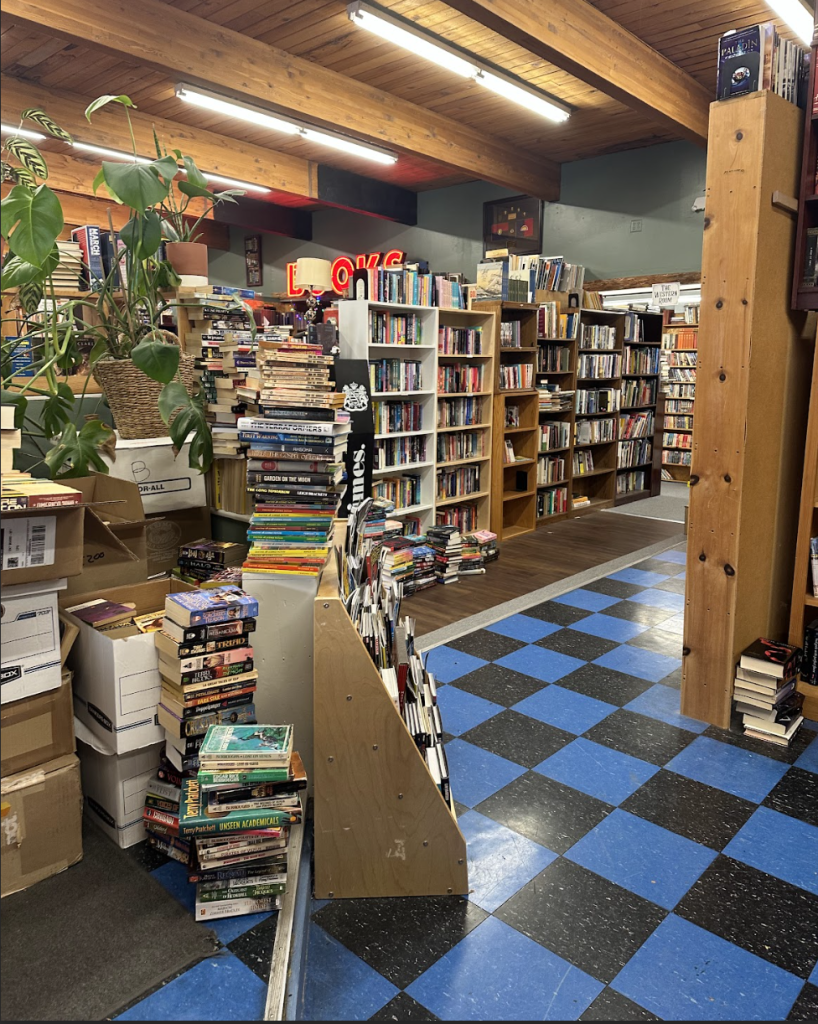
Monarch Books abrió en abril del 2024 en Lebanon, Oregón, propiedad de y fundada por Sydney-Anne Graves, quien aún estaba en la secundaria cuando conoció al arrendador del edificio donde ahora se ubica la tienda. Esa conversación la impulsó a decirle a su mamá: “Mamá, voy a comprar una librería.”
Después de recorrer el edificio — y, según se dice, enamorarse de él — y dedicar varias semanas a una limpieza profunda, Monarch Books cobró vida bajo la nueva propiedad y la atenta mirada de Graves.
“Abrimos, y (ese) primer día, hubo muchísima gente,” dijo Graves. “Y pensé, ‘Bueno, esto podría funcionar.’ Estaba realmente lleno. Y desde entonces, he ido incorporando más inventario poco a poco, decorando, dándole mi toque personal. Me encantan los colores y las plantas, y todavía tengo muchas ideas para el local, pero ha cambiado muchísimo desde cómo era al principio.”
Richmond expresó su aprecio por el movimiento anticapitalista del 2025, que llevó a que más compradores locales evitaran Amazon y otros vendedores corporativos. En el actual contexto político y social de Estados Unidos, las empresas locales podrían estar más inclinadas a crear espacios seguros para la comunidad LGBTQ+ y ofrecer una selección de libros inclusiva, a diferencia de las grandes librerías corporativas — lo que podría generar una base de clientes fieles que busquen un centro literario de apoyo y una comunidad con la que identificarse.
La librería Browsers’ Bookstore permanece abierta de forma ininterrumpida bajo la nueva administración de Richmond y mantiene una clientela fiel en las ciudades cercanas. Una parte importante de la interacción con los clientes se basa en las publicaciones en línea y las ventas a través de la página web de Browsers’ Bookstore.
“Vendo mucho (de lo que) publico en Instagram, y la gente me dice, ‘Oye, me lo llevo’. Y vienen y lo pagan,” dijo Richmond. “Es curioso, porque si alguien quiere un libro que no tenemos. Me sorprende la cantidad de gente que pregunta, ‘¿Pueden encargarlo por mí?’ En lugar de comprarlo en Amazon, ya que trabajamos con un nuevo distribuidor de libros. Pero creo que es porque la gente quiere apoyar a las librerías. Creo que a la gente le gusta tener librerías.”
“Es simplemente genial, y es realmente fantástico ver que tanta gente sigue apoyando a la comunidad lectora,” dijo Graves. “Estaba muy nerviosa por eso. Sé que yo leo y que algunos de mis amigos leen, pero no sabía cuánta gente seguía comprando libros o comprando en el centro — así que creo que esa era la parte que más me preocupaba. Pero ha sido realmente genial.”
Otro aspecto del resurgimiento de las librerías son las plataformas en línea Instagram y TikTok, que cultivan una comunidad virtual de amantes de los libros. Conocidas como “bookstagram” y “booktok,” lectores y escritores participan en hashtags, sorteos y comparten contenido en línea, creando tendencias e impulsando libros a las listas de los más vendidos gracias al boca a boca a través de internet.
“Siento que consigo nuevos clientes cada semana,” dijo Graves. “Hay muchísima gente a la que todavía le encanta leer, y eso se ha visto muy favorecido por bookstagram y booktok, diferentes iniciativas que han inspirado a la gente a retomar la lectura, lo cual es genial.”
“Taylor Swift — no sé qué hizo — pero hizo algo relacionado con Shakespeare,” dijo Richmond. “He tenido muchísimas mujeres y chicas, universitarias y menores, que me decían, ‘Necesito a Shakespeare’… Es lo mismo que cuando se estrena una película basada en un libro, la gente inunda la tienda, como cuando salió ‘Dune’. No podía conseguir ejemplares de ‘Dune’ por nada del mundo.”
“Pensé, ‘¿Por qué se está vendiendo mi Shakespeare de repente?’ A nadie le importaba antes,” bromeó Graves.
El álbum más reciente de Taylor Swift, “The Life of a Showgirl,” presenta imágenes, letras y fotografías inspiradas en el personaje de Ofelia de Shakespeare en “Hamlet,” lo que sin duda provocó la ola de manía por Shakespeare que experimentaron tanto Richmond como Graves. “Dune” recaudó más de $400 millones de dólares en taquilla en el 2021 y “Dune: Parte Dos” alcanzó los $715 millones de dólares en 2024, con la franquicia “Dune” basada en seis libros fundamentales escritos entre las décadas de 1960 y 1980. Sin embargo, hay un inconveniente en este frenesí mediático. Allison K. Hill, directora ejecutiva de la Asociación Estadounidense de Libreros, culpa a Amazon: “Amazon es ahora el entorno en el que nos movemos… Hay muchas maneras en que una librería independiente se ve obligada no solo a interactuar con Amazon, sino también a apoyarlos — los libros adaptados a series que se transmiten en Prime Video se imprimen con pegatinas de Amazon en la portada.”
En cualquier caso, los libros han tenido adaptaciones cinematográficas desde hace mucho tiempo, incluso antes de que Amazon y otras corporaciones se consolidaran. Al igual que las librerías locales, las salas de cine están volviendo a ser cada vez más populares — por segunda vez. Próximos estrenos como “Wuthering Heights,” “Project Hail Mary” y
“Sunrise on the Reaping” son adaptaciones de libros a películas que se estrenarán en el 2026 y abarcan desde la literatura clásica y la ciencia ficción hasta la famosa saga de Los Juegos del Hambre. Las adaptaciones a series de televisión también tienen mucho éxito,
con ejemplos notables en la cultura popular como “The Summer I Turned Pretty,” “Heated Rivalry” — que actualmente triunfa en HBO Max — y “Bridgerton.” Dado que los libros inspiran gran parte de la producción mediática moderna, es poco probable que los libros y las librerías sucumban al paso del tiempo. En cierto modo, los libros vuelven a estar de moda, como demuestran las estadísticas — Barnes & Noble abrió casi 70 nuevas tiendas en el 2025 y tiene previsto abrir muchas más.
Hill declaró en un comunicado incluido en el informe anual del 2024, “Las cifras solo cuentan una parte de la historia. Este impulso se logró a pesar de importantes desafíos: los habituales, como los márgenes de beneficio reducidos, el aumento de los costos y el dominio de Amazon en nuestro sector, y amenazas urgentes que sacudieron los cimientos mismos de nuestro trabajo, ya que el derecho a leer y acceder a los libros se enfrentó a ataques sostenidos y coordinados.”
La actual administración presidencial ha realizado un esfuerzo deliberado para prohibir libros que afectan a educadores y bibliotecarios, limitando el acceso a ciertos contenidos, especialmente aquellos que abordan el género, la raza y la sexualidad. Si bien es menos probable que esto afecte a las librerías independientes, persiste la presión para que se adapten, ya que la limitación del acceso a los libros restringe las opciones de los lectores y sus intereses. Además, las librerías independientes dependen de las visitas de autores y la participación de la comunidad; las acciones políticas divisorias pueden fragmentar la clientela o disuadir posibles colaboraciones entre autores y librerías. La ABA, al abordar las preocupaciones de quienes desean abrir una librería, mencionó los “desafíos a la libertad de expresión.”
La librería Powell’s Books de Portland — la librería independiente y de segunda mano más grande del mundo, que abarca una manzana entera y contiene más de un millón de libros — participó en el evento de la Semana de los Libros Prohibidos de la ABA en el 2024, donde se debatió sobre el derecho a leer, se concienció sobre la censura de libros y se organizaron mesas redondas.
La ABA también organiza anualmente el Día de las Librerías Independientes. En el 2024, cuando la ABA registró la mayor participación hasta la fecha en este evento, la embajadora Amanda Gorman declaró, “Las librerías independientes son centros vitales de creatividad y comunidad. Ofrecen selecciones cuidadosamente elegidas que fomentan el descubrimiento para los lectores, a la vez que brindan un apoyo fundamental y una plataforma para diversas voces de escritores y otros creadores. Son la verdadera plaza pública de la actualidad, el corazón de nuestras comunidades y un lugar para la interacción significativa y la conexión humana”.
En el evento participaron 1,216 librerías de los 50 estados.
“Nuestra misión — ayudar a las librerías independientes a sobrevivir y prosperar — siguió siendo el eje central de todo lo que hizo la ABA,” afirmó Hill.
Si bien el informe anual del 2025 de la ABA no se publicará hasta mediados del 2026, se espera que el sector de las librerías independientes siga creciendo a pesar de los desafíos
de la última década, y Graves añadió, “No creo que los libros pasen de moda jamás.” Contacta al autor en howleditorinchief@wou.edu