


Dec. 3 2025 | Jaylin Emond-Hardin | Entertainment Editor
Matcha. Labubus. “The Bell Jar” by Sylvia Plath. Thrifting. On their own, these might not have any weight, but when combined? They create the performative male, an archetype of masculinity that has been on the rise since earlier this year.
The performative male has risen in the wake of the toxic masculinity that is associated with Andrew Tate and anti-feminist ideology, showing a sharp contrast in masculinity in online spaces.
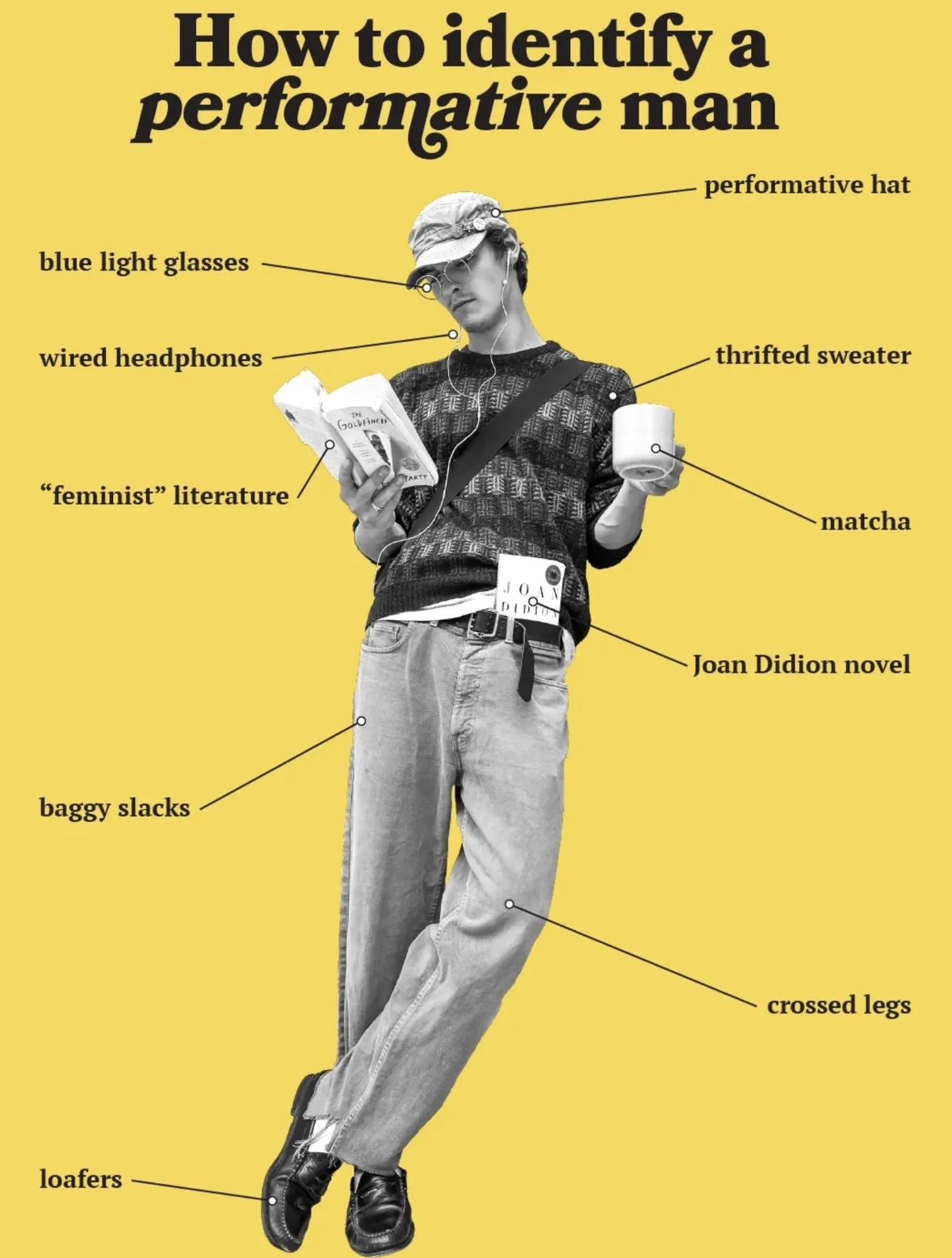
The term “performative male” itself is used to describe cisgender, heterosexual men who intentionally adopt traits and habits that are typically associated with women or the online “soft boy” persona. Imagine a man who wears thrifted sweaters, a Labubu on his belt and wired headphones while drinking matcha and reading feminist literature — all meant to signal to women that he is sensitive and emotionally aware.
These traits aren’t a bad thing at all. I, personally, love it when my boyfriend is sensitive and emotionally aware. A majority of people who are attracted to men love when they are sensitive to our feelings. It tells us they care about us and aren’t afraid to show their own feelings.
The problem arises, however, when men simply adopt these traits and habits to gain the romantic affections of the women around them. They want to signal that they are a safe space for women, that they are different from other men and most importantly, that they are a “good guy.” Now this is in no way berating men who actually choose these traits and habits because they enjoy them — they aren’t the reason why the archetype is called the “performative male.”
It’s when all of these combined attributes feel hollow and empty that the archetype becomes performative. When a man shows no genuine interest in feminist literature or astrology beyond how it makes him appeal to women, then it is an empty attempt. A performative male has been compared to social media activism: actions only done to seem like a “good person.”
As I said before, this trend has arisen in the wake of toxic masculinity and the male loneliness epidemic. Recent studies suggest that a possible cause is the polarizing views between Generation Z men and women. Young women have become increasingly liberal and against patriarchal values, while, in contrast, only 43% of young men identify themselves as feminists, while also becoming more patriarchal in their views.
“This shift has happened because of toxic masculinity. There’s been a shift from the alpha bro to a more chill, nice guy. This is a trend for men to be more soft and more fashion-forward,” TikTok user @ellabellaaa_ said.
Performative male contests have been popping up all around the world — from Toronto to San Francisco and even Jakarta — with the most performative of them all winning. At these contests, participants compete for laughs and women’s attention by reciting poetry, showing off their thrifted fashion or handing out feminine hygiene products to show they’re “one of the good guys.”
But as young men begin to explore gender outside of what is considered traditional masculinity, this response is showing them one thing: that being sensitive, soft and emotionally available is humorous and should be openly mocked.
However, I hope that men continue to adopt these traits not out of malicious intent, but because they genuinely want to. Society is continually evolving, and we may move towards a time when men can adopt traits that are not traditionally masculine with less scrutiny.
Contact the author at howlentertainment@wou.edu