


Feb. 25, 2026 | Isaac Garcia | Sports Editor
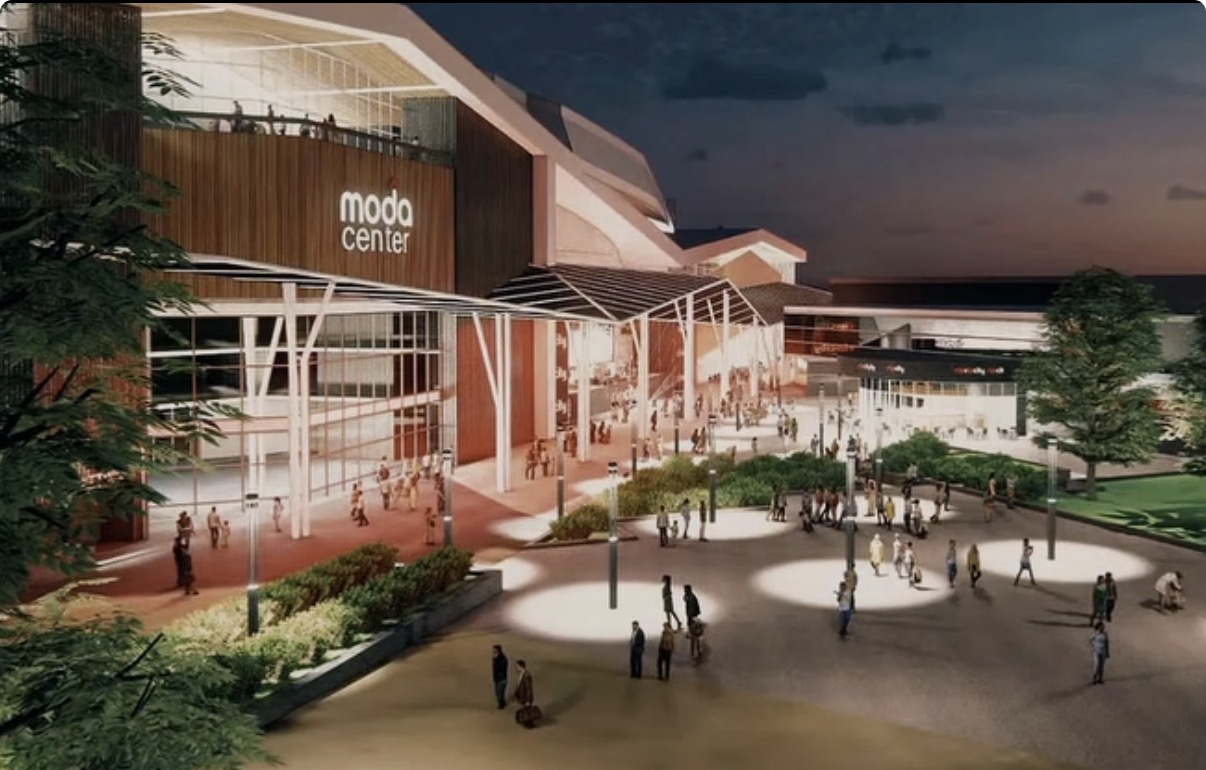
Since the 1995-96 season, the Portland Trail Blazers have called the Moda Center — known as the Rose Garden until 2013 — home. The arena was built starting in 1993 with a combination of funds from the City of Portland, then Trail Blazers owner Paul Allen and roughly $150 million in bonds. In addition to the Trail Blazers, the Portland Fire — a WNBA expansion team preparing to start play this spring — will use the venue for home games. The venue has played host to NBA playoff games, NCAA tournaments and concerts from household names such as David Bowie, Stevie Nicks and Elton John, just to name a few. However, with the venue now being just over 30 years old and the estate of Paul Allen working to finalize a sale of the team after his passing in 2018, discussions have begun over possible renovations and where to find funding for the project.
A possible relocation of the Trail Blazers has become a growing concern among the fan base since the announcement of the sale process, and said discussions around the Moda Center’s status have only added to the concern that if funding isn’t secured, the team could suffer the same fate the Seattle SuperSonics did. In 2008, when public funding wasn’t passed to conduct renovations for KeyArena, now known as Climate Pledge Arena, new owner Clay Bennett relocated the team to Oklahoma City and rebranded as the Thunder, where they’ve since remained; although many would say that Bennett, who is from Oklahoma City, planned to move the team from the start.
Last summer, NBA commissioner Adam Silver explained that keeping the Trail Blazers in Portland was preferred, while still acknowledging that the team “likely needs a new arena.” On Feb. 9, Senate Bill 1501 was proposed in the Oregon state Senate by Rob Wagner, which, if passed, would move income taxes currently being placed in the state’s general fund into a new “Oregon Arena Fund,” and allow the Oregon Department of Administrative Services to enter into agreements to own and operate the Moda Center. The funds would specifically come from the income of Trail Blazers players, Rose Quarter employees, performers and anyone else doing work at or around the Moda Center. The renovations are generally estimated at about $600 million and the state of Oregon is expected to partner with Multnomah County and the city of Portland to provide the funding which would become available if the Trail Blazers agreed to a lease agreement of a certain period. Exact details of how much money would come from each party involved vary; however, a source of controversy is that the city of Portland is considering bringing $75 million of that investment from the Portland Clean Energy Community Benefits Fund. Funding raised would become available if the Blazers agreed to a lease agreement of a certain length. Current reports suggest that the ownership group won’t be expected to contribute.
Proponents for the bill argue that the Trail Blazers and other events hosted at the Moda Center provide a significant boost to the state economy, and, therefore, a public investment in the renovation project is worth it. Wagner and the City of Portland provided research that says the arena provides $670 million in financial impact annually, with the people it employs and of course, revenue from ticket sales. Opponents of the bill argue that the state cannot afford to divert tax revenue away from the general fund and that the investment would be too risky, considering that the new ownership could still decide to move the team at some point down the road. They also argue that the new ownership group, which is led by Tom Dundon and includes multiple billionaires other than himself, should be expected to pay a portion of the costs at a minimum.
Controversies on arena funding are nothing new in professional sports. In fact, just last week the Chicago Bears, one of the most storied American sports franchises that currently plays in one of the most iconic stadiums in the country — Soldier Field — took a tentative step toward moving nearly 30 miles outside of Chicago into Hammond, Indiana after talks between ownership and the state of Illinois in regards to stadium funding did not advance in a way the organization felt was favorable. In the wake of the difficult negotiations, ownership began talks with the state of Indiana, and on Feb. 19, Senate Bill 27, which provides a framework for covering a portion of new stadium costs, passed the Indiana state Senate unanimously.
Additionally, in December of last year, it was announced that the Kansas City Chiefs would be moving out of Arrowhead Stadium in Missouri by 2031 and across the state border into Kansas after the state of Kansas agreed to cover up to 70% of stadium costs.
The city of Oakland, which was at one point home to the NBA’s Warriors, the NFL’s Raiders and the MLB’s Athletics, lost all of its professional sports teams within a decade due in large part to disagreements between ownership and local government about funding for facilities. Dave Newhouse, a retired sportswriter for the Oakland Tribune, was quoted in a 2025 article from Bay City News regarding the matter, saying, “If you don’t build them a new stadium every 20 or 30 years, they leave.”
An idea for a potential compromise between the Portland Trail Blazers and local governments could include a clause that if the team is relocated after tax funding is provided for a new arena, ownership would need to pay some percentage of the public investment back to the local community. A smaller renovation plan with a similar structure was already agreed upon prior to the sale of the team. This was part of a lease extension that guarantees the Trail Blazers will stay in the Moda Center until at least 2030. As for funding, the city of Portland made an agreement with the Trail Blazers that event parking revenue and a 6% tax on tickets would be used to cover the costs, with a 50% contribution limit from the city. These renovations began in the summer of 2025 and included larger and higher definition scoreboard panels. The rest of the project is taking a planned pause in the summer of 2026 in order to let the Portland Fire conduct their opening season with minimal interference, but is expected to be completed before the 2030 NCAA Women’s Final Four, which Portland is hosting for the first time. In the event that the team is relocated, the Trail Blazers would be required to pay the entirety of the city’s contribution back. Of course, the reported cost range for this project being significantly higher might complicate trying to complete a similar deal, but it does provide a point of reference.
The bill is currently in the Senate Committee on Rules and will surely garner a lot of conversation as updates arrive. For any Trail Blazers fans concerned about a move, it’s important to remember that there really haven’t been any substantially reported discussions in that regard yet, and so far, Dundon and his ownership group have verbally committed to keeping the team in Portland. Of course, it’s not outside of the realm of possibility, but it does seem that, at least for now, fans can expect to see the Blazers in Portland long term.
Contact the author at howlsports@mail.wou.edu