


Dec. 3 2025 | Isaac Garcia | Sports Editor
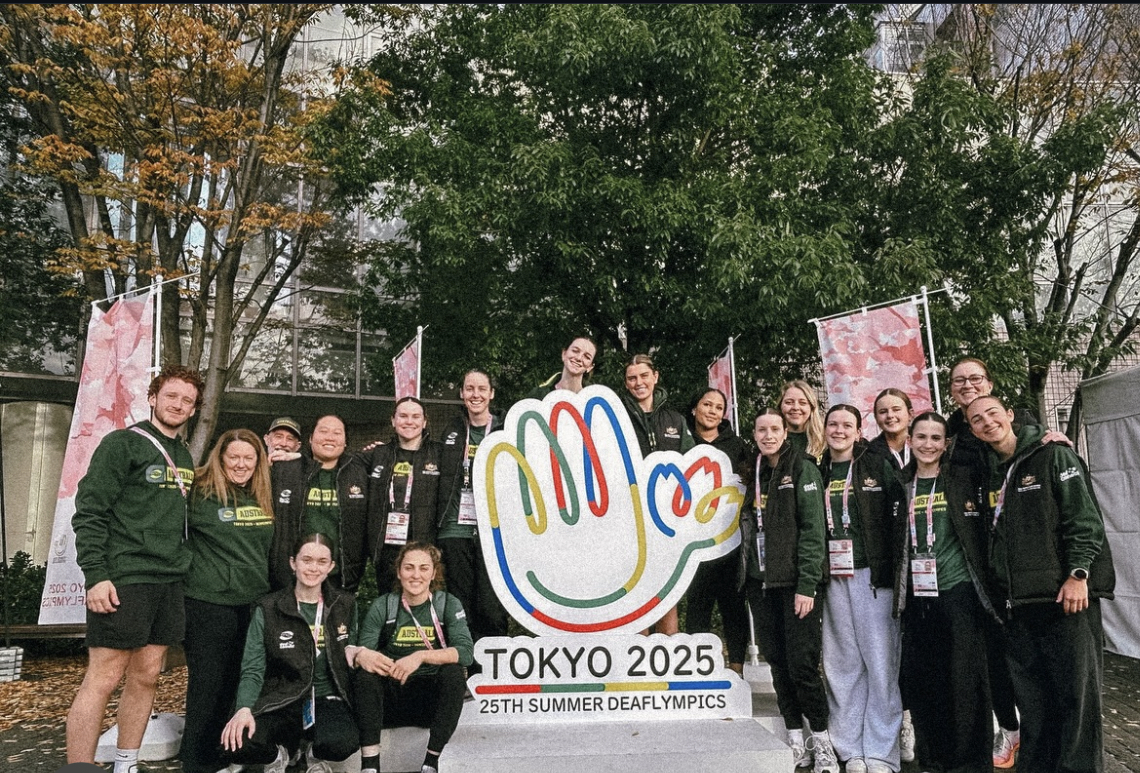
Last week, the 2025 Tokyo Deaflympics concluded after an 11-day run that included 209 events across 18 different sports such as swimming, basketball, tennis, judo and more. Ukraine led the medal count by a large margin with 100 total medals, with the next closest country being Japan with a total of 51, although non-nationally affiliated athletes technically came in second in medal counts, with 52, and tied Ukraine’s gold medal count of 32. The United States was seventh in the overall medal count, winning 35, but was tied for third place in the gold medal count with 16.
This year’s games marked the 100-year anniversary of the sporting event after it started in 1924, then known as the International Silent Games and held in Paris. The main pioneers of the games were Eugene Rubens-Alcais, who was the president of the French Deaf Sports Federation, and Antonio Dresse, who was a deaf sports activist and represented Belgium during the earliest iterations of the games and won nine total medals, with one of them being a gold. After the 1924 games, Rubens-Alcais and Dresse would help form Le Comité International des Sports des Sourds, known in English as The International Committee of Sports for the Deaf.
During the Deaflympic games, audio instruction is substituted for visual. Take, for example, track and field events. During the Olympics, a starting gun is used to begin a race. During the Deaflympics, large lights are used to signal the beginning of a race. There is also an important distinction between the Deaflympics and the Paralympics, a sporting competition for athletes with physical disabilities. In the Paralympics, there is no division for deaf athletes to participate in. According to the International Deaf Sports Committee, “Many deaf people do not consider themselves disabled,” and so their omission from the Paralympics means that the Deaflympics, for and by deaf people, are the best fit.
Some athletes have even competed in both the Deaflympic and Olympic Games. Most recently, Diksha Dagar participated in the 2020 and 2024 games in golf after winning a gold medal in the Caxias do Sul Deaflympic games in 2022. Jakub Nosek, another Deaflympian, represented the Czech Republic in the 2018 and 2022 Winter Olympic Games as a member of the bobsleigh team.
One of the top performers of the games was the Kenyan track team as a whole, who had all of the medalists for the 5,000-meter race, with Ian Wambui Kahinga leading the way, along with James Mwanza Musembi and Nelson Kipkorir Rotich trailing just behind. Wambui’s performance was especially noteworthy as he set the Deaflympics world record with a 5,000-meter time of 13:52.83. This time cleared the previous record, which had stood since 2013 when it was set by Symon Kibai, by about ten seconds. “This is a dream come true,” Wambui said. “Breaking the world record was my ultimate goal. We worked as a team and I’m proud that Kenya owns the entire podium.” Wambui, who is only 24, has a long career ahead of him and will likely be one of the top competitors in the event for years to come, along with Musembi, who is only 21 years old himself. The performance from the three contributed to a 15-count medal tally that included five golds.
In soccer, the United States men’s team had an unexpected run, making it all the way to fourth place with wins against Korea and Brazil. While head coach Everett Palache is still learning how to sign himself, the team utilized interpreters to help him communicate with the team, having three total. One was specifically assigned to shadow Palache and help him communicate as he led the team through practice. Palache also explained that they would utilize color-coded pinnies and vests that Palache could use in order to get players’ attention, with red ones conveying some sort of immediate message while yellow ones would mean to keep checking in with Palache and his interpreters over the upcoming minutes. The women’s soccer team secured a fifth gold medal, the most of any country in women’s soccer, after beating Japan 4-0 in the final. The team also extended an impressive record, having never lost in 20 total years of play. In fact, the team has only ever played to a draw once, making them one of the most dominant teams across any sport in any competition. The United States also captured gold in men’s basketball, defeating Ukraine 69-59 in the gold medal match. The women’s basketball team won silver after just barely falling in a thrilling match against Japan that ended 65-64.
In addition to the accessibility for deaf athletes, there were special changes to make the event accessible to deaf spectators. For example, during badminton matches, screens would show the sounds of the match as text to allow spectators to follow along more easily. Volunteer ASL interpreters were also around to help guide guests around to make the experience as smooth as possible.
“I think the event was really well done,” said Western senior and ASL studies major Abby Money, who was a spectator at the event. “It was catered to both hearing and deaf people. They had interpreters on the big screens in the middle of the arena when they had announcements and even had international sign language for the people who didn’t know Japanese sign language.” Money also noted the difference in how fans interacted with the event and cheered on athletes. “When they had someone competing, they would take their hand from their shoulder and it almost looked like they were throwing something forward.”
The next iteration of the Summer Deaflympics is projected to take place in early 2029, with the location to be determined. The Tokyo games, however, were incredibly successful and drew record attendance, which bodes well for any future hosts that the games will be worth the time and investment from a financial standpoint. In fact, the attendance total far surpassed the initial goal of 100,000 spectators set by organizers. At the closing ceremony, Tokyo Governor Yuriko Koike said, “The dynamic performances of the deaf athletes gave courage and hope to the world. We were able to show the world what an inclusive society really looks like.”
Contact the author at howlsports@wou.edu