

Mount Hood

Opinion: Major keys of physical activity

Paul F. Davis | Managing Editor

As college students, some of us often wish we could switch our major (wouldn’t it be nice to be an art major for a day?), but for obvious reasons, that usually isn’t possible. But if you could, in a short period of time, know the most important pieces of information from a specific major, why would you not learn those things? Well, now’s your chance. But more importantly, I believe it’s the duty of each student to learn as much as you can about as many subjects as possible, because it could get you out of a bad position. Here’s an opportunity to learn about a major that you might not be involved with.

I am a graduating senior from Western’s Exercise Science Program and I have learned about all the main fields that have anything to do with exercise. I have built multiple research-based exercise programs; I know how to most effectively teach a person how to do a novel task; I can help anyone make long term change happen in their fitness and nutrition habits; and most importantly, I can tell you if protein powder will actually get you yoked.

First things first: no, protein powder will not get you yoked alone. Hypertrophy, the scientific name for muscle growth, only occurs when you overload your muscles. This overload then stimulates the process of repair. This process of repair is what eventually leads to yoke-ness and in order to repair, materials to rebuild are needed; in this case, this requires protein. Protein, which is uptaken from your diet, will then be passed along to areas of overload. The key here is that muscle growth is linked to overload or the amount of exercise you do, not the levels of protein consumption or the type of protein you are consuming. However, if you struggle to meet your base levels of protein needs, your body will not grow. It will instead stay the same or even atrophy, the opposite of hypertrophy. So, if you struggle to consume enough protein from diet alone, then you should definitely supplement with protein powder.

When it comes to trying to change our diet or our exercise levels we are often told the exactly wrong things to do. Diet-wise, we are often told to diet, which cuts out all carbs, or we are told to just eat cabbage soup for a week. Exercise-wise, we are told that one 90-day program will get us “RIPPED” or “toned.” But these changes are too extreme for most, and most in turn lose no weight or don’t change their activity.

The most effective way to change long term is to make small changes in everyday life to create healthy habits. Instead of going on that cabbage diet that will ruin your mood, start by eating the same foods and reducing portion size. Instead of working out while some overly-aggressive man screams at you through the TV, go on a walk and jog consistently to build a workout habit. For those that don’t eat healthy and don’t workout because their habits say so, change your habits with small changes and then your body will follow.

What should I do when I build a workout program? Well, the American College of Sports Medicine gives a few specific tips to maximize your workouts. To get better at running or biking, you should try to run or bike at least 20 minutes, but optimally more, three times a week — but five is best in order to be more fit. For weightlifting, you should be lifting weights two to three days a week with 24-48 hours of space between workouts at two to four sets of eight to twelve reps.  

So much more could be said about so many different subjects in the world of exercise science but hopefully this article helps to satisfy your desire to learn about new subjects and gives you tools to be a healthier human. If anything, you should remember that if you want accurate information about how to be more healthy, don’t trust that fitness model or celebrity, trust exercise professionals because like any subject that can be studied in college, it’s complicated.


Contact the author at pfdavis14@wou.edu
Guest Opinion: Western should accommodate for all the different student study needs

[fruitful_alert type=”alert-Info”]Disclaimer: The views and opinions expressed in guest opinions are those of the authors and do not necessarily reflect the views of The Western Howl.[/fruitful_alert]

Suzana Carroll | Guest Contributor

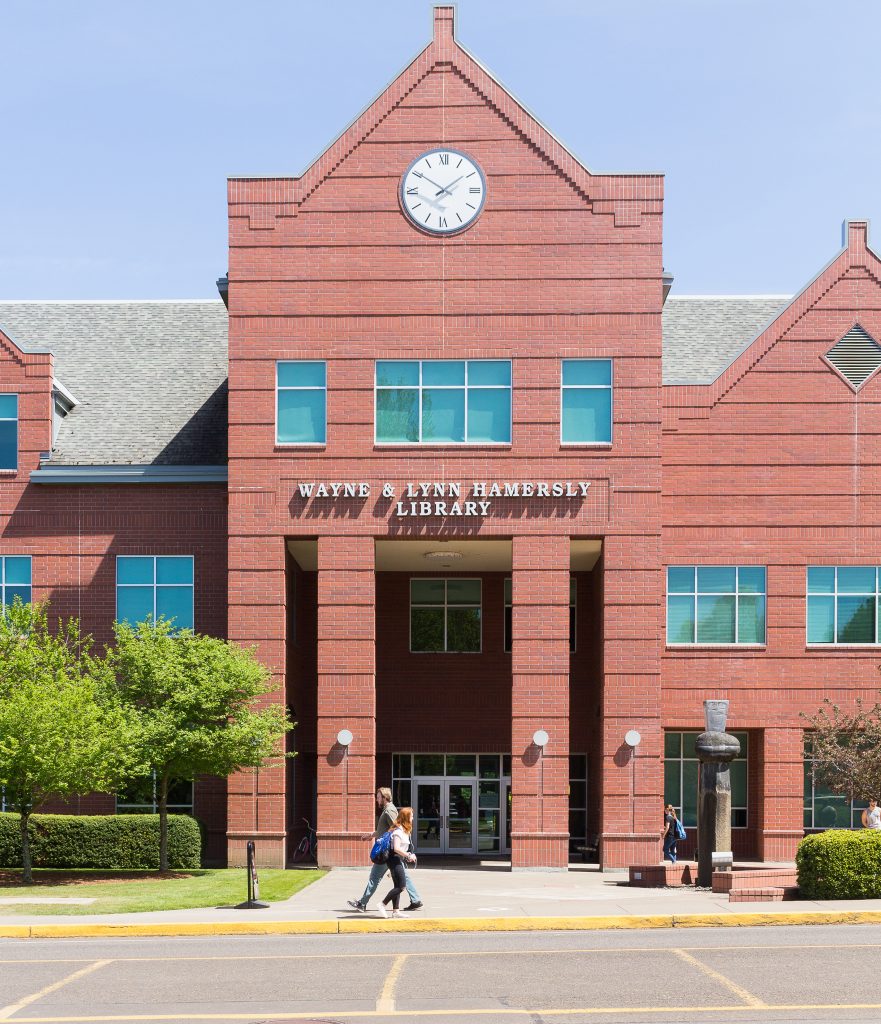
We all know someone that does their best work late at night, but does Western accommodate them? Hamersly Library closes at 12 a.m., and does not reopen until 7:30 a.m. the next day, with only one small space open for 24 hours. Students who live on campus have the lounges in their respective dorms that are available to them at all hours, but what about those that cannot focus in the lounges or at home?

There needs to be more 24-hour study space available to individuals that live both on and off campus. There does not need to be an entire building dedicated to being open 24 hours but there definitely needs to be more than one room that is available; perhaps the bottom floor of Hamersly Library, so students can have tables, whiteboards, books/computers available to them and most importantly, a place where they feel they can focus and be productive.

By opening a bigger study space more student jobs could be created, and it would cater to those students who are more functional in the night hours. It would also allow for them to work on whatever they need to get done. Western has approximately 6,000 students, and only having one small 24-hour study space is very limiting and does not seem very inclusive to those who need to leave their living space to do their homework during night hours.

With Monmouth being a small town, late-night study spots are very limited. I interviewed a student who I saw was working in the 24-hour room and they said, “We need a bigger space on campus that can hold more than 30 people maximum because sometimes it gets pretty loud in the room and it becomes harder to focus on what I need to get done”.

The 24-hour room is open to anyone in the Monmouth/Independence area who wishes to use it. Opening a larger space would ensure that everyone who needs to use the resources that Western provides has a chance to and does not feel that the hours limit their abilities. Like most things, opening a space for a longer period of time results in higher costs. However, the library lights do stay on all night long, and the 24-hour room does not have constant supervision. While there would probably be added costs to student payroll to keep the floor supervised, it would only add up to about $80 per shift before taxes. There are many students that are night owls and would love to make the extra money while being able to do their own work. This idea has been implemented at various state universities such as Portland State, Oregon State and University of Oregon.

While there is a higher cost for student employment, keeping a larger study space open for 24 hours will most likely benefit and accommodate a large population of students and others who utilize the Western Oregon library because it allows for those individuals to have a quiet, constructive study space at night.


Contact the author at scarroll15@wou.edu

To publish a response, contact the editor at howleditor@wou.edu

Photo by Ashlynn Norton

Opinion: The biphobia epidemic

Chrys Weedon | Entertainment Editor

It is nearly common knowledge in the psychological community that the LGBTQ+ community experiences a disparate amount of mental health issues when compared to their straight counterparts. According to the Bisexual Resource Center, 40% of bisexual people report considering or attempting suicide, compared to roughly 25% of gay and lesbian folks.

Studies from the Williams Institute have discovered that people who identify as bisexual make up approximately half of the LGBTQ+ population, but only 28% of those people are out to their loved ones. Why these disparities? Biphobia has been posited as a cause.

The term “biphobia” is defined by the BRC as “mislabeling bi+ people as lesbian, gay or straight, even when they come out as bi+.” What does “bi+” mean? I’ll come back to that.

A lot of biphobia isn’t blatant. Instead, it is often buried deep within subtle actions, or microaggressions.

In his book, “Microaggressions in Everyday Life,” Derald Wing Sue defines microaggressions as the “constant and continuing reality of slights, insults, invalidations and indignities visited upon marginalized groups by well-intentioned, moral and decent family members, friends, neighbors, coworkers, students, teachers, clerks, waiters and waitresses, employers, health care professionals and educators.”

Biphobia is really more common than many people, straight and LGBTQ+ alike, think. For example, phrases are often uttered such as, “you’re just confused”; “bisexual people just want to sleep with everyone”; “bi people are more likely to cheat”; “can’t you just pick one?”; “you aren’t really bi if you’re dating (opposite gender)”; “you aren’t really straight if you’re dating (same gender)”; I could really go on.

Ignorance toward bisexuality and the erasure of bisexual identities is rampant in the LGBTQ+ community as well. Many gay or lesbian folks just assume that identifying as bisexual is only a baby step toward “actually” coming out as gay. Many people simply don’t understand what bisexuality means.

Now back to that word: “bi+.” This term simply acknowledges that different people interpret the label “bisexual” in different ways. Some people define bisexuality as being attracted to multiple genders, or more than one gender. Some people explain the term in the most stereotypically understood way: being attracted to men and women, or masculine and feminine people.

Sometimes people hear the word “bisexual” and they get stuck in that mindset that I just explained: bisexual people are only attracted to men and women, and it turns into a whole mess of “well does that mean bisexual people are just obsessed with someone’s genitals?” The answer? No. Bisexuality does not inherently mean that someone doesn’t acknowledge the complexities of gender. What the issue really comes down to is that some people don’t even want to get to know someone and what their bisexual identity means to them before they go and jump to all sorts of different conclusions.

I have experienced a lot of biphobia in my life, and I’ve watched my loved ones struggle with it as well. Experiencing biphobia from my own community has hindered me from truly accepting my identity, and in some cases, it has stopped me from coming out. I’ve been told I’m not gay enough to be Queer, and not straight enough to be straight. I’ve had friends question the validity of my identity. I’ve been called transphobic. I’ve been interrogated with “oh, you’re bi? But have you ‘tried’ both? Have you had sex with men and women?” This essentially says that if I hadn’t “tried both” I wouldn’t be a legitimate bisexual and I’d have my membership card revoked.

I think the LGBTQ+ community needs to be better. Writing off biphobia as simply a “straight” issue is ignoring a big part of the problem. How can we expect straight people to be accepting of our community if we aren’t even accepting of each other? There is no excuse to be this oblivious anymore. Bisexual people exist and we need your support too.


Contact the author at cweedon16@wou.edu

Photo by Ashlynn Norton

Opinion: Where campus jobs and management could improve

Rebecca Meyers | Lifestyle Editor

At the start of almost every term, signs pop up around the on-campus cafes, dining areas and other places informing students that they are hiring. These campus positions exclusively hire students — but why do the signs appear so often? Surely, Western understands the struggle of working students and does everything they can to ensure that student employees have a reliable, accommodating job to depend on? And why wouldn’t they stick around longer if that was the case?

Shortly after being enrolled in Western, I figured out that most — not all, but most — campus jobs are not exactly the most desirable. I remember distinctly two different occasions that I, in an offhand manner, mentioned I had thought about applying for one for convenience’s sake and was immediately informed by a friend or classmate that this was a bad idea. Talking to a few former employees echoed this sentiment towards campus dining, campus recreation and campus safety.

Morgan Taylor, a senior education major, relayed her experience working on campus to me.

“Like any other job, it had its ups and downs. I liked what I did and I learned a lot in my two years I spent there. However, by the end of my time, I felt very under appreciated and taken advantage of in terms of scheduling,” Taylor said. “It ended up being a very negative experience for me because of the way it ended with a certain administrator who I had a hard time communicating with because of their lack of leadership and compassion and understanding that we are students. And as a result, because of the unwillingness to communicate, they forgot to put me on the schedule. This careless mistake cost me three months of pay and if it wasn’t for help from my family, I would have had to drop out of school.”

Another student, who worked in a different department of campus but wished to remain anonymous, expressed similar experience.

“I feel as if working on campus is made into my main priority (over) school and family. Management has made me late to class on several occasions by not giving me and fellow students enough time to close out, gather belongings and walk to class. I also felt and noticed some toxic things happening while in the job and students feeling uncomfortable around those we work with. I understand that many places around campus have these issues and (I) believe these need to be looked into,” said the student.

Two other students, both current employees of Valsetz Dining Hall, gave insight to the campus dining situation.

“There are some faculty on board who do have our best interests at heart and are on our side. But there are still many higher ups that make it feel like an unforgiving environment that expects us to have no lives outside of Valsetz,” said one employee.

The other student added, “Overall I like the people I work with, it’s just the way it’s run… If anyone ever asks if they should apply to Valsetz, I say only if it’s your last option.”

What these experiences reflect is a problem well known on some level or another among many students at Western. To me, this is a disappointing dynamic, one that is clearly detrimental to some student employees for a number of reasons.

Firstly, for students, financial well-being is a big part of maintaining peace of mind and therefore both mental health and academic performance. A student constantly worried about finances will have less energy to focus on schoolwork — and, in a worse case scenario, it can actually compromise their ability to make ends meet. Hours that students are allowed to work are limited to around 20 hours a week, so that students have enough time to attend classes and complete schoolwork. Which, in theory, is great: they’re looking out for students’s time-management needs. However, this does not allow very much room for the financial needs many students face — school fees among them.

Also, looking out for students’s overall well-being should also include providing a workplace that adds as little stress as possible, which is hard to do when it feels like managers don’t fully understand the needs of their employees.

Personally, I have found my off campus job (which is a minimum wage position in food service that is by no means my dream job) much more accommodating to my schedule in a way that allows me to get enough hours, with my manager even asking every employee how many hours they think they can work without stretching themselves too thin, how many hours minimum they need to survive and what their preferable medium between the two is. This eliminates a lot of stress for my coworkers and I, and we usually feel we are in a financially stable position.

This is the kind of respect that anyone should find even in an entry level job, though all too often it isn’t, and for Western student employees to feel that this is lacking is both a poor reflection on the institution as a whole and likely a reason for the negative perception of campus jobs among students.

Another reason this issue should concern Western is that it affects the overall perception of the school that students will leave with and take with them for the rest of their lives, which will possibly affect whether they recommend the school to others, or even whether they decide to complete their degree here.

Overall, it seems that current Western campus jobs could stand to have a reminder that employment is a big part of student lives, and therefore should be treated with as much thought and effort as possible. This would end up benefiting everyone in the long run.


Contact the author at rmeyers17@mail.wou.edu

Photo by Caity Healy

Opinion: Six tips on how to be environmentally-friendly

Paul F. Davis | Managing Editor

Human-made environmental problems are showing — climate change and severe contamination — and they are killing our planet. Luckily, the solution is here — ban single-use plastic bags. Nope, sadly our earth’s human-made contamination is much too multifaceted to solve just by making plastic bags fly into the past like they fly away in a slight breeze.

Still, feel-good laws like these don’t actually have a large enough impact on future environmental issues. Even so, Oregon State Legislature passes bills like House Bill 2509 into law. Chiefly sponsored by Carla C. Piluso, the bill states that retail establishments statewide can only provide recycled paper bags for customer use. This will reduce the amount of single-use plastic bags consumed in Oregon. However, with the requisite reduction of plastic bags, there will need to be an equal increase in paper and reusable bags. According to the UK’s Environmental agency, “paper bags must be used three times” to neutralize its environmental impact, relative to plastic.

With that in mind, paper bags are objectively worse than plastic bags. This conclusion was made because the United Kingdom’s Environmental Agency found that paper bags require four times as much water to produce than plastic bags, and the trees that are used to create paper bags are contributors to acid rain. Not to mention, it requires seven trucks worth of paper bags to equal the number of plastic bags carried in on one semi-truck carrying plastic bags. But most importantly, have you used a wet paper bag?

What needs to be known is that being “environmentally-friendly” is much more complicated than “will it compost or not?” True environmentally-friendliness comes from what is called a life-cycle assessment of a good.

These life-cycle assessments take into account all facets of a product’s environmental footprint, including but not limited to: water usage, the toxicity of after products, the energy necessary to produce, what it took to manufacture the raw materials needed and the transport after production.

We already know the best and basic steps to at least work towards a more environmentally friendly attitude: reduce, reuse, recycle.

Reduction is accomplished mostly by asking yourself, “do I really need this?” Do I need these takeout utensils, or should I use my own that I have at home? Am I buying this new phone because I need it, or because I want to look a certain way?  

Reuse can be as simple as using your new fancy paper bag as a trash bag or by buying refurbished technology — which is cheaper, too.

For those that don’t know how to recycle, the most important thing you can do is contact your local recycler and ask what you can and cannot recycle; some recyclables can be recycled but some areas don’t have the technology to do so. For example, even though paper cups given to you at Starbucks or Dutch Bros say that they are recyclable, most areas cannot actually recycle them because there is thin plastic layer on the inside of every cup that requires a special technology to remove said layer.

Being environmentally-friendly can be hard, but if you work on being intentional with your choices you can make huge difference in your environmental footprint.

Tips based on information provided by the Environment and Ecology website

  • Buy refurbished technology rather than new technology
  • Drink vegetable-based milk instead of cow’s milk
  • Go paperless for your bills
  • Invest in reusable utensils
  • Reduce the amount of meat you eat
  • Reduce the single-use food and drink containers you use


Contact the author at pfdavis14@wou.edu

Photo courtesy of Paul F. Davis

Opinion: Critical Role Kickstarter campaign raises $9 million to fund “The Legend of Vox Machina”

Cora McClain | Copy Editor

How much does it cost to fund an animated series? Well, according to “The Legends of Vox Machina Kickstarter is LIVE!” it takes $750,000 to make just one 22 minute episode. This was the initial goal Critical Role, a Dungeons and Dragons web series with an all-star cast of well-known voice actors in the video game and animated world, set in their Kickstarter campaign in order to fund a 22 minute animated special entitled “The Legends of Vox Machina.”

As stated on the project’s Kickstarter page, the team initially pitched the special to traditional media studios. However, they soon changed their strategy after finding little to no success with these studios and networks. In order to “stay true to our beloved characters and tell the stories (their fans) want to see,” they decided to turn to their fans (a.k.a Critters) to make it a possibility.

The Kickstarter launched March 4, and within 40 minutes, the community gave them $1 million. By 5 p.m., the community smashed through the original stretch-goals, giving the project $3 million.

“The target was $750,000, but that was because we thought we might hit it,” Travis Willingham, Critical Role CEO and cast member, stated in their eighth Kickstarter update on March 7. Dungeon master and cast member Matthew Mercer added that they hoped they’d  “hit it by the end of the campaign.”

After reworking their plan for the campaign, they changed the project from a four-part special, to a complete 10 episode season. The first two episodes would follow the original arc for the special, with the last eight following an arc in their original campaign.

However, funding all 10 would take $8.8 million. On April 4, the community heeded the call. During the first half of their regular stream after a week-long hiatus, the community raised $400,000 to ensure they would get that 10 episode series they wanted.

As of April 9, the project stands at $9,199,756 with 66,634 backers and nine days left.

Now, what does this film project tell us about the future of entertainment?

“The Legends of Vox Machina” isn’t the only entertainment based project smashing records through crowdfunding. “Mystery Science Theater 3000,” a film project that revived the original show, ended their campaign with $5.76 million and Netflix picking up the series.

Entertainment other than film also follow this trend. “Goodnight stories for Rebel Girls,” a children’s book series, previously held the title of fastest funded project on kickstarter — earning their goal of $40,000 in 30 hours — and ended their campaign with $675,614. Along with the critical success of “The Legends of Vox Machina,” these projects and the overwhelming support for them illuminate just how viable crowdfunding can be in creating entertainment.

A trend is brewing in the industry: give the power back to the consumers to pick the entertainment they wish to consume. Coupled with the popularity of streaming services over major media networks, it’s easy to see that the entertainment field is beginning to shift away from traditional media towards a new and exciting partnership between creators and consumers.

As an avid consumer of online content (including that of Critical Role) seeing projects funded by a community in support of their favorite creators thrills me to no end. I felt for a long time that the mainstream entertainment industry has been out of touch with the audiences and communities that flock to the screens. However, online content made by smaller creators who have a close tie with their fanbase can lead to better content made by bigger budgets and an end product that services the wants and needs of not only the fans, but also the creator. I believe that we need more of these partnerships to revamp the entertainment industry and give new people the opportunity to release their creativity and provide people with content they want to see.

Fanbases are powerful entities that breathe life into the entertainment industry and would easily do their part to aid the creators they love. “The Legends of Vox Machina” is just one example of what a world of community supported content can create.


Contact the author at cmcclain17@wou.edu

Photo courtesy of Critical Role

Guest Opinion: Money matters

Lake Larsen | Alumnus

The world of finance and fiscal management is a stressful and scary place. Just the thought of budgeting will give many a thousand-yard stare. Because of this, far too many college students walk around playing a sort of Russian roulette with their debit cards. Just spending and spending until bam! You’re overdrafted.

Due to this fact, colleges should be required to give some type of basic “how to be an adult” class for students. As an accountant at a university, I deal with students on a daily basis asking questions about their finances. In and of itself, this is not the issue — I love helping students. However, some of the questions I receive baffle me and honestly upset me with the failure of our education system.

Instead of teaching students how to pay down the principle on their student loans, colleges instead force students to take classes unrelated to their major. Yes, it is important to be a well-rounded student. I also understand the benefits to some of the other courses and how they are advantageous to students. However, it’s kind of hard to focus on being well-rounded and to think of the benefits of some unnecessary class when you have $30,000 in debt with a 450 credit score. But hey, at least I have some random knowledge on a subject that will probably never come up again in my life.

If the goal of lower division core classes is to help students potentially find a hidden talent or help develop basic skills, then why not offer things that have a larger chance of actually helping in a student’s life?

This isn’t to say that students can’t or won’t find passion in one of these subjects. I realize that this is a possibility. However, I think it should be a student’s decision if they want to take these extra classes. In the end, it’s their money. It should be up to them entirely if they want to take extra courses.

Some classes need to be required, and I understand that. So why not add a very basic fiscal management course to the list? The skills students will learn in that class will benefit them for the rest of their lives. I can’t say that same thing is true for some of the other courses they’re forced to take.

If colleges want their students to be successful, give them the tools to do so. In a society where money is power, it’s time to teach students how to become powerful. Because in the words of Pink Floyd, “Get a good job with good pay and you’re okay.”

[fruitful_alert type=”alert-info”]Disclaimer: The views and opinions expressed in guest opinions are those of the authors and do not necessarily reflect the views of The Western Howl. [/fruitful_alert]

Contact the author at llarsen13@wou.edu

Photo courtesy of Ashlynn Norton

Opinion: Parking ticket pandemic

Ashlynn Norton | Photo Editor

It’s a common consensus across campuses that tuition is too expensive. When beginning to look at how all the fees are broken down, some of it doesn’t make sense, particularly parking fees.

As a current first-year student, I have to live on campus since my hometown is too far away to commute to and from every day. Which is fine, I enjoy living on campus. But one thing I find a little ridiculous is the fees that are tied around parking here at Western Oregon University.

Since I live on campus, I am required to have a parking pass for my car. The parking pass alone was 80 dollars that I had to pay out of pocket. I don’t think I have to remind you that I am a poor college student who doesn’t necessarily have that kind of money. Students pay thousands of dollars to attend this university, so why should students need to pay for a parking pass that doesn’t even let them park anywhere on campus? Students with a resident parking pass are only allowed to park in two locations: J lot and J loop.

The point I am trying to make is that I think if you pay for a parking pass, you should be able to park anywhere on campus without getting a parking ticket. Student employees should also get free parking passes. If an RA can have their housing paid for, why can’t a student employee get a free parking pass?

I received a parking ticket and the fee was 25 dollars. Again, poor college student here who has two jobs and lives paycheck to paycheck. I only get paid once at the end of each month, along with all the other students who work on campus. When I do get paid, all of my money goes to insurance, loans, bills, etc.; I barely have enough money left to buy myself gas for my car. Yet, the school expects students to pay their parking ticket within ten days, or else the fee increases.

Parking tickets and fees of that sort are just another way for the university to suck money out of its students.

This isn’t just a problem here at Western Oregon University. This “Parking Ticket Pandemic” is at institutions like University of Oregon, Oregon State University, and even campuses out of state.

The parking situation at OSU is so bad that there is a waitlist for parking passes. So some students aren’t even able to park on campus. Sahalie Ellickson, an Environmental Sciences major at OSU stated, “parking is really inconvenient and as a college student it is not even worth the hassle to bring a car. They make it almost impossible to drive on campus and it is not affordable by any means. It’s horrible for not only the students but the people that work here too.”

Whereas, at the University of Oregon, students have to pay a monthly fee for their parking passes. Payton Swartout, a student at the University of Oregon, said that “to have to deal with the struggle of finding a parking spot on campus, even after paying 90 dollars a term for a parking pass, is ridiculous when we are forced to spend tens of thousands of dollars to even attend the school itself.”

The way parking tickets are distributed and their fees need to be reevaluated. It’s getting to a point where it puts more stress on the students, and we already have enough as it is. The best solution to the problem here at Western Oregon University is to take away the fee increase if a parking ticket is not paid within ten days. The expectation of having a student pay a parking ticket within ten days is unrealistic and puts too much pressure on said student. Taking away the fee increase would be the first step in the right direction to make parking, and life, a little less stressful here on campus.


Contact the author at anorton17@wou.edu

Photo courtesy of Ashlynn Norton

Opinion: Western has a long way to go before it’s considered truly accessible

Chrys Weedon | Entertainment Editor

Western Oregon University is privileged enough to have a disability services office that is fairly visible on campus and that is committed to giving students accommodations. The Office of Disability Services offers services such as test proctoring, housing accommodations, note taking services and provides all of the interpreters on campus. The buildings and layout of campus, however, leave accessibility wanting.

Western has existed since 1856, as many of students have heard during their tours and orientations. Although the buildings on campus have gone through various iterations and renovations since then, most of them aren’t accessible to differently-abled students and faculty.

Many buildings have the very basic elements of an “accessible” building, but simply meeting the base requirements does not equal accessibility.

Even the Richard Woodcock Education building — considered one of the most accessible buildings on campus — has its issues. For example, the front doors are automatic, but they open so slowly and irregularly that they rarely make anyone’s life easier. Additionally, you have to be so close to the doors to trip the sensor, they almost whack you in the face on the way in. How is that accessible?

The older buildings on campus present even more accessibility challenges. Many buildings are so old that their elevators and hallways simply aren’t big enough for a wheelchair to fit in comfortably. Several buildings, including Bellamy Hall, are only accessible to differently-abled students around the back of the building, which can cause extra time getting to and from a class. Extra time aside, able-bodied students aren’t limited to using one entrance or exit, so why should the burden be on differently-abled students?

Older residence halls are also not accessible. I lived in Landers Hall as a first-year, and it was difficult for two people to walk past each other in the outdoor stairwells and down the hallways because the paths were too narrow. Barnum and Gentle have the same issue. Landers doesn’t even have an elevator. In fact, many of the older buildings on campus do not have clearly marked elevators or signs indicating how to access them.

I can say with 100 percent certainty that there are even more accessibility issues that I am not aware of because I am privileged enough to not need to use the elevator everyday, or have to worry about how wide a hallway is. I can still see the glaring obstacles in the way of a truly accessible campus.

An institution is not required to make accessibility adjustments if they are considered an undue burden, which means “significant difficulty or expense” according to the ADA website, ada.gov. The undue burden loophole is a way that many businesses and other institutions try to dodge making themselves accessible — I’ve learned all about it in my three years at Western. So theoretically, the accessibility issues that Western has could be brushed off as being an undue burden to fix. However, seeing as the current renovation of Natural Sciences is budgeted around $6 million, which can be found through a google search on the university website, I don’t think Western as an institution can claim that it is out of their means to fix the issues they have.

For more information about parts of Western that aren’t accessible and parts that are, students can attend a tour through the Office of Disability Services Wednesday, Feb. 27 from 12-1 p.m. The tour is led by student Vanessa Rice and is meeting in the Willamette room the the Werner University Center.


Contact the author at cweedon16@wou.edu

Photo courtesy of Ashlynn Norton

Opinion: Why the “school should be your job” mentality is toxic

Chrys Weedon | Entertainment Editor

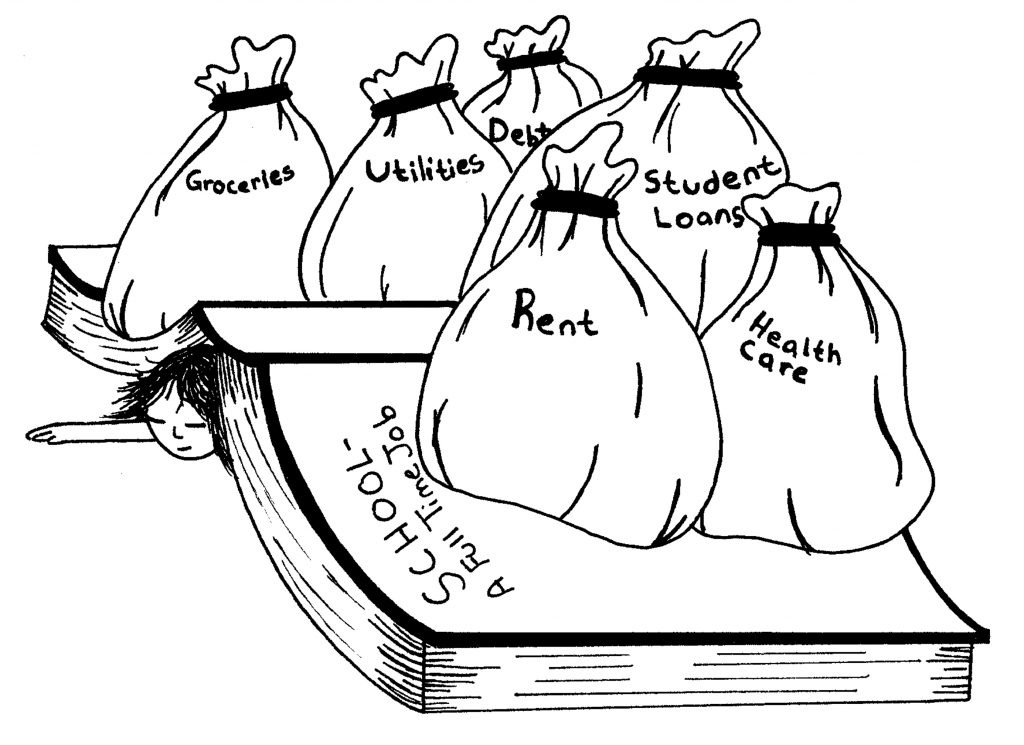
A month ago, I was sitting in my apartment, reading over my Western graduate school application. The information included in the packet was what one would expect: class breakdowns, requirements for recommendation letters and the like. But as I was skimming, I came across something that shocked me: “graduate study is a commitment equivalent to a full-time job.” The application went on to say that at most, students should work 15 to 20 hours a week on top of their schoolwork and possible internships.

After asking around, I learned that many of my friends attending Western have experienced their programs of study strongly recommending that they do not have a job, but instead, focus all of their energy on school, internships and practicums.

I believe that this standard is unrealistic and unsustainable for a majority of students, unless someone has the privilege of having their college paid for without having to take out loans or work. It is ignorant to expect students to put school before everything else in their lives.

The average cost of rent in Monmouth per apartment is about $896, which is a 1.79 percent increase from 2018 and a 2.34 percent increase from just last month, according to rentjungle.com. A one bedroom apartment is on average about $788 per month, and a two bedroom is around $950. According to the same website, rent continues to rise. Minimum wage in Monmouth is $10.75 an hour. This means that someone living in Monmouth has to work over 20 hours a week just to make rent, assuming that they pay the full bill themselves — and that is not including the cost of utilities, groceries and other basic living expenses. Also not included is money to spend on luxuries.

So, a student has to work 20 hours minimum just to get close to making rent, and their program suggests they only work 20 hours per week at the most.

Many programs advertise themselves as a “full time job,” meaning students will invest 40 hours per week into their education. 20 hours minimum of work added onto the 40 hours of schoolwork adds to 60 hours per week of work. That is not even calculating the cost of food, or other unexpected costs like car maintenance or health care costs. Isn’t that asking too much?

All of this isn’t considering time off, either. A student overworked is a student that isn’t thriving. If a student is working 60-plus hours a week, then who knows when they have time put aside for themselves. Time for socializing with friends and investing in self-care are arguably two of the most important things for anyone, especially students. However, they are usually the things that are sacrificed first, for the sake of keeping up in school and at home.

I know that at an individual level, most professors and school administrators expect students to sacrifice their security in order to focus on school. But at an institutional level, I worry that there is an unhealthy expectation that students should not work, but instead pour all of their energy into school. In a perfect world, every student would be able to give 100 percent to school. But this is not an ideal world.

Personally, I often feel preoccupied with my financial situation. I am the kind of person who doesn’t want to be obsessed with money, but I’m regularly forced to be. Juggling classes, a job, and paying bills, I honestly don’t often have the time or the energy to do things that I enjoy. Time with my friends is usually the first thing I sacrifice, and when I do spend time with them I feel guilty that all I do is complain about how busy I am. In my studies, I often hear about burnout, and many times it is taught as an issue only professionals have to deal with. But I would argue that the majority of students, including myself, are actively experiencing burnout right now.

Many colleges and universities hold the same kind of “school should be your job” mentality. This mentality ignores the reality that most college students face: a reality where it is virtually impossible to survive without a job while they’re in school. These institutions do not have their student’s best interest at heart. It’s almost like they have an ulterior motive.


Contact the author at cweedon16@wou.edu

Illustration by Rachel Hetzel

Opinion: Only YOU can avoid highly-preventable disease

Caity Healy | Editor-in-Chief

As of Tuesday, Feb. 5, the list of confirmed cases of the measles in Washington since the first day of 2019 reached 50, according to doh.wa.gov. Of those 50, 34 were between the ages 1 to 10. And, of those 50, 42 were unvaccinated. On Jan. 25, Washington Gov. Jay Inslee declared a state of emergency. If only there were some way this could have been widely prevented.

The Measles Mumps Rubella (MMR) vaccine is about 97 percent effective after receiving both doses, per cdc.gov. Despite this statistic, people are still choosing not to receive the vaccine. And, in some cases, these people are also choosing not to vaccinate their children.

The measles are highly contagious; it can be contracted by entering a room that someone with measles left up to two hours prior, according to cdc.gov. As the list of exposure locations continues to grow and grow, I can’t help but worry. I worry for the child who had no choice. I worry for the infant who is not old enough to get their vaccine yet. I worry for those who are already ill who, if infected, could face serious complications. I worry for those who are pregnant, who, if infected, could also face serious complications. I worry for those who simply cannot afford the vaccine for themselves or their child.

I might sound like I’m being dramatic, but let’s be honest. This is ridiculous. It’s 2019, the MMR vaccine has been around since 1967. How this is still a problem, especially to this extent, blows my mind. While it’s uncommon to die from the measles, it can lead to other serious illnesses, such as pneumonia, which could be deadly for children or those with compromised immune systems.

When I heard of the outbreak, my first thought went to my sister Meagan Hess, who has an 11-month old baby — too young for the MMR vaccine.

“I have to constantly check the exposure sites to make sure it wasn’t somewhere I’ve been with my daughter,” Hess said. “Anytime we go anywhere, out to dinner for example, it’s in the back of my mind — what if someone with the measles is here and we just exposed our daughter because we wanted to go on a family date?” Among the list of exposure sites: Hess’s workplace. She couldn’t even go to work without worrying that she or someone else had been exposed.

Hess explained what she wished she could tell someone who chooses not to vaccinate: “Everything has risks … but think about the greater risks of not getting the vaccine … think about how this will impact your child.”

Hess’s final thought on the situation was, “Yes, it’s your choice. But when your choice is impacting all those babies whose parents don’t yet have the option to give their child the vaccine, it becomes a greater responsibility than your own choice for your child.”

Personally, I can’t understand why someone would choose to not vaccinate their children. I have yet to hear a single reason why this would be okay.

Another mother I know explained that she didn’t want to “infect” her child through the vaccine. And, instead, said she would rather risk them getting the disease and dealing with that afterwards. I was in awe. She added that she didn’t trust the hospital. If you don’t trust them to give your child the vaccine, are you going to trust them to save your child’s life when they contract a highly-preventable disease?  

Other people choose not to vaccinate because of a fraudulent study that linked vaccinations to autism. This study has been disproven. No links have been found between the ingredients in vaccines and autism. Yet, people still make this connection. Based on their own experiences or by coincidental occurrences? Maybe. But still not worth risking a life over. And, even if this were true, using this as your reasoning would mean that you would rather your child contract deadly diseases that could literally kill them than have them get a life-saving vaccine that you believe could lead to autism.

For those who are considering the vaccine but haven’t received it yet, don’t just take my word for it. Do your own research. What you’ll find is that it is incredibly rare for a vaccine to cause any complication.

As of Feb. 5, the number of confirmed cases in Oregon still sits at one. But even that is one too many. On Feb. 1, an email was sent out to all Western students from Beth Scroggins, the Director of the Student Health and Counseling Center, stating that waived students could be removed from classes if an outbreak occurs. Let’s hope it doesn’t actually reach this point.

Please vaccinate. I know I sound like a Bob Barker “spay and neuter” PSA, but it’s true. Vaccinations can and do save lives.

For the most current list of exposure sites, visit clark.wa.gov, which is updated frequently.


Contact the author at chealy16@wou.edu

Opinion: Should everyone be involved in team sports?

Recently, a staff member mentioned that they believe every student should be involved in a team sport. Some staff members decided to follow up by adding their arguments for or against this opinion.

Lake Larsen | Sports Editor

Before speaking about the benefits of sports, it’s important to keep in mind that athletic side of intramurals or club sports might not be an option for everyone. Whether it be a disability, injury or something else that impedes a students ability to perform on a team athletically, this does not exclude them from participating. Coaching or managing are both options that most can take advantage of.

There are many major lessons that sports teaches that a student cannot learn in a classroom. The most valuable of these lessons — how to effectively work with a team. Obviously you can learn this outside of sports, but the teamwork within a sport is a very unique trait that every student needs to learn.

Competitive intramurals and club sports can bring people to their mental and physical breaking point. Hard fought games against more talented opponents can bring a team closer than any school assignment could. From the star player to the team manager, every person on the team is given a lesson on how to keep fighting no matter what the odds.

The competitive nature of sports puts the team into an environment where the only way to be successful is to trust each other. Due to unpredictability of every game, the team has to learn to adapt both mentally and physically to their environment. By joining sports in school, no matter what level, students can learn how to adapt and overcome.


Contact the author at llarsen13@wou.edu

Photo courtesy of Paul F. Davis

Chrys Weedon | Entertainment Editor

I would not disagree that participating in a team sport can be a positive experience for some. But I would argue that declaring that everyone should participate in an intramural or club sport in some way or to insulate that a person’s experience is somehow lacking if they do not play a sport in college is painting with too broad of a brush.

As a person who lives with a disability, I do not feel that my interpersonal skills or social fulfillment are in any way impeded by the fact I do not play/manage/coach a club sport. I do not mean to state that sports teams do not have their own specific dynamics, but to say that everyone “must” play a team sport in order to truly understand how to work and play well with others is an oversimplified and narrow way of thinking, in my opinion. I would dare to say that anyone with a disability who isn’t involved in sports either because of their disability or because their interests lie elsewhere is not, in any way, “missing out.”

Looking back on the period of my life that I played sports, I do not feel as though I learned something so profound about teamwork or group dynamics that I haven’t also learned by being involved with other, non-sports-related groups. To say that the only environment that demands a physical and mental adaptation is one that is explicitly linked to sports, is simply untrue.


Contact the author at cweedon16@wou.edu

Photo courtesy of Paul F. Davis

Bailey Thompson | News Editor

My perspective on this issue comes from a place of someone who likes to be active, but who has never really considered herself an “athlete” — at least in the regard that I didn’t grow up playing on sports teams. With that said, I do see tremendous value in trying something like intramural sports here at Western.

Although I acknowledge that it isn’t for everyone, I believe intramurals can be a great way for students to engage in a low-pressure activity and bond with a group of people that they may or may not already know. As a senior, I have been on three different intramural sports teams during my time here, and I can attest to the fact that it is a supportive, low-risk environment. Both as a first-year student and as a Resident Assistant, being a part of intramural teams with my residence hall communities was a great way for our whole hall to bond and get involved. So, even though some groups choose to be more competitive than others, people who consider themselves “beginners” can still feel comfortable and have fun.

My advice to anyone who is contemplating joining an intramural team: try it. While it may not be everyone’s cup of tea, it can be a fun and easy way for a wide variety of people to come together, laugh, be active and enjoy some friendly competition.


Contact the author at bthompson15@wou.edu

Photo courtesy of Paul F. Davis

Cora McClain | Copy Editor

As a person whose teenage years were defined by the year-round sport I played, I can attest to the fact that sports can help develop important leaderships skills and encourage camaraderie between players. However, high pressure situations and the need to win can also do a number on a person’s mental health. All too often athletes struggle under the detrimental effects of continually being told that they’re not good enough across the spectrum of sports.

For those athletes, intramurals can be a good outlet to get out on the court or field again, without having the looming pressure. On the other hand, intramurals can also fall a bit short for an athlete who played so competitively for so long. For instance, most intramural teams don’t want any freelance players; so, if you don’t personally know any experienced players, you can end up playing games that don’t let you properly demonstrate your skill. Without proper practices and a coach’s guidance, the league to feel a bit slow and unstructured compared to the fast paced lifestyle surrounding high school and year round sports.

If you still want to play, but feel the intramural league lacking, then I would highly suggest looking into joining a club sport. Most of them meet on a regular basis for practices and have a coaching staff to help you continue to grow as a player and even have a league that they compete in without the looming obligation to play. They simply offer a more competitive and structured way to itch the metaphorical sports scratch.


Contact the author at cmcclain17@wou.edu

Photo courtesy of Ashlynn Norton

Paul F. Davis | Managing editor

Although I agree with what is being said, I think all able-bodied people can benefit from sport. But the previous responses are missing the real point of why a person should get involved in sport — the actual exercise that is involved. If a person who doesn’t currently exercise but enjoys playing sports starts to move because of sports, it will help them in so many facets of life. According to American College of Sports Medicine, they will not only see an increase in mood but they will also experience intangible benefits such as reduced stress and reduced chance of heart disease, as well as increased self confidence and quality of sleep.

Once the person gets over the initial struggle that is becoming physically fit they will see how wonderful it feels to be able to compete at your highest level for a prolonged period of time and how wonderful it feels to be free to do whatever you desire to do in your body. When you experience such a freedom it can have such a positive domino effect. But that domino effect isn’t just reserved for a person participating in sports. Rather, it’s reserved for anyone who routinely moves. So if you take anything from all of this writing, find what you enjoy to do that makes you move so you too can be free in your own body.  


Contact the author at pfdavis14@wou.edu
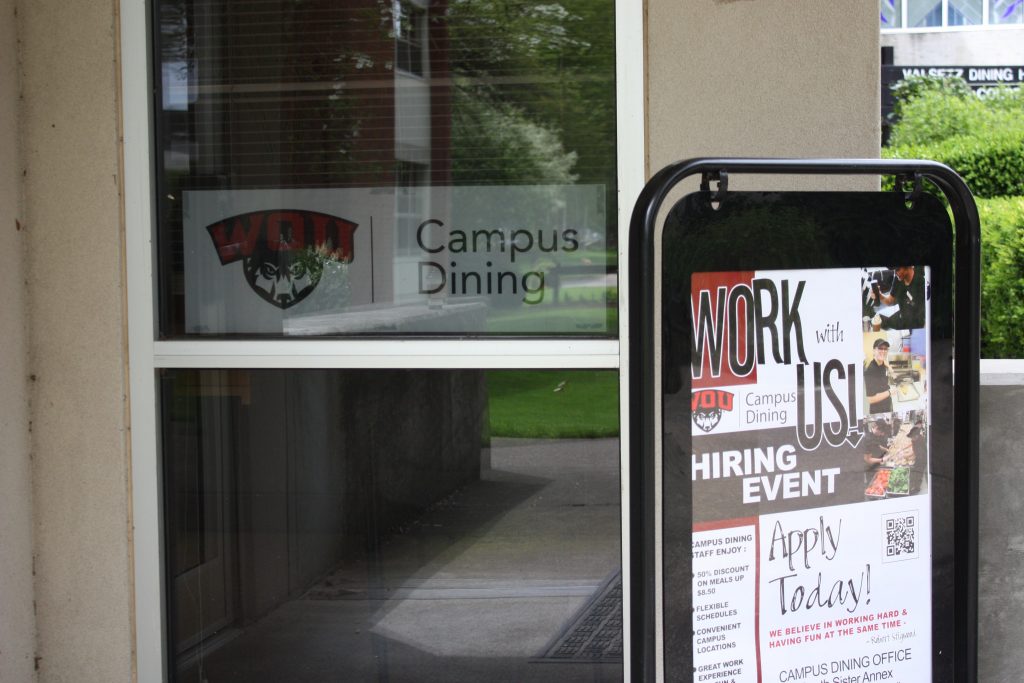
Photo courtesy of Ashlynn Norton

Opinion: Western student’s thoughts on why Western is struggling with enrollment.

Paul F. Davis丨Managing Editor

It’s no secret that Western Oregon has recently struggled with maintaining and gaining new students. Doing a little bit of research on Western’s website any person can stumble upon data that says it all: since fall of 2010, Western has lost more than one thousand students. In total, Western has lost 17 percent of peak enrollment even though the state of Oregon’s total number of students in undergrad programs have trended upwards in the same period according to Oregon’s Higher Education Coordinating Commission.

But what is even more concerning is that Western’s graduation rate has trended down as well from 46.5 percent to 39 percent. For some perspective, the state average is 63.2 percent. So not only is Western not getting as many students, but they are also not getting as many students through college with a degree. This statistic naturally raises the question — why is this happening?

At first glance the biggest factor which seems to have crippled Western’s attendance is the Oregon Promise, the biggest drop in attendance corresponded with its passing, which is “a state grant that helps cover tuition at any Oregon community college for recent high school graduates and GED test graduate,” according to the Oregon Higher Education Coordinating Commission. But since The Oregon Promise’s creation its promise has continually weakened to the point that it would be more accurately called the Oregon Support Promise.

Another secret that everyone knows but no one talks about is that Monmouth is more boring than your grandmother’s figurine convention by big city standards. Monmouth lacks the food and leisure options a university in a larger town would have. So majority of first-years go home over the weekend because there is so little to do. Because of this, they don’t spend time making friends with the people that surround them that are essential to creating connection to the university.

In addition to the lack of connection, there is a lack of gainful employment, something that is absolutely necessary for a majority of students to take care of the minimum costs associated with existing and attending college full time. So often students have to export their work outside of Polk county, which requires a student to drive at least 20 minutes — but often further — to get to Salem, Keizer, Corvallis or even further which not only decreases the students overall take home money, but it also takes up precious free time.

But Western isn’t just an innocent victim, it has institutional wide shortcomings that clearly need to change. The classes are not monitored for quality in an effective way. Yes, the institution asks students to review professors at the end of the term, but it is so easy to neglect the reviews. Make it so each student has to review professors before students can sign up for next term’s classes if you really want to get the full picture.

Professors also have no peers reviewing their classes for student participation and quality of instruction. Because of this there are times where it is completely okay for a professor to arrive to class with nothing but a voice and few notes to jot down on the board. Tenure and Head of Department titles aside, challenge your professors to do more than just repeat a presentation that they made seven years ago. Challenge them to be more; challenge them to be better because the university needs it.

This was not written to say Western is doomed — this was written out of love for the institution and the amazing experiences a person can have while attending school here. That’s why I want Western, faculty and students both, to actually hear these problems in the hope that we together can find a solution. Because at the rate Western is losing students, if changes aren’t made then there may not be enough students to pay to turn the lights on.


Contact the author at pfdavis14@wou.edu

Photo courtesy of London Illustrated News

Opinion: On the Serena Williams controversy

Chrys Weedon | Entertainment Editor

Serena Williams is an American professional tennis player who has won 23 Grand Slam Singles titles and has won a grand slam tournament for three decades in a row. Williams has earned the most prize money to date in the world of tennis; none of that money came from sponsorships or endorsements, either, but only from her winning record. She has won 743 matches as of May 2018, which is the highest number of won matches of any active tennis player (all statistics gathered from sbnation.com). Just google “Serena Williams statistics,” because there’s a lot more where that came from.

Certain aspects of Williams’ conduct during matches have come under scrutiny by public audiences and news outlets alike, even sparking the creation of a racist comic by Mark Knight. The biggest incident in question is during Williams’ match against Naomi Osaka. After some calls by the referee that Williams viewed as questionable, she argued against them.

“You stole a point from me. You’re a thief, too,” said Williams after getting penalized for throwing her racket onto the court. Later in the match, Williams is quoted as commenting: “this has happened to me too many times.”

I don’t believe that this one outburst can label Williams “aggressive” for the rest of her career. As my stint as an athlete, I can relate to Williams’ outrage. Sometimes, when your adrenaline is high and the game is high-stakes, you do things that you probably wouldn’t do when you are off the court.

Also, I would like to point out that many male athletes have argued questionable calls, saying worse things than Williams, and often they are lauded for “sticking up for themselves.” For example, NFL player Richard Sherman is famous for interacting with the referees, arguing penalty calls and getting hyped up about a game — fans love him for it.

Williams clearly has a passion for the game of tennis that has undoubtedly been one of the factors contributing to her success. I mean, you don’t become a world-renowned, top-ranking athlete by being lukewarm about your sport.

Take a look at Michael Phelps, for example. When he locked down a gold medal in the Olympics, he often yells, slaps the water, hugs his fellow American teammates. Of course he does, right? He is a record-setting athlete. Many athletes do it, and rarely do we hear about it, much less hyperfocus on it. Muhammad Ali often celebrated after winning a fight, and although he has faced much discrimination, no one denies that he is one of the greatest boxers of all time. He isn’t labeled aggressive because of his athleticism.

Yes, maybe Williams shouldn’t have blown up at the referee in her match against Osaka, but she most likely knows that by now. Hindsight is 20/20, and I’m sure the average person walking down the street doesn’t want to be forever identified by a mistake they’ve made in the past.

“Serena Williams, in her more than 20 year career, has completely remade women’s tennis,” remarked Liz Clarke, sports writer for the Washington Post, “she has changed what a women’s player serves like, what she hits like, she has changed the expectation of what a women’s player dresses like.”

I believe that someone who completely remakes a sport has the right to be excited about how they, literally, changed the way a sport is played. In my opinion, when I watch sports, it’s more enjoyable when I see someone heated, passionate, and excited about what they’re doing. And honestly, I see a little bit of a double standard when people say that Williams is “too loud” or “overly aggressive.” Why is it okay to criticize Williams for her behavior, while at the same time put these male athletes on a pedestal for the exact same display?


Contact the author at cweedon16@wou.edu

Photo courtesy of serenawilliams.com

Opinion: Higher taxes for the rich is what we need

Lake Larsen | Sports Editor

Since the swearing in of the new Democrat majority into the Congressional House, there has been one congresswomen that has seen a near constant stream of headlines — Alexandria Ocasio-Cortez, the representative of the 14th District of New York. One of the largest headline grabbing moves of Ocasio-Cortez has been her radical tax idea. On Jan. 5, Ocasio-Cortez proposed an idea that set many right-wing economists and republicans ablaze — tax the ultra-rich 70%.

At first glance, a tax of 70% sounds absolutely absurd. The lyrics “that’s one for you, nineteen for me” from The Beatles “Taxman”  start to seem all too real. However, actually understanding the proposed plan and not just adhering to a knee-jerk reaction in very important.

The mere thought of a 70% tax bracket sounds like — dare I say it — socialism. The government stealing money from hard working Americans. But in reality, this plan would only be for individuals making over $10 million annually.

One might think that, if the government taxes the rich that much, they might raise the middle class tax percent. This idea in and of itself is ludacris. Taxing the rich helps raise government funding without hurting the economy due to the ultra rich being able to afford the added tax. Raising taxes for someone making $60,000 annually will hurt their disposable income, thus lowering their spending and hurting the economy.

While it might be easy for staunch capitalists to adhere to the belief of “there’s no way this high of a tax would work in America,” it would be important to know that good-ole capitalist United States of America also had taxes this high and at one point, higher. In 1917 the highest tax rate was 67% for those making over $1,000,000 annually ($21,000,000 when adjusted for inflation) per taxfoundation.org. The highest rate was during the second world war were the rate was 94% for those making over $200,000 annually ($2,900,000 when adjusted for inflation) per taxfoundation.org.

At the surface level, it might seem that taxes this high would cause people to go broke with the extreme tax burden. But just remember that unless you win the Powerball, you likely will not find yourself in this tax bracket anytime soon.

Lastly, the idea of taxes being a horrible, overbearing government stealing for the masses is just simply not true. Many countries have high taxes and because of them, don’t struggle with outrageous healthcare costs like America. A large number of European countries tax their citizens large percentages and in return everyday people get to enjoy things such as: being able to visit a doctor without fear of their healthcare provider not covering it, going on vacation for more than a week a year, and being able to go to college without burying themselves in debt. Crazy, right?

Overall, just remember that when we pay taxes, we are paying for things. Things like roads, bridges, a military, and maybe one day, universal healthcare. Ocasio-Cortez’s idea is just asking the rich to stop hoarding money and pay their fair share to society. You might not agree with how and where our tax money is being spent, but that’s why you vote. And in a world where our President seems to only help the rich, it’s refreshing to see someone in power fight back.


Contact the author at llarsen13@wou.edu

Photo courtesy of Ashlynn Norton

Opinion: The blaring sounds of nothingness

Lake Larsen | Sports Editor

As a child I practically grew up with some type of sports equipment in my hand. Some of my fondest memories as a kid are from Memorial Stadium in Berkeley, California, hearing the loud boom of the cannon on Strawberry Hill as the UC Berkeley Golden Bears scored a touchdown. That’s what I love about college sports: taking part in a fun tradition to root on your school.

Coming into Western as a first-year, a school with over 150 years of history, I was excited to see what traditions it had in store to take part in as a student. As I found my seat, ready to watch the Wolves football team for the first time, I gazed onto the field to see that not only was there no logo painted at midfield, but no endzone art either. Now, as a senior, I’m happy to see that there’s a little more care given to the appearance of the field with the new WOU badge on the 50-yard line, but there’s still no attention given to getting the student crowd fired up to watch their Wolves.

College sports differ from their professional counterpart due to the history and tradition that can be found at the games. My grandfather graduated UC Berkeley class of 1957 and to this day loves to sing the fight song after the Bears score. Meanwhile, Western leaves nothing for students to latch onto and remember for the decades to come. Whether it be something as large as a cannon firing off, a wolf howl or just something as little as just playing the fight song, Western needs something. Having been to dozens of games at Western, I’ve yet to actually hear someone play the fight song.

If Western was serious about wanting students to get more engaged and coming to games, they should look into making the sporting events more than just an event. Instead of just having students show up and leave, make the match a can’t-miss-experience. Play a wolf howl when the Wolves make a defensive stop, make some noise other than cheering when Western scores. Play the fight song for once. Honestly at this point, I would settle for even a simple saying like “Roll on you Bears” or “Fight on Trojans” to make me feel like more of a part of the school instead of just watching some game.


Contact the author at llarsen13@wou.edu

Opinion: The price tag on Black Friday

Rebecca Meyers | Lifestyle Editor

According to the American Marketing Association, Americans spent $7.9 billion just in the 24 hour Black Friday period in 2017. That’s not counting Cyber Monday, weekend sales or sales that began on Thanksgiving.

It’s been pointed out time and time again, and yet it still remains relevant: Americans spend a day being thankful for what they have, and then turn around and spend the next day fighting in lines to spend tons of money on material items.

Well, that’s not completely true anymore; it’s 2018 and many sales will likely happen online. There’s now a safer way to spend too much money during the holidays.

No one in my family ever participated in Black Friday, but a few years ago a friend convinced me to go with her. I decided to see what all the fuss was about and agreed to go. I left my house where my family was still celebrating on Thanksgiving night, and we drove to the nearest outlet mall.

I found the experience mostly underwhelming, and yet I still left with multiple bags from different stores. The signs and advertising had been screaming about deals for weeks, so my expectations were high. I went in to one shop looking for some new clothes and found…sweaters for 20% off. Or, I could buy discounted jeans, but I had to buy at least three pairs. Basically, I could have done better on a regular day in a clearance section. Or at a different store for that matter; one higher end store was selling clothes for the same price as a different retail store.

I didn’t buy that much, and I can’t even imagine spending hundreds of dollars on Black Friday. Besides the fact that I could use a new laptop, I don’t think I even need hundreds of dollars worth of material things. I don’t think anyone really does, but it’s easy to get swept up in the culture of spending and purchasing as much as possible. It seems like it should be obvious; it’s part of advertisers’ jobs to make sure people believe they need a new TV, two more new electronics and a ton of clothes. Knowing this but not caring is a privilege not everyone has.

This day essentially does nothing but add to the reasons that holidays are unenjoyable for some. It’s already heartbreaking enough to think that some people are too stressed to be truly happy during the holidays, a time that’s supposed to be about appreciating what you have, giving what you can and enjoying the festivities. Yet, events like Black Friday help taint the holiday experience for some.

Sure, people can brag about buying the most expensive gifts for their families; but, does it even cross their mind that there might be someone listening who isn’t sure their kids are going to get anything? Did they think to donate, as it’s supposed to be the season of giving? If they did donate, how does it compare to the price tags under their Christmas tree? Would they still fight tooth and nail to spend their money on someone less fortunate?

And that’s not even touching on what retail workers have to endure. Those unlucky workers that don’t have seniority will be forced to leave their families on Thanksgiving, if they get any of the day off at all. Then they have to be on the front lines of the chaos that other countries look on with horror, grateful for the distance between them and America on Black Friday.

I’m by no means innocent; as mentioned before I have participated in Black Friday and Cyber Monday. Even now, I find myself considering all the advertisements for online deals for just about every store. There’s nothing inherently wrong with enjoying shopping, or with wanting to get good deals — everyone can relate to that. However, we’ve glorified it so much that the holiday dedicated to sales has brought in extra millions every year, and every year we see on the news that some people were willing to resort to physical violence.

Blind enthusiasm for Black Friday has become a phenomenon that has spiraled out of control and ultimately brought mostly negativity to what could otherwise be a season of being grateful for what we have and helping those that have less.


Contact the author at rmeyers17@wou.edu

Opinion: Why to avoid using dating apps

Paul F. Davis | Managing Editor

I had just broken up with my high school girlfriend of three years and I was devastated, but also interestingly at ease. The relationship was great for the majority of the time we were together but it needed to end. We started to become distant. The time we spent together felt more like a habit than it was rewarding, we were growing apart, and we weren’t right for each other — but I knew someone was.

So what were my options? Go to the bar and find the one — well, no, I was only eighteen; flirt with everyone who I ran to — obviously, but that was too slow. I wanted something fast to help with the withdrawal of touch, of intimacy, of affection. So I went to the exact place I knew I could find someone — Tinder.

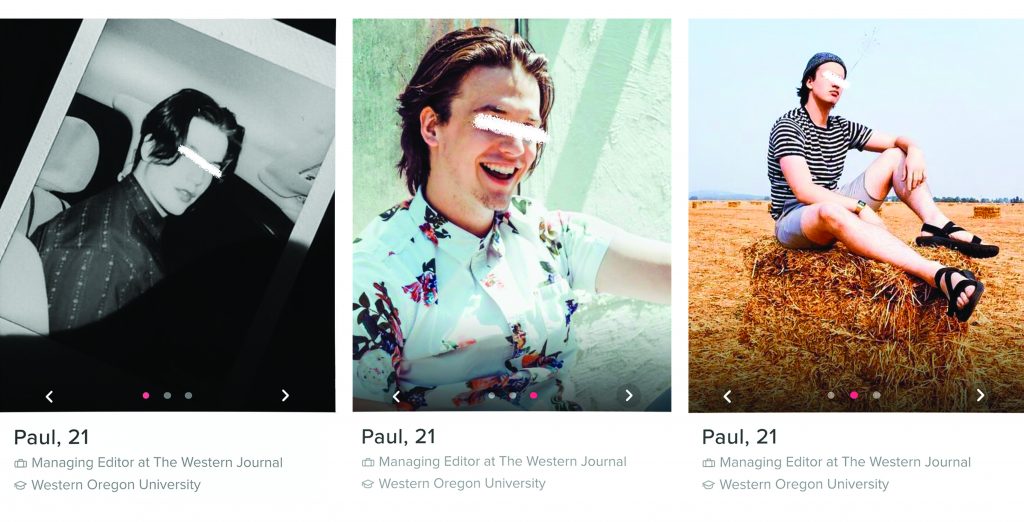
I made my profile, added pictures, typed some bio that was so forgettable I don’t even remember it now, and started swiping. It was fun, I got to look at so many beautiful people in various stages of undress and it was exciting to say the least.

“Ping,” you have your first match. Dopamine rushed, I was already hooked and the conversation started off with the most interesting sentence: “hey :).” I felt like a Casanova, smooth and ready for anything, so I kept swiping and it continued to be great. I felt like this was what I had been promised dating was like — being single was great.

But weeks later, that initial rush wore off and the good feeling that app gave me in the beginning started to change. I would talk to someone and we talked about everything; I felt sparks fly. She was cute, she was smart, she was incredible by all measures. I would type well thought out responses to everything she said. Laughing crying emojis flowed like koi through a pond… I was naively smitten. I would press send and wait for a response, but none ever came. I was crushed. I felt like just another guy (what’s his name?) in a stack of cards. Reflecting back it made sense to why they didn’t respond. I was over-eager, and what did it matter if they didn’t respond to me? They could always find another person to talk to. I was part of the game and that was my value, just another step along the road. I was just as lost as I had been before joining — being single was awful.

So I became jaded but addicted and kept swiping, doing exactly what they had done to me, talking and sometimes never responding to them, making them feel just as devalued as I had felt before. But, like me, they were just another card in a deck so it didn’t matter. With time I started to say things and make decisions I wish I hadn’t said or made. I was still single, but worse, I was becoming a monster that I despised.

Tinder never made me feel any of these things directly or made me make the decisions I had made, but when you insert thousands of horny or heartsick (or both) young adults into one app, it’s doomed to happen. So for those still wanting to be a part of Tinder, or any other dating app for that matter, please discover enough self-love to know that you are more than a card in a stack. And have enough respect for the people behind those cards to know that they deserve your respect too. Ohh… and I’m still single.


Contact the author at pfdavis14@wou.edu

Photo courtesy of Paul F. Davis

Evil Ackerman elevators

Cora McClain | Copy Editor

The spooky season might have passed, but something sinister seems afoot in Ackerman Hall. Though the elevators seem like a convenient way to get up and down from the residence halls on the upper floors, especially when living on the 4th floor, taking the stairs might be a better choice, and not just for your health.

Ask any student living in Ackerman, and they’ll tell you the elevators can do some pretty weird things, and a few swear these anomalies are caused by demon infestation, ghoulish haunting or a creepy presence. As for myself, a few events have led me to tend to choose a perilous four flights of stairs over equally perilous creepy elevator quirks.

Stepping into elevator 1 after grabbing some late-night tacos from Koyotes with fellow hall-mate Rylie Horrall, a freshman exploratory major, all was normal…until it wasn’t.

On our way up to the 4th Arbuthnot, the elevator stopped on the third floor, but the doors didn’t open. There was a still silence in the claustrophobia-inducing metal box as we looked to each other and thought that maybe someone had pushed the button on the third floor; but, as the seconds stretched on to a minute, we were worried that perhaps the elevator was stuck.

That was until suddenly the elevator began to descend. We both looked to each other with dumbstruck looks and frantically slammed our fobs and pressed the button for the fourth floor. Without hesitation, the elevator then switched gears as it reached the second floor, and we began ascending again, and proceeded to rush out of the elevator as soon as the gate opened. And thus, the elevator by the front desk was dubbed, “Demon Elevator” by Horrall.

However, it seems like the passengers of elevator 2 also undergo ghoulish activity as well. In passing, ther occupants of the fourth floor describe violent shaking when ascending, copious amounts of time taken for the elevator to land and the elevator beginning to descend before the gate closes. Even more chilling happenings have occured.

“I was on the fourth floor, going down to the first floor,” recalled staff member Chrys Weedon, “and all of a sudden it stopped at the third or second floor and the door opened. No one was there. It stayed open for longer than normal, and then it shut and we went back down.”

Later, after she had told me this story, Weedon texted me saying how after pressing the fourth floor button, “the door stayed open and the tone that’s played at every floor glitched…and kept playing the same tone like an alarm was blasting and then the doors closed and it beeped one more time and stopped.” She closed the statement saying, “def haunted.”

Whether you believe in ghosts or ghouls, there’s no denying that there is something strange going on in Ackerman’s elevators. However, take these stories with a grain of salt as they don’t occur every time the elevator goes up or down, carrying some stressed and overworked college students, who probably need a bit more sleep, but as off-chance anomalies. I will attest to the fact that the elevators of Ackerman are just as safe as any other elevator on campus, as the lighthearted jokes of the ‘Evil Elevators’ are akin to fun ghost stories to share with friends, and great motivators to stay healthy and take the stairs.


Contact the author at cmcclain17@wou.edu

Illustrations by Rachel Hetzel

Guest Editorial: ASWOU endorses ballot measures

Nathan Soltz | ASWOU Senate President

Two weeks ago, ASWOU became the first student government in Oregon to endorse on ballot measures. We recommend the following: YES on Measure 102 and NO on Measures 103, 104, 105, and 106.

Before the ASWOU Senate considered endorsing, I reached out to the Oregon State Legislature Legislative Counsel. Legislative Counsel is the team of attorneys who draft legislation and answer legal questions for legislators and their staff. As I work for Senator Frederick, I asked them during the September legislative days if a public university’s recognized student government was legally prohibited from taking positions on ballot measures and I was told, essentially, that there shouldn’t be a problem. After that, we received a legal opinion from the Attorney General also stating that student governments have the legal ability to endorse ballot measures (Department of Justice opinion no. 8289). The Attorney General’s opinion referenced an opinion from the Attorney General in 1985 which stated that student governments could not take positions on ballot measures; however, it continued that since then, Oregon law has changed and the law in question no longer exists. Therefore, student governments are no longer prohibited from taking these positions.

With this guidance, on Monday, October 15th, the Senate unanimously passed the resolutions. On Wednesday, I received an email from WOU’s general counsel telling me that it was illegal for ASWOU to take positions on ballot measures. I responded with the Attorney General’s opinion and he said, in effect, that he doesn’t care what the Attorney General says. I then met with the ASWOU President, Vice President, and Senate President Pro Tempore and we all signed a letter I wrote stating that we are proceeding with the endorsements, as is our legal right and ethical duty. On Friday, we met with the general counsel and during that meeting, he essentially conceded that yes, the law in question has been changed, but he is still upholding an old legal opinion even though the Attorney General’s updated legal opinion is directly contrary. So, after about an hour, we presented him with our letter.

The ASWOU government is steadfast in its defense of student rights. The WOU Administration has also taken the stance that our student clubs and organizations cannot take action on the ballot measures either. However, in the opinion of the State of Oregon, we do have that right. If your club or organization would like to take action, please do and reach out with questions. ASWOU is leading this effort and other universities are looking to follow suit.

More information on the election – including our recommendations on measures and neutral information – is available at the ASWOU table upstairs in the WUC and in the ASWOU office downstairs in the WUC. The ASWOU government is your student government. If you want further information, including any of the documents I’ve referenced, would like to get involved in Senate, or want to learn more about ASWOU, please don’t hesitate to contact me. And don’t forget to VOTE BY NOVEMBER 6th!

Contact the author at aswousenpres@wou.edu

Disclaimer: The views and opinions expressed in guest editorials are those of the authors and do not necessarily reflect the views of The Western Howl.