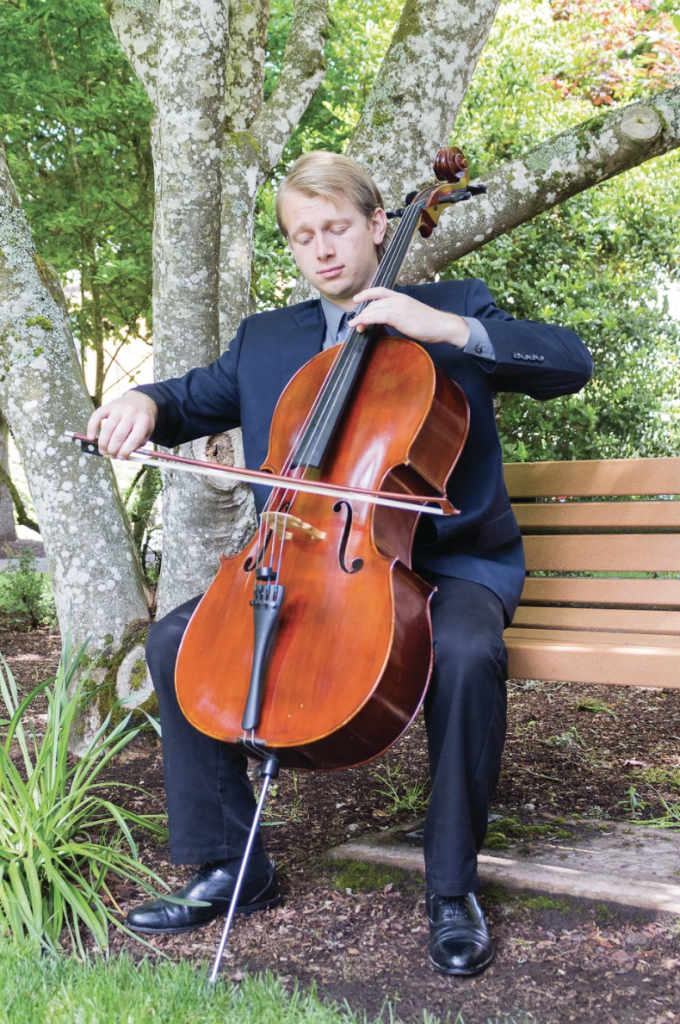

Mount Hood

BonnaWOU brings the beat back to Western

Caity Healy | Editor-in-Chief

The year was 1969. While everyone else was cooling off from the summer that would act as a pivotal moment for music and the core of the counterculture generation, Western, which was then known as the Oregon College of Education, was still heating up. Likely inspired by Woodstock’s three days of peace and music that took place just a month before, from the start of Fall Term, the Wolves were ready to keep the beat going.

A number of concerts took place within that academic year. Headlining at Homecoming was the Grass Roots. Between the years 1967 to 1972, the Grass Roots set a record by being on the Billboard charts for 307 straight weeks, according to their website, the-grassroots.com. At the time, the band was comprised of Creed Bratton — who is now known for his work as a character by the same name on “The Office,” Rick Coonce, Warren Entner and Rob Grill. In the late ‘60s and into the ‘70s, they released many hit singles, including “Midnight Confessions” and “Wait a Million Years.” This was the band that would kick off a series of concerts that would only be remembered by the yearbooks.

Also appearing in 1969 and the year following were bands such as “The Happenings,” which is known for their hit “See You in September,” and is also known for their member David Libert, who went on to manage artists such as The Runaways and Alice Cooper; Gary Lewis & the Playboys, which is known for their hit “The Diamond Ring,” and is also known due to their frontman, Gary Lewis, being the son of comedian Jerry Lewis; and, to top it off, was the Cowsills — a band comprised of all family members, who, according to their website, cowsill.com, were the inspiration behind “The Partridge Family.”

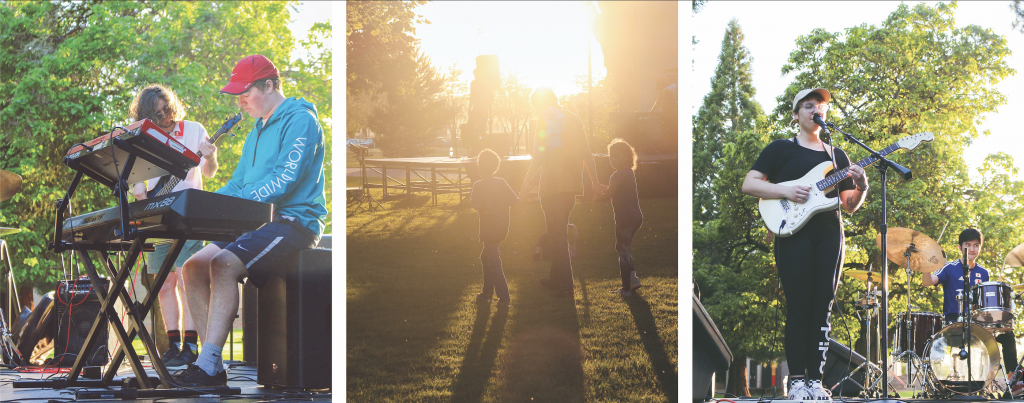
Exactly 50 years later, the year is 2019 — and Western is ready to bring the music back to campus. On May 23, Student Activities Board will be hosting “BonnaWOU,” a play on the annual Bonnaroo festival. Spearheaded by SAB member Helen Goodyear, the event was brought about for a specific reason.

“As far as anybody that I have talked to can remember, they don’t remember seeing a concert on campus. And I would love to bring that back,” Goodyear said. “I want to hit it with a bang … I want people to remember that this is a Western thing.”

To do this, Goodyear decided to look locally for some bands who might be interested. And in asking, what she found was that not only were these bands interested, they’ve been waiting.

“Every single one of them was like, ‘this is something that should’ve happened a long time ago,’” Goodyear added.

Although she had several options, Goodyear rounded her choices down to just three bands that she felt would best relate with the styles Western would enjoy: Jimmy Wolfson, The Ferenjis and Chromatic Colors. All of these are local bands, all have ties to Western and all were more than willing to help out. But aside from the fact that Goodyear knew students would enjoy these bands, she chose them for a few other reasons.

“I want to show (Western) that this is part of our identity as students. This is part of our identity as Oregonians. This is a part of us, and it’s a community that doesn’t get showcased that often. And I want to expose people to that and I want people to try something a little bit new,” Goodyear explained.

To make an event like this happen, there are a number of obstacles that Goodyear has had to cross — the largest being budget.

“When the budget was allocated at the beginning of the year, nobody was thinking that this was going to happen. And then I came in half way through year, and I was like, ‘Okay. We’re doing this,’” said Goodyear. Using only the small amount she was given, she was able to find “the cheapest options and the best quality options,” they could possibly get, as she explained. But due to her connections with the music department and those she knows, as well as her support from the rest of SAB, she was able to pull it off.

As for what students can expect, Goodyear was very transparent on her goals.

“I want people to be able to lay out on the grass, and bring hammocks,” Goodyear said, “If they feel they want to, I want them to be able to get up and dance. I want them to be able to enjoy the music however they want.”

The event is free to anyone interested in a night of music and relaxation. Running from 5-9 p.m., it will be located in the Grove. For any questions, contact Helen Goodyear at hgoodyear16@wou.edu.


Contact the author at howleditor@wou.edu

Photos courtesy of  WOU Archives

Daniel Sampson’s capstone presentation on “Kaleidoscope ‘85”

Cora McClain | Copy Editor

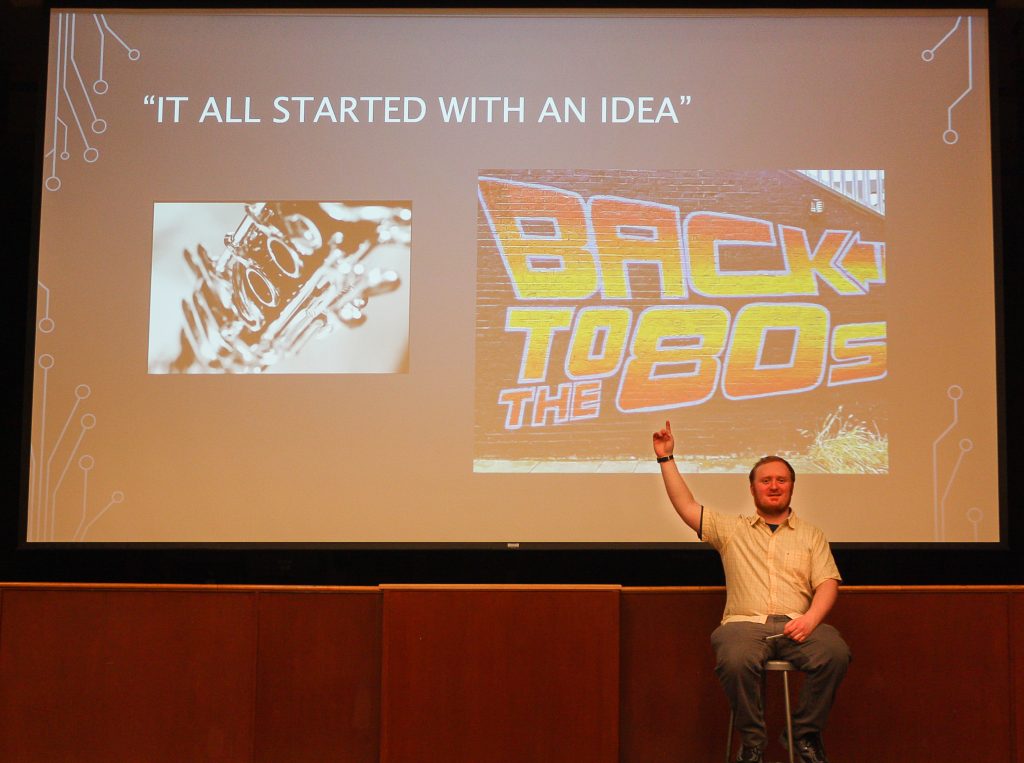
May 10, in Smith Music Hall, senior music major Daniel Sampson gave a presentation on the journey of his album “Kaleidoscope ‘85.” He began work on the album in the summer of  2018, after being thoroughly inspired by the music of the 1980s, specifically that of George Benson’s “20/20” album that he heard growing up. After explaining why he decided on an ‘80s inspired album with a focus on his major instrument, the clarinet, Sampson dove into how he created it.

Taking the audience right into his production software, FL Studio, Sampson played a track that did not end up on his album. “Timeless Lover” played out over the theater, but had a few crackling issues. Sampson kept in good spirits despite these hiccups and broke down the track by each of the samples he took.

Sampson even explained how he chose specific samples to use.

“When I heard the track, I was like, ‘I’ve got to use that,’” he said in reference to the sample DX7 Electric piano. He concluded stating that it can be found somewhere in every track on the album. He also highlighted using electric guitar samples, stating “it is the poor man’s way of not hiring a guitarist.” He highlighted another two tracks, “Warrior” and “Remember When,” to illustrate how he stacked these sounds.

Explaining the recording of his clarinet tracks, Sampson said that he did so in “WOU’s very own recording studio.” Sampson continued by stating the gear that he used to do such recording. Later he explained how he used different preamps to change the sound of the clarinet, often using vocal synth to add depth and sparkle to the sounds. He even explains using a guitar preamp to create the sound of an electric guitar.

Then Sampson transitioned into the production side of the album, covering copyright and his difficulties with that, as well as having to change his mastering engineer, who finishes out the sound of the album. “It didn’t sound like an album” he said. But he soon found another mastering engineer who fulfilled on his vision.

He finished off the presentation with a little Q&A, answering more technical questions such as one on where he wants to see his music go.

“Out into the world? … Move down to LA?” he joked.

When asked about what advice he would give to others putting together a capstone presentation, Sampson answered, “You should get started on it as early as possible. Also, make use of your strengths when preparing the presentation.”

“Kaleidoscope ‘85” will be released on iTunes, Apple Music, Spotify, and Amazon on July 2, which is Sampson’s birthday. He will also be releasing physical copies, but still has to work out the kinks with things such as shipping.


Contact the author at howlcopyeditor@wou.edu

Photo by Cora McClain

Review: “Extremely Wicked, Shockingly Evil, and Vile”

Chrys Weedon | Entertainment Editor

Ted Bundy is one of the most notorious serial killers in the United States according to history.com. Aside from his trial being the first televised in history, Bundy’s trial was unique in many ways. Bundy acted as one of his own defense attorneys, escaped twice and even gained an immense fan-base.

Released on Netflix on May 3, “Extremely Wicked, Shockingly Evil, and Vile” was released not long after the docu-series “Conversations with a Killer: The Ted Bundy Tapes” was strategically made public by the same streaming site on January 24.

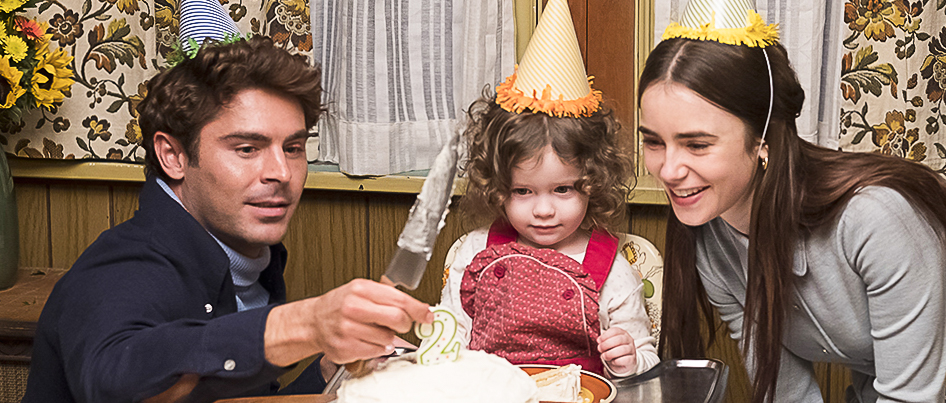
While “Extremely Wicked,” whose title is too long to say naturally in conversation and is therefore always referred to as “that new Zac Efron movie,” could be seen as a complementary fictionalization of “The Ted Bundy Tapes,” it watches as a slightly fuzzier iteration of the same show. It seems as though nothing much happens that watchers familiar with the case wouldn’t have already known about the Bundy case.

Every event was predictable, and the liberties that were included weren’t shocking — to me, this film really didn’t shine a new light on the case or the characters involved. The film often flip-flops between painting Bundy in a sympathetic light and trying to make him out to be the manic killer that he was. In my opinion, we really didn’t need another “slightly-sympathetic serial killer” story in the world.

I did appreciate a look at the ways in which Liz Kendall, played by Lily Collins, was affected by her long-term relationship with Bundy, but it all felt like a glorification of Bundy thinly veiled through a “different” perspective. I would’ve been more intrigued with a story from the point of view of Carol Daronch, the woman who successfully escaped Bundy’s attempted kidnapping.

Arguably the most disappointing aspect of the movie was Zac Efron’s performance. Efron, I believe, embodied Bundy in an extremely believable way, but “Extremely Wicked” overall was an underwhelming film and I feel like Efron’s performance was wasted. I was honestly surprised at how effectively creeped out I was at the actor whose breakout role was Troy from the “High School Musical” franchise. I believe this could’ve been a breakout role for Efron, if only it wasn’t an overrated, over-told story.


Overall Rating: I would not recommend this film.


Contact the author at howlentertainment@wou.edu

Photo courtesy of voltagepictures.com

Western’s Dance Department hosts 2019 Spring Dance Concert

Mikaela Wong | Staff Writer

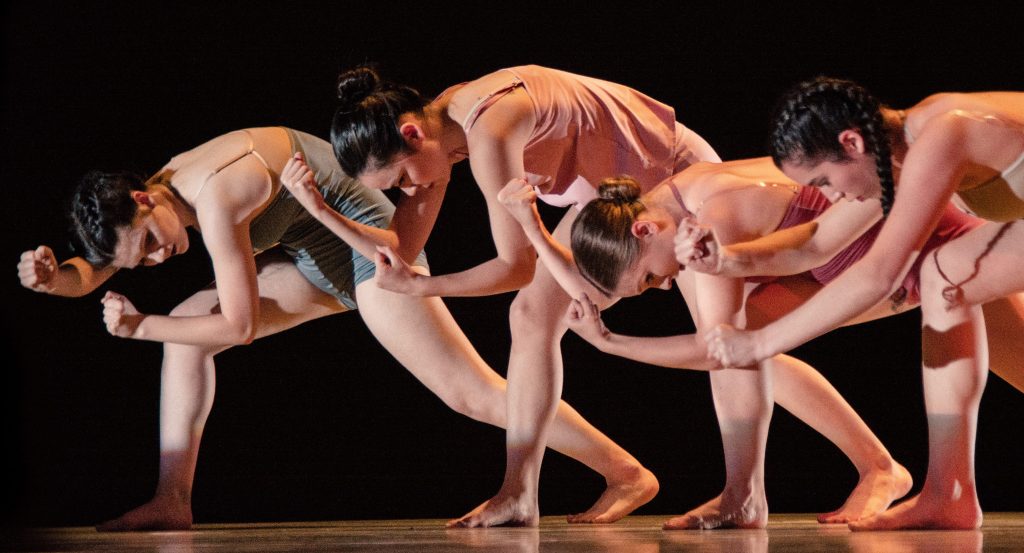
Western Oregon University’s annual Spring Dance Concert commenced over the weekend, May 9-11, and with it, brought intricate dance routines incorporating styles such as ballet, neo-classical, and contemporary. The various dance styles were accented by bold costumes and makeup which further emphasized the themes of each piece.

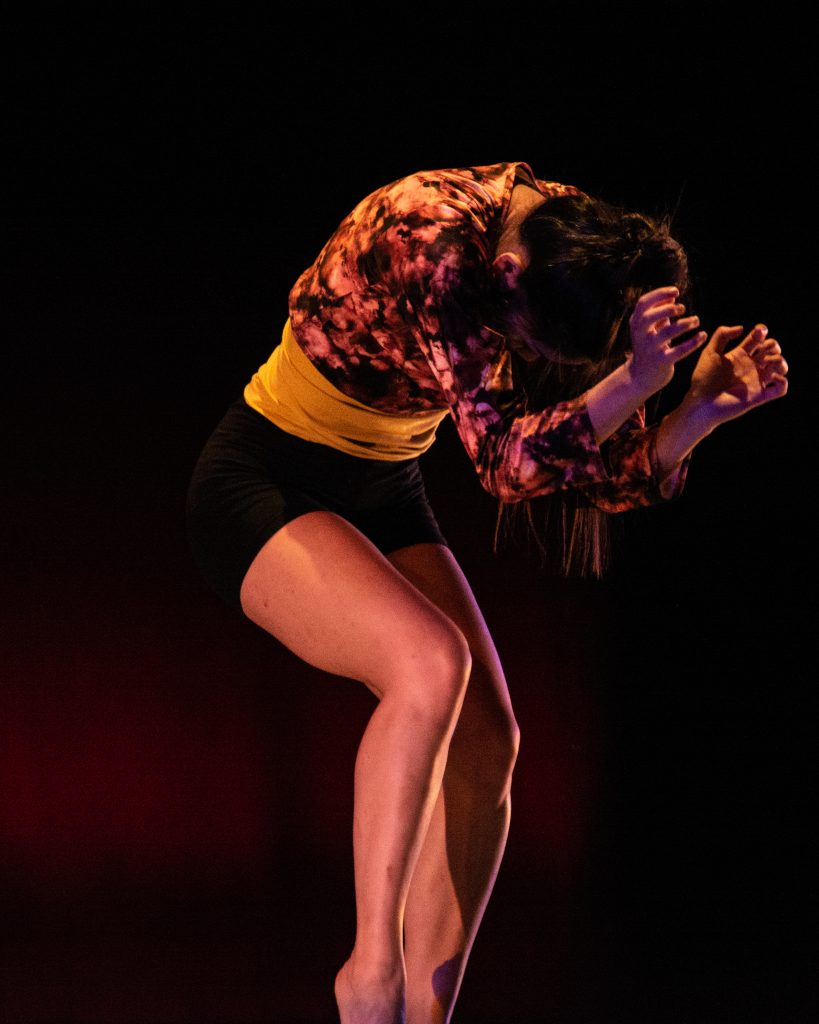
One piece called “To Become Without Fear” consisted of black clothing, dark makeup and jerky movements which highlighted the theme of conquering one’s fears and hardships in hope for a better life. Ali McCarthy, a senior English major, expressed the difficulties she faced portraying a much more intimidating style of dance.

“I’m so used to doing ‘pretty’ kind of dancing which is more flowy, has proper movements and is a lot of fluid (movements),” said McCarthy. “This is more scary, edgy and like possessed kind of dancing so it got me out of my comfort zone.”

Sharon Oberst, one of the main choreographers, announced her retirement after 32 loyal years in the school’s dance department. Her piece, “End Pointe”, captured both the beauty of the pointe dance technique and the sentiment of the end of her legacy at Western. Pointe is a form of classical ballet and is a technique that requires the dancer to support all their body weight on the tips of their fully extended feet whilst wearing specific pointe shoes which have special material in the front to support them.

Eva Batenhorst, a junior pursuing a double major in dance and biology, was the soloist in Oberst’s piece and expressed her gratitude to the soon-to-be-retired choreographer.

“This the final dance that she choreographed for it and she blessed me with a solo in it, so that’s awesome,” said Batenhorst. “I haven’t done a pointe (piece) since senior year in high school and this will also be my last time doing a pointe piece.”

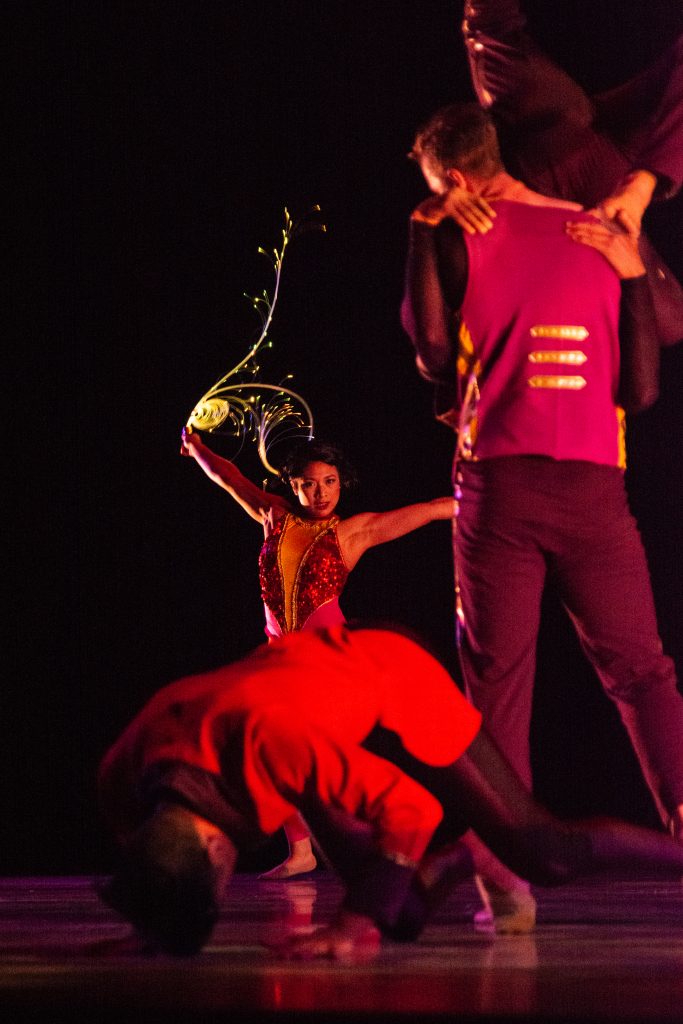
The final piece of the show was called “Into the Mystic” and seized the attention of the audience through mesmerizing light-up props and baton spinning while telling an enticing love story. The intricacy of the movements along with the long duration of the piece itself made the skills of the dancers even more palpable.

Throughout the show, various dancers in different costumes performed expressive pieces that showcased not only their physical capabilities, but also their ability to portray emotion through facial expressions, interactions between dancers and purposeful body movements. The variety of dances included dancers from all kinds of different backgrounds and experiences, while the clean-cut dance routines and articulate costumes reflected the hard work and practice that the dance department had invested in the last six months.

“We try to take it as professionally as we can and not a lot of people realize how much we really put in,” said McCarthy. “Everybody has a place here which is nice because you can have any level and someone is going to find a place for you.”


Contact the author at mwong16@wou.edu

Photos by Paul F. Davis

The Coming Out Monologues return to Western

Chrys Weedon | Entertainment Editor

On April 30, 1997, Ellen DeGeneres came out on her sitcom, “Ellen.” In an episode titled “The Puppy Episode” when she tells her therapist, played by Oprah Winfrey, that she is attracted to women, making “Ellen” the first sitcom to feature a gay main character.

In honor of this landmark, Western’s SafeZone program puts on a biannual performance titled “The Coming Out Monologues.” The Monologues are performed on or around SafeZone’s birthday, April 30.

On April 30, 2000 was the Millennium March on Washington for LGBTQ Equality. That’s why we picked that date for the SafeZone birthday,” said coordinator CM Hall. Hall, with the help of Ted deChatelet, manages the show every two years.

The SafeZone program started at Western in 2006, and according to their website, “seeks to form an allying network of students, faculty and staff committed and trained to provide safe, non-judgmental and supportive contacts for all WOU community members regarding LGBTQ+ issues.” This program provides the campus with community events and Ally trainings. SafeZone partners with Abby’s House, Stonewall Center and Triangle Alliance to produce the Monologues.

“I was a queer student during a very different time at Western. The early/mid-90’s — when the faculty, admin, staff, and students were silent or hostile and there just weren’t many of us, or any out faculty or staff to gain support from,” commented Hall. Since Hall returned to Western as a staff member in 2006, she has been working to change Western’s community for the better.

“Western feels entirely different. It’s become such an affirming and supportive place for folks who have different sexual and gender identities … It further validates and normalizes our lived experiences,” Hall said.

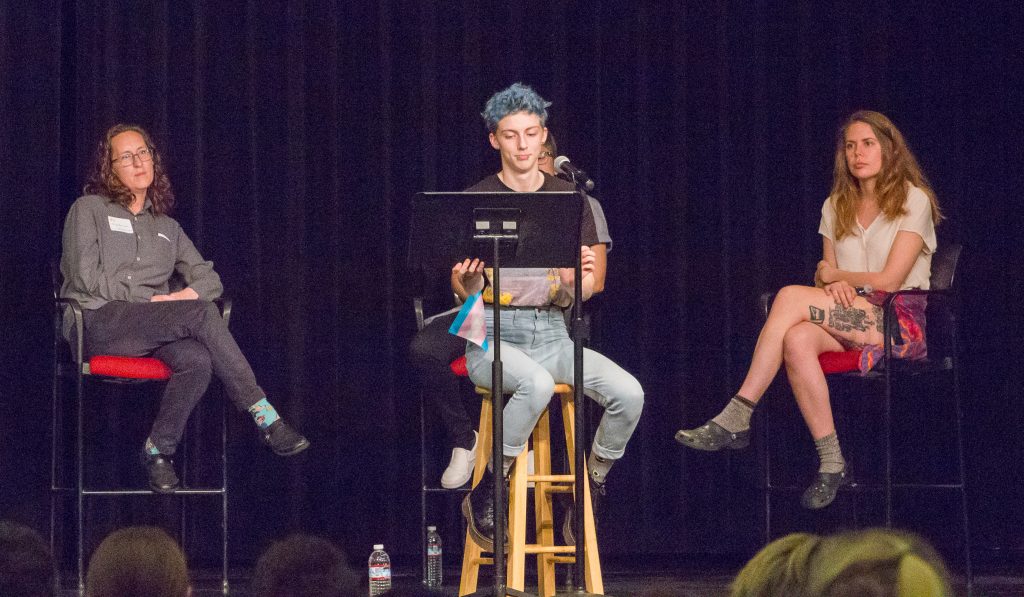
The Coming Out Monologues are stories authored and performed by Western students, staff and faculty. The stories are funny, serious and often heartbreaking.

“They are a representation of the diverse and unique experiences of people who identify within the LGBTQ+ community and/or as straight allies,” described Hall.

This year’s performance included six student performers: Aeron Esch, Hannah Bachelor, Hannah Hardcastle, Maria Bercerra, Max Groshong and Tyler Martin. Staff members performed as well: Annika Joy Barnett, Chrys Burcham, Rebecca Chiles and Chad A. Ludwig.

The first show took place in 2015, then was performed again in 2017. The turnout is always substantial, and it’s commonplace to need extra chairs on standby.

“The most fulfilling part for me is audience response and reaction. How folks really connect and resonate with someone’s story — even if that audience member isn’t LGBTQ,” said Hall, “there’s an electricity and bond in the room as we watch folks share their stories. Their truths. We all feel let in on someone’s journey and it’s a really special and sacred experience.”


Contact the author at howlentertainment@wou.edu

Photo by Ashlynn Norton

Musical guest, Deac Guidi, and staff serenade Smith Hall

Chrys Weedon | Entertainment Editor

On April 30, 1997, Ellen DeGeneres came out on her sitcom, “Ellen.” In an episode titled “The Puppy Episode” when she tells her therapist, played by Oprah Winfrey, that she is attracted to women, making “Ellen” the first sitcom to feature a gay main character.

In honor of this landmark, Western’s SafeZone program puts on a biannual performance titled “The Coming Out Monologues.” The Monologues are performed on or around SafeZone’s birthday, April 30.

On April 30, 2000 was the Millennium March on Washington for LGBTQ Equality. That’s why we picked that date for the SafeZone birthday,” said coordinator CM Hall. Hall, with the help of Ted deChatelet, manages the show every two years.

The SafeZone program started at Western in 2006, and according to their website, “seeks to form an allying network of students, faculty and staff committed and trained to provide safe, non-judgmental and supportive contacts for all WOU community members regarding LGBTQ+ issues.” This program provides the campus with community events and Ally trainings. SafeZone partners with Abby’s House, Stonewall Center and Triangle Alliance to produce the Monologues.

“I was a queer student during a very different time at Western. The early/mid-90’s — when the faculty, admin, staff, and students were silent or hostile and there just weren’t many of us, or any out faculty or staff to gain support from,” commented Hall. Since Hall returned to Western as a staff member in 2006, she has been working to change Western’s community for the better.

“Western feels entirely different. It’s become such an affirming and supportive place for folks who have different sexual and gender identities … It further validates and normalizes our lived experiences,” Hall said.

The Coming Out Monologues are stories authored and performed by Western students, staff and faculty. The stories are funny, serious and often heartbreaking.

“They are a representation of the diverse and unique experiences of people who identify within the LGBTQ+ community and/or as straight allies,” described Hall.

This year’s performance included six student performers: Aeron Esch, Hannah Bachelor, Hannah Hardcastle, Maria Bercerra, Max Groshong and Tyler Martin. Staff members performed as well: Annika Joy Barnett, Chrys Burcham, Rebecca Chiles and Chad A. Ludwig.

The first show took place in 2015, then was performed again in 2017. The turnout is always substantial, and it’s commonplace to need extra chairs on standby.

“The most fulfilling part for me is audience response and reaction. How folks really connect and resonate with someone’s story — even if that audience member isn’t LGBTQ,” said Hall, “there’s an electricity and bond in the room as we watch folks share their stories. Their truths. We all feel let in on someone’s journey and it’s a really special and sacred experience.”


Contact the author at howlentertainment@wou.edu
Photo by Ashlynn Norton

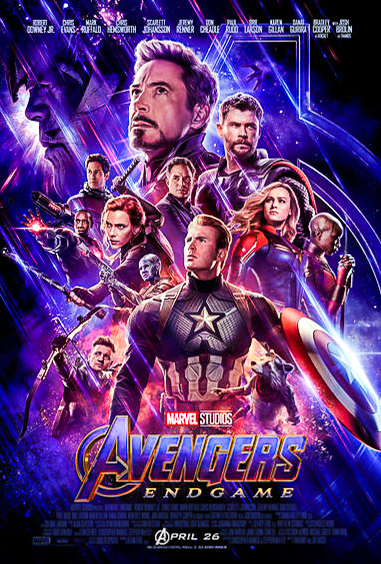
Review: “Endgame” is a fan service film

Chrys Weedon | Entertainment Editor

Even as someone who got into “The Avengers” franchise relatively late and has yet to watch all of the movies, I was super impressed by “Infinity War.” Naturally, then, I was very excited as the “Endgame” release date got closer and closer. I researched theories online, and even created a few of my own in anticipation of the film. By the end of premier night, though, I found that I had lost all my previous enthusiasm. In fact, I was fairly disappointed.

It seemed as though all the wonderful suspense built up in “Infinity War” crashed and burned within the first half-hour of the newest film. From the beginning, every “plot twist” seemed like the most convenient one to explain why the story progressed the way it did. All of a sudden, Thanos had morals. Scott Lang shoots out of a van and has the answer to the biggest plotline Marvel has been building up to in the past 10-or-so years. And Thor is fat now.

It’s not that the movie itself lacks intricacies, it doesn’t. The intricacies are just predictable. Time travel has been a theme repeated in multiple movies less successful than the Marvel cinematic universe. Although “Endgame” tackled time travel in a comprehensive way, and it was something that a fair amount of people anticipated, the way this movie arrived as time travel as a solution seemed a little rushed and I was left wondering why no one had thought of it earlier. This feeling intensified after Tony found the “secret” of time travel within 20 seconds of trying even though it was mentioned earlier in the film to be nearly impossible.

Another disappointment was how the most powerful avenger factored into the storyline. The “Captain Marvel” movie was released so soon before “Endgame” that I was sure that she would have a prominent role in this film as well. Captain Marvel got very little screen-time, and was only used as a last-ditch, “oh yeah, there she is” plot device.

Overall, “Endgame” wasn’t a completely terrible movie. The fight scenes were done well and creative, per usual. Also, I love the Hulk so I wasn’t too sad about the amount of screentime he received. But for a three hour movie, it felt fairly empty plot-wise and most of the big events were predictable, especially in the last big fight scene.


Overall Rating: “Endgame” is an enjoyable movie, but I found it was more enjoyable if you don’t go in with any kind of expectations.


Contact the author at howlentertainment@wou.edu

Photo courtesy of marvel.com

John Vanderslice visits the Space Concert Club on tour for new album “The Cedars”

Chrys Weedon | Entertainment Editor

John Vanderslice could be described many ways, but the label “influential” is one that everyone can objectively agree on. According to johnvanderslice.com, Vanderslice has produced and collaborated with bands such as Death Cab for Cutie, St. Vincent, The Mountain Goats, Grandaddy, Teen Daze, Sleater-Kinney and many others.

Vanderslice came to Salem on a tour promoting his new album, “The Cedars.” Released April 4, this album has broken the musician’s five-year-long solo career hiatus. In November 2013, while on tour in Ohio for his album “Dagger Beach,” Vanderslice was in a high-speed car accident.

“After that happened, maybe a second later, I was like, I’m done. I don’t want to die in a van. It wasn’t sad, it wasn’t celebratory. It was just like, eh, I had a good run,” Vanderslice was quoted in a New Yorker article written by Jason Fagone. Afterwards, Vanderslice’s hiatus commenced.

“The Cedars” album was inspired by a piece of land in West Sonoma, California. The Cedars is an 11 by 11 square mile canyon near a piece of land owned by Vanderslice.

“It’s only 6 miles away but it takes up a mythic space in my mind, like the perfect sound, the perfect lyric. It is unreachable. A lot of this record was written on this land, under the heavy influence of this place,” Vanderslice wrote in the album notes on his website.

Vanderslice has been writing music since he was a young teen. Flash forward to 1989, and Vanderslice moved to San Francisco and made three records with the band MK Ultra. In 1997, the musician opened Tiny Telephone Recording, providing a recording space to the indie rock community of the Bay Area. Since the beginning of his career, Vanderslice has released 11 albums, a handful of singles and is credited on 186 albums on allmusic.com.

“The songwriting process of this record was so radically different … we kind of entered into this irrational machine world,” said Vanderslice in a mini-documentary directed by Cooper Kenward about the making of “The Cedars.” Vanderslice favors analog, which is strongly apparent, especially in this new album. This is a style Vanderslice labels “sloppy hi-fi” in the same New Yorker interview.

On April 24, in the basement of the Space Concert Club, Vanderslice played a show with opening band Meerna, who also hail from Southern California. The 51-year-old musician’s eccentric purple hair matched the cool-hued show lights. After a handful of solo-songs by Vanderslice, he was joined by Meerna and they played a selection of songs, most from “The Cedars,” including “Will Call” and “I’ll Wait for You.”

Vanderslice has a passionate and captivating stage presence, and although his dancing skills aren’t the best, they definitely enhanced the performance. The venue was full of dedicated fans, and the kitchen even named a pie after the headlining musician. The love for Vanderslice in Salem was easily observable and made the performance that much more enjoyable.


Contact the author at howlentertainment@wou.edu

Photo by Chrys Weedon

Graphic Novel Review: “The Nameless City” Trilogy

Cora McClain | Copy Editor

“All called the City their home. And who could say that any of them were wrong?” This text ends the introductory panels of “The Stone Heart,” the second of the “Nameless City” graphic novel trilogy. Those two panels illustrate the core theme author Faith Erin Hicks explores — identity.

The story follows Kaidu, a young boy from the warrior nation occupying the Nameless City. Along the way he makes an unlikely friend in a girl named Rat who was born in the city and orphaned by the occupying forces as a young child. With the city as their backdrop, our two protagonists explore what it means to identify with a people while stumbling onto a nefarious plot to overthrow and destroy the city.

While the plot and villains introduced in the second and third books might fall a bit flat for me, the cultural tension which sparks the plot is far more interesting. It’s a bit uncanny to see a city filled with all sorts of different people from many different nations look at an individual and judge them solely on the nation they belong to. Kaidu’s nation even has a word for people who are not of the nation, literally meaning they are not a person. Let’s just say Hicks is pretty heavy-handed with getting her message across.

Regardless of the thick metaphors, exploring identity on the basis of nationality and where a person is born allows for a juxtaposition with the world outside of the pages of the books. Meant for young teens, the trilogy does its job of trying to show the reader inconsistencies in that sort of judgement. However, I think the first book “The Nameless City” does that better alone, whereas the two others just complicate the message with the introduction of “dangerous knowledge plot device” and villains whose motives are not clearly set from the beginning. The one saving grace would be the satisfactory ending that leaves no loose ends.

Besides my obvious contempt for the overarching plot, the artstyle and fluid action scenes are glorious. Invoking an artstyle similar to “Avatar the Last Airbender,” with thick expressive lines and facial expressions, there was never a moment when I wasn’t absorbed in the colorful world of “The Nameless City.”

Altogether, I don’t hate the trilogy, but I appreciate “The Nameless City” as a standalone novel far more than the addition of the other two books and their shaky plotline. It just kind of feels like there’s a disconnect from the first novel and the other two, and I enjoyed the complexities, characters and plot of the former over the latter.


Overall Rating: I would recommend “The Nameless City” for anyone, especially as an introduction to graphic novels or comics. I would suggest only reading the rest of the trilogy if you want to learn more about the City Builders.


Contact the author at howlcopyeditor@wou.edu

Photo courtesy of us.macmillan.com

Campus Voices

Chrys Weedon | Entertainment Editor

“‘It’s Always Sunny in Philadelphia.’ It’s a certain kind of f—-d up but it’s really funny. It’s about a bunch of idiots who are just kind of funny.” -Sarah Getzendaner, first-year exercise science major

[fruitful_sep]

“‘The Spring Baking Championship.’ I bake a lot so it’s a fun springtime thing and you get some new ideas.” -Kelly Dowell, first-year middle/high education major

[fruitful_sep]

“‘The Act.’ I like documentary type shows and especially that type of thing … true crime and stuff.” – Lisa Purington, first-year ASL studies major

[fruitful_sep]

“‘The Flash.’ He defied all odds and he’s not your average guy… he doesn’t believe in killing… it’s all about justice. I think every man should look up to him.” -Anthony Pablo, junior exercise science major


Photos by Chrys Weedon

Visiting scholar Yuanyu Liao gives insight into Chinese culture through traditional poetry and calligraphy

Chrys Weedon | Entertainment Editor

In the U.S., the works of Shakespeare and Keats from hundreds of years ago are viewed as timeless classics that strongly affected the world of English poetry. According to chinasage.info, Chinese culture looks back even further — over one thousand years further — to their poetic Golden Age during the Tang dynasty. Visiting scholar Yuanyu Liao has brought traditional culture to Western’s campus with her painting and calligraphy in an exhibit on the third floor of Hamersly Library.

“My research is about Chinese art history. My focus is on traditional Chinese painting and calligraphy,” Dr. Yuanyu Liao explained. “I want to communicate with everyone about Chinese culture.” Poetry from the Tang dynasty and the dynasties beyond are extremely valued in Chinese culture today. Dr. Liao commented that from the time children start school in China, they start memorizing ancient poems.

Dr. Liao was born in Fengcheng, Jiangxi Province of China. Liao received her Master’s degree from Jiangxi Normal University in 2002, and continued on to study the painting history of the Song, Yuan, Ming and Qing dynasties, graduating in 2012 with a PhD of art.

Liao has published multiple academic papers in journals such as Art Magazine and the Journal of the National Museum of China. Dr. Liao also published a book in 2017 titled “Relationship between Chen Hongshou Art, Identity and the Change of Dynasty.”

Currently, Dr. Liao is a master tutor and associate professor for the College of Fine Arts at her alma mater; she is also a member of the Jiangxi Female Painters Association.

In her exhibition titled “Image External,” Dr. Liao’s art reflects the core aspects of traditional Chinese poems and paintings.

“I think lines (are) very beautiful … when I (practice) calligraphy, I like the brush, ink and paper together,” commented Dr. Liao. “I think it’s very strong. I hope when people look (at) my work, they can understand (that strength).”

Dr. Liao has studied Chinese painting and calligraphy for 20 years.

“I like nature…” Dr. Liao explained, “the fresh asparagus smells of soil and rain, a blooming lotus is so beautiful; a sweet litchi is so delicious. The sun shines on the bamboo leaves, and the shadows on the walls sway in the wind … these touching feelings can be found in ancient Chinese poetry. I use the beautiful words and rhymes of these ancient poems to express my love for life.”

The “Image External” exhibit includes traditional poems from the Song, Ming, Tang and Qing dynasties, along with paintings of things from nature, such as pomegranates, shrimp, asparagus and different flowers.

While some paintings stand alone, some are coupled with ancient Chinese poems.

“Instead of a true imitation of nature, (ancient Chinese artists) use abstract, rhythmic lines to express an ethereal mood,” detailed Dr. Liao. The strong lines of the Chinese characters in the poems coupled with the delicate, minimalist paintings create a beautiful contrast.

“I hope if people come (to my exhibition), they can know ‘oh, Chinese culture (is) beautiful,’” Dr. Liao concluded.


Contact the author at howlentertainment@wou.edu

Photo by Ashlynn Norton

Internationally acclaimed pianist Alon Goldstein plays Scarlatti, Bernstein, Beethoven and Schumann

Chrys Weedon | Entertainment Editor

According to Alon Goldstein’s website, alongoldstein.com, he is “one of the most original and sensitive pianists of his generation, admired for his musical intelligence, dynamic personality, artistic vision and innovative programming.”

On Friday night, April 19 at 7:30 p.m., Goldstein was introduced for his concert in Smith Music hall as an acclaimed and “busy” pianist. At the age of 18, Goldstein made his orchestral debut with the Israeli Philharmonic Orchestra. Since then, Goldstein has travelled across the world to play the piano with various symphonies, to places like Paris, Russia, Romania, Bulgaria and across the United States.

Goldstein travelled to Western’s campus to play the works of composers with backgrounds as diverse as his travels: Domenico Scarlatti, Leonard Bernstein, Ludwig Van Beethoven and Robert Schumann.

Opening the concert were four of Scarlatti’s 555 sonatas written for the piano. Born in Italy, Scarlatti’s compositions were influenced by the vitality of Spain and Portugal and by his home country. Goldstein described his chosen sonatas as “exercises in precision.” These selections were very technically intricate, and Goldstein played them with a meticulous yet graceful hand.

Next was the selection symphony no. 2 titled “The Age of Anxiety” by Bernstein, followed by “Sonata no. 13 in E-flat Major, Op. 27 No. 1” by Beethoven. Both pieces were skillfully navigated by Goldstein, who morphed between different emotions with ease.

The second half of the performance started with compositions by Schumann, a German composer that, according to Goldstein, sought to tell stories through his music. Titled “Kinderszenen Op. 15,” and containing many sub-movements, this composition explored “what is real and what is unreal,” described by Goldstein, “painted with notes.” Finally, the concert was concluded with another sonata by Beethoven.

Goldstein played with a conservative, light nature, never over-explaining a song’s background or meaning unless it was significant. Goldstein’s performance was only interrupted twice — once before the Scarlatti pieces and once before the Schumann pieces — but overall the pianist seemed to descend into a hyper-focused flow state throughout his performance.

Very technically proficient and with a light touch, Goldstein maintained the emotional integrity of each meticulously selected work. Goldstein, as made apparent by his April 19 performance, has cultivated and honed his talent into a practice that is accessible to an audience.


Contact the author at howlentertainment@wou.edu

Photo courtesy of alongoldstein.com

Pulitzer Prize winner Ayad Akhtar visits campus

Sean Martinez | Staff Writer

Ayad Akhtar has found success in many different creative spheres, including playwriting, book writing and film and television. On Tuesday, April 9, Akhtar visited Western Oregon University to talk about some of his most famous works. During a sit-down interview, Akhtar discussed his passion for literature as well as his thought processes as he wrote his plays.

Around the age of 15, Akhtar began to write, inspired by a high school teacher. Attending college to pursue his dream in theater, he knew he was destined to write a play, but he did not know where to start.

“I often say a good idea for a story is the meeting point between two or three ideas,” Akhtar said. He waited for his gathered ideas to converge before he began writing his most successful play to date.

“Disgraced,” which was released in 2012, won the Pulitzer Prize for Drama in 2013. The play highlights the conflicts that arise when identity interferes with religion.

“One of the reasons “Disgraced” ended up being (so popular) is because it foresaw what was happening politically in America before it happened,” Akhtar stated.

Akhtar’s goal when writing is to keep the audience engaged and thinking, which is why he rewrote the ending for “Disgraced” thirteen times to ensure it would. After audiences witnessed the complexity of the play, talkbacks were enforced so viewers could engage with Akhtar.

“I was constantly tweaking and shaping the play based on my experiences of seeing it with audiences,” Akhtar stated.

Later that night, Western’s Jensen Lecture Series hosted “An Evening with Ayad Akhtar,” as he continued to shed more light on “Disgraced,” as well as “A War Within,” released in 2005, and “The Invisible Hand,” released in 2015. He was interviewed live on stage by theater professor Kent Neely, who then took questions from the audience. Akhtar appreciated the uncertainty of the questions he was asked.

“I don’t need to see (the questions). I think the more spontaneous the dialogue is, the better,” Akhtar admitted. He proceeded to answer questions concerning his life experiences.

Despite all of Akhtar’s success, it never came easy. Even with encouraging parents, it took twenty-three years for Akhtar to finally feel comfortable as a writer. It was during Akhtar’s 20s when the real struggles started: his grandparents berated his parents for Akhtar not pursuing a career that was economically rewarding, and for not knowing what to write about. In his 30s, Akhtar realized writing was a way to express his beliefs.

“Getting perspective on your own experience and understanding what’s valuable in it for other people to know is a huge lesson,” Akhtar concluded.


Contact the author at smartinez17@wou.edu

Photo courtesy of Ayad Akhtar

Spring entertainment: campus events that will keep boredom at bay

Chrys Weedon | Entertainment Editor

April 17

Diane Tarter “Pages” exhibit opening

Join the artist for the opening reception of her exhibit.

Location: Second floor Hamersly Library

Time: 4:00-5:30 p.m.


April 19

Alon Goldstein masterclass and performance

Guest artist teaches a masterclass on the piano and gives a performance.

Location: Smith Music Hall

Time: Masterclass: 10:30 a.m., Performance: 7:30 p.m.


May 1

An elegant evening of piano music

This recital features the work of the piano students of the music program.

Location: Smith Music Hall

Time: 7:30 p.m.


May 2

An elegant evening of vocal music

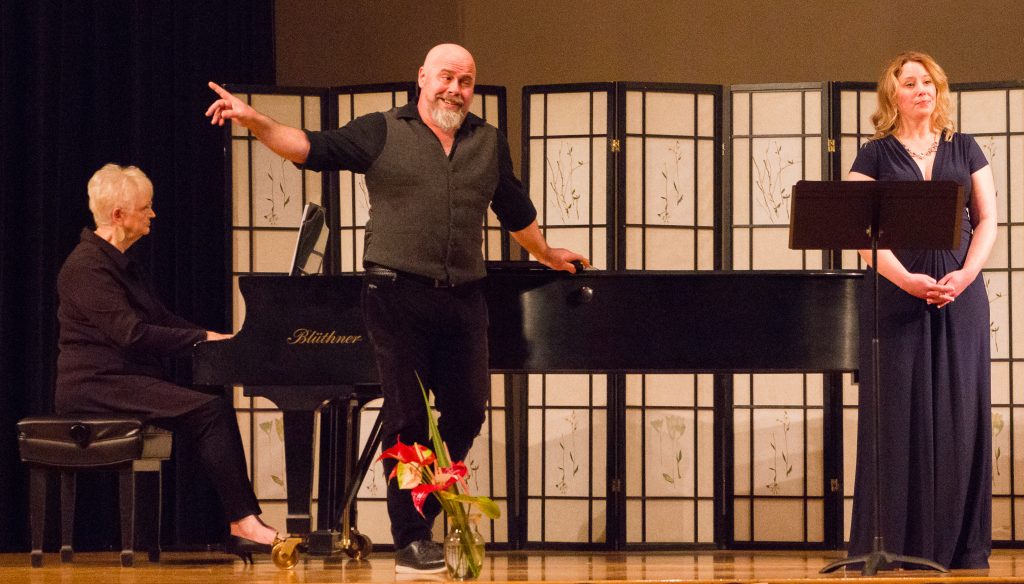
Singing duo Claire Hudkins (Western faculty) and Deac Guidi perform, accompanied by Susan Buehler.

Location: Smith Music Hall

Time: 7:30 p.m.


May 14

Chamber music at Western

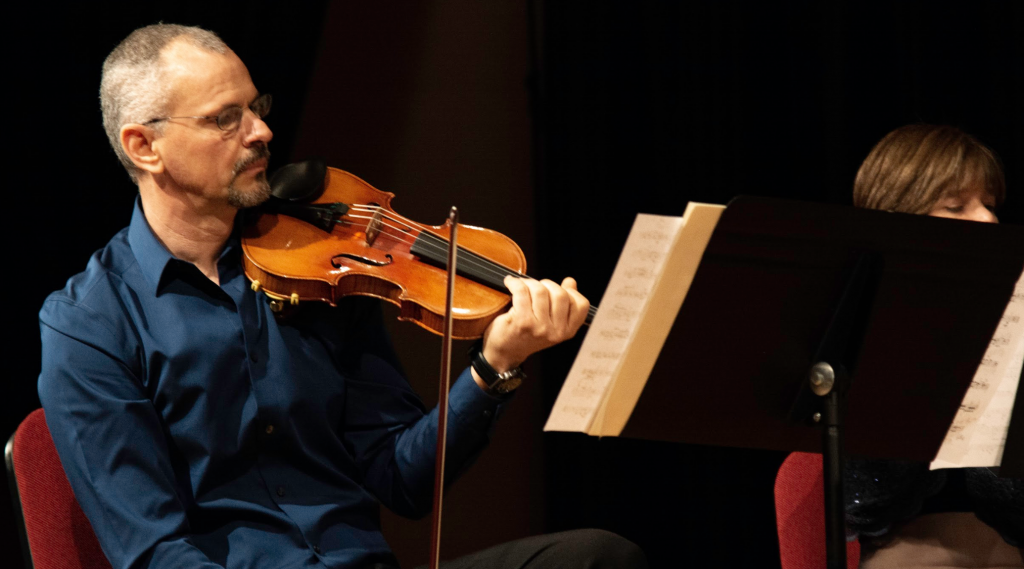
Chamber music presented by Dr. Carlos Velez.

Location: Smith Music Hall

Time: 7:30 p.m.


May 16

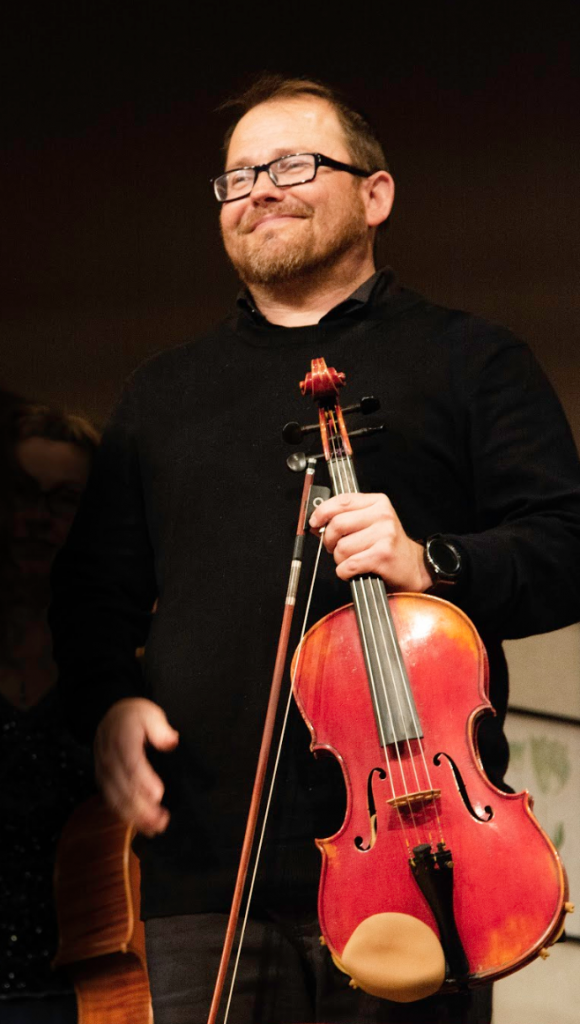
Salem String Quartet

The Quartet returns to Western with faculty Katherine Perks on cello.

Location: Smith Music Hall

Time: 7:30 p.m.


June 1

Percussion ensemble

Paul Owen directs this term’s percussion ensemble.

Location: Smith Music Hall

Time: 7:30 p.m.


June 3

Victor Barranco masterclass and Jazz Orchestra and Latin Jazz Ensemble

Barranco teaches a jazz masterclass and is a featured guest artist performing with the Jazz ensembles later in the night.

Location: Masterclass: Smith Music Hall, Performance: Rice Auditorium

Time: Masterclasses: 9 a.m. and 11 a.m., Performance: 7:30 p.m.


June 8

Smith Fine Arts presents: Kelly Willis

After a long hiatus, Willis is back on tour promoting “Back Being Blue,” released in 2018.

Location: Rice Auditorium

Time: 7:30 p.m.


June 13

The Rosa Lee Show

Rosa Lee performs a one-woman show that involves stories, poetry, video, and more, all in American Sign Language.

Location: Rice Auditorium

Time: 4:00- 6:00 p.m.


Photo courtesy of Ashlynn Norton

“Harry Potter” drag show puts a spell on audiences

Mikaela Wong | Staff Writer

In what has become arguably one of the most anticipated events of the school year, the Western Oregon University Drag Show lived up to its hype. The 23rd annual drag show broke records as it became the first time that the show held two production nights and both completely sold out.

This year’s theme: “Harry Potter and The Prisoner of the Gender Binary.” A gender binary is defined by Wikipedia as “the classification of gender into two distinct, opposite, and disconnected forms of masculine and feminine, whether by social system or cultural belief.”

The main overarching themes in the show were inclusiveness, representation and acceptance.

Dancer Seraphim Benoist said, “We really focused on making this show a safe and inclusive space for absolutely anyone, no matter how you identify. No matter what you think, you’re here to dance and be beautiful.”

Susannah Doepken wrote and directed last year’s show, and played the role of Lupin this year.

Doepken added, “I think there’s a really wide range of characters and it’s written in a way where a lot of people can feel represented. Hopefully someone in the audience who has never seen representation of themselves can feel represented in the show.”

At one point in the performance, many of the characters stood at the front of the stage holding flags that represented people of different identities such as asexual, bisexual, allies and of course, the rainbow pride flag.

Rhianna Salman, who wrote and directed the show, dedicated it to Marsha P. Johnson and Sylvia Rivera, two transgender women who were one of the first to fight back during the riots in New York City in 1969 at the Stonewall Inn, which later became known as the place where the Pride parade was born.

“We literally have them to thank for being able to be here,” said Salman, “the Stonewall riots and the first pride march … that’s why I choose to represent Sylvia Rivera and Marsha P. Johnson… I also want to thank Shelby Wanser, Sam Fennell and Rory Krehbiel for contributing to the script writing.”

Rarely during the show was there silence in the audience. Bouts of screaming, whistling, cheering and shouting were continuous throughout the various numbers that consisted of choreographed dances, lip syncing and lots of pelvic thrusting. The energy in the room was electric, with sexual jokes being cracked every other line.

Daria Keidar, who played Harry in the show, heard about the show through friends she met in dance class.

“I just wanted to be a part of it and part of the show so I just auditioned,” Keidar said. “I’ve been dancing since I was five years old and I’ve been doing theater since I was in middle school.” When asked how she reacted when she realized she got the lead role as a first-year, Keidar replied, “when it finally hit me I was just like ‘oh f—, I’m the lead.’”

The bold personalities that filled the stage were welcomed with cheers and applause that inspired everyone to own their identities, no matter what that looked like to others. The narration encouraged people to accept each other wholeheartedly, and challenged them to stray away from the social constructs that constrict growth and love of one’s individuality. The drag show provides an opportunity to claim the true identity that calls and encourages people to own every aspect of it- even if it changes over time. After all, as the show said, “You might find yourself in a new closet everyday, it just means you get to find a different outfit to come out in.”


Contact the author at mwong16@wou.edu

Photos by Ashlynn Norton


Book review: Wilderness thriller “The River” by Peter Heller

Chrys Weedon | Entertainment Editor

Pinning down very specific and intricate details of the outdoors is often what makes or breaks a wilderness novel. In his new book “The River,” Peter Heller shows off his personal expertise and meticulous research cogently.

Heller, the best selling author of “The Dog Stars,” weaves the story of Jack and Wynn, two young men on their canoe trip down the Maskwa River, a remote stretch of water that slithers across rough Canadian landscape.

Jack is tough and gritty, raised on a ranch in Colorado, still struggling with his mother’s accidental death. Wynn hailed from Vermont, also tough but whose softness shone through his tendency to see the best in everyone and everything. Bonded over their mutual love of literature, the two boys decide to halt their studies at Dartmouth and take their dream trip 160 miles down the river to the Hudson Bay.

Heller writes these two characters much like the archetypes seen in old Westerns, which are often mentioned throughout the story. The skillful dark horse Jack, couples with Wynn who acts as a strong moral compass. The boys struggle against nature, quite realistically, as they coexist with a raging wildfire of seemingly unrealistic proportions. Safety and risk are always being balanced, as is true in any real-life survival situation.

However, nature isn’t the only threat. Jack and Wynn struggle against human forces as well: a pair of drunks and a couple heard through a bought of thick fog having a volatile argument. The boy’s wilderness capabilities are put to the test in a series of conflicts that build upon one another. Their flaws become more apparent through every hardship — hardships that at times feel unrealistic.

Tension is built exquisitely throughout the novel with Heller’s short, stream-of-consciousness style, but it seems a little too good to be true in a more morbid sense. It sometimes seems that through building suspense, Heller is layering so many terribly dramatic situations on top of each other that I was brought out of the story, interrupted.

Maia, the woman in the couple — whose fight become a central component of the story — is written very one-dimensionally, only being integrated to further the plotline. Throughout the story Maia is referred to as simply “she,” making her existence in the story seem flimsy, although Maia is meant to be one of the driving elements of tension. In this way, the plotline sometimes seems to get lost within the details of the story.

There are a couple more snags in Heller’s novel, such as a rushed feeling after reaching the climax of the action and some fogginess due to the third-person limited narration. However, the abundance of compelling details and Heller’s fast-paced style make the book a quick read. Although it doesn’t satisfy the “Hatchet” shaped hole in my wilderness-novel-loving heart, “The River” is a compelling read.

Overall rating: I would recommend this book to wilderness/suspense enthusiast, but anyone without a passion for the outdoors may become bored.


Contact the author at howlentertainment@wou.edu

Photo courtesy of peterheller.net

Western hosts high school bands from across Oregon to compete

Chrys Weedon | Entertainment Editor

Once a year, flocks of well-dressed high schoolers walk in groups through campus, untethered and without a tour guide. That’s because every Spring Term, Western hosts high school bands from across the state of Oregon to compete in preparation for their state competition. Outside of league festivals, the event at Western is one of the bigger festivals in Oregon. This year’s competition took place over two days, April 4-5.

Josh Mendoza, a sophomore music major and president of the band council, is in charge of the band festival this year. Mendoza kept in contact with band directors, scheduled the bands and coordinated the volunteers. “It’s a good experience for high schoolers to compete,” said Mendoza.

“I didn’t do it alone. I have Dr. Nail’s help, and (Josiah Glaser),” commented Mendoza. Glaser was the student responsible for the competition last school year.

Mendoza headed the competition this year because he is the president of Western’s band council.

“Usually the band council takes charge of the festival. It’s been like that for the past few years,” said Mendoza about the festival, “once I’m a band director, I’m going to have to host the festival for my school. It’s a learning opportunity. It gets you connected with band directors across the state, it gets my name out there for networking. It’s just an all around a really good experience.”

Usually, Western invites 32 high school bands to compete. This year is slightly different, however: 36 bands were included in the festival.

“(The bands) kind of move from place to place; they’ll show up, we’ll take them to storage … and then they’ll go warm up …” described Mendoza. “They’ll do their performance, where they’ll get critiqued by judges.” After being critiqued, each band will go with one of their judges to a clinic, where they’ll be given pointers and the opportunity to practice with the judge. Their judge will also tell them ways they can improve or things they may want to try doing differently when they go to competition.

“In Oregon, there is six different (school) classifications, there’s 1A, 2A, 3A, 4A, 5A and 6A,” said Mendoza. Each band gets judged on a variety of different things.

“Their quality of sound, that’s out of 30 (points), technique is out of 30, musicality is out of 30 and then other factors which would be appearance, their choice of music… the total score is out of 100,” Mendoza read off the scoring sheet. Each band is evaluated by three different judges, who all add up their scores. In the end, each group receives a score out of 300.

Choice of music can be important in terms of score.

“If you’re a really high level band, you want to be challenged” Mendoza said. If the pieces chosen by a band aren’t seen as challenging enough to the judges, it will negatively affect their scores. Each band has 30 minutes maximum to perform, and they are required to be playing music for at least 18 of those minutes.

Mendoza closed stating that, “If people want to get involved in (the festival), they can come volunteer.” Willing volunteers can contact Dr. Ike Nail at naili@wou.edu or Josh Mendoza at jmendoza17@wou.edu if they are interested in volunteering next year.


Contact the author at howlentertainment@wou.edu

Photo courtesy of Ashlynn Norton

Vocal performance major Virtue Cornelison discusses his passion for music

Chrys Weedon | Entertainment Editor

Virtue Cornelison is a second year vocal performance major studying classical music. Hailing from McMinnville, Cornelison was drawn to Western because of its comforting environment. “Doing high school music stuff, there were a couple times that I actually got to perform in Rice here,” said Cornelison, “so I kind of knew already that I felt comfortable with the town.”

The atmosphere wasn’t the only reason Cornelison was drawn to Western. Many students from his high school came to the school for its music program as well.

“I wasn’t the only one from my high school to come here for the music department. There’s actually quite a few people from McMinnville,” Cornelison explained.

Cornelison started choir in his junior year of high school. Back then, he was thinking of pursuing psychology, but wasn’t sure.

“As soon as I did basically the first thing musical that I’d ever attempted, it just kind of clicked,” Cornelison commented. “Like, ‘oh, this is that thing people keep telling me about where … you could do this for the rest of your life without ever waking up regretful.’”

When asked about long term plans, Cornelison had a simple answer: “Just to keep making music.” The vocal major is happy to continue what he is doing right now — learning and making music.

“I’m very happy to be learning what I’m learning. I’m making plenty of connections in the music business, as things are,” Cornelison said. “I’m just learning a lot of skills which, even if it’s just me and a few friends, the ability to make music is alone so fulfilling.”

Cornelison studies more traditional classical music, but also likes jazz.

“It’s something that’s a lot closer to what’s popular nowadays, just in terms of it’s not so formal, but there’s still so much technicality with it, it’s something you still really have to study,” said Cornelison.

Cornelison takes part in almost all of the musical groups on campus, including the Chamber Singers and Western Oregon Voices, who are going to perform in Reno, Nevada in June. “The only group I’m not really with is Acapella club, and I don’t know how much longer I can keep myself out of that,” Cornelison joked.

Cornelison only had positive things to say about his experience with the music program so far. “We have some amazing professors that are able to teach… a very small class and get to know you personally. That’s great. But they’re still very prepared to teach you the material. The music department is so tightly-knit it’s really like another home,” Cornelison said.


Contact the author at howlentertainment@wou.edu

Photo courtesy of Chrys Weedon

The Hot Club of San Francisco performs “Cinema Vivant” for Smith Fine Arts Series

Chrys Weedon | Entertainment Editor

For the last 43 years, the Smith Fine Arts Series has been providing Western students with live performances, outreach programs and master classes. The series makes world music, dance and art accessible for local communities and brings more artistic diversity to campus.

In another installment in the series, a group from Southern California will be visiting campus. Coming to Rice auditorium on April 6 is the music group The Hot Club of San Francisco, presenting “Cinema Vivant”, a performance of live self-proclaimed “Gypsy” swing music accompanied by vintage silent films. The movies features are the films of European filmmaker Ladislaw Starewicz, who pioneered stop-action animation.

According to the musical group’s website, hotclubsf.com, their music is strongly influenced by guitarist Django Reinhardt. Reinhardt is a French-Romani musicians who was active from the 1920s through the 1950s and incorporated aspects of American Jazz and his own Romani   culture into his compositions. The musicians are also inspired by Stephane Grappelli, a French jazz violinist that founded Quintette du Hot Club de France along with Reinhardt in 1934.

The Hot Club of San Francisco consists of five players: Paul “Pazzo” Mehling (guitar), Isabelle Fontaine (vocals, guitar), Evan Price (violin), Jordan Samuels (guitar) and Sam Rocha (bass). All members are accomplished musicians who tour both nationally and internationally.


Contact the author at howlentertainment@wou.edu

Photos courtesy of Lenny Gonzalez

Staff favorites: Album edition

Chrys Weedon | Entertainment Editor
Album: Demo by G.L.O.S.S. (Girls Living Outside Society’s S**t)

This album was my introduction to a world I never thought existed — the world of Queer Feminist punk rock. I was introduced to the music of G.L.O.S.S. at a crowded punk rock venue when I was in high school, and I have never been the same since. This album is angry, violent and unapologetically genuine. G.L.O.S.S. explores what it’s like to be a woman in a patriarchal world, and specifically examines the lives and experiences of trans women. The album touches on important topics and makes me feel like I have a space where I can be angry when I need to be.

Photo courtesy of girlslivingoutsidesocietysshit.bandcamp.com


Caity Healy | Editor-in-Chief

Album: Either/Or by Elliott Smith

I’ve listened to this album more times than I can count, and each time, it evokes a sense of nostalgia and sends me through every emotion possible. From teary eyes, to bright smiles by the final song, this album is by far the most played in my collection. A Portland, OR native, Elliott Smith captures his truth in relation to the town in his song “Rose Parade” with lyrics that convey how he felt he fit in the city. It’s a powerful album that does what Smith set out to make it do — give you a true understanding of how he was feeling by making you feel those emotions, as well.

Photo courtesy of killrockstars.com


Kyle Morden | Digital Media Manager

Album: Lemonade by Beyoncé

This album is a true body of art. In a story about love, betrayal and redemption, Beyoncé gives us the monumental and breathtaking visual album, “Lemonade.” The album features talents such as Kendrick Lamar, Serena Williams and The Weeknd. It also includes a variety of genres such as pop, reggae, hip hop, soul and country. Throughout the album, Beyoncé delivers her songs in a powerful and poetic way. In “Formation” and “Freedom,” she inspires people to change their opinions from apathy to activism. “Lemonade” is an empowering album that covers concepts such as self-love and healing.

Photo courtesy of beyonce.com


Bailey Thompson | News Editor

Album: Red by Taylor Swift

Within this album, Taylor Swift offers a raw glimpse at a wide range of human emotion — from the joy and hope of “Everything has Changed”, her collaboration with Ed Sheeran, to the vulnerable, autumnal “All Too Well” and “Red.” Although I acknowledge that people tend to hold polarizing opinions of her, one thing that has always drawn me to Swift, and this album in particular, is that she writes her songs in a way that invites the listener to share in her experiences and relate their lives to hers. “Red” is therapeutic, artistic and real, and I have listened to it on countless occasions.

Photo courtesy of taylorswift.com


Paul F. Davis | Managing Editor

Album: Channel Orange by Frank Ocean

Frank’s breakout album is a musical moment that you experience and you have to question if it was real. Frank accomplishes this once in a generation orchestration by creating soundscapes that inspire a feeling of riding a wave of emotion, up and down. Channel Orange also rises above all else because of its ability to work in all kinds of situations, from the spiritual experience of making love with someone you love to enjoying a drink with friends by a fire. This power resides in the album’s hard hitting melodies and Frank’s floaty tenor voice. Frank defines a generation of ears with his first album, so treat yourself to a good time, plug in your head phones, and let Frank take you to another land of his creation.


Ashlynn Norton | Photo Editor

Album: Mt. Joy by Mt. Joy

Being a huge music nerd, I have a broad taste in music. I tend to listen to movie soundtracks and artists ranging from Aretha Franklin, to Led Zeppelin and even Lady Gaga. So picking a favorite album is hard, but the one that I’ve been listening on repeat lately is Mt. Joy by the band Mt. Joy. It’s a nice break from listening to mostly classic 70s and 80s rock. Mt. Joy has more of an indie/folk vibe that puts you in the mood for a good road trip with the windows and the sun on your face.

Photo courtesy of mtjoyband.com


Rachel Hetzel | Designer

Album: American Beauty/American Psycho by Fall Out Boy

When it comes to music, I usually only like one or two songs in an album. There aren’t many entire albums I enjoy, but American Beauty/American Psycho is one of the exceptions. Fall Out Boy has gone from rock to more pop over the years, and this album is a nice in-between. Their songs always have memorable lyrics, but they really stand out to me in this album. All of the songs in this album are great, but my favorites are “Twin Skeletons”, “Novocaine” and “The Kids Aren’t Alright.”


Cora McClain | Copy Editor
Album: The Disappearance of a Girl by Phildel

I introduce the album which kicked off my interest into what my friends call “my weird music” ⏤ “The Disappearance of a Girl.” Phildel, the British singer/songwriter strips her songs down to the bones, her haunting vocals and piano while sprinkling in a hint of electronic manipulation. Beyond how truly beautiful her songs are (I highly recommend listening to my favorite song on the album, “Funeral Bell”) the beauty of the story she lays out through the 12 tracks causes both tears and smiles. Through her whimsical and haunting songs, she tells the story of surviving abuse she sustained as a child, and how she moved forward through the good relationships in her life while feeling the sorrow of having to detach from her family to escape the abuse. “The Disappearance of a Girl” transports you into a fantastical world of pain and at the same time inspiration.

Photo courtesy of phildel.com


Rebecca Meyers | Lifestyle Editor

Album: Connect the Dots by Misterwives

There were a number of albums I considered before choosing my favorite, but I came back to this one because not only do I enjoy all the songs on the album, but the overall tone of it is very uplifting, even the more serious ones like “Revolution,” that can’t help but improve my mood whenever I listen to them. I listen to “Out of Tune Piano” when I’m feeling stressed or overwhelmed, “Machine” is one of my all time favorite songs and “Band Camp” and “Chasing This” make me excited and hopeful for my future plans.

Photo courtesy of misterwives.com