


Jan 7. 2026 | Jaylin Emond-Hardin | Entertainment Editor
James Cameron created perhaps one of the greatest fictional worlds in cinematic history when he introduced moviegoers to Pandora in his 2009 film “Avatar.” While the director is best known for his 1997 historical romance “Titanic,” his true pet project is the “Avatar” universe.
In a 2022 interview for the “Avatar: The Way of Water” press tour, Cameron revealed the idea came to him in a dream when he was 19.
“I woke up after dreaming of this kind of bioluminescent forest with these trees that look kind of like fiber-optic lamps and this river that was glowing (with) bioluminescent particles and kind of purple moss on the ground that lit up when you walked on it,” Cameron said in the interview. “It was all in the dream. I woke up super excited, and I actually drew it. So I actually have a drawing. It saved us from about 10 lawsuits. Any successful film, there’s always some freak with tinfoil under their wig that thinks you’ve beamed the idea out of their head. And it turned out there were 10 or 11 of them. And so I pointed at this drawing I did when I was 19.”
The franchise’s titular film, “Avatar,” broke records when it first appeared in box offices. It was the highest-grossing film ever — until “Avengers: Endgame” usurped it in 2019 — and won the Academy Award for Best Visual Effects. In 2010, following the success of his movie, Cameron announced that two more movies were set to follow, with the first of these sequels initially slated for a 2014 release. However, Cameron did not feel underwater filming technology was advanced enough for the direction he wanted to take the sequel, so it was delayed until December 2022.
“Avatar: The Way of Water” became as big a success as its older sister. It was the highest grossing movie of 2022, earning $2.02 billion globally, and is currently the third-highest-grossing movie of all time. With “Avatar,” “Avatar: The Way of Water” and “Titanic” sitting in the first, third and fourth spots, respectively — “Avengers: Endgame” still holds second — James Cameron sits second in the list of highest-grossing directors, only $1.3 billion behind Steven Spielberg.
December 2025 saw the release of “Avatar: Fire and Ash,” which picked up immediately where “Avatar: The Way of Water” left off.
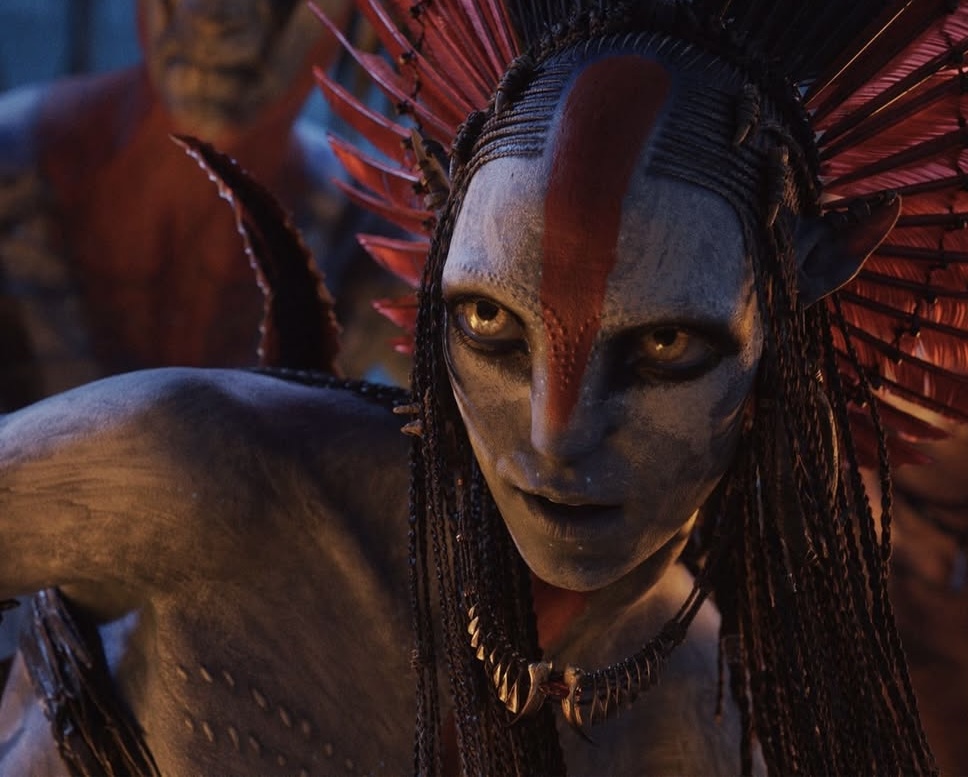
The film follows Jake Sully and his family as they defend their lush world from the Resources Development Agency and its privatized military SecOps. Sam Worthington, Zoe Saldaña and Stephen Lang reprise their roles as Sully, Neytiri and Colonel Miles Quaritch, with most of the cast from “Avatar: The Way of Water” returning. The film also introduces Varang — played by Oona Chaplin, best known for her role as Talisa Maegyr in “A Game of Thrones” — the Tsa’hik of the Mangkwan Clan, and Peylak — played by David Thewlis, best known for his role as Remus Lupin in the “Harry Potter” franchise — the leader of the Na’vi Wind Traders.
Water, fire, wind? This is starting to sound a lot like “Avatar: The Last Airbender.” In fact, a lot of times, when someone mentions “Avatar,” there’s always the clarification: “the one that controls the elements or the blue cat people?” What started as a joke about sharing a name has now shaped into two franchises being near-mirror images of each other.
The Metkayina Clan, which was introduced in “Avatar: The Way of Water,” bears an eerie resemblance to the Water Tribe in “Avatar: The Last Airbender.” They’re isolationists, deeply spiritual and, of course, associated with the ocean. The only difference, however, is that the Metkayina Clan does not control the element they are associated with. The Mangkwan Clan, which is associated with fire — actually controlling it in a way in “Avatar: Fire and Ash” — and which turns on their own kind? Well, that’s almost twin to the Fire Nation. Even the Wind Traders are similar to the Air Nomads: never staying in one place and wearing orange, monk-style robes. Both franchises are also based on various indigenous cultures.
But it’s not as bad as it seems. Both franchises rely heavily on similar tropes and premises.
For one, color-coding elements. Fire is red, which is seen in the Fire Nation’s clothing and the Mangkwan Clan’s war paint, and aggressive, which is shared by both groups’ desire to conquer their world. Water is blue and is associated with spirituality — the Metkayina are the most spiritual of the Na’vi clans, just like the Water Tribe. Air has flow and cannot be contained, which is seen in the Air Nomads and the Wind Traders, who each never stay in one place. Even the Omaticaya, the forest-dwelling Clan to which Sully and Neytiri belong, is similar to the Earth Kingdom in the sense that both groups are grounded and deeply connected to their element.
In short, fire is red and aggressive, water is blue and flowing, air is free-willed and cannot be tied down and earth is grounded and holds a deep connection to the surrounding world. These are all associations that the elements have naturally. After all, every zodiac sign has an element it best fits with.
And being based on indigenous cultures? Well, natives are just like that. We’re cool.
On a more serious note, indigenous peoples share many commonalities with one another. We all have fought against oppressors and colonizers in our histories. We are all deeply connected with the world around us. Our stories are compelling, even today.
“Avatar” is, of course, not without its critics. A lot of people believe the films fit into the white-savior trope, where a white person assimilates into a native population and ends up saving them. Others feel like it is the noble savage trope, where the indigenous peoples are portrayed as morally superior and uncorruptible. Still others see it as a romanticized view of colonization.
As a native woman, I don’t see these movies as any of those, but some indigenous peoples do see them like that. It is all based on perspective. I think they are a love letter to the indigenous peoples who have been on this world since time immemorial and survived despite war and genocide.
“Avatar” and “Avatar: The Way of Water” are currently streaming on Disney+ and Hulu, where “Avatar: Fire and Ash” will also be released once it leaves theaters.
Contact the author at howlentertainment@wou.edu