


Feb. 25, 2026 | Hannah Field | Editor-in-Chief
The gaming space online is catered to, and run by, men and boys. They dominate competitive gaming and casual spaces, too. It’s been my experience that these online spaces have grown unwelcome to the presence of women and girls — and I want to understand why.
Like a lot of people, I ran into the internet while still a kid. It captivated me. I made friends, played games and learned new things. It was online that I learned how much I loved to read and write, and that’s where I practiced my creative skills. In middle school, I took a typing class where I faked my speed results because the teacher thought I typed incorrectly, even though I could type faster than her and any boy in the class — a proven fact from dozens of typing competitions I’d join in the library just to prove myself.
The most important thing that I got from my computer, however, was friendship. I met a lot of girls online when I was closer to ten years old who shared my age and interests. We bonded — quickly — and supported each other through the years, sending messages, emails, Skyped until it traded with Discord and so forth.
Over time, however, I watched my friendships … dissipate. Around high school, I had fewer active online friends than I had ever had. We migrated over to social media friends, and that was all I really heard of them, where they were vacationing and hanging out with their real life friends. But then the pandemic happened — all of a sudden, everyone was back and everyone was online.
Games peaked again, but so did the toxicity. I became incredibly aware that I could not turn on my mic when playing an online first-person shooter, and that I should not join online groups in case they were dismissive of me because of my gender. And, once the pandemic dwindled away, which we all were feeling bittersweet about, suddenly, all of the girls I had felt my friendship reignite with were gone again.
A few of them deleted their online accounts because they had no use for them anymore. The rest of the women traded their games for jobs, yet I watched every boy I ever dated boast about his super-computer setup and 2 a.m. daily bedtime. It was, frankly, infuriating; I’d have to sit by myself in the evening and watch as these guys, who were pretty much no different from me, had this virtual meeting every day where they just had fun together. And I couldn’t find the same thing, for no good reason other than that girls don’t play video games.
If I looked online for girl gaming groups, it struck me that maybe I couldn’t trust people online who didn’t seem to have interests other than gaming. None of the women I met in real life were telling me about their last matches or new games, and I couldn’t seem to find a place with guys who liked the same games as me. It’s dramatic, but I felt like my interests made me weird. I like the pace of an online gaming match. I like the quickness, how it feels to win, my hands on the keyboard and I liked being the fastest typist in my class — maybe still the fastest typist I know.
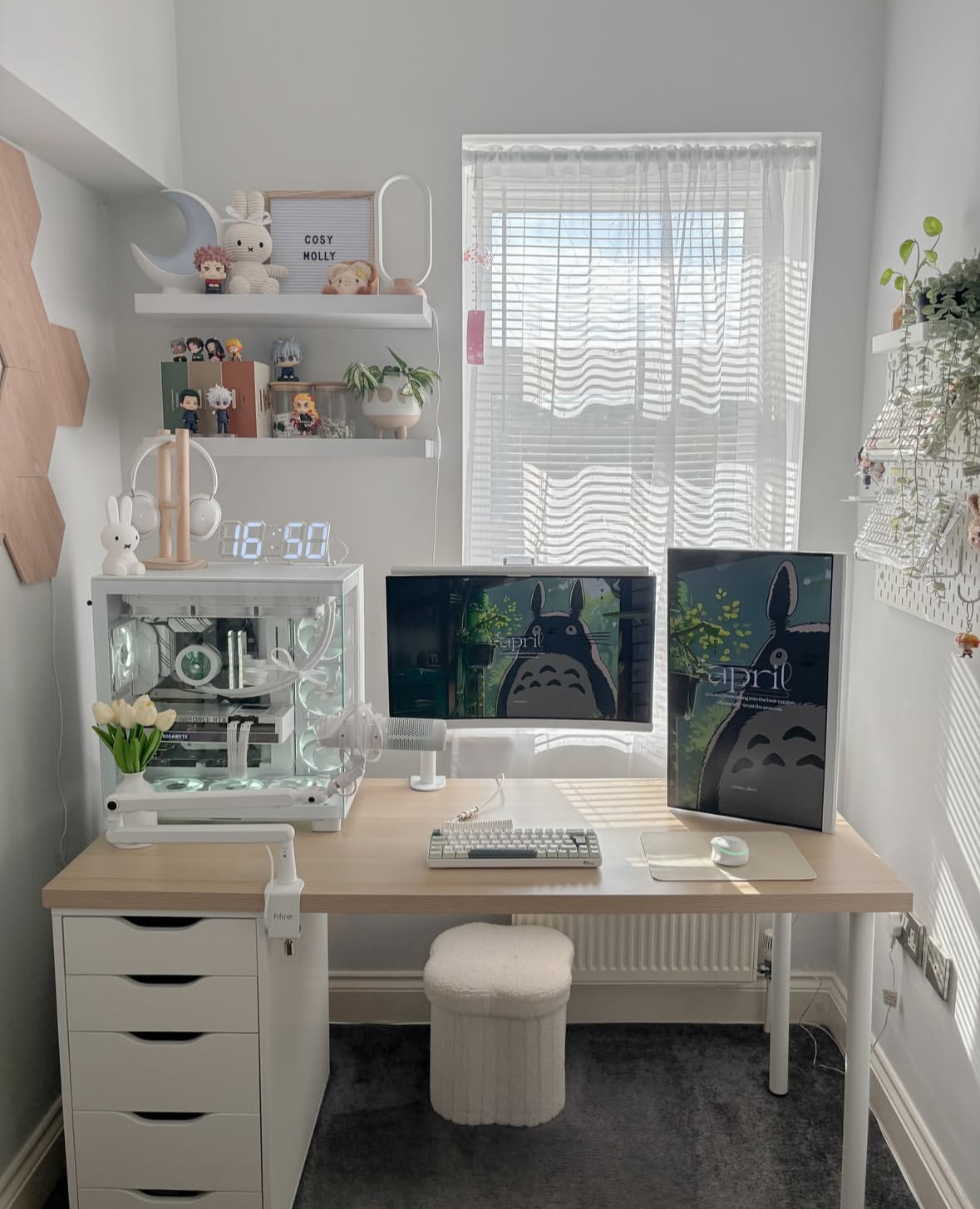
I know there are still women out there who play games. There has to be. According to the Entertainment Software Association, there are — they reported in 2025 that 47% of all American gamers are women. Even though women statistically are half of all players in the space, they are quiet about it, shuffled into only gaming with their partners, playing feminine, less-competitive games or opting for solo-queueing. Or, alternatively, they’re forced into a box that includes kitty ears on their headset and a hot pink computer, labeled as an e-girl or an online pick-me. I wonder if other girls feel the shame that I feel — that one of my favorite hobbies is going home and seeing what I feel like playing.
I was in class last week when a guy asked me if I played Overwatch. Shocked, and immediately flooded with embarrassment, I offered a meek “yes,” and we agreed to play. It hasn’t happened yet, but since then, I’ve been pondering my gut instinct: if I want to play with other people, why do I run from the opportunities and fail to look for women who I know are out there? And, yes, I’m still embarrassed to admit all of this.
There’s also a duality: I love a good competitive match, but I also do it while wearing my own fake nails. I’ve been playing Overwatch since 2017, but I also have 5,000 hours on The Sims 4. I think we spend too much time talking about women and their hobbies, sorting them into archetypes and making assumptions about who they are when they’re alone or happy based on how they appear. Someone would never know the amount of money I’ve invested in games and computer tech, because all they would see is someone who loves to wear dresses and paint pottery. Also, I manage to maintain these interests while managing two jobs. It is possible. Men, you can get a job and still go home and play League.
TLDR: women still like video games, even though they’re quiet about it.
Contact the author at howleditorinchief@wou.edu