


Feb. 18, 2026 | Jaylin Emond-Hardin | Entertainment Editor
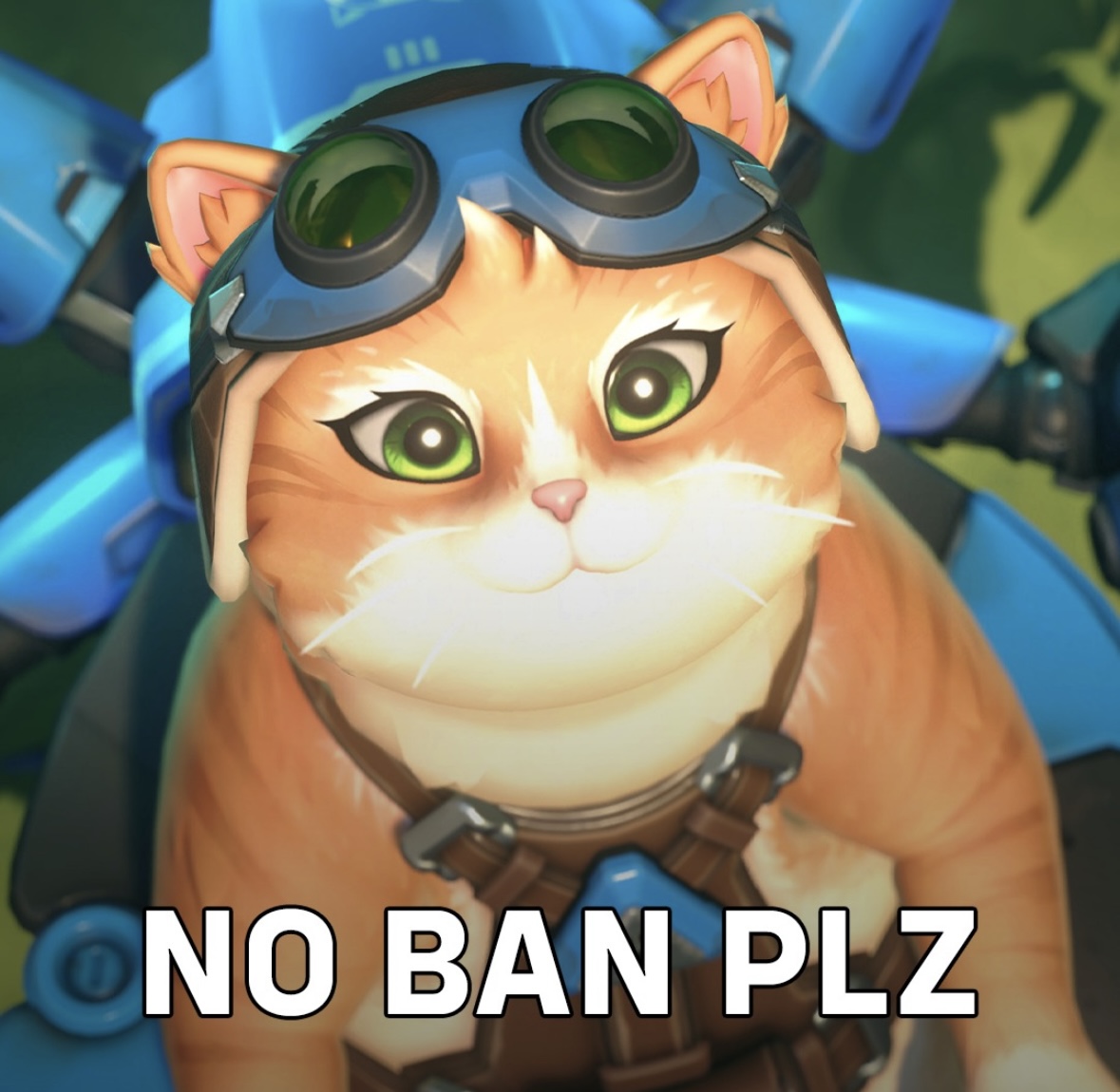
My brother and I said back in 2020 that Overwatch needed to add Brigitte’s pet cat, Fika, as a playable character. Six years later, we finally have Jetpack Cat, exactly as we imagined her.
Jetpack Cat was released with the Feb. 10 update that saw Overwatch developers add her alongside four other heroes.
The game initially released with 21 heroes in either a tank, damage or support role, but this has now blossomed into 50 heroes, with the addition of the five newcomers.
I haven’t really clicked with a hero release since Junker Queen and Ramattra came out in 2022. Most of the newer heroes don’t fit my playstyle — I like fast, scrappy fights and heroes who can push tempo and survive in close quarters. Typically, I gravitate toward heroes like Reaper and Soldier: 76 on damage and Brigitte on support — all of whom reward aggressive, forward play. When Junker Queen and Ramattra were added to the tank role, they were the first tanks that truly matched how I like to play. Now that Jetpack Cat is out, I have another support character who I feel is compatible with this.
And, I know, I’m focusing a lot on Jetpack Cat. I’ve said her name five times already, but she has been an idea for six years, forming in my head. I was scared I wouldn’t like her design or loadout, but Overwatch developers proved me wrong for the first time since 2023.
I’m realizing that I’m slowly starting to sound like a stereotypical Overwatch player who lives on Discord and has 2,000-plus hours on the game, but I promise I’m not. I’m a casual player who, unfortunately, was hyperfixated on the game during the coronavirus pandemic and decided to build her own original characters, complete with lore, abilities and loadouts. So, I know ball.
The pandemic era of Overwatch was the absolute trenches. Echo was released as a damage character in 2020, just five months after the announcement of Overwatch 2, which was two years off. With everyone home, the lobbies and servers were filled with casuals and pros. Playing a queued match — where players select which role they want and wait for an available spot in a lobby — was quick, especially if one wanted to play as a support. This was when I got good at Brigitte because no one wanted to play the support role, and if they did, they always chose Mercy.
Now, this batch of character updates is the largest since the game’s initial release in 2016. And I know, five isn’t a lot, but when compared to the continuous rollout of characters and content that Overwatch’s competitor, Marvel Rivals, has been churning out, this is great news.
With the five new characters, one could run a whole team with each role filled — one tank, two damage and two support. I can still remember when it was two of each role, but we’re not going to talk about how hard I grieved losing the second tank slot. It’s something I still haven’t gotten over.
Each of the five new characters is unique in their abilities and loadouts, but I figured out each of their playstyles by comparing them to what I already knew about other characters in similar roles or similar abilities and loadouts.
Domina is the only tank released in this update. Domina feels closest to Symmetra in the way her value comes from preparation and space manipulation rather than raw mechanical duels. She’s strongest when she’s dictating the terms of engagement — setting up pressure points and forcing enemies to move where she wants them. Like Sym, she rewards players who think two steps ahead instead of just reacting in the moment.
Anran, the first damage character, plays like a classic dive opportunist. I would say she is closest to Genji in how players should approach her. This comparison isn’t just about mobility — it’s about timing windows. Both heroes are ineffective if they go in first and devastating if they go in at the right second. Their value hinges on reading the fight, identifying vulnerability and committing with precision.
Emre, the other damage character released, feels like a midpoint between Cassidy’s grounded dueling presence and Widowmaker’s lethal pick potential. He has the ability to hold space and threaten angles without fully committing to long-range isolation. That hybrid identity makes him dangerous — he can stabilize a frontline fight but also swing momentum instantly with a single well-placed shot.
Jetpack Cat, our first support, whom I am utterly obsessed with, operates in the same vertical, tempo-controlling lane as Wrecking Ball, but with Mercy’s ally-centric utility and a hint of Brigitte’s close-range presence layered in. The strength isn’t raw damage output — it’s mobility, fight shaping and protective pressure. She influences engagements through repositioning, disruption and selective peel, forcing the enemy to constantly adjust rather than anchoring in one predictable space, while subtly reinforcing her team’s ability to hold ground when it matters. Ironically, my comparison of Jetpack Cat to Wrecking Ball is also similar in their design aspects: both are animals that end up with some sort of mecha that helps them engage in battles.
Mizuki, the last hero and second support, feels like dive aggression tempered with brawl survivability. I would honestly compare his playstyle best to a combination of Genji and Brigitte. The Genji comparison shows up in mobility and burst windows, but the Brigitte parallel comes from his ability to stay in the fight longer than most dive heroes. He isn’t a glass cannon — he’s built to commit, trade and remain present in the chaos rather than disengaging immediately.
The introduction of these characters also brought in sub-roles, expanding on the three main roles that all characters already fit into. Tanks and supports each have three sub-roles: tank characters fall into bruiser, initiator or stalwart, while support characters fall into medic, survivor or tactician.
Damage has four sub-roles, which makes sense given it has 22 characters, while tank and support each have 14. These damage sub-roles are flanker, recon, sharpshooter and specialist. I still haven’t 100% figured out the costs versus benefits of each sub-role, but they’re only a few days old as of the time I’ve written this article.
Overwatch is free to play on Steam, Battle.net, Microsoft Store and PlayStation Store.
Contact the author at howlentertainment@wou.edu