

Mount Hood

Wolf pups

A photo of the Wolf Pups with visitors from the Veterans Resource Center. | Photo courtesy of Tammy Gardner

Nov. 12 2025 | Abbi Duhart | News Editor

Wolf Pups — formally known as the Child Development Center — is a school and daycare area on campus where parents in the community and enrolled parents at Western can drop off their kids aged 2 1/2 to 5. The center has been up and running for 45 years, and was originally in Todd Hall, but moved to its new residence in the Child Development Center behind Campus Public Safety. They are part of the Student Affairs division at Western. Currently, there are three classrooms and 46 kids enrolled. A helpful resource they also provide is a dual-language classroom for children who speak English and Spanish. Additionally, they provide a young preschool room that supports children who still need to work on potty training, as well as kids with disabilities.
The original purpose of the Child Development Center was to serve Western students who are also parents by providing a space to assist parents in being able to attend things such as their classes. Currently, they serve Western students, faculty and members of the community, but the most prominent customers now are members of the community.
The center is funded by the IFC for student parents with children enrolled, meaning that Western students with children enrolled receive a sizable discount. A large Preschool Promise grant is also offered to around 30 parents who are low-income, covering the full payment to enroll their child.
The staff at the center encompasses around 25 individuals, including three full-time teachers, two full-time assistant teachers, one half-time assistant teacher and 15-20 student staff who attend Western and are most often enrolled in the Education program. Tammy Gardner, the director at the Child Development Center, explained that they wouldn’t be able to run the center without the large number of student teachers they get.
Gardner emphasized and wanted to highlight that the center is so thankful for and “couldn’t believe the love and support and resources that were given to the preschool, it’s absolutely amazing, and not just to the students, to the families and the staff here.”
The Wolf Pups partner with many different departments and faculty around campus, and have expressed feeling so welcomed by them as they bring joy to the kids. Recently, trick-or-treating for the Wolf Pups in the Werner University Center involved over 30 clubs and organizations around campus, setting up tables and going all-out with decorations, costumes and prizes or candy for the kids. The preschoolers came and had so much fun going to all the different tables; Gardner mentioned, “I will tell you, it was so amazing that after the kids left, I just sat in the WUC and cried.” During Halloween, Campus Public Safety also takes out one of the patrol cars to fire up the lights and sirens and take the kids on little tours.
She also mentioned the great partnership they have with the Natural Science department. Beeb Singson from the department has set up various experiments and lab tours for the kids to come in and do, like an exploding volcano and an earthquake demonstration that are both educational and fun.
They’ve worked with Michael Gonzalez from Athletics, who has invited them to play basketball with Western’s basketball teams. Members of the football team have also come in to visit the kids and play with them. Gardner explained that doing this is so enjoyable for the children and a way for them to meet amazing athletes. Rip Horsey, the director at the Health and Wellness Center, has also set up times for the children to come into the gym and have fun with all of the different activities offered.
Tim and Corrie Cowart, professors in the Dance department, have come in to teach the children mini dance classes as well. The kids love this, and it’s a great way for them to have fun interactions while being active. Currently, the center is also working with the graduate occupational therapy program because they wanted a place for their grad students to engage and observe little children as a way to prepare for their future careers. Each graduate student comes in to teach a lesson plan to the kids, and the kids enjoy it because “they’re young and fun,” as phrased by Gardner.
Gardner also had Logan Doerfler from the Veterans Resource Center come in with a crew to have a special story time about Veteran’s Day with the preschool classes. Doerfler and his crew dressed in uniform and discussed how they serve people and keep them safe, as well as deliver food and water.
Campus Dining provides the Child Development Center with all of the food they need, such as lunches and snacks. The center has expressed gratitude over the hot meals and two snacks a day they receive and how Dining is willing to accommodate, even sending treats like cookies occasionally.
All in all, the Wolf Pups at the Child Development Center are thankful and appreciative of all the resources and activities provided by departments and faculty around campus. The center is a great resource for students attending Western who have preschool-aged children. While the faculty at the center are pleased with how welcoming everyone on campus is, the children have the opportunity to be enrolled in such an amazing space where they can participate in many offered activities from organizations on campus. The people who take time out of their day to volunteer for these events know it’s all worth it to see the joy on even one child’s face.

Contact the author at howlnews@mail.wou.edu

 Edificio Maaske Hall

19 de noviembre del 2025 | Hannah Field | Jefa de Editacion 

El edificio Maaske Hall está siendo sometido a renovaciones en el primer piso, las cuales se extenderán hasta finales del semestre de otoño. Las obras comenzaron el lunes 17 de noviembre y se espera que duren aproximadamente tres semanas. 

En un correo electrónico enviado a la comunidad universitaria, la institución informó que una empresa contratista se encargaría de la eliminación del amianto, que consiste en identificar este material y retirarlo, repararlo o encapsularlo. El amianto es una sustancia cancerígena que afecta a los pulmones, causando irritación y cicatrices en el tejido pulmonar. Se encuentra con frecuencia en edificios y vehículos, y está presente en muchas construcciones anteriores a la década de 1980, en diversos elementos como tuberías, aislamientos y techos. Era un material de construcción común antes de que se descubriera su nocividad, debido a sus propiedades anticorrosivas y resistentes al calor. Debido a los riesgos, la primera planta fue aislada del resto del edificio y del exterior. Se ruega a los estudiantes, al personal y al profesorado que no intenten acceder a la primera planta del edificio Maaske Hall. Hay un ascensor exterior disponible en el lado norte del edificio para acceder a las plantas superiores, donde se encuentran muchas oficinas del profesorado en la segunda y tercera planta. 

Según se informa, se realizarán más reformas durante los próximos semestres de invierno y primavera, incluyendo nuevos suelos, iluminación y pintura, pero no se ha publicado más información sobre el tipo de cambios o mejoras que se realizarán en el edificio, aparte del objetivo general: construir un Centro de Educación Forense. 

El centro será una colaboración interdisciplinaria dentro de la Facultad de Artes Liberales y Ciencias, liderada por la División de Justicia Penal y el Departamento de Química. “Este espacio proporcionará aprendizaje práctico en el campo de la ciencia forense y brindará

oportunidades para una mayor participación de la comunidad y la región,” declaró Rebecca Chiles, vicepresidenta adjunta, en un correo electrónico informativo enviado al campus. 

El edificio Maaske Hall está ubicado entre el Centro Universitario Werner y el edificio de Matemáticas y Enfermería. No alberga aulas, por lo que los estudiantes suelen pasar de largo sin prestarle atención, y muchos desconocían los daños internos o los posibles riesgos, hasta que comenzaron las obras de eliminación de amianto y se selló un largo pasillo gris con señales de peligro, justo al lado de las puertas principales. Se espera que, con la creación del Centro de Educación Forense, el edificio atraiga a los estudiantes para algo más que las horas de consulta de sus profesores. Este centro será pionero en la Universidad Western y podría generar muchos cambios positivos en la comunidad universitaria. 

Contacta al autor en howleditorinchief@mail.wou.edu

ICE 

5 de noviembre del 2025 | Abbi Duhart | Editora de Noticias

El ICE se está haciendo notar en el Valle de Willamette. Con numerosas detenciones y arrestos en zonas como Salem y Woodburn, los residentes empiezan a temer por su vida y la de sus familiares y amigos. A menudo, los agentes de ICE conducen vehículos sin identificación, lo que les preocupa a los resodentes, ya que no pueden identificar la llegada de agentes de ICE. Los estudiantes de Western han recibido instrucciones sobre qué hacer si ICE llega al campus por parte de la administración de Western, la Asociación de Estudiantes Migrantes Unidos y la organización Jóvenes Socialistas Democráticos de América de Western, además de diversos recursos para conocer sus derechos. El 30 de octubre, más de 30 personas fueron detenidas y arrestadas en Woodburn por el ICE. La Coalición por los Derechos de los Inmigrantes de Portland, una línea directa a la que los residentes de Oregón pueden llamar si conocen a alguien que ha sido detenido, recibió numerosas llamadas informando de que varios vehículos con personas fueron detenidos y arrestados cuando se dirigían al trabajo. Familiares llamaban para reportar que sus seres queridos no habían regresado a casa. Desde entonces, el número de llamadas de este tipo no ha dejado de aumentar. 

Juan Larios, superintendente del Distrito Escolar de Woodburn, alertó a los padres sobre la presencia de agentes del ICE y les aseguró que el distrito no participa en ningún tipo de operativo de control migratorio y que no permitirá que los agentes del ICE accedan a ningún edificio escolar. 

De igual manera, la superintendente del Distrito Escolar de Salem-Keizer, Andrea Castañeda, informó a las familias que los agentes del ICE no tienen permitido entrar a los edificios escolares ni acceder a los expedientes de los estudiantes sin una orden judicial. Muchas familias en el área de Salem-Keizer han expresado temor, ya que muchas provienen de familias inmigrantes. El 30 de octubre, el departamento de policía de Salem confirmó que las autoridades de inmigración están operando en Salem y sus alrededores.

Sin embargo, la policía de Salem explicó que no reciben ningún aviso previo cuando los agentes del ICE ingresan a la ciudad. 

Ante la inminente amenaza de los agentes de ICE, es importante que los estudiantes de Western conozcan sus derechos. Si un agente de ICE se acerca a un estudiante en el campus, este debe llamar inmediatamente a Seguridad Pública del Campus al 503-838-8481, y también puede llamar a la Oficina del Asesor Jurídico al 503-838-9471. Por ley, todos los agentes de ICE deben comunicarse con Seguridad Pública del Campus antes de tomar cualquier medida, por lo que los estudiantes pueden llamar a Seguridad Pública del Campus si se les acerca un agente y decirle, “No doy mi consentimiento para nada.” 

La presencia de ICE, e incluso pensar en ICE, puede ser extremadamente angustiante para los estudiantes. Por estas razones, también se les anima a utilizar los recursos de salud mental disponibles en el campus. El Centro de Salud y Asesoramiento Estudiantil está disponible para los estudiantes de lunes a viernes, de 9 a.m. a 12 p.m. y de 1 a 5 p.m. Los estudiantes pueden solicitar una cita de emergencia llamando al 503-838-8313. Además, los estudiantes pueden contactar a la Asociación de Estudiantes Migrantes Unidos, que defiende activamente sus derechos y organiza eventos informativos para ayudarlos a comprender cómo actuar en estas situaciones. También cuentan con muchos recursos útiles, como documentos con ejemplos de situaciones y respuestas para los estudiantes. Si alguien detecta la presencia de agentes de ICE en áreas protegidas, como el campus de Western, puede llamar a la Línea Directa de Sanctuary Promise al 1-844-924-STAY. Los estudiantes también pueden firmar una petición de los Jóvenes Socialistas Demócratas de América de la Universidad de Western Oregon que solicita a la universidad que declare el campus santuario para estudiantes de todos los orígenes, implemente un sistema de alerta, capacite al personal docente y administrativo sobre cómo interactuar con ICE, brinde capacitación e información a los estudiantes y busque opciones para financiar centros de apoyo legal. Los estudiantes que deseen firmar esta petición pueden encontrar el enlace en su Instagram: @wou_ydsa. 

Contacta al autor en howlnews@mail.wou.edu

 

El huracán Melissa golpea

5 de noviembre del 2025 | Abbi Duhart | Editora de Noticias

El huracán Melissa es uno de los huracanes más poderosos que se han registrado en el océano Atlántico hasta la fecha, tras arrasar el norte del Caribe y dejar a miles de personas sin electricidad ni hogar. Cuando el huracán llegó a Jamaica el 28 de octubre, se reportó como un huracán de categoría 5 con vientos de hasta 185 mph. Un huracán de categoría 5 es la clasificación más alta para huracanes e implica vientos de 157 mph o más, además de causar daños catastróficos. 

El 30 de octubre, el huracán azotó Jamaica y causó una destrucción masiva, afectando a los residentes e incluso cobrándose vidas. Muchos residentes se quedaron sin hogar tras la tormenta, y muchos perdieron sus pertenencias personales debido a las inundaciones. La tormenta también arrasó carreteras y puentes, lo que dificultó que los jamaicanos recibieran ayuda tras el impacto. Finalmente, helicópteros llegaron para distribuir alimentos, agua, medicinas y otros suministros esenciales. Tras el desastre, los equipos de búsqueda y rescate encontraron al menos 19 muertos, y más de 13,000 personas permanecen en refugios superpoblados tras haber perdido sus hogares. El setenta y dos por ciento de la isla se quedó sin electricidad. 

Daños similares se produjeron en Cuba, pero la Defensa Civil cubana logró evacuar a 735,000 personas antes de que la tormenta tocara tierra. 

Haití también se vio gravemente afectado por el huracán Melissa, con al menos 30 fallecidos y 20 residentes reportados como desaparecidos. Puerto Príncipe, la capital, sufrió algunos de los daños más severos. El huracán Melissa provocó fuertes lluvias que inundaron gran parte del territorio y dejaron viviendas inaccesibles. Los residentes comenzaron a regresar a sus hogares lentamente el 30 de octubre. El huracán destruyó viviendas y separó familias, y se reportaron casos de niños fallecidos. Más de 15,000 personas se alojaron en refugios tras el paso del huracán. En Haití y Cuba, la tremenda cantidad de lluvia e inundaciones dejó comunidades con cientos de residentes completamente aislados, sin forma de contactar a nadie para pedir ayuda.

El huracán Melissa causó al menos 50 muertes en Jamaica, Haití y Cuba, pero se espera que esta cifra aumente a medida que los expertos continúan la búsqueda de las personas desaparecidas en las islas. Tras estos devastadores sucesos, el huracán Melissa se alejó de las Bermudas la mañana del 31 de octubre, debilitándose a huracán de categoría 1. Hacia las 11 a.m., la tormenta se había debilitado y se clasificó como un potente ciclón postropical con vientos de alrededor de 85 mph, desplazándose hacia el noreste. A medida que la tormenta continuaba en esta dirección, se esperaba que la costa noreste de Estados Unidos y partes de Canadá se vieran afectadas, principalmente por fuertes lluvias. Si bien probablemente no causará los mismos daños en tierra que en las zonas mencionadas, la tormenta sí generará condiciones marítimas adversas cerca de la costa. 

Contacta al autor en howlnews@mail.wou.edu

 

The Mandela effect

A photo of the Fruit of the Loom logo with and without the Mandela effect. | Photo from @sosupernaturalpod on Instagram

Nov 5 2025 | Abbi Duhart | News Editor

Coined by Fiona Broome, the Mandela effect is a phenomenon that many people experience, whether they realize it or not, in which they have faulty memories of a certain person, character, event or anything similar. Each faulty detail is often experienced by a multitude of people, making the effect seem that much more mysterious and odd. Broome created the term “Mandela effect” when she discovered that she, along with many others, believed that Nelson Mandela died in the 1980s when he in fact died in 2013. She was shocked that so many people remembered a key historic event falsely and thus put a name to the phenomenon.

A common occurrence of the Mandela effect that many encounter is centered around Disney’s well-known character Tinker Bell. Many people, including myself, remember in the old Disney movie era how Tinker Bell would come out at the beginning of VCR movies when they show the Disney castle logo and would circle around the castle and tap the top of the “I.” Supposedly, this never actually happened and, instead, there was only a white half circle that went around the castle, with Tinker Bell never actually showing up. However, many Disney fans speculated about this and tried to dig up old Disney VCRs and DVDs, with some allegedly proving that Tinker Bell did, in fact, appear. Whether she actually appeared or not is still up for debate.

Those who are familiar with “Star Wars” often recall what is argued to be the most famous line in the franchise: “Luke, I am your father.” What if I said that this was never actually Darth Vader’s famous line? In “The Empire Strikes Back,” the line that Darth Vader actually says to Luke is “No, I am your father.” Many fans distinctly remember the use of Luke’s name in this line as Vader is talking to Luke, and the line is quoted this way by fans and non-fans alike. In the same vein, many Disney fans remember the famous line from the Evil Queen in “Snow White” being “Mirror, mirror on the wall, who is the fairest one of all?” The correct line spoken in the original “Snow White” is in fact “Magic mirror on the wall, who is the fairest one of all?” Many people recall the use of “mirror, mirror” even though the Evil Queen never said this.

Another common Disney Mandela effect happens when recalling the original Mickey Mouse. When thinking about the clothes that he wears, many remember his shorts with buttons having suspenders. If fans go back and look, though, they’ll find that Mickey Mouse does not actually have suspenders, he only wears the shorts with buttons. 

Those who read or watched it as a kid may recall the popular children’s show about Mama and Papa Bear as they raise their two bear cubs in Bear Country. But what comes to mind when prompted to spell out the name of this show? The correct spelling is “The Berenstain Bears,” even though many recall it being spelled as “Berenstein.”

Video game fans aren’t immune to the Mandela effect either. Those who spent their childhood playing “Pokémon” games or collecting Pokémon cards commonly argue about the appearance of the famous Pokémon Pikachu. Some fans recall his unique zig-zag tail having a black tip at the top, while some recall the black section of his tail being at the bottom. Fans who recall the black section being at the tip of his tail have fallen victim to the Mandela effect, because Pikachu does not have any black at the end of his tail.

When thinking about the show “Scooby-Doo,” people also often remember the character Shaggy as having a distinct Adam’s apple in his appearance. This characteristic often stands out to fans too because Shaggy is seen eating food a lot, making his Adam’s apple very clear. Shaggy also gulped a lot in the show out of fear, something that is believed to also feature his Adam’s apple. Yet, if we go back to view Scooby Doo, Shaggy doesn’t actually have an Adam’s apple at all. He does have the bulge when he swallows or gulps, so it is theorized that fans are just remembering this.

The Mandela effect is known as a phenomenon for a reason, but there are a few differing theories for why it occurs. One explanation is false memories. When we recall something that happened a while ago — more so the further back we go — our brains can set off neurons that are connected to other memories and details, potentially causing us to remember something incorrectly. Similarly, confabulation may happen, meaning that our brain subconsciously fills in gaps for things we don’t quite remember. Human brains try to make sense of this lapse of knowledge by filling in a reasonable explanation, even if we don’t realize it’s false. Our brains can also subconsciously change a past memory based on what we encounter after it. For example, perhaps the reason many people remember Tinker Bell at the beginning of Disney movies is because something similar occurred at a later date with something that was related. The fact that our brains do this also contributes to the fact that eyewitness testimonies are not always reliable. 

A more unusual theory that some have surrounding the Mandela effect is alternate realities. In this theory, the individuals who make up the group believing that each instance of the Mandela effect happened are all from an alternate reality in which that version of the event is actually true. So, in the Tinker Bell Mandela effect, everyone who remembers Tinker Bell in the Disney intro somehow entered a different timeline in which Tinkerbell actually did appear. 

No matter if someone has experienced the Mandela effect for themself, it can be interesting to think about why this phenomenon occurs in the first place. It can be easy to write it off as a coincidence if a couple of people experience each event, but large groups of people all report remembering the same false events. As humans, we naturally try to find reasonable explanations, but perhaps some things just can’t be explained.


Contact the author at howlnews@mail.wou.edu

Gaming on the mind

A photo of a gaming setup with the game “Stardew Valley” on the screen. | Photo from @mysleepylifestyle on Instagram

Nov 5. 2025 | Belen Ponce Leal | Lifestyle Editor

Video games have experienced a tremendous amount of growth throughout the years. During the coronavirus pandemic, many used video games as a way to connect with others for relaxation and social interaction. Not only did the games provide temporary escape from world issues at the time, but they also helped connect people to their friends and family in a way that was safe. Now that the world is somewhat back to normal in the sense that we can be around each other more, the gaming industry still continues to grow and develop. In 2021, the World Health Organization initiated discussions on how gaming can affect mental health. For years, most have believed that video games were detrimental to one’s psyche. While they can be like any form of addiction, some studies have found some positives to gaming.
According to an article written in 2014, published by Radboud University, certain cognitive skills can be developed by playing games that involve fast reflexes and aim. They include accurate attention allocation, high spatial resolution, better visual processing and enhanced mental rotation abilities. They also found that gamers have a significant increase in spatial skills in particular, which have been linked to higher achievement in science, technology, engineering and mathematics skills. It is important to note, however, that most of those developments were seen from first-person shooters, which are one of the most popular types of games in the modern day.
Games can also influence problem-solving skills, which can apply to almost every genre of video games. Most games require the player to get from point A to point B, which is where the gameplay comes from. It could vary from shooting enemies to get the door to unlock, solving a puzzle or even just exploring the area to find out where to trigger a cutscene. An action as simple as that can develop someone’s ability to navigate situations better.
Yet, like all things in life, having too much of something can be bad for one’s health. Because video games can be so engaging and feel as if whatever’s happening on the screen is happening to the person in real life, the issues felt in the game can feel a little too real. This isn’t always a bad thing, especially when the game can make someone feel immense joy. However, when experiencing too much of a life-threatening situation, it can add stress to a person’s mind and change the way they think.
According to the Mayo Clinic Health System, excessive gaming has also been linked to health struggles like obesity, insomnia, eye strain, anxiety, depression and difficulties with other commitments like school or work. Hyperarousal can also occur with too much concentration on the screen. Hyperarousal can appear differently in different types of people, but usually involves struggles with the mind’s ability to process information. Paying attention can be difficult, and impulses may be harder to control, following directions is more challenging and some can have decreased interest in other activities.
It is notable, though, that having fun has tremendous effects on the brain. According to the National Institute for Play, playing a game, whether it be on the field or on the screen, can help adults deal with stress and can promote the release of endorphins in the brain, which brings down stress-inducing cortisol levels. It can soothe the mind’s both wonderful and frustrating ability to think too much. With the stress of adult life, including problems like bills, jobs and school, we as young adults need to plan when we are allowed to take a leisurely break from it all, and gaming is a great way to do it.
Some enjoy gaming to have a sense of control over a difficult time in their lives. Many gamers describe an experience that happens when completely immersed in a game, simultaneously providing a high sense of control and a loss of self-consciousness. Anyone who has ever played a game to completion will often have a look of pride on their face. The satisfaction one can get from completing a really hard level or winning a difficult boss fight will always be fulfilling.
The Entertainment Software Association created a survey known as Power of Play, which came out earlier this year. 24,000 people aged 16 or above all answered questions to study the perspective of video games globally, spanning 6 continents. The findings in the survey showed not only that there is a nearly even gender split in the players, 48% women and 51% men, it also reported that 66% of gamers do it for fun, while the rest do it for stress-relieving purposes or to keep their mind sharp and give their brain a workout.
It is important to keep in mind that gaming can become an addiction. The reason why it occurs is similar to other various addictions like alcohol or tobacco. The reward part of the brain releases dopamine in response to an action that triggers it. If a person does the action enough times, whether it be picking up a bottle or a controller, the brain begins to associate the activity with the release of dopamine. Then, the person with the problem gains a strong craving to find that pleasure over and over again.
If there is certainty in anything, it is that the gaming industry is continuing to grow. According to the International Trade Administration, the gaming industry made nearly $66 billion in 2023. Over 190 million Americans play video games, with 78% of households having at least one gaming device. It can be a struggle to find a balance between having a healthy hobby or a potentially damaging problem. Some potential ideas to keep in mind when gaming would be to consider playing the same way that most sports rules operate. Be respectful, be kind, be involved and be reasonable, both with the time spent on the activity and the way someone goes about having fun.

Contact the author at howllifestyle@mail.wou.edu

‘Is that your phone?’ The ‘dumbphone’ trend, explained

Graphic of flip phone | Graphic made by Addison Watts

Nov 5 2025 |  Kiera Roedel | Copy Editor

Stop me if this sounds familiar: it’s late at night and there are assignments that need to get done, but it’s impossible to put down the smartphone. This type of situation is all too common for college students, prompting questions about social media addiction and the need to do a “digital detox.” While some people simply set screen-time limits on their phones and stay mindful of the time they spend scrolling, a growing number — including myself — have taken the next step: going back to a time before smartphones.

The “dumbphone” trend has been gaining prevalence online over the past couple of years, mostly due to its nostalgic or aesthetic value. But dumbphones, defined as cell phones without easy access to an app store or modern web-based apps, have legitimate utility as a means to get off social media and spend more time living in the real world.

I’ve spent over a year using a flip phone as my main device. It has access to the following functions: calling, texting, a two-megapixel — yes, two — camera, an MP3 player and some basic utilities like a calculator and calendar. It also has a simple web browser that’s too slow and outdated to even load the front page of Reddit. And that’s literally it. No Instagram, no TikTok, no DoorDash, no Google Maps, no Spotify and no way to download or access any of those services. The vast reduction in available apps and connectivity is definitely an adjustment.

Regardless, there are some notable advantages to using a dumbphone. For one, it’s apparent immediately upon switching just how much time people spend on their phones. In the time between classes, in the library, at meals — it feels like nobody even bothers to look up. Recapturing those lost minutes declutters my brain and is very refreshing.

Second is the nostalgic or aesthetic value that I mentioned. I won’t lie — I didn’t initially switch to a flip phone because I felt the need to digitally detox. It was because I felt nostalgia for the time when “cell phone” meant a weird plastic trinket that people could fiddle with in bizarre ways to expose extra screens and keyboards. Using a flip phone nowadays allows me to recapture a little bit of that feeling. 

A third benefit is the cost. In a time when a new iPhone or top-of-the-line Samsung can easily run over $800, being able to pick up a flip phone from a department store for under $50 is a breath of fresh air. Mine cost $19.99 from Tracfone, and I’m still using it a year and a half later. That’s just an objectively good deal.

Not everything is sunshine and rainbows in the dumbphone world. For one thing, missing out on things that people have come to consider basic utilities, like Google Maps, really stings. It can be seen as another part of the package — learning to navigate alone  or by paper map is, in a sense, just another part of the digital detox. And some app-based services have alternatives, like the fact that anyone can call a phone number to get an Uber, no app required. 

I haven’t totally gotten rid of my smartphone. I still use it for things like my D&D character sheet and for when I need to take a picture that isn’t insufferably — yet aesthetically — grainy. But the opportunity to leave that toxic glass brick in a drawer where it belongs the majority of the time is a truly eye-opening experience.


Contact the author at howlcopyeditor@wou.edu

ICE

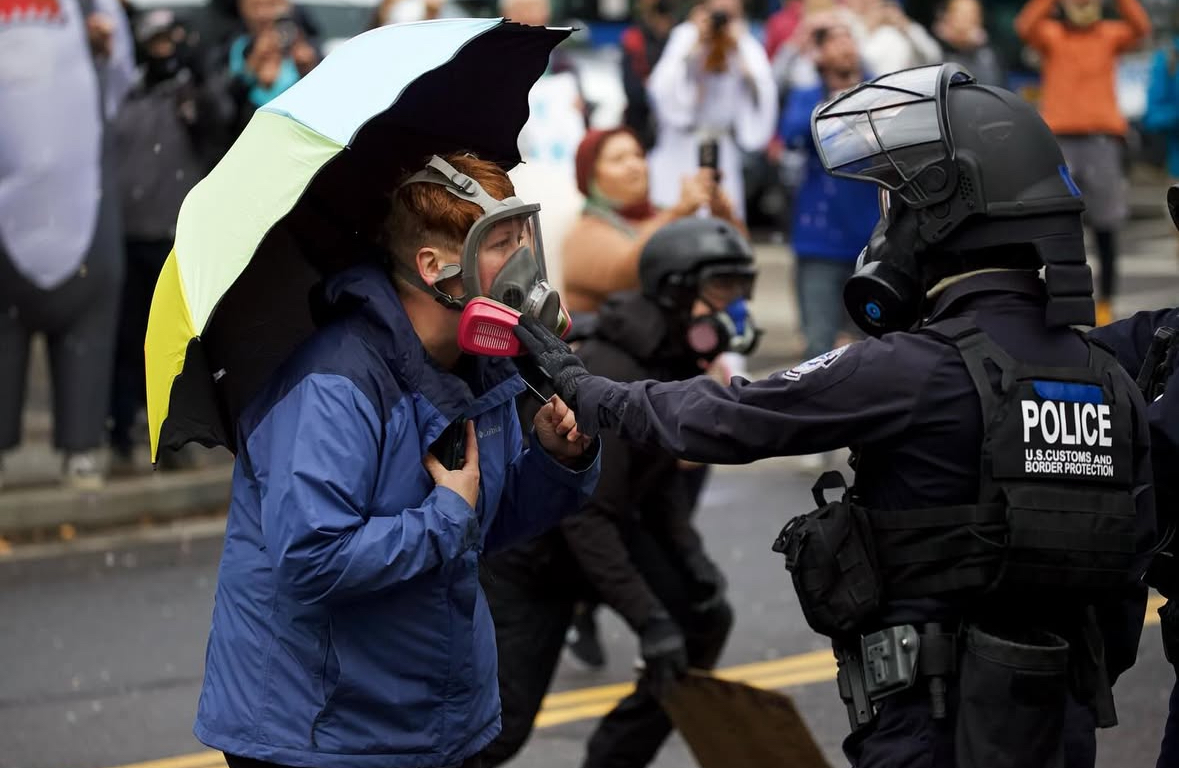
A photo of an ICE agent touching a protester in a gas mask outside of Portland | Photo from @killendave on Instagram

Nov. 5 2025 | Abbi Duhart | News Editor

ICE is slowly becoming a known presence in the Willamette Valley. With a multitude of restraints and arrests happening in areas like Salem and Woodburn, residents are starting to fear for their lives and their family and friends. Often driving unmarked vehicles, residents are even concerned with being able to identify when ICE is coming. Students at Western have received instructions on what to do if ICE comes to campus from Western administrators, Unidos Migrant Student Association and Western’s Young Democratic Socialists of America organization, as well as various resources for knowing their rights.

On Oct. 30, more than 30 people were restrained and arrested in Woodburn by ICE. The Portland Immigrant Rights Coalition, a hotline that residents of Oregon can contact if someone they know has been detained, received numerous calls that carloads of people were stopped and arrested while on their way to work. Loved ones were calling in to report that their families hadn’t arrived home from work. The number of calls like this that they receive has only been increasing since. 

Juan Larios, the Woodburn School District superintendent, alerted parents to the presence of ICE agents and reassured them that the district does not partake in any sort of immigration enforcement and will not allow ICE agents to access any school building.

Similarly, the superintendent of Salem-Keizer School District, Andrea Castañeda, has informed families that ICE agents are not allowed to enter school buildings or access student records without a court order. Many families in the Salem-Keizer area have expressed fear, as many come from immigrant families. Confirmed by the Salem police department Oct. 30, immigration authorities are operating in and around Salem. The Salem police explained, though, that they receive no notice when ICE agents come into Salem. 

With the looming threat of ICE agents, it’s important for students at Western to know their rights. If a student is approached by an ICE agent on campus, they should call Campus Public Safety immediately at 503-838-8481, and can additionally call the Office of the General Council at 503-838-9471. All ICE agents are required by law to check in with Campus Public Safety before they take any action, so students can call Campus Safety if approached and can respond to agents by saying, “I do not consent to anything.” 

The presence of ICE, and even thinking about ICE, can be extremely distressing for students. For these reasons, students are also encouraged to utilize mental health resources around campus. The Student Health and Counseling Center is available to students Monday through Friday, 9 a.m. to 12 p.m. and then 1 to 5 p.m. Students can make a crisis appointment by calling 503-838-8313. Additionally, students can contact the Unidos Migrant Student Association, which is actively advocating for students and hosts informative events to help students understand what to do in these situations. They also have many useful resources, such as documents with example scenarios and responses for students. 

If anyone becomes aware of the presence of ICE agents in protected areas, such as on campus at Western, they can call the Sanctuary Promise Hotline at 1-844-924-STAY. Students can also sign a petition provided by the Western Oregon University Young Democratic Socialists of America that calls the university to declare the campus a sanctuary to students of all backgrounds, implement an alert system, train staff and faculty on how to interact with ICE, provide training and information to students and pursue options for financing legal support centers. Students who wish to sign this petition can find the link on their Instagram: @wou_ydsa.


Contact the author at howlnews@mail.wou.edu

Hurricane Melissa strikes

A photo of a kid wading through heavy floodwater in the Dominican Republic. | Photo from @washingtonpost on Instagram

Nov. 5 2025 | Abbi Duhart | News Editor

Hurricane Melissa is one of the most powerful hurricanes that has occurred in the Atlantic Ocean to this day, having ripped through the Northern Caribbean and leaving thousands of people without power and homes. When the hurricane reached Jamaica Oct. 28, it was reported as a Category 5 hurricane with wind speeds up to 185 mph. A Category 5 hurricane is the highest level classification for hurricanes and means the storm has winds at 157 mph or higher and is accompanied by catastrophic damage.

On Oct. 30, the hurricane reached Jamaica and caused major destruction, affecting residents and even taking lives. Many residents were left without a house after the storm, and many lost personal belongings due to waterlogging. The storm also wiped out roads and bridges, making it harder for Jamaican residents to get assistance after the storm hit. Eventually, helicopters flew in to distribute food, water, medicine and other necessary supplies. During the aftermath, search and rescue teams found at least 19 dead, and more than 13,000 people remain in crowded shelters because they lost their homes. Seventy-two percent of the entire island was left without power. 

Similar damage occurred in Cuba, but the Cuban Civil Defense was able to evacuate 735,000 people before the storm hit.

Haiti was also badly impacted by Hurricane Melissa, with at least 30 deaths occurring and 20 residents reported missing. Port-au-Prince, the capital, faced some of the worst damage. Hurricane Melissa brought heavy rain storms, flooding a vast majority of the area and rendering homes inaccessible. Residents slowly started to return home Oct. 30. The hurricane destroyed homes and ripped apart families, as children were reported killed. More than 15,000 people were staying in shelters during the aftermath. In Haiti and Cuba, the tremendous amount of rain and flooding left communities with hundreds of residents completely isolated with no way to contact anyone for help.

Hurricane Melissa caused at least 50 deaths throughout Jamaica, Haiti and Cuba, but this number is expected to rise as experts continue to search the islands for those reported missing. After these devastating events, Hurricane Melissa moved away from Bermuda the morning of Oct. 31 as it died down to a Category 1 hurricane. By 11 a.m., the storm grew smaller and was classified as a powerful post-tropical cyclone with winds around 85 mph, traveling to the northeast. As the storm continued in this direction, the northeast U.S. coast and parts of Canada were expected to be impacted by the storm, primarily through large rain storms. While it will most likely not bring the same damage to land as it did in the areas above, the storm will still create harsh conditions in the ocean near the shore.


Contact the author at howlnews@mail.wou.edu

Trabajos en la carretera

29 de octubre del 2025 | Abbi Duhart | Editora de Noticias

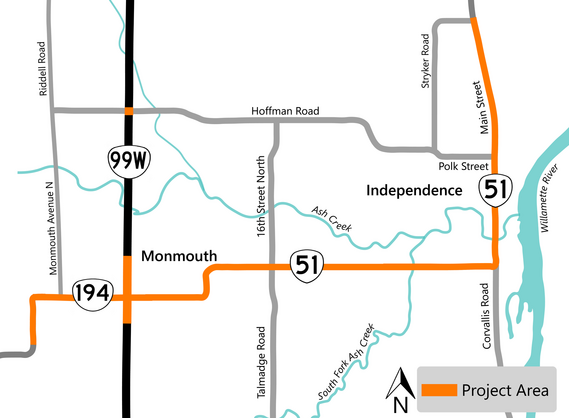
Han comenzado las obras de construcción y mantenimiento de carreteras en las principales vías de Monmouth e Independence. Aquí está la informacion sobre lo que los estudiantes y residentes de la zona deben esperar durante esta fase de construcción y sus resultados. Mientras duren las obras, habrá cuadrillas trabajando en Main Street, Monmouth Street y South Main Street. Los residentes deben estar preparados para ver a las cuadrillas trabajando de lunes a jueves en horario laboral habitual, con trabajos ocasionales los viernes y por la noche cuando sea necesario. A partir del 29 de octubre, solo se han cerrado los arcenes, lo cual no afecta al flujo del tráfico, pero se recomienda a los residentes estar preparados para posibles cierres y cambios de carril según sea necesario. En ese caso, los conductores verán señaleros dirigiendo el tráfico. Además, se prevé que en ocasiones haya ruido, ya que los trabajadores de la construcción están utilizando maquinaria ruidosa. El Departamento de Transporte de Oregón solicita a los residentes que estén atentos durante este período, y que reduzcan la velocidad y estén pendientes de los trabajadores. 

El objetivo de la construcción es añadir rampas de acceso a las aceras de Monmouth e Independence para cumplir con las normas de accesibilidad vigentes de la ADA. Se están instalando y remodelando 150 rampas en la zona. Estas nuevas rampas facilitarán el paso de la carretera a la banqueta y viceversa al caminar por la ciudad. Estas adaptaciones ayudarán a quienes tienen dificultades para subir y bajar de la banqueta, así como a las personas usuarias de sillas de ruedas. Los cambios también beneficiarán a quienes usan carreolas, andaderas, carritos de mano y bicicletas. 

Los residentes podrían notar que no todas las rampas se construyen al mismo tiempo. Esto se debe a que los trabajadores deben revisar cada esquina donde se colocará una rampa y evaluar si está lista o necesita modificaciones antes de comenzar la construcción. Además, no todas las intersecciones y ubicaciones son iguales. Algunas zonas están listas para la construcción, mientras que en otras hay que tener en cuenta elementos como hidrantes,

cajas de servicios públicos y postes de luz. Se está trabajando primero en las intersecciones que ya están listas para la construcción, mientras que las demás se completarán más adelante a medida que se diseñen las rampas alrededor de las barreras de las intersecciones. 

Estas rampas de acceso forman parte de un proyecto más amplio que abarca Astoria, Corvallis, Cottage Grove, Newberg, Salem, Keizer y Springfield, además de Monmouth e Independence. El diseño y la construcción de estas mejoras suman un total de $1.56 millones de dólares. Los residentes pueden consultar un mapa interactivo del Departamento de Transporte de Oregón aquí para ver qué zonas se encuentran actualmente en construcción. 

Las obras que se realizan localmente forman parte de un proyecto más amplio en todo el Valle de Willamette y la Costa Norte para adaptar más de 2,300 rampas de acceso a la normativa ADA. El Departamento de Transporte de Oregón trabaja arduamente para mejorar la accesibilidad en ciudades y pueblos como Monmouth e Independence, lo que beneficiará a todos. 

Contacta al autor en howlnews@mail.wou.edu