



Mount Hood

Living in the shadows

A photo of a child standing alone while a crowd of soldiers stare at them. | Photo from @35awards on Instagram

Jan. 21 2026 | Belen Ponce Leal | Lifestyle Editor

The topic of mental health has been a controversial topic for some. Despite the progress that has been made with the depiction of it in movies and shows, there are many who have negative thoughts about those who have mental illnesses. There are a lot of negative stereotypes or beliefs about these disorders in the public eye. Whether it be certain cultures’ view on it or the spread of inaccurate information about various mental conditions, our health in the mind has always had a stigma surrounding it. 

Stigma is defined by Oxford Languages as “a mark of disgrace associated with a particular circumstance, quality, or person.” Stigma originates from a lack of understanding or fear of a subject. In the case of mental health, a lot of people do not understand it, leading to many misconceptions being spread about it. According to the American Psychiatric Association, more than half of people with a mental illness are not receiving help for their disorder. People actively avoid seeking treatment for their mental health due to stigma surrounding the subject that could make people around them treat them differently. Stigma, prejudice and discrimination against those with mental health issues could be subtle or obvious. An example would be having a get-together with friends, but excluding one of the friends who has told them that they suffer from a mental illness; another would be using derogatory labels on them, such as “psycho” or saying that they’re “crazy.”

There are three types of stigma that should be understood. First is public stigma — these are the negative attitudes that the public has about mental health, which leads to discriminatory thoughts for individuals who have them. Second, self-stigma is the destructive thoughts that someone who has a mental condition will have. This can lead to shame or suppression of their problems, which is self-destructive in both ways and will not aid the person in their situation. Finally, there is structural stigma, which is a systemic type of bias that involves policies in the government or other organizations that either intentionally or unintentionally place limits on people with mental illness on what they can and cannot do. An example of this would be unequal insurance coverage. Some insurance companies are more likely to cover physical injuries than treatments for mental health, like therapy or prescription medication. 

Recently, I was beginning to wonder why mental health is seen so terribly in the first place. I knew why, from a Hispanic background, as in many Latin American cultures, it is viewed as a sign of weakness. Many people who are part of this culture take pride in their ability to manage themselves and work for everything they have. So when someone admits to having an issue, they can be shamed for being unable to take care of themselves. In other cultures, it is viewed similarly. 

In Asian societies, mental illness is viewed as a sign of personal weakness or failure of maintaining self control. Saving face is significant in this culture, as honor is an incredibly valuable social aspect to have. Being associated with a mental illness in this culture could be seen as bringing shame to the family name. 

In Arab cultures, mental illnesses are viewed as a form of divine punishment. They are attributed to the person who suffers from the condition doing something to displease the higher power, which will not only bring them potential accusations of wrongdoing, but also stigmatization from their community. Those who struggle with this may also seek out religious or spiritual interventions to treat their illnesses. While it could work for some, it will not work for everyone. 

In African cultures, they ascribe spiritual or supernatural causes, such as possession by evil spirits, as the cause for mental conditions. There is also a historical context when considering that many African Americans were denied freedom on the basis of false mental illness diagnoses.

According to Mental Health America, a physician named Samuel Cartwright created racist and false mental diagnoses. The purpose of this was to create a reason not to let enslaved people be free, as they were seen as unable to take care of themselves. “Even in the early 1900s, leading psychiatrists thought Black and African American people to be ‘psychologically unfit’ for freedom.” Their trauma from being enslaved was used against them to keep them oppressed. 

Poor depictions of those who have mental illnesses have also spread harmful messages that people who suffer from various disorders are likely to have random bursts of violence or to be labeled as crazy. In reality, someone who has a condition is more likely to be victimized instead of being the cause of other people’s suffering. Mental illness has become overgeneralized, with many media portrayals showing the same kinds of things. A lot of the time, it is depicted as being an incurable condition that no one can recover from. Yet, according to the Centennial Mental Health Center, “as many as 80 percent of people suffering from mental illnesses can effectively return to normal, productive lives if they receive proper treatment.” 

On a more personal note, my family had never acknowledged mental health. It was never spoken about, never discussed. It was a completely foreign concept in my very old-school, very Hispanic household. So, when I began having issues with my psychological well-being, I was told that it was all in my head and that I needed to stop feeling sad. I wish it were that easy. Naturally, I was starting to act out as a preteen and my mother decided to send me to counseling. She wanted to know why I was such an angry kid. Eventually, I was diagnosed with depression. I then became the topic of my aunt’s gossip. 

A lot of the time, the stigma itself is worse than the actual illness. I certainly feel that way. Those who suffer from mental health issues only want to be seen as a person, not a nutcase or a weak individual. Struggling with the condition itself is difficult and the stigma only makes people feel more isolated. So, when meeting or becoming friends with someone who has a condition — don’t be quick to judge.


Contact the author at howllifestyle@mail.wou.edu
The great divide

Jan. 14 2026 | Belen Ponce Leal | Lifestyle Editor

I am not a very tech-savvy person. Granted, I know my way around most types of phones and computers. Yet that is mostly due to growing up with this kind of technology around. However, as someone who also works for a cell phone service provider, I have had to interact with, set up and attempt to fix a lot of issues with various devices. If there is anything that I have learned during this time, it is that there are stark differences between iPhone and Android phones. 

Growing up, Android phones were what was given to me by my predominantly Apple device-loving family. So here’s what I noticed. 

Strengths Android phones have a much simpler operating system that is easy to use and convenient. It typically has three buttons on the home screen: one to go to the home screen, another to see all apps that are open and the last to go back to the previous screen. Android smartphones also come in many different versions. Samsung alone has three different series of phones, each very starkly different from each other. One is fast, one is foldable and the last is cost-effective while still being a decent phone. Another popular Android phone is Google Pixel, which is well known for its camera quality and sturdy design. Motorola phones are known for being budget-friendly, but are reliable and simple. 

Weaknesses A lot of people with Android phones come into the store to tell me that their phone is full of pop-ups. The most common cause of those is “bad apps” being downloaded. Essentially, any kind of “phone cleaner” app is not actually cleaning the phone. Instead, it is slowing down its performance, and some can cause ads to pop up at random times. The battery life is also a major issue I’ve seen, with many getting new phones due to faulty batteries. There are also the constant updates that are done to the system that some may find annoying.

I recently became an iPhone user. After having the phone for a while now, here’s what I’ve observed. 

Strengths Apple’s phones are incredibly fast, with their chip processors able to have many apps open at once without slowing down the smartphone. For newer models, the iPhone battery life is often incredibly good, being able to last an entire day. They also switched their charger from the Lightning cable to a USB-C to become more compatible for Android users who want to switch to iPhone. Furthermore, iPhone’s have their own Apple ecosystem of apps that allows for a much stronger privacy shield compared to Android. iMessage, FaceTime, Apple Cash, etc., are all iPhone-exclusive applications for these types of phones. The Apple App Store is also much more strict with what apps are allowed to be downloaded from it, making it much less likely for any bad apps to affect iPhone users. 

Weaknesses I believe that iPhone’s main weakness is the lack of variety in their phones. While over time the screen size has gotten bigger and the camera positioning has changed, there isn’t a difference between the models. Obviously, if someone compares the first iPhone to the newest one, they look very different. However, there isn’t a huge change between the iPhone 16 and the iPhone 17. Another issue with Apple is that, due to the strictness of the App Store, many apps are not available to download. There isn’t a variety of different types of apps to get, while Android app stores allow for more options. There is also the fact that iPhones are not as customizable as Android phones. While their display options are sleek and clean looking, I’ve seen much more be able to be done with Androids, whether it be their shortcuts or widget flexibility. 

In my opinion, the other differences are minuscule. The keyboards between the two phones look and feel different from each other. Android phones still have “buttons” to control the screen, while iPhone users need to swipe up to navigate the phone. 

However, these smaller things are like comparing different fonts. If one is a person who likes consistency, I recommend an iPhone. If variety is preferred, there is an array of different Android phones from many companies that may be the better choice. 


Contact the author at howllifestyle@mail.wou.edu
Work for fun

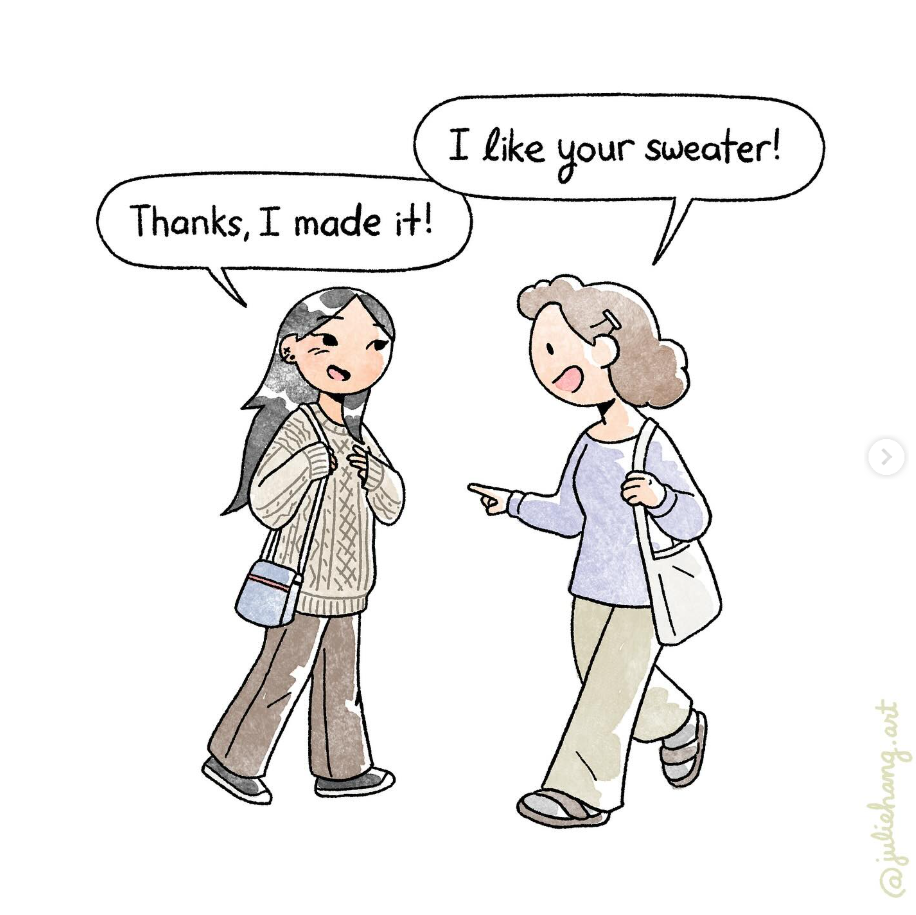
A sketched comic of a woman complimenting a girl’s sweater. | Photo from @juliehang.art on Instagram

Jan. 14 2026 | Belen Ponce Leal | Lifestyle Editor

According to the Oxford dictionary, a hobby is an activity that is done by a person for the sole purpose of enjoyment or relaxation. Hobbies can range from hiking in the mountains to playing video games at home. I personally don’t have a lot of hobbies. The main hobby I have, writing, has become something I do for school and work. While I still love it with a passion, I have been wanting to take up a new one that doesn’t involve me trying to spell things correctly. 

I haven’t had the opportunity to really explore activities to do in my free time. Yet during 

break, when I had all the time in the world, I came to the realization that I had no idea how to get a new hobby.  I’ve usually just stuck to the ones I had growing up. I can only imagine that a lot of other students feel the same way. Therefore, I have created some tips on how to discover a hobby. 

Something simple that anyone can do is create a list of things they like. The list doesn’t have to be concrete. It could range from things done as a child that were fun, like playing tag or building things with LEGOs. Some things to consider would be topics that are engaging and that aren’t tiresome for oneself. 

There’s also scheduling that should be considered when taking up a new hobby. As someone with a busy schedule, I would want a hobby that is easy to do anywhere and can be done wherever I go. For someone who would prefer to do something with their hands, crafting and sculpting would be good ideas. 

Something that discourages a lot of people from starting new hobbies is the lack of perfection at first. Obviously, no one is going to be good at something from the start, and if they are, they are not human. 

Stuart Brown once said, “Life without play is a grinding, mechanical existence organized around doing the things necessary for survival. Play is the vital essence of life. It is what makes life lively.” I’ve thought about trying to start crocheting because the thought of creating my own things sounds awesome. However, I’ve been hesitant to do so because I know for a fact that the first thing I make will look horrifying. Still, that shouldn’t dissuade me or anyone else searching for something new to do in their spare time. 


Contact the author at howllifestyle@mail.wou.edu

Creating chore charts

Written  by: Mikayla Coleman

Whether one is a college student with multiple roommates trying to maintain a clean apartment, a spouse sharing the load with their partner or a lone ranger holding down a studio, most can agree that completing chores is a universal struggle. To organize and conquer one’s chores, use the tips listed below to create a customized chore chart tailored to one’s personal living situation and needs. 

Consider one’s space. What chores one needs to complete will differ based upon the space in which one lives. Some questions to consider include:

  • Does one live in a dorm, apartment or house? 
  • Does one have multiple roommates, a spouse or family members? If one shares a space, it is a good rule of thumb to split chores evenly among each individual. 
  • Does one or any of the space’s inhabitants have pets or service animals? Animals that live indoors come with their own set of cleaning responsibilities that need to be completed each day. 
  • Does the space have carpet or hardwood flooring? Depending on the floor type, one may need different tools in order to keep the space clean, such as a broom, vacuum or mop. 

Consider how much time one has. Look at how one’s schedule fluctuates. Some time commitments to consider include: 

  • When does one have class? 
  • When does one have appointments? 
  • When does one have shifts or time set aside to work? 
  • When does one plan to go to the gym? 
  • When does one plan to rest? 
  • When does one need to set time aside for self-care? 

Consider how often a chore needs to be completed. It is very likely that one does not have the time to deep clean their space every single day. To ensure chores are completed and repeated as much as one desires, consider: 

  • What chores need to be completed daily? Some examples include making one’s bed, washing dishes, picking up one’s mail, wiping down kitchen or bathroom counters or taking out the trash. 
  • What chores need to be completed weekly? Some examples include doing one’s laundry, vacuuming and sweeping all floors, throwing out old food from the refrigerator and thoroughly cleaning one’s toilet and shower.
  • What chores need to be completed monthly? Some examples include wiping down baseboards, wiping down windows and mirrors or cleaning out one’s dishwasher or garbage disposal. 
  • What chores need to be completed seasonally? Some examples include cleaning out closets and dressers, organizing one’s hygiene or cosmetic products and cleaning under bigger furniture. 

Contact the author at howleditor@wou.edu


Seeking fear-giveness


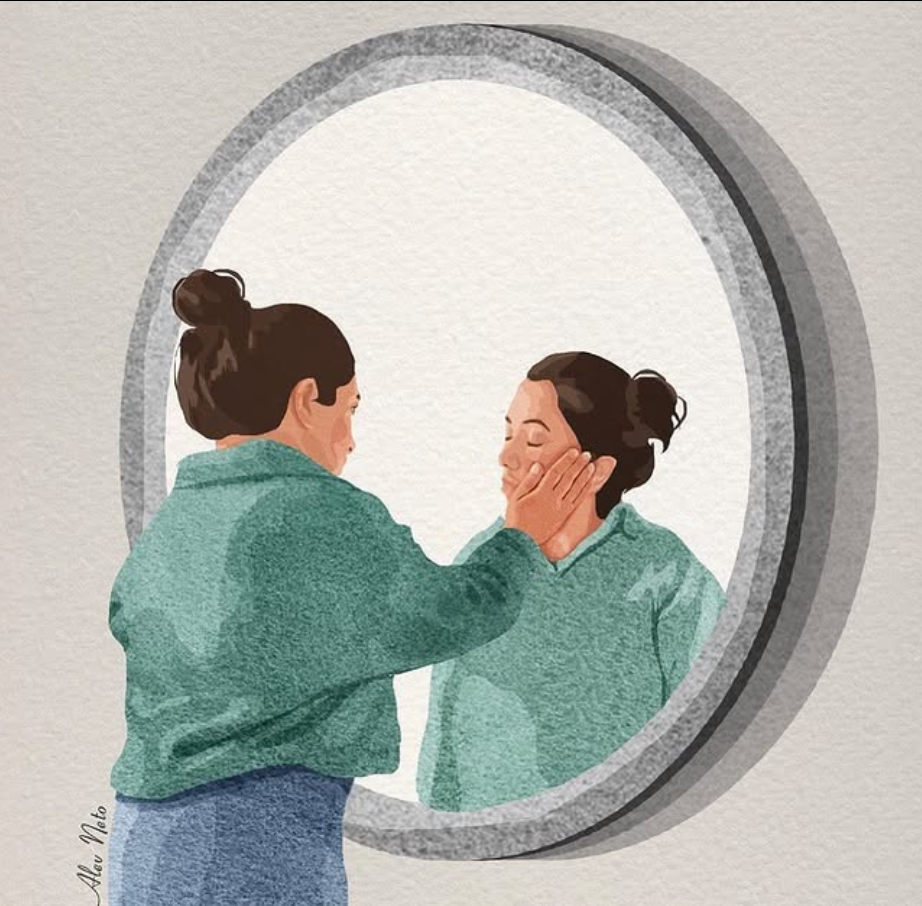
A photo of an artwork depicting a woman caressing her cheek in the mirror. | Photo from @alev.neto on Instagram

Jan 7. 2026 | Belen Ponce Leal | Lifestyle Editor

Special thanks to copy editor Kiera Roedel for being the inspiration to write this article. 

I have a habit of saying “sorry” a lot. Like, a lot. While apologizing is an important behavior that everyone has hopefully done throughout their lives when needed, I usually do it to the point where it isn’t. It isn’t something that I thought would be such a big problem. After all, I don’t want to be seen as someone who doesn’t take accountability for their actions. 

Yet, I can recognize that a lot of the time, I don’t need to say sorry as much as I do. I am an overapologizer. Overapologizing is the act of apologizing so much that it becomes more of a defense mechanism rather than an actual apology. It is not something that a person will wake up with one day and begin doing. It is usually a learned behavior. It is something that has been developed throughout someone’s life without realizing it. Another term for overapologizing is “the anxious sorry.” 

Definition The anxious sorry is a type of safety behavior. A safety behavior, according to Psychology Today, is a type of “short-acting relief technique” that people use to calm their fears or anxiety. They can involve both avoidance and escapism responses, such as procrastination, reassurance-seeking or even stonewalling. Safety behaviors aren’t necessarily a problem for those who do them, but they can become an issue when they have become the only coping mechanism that someone’s used their entire life. Healthy coping mechanisms like learning from mistakes, problem-solving and learning to accept things are all good ways of coping with issues or dramatic changes. Yet, when the automatic response someone has when facing an issue is “sorry,” it can be a clue into a much deeper problem developing in the mind of the apologizer. 

What sorry means to an overapologizer Overapologizers don’t usually say sorry all the time to be polite. It’s often because they fear something. Fear usually ties into all sorts of things, such as being scared of conflict, anxiety, low self-esteem and people-pleasing tendencies. The word “sorry” then becomes a replacement for feelings that a person may not have the capability of confronting or skills to cope with. Constantly apologizing can cause overapologizers a momentary feeling of relief from whatever bad feeling was giving them the need to apologize, whether it be fear of rejection or anxiety. It is that relaxing feeling that can make a person use the word as a strategy in maintaining relationships. 

Potential problems — While saying sorry a lot may not seem like such a big deal, it can become harmful. It is incredibly diminishing to the apologizer’s self worth. It reinforces the thought that they’re wrong, that they are “too much” and that the person is responsible for the emotions of others. Apologizing a lot can also be confusing for those who are around you. Saying sorry often can make the word lose its sincerity, and then the person who you are apologizing to doesn’t understand what it is that is actually needed from the apologizer. There is an irrational fear of upsetting others or being uncomfortable when others around them are upset. Despite knowing that the problem didn’t come from them, overapologizers have this compulsive need to try to diffuse the situation before being able to feel comfortable again. 

The signs — One overapologetic behavior would be apologizing for things that the person themselves didn’t do. Situations such as schedule conflicts, apologizing for someone else’s behavior, not carrying cash when it’s needed, etc. Oftentimes, it’s things that the person had no control over or prior knowledge of needing to do that they end up taking responsibility for. Another sign would be saying sorry instead of expressing a need. A good example of this that I personally have lived through would be saying sorry to a partner instead of telling them what it is that I want from them. There was a time that my spouse and their family wanted to go eat at a sushi restaurant. I was the only one who didn’t want to go, but I lied and said I wanted to because I didn’t want to be the reason they didn’t get the food they wanted. I tried to prevent a conflict between them and compromised my own wants to do so. 

Likely Causes Some causes for saying sorry frequently could involve the background of the overapologizer. If they were surrounded by people who were caring and understanding one minute and furious the next, they often have to learn early on how to anticipate the needs of others by minor things such as expressions, tone, hand movement and body language. That could explain the need to want to “diffuse the bomb,” despite not being the cause of it. Trauma is another major factor in apologizing often. A lot of people who experience traumatic events will often blame themselves for it in an attempt to feel in control of the situation. Yet, it can often make the trauma worse and make them perform people-pleasing behavior to feel safe. For people who think less of themselves or have low self-image, feelings of self-resentment can cause them to say sorry for things that often don’t need it. Having low self esteem can also make a person much more likely to be in codependent relationships. Being in a codependent relationship means that the person’s value is tied to their ability to keep the other person in the relationship happy. Taking the blame for whatever conflicts may arise between the two can often be a way to keep the peace to satisfy the other. 

Like most problems that we as humans face, the first thing overapologizers need to do is be aware of the issue and try to combat it more. It’s important to become self-aware of how often they say sorry and what situations it tends to come up in more. Try to recognize the feelings that are being felt in that moment and replace the word “sorry” with healthier language. Something I did when coming into work late due to a car issue was apologize for not being on time, despite the fact that I provided a warning and had no control of the situation. Something else I could have said was “thank you for waiting.” Small changes like this can make a big impact on breaking the cycle. Therapy can also be a very good way to combat the action and try to work through what it is that the word “sorry” is replacing. It can be difficult to do, even uncomfortable. 

However, I want to remind anyone who reads this that it’s okay to not be perfect. It’s okay to exist and take up space. No one is inconvenient. 

Contact the author at howllifestyle@mail.wou.edu

‘Fake news’

A photo of a book wall. | Photo from @northportbooks on Instagram

Nov. 19 2025 | Belen Ponce Leal | Lifestyle Editor

In February of 1998, a research paper was released linking autism to vaccinations. This paper has long been proven to be false, with multiple factors in the experiment being questionable at best. Unethical decisions and “callous disregard” for the children that participated in the study are just a few reasons why people questioned these findings. Then, 12 years after the paper was released, one of the doctors who worked on this study admitted that several elements of the paper were incorrect. Despite this, there are still a small number of people who wholeheartedly believe these vaccines are harmful. 

The definition of a fact, according to Oxford Languages, is “a thing that is known or proved to be true.” Yet, we live in a world where it is getting harder to distinguish what is true and what is partially true. Even with the accessibility of information at our fingertips, there are many who will believe a video they watched on social media to be fact, despite the very real possibility that it may not be true. Or it may have been misconstrued — it may be factually correct, but lacking context. However, after researching this subject, I’ve come to the realization that facts by themselves don’t usually convince people to change the way they think. It’s often tied to emotion and community.

We as humans are a species that needs a semi-accurate understanding of the world in order to live in it comfortably. We are also very social creatures. Since the dawn of the species, humans have traveled in tribes, working together to survive. Accuracy and truth aren’t the only things that are important to the human mind. We also have a desire to belong. Humans have always had the desire to bond and have relationships with others. We want to be people who fit in and have the approval of others. It is difficult to think of a feeling worse than rejection or disapproval by the person you want it from the most.

In a lot of people’s minds, social connection is more helpful to us in our daily lives than it is for us to understand the truth of a certain idea or fact. We sometimes compromise the truth to make ourselves look better to certain people or a certain community. False beliefs might not be useful in a factual sense, but they are in a social one. James Clear, who wrote an article called “Why Facts Don’t Change Our Minds,” calls this way of thinking “factually false, but socially accurate.” When it comes to choosing being right over friends and family, the latter usually wins. This is why we, as people, tolerate things that might offend us. It is why a person will bite their lip and turn away if a family member says something that offends them. 

Another thing to consider is motivated reasoning. This is when people go to great lengths to try and persuade others that the facts are incorrect or that sources are unreliable. Humans are hard-wired to have an emotional response faster than our conscious thought. Information that supports a person’s preexisting view on the world or thoughts on a subject will be accepted a lot faster than something that completely contradicts it. A lot of the time, people do this to make themselves feel better about new information that contradicts their beliefs. 

That also ties into the misinterpretation of facts. A lot of facts are taken completely out of context to be used to support an argument that the fact wasn’t intended to be used for. Some usually do this, not necessarily to tell the truth, but to “prove” their point of view or attack another. 

So, if facts can’t change a person’s worldview, there has to be another way to do it. After all, we are all constantly evolving and changing our beliefs. The best way to change someone’s mind is by giving them a new view of what a community looks like. If someone were to completely abandon their beliefs, they would lose their family and their ties to the community that embraced them. James Clear put it best: “No one wants their worldview torn apart if loneliness is the outcome.”

However, like the vaccine belief, these ideas can hang around for a while. A reason that they do is because people continue to discuss them. Ideas are remembered when repeated — that’s also the only way they can be believed. A person is more likely to believe a crazy concept if it comes from someone they know. The train of thought is usually something along the lines of “I know this person. I like them, I share some beliefs with them, why should I not consider this one too?” 

One way to combat this is to let the ideas rest; let them die out and be forgotten. This isn’t to say not to speak up for people who are attacked. However, maybe we as people need to change our strategy in dealing with these situations. Being ignorant is a lot harder to do when the person has friends who think differently than they do. Befriending them and being kind to them is the best way to give someone the opportunity to change their beliefs. As Selena Gomez said, “kill ‘em with kindness.”


Contact the author at howllifestyle@mail.wou.edu


Grounds for dismissal

A photo of coffee grounds, beans and in liquid form. | Photo from @harshasipani on Instagram

Nov. 19 2025 | Belen Ponce Leal | Lifestyle Editor

There is a legend involving the discovery of coffee and goats. Yes, there is. According to this legend, Kaldi was once a goat herder who noticed that after his goats ate the cherries of a specific tree in the ancient forests of the Ethiopian plateau, they became so hyper that they couldn’t sleep through the night. When Kaldi told the priest of the local monastery about the behavior, they decided to do a makeshift experiment where they turned the berries into a drink. After a few sips, they were saying the prayers with a boost of energy. The reason those cherries made everyone so jumpy was that they contained a lovely little drug most college students are utterly familiar with — caffeine. 

Most adults are no strangers to caffeine. On average, 4 out of 5 adults consume it daily, myself included. This drug can be found in a lot of different things naturally, but the most common way people consume it is through drinks. The most popular caffeinated beverages are coffee, tea and energy drinks. While most people know what it is and what it does, most aren’t aware of what is a normal side effect of caffeine and what isn’t. Most view it as a harmless drug, because, for the most part, it is, as long as it is used responsibly. So, let’s dig into what makes the bitter taste so powerful. 

The definition According to WebMD, “caffeine is a natural chemical with stimulant effects.” It increases the activity of the brain and nervous system. Caffeine is closely associated with coffee, as it was isolated from the coffee bean by Ferdinand Runge in 1819. It is also a long-lasting drug, taking 5 to 30 minutes to kick in and staying in the body for up to 12 hours, depending on the person. 

Purpose The main reason everyone consumes caffeine is to increase alertness, enhance athletic performance and improve focus. Some also use it for other purposes like ADHD, asthma, low blood pressure and depression, though WebMD does state that there isn’t a lot of good scientific evidence to support the latter four uses. 

Side effects The effects of the drug can involve increased breathing, elevated heart rate and increased mental alertness as well as a boost in physical energy. It also has some side effects involving digestion and urination. Sometimes, people say that coffee can give them heartburn. A possible reason for that is that caffeine can increase the amount of acid in a person’s stomach. Some scientists theorize that because of the bitter taste that can come with the drug, it could lead to a buildup of acid-forming in the stomach. Caffeine is also a diuretic, which means that the body will want to urinate more when consumed. 

Concerning side effects For the most part, caffeine is safe for the heart for those who don’t have any preexisting heart conditions. It is possible, though, to have had an inordinate amount. Signs that a person has had too much caffeine could be shakiness, agitation, trouble sleeping, a racing heart and dizziness. It’s also possible for headaches, chest pain and severe anxiety to happen. WebMD notes that a 32-ounce energy drink has a much higher ability to give a person abnormally high heart rhythms and blood pressure. 

Amount to have If a person does not have any sort of underlying conditions, the maximum amount of caffeine someone can consume in a day is about 400 milligrams, which is the amount found in four cups of coffee. However, it is notable that energy drinks can contain a lot more caffeine. According to the Food and Drug Administration, energy drinks typically have 41 to 246 milligrams per can. My energy drink of choice is typically Red Bull. Lately, though, I have been drinking Monster since most people I know have them regularly. I haven’t really liked the taste of it, but I noticed that the drink caused me to feel off. My heart rate increased a lot, my hands were twitching and my chest would occasionally hurt. I found out that there is quite a difference between the two. A 16-ounce Red Bull, on average, contains 136 milligrams of caffeine while a 16-ounce Monster Energy drink has 160 milligrams. Granted, the difference is only 24 milligrams, but it was enough to affect me. 

Who shouldn’t have it Anyone who has any preexisting health conditions or is under the age of 18 could suffer serious health conditions or even death from having too much caffeine. Pregnant women are able to drink it as long as they don’t go over 300 milligrams. Caffeine can pass into breast milk, so limitations while breastfeeding are recommended. 

Extreme cases — In 2023, Matthew Patrick, known more commonly as MatPat, made a video called “This Lemonade Could Kill You (Panera),” where he discussed a viral TikTok posted by user @sarachebaus. In her video, she discusses being unaware of how much caffeine is in a now-discontinued product served by Panera known as the “charged lemonade.” 

The 20-ounce drink had 260 milligrams of caffeine in it, while the large size had 390 milligrams, which is only 10 milligrams away from being the recommended limit of a person’s daily caffeine intake. She also noted that she drank 4 or 5 of them a day, which would have been the equivalent of 11 Red Bulls, according to MatPat. Both he and @sarachebaus criticized Panera for the lack of any disclaimers of how much caffeine these drinks contained. Despite these drinks having way more of this drug than a typical energy drink, they were not labeled as such. They were only called “charged lemonades” and had in tiny lettering underneath the sign the amount of caffeine in a 20-ounce and a 30-ounce. MatPat then spoke about how potentially dangerous these drinks could be to those with preexisting heart conditions. As it turned out, he was right. 

In September of 2022, a 21-year-old University of Pennsylvania student named Sarah Katz went into cardiac arrest shortly after having one of these drinks and passed away. According to USA Today, her family had sued Panera, explaining that she had a heart condition and would explicitly avoid any drinks that had caffeine in them. They accused Panera of being misleading in the marketing, as well as failure to provide labeling that better warned that these drinks were dangerous to those who had underlying health conditions. Another person, 46-year-old Dennis Brown, died from cardiac arrest in October of 2023 after drinking three charged lemonades. His family also sued Panera, explaining that he had high blood pressure and never consumed energy drinks. 

Caffeine is a drug. Like any drug, people can become dependent on it. Withdrawal symptoms typically include crankiness, headaches, sweating, anxiety, fatigue and in some cases, muscle pain. Withdrawal can begin within 12 to 14 hours from the last sip taken and can last up to a week. It’s possible to break the dependence by steadily reducing the amount of caffeine being consumed. This gives the body time to adjust to being able to function without depending so much on the drug. So, be mindful of how much is consumed. 


Contact the author at howllifestyle@mail.wou.edu


The strength of diversity

A photo of a vase of stargazer lilies. | Photo from @wildflowersparkland on Instagram

Nov. 12 2025 | Belen Ponce Leal | Lifestyle Editor

The United States is known for its diverse communities. Despite the problems and deep-rooted racism that encompass the history of this country, the U.S. is full of people from different cultures and backgrounds. According to an article from the National Library of Medicine, over 50% of the population is part of minority ethnic groups. Immigrants move here to provide better lives for their families and bring with them their own cultures. Their values, beliefs and ways of life are all varied. As human beings, we tend to fear what we don’t understand, thus many from versatile styles of living often feel out of place in their new communities. However, fitting in is honestly overrated and I thought it would be interesting to delve deeper into the benefits of diversity.
The environments we come from have a major influence on the way we view the world. Some cultures view loyalty as the most important virtue someone can have. Others think that the truth is the most valuable. Neither way of thinking is wrong — it is merely a difference in a person’s beliefs. However, these differences in a person’s way of life can provide new ideas that others would not have thought of. If everyone had the exact same way of thinking, humanity would not advance.
This is why companies are often on the lookout for people who are not from the average population. People who stand out are those who think differently and experience unique ways of reasoning. Without coming up with new ideas, everything would stay the same. Technology wouldn’t exist, companies wouldn’t succeed and if there is anything that is true about our world, it is that it is constantly evolving. Based on an article published by the Hult International Business School, the uncertainty and constant change in the global business environment make it important to be adaptable. If there is anything true about people who come from different places in the world, chances are that they are willing to withstand how drastic the changes can be.
It is because of the difference in values and beliefs that oftentimes those who come from different backgrounds can find success in using that knowledge to their advantage. For instance, bilingual people often make more money as they are able to reach out to more people who may not speak the same language. Not only does it benefit them, it benefits other people who might not know how to speak English and need assistance for doctor’s appointments, driving tests, important news announcements and much more. This way of thinking does not only apply to translators, though. Different cultures with different priorities will want to create products aimed at distinct people, such as restaurants that offer culture-specific food, whether it be soul food, Mexican food, Chinese food, Filipino food or another cuisine. Some could think of it like having a spy on the inside, someone who understands who the target audience is and can offer advice as to what appeals to them.
Being diverse can also promote personal growth. According to the Steps4Change organization, having new experiences gives us the opportunity to explore outside our comfort zone, which can enhance our learning and develop a sense of personal growth. Everyone has different ideas of what “normal” is. Some can view being different as a weakness, yet in reality, it’s an irreplaceable strength that can provide more empathy with people who think differently than them. Those with more variety in their lives are more likely to be empathetic and resilient in the way they conduct themselves.
According to Sean DallasKidd, a Forbes Councils member, “Research is the gateway to imagination.” It improves the likelihood of more imaginative and impactful storytelling in works, whether it be at work or in school. Being a diverse individual can mean much more than simply coming from a different place or being a different gender.
There’s also something known as cognitive diversity. The definition for this topic involves the way we think. Some approach an assignment with the thought of getting it done immediately after the lecture, as they want the information to be as fresh as possible. Others prefer to do it later, not just because of procrastination reasons, but because they want time to process the information they learned.
It’s why some can have very different interpretations of stories. Some may think that Meredith and Derek, the couple from “Grey’s Anatomy,” are a good representation of true love and can pose a good argument for their reasoning. Others believe that they were terrible for each other and give several examples of their toxicity. Neither interpretation is wrong per se, but each has a strong argument for their way of thinking.
Being a diverse person is an exciting thing. It makes someone much more relatable and more unique. Creativity is higher and diversity is being more sought out in the modern day, as uncertainty in businesses means needing more unique ways to come up with ideas to stay in the market. Some of the biggest problems in the world have been solved by tackling a problem in an unusual way. Vaccines were created by using the sickness that was killing people as a way to immunize themselves from it. The most unbelievable circumstances can end up being the solution to a major problem.

Contact the author at howllifestyle@mail.wou.edu
Nintendo’s star princess

A photo of Rosalina’s original design from Super Mario Galaxy. | Photo from @nintenbingo on Instagram

Nov. 12 2025 | Belen Ponce Leal | Lifestyle Editor

Content warning: this article contains spoilers for “Super Mario Galaxy”

“Super Mario Galaxy” was a game that came out in 2007 on the Nintendo Wii. It introduced several new mechanics that were different from previous Mario games, such as the ability to stun enemies with the spin move and the introduction of 3D graphic manipulation as the game is set in various worlds with different physics. However, the biggest addition that this game brought to the forefront was the introduction of a new character, one who comes from the stars.
Introduction — Known as the “mother of the Lumas,” Rosalina debuted as a woman who possesses great cosmic power. She travels throughout space in her observatory, keeping an eye out for any threats. She has been called “an interstellar protector” by Nintendo. She is known as the adoptive mother of the Lumas, star-shaped creatures that are baby stars. They have the capability to transform into stars, comets, planets and even “Power Stars,” which are the main source of power in the world of the Mushroom Kingdom.
The plot — The game opens up with a few pages of a storybook, explaining that once every hundred years a comet passes by the Mushroom Kingdom. On this occasion, the people host an event called the “Star Festival,” meant to celebrate the comet’s return. Then, the game becomes similar to most Mario games where Bowser attacks the Mushroom Kingdom to kidnap Princess Peach. While Mario is attempting to save her, he gets knocked into space.
When he wakes up, it’s in the company of the Lumas. After a brief chase with them, they explain that their “Mama” needs his help. It is then that Rosalina makes her first appearance. She tells Mario that she is the guardian of the cosmos. She then entrusts Mario to take care of a Luma that will give him the power to travel through space to save Peach. This is what gives Mario his shake ability, which allows him to not only stun enemies, but to use “Launch Stars,” which help him travel through the cosmos throughout the game.
Mario is then taken to the Comet Observatory. Rosalina explains that they travel through the area once every hundred years, but were stopped by Bowser this time. He had attacked their home, taking the Power Stars, which give the observatory the power it needs to travel through space. Rosalina asks Mario if he would continue to collect the Power Stars from other galaxies around them. Once enough are collected and power is restored to the ship entirely, Rosalina agrees to help Mario save Princess Peach and defeat Bowser.
The ending —Another reason that Super Mario Galaxy is different from other Mario games is the ending. Most of the games end with Peach being saved, Bowser falling into lava and everyone going back home. However, when Mario manages to defeat Bowser, the universe that he was trying to create collapses on itself and creates a black hole. The Luma that was with Mario the entire game, along with all the others in the Observatory, sacrificed themselves by jumping into the black hole. An animation appears showing what’s implied to be a cyclone mixing up stardust. Mario then appears in some sort of limbo with Rosalina, where she explains how the cycle of life works for stars: “When stars die, they turn to stardust and scatter across the cosmos.” She explains that after a time, the stardust turns into a star and the cycle of life continues. Rosalina does say, though, that the cycle of life is never the same. When Mario awakens, everyone he encountered in the game who lived on different galaxies now share one planet. Rosalina’s voice is heard to say that all life carries the essence of stars, including all of them. Mario welcomes the new galaxy and a new cycle of life begins.
Origins — Rosalina’s backstory is told to the player throughout the game through a storybook. As Mario collects Power Stars, parts of the observatory unlock. One of the areas is a library, and when walking inside, Rosalina is sitting in a chair holding a storybook. She reads to a group of Lumas, and the story told is implied to be her own.
The story is about a young girl who encounters a lost Luma that crashed his spaceship near her home. The Luma says he’s waiting for his mama to come back for him on a comet, so the girl agrees to wait with him. A lot of time passes and they decide to go into space to try to find her. They eventually encounter a comet that they decide to stay on while the girl chooses to adopt the Luma as her child. They construct the Comet Observatory and have a large group of Luma children who live with them. The girl decides to check on her home planet and reminisce about her family. When the thought of her own mother comes to mind, she bursts out in tears as she tells her children that she can’t see her anymore, as she is “sleeping under the tree in the hill,” implying that she has passed away. Luma, the original star child that Rosalina encountered, tries to comfort her and, in the process, turns into a comet. The girl is shocked and the other Lumas explain to her that they all will grow up to become either stars, planets, comets and much more. They all surround the girl, hugging her and asking her not to cry anymore and from that day forward, “star bits no longer fell from the girl’s eyes.”
Utilization — Unfortunately, Rosalina hasn’t had a major role in a Mario game since her debut, with most of her appearances coming from spin-off games like “Super Smash Bros,” “Mario Kart” and “Super Mario 3D World.” However, fans still hold her dear in their hearts for several reasons. Unlike most of the Mario characters, who are tailored in a way that kids will enjoy them, Rosalina has a mature personality that is very much motherlike. Unlike Peach, who depends on Mario a lot in the games, Rosalina is an independent woman who not only takes care of herself, but takes care of all the Lumas under her care. Her backstory is compelling, even tragic, which is unique for a Nintendo character, as we don’t know a whole lot about the backstories of the characters in these games.
While Nintendo hasn’t taken advantage of how much love the fans have for this character in a while, there is good news for those who have been waiting. Not only are “Super Mario Galaxy” and its sequel available for the Nintendo Switch, but Nov. 25, her storybook will be available for physical release. It has also been announced that the next Mario movie will be based on Super Mario Galaxy. Considering how big a role she plays in the games, there is no doubt that Rosalina will make an appearance in this upcoming film. As a huge fan of Rosalina, I am definitely looking forward to seeing her in the next movie.

Contact the author at howllifestyle@wou.edu

Spooky treats

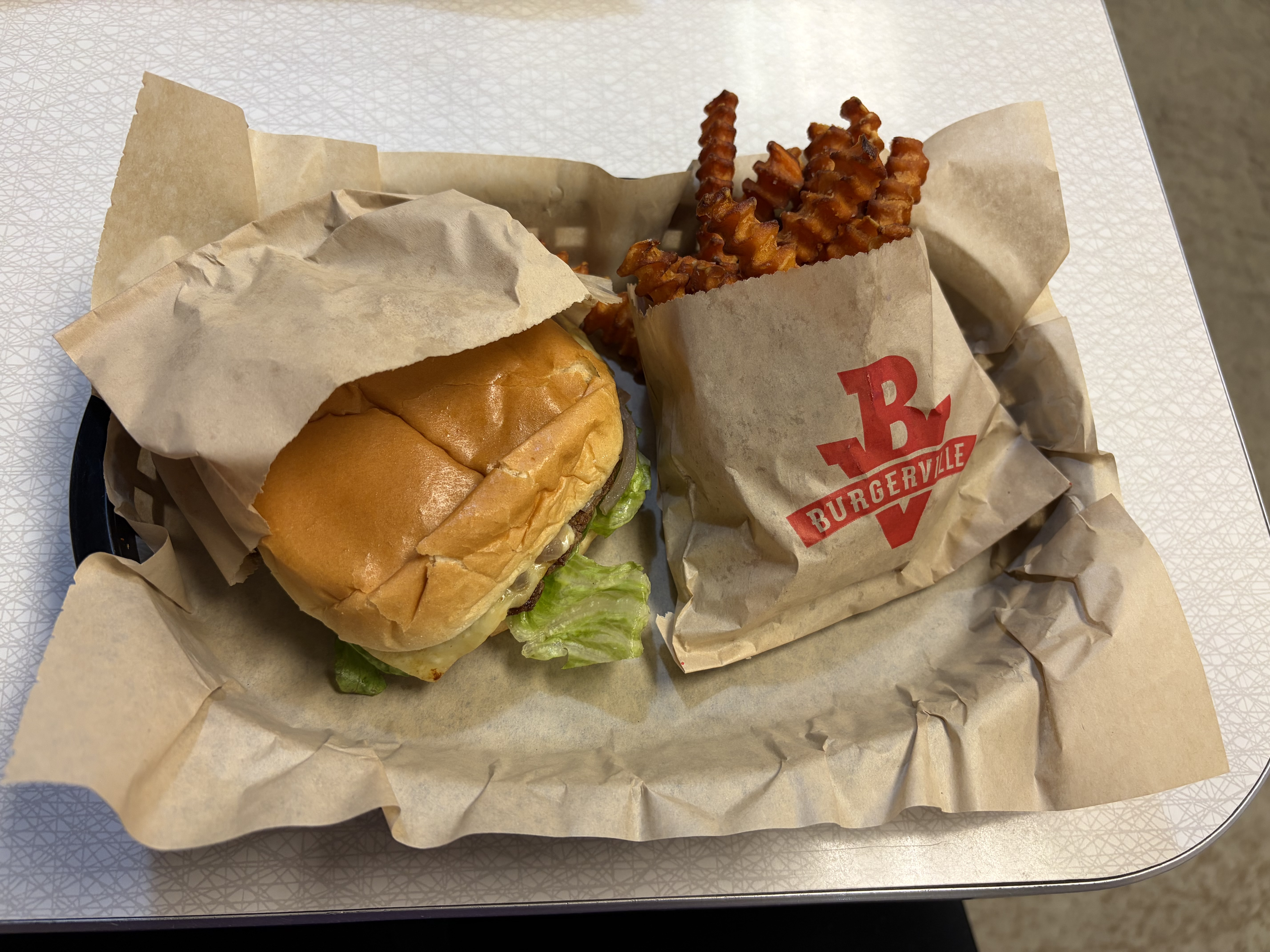
A photo of Burgerville’s Vampire Slayer Cheeseburger and sweet potato fries. | Photo by Belen Ponce Leal

Oct 29 2025 | Belen Ponce Leal | Lifestyle Editor

It’s always interesting to see what kind of menus companies can come up with for a spooky season. Whether it be dyed foods designed to look like pumpkins, sweet ice cream treats with candy bits in them or some locally sourced ingredients used creatively, there is no end to the trend. I thought it would be interesting to discover what kind of spooky-themed foods to try out before the end of the month.  

Burger King is well known for their advertising of their special limited-time menus. Right now, they have what they call the “monster menu.” The main staple of the menu is the  Jack-O’-Lantern Whopper. It is a version of their famous Whopper burger with a “naturally colored orange bun” with black sesame seeds. While it does have a festive appearance, it has been described by many as tasting basically the same as a regular Whopper burger. Some other items they are selling are Vampire Nuggets, Mummy Mozzarella Fries, the Franken-Candy Sundae and, at certain locations, a trick-or-treat basket. 

At the moment, McDonald’s might not have much of a Halloween menu as they are currently focused on their Monopoly-themed one, but the Boo Buckets have returned once again. During October, McDonald’s will give out Happy Meals in what is called a Boo Bucket. They are plastic containers that can double as trick-or-treat buckets. The classic designs have returned, which are the ghost, pumpkin and goblin. However, there are two new additions to the roster this year, which are a black cat and a zombie bucket. 

IHOP has come out with some delicious pancake flavors for the season. Obviously, the pumpkin spice pancakes have returned, with the option to make them a short or full stack. They have been described as tasting very good, soft and buttery. The item that I find the most interesting and most delicious is the coffee cake pancakes. Made with cinnamon streusel, cinnamon spread layering and cream cheese icing, these coffee cake pancakes have a delicious crumbly texture. 

Burgerville is known throughout Monmouth for being a great place to eat, as it prides itself on locally sourcing its ingredients. All their food is fresh and delicious throughout the year.

Their seasonal menu is composed of their pumpkin shake, apple crumble sundae, harvest cider iced tea, sweet potato fries and, their star of the menu, the Vampire Slayer Cheeseburger. This burger, along with all of their others, has a pasture-raised natural beef patty. The cheese on the burger is called Face Rock Vampire Slayer Cheddar, which is cheddar with a strong dose of garlic in it. That, combined with arugula, which is a leafy green vegetable with a sort of peppery, nutty flavor, makes the burger a fantastic mix of various flavors. 

Every restaurant has a different strength, whether it be in design or flavor. I love how every year Burger King can come up with a menu that looks amazing, and even though it doesn’t taste very different, it is at least aesthetically pleasing. I also enjoy how Burgerville can come up with some amazing combinations of flavors in their burger while still being naturally sourced. While not all seasonal food is created equal, it is always endearing to see what companies can come up with to create delicious and good-looking cuisine. 


Contact the author at howllifestyle@wou.edu

Let’s get physical

April 2, 2025

Written by: Isabelle Jones | Lifestyle Editor

Let’s get physical; cardiovascular health refers to the health of the heart and blood vessels. Its system circulates blood, oxygen and nutrients through the body. It’s important to maintain good cardiovascular health in order to prevent disease later in life. It also helps to improve energy levels and overall well-being. With our generation taking health and exercise seriously, it may feel like we have forgotten the importance of cardio while prioritizing strength training. 

There are many benefits of cardiovascular health, with the biggest being that it prevents heart disease and stroke. Unfortunately, heart disease is the leading cause of death worldwide, but it’s completely preventable with a healthy lifestyle. Focusing on cardiovascular health maintains a strong heart and clear arteries, which reduces the risk of heart attacks, strokes and hypertension. With preventing heart disease comes keeping one’s cholesterol and blood pressure in check. Plaque tends to build up in one’s arteries when they live a sedentary lifestyle. Taking a proactive approach to cardiovascular health can add years to one’s life. A second benefit is that it can boost energy and stamina. When a healthy heart is able to pump blood more efficiently, the muscles and organs get more oxygen and nutrients. When someone gets more oxygen and nutrients, they will feel more alert, active and energized throughout the day. 

When one focuses on their cardiovascular health, there are other personal benefits, such as enhanced brain function, increased quality of life and improved sleep. Working on our cardiovascular health reduces inflammation and stress on the heart, which in turn can lower the risk of certain illnesses, such as dementia and Alzheimer’s disease. With the improvement of one’s quality of life, those who tend to their cardiovascular health can reduce their anxiety and possibly alleviate some of the symptoms associated with depression. With regard to improving our sleep quality, poor cardiovascular health can directly lead to sleep disorders, such as sleep apnea and insomnia. Improving one’s cardiovascular health works to regulate sleep cycles and improve feelings of restfulness. 

As some may want to improve their cardiovascular health, it’s crucial to understand the detrimental effects of poor cardiovascular health. Ignoring this portion of our health can lead to serious, life altering consequences. When one is neglectful, it can lead to an increased risk of stroke, chronic fatigue, low energy levels, poor mental health, increased stress, blood clots and the possible risk of permanent disability. All of this can result in a weakened immune system and a shorter life expectancy. 

Understanding the impacts cardiovascular health has on our lives, there are many workouts that help to improve one’s cardiovascular health. Cardio exercises are also known as aerobic exercises, which help to strengthen one’s heart, improve circulation and boost overall endurance. Here’s a list of some of the most flexible and popular exercises one could try. 

Walking — This is typically seen as the first step in cardiovascular disease prevention. This low-impact, beginner friendly exercise helps to reduce stress and improve circulation. 

Jogging or running — This is what comes to mind when someone hears the word “cardio.” It is easily adjustable between participating outdoors or on the treadmill. Along with walking, these exercises improve one’s lung function, heart rate and endurance levels. 

Cycling — Strengthening leg muscles, this low-impact exercise is great for joint health. 

Swimming — This exercise works the whole body while also being easy on one’s joints. It is ideal for all fitness levels and is a great way to beat the heat in the coming months.

Dancing — This exercise is a fun and engaging way to get one’s heart pumping. It improves coordination and flexibility which can be done alone or in a group. 

High intensity interval training — This last workout consists of short bursts of intense exercise followed by rest. This means that one would burn more calories in less time, boosting metabolism.

Cardiovascular health is not just about avoiding disease — it’s about living one’s best life. A strong heart leads to more energy, better brain function, improved mood and a longer, healthier future. Taking small steps today can make a huge difference in one’s heart’s health over time.

Contact the author at howllifestyle@wou.edu

Coastal health benefits

April 2, 2025

Written by: Isabelle Jones | Lifestyle Editor

About an hour away from Western is the Oregon coast. Its scenic beauty is a natural sanctuary that offers powerful benefits for the mind, body and soul. The combination of fresh air, ocean waves and natural surroundings can enhance one’s well-being, reduce stress and promote a healthier lifestyle. 

The coast provides many benefits, but boosting mental health is among the most important. Where the water meets land promotes mindfulness, which helps people disconnect from their responsibilities and daily pressures. Its rhythmic waves have a calming effect on the brain, reducing anxiety and stress. Spending time at the coast fosters a deeper connection to nature and encourages environmental awareness. As the protections on our natural environments are not as strong as they once were, it’s important to take time to enjoy the simpler things in life, and the coastal environment is reminiscent of a simpler yet fulfilling life. The open horizon and vast ocean give a sense of freedom and perspective, making problems seem more manageable. 

Another benefit of the coast is the improvement of physical health. Compared to walking on solid ground, walking or jogging on sand improves balance, strength and endurance due to the uneven terrain. Breathing in the salty air can clear the lungs, as it acts as a sort of natural decongestant, making it especially beneficial for those with asthma or other respiratory conditions. The coast also has activities like hiking and beach sports, making exercise feel more enjoyable rather than like a chore. 

Immune and health benefits are a third benefit of the coast. The ocean breeze contains negatively charged ions, which improve oxygen absorption, boosting one’s mood. Studies suggest that people who live near the coast report higher levels of life satisfaction and lower levels of stress. The coast is typically exposed to more sunlight, and sun exposure helps the body produce vitamin D, which is essential for strong bones, immune health and mood regulation. It also increases serotonin levels — a neurotransmitter that enhances mood and promotes feelings of happiness. Although the seawater is quite cold, it contains minerals like magnesium and iodine — promoting skin healing and circulation. 

Lastly, fresh seafood is especially important for one’s health. Seafood is packed with essential nutrients that support overall health, making it one of the healthiest choices available. Its lean protein keeps one fuller for longer and reduces cravings. It also promotes heart health by reducing the risk of heart disease. With seafood being rich in omega-3s — DHA and EPA — it improves memory, focus and cognitive function. This in turn can reduce the risk of some neurodegenerative diseases. For those who workout, omega-3s speed up muscle recovery after exercise. These nutrient powerhouses support brain health, heart function, immunity, skin and one’s overall well-being. 

Visiting the coast provides a natural escape that nurtures both the body and mind. In a world dominated by screens and schedules, the beach offers a digital detox and a chance to further one’s peace in a natural setting. Breathe in the salty air, let the waves wash away the stress and embrace the healing power of the ocean. 

Contact the author at howllifestyle@wou.edu

Dorm decorating

February 5, 2025

Written by: Isabelle Jones | Lifestyle Editor

Making one’s own space is extremely important in college. This chapter in life is full of excitement, new friends and new experiences. Although it’s easy to settle for bare walls, only sticking with the provided furniture, decorating one’s room has a significant impact on their mental well-being, self-expression and overall college experience. Here are a few reasons why decorating is important. 

The dorm room is one of the few places where students can fully express themselves. Personal touches like family and friend photos, favorite posters or other mementos to remind one of where one comes from can help anyone feeling homesick. At the end of a busy day, a student’s dorm room becomes a sanctuary for relaxation and recharging their social battery. Soft bedding, throw pillows and lighting work to create that relaxing environment. For students looking to choose a style, here is a list of popular themes: minimalism, boho chic, 70s style and much more. Personal expression and decoration don’t have to fit into a single label.

When making new friends, one will end up hanging out in their rooms. A decorated room can be a great conversation starter, or for when new roommates move in. Having a well-decorated space can feel more welcoming to guests. 

Stress is a normal part of the college experience, but that doesn’t mean it should follow one into their room. Creating a personal and colorful space is a powerful influence to one’s mental health. According to Mental Health America, “Happy, bright colors can increase your mental activity and leave you feeling rejuvenated and energized.” An aesthetically pleasing environment improves one’s mental health and can even make one feel more productive. 

Even though a dorm room is small, there is plenty of space to make it one’s own. It’s a fun and creative way to express oneself. So, grab those fairy lights, fluffy blankets and meaningful decor — the room is waiting.

Tips to decorate on a budget:

Bring in the greenery 

Plants have several benefits that directly affect its owners. Plants are therapeutic, improving one’s mental health, helping one to recover from illness faster and contributing to a good flow within a feng shui lifestyle. Some popular bedroom plants are lucky bamboo, succulents, snake plants and Pothos. 

Thrift shop

Thrift shopping has great options to find affordable decoration items that fit one’s style. Lamps, vases, frames and baskets are among the most unique decor that won’t break the bank.

Think multifunctional

Furniture that serves more than one purpose is extremely helpful for any student. One should look for under-bed storage with drawers and ottomans. 

Understand what’s allowed in the dorm

As one gets creative with decorating, it’s important to understand what is allowed — and, more importantly, not allowed — within the dorms. Candles, halogen lamps, vacuums and toaster ovens are among the most popular items that are prohibited in the dorms. Any student needing a refresher should look at the “FIRE and LIFE SAFETY” and “The Guide to Residential Living 24-25” on Western’s housing page. Some safe alternatives for the most popular prohibited item — candles — are diffuser sticks, essential oil diffusers and Scentsy warmers. 

Use peel-and-stick items

Students have likely heard this a million times already, but Command strips are our best friends when one wants to hang up any art and hooks without causing damage to walls. 

Contact the author at howllifestyle@wou.edu

Finding your center

Written by: Isabelle Jones | Lifestyle Editor

For thousands of years, people have been practicing the ancient art of yoga. The combination of physical postures, breathing techniques, meditation and ethical principles cultivate a harmonious balance between the body, mind and spirit. Yoga offers numerous benefits to anyone, no matter their age, fitness level or lifestyle.

Among the benefits of this practice is its adaptability. Yoga is a spectrum. From gentle stretching to advanced poses that challenge strength and flexibility, it can be tailored to one’s specific needs. With adaptability, this practice isn’t simply about getting into shape or achieving the perfect pose — it’s about honoring the body. This honor develops a sense of balance, peace and strength. 

Emotional well-being is another benefit that comes with yoga. When it comes to fitness, many think about the body, but overlook the mind and soul. Yoga can help one to regulate their emotions and feel completely relaxed. The increase in emotional well-being can potentially reduce the symptoms of anxiety and depression. Once a person is able to connect their mind, body and soul, then everything becomes balanced. 

One cannot forget about the many benefits yoga provides to the heart. Being heart healthy is extremely important since heart disease — heart attack and stroke — is the leading cause of death in the United States. Heart disease can be prevented through physical activity. Yoga has all the essential components of a healthy body and is a perfect style of workout for anyone on a budget. Each pose targets different muscle groups, allowing this practice to become a full-body workout that doesn’t require any equipment. 

If one is looking for a few yoga poses then look no further.

Downward Dog — Keep both toes pointed towards the front of the mat and sink the heels toward the floor, with the weight mostly in the legs and reach the hips high with heels stretching toward the floor. This pose is a great stretch for the hamstrings, calves, shoulders and back while also strengthening the arms and legs.

Warrior I — Start in a standing position, step one foot back and align the hips and shoulders. Keep the arms overhead and engage the core and legs. Look forward while holding the pose for a few seconds, then breathe with control. This pose helps to build strength, stability and flexibility in the legs, hips and upper body. 

Cat-Cow stretch — Start out on all fours. For the cow pose, inhale while dropping the belly to the floor and lifting the chest up. The cat pose starts with exhaling and rounding the back towards the ceiling. This is a simple and effective pose for increasing flexibility and relieving tension in the back. 

Child’s pose — This grounding pose helps to relax and gently stretch the body. Start on the knees, then sit back on the heels and extend the arms forward. Lower the forehead to the mat and breathe deeply. It provides a gentle stretch for one’s back, hips, thighs and ankles. It also does not challenge strength or balance. 

Corpse pose — This is among the most important poses as it becomes a transition from one’s yoga journey to returning to the responsibilities of our daily lives. Having the body remain still for a period of time challenges the mind to find inner peace and calmness. 

Yoga is a powerful and simple way for anyone to improve their health and find inner peace. If one doesn’t know where to begin in their yoga journey, then look no further than Western’s campus recreation. This Winter term, the Health and Wellness Center has yoga classes on Tuesdays and Thursdays from 5:10 – 6 p.m. and 6:10 – 7 p.m. 

Contact the author at howllifestyle@wou.edu

    Women’s soccer

    Written by: Quincy Bentley | Sports Editor

    Western’s women’s soccer team recently wrapped up their 2024 season, finishing with a solid record of 6-6-8. Under the leadership of a talented roster and dedicated coaching staff, the Wolves proved to be a force in the Great North American Conference, earning respect as a team that never gave up, no matter the challenge. From close victories to standout performances, the 2024 season was filled with unforgettable moments that will stay with players and fans.
    California native Lauren Rose, a junior midfielder for the Wolves, was a key factor for the program this season. Since her first year, Rose has been an essential part of the team, and her dedication both on and off the field embodies the spirit of soccer at Western. With plans to return for her senior season in 2025, she remains a cornerstone of the program.
    Rose’s love for soccer began at the age of four, and her passion for the game has only grown over the years. When asked why she plays the sport, Rose said, “What kept me in it this long was how much I loved the game. I’ve met so many people through soccer, and it has brought so much into my life.”
    A typical day for Rose starts with early morning weightlifting sessions, followed by classes and a mid-day break to recharge before practice in the afternoon. Her evenings are spent with her roommate, cooking dinner, relaxing or catching up on homework.
    On game days, her schedule shifts to focus entirely on mentally preparing for the task at hand. Rose’s pregame routine starts by taking a morning walk, partaking in classes and then getting ready by heading into the program’s clubhouse to get hyped up with her go-to tracks, including Kanye West’s “Can’t Tell Me Nothing” and Drake’s “Headlines.” Rose truly embodies the balance required of a student-athlete. Her daily routine during the season reflects the discipline and commitment it takes to compete at the collegiate level.
    Outside of soccer, Rose spends her free time hanging out with family and friends, snowboarding, shopping and staying in shape. “Since I’ve been involved in a sport my whole life, working out is something that just comes naturally to me,” she said. These hobbies give her a healthy balance to the intense demands of her life as a student-athlete.
    For those looking to follow in her footsteps, Rose offered some valuable words of wisdom. “You’re blessed to even have an opportunity to become a college athlete. No matter what level you’re at, you truly get out what you put in. Every opportunity you have to grow — take it.” For anyone seeking to pursue and succeed in their sport at a high level, Rose’s advice should be taken into consideration.
    When asked about the dynamic of this year’s team, Rose said, “Our success this season wasn’t just built on talent, it was built on trust and a strong team culture. We prioritize team bonding a lot, spending time with each other on trips and always making an effort to support other teams at (Western) by showing up to their games. At the end of the day, it’s really about building each other up.” This culture has created a sense of family that helped the Wolves push through the ups and downs of their season. From cheering each other on during practices to making memories on the road, it was evident that the team had a close-knit nature.
    Senior goalie Sophia Pierce, who also works for “The Western Howl,” contributed heavily to the Wolves’ defensive game this year. Pierce had a breakout season, earning a spot on the all-GNAC Second Team, as well as multiple Defensive Player of the Week Awards. In just six games of play, Pierce was able to rack up an impressive 16 saves and two shutouts, earning her notable recognition throughout the conference. Other standout players on the team include Jada Foster, who was selected first-team all-GNAC, as well as Ciara Garcia and Lula Sadler, who were both selected second-team all-GNAC.
    One of the most memorable games in the 2024 season included the Wolves’ dominant win over Saint Martin’s University. Western put on an offensive and defensive clinic, showcasing their ability to control all aspects of the game. Juniors Olivia Johnsrud and Emma Smith each scored a goal of their own, while first-year Kameron Wilmsatt added the final blow with a penalty kick, pushing the score to 3-0 in the Wolves’ favor.
    It is safe to say that the 2024 season was a testament to the strength and potential of women’s soccer here at Western. With a roster of talented players and coaches, a supportive team culture, and the return of key leaders like Lauren Rose, the Wolves are destined for even greater achievements in 2025.
    While the season is over, the memories, lessons and bonds formed throughout this year will continue to shape the program for years to come. As the team reflects on their journey, one thing is clear — the future is bright for Western’s women’s soccer.

    Contact the author at howlsports@mail.wou.edu

    Social media presence and how it can affect the future

    Tips for making social media pages professional

    Sarah Austin | Lifestyle Editor

    We live in a time where social media is used by almost everyone for anything from communicating with friends or family, storing photos, promoting businesses, to much more. When applying to a new school, program or job, it is important to check one’s social media presence beforehand. 

    Students have experienced employment rejection based on posts they may have forgotten about or did not think about when uploading. People may be unaware that prospective employers check our pages, and they do it for many reasons such as gauging personality, professionalism, if a resume matches and so on. Here are some tips for cleaning up social media that can help protect oneself in the future.

    • Go through old posts and status updates searching for any unprofessional things such as derogatory comments, confidential information from a prior job, drama and inappropriate photos.
    • Photos holding alcohol, partying or otherwise inappropriate activity should be archived.
    • Make accounts private in settings, and on Facebook, choose “Friends” for activity, or “Just me” for posts that would be best kept personal.
    • Double check resumes and what is listed on social media for any inconsistencies on dates, volunteer work or jobs.
    • Deactivate or delete old profiles that are no longer in use. This will give a clean search and also keep emails free of spam.
    • Google oneself to see what potential employers will see.
    • Check personal following lists on all accounts, removing any controversial or inappropriate pages.

        This does not mean a person has to censor their life and have no control over their accounts. It is a word of caution to be aware of what is being put on the internet and who may see it. A rule of thumb is if it would be uncomfortable to show a supervisor, do not post it. 

        Contact the author at lifestyleeditor@thewesternhowl.com

        An interview with Crystal Ross

        Written by: Gretchen Sims | Editor-in-Chief

        The first face students see when walking into the Student Health and Counseling Center is often Medical Receptionist, Crystal Ross, always donning an earnest, welcoming smile. Her friendly demeanor fits right in with the center — as if she’s always been there — but what many students don’t realize is that it took a lot to get there.

        While Ross is best known for her work at the front desk of Western’s Student Health and Counseling Center, she spent many years working in the field before settling down at Western.

        “Well, I met my husband in 1997, and we were both working in the same company in Dallas. The economy was a little unstable and the person who owned the company was selling it and so I told my husband, ‘If we’re both here when this place goes down, or goes under, because I’m pretty sure it’s going to, we’re gonna be in trouble,’” Ross said. 

        Ross then made the ultimate decision to go to school for Medical Billing and Coding. She went to a trade school for a year — working graveyard shifts at the company with her husband and going to school during the day. 

        After receiving her certification in Medical Billing and Coding, Ross took her internship, or practicum, at West Salem Family Practice. When a receptionist position opened up, she decided to apply.

        “It was like a step, a foot in the door, and within three months, they had an opening in their business office so I ended up getting to go into the business office and use that Medical Billing and Coding knowledge that I had. And, so I was there for nine years, and a friend of mine, who was also a coworker, she had come to Western and was working in the Student Health and Counseling Center and she’s like ‘I think you’d really like it here, they have a receptionist position open; you should apply,’” said Ross.

        Ross felt that there was nowhere to go in her job at West Salem; she felt like she couldn’t move up and had no room to grow anymore, so she decided to take the opening at Western.

        “I guess the rest is history. They told me when I interviewed there would be potential for me to do some Medical Billing — that they were trying to get that started — and I have done some Medical Billing and Coding here. I used to have an office in the back, here, and then when COVID happened, and we lost some of our employees, I went back up front, and I feel like I really just thrive there,” Ross said.

        Ross has come to love her home here at Western. 

        “My favorite part about (Western) is definitely the students… definitely the students. I love working with the students, I love getting to know them. I try really hard to remember things about students and what they tell me.”

        Unlike some larger schools, Western has the unique privilege, in part, due to its size, of fostering strong and consistent communication between departments. 

        “…I also really like that I can reach out to someone in other departments and know that they’re going to do their best to help me. Whether it’s helping me personally, or helping me help a student, I just think that Western being as small as it is, we really do well at helping each other help the students,” said Ross. 

        Ross loves animals. At home, she has two rabbits, four cats, three dogs, a lizard, a snake, two horses, six ducks and 12 chickens, so, naturally, she feels passionate about the SHCC’s local squirrel. 

        “Oh my gosh,” said Ross “I love the squirrel. I love all of the squirrels on campus, I just think they’re such a fun, neat animal and so I’ll see this little guy hop around on the sidewalk in front of our building, you know, of course, in and out of the trash can. I call him Benny… I just thought it was a cute name and… I gave him food one day… ooh I know… I gave him a little peanut. I know, I don’t make a habit of that, because I don’t think they really want you feeding them, but… so yeah, Benny hangs out, I see him every day, running around, in front of the Student Health and Counseling Center — he’s our little mascot,” Ross said. 

        Working with students is a passion of Ross’s: she loves every one of them here at Western, but oftentimes, at the front desk of the SHCC, Ross sees them at their lowest. Ross is widely regarded for her optimism and friendly and welcoming personality, and while it’s not always easy, Ross always manages to keep a beaming smile on her face. 

        “I had a pretty traumatic childhood myself, and once I got away from the trauma, and I realized the things this person had said about me were not true — it was my ex-stepdad — I just thought, I need to be a cycle breaker, I need to be someone who cares about other people and shows that I care about other people,” Ross said.

        Ross attests to the importance of putting her best foot forward when she walks through the doors of the SHCC each morning.

        “My goal when someone walks through our doors is for them to have a positive experience because oftentimes they aren’t feeling well. So, if just smiling and being kind can help them feel better, that is my goal. A friendly face can make all the difference,” said Ross. 

        “I always tell my kids that, even if I’m having the worst day, none of my students are ever going to know — that I’m having a bad day — because I need to be the person that students can come to and know that they’re going to be taken care of, regardless of how my day is going. I want to be that positive light, I want to show people that I care about them, so I just think that I come to work every day knowing that I am impacting so many people’s lives. That just helps me keep that positive attitude, because I know that everybody has things that they’re going through and sometimes, all you need is one person to be kind to you and that can change your whole entire day — it could change your whole entire mood — and so if I can be the person who is the bright light for that person’s day, then that’s what I want to do,” Ross continued. 

        Besides simply being a bright light to the students here at Western, “I also have the privilege of helping these young adults learn how to navigate the healthcare system, which can be overwhelming for anyone. A lot of students are far from home and need guidance. I feel honored to be part of helping them grow and learn. I am a mom, so I think about how I would want my children to be treated,” said Ross.

        Ross has several tattoos ranging from her first, which is of her favorite Disney character, Eeyore, to a Gemini astrological sign as a memorial to her father. 

        “Then I have one more, it’s on my chest here, so I was a teenager in the 90s, so 90s grunge and alternative music, that is my jam — that’s my favorite thing. My most favorite band in the world is Soundgarden, which was actually my very first concert when I was 18, and Chris Cornell, who is the lead singer of Soundgarden, completed suicide about almost seven years ago. That was really hard for me because my childhood was… traumatic, and music was my outlet. If I was having a bad day, or just needed to be calmed down, music was always my outlet.”

        Ross has had the tattoo since Cornell passed away.

        “This, here, is Chris Cornell’s autograph, and then this is the lyric from the song ‘Black Hole Sun’ and it says ‘No one sings like you anymore,’ and I thought that was appropriate because no one will sing like him, and that was a song that he wrote,” Ross said. 

        Ross loves all of her students — “Yes, I refer to all of you as my students,” — and wants them to feel seen, heard and validated. She aims to make the SHCC as welcoming to students as possible. 

        “My goal when someone walks through our doors is for them to have a positive experience because oftentimes they aren’t feeling well. So, if just smiling and being kind can help them feel better, that is my goal. A friendly face can make all the difference,” Ross said. 

        With all of that love for students, Ross wanted to leave them with a piece of advice.

        “Always believe in yourself because even if you feel like the weight of the world is on your shoulders, it will get better. It will get better. There are people out there that care about you and want you to succeed. Sometimes you don’t always know who those people are and they’ll come into your life when it’s the right time,” said Ross. 

        The SHCC is a fantastic resource for Western students. Whether it is to just stop by for a piece of candy, to get some studying done or to, of course, make a counseling or doctor’s appointment, Ross wants students to feel welcome and encourages them to swing by at any time. 

        “I know that it’s my job, but it’s also my honor and my privilege to serve the students. I know it’s a job, you get paid for it, but it’s definitely something that I enjoy doing and I love coming to work every day and knowing I am making a difference.” 


        Contact the author at howleditorinchief@mail.wou.edu

        Budget bougie grocery guru

        Written by: Liberty Miller | Lifestyle Editor

        Content warning: this article contains mentions of weight, nutrition, eating and fitness. 

        Eating well in college can be a challenge, just as much or even more so than getting good grades, working out or balancing one or two jobs on top of being a full-time student. Having gone through the experience of working two jobs, being a student-athlete and writing for the Howl, this article is based on real-life circumstances, making this a comprehensive and achievable guide for even the busiest of individuals to follow. 

        The goal of general nutrition in college is not to lose or gain weight, nor to optimize performance or to become a superhuman. At its very core, nutrition maintains the homeostasis of the body. It ensures that one has enough energy to get through the day, to regulate the nervous system and digestion and to increase the quality of life for the individual. 

        Keep in mind that this guide is not published by a medical professional. 

        The power of meal prepMeal preparation is an amazing time management technique along with the assurance that proper meals are eaten throughout the week. If properly sealed, a four-day meal preparation cycle is perfect for ensuring no food will spoil, offering four days of stress-free breakfast, lunch or dinner. It also discourages eating out, which is not inherently bad, but going out to eat can make is easy for one to miss out on vital nutrient groups and force an even tighter budget.

        When meal prepping, it’s important to include all major food groups — fruits, vegetables, grains, protein and dairy. If one chooses not to eat one of these food groups due to a condition or any other reason, it is important to continue to get the nutrients required from those food groups. When it comes to the kind of food in the meal prep, that is purely up to the individual, and it is important to listen to one’s bodily intuition when choosing what feels good to consume. 

        As for the time involved in the meal prep, two to three hours every four days is the benchmark for this system to be successful. For example, if one has a Saturday off work and classes, meal prepping on a Saturday and Tuesday evening would be a proper cycle. 

        Finding creative ways to consume — As college students, it is a universal struggle to access affordable and readily available fresh food. Finding ways to budget and store fruits, vegetables and meats can be challenging, but not impossible. 

        Frozen fruits and vegetables are largely the same as freshly bought ones and can be stored for long periods. These can be incorporated into dishes such as oven-roasted vegetables, smoothies and even eaten as-is. Unless the frozen product has some sort of sauce or syrup added, it is an option that is just as healthy and may be more practical than fresh produce. 

        Fresh meats don’t have to be expensive either — many meats are similar in fat to protein content, but meats like pork loin are affordable compared to ahi tuna steaks or top sirloin and still contain high amounts of protein. Eggs are one of the most notorious sources of cheap protein and can easily be incorporated into almost every meal. 

        Grocery shopping options around the Monmouth and Salem area include Winco Foods, Grocery Outlet, Costco and Safeway. A multi-pronged approach to grocery shopping may be more effective than finding one store — Costco will have better price-per-unit deals on items such as Annie’s mac and cheese, Kodiak Cakes, loaves of bread and soups; Roth’s Fresh Markets will be able to cut and portion fresh meats to fit one’s budget and stores such as Grocery Outlet have the best deals on frozen fruits and vegetables. 

        Liberty’s recipe recommendation corner —A personal favorite lazy recipe is Nongshim brand Tonkotsu ramen, topped with an egg and pork loin for a high-protein meal, sided with fresh blueberries or whatever fruit or vegetable choice one prefers. Per unit, the ramen, egg and pork loin are a meal that costs less than five dollars and takes around 20 minutes to prepare if the egg and pork loin are fresh. 

        A well-balanced option for mac-and-cheese lovers — Purchase a quarter to half a pound of fresh steelhead trout — Roth’s Fresh Markets is a good option — prepare it with one’s preferred seasonings, wrap it in foil and cook it in the oven – when that is being cooked, heat water to make a simple box of Annie’s white cheddar mac and cheese shells, as well as a separate pot to heat up a frozen vegetable mix, preferably with green beans, peas and carrots — the frozen vegetable packs are available for less than a dollar at Grocery Outlet. Top the mac and cheese with the portion of steelhead and mix in the vegetables. 

        Contact the author at howllifestyle@wou.edu

        Mental strength transforms you

        Written by: Liberty Miller | Lifestyle Editor

        To preface this article, I am a terrible role model to follow. I do way too many activities, have way too little time and rely far too heavily on the luck I’ve had making it this far. I am in the volleyball program at Western, which is incredible to be a part of. A large portion of that is because our weights performance coaches, Coach Jo and Coach Metzgar, do their job so well that the only thing we have to do is sleep, eat and show up. The hard part is being able to mentally show up day after day. 

        Everybody has heard the famous saying, “The mind gives up long before the body does.” Nobody knows that saying better than me and my team during our twice-a-week cardio sessions. I’ve had struggles with a busy schedule, as well as having attention-deficit hyperactivity disorder which makes it difficult for me to focus and perform actions correctly. It manifests during weights, when I have to remember our barbell complex or during practice, when I forget — once again — to open up my angle during serve receive. Last quarter, I was putting in 32 hours of work in addition to working another job, schoolwork, volleyball and weights sessions. 

        It’s frustrating and mentally taxing. If you’re in a similar situation, you know exactly what I’m talking about. When life steps on you every day, refusing to stop and humbling you in ways you didn’t even know were possible, the mind has two choices: it can either collapse or it can grow some muscle to hold up all that weight. 

        I remember thinking to myself in mid-March, “Maybe I just wasn’t made for all this. Is this where my athleticism stops? Is this my limit?” Looking back on it, my brain and body needed a break, and I went home for spring break, to vent and reflect on what I’ve been feeling so far. What flashed through my mind was all of those times I thought I wouldn’t make it through cardio. 

        I decided that my new belief is — when something is wrong and my mind is tired, I’m going to fight for myself and believe in my potential. I made a few decisions to push myself forward. I took some weights off of the barbell in my brain. I started ADHD medication, I put my foot down at work — weekends only, so volleyball and school take precedence. I even reorganized my room and started opening my blinds so the sun could attempt to fix my circadian rhythm in the morning. Now, who knows whether the changes will be sustainable. However, I’ve already felt like I’ve successfully spotted my brain after it failed a lift. I took some weight off, and I worked my way back up again. Now, the weight moves easier, because I believe in my potential. 

        Contact the author at howllifestyle@wou.edu

        The faster the fashion the faster the controversy

        Written by: Taylor Duff | Freelancer

        Fast fashion populates many people’s homes and lifestyles, making familiar fashion brands such as Nike, H&M, and the cheapest on the market, Shein, extremely popular. 

        The brand has become highly desired on the internet because of the thousands of influencers who participate in showing clothing hauls — to sway customers to make mass purchases of items due to their impossible-to-beat prices. The prices of clothing on Shein are just a fraction of what all other clothing brands charge — making over-consumerism undeniable. 

        Shein is an internet-based retailer in Nanjing, China that was founded in 2008. Due to the rise of social media, Shein became an overwhelming success in 2020. As popular as the company is, Shein has been followed by much controversy throughout its standing.

        One example of this is speculation on whether or not the company properly pays its employees or that its employees are being subjected to rigorous hours — also known as forced labor. 

        With the mass amount of clothing being produced, and trends changing constantly, it’s hard for many consumers to believe that clothing items can be made and shipped promptly without constant movement. 

        Another complaint with fast fashion, with Shein at the core of the debate, is that, because of the large consumerism especially with social media influencers, a lot of this clothing is contributing to landfill pollution. Many fast fashion companies, like Shein, have been accused of burning their unused clothing to keep up with seasonal trend demands for new and more sought-after pieces. 

        Many high-end brands such as Ralph Lauren and Doc Martens have sued Shein for copyright infringement, saying that Shein has stolen ideas and designs, making their products closely resemble the higher-end brands. From a consumer perspective of those who can’t afford the higher-end prices, Shein could be a great alternative.  

        Many fast fashion companies face similar charges and many brand owners and designers have sued. Similarly, Shein has racked up many lawsuits — many of which are ongoing. 

        Another company that is receiving controversy, and, not surprisingly, competes with Shein, is Temu. Temu is another online retailer that has been accused of collecting user information to track trends and personal information. 

        Temu does what Shein and many other brands do and makes faster, cheaper products to sell at a massive scale and sway consumers to purchase more. These are allegations many online marketplaces have received. 

        Overall, being aware of spending habits and the quality of clothing, as well as how much is being bought, is important because it contributes to how much is being produced. People purchase clothing and dispose of it just as fast. It makes perfect sense to get the quickest and cheapest fashion possible for the same styles the high-end brands are producing. 

        Finding more efficient and safe ways to donate and recycle is important. Just being aware is all the better; purchasing affordable clothing is a wise choice, but spend wisely and help save the planet. 


        Contact the author at: tduff23@mail.wou.edu