

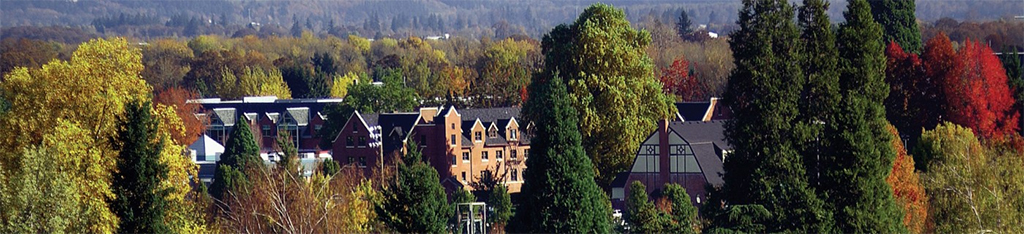
Mount Hood

The “Coming Out Monologues”

By Amanda Clarke
Staff Writer

The “Coming Out Monologues” took place Thursday evening, April 30, in the Pacific Room of the Werner Center.

According to Western’s events Facebook page, the monologues were “a collection of stories authored and performed by Western Oregon University students, alumni, faculty and staff.” The event was directed by Ted deChatelet and produced by CM Hall.

The event was donation based, and partnered with the Stonewall Center, Safe Zone and Triangle Alliance. There were 21 speakers including those who identify as bisexual, lesbian, gay, asexual, pansexual, questioning and transgender.

The monologues gave presenters a chance to tell their story of being accepted, or not being accepted, and included monologues from people on all paths finding their own identity. Each monologue dealt with topics including compassion, courage, connection, fear and curiosity.

“Everyone has a different story,” said Hall, a Western graduate, staff member, and sign language interpreter.

The audience was filled with students, staff, faculty, friends and presenters of all ages, as well as supporters of those who presented their story.

DeChatelet said they had a “phenomenal turn out. We had 150 chairs set out, hoping to fill them all but not expecting to. We had to bring in 100 more chairs.”

“It’s so inclusive,” deChatelet added. “It’s not just students or staff. We had so many participants, and their communities came to support them.”

John Goldsmith, a junior and English major, said: “There was a huge turnout. We had to ask for five extra rows of chairs. We didn’t think it would be this big.”

Goldsmith also presented his monologue before the audience. He added that he had shared his story because “Western has been the best environment for me.”

Sam Stageman, a sophomore forensic chemistry major, also presented his story: “My story isn’t one told very often, so I thought that I should share it,” he said.

Stageman added that the event “really does give everyone a chance to tell their own stories.”

Goldsmith said the monologues were moving because “these are actual voices from campus. They are representing the school.”

Hall said she had thought about putting on this event for several years.

“There has been a lot of evolution in this age group around LGBTQ acceptance and I thought this is a really great opportunity to have some visibility and tell some stories [as well as] get people to kind of come together,” Hall said. “I just feel like when people are telling their truths and sharing their personal lived experiences, people connect, hearts open and minds open. People start to see things from different perspectives.”

The monologues, as many of the participants agreed, helped to create a sense of “community within a community,” presenter Evelyn Garcia, a senior psychology major, said.

A student in the audience, who wished to remain anonymous, said “It was really nice to see people like me and see them being so brave, and it was just really nice to see how others went about it, and it made me and my identity feel valid.”


A global education

By Chelsea Hunt
Staff Writer

Senior Brande Balas is not the only student at Western benefitting from a persistent increase in international students.

Fall term, Balas took a class with international student Meznah Almuqbil, a first-year student from Saudi Arabia. Balas was born in Saudi Arabia, where her father had been working at the time, which has given her a different perspective of cultures, she wrote in an email.

Even so, she still felt nervous talking to Almuqbil for the first time, said Balas. “I was afraid I’d say the wrong thing and offend her.”

However, after getting to know Almuqbil, Balas learned that “she is a beautiful person with such an insightful point of view.”

Almuqbil is one of many international students at Western, 90 percent of which come from Saudi Arabia and China.

The increase began in about 2004 when the university wanted to draw more international students, said Rob Troyer, professor of linguistics. Due to the increase, Troyer was hired in 2007 partly to help international students be successful.

According to associate provost Dave McDonald, in 2005 there were only 59 international students, but as of 2014, there were 350.

This growing number of students at Western translates to a 493 percent increase in less than a decade.

Western’s interest in bringing in foreign students is about “wanting to be more international,” Troyer said.

“Having international students on campus is one way Western students can connect to the rest of the world,” he added.

Just as having international students exposes domestic students to the diversity in the world, international students get to see the diversity in the United States.

Almuqbil said that America is interesting to her because she loves learning about different cultures within the United States.

Internationalism isn’t merely an end in and of itself, though. The influx of international students brings with it financial benefits, helping Western to be financially stable, Troyer said.

In addition to diversity and financial stability, Troyer also listed the increasing globalization in the world as a reason why international students are important to Western. It’s not just “the flow of goods and products, but knowledge,” he said.

Junfen Zeng, a senior from China who goes by the name Tina, said that she thinks that America’s education is good.

At the university she attended in Shanghai, she participated in a three plus one program where she did her first three years there and is completing her degree in finance here at Western.

Zeng said her favorite thing about being in America is “I can meet different people.”

Both international students like Zeng and domestic students like Balas have gotten this opportunity to interact with people from different cultures.

Over time, Balas has come to know several other international students in addition to Almuqbil.

“The students that I’ve talked to have been very open and understanding,” Balas wrote.

Balas’ advice to other students is to assess their biases and let them go, as well as to get to know the international students for who they are.

“I’ve found that we are far more similar than I would have ever guessed,” Balas added.

The future of education: Preview 2023/24

By Katrina Penaflor
 Campus Life Editor

Western will be opening its doors Saturday, May 9, to a new generation of students who will be attending college in the years 2023 and 2024.

These third and fourth grade students attend local schools such as: Monmouth Elementary, Ash Creek Elementary, Falls City Elementary, and the surrounding area.

Over 50 elementary students will participate in a list of activities that include: activities in New PE, a scavenger hunt, lunch, and “college” classes.

Molly Christmann, Residence Hall Association (RHA) President and the facilities and schedule coordinator of Preview 2023/24 said,” Previews show elementary school students how awesome it is to really be in school, not just what school can do for you in the long run.”

Each of the third and fourth graders or “Little Buddies” will be paired with a “Big Buddy” for the event. These Big Buddies are Western students who will guide the visitors through their day of activities.

Big Buddies “will help them with the scavenger hunt in the morning and will generally be there to support the student and help them with the itinerary and where to go, as well as making a positive impression on them about what it’s like to be a college student,” Christmann said.

Western students will not only be the Big Buddies at the preview day but will also act as teachers.

These teachers will organize mock classes for the elementary students to attend. After having lunch in the Mt.

Jefferson room, the Little Buddies will decide which classes they want to go to with their Big Buddies.

“Our hope is that Preview day participants really connect with their Big Buddies in a way that makes them see all of the opportunities that staying invested in education can bring,” added Christmann.

Guest Column: Campus Garden seeks to reduce food insecurity at Western

By Afton Sullivan

The WOU Campus Garden is an organic garden at Western where the students in charge of the garden promote local food production through sustainable and organic methods.

The student-lead project only uses organic compost and potting soil and never sprays pesticides or herbicides. During our first season, we planted a wide range of vegetables and fruits, including tomatoes, peppers, eggplant, broccoli, lettuce, potatoes, herbs, strawberries and many more.

According to Dr. Doris Cancel-Tirado’s study at Western, in 2011 food insecurity rates at the university affected as many as 59 percent of students. Our mission as a garden is to reduce food insecurity among our fellow students by donating to the food pantry on campus. The garden also helps build sustainability on campus by donating to the dining hall. Our garden is completely non-profit and student-run.

The campus garden depends on the hard work of students in order to sustain the garden’s success. This term, we are relocating the garden from the area near the library to a fenced plot near the modular classrooms. We will be using raised-bed gardening techniques this time around and hope students will be involved with the rebuilding and replanting process.

If you are interested in volunteer work, community service, sustainability, or just wanting to meet other students on campus and get involved, please join us in the garden on Saturdays from 2 – 4 p.m. For more information, contact Hayden Rue at hrue08@wou.edu or Afton Sullivan at asullivan11@wou.edu.

A vegan’s guide to eating cleaner in Monmouth

By Jenna Beresheim
 Staff Writer

Screen shot 2015-05-01 at 3.23.39 PM


No dairy, no eggs, and certainly no meat. Welcome to the diet of a vegan, a concept that can be confounding and confusing – both for non-vegans and even the most seasoned vegan, alike.

Not all vegans are made the same, though. While some are modified vegetarians who merely abstain from meat, others fall on the opposite end of the spectrum: refusing to buy any products that come from animals, such as leather or honey.

Whichever kind of vegan you find yourself to be, one common enemy is the act of eating out in a restaurant.

As you can imagine, being a vegan in college can be difficult with these standards. Healthy options are difficult to find cheap, and often times the most cluttered of menus will hold one to two options.

If you find those options despicable, picking another one from the menu and removing half of the items from it also works—despite the odd looks from your waiter. Pepperoni pizza sans pepperoni and cheese, please.

Since veganism is on the rise, it is becoming more common to see menus that promote veganism. Even in small towns like Monmouth.

For starters, Yeasty Beasty is a vegan-friendly pizza place, minutes away from campus on Monmouth Avenue.

“Our dough is vegan,” said Yeasty’s owner, Tom Jones. “We try our best to accommodate. We can always remove meat or cheese, or even make it gluten free.”

Jones’ personal favorite on the menu is the Greek Veggie Beasty, and he suggests substituting pesto as a great alternative to other sauces. On the menu there are over seven items that are vegetarian, all of which can be altered to accommodate vegan preferences.

Besides pizza is the recently-opened Momiji Sushi Bar and Restaurant.

“I have a girl who’s vegan who comes in here, and every time I make her something personalized,” said Jeff Berneski, the owner of the restaurant.

While the menu sports its own vegetarian section of six different roll choices, this place is open to altering and subbing foods as needed.

“I’m always open to changing it up —I want to cater to you,” Berneski said.

Don’t worry. There’s more. Koyote’s Tacos is a block away and a popular spot for many, including Ruby Tidwell, a Western student who was raised vegetarian.

“The staff is always friendly and more than happy to customize anything on the menu, which lends itself to many veg-friendly or gluten-free choices,” Tidwell said.

Ultimately, altered diets are coming into their own place amidst the restaurant community.

As a vegan myself, I recommend keeping an open mind and always staying educated. Know that some foods are fried in animal oils or cooked with animal fats, and what your range of acceptable foods are.

Fellow vegan and senior, Brittany App, said, “It’s tough being vegan in a small town, but I am glad for the options we have here and that they are willing to work with us.”

A WWII Survivor’s Tale

By Haunani Tomas
Editor-in-Chief

In honor of Western’s annual Holocaust Remembrance Day, students and staff flooded the Willamette room of the Werner University Center to hear the story of Rosina Lethe. The event, organized by the Student Leadership and Activities board was held on Tuesday, April 21.

Lethe, a WWII survivor, felt the obligation to share her story to explain “the amount of suffering wars can cause.” Nearly 100 students and staff combined listened as Lethe began telling her survival story to her biggest crowd yet.

Lethe clarified that she was not involved with Hitler’s almost successful termination of the Jewish peoples. Her
involvement was just the opposite; Lethe and her family were put in a concentration camp because they were German.

Lethe’s story took place over the course of three years, in which she was separated from then happily reunited with her family.

Seventy-one years ago, the Germans occupied Yugoslavia, now Serbia, until the Russians came to claim territory.

When the Russians arrived, Germans retreated without gunfire because they realized they would cause more harm to the German population in Lethe’s town. Strategically, the Germans withdrew tanks and allowed Russians to take the town. Lethe was 15 years old.

Lethe said that three Russian officers used her family’s home as their living quarters. Her uncle, who was fluent in Russian, often played chess with the officers and made sure to let the officers win.

Then, one day, the townspeople were instructed to pack food for three days and meet by City Hall. Her town population
neared 15,000 people and by the end of the war it had dwindled to 5,000. The townspeople were driven out at gunpoint and “driven like cattle” on the road. They walked for 12 miles to the closest town, near the Hungarian border.

People “who couldn’t walk were shot on the side of the road,” Lethe said. The very next day, the townspeople walked another grueling 12 miles to a German village, surrounded by guards. The house the townspeople were told to stay in was
stripped of all furniture.

“So many people were in there,” Lethe said. “We were packed in there like sardines. There was barely room to walk.”

In addition to the claustrophobic living conditions, food supplies were low. The food that was available was unwholesome. This was the first concentration camp, or as Lethe referred to it “starvation camp,” that she stayed in.

“People began dying. Every day a wagon pulled by horses would come to collect the dead bodies,” Lethe said.

Russian officers demanded the townspeople to hand over their valuables, specifically any money and jewelry.

Lethe said, “the people who hid some [of their valuables] were shot and killed and left in the road for people to see.” One of the victims was her father’s cousin, who was shot and killed in from of his 6-year-old daughter.

The Russians began searching for workers to harvest corn. Lethe was chosen as a worker and taken back to the first town they stopped at on their way to the concentration camp. This marked the first time she was separated from her mother and sister. The workers lived in a transit camp and slept in wooden barracks that were made for soldiers.

“The food there was a little betterbecause they wanted people to be able to work,” Lethe said.

Lethe was lucky enough to meet a friend who was also away from her mother and family. One night, Lethe and her friend decided to escape. They walked all night along the Danube, Europe’s second longest river, and made it all the way back to their hometown. To their surprise, her friend’s mother was at home cooking. Her friend’s mother explained that people of Yugoslavian or Hungarian blood were released.

Over the course of the next two years, Lethe lived with different families who assisted in her endeavor to reunite
her family. Lethe made multiple secret trips into the camp her mother and sister were held in to deliver food to her malnourished sister, who Lethe describe as unrecognizable.

“I saw my sister and didn’t even recognize her,” Lethe said. “Her head was shaved to keep the lice out, and her eyes looked like they were falling out of her face.”

After crossing over the borders of Hungary and Austria, Lethe was somehow reunited with her mother, father and sister. By then, Lethe was 18.

Years later, Lethe met her husband and moved to Germany, then California and finally settled in the Willamette Valley.

“The Willamette Valley really felt like home, just like the farmlands we grew up on,” Lethe said.

Etiquette equals networking.

By Amanda Clarke - Staff Writer

The Service Learning and Career Development Center hosted the spring etiquette dinner Monday, April 13, with special guest speaker Mindy Lockard.

Lockard is featured in various magazines and TV shows and has traveled internationally to speak about the power of etiquette. She has spoken at various colleges such as Western, University of Oregon, and Lewis and Clark, in addition to various industries over her 11-year career.

After her first daughter was born, Lockard said she realized “helping to empower girls in their own skin is important.”
The dinner consisted of a five-course meal where students learned how to set a table, how to toast, and how to eat in the American and Continental style.

“I believe in the power of etiquette, not because it makes other people feel uncomfortable about us, but because it makes us feel comfortable in our own skin,” Lockard said.

She added that by using proper etiquette during interviews and meals, students would be able to expand their professional network.
She involved students within the dinner and spoke about not only how to eat properly, but why it is important.

“Eighty-five percent of a person’s success has to do with people skills,” she said.

People skills can allow a person to make others feel comfortable in their presence, but if they do not know this type of etiquette, they might not get asked out to dinner again.

“Manners have to do with how you handle yourself in professional situations,” Lockard said, “Etiquette is not about being better than other people, it is about sitting down and engaging with other people.”

Adry Clark, SLCD director, said they have been hosting this event for almost five years, with the last event held last November.

“Good dining etiquette is such a big part of the interview process,” Clark said. “Because she’s such a good trainer […] it’s easy to apply it in life.”

The SLCD office is located on the first floor of the Werner University Center and is open Monday to Friday from 8 a.m. to 5 p.m. They provide assistance with resumes as well as mock interviews to help students prepare for finding jobs.

A Fairy Tale Wedding

Evelina Ramirez - Staff Writer

Organizing a wedding can be one of the most stressful situations for couples on a budget. Who will be the photographer? How are we going to feed so many friends and family members? How will I find an affordable dress, or a fitted and wallet-friendly tux? Where do we start looking for venues?

Students getting ready to tie the knot, who are asking themselves these questions, are in for a sigh of relief:
Sunday, April 19, from 1-5 p.m., Gentle House will host their third annual bridal show.
The Gentle House, an 1880’s farmhouse equipped with gardens and a museum, allows couples to turn their fairy tale wedding into reality.

“The purpose behind our Annual Bridal Show is to demonstrate how a bride can have an absolutely fantastic wedding while staying on a budget,” Shurisa Steed, Gentle House staff, said.

The bridal show is free for students who wish to attend and is open to the general public as well.

This enchanting venue is on the north side of Western’s campus on Monmouth Avenue, across the street from university apartments, making it easily accessible to students and Monmouth residents.

According to Shurisa, renting the Gentle House venue comes with a kitchen, tables and chairs, a bridal changing room, sound system, two restrooms, and a Gentle House representative to help during the event.

Considering that the Gentle House is an event center, there will be five historic gardens featured at the bridal show, staged for wedding ceremonies and receptions to demonstrate how a wedding can be arranged and decorated for any couple’s unique tastes.

Aside from the gardens, there will be countless wedding professionals attending the show ranging from photographers, bakeries, DJs, and beauty salons to inspire couples’ possible wedding arrangements.

Photos by Orion, a photography company from Keizer, will be showcasing large portraits of different special occasions.

Kathryn Davidson, from Photos by Orion, said, “For couples on a budget, Photos by Orion is great because all our packages come with a CD of images and unlimited printing rights. So the price they see is the total price they pay; no hidden fees here.”

Ovenbird Bakery will present their special and delicious cakes baked specifically for weddings. Katie Schaub, from Ovenbird Bakery, said their focus for the bridal show will be showcasing cakes with free samples for students to try.

“We have, on several occasions, produced pies, fruit tarts, éclairs, cheesecakes, and candies as supplemental or alternative wedding desserts,” Schaub said.

For more information about the bridal show or the venue, contact Gentle House at gentlehouse@wou.edu, or by phone at 503-838-8673. You can also visit its website at gentlehouse.org.

22nd Annual Pow Wow

By Caity Arias - Freelancer

Western’s 22nd annual Pow Wow, presented by the Multicultural Student Union will take place Saturday, April 18, in the Pacific room of the Werner Center.

It is an all day celebration of immersing into a culture and experiencing the different customs of food, dancing and music. Many different vendors will be present to represent the beauty of the Native American culture.

Doors open at noon and the event lasts until midnight.

MSU’s fundraising coordinator, Jovany Romero, a junior Spanish major said that “this is one of their biggest events of the year.” Romero added that “a lot of planning goes in to this event. The grand entrance is the biggest part. There are vendors from all over Oregon and tribes to do Native American dancing and drumming.”

The Pow Wow is a reenactment of Native American culture by contemporary people from all walks of life and background. People from around the community join together to share the experience through singing, dancing and eating. The sharing of Pow Wow traditions shows respect and admiration for the history and heritage of Native American culture.

Dancers and drummers will be there to help visualize the Native American culture, as well as a dance competition with categories in fancy dancing, traditional dancing, grass dancing and jingle dancing. A dinner featuring different foods of the Native American culture will be available, too. The presenters of the show include The Master of the Ceremony; Nick Sixkiller, Host Drum; Woodsman, Whipman; Tony
Whitehead, and Flag Bearer; Grand Ronde Honor Guard.

“It is good to experience a different culture and new experience,” Romero said.

Romero said people may participate in a raffle, with the grand prize being a blanket which has been blessed.

The Pow Wow is a great opportunity to submerge oneself in Native American culture.

MSU secretary, Briana Navarrete, a senior double majoring in business and Spanish, said, “I want people to experience and learn the culture, have fun and come back next year.”

Sweet as Sugar Lilly’s

By Katrina Penaflor - Staff Writer

Monmouth’s latest edition, a new bake shop called Sugar Lilly, will be opening on Broad Street across from the Tan Republic by Monmouth resident, Sarah Lilly.

Lilly has always carried a passion for baking.

“I’ve been baking my whole life. It is something that I have always enjoyed,” Lilly said. “I think I have always had a bit of a talent for it.”

Her business originally started in her personal home three years ago. After receiving a domestic baking license, Lilly would make cupcakes in her own kitchen and sell them at the Salem Saturday Market.

Customers would flock to her homemade cupcakes that included traditional and gluten-free recipes. Some of the flavors Lilly has featured at the Saturday Market are: s’mores, gluten-free double chocolate, and strawberry with strawberry buttercream.

But weather conditions at the outdoor market only allowed Sugar Lilly to operate for a few months out of the year. When the space became available in Monmouth, Lilly could not pass up the chance to finally open her own shop.

“The opportunity came up with the owners of this place, and I could not turn it away,” Lilly said.
Lilly’s business began with cupcakes, but those will not be the only desserts available at her shop. Sugar Lilly will feature a full dessert menu consisting of pies, cheesecakes, cookies, and more. There will also be a breakfast and lunch menu that will include soups made daily, salads, and sandwiches.

Sugar Lilly will also serve coffee, teas, Italian sodas, and espressos.

Everything in the shop will be made fresh, “nothing processed, [and] everything will be made from scratch,” Lilly said. She said she likes to utilize local products as often as possible and will be able to add to her menu depending on what is available—like fresh cobblers when berries are in season.

Lilly said Sugar Lilly will be “A place you can get a healthy lunch.”

“Everything there is going to be made fresh every day. And real ingredients. We don’t use margarine, fake fats, or lard. Everything is as natural as possible,” Lilly said.

Students will be happy to learn that Sugar Lilly will offer free Wi-Fi, and include a cozy covered patio outside for additional seating. Lilly is also working to develop student and military discounts and punch cards. Free dessert will be given to customers on their birthdays.

“It sounds like a great place for students to go and get a good dessert,” said Courtney Haess, an education major.

Lilly hopes to open the doors to the Sugar Lilly bake shop around May 1.

For more information visit the Sugar Lilly Facebook page at www.facebook.com/SugarLillyGourmetCupcakes