Mount Hood

Western Oregon host Northwest Club Basketball Championship, takes first

Shariff Youngblood | Freelancer

On a typical Pacific Northwest cold and gloomy day, five teams battled for the Northwest Basketball Club League Championships. A trophy was on the line, and there was only one team that was going to go home with it.

On April 13, the Wolves, University of Portland, Seattle University, University of Oregon and a second Western club team, which was added due to a team dropping out, came together. Western students gathered around the gym to show support for the home team.

The first game of the tournament on April 13 saw the Wolves take on the University Of Portland Pilots. The Pilots came out scoring in the first half, and kept hitting shots in the second; they ended up closing out Western, 71-52.

With a game under their belt and a loss on their record, the Wolves responded by coming out on fire versus the University of Oregon as they built a comfortable halftime lead of 47-32. The University of Oregon would not go quietly as they hit three-pointer after three-pointer and cut lead down to six with about five minutes remaining, but it was all Wolves from there as they pulled away late with a final score of 96-77.

After every team played two games, the tournament playoffs began. The Wolves were matched up against the Pilots. Western’s second club basketball team was matched up with Seattle University. The Wolves had revenge on their mind as they looked to knock the Pilots out of the tournament; Western’s second club team was looking to advance to the championships.

Western’s second club team played a close game all the way through the second half. The deficit was cut to three points in the closing seconds. Seattle University stepped up late and made four free throws to close out the game, 47-41.

The Wolves started their game against the Pilots by hitting six threes in the first half. However, the Pilots were determined to make it a close game and cut the lead down to single digits with the score being 35-28 going into the second half.

The second half proved to be a physical game with both teams trading buckets until the last four minutes, when Western held to the win. Both teams fought hard, but the Wolves hung on with a 54-44 win to advance to the championships versus Seattle University.

The championship game was finally here. The Wolves were matched up against the  undefeated Seattle University team. Western came out fired up and was able to build a double-digit lead in the first couple of minutes. The teams traded baskets but the Wolves were leading 38-23 going into the second half.

The second half was a completely different game as Seattle University started making shots. They fought their way back and cut the lead down to four points with about six minutes to go. With his team needing to extend the lead, the Club Sports player of the week Joey Gaylord took over. Gaylord started the runoff by hitting back to back deep threes extending the lead to 10 in the closing minutes.

However, Seattle University would not let up, and cut the lead down to six with about 40 seconds of play left. The Wolves made their free throws and closed out the game 54-46, capping off a 3-1 finish and earning the title of Basketball Club League Champions.

“This championship is really big for WOU with us being such a small school. We have about 6,000 students and were playing against D1 schools and we have proven ourselves as one of the top D2 schools out there,” said Gaylord.


Contact the author at syoungblood16@wou.edu

Photo courtesy of Paul F. Davis

Student veterans hosts campus-wide Easter egg hunt

Bailey Thompson | News Editor

Brightly colored orbs are being carefully placed all around Monmouth Avenue — waiting to be found. All throughout the week leading up to Easter Sunday, students might notice the ongoing Easter egg hunt that is being hosted by WOU Student Veterans of America from April 15-18.

Just by returning any eggs that they find to the Veterans Resource Center in the lower level of the Werner University Center, students will win a prize.

“We hide eggs on Monmouth Avenue on Monday, Tuesday, Wednesday and Thursday, and students have all week to come in and win a prize,” said Cole Hendren, Communications Officer for SVA. “Each person is allotted two eggs per day, and then you can only win one of the major prizes.”

While the majority of the prizes are smaller things like candy, the club is also giving away board games, sporting equipment, gift cards to local restaurants and more. Some of their bigger prizes include a 55-inch Smart TV and a Roku.

How can students win prizes like the TV, then?

“You’ve got to find the right egg,” said Hendren. “Each egg has a little note inside, and the note has a number. Then the number corresponds to a list that we have where the numbers are connected to each prize… so we have no idea putting them out which ones they are.”

Reflecting on their hopes for the event, Stephanie Mahoney, SVA Chapter President, shared that the club is trying to make this one of their biggest community events of the year.

“We’ve been trying to make this one of our club traditions to make this an annual event to let people know that we’re here as well as to connect with other students,” said Mahoney.

Hendren also shared how this event is strategically placed to reach out to students at a time of the year when many might feel sad at not being able to go home to their families.

“I think, for a lot of kids who can’t go home for Easter but who do celebrate it, this is a cool deal,” said Hendren. “It’s a nice ‘hey, you’re not alone.’ We’re all here together, and if you can’t go home, that’s okay.”

Looking forward to the rest of the year, a few of the SVA events that Mahoney and Hendren are excited for are a headstone cleaning on Memorial Day, a banquet with the Veterans Resource Center and a panel during Diversity Week where student veterans share their experiences.

One final thing that Mahoney and Hendren emphasized is that the WOU Student Veterans of America is not exclusively a club for veterans — anyone can join.

“When you have a group like this where a bunch of veterans get together, it gives you a sense of family again,” said Hendren.

Students can learn more about the Student Veterans of America by visiting them in the Veterans Resource Center of by attending one of their biweekly club meetings that take place on Tuesdays at 5:30 p.m. in WUC 108.


Contact the author at howlnews@wou.edu

Photo by Ashlynn Norton

Stonewall Center hosts “Queer People of Faith Panel”

Bailey Thompson | News Editor

For many people in the LGBTQ community, it is challenging to continue associating with the religious groups they grew up with because they no longer feel like they are accepted by those communities. A common narrative says that LGBTQ identities and religion are mutually exclusive, but this is not something that all people believe. To talk about this further, the Stonewall Center organized a “Queer People of Faith Panel” on April 9 in the Werner University Center to discuss common issues that people who identify as both religious and LGBTQ experience.

With students of Muslim, Christian, Spiritual and Jewish faiths represented between the six panelists, a variety of perspectives were present at the event. In terms of sexuality, these students primarily identified as pansexual, gay and lesbian — although some of them acknowledged that it was not that cut and dry.

When panelists talked about their relationship with their respective religions before coming out, they largely echoed positive experiences of tight-knit communities and family traditions. However, this generally changed for people once those who have done so came out.

“I knew I was gay since I was probably like 8, but because of my faith and what I grew up with I didn’t talk about it,” said one of the panelists.

Another of the panelists shared that they had a similar experience of distancing themselves from the church because they did not feel welcome.

“When I came out, I felt that religion and spirituality wasn’t for me and would never be for me because I had been so hurt by it,” said the panelist. “And it was a process of one to two years for me to discover that religion and spirituality is what I want it to be, and it’s still a process. Those conflicting things is a really central part of me and it’s something that I’ve really worked to heal in myself.”

From a different perspective, a couple of the panelists who described growing up in a more liberal community did not feel the same severity of judgment that these first panelists did.

“Where I grew up and how I was raised it was never a big thing, but it was also never really spoken about. So, there is some work to be done there,” said a panelist.

One thing that the panelists agreed upon was that it is important for queer communities to be having more discussions around religious identities and religious communities to be having more conversations about queer identities, since both of these will help to bridge the gap that currently exists in many places between these two groups.

“I am so grateful for having grown up religious and having come out as queer,” said one panelist to conclude. “It’s been real s—– sometimes, but it has given me such depth and such perspective about what it means to grow up and think one way and to entirely shift my perspective.”


Contact the author at howlnews@wou.edu

Photo courtesy of Bailey Thompson

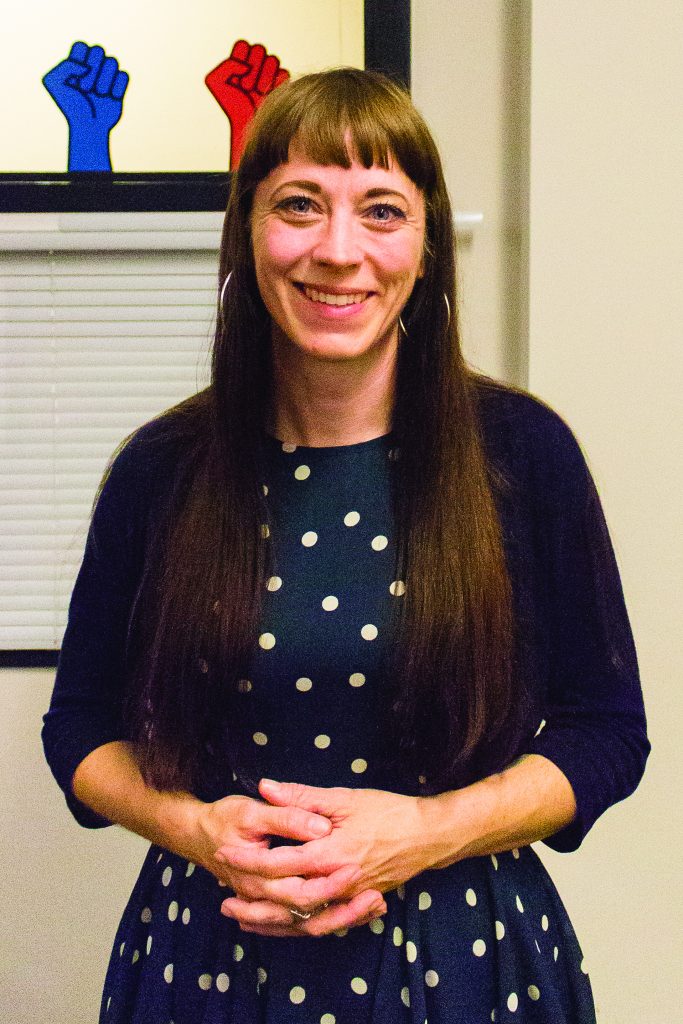
Q&A: Welcoming Lisette Cervantes to Abby’s House

Bailey Thompson | News Editor

Can you tell me a bit about your new position?

I work with both Abby’s House and the Food Pantry. So, for Abby’s House, that is the Bilingual Advocate part. And that’s giving direct service to victims and survivors. And for the Outreach Coordinator part, it’s through the Food Pantry — supervising and helping with food insecurities around campus.

What is one fun fact about you that people might not expect?

I love skateboarding… I’ve been practicing at it, and I really enjoy that. Also, I used to want to be a pastry chef.

What did your life look like before entering this position?

I recently just graduated this last term. So, it’s pretty fresh right now. Starting my freshman year, I did mentoring for two years with the MCR (Multicultural Representatives) program, and that is being a mentor for two to three incoming freshmen who are low-income, first-generation or (have) diverse backgrounds… And then I’ve been an advocate with Abby’s House for three years and two of those where I was the office coordinator here. And I was a research assistant with the suicide prevention grant here on campus. I also did an internship at Sable House, so that definitely helped prepare me for this position.

What about this position drew you to apply and stick around after graduating?

I’m very passionate about advocacy and helping underrepresented people — just bringing more inclusivity and resources to our campus. Being bilingual is a new thing for us, and I think that’s a great thing to have to support people even more.

What are some of your favorite things about Monmouth and the Western community?

I really like that it’s a small community, so we’re able to just be more personal and help more people. It’s very welcoming. Also, I’m an undocumented student, and I’ve found a lot of support from Western and their different programs.

How do you think that this position will challenge you moving forward?

I think it’s a challenge going from someone who is a part of a team … to now being more of a leader and being in charge. But, I think also doing more outreach because a lot of people don’t know about our services — so getting the word out there is important.

What is one goal that you have for Abby’s House or the Food Pantry in the future?

I think I would just like us to be even more inclusive. We’re adding these roles that I think will help to just house things in one place instead of having to navigate through this whole system. So, definitely just being a place where people can come to be safe and welcome and to get the support that they need.


Contact the author at howlnews@wou.edu

Photo by Bailey Thompson

A look inside Spring Term at Abby’s House

Bailey Thompson | News Editor

Of all the things happening at Abby’s House this term, one of the biggest piece of news is the addition of Lisette Cervantes to the Abby’s House professional staff. After receiving a grant last March, Aislinn Addington, Abby’s House Director, initially struggled to find someone to fill the position; however, it worked well to hire Cervantes because of her unique perspective as a student, her training and her experience at Western.

Moving forward, Cervantes will spend 60-70% of her time at Abby’s House and 30-40% with the Food Pantry. Addington shared that her duties will be beneficial because she will provide direct support to Spanish-speaking students as well as reach out to traditionally underserved populations like LGBTQ students and students with disabilities to see what ways they can be better served at Abby’s House. This will also be the first time that professional staff hours have been dedicated to supporting the Food Pantry.

On top of welcoming Cervantes, there are a number of events coming up during Spring Term that students can put on their calendars.

“April is traditionally Sexual Assault Awareness Month, but in Oregon we’ve switched that up a little bit so it’s Sexual Assault Action Month,” said Addington.

Coming up, Abby’s House will be promoting their Start by Believing Campaign, which urges students to be loving and supportive of individuals who come to them about sexual assault.

Another event Addington is excited about is called “The Truth about Trafficking,” which will be held on April 18 in Abby’s House.

“Ashley Anstett from the Sexual Assault Task Force is coming to campus to talk about human trafficking in Oregon,” said Addington. She will be talking with the Western community about the issue locally as well as what people can do to be supportive to survivors.

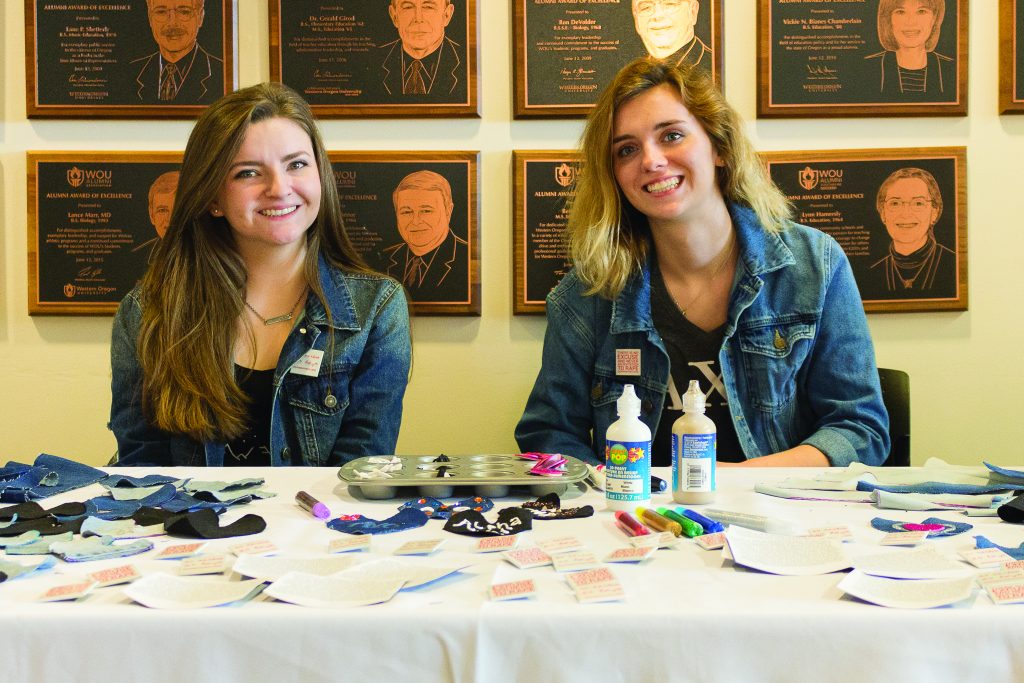
On April 25, Abby’s House will be collaborating with Alpha Chi Omega to have a Denim Day table where they will have students make DIY denim crafts. They will also tell them about Denim Day — a day recognized every year which commemorates an instance in Italy in 1992 where a young woman was sexually assaulted by her drivers ed instructor, but where the court initially ruled that she had given consent because she was wearing tight jeans.

“Jeans are just a reminder of the amount of victim-blaming that goes on and the difficulty that we have in prosecuting these crimes everywhere,” said Addington.

A couple of other things that students can look out for in the upcoming term are the Student Health and Counseling Center beginning to offer forensic exams for students and Abby’s House putting on an event about alternatives to traditional menstrual products.

If students would like to learn more about any of these events or if students are interested in becoming an Abby’s House advocate for the 2019-2020 academic year, they can email Addington at addingtona@wou.edu or Cervantes at cervantesalmontel@wou.edu. They can also contact a new confidential advocate email address, confidentialadvocate@wou.edu, if they would like to share something with a confidential advocate like Addington or Cervantes.


Contact the author at howlnews@wou.edu

“Harry Potter” drag show puts a spell on audiences

Mikaela Wong | Staff Writer

In what has become arguably one of the most anticipated events of the school year, the Western Oregon University Drag Show lived up to its hype. The 23rd annual drag show broke records as it became the first time that the show held two production nights and both completely sold out.

This year’s theme: “Harry Potter and The Prisoner of the Gender Binary.” A gender binary is defined by Wikipedia as “the classification of gender into two distinct, opposite, and disconnected forms of masculine and feminine, whether by social system or cultural belief.”

The main overarching themes in the show were inclusiveness, representation and acceptance.

Dancer Seraphim Benoist said, “We really focused on making this show a safe and inclusive space for absolutely anyone, no matter how you identify. No matter what you think, you’re here to dance and be beautiful.”

Susannah Doepken wrote and directed last year’s show, and played the role of Lupin this year.

Doepken added, “I think there’s a really wide range of characters and it’s written in a way where a lot of people can feel represented. Hopefully someone in the audience who has never seen representation of themselves can feel represented in the show.”

At one point in the performance, many of the characters stood at the front of the stage holding flags that represented people of different identities such as asexual, bisexual, allies and of course, the rainbow pride flag.

Rhianna Salman, who wrote and directed the show, dedicated it to Marsha P. Johnson and Sylvia Rivera, two transgender women who were one of the first to fight back during the riots in New York City in 1969 at the Stonewall Inn, which later became known as the place where the Pride parade was born.

“We literally have them to thank for being able to be here,” said Salman, “the Stonewall riots and the first pride march … that’s why I choose to represent Sylvia Rivera and Marsha P. Johnson… I also want to thank Shelby Wanser, Sam Fennell and Rory Krehbiel for contributing to the script writing.”

Rarely during the show was there silence in the audience. Bouts of screaming, whistling, cheering and shouting were continuous throughout the various numbers that consisted of choreographed dances, lip syncing and lots of pelvic thrusting. The energy in the room was electric, with sexual jokes being cracked every other line.

Daria Keidar, who played Harry in the show, heard about the show through friends she met in dance class.

“I just wanted to be a part of it and part of the show so I just auditioned,” Keidar said. “I’ve been dancing since I was five years old and I’ve been doing theater since I was in middle school.” When asked how she reacted when she realized she got the lead role as a first-year, Keidar replied, “when it finally hit me I was just like ‘oh f—, I’m the lead.’”

The bold personalities that filled the stage were welcomed with cheers and applause that inspired everyone to own their identities, no matter what that looked like to others. The narration encouraged people to accept each other wholeheartedly, and challenged them to stray away from the social constructs that constrict growth and love of one’s individuality. The drag show provides an opportunity to claim the true identity that calls and encourages people to own every aspect of it- even if it changes over time. After all, as the show said, “You might find yourself in a new closet everyday, it just means you get to find a different outfit to come out in.”


Contact the author at mwong16@wou.edu

Photos by Ashlynn Norton


This week in completely made up horoscopes

[fruitful_tabs type=”accordion” width=”100%” fit=”false”]

[fruitful_tab title=”Aries 3/21-4/19″] It is your birthright to celebrate your birthday every day of Aries season. If you’re not, then you’re doing something wrong. [/fruitful_tab]

[fruitful_tab title=”Taurus 4/20-5/20″] The stars have heard whispers of a Star Wars club forming… [/fruitful_tab]

[fruitful_tab title=”Gemini 5/21-6/20″] Ok so can we bring back light-up shoes [/fruitful_tab]

[fruitful_tab title=”Cancer 6/21-7/22″] Okay, that’s enough Oregon — can we get some sun now? [/fruitful_tab]

[fruitful_tab title=”Leo 7/23-8/22″] MAKE SURE TO BREAK DOWN YOUR NACHO THOROUGHLY. It hurts when you swallow a big piece D; [/fruitful_tab]

[fruitful_tab title=”Virgo 8/23-9/22″] Let me blow your mind real quick: It’s only Week 3. *Mind = blown* [/fruitful_tab]

[fruitful_tab title=”Libra 9/23-10/22″] Sure, Libra, keep complaining about the rain. We know in a few weeks you’ll be complaining about the heat. [/fruitful_tab]

[fruitful_tab title=”Scorpio 10/23-11/21″] T A K E T H E L E A P. [/fruitful_tab]

[fruitful_tab title=”Sagittarius 11/22-12/21″] Sooo, pizza for lunch again? Okay, cool. Good call. [/fruitful_tab]

[fruitful_tab title=”Capricorn 12/22-1/19″] Due to unforeseen circumstances, Capricorn will not be attending class today. (Unforeseen circumstance: stayed up until 5 a.m. watching Netflix.) [/fruitful_tab]

[fruitful_tab title=”Aquarius 1/20-2/18″] Do you even have time to be reading this Aquarius? [/fruitful_tab]

[fruitful_tab title=”Pisces 2/19-3/20″] Goes to college. Graduates from college. Still isn’t qualified for any job. [/fruitful_tab]

[/fruitful_tabs]

Opinion: Critical Role Kickstarter campaign raises $9 million to fund “The Legend of Vox Machina”

Cora McClain | Copy Editor

How much does it cost to fund an animated series? Well, according to “The Legends of Vox Machina Kickstarter is LIVE!” it takes $750,000 to make just one 22 minute episode. This was the initial goal Critical Role, a Dungeons and Dragons web series with an all-star cast of well-known voice actors in the video game and animated world, set in their Kickstarter campaign in order to fund a 22 minute animated special entitled “The Legends of Vox Machina.”

As stated on the project’s Kickstarter page, the team initially pitched the special to traditional media studios. However, they soon changed their strategy after finding little to no success with these studios and networks. In order to “stay true to our beloved characters and tell the stories (their fans) want to see,” they decided to turn to their fans (a.k.a Critters) to make it a possibility.

The Kickstarter launched March 4, and within 40 minutes, the community gave them $1 million. By 5 p.m., the community smashed through the original stretch-goals, giving the project $3 million.

“The target was $750,000, but that was because we thought we might hit it,” Travis Willingham, Critical Role CEO and cast member, stated in their eighth Kickstarter update on March 7. Dungeon master and cast member Matthew Mercer added that they hoped they’d  “hit it by the end of the campaign.”

After reworking their plan for the campaign, they changed the project from a four-part special, to a complete 10 episode season. The first two episodes would follow the original arc for the special, with the last eight following an arc in their original campaign.

However, funding all 10 would take $8.8 million. On April 4, the community heeded the call. During the first half of their regular stream after a week-long hiatus, the community raised $400,000 to ensure they would get that 10 episode series they wanted.

As of April 9, the project stands at $9,199,756 with 66,634 backers and nine days left.

Now, what does this film project tell us about the future of entertainment?

“The Legends of Vox Machina” isn’t the only entertainment based project smashing records through crowdfunding. “Mystery Science Theater 3000,” a film project that revived the original show, ended their campaign with $5.76 million and Netflix picking up the series.

Entertainment other than film also follow this trend. “Goodnight stories for Rebel Girls,” a children’s book series, previously held the title of fastest funded project on kickstarter — earning their goal of $40,000 in 30 hours — and ended their campaign with $675,614. Along with the critical success of “The Legends of Vox Machina,” these projects and the overwhelming support for them illuminate just how viable crowdfunding can be in creating entertainment.

A trend is brewing in the industry: give the power back to the consumers to pick the entertainment they wish to consume. Coupled with the popularity of streaming services over major media networks, it’s easy to see that the entertainment field is beginning to shift away from traditional media towards a new and exciting partnership between creators and consumers.

As an avid consumer of online content (including that of Critical Role) seeing projects funded by a community in support of their favorite creators thrills me to no end. I felt for a long time that the mainstream entertainment industry has been out of touch with the audiences and communities that flock to the screens. However, online content made by smaller creators who have a close tie with their fanbase can lead to better content made by bigger budgets and an end product that services the wants and needs of not only the fans, but also the creator. I believe that we need more of these partnerships to revamp the entertainment industry and give new people the opportunity to release their creativity and provide people with content they want to see.

Fanbases are powerful entities that breathe life into the entertainment industry and would easily do their part to aid the creators they love. “The Legends of Vox Machina” is just one example of what a world of community supported content can create.


Contact the author at cmcclain17@wou.edu

Photo courtesy of Critical Role

Top nine dishes in close proximity of Western

Karlene Curtin | Freelancer

Almost everyone has had the, “well, where do you want to eat?” debate. Usually these debates end up with you sitting in the drive-through of the nearest McDonald’s, unsatisfied and craving more than just home-cooked food. But, rather, craving expertise on what places around this small university have the best plates and atmosphere.

After four years of living in Monmouth and attending Western Oregon, many others and myself can recommend the best plates at different restaurants that we swear by.

Going to Western makes one more than just a visitor to this wonderful small town; it makes one a major contributor to small local businesses that thrive on producing quality food and experiences for their customers.

Here is a list of my top picks, based on personal experiences and opinions.


Recipes to use up your berries

Rebecca Meyers | Lifestyle editor

They’re colorful, delicious and everywhere during the sunny months. Berries are one of the best parts of spring and summer, and one of the great things about them is that they can be used for so many things besides just being enjoyed by themselves. Here’s a list of just some of the ways to throw them into the mix for when there’s no shortage of berries, but maybe a shortage of ideas.


Snacks:

For something to take on the go, berries can be prepared in a few different ways. They can be dried in the oven and added to a granola mix, which is perfect for taking along to class or on a hike. Left undried, they can also be added to yogurt for a quick and easy parfait for breakfast or a snack. Another easy way to use them when time is short is to throw them in the blender with a bit of juice and ice and make a smoothie.


Desserts:

Berries can be incorporated into almost any dessert. For one that has berries as the central ingredient, there’s popsicles that can be made by freezing juice and berries in molds that can be found in most grocery stores. Additionally, strawberry shortcake is a classic dessert that can satisfy a sweet tooth.They can also be used in homemade ice cream or sprinkled on top of cheesecake.


Other:

A fresh berry-centric fruit salad is incredibly easy, and can be a great addition to a picnic or potluck event. If there happens to be fruit punch at said event, a fun way to keep it cool and beat the heat is to use ice cubes with berries frozen in them. For a different setting, such as a homemade brunch, heating some berries with a bit of water and sugar makes an easy and awesome syrup to go with pancakes or toast.


Contact the author at howllifestyle@wou.edu

Photo courtesy of Rebecca Meyers

How to get started with spring cleaning

Rebecca Meyers | Lifestyle Editor

Spring — it’s all fun and games until the topic of spring cleaning comes up. For many students, the answer to the question of how much spring cleaning they plan to do is whatever their spring class schedule will allow. However, spring cleaning doesn’t have to be a huge, daunting task — it can be broken down into much more manageable parts that can leave living spaces feeling much more spring ready.

Start with the car. If your house, apartment or dorm is a little intimidating, start with the vehicle that has endured a Monmouth winter’s worth of snow, mud and rain. There’s also the fact that there will soon be many more opportunities for driving with the windows down, and the satisfying sensation of wind blowing through your hair, an experience that shouldn’t be dampened with the sound of loose trash blowing around as well.

One smaller thing to tackle is the backpack or desk where loose papers from every term this year tend to accumulate. Winter Break was met with students focusing on holiday plans and sometimes traveling, with little time to sort through papers and forms from the fall. There’s always at least a few loose leafs that could stand to be dumped in the recycling instead of the bottom of a backpack.

Another good starting spot is the closet. Taking a good look at it might reveal one or two things that have not left their spot throughout the whole season. While it’s understandable that tank tops, shorts or dresses might not have been touched, any winter clothes that managed to last the whole, long Monmouth rainy season might be worth reconsidering.

As for other living spaces, one way to start is by making a list of what needs cleaning the most or what’s been put off and become a bigger problem than it needs to be. Maybe the floors have been swept but not mopped for some time? Or, maybe the pile of clean laundry has been getting bigger but never been put away. Perhaps the clutter in one room has never been organized, or you’ve been avoiding looking under the furniture and facing the mess that’s there. There’s almost always something, especially considering the busy schedules of students.


Contact the author at howllifestyle@wou.edu

Photo courtesy of Ashlynn Norton

Camping trip essentials

Rebecca Meyers | Lifestyle Editor

Spring: the season when Oregonians jump at the chance to enjoy being outdoors when it’s not gray and raining. As the sun starts showing up more often, people start showing up to various campsites around the Pacific Northwest. Fortunately, there’s usually no shortage of them, though sometimes reservations go quickly.

Like any trip, however, camping requires some preparation. Here’s a list of the basic necessities that will make camping breezy.


First aid kit: A basic pre-made one from a sporting store or a homemade one can work. A few things it could contain are bandages, antiseptic wipes, extra water bottles or emergency thermal blankets which are compact and can easily fit into any kit. These items can all be purchased at stores like Walmart or Fred Meyer.

Firewood: Most official campgrounds will have firewood for sale, but the front office selling it closes after certain times. So if you arrive too late, it might not be an option for the first night. Firestarters are also a helpful shortcut to get a campfire going quicker. It’s important to note that it is suggested that you buy firewood where you are planning to burn it, to prevent the introduction of invasive species in new areas.

Lanterns or flashlights: Ever tried to find the bathroom in an unlit campground at night? Would not recommend.

Cooking utensil: Not only will you likely need dishes and utensils, you’ll also need something to wash them with, especially for long trips. Since s’mores are bound to happen, this should also include roasting sticks. Portable burners for cooking can be found at stores like Target or Walmart as well as most sporting goods stores.

Directions: It’s not uncommon to lose service on a camping trip. If you’re going somewhere you’ve never been, or just somewhere you haven’t been enough to know the way by heart, relying on spotty cell service might be risky. Remember, “maps” isn’t just an app — you can take the “old school” version with you wherever you go.


Contact the author at howllifestyle@wou.edu

Photo courtesy of Ashlynn Norton

Western hosts high school bands from across Oregon to compete

Chrys Weedon | Entertainment Editor

Once a year, flocks of well-dressed high schoolers walk in groups through campus, untethered and without a tour guide. That’s because every Spring Term, Western hosts high school bands from across the state of Oregon to compete in preparation for their state competition. Outside of league festivals, the event at Western is one of the bigger festivals in Oregon. This year’s competition took place over two days, April 4-5.

Josh Mendoza, a sophomore music major and president of the band council, is in charge of the band festival this year. Mendoza kept in contact with band directors, scheduled the bands and coordinated the volunteers. “It’s a good experience for high schoolers to compete,” said Mendoza.

“I didn’t do it alone. I have Dr. Nail’s help, and (Josiah Glaser),” commented Mendoza. Glaser was the student responsible for the competition last school year.

Mendoza headed the competition this year because he is the president of Western’s band council.

“Usually the band council takes charge of the festival. It’s been like that for the past few years,” said Mendoza about the festival, “once I’m a band director, I’m going to have to host the festival for my school. It’s a learning opportunity. It gets you connected with band directors across the state, it gets my name out there for networking. It’s just an all around a really good experience.”

Usually, Western invites 32 high school bands to compete. This year is slightly different, however: 36 bands were included in the festival.

“(The bands) kind of move from place to place; they’ll show up, we’ll take them to storage … and then they’ll go warm up …” described Mendoza. “They’ll do their performance, where they’ll get critiqued by judges.” After being critiqued, each band will go with one of their judges to a clinic, where they’ll be given pointers and the opportunity to practice with the judge. Their judge will also tell them ways they can improve or things they may want to try doing differently when they go to competition.

“In Oregon, there is six different (school) classifications, there’s 1A, 2A, 3A, 4A, 5A and 6A,” said Mendoza. Each band gets judged on a variety of different things.

“Their quality of sound, that’s out of 30 (points), technique is out of 30, musicality is out of 30 and then other factors which would be appearance, their choice of music… the total score is out of 100,” Mendoza read off the scoring sheet. Each band is evaluated by three different judges, who all add up their scores. In the end, each group receives a score out of 300.

Choice of music can be important in terms of score.

“If you’re a really high level band, you want to be challenged” Mendoza said. If the pieces chosen by a band aren’t seen as challenging enough to the judges, it will negatively affect their scores. Each band has 30 minutes maximum to perform, and they are required to be playing music for at least 18 of those minutes.

Mendoza closed stating that, “If people want to get involved in (the festival), they can come volunteer.” Willing volunteers can contact Dr. Ike Nail at naili@wou.edu or Josh Mendoza at jmendoza17@wou.edu if they are interested in volunteering next year.


Contact the author at howlentertainment@wou.edu

Photo courtesy of Ashlynn Norton

Vocal performance major Virtue Cornelison discusses his passion for music

Chrys Weedon | Entertainment Editor

Virtue Cornelison is a second year vocal performance major studying classical music. Hailing from McMinnville, Cornelison was drawn to Western because of its comforting environment. “Doing high school music stuff, there were a couple times that I actually got to perform in Rice here,” said Cornelison, “so I kind of knew already that I felt comfortable with the town.”

The atmosphere wasn’t the only reason Cornelison was drawn to Western. Many students from his high school came to the school for its music program as well.

“I wasn’t the only one from my high school to come here for the music department. There’s actually quite a few people from McMinnville,” Cornelison explained.

Cornelison started choir in his junior year of high school. Back then, he was thinking of pursuing psychology, but wasn’t sure.

“As soon as I did basically the first thing musical that I’d ever attempted, it just kind of clicked,” Cornelison commented. “Like, ‘oh, this is that thing people keep telling me about where … you could do this for the rest of your life without ever waking up regretful.’”

When asked about long term plans, Cornelison had a simple answer: “Just to keep making music.” The vocal major is happy to continue what he is doing right now — learning and making music.

“I’m very happy to be learning what I’m learning. I’m making plenty of connections in the music business, as things are,” Cornelison said. “I’m just learning a lot of skills which, even if it’s just me and a few friends, the ability to make music is alone so fulfilling.”

Cornelison studies more traditional classical music, but also likes jazz.

“It’s something that’s a lot closer to what’s popular nowadays, just in terms of it’s not so formal, but there’s still so much technicality with it, it’s something you still really have to study,” said Cornelison.

Cornelison takes part in almost all of the musical groups on campus, including the Chamber Singers and Western Oregon Voices, who are going to perform in Reno, Nevada in June. “The only group I’m not really with is Acapella club, and I don’t know how much longer I can keep myself out of that,” Cornelison joked.

Cornelison only had positive things to say about his experience with the music program so far. “We have some amazing professors that are able to teach… a very small class and get to know you personally. That’s great. But they’re still very prepared to teach you the material. The music department is so tightly-knit it’s really like another home,” Cornelison said.


Contact the author at howlentertainment@wou.edu

Photo courtesy of Chrys Weedon

Book review: Wilderness thriller “The River” by Peter Heller

Chrys Weedon | Entertainment Editor

Pinning down very specific and intricate details of the outdoors is often what makes or breaks a wilderness novel. In his new book “The River,” Peter Heller shows off his personal expertise and meticulous research cogently.

Heller, the best selling author of “The Dog Stars,” weaves the story of Jack and Wynn, two young men on their canoe trip down the Maskwa River, a remote stretch of water that slithers across rough Canadian landscape.

Jack is tough and gritty, raised on a ranch in Colorado, still struggling with his mother’s accidental death. Wynn hailed from Vermont, also tough but whose softness shone through his tendency to see the best in everyone and everything. Bonded over their mutual love of literature, the two boys decide to halt their studies at Dartmouth and take their dream trip 160 miles down the river to the Hudson Bay.

Heller writes these two characters much like the archetypes seen in old Westerns, which are often mentioned throughout the story. The skillful dark horse Jack, couples with Wynn who acts as a strong moral compass. The boys struggle against nature, quite realistically, as they coexist with a raging wildfire of seemingly unrealistic proportions. Safety and risk are always being balanced, as is true in any real-life survival situation.

However, nature isn’t the only threat. Jack and Wynn struggle against human forces as well: a pair of drunks and a couple heard through a bought of thick fog having a volatile argument. The boy’s wilderness capabilities are put to the test in a series of conflicts that build upon one another. Their flaws become more apparent through every hardship — hardships that at times feel unrealistic.

Tension is built exquisitely throughout the novel with Heller’s short, stream-of-consciousness style, but it seems a little too good to be true in a more morbid sense. It sometimes seems that through building suspense, Heller is layering so many terribly dramatic situations on top of each other that I was brought out of the story, interrupted.

Maia, the woman in the couple — whose fight become a central component of the story — is written very one-dimensionally, only being integrated to further the plotline. Throughout the story Maia is referred to as simply “she,” making her existence in the story seem flimsy, although Maia is meant to be one of the driving elements of tension. In this way, the plotline sometimes seems to get lost within the details of the story.

There are a couple more snags in Heller’s novel, such as a rushed feeling after reaching the climax of the action and some fogginess due to the third-person limited narration. However, the abundance of compelling details and Heller’s fast-paced style make the book a quick read. Although it doesn’t satisfy the “Hatchet” shaped hole in my wilderness-novel-loving heart, “The River” is a compelling read.

Overall rating: I would recommend this book to wilderness/suspense enthusiast, but anyone without a passion for the outdoors may become bored.


Contact the author at howlentertainment@wou.edu

Photo courtesy of peterheller.net

Get to know your Western athletes: Cheyanne Rimer

Mikaela Wong | Staff Writer

It’s typical for students to watch school sporting events and cheer on the athletes from the stands. However, it’s also easy to forget that the very athletes they are there to watch, are students too, who have lives outside of their sport.

Cheyanne Rimer, a senior and exercise science major, is one of these student-athletes, who plays third base on Western’s softball team. It can be difficult to see her outside of this lens, especially when she’s reaching high success with the team.

An example of this success came during the matchup against the Montana State University Billings on April 8. Rimer hit a grand-slam, which sealed her sixth homer of the year. Western conquered both games, 12-0 and 11-1.

When asked what got her first interested in playing softball, her answer was honest.

“I’m from Scio, Oregon and to be honest, there’s not a lot to do in Scio… My graduating class was 59 people and I knew most of them since pre-school.”

For this reason, she picked up the sport. But she didn’t want to quit, and she had a reason for that.

“Softball just happened to be my favorite sport, so I just kind of kept with it.”

While some may see her and think of her as only an athlete, there’s more to Rimer than softball. When asked to describe her personality in a nutshell, she explained it in simple terms: “I’m goofy, kind of loud, friendly, approachable,” Rimer said.

While there are many reasons to enjoy the sport, Rimer said her favorite part of playing softball actually has to do with her teammates.

“I never grew up with a sister, so I feel like I was kind of shorted out on that aspect,” said Rimer, “but I get that with them.”

Although it’s clear she built important relationships with the teammates she works so closely with on and off the field, Rimer also has traditions she keeps with her friends apart from those she made through softball.

“My roommates and I have ‘roomie nights’ where we all make something for dinner and then watch a movie together — usually classic ‘80s movies,” Rimer explained.

After the end of the season, Rimer will be graduating from Western. Upon her graduation, she has plans to hone in on her future career aspirations.

“I have an internship in the fall for Cardiac Rehab which is where I want my career to go,” said Rimer. “And then eventually (I’ll) move to Roseburg because I really like it down there.”

As for her potential to ever give coaching a try, Rimer’s stance wasn’t entirely certain.

“I would consider coaching but not right away because I want to focus on my career. But I can see myself going back to it in the future.”

Catch Rimer and the rest of Western’s softball team at their next game. April 13, Western will be playing a doubleheader at Concordia University, followed by another doubleheader against Concordia University at home on April 14.


Contact the author at mwong16@wou.edu

Photo courtesy of Ashlynn Norton

Club spotlight: Rock climbing club

Paul F. Davis | Managing Editor

So often, sports involve the mastery of ball use or implement to be truly great in competition. However, climbing is different; it requires a mastery of one’s body instead. Dyno’s, side pulls and gastones could potentially be in the near future of those wanting to participate in a challenging, yet exhilarating, sport that always allows its competitors to improve. If this peaks your interest, then luckily, there’s a resource ready at Western for you: Rock Climbing Club could be your perfect fit.

Western Oregon University Rock Climbing Club started in 2015 and has been growing ever since.

Senior Kayla Baker, club captain, loves climbing because, “there’s a lot of problem-solving involved so it’s a really satisfying way to stay active … and there is always room to grow as a climber.”

Rock Climbing Club meets at Salem’s climbing gym Rock Boxx Thursdays and Fridays from 9 a.m. to 11:15 a.m.; Rock Boxx is located at 3895 Cascadia Canyon Ave SE, Salem, OR 97302.

For anyone who may feel nervous about joining, Baker noted that, “I don’t think there’s any group more welcoming than the climbing community.” Not only is the community extremely inviting, but the best time to join is right now. This is especially true for those interested in competing against other collegiate climbers in the Northwest Collegiate Climbing Circuit. This is because the last three competitions of the year are occuring in the next three weeks: April 13 at Portland State University;  April 20 at Whitman College; and April 27 at the University of Washington.

For those that have just started climbing, or for those that have climbed a majority of their life, feel free to email Baker at kmbaker15@wou.edu, so you, too, can start solving new problems and finding solutions to them as a part Western’s Rock Climbing Club.


Contact the author at pfdavis14@wou.edu

Photo courtesy of Paul F. Davis

Autism Acceptance Month: Student stories

Bailey Thompson | News Editor

April is Autism Acceptance/Awareness Month, a time each year when people with autism share their stories in order to spread both awareness and acceptance of autism — a condition that the Center for Disease Control and Prevention estimates that 1 in 59 people has.

According to the American Psychiatric Association, “Autism spectrum disorder (ASD) is a complex developmental condition that involves persistent challenges in social interaction, speech and nonverbal communication and restricted/repetitive behaviors.”

In order to learn more about autism, I spoke with a number of Western students with autism who shared their stories with me.


Katie:

Katie, who wasn’t diagnosed with autism until age 20, is a firm believer in the need for further research about autism. Since Katie’s autism was not recognized because she did not exhibit certain signs of autism — many of which are more stereotypical in males with autism — she is an advocate for people with autism who may not fall into this narrow mold.

“Autism in general is not very well researched, and it’s definitely not very well researched in anyone who isn’t a straight, white male,” Katie said.

Having also researched the intersection between autism and LGBTQ identities, Katie explained that sex education is often inferior for people with autism because they are erroneously not thought of as sexual beings; this problem is added onto by the fact that LGBTQ sex education is rarely taught as well.

Katie also described the social and stimulatory challenges she faces because of her autism.

“Every 10 minutes I’m outside without earplugs, it means 30 minutes of wanting to nap,” said Katie. “It’s the lights and sounds and there’s a lot of leaf blowers outside. Then, there’s lots of people talking, cars going by — it’s a lot all the time.”

In her view, people’s outlook on autism is often too negative, also.

“Autism is not a fate worse than death, I swear. I actually like how autism affects me most of the time,” said Katie. “Yeah, it does suck sometimes… but it allows me to focus on things for a long time and it allows me to do things that most other people might consider boring or repetitive.”

Katie then imparted a final piece of wisdom.

“When we listen to folks who have different perspectives, it makes our society better,” said Katie.


Kevin:

After earning his AAOT degree, Kevin transferred to Western with the goal of majoring in visual communication design. And, while there have been some challenges in getting to graduation, he has utilized the resources around him in order to be successful.

“I got in touch with disability services to get accommodations that would be best for my learning experiences,” said Kevin. “They really do come in handy, especially when you’re doing exams or quizzes. Those guys can really come in handy whether it’s at a university or a community college.”

Despite the fact that things like speaking and maintaining eye contact can be difficult for him, Kevin knows that having autism is an important part of who he is.

“Having autism is just part of life; there’s nothing really you can do,” said Kevin. “It’s not like being cancer-free. It just sticks with you for your entire life. Being autism-free would kind of take away your memories. If you do that, then I’ve forgotten who I was.”

Something that Kevin has found joy in is competitive swimming, an activity his mom originally signed him up with to help him with his autism.

At Western, one thing that has made him feel empowered having some people go out of their way to support people with disabilities.

“I know one of the members of the disabilities club is just an ally,” said Kevin. “She just likes being there to help students with disabilities in this club.”

Finally, while some of the other students preferred the term acceptance, Kevin has a positive association with the original wording.

“I like awareness more,” said Kevin. “Autism Awareness Month is a strong phrase for autistic people.”


Lyvonne:

Lyvonne is a non-traditional student at Western who went back to school after getting married and having a family. As a mom to a son who also has autism, Lyvonne is passionate about fighting for acceptance in the world that her son is growing up in.

While people can sometimes be quick to devalue skills of people with autism, Lyvonne described a few of the ways she has seen autism in a positive light.

“Autism to me is like having a super power,” said Lyvonne. “My autism makes me hyper-aware of what other people are doing around me. It also causes me to be hyper-focused on my school work and incredibly grades driven, which can cause me to put a lot of undue stress on myself. But my autism also lets me really get into my favorite books, movies or television shows.”

One such example that Lyvonne has observed in her son is that, even though he is only seven, he is already studying algebra.

One thing that Lyvonne wished people knew about autism was that it is a fluid spectrum, not a static one — meaning some days are easier than others.

“There are days where I can make a speech in front of a classroom full of people I don’t know, and then there are days where I can’t even make eye contact with my physician at a checkup,” said Lyvonne.

With this in mind, Lyvonne has a clear hope for the future: acceptance.

People are aware that those with autism exist; what many fail to think about is how many situations push us out to the fringes of society,” said Lyvonne. “People are aware of our existence, but they don’t accept us in so many ways.”

Striving to combat the narrative that her son will be a drain on society or that employers will be unwilling to hire her due to her autism, Lyvonne explains that awareness isn’t enough. Acceptance is the vital next step that we need to take as a society.

[fruitful_alert type=”alert-info”]Editor’s note: Last names were kept private at the request of some of the students interviewed.[/fruitful_alert]

Contact the author at howlnews@wou.edu

Photo courtesy of Ashlynn Norton

Athletic Bands Director Ben Protheroe talks about current success and future growth

Bailey Thompson | News Editor

Dynamic halftime performances, crowds singing along to the fight song and football games infused with the energy of much larger schools: these are things that Ben Protheroe, director of athletic bands, dreams of for the future of Western’s Athletic Band.

Although having a band is not something that is new for Western, the current aspirations of the group extends beyond anything that the Western Athletic Band has attempted in recent years.

“The Athletic Band has been around in some capacity for a long time. They used to have a marching band back in the ‘80s… it was a pretty big deal back then, and I’m not sure why it fizzled out,” said Protheroe.

Even though it can be challenging for the band to recruit at times since Western has a small Music Department and music majors aren’t required to participate, Protheroe still sees it as a valuable opportunity for many students as well as positive advertising for the program.

“An athletic band is a really good marketing tool for both the music department and the school,” said Protheroe. “When a lot of people look to where they want to go to school, especially if they have been involved with music, being in a marching band can be a big part of it.”

With this thought, he was even able to confirm with a student in the room that she was very close to not coming to Western initially because there used to not be a marching band. Over the span of this year, though, that has begun to change dramatically.

“We started the year with 10 members, which has been the norm for the past five years,” said Protheroe. “And at our biggest this year we hit 34 winds. If you add the drumline to that, it adds another 15.”

This determined group takes their work very seriously and takes pride in their work, but Protheroe shared that they also like to have fun in the process.

“Most everybody has gotten a nickname, and nobody goes by their real names for the most part,” said Protheroe. “And it’s usually something silly.”

Currently, the band only practices once a week for two hours on Sunday nights, but Protheroe explained that this could change in the future if the band continues to expand and take on more group commitments, like local parades or sporting event performances.

Protheroe also shared that it is not required that anyone audition for the band, only for those students who are applying for one of the 10 scholarships that are offered to band members.

“We’ll find a place for you. If you don’t know how to play something, we’ll find a place for you,” said Protheroe, reinforcing the idea that anyone can be involved if they have the desire to.

If students would like to learn more about the band, they can contact Protheroe at protheroeb@wou.edu.


Contact the author at howlnews@wou.edu

Photo courtesy of Ashlynn Norton

Men take first, women take second at John Knight Twilight meet

Caity Healy | Editor-in-Chief

McArthur Field was home to 17 different teams, six different levels and a full day of track and field events for the John Knight Twilight, held on April 5. With 38 different events taking place beginning at 1 p.m. on a stormy Friday, the Wolves were ready to come out on top.

The first event that the Wolves were able to capture the title of was women’s 400-meter dash. Olivia Woods of Western completed the race in 58.13 seconds, earning the Women Wolves 10 points.

Up next to the start line were the men, also taking on the 400. After completing the lap, Western’s Gabe Arce-Torres came out on top with a time of 49.38, taking first and adding 10 points to the men’s score.

Continuing on in the day, Wolves managed to come out victorious in the men’s 1500-meter run. With Western’s Justin Crosswhite completing the race in 3:53.42, he earned another 10 points to add to the men’s score.

30 minutes later, Wolves were ready to add another 10. The men’s 3000-meter steeplechase also deemed a Wolf victorious, with Western’s Hunter Mosman completing the race in 9:29.41, earning another full 10 points.

Off the track, Western also took home two first-place wins. The first one came at 4 p.m., with the women’s javelin throw. Western’s Darian Wilson threw 42.14 meters, earning 10 points for the Women Wolves. The second win off of the track also came from the women, with the Women’s Discus Throw. Western’s Moana Gianotti was able to pull out the victory, throwing a 10-point earning 43.24 meters.

By the end of the event, the Wolves had taken first in six total events. They pulled through second place in three other events, and third in six others. By the end of the day, Western men walked away with 116 points, earning them the first-place spot. They were 9 points above the second-place ranked Concordia University. Western women came out with 93 points, just 16 under the first place Southern Oregon University, earning them the title of second place.

The Wolves are on the road for their next event, at the Pacific Luau Invitational in Forest Grove, OR, on April 13.


Contact the author at howleditor@wou.edu

Photo courtesy of Ashlynn Norton