As this turbulent and trying year comes to an end, the staff at The Western Howl have compiled songs that relate to this year, or have gotten them through it. For those who are interested in jamming along with us, look us up on Spotify at TheWesternHowl.
As the year comes to a close, some graduates may find themselves wanting to have a movie binge night — whether it’s virtually with friends or in person with those they’re social distancing with. A great way to do this would be with some classic graduation films. Get cozy and check out the list of movies below.
“Legally Blonde” (2001) (Amazon) — A woman beats the ditzy-blonde stereotype by attending law school and graduating at the top of her class at Harvard Law.
“She’s All That” (1999) (Hulu, Showtime) — Popular guy and artsy girl make a bet to see if they can make the artsy girl prom queen.
“High School Musical 3: Senior Year” (2008) (Disney+) — The gang’s ‘all in this together’ as they navigate their senior year and graduation.
“Adventureland” (2009) (Hulu) — A college grad moves out to Europe for graduate school and falls for his amusement park co-worker.
“Ferris Bueller’s Day Off” (1986) (Netflix) — Right before graduation, a group of friends duck out of school for one last hurrah.
“10 Things I Hate About You” (1999) (Hulu, Disney+) — A senior focused on finishing high school and going to college is set up with the new kid so that her little sister can go on a date.
“Booksmart” (2019) (Hulu) — Two academically strong seniors try to catch up on the special moments from their teen years on the night before they graduate.
“Accepted” (2006) (Hulu) — A fake university is set up by a senior to fool everyone into thinking he’s attending college, but then many other students also try to attend the nonexistent university.
“Life of the Party” (2018) (Amazon) — A freshly dumped housewife returns to college for a journey of self-discovery.
“Dazed and Confused” (1993) (Hulu) — Crazy shenanigans ensue on the last day of high school for a group of rowdy teenageers.
“Into the Wild” (2007) (Hulu) — A recent college graduate donates all of his money and gets rid of his possessions before setting out on a journey in the Alaskan Wilderness.
“Reality Bites” (1994) (Hulu) — A woman creates a documentary about herself and her friends after college.
“The Social Network” (2010) (Netflix) — Following Mark Zuckerberg post-graduation and the creation of Facebook.
“The Devil Wears Prada” (2006) (Amazon) — A college graduate with big dreams starts a job at a magazine firm as an assistant to a dubious editor.
“Superbad” (2007) (Showtime) — Two best friends try to handle the last couple weeks of high school by throwing a giant house party.
“The Graduate” (1967) (Hulu) — A recent college graduate moves back home with his parents and tries to navigate post-graduation life while avoiding the question, “what do you want to do with your life?”
The COVID-19 pandemic caused the spring season for athletes across the country to be canceled — a lot of these athletes being seniors and ready to graduate. Below is a list honoring the senior Wolves here at Western. A huge congratulations and recognition of your hard work is in order. Note: some athletes listed below may come back for an eligible season.
Women’s Softball: Chandler Bishop, Nicole Miller and Kennedy Coy.
Men’s Basketball: Jaylyn Richardson, Dalven Brushier, Riley Hamilton and Jaquan Horne.
Women’s Basketball: Shariah Green.
Men’s Cross Country and Track and Field: Justin Crosswhite, Stephen Fey, Sawyer Heckard, Derek Holdsworth, Zach Kanelis, Hunter Mosman, Max Carmona, Adam Alnazer, Dominic Giordano, Austin Goldstein, Curt Knott, Mitchell Kruse, Nick Sieber and Chris Steffey.
Women’s Cross Country and Track and Field: Rachel Bayly, Danel Camacho, Grace Knapp, Cassie McKinney, Grayson Burke, Olivia Jimenez and Kendra Zimmerdahl.
Men’s Football: Braelen Evans, Tyler Reid, Nico Jackson, Ty Currie, Joey Roos, Derek Parnell, Nate Proctor, Aaron Turner, Joseph Gonzalez, Anthony Kennison, Court Hammond and Tyrell Cummings.
Women’s Soccer: Alex Qualls, Kaili Brundage, Kaitlin Poe, Jacky Beristain, Isabelle Creighton and Selene Konyn.
Women’s Volleyball: Allie Spear and Sianna DeCarli.
Every four years, the most elite athletes come together to compete, to represent their countries and, most of all, to win gold. This summer, July 23 through Aug. 8, 2020, would have been the 29th Summer Olympics, having started in 1880. Due to the outbreak of COVID-19, the Olympics have been postponed for the first time ever. The Olympic Games will now be held on July 23, 2021 in Tokyo, Japan — Asia’s fourth time holding the games.
Because of COVID-19 and the rescheduling of the Olympics, the competitors have been put in an odd position. It has especially put a strain on the mental preparation of the athletes, as well as their training schedule and goals to peak at certain times. On another side, this postponement has given these athletes extra time to prepare — allowing for more improvement, focus and honing in on specific areas to be able to compete in 2021 at their highest performance.
Although fear dominates these uncertain and harsh times, the teams from around the world have continued to stay positive and use their platforms to help keep their fans positive and patient.
Disclaimer: Please be advised that this article details police brutality, racism and murder. If those topics are triggering to you, please peruse our other articles.
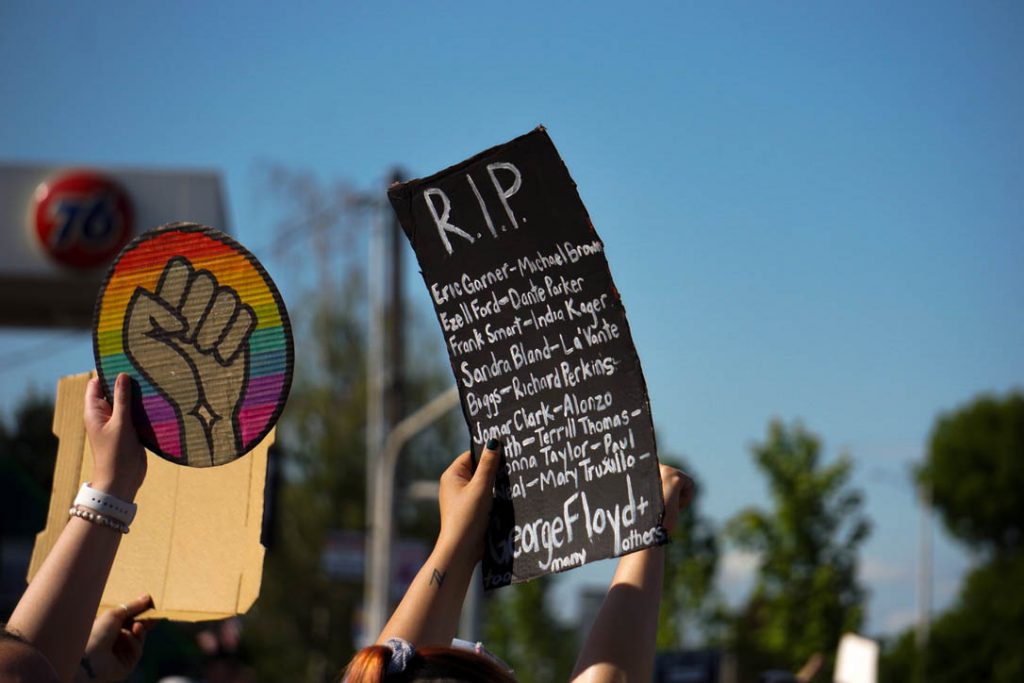
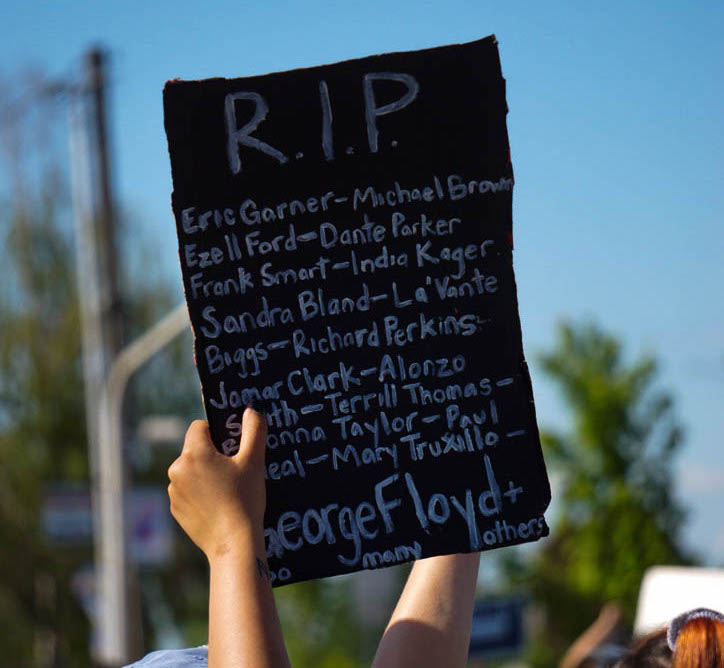
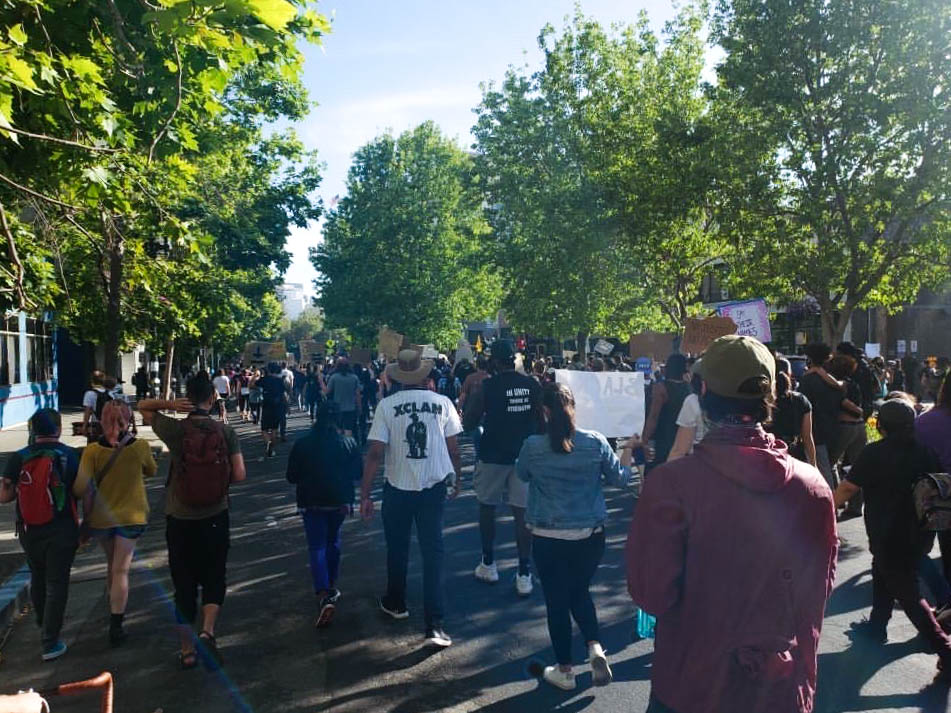
Protestors nationwide hold up signs reading “I can’t breathe,” the last words spoken by George Floyd, a 46-year-old black man and resident of Minneapolis, as he suffocated under the conjoined efforts of white Minneapolis police officer Derek Chauvin pinning him to the ground with his leg and multiple other police officers restraining him. His crime? An alleged use of a counterfeit $20 bill. While four officers at the scene have since been fired, only Chauvin has currently been charged with third degree murder.
Floyd is not the first black man to have been unjustly killed since 2020 began, nor is he the first reported case of police brutality against a black person this year; making headlines earlier this year were the deaths of Breonna Taylor and Ahmaud Arbery. According to mappingpoliceviolence.org, regardless of the crime, if any, black people are three times more likely to be killed by police than white people, 1.3 times more likely to be unarmed — and in 99% of cases officers are never charged. Ruled a homicide, Floyd’s death, occurring on May 25, is the latest instance of police brutality in the United States’ long history of targeted racist encounters — and the 10 minute recording of his murder has spurred protests globally.
What began as peaceful protesting has escalated, with police retaliating with brutality reminiscent of that at Standing Rock in 2016 and 2017, complete with tear gas, rubber bullets and stun grenades. Minneapolis is now on its seventh day of protest; each day, the protests have become increasingly more violent as agitators — some, allegedly, from white supremacist groups — enter the fray, and, in some places, the government sends in the National Guard to assist in halting the destruction to private and public properties. One could argue that the United States was not built on the back of peaceful protests, but President Trump has other ideas; in a series of tweets, he threatened to send the military to halt the protests, saying “when the looting starts, the shooting starts,” — a racially-charged phrase, according to National Public Radio. And shooting has, in fact, started — by both police and civilians on multiple occasions, resulting in a total of six civilians losing their lives at multiple different protest sites.
To ensure safety — or to combat the effectiveness of the protests — many major cities across the United States have implemented curfews. In Oregon, Portland’s protests, which began peacefully, escalated on Saturday, May 30, leading Mayor Ted Wheeler to issue an 8 p.m. to 6 a.m. curfew for the city. Salem followed suit, after several instances where individual groups among a crowd of peaceful protesters instigated violence, resulting in police ordering the mass to disperse, later tear-gassing them when they would not. This did not occur at the protests to reopen Oregon nearly a month ago amidst COVID-19, when a group of largely white protestors gathered at the Salem capitol, toting assault rifles. The protests have been criticized because of amassing large crowds during a pandemic, but COVID-19 is not a racially unbiased issue — it, too, disproportionately affects black people and minorities due to economic, health and social disparities, arguably conceived by systematic racism.
Across the ocean, Floyd’s likeness has been painted on the Berlin Wall, and citizens across many major global cities have taken to the streets in support of the United States protests or held vigils in Floyd’s name. It’s clear that the world is watching to see if U.S. leadership, the police force and allied citizens across the nation will finally acknowledge that black lives matter.
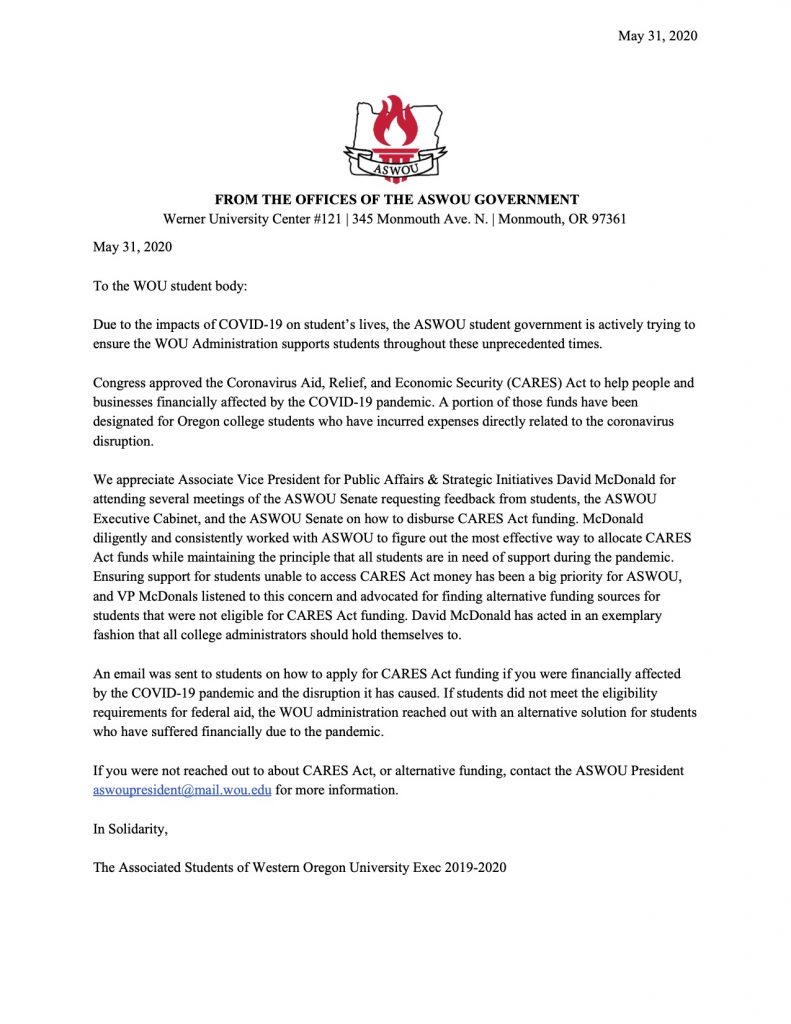
ASWOU’s statement about nearby protests can be found on our website.
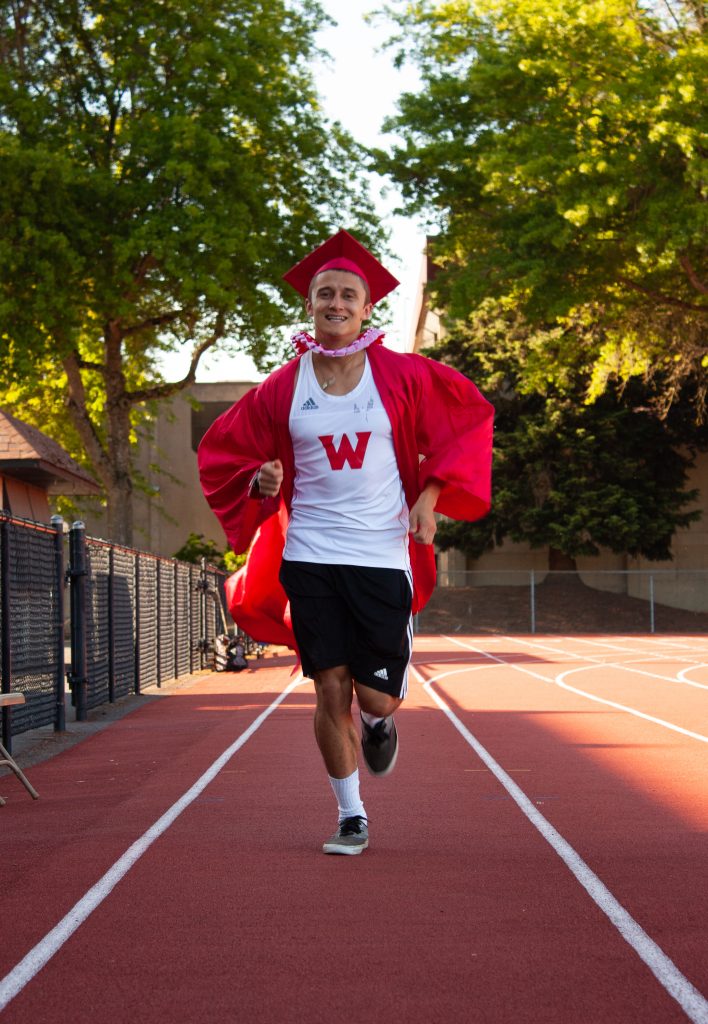
Though Oregon has entered Phase One of Governor Brown’s plan to reopen the state, Western’s plans for a virtual graduation ceremony haven’t changed. On June 13, at 10 a.m., Western will host a virtual commencement for the class of 2020. Graduates will have the chance to watch with their loved ones as their name, degree, personalized quote, and graduation photo is displayed. An email sent out by President Rex Fuller on May 5 also invites the class of 2020 to walk with the class of 2021 next year, if possible for the individual.
Virtual Black and Lavender Graduations will also still be in effect. Black graduation will take place on Friday, June 12 at 3 p.m and be hosted on the platform Marching Order. Black Graduation mimics Western’s overall commencement format, but honors Western’s black students specifically and also includes a special keynote presentation and the singing of the Black National Anthem, where students also receive a kente cloth and a certificate for participation. Conversely, Lavender graduation, a ceremony created by Dr. Ronni Sanlo, a Jewish lesbian who was barred from attending her children’s graduation because of her sexual identity, according to the Human Rights Campaign, will take place on Thursday, June 11, at 6 p.m. over the Zoom platform. Lavender Graduation celebrates individuals of the LGBTQ+ student body at Western and will include live guest speakers chosen by each graduate, and student’s display of their rainbow cords and tassels. Both of these events are private and only available for participation by those who registered for the event prior.
In his May 5 email, President Fuller acknowledged that “a virtual ceremony is not how you envisioned celebrating your accomplishment and we want to help make this as special as possible, so we are offering additional opportunities for celebrating your achievement. These plans are, of course, contingent on the advice of health experts.”
In the meantime, however, graduating students are attempting to make the best of the situation.
ASL/English Interpreting Major and senior, Keelie Carlson, is planning to “celebrate by watching the ceremony with their parents, sisters, and grandparents.”
Likewise, senior chemistry major D-Dre Wright, will be “inviting some of their close friends and family over to watch the ceremony at the lovely hour of 7 a.m., since they’re in Hawai’i.”
The class of 2020 is graduating under the duress of unprecedented times, but they’re leaving behind a legacy at Western that will help them progress in their chosen futures.
The Oregon primaries took place on May 19, but despite already being a vote-by-mail state amidst COVID-19, Oregon saw only a 46% turnout of registered voters, or 1,320,789 individuals out of 2,845,326, according to oregonvotes.gov. With regards to percentages, Wheeler County saw the highest number of voter turnout at 67.03%, while Umatilla County saw the lowest at 36.64%. In Polk County, 42.57% of registered voters contributed, or 25,173 individuals out of 59,140. Oregon participates in a closed primary, where only those registered to vote for their respective party can cast their votes and registered independents cannot.
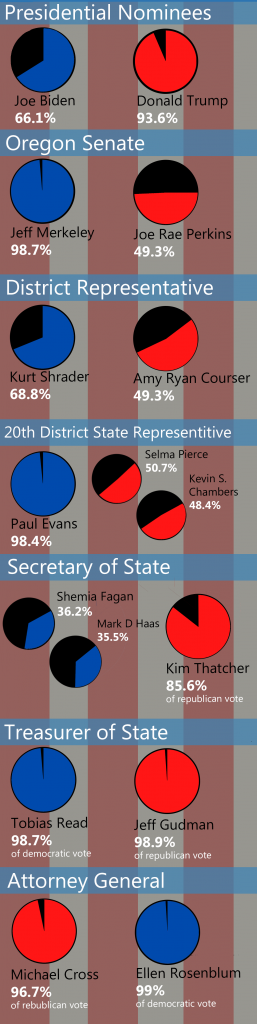
Overwhelmingly considered a ‘blue’ state, Oregon’s colors were closer to purple when counting votes for both the Republican and Democratic presidential nominees; representing 66.09% of Democratic votes, former Vice President, Joe Biden, won the primary, with 405,066 votes while President Trump won the Republican primary with 357,976 total Republican votes, representing a landslide 93.56% of Republican voters. Oregon also had one senate seat open, which a whopping 98.65% of registered Democrats voted to be filled once more by current Senator Jeff Merkeley, and 49.28% of registered Republicans voted to be filled by Joe Rae Perkins.
Polk County also faced some major primary decisions; falling under the 5th congressional district, 68.83% of Democratic voters elected for Kurt Shrader’s return to office as the district representative, while 53.26% of Republican voters nominated Amy Ryan Courser. Current state representative for the 20th district, Democrat Paul Evans of Monmouth, was shown support for re-election with 98.44% of Democratic votes, while Selma Pierce and Kevin S. Chambers were neck-in-neck for the Republican votes, with 50.75% and 48.40%, respectively.
Finally, the positions for Secretary of State, State Treasurer and Attorney General were also voted on in the primaries. Mark D. Haas and Shemia Fagan nearly tied for the Democratic vote for Secretary of state; Haas received 35.52% of votes, while Fagan narrowly beat him with 36.21%. Republican voters gave a majority vote to Kim Thatcher, with 85.64% of votes. The position for State Treasurer was also almost tied for votes between the Republican and Democratic candidates; Tobias Read garnered 98.69% of Democratic votes, while Jeff Gudman amassed 98.9% of Republican votes. The outcome was similar for the position of Attorney General, where 98.99% of Democratic votes went to Ellen Rosenblum and 96.69% went to Michael Cross for the Republican vote.
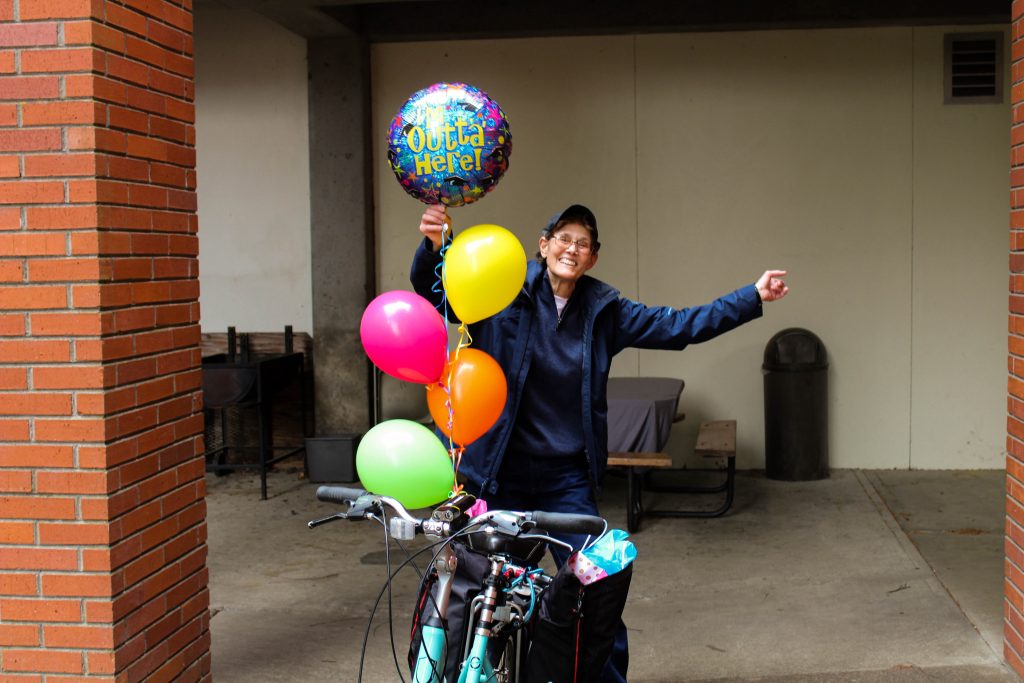
As the 2019-20 school year approaches closure, Western prepares to send off not only its graduates, but also the staff and faculty members who have contributed to its legacy. One such staff member is Cathy Clark. Known by many as the “sandwich lady,” Clark has accumulated 33 years of service at Western as a staff member at Valsetz Dining Hall.
Clark is renowned for her positivity, of which elementary education major and senior student, Kaiana Bradley had this to say: “Cathy made every student who came through that sandwich line feel special. She was incredible with remembering faces and sandwich preferences and would go beyond that to ask about students’ days — always with a smile, every single time.”
But Clark herself says that she “had no clue to the potential lives (she) would affect and be affected by,” rather she just “strove to make a home-like atmosphere for all who called WOU home,” because she believes that “all people matter.”
Campus Dining Assistant Director, Jane Cameron, says of Clark “she will be greatly missed by Faculty, Staff and Students and future generations who will not get to experience Cathy’s dedication to the Campus.”
In addition to Clark, there are many other mentionable soon-to-be retirees across all departments. They include Valarie Alapai, of Financial Aid; Warren Allen, an instructor for Health and Exercise Science; Dean Braa, professor of sociology; Nick Backus, of communication studies; Mary Bucy, professor of education and leadership; Arlene Courtney, chemistry professor and Dorothy Hendrickson, who works in the Registrar’s Office. Among others are the head of cross country and the track and field coach, Mike Johnson, a Margaret Malloy, an Elias Montemayer, Kent Neely, of the theater department, Thomas Rand, an English professor, Bonnie Sherrill, the accounting coordinator, Linda Stonecipher, the graduate studies director and Tommy Udell, the director for the center of early learning.
These individuals are crucial members of the Western community and, as Western sends off the graduates, it also remembers all of these folks who helped them along their educational journeys.
Content Warning: This story shares quotes from residents of Polk County explicitly describing their experiences with racism. These quotes may be seen as graphic and triggering.
Caity Healy | Managing Editor
“Everyday we are met with hate.” This is what Dallas, Oregon resident Crystal Hayter had to say as to why her and her wife, Jasmine Hayter, decided to protest on June 4 in Monmouth, Oregon. Crystal self-identifies as a caucasian woman, and Jasmine self-identifies as an African American woman. They shared what a day in their life looks like for them as Polk County residents.
“She wasn’t allowed to go on my lease after we were married because she’s African American … There are certain businesses that refuse to do service with my wife unless I bring them the money. They will not take it out of her hand,” Crystal shared. “Just two days ago, our neighbors were out on the porch telling her, ‘Go back inside N-word.’ And honestly, that’s our everyday life in Polk County.” She shared stories of people in Dallas threatening to run them out of town, saying they should be tarred and feathered, and even saying that they miss the town’s “lynching tree.”
Jasmine went on to add that, “I want this to end, and I want this to end peacefully. People need to stop dying.” Her voice trembled as she spoke and she shared her story. Jasmine is one of many who shared sentiments as to why they were protesting on the intersection of Pacific Avenue and Main Street.
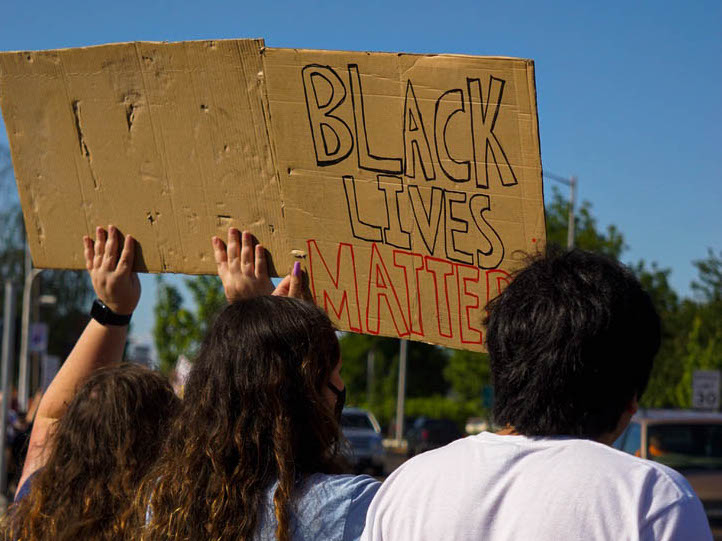
Carrying signs with messages such as “Black Lives Matter” and “No Justice, No Peace,” at 4:30 p.m. on June 4, as well as on June 3, people took to the streets to protest police brutality in the name of George Floyd, Breonna Taylor and other black people whose lives were taken by police. Most wearing masks, as this protest came in the midst of the COVID-19 pandemic, the cloth over their mouths could not keep them silent. Chants and honks were heard from far reaching ends of Monmouth. Some were there to be heard, others were more quiet but attended as an act of solidarity, some were passing out water bottles to those in attendance, but there was a general consensus amongst those present: change needs to happen.
Organizer of the event, Monmouth resident Carol McKiel, along with her husband Allen McKiel, stood alongside everyone holding their “Black Lives Matter” signs. Carol explained that the reason she formed this event was due to her questioning, ‘what can I do?’
“I just got up on Monday morning and thought, I have a ‘Black Lives Matter’ sign, and I’m going to stand on the street corner and I’ll do that as long as I need to.” So, Carol, along with Allen and a couple of her friends, did just that. It started with just the four of them, but by contacting their neighborhood, it slowly reached more people. By June 3, Carol claimed that there were over 120 people protesting on the street with her.
“I think what’s really significant is we have white people standing out here with ‘Black Lives Matter’ signs … White people need to take this on if we’re going to fix it,” Carol added. Allen, her husband, chimed in as well.
“This is a way for everybody to show everybody else that we’re concerned. We’re not alone in being concerned and this is really, really terrible, and we’re waking up to the fact that it’s been terrible all along.”
Another resident of Monmouth, one who lives in the same neighborhood as Carol and was invited to the protest through her message, shared a similar sentiment. Her name is Rebecca Salinas-Oliveros, and she self-identifies as a Latina woman. She expressed her concern with what’s going on, and especially with how it will reflect on her daughters.
“I’m out here to show my daughters that there’s still a little bit of hope. They’ve been really grieving. And this has been very hard for them,” Salinas-Oliveros said. “And as a mother, I have to be real with them. It’s hard to maintain hope, and just to make sure they know, yeah, it’s probably not going to get better any time soon, but we have to continue to try.” However, she expressed some hope and optimism due to the fact that Monmouth, a rural town, was able to come together for this protest.
“I didn’t expect it. I don’t think anyone really knew what to do. And this… this helps just not to be sad all the time. It gives me hope that even in a small town, there are white people willing to step up,” Salinas-Oliveros added. “And that’s really what we need. We need white people to step up because that’s where the power and the privilege is in our country. And they’re the ones that are going to create the change and people are going to listen to. So seeing the number of white people out here gives us hope.”
While Salinas-Oliveros did express a level of optimism, not all in attendance felt the same. One man, who chose to remain anonymous, opened up and shared what he was thinking while protesting.
“Being a colored person myself, it just hurts bad,” he said. “When this is all over, I’m still colored. It’s going to happen again. Nothing’s gonna change. All we can have is hope.” He added that, “I don’t know if tomorrow I’m going to make it … I could be going down the street and all of a sudden I get pulled over and I’m gone. Just like that.”
Noticeably, there were no Monmouth police officers present at the event; this didn’t sit right with him.
“They haven’t been here. They were not seen, and I’m like, do they even care? The people care who are here protesting, but do the cops care? The way I see it, they don’t.” He was not the only one who was uncomfortable with the lack of police solidarity.
“We don’t even see any cops around here, so we don’t even know if they’re listening to us. We need to see change from them,” said another anonymous source. “We come out here to support this movement but we don’t know if anything is gonna happen because they’re just sitting over there doing whatever they want. We don’t see support from them.”
The protesting continued from 4:30 to 5:30 p.m. For the most part, it was met with honks, waves and smiles. There was some retaliation, though; some waved their middle fingers at the protestors, some yelled “All Lives Matter” in return to their chants, and some even went as far as to yell “F–k you” to the protestors. Thirty minutes later, and just eight miles away, protests were happening in a neighboring town: Dallas.
The protest in Dallas, organized by resident Chaney Poulsen, was considerably smaller than the one in Monmouth. It was met with some waves and approval, with even the local Dominos donating a few pizzas to the cause. But similarly, it was met with two people waving “Trump 2020” signs, one yelling at the protestors “Trump 2020” and many heads shaking to express disapproval. In attendance at this protest were two people who also attended the one in Monmouth, Crystal and Jasmine Hayter.
“Enough is enough,” Crystal concluded. “(Jasmine) could be the next person, and I’m not okay with that.”
The protests in Monmouth are planned to continue daily in the same place at 4:30 p.m. Carol McKiel says to bring umbrellas, because they’ll be out there shouting “Black Lives Matter” come rain or sunshine.
[fruitful_tab title=”Libra 9/23-10/22″] Im a zebra [/fruitful_tab]
[fruitful_tab title=”Scorpio 10/23-11/21″] Wait, I didn’t realize that my online classes weren’t optional. Rough. [/fruitful_tab]
[fruitful_tab title=”Sagittarius 11/22-12/21″] Sagittarius will be gone this week. Hello, my name is kaiyo and here’s my message for you, “I’m going to hydro flask you.” [/fruitful_tab]
[fruitful_tab title=”Capricorn 12/22-1/19″] *hears classes will be online next term* nO NO you put that sentence back in your mouth. [/fruitful_tab]
[fruitful_tab title=”Aquarius 1/20-2/18″] Goose!
Ew, why did I just do that? [/fruitful_tab]
[fruitful_tab title=”Pisces 2/19-3/20″] Please excuse me as I watch ten straight hours of “Gilmore Girls” and pretend that this term is over already.[/fruitful_tab]
Graduation and Western’s virtual Commencement ceremony are approaching quickly, with important deadlines coming and going. While the deadlines for Grad Packs and registration for the ceremony have already passed — although the latter statement may have been extended, according to Western’s website — there are still some things seniors should try to complete before the final hurrah.
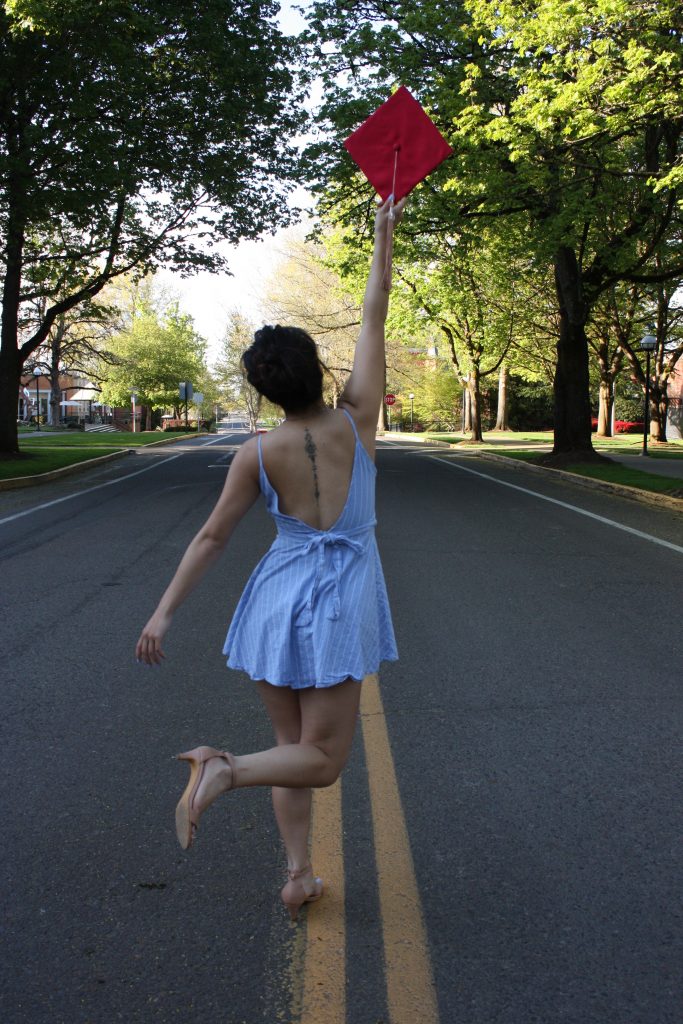
Attempting to have professional graduation photos may be a struggle due to the current situation of the world, but that doesn’t mean they have to be skipped. Roommates, friends or family members may be willing to lend a hand to memorialize the coming occasion, or perhaps a timer on a camera or smartphone may be the way to go. Western’s campus is closed for courses, however it’s still a viable option for some last pictures at the university.
Continuing from that point, the deadline for submitting a graduation photo and personal statement for commencement is May 31. While it isn’t the same as an in-person celebration, this can give students a chance to still have a special final moment during the viewing at home.
This last term could have been draining for students; some may find themselves lacking motivation to finish or struggling to balance projects amid trying to ensure all graduation requirements are met. Nevertheless, it’s still important to finish the final term strong. For many, students will have the satisfaction of knowing, despite potential challenges from throughout the term, that they ended their college journey on a good note.
Before leaving Western, it wouldn’t hurt to start networking while on the hunt for jobs post-graduation. Professors in a chosen major field would be a great resource to turn to, or peers and former classmates who have already graduated who already went through the process. It would also be beneficial to obtain letters of recommendation for future job opportunities, which could come from previous professors, advisers and staff members.
Graduation is right around the corner, and for many graduates, that means being celebrated for their accomplishments with a graduation party. Traditionally, graduation parties include food, family and maybe some tears shed. They also include gifts, but, like any college student knows, not all gifts are equal. Here are a few of the most desired gifts among college graduates:
Let’s face it — money is always the go-to. Money or gift cards are useful for students who are short on cash and can go towards their savings for the future. Graduates are expected to make big decisions when it comes to where they are going to live and begin life in the workforce; a little extra cash goes a long way in making their dreams a reality.
Another useful gift idea is household appliances; some graduates are just moving out of the residence halls and might not have the necessary equipment to keep their future dwelling clean or functionable. Consider buying a graduate a vacuum or any of the hundreds of kitchen appliances that make life a little easier. Keurig coffee maker, anyone?
Subscriptions are another excellent gift idea because they can be personalized to fit the graduate’s hobbies. If a graduate loves to binge-watch Netflix, consider making that payment one less thing to worry about this year. Or maybe the graduate loves to read, and in that case, a subscription to Book of the Month might be ideal. Monthly subscription boxes are also a popular gift idea. For $10 to $50 on average, depending on the box, a graduate could essentially get a care package every month full of goodies like self-care items or new clothing.
The last gift idea, and arguably one of the most important gift considerations for this day and age, would be upgrading the graduate’s technology. Whether that’s getting them a new sound system for their car, a new laptop or one of hundreds of other add-ons, they are sure to be appreciative. Technology isn’t all expensive either; items like portable bluetooth keyboards and Alexa-enabled car charges average around $50.
Consider sending this list as a little hint to loved ones on what graduates really want for graduation, or use it as inspiration for gift-buying for others.
Many restaurants have been forced to close temporarily or permanently due to the world’s current state. Because of this, many people may find themselves longing for their favorite foods from these establishments, but unable to obtain any due to the closures and social distancing. Luckily, multiple websites are providing copycat recipes for people to attempt to make their favorites from the comfort of their homes.
One restaurant that is closing for good is Sweet Tomatoes — also referred to as Souplantation in other states. This one hits pretty close to home for me, as this was an eatery my friends and I frequented often before COVID-19, so I was happy to learn that their website, souplantation.com, has recipes for many of their buffet dishes. For instance, a full list of instructions can be found for their popular seasonal Chicken Pot Pie Stew, which is packed with roasted chicken, red potatoes, mushrooms, celery, pearl onions, green peas and carrots in a creamy base. Other soups and stews can be found under their ‘Souplantation Recipes’ in addition to other beloved favorites of the establishment.
For Chick-Fil-A lovers, there are a few recipes that can be found to recreate their sandwiches and various chicken meals. On damndelicious.net, the full recipe for a Chick-Fil-A sandwich for two can be found; to recreate the taste, a person needs to marinate a chicken breast in pickle juice for 30 minutes before coating it in milk, egg, flour and powdered sugar and frying it up. The same website also provides a link to a recipe for Chick-Fil-A nuggets.
In the interest of those craving something sweet while stuck at home, the-girl-who-ate-everything.com posted a recipe for Cinnabon’s famous cinnamon rolls. The copycat recipe recommends making the dough for the rolls the night before and letting them rise on the counter overnight, and to change the amount of cinnamon in the recipe if the 2 ½ tablespoons would be too intense. Moreover, it says to pour the icing over the cinnamon rolls while they’re still hot so the icing seeps into the roll, then to add more once they have cooled down.
Finally, for Disney enthusiasts who are missing the park, a few have taken to recreating the famous Dole Whip sweet treat. On homemadehooplah.com, it states it can be made using coconut milk, sugar, lemon juice, a pinch of salt and, of course, pineapple chunks — preferably Dole brand, but any works. Once it’s all blended together, it can be dished up in a glass and eaten with a spoon or sipped through a straw.
During the wrath of quarantine, I have longed to be in a different time; reading Xander Blue’s “Whipping Up a New Past” certainly allowed for that.
Blue lives in Phoenix and has always had a passion for history in different eras and decided to write his debut novel in “The Goddess of Death Series.”
This American Western fictional book had some familiar elements when it comes to time travel. An old and eccentric scientist, Doc Brown — “Back to the Future” anyone — selects the chosen one to have the power of time travel; in this novel, it is through a futuristic bracelet that his star pupil, Janet Sun, can go back to the 1800s to educate Native Americans and kill the men who would murder her ancestors.
Janet Sun is the 64th richest person in the world, an Olympic bullwhipper, Taek Thai expert, gymnast, ex-military and college graduate. All around, she feels like someone that you imagine being when you grow up: she’s a superhero.
After receiving a bracelet that allows her to time travel, she uses several different inventions Doc Brown provides her to enhance her knowledge of languages. He also offers her complex technology that works as bear and wolf repellant.
Sun’s mission was never fully explained or discussed; it felt more like a roller coaster of cutting heads off in the name of her family. An interesting part of this book is how much Sun alters the past — saving a baby from a burning building, murdering several men who were going to kill her ancestors, and even developing a romantic relationship with the sheriff.
In most time travel movies or novels, it is highly stressed that altering the past could have dire consequences. This story is centered around all the ways that Sun could alter the past.
Her character is caught up with helping others and creating knowledge, a noble goal for her mission, but one that was often not explained.
Much of the book was spent discussing how life was in the past, a specific way something was cooked or washed, or how trading or renting wasn’t an option. Some of the book felt like a way to showcase knowledge and research Blue had done in the time period, rather than focusing on character and story development.
The novel had good core elements, a strong main character who never waivered, an unstoppable mission and thorough information on the time they were in. I think the novel would have improved more if there had been more conflict for Sun — a book with only smooth sailing can feel flat.
Overall Rating: While there is some room for improvement for this novel, I believe that there are some interesting and compelling moments throughout the book. For those who like a unique story about time travel, they should check out this novel; it is a quick read and more information can be found at https://XanderBlueBooks.wixsite.com/mysite.
Last week, The Western Howl published an article titled “Arms, revenge and flower crowns”
about the top three winners for the Peter Sears Poetry Prize. It’s time to get to know the first place winner, Cylinda Neidenbach — a senior at Western majoring in English with a focus on writing.
Q: How long have you been writing poetry?
A: I was prone to writing whimsical poems when I was about nine years old, a la Shel Silverstein. My parents used to read “Where the Sidewalk Ends” and “A Light in the Attic” before I even knew how to read. I’d be four or five years old, reciting “The Loser,” (“Mama said I’d lose my head, if it wasn’t fastened on,”) and for a moment my parents thought that I had somehow learned to read. To this day I can still recite it from memory. After grade school, however, I’m afraid I seldom wrote poetry — unless it was something witty to amuse my friends. I took Dr. Hughes’s poetry seminar last term and was dismayed to find that he didn’t encourage goofy, half-baked poems. They were all I knew. I wrote the “rough draft” of my winning poem the first day of class, when Doctor Hughes told us to “describe something.” I had just hugged my lover goodbye, and his arms were the first thing that came to mind. Misunderstanding the instructions and somehow forgetting that I was in a poetry class, I wrote a small paragraph that later became, through many revisions, my poem “To Bear Arms.” You can imagine my surprise that it won.
Q: What got you interested in writing?
A: I do love writing. It’s one of the few things I do for myself. I have been writing short stories and novellas since I could read. It’s a passion of mine. (My current novel was started in 2011 and I have been writing it forever. I hope to be done around the time I graduate.) As far as poems go, I never considered poetry my jam, but rather something I should know at least a little about as a future English teacher. (Many thanks to Dr. Hughes for helping me whittle down my natural tendency towards long windedness. Constant Vigilance! Word Economy!)
Q: What does it feel like to write a poem?
A: What does writing a poem feel like? I don’t know how to answer this. I started to notice moments of remarkable beauty or connection with things: people, nature, the world. Moments that made me feel present, and I would try to get them out on paper. Often a single line would form itself right then, and I would try to hang on to it, press it in my memory, be the conduit. That’s how it worked for me.
Q: Anything you’d like to add?
A: Serious poems, while not as fun as the lively, fickle, frivolous poems of my childhood, are rewarding. They serve as snapshots of memory, moments in time preserved.
This year marks the 34th annual Western Oregon University Athletic Auction. This event was created and implemented to benefit the current and future athletes and athletics of Western Oregon University. The goal for this year is to raise $100,000, and as of May 26, almost $34,000 has been raised. On May 30 at 7 p.m. (PST), a live event will be held where viewers can watch the live auction.
Every item sold and donated through the auction will go directly to and support the athletics here at Western. Through their site, https://wolvesauction2020.asimobile.net/#/index, supporters are able to create an account to bid during the auction or watch the live event for free, scroll through and view the items available to auction, purchase raffle tickets and virtual tickets, register for regular updates and even “Raise the Paddle for Student-Athletes” — money pledges from $100 to $5,000.
The items being auctioned range from signed jerseys to signed footballs, from a brand new Traeger Pro 22 smoker to a tour at the Rogue Hop Farms.
After a year cut short for Western Athletes, this auction delivers an excellent way for fans to support their hometown heroes and help propel them and future stars into their upcoming seasons.
With the recreational department closed, along with all other athletic facilities, working out and staying in shape is a little more difficult — luckily Western offers options for students and the Western community to work out at home. These classes are available through the Health and Wellness Center, giving full-time enrolled Western students free membership. For Western community members, a free trial period is offered with the options between a daily pass or a term membership which costs $108 per term and $105 for the summer term.
Registering is quite easy and risk free; by emailing hammerlez@wou.edu “Add Me,” your information is then verified and an email confirmation is sent with instructions on how to register for a fitness class.
Campus Recreation Assistant Director, Zachary Hammerle, is the creator and initiator behind having online fitness classes for Western, giving students and the community the option to continue to workout from the safety of their own home.
For the rest of spring term, classes will be offered until May 29 with an unknown schedule for the summer term. Currently, multiple class options are there to choose from like yoga, meditation, zumba, spin and more.
There are many other free options out there for students and community members to join to stay active and interactive, while keeping a safe distance. Instagram offers a safe way to workout, giving users access to Instagram Live, where followers can join a profile’s live stream — this has also worked with live music events and gaming. Orangetheory, a popular workout studio, offers free 30-minute daily workout routines that are available to anyone. Youtube, another great source for free at home workouts, offers endless videos of workouts that people are able to view and follow easily.
Most free at-home workouts take into consideration that not everyone has access to a lot of workout machines, making the workouts focused on bodyweight training — strength training workouts using one’s own bodyweight — and resistance-type exercises.
And now, with the capabilities of Zoom, FaceTime, Instagram Live and more, working out together is easier than ever.
Monmouth Police Department responded to a 9:50 a.m. call on May 14, after an alarm went off at Washington Federal Bank on Main Street. An unarmed man had approached the drive-thru window and demanded that the teller hand over $1000 and threatened to kill the employee if they did not comply. The employee gave him the cash and he retreated through the Shell gas station nearby.
According to Sergeant Kim Dorn, “everyone including the Chief responded to the area,” where they were able to ascertain through video evidence that the suspect was 28-year-old Michael Edward Alfrey. The officers searched the area, later requesting the assistance of the FBI, who eventually located him in Tigard. According to Dorn, the arrest went smoothly due to the cooperation of everyone involved. As to why Alfrey did it, Dorn stated that they weren’t allowed to comment.
Based on a statement from the Monmouth Police, the Statesman Journal labeled Alfrey as a “transient” and revealed that he was charged with second-degree theft and third-degree robbery and is currently being held at the Polk County Jail on a $22,500 bail.
Dorn said this event is “very out of the ordinary for Monmouth,” and suggested that citizens subscribe to flashalertnews.net if they wish to receive more press releases about cases such as this in the future.
Founded by Jean Love in 2017, the Thoughts and Gifts Project is a public charity which brings birthday gifts and other celebratory items to underserved children and qualifying seniors across Polk County. Now, the Polk County Fire Department and Monmouth Police are partnering with the Thoughts and Gifts Project to accompany those gifts with a birthday parade — complete with a show of lights and sirens.
Fire Inspector, Troy Crafton, said they took on the project after COVID-19 slowed down their overall workload. Though Crafton and his team are still giving public education courses — featuring topics like fire safety and home escape plans — the birthday parades are a positive inclusion to the work day. Once a week, every Tuesday at 10 a.m., the allied departments make their rounds across Monmouth-Independence; Jean Love brings the donations and takes the photographs for social media as police cars and fire trucks start their sirens — an indication that they’re well on their way. When they reach the home with the birthday child or senior citizen, they’re greeted with smiles and joy.
“There’s been no bad publicity,” said Crafton. “I would figure the noise might irritate the elderly folks, but they all come out to celebrate and it’s been an overwhelmingly positive experience.”
Of Jean Love, Crafton said “she’s had more donations this year than she’s ever had” and that she calls her garage where she keeps the gifts “Walmart.”
To donate to or apply for the Thoughts and Gifts Project, visit thoughtsandgifts.org.








 The Oregon primaries took place on May 19, but despite already being a vote-by-mail state amidst COVID-19, Oregon saw only a 46% turnout of registered voters, or 1,320,789 individuals out of 2,845,326, according to oregonvotes.gov. With regards to percentages, Wheeler County saw the highest number of voter turnout at 67.03%, while Umatilla County saw the lowest at 36.64%. In Polk County, 42.57% of registered voters contributed, or 25,173 individuals out of 59,140. Oregon participates in a closed primary, where only those registered to vote for their respective party can cast their votes and registered independents cannot.