


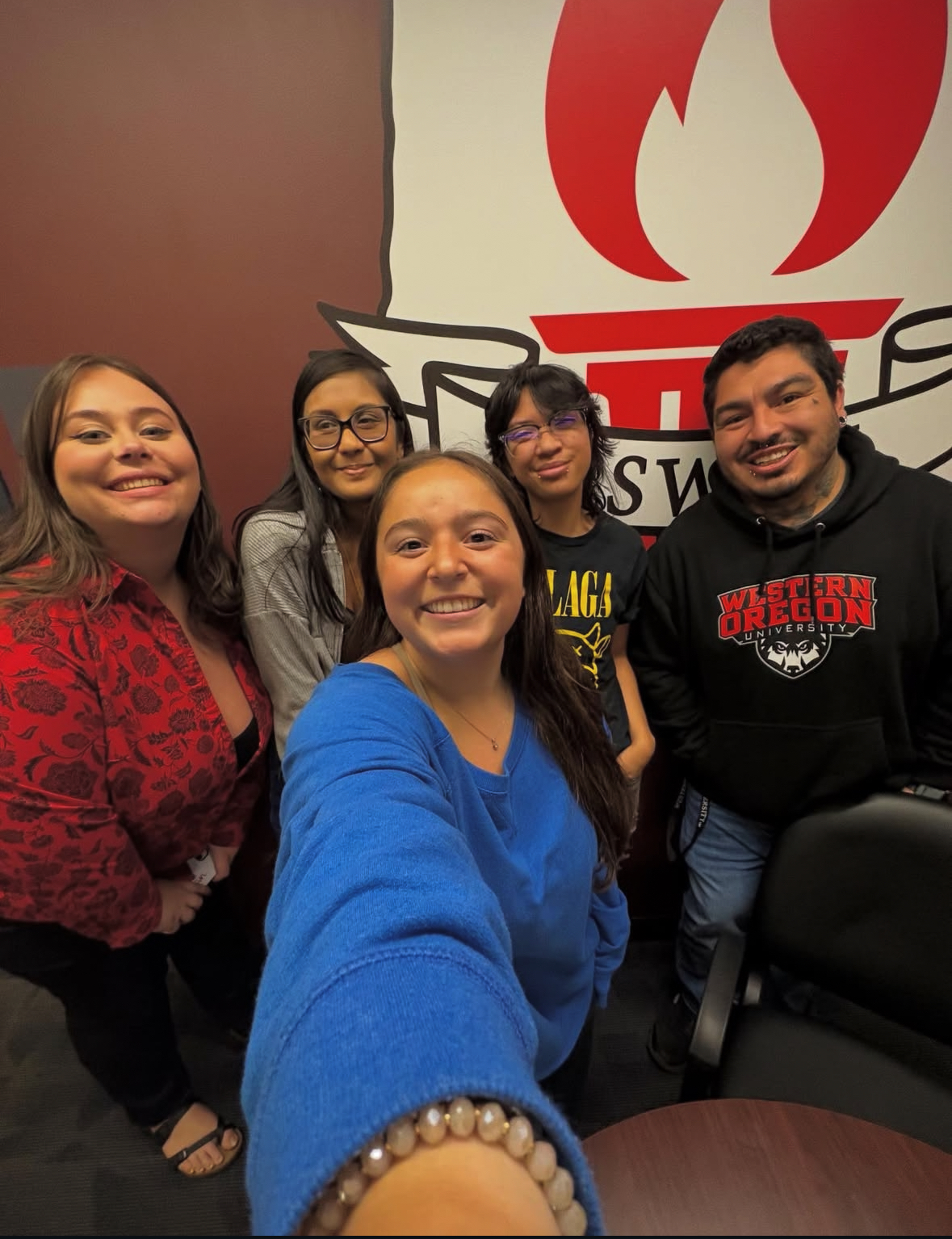
March 11, 2026 | Hannah Field | Editor-in-Chief
The Associated Students of Western Oregon University has opened their application forms for the general election, described as “the annual election called to fill all of the positions created by the ASWOU Constitution, as well as three Incidental Fee Committee members, and to vote on various ballot measures,” per the ASWOU governing documents.
Crucial roles are potentially up for grabs as the transition from Spring to Fall terms kicks off.
ASWOU is the official student body government, student-run and student-funded, tasked with important roles such as advocating for the student population, overseeing and governing clubs, as well as collaborating with Western’s administration to facilitate a healthy relationship between students and staff, faculty and admin.
Certain roles, such as director roles and the chief of staff, are selected following interviews held during the summer by the ASWOU president and vice president. However, the president, vice president, senate president, judicial administrator, IFC member and senator roles are open for election applications. Students will be able to vote in these elections during Spring term to determine the next batch of student leaders for the following academic year.
Split into three branches — executive, legislative and judicial — ASWOU maintains specific roles that serve in meaningful, but different, ways.
The head of the executive branch is the president, currently Morgan Pemberton. In that position, the student acts as a bridge between the administration and student body, as well as being the student representative to the administration, as well as state and federal governments. They also attend senate and judicial meetings, contribute to committees, meet with students and, again, faculty and admin, as well as Western President Jesse Peters, plan events and maintain a list of other varied duties, spanning 20 hours of paid work weekly from June to June.
“I feel like the job is very rewarding because you get to do a lot of community organizing,” said Pemberton. “You get to really focus on the projects on campus that you’re passionate about, and get to interact with higher admin and kind of see the behind-the-scenes of a lot of things.”
It would be Pemberton’s replacement’s job to select Executive Cabinet members, including director positions and the chief of staff. Director positions at ASWOU include public relations, business & finance, equity & advocacy, state & federal affairs and student organizations.
Pemberton also spoke directly to the impact of the president’s role. “I know for me, it was super important to focus on internal structure, kind of a rebuilding ASWOU year and connections to the community, more (connections) with admin, that was really important for me.”
Previous ASWOU presidents have focused on other issues, such as safety and sustainability. “It really depends on the administration for what direction you want to go, because you have so many resources and options for what you think is important on campus,” said Pemberton.
The vice president position is also being re-elected, with Emily Phoun graduating in the summer. In her words, the vice president is a support system for the team with the freedom to begin their own initiatives.
“Honestly, I would say it is something that I never have any regrets on. I love every second of it,” said Phoun. “Just getting to be able to not only be a voice and representative for students, but really just getting to be out there and getting to be on different committees, doing different projects. I just honestly love it.”
Phoun is also on the University Budget Advisory Committee, often called UBAC. The group consists of faculty, staff, students and administrators, intended to discuss Western’s budget. They review budget proposals, submit recommendations and consider important factors that influence the cost of tuition, bringing a variety of perspectives from different positions across campus. ASWOU recommends two students as members, opening more opportunities for new workers.
“One of the projects that I actually did was hosting a town hall, which they’ve never had a student-run town hall, before I came along and did that initiative,” said Phoun. “But there was lots of encouragement as well as praise from both the student body and the committee.”
Another project that Phoun took on was a collaboration with The Western Howl, created to spread ASWOU news and insight through the student paper.
Phoun recommended that students give it their all: “Advice that I would give is don’t be afraid to take initiative on something, even if it might seem scary.”
The director of state & federal affairs is a relatively new position, but one that ASWOU takes pride in having. “I think that is so important in the kind of political time we’re in. (It’s for) students who are super interested in getting involved in politics, or who are interested in making sure other students know about what’s happening politically, that kind of thing,” Pemberton said.
The role pays close attention to state and federal changes that might impact students or the university so that those changes may be relayed to the student body. They are also part of organizing Lobby Day, an annual event when students travel to the Oregon Capitol to advocate for their beliefs.
Under the judicial branch, the five or fewer student justices attend all judicial meetings, interpret policy and administer the judicial process. With a heavy focus on club activity, the judicial branch meets on a less-regular basis, mainly to discuss clubs in the case of potential violation of ASWOU statutes, since ASWOU has governing documents that all clubs must abide by. Two of the justices are appointed by ASWOU, but the three remaining slots are elected by the student body. One of the five is also appointed as the judicial board vice-chair by the judicial administrator.
The judicial administrator facilitates judicial meetings and makes sure ASWOU adheres to its governing documents and policies for 20 hours paid a week.
The senate serves as the policymaking authority within ASWOU. Likewise to the expectations for justices, elected senators must meet with the senate president multiple times a term, sponsor legislation such as bills and resolutions and partake in IFC meetings, which determine incidental fees and their distribution to student activities and resources. Some examples of IFC-funded organizations are Athletics, Abby’s House and Student Engagement. According to ASWOU governing documents, no more than 15 senators are allowed at a time, with 11 elected positions currently open for applications.
The senate president is required to remain impartial, contribute weekly to the position and must pick a senate president pro tempore during Fall term to serve beside them. Compensated for 20 hours of work a week, the senate president oversees the senate.
Senators and justices, alongside their weekly participation, must meet with their branch presidents, attend at least one training session on parliamentary procedure, expectations and responsibilities and adhere to proper etiquette. The hours are volunteer and vary between 2-5 hours a week.
It is within the legislative body that senate bills can be passed and debated, requiring Western’s president’s signature to pass or be vetoed.
“The senate or legislative branch is focused on changing things. So, if we think that there is something wrong, we can make recommendations and resolutions to those departments,” said Pemberton. “I would say (the executive branch) is for doing and planning, legislative is for making change and judicial is for ensuring fairness and making sure that everyone has the right support.”
All ASWOU members have sworn an oath of office in front of a witness: “I, [student name], do solemnly swear to faithfully execute the duties of the office of [position title] to the best of my abilities and, in the best interest of the Associated Students of Western Oregon University, to uphold the Governing Documents and the Student Code of Conduct.”
Similarly, they must sign a document acknowledging their oath, which is then signed by the witness and designee who swore them in.
The annual general election is run by the Elections Committee, a subcommittee of the Judicial Board, comprised of six members from various positions on campus, such as one appointed by the Residence Hall Association president, another by the judicial administrator and four co-appointed by the ASWOU president, senate president and judicial administrator. Additionally, all three branch heads serve as advisors to the Elections Committee.
Candidates must meet the current GPA standard, be enrolled in at least six credits while in office and meet requirements outlined in the ASWOU bylaws, constitution or other governing documents, as well as have submitted the appropriate application and/or documents. And, more clearly, they must follow Western’s student code of conduct as well as the Elections Code of Conduct.
And, according to governing documents, “The purpose and scope of these election policies is to allow all students an equal opportunity to present their views and qualifications to the ASWOU during an election period … All students of WOU shall have an equal opportunity to vote.”
With applications already open, students can look to join ASWOU for the 2026-27 school year by checking Involve.
“For elections, I think that if you’re not looking to get elected, there are a lot of appointed positions. I would say one of the really impactful ones is the Director of Equity and Advocacy, making sure that we’re being equitable as a campus and that advocacy is happening, especially in a time like this one, that community bringing together communities,” said Pemberton.
As for the head positions — president, vice president, senate president, judicial administrator — “They have a lot of responsibilities … You have to have really strong leadership skills or be really willing to learn along the way, because you’re directing a whole group of other students,” said Pemberton.
Pemberton’s advice for students looking to join ASWOU? “Don’t doubt your abilities. The positions can be hard, but you could really make them your own, and all it really takes is the want to do something different and the want to make campus life better. So if you’re worried you don’t have the skills, you can really develop the skills and it’s a perfect opportunity to do that — so it’s more about your willingness and your go-get-it kind of attitude.”
Phoun added: “It’s a great way to not only build up your resume, but also gain leadership skills and experience. But you also get to interact with the campus community as well as interact with admin.”
The Incidental Fee Committee has three elected roles and six appointed positions to discuss and deliberate over budget distribution and fee costs within student incidental fees. Positions require no experience, as training is provided, and the positions are volunteer, between 5-10 hours a week through both Fall and Winter terms.
For students who are uninterested in working with ASWOU, there are still reasons to pay attention, as important discussions come and go regarding funding, tuition, on-campus events, new resources, club operations and more.
Contact the author at howleditorinchief@mail.wou.edu