

Mount Hood

A Bad Bet

Antonio Blakeney fields questions during an interview in October 2025. | Photo from @antonioblakeney on Instagram

Jan. 28, 2026 | Isaac Garcia | Sports Editor

The newest addition to an unfortunate saga regarding gambling affecting the integrity of sporting competitions was exposed Jan. 15 when a federal indictment named 39 current or former college basketball players across 17 different schools in a point-shaving scandal and charged 20 players with federal crimes. In addition, six non-athletes or “fixers” were reportedly charged for conspiring in the scheme. According to the indictment, players were given anywhere from $10,000 to $30,000 from conspirators to throw games and underperform. Fans may remember last fall when Trail Blazers head coach Chauncey Billups, along with others, was charged in relation to an illegal gambling ring. Two defendants from that case, Shane Hennen and Marves Fairley, were also charged in this case and may face up to 25 years in federal prison for their roles. 

The operation is alleged to have begun in September 2022 when Antonio Blakeney of the Jiangsu Dragons in the Chinese Basketball Association engaged in the point-shaving scandal and attempted to recruit his teammates as well. One such example was when Blakeney scored 21 points below his average. Blakeney was charged separately from the rest of the indictment. 

The scheme made its way to college basketball, where conspirators are said to have targeted players who didn’t have significant name, image and likeness contracts, and would therefore be easier to recruit for the scheme, as well as non-athletes who had ties to collegiate basketball, such as trainers and other “people of influence.” 29 different games between February of 2024 and January of 2025 are said to have been affected, including four postseason games in various tournaments, although NCAA Tournament games, also known as “March Madness,” seem to have been unaffected. 

Simeon Cottle of Kennesaw State, who is charged for his role in helping fix a game March 1, 2024, played as recently as Jan. 14 and was his team’s leading scorer. According to a statement from the university given to Sports Illustrated, Cottle has been suspended indefinitely from all team activities. Other current players named in the indictment are Carlos Hart from Eastern Michigan, although his involvement took place when he was still with New Orleans, Oumar Koureissi from Texas Southern, with his involvement taking place with Nicholls State, and Camian Shell from Delaware State, whose involvement took place at North Carolina A&T. It appears that like Cottle, all of these players have been suspended or removed from their teams. 

In the wake of the scandal, NCAA President Charlie Baker issued a statement that said over the past year, 40 players from over 20 schools have been investigated, with 11 of those athletes being ruled permanently ineligible due to betting on their own performances. An additional 13 of the investigated student athletes did not cooperate with investigations, and while it’s unclear whether they were also ruled permanently ineligible, Baker said in his statement that “none of them are competing today.” Baker also urged states to bolster regulations regarding sports gambling in order to “better protect athletes and leagues from integrity risks and predatory bettors.” 

One of the protections the NCAA is looking for is a ban on what are considered “high-risk” player prop bets, similar to restrictions placed at the NBA level regarding prop bets on players with comparatively lower salaries. When it comes to the state of Oregon, all gambling on collegiate sports is currently prohibited; however, some tribal casinos are able to offer it via their own sportsbooks, due to operating under a different set of laws. Legal proceedings are still ongoing, and it remains to be seen what will come of the charges and what future protections may be put in place. 


Contact the author at howlsports@wou.edu

Back to school

James Nnaji poses in his Baylor Bears uniform. | Photo from @cbbcontent on Instagram

Jan. 21 2026 | Isaac Garcia | Sports Editor

The intense shift in college sports over the past few years has been well documented and discussed ad nauseam. College athletes can now earn money through contracts and brand deals after being strictly prohibited from doing so for essentially the entire history of college sports. In addition, transfer restrictions have been loosened, allowing athletes, for the most part, to become immediately eligible after transferring schools, while the old rule had required them to sit out for a season unless they were a graduate transfer or received some sort of waiver from the NCAA. 

For some, the changes are ruining college sports. For others, the changes are welcome and make the system more fair for athletes. Every few months, it seems a new controversy pertaining to these name, image and likeness rules becomes a topic of debate in the sports industry. The newest of these controversies is the eligibility of Baylor center James Nnaji. 

Nnaji, age 21, was drafted 31st overall to the Detroit Pistons in 2023 after playing professionally for FC Barcelona’s basketball team and then promptly traded to the Charlotte Hornets. A year later, he was traded to the Knicks as part of a larger deal that included All-Star center Karl Anthony-Towns. Nnaji never played official NBA minutes, playing only in the Summer League in 2023 and 2025. Nnaji was also a “draft and stash” player, meaning that while he was drafted to the NBA, he would hold off on signing a contract and continue playing overseas until he and the team that held his draft rights — essentially the right to be the only NBA team negotiating with him — worked out a deal. The practice has been common with international players over the years, with players like Manu Ginobili, Arvydas Sabonis and current Denver Nuggets star Nikola Jokic all taking extra seasons with their pre-draft teams for various reasons before joining their teams in the NBA. Some players are drafted and stashed due to outstanding contractual obligations with their pre-draft teams and/or because their team in the NBA thinks their development as a player is better off with a team in which they’ll be getting more playing time. Some never sign contracts and end up continuing the remainder of their career in another league. 

Nnaji continued playing for Barcelona before being placed on loan to Girona and remaining there until March of 2025, when Nnaji and the club mutually agreed to part ways. Shortly thereafter, he would be loaned again, this time to Merkezefendi Belediyesi Denizli, a basketball club based in Turkey. In July, he announced that he and Barcelona had parted ways, making him a free agent. Nnaji, however, was not ready to give up on his dream of playing basketball at a high level and the Baylor Bears needed the help. After Nnaji’s agent learned that Baylor’s center depth was running thin due to injuries, he proposed the option of Nnaji joining the program to both Nnaji and the Baylor coaching staff. On Christmas Eve, his signing with the team and immediate eligibility were announced, drawing the ire of both coaches and fans. Arkansas coach John Calipari called the situation out in a press conference, saying, “Why did they let that kid play? Tell us all, ‘Here’s the reason.’ Then we’ll all go get pros.” Baylor coach Bryce Drew defended the decision to add Nnaji, saying, “When it came out that you could recruit G-League players, I was against it at first. I didn’t want to do it, but we don’t make the rules. If they say you can drive 80, you’re going to drive 80. If you drive 70, you’re going to get passed.” 

UCLA women’s basketball coach Cori Close came to the defense of Drew, saying, “The reality is that I don’t blame him for doing that if it’s within the rules and it’s the landscape we’ve been given. We didn’t ask for those.” Close continued, “The reality is it’s such a chaotic mess and the rules change every couple weeks, and there’s no accountability, and what they said was going to be true about revenue share and caps and what third parties were going to be allowed to do and not allowed to do … hasn’t transpired.” 

Close’s comments speak to a larger conversation around the NCAA and its ability to enforce rules. It’s important to note that the changes in name, image and likeness rules didn’t come from the NCAA itself but rather from the NCAA essentially having its hand forced by a unanimous Supreme Court ruling that determined rules against student athletes monetizing their name, image and likeness violated antitrust laws. Still undetermined is whether college athletes legally have the same rights as employees of an organization do. There’s also been legal challenges on the NCAA’s rules about their eligibility timeline, and although for the most part those have stood, challenges are still currently going through court cases and could bring significant change. Michigan State head coach Tom Izzo voiced his displeasure with the NCAA as an authority figure, stating, “I’m not real excited about the NCAA or whoever is making these decisions, without talking to us, just letting it go. They’re afraid they’re going to get sued.” Calipari simply said, “Let them sue us.”

Since joining the Bears, Nnaji has appeared in five games, playing an average of 14.2 minutes with 2.0 points, 4.4 rebounds, .4 assists and .4 blocks per game. The Bears have gone 1-4 in those five games and currently sit at 13th in the Big 12, although it is still pretty early in conference play. In his first game on the road against TCU, the crowd booed him. Nnaji believes the frustration is unwarranted, saying, “I didn’t do anything illegal. I didn’t try to break any rule.” Technically, Nnaji is right. He’s still within five years of what his high school graduation would be, which is the window of eligibility the NCAA provides for student athletes, save for a few special cases. He’s never been enrolled in college before and he never signed a real NBA contract. 

It’s not that people are upset at James Nnaji; he’s just an athlete doing whatever he can to chase a dream. In general, they’re upset at the NCAA for what they perceive is a now lawless landscape in college athletics that is slowly turning it into a semi-pro development league, whether that be in football, basketball or any other sport. 


Contact the author at howlsports@mail.wou.edu
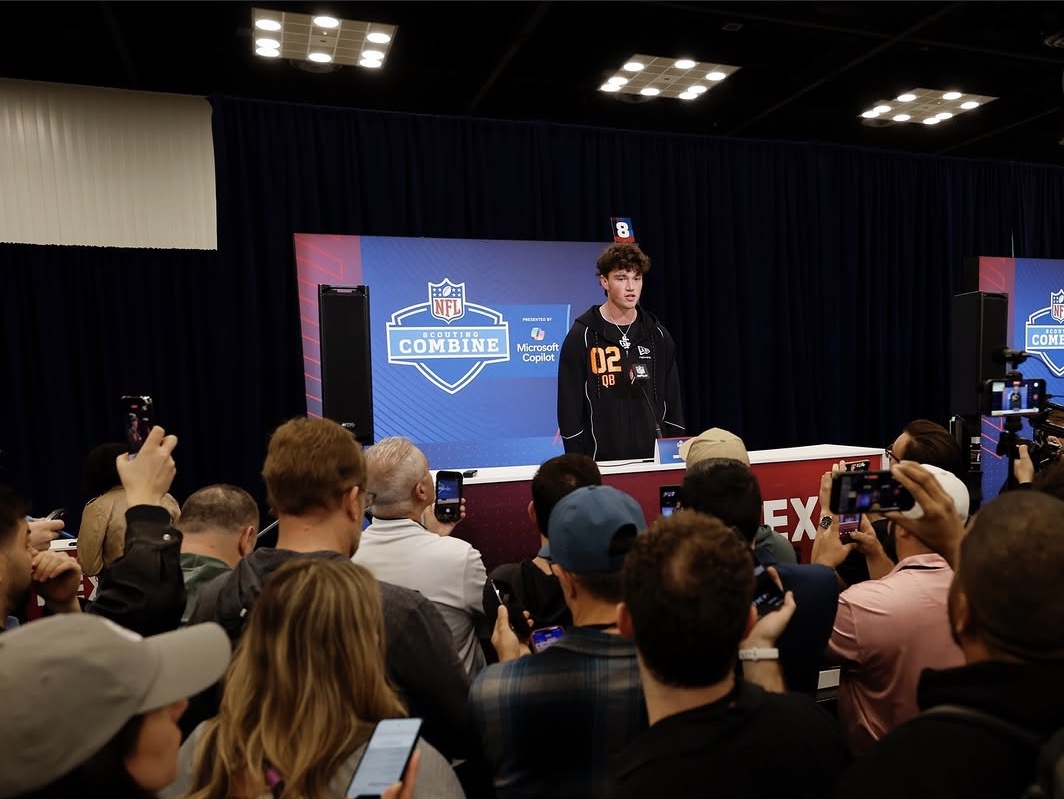
The Coaching Carousel

Mike Tomlin addresses the Steelers’ locker room post game. | Photo from @miketomlin on Instagram

Jan. 21 2026 | Isaac Garcia | Sports Editor

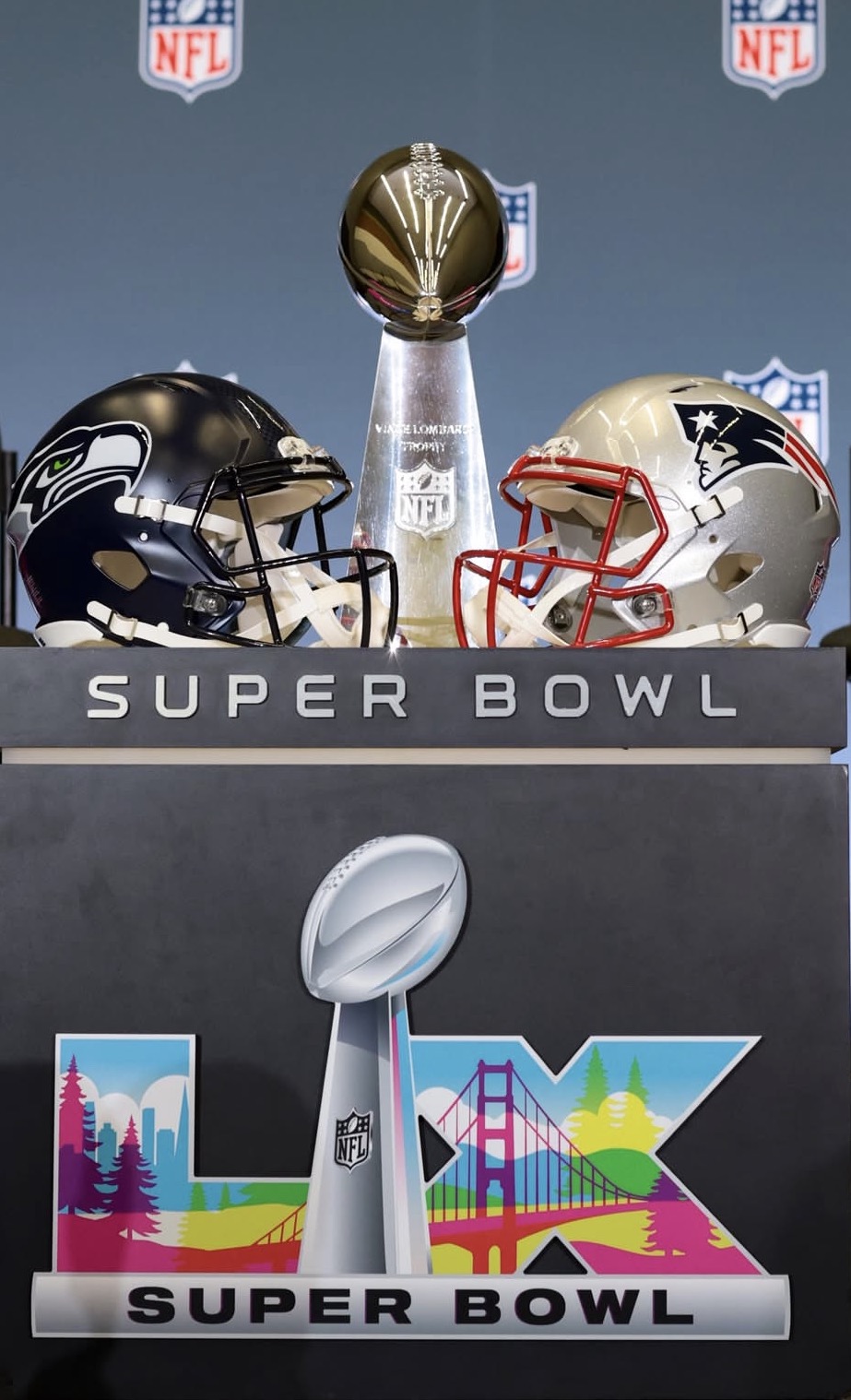
While the remaining four teams continue their push to win the 2026 Super Bowl, the remainder of the league is left with a long offseason ahead of them, wondering what changes need to be made in order to take the next step towards winning the elusive Lombardi Trophy. For some, that’s free agency signings and big trades, for others, it’s finding new talent in the draft and some teams are completely cleaning house and starting over with a new coaching staff. While the Giants, Falcons, Dolphins and Titans have already found their coaches of the future, the Ravens, Raiders, Cardinals, Bills, Browns and Steelers are all still looking for their next head coach. For teams like the Ravens and Steelers, this is rather unfamiliar territory as both teams had the first and second longest tenured coaches in the league, respectively. Next season will be the first time in nearly two decades that the two rivals will face off without either Harbaugh or Mike Tomlin on either sideline. 

When it comes to some of the other teams, however, they’re back on the search for their next coach after a relatively recent hire. For teams like the Raiders, they’re right back in the hunt after thinking they’d secured their coach of the future last season. Next year, there will be another handful of teams moving on from their coaches after a short period of time. It happens every single season and will continue to happen as long as there are still head coaches for football teams. 

So why is nailing a coaching hire so difficult? Of course, there are more reasons than one, but to start, we must consider that an NFL head coach is a pretty exclusive job. Only 32 human beings in the entire world are considered knowledgeable enough about the game of football while also having the ability to connect with a large roster of players that all have different strengths, weaknesses and personalities. On top of that, every single week during the season, a coach is tasked with watching hours of film and learning about an opposing team’s strengths and weaknesses while another football genius does the exact same thing on said opposing team. Coaches often have a nonexistent work-life balance, some doing 16-hour days for about six days a week for 18 weeks. If they make the playoffs, that can extend another five weeks. If they don’t make the playoffs, they probably won’t have the job much longer. While they’re far from underpaid, earning annual salaries in the multi-millions each year, it’s incredibly difficult to find someone who can handle all of that and stay focused enough to coach the team at the level required to be successful in professional football. There’s an old saying that NFL stands for “Not For Long.” Usually, that’s used in reference to the average career length of just three years for players, but it’s true for coaches as well. According to Sports Illustrated, the average tenure for NFL coaches is also three years, a downturn from a reported 4.3 years by Business Insider in 2016, meaning that of the coaches hired in the coming weeks, for all the excitement they might bring to a fanbase, there’s a better chance than not that they won’t even finish their initial contract. In half of that time, the fanbase will be calling the coaches’ capabilities into question.

This year, like most years, the most discussed candidates for the current coach openings are a mix of old and new. Some, like Harbaugh and former Browns coach Kevin Stefanski, are known commodities. Others, like Chargers defensive coordinator Jesse Minter and Seahawks offensive coordinator Klint Kubiak, are exciting yet unproven candidates. Then there are guys like Broncos defensive coordinator and former head coach of the team, Vance Joseph, who are almost a mix of the two, having been head coaches in the past before being fired and returning to the coordinator ranks, and now being looked at for a second chance. Some may be inclined to go with what’s familiar, and others may try to go with the unfamiliar in an attempt to put themselves ahead of the curve amongst the remainder of the league. There are disappointments and success stories for both, and no approach has necessarily proven better than the other, which is what continues to make the process so difficult. 

So, as the 2026 coaching carousel continues, it’s important to remember that, in many ways, picking a good head coach is a dart throw. Maybe an educated guess at best. Even if the right candidate is selected, it may not be the right fit for their skill set and coaching style. Coaches like Bill Belichick are a great example of things not working out at one location and then working wonderfully at another — some coaches are just meant to be high-quality assistants as opposed to running the whole show. 

Coaches, just like players, have to grow and develop their skill set over time, but unlike athletes, there isn’t a clearly defined prime of their career, and the unique circumstances of coaching aren’t necessarily something that can just be taught. Currently, multiple organizations are dedicating countless hours to researching, interviewing and putting together the best contract possible for their preferred coaching candidate in the hopes that they’ll find the next elite head coach. And while they certainly might, the only certainty in the NFL coaching carousel is that people will keep on getting fired, and the cycle will just keep spinning.


Contact the author at howlsports@wou.edu


National Championship preview

Kaelon Black runs in for a touchdown during the Peach Bowl. | Photo from @cfbplayoff on Instagram

Jan. 14 2026 | Isaac Garcia | Sports Editor

On Jan. 19, the college football season will culminate with the College Football Playoff National Championship game in Miami. Both the Miami Hurricanes and Indiana Hoosiers will be looking to win their first championships of the playoff era and in the case of the Hoosiers, their first championship ever. Both teams have made it this far on a physical brand of football that revolves around strong play in the trenches. Both teams rank top ten in the country in rushing defense and have made a run by forcing turnovers and suffocating offenses.

Miami, led by coach Mario Cristobal in his fourth year, opened with a huge win against Notre Dame and continued a strong start before faltering against Louisville and eventually SMU. After that second loss to SMU, they went on a tear to end the regular season, winning each game by three scores or more. After making the playoffs in a debated decision from the committee, being the last team in over Notre Dame, they won a low-scoring 10-3 game against Texas A&M, where the defense came up big and shut down the Aggie offense. In the Cotton Bowl versus Ohio State, the defense again showed up, slowing down Ohio State’s offense and limiting star receivers Jeremiah Smith and Carnell Tate. They would then win a back-and-forth game against Mississippi with quarterback and Georgia transfer Carson Beck running for what would prove to be the winning touchdown with 18 seconds remaining. On offense, Beck is joined by first-year receiver Malachi Toney and running back Mark Fletcher Jr., propelled forward with a bruising offensive line. Defensively, star pass rusher and likely first-round pick in the NFL Draft, Rueben Bain Jr., wrecks offensive gameplans. While Bain gets a lot of the attention, he’s far from the only star on the defense, with Akheem Mesidor, Jakobe Thomas, Keionte Scott and others making the defense an extremely formidable unit. Miami’s success is a bit of a return to form, as they’ve won five national championships, with the most recent being in 2001 behind one of the strongest teams in college football history. 

On the other side, Indiana has put together one of the craziest turnarounds the sport has ever witnessed, going from one of the worst programs in the country historically to a national finalist. The job head coach Curt Cignetti has done with the Hoosiers is incomparable to anything seen in recent memory. When Cignetti took over, he inherited a 3-9 program and immediately improved it, leading the team to an 11-1 regular season record and appearance in the college football playoffs. This year, the team has taken yet another step forward with California transfer quarterback and Heisman winner Fernando Mendoza leading the offense with quick processing skills, elite ball placement and solid decision making. Joining him are receivers Elijah Sarratt, Charlie Becker and Omar Cooper Jr., who’ve been incredible all season as reliable targets for Mendoza, keeping the offense a well-oiled machine. The offensive line is led by starting center Pat Coogan, who won MVP of the Rose Bowl quarterfinal, which is unheard of for offensive linemen. Defensively, Indiana is led by Aiden Fisher, Mikail Kamara and D’Angelo Ponds. The Indiana defense is relentless and is excellent at forcing uncharacteristic mistakes by bringing intense pressure, giving an already elite offense more chances to add to the scoreboard. Indiana won the Big Ten, getting a bye to the quarterfinal, where they dismantled Alabama in the Rose Bowl 38-3. They then advanced to the Peach Bowl, where they cruised against the Oregon Ducks, winning 56-22, powered by three forced turnovers and a nearly perfect, five-touchdown performance from Mendoza, thus booking their first trip to the national championship game in school history. Indiana is made up of underrated and overlooked recruits that embody Cignetti’s philosophy of “production over potential.” 

So, how do both of these teams match up with each other? Indiana is a clear favorite at the moment, and how could they not be? They’ve been a complete buzzsaw throughout the season and arguably even more so throughout their playoff run. Their execution and attention to detail is almost robotic, making it very difficult to pick against them. However, for how strong they’ve been, they aren’t unbeatable. There have been three instances throughout the season where they were involved in close games that could’ve gone the other way. A 20-15 game against 8-4 Iowa, a 27-24 game against 6-6 Penn State and a 13-10 Big Ten championship game against Ohio State. All three of those teams had something in common. They were able to drag Indiana into a physical, relatively low-scoring game. In those three games, Mendoza didn’t necessarily set the world on fire either, throwing a combined four touchdowns, three interceptions, with a 61.8% completion percentage. 

Now, Indiana is obviously built to handle these kinds of games, as they won all three and have the personnel and play style to pull it off. In fact, it’s probably the preferred way for Indiana to play. They’re great at figuratively punching opposing teams in the mouth and demoralizing them, but these three games provide a sort of formula that shows when a team has the personnel and play style to bully Indiana back a bit, they have a shot. Miami definitely has that kind of personnel and it’s shown up when they’ve needed it most. Something else that might bode well for Miami is their ability to win the time of possession battle and keep their offense on the field longer, wearing down the defense over the course of the game and making them difficult to stop late in the game. Not to mention the game is being played in Miami, which will allow the Hurricanes to come in perhaps a bit more rested than the Hoosiers. It’s going to be important that Miami take as much advantage of this as possible with a quick start — or at least not allowing a quick start for Indiana — or else the lead could become insurmountable rather quickly, like it did for Oregon. While Miami has shown it has what it takes to hang with the Hoosiers, Indiana has the best coach and quarterback in the country, and it’s tough to find any glaring weaknesses. Miami probably puts up a decent fight early, but Cignetti simply has Indiana operating on a different level right now and it’s hard to imagine anyone stopping them. They’ve proven no moment is too big for them and there’s no real good reason for that to end now.

Prediction: Indiana wins 31-14 and becomes the first 16-0 team ever.


Contact the author at howlsports@wou.edu

Is the CFP broken?

A picture of the College Football Playoff National Championship trophy. | Photo from @cfbplayoff on Instagram

Jan. 14 2026 | Isaac Garcia | Sports Editor

Next Monday, the college football season officially wraps up when the Miami Hurricanes and Indiana Hoosiers take the field at Hard Rock Stadium and play for a national championship, and despite the many changes the sport has undergone in recent years, many things stay as they’ve always been. Namely, controversies over how a national champion is determined. 

For years, national champions were selected by polls after the bowl season, leading to many disputes over who the national champion really was. In 1998, an actual national championship was introduced between the two highest-ranked teams. Today, 12 teams compete in the playoff and regardless of changes along the way, the process still has detractors. 

In the current format, the five highest-ranked conference champions automatically make the tournament. This means that at least one of the “Group of Five” teams — soon to be Group of Six now that the PAC-12 has added enough teams to potentially receive an automatic bid again — will make it in. For those unfamiliar, college football has “Power Four” and “Group of Five/Six” conferences, with the Power Four being full of large schools while the remainder of the conferences are full of schools that are a bit smaller. In the first two seasons, the G5 teams involved have lost in lopsided games. Last year, Boise State lost to Penn State 31-14. This year, Tulane lost to Mississippi 41-10 and James Madison lost to Oregon 51-34. 

The main gripe some fans have with the inclusion of G5 teams is that they simply aren’t on the same tier as the Power Four teams, and therefore, their automatic spots in the bracket should be removed to fit in more Power Four teams. However, many would counter-argue that point and say that all teams should have a clear-cut way to qualify for the tournament in some form, regardless of school and conference size. 

Another issue is that a 12-team playoff has essentially rendered conference championships useless to the point where some teams, although they’ll never admit it, might prefer to miss their conference championship entirely. If a team plays in the conference championship, they’re risking injury in an additional game while other teams that will eventually be in the field get the week off, and the payoff often isn’t worth it. Take the Big Ten Championship earlier this season, which pitted #1 Ohio State and #2 Indiana against each other. Both teams were going to make the playoffs regardless of the result. Indiana beat Ohio State 13-10, and all it meant was that both teams swapped positions. With that being said, the games are unlikely to go away because it’s such a significant revenue generator.

In addition, being top four in a 12-team bracket should be a significant advantage as you get to skip a round, but with the near-month layoff between the regular season and second round, some wonder if that’s negatively affecting the teams with bye weeks. In the past two years, teams that received a bye week to the second round are 1-7. While the effect could be debated, the fact that the highest-ranked teams don’t get a chance to play on their own campus, like teams ranked 5-8 do, puts fans in a strange position. Of course, they’d like their team to have a better chance at a title, but they’d also like to see their local team play as opposed to traveling to one of the bowl locations that host the quarterfinals and semifinals. Now, the easy solution here seems to be just holding off on neutral locations until the semifinals, but because the bowl game organizations hold so much influence, this realistically will not happen. 

So here is one proposed solution to hopefully solve these issues while staying realistic. The playoff can expand to 16 teams. Going to 16 will make sure that each team ranked in the top eight gets a chance to play at home. As for how it’s determined who qualifies for the playoffs, each conference could receive a certain number of automatic entries based on merit. For example, it could be based on the average number of teams ranked in the top 16 nationally each year. Conference championships could then be replaced with play-in games for the final qualifying spot out of the conference. Say, for example, the Big Ten has five automatic bids. Rather than having a fairly meaningless game against two teams where both teams make it regardless, the fifth and sixth-place teams in the conference would be battling it out with their season on the line. This would satisfy the conferences and TV networks, allowing them to have a primetime game on that weekend and create a more exciting process for determining the playoff field. Now, there still needs to be a way for G6 teams and independent teams to qualify to ensure fair access to the tournament. Perhaps the best way to go about it would be to leave at least two spots for schools that don’t get a chance to automatically qualify via conference, whether that be an independent or a team from a non-automatic qualifying conference. Not only does this make the playoff accessible, but it would make the aforementioned play-in games much more exciting, knowing that the losers of those games are eliminated.

At the end of the season, the playoff committee’s only job would be to determine who the two highest-ranked non-automatically qualifying conference champions and/or independents would be. After this, the other 14 teams are already determined and all they’d need to do is rank the teams however they see fit from 1-16 and allow the bracket to play out. As mentioned earlier, it could be based on an average over a certain period of time, say five years. If over the previous five-year span, a conference has an average of three teams ranked in the top 16, that would be their automatic bid amount. 

Again, this format is purely hypothetical and relies heavily on assumptions that the decision-makers involved would agree. This format also doesn’t solve everything. The playoff would still run into about the third week of January, which runs right alongside the transfer portal. The format also doesn’t solve some of the issues with scheduling that fans and coaches alike have brought up. However, it feels like it might be a step in the right direction towards creating a playoff system with clarity in the qualification process and creating more high-stakes moments while hopefully satisfying as many people as possible. 


Contact the author at howlsports@wou.edu

WOU alum: Joe Lorig

Joe Lorig coaches the team from the sidelines with Dan Lanning in the background. | Photo from @OregonFootball on Facebook

Jan 7. 2026 | Isaac Garcia | Sports Editor

When discussing the Oregon Ducks coaching staff, most people will start with head coach Dan Lanning, a former defensive coordinator at the University of Georgia where he won a national championship in 2021. They’ll talk about offensive coordinator Will Stein, who, after this season, will take over at Kentucky to become head coach. They’ll mention defensive coordinator Tosh Lupoi, a former assistant coach under legend Nick Saban, who will also be leaving Eugene at the end of the season to take over his own program at Cal. They’ll speculate about Drew Mehringer and Chris Hampton, who will be taking over for Stein and Lupoi next season. All of these coaches have been discussed at great lengths over the past few months, leaving Western Oregon University alum Joe Lorig under the radar. 

Lorig was born in Edmonds, Washington, about four hours away from Monmouth. In 1991, he joined the Walla Walla Community College football team as a cornerback where he received All-Northwest Athletic Association of Community Colleges honors twice. He remained at Walla Walla until transferring to Western Oregon before the 1994 season. Lorig was a team captain for the Wolves and would go on to receive a bachelor’s degree in law enforcement and a master’s in correctional administration from Western in 1995 and 1997 respectively. Lorig began coaching at Western, starting off as the defensive backs coach for two seasons. Also on the staff in the defensive coordinator role was Arne Ferguson, who would then ascend to the head coaching role for the Wolves in 2005 where he has remained since. During the 1997 season, the Wolves won the Columbia Football Association and qualified for the NAIA national playoffs. In just a two season span the Wolves had an impressive five defensive backs receive All-Conference honors. 

In 1999, Lorig took a coaching job at Idaho State, initially starting as a position coach before becoming the defensive coordinator. At Idaho State, Lorig would coach Jared Allen, who would become a Hall of Fame defensive end who played for the Kansas City Chiefs, Minnesota Vikings, Chicago Bears and Carolina Panthers. 

Over the next 20 years, Lorig made multiple stops around the country. Among the most notable were Central Washington University, where he coached 26 All-GNAC players as assistant head coach and defensive coordinator; Arizona State, where he coached defensive backs and special teams and briefly coached Zane Gonzalez who would go on to win the award for the nation’s top kicker; Memphis, where he coached two-time AAC Special Teams Player of the Year and eventual Dallas Cowboys and Tennessee Titans running back Tony Pollard along with kicker Jake Elliott who would go on to win a Super Bowl with the Philadelphia Eagles; and Penn State, where he coached alongside James Franklin and eventual first round pick Jahan Dotson and second round pick KJ Hamler. 

In 2022, he was hired on to the Oregon Ducks coaching staff as special teams coordinator and nickels coach after Dan Lanning arrived. 

Lanning, who’s from the Midwest, would discuss the importance of having a high quality coach who was local to the area, saying, “His units have twice ranked No. 1 nationally in special teams efficiency and Joe is also connected with many of the high school coaches throughout the state of Oregon. He has an affinity for this part of the country and it’s just very exciting to be able to attract a coach of this caliber to our staff.” 

Coaching special teams is often a bit of a thankless job. Most people don’t really think about special teams coordinators unless something goes wrong on that side of the ball. Special teams in general just seem very simple. They kick the ball, tackle the returner. Or, on the flip side, they receive the kick and block for the returner. However, high quality play on special teams can completely alter the momentum of a game. In a November interview with John Canzano, Lorig said, “We really believe here that there’s such fine margins when you’re playing USC or Penn State or whoever you’re playing, there’s such fine margins in the game that everybody’s gonna focus on offense and everybody’s gonna focus on defense obviously but a lot of people don’t put the time and energy and resources necessary into their special teams, it’s kind of a lost part of the game.” Take Lorig’s unit in just this playoff run alone as an example. During the opening round game against James Madison, Jayden Limar blocked a punt in the third quarter before returning it for a touchdown and putting the Ducks ahead 48-13. In the Orange Bowl versus Texas Tech, Lorig’s unit again came up big after they dialed up a fake punt that saw them confuse the Red Raiders post snap by having the left side of the formation move as if they were setting up a screen play. Instead, punter James Feguson-Reynolds rolled to his right and found Teitum Tuioti wide open to convert on fourth down and extend the drive. Plays like that are the kind that can completely demoralize the opposing team while putting the offense in a great position to score. 

High quality special teams play can also give a team’s defense more field to defend. “If people really pay attention, it has a really really big impact on every game,” Lorig said. “One of the things we do is we track what we call ‘hidden yards’ in a game and I think people would be shocked and amazed at how often we win a game and we had eighty more ‘hidden yards’ or a hundred more ‘hidden yards.’” To explain the concept of ‘hidden yards’ in the simplest way, it’s essentially the field position gained on a kickoff or punt return. “It’s gonna impact the game one way or another. Either it’s going to change the game in the right way or the wrong way for your team.”

Next, Lorig and the Ducks will go on to the Peach Bowl in Atlanta where they’ll be tasked with beating the number one ranked Indiana Hoosiers, who gave Oregon their only loss of the season in Eugene by a score of 30-20. If they’re able to redeem themselves they’ll return to Miami to play in the national championship game for the first time since 2015 in an attempt to secure their first national title ever. Regardless of the results, fans can expect to see Western Oregon University alum Joe Lorig and his special teams unit playing a critical role for the remainder of Oregon’s run as they have all season long.


Contact the author at howlsports@wou.edu

Rivers’ return

Rivers walks out of the tunnel before the Colts’ Monday Night Football game against the 49ers. | Photo from @indianapoliscolts on Instagram

Jan 7. 2026 | Isaac Garcia | Sports Editor

The Indianapolis Colts started the 2025 season off stronger than most expected. Behind star running back Jonathan Taylor and an unexpected career resurgence from quarterback Daniel Jones, the Colts sat at 8-4, and not only were they exceeding expectations, but they looked like legitimate contenders for the Super Bowl and even held their conference’s number one seed at a point. Furthermore, Indianapolis made a move to bring in defensive back Sauce Gardner from the New York Jets at the trade deadline in a move that signaled they were all-in on the current iteration of the team and that they felt like Gardner was a missing piece that could put them over the top. 

However, towards the end of the first quarter during a game in Jacksonville, Jones, who was having what most considered to be the best season of his career and already somehow playing through a fractured fibula, dropped back, stumbling a bit as he did so, completed a short pass to Alec Pierce who was coming off of a drag route and fell to the ground. As the training staff surrounded him, Jones, who was visibly frustrated and in pain, slammed his helmet into the ground multiple times. The replay showed that on the drop back, his foot planted in the turf awkwardly before he hit the ground. Further tests and imaging would reveal that Jones had torn his Achilles, ending his best season and putting a year that had been filled with so much excitement for the Colts fanbase and organization in peril. Backup quarterback Riley Leonard would take over, but unfortunately the Colts went on to lose 36-19. To make matters even worse, Leonard suffered an injury of his own during the game, spraining his PCL, which caused him to miss time. Not to mention, their other quarterback, Anthony Richardson, was already on the injured reserve list with an orbital fracture after a freak accident during pregame warmups where he was hit in the eye with an exercise band. The Colts tried to turn to Sam Ehlinger who had played for Indianapolis in the past and was a member of the Denver Broncos practice squad, but he turned down the opportunity, choosing to stay with the Broncos who had been putting together a solid season of their own. 

And so, with few other reliable options, the Colts made a move that shocked everyone. They brought in Philip Rivers, a quarterback many feel is a future Hall of Famer after spending 17 seasons in the NFL, 16 of them with the Chargers. Rivers had last played in 2020 with the Colts at age 39, putting together a decent season and making the playoffs before losing in the wild card round to the Buffalo Bills. 

Rivers, now 44 years old, had spent the last few years as the head coach for St. Michael Catholic High School where his son Gunner played quarterback. At St. Michael Catholic, Rivers had implemented a simplified version of the Colts offense and Rivers would speak with Colts head coach Shane Steichen weekly about the intricacies of the offense and how to incorporate them into his game plans. Steichen and Rivers had a long history of working together, as Steichen had been with the Chargers for nine seasons in total throughout Rivers’ career there in various assistant coach roles which helped ease the transition for everyone involved. 

However, his first game back would quite possibly be the worst matchup he could’ve been dealt. He would be tasked with leading the Colts into Seattle against one of the best and most complicated defensive schemes in the league with just under a week of preparation. Rivers and the Colts got the ball first and started the game with three straight handoffs to Jonathan Taylor. Rivers’ first pass of the game would be a deep shot to Taylor which fell incomplete bringing up a third down. On the next play, Rivers would find Michael Pittman for his first completion, good for 12 yards and a first down. The game was a relatively low scoring affair and stood at just 6-3 late in the first half. With less than six minutes in the half, Rivers took the field again and led the Colts through the teeth of the Seattle defense and into the redzone. Then on 3rd and 4, from the Seattle 8 yard line with just over 90 seconds left in the half, Rivers found Josh Downs for his first touchdown pass in nearly five years, taking a 13-3 lead. 

Unfortunately for the Colts, Seattle would respond in the second half by taking a 15-13 lead late in the game. It would be up to Rivers and the offense to take the lead back and walk off Lumen Field with a win against all odds. On the drive, Rivers made a huge play on third down, finding Alec Pierce for a 16 yard gain. While the Seattle defense would mostly stand strong, the Colts did just enough to set themselves up for a 60 yard field goal attempt from Blake Grupe which made it through the uprights, giving them a 16-15 lead with less than a minute to play. Again though, Seattle refused to lose, driving down the field and hitting a long field goal attempt of their own to take an 18-16 lead with 18 seconds. After getting the ball at their own 30 yard line, Rivers, in desperation mode, heaved a pass deep for Michael Pittman that was intercepted by Seahawks defensive back Devon Witherspoon, sealing the game for good with the Colts coming up just short. 

Despite the disappointing result, most acknowledged that with all things considered, Rivers had put together a solid performance going 18-27, for 120 yards, with one touchdown and one interception. 

The next week wouldn’t be much easier as the San Francisco 49ers would come into Indianapolis. Rivers once again held his own, going 23-35, 277 yards, two touchdowns and one interception. Yet, it still wasn’t enough as the Colts fell 48-27 on Monday Night Football. After the Texans defeated the Chargers, the Colts were then mathematically eliminated from the playoffs, making them just the sixth team since 1970 to miss the playoffs after an 8-2 start. The 2025 Colts and Philip Rivers is a story one would expect to see in a movie, and while it didn’t have the ending they might’ve hoped for, it was undoubtedly one of the best stories of the year.


Contact the author at howlsports@wou.edu

Deaflympics

The Australian women’s deaf basketball team poses by a Tokyo 2025 Deaflympics sign. | Photo from @shirleyliuofficial on Instagram

Dec. 3 2025 | Isaac Garcia | Sports Editor

Last week, the 2025 Tokyo Deaflympics concluded after an 11-day run that included 209 events across 18 different sports such as swimming, basketball, tennis, judo and more. Ukraine led the medal count by a large margin with 100 total medals, with the next closest country being Japan with a total of 51, although non-nationally affiliated athletes technically came in second in medal counts, with 52, and tied Ukraine’s gold medal count of 32. The United States was seventh in the overall medal count, winning 35, but was tied for third place in the gold medal count with 16. 

This year’s games marked the 100-year anniversary of the sporting event after it started in 1924, then known as the International Silent Games and held in Paris. The main pioneers of the games were Eugene Rubens-Alcais, who was the president of the French Deaf Sports Federation, and Antonio Dresse, who was a deaf sports activist and represented Belgium during the earliest iterations of the games and won nine total medals, with one of them being a gold. After the 1924 games, Rubens-Alcais and Dresse would help form Le Comité International des Sports des Sourds, known in English as The International Committee of Sports for the Deaf.

During the Deaflympic games, audio instruction is substituted for visual. Take, for example, track and field events. During the Olympics, a starting gun is used to begin a race. During the Deaflympics, large lights are used to signal the beginning of a race. There is also an important distinction between the Deaflympics and the Paralympics, a sporting competition for athletes with physical disabilities. In the Paralympics, there is no division for deaf athletes to participate in. According to the International Deaf Sports Committee, “Many deaf people do not consider themselves disabled,” and so their omission from the Paralympics means that the Deaflympics, for and by deaf people, are the best fit. 

Some athletes have even competed in both the Deaflympic and Olympic Games. Most recently, Diksha Dagar participated in the 2020 and 2024 games in golf after winning a gold medal in the Caxias do Sul Deaflympic games in 2022. Jakub Nosek, another Deaflympian, represented the Czech Republic in the 2018 and 2022 Winter Olympic Games as a member of the bobsleigh team. 

One of the top performers of the games was the Kenyan track team as a whole, who had all of the medalists for the 5,000-meter race, with Ian Wambui Kahinga leading the way, along with James Mwanza Musembi and Nelson Kipkorir Rotich trailing just behind. Wambui’s performance was especially noteworthy as he set the Deaflympics world record with a 5,000-meter time of 13:52.83. This time cleared the previous record, which had stood since 2013 when it was set by Symon Kibai, by about ten seconds. “This is a dream come true,” Wambui said. “Breaking the world record was my ultimate goal. We worked as a team and I’m proud that Kenya owns the entire podium.” Wambui, who is only 24, has a long career ahead of him and will likely be one of the top competitors in the event for years to come, along with Musembi, who is only 21 years old himself. The performance from the three contributed to a 15-count medal tally that included five golds. 

In soccer, the United States men’s team had an unexpected run, making it all the way to fourth place with wins against Korea and Brazil. While head coach Everett Palache is still learning how to sign himself, the team utilized interpreters to help him communicate with the team, having three total. One was specifically assigned to shadow Palache and help him communicate as he led the team through practice. Palache also explained that they would utilize color-coded pinnies and vests that Palache could use in order to get players’ attention, with red ones conveying some sort of immediate message while yellow ones would mean to keep checking in with Palache and his interpreters over the upcoming minutes. The women’s soccer team secured a fifth gold medal, the most of any country in women’s soccer, after beating Japan 4-0 in the final. The team also extended an impressive record, having never lost in 20 total years of play. In fact, the team has only ever played to a draw once, making them one of the most dominant teams across any sport in any competition. The United States also captured gold in men’s basketball, defeating Ukraine 69-59 in the gold medal match. The women’s basketball team won silver after just barely falling in a thrilling match against Japan that ended 65-64. 

In addition to the accessibility for deaf athletes, there were special changes to make the event accessible to deaf spectators. For example, during badminton matches, screens would show the sounds of the match as text to allow spectators to follow along more easily. Volunteer ASL interpreters were also around to help guide guests around to make the experience as smooth as possible. 

“I think the event was really well done,” said Western senior and ASL studies major Abby Money, who was a spectator at the event. “It was catered to both hearing and deaf people. They had interpreters on the big screens in the middle of the arena when they had announcements and even had international sign language for the people who didn’t know Japanese sign language.” Money also noted the difference in how fans interacted with the event and cheered on athletes. “When they had someone competing, they would take their hand from their shoulder and it almost looked like they were throwing something forward.”

The next iteration of the Summer Deaflympics is projected to take place in early 2029, with the location to be determined. The Tokyo games, however, were incredibly successful and drew record attendance, which bodes well for any future hosts that the games will be worth the time and investment from a financial standpoint. In fact, the attendance total far surpassed the initial goal of 100,000 spectators set by organizers. At the closing ceremony, Tokyo Governor Yuriko Koike said, “The dynamic performances of the deaf athletes gave courage and hope to the world. We were able to show the world what an inclusive society really looks like.” 


Contact the author at howlsports@wou.edu

Cross-country season recap

The men’s cross country team huddles up at regionals. | Photo from @wou_xctf on Instagram

Nov. 19 2025 | Isaac Garcia | Sports Editor

On Nov. 8, the Wolves concluded their 2025 cross-country season with the NCAA West Regionals held right here in Monmouth, where the men’s team finished eighth and the women’s team finished 17th. Matthew Resnik and Remedan Seman from the men’s team and Kyla Potratz from the women’s team had All-Region performances, with Resnik finishing 21st in the men’s 10K, Seman finishing 24th in the 10K and Potratz finishing 25th in the women’s 6K. 

Resnik, who overcame an injury sustained during the track season, said of his regional finish, “It means a lot. Definitely. Coming from last year, got injured during track season, so didn’t know how this year would pan out, but you know, going All-Region makes me feel pretty confident in myself.” 

Seman and Potratz also both saw significant improvements. “I think my freshman year, I was just getting used to it, and then last year I was really happy with my season, but I think I was 55th or something like that at regionals. So to be top 25, I just wasn’t expecting that going in this season so I was pretty happy with it and excited,” Potratz said. 

For Seman, it’s a similar story. He said that he didn’t make the traveling roster in his first season before finishing 90th in his sophomore season and then now finishing All-Region. All three credit head coach Zach Holloway for their ability to improve, overcome challenges and find high levels of success. Holloway, who is a Western Oregon alumnus and was a part of the track and field program as a student athlete, just completed his third season as the cross-country head coach and, over the summer, became the interim head track and field coach. As an athlete at Western, Holloway is in the top 10 highest all-time performers in school history for the indoor 3,000-meter and 5,000-meter as well as the outdoor steeplechase. He’s also racked up an impressive list of achievements as a coach in a short amount of time, helping both the  men’s and women’s teams win respective GNAC Indoor Championships in 2023, was a part of the coaching staff for the 2022 women’s GNAC Outdoor team title and won four national titles as a part of the Adams State coaching staff in 2016 and 2017. 

“Zach’s really good at personalizing the training. He’ll talk to individual people and there’ll be like 10 different workouts going on at a time because he just will work with you.” Potratz said. 

Resnik and Seman both agreed. “Zach’s just a great coach,” Resnik said, “Always likes to talk to you no matter what. Wants to see how you think about whatever he thinks. He’s a very knowledgeable guy, very smart but he still comes and asks you how you’re doing, how you’re feeling, what you think you need personally, so it’s definitely a 50/50 I feel like with that.” Seman added, “He’s a great coach. I think it’s because of him mostly, at least for me, that I got top 25.” 

In addition to the all-region performances from Resnik, Seman and Potratz, the Wolves also received scoring from Ethan Bothwell, 29th in men’s 10K, Samuel Fuentes, 55th in men’s 10K and Isaiah Rodriguez, who finished 94th in the men’s 10K. For the women’s 6K, Adele Beckstead finished 79th, Jazmine Liebl finished 98th, Nettle Grey finished 121st and Charlotte Gardner finished 158th. 

Both the men’s and women’s teams have very young rosters with no seniors in either of them, which means it’s likely that both can return everyone, or nearly everyone, for the 2026 season. This is an exciting prospect considering the aforementioned improvements that individuals such as Resnik, Portatz and Seman have made. 

Not only will they be returning and building on top of successful seasons, but others on the team will look to make similar jumps under the tutelage of Holloway. Of the listed scorers for both teams, three are first-years and two are sophomores, including Resnik. “Our team is so young,” Potratz said of the women’s team. “The majority of them are freshmen this year and we’ve already improved so much. So I’m just really excited to see another year of Zach’s training and  hopefully, personally, I’d like to make it to nationals for cross, but it would also be so cool if the whole team made it. And I think that’s definitely in reach for sure.” 

Seman shared similar sentiments. “I think it’s really realistic for the boys’ team to say that we can make nationals next year. We have a lot of very young guys, we’re very talented, so I think the goal is to make nationals and I think it’s very realistic if we just train consistently and be disciplined about our training.” 

During the GNAC championships, the men’s team took fourth place, with Seman finishing 11th, Ethan Bothwell finishing 19th, Resnik finishing 20th, Zander Campbell finishing 27th and Samuel Fuentes finishing 40th. The women’s team took 7th with Potratz finishing fourth, Adele Beckstead finishing 30th, Jazmine Liebl finishing 36th, Maslin Sigler finishing 40th and Nettle Grey finishing 46th. Of note is that all three GNAC runners who finished ahead of Potratz were seniors. This will make Potratz the highest finishing returning runner in the GNAC next year, which of course puts her right in the mix of favorites for the individual GNAC title next season. 

Because of the youth on both teams, the leadership structure is a bit different than what’s typical for a team. In most cases, the seniors tend to take over as team leaders, but without any seniors on these two teams, the Wolves use a sort of leadership by committee approach. “I feel like all of us worked on coaching each other, making each other feel like we’re also included,” explained Potratz. 

This leadership and positive culture has also extended past the track and courses, with 12 cross-country athletes between both teams making the academic all-GNAC list, with eight from the women’s team and four from the men’s team. Of the eight from the women’s team, those who were selected were Charlotte Gardner — who was one of seven runners in the conference on the women’s side to maintain a 4.0 — Amelia Merritt, Abbigale Elliott, Kaydence Nguyen, Kyla Potratz, Holly Hutton, Madison Huri and Natalie Perez. For the men’s team, James Lackey, Ethan Bothwell, Grant Bohannon and Remedan Seman were all selected. In order for a student athlete to receive All-GNAC academic honors, they must maintain a cumulative GPA of 3.2 while competing. 

In between now and the next cross-country season, the Wolves will have an indoor track season and an outdoor track season ahead of them. It’s a quick turnaround, but one that athletes must be prepared for. On Dec. 4, just under a month after regionals, the indoor track and field season begins at the Silver State Invitational & Multis in Reno, Nevada. “We don’t really have a big break,” Seman said, “But we love what we do, so we do it.” 

Speaking to the love of running and what got them into cross-country and the general track and field umbrella, Kyla Potratz said it was seeing her sister run while she was growing up. “My older sister ran and so I just loved going to her meets and just the atmosphere at races and stuff was so cool. So I was like, ‘Hey, I want to be like my big sister.’” She continued, “This is just such a cool balance of you’re pushing yourself every single time trying to be better and you doing that helps pull your teammates.” 

It’s a similar story for Resnik, who explained, “My dad grew me up running. He always did triathlons, ironmans, all that stuff. So I’m kind of just used to it. And then same thing with the individual sport, you’re just working on yourself, but no matter what, it’s always at the end of the day five. Five men score, five women score. So it’s a team, it comes down to the team as much as it is individual so just the culture of it, it’s always fun for sure.” 

All three also shared stories about the culture of cross-country and track and field. Both Potratz and Seman specifically shared stories of opposing athletes supporting them during meets. Potratz mentioned that during regionals, an athlete she was racing against encouraged her to keep pushing. For Seman, it was an athlete from Chico State who encouraged him and helped him set a personal record. When asked what about the sport of running creates such a welcoming environment, Resnik said, “I think everybody knows that it’s just a hard sport. No matter what, if you’re showing up every day, everyone knows you’re putting in that hard-ass work.” 

As mentioned, the indoor track season starts Dec. 4 and will run through Feb. 18 with the GNAC Indoor Championships in Spokane. From there, the team and individuals can qualify for nationals, which for indoor track will be held in Indianapolis, March 13 and 14. After that, the team jumps right into the outdoor season and April 10 and 11, students can mark their calendars for John Knight Twilight Night hosted on the track at McArthur Field. 

“I just think it’s really fun,” Potratz said. “Some of the distance events are twilight, so you’re racing under the lights, which is such a cool vibe and experience. And yeah, it’s really fun when there’s a ton of people there cheering for you and your school.” 

Seman added, “I think a lot of families show up at this meet. They can’t show up to out-of-state meets, most of them at least, and I think it’s fun to have your family here watching you race.” 

The outdoor season will conclude with the GNAC Multis Championship April 27 and 28, the GNAC Outdoor Championships May 4 and 5 and the NCAA Outdoor Nationals in Emporia, Kansas, from May 21 through May 23. 

“It’s not just our distance team. Our sprints team, multis team, throws team, everything,” Resnik continued, saying, “We’re looking pretty good this year. Hopefully, we can bring home a team title, so if you can come out, for sure come out.” As discussed earlier, coach Zach Holloway became the interim head track and field coach over the summer, and it’ll be exciting to see how the team does with him at the helm for both the indoor and outdoor seasons. 

For more information about the cross-country and track and field teams, such as upcoming events and results, students can go to wouwolves.com and find information there or follow them on Instagram @wou_xctf. Make sure to keep an eye on both teams for their upcoming seasons and see how the team continues to improve and set new highs. 

Contact the author at howlsports@wou.edu

UFC 322

A photo of Jack Della Maddalena (left) and Islam Makhachev (right) on a promotional poster for UFC 322. | Photo from @espnmma on Instagram

Nov 12 2025 | Isaac Garcia | Sports Editor

On Nov. 15, UFC 322 will be headlined by Islam Makhachev versus Jack Della Maddalena, a welterweight title fight that’s been one of the more anticipated fights of the year. Maddalena enters at 18-2, with losses to Aldin Bates and Darcy Vendy, while Makhachev comes in at 27-1 with his only loss being to Adriano Martins 10 years ago. Makhachev has established himself as a machine in the UFC, using high-level wrestling ability to climb his way to the top of the sport and taking down legends and fan favorites such as Dustin Poirier, Alexander Volkanoski — on two separate occasions — and Charles Oliveira. In his last fight at the beginning of this year, he made quick work of Renato “Money” Moicano, submitting him in just the first round.
On the other side, Jack Della Maddalena comes in off of a win by unanimous decision against Belal Muhammad in May, where he won the Welterweight Champion belt, setting up this matchup against Makhachev, who moved up from lightweight.
Della Maddalena has drawn comparisons in style to Dustin Poirier, who, despite losing to Makhachev, gave him one of the most difficult fights of his career. Firas Zahabi, who coached UFC legend Georges St-Pierre, said, “Now imagine Dustin Poirier as a little bit bigger, and JDM, you could say, is a little bit more careful than Dustin Poirier.” The part about Della Maddalena being more careful than Poirier is an important note to make, as Poirier was submitted by Makhachev via D’Arce choke submission after his aggressive nature left him vulnerable to attacks. If Della Maddalena can be a bit more conservative and keep Makhachev struggling to find finishing opportunities, he could very well pull off the upset. Against Belal Muhammad, he was able to hold off multiple submission attempts en route to a decision win, but Islam Makhachev is an entirely different beast.
Muhammad himself commented on the upcoming fight, saying about Makhachev, “He’s very smart, very controlled and doesn’t let you off the hook when you make a mistake. Jack makes mistakes on the ground.” Muhammad continued, “He has moments where he lapses safety. He’ll give up his back, he’ll give up his neck, he’ll give up an arm-triangle, and you can’t do that with Islam. Islam is going to see that and Islam is going to exploit it.”
Muhammad gave credit where it was due to Della Maddalena, commending him for his ability in the standing game and for pushing through tough moments in the fight. He pointed out that in order for him to win the fight, he must avoid letting Makhachev push him up against the cage, noting that Poirier did a good job of keeping the fight in the center of the octagon before being submitted. Of course, this is easier said than done.
However, Ben Vickers, Della Maddalena’s coach, thinks this may be an easier fight than Belal Muhammad was for the defending champion. “Belal’s a bit more unorthodox, so a bit harder to cope with, whereas Islam’s a more traditional sort of striker.” Vickers also mentioned the increase in weight for Makhachev, saying, “There’s two ways it could go. Does not having to cut weight help him or does carrying that extra weight hinder his cardio?”
From the fighters’ side, Della Maddalena said that he would “break” Makhachev, who responded by saying, “I’ve heard this ‘I’ll break you’ thing so many times already. Every fight, someone wants to break me, someone wants to knock me out. People don’t believe such things anymore.”
Della Maddalena definitely does present some problems for Makhachev. Many people seem to think this should be an easy matchup for Makhachev on the road to adding on to an already stacked resume that has some people considering him one of the greatest of all time, but that very well may not be the case. There is a reasonable path to an upset here. Much crazier things have happened in the UFC before, and the Della Maddalena camp seems very confident. The biggest unknown here, of course, is how Makhachev will handle the change in weight. If he struggles with cardio, Della Maddalena could use his more patient style to pick Makhachev apart a bit and neutralize the grappling threat. However, Makhachev is typically very well prepared for all of his fights, so relying on his cardio being poor is probably a losing strategy. It’s just as likely that the added weight and energy from not having to cut make Makhachev even more dangerous and allow him the opportunity to overwhelm Della Maddalena and find a finish. The key factor, really, like Muhammad said, is if Della Maddalena can stay away from the cage and keep Makhachev from using it to put him in compromising situations, the fight probably goes more favorably towards him. Again, these are big ifs, and with a fighter of Islam’s caliber, sometimes you just have to lean towards what’s been tried and true. He’s the current number one-ranked pound-for-pound UFC fighter for a reason, and everyone who’s tried to stop him in the past 10 years has been unsuccessful. What fans are witnessing from Makhachev right now is quite possibly one of the greatest runs put together by a fighter that the UFC has ever seen. Jack Della Maddalena has as good of a chance as anyone who’s tried to put an end to that run, and he may be able to avoid being finished, but Islam Makhachev might just be too much to handle.
Prediction: Islam wins by unanimous decision.

Contact the author at howlsports@mail.wou.edu
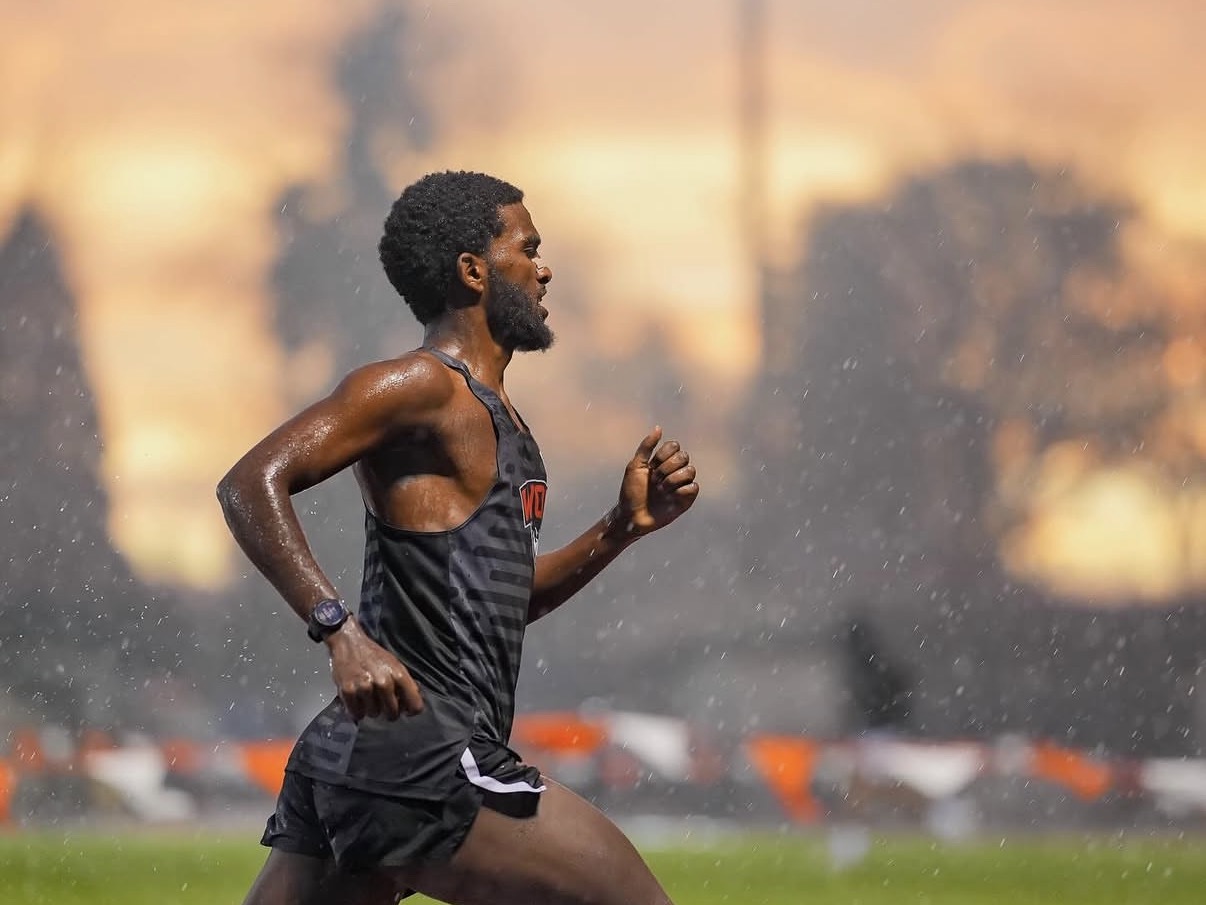
Football seniors

Malcolm Liufau intercepts a pass against UT Permian Basin. | Photo from @wou.fb on Instagram

Nov. 12 2025 | Isaac Garcia | Sports Editor

Logan South — Kicker from Eleanor Roosevelt High School in California and a transfer from Western New Mexico. This season, he’s made 18 PATs on 20 attempts and is two for three on field goal attempts with a long of 26 yards.
Tamirr Bullock — Linebacker from Turlock High School in California and a transfer from Modesto Junior College. Bullock recorded an interception against Western New Mexico earlier this season.
Isaiah Rickard — Wide receiver from Franklin High School. Rickard has appeared in 28 games for the Wolves and has recorded eight receptions for 60 yards and three touchdowns.
Kainoa Jones — Quarterback from Konawaena High School in Hawaii. In his career, Jones has scored 17 total touchdowns, six from passing and 11 from rushing, along with 1,450 all-purpose yards. His single-game career highs include 224 passing yards, 94 rushing yards, two passing touchdowns and three rushing touchdowns. Jones is also a captain for the team.
Jaylen Fite — Wide receiver from Evergreen High School in Washington. Fite has appeared in 25 games for the Wolves and has 31 catches for 339 yards in addition to six rushing attempts for 17 yards. His career high in receiving yards is 64.
Daron Ulrich Jr. — Defensive back and team captain from Union High School in Washington. Ulrich has appeared in 38 games for the Wolves, where he’s got two career interceptions and 149 total tackles.
Malcolm Liufau — Linebacker from Punahou High School in Hawaii. Liufau has intercepted two passes this season and has 12 sacks with 30.5 tackles for a loss. Liufau also has 10 career pass breakups, six forced fumbles and one recovery in addition to being a team captain. Liufau won Lone Star Defensive Player of the Week for his efforts in the 2025 homecoming game against UT Permian Basin where he had an interception, a sack, and a forced fumble that secured a victory for the Wolves.
James Duane — Linebacker from South Medford High School and forced a fumble versus Lincoln in 2021. He also has four career sacks along with 41 career tackles.
Xavier Owens — Defensive back from Skyview High School in Washington. Xavier has career highs of one forced fumble, two fumble recoveries and five pass deflections.
Tamaaulelei Ma’alona — Defensive back from O’Dea High School in Washington and a transfer from Puget Sound. Here at Western, he’s appeared in eight games, giving out 12 tackles and helping out with a tackle for a loss.
Jacob Pollock — Defensive back from Sherwood High School who has played in 20 games and given out 18 total tackles.
Armaad Hubbard — Running back from Wichita Heights High School and a transfer from Butler Community College. Hubbard has appeared in 27 games, rushing 49 times, averaging 249 yards and one touchdown.
Michael Gibson III — Quarterback from Canby High School, where he won All-League and All-State honors. Gibson was one of the top-rated quarterbacks in Oregon by Prep Redzone and had a 4.0 GPA. He’s appeared in seven total games for the Wolves and recorded a rushing touchdown at Western New Mexico last season.
Blake Wolters — Running back from Heppner High School. He has appeared in 18 games.
Aden Murphy — Linebacker from Tigard High School and has two career interceptions, along with six pass breakups and one forced fumble. Murphy is a 2025 team captain.
Dominic Hankins — Tight end from Mazama High School, where he was First Team All-Offense and won the Rogue Valley Championship for his weight class in wrestling. Hankins has played 17 total games for the team.
Emilio Castaneda — Offensive lineman from Hood River Valley High School. Has played in 41 total games for the Wolves and is a 2025 team captain.
Travis Fenton — Offensive lineman from Seaside High School in Seaside, Oregon.
Keyvaun Eady — Wide receiver from Southridge High School and a transfer from Portland State. For the Wolves, Eady has 85 catches, 1087 receiving yards and seven receiving touchdowns. Eady set a single-game career high last season with 100 receiving yards and is a 2025 team captain.
Kainoa Doctor — Wide receiver from Kapalama High School in Hawaii. Doctor had his first catch of his collegiate career earlier this season against Sul Ross State for 11 yards.
Joseph Northcutt — Defensive lineman and team captain from Henley High School. Northcutt has a total of 16.5 sacks and 25 tackles for a loss over the course of his career at Western. His single-game career high in sacks is 1.5 and in tackles is nine.
Jeriah Jackson — Defensive lineman from San Diego High School in California and a transfer from Grossmont College. Since joining the Wolves, he’s played in nine total games, recording one tackle for a loss, half of a sack and one pass breakup.
Massen Newton — Defensive lineman from Lakeridge High School. Newton has played ten games with the Wolves, making 23 total tackles, recording 3.5 tackles for loss and one pass breakup.
Andrew Simpson — Defensive back from Mountainside High School who has played in 22 games and has seven career interceptions, 21 pass deflections, a forced fumble and 72 total tackles. His career high for interceptions in a single game is two. Simpson has also returned 27 punts for a total of 207 yards.
Join the Wolves Nov. 15 for senior day festivities against Central Washington University. The Wolves are currently 8-2 and are at second place in the Lone Star Conference, putting them firmly in the mix for a playoff spot as they sit at seventh place in Super Region Four in the most recent NCAA rankings. For those unfamiliar with how the Division II football playoffs work, the entire field is split into four geographic regions with four conferences in each. The champions in each conference will automatically make it to the playoffs while the top four highest ranked non conference champions will always qualify. The winner of each eight team regional bracket will meet in the semifinals and eventually the National Championship for those who win.

Contact the author at howlsports@mail.wou.edu

Soccer and volleyball seniors

Chloe Asciutto hits the ball over the net during a match. | @wou_wolves on Instagram

MEN’S SOCCER

Abraham Villalobos — Forward/winger from North Salem High School, and also played in the Portland Timbers Club Academy. Villalobos has career totals of 12 goals and four assists with single-game career highs of two goals and two assists. Villalobos has played a total of 60 games for the Wolves. 

Aiden Azavedo — Midfielder from Jesuit High School and a transfer from Gonzaga. Throughout his time at Western, he’s scored two goals and had two assists with single-game career highs of one goal and one assist. He’s played a total of 48 games for the Wolves.

Alex Grignon — Forward/winger from Summit High School, where he was a part of the team that won the 2021 state championship against West Linn 6-0 and contributed with a goal. Since joining the Wolves, he’s scored 15 goals and contributed eight assists and has played a total of 59 games. His single-game career highs are two goals and two assists.

Alejandro Valdes-Dordea — Forward from West Linn High School and transferred from Utah Tech. He’s scored one goal and one assist in his time with the Wolves and has played a total of nine games for the team since joining last season. 

Aidan Harvey — Defender from Bremerton High School in Washington, and a transfer from West Liberty University after starting his career at Tacoma Community College. This season, he has appeared in three games for the Wolves against Hawaii Hilo and in both games against Saint Martin’s. 

Caleb Kiner — Defender from Dallas High School and a transfer from Gonzaga. As a freshman at Gonzaga, he made the West Coast Conference All-Freshman Team and scored a game-winning goal against the University of Denver. He’s played a total of 35 games for the Wolves and netted a goal in the Wolves’ match against Saint Martin’s Oct. 24. He has started every game he’s played dating back to last season. 

Harper Neuback — Defender from Churchill High School in Eugene, where he was named Second Team All-State as a senior and was All-Midwestern League First Team three times. He has scored one goal this season at Saint Martin’s and added assists against Cal Poly Humboldt and Seattle Pacific. He has played 4,732 total minutes for the Wolves since the start of his career and has appeared in a total of 61 games. 

Reis Corpuz — Defender from Honolulu, Hawaii, who transferred from Wingate University, where he played in 41 games and scored two goals and three assists. He has played a total of 57 minutes for the Wolves this season.

WOMEN’S SOCCER

Bella Lopez — Goalkeeper from College Park High School in California. Lopez has 40 total saves over her career with the Wolves, along with a .816 career save percentage. This season, Lopez has a .903 save percentage, the highest she’s had in any season thus far. Her single-game career high in saves is eight versus Simon Fraser earlier this season, and earned GNAC Defensive Player of the Week honors for her efforts that week.

Lauren Rose — Forward from Roseville High School in California, where she was the team MVP and earned First Team All-League honors twice and Sacramento All-Metro honors in her senior season. She also played for the Blues FC NPL club team. Through her career with the Wolves, Rose has scored two goals and two assists, with career highs of one goal and one assist. This year she has started all 17 games and received GNAC Defensive Player of the Week honors for her contributions in a win against then #1 ranked Colorado School of Mines. Rose is one of three team captains for the Wolves.

Alyna Slater — Midfielder from Aiea High School in Hawaii, where she was selected for the Oahu Senior All-Star game. Slater also played club soccer for Surf Soccer Hawaii. Since joining the Wolves, she has scored two goals and four assists and has appeared in 57 games, starting in 33 of them. 

Ally Beavers — Midfielder from Puyallup High School in Washington, where she was a team captain in her junior and senior seasons as well as receiving All-League, All-District and All-State honors. Beavers was also a part of a state championship win in 2019 and played club soccer for Washington Premier FC. In 2024, she transferred from the University of Wyoming, and since joining the Wolves, she has career totals of two goals and eight assists, including six assists this season alone. This is Beavers’ second season as a team captain.

Savannah Taylor — Forward from Chiwana High School in Washington. Taylor also played for the Three Rivers Soccer Club, and since joining the Wolves has appeared in 45 games, scoring four goals and adding two assists.

Emma Smith — Midfielder from Burlington-Edison High School in Washington, where she was a three-sport athlete, playing basketball and running track in addition to soccer. Smith received First Team All-State honors and was the Skagit Valley Herald’s Girls Soccer Player of the Year. She has scored two goals, added one assist and appeared in 54 games. 

Leah Heugly — Defender from Real Salt Lake Academy High School in Utah, where she played soccer, basketball and volleyball, and received Defensive Player of the Year Honors in the 2021-22 season. Heugley joined the Wolves in 2024 after transferring from Portland State, and has appeared and started in 35 games, adding an assist versus Seattle Pacific in a win that was a part of the school record-breaking six-game win streak earlier this season. 

Jada Foster — Defender from Crescent Valley High School, where she made the Mid-Willamette First Team in 2018 and 2019 and made Second Team All-State in 2018. Foster also won two state championships with Crescent Valley in 2018 and 2019 and was a part of the Eugene Timbers Futbol Club. In addition, she was a three-sport athlete playing basketball and participating in track and field. Foster has played in 46 games with the Wolves, starting 45 of them, and has scored four goals and added two assists. Last fall, Foster was named a team captain and has logged 4,028 minutes over the course of her career at Western. Foster also received First Team All-Conference honors from the GNAC last season and was named GNAC Defensive Player of the Week just last week. 

VOLLEYBALL

Chloe Asciutto — Middle blocker from Camas High School in Washington, where she made First Team All-League and Second Team All-State in her senior season. Asciutto had an immediate impact for the Wolves, playing in 22 of 26 matches in her first year and had a 1.36 kills per set ratio while being second on the team in blocks. Over the course of her career with the Wolves, she has a K/S ratio of 1.71 and is having a career year in the statistic this season with 2.14. Asciutto has single game career highs of 16 kills, four assists, 20.5 points, nine aces, 12 digs and seven total blocks. Over her entire career with the Wolves, she has appeared in 96 matches.

Kiley West — Setter from Discovery Canyon High School in Colorado, where she was a two-time All-Conference honorable mention, was a part of regional winning title teams all four years, recorded 991 assists and 402 digs. West also made academic All-State twice. After high school, West joined Chadron State where she appeared in 25 matches and recorded 23 kills, had a 3.27 A/S ratio and 137 digs. After transferring from Chadron State, West has appeared in five matches for the Wolves recording five digs in a match versus Cal State East Bay earlier this season. Since joining the Wolves, West has nine total digs. 


Contact the author at howlsports@mail.wou.edu

Chauncey Billups arrested

Chauncey Billups coaches the Trail Blazers from the sidelines. | @theoregonian on Instagram

Nov. 5 2025 | Isaac Garcia | Sports Editor

Disclaimer: this is an ongoing matter and the individuals discussed in this article are innocent until proven guilty in a court of law.

The NBA world was shocked the morning of Oct. 23 when it was announced that Portland Trail Blazers head coach Chauncey Billups had been arrested by the FBI at his home in Lake Oswego. He was indicted on charges of wire fraud conspiracy and money laundering conspiracy, both tied to an illegal gambling ring that included members of the Gambino crime family as well as Miami Heat guard Terry Rozier and Cleveland Cavaliers assistant Damon Jones. This isn’t the first time Rozier has been on the radar for gambling-related activities, as in March of 2023, he was investigated by the NBA after they were alerted by a sportsbook that he was placing suspicious wagers on himself. Very soon after the news broke, it was announced by the NBA that both Billups and Rozier would be placed on leave from their respective teams. 

The investigation — called “Operation: Royal Flush” — allegedly has Billups engaging in illegal gambling activities dating back to 2019. The FBI alleges that Billups and Rozier were “face cards” that helped bring in guests to rigged poker games. According to the FBI, these poker games included rigged shuffling machines, special contact lenses and glasses that allowed people, like Billups, to read the backs of cards. Because of the rigged machines, it could be determined by the machine at the table who would receive the winning hand. Once the conspirator had this information, they would use secret hand signals to other conspirators, who would use this information to win high-stakes games, which included up to six-figure hands. Other technology included a chip tray analyzer, which would read everyone’s cards with a hidden camera. 

In addition — while not stating Billups’ name explicitly — it’s alleged that someone was giving out insider gambling information at some time in March of 2023 about Trail Blazers players who would be missing games to other conspirators in the case. While only the alias of “Co-Conspirator 8” is given, the information about Co-Conspirator 8 matches up strongly with Billups. 

Similarly, it’s alleged that Damon Jones gave away insider information that LeBron James would not be playing in a game against the Bucks Feb. 9 of 2023, and allegedly sent a text message to a co-conspirator that read, “get a big bet on Milwaukee tonight.” It’s important to note that this information came before James was publicly listed on any sort of injury report.

For those unfamiliar with gambling — specifically sports gambling — a player of James’ stature greatly impacts betting odds, and the news of him being unavailable in a matchup will swing those betting odds towards the other team, thus making the total payout of a successful bet for said team — in this case, the Bucks — less profitable. However, if someone received the information that James would not be playing before it was public information and placed the bet before odds could change, they would receive a higher payout from a successful bet, which on Feb. 9, 2023, would have been the case as the Bucks won the game 115-106. 

After Billups’ arrest, he was arraigned in a Portland courthouse, where he was released on multiple conditions. Included in these conditions were that he had to surrender his passport and that he could not travel outside of Oregon or Colorado — his home state — with an exception for travel to New York, where court proceedings for the case are to be held. When leaving the courtroom in a Klutch Sports hoodie and grey sweats, Billups — who was also a Hall of Fame player and 2004 finals MVP with the Detroit Pistons — was surrounded by reporters, to whom he said nothing before getting into a vehicle and leaving. Terry Rozier was released after putting his home up as collateral for a $6 million bail, and his next scheduled court appearance is Dec. 8. 

As for the Trail Blazers, they’ve announced in a statement that they “are aware of the allegations involving head coach Chauncey Billups, and the Trail Blazers are fully cooperating with the investigation.” They then named Tiago Splitter, the former San Antonio Spurs center who won a title with the Spurs in 2014, as the interim head coach. Billups is due back in court Nov. 24, and his future as a coach seems almost nonexistent as he faces up to 20 years in federal prison. 

While many fans are rightfully concerned about what this may mean for the team, some fans, most of whom have been calling for his firing for some time, were more than happy to see Billups go and make way for a new hire. In their first game after the incident, the Trail Blazers beat the Golden State Warriors in the Moda Center by a score of 139-119 and have gone 4-2 since that game. 

It remains to be seen not only how the case will be resolved in a court of law, but how it affects the team long-term. For the basketball product, it’s worth noting that Splitter comes from a background that includes who many feel was the best coach of the decade in Gregg Popovich, and he was a member of the 2014 Spurs team that moved the ball beautifully en route to a dismantling of the Miami Heat in those NBA finals. This could signal what kind of offense he might try to install in Portland. 

For the most part, Blazers players have refused to take media questions about the matter, with the sole exception of Deni Avdija, who said, “It’s not an easy situation. We’re thinking about him and his family. We really love Chauncey and what he’s done with this organization. I don’t know a lot of the details, I don’t really want to get into that, I’m trying to focus on the game. But my heart is with him and his family for sure.”

This is the next episode in an emerging trend of gambling troubles in professional sports. Just last year, Toronto Raptors forward Jontay Porter — the younger brother of current Brooklyn Nets forward Michael Porter Jr. — received a lifetime ban for violating the NBA’s gambling guidelines and currently faces federal charges himself. 

The NBA isn’t the only league facing gambling-related issues, as the NFL has had four different instances of punishing players or coaches for violating league gambling policy since 2019. 

This saga correlates with a 2018 Supreme Court ruling that removed a federal ban on gambling. At the time of writing, 32 states — plus Washington, D.C. and Puerto Rico — allow some form of online sports betting, making it more accessible than it’s ever been. According to statista.com, sports betting revenue generated in the United States went from $400 million in 2018 to more than $11 billion in 2023, and according to a study from JAMA Internal Medicine, the online search for “am I addicted to gambling” has increased by 23% since 2018 through June 2024. While this doesn’t necessarily explain the rise in recent gambling scandals in sports, it does raise the question: Is the increased acceptance of gambling in the United States infiltrating sports leagues and harming the integrity of the game?

Deciding to gamble should involve betting responsibly and engaging in healthy behaviors such as setting a hard spending limit and knowing when to quit. If struggling with a gambling addiction, call the National Problem Gambling Helpline (1-800-522-4700) to be connected with helpful resources.


Contact the author at howlsports@mail.wou.edu

First-gen student athletes

A photo of Michael Jordan on the basketball court. | Photo from @6manzone on Instagram

Nov. 5 2025 | Isaac Garcia | Sports Editor

This week is National First-Generation Week, meant to celebrate the accomplishments of students who did not have a parent graduate from a four-year institution. First-Gen Week is a celebration of the Higher Education Act that was signed into law Nov. 8, 1965, by President Lyndon B. Johnson. Fun fact — the act was introduced in the House by Edith Green, who grew up in Salem and represented Oregon’s 3rd Congressional District. The Senate version of the bill also has ties to Oregon by way of Oregon senator Wayne Morse introducing it. The act aimed “to strengthen the educational resources of our colleges and universities and to provide financial assistance for students in post-secondary and higher education,” establishing the Pell Grant and helping to fund first-gen support programs like TRIO, which has been shown to be successful in increasing student retention and is available at Western. 

Western’s student population is roughly 50% first gen. This past summer, the university became a member of the FirstGen Forward Network, a program for universities showing commitment towards first-generation students fostering collaboration between the member universities in how to best support first-gen students. Specific outreach for first-generation students is important because studies show that these students often graduate at lower rates than their non-first-gen peers, due to feelings of isolation, lack of belonging and a multitude of other factors. However, the gap is smaller once first-gen students have programs that they can attend and feel seen and heard. 

When it comes to first-gen student athletes, the community they often enjoy as a part of their teams bodes well for retention, but this does not mean that there aren’t still challenges, especially at smaller schools. Starting college is a heavy adjustment period for all students and for athletes, who have to balance the changes along with significant time commitments to their sport. It can be difficult, especially with the previously mentioned challenges that arise with being first-gen. According to a January 2024 journal article from Issues in Intercollegiate Athletics written by Adam R. Cocco from the University of Louisville and Alan Grosbach from the National Association of Intercollegiate Athletics, there is a correlation between financial aid offered and student retention rate. While the journal is mainly focused on NAIA programs, one could see how this might put NCAA Division II and Division III schools at a disadvantage in retaining athletes, especially among first-gen students. Per NCAA regulations, Division II universities are only allowed to give partial athletic scholarships, and in Division III, there are no athletic scholarships, as opposed to Division I where full athletic scholarships are given out. The journal reports that for every 10% decrease in cost of attendance, there was a 9% increase in student retention among first-gen college athletes at the NAIA level.

So how do colleges around the country help support and celebrate first-gen students and athletes? One example is the University of Texas San Antonio, which, starting this season, began putting first-gen patches on the uniforms of players who are first-generation college students. As mentioned earlier, Western has been among the best in the nation at supporting first-generation college students with programs like the Student Enrichment Program, Teacher Preparation Student Support Services, Multicultural Student Services and Programs and TRIO. The school also recently added the Student Success Center to campus, which includes a space for first-generation students. 

There have been many great athletes who were first-generation students themselves. The most famous, perhaps, is Michael Jordan, who was a first-generation student athlete at the University of North Carolina from 1981-84 before being drafted third overall to the Chicago Bulls in 1984, going on to become one of the most well-known athletes ever. His teammate Scottie Pippen was at the University of Central Arkansas, an NAIA school, from 1983-87. He started his career without any sort of athletic scholarship, joining the university as a walk-on and equipment manager before emerging as a star on the team after space opened up. In the popular Netflix series released in 2020 about the Chicago Bulls dynasty of the 90s — titled “The Last Dance” — Pippen spoke about how players with scholarships at Central Arkansas lost them due to academic issues and how he was adamant with his coaches about becoming a scholarship player. After receiving a scholarship, Pippen would go on to earn NAIA All-American Honors twice, making a name for himself among NBA general managers. In 1987, he was selected fifth overall in the NBA draft by the Seattle SuperSonics, who then traded him to the Chicago Bulls, where he won six NBA Finals trophies with the team alongside Michael Jordan. Pippen would also go on to become a member of the 1992 USA Olympic “Dream Team,” considered by many to be the greatest semblance of talent in the history of basketball with Pippen and Jordan combining with the likes of Charles Barkley, Patrick Ewing, Magic Johnson, Larry Bird, Clyde Drexler and many other legends, rolling to an Olympic gold medal with their closest game still being a 32 point win against Croatia. 

In 2016, NFL receiver Randall Cobb became the first in his family to graduate from college, going back to school during his NFL career, where he was a Pro Bowler and one of the favorite receiver targets for future Hall of Fame quarterback Aaron Rodgers. In the days leading up to his commencement, Cobb said, “I think that achievement is going to be bigger than any success I could have on the field because on that day I will have set a standard for my family and anyone that comes after me.”  

The stories of Jordan, Pippen and Cobb serve as encouragement and reminders for any current or future first-generation college students that they belong and can rise to the pinnacle of success, whether that be in sports or another profession. For more information on how to be supported as a first-generation student at Western, go to wou.edu/firstgen and make sure to stop by some of the many events being held for First-Gen Week by TRIO. To find the event schedule and receive more details about the events, check out the First-Gen Week article from last week’s issue by News Editor Abbi Duhart or go to @woutpsss on Instagram to find daily schedules of the events for the remainder of the week.


Contact the author at howlsports@mail.wou.edu

Rugby at Western

The Wolves Women’s+ poses with the McMinnville Valley Panthers after a scrimmage. | Photo from @westernoregonwomxnsrugby
Jonah Campbell carries the ball against Oregon State with Jason Parks trailing behind. | Photo from @westernoregonmensrugby on Instagram

Oct 29 2025 | Isaac Garcia | Sports Editor

The fall season is underway for both the men’s and women’s+ rugby teams. After hosting a preseason non-conference tournament over Homecoming weekend, the Wolves women’s+ rugby team will prepare for their first regular season tournament Nov. 1 at the Turf Field on campus. The tournament will include Willamette University and the University of Puget Sound with the first match starting at 10 a.m. The women’s+ team won both of their games at the tournament Oct. 18, setting a positive tone for the fall season early on. Men’s rugby will be preparing for a match against Oregon Tech on Nov. 1st at 2 p.m. after winning against Salem Rugby, who filled in at the last minute after Gonzaga University had to forfeit. 

“They did wonderful,” coach Nic Smith, who is in her third season as the Wolves’ coach, said of the women’s+ team. “I’m very proud of them, very pleased with their performance. Are there things that we can fine-tune and get better? Absolutely. But overall, they did the best with what they had in terms of practice time.” 

Last season, the women’s+ team was able to qualify for nationals, and they’ll be looking to make it right back this year with a roster that returns a significant number of players as well as an influx of new talent. Among the returning players for the women’s+ team is Jada Miller, who impressed Coach Smith in the opening tournament. “I was really impressed with her leadership this past Saturday. Holding the team accountable and making sure that they did what they needed to do.” 

Mia Medina George, a sophomore back and new captain, received Backs MVP, and Leah Waller, a first-year forward, started her college career off strong, receiving Forwards MVP as well as Man of the Match. “Every player on my team has something to offer, and while these ones shine through this past Saturday, I have no doubt there will be moments where others shine through,” Smith said. For the men’s side, they bring Diah Kollaer Junior, Jack George Junior and Aidan Shamion, all solid returners that will be crucial to the team.  

In addition to high-quality play on the field, the Wolves put in high-quality work off the field in order to maintain such high performance. According to Coach Smith, returning players have been coming to practice early and staying late in order to help the new players work on techniques and develop their skillsets, and described the more experienced players as very welcoming and very inclusive. Leadership in this form is key to a program having long-term success, especially in a sport like rugby, where many players’ first time playing is in college due to high school programs not being as prevalent as they are in other sports. 

Along with hard work, inclusivity is a key trait for the club. For those interested in trying the sport, Smith encourages them to do so. “We don’t discriminate in any way. We are open, we are accepting, we are understanding. I tell my team, ‘Sometimes you’re not going to like each other, but we’re going to respect one another and we encourage healthy conversations to learn different perspectives and erase biases.’” Smith continued on by saying, “We encourage anyone that is interested to come out and try it. Rugby is a place for everybody regardless of your height, your size, your stature — there’s a place for you.” 

Donnahoo similarly said, “I have never felt more included or appreciated in any other sport.” Donnahoo talked about what led him to rugby, saying that he began in his junior year of high school after playing sports such as soccer and football. “I immediately fell in love with not only the game, but the community as well.” Donnahoo has aspirations of reaching professional status in the sport, and mentioned the pathways rugby has provided him. These included the opportunity for him to play in an open division tournament in Florida this Thanksgiving hosted by London International 7s, the largest program in the United Kingdom who will be hosting events in the United States. 

The Wolves women’s+ team is also very supportive of youth rugby programs in the area. They have a partnership with Oregon Rugby, the high school rugby organization in the state, and Girls Rugby Inc., a grassroots development program for grades two through eight. On Oct. 22, the Wolves welcomed the McMinnville Valley Panthers, a high school club, to Monmouth for a scrimmage in order to help the Panthers prepare for their upcoming championships, which was no doubt a great opportunity for them to hone their skills against older and more experienced players. 

“It’s opened up recruitment opportunities, which is good for the university.” Smith also said, “We kind of get to see the present and the future of rugby, and then we also try to have a good relationship with our alumni, and we appreciate those that came before us and built the foundation that we’re growing.” To Smith, promoting the future of rugby is important to the health of the sport and the continuance of its strong community. “There’s a big sense of community and the culture is just like no other. So being able to involve ourselves in different levels of that is beneficial not only for us, but for rugby in general.” Speaking of recruitment opportunities, Donnahoo is the recruitment officer for the men’s team and helps add to the team during the season and after. “This off-season we managed to not only get a good amount of freshmen with rugby experience but also a good amount of new players that are eager to learn the game.” 

Because rugby is a club sport, the team relies heavily on fundraising and the support of the local community. To show support for the teams, follow the women’s+ team on Instagram @westernoregonwomxnsrugby and click the link in their bio, which will lead to a page for donations. The Wolves will have merchandise sales and a series of fundraisers starting soon that anyone can stay updated on through the Instagram page as well. Donations go towards funding different team-related activities, such as a trip to nationals, among other things. For the men’s team,follow them on Instagram @westernoregonmensrugby. “I would say the best way to support the team would be to show up to our events that we hold and be active on our social media page, also coming to our games gets us super motivated. I would also say talk about rugby, talk about it to your friends and family, get it more popular,” Donnahoo said. After the upcoming tournament, the women’s+ team will round out their fall schedule with a Nov. 15 tournament at Willamette University and a Nov. 22 tournament at University of Puget Sound, while the men’s team will travel to the University of Idaho Nov. 8 for a game and then to Klamath Falls Nov. 15 for a match against Oregon Tech.


Contact the author at howlsports@mail.wou.edu
Blazers season preview

Yang Hansen (Left) and Deni Avdija (Right) look on as Chauncey Billups speaks. | Photo from @trailblazers on Instagram

Oct 22 2025 | Isaac Garcia | Sports Editor

On Oct. 22, the Portland Trail Blazers will tip off their season at 7 p.m. when Anthony Edwards and the Minnesota Timberwolves travel to the Moda Center. Last season, the Blazers went 36-46, finishing 12th in the Western Conference. Without any further context, a 36-win season in the NBA is not considered successful by any means. However, it’s important to note that it was a significant improvement over the 21-61 record they put up in the 2023-24 season immediately after trading Damian Lillard. Lillard has since returned to the team, but will not return to the court until next season. The Blazers franchise was also recently sold to an ownership group led by Carolina Hurricanes owner Tom Dundon for a reported $4 billion after previous owner Paul Allen’s estate made the decision to sell over the summer, marking the start of a new era. 

Before the season begins, here’s a run-down of what happened in the offseason and what kind of team the Blazers are projected to be this season.

Key additions — The Blazers started the off-season by trading point guard Anfernee Simons to the Boston Celtics in a straight swap for Jrue Holiday, also a point guard. The trade was met with mixed reactions by fans. They felt trading for Holiday was a step backwards, due to him being older than Simons as well as being on a more long-term contract, making it more difficult for the team to free up cap space if needed. 

When looking deeper into the move, it can make a bit more sense when one considers that Simons’ skillset had become a bit redundant within the guard rotation as a score-first, undersized guard that struggled on defense, the exact archetype of player that the NBA has begun moving past in recent years. Simons also wasn’t providing much to the future of the team and was preventing young guard Scoot Henderson from receiving rotational minutes and valuable experience. In addition, pairing him with Shaedon Sharpe in the backcourt was simply giving up too much on the defensive side of the court. Bringing in a player like Holiday will better complement Sharpe’s skillset when they’re on the floor together, while providing the young players on the team with a mentor who’s won an NBA championship with the Milwaukee Bucks in 2021. The hope seems to be that Holiday can provide the same mentorship fans have seen Chris Paul provide in Oklahoma City, Phoenix and now San Antonio in recent seasons. 

Aside from this move, the Blazers used the 16th pick of the NBA Draft to select Yang Hansen, a 7-foot-1-inch center from China who has drawn early comparisons to three-time MVP and Denver Nuggets center Nikola Jokić. While that’s a high bar to reach, it makes a bit of sense. Like Jokić, Hansen can pass at a very high level for a center and initiate offensive sets from the high post, which can open up cutting lanes to the basket for the rest of the team. This ability is something that would fit well with an athletic guard pairing like Henderson and Sharpe. While fans shouldn’t expect Hansen to be an elite contributor immediately, nor should they expect him to one day become as good as Jokić, the unique and versatile skill set he provides could definitely get him there, which is an exciting prospect for Blazers fans. Fans should just take the time to understand that Jokić is widely considered the best player in the world at the moment, and that it’s a heavy expectation to place on a 20-year-old player that has yet to play his first meaningful NBA minutes.

What to be excited for If Yang Hansen isn’t already exciting enough, then look toward the development of players such as Henderson, Sharpe, Deni Avdija, Donovan Clingan and Toumani Camara. Camara has already established himself as one of the best defenders in the league, making the All-Defensive second team last season. Camara’s combination of athleticism and height makes him a valuable piece defensively, as he can guard almost anyone without being physically outmatched, giving the Blazers significant flexibility in their defensive game plans. 

Second-year center Donovan Clingan averaged 1.6 blocks per game last season, putting him at ninth place among all players in the category. It’s even more impressive when considering that he spent most of the year not getting many minutes due to the presence of Deandre Ayton — who is no longer on the team — and had a bit of an adjustment period to the toll a long NBA season can take on a young player. When adjusting his statistics to a per-36-minute basis, his block numbers jump up to three per game, which would’ve put him in second place in the category last season, only behind Spurs center Victor Wembanyama. Expect Clingan to take a step forward, as well as hopefully have a more developed offensive game and outside shooting ability to open up lanes for players driving to the basket. If Clingan can cement himself as an elite rim protector alongside the perimeter defense that Camara provides, the Blazers could easily become one of the best defensive units in the league. 

Fans should also pay close attention to Henderson, who has been a bit inconsistent to start his career. In a way, this could be a bit of a make-or-break season for Henderson with the imminent return of Lillard next season. If he’s unable to show a step toward being the player Portland had hoped for when he was drafted in 2023, it’ll be interesting to see what decisions are made with the rotation next season and if Henderson will remain with the team. He’ll also be entering the final year of his rookie contract next season, which is where extension talks typically begin. 

As for Sharpe and Avdija, look for both of them to take another step toward potentially becoming All-Stars. Sharpe has increased his scoring output each season since entering the league, and Avdija set a new career high in points per game last season after being acquired in a trade with the Washington Wizards. With both players under the age of 25, there is still a lot of room for both of them to grow into All-Star caliber players. In Sharpe’s case, hopefully, viewers see him increase his aggression on the offensive end, where he’s best. He’s had a noted tendency of being a bit passive and not taking over a game like he’s capable of doing. With Simons no longer in the mix, perhaps that will empower him to take a more active approach regularly and allow him to unleash his full potential. 

What to expect So with all of this in mind, what can fans expect from the Blazers this season? With a team this young, it’s hard to really know. Development in the NBA is not always the upward curve fans would like it to be, but the Blazers seem to have established an energetic culture with a young core they can build with. A valid concern about the team would be the lack of three-point shooting — they went 26th/30 in 3pt% last year, according to NBA.com — and the fact that there weren’t any significant upgrades to the roster in that department. 

The defense projects to get better with the expectation that Camara and Clingan improve, plus the addition of Jrue Holiday, but will the offense follow? The leader in made threes per game was Simons, who is now a Celtic, so in order for the Blazers to make the improvement, they’ll need to see better and more consistent shooting in order to open up the floor and allow players like Sharpe and Henderson to do what they do best, which is attack the basket. 

Overall, this Blazers team has a lot going for it and a lot of good for fans to be excited about. However, there is also a lot of uncertainty, and a lot of the positives listed here are a bit hypothetical and dependent on players getting to the next level. Player development is rarely a direct climb up the mountain; there are usually inclines and declines along the way. To make a prediction, they’ll go 39-43 and will be right in the mix for the 10th seed in the Western Conference, which would earn them a spot in the play-in. The Western Conference is crowded, however, and the Blazers might just get frozen out of a spot again this season. As frustrating as that would be, it’s important that the franchise and its fans stay patient and remember: Lillard will be playing at the Moda Center again soon.


Contact the author at howlsports@mail.wou.edu

Aspinall vs. Gane

Tom Aspinall and Ciryl Gane face off in pre fight press conference. | Photo from @ufc on Instagram

Oct 22 2025 | Isaac Garcia | Sports Editor

The road to this year’s heavyweight title bout was certainly an interesting one. After Tom Aspinall established himself as an up-and-comer in the heavyweight division and secured the interim heavyweight championship title, Aspinall set his sights on Jon Jones, the all-time UFC leader in title fight wins. The fight was sure to be one of the biggest UFC events of 2025, with Jones at 28-1 facing off against Aspinall, whose average time to finish an opponent is at this time the shortest in the UFC, ending his opponents within two minutes and two seconds on average. There was a contract dispute, disagreements and just general red tape around the entire event. Aspinall essentially put his career on pause in hopes of getting his shot at Jones, spending months goading him into finally signing a fight deal so they could face off. But then in June of this year, Jones abruptly retired. Jones has since teased coming out of retirement, but still seems uninterested in the Aspinall fight for the time being.

So, with the news that Jones was no longer an option for Aspinall, a fight was eventually set up between him and Ciryl Gane for UFC 321, in Abu Dhabi this Saturday. Gane is 13-2 since joining the UFC in 2019. He last fought Alexander Volkov in December and won by split decision. 

Currently, Aspinall is the favorite to win the fight, but don’t count Gane out. A challenge for Aspinall will be that he’s never fought in a title bout before, while Gane has. Not only is this important for the sake of experience on a large stage, but title bouts are five rounds of three minutes each as opposed to three rounds of three minutes each. This means Aspinall will have to come in with the best conditioning he’s ever had in preparation for a long fight with Gane if, in fact, Gane can avoid being knocked out at the hands of Aspinall like so many others have failed to do, he may have a chance at the upset. Gane has also only lost to Francis Ngannou and Jon Jones, two fighters who are considered among the best in the world. Aspinall does not have such matchups under his belt, and it’s worth wondering if Aspinall is as good as many believe or if he’s the beneficiary of easier competition. 

Still, Aspinall should be the favorite in this bout, and while Gane may use his experience to make this interesting, one has to consider the quick finishing ability of Aspinall, making him dangerous at every moment of the fight. Aspinall, as always, is ready to finish the fight early. “This is Ciryl’s third title shot. We are going to try and get rid of Ciryl Gane from the title picture for good,” Aspinall said, referencing that Gane lost out on the title against Ngannou and Jones, and soon Aspinall will hope to add himself to that list as well. While the fight may not be a foregone conclusion, Aspinall is the favorite for a reason, and his only loss came against Curtis Blaydes when he injured his knee 15 seconds into the match. He then knocked Blaydes out within four minutes at UFC 304 in a rematch after his knee recovered. 

Prediction: Aspinall KO in round two.


Contact the author at howlsports@wou.edu


The road home

Damian Lillard holds Trail Blazers jersey in a hallway. | From @damianlillard on Instagram

Oct 8 2025 | Isaac Garcia | Sports Editor

On Sept. 27, 2023, Portland Trail Blazers point guard and franchise legend Damian Lillard was traded to the Milwaukee Bucks in a deal that broke the hearts of Blazers fans who had embraced Lillard since he arrived in 2012. Earlier that offseason, Lillard had requested a trade with hopes of having a better opportunity to compete for an NBA championship. The Bucks, who were two years removed from winning a title with two-time MVP Giannis Antetokounmpo leading the team, seemed to give Lillard the best chance he’d ever had to do it. 

Unfortunately, things didn’t go quite as planned. In the first season, internal struggles between Bucks players and the coaching staff kept the team from reaching its high expectations. In his second season with Milwaukee, Lillard was diagnosed with deep vein thrombosis and had to miss the final month of the regular season before returning just in time for the playoffs.

Unfortunately, in the fourth game of the Bucks’ first-round playoff series against the Indiana Pacers, Lillard fell to the ground and immediately reached for his leg. Further examinations would reveal that Lillard had torn his Achilles tendon, a notoriously hard injury to recover from, especially for a player who would soon be 35. The Bucks would go on to lose the series, falling short of expectations again. With pressure mounting to keep the team’s championship window open just a crack, the Bucks decided to waive Damian Lillard and free up cap space in order to add Pacers center Myles Turner. 

From the outside looking in, it seemed as though Lillard’s career had hit rock bottom. He left Portland, the city that his family still called home and where he himself had spent most of his adult life, in search of the championship that had eluded him his entire career, only to come up short and be off the team two years later. Not to mention the long road he now had ahead of him to recover from his injury and begin playing again. 

However, in what might’ve been his career’s darkest moment, something familiar found him again. The Portland Trail Blazers, who had spent the past two seasons trying to rebuild the roster after trading Lillard, offered him a three-year $42 million deal that would allow him to spend his rehab in Portland, alongside his children and an organization that he knew so well. Upon the news that Lillard was returning to Portland, Blazers fans who were heartbroken to see him leave just two years earlier and had watched the Blazers go through the growing pains of the post-Lillard era, were completely re-energized. During his introductory press conference, Lillard said, “It never felt right, not being home.” Last month, the organization held a rally in Pioneer Courthouse Square celebrating Lillard’s return, and it was obvious how much happier both Lillard and Blazers fans have been with him back in Portland. “Just being back in this city, you know, has brought a different type of joy back to my life,” Lillard said while addressing the crowd of thousands at Pioneer Square. While he won’t play until next season, Lillard’s return has injected excitement into a fanbase that surely cannot wait to welcome him back to the Moda Center as a member of the home team.

Contact the author at howlsports@wou.edu

 LeBron retirement rumors

LeBron poses for NBA Media Day. | From @kingjames on Instagram

Oct 8 2025 | Isaac Garcia | Sports Editor

Much has been said over the years about LeBron James and his historic longevity. Drafted by the Cleveland Cavaliers in 2003, there is a significant portion of NBA fans who either cannot recall a time he was not in the NBA or weren’t even born when he was drafted. However, he obviously cannot play forever, and every year the questions and speculation have continued to grow. 

On Sept. 29, the Los Angeles Lakers held their session for NBA Media Day, a chance for players and coaches to come together in front of the media and field questions about the upcoming season. 

Of course, the question on many media members’ minds was whether LeBron James made any decisions over the summer about when he plans to retire. “I don’t know when the end is, but I know it’s a lot sooner than later,” he said. This aligns with recent statements he’s made on his future. Last summer, when asked about the possibility of him joining Team USA for the 2028 Summer Olympics in Los Angeles, like he did in Paris 2024, LeBron said, “No, I cannot see myself playing in Los Angeles,” but he continued, “I didn’t see myself playing in Paris 2024 either.” 

In June, LeBron exercised his player option, keeping him under contract for the upcoming season. It is worth noting that after this season, he will become a free agent, and as of Oct. 8, 2025, it is anyone’s guess if he will sign another contract or choose to retire. 

LeBron was also asked if he would wait to retire in order to play with his son, Bryce James, who is an incoming first-year guard for the University of Arizona and will be eligible for the 2026 NBA Draft. Fans may remember that LeBron had been quite vocal about wanting to play with his oldest son, LeBron “Bronny” James Jr., and was able to achieve that historic goal last season, becoming the first active father-son duo in NBA history. If he did stick around to play with Bryce James, it would be a testament to his already otherworldly longevity. 

But when it comes to delaying his retirement in order to make it happen, LeBron James said, “No, I’m not, I don’t know what his timeline is. He’s his own young man now. He’s down in Tucson. We’ll see what happens this year, next year, but he has his own timeline. I got my timeline, and I don’t know if they quite match. But we’ll see.” Despite being well past the age of what’s considered the “prime” of an NBA career, LeBron James has maintained a high quality of play. Last season, he finished sixth in MVP voting, made the All-NBA second team and averaged 24.4 points per game. 

Regardless of what LeBron James decides in the future, the Los Angeles Lakers and their fans will have an exciting season ahead of them. It will be their first full season with Luka Dončić as a member of the team after a shocking deadline trade with the Dallas Mavericks brought the superstar to the franchise, creating arguably the most talented duo in the league between Dončić and James. The Lakers will start their season against Stephen Curry and the Golden State Warriors Oct. 21 in Los Angeles. 


Contact the author at howlsports@wou.edu

Wolves strike six

Wolves women’s soccer team poses for a photo after winning against Northwest Nazarene and setting a new school record. | Photo by @wou_soccer on Instagram


Oct 15 2025 | Isaac Garcia | Sports Editor

It’s an exciting time in Monmouth after the Western women’s soccer team took care of business Oct. 4 against Northwest Nazarene, setting a new program record of six wins in a row. During this time, the Wolves have big wins against then #1 nationally ranked Colorado School of Mines and formerly #18 ranked Seattle Pacific respectively. Currently, the Wolves sit at #2 ranked in the GNAC and are looking to build on their momentum going forward. “Our team was really motivated by the fact that we didn’t perform as well as we’d like to and we knew last year we had a great defensive unit,” said head coach Kacey Bingham.  “It was really strong, and we knew that was going to be returning and I think big improvements have come from our attack. We’re seeing multiple girls score and be threatening and I think that’s been a huge change from last year.” 

Part of that change has been led by first-year forward Olivia Boger. Boger currently leads the team in goals scored, which speaks to her quick adjustment to a new level of competition and a high-quality team culture that allows new players to feel empowered to make immediate impacts. “It’s something that we actually talked a lot about last spring — the culture we wanted going into this year — and the girls spent a lot of time and energy creating a culture they wanted moving into this fall. I think part of that is making sure that we take care of the new players, and I think they made it a point to make the new players feel welcome and important and that they were going to be a big part of our success this year, so I think that stemmed from our captains,” said Coach Bingham. “And then Olivia came in really at a high level and I think she came in  understanding, one, how to take care of the ball, how to dribble the ball and then she’s just clinical in the final third. She knows how to go one-v-one, she knows how to serve the ball, she knows how to finish and she’s just come in and stepped up to the challenge.” 

One example of the Wolves’ many great leaders is senior team captain and defender Jada Foster. When asked how she’s improved as a leader since becoming a captain, Foster said, “I think the biggest thing for me has always been communication and just kind of stepping up. I know Kacey’s given me the opportunity to last fall and taking the winter and the spring to really just grow and just learn with my teammates and also just learn I’m going to make mistakes, but know that my team’s there for me, and I’m just going to push everybody, but also know that we’re family, and I love each and every one of them that works hard, and I know that we can do anything we put our minds to at the end of the day.” 

Foster scored a penalty kick in the 45th minute against Central Washington University, a match that ended in a 3-0 victory. It included a score by Ally Beavers from a penalty kick in the 51st minute and an 86th-minute goal from Katya Tercek, assisted by both Beavers and Maya Courtenay. The win tied the then-record five-game winning streak, setting up the record-breaking win against Northwest Nazarene two days later. 

As Coach Bingham mentioned, the defensive unit has also been strong, as they only allowed two goals through the duration of the streak. Senior goalkeeper Bella Lopez has recorded five clean sheets so far. 

Bingham also mentioned the seniors on the team as a group that has stepped up big time in the 2025 season. “There was a lot of girls in this senior group that were trying to have bigger roles last year that have stepped into really big roles this year, and we’re really proud of that group and how hard that they’ve worked and the resilience that they’ve shown over their time at Western Oregon. They’re perfect examples of what it is to come to a program and give it all and to genuinely put your time and effort into improving as an individual, but also helping your team improve and I think that’s the culture we want to set here.”

Students may not even know they’re missing out on critical moments at Western with the team’s latest win streak — and, if they do know, are likely going to regret it. They play a fun style of soccer and radiate a contagious, positive energy that shines through to everyone in the stands. “I think it’s been a lot, but in a good way, because I think a lot of the girls that came in new didn’t expect it to be this way,” said Foster. “We’ve brought in this standard that there’s so much fun to college soccer, but also we just love to be here and play the sport we love. So I think that’s been like the biggest thing, especially freshmen coming in. I love how they’re just so new and just want to experience the fun things like that.” Their next home game will be against Simon Fraser Oct. 23 at 2 p.m. on the Turf Field. Something to know about the team for new fans this season, according to Foster, is, “We definitely bring that competitive energy. We’re never going to be the ones to just get hit and stay on the ground. We’re always very loud.”

“This team can make big plays,” said Bingham. “On offense and defense, they never back away from the challenge, and they turn difficult moments into looking easy sometimes. I think that’s fun, and it’s just an exciting group to watch. It’s a very competitive group. So no matter who’s on the field, they’re always going to bring something special.” 

As of Oct. 14, the winning streak has come to a conclusion, but after the game against Simon Fraser, the Wolves will have five regular-season matches remaining, capping it off with a Senior Day celebration versus Montana State Billings Nov. 8. From there, they will look to qualify for the GNAC championships and put together a successful postseason run. 

Contact the author at howlsports@wou.edu